Search Results: "ean"

30 May 2013

Russ Allbery: Review: Get Everything Done

Review: Get Everything Done, by Mark Forster
Publisher: Hodder & Stoughton
Copyright: 2000
ISBN: 0-340-74620-3
Format: Trade paperback
Pages: 190
Mark Forster is the author of my (current) favorite time management book, Do It Tomorrow, and several excellent blog posts. I've therefore been rather curious about some of his earlier books, and finally decided to order this one. It appears to only have been published in the UK, so it can be a bit expensive in the US unless you can find it used. The main reason why I like Forster's writing so much is that he's a theory and neat trick sort of author instead of a single system author. A lot of time management writing (such as Getting Things Done) presents a single system that's supposedly universal. If that system happens to work for you, great. If it doesn't, the usefulness of the book drops off rapidly. You have to work through the basic principles, which are often sidelined in the book, and come up with variations on your own. Forster is the other sort of time management author: he throws out a flurry of tricks and tactics and lets you see which ones stick. He doesn't have a single system; indeed, one of the most entertaining parts of Get Everything Done is a parable about following many of the common time management systems and having one's life get worse and worse. Instead, he talks about the underlying theory, about the different approaches he's tried and their tradeoffs, and about lots of little tricks that he's found help in one situation or another. It's more of a toolkit than a system. This is, of course, only as good as the clarity of presentation. In both Do It Tomorrow and here, the clarity is excellent. For example, one of the most eye-opening ideas he explores in this book is that time management is a horrible name for the field. Time continues on no matter what you do; you can't increase it, and you can't save it. Rather, what you're actually doing is attention management: for each moment, you're deciding where to direct your attention. Things to which you turn your attention will change; things that you don't pay attention to will not change (except possibly for the worse). I'm quite fond of this reframing of the problem. Forster's thinking about time, or, rather, attention management is not as fully-developed here as in the later Do It Tomorrow. Much of the latter book is about the theory and practice of to-do lists. The techniques presented here were, at least for me, less immediately inspiring, although still thought-provoking. Much of the book focuses on internal resistance and procrastination, on the concept of self-control and decision-making as a mental "muscle" that has to be exercised, and on a philosophy of attention management that slowly builds up to doing whatever one is resisting the most at the moment. I haven't had a chance to work through the exercises that he offers (Forster's books tend to be full of illuminating exercises), so I don't have a fully-formed opinion on their efficacy. I was able to put Do It Tomorrow into practice more immediately. However, one thing this book does do is tackle directly the problem of trying to do too many things. Since this, more than organization, is the heart of my personal attention management problems, I was delighted to see this. Most attention management books at least give lip service to the problem, but they provide little useful guidance. David Allen's Getting Things Done effectively rules it out of scope: the goal of the system is to free you to act on your decisions, but there's little or no attention paid to the practical problem of making those decisions. As a result, I had serious trouble with GTD when I tried to use it. My project and next action lists would simply grow without bound, and GTD offered no useful assistance with culling them. Deciding what to do is, of course, a hard problem, but Forster here offers some specific and useful techniques and spends some time on the necessity of culling one's backlog. He also states directly the problem that everyone else seems to dance around: if you don't cull your committments, no attention management system will actually help you. It will just enable you to do trivia more efficiently, and therefore allow you to fill your life with even more of it, while still feeling just as overwhelmed as before. The bluntness is refreshing, and the exercises in cataloging commitments with time values and then forcing yourself to reduce the commitment list to the doable look quite helpful. I would still start with Do It Tomorrow rather than this book, since I think some practical approaches to to-do list management are one of the best places to start with attention management. But I'm glad I picked up this book as well, despite the cost of the UK import, and I plan on working through the exercises in it. Unlike David Allen, who has one basic system and whose other book was interesting but not as helpful, Forster's toolkit approach means that more books mean more ideas and more possible tools. He doesn't stick with one concept and polish it; he tries a lot of different ideas and then analyzes their strengths and weaknesses. If Do It Tomorrow spoke to you, I recommend grabbing this one as well. (Yes, it's somewhat amusing for me to read and review this book immediately after The Making of the Indebted Man, since to an extent attention management is part of the remaking of the self that's the obligation of the debtor in Lazzarato's construction of the nature of debt. It was something that occurred to me while reading this book. But I think Forster does a good job of showing attention management as a tool to direct one's efforts towards an internal goal rather than externally-imposed goals.) Rating: 8 out of 10

29 May 2013

Russell Coker: Nexus 4

My wife has had a LG Nexus 4 for about 4 months now so it s time for me to review it and compare it to my Samsung Galaxy S3. A Sealed Case The first thing to note about the Nexus 4 is that it doesn t support changing a battery or using micro-SD storage. The advantage of these design choices is that it allows reduced weight and greater strength compared to what the phone might otherwise be. Such choices would also allow the phone to be slightly cheaper which is a massive advantage, it s worth noting that the Nexus 4 is significantly cheaper than any other device I can buy with comparable specs. My wife s phone has 8G of storage (not RAM thanks Robin) and cost $369 at the start of the year while the current price is $349 for the 8G version and $399 for the 16G version. Of course one down-side of this is that if you need 16G of storage then you need to spend an extra $50 on the 16G phone instead of buying a phone with 8G of storage and inserting a 16GB micro-SD card which costs $19 from OfficeWorks. Also there s no option of using a 32G SD card (which costs less than $50) or a 64G SD card. Battery etc The battery on the Nexus 4 isn t nearly big enough, when playing Ingress it lasts about half as long as my Galaxy S3, about 90 minutes to fully discharge. If it was possible to buy a bigger battery from a company like Mugan Power then the lack of battery capacity wouldn t be such a problem. But as it s impossible to buy a bigger battery (unless you are willing to do some soldering) the only option is an external battery. I was unable to find a Nexus 4 case which includes a battery (which is probably because the Nexus 4 is a lot less common than the Galaxy S3) so my wife had to buy an external battery. If you are serious about playing Ingress with a Nexus 4 then you will end up with a battery in your pocket and cable going to your phone from the battery, this is a real annoyance. While being a cheap fast phone with a clear screen makes it well suited to Ingress the issue of having a cable permanently attached is a real down-side. One significant feature of the Nexus 4 is that it supports wireless charging. I have no immediate plans to use that feature and the wireless charger isn t even on sale in Australia. But if the USB connector was to break then I could buy a wireless charger from the US and keep using the phone, while for every other phone I own a broken connector would render the phone entirely useless. Screen Brightness I have problems with my Galaxy S3 not being bright enough at midday when on auto brightness. I have problems with my wife s Nexus 4 being too bright in most situations other than use at midday. Sometimes at night it s painfully bright. The brightness of the display probably contributes to the excessive battery use. I don t know whether all Nexus 4 devices are like this or whether there is some variance. In any case it would be nice if the automatic screen brightness could be tuned so I could make it brighter on my phone and less bright on my wife s. According to AndroSensor my Galaxy S3 thinks that the ambient light in my computer room is 28 lux while my wife s Nexus 4 claims it s 4 lux. So I guess that part of the problem is the accuracy of the light sensors in the phones. On-Screen Buttons I am a big fan of hardware buttons. Hardware buttons work reliably when your fingers are damp and can be used by feel at night. My first Android phone the Sony-Ericsson Xperia X10 had three hardware buttons for settings, home, and back as well as buttons for power, changing volume, and taking a photo which I found very convenient. My Galaxy S3 has hardware buttons for power, home, and volume control. I think that Android phones should have more hardware buttons not less. Unfortunately it seems that Google and the phone manufacturers disagree with me and the trend is towards less buttons. Now the Nexus 4 only has hardware buttons for power, and volume control. One significant advantage of the Galaxy S3 over the Nexus 4 is that the S3 s settings and back buttons while not implemented in hardware are outside the usable screen area. So the 4.8 1280*720 display is all for application data while the buttons for home, settings, and back on the Nexus 4 take up space on the screen so only a subset of the 4.7 1280*768 is usable by applications. While according to specs the Nexus 4 has a screen almost as big as the Galaxy S3 and a slightly higher resolution in practice it has an obviously smaller screen with fewer usable pixels. Also one of the changes related to having the buttons on-screen means that the settings button is often in the top right corner which I find annoying. I didn t like that aspect of the GUI the first time I used a tablet running Android 3.0 and I still don t like it now. GPS My wife s Nexus 4 seems to be much less accurate than my Galaxy S3 for GPS. I don t know how much of this is due to phone design and how much is due to random factors in manufacturing. I presume that a large portion of it is due to random manufacturing issues because other people aren t complaining about it. Maybe she just got unlucky with an inaccurate phone. Shape and Appearance One feature that I really like in the Samsung Galaxy S is that it has a significant ridge surrounding the screen. If you place a Galaxy S face-down on a desk that makes it a lot less likely to get a scratch on the screen. The LG U990 Viewty also had a similar ridge. Of course the gel case I have bought for every Android phone has solved this problem, but it would really be nice to have a phone that I consider usable without needing to buy such a case. The Nexus 4 has a screen that curves at the edges which if anything makes the problem worse than merely lacking a ridge around the edge. On the up-side the Nexus 4 looks and feels nice before you use it. The back of the Nexus 4 sparkles, that s nice but when you buy a gel case (which doesn t seem to be optional with modern design trends) you don t get to see it. The Nexus 4 is a very attractive package, it s really a pity that they didn t design it to be usable without a gel case. Conclusion Kogan is currently selling the Galaxy S3 with 16G of storage for $429. When comparing that to the 16G version of the Nexus 4 at $399 that means there s a price of $30 to get a SD socket, the option of replacing a battery, one more hardware button, and more screen space. So when comparing the Google offers for the Nexus 4 with the Kogan offer on the Galaxy S3 or the Galaxy Note which also has 16G of storage and sells for $429 the Google offer doesn t seem appealing to me. The Nexus 4 is still a good phone and is working well for my wife, but she doesn t need as much storage as I do. Also when she got her phone the Galaxy S3 was much more expensive than it is now. Also Kogan offer the 16G version of the Nexus 4 for $389 which makes it more appealing when compared to the Galaxy S3. It s surprising that they can beat Google on price. Generally I recommend the Nexus 4 without hesitation to anyone who wants a very capable phone for less than $400 and doesn t need a lot of storage. If you need more storage then the Galaxy S3 is more appealing. Also if you need to use a phone a lot then a Galaxy S3 with a power case works well in situations where the Nexus 4 performs poorly.

Russ Allbery: Review: The Making of the Indebted Man

Review: The Making of the Indebted Man, by Maurizio Lazzarato
Translator: Joshua David Jordan
Publisher: Semiotext(e)
Copyright: 2011, 2012
Printing: 2012
ISBN: 1-58435-115-2
Format: Trade paperback
Pages: 199
This is a continuation of my effort to catch up on Marxist thought while pondering workplace governance, this time following the recommendations of a friend after a related conversation (about pension systems and basic income guarantee in a Usenet group Usenet isn't dead yet). As opposed to Democracy at Work, which is a popularization, The Making of the Indebted Man has more of the density of a scholarly text. The version I'm reading is also in translation, which I suspect makes it even harder going in places. The basic thesis, though, is clear: debt is far more central to the way that we construct not only economic systems but social systems and even internal models of our own nature than is often realized. We prefer to think of societies as structured around mutual exchange, but in practice they're more often constructed around concepts of debt and credit that have been fully internalized and used to construct a moral code for a responsible debtor. And this is not a neutral construction; rather, it is a key support mechanism of capitalism and of the financial and economic status quo, used (both intentionally and accidentally) to reduce uncertainty and to support exploitation and economic domination. This is one of those perspectives that didn't occur to me prior to reading this book but which is startlingly obvious in retrospect. Once Lazzarato starts pointing it out, the prevelance and universality of debt as a basic structure of social and economic life is striking. The creditor and debtor concept extends not just to obvious examples, such as consumer credit or mortgages, but also to education (via student loans), law enforcement ("pay one's debt to society"), employment (most employers, particularly during economic downturns, have successfully inverted the natural direction of the creditor relationship and have made employees feel in debt to the employer for having a job), and social services (unemployment and welfare benefits come with significant, if often unstated, debt-like requirements). Debt is also the great leveller. It now cuts across race, gender, and social class. Apart from a small handful of extremely rich individuals and corporations, Lazzarato claims, convincingly, that nearly everyone is enmeshed to some extent in a network of debt, or at least in in attitudes and moral pressures of a debtor. Nor is this a static situation. The role of debt in our social lives seems to be constantly increasing. The past fifteen years in particular have seen drastic increases in debt during a debt-funded economic boom combined with debt-funded asset bubbles. Even after the financial collapse, much of that growth of debt persists. Lazzarato, probably in part because he's Italian, focuses on national debt (more on that in a moment); as an American, I'd identify student loan debt as a more compelling example in the United States. Other countries probably have their own examples. For a system to be this widespread, it must serve some social purpose. Lazzarato sees it as an instrument of control. Debt has been very effectively built up as a moral obligation, and (unlike a society of mutual support) it's a very one-sided moral obligation that strongly favors existing power. The debtor is held to a tight moral standard of repayment of debts, and is morally condemned by all of society, including their peers, for a failure to repay. But there is little or no corresponding moral pressure on the creditor: perhaps a half-hearted dislike of high interest rates or occasional pressure to not change previously agreed terms, but nothing like the moral pressure applied to the debtor. To be a creditor is to have an agreed-upon, one-sided right to dictate to the debtor the terms on which they must conduct a portion of their life, and the larger the debt, the larger the portion. The debtor is expected to realign their life, at least in part, around paying off the debt, including choice of profession, decisions about when to quit a job, about how to prioritize personal spending, and so forth. This is all so automatic and so deeply ingrained that, even while writing this, I'm nodding along and thinking "well, of course." Lazzarato offers an opportunity to take a step back and think about the implications, particularly of the deeply one-sided web of obligations this creates. A Marxist analysis adds another level of consideration. One of the basic questions of Marxist thought is why workers put up with exploitation by capitalists. In a Marxist analysis, workers provide the productive output of society, which is then redirected and controlled by a relatively small capitalists. The workers massively outnumber the capitalists. Why would they be content for this situation to continue? Marx, of course, thought they wouldn't be, that the periodic crises of capitalism would eventually result in a socialist revolution by the workers. But by and large this hasn't happened. Why? Lazzarato offers debt as a partial explanation. The profits redirected by capitalists are returned to workers to some extent, but as debt rather than payment. This allows workers to participate to some extent in the growth of societal wealth from constantly increasing productivity, while simultaneously entangling workers in a system of moral control. Company stores, starvation wages, and other confiscatory practices are clear mechanisms of external control that provoke directed outrage. Debt is something that the debtor has nominally agreed to (however much the situation is manipulated to make that agreement almost inevitable), and to which attaches a deep tradition of moral responsibility. The worker has respected grounds on which to object to inequitable treatment; the debtor is wholly responsible for repayment, and is rarely considered to have grounds to complain about the debt. Most of the historical attempts to balance those scales, such as laws and religious rules against usury or the historical Jewish rule of Jubilee, have fallen by the wayside. This is a rather extended summary of what I got out of the book. I'm doing that in part because the book itself is somewhat heavy going. Lazzarato makes extensive use of specialized terms (often not defined) and fills the book with references to other works without much in the way of useful summary. It's the sort of book where, if you're not already well-versed in the field, you may need to just keep reading through some passages to find a point of reference that makes the argument retroactively make sense. I had a particular difficulty with "subjectivation," a term that Wikipedia tells me is from the writings of Michel Foucault (a major source for this book), which Lazzarato uses extensively but never adequately defines. Some external research indicates that this is a very difficult term to define, which explains why I was never quite comfortable with my understanding. I think Lazzarato is using it to get at the process of internalization of the morality of debt and the way that a debt society forces individuals into a mode of economic individualism in which many of their personal choices are bent towards making themselves better (more reliable, more trustworthy) debtors. But I'm not completely sure. There are also places in which I think Lazzarato takes his argument too far, although one of those, I think, reflects a difference in national economic status. He makes quite a lot of national debt in this book, placing it in the universal position of the overarching debt that turns every citizen into a debtor even if they've avoided other debts. This is possibly true in countries whose national debts are held in other currencies, or in countries like Italy that are part of the Euro (which, if one is not Germany or France, amounts to much the same thing). It's a dubious assertion for countries like the UK, Japan, or the United States, where the national debt is held in their own free-floating currency and is largely owed domestically, and partly plays into some frustratingly incorrect political rhetoric. One of the key dynamics of debt, namely the extreme power imbalance between debtor and creditor, is missing in countries with sovereign debt in their own currency, since those countries can always (if they're willing to pay the inflation price) simply print money to pay off national debt. Creditors know this, and therefore interest rates are much lower, the amount of leverage the creditor has is quite limited, and the sorts of debt crises seen in Italy and elsewhere in the Euro periphery are not seen. Lazzarato is understandably writing from the Italian perspective, but I think he weakens his argument by lumping national debt so completely into the same category as the other types of exploitative debt he discusses. The principle does feel universal to me, but the best examples of debt vary by country, so one has to be careful about generalizing specific examples. Another place where I simply disagree with his conclusions is around some of the more dramatic presentations of subjectivation. Lazzarato talks, at one point, about how debt reduces debtors to mechanical components, and uses as an example an ATM machine, which he portrays as uniquely dehumanizing through the mechanical process that someone has to follow to withdraw money. There may be some point here about the dehumanization of debt and its subsumption into the foundation of day-to-day social interaction, but he lost me entirely with the unwarranted technophobia of the specific example. The idea that machines and automation make us less human is an old argument that's orthogonal to the thrust of his argument. It reminded me of old contentions that human relationships made on-line aren't real, which is nonsense. Overall, this is a fascinating and insightful discussion hampered by a difficult and sometimes overly elliptical presentation, a bit too much drama and grand theorizing, and a few poor choices of examples. I found the basic idea extremely valuable, but the amount of work required to extract it occasionally irritating. (This could be partly due to the limits of translation, but I suspect most of the difficulty was present in the original.) I'm not sure that I would recommend the book, but I definitely recommend considering the underlying ideas. Debt now works alongside the employment relationship as a primary means of reinforcing economic and social control and hierarchy. This is likely via accidental development rather than any grand plan, but it's now being actively exploited by the creditors of society, large corporations most notably. Viewed in that light, the explosive growth of student loan debt in the United States is particularly frightening. After Lazzarato's extensive examination of the distortive effects of permanent debt, not just on economics and society but on our own conceptions of our selves and our duties and roles in life, the idea of trapping a generation in debt from the moment of their financial independence is deeply troubling, even nauseating. Rating: 6 out of 10

28 May 2013

Matthew Garrett: Secure Boot isn't the only problem facing Linux on Windows 8 hardware

There's now no shortage of Linux distributions that support Secure Boot out of the box, so that's a mostly solved problem. But even if your distribution supports it entirely you still need to boot your install media in the first place.

Hardware initialisation is a slightly odd thing. There's no specification that describes the state ancillary hardware has to be in after firmware OS handover, so the OS effectively has to reinitialise it again. This means that certain bits of hardware end up being initialised twice, and that's slow in some cases. The most obvious is probably USB, which has various timeouts as you wait for hardware to settle. Full USB support in the firmware probably adds a couple of seconds to boot time, and it's arguably wasted because the OS then has to do the same thing (but, thankfully, can at least do other things at the same time). So, looking for USB boot media takes time, and since the overwhelmingly common case is that users don't want to boot off USB, it's time that's almost always wasted.

One of the requirements for Windows 8 certified hardware is that it must complete firmware initialisation within a specific amount of time, something that Microsoft refer to as "Fast Boot". Meeting these requirements effectively makes it impossible to initialise USB, and it's likely that certain other things will also be skipped. If you've got a USB keyboard then this obviously means that your keyboard won't work until the OS starts, but even i8042 setup takes time and so some laptops with traditional PS/2-style keyboards may not set it up. That means the system will ignore the keyboard no matter how much you hammer it at boot, and the firmware will boot whichever OS it finds.

For a newly purchased device, that's going to be Windows 8. It's not too much of a problem with a fully installed Windows 8, since you can hold down shift while clicking the reboot icon and get a menu that lets you reboot into the firmware menu. Windows sets a flag in a UEFI variable and reboots the system, the firmware sees that flag and does full hardware initialisation and then drops you into the setup environment. It takes slightly longer to get into the firmware, but that's countered by the time you save every time you don't want to get into the firmware on boot.

So what's the problem? Well, the Windows 8 setup environment doesn't offer that reboot icon. Turn on a brand new Windows 8 system and you have two choices - agree to the Windows 8 license, or power the machine off. The only way to get into the firmware menu is to either agree to the Windows 8 license or to disassemble the machine enough that you can unplug the hard drive[1] and force the system to fall back to offering the boot menu.

I understand the commercial considerations that result in it ranging from being difficult to impossible to buy new hardware without Windows pre-installed, but up until now it was still straightforward to install an alternative OS without agreeing to the Windows license. Now, installing alternative operating systems on many new systems will require you to give up certain rights even if you want nothing other than to reach the system firmware menu.

I'm firmly of the opinion that there are benefits to Secure Boot. I'm also in favour of setups like Fast Boot. But I don't believe that anyone should be forced to agree to a EULA purely in order to be able to boot their own choice of OS on a system that they've already purchased.

[1] Which is a significant and probably warranty-voiding exercise on many systems, and that's assuming that it's not an SSD soldered to the motherboard

comment count unavailable comments

Daniel Pocock: The BBC and a confused concept of what is free and open

One of the top 10 read pages on the BBC website today is a feature article by acclaimed computer scientist and inventor Jaron Lanier (inventor of the term virtual reality) urging the middle class to Sell your data to save the economy and your future This particular quote stands out:
"The medicine of our time is purported to be open information. The medicine comes in many bottles: open software, free online education, European pirate parties, Wikileaks, social media, and endless variations of the above."
While Lanier makes some legitimate points about the way people share their personal data (everything from relationships to medical records) his writing in this instance seems to put concepts such as "open software" and free online education in the same basket as the abuse of medical records and the systematic collection of fingerprints and DNA samples by new-age tyrants. Various thoughts come to mind:
  • Would he make these same claims against software that is distributed under a strong copy-left license such as the GPL?
  • Is he arguing that software engineers should work for royalties on use of our code rather than salaries paid to developers who produce free, open source software?
  • Is centralised computer power a black-and-white issue? What is to stop the middle class from pooling their resources into distributed clusters that can compete with data-center owners like Facebook? SETI@home is one particularly well known example. By joining the cloud of their choice, the public is, in a way, democratically exercising control over the way computing power is used.
  • How does he define the difference between "free online education" and the free public libraries that we all know and love? If free online education, research papers and other materials are not available, then does he also believe libraries should start charging door fees?
  • Was this article edited by the BBC in such a way that it no longer coherently represents what he aimed to say? Editing errors are not unheard of in the press.
Of course, this type of confusion is not out of place for a country that has multiple broadcast services promoted under the names Freesat, Freesat and Freeview while none of them are actually free of charge due to a controversial tax on watching TV that a whopping 22% of the population refuse to pay.

Russell Coker: SCSI Failures

For a long time it was widely regarded that SCSI was the interface for all serious drives that were suitable for Enterprise Use or for anything else which requires reliable operation. On the other hand IDE was for cheap disks that were only suitable for home use. The SCSI vs IDE issue continues to this day but now we have SAS and SATA filling the same market niches with the main difference between the current debate and the debate a decade ago being that a SATA disk can be connected on a SAS bus. Both SAS and SATA have a single data cable for each disk which avoids the master/slave configuration on IDE and the issue of bus device ID number (from 0-7 or 0-15) and termination on SCSI. Termination When a high speed electrical signal travels through a cable some portion of the signal will be reflected from any cable end point or any point of damage. To prevent the signal reflection from the end of a cable you can have a set of resistors (or some other terminating device) at the end of the cable, see the Terminator(electrical) Wikipedia page [1] for a brief overview. As an aside I think that page could do with some work, if you are an EE with a bit of spare time then improving that page would be a good thing. SCSI was always designed to have termination while IDE never was. I presume that this was largely due to the cable length (18 for IDE vs 1.5m to 25m for SCSI) and the number of devices (2 for IDE vs 7 or 15 for SCSI). I also presume that some of the problems that I ve had with IDE systems have been related to signal problems that could have been avoided with a terminated bus. My first encounter with SCSI was when working for a small business that focused on WindowsNT software development. Everyone in the office knew a reasonable amount about computers and was happy to adjust the hardware of their own workstation. A room full of people who didn t understand termination who fiddled with SCSI buses tended to give a bad result. On the up-side I learned that a SCSI bus can work most of the time if you have a terminator in the middle of the cable and a hard drive at the end. There have been two occasions when I ve been at ground zero for a large deployment of servers from a company I ll call Moon Computers. In both cases there were two particularly large and expensive servers in a cluster and one of the cluster servers had data loss from bad SCSI termination. This is particularly annoying as the terminators have different colours, all that was needed to get the servers working was to change the hardware to make them look the same. As an aside the company with no backups [2] had one of the servers with bad SCSI termination. Heat SCSI disks and now SAS disks tend to be designed for higher performance, this usually means greater heat dissipation. A disk that dissipates a lot of heat won t necessarily work well in a desktop case with small and quiet fans. This can become a big problem if you have workstations running 24*7 in a hot place (such as any Australian city that s not in Tasmania) and turn the air-conditioner off on the weekends. One of my clients lost a few disks before they determined that IDE disks are the only option for systems that are to survive Australian heat without any proper cooling. Differences between IDE/SATA and SCSI/SAS In 2009 I wrote about vibration and SATA performance [3]. Rumor has it that SCSI/SAS disks are designed to operate in environments where there is a lot of vibration (servers with lots of big fans and fast disks) while IDE/SATA disks are designed for desktop and laptop systems in quiet environments. One thing I d like to do is to test performance of SATA vs SAS disks in a server that vibrates. SCSI/SAS disks have apparently been designed for operation in a RAID array and therefore will give a faster timeout on a read error (so another disk can return the data). While IDE/SATA disks are designed for a non-RAID situation and will spend longer trying to read the data. There are also various claims about the error rates from SCSI/SAS disks being better than those of IDE/SATA disks. But I think that in all cases the error rates are small enough not to be a problem if you use a filesystem like ZFS or BTRFS but they are also large enough to be a significant risk with modern data volumes if you have a lesser filesystem. Data Loss from Storage Failure In the data loss that I ve personally observed from storage failures the loss from SCSI problems (termination and heat) is about equal to all the hardware related data loss I ve seen on IDE disks. Given that the majority of disks I ve been responsible for have been IDE and SATA that s a bad sign for SCSI use in practice. But all serious data loss that I ve seen has involved the use of a single disk (no RAID) and inadequate backups. So a basic RAID-1 or RAID-5 installation will solve most hardware related data loss problems. There was one occasion when heat caused two disks in a RAID-1 to give errors at the same time, but by reading from both disks I managed to get almost all the data back, RAID can save you from some extreme error conditions. That situation would have been ideal for BTRFS or ZFS to recover data. Conclusion SCSI and SAS are designed for servers, using them in non-server systems seems to be a bad idea. Using SATA disks in servers can have problems too, but not typically problems that involve massive data loss. Using technology that is too complex for the people who install it seems risky. That includes allowing programmers to plug SCSI disks into their workstations and whoever it was from Moon computers or their resellers who apparently couldn t properly terminate a SCSI bus. It seems that the biggest advantage of SAS over SCSI is that SAS is simple enough for most people to be able to correctly install it. Making servers similar to the systems that the system administrators use at home seems like a really good idea. I think that one of the biggest benefits of using x86 systems as servers is that skills learned on home PCs can be transferred to administration of servers. Of course it would also be a good idea to have test servers that are identical to servers in production so that the sysadmin team can practice and make mistakes on systems that aren t mission critical, but companies seem to regard that as a waste of money apparently the risk of down-time is cheaper.

Russ Allbery: Review: Advanced Perl Programming

Review: Advanced Perl Programming, by Sriram Srinivasan
Publisher: O'Reilly
Copyright: August 1997
ISBN: 1-56592-220-4
Format: Trade paperback
Pages: 392
The problem with buying lots of books is that one frequently doesn't read them soon after purchase. And while nearly all fiction and most non-fiction doesn't have a time limit, technical books are more of a problem. As you might have guessed from the publication date and subject matter of this book, it's one I waited too long to read. I picked up Advanced Perl Programming not too long after it was first published in 1997. I bought it primarily for the chapters on XS programming, since I was just starting to develop and help maintain code that built Perl interfaces for C libraries. And then it sat on my bookshelf in the office, and then at home, until it was 16 years old. That's problematic for a general Perl programming guide; it's particularly troublesome for a book that dives deep into internals. That said, I still got some interesting information from it. Advanced Perl Programming is something of a grab bag of different and largely unrelated topics. It starts with a data structures overview (which is mostly about references), covers typeglobs and the Perl symbol table, briefly discusses closures, and then dives deeper into eval. That's followed by an overview of modules and object-oriented programming in Perl. The general Perl topics close with a solid (if outdated) discussion of tied objects and a somewhat rambling and remarkably general discussion of persistance. Srinivasan then covers some recommended module APIs for networking and graphics (Tk, specifically) while working through some complex examples, takes a deeper dive into eval and code generation, and concludes with three chapters on XS and embedded Perl interpreters. This is all solid material, but a lot of it is at least partly obsolete. The chapters on modules and object-oriented programming fare the worst; you'll find much better guides to those topics elsewhere. Data structures also fare poorly, partly because Srinivasan is still happy to use symbolic references, now considered bad style due to lack of compile-time checking. (That does mean, though, that this is one of the best introductions to symbolic references that you'll find, since few other Perl programmers discuss them.) But the rest of the book is fairly solid, if limited by age. If I'd read it when I first started with XS, it would have indeed helped. Advanced Perl Programming contains a succinct and clear overview of Perl internals and data representation (assuming, of course, it's not changed drastically, but I didn't notice any significant issues from what I know of internals from quite a lot of XS programming), particularly when combined with the earlier chapter on typeglobs and the symbol table. It is interesting, though, to see how much accepted Perl style has changed. Srinivasan is quite fond of eval with a scalar argument to construct code at runtime, something that most current authors recommend against when it can be avoided. The loss of static syntax checking means the technique is often hard to debug and can cause surprising runtime errors. Several of the more advanced tricks in this book are built on that framework, including a moderately interesting templating system that he constructs from scratch in this book. The examples here are also missing the focus on use strict, warnings, and avoiding special variables and unusual constructs that you see in more recent Perl books. This is a very thoughtful book, with several structural techniques that I appreciated and would like to see more technical writers use. One is the comparisons to the approaches of other languages at the end of most chapters. It puts Perl's approach in a broader context and encourages thought about alternative ways to view a particular feature and implementation tradeoffs in Perl's choices. Another is the careful discussion of design approaches and possibilities during the construction of larger examples. I think there's a tendency in technical books to spend a lot of time developing the best possible implementation of something and then show that completed example. Even with a detailed analysis of its construction, this can be less useful than a broader discussion of possible approaches, including dead ends. The problem, of course, is that 16 years is a long time, even for a relatively mature programming language, and Perl has changed. There are significant improvements not only to the standard library but to Perl core functionality that have happened since this book was written. The chapter on tying, which is otherwise excellent, is badly out of date on what functionality and methods are available and is no longer a reliable guide to using that feature except for simple cases. Similar problems plague the chapter on persistence, which develops the concept from basics that most programmers reading an advanced book no longer need, and which has been rendered mostly obsolete by further developments in the Perl module ecosystem. I think the best parts of this book, the ones that cover material that I think is still relatively accurate and that are not well-covered by other resources, are the chapters on typeglobs and on XS. The typeglob discussion is both clear and informative, covering material and techniques that are used in a few core Perl modules and that I've never seen adequately addressed elsewhere. I'd subsequently picked up XS and Perl embedding the hard way: lots of trial and error and reading difficult POD documentation. I wish I'd read this book earlier, since Srinivasan does a great job of basic orientation. He doesn't go far enough for me (the book I probably wanted was Extending and Embedding Perl by Jenness and Cozens, published five years later), but I would have been up and running with basic XS much faster by starting here. If this were 1997, or even 2000, I would probably recommend this book, albeit with a few caveats. Higher Order Perl is the place you should go for discussion of closures, rather than here (although of course it didn't exist then). I wasn't fond of string eval even in 1997, and I still think it produces code that, while efficient and quite powerful, is horribly difficult to understand. And the introduction to modules is adequate but not compelling; most other introductions to object-oriented programming and module construction in Perl are better. But even discarding those chapters (and the mostly unnecessary Tk reference), there's a lot of great material here that would have been quite helpful in 2000. Unfortunately, this is not the sort of technical book that ages well, and while I did pick up some useful background knowledge and a much better understanding of typeglobs, I mostly read this book because I wanted to salvage some knowledge from a book that sat for far too long on my shelves. There's really no reason to buy it today. If you run across it in a library, there are a few chapters that are still worth reading, but by and large if you know enough Perl to know where to be careful of landmines due to changes in Perl since the book was written, you also know enough Perl to not really need this book. Rating: 5 out of 10

Russ Allbery: Collected haul

I've been slow lately in writing these up (and, for that matter, in doing most other things related to reading; things have been rather busy lately). This is a bunch of here-and-there purchases over the last few months, including Powell's Indiespensible shipments. Sandra Barret Face of the Enemy (sff)
Anne Bishop Written in Red (sff)
Lois McMaster Bujold Captain Vorpatril's Alliance (sff)
Cary Caffrey The Girls from Alcyone (sff)
Jenni Fagan The Panopticon (mainstream)
Niels Ferguson, et al. Cryptography Engineering (non-fiction)
Jen Kirchner The Fourth Channel (sff)
Anothony Marra A Constellation of Vital Phenomena (mainstream)
Steve McConnell Code Complete (non-fiction)
Seanan McGuire Velveteen vs. The Junior Super-Patriots (sff)
Patrick Nielsen Hayden, et al. (ed.) Some of the Best from Tor.com: 2012 (sff anthology)
Lisa O'Donnell The Death of Bees (mainstream)
Susan Palwich Flying in Place (sff)
Kim Stanley Robinson 2312 (sff)
John Scalzi Redshirts (sff)
Ian Tregillis Bitter Seeds (sff)
Leon Trotsky The History of the Russian Revolution (non-fiction)
Simon Van Booy The Illusion of Separateness (mainstream)
Chris Anne Wolfe Shadows of Aggar (sff)
Barbara Ann Wright The Pyramid Waltz (sff) That's a lot of stuff. It includes a couple of non-fiction O'Reilly books from sales, a few months of Powell's Indiespensible subscriptions, a variety of books I picked up after a discussion of good lesbian fiction on Tor.com (romance without the obnoxious gender tropes, or at least as many of them), and the rest of the Hugo nominees for the year. I got a ton of reading done earlier this month. I wish I could say the same thing about reviews, but I only wrote a few. That's something that I want to try to catch up on soon, so there will probably be a flurry of those posted soon. I've already read Blackout and Redshirts of this year's nominees (a review of the latter is coming), so at least I'm not too far behind on the reading. Throne of the Crescent Moon is in progress now.

27 May 2013

Bits from Debian: Debian welcomes its 2013 crop of GSoC students!

We are proud to announce that 16 students have been accepted to work on improving Debian this summer through the Google Summer of Code! This is great news, following our 15 accepted students in 2012, and 9 accepted students in 2011. Here is the list of accepted students and projects: If you're interested in one of the projects, please follow the links and talk directly to the students or the mentors, or come hang out with us on IRC. Welcome everyone, and let's make sure we all have an amazing summer!

Mike Hommey: signal() doubly considered harmful

When you want to set signal handlers on UNIX systems, the typical choice is to use signal (specified in C89, C99 and POSIX.1-2001) or sigaction (specified in POSIX.1-2001 and System V r4). Quoting the signal manual page:
The only portable use of signal() is to set a signal s disposition to SIG_DFL or SIG_IGN. The semantics when using signal() to establish a signal handler vary across systems (and POSIX.1 explicitly permits this variation); do not use it for this purpose. POSIX.1 solved the portability mess by specifying sigaction(2), which provides explicit control of the semantics when a signal handler is invoked; use that interface instead of signal().
Then it goes on about the UNIX vs BSD semantics, and how they affect signal delivery, which essentially is the main reason why one would want to stop using signal and use sigaction instead, with specifically chosen flags. But this is not really what I wanted to talk about here. One of the uses of signal or sigaction is to temporarily set a signal handler and restore the old signal handler once the job is done. Notwithstanding the fact that it s a pretty horrible thing to do in a multi-threaded program, it s also a horrible thing to do at all with signal if sigaction is used. The core of the problem is the following: the information you get from signal() about the old signal handler is missing all the important pieces about it if it was originally set with sigaction(), namely, flags, masks and restorer. So if you do use signal() to temporarily set a signal handler and then restore the previous signal handler, you risk resetting flags, masks and restorer. The first awful thing this means is the previous signal handler might be expecting three arguments, only one of which will be valid when it s invoked. Unexpected things can also happen with the lack of expected flags or masks. This is why you ll see horrible workarounds like this or that. In short, if you do use signal() to temporarily set a signal handler and then restore the previous signal handler, you re doing it wrong. And if you do that in a system library or driver, thank you for screwing things up. I m looking at you libsc-a3xx.so.

Daniel Pocock: Upstream packaging and Debian: Drupal third-party libraries API

Many large, successful, de-centralised software projects have a suite of their own packages maintained with their own platform-independent tools. Typical examples are Drupal's collection of module and theme packages, the R Project packages (CRAN) and the Central Repository for Maven packages (Java). In the case of Drupal:
  • Debian only really packages the core Drupal system and not the modules and themes
  • Gunnar's dh-make-drupal can easily Debianize many of the modules from Drupal's collection
  • Drupal has strict rules about the contents of packages distributed from their official collection. In particular, they must all be 100% compatible with the GPL v2 or later.
  • Another rule that is particularly exciting for Debian is that Drupal's hosted modules may not duplicate code (particularly JavaScript) from other projects/repositories: everyone installing a module must download and unpack the required JavaScript, often adding many steps to the module installation.
This is a particular opportunity for Debian to demonstrate it's strengths. Debian's pkg-javascript team has been busy packaging a huge collection of popular JavaScript libraries in a 100% free manner that guarantees adherence to the Debian Free Software Guidelines. This means that they have already done a lot of the groundwork to weed out minified (obfuscated) code that isn't accompanied by readable source code and ensure that there is a mechanism for conveniently and promptly distributing security fixes. The Drupal Libraries API module has now been packaged for Debian and is available in the unstable archive. The goal of this package is to facilitate the automated use of Debian's high-quality JavaScript packages to fulfill the dependency requirements of Drupal modules. Exact details of how these components fit together is currently explained in the README.Debian file distributed in the package. People packaging JavaScript for use by Drupal modules need to consider making a small glue' package to help Drupal's Libraries API discover the JavaScript. In many cases the glue package needs to do little more than creating a symlink from /usr/share/javascript to /usr/share/drupal7/libraries - this process can also potentially be automated by a future version of dh-make-drupal

26 May 2013

Craig Small: props-ng 3.3.8

Procps-ng 3.38 was released yesterday. Besides the bug fixes,there have been two main enhancements: NUMA and systemd support. top comes with NUMA support which is a soft dependency, meaning that if compilied with the support, top will try to link at runtime to libnuma. The new key presses are 2 and 3 which will show the Nodes or more detail about a specific node respectively. ps has two new output columns; unit and uunit. These permit ps to display the systemd unit and user unit fields. The systemd support is a
hard dependency which is enabled with with-systemd procps-ng is available from gitorious or sourceforge:

Hideki Yamane: Here it comes, LinuxCon Japan 2013

I'll participate LinuxCon Japan 2013 in this week (26-31th May), as same as last year, it means that as a volunteer staff. If you'd go there, please say hi to me. See you in Hotel Chinzanso, Tokyo

25 May 2013

Michael Stapelberg: Cloning git-buildpackage repositories

Whenever I want to work on some package, I usually clone its git repository, make my changes, then push and upload the Debian package. I don t keep those repositories around in order to avoid cruft and also to have a 100% clean, up-to-date setup whenever I start working on something. Everytime I clone such a repository, I struggle with the setup. For example, I usually forget the --pristine-tar flag for gbp-clone. Also, I usually forget to push other branches (working on debian , forgetting upstream ) and, even more often, I forget pushing tags. I spent some time on this and figured out that one can use the following to make --pristine-tar the default:
cat >> ~/.gbp.conf <EOF
[DEFAULT]
pristine-tar = True
EOF
Avoiding my other pain points is not so easy apparently, so I wrote a little shell function (only tested with zsh!) which uses debcheckout to get the git URL, gbp-clone to actually clone it and a few git config calls to make me able to just git push when I am done and not worry about anything:
# Clones the git sources of a Debian package
# needs debcheckout from devscripts and gbp-clone from git-buildpackage
function d-clone()  
    local package=$1
    if debcheckout --print $package >/dev/null
    then
        set -- $(debcheckout --print $package)
        if [ "$1" != "git" ]
        then
            echo "$package does not use git, but $1 instead."
            return
        fi
        echo "cloning $2"
        gbp-clone $2   return
        # Change to the newest git repository
        cd $(dirname $(ls -1td */.git   head -1))   return
        # This tells git to push all branches at once,
        # i.e. if you changed upstream and debian (after git-import-orig),
        # both upstream and debian will be pushed when running  git push .
        git config push.default matching   return
        # This tells git to push tags automatically,
        # so you don t have to use  git push; git push --tags .
        git config --add remote.origin.push "+refs/heads/*:refs/remotes/origin/*"   return
        git config --add remote.origin.push "+refs/tags/*:refs/tags/*"   return
        echo "d-clone set up everything successfully."
    else
        echo "debcheckout $package failed. Is $package missing Vcs tags?"
    fi
 
With that function, starting work on a package becomes as easy as d-clone golang-doc .

24 May 2013

Wouter Verhelst: Not switching to 3.0 (quilt) just yet

I had a look at the 3.0 source formats just now. I've never been very fond of that, mainly because of the fact that it wants to store individual patches for no particularly good reason1. However, recently I found out about the --single-debian-patch option to dpkg-source, which makes the 3.0 (quilt) format behave somewhat more like the non-native 1.0 format, which is good. Unfortunately, "somewhat more" does not mean "entirely". For some weird reason, after converting the source to a 3.0 source package and running "dpkg-buildpackage", I find that suddenly my source tree is devoid of the patches that I'd applied to it. I'm sure there's another option hidden somewhere to make it not do that either, but I was quickly annoyed about it enough that I didn't care anymore. I just removed the debian/source directory entirely again, instead. Maybe I'll look into this again at some future point, but it's pretty unlikely. 1I have all my packages stored in git with a proper Vcs-Git: header; if people really want to look at individual patches, they can just use debcheckout, kthxbye.

Olivier Berger: First deployment of the FusionForge ADMS.SW plugin publishing projects meta-data as Linked Data

In the series of my efforts of pushing for more Linked Data to be published by FLOSS development tools, here s another installment. The ADMS.SW plugin for FusionForge that I ve developped has seen its first public deployment on the ADULLACT forge, thanks to the funding of the ISA programme of the European Commission. This means that the 500 more projects hosted on the ADULLACT forge, mainly developped by public adminstrations, are now documented using the RDF Turtle dialect, as Linked Data. A first use can be for Free and Open source portals which will be able to harvest them from the source. See more details at First deployment of ADMS.SW plugin for FusionForge on Adullact. Other forges are expected to follow, like CENATIC s or Debian s Alioth, all powered by FusionForge. The plugin is not yet perfect, and in particular wrt performance issues, but that was kind of expected from a first prototype. Stay tuned for more news.

23 May 2013

Ian Wienand: Stuck keyboard with Fedora 17 under VirtualBox

For a while now, I've been plagued with this ridiculous problem of the keyboard becoming "stuck" in my Fedora 17 VM running under VirtualBox. Keys would stop working until you held them down for several seconds, making typing close to impossible. Of course, my first thought was to blame VirtualBox, since it has a lot to do with the keyboard. I found out some interesting things, like you can send scan-codes directly to virtual-machines with something like
$ VBoxManage controlvm UUID keyboardputscancode aa
(get the UUID via VBoxManage list vms; figuring out scan-codes is left to the reader!). I noticed the problem primarily happening while emacs was in the foreground, meaning I was working on code or an email ... my theory was when I typed too fast some race got hit and put the keyboard into a weird state that a reboot fixed. Well it turns out the problem is almost the exact opposite. Luckily, today I noticed "slow keys enabled" warning that sprung-up and went away quickly just before the keyboard stopped. Once I saw that the game was up; turns out this is a well-known bug that is easily fixed with xkbset -sl. It happens because I was typing too slowly; holding down the shift-key while I thought about something probably. Hopefully this saves someone else a few hours!

22 May 2013

Yves-Alexis Perez: Xfce 4.10, part 1

Thanks to the release team ACK, I've started uploading Xfce 4.10 to unstable yesterday. For now, I've only pushed Xfce 4.10.1 desktop components, which means people using xfce4 + xfce4-goodies in unstable won't be able to upload at once. That's because panel plugins have a quite hard dependency on the running xfce4-panel, and the communication protocol has changed between Xfce 4.8 and 4.10. So all panel plugins need to be rebuild against the new xfce4-panel. I'll start uploading new releases or packages revisions this evening, and binNMUs will be scheduled for the rest, but it'll take some days. In the meantime, you can safely wait before upgrading xfce4. If you don't use external panel plugins, then you can accept to remove xfce4-goodies and the various xfce4-*-plugins and upgrade to xfce4 4.10. There's no need to report a bug about that situation, we're already aware of it and it's somehow intended, things will settle in a few days.

Keith Packard: Altos1.2.1

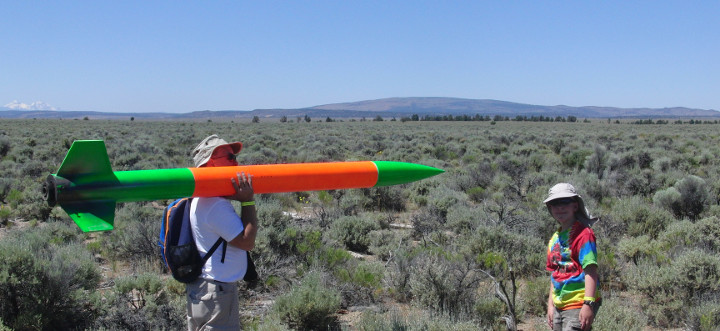
AltOS 1.2.1 TeleBT support, bug fixes and new AltosUI features Bdale and I are pleased to announce the release of AltOS version 1.2.1. AltOS is the core of the software for all of the Altus Metrum products. It consists of cc1111-based micro-controller firmware and Java-based ground station software. The biggest new feature for AltOS is the addition of support for TeleBT, our ground station designed to operate with Android phones and tablets. In addition, there s a change in the TeleDongle radio configuration that should improve range, some other minor bug fixes and new features in AltosUI AltOS Firmware Features and fixes There are bug fixes in both ground station and flight software, so you should plan on re-flashing both units at some point. However, there aren t any incompatible changes, so you don t have to do it all at once. New features: Bug fixes: AltosUI Easier to use AltosUI has also seen quite a bit of work for the 1.2.1 release. It s got several fun new features and a few bug fixes. New Graph UI features: Other new AltosUI features: Bug fixes:
21 May 2013

Russell Coker: Advice on Buying a PC

A common topic of discussion on computer users group mailing lists is advice on buying a PC. I think that most of the offered advice isn t particularly useful with an excessive focus on building or upgrading PCs and on getting the latest and greatest. So I ll blog about it instead of getting involved in more mailing-list debates. A Historical Perspective the PC as an Investment In the late 80 s a reasonably high-end white-box PC cost a bit over $5,000 in Australia (or about $4,000 without a monitor). That was cheaper than name-brand PCs which cost upwards of $7,000 but was still a lot of money. $5,000 in 1988 would be comparable to $10,000 in today s money. That made a PC a rather expensive item which needed to be preserved. There weren t a lot of people who could just discard such an investment so a lot of thought was given to upgrading a PC. Now a quite powerful desktop PC can be purchased for a bit under $400 (maybe $550 if you include a good monitor) and a nice laptop is about the same price as a desktop PC and monitor. Laptops are almost impossible to upgrade apart from adding more RAM or storage but hardly anyone cares because they are so cheap. Desktop PCs can be upgraded in some ways but most people don t bother apart from RAM, storage, and sometimes a new video card. If you have the skill required to successfully replace a CPU or motherboard then your time is probably worth enough that getting more value out of a PC that was worth $400 when new and is worth maybe $100 when it s a couple of years old probably isn t a good investment. Times have changed and PCs just aren t worth enough to be bothered upgrading. A PC is a disposable item not an investment. Buying Something Expensive? There are a range of things that you can buy. You can spend $200 on a second-hand PC that s a couple of years old, $400 on a new PC that s OK but not really fast, or you can spend $1000 or more on a very high end PC. The $1000 PC will probably perform poorly when compared to a PC that sells for $400 next year. The $400 PC will probably perform poorly when compared to the second-hand systems that are available next year. If you spend more money to get a faster PC then you are only getting a faster PC for a year until newer cheaper systems enter the market. As newer and better hardware is continually being released at low enough prices that make upgrades a bad deal I recommend just not buying expensive systems. For my own use I find that e-waste is a good source of hardware. If I couldn t do that then I d buy from an auction site that specialises in corporate sales, they have some nice name-brand systems in good condition at low prices. One thing to note is that this is more difficult for Windows users due to anti-piracy features. With recent versions of Windows you can t just put an old hard drive in a new PC and have it work. So the case for buying faster hardware is stronger for Windows than for Linux. That said, $1,000 isn t a lot of money. So spending more money for a high-end system isn t necessarily a big deal. But we should keep in mind that it s just a matter of getting a certain level of performance a year before it is available in cheaper systems. Getting a $1,000 high-end system instead of a $400 cheap system means getting that level of performance maybe a year earlier and therefore at a price premium of maybe $2 per day. I m sure that most people spend more than $2 per day on more frivolous things than a faster PC. Understanding How a Computer Works As so many things are run by computers I believe that everyone should have some basic knowledge about how computers work. But a basic knowledge of computer architecture isn t required when selecting parts to assemble to make a system, one can know all about selecting a CPU and motherboard to match without understanding what a CPU does (apart from a vague idea that it s something to do with calculations). Also one can have a good knowledge of how computers work without knowing anything about the part numbers that could be assembled to make a working system. If someone wants to learn about the various parts on sale then sites such as Tom s Hardware [1] provide a lot of good information that allows people to learn without the risk of damaging expensive parts. In fact the people who work for Tom s Hardware frequently test parts to destruction for the education and entertainment of readers. But anyone who wants to understand computers would be better off spending their time using any old PC to read Wikipedia pages on the topic instead of spending their time and money assembling one PC. To learn about the basics of computer operation the Wikipedia page for CPU is a good place to start. Then the Wikipedia page for hard drive is a good start for learning about storage and the Wikipedia page for Graphics Processing Unit to learn about graphics processing. Anyone who reads those three pages as well as a selection of pages that they link to will learn a lot more than they could ever learn by assembling a PC. Of course there s lots of other things to learn about computers but Wikipedia has pages for every topic you can imagine. I think that the argument that people should assemble PCs to understand how they work was not well supported in 1990 and ceased to be accurate once Wikipedia became popular and well populated. Getting a Quality System There are a lot of arguments about quality and reliability, most without any supporting data. I believe that a system designed and manufactured by a company such as HP, Lenovo, NEC, Dell, etc is likely to be more reliable than a collection of parts uniquely assembled by a home user but I admit to a lack of data to support this belief. One thing that is clear however is the fact that ECC RAM can make a significant difference to system reliability as many types of error (including power problems) show up as corrupted memory. The cheapest Dell PowerEdge server (which has ECC RAM) is advertised at $699 so it s not a feature that s out of reach of regular users. I think that anyone who makes claims about PC reliability and fails to mention the benefits of ECC RAM (as used in Dell PowerEdge tower systems, Dell Precision workstations, and HP XW workstations among others) hasn t properly considered their advice. Also when discussing overall reliability the use of RAID storage and a good backup scheme should be considered. Good backups can do more to save your data than anything else. Conclusion I think it s best to use a system with ECC RAM as a file server. Make good backups. Use ZFS (in future BTRFS) for file storage so that data doesn t get corrupted on disk. Use reasonably cheap systems as workstations and replace them when they become too old. Update: I find it rather ironic when a discussion about advice on buying a PC gets significant input from people who are well paid for computer work. It doesn t take long for such a discussion to take enough time that the people involved could spent their time working instead, put enough money in a hat to buy a new PC for the user in question, and still had money left over.

Next.

Previous.