Chris Lamb: My favourite books of 2016
 Whilst I managed to read almost sixty books in 2016 here are ten of my favourites in no particular order.
Disappointments this year include Stewart Lee's Content Provider (nothing like his stand-up), Christopher Hitchens' And Yet (his best essays are already published) and Heinlein's Stranger in a Strange Land (great exposition, bizarre conclusion).
The worst book I finished, by far, was Mark Edward's Follow You Home.
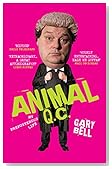 Animal QC
Gary Bell, QC
Subtitled My Preposterous Life, this rags-to-riches story about a working-class boy turned eminent lawyer would be highly readable as a dry and factual account but I am compelled to include it here for its extremely entertaining style of writing.
Full of unsurprising quotes that take one unaware: would you really expect a now-Queen's Counsel to "heartily suggest that if you find yourself suffering from dysentery in foreign climes you do not medicate it with lobster thermidor and a bottle of Ecuadorian red?"
A real good yarn.
 So You've Been Publically Shamed
Jon Ronson
The author was initially recommended to me by Brad but I believe I started out with the wrong book. In fact, I even had my doubts about this one, prematurely judging from the title that it was merely cashing-in on a fairly recent internet phenomenon like his more recent shallow take on Trump and the alt-Right but in the end I read Publically Shamed thrice in quick succession.
I would particularly endorse the audiobook version: Ronson's deadpan drawl suits his writing perfectly.
 The Obstacle is the Way
Ryan Holiday
Whilst everyone else appears to be obligated to include Ryan's recent Ego is the Enemy in their Best of 2016 lists I was actually taken by his earlier "introduction by stealth" to stoic philosophy.
Certainly not your typical self-help book, this is "a manual to turn to in troubling times".
Returning to this work at least three times over the year even splashing out on the audiobook at some point I feel like I learned a great deal, although it is now difficult to pinpoint exactly what. Perhaps another read in 2017 is thus in order
 Layer Cake
J.J. Connolly
To judge a book in comparison to the film is to do both a disservice, but reading the book of Layer Cake really underscored just how well the film played to the strengths of that medium.
All of the aspects that would not have worked had been carefully excised from the screenplay, ironically leaving more rewarding "layers" for readers attempting the book. A parallel adaption here might be No Country for Old Men - I would love to read (or write) a comparative essay between these two adaptions although McCarthy's novel is certainly the superior source material.
 Lying
Sam Harris
I've absorbed a lot of Sam Harris's uvre this year in the form of his books but moreover via his compelling podcast. I'm especially fond of Waking Up on spirituality without religion and would rank that as my favourite work of his.
Lying is a comparatively short read, more of a long essay in fact, where he argues that we can radically simplify our lives by merely telling the truth in situations where others invariably lie. Whilst it would take a brave soul to adopt his approach his case is superlatively well-argued and a delight to read.
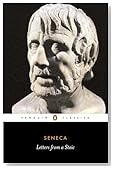 Letters from a Stoic
Seneca
Great pleasure is to be found not only in keeping up an old and established friendship but also in beginning and building up a new one. Reading this in a beautifully svelte hardback, I tackled a randomly-chosen letter per day rather than attempting to read it cover-to-cover. Breaking with a life-long tradition, I even decided to highlight sections in pen so I could return to them at ease. I hope it's not too hackneyed to claim I gained a lot from "building up" a relationship with this book. Alas, it is one of those books that is too easy to recommend given that it might make one appear wise and learned, but if you find yourself in a slump, either in life or in your reading habits, it certainly has my approval.
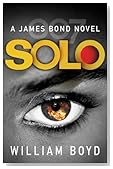 Solo: A James Bond Novel
William Boyd
I must have read all of the canonical Fleming novels as a teenager and Solo really rewards anyone who has done so. It would certainly punish anyone expecting a Goldeneye or at least be a little too foreign to be enjoyed.
Indeed, its really a pastiche of these originals, both in terms of the time period, general tone (Bond is more somber; more vulnerable) and in various obsessions of Fleming's writing, such as the overly-detailed description of the gambling and dining tables. In this universe, 007's restaurant expenses probably contributed signifcantly to the downfall of the British Empire, let alone his waistline.
Bond flicking through a ornithological book at one point was a cute touch
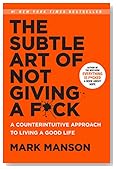 The Subtle Art of Not Giving A F*ck
Mark Manson
Certainly a wildcard to include here and not without its problems, The Subtle Art is a curious manifesto on how to approach life. Whilst Manson expouses an age-old philosophy of grounding yourself and ignoring the accumulation of flatscreen TVs, etc. he manages to do so in a fresh and provocative "21st-centry gonzo" style.
Highly entertaining, at one point the author posits an alternative superhero ("Disappointment Panda") that dishes out unsolicited and uncomfortable truths to strangers before simply walking away: "You know, if you make more money, that s not going to make your kids love you," or: "What you consider friendship is really just your constant attempts to impress people."
Ouch.
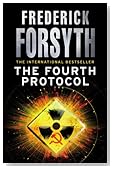 The Fourth Protocol
Frederick Forsyth
I have a crystal-clear memory from my childhood of watching a single scene from a film in the dead of night: Pierce Brosnan sets a nuclear device to detonate after he can get away but a double-crossing accomplice surreptitiously brings the timetable forward in order that the bomb also disposes of him
Anyway, at some point whilst reading The Fourth Protocol it dawned on me that this was that book. I might thus be giving the book more credit due to this highly satisfying connection but I think it stands alone as a superlative political page-turner and is still approachable outside the machinations of the Cold War.
 The Partner
John Grisham
After indulging in a bit too much non-fiction and an aborted attempt at The Ministry of Fear, I turned to a few so-called lower-brow writers such as Jeffrey Archer, etc.
However, it was The Partner that turned out to be a real page-turner for somewhat undefinable reasons. Alas, it appears the rest of the author's output is unfortunately in the same vein (laywers, etc.) so I am hesitant to immediately begin others but judging from various lists online I am glad I approached this one first.
 Shogun: The First Novel of the Asian saga
James Clavell
Despite its length, I simply couldn't resist returning to Shogun this year although it did fatigue me to the point that I have still yet to commence on its sequel, Tai-Pan.
Like any good musical composition, one is always rewarded by returning to a book and I took great delight in uncovering more symbolism throughout (such as noticing that one of the first words Blackthorne learns in Japanese is "truth") but also really savouring the tragic arcs that run throughout the novel, some beautiful phrases ("The day seemed to lose its warmth ") and its wistful themes of inevitability and karma.




 I got tired of manually fetching installation images via either FTP or by manually transferring files to z/VM to test s390x installs. Hence it was about time to automate it. Originally I wanted to instrument an installation via
 The year 2016, which is about to end, has been full of work and contributions
to the FLOSS comunity.
Most of my focus goes to two important projects: Debian and Netfilter.
This is no coincidence, since my main interests in the IT world are
systems and networks.
Some numbers (no exhaustive count):
 You may have noticed (but you probably did not), but on 2017-02-04, at
14:00, in room UB2.252A (aka "Lameere"), which at that point in time
will be the Virtualisation and IaaS devroom, I'll be giving a talk on
the Network Block Device protocol.
Having been involved in maintaining NBD in one way or another for over
fifteen years now, I've never seen as much activity around the concept
as I have in the past few years. The result of that has been that we've
added a number of new features to the protocol, to allow it to be used
in settings where it was not as useful or as attractive as it would have
been before. As a result, these are exciting times for those who care
about NBD, and I thought it would be about time that I'd speak about it
somewhere. The Virtualisation/IaaS devroom seemed like the right fit
today (even though I wouldn't have thought so a mere two years ago), and
so I'm happy they agreed to have me.
While I still have to start writing my slides, and therefore don't
really know (yet) exactly what I'll be talking about, the
 While learning about and configuring weechat this evening, I noticed a lot
of complexity and unsatisfying tradeoffs related to its UI, its mouse
support, and its built-in window system. Got to wondering what I'd do
differently, if I wrote my own IRC client, to avoid those problems.
The first thing I realized is, it is not a good idea to think about
writing your own IRC client. Danger will robinson..
So, let's generalize. This blog post is not about designing an IRC client,
but about exploring simpler ways that something like an IRC client
might handle its UI, and perhaps designing something general-purpose that
could be used by someone else to build an IRC client, or be mashed up with
an existing IRC client.
What any modern IRC client needs to do is display various channels to the
user. Maybe more than one channel should be visible at a time in some kind
of window, but often the user will have lots of available channel and only
want to see a few of them at a time. So there needs to be an interface for
picking which channel(s) to display, and if multiple windows are shown, for
arranging the windows. Often that interface also indicates when there is
activity on a channel. The most recent messages from the channel are
displayed. There should be a way to scroll back to see messages that have
already scrolled by. There needs to be an interface for sending a message
to a channel. Finally, a list of users in the channel is often desired.
Modern IRC clients implement their own UI for channel display, windowing,
channel selection, activity notification, scrollback, message entry, and
user list. Even the IRC clients that run in a terminal include all of that.
But how much of that do they need to implement, really?
Suppose the user has a tabbed window manager, that can display virtual
terminals. The terminals can set their title, and can indicate when there
is activity in the terminal. Then an IRC client could just open a bunch of
terminals, one per channel. Let the window manager handle channel
selection, windowing (naturally), and activity notification.
For scrollback, the IRC client can use the terminal's own scrollback
buffer, so the terminal's regular scrollback interface can be used. This is
slightly tricky; can't use the terminal's alternate display, and have to
handle the UI for the message entry line at the bottom.
That's all the UI an IRC client needs (except for the user list), and most
of that is already implemented in the window manager and virtual terminal.
So that's an elegant way to make an IRC client without building much new UI
at all.
But, unfortunately, most of us don't use tabbed window managers (or tabbed
terminals). Such an IRC client, in a non-tabbed window manager, would be a
many-windowed mess. Even in a tabbed window manager, it might be annoying
to have so many windows for one program.
So we need fewer windows. Let's have one channel list window, and one
channel display window. There could also be a user list window. And there
could be a way to open additional, dedicated display windows for channels,
but that's optional. All of these windows can be seperate virtual
terminals.
A potential problem: When changing the displayed channel, it needs
to output a significant number of messages for that channel,
so that the scrollback buffer gets populated. With a large number of lines,
that can be too slow to feel snappy. In some tests, scrolling
10 thousand lines was noticiably slow, but scrolling 1 thousand lines
happens fast enough not to be noticiable.
(Terminals should really be faster at scrolling than this, but they're still
 I am sad (but feel my duty) to inform the world that we will not be providing a Drupal 8 package in Debian.
I
 There s a pattern that comes up from time to time in the release management of free software projects.
To allow for big, disruptive changes, a new development branch is created. Most of the developers focus moves to the development branch. However at the same time, the users focus stays on the stable branch.
As a result:
 I recently needed to get access to a DataEase database; the person I helped
was the legitimate owner of the data, but had forgotten the password,
as the database was largely from 1996. There are various companies
around the world that seem to do this, or something similar (like give
you an API), for a usually unspecified fee; they all have very 90s homepages
and in general seem like they have gone out of business a long time ago.
And I wasn't prepared to wait.
For those of you who don't know DataEase, it's a sort-of relational database
for DOS that had its heyday in the late 80s and early 90s (being sort of
the cheap cousin of dBase); this is before SQL gained traction as the
standard query language, before real multiuser database access, and before
variable-width field storage.
It is also before reasonable encryption. Let's see what we can do.
DataEase has a system where tables are mapped through the data dictionary,
which is a table on its own. (Sidenote: MySQL pre-8.0 still does not have
this.) This is the file RDRRTAAA.DBM; I don't really know what RDRR stands
for, but T is the database letter in case you wanted more than one database
in the same directory, and AAA, AAB, AAC etc. is a counter so that a table
grows to be too big for one file. (There's also .DBA files for structure of
non-system tables, and then some extra stuff for indexes.)
DBM files are pretty much the classical, fixed-length 80s-style database
files; each row has some flags (I believe these are for e.g. row is
deleted ) and then just the rows in fixed format right after each other.
For instance, here's one I created as part of testing (just the first few
lines of the hexdump are shown):
 it's amazing how many new bugs appear; luckily in the Debian Perl Group
we're not too bad at fixing them as well. here's the list of my
contributions over the last weeks:
 I recently had call to play with some

 To add to the above, it is still cheaper than air travel, although that is changing a bit as Indian Railways seeks to modernize Railways and make it into world-class bullet trains.
Indian Railways has a long, rich culture and some of the most interesting nuggets you learn over time adds to the fascination of the Railways. For instance I m sharing this letter which I read first in book and then saw in the New Delhi Railway Museum. The letter I am sharing below was written by a certain Shri Okhil Chandra Sen to the Sahibganj Railway Office in year 1909, almost 38 years before India became independent.
I am arrive by passenger train Ahmedpur station and my belly is too much swelling with jackfruit. I am therefore went to privy. Just I doing the nuisance that guard making whistle blow for train to go off and I am running with lotah in one hand and dhoti in the next when I am fall over and expose all my shocking to man and female women on plateform. I am got leaved at Ahmedpur station.
This too much bad, if passenger go to make dung that dam guard not wait train five minutes for him. I am therefore pray your honour to make big fine on that guard for public sake. Otherwise I am making big report! to papers.
If it were not for Mr. Okhil Chandra Sen we would still be running with water bottle (improvement) and jeans/shorts/whatever (again improvement) while the possibility of falling over would always be omnipresent in a hurry. Now we do have toilets and some of the better trains even have




 A brand new