Search Results: "ean"

22 June 2013

Justus Winter: My first week and some promising though hacky results

Hi Planet Debian :) my name is Justus Winter, I'm a computer science student at the University of Hamburg. I'm participating in the GSOC 2013, my task is to make Debian/Hurd systems boot using the same initialization scripts Debian/Linux uses. I spent the community bonding period with some gsoc related administrative tasks, updating my development machine and getting reacquainted with the Hurd system. It was nice to see how far Debian/Hurd has come since my last "serious" encounter with it. I've setup a continuous build solution on one of my Hurd VMs and prepared a package repository. I'll post details once I have some packages to share. I built the hurd, sysvinit and ifupdown packages and dived into the interesting world of literate programming. I'm going to write about that when I start looking into the ifupdown related issues. But most importantly I started writing a tool to automate all the tasks I would do during my work that could possibly be automated. As I'm working on the boot process, it makes sense to use some kind of virtualization software so I can work in the comfort of my usual development environment. My virtualization solution of choice is qemu and I actually wrote a qemu based black-box test solution for a former employer once, so I already was familiar with qemu and wrapping my own code around it. Without further ado, here it is: https://bitbucket.org/teythoon/hurdtest Provided that you have golang installed, you can compile it easily:
teythoon@europa /tmp % export GOPATH= pwd 
teythoon@europa /tmp % go get bitbucket.org/teythoon/hurdtest
teythoon@europa /tmp % bin/hurdtest
Usage: hurdtest [options] <command> [<arguments...>]
Currently it has the following subcommands:
test
Starts a VM, logs in as root, tests the interaction with the VM, verifies that certain VFS locations are writable, tests the network connectivity, the DNS resolution and installs and runs the hello package.
update
Executes aptitude update && aptitude full-upgrade, reboots the system and runs the test subcommand. If successful, it commits the changes to the virtual disk and creates a snapshot.
overlay
Takes as argument the path to a directory that is copied to the VM, reboots the machine and runs the test subcommand.
The update command is nice because it allows me to keep the VM up to date while ensuring that the image remains usable, with respect to what the test command considers a usable state of a Debian system. I'd really like to get some suggestions on how to test the "health" of a Debian system. You can look at how the tests are implemented in test.go, it's quite easy to add more and more interesting tests, and you don't even have to clean up after them or worry about any side-effects as the changes are not committed to the virtual disk. This is hurdtest doing an update:
teythoon@europa ~/repos/hurd/hurd-tests % bin/hurdtest update
2013/06/22 19:59:45 starting kvm [-drives file=image.qcow2,cache=writeback,snapshot=on -serial unix:/tmp/285813369/serial -monitor unix:/tmp/285813369/monitor -nographic -m 512]
2013/06/22 19:59:45 Waiting for grub...
2013/06/22 19:59:46 Waiting for login prompt...
2013/06/22 20:00:05 Updating system
2013/06/22 20:02:52 Get: 1 http://www.local unstable InRelease [8279 B]
Get: 2 http://http.debian.net sid InRelease [205 kB]
Get: 3 http://ftp.debian-ports.org unreleased InRelease [23.9 kB]
[...]
Setting up perl (5.14.2-21) ...
Reading package lists...
Building dependency tree...
Reading state information...
Reading extended state information...
Initializing package states...
Reading task descriptions...
2013/06/22 20:02:52 Update successful. Snapshotting system...
2013/06/22 20:02:53 Rebooting system...
2013/06/22 20:02:54 Waiting for grub...
2013/06/22 20:02:59 Waiting for login prompt...
2013/06/22 20:03:16 Running main.testTrue...
2013/06/22 20:03:16 Running main.testFalse...
2013/06/22 20:03:17 Running main.testClean...
[...]
2013/06/22 20:03:18 Running main.testNetwork...
2013/06/22 20:03:18 Running main.testResolver...
2013/06/22 20:03:20 Running main.testAptitudeInstall...
2013/06/22 20:03:46 Test successful. Reverting system...
2013/06/22 20:03:48 Halting system...
2013/06/22 20:03:53 Committing changes...
2013/06/22 20:03:57 Creating snapshot...
2013/06/22 20:04:04 All done.
bin/hurdtest update  157.31s user 69.71s system 87% cpu 4:18.94 total
The overlay command implements my work flow. I can edit scripts or drop hacked up executables onto my VM and see the results without any manual intervention. There's the -interactive flag that does this in a loop, avoiding the VM startup time using qemu snapshots. With this I can apply an overlay and see the results of the test suite in about a minute on my system. From early experiments I knew that simply running /etc/rcS.d/S* prevented the system from booting correctly, so I figured my first task should be to figure out what went wrong there. Using my tool (and developing it in that process) and many iterations later I came up with a surprisingly small diff of scripts in the initscripts and utilities shipped with the hurd package. For your convenience here is a tarball that you can extract to the root of your Debian/Hurd installation to reproduce my results (of course I invite you to use my tool for that purpose):
% bin/hurdtest overlay test
2013/06/22 21:35:31 starting kvm [-drive file=image.qcow2,cache=writeback,snapshot=on -serial unix:/tmp/345188134/serial -monitor unix:/tmp/345188134/monitor -nographic -m 512]
2013/06/22 21:35:31 Waiting for grub...
2013/06/22 21:35:31 Waiting for login prompt...
2013/06/22 21:35:48 Creating tarball...
./
./etc/
./etc/hurd/
./etc/hurd/rc
./etc/init.d/
./etc/init.d/checkroot.sh
./etc/init.d/mountall.sh
./runme
./lib/
./lib/init/
./lib/init/mount-functions.sh
./sbin/
./sbin/swapon
./bin/
./bin/mount
2013/06/22 21:35:48 Extracting overlay...
2013/06/22 21:35:49 Rebooting system...
2013/06/22 21:35:49 Waiting for grub...
2013/06/22 21:35:55 Writing log to /tmp/bootlog-802006344
2013/06/22 21:35:55 Waiting for login prompt...
2013/06/22 21:36:20 Booting successful.
2013/06/22 21:36:20 Running main.testTrue...
2013/06/22 21:36:21 Running main.testFalse...
2013/06/22 21:36:21 Running main.testClean...
2013/06/22 21:36:21 Running anonymous function...
2013/06/22 21:36:22 Running anonymous function...
2013/06/22 21:36:22 Running main.testUname...
2013/06/22 21:36:22 Running main.testNetwork...
2013/06/22 21:36:22 Running main.testResolver...
2013/06/22 21:36:23 Running main.testAptitudeInstall...
bin/hurdtest overlay ../hurd-tests-old/test  44.20s user 20.01s system 82% cpu 1:17.94 total
And here is the boot log:
Loading GNU Mach ...
Loading the Hurd ...
GNU Mach 1.3.99-486
AT386 boot: physical memory map from 0x0 to 0x9f400
AT386 boot: physical memory map from 0x100000 to 0x1fffe000
AT386 boot: physical memory from 0x0 to 0x1fffe000
Enabling FXSR
pcibios_init : BIOS32 Service Directory structure at 0xfcff0
pcibios_init : BIOS32 Service Directory entry at 0xfc7ba
pcibios_init : PCI BIOS revision 2.10 entry at 0xfc78c
Probing PCI hardware.
ide: Intel 82371 PIIX3 (dual FIFO) DMA Bus Mastering IDE
    Controller on PCI bus 0 function 9
ide: BM-DMA feature is not enabled (BIOS), enabling
    ide0: BM-DMA at 0xc100-0xc107
    ide1: BM-DMA at 0xc108-0xc10f
hd0: got CHS=762/128/63 CTL=c8 from BIOS
hd0: QEMU HARDDISK, 3001MB w/256kB Cache, CHS=762/128/63, DMA
hd2: QEMU DVD-ROM, ATAPI CDROM drive
ide0 at 0x1f0-0x1f7,0x3f6 on irq 14
ide1 at 0x170-0x177,0x376 on irq 15
Floppy drive(s): fd0 is 1.44M
FDC 0 is a S82078B
probing scsi 0/22: advansys probing scsi 1/22: BusLogic probing scsi 2/22: UltraStor 14F/34F rev. 4.33.00  probing scsi 3/22: UltraStor 14F/24F/34F probing scsi 4/22: Adaptec 152x SCSI driver; $Revision: 1.1 $ probing scsi 5/22: Adaptec 1542 Invalid address for shpnt with 1542.
Invalid address for shpnt with 1542.
probing scsi 6/22: Adaptec 174x (EISA) probing scsi 7/22:  probing scsi 8/22: Always IN2000 probing scsi 9/22:  probing scsi 10/22:  probing scsi 11/22:  probing scsi 12/22: Trantor T128/T128F/T228 probing scsi 13/22: DTC 3180/3280  probing scsi 14/22: Tekram DC390(T) V1.11 Feb-05-1997 probing scsi 15/22:  probing scsi 16/22: ncr53c8xx - revision 2.5f.1 probing scsi 17/22: EATA (Extended Attachment) PIO driver probing scsi 18/22: Western Digital WD-7000 Failed initialization of WD-7000 SCSI card!
probing scsi 19/22: EATA/DMA 2.0x rev. 4.33.00  probing eata on 1f0EATA0: address 0x1f0 in use, skipping probe.
probing eata on 1c88probing eata on 2c88probing eata on 3c88probing eata on 4c88probing eata on 5c88probing eata on 6c88probing eata on 7c88probing eata on 8c88probing eata on 9c88probing eata on ac88probing eata on bc88probing eata on cc88probing eata on dc88probing eata on ec88probing eata on fc88probing eata on 170EATA0: address 0x170 in use, skipping probe.
probing eata on 230probing eata on 330probing scsi 20/22: AM53C974 probing scsi 21/22: Iomega parport ZIP drive ppa: Version 1.42
ppa: Probing port 03bc
ppa: Probing port 0378
ppa:     SPP port present
ppa:     PS/2 bidirectional port present
ppa: Probing port 0278
done
scsi : 0 hosts.
scsi : detected total.
Partition check (DOS partitions):
 hd0: hd0s1 hd0s2 < hd0s5 >
lpr0: at atbus0, port = 378, spl = 6, pic = 7.
module 0: ext2fs --readonly --multiboot-command-line=$ kernel-command-line  --host-priv-port=$ host-port  --device-master-port=$ device-port  --exec-server-task=$ exec-task  -T typed $ root  $(task-create) $(task-resume) module 1: exec /hurd/exec $(exec-task=task-create)                                                                                                                                                                           2 multiboot modules                                                                                                                                                                                                                    task loaded: ext2fs --readonly --multiboot-command-line=root=device:hd0s1 console=com0 --host-priv-port=1 --device-master-port=2 --exec-server-task=3 -T typed device:hd0s1
task loaded: exec /hurd/exec
start ext2fs: Hurd server bootstrap: ext2fs[device:hd0s1] exec init proc auth
Using makefile-style concurrent boot in runlevel S.
ERROR: could not open /proc/stat: No such file or directory
Activating swap...done.
Checking root file system...fsck from util-linux 2.20.1
hd2 : tray open or drive not ready
end_request: I/O error, dev 02:00, sector 0
ext2fs_check_if_mount: Can't check if filesystem is mounted due to missing mtab file while determining whether /dev/hd0s1 is mounted.
/dev/hd0s1: clean, 44328/181056 files, 288266/723200 blocks
done.
Cleaning up temporary files... /tmp.
mount: /run: Unknown device or filesystem
mount: /run/lock: Unknown device or filesystem
mount: /proc: Unknown device or filesystem
mount: /run/shm: Unknown device or filesystem
/etc/rcS.d/S06mtab.sh: 48: /etc/rcS.d/S06mtab.sh: cannot open /proc/mounts: No such file
Activating lvm and md swap...(default pager): Already paging to partition hd0s5!
done.
Checking file systems...fsck from util-linux 2.20.1
hd2 : tray open or drive not ready
end_request: I/O error, dev 02:00, sector 0
done.
Mounting local filesystems...mount: invalid option -- 'O'
Try  mount --help' or  mount --usage' for more information.
failed.
Activating swapfile swap...(default pager): Already paging to partition hd0s5!
done.
df: Warning: cannot read table of mounted file systems: No such file or directory
Cleaning up temporary files....
Configuring network interfaces...inetutils-ifconfig: invalid arguments
ifup: failed to open pid file /run/network/ifup-/dev/eth0.pid: No such file or directory
Internet Systems Consortium DHCP Client 4.2.2
Copyright 2004-2011 Internet Systems Consortium.
All rights reserved.
For info, please visit https://www.isc.org/software/dhcp/
can't create /var/lib/dhcp/dhclient./dev/eth0.leases: No such file or directory
Listening on Socket//dev/eth0
Sending on   Socket//dev/eth0
DHCPDISCOVER on /dev/eth0 to 255.255.255.255 port 67 interval 5
DHCPREQUEST on /dev/eth0 to 255.255.255.255 port 67
DHCPOFFER from 10.0.2.2
DHCPACK from 10.0.2.2
can't create /var/lib/dhcp/dhclient./dev/eth0.leases: No such file or directory
bound to 10.0.2.15 -- renewal in 36884 seconds.
done.
Cleaning up temporary files....
Setting up X socket directories... /tmp/.X11-unix /tmp/.ICE-unix.
Using makefile-style concurrent boot in runlevel 2.
Starting enhanced syslogd: rsyslogd.
Starting deferred execution scheduler: atd.
Starting periodic command scheduler: cron.
Starting system message bus: dbusFailed to set socket option"/var/run/dbus/system_bus_socket": Protocol not available.
Starting OpenBSD Secure Shell server: sshd.
GNU 0.3 (debian) (console)
login:
I know it isn't that pretty, but it yields a working Debian/Hurd system that is more like a Debian/Linux system. For example /dev/shm and /run ,/* are connected to a tmpfs translator. I think this is a rather encouraging first result. I added my findings to the list of open issues. Another nice thing about hurdtest is that it is not even Hurd specific (only a tiny bit GNU Mach specific). I'm going to make it work nicely with Debian/Linux and Debian/kFreeBSD, since this is a very handy tool for anyone hacking on the Debian boot process (and with some changes for any OS). If anyone tries it out, I'd love to get feedback and patches. The tool requires the guest to be configured to use the first serial console for grub, the kernel and the userspace. The password for the user root must be empty. The guest has to have a working network connection setup at boot time. I will provide a suitable image as soon as I devise a good way to zero-fill the free space on the virtual disk. Is there any better way than to fill the disk with a huge file containing zeros? Without doing that the image is too large even compressed with xz. So this was my first week working for Debian. Next week I will focus on getting patches for the hurd and initscripts package in shape, I need to add some functionality to the mount utility shipped with the hurd package. It provides a mount-like experience on the Hurd, on which binding a translator (e. g. /hurd/ext2fs) to a filesystem node is an operation that does not involve the kernel (GNU Mach) at all, and is in fact a operation that any unprivileged user may perform. That is one of the nice features the Hurd has, it empowers its users.

19 June 2013

Matthew Garrett: Mir, the Canonical CLA and skewing the playing field

Mir is Canonical's equivalent to Wayland - a display server, responsible for getting application pixmaps onto a screen. It's intended to scale from mobile devices to the desktop, and as such is expected to turn up in Ubuntu Phone before too long[1]. There's already plenty of discussion about whether the technical differences between Wayland and Mir are sufficient to justify Canonical going their own way, so I'm not planning on talking about that.


Like many Canonical-led projects, Mir is under GPLv3 - a strong copyleft license. There's a couple of aspects of GPLv3 that are intended to protect users from being unable to make use of the rights that the license grants them. The first is that if GPLv3 code is shipped as part of a user product, it must be possible for the user to replace that GPLv3 code. That's a problem if your device is intended to be locked down enough that it can only run vendor code. The second is that it grants an explicit patent license to downstream recipients, permitting them to make use of those patents in derivative works.

One of the consequences of these obligations is that companies whose business models depend on either selling locked-down devices or licensing patents tend to be fairly reluctant to ship GPLv3 software. In effect, this is GPLv3 acting entirely as intended - unless you're willing to guarantee that a user can exercise the freedoms defined by the free software definition, you don't get to ship GPLv3 material. Some companies have decided that shipping GPLv3 code would be more expensive than either improving existing code under a more liberal license or writing new code from scratch. Android's a pretty great example of this - it contains no GPLv3 code, and even GPLv2 code (outside the kernel) is kept to a minimum.

Which, given Canonical's focus on pushing Ubuntu into GPLv3-hostile markets, makes the choice of GPLv3 an odd one. This isn't a problem as long as they're the sole copyright holder, because the copyright holder is obviously free to ship their code under as many licenses as they want. But Canonical still aim to foster community involvement, and ideally that includes accepting external contributions to their code. If Canonical simply accepted those contributions under GPLv3 then they'd no longer have the right to relicense the entire codebase, so any contributions are only accepted if the contributor has signed a Contributor License Agreement.

Canonical's CLA is pretty simple. In essence, it grants Canonical the right to use, modify and distribute your code, and it grants Canonical a patent license under any patents you own that may cover the code in question. But, most importantly, it grants Canonical the right to relicense your contribution under their choice of license. This means that, despite not being the sole copyright holder, Canonical are free to relicense your code under a proprietary license.

Given Canonical's market goals, this makes sense. They can relicense Mir (and any other GPLv3 projects they own) under licenses that keep their hardware partners happy, and they can ship in the phone market. Everyone's a winner.

Except, if Canonical want to ship proprietary versions, why not just license Mir under a license that permits that in the first place? This is where the asymmetry comes in. The Android userland is released under a permissive license that allows anyone to take Google's code, modify it as they wish and ship it on whatever hardware they want. I could legally start a company that provided customised versions of Android to phone vendors without them having any GPLv3 concerns. I won't be able to do that with Ubuntu Phone.

I'm a fan of GPLv3. I think the provisions it contains to support user freedom are important. I hate the growing trend of using free software to build devices that are, effectively, impossible for the end user to modify. If Canonical were releasing software under GPLv3 because of a commitment to free software then that would be an amazing thing. But it's pretty much impossible to square the CLA's requirement that contributors grant Canonical the right to ship under a proprietary license with a commitment to free software. Instead you end up with a situation that looks awfully like Canonical wanting to squash competition by making it impossible for anyone else to sell modified versions of Canonical's software in the same market.

Canonical aren't doing anything illegal or immoral here. They're free to run their projects in any way they choose. But retaining the right to produce proprietary versions of external contributions without granting equivalent reciprocal rights isn't consistent with caring about free software or contributing to the wider Linux community, especially if it means you get to exclude those external contributors from the market you're selling their code into.

(Edit to add: a friend in the contracting industry points out that it also prevents vendors who won't ship GPLv3 from using external contractors to work on Mir - they have to go to Canonical, because only Canonical can relicense contributions under a proprietary license.)

[1] Right now Ubuntu Phone is using Surfaceflinger, the Android display server, but that's apparently just an interim solution.

comment count unavailable comments

Daniel Pocock: Australia's war on brains (and immigration)

Some weeks ago, our Prime Minister was slashdotted when she suspended her usual racist attacks on refugees to attack foreign IT workers and the companies that employ them with absurd accusations of "rorts" and "stealing" jobs. Today, she's introduced new laws in the parliament aiming to further bastardization of intelligent, skilled and educated workers and anybody who associates with them, including Australian employers. Unwarranted attention on a minority of IT workers This is not just some random bill before the parliament. There are just two weeks left before the parliament concludes and an election campaign begins. It is clear that what we are seeing now is the Real Julia coming though, choosing to make the small minority of foreign workers in our country at the center of people's thoughts as they go to vote in September. A debt of gratitude to foreign workers These verses from our national anthem, Advance Australia Fair say a lot about how Australia became what it is today:
For those who've come across the seas

We've boundless plains to share;

With courage let us all combine

To Advance Australia Fair.
The last 200 years of Australia's history has been a story of immigration. It is not something to be afraid of: our forefathers celebrated it. Foreign workers: why Australia needs you Australia has had some appalling flops in IT and engineering: There is no doubt in my mind that additional foreign workers would have made a positive contribution to all of these problems or can do so in the future. The sun never sets on IT Every day, I collaborate with dozens of IT specialists all over the world through the virtual workplace that is the Internet, particularly in the free and open source software community. Many of these people, I've never even met and in most cases I don't even know where they are, where they were born or what is the colour of their skin. Those details wouldn't make any difference to the way that we work in IT today. How many IT managers have time to waste dealing with more real world bureaucracy when they've experienced online, global productivity? How many IT workers feel demotivated by having to explain trivial details about their personal life to a Government bureaucrat who doesn't understand their skills and just looks at their colour? If you think about it, any immigration officer who really understands IT wouldn't be an immigration officer. They would be working in IT themselves. Immigration officers, who don't understand IT, are now going to be further empowered to bully companies away from employing some talented workers on the basis of race or nationality. Hiring managers will be intimidated into these prejudiced and biased decisions by delays, processing fees and invasive demands for sensitive documents about business planning and recruitment strategies. Australia's immigration system already has a horrendous reputation. Any visa application seems to take more than a year: no small company can keep a job position vacant that long. Families can't plan their children's schooling. Other life events come and go. There are exhorbitant fees, 1000% higher than in other western countries. Fewer and fewer self-respecting skilled workers are willing to put their spouses and children through the degrading medical examinations. Judging the impact of poor immigration policy While the economic impact of this immigration mess on industry is hard to quantify with an exact figure, we can take some insight from the education system. As the visa system has been hijacked by racists over the last 10 years, there has been a dramatic fall in participation (and revenues) from foreign students. In one year, enrolments (and revenue) fell 30%. This is not just bad for the balance sheets of the universities, it also means that in a future where commerce is global, Australians are more and more isolated and inexperienced culturally. IT workers and their employers have plenty of choices: Australia's close neighbor, Singapore, is one of them. Visas are granted in 2 weeks, no degrading medical exam required, low taxes and tropical sunshine all year round. Many companies that find it impractical to deal with Australia's bureaucracy end up moving their best Australian workers to places like Singapore to be part of a global team. This can't be good for the workforce that is left behind without jobs. The training delusion Government officials continue to rant and rave about companies failing to train Australian workers. The new laws supposedly force companies to "fix" this problem and train Australian workers. This, too, is a delusion: employers are not to blame. Some of the best Australian workers are already long gone to places like Singapore, London and the US. With talented foreign workers denied the opportunity to come and fill the void, there is less opportunity for skills to be acquired by more junior workers in Australian workplaces. It is also extremely difficult for more junior workers to get a foot in the door in the international job market and the primary reason for this is the Australian Government's failure to fund university programs beyond a bachelor's degree. Compare this to Europe and the US where all competent graduates are funded through to a Masters or PhD program. The bottom line is that more junior workers are denied the opportunity to get the best training either at home or abroad and in both cases it's not the foreign workers that can be blamed: it's the Government's own fault. Why do we need skilled foreign workers when Australians can win Nobel Prizes? The Australian press recently went into a frenzy when an Australian won the Nobel Prize for physics. There was a catch though: he's a migrant from the United States (just don't tell the Prime Minister). Dr. Schmidt migrated to Australia 20 years ago when the immigration system was not the same as today. Today, future Nobel Prize winners are being shown a brick wall - maybe we even have one of them rotting away in our death camps or left in the sea for sharks to eat. The BBC recently revealed that Britain's successor to Stephen Hawking may be a young girl who migrated from India - it is chilling to imagine where a child like this may be hidden away under Australia's immigration system. Bureaucracy leads to fraud and exploitation It's been clearly demonstrated that wherever you have elaborate, artificial systems of bureaucracy it leads to inefficiency, it suppresses innovation and in the worst cases it enables fraud and exploitation. The typical examples usually involve police in some third-world African nation setting up road blocks and collecting fees from travellers who want to pass the queues. This type of opportunism has also been found in Australia's immigration system, with one Federal politician already directly implicated and jailed for his role in a visa racket. Gillard's own bullet man A Queensland pensioner made international headlines recently when he was caught sending bullets in the mail to the Prime Minister. His demands were clear: stop immigration. While most world leaders refuse to let nutcases like this dictate their actions, Gillard appears to have been transcribing his racist letters directly into these newest immigration laws. It is a sad reality that Australian politics regularly seeks to appeal to the worst instincts in people like bullet man. The ultimate political failure When politicians stoop to the level of demonizing immigrants it is usually a clue that the politicians themselves are past their use-by dates and out of fresh policy ideas. When former French president Sarkozy tried to play the racist card in his campaign for re-election, it bit him in the bum and he was swept from power by the socialists. As always in politics, there is an element of hypocrisy at work: neither our Head of Government (the Prime Minister) nor our Head of State (the Queen) was born in Australia. Gillard was born in Wales and migrated to Australia as a child. If Australians don't vote for her in September, will she be given 28 days notice to pack her bags and go back home'? From the frying pan and into the fire Tony Abbott, Australia's would-be Prime Minister contemplating his colleague's statements on bestiality The scariest thing is that if Australians see through this racist charade and refuse to vote for it, we could end up with something equally obnoxious: the other major political party is now gaining worldwide attention for their campaign linking gay marriage and homosexuals to bestiality. Which prejudice is the lesser evil: racism or homophobia?
Julien Viard de Galbert: Building a custom debian CD

The French version is available on linuxembedded.fr : Cr e un CD d installation d une debian sp cialis e The goal is to build a debian install CD suitable for the distribution of a complete system including the operating system and applications. Debian already has a tool for that purpose: simple-cdd. Simple-cdd is a set of scripts wrapping debian-cd which is the tool used to build official CDs. In our case, we will include some non-free packages (firmwares for instance) and application specific packages in the system. Using simple-cdd Simple-cdd gets some of its configuration from your host computer, so it s recommended to work on a machine similar to your target (in particular the machine should use the same architecture: i386 or amd64). All the following actions should be done in a working directory that will contain the downloads and configurations for our system. We will start by creting a configuration file my-cdd.conf stating the mirror and components to use:
debian_mirror="http://ftp2.fr.debian.org/debian/"
mirror_components="main contrib non-free"
Then we will launch the build-simple-cdd tool once. This will build a local mirror of the needed packages that we will reused later. So be patient this can be a bit long.
build-simple-cdd --conf ./my-cdd.conf
Once done, you should get a CD iso in the images subfolder. Customizing the image To customize our image we will create a profile my-profile that will define which package to install and which extra package to include on the CD (dev packages for instance). Create a profiles folder:
mkdir profiles
Selecting the packages If you ve got an already installed machine (the one you used to test your application) you can ask dpkg to list the installed packages from that machine and use that as a basis.
dpkg --get-selections >package-list
In this file only the names of packages in the install state are needed:
grep -e '\<install$' package-list   awk ' print $1 ;' >profiles/my-profile.downloads
The file my-profile.downloads is a list of packages to include on the CD-ROM. The list of program to install is my-profile.packages . The tool will resolve dependencies, so we don t need to track down all dependencies add add them to these files. Specific packages We want to add some custom packages that we built ourselves to the CD, those packages not present in the debian archive. Let s create a local_pkg folder and fill it with all of our packages. We now can update the configuration to use all those files and make the profile my-profile the default profile.
debian_mirror="http://ftp2.fr.debian.org/debian/"
mirror_components="main contrib non-free"
simple_cdd_dir=$(pwd)
profiles="my-profile"
auto_profiles="my-profile"
local_packages="$simple_cdd_dir/local_pkg/"
If you now run the tool again, you ll get a full custom install CD!
build-simple-cdd --conf ./my-cdd.conf
However you might have missed some specific packages or their dependencies, in that case they will be missing on the CD. To find this out, check the messages for a line like:
WARNING: missing optional packages from profile my-profile: libevent-2.0-5 [...]
In that case libevent from squeeze-backports was missing. Simple-cdd is not able to download packages from backports, so I just added the packages to local_pkg . Customizing the installer Simple-cdd automatically uses a default profile. This profile might not suite your needs. To override it you just have to place modified file in the profiles folder. To do so, first copy the desired file from /usr/share/simple-cdd/profiles/ and update it. For instance the default.pressed file:
cp /usr/share/simple-cdd/profiles/default.pressed profiles
Then update the wanted options in this file. For example the partitioning options. Also as we enabled contrib and non-free you should uncomment the following lines:
d-i apt-setup/non-free  boolean true
d-i apt-setup/contrib boolean true
Adding extra files to the CD Finally we want to add the documentation, sources and other files to the CD. Simple-cdd can add files to the simple-cdd folder but there is no way to add a complete directory structure. However, as we can override the profiles, we can also override some scripts, especially tools/build/debian-cd that builds the CD.
mkdir -p tools/build
cp /usr/share/simple-cdd/tools/build/debian-cd tools/build
Then add the following lines after the $extras_base_dir cleanup:
if [ -d "$cd_extras" ]; then
  mkdir -p "$extras_base_dir"
  cp -a "$cd_extras/." "$extras_base_dir"
fi
Finally let s add the cd_extras variable to our configuration file :
cd_extras="$simple_cdd_dir/local_extras/"
Be careful to not create files conflicting with the CD content, nothing would warn you about that! Conclusion We now have a way of building a debian install CD including any files we might want to deliver with our system: sources and documentation for example.

18 June 2013

Daniel Pocock: RSA Key Sizes: 2048 or 4096 bits?

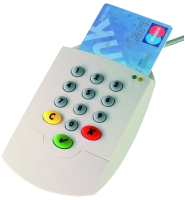
Many people are taking a fresh look at IT security strategies in the wake of the NSA revelations. One of the issues that comes up is the need for stronger encryption, using public key cryptography instead of just passwords. This is sometimes referred to as certificate authentication, but certificates are just one of many ways to use public key technology. One of the core decisions in this field is the key size. Most people have heard that 1024 bit RSA keys have been cracked and are not used any more for web sites or PGP. The next most fashionable number after 1024 appears to be 2048, but a lot of people have also been skipping that and moving to 4096 bit keys. This has lead to some confusion as people try to make decisions about which smartcards to use, which type of CA certificate to use, etc. The discussion here is exclusively about RSA key pairs, although the concepts are similar for other algorithms (although key lengths are not equivalent) The case for using 2048 bits instead of 4096 bits
  • Some hardware (many smart cards, some card readers, and some other devices such as Polycom phones) don't support anything bigger than 2048 bits.
  • Uses less CPU than a longer key during encryption and authentication
  • Using less CPU means using less battery power (important for mobile devices)
  • Uses less storage space: while not an issue on disk, this can be an issue in small devices like smart cards that measure their RAM in kilobytes rather than gigabytes
So there are some clear benefits of using 2048 bit keys and not just jumping on the 4096 bit key bandwagon The case for using 4096 bits
  • For some types of attack, security is not just double, it is exponential. 4096 is significantly more secure in this scenario. If an attack is found that allows a 2048 bit key to be hacked in 100 hours, that does not imply that a 4096 bit key can be hacked in 200 hours. The hack that breaks a 2048 bit key in 100 hours may still need many years to crack a single 4096 bit key
  • Some types of key (e.g. an OpenPGP primary key which is signed by many other people) are desirable to keep for an extended period of time, perhaps 10 years or more. In this context, the hassle of replacing all those signatures may be quite high and it is more desirable to have a long-term future-proof key length.
The myth of certificate expiration Many types of public key cryptography, such as X.509, offer an expiry feature. This is not just a scheme to force you to go back to the certificate authority and pay more money every 12 months. It provides a kind of weak safety net in the case where somebody is secretly using an unauthorised copy of the key or a certificate that the CA issued to an imposter. However, the expiry doesn't eliminate future algorithmic compromises. If, in the future, an attacker succeeds in finding a shortcut to break 2048 bit keys, then they would presumably crack the root certificate as easily as they crack the server certificates and then, using their shiny new root key, they would be in a position to issue new server certificates with extended expiry dates. Therefore, the expiry feature alone doesn't protect against abuse of the key in the distant future. It does provide some value though: forcing people to renew certificates periodically allows the industry to bring in new minimum key length standards from time to time. In practical terms, content signed with a 2048 bit key today will not be valid indefinitely. Imagine in the year 2040 you want to try out a copy of some code you released with a digital signature in 2013. In 2040, that signature may not be trustworthy: most software in that era would probably see the key and tell you there is no way you can trust it. The NIST speculates that 2048 bit keys will be valid up to about the year 2030, so that implies that any code you sign with a 2048 bit key today will have to be resigned with a longer key in the year 2029. You would do that re-signing in the 2048 bit twilight period while you still trust the old signature. Fortunately, there are likely to be few projects where such old code will be in demand. 4096 in practice One of the reasons I decided to write this blog is the fact that some organisations have made the 4096 bit keys very prominent (although nobody has made them mandatory as far as I am aware). Debian's guide to key creation currently recommends 4096 bit keys (although it doesn't explicitly mandate their use) Fedora's archive keys are all 4096 bit keys. The CACert.org project has developed a 4096 bit root These developments may leave people feeling a little bit naked if they have to use a shorter 2048 bit key for any of the reasons suggested above (e.g. for wider choice of smart cards and compatibility with readers). It has also resulted in some people spending time looking for 4096 bit smart cards and compatible readers when they may be better off just using 2048 bits and investing their time in other security improvements. In fact, the "risk" of using only 2048 rather than 4096 bits in the smartcard may well be far outweighed by the benefits of hardware security (especially if a smartcard reader with pin-pad is used) My own conclusion is that 2048 is not a dead duck and using this key length remains a valid decision and is very likely to remain so for the next 5 years at least. The US NIST makes a similar recommendation and suggests it will be safe until 2030, although it is the minimum key length they have recommended. My feeling is that the Debian preference for 4096 bit PGP keys is not based solely on security, rather, it is also influenced by the fact that Debian is a project run by volunteers. Given this background, there is a perception that if everybody migrates from 1024 to 2048, then there would be another big migration effort to move all users from 2048 to 4096 and that those two migrations could be combined into a single effort going directly from 1024 to 4096, reducing the future workload of the volunteers who maintain the keyrings. This is a completely rational decision for administrative reasons, but it is not a decision that questions the security of using 2048 bit keys today. Therefore, people should not see Debian's preference to use 4096 bit keys as a hint that 2048 bit keys are fundamentally flawed. Unlike the Debian keys (which are user keys), the CACert.org roots and Fedora archive signing keys are centrally managed keys with a long lifetime and none of the benefits of using 2048 bit keys is a compelling factor in those use cases. Practical issues to consider when choosing key-length Therefore, the choice of using 2048 or 4096 is not pre-determined, and it can be balanced with a range of other decisions:
  • Key lifetime: is it a long life key, such as an X.509 root for an in-house CA or an OpenPGP primary key? Or is it just for a HTTPS web server or some other TLS server that can be replaced every two years?
  • Is it for a dedicated application (e.g. a closed user group all using the same software supporting 4096 bit) or is it for a widespread user base where some users need to use 2048 bit due to old software/hardware?
  • Is it necessary to use the key(s) in a wide variety of smartcard readers?
  • Is it a mobile application (where battery must be conserved) or a server that is likely to experience heavy load?

Tollef Fog Heen: An otter, please (or, a better notification system)

Recently, there's been discussions on IRC and the debian-devel mailing list about how to notify users, typically from a cron script or a system daemon needing to tell the user their hard drive is about to expire. The current way is generally "send email to root" and for some bits "pop up a notification bubble, hoping the user will see it". Emailing me means I get far too many notifications. They're often not actionable (apt-get update failed two days ago) and they're not aggregated. I think we need a system that at its core has level and edge triggers and some way of doing flap detection. Level interrupts means "tell me if a disk is full right now". Edge means "tell me if the checksums have changed, even if they now look ok". Flap detection means "tell me if the nightly apt-get update fails more often than once a week". It would be useful if it could extrapolate some notifications too, so it could tell me "your disk is going to be full in $period unless you add more space". The system needs to be able to take in input in a variety of formats: syslog, unstructured output from cron scripts (including their exit codes), snmp, nagios notifications, sockets and fifos and so on. Based on those inputs and any correlations it can pull out of it, it should try to reason about what's happening on the system. If the conclusion there is "something is broken", it should see if it's something that it can reasonably fix by itself. If so, fix it and record it (so it can be used for notification if appropriate: I want to be told if you restart apache every two minutes). If it can't fix it, notify the admin. It should also group similar messages so a single important message doesn't drown in a million unimportant ones. Ideally, this should be cross-host aggregation. The notifications should be possible to escalate if they're not handled within some time period. I'm not aware of such a tool. Maybe one could be rigged together by careful application of logstash, nagios, munin/ganglia/something and sentry. If anybody knows of such a tool, let me know, or if you're working on one, also please let me know.

17 June 2013

Evgeni Golov: Running Debian without Unity on a machine that is 64 bit capable!

Sorry Bryan,
I can show you plenty of hardware that is perfectly 64 bit capable but probably never will run Ubuntu and/or Unity. First, what is 64 bit for you? Looking at ubuntu.com/download and getting images from there, one gets the impression, that 64 bit is amd64 (also called x86_64). If one digs deeper to cdimage.ubuntu.com, one will find non-Intel images too: PowerPC and amrhf. As the PowerPC images are said to boot on G3 and G4 PowerPCs, these are 32 bit. Armhf is 32 bit too (arm64/aarch64 support in Linux is just evolving). So yes, if 64 bit means amd64, I do have hardware that can run Unity. But you asked if I have hardware that is 64 bit capable and can run Ubuntu/Unity, so may I apply my definiton of 64 bit here? I have an old Sun Netra T1-200 (500MHz UltraSPARC IIe) running Debian s sparc port, which has a 64 bit kernel and 32 bit userland. Unity? No wai. I do not own any ia64 or s390/s390x machines, but I am sure people do. And guess what, no Unity there either :) Sorry for ranting like this, but 64 bit really just means that the CPU can handle 64 bit big addresses etc. End even then, it not always will do so ;)

Lars Wirzenius: If it quacks like a duck: what is a backup?

The purpose of a backup is to allow you to recover from a disaster with reasonable cost and effort. If you delete a file you shouldn't have, or make changes that you shouldn't have, backups are meant to save you from having to re-create the file, or undo a large amount of steps. Speaking very broadly, any copy of your live data is a backup, but this is a uselessly broad definition. For example, if you use an automatic synchronisation system such as Dropbox or git-annex, to keep your live data in sync between two computers, you could pretend they're backups of each other. However, unless the synchronisation also allows you to keep a history of file versions, it's not a very good backup. If you delete your precious file on one computer, and it gets then deleted on the other computer as well, automatically, perhaps in seconds, then the backup is not of much use. Another common assumption is that a RAID array works as a backup. RAID is an excellent technology that allows you to combine several hard disks so that they protect you against loss of data in case of disk failure. If one disk fails, the others have enough data to re-create the data on the failed disk, using either full copies (RAID-1) or error correction codes (RAID-5, RAID-6). This is not a backup. It doesn't protect you against accidental file deletions. There is also no backup history. A version control system is very much like a backup. It stores copies of many of the versions of your project. However, in most version control systems it's fairly easy to make changes that lose history. Ask anyone who has used git reset to change the tip of the master branch to undo a wrong commit or merge, and then accidentally force-pushed that to the server. This is arguably a normal, if uncommon use of the version control system. A good backup system will protect you from you own mistakes, when you do the kinds of things you're expected to do. Version control systems also rarely capture all your data. When you were five, and made some stuff on the family computer, and saved it on a floppy, and then drew a cute little picture of yourself on the floppy to make it clear to everyone it was your floppy, and not anyone else's, certainly not your bully of your brother's, and your mother kept the floppy for decades because of the cute picture, then that is also not a backup. You didn't even know your Mom had kept it. A reasonable backup is one from which you can restore a working copy of your data, when you need to, without too much effort or expense, compared to the disaster you're experiencing. If the disaster is that you deleted a one-page draft outline of the book you want to write someday, the disaster is not very severe. The cost of restoring should be low. If the disaster is that your plans to become the supreme emperor of the world, and make all people your slaves, are in a spreadsheet on your laptop, and your minions accidentally drove a car over your laptop, and you had accidentally not used a Thinkpad as your laptop, the disaster is quite severe. Unless you recover the spreadsheet, you'll never be able to tell apart the buttons to launch the Moon rocket, to self-destruct your HQ, and to switch channels on your TV, and all your work will be in vain, and you'll never, ever, ever convince the pretty girl with red hair living in the house opposite that she should be interested in you. Also, you'll never be able to move away from your parent's house. So, quite severe. It will be acceptable to go to quite some effort and expense to recover that spreadsheet. It's better if you don't need to, but you will, if you have to. Your backup should also be reasonably up to date. Backing up every Christmas is a fine family tradition, but if you don't make a backup also on Easter, Midsummer, and Aunt Agatha's birthday sometime in September was it, or maybe October, you'll risk losing a whole year's worth of work. A year is a long time, and you might never be able to re-do all the work. Personally, I backup my personal laptop every day to a file server at home, and less often to an online backup server. My work laptop gets backed up once an hour to the company file server, which gets backed up to two backup servers about once a day. You need to balance the risk of losing data and work, and the expense and effort to back up your data. How much is a day's work worth to you, or your employer? How much does a backup system cost? In the next episode, I'll ponder on how many backups are enough.

Tanguy Ortolo: Encryption without a certification layer is (partly) useless

With the PRISM scandal, there has been some talk about encrypted communication systems. For instance, BitMessage is often introduced as an easy and secure message system, that would allow you to communicate with no possible eavesdropping. Apple is also making similar claims about their systems iMessage and FaceTime. This is a good time to remind this: without direct contact or a certification layer, encryption systems are not secure! Or at least, not as secure as you would expect, as they do allow some kind of eavesdropping.Let us take the example of BitMessage:
  1. Alice sends her BitMessage address to Bob by email, an insecure channel;
  2. Mallory catches that email message and changes Alice's BitMessage address with his own;
  3. Bob sends a BitMessage for Alice to the address he received, which he thinks is Alice's, but is in fact Mallory's;
  4. Mallory receives the message, reads it, modifies it if he wants, and sends it to Alice.
This is a man-in-the-middle attack, a kind of active eavesdropping technique that requires read-modify access to a communication line. Without a specific way to ensure that a cryptographic key really belongs to its alleged owner, a cryptographic system is vulnerable to such attacks, even if it does protect against simpler attacks (like passive eavesdropping or introduction of MiTM after the introduction sequence). When you read that a cryptographic system provides end-to-end security and is impervious to eavesdropping, while it provides no mean to make sure you are in contact to the right person, remember to consider this affirmation as what it is: a lie.

Gunnar Wolf: Cultural objects/goods: When a superhero is too famous for his own good

I found the following news item; if you can read Spanish, you will most probably prefer the original version in the Proceso magazine's site. The subject? The federal police (PGR) and army arrest 17 artisans for making money out of Spiderman. The following translation is mine. Done past midnight, and being quite tired, and translated so this news item can reach a broader audience. All errors are mine (except those carried out by the security forces, that is).
June 13, 2013 Cuernavaca, Morelos. Policement from the General Republic Attorney (Procuradur a General de la Rep blica, PGR) and the Army entered and searched the "3 de mayo" neighbourhood, in the municipality of Emiliano Zapata, detaining 17 ceramist artisans that sold candies, dolls and pi atas shaped like Spiderman. This search was done on the evening of last Wednesday, around 16:00. Federal ministerial policement and army soldiers closed a street with several informal stores and detained workers taht were selling this Marvel Comics character, following said company's denounce. As a result for this operation, 17 artisants were detained, although the same day five of them were freed. The policemen also seized 12 bags of candies, pi atas, ceramics and wooden figures of the superhero. PGR closed down 11 stores where ceramics with this same figure was being sold, accusing the detainees of plagiarizing Spiderman's image, protected under the copyright law. The 12 that remained under detention were put at the Federal Justice's disposal, which prompted that this Thursday, around 10AM, hundreds of sellers of "3 de mayo" went out to PGR's building to demand their friends' freedom, who are facing a bail of up to 200,000 pesos (~USD$18,000). Outraged because they said they were treated as if they were part of a drug ring, hundreds of artisans closed intermitently Avenida Cuauhn huac, where the PGR representation in Morelos state is located. The artisans' pressure helped for the amount of the bail to be lowered from MX$200,000 to MX$16,000, and so they were set free. Francisco Fern ndez Flores, president of the Ceramists Association, criticized the operation because, he said, it was as strong as if they were "drug dealers". The artisans explained that they don't even make the Spiderman figures, they are made by the interns of the Centro Estatal de Reinserci n Social de Atlacholoaya (prision), located in the Xochitepec municipality, who offered them to the ceramists so they could be sold. "The Atlacholoaya inmates do them, we buy them to support them, and turns out we are the delinquents now", said Miriam Monroy, sister of one of the detainees. This information was contradicted by Jes s Valencia Valencia, responsible for Morelos' state prision system, who assured that in said prision no ceramics are done. Fern ndez Flores insisted though that from within the prision they are being offered pi atas, candies and "piggy banks" with Spiderman's shape. Jos Luis Pozo, vicepresident of the Ceramists Union, said that to avoid more such federal operations for copyright breaches, they have committed not to produce or commercialize Marvel superhero figures, and any other characters the authority demands. "We do commit to, from now on, those products singled out to us will not be commercialized", he said. Pozo said that the PGR operation caused losses not just to the detained producers and salesmen, but to over 200 ceramists that had to close their stores in solidarity with their friends. Acording to the artisans, the products were a success until the PGR came, seized the products and detained the salesmen.
And yes, the copyright insanity does not stop. Spiderman is by today a clear part of popular culture. Marvel brilliantly succeeded in creating such a popular icon that everybody recognizes, that everybody identifies with And that everybody should be able to recreate. We are not talking about brand protection. Marvel does not, and will never, commercialize pi atas, ceramics or wooden toys. And even if they were plastic-cast While Spiderman is still under the protection of copyright, as the Berne Convention defines it (and of course, as the much stricter Mexican laws agree), that does not mean that any and every product resembling a Spiderman should be protected. Many ceramists and pi ata makers will create unique pieces of art Ok, handicraft. But reading the copyright law more strictly, Spiderman is more treated as a trademark than as a copyright. And it is a trademark that should be declared as having passed on to the public domain.

16 June 2013

Tim Retout: Sophie

It's my first Father's Day! Sophie was born 2 months ago (3345g or 7lb 6oz), and I've been on a blogging hiatus for quite a bit longer than that. She's very cute. I am getting into the swing of fatherhood - lots of nappy changing. :) I took my two weeks of paternity leave, but spread the second "week" over two weeks by working just afternoons, which gave me lots of time with mummy and baby. We watched a DVD called "The Happiest Baby on the Block", and mastered the techniques therein (mainly swaddling and white noise). So all things considered, we're getting quite a bit of sleep. Sophie is very curious about my typing, and leans towards anything she's interested in... so she's currently suspended at an angle besides me. Maybe she'll be interested in what her parents do, when she grows up. :) But for now, we're enjoying that she's learned to smile.

Daniel Pocock: Monitoring with Ganglia: an O'Reilly community book project

I recently had the opportunity to contribute to an O'Reilly community book project, developing the book Monitoring with Ganglia in collaboration with other members of the Ganglia team

The project itself, as a community book, pays no royalties back to the contributors, as we have chosen to donate all proceeds to charity. People who contributed to the book include
Robert Alexander, Jeff Buchbinder, Frederiko Costa, Alex Dean, Dave Josephsen, Bernard Li, Matt Massie, Brad Nicholes, Peter Phaal and Vladimir Vuksan and we also had generous assistance from various members of the open source community who assisted in the review process. Ganglia itself started at University of California, Berkeley as an initiative of Matt Massie, for monitoring HPC cloud infrastructure My own contact with Ganglia only began in 2008 when I was offered the opportunity to work full-time on the enterprise-wide monitoring systems for a large investment bank. Ganglia had been chosen for this huge project due to it's small footprint, support for many platforms and it's ability to work on a heterogeneous network as well as providing dedicated features for the bank's HPC grid. This brings me to one important point about Ganglia: it's not just about HPC any more. While it is extremely useful for clusters, grids and clouds, it is also quite suitable for a mixed network of web servers, mail servers, databases and all the other applications you may find in a small business, education or ISP environment. Instantly up and running with packages One of the most compelling features, even for small sites with less than 10 nodes, is the ease of installation: install the packages on Debian, Ubuntu, Fedora, OpenCSW and some other platforms, and it just works. Ganglia nodes will find each other over multicast, instantly, no manual configuration changes necessary. On one of the nodes, the web interface must be installed for viewing the statistics. Dare I say it: it is so easy, you hardly even need the book for a small installation. Where the book is really compelling is if you have hundreds or thousands of nodes, if you want custom charts or custom metrics or anything else beyond just installing the package. If monitoring is more than 10% of your job, the book is probably a must-have. Excellent open source architecture Ganglia's simplicity is largely thanks to the way it leverages other open source projects such as Tobi Oetiker's RRDtool and PHP Anybody familiar with these tools will find Ganglia is particularly easy to work with and customise. Custom metrics: IO service times One of my own contributions to the project has been the creation of ganglia-modules-linux, some plugins for Linux-specific metrics and ganglia-modules-solaris providing some similar metrics for Solaris. These projects on github provide an excellent base for people to fork and implement their own custom metrics in C or C++ The book provides a more detailed account of how to work with the various APIs for Python, C/C++, gmetric (command line/shell scripts) and Java. The new web interface For people who had tried earlier versions of Ganglia (and for those people who installed versions < 3.3.0 and still haven't updated), the new web interface is a major improvement and well worth the effort to install. It is available on the most recent packages (for example, it is in Debian 7 (wheezy) but not in Debian 6.) It was originally promoted as a standalone project (code-named gweb2) but was adopted as the official Ganglia web interface around the release of Ganglia 3.3.0. This web page provides a useful overview of what has changed and here is the original release announcement.

Joey Hess: little disasters

Interesting times.. While the big disasters are ongoing, little ones have been spicing up my life lately. A pleasant week by the beach ended with a tropical storm passing over the beach house. I've never experienced this before, and though Andrea was diminished by passing over land, it was still more wind than I've ever seen. I love wind, and this was thrilling, right on the edge of danger but not quite there. At least, if you have sense to stay out of the water. Leaving the beach, I heard of someone who tried to go surfing that day, and drowned. The night before last, I was startled to find nearly an inch of water seeping up from underneath the tile floor of the kitchen. Probably it has something to do with the pressure tank pumping system, which was repaired while I was away, and means I actually have indoor running water here. (Overrated.) This saw me scrambling to close every water valve, and out with a flashlight at 2 am closing the cutoff at the 1000 gallon water reservoir before it all drained into the house. While sopping up dozens of gallons of water from the floor at 3 am probably doesn't sound like fun, I found myself going through the motions elatedly.. Because this means I finally am coming to understand the source of the damp that infests the most earth-sheltered corner of this house. It's not condensation. It's bad plumbing! Then yesterday, I went out to try a dip in the river, stopped by the neighborhood eatery and bait shop, and ended up sitting out on the back deck eating ribs and listening to a band with "possum playboys" in their name (which makes the full name fairly irrelevant), while looking out over the river and the old-timey green metal bridge. Which was unexpected fun, and the kind of thing you have to take in when it happens, but getting stuck in a newly installed hole in my driveway was not. My car was spinning, and I gave up and called it a night. Here's the thing. I could feel my brain working on this stupid "underpowered car is stuck in a small rut" issue all night long. Same mental pathways activating that chew over bugs and design issues. Got up this morning with a set of plans and contingency plans all ready to go. The first one, of jacking it up and putting something under the tire was stymied; it seems I am missing a jack. But the second, of digging out all around the tire, and then filling in with gravel and cat litter (a tip from some offroading website I blearily surfed last night), and then riding the gas while releasing the bake, worked great. All of which is to say, bring em on! But I still prefer my disasters in the form of software bugs.

15 June 2013

C.J. Adams-Collier: Need help from Debian Developers, please.

Hi folks, I used to work at F5, and I pulled a bunch of equipment out of the recycle bin while I was there in order to help me populate the customer end premesis device inventory for a carrier network / ISP I am setting up. They decided to terminate my employment at the end of August last year, and I ve been wondering what to do with all of this equipment. I figured that it s been long enough that I can give them a call, so I did. I asked them whether I should consider buying BIG-IP hardware off of e-Bay if it said that it did not come with a license. The customer service agent told me that I should probably not consider doing any such thing, since I would have to pay a hefty fee to F5 before they would even provide a license. It looks like I d have to shell out fifty thousand dollars to get a proper F5 Networks Inc. license for these many surplus BIG-IP devices I have. I guess I ll just have to go with an improper (or maybe I mean not for profit) operating system like Debian. I wonder if I can get the current linux kernel to pick up these broadcom 10GE chips or whether I ll have to wait for someone to release Free as in speech firmware for them that I can make use of. Do any of you DDs want a shell on a linux box with a 10-port 10GE switch attached by PCI-e? I bet I could get a Debian chroot environment running in the system s stock rescue firmware. I bet I could then determine why the watchdog timer keeps tripping when I boot with other kernels If you decide to accept the offer of a shell on this box, please try to avoid rebooting it. It tends to pop my breakers and I have to run to the shop before the UPSs run out of juice.
13 June 2013

Bits from Debian: Remove unofficial debian-multimedia.org repository from your sources

The unofficial third party repository Debian Multimedia stopped using the domain debian-multimedia.org some months ago. The domain expired and it is now registered again by someone unknown to Debian. (If we're wrong on this point, please sent us an email so we can take over the domain! ;) ) This means that the repository is no longer safe to use, and you should remove the related entries from your sources.list file. After all, the need of an external repository for multimedia related packages has been greatly reduced with the release of Wheezy, which features many new and updated codecs and multimedia players. Not sure if you're using the debian-multimedia repository? You can easily check it by running: grep -i debian-multimedia.org /etc/apt/sources.list /etc/apt/sources.list.d/* If you can see debian-multimedia.org line in output, you should remove all the lines including it.

12 June 2013

Daniel Pocock: When conspiracy theories come true

In a blog attempting to join the dots between Australia's intelligence services and the US PRISM program, I speculated that Australia has had extensive access to data harvested by PRISM. My hunch has just been exposed rather dramatically today: Top secret data center under construction to house all our secrets. "There has been no discussion of the project in Senate estimates committee hearings, and the public reports of Parliament's joint committee on intelligence and security make no reference to it." The news story also suggests that the relationship is bi-directional, with data harvested from Australian ISPs cross referenced against US databases from Facebook and Google. From a human rights perspective, the implications of this data sharing are much more dramatic than the NSA just snooping on US citizens within the US. While Australia often tries to portray the image that it is a safe and happy country, it has a dark side. Police are kept busy investigating politicians and Government officials: Prime Minister and her associates connected to a union slush fund, the central bank's banknote printing agency's chief executive and 8 colleagues on conspiracy charges and even a senator on good old fashioned shoplifting and assault charges Exporting PRISM data to a human rights backwater As an Australian, my own rights and those of my family are more heavily protected and respected living in Europe than if I lived in my country of birth. Australia does not have a bill of rights like the US (where PRISM data is harvested) or the European Convention of Human Rights. Once US data is exported to Australia, it can be used to support sinister programs like the indefinite detention of coloured people in sinister desert camps. Just this week, the Government left over 50 bodies of poor refugees for the sharks to eat. For someone with such a lack of a conscience, can you imagine them thinking twice about using PRISM data for unscrupulous purposes? Is US PRISM data at greater risk? Despite the stench of corruption and lip service to human rights, is there any hard evidence that PRISM data will be at greater risk if allowed into the hands of Australians? Death by SMS One former Australian official (having dual-citizenship with Sri Lanka) is accused of facilitating war crimes in the Sri Lankan civil war. At present he is Sri Lanka's ambassador at the UN, giving him the benefit of diplomatic immunity. When he was working for Australia, how much data did he have access to? Isn't it ludicrous that in the name of stopping terrorism, data may have been collected and handed to war criminals on a silver platter? Behind enemy lines Like James Bond in reverse, an Australian official was exposed unofficially engaging in a relationship with a Vietnamese spy colonel. In addition to the $20 million in bribery to win a bank note printing contract, is data being used as a tool to leverage trade negotiations, officially or otherwise? If an Australian official with top-secret clearance ends up under the control of a foreign agent, what is the risk that they would be exploited to obtain PRISM data? Defence minister resignation in Chinese spy scandal In 2009 Australia's defence minister was identified having close links to a Chinese-Australian business woman including all the usual little luxuries: first class flights, apartment rental and joint business deals with family members. He subsequently resigned. Little details were made public. How much PRISM data was directly available to political officials like the defence minister? Disappearing Prime Ministers The disappearance of a serving Prime Minister, Harold Holt, during the cold war remains an unsolved mystery to this day. People continue to ask was he swept out to sea or voluntarily whisked away in a Chinese or Soviet nuclear submarine. While Australia has traditionally had strong ties to Britain and the US, there have been exceptions to the rule. Fortunately this all happened before PRISM and Harold Holt red submarine rumours are no more well-founded than the UFO theories of his abduction. Where did all the data go? As the music industry has found out the hard way, digital data can be copied at will with the originator having no control. The revelations that Britain and Australia are in on the PRISM shenanigans only confirms that this data is seen as a new form of currency for exchange in geo-political posturing. While used weapons take decades to work their way down the chain, data can spread at the speed of light.

Dominique Dumont: Improving error messages of Dpkg dependency parser

Hello Config::Model::Dpkg project (a Debian source package model based on Config::Model) is partly based on a ParseRec::Descent grammar. This grammar is used to parse the dependency of a Debian source package. This article will show how such a grammar is written, its limitation regarding error handling and how to improve the situation. Debian package main data is described in debian/control file. This file can feature a list of dependencies, i.e. a list of package that must be installed for the package to work. These dependencies are declared in fields like Build-Depends , or Depends as a list of package. For Dpkg model purpose, I needed only to parse one item of a dependency list at a time. This dependency item can be a simple package name: foo or a package name with a version requirement: foo ( > 1.24 ) or a package name with architectures restrictions: foo [alpha amd64 hurd-arm linux-armeb] or both: foo ( > 1.24 ) [alpha amd64 hurd-arm linux-armeb] or a list of alternate choices combining the possibilities above: foo ( > 1.24 ) bar [ linux-any] baz ( << 3.14 ) [ ! hurd-armel !hurd-armeb ] or a variable that is replaced during package build: $ perl-depends Writing a Parse::RecDescent grammar to parse this is relatively straightforward. The first production handles alternate dependencies separated by and raises an error if some text was not consumed by the dependencies:
dependency_item: depend(s /\ /) eofile  
A dependency as explained above is expressed as:
depend: pkg_dep   variable
A variable like $ foo or $ bar -1.24~ is parsed with:
variable: /\$ [\w:\-]+ [\w\.\-~+]*/
This rule handles a package name with optional version or arch restriction:
pkg_dep: pkg_name dep_version(?) arch_restriction(?) 
pkg_name: /[a-z0-9][a-z0-9\+\-\.]+/
The remaining rules are quite simple:
dep_version: '(' oper version ')' 
oper: '<<'   '<='   '='   '>='   '>>'
version: variable   /[\w\.\-~:+]+/
arch_restriction: '[' arch(s) ']'
arch:  /!?[\w-]+/
eofile: /^\Z/
The grammar above works well to parse the dependency. You can test it with this small Perl script:
#!/usr/bin/perl
use strict;
use warnings;
use 5.010 ;
use Parse::RecDescent ;
my $parser = Parse::RecDescent->new(join('',));
my $dep = shift ;
say "parsing '$dep'";
my $ret = $parser->dependency_item($dep) ;
say "result is ", $ret if $ref ;
__DATA__
# insert grammar here !!!
Unfortunately, any error in the optional parts (i.e version requirements and arch restriction) leads to an error message which is not very helpful. The error message only mention that some text could not be parsed:
parsing 'foo ( != 1.24 )   bar'
       ERROR (line 1): Invalid dependency item: Was expecting /\ / but found
                       "( != 1.24 )   bar" instead
or
parsing 'foo [ arm & armel]   bar'
       ERROR (line 1): Invalid dependency item: Was expecting /\ / but found
                       "[ arm & armel]   bar" instead
The problem comes from the fact that version requirements or arch restrictions are optional. For instance if a version requirement has a syntax error, Parse::RecDescent will try to parse it as an arch restriction. This arch restriction rule will also fail and the last terminal ( eofile ) will fail. So the error message does not hint at the actual syntax problem. To generate better error messages, I improved the suggestion made in Parse::RecDescent FAQ. Instead of calling a plain subroutine, I use a sub reference that will store the error messages in a closure. This sub ref is declared in a start-up action. Note that the sub ref explicitly returns undef. I ll explain why later.
 
    my @dep_errors ;
    my $add_error = sub  
        my ($err, $txt) = @_ ;
        push @dep_errors, "$err: '$txt'" ;
        return ;
      ;
 
The following production always fails while ensuring that the error list is reset. This production is always run at the beginning of the dependency parsing:
dependency:   @dep_errors = ();  
Here s the actual dependency production that is run when dependency method is called on the parser. It will return an array ref containing (1, data) if the dependency is valid or (0, errors) otherwise:
dependency: depend(s /\ /) eofile
   
    $return = [ 1 , @ $item[1]  ] ;


    push( @dep_errors, "Cannot parse: '$text'" ) unless @dep_errors ;
    $return =  [ 0, @dep_errors ];
   
The following productions don t change much:
depend: pkg_dep   variable
variable: /\$ [\w:\-]+ [\w\.\-~+]*/
pkg_dep: pkg_name dep_version(?) arch_restriction(?) 
dep_version: '(' oper version ')'
The first rule of this production parses the package name which must be followed by a space, end of string ( or ['. A positive look-ahead assertion is used so only the package name is consumed. If the first rule fails, the second rule provides a meaningful error message. The second rule will match anything which is not a space and create an error message. Since $add_error returns undef, the second rule returns undef and the production fails. So the text stored in the error message is not consumed:
pkg_name: /[a-z0-9][a-z0-9\+\-\.]+(?=\s \Z \( \[)/
      /\S+/   $add_error->("bad package name", $item[1]) ; 
The same trick is used with these productions:
oper: '<<'   '='   '>>'
      /\S+/   $add_error->("bad dependency version operator", $item[1]) ; 
version: variable   /[\w\.\-~:+]+(?=\s \) \Z)/
      /\S+/   $add_error->("bad dependency version", $item[1]) ; 
The action of this production is a little bit more tricky. The action ensures that '!' are either added before all arch or not at all. Otherwise an error message is generated and added to the list of errors:
arch_restriction: '[' osarch(s) ']'
     
        my $mismatch = 0;
        # $ref contains ['!',os,arch] or ['',os,arch]
        my $ref = $item[2] ;
        for (my $i = 0; $i < $#$ref -1 ; $i++ )  
            $mismatch  = ($ref->[$i][0] xor $ref->[$i+1][0]) ;
         
        my @a = map   ($_->[0]   '') . ($_->[1]   '') . $_->[2]   @$ref ;
        if ($mismatch)  
            $add_error->("some names are prepended with '!' while others aren't.", "@a") ;
         
        else  
            $return = 1 ;
         
     
The check above is possible only if the "osarch" production returns an array ref containing something like ('!','linux','any') for "!linux-any' or ('','linux','any') for "linux-any":
osarch: not(?) os(?) arch
     
        $return =  [ $item[1][0], $item[2][0], $item[3] ];
     
      /.?(?=\s \] \Z)/   $add_error->("bad arch specification: ", $item[1]) ;  
not: '!'
Here's the remaining of the grammar:
os: /(any uclibc-linux linux kfreebsd knetbsd etc...)-/
     /\w+/ '-'   $add_error->("bad os in architecture specification", $item[1]) ; 
arch: / (any  alpha amd64  arm\b  arm64  etc... )
        (?=(\]  ))
      /x
        /\w+/   $add_error->("bad arch in architecture specification", $item[1]) ; 
eofile: /^\Z/
That's all for grammar 2.0... Before someone yells: "Show me the message ! ", here are some example of bad dependencies and their error message generated by the parser:
parse 'foo ( != 1.24 )   bar'
result is: 0 bad dependency version operator: '!='
parsing 'foo [ arm & armel]   bar'
result is: 0 bad arch specification: : '&'
parsing 'foo [ arm armel ]   bar [!moo]'
result is: 0 bad arch specification: : ']' bad arch in architecture specification: 'moo'
The 2 first error messages are spot on the actual error. The second one has a false positive (']' is correct) but correctly highlights the wrong arch name ('moo'). Mission accomplished. In order to keep this post (relatively) simple, I've removed the part that actually store parsed data. They don't really matter for error handling. Nevertheless, you may see the whole grammar in Config::Model::Dpkg::Dependency module. All the best
Tagged: Config::Model, debian, dpkg, package, Parse::RecDescent, Perl

Marc 'Zugschlus' Haber: How to amd64 an i386 Debian installation with multiarch

Migrating a Debian installation between architectures has always been difficult. The recommended way to crossgrade an i386 Debian to amd64 Debian was to reinstall the system, move over data and configuration. For the more brave, in-place crossgrades usually involved chroots, rescue CDs, a lot of ar p tar xf - data.tar.gz and luck. I have never been brave when it comes to system administration, have done a lot of architecture migrations with reinstallation, and have always taken the opportunity to clear out the contamination that accumulates itself when a system is running for a long time. I would even recommend doing this to most people even now. However, I have a few very ugly systems in place that are still on i386 because I didn t dare going the reinstallation path. Doing in-place crossgrades has become a lot easier since wheezy s release, since once now can have both i386 and amd64 libraries installed in parallel, which allows to replace foo:i386 with foo:amd64 without influencing the other parts of the system. The process is still full of pitfalls: I have only tried this yet with a freshly installed minimal wheezy server system. I do not, however, expect surprises when it comes to using this process with real life systems. I will document other pitfalls I have fallen into here at a later time. My minimal wheezy system was running in a KVM VM with its virtual disk as a LVM LV in the host system. I took a snapshot before beginning and used lvconvert --merge numerous time to return my LV to the original state. Be aware that lvconvert --merge removes the snapshot after merging it, so you ll need to re-create the snapshot before trying again. During the process, I discussed things with Paul Tagliamonte, who has done this before, but on a live system and with a slightly more invasive approach. He has blogged about this. Thank you very much, your hints were very helpful. Here is a commented typescript of what I have done. Be warned: This was a lab setting with a rather minimal system. If you re going to try this with a production system, have a backup, or, if you re on snapshottable infrastructure, take snapshots and be prepared to roll back if anything goes wrong. First let s see what we have and save a list of installed packages.
mh@swivel:~$ ssh wheezyarch.zugschlus.de
$ uname -a
Linux wheezyarch 3.9.4-zgsrv2008064 #2 SMP PREEMPT Wed Jun 5 12:57:51 UTC 2013 x86_64 GNU/Linux
$ dpkg --print-architecture
i386
$ dpkg --print-foreign-architectures
$ dpkg --list   grep i386   wc -l
175
$ dpkg --list   grep amd64   wc -l
0
$ sudo dpkg --get-selections   grep install   awk  print $1    sed  s/:.*//;s/$/:amd64
install/;  > get-selections.pre
So we have an i386 system running an x86_64 kernel. Next, we add amd64 as an additional architecture which allows us to install amd64 packages. We download the amd64 packages files. Note that dpkg still considers this an i386 system with amd64 as a foreign arch.
$ sudo dpkg --add-architecture amd64
$ sudo apt-get update
Get:1 http://security.debian.org wheezy/updates Release.gpg [836 B]
( )
Fetched 6.155 kB in 4s (1.400 kB/s)
Reading package lists... Done
$ dpkg --print-architecture
i386
$ dpkg --print-foreign-architectures
amd64
$ dpkg --list   grep i386   wc -l
175
$ dpkg --list   grep amd64   wc -l
0
Next, download everything that is necessary to migrate dpkg and apt from i386 and amd64. We cannot directly apt things as the remove-install cycle used by apt will leave us without working dpkg. One could work around this by un-aring the dpkg.deb and directly forcing the amd64 files upon the system, but I think this approach is much cleaner. apt-get download will not resolve dependices while apt-get --download install does. After the download, dpkg --install the packages. dpkg is not particularly smart about installation order, so Pre-Depends may fail or not. If they fail, dpkg will give a list of deb files that were affected, which is an easy help to finish their installation. One could also choose the easy way (which I did here) and repeat the dpkg --install *.deb command. Since the Pre-Depends will already be installed, the second install run will succeed.
$ sudo apt-get --download-only install dpkg:amd64 apt:amd64
Reading package lists... Done
Building dependency tree       
Reading state information... Done
The following extra packages will be installed:
  gcc-4.7-base:amd64 libapt-pkg4.12:amd64 libbz2-1.0:amd64 libc6:amd64
  libgcc1:amd64 liblzma5:amd64 libselinux1:amd64 libstdc++6:amd64
  zlib1g:amd64
Suggested packages:
  aptitude:amd64 synaptic:amd64 wajig:amd64 dpkg-dev:amd64 apt-doc:amd64
  python-apt:amd64 glibc-doc:amd64 locales:amd64
The following packages will be REMOVED:
  apt cron-apt dpkg
The following NEW packages will be installed:
  apt:amd64 dpkg:amd64 gcc-4.7-base:amd64 libapt-pkg4.12:amd64
  libbz2-1.0:amd64 libc6:amd64 libgcc1:amd64 liblzma5:amd64 libselinux1:amd64
  libstdc++6:amd64 zlib1g:amd64
0 upgraded, 11 newly installed, 3 to remove and 0 not upgraded.
Need to get 10,0 MB of archives.
After this operation, 14,9 MB of additional disk space will be used.
Do you want to continue [Y/n]? 
Get:1 http://debian.debian.zugschlus.de/debian/ wheezy/main gcc-4.7-base amd64 4.7.2-5 [144 kB]
( )
Fetched 10,0 MB in 2s (3.535 kB/s)
Download complete and in download only mode
$ sudo dpkg --install /var/cache/apt/archives/*.deb
(Reading database ... 16586 files and directories currently installed.)
Preparing to replace apt 0.9.7.8 (using .../archives/apt_0.9.7.8_amd64.deb) ...
Unpacking replacement apt ...
dpkg: regarding .../dpkg_1.16.10_amd64.deb containing dpkg, pre-dependency problem:
 dpkg pre-depends on libbz2-1.0
dpkg: error processing /var/cache/apt/archives/dpkg_1.16.10_amd64.deb (--install):
 pre-dependency problem - not installing dpkg
Selecting previously unselected package gcc-4.7-base:amd64.
( )
Errors were encountered while processing:
 /var/cache/apt/archives/dpkg_1.16.10_amd64.deb
$ sudo dpkg --install /var/cache/apt/archives/*.deb
(Reading database ... 16905 files and directories currently installed.)
Preparing to replace apt 0.9.7.8 (using .../archives/apt_0.9.7.8_amd64.deb) ...
Unpacking replacement apt ...
( )
$
From dpkg s point of view, the system is now already amd64, with i386 being a foreign arch. However, the majory of packages is still i386.
$ dpkg --print-architecture
amd64
$ dpkg --print-foreign-architectures
i386
$ dpkg --list   grep i386   wc -l
173
$ dpkg --list   grep amd64   wc -l
11
$ 
The apt resolver is currently in a very bad broken state since the system is missing most essential packages in its native architecture. This is not easily solved by apt-get -f install, as this would zap most of the existing system . We let apt-get --download-only -f install download the packages that it wants to replace with its amd64 counterparts and their dependencies, and, again, use dpkg --install *.deb to install them.
$ sudo apt-get --download-only -f install
Reading package lists... Done
Building dependency tree       
Reading state information... Done
Correcting dependencies... Done
The following packages were automatically installed and are no longer required:
  cpio gettext-base:i386 klibc-utils libapt-inst1.5 libasprintf0c2:i386
  libcurl3-gnutls:i386 libfreetype6:i386 libfuse2:i386 libklibc
  libreadline5:i386
Use  apt-get autoremove  to remove them.
The following extra packages will be installed:
  acpid aide bsd-mailx cpio cron curl daemon dctrl-tools exim4-base
  exim4-daemon-light initscripts insserv kbd klibc-utils less libbsd0
  libcomerr2 libcurl3 libdb5.1 libexpat1 libgcrypt11 libgdbm3 libgnutls26
  libgpg-error0 libgssapi-krb5-2 libidn11 libk5crypto3 libkeyutils1 libklibc
  libkmod2 libkrb5-3 libkrb5support0 libldap-2.4-2 liblockfile1 libncursesw5
  libnewt0.52 libp11-kit0 libpam-modules libpam0g libpcre3 libpopt0
  libreadline6 librtmp0 libsasl2-2 libslang2 libsqlite3-0 libssh2-1
  libssl1.0.0 libtasn1-3 libterm-readkey-perl libtinfo5 openssl perl
  perl-base python2.7 python2.7-minimal sysvinit-utils whiptail
Suggested packages:
  libarchive1 anacron logrotate checksecurity debtags mail-reader eximon4
  exim4-doc-html exim4-doc-info spf-tools-perl swaks bootchart2 rng-tools
  krb5-doc krb5-user libpam-doc perl-doc make python2.7-doc binutils
  binfmt-support bootlogd sash
Recommended packages:
  exim4 postfix mail-transport-agent psmisc mailx ca-certificates
  krb5-locales libgpm2 libfribidi0 libsasl2-modules libpng12-0
The following packages will be REMOVED:
  acpid:i386 aide:i386 aptitude:i386 bsd-mailx:i386 cpio:i386 cron:i386
  curl:i386 daemon:i386 dctrl-tools:i386 debsecan dmsetup:i386 e2fsprogs:i386
  exim4-base:i386 exim4-daemon-light:i386 git:i386 grub-common:i386
  grub-pc:i386 grub-pc-bin:i386 grub2-common:i386 ifupdown:i386
  initramfs-tools initscripts:i386 insserv:i386 ippl:i386 jed:i386 kbd:i386
  klibc-utils:i386 less:i386 libdevmapper-event1.02.1:i386
  libdevmapper1.02.1:i386 libklibc:i386 libnewt0.52:i386
  libparted0debian1:i386 libterm-readkey-perl:i386 lsof:i386 lvm2:i386
  molly-guard ntp:i386 openssh-server:i386 openssl:i386 parted:i386 perl:i386
  perl-base:i386 procps:i386 python-apt:i386 python2.7:i386
  python2.7-minimal:i386 rsyslog:i386 sysvinit:i386 sysvinit-utils:i386
  udev:i386 util-linux:i386 whiptail:i386
The following NEW packages will be installed:
  acpid aide bsd-mailx cpio cron curl daemon dctrl-tools exim4-base
  exim4-daemon-light initscripts insserv kbd klibc-utils less libbsd0
  libcomerr2 libcurl3 libdb5.1 libexpat1 libgcrypt11 libgdbm3 libgnutls26
  libgpg-error0 libgssapi-krb5-2 libidn11 libk5crypto3 libkeyutils1 libklibc
  libkmod2 libkrb5-3 libkrb5support0 libldap-2.4-2 liblockfile1 libncursesw5
  libnewt0.52 libp11-kit0 libpam-modules libpam0g libpcre3 libpopt0
  libreadline6 librtmp0 libsasl2-2 libslang2 libsqlite3-0 libssh2-1
  libssl1.0.0 libtasn1-3 libterm-readkey-perl libtinfo5 openssl perl
  perl-base python2.7 python2.7-minimal sysvinit-utils whiptail
0 upgraded, 58 newly installed, 53 to remove and 0 not upgraded.
Need to get 23,4 MB of archives.
After this operation, 17,5 MB disk space will be freed.
Do you want to continue [Y/n]? Y
Get:1 http://security.debian.org/debian-security/ wheezy/updates/main libgnutls26 amd64 2.12.20-7 [619 kB]
( )
Fetched 23,4 MB in 11s (2.038 kB/s)                                           
Download complete and in download only mode
$ sudo dpkg --install /var/cache/apt/archives/*.deb
(Reading database ... 16905 files and directories currently installed.)
Preparing to replace acpid 1:2.0.16-1+deb7u1 (using .../acpid_1%3a2.0.16-1+deb7u1_amd64.deb) ...
( )
Selecting previously unselected package libpam-modules:amd64.
dpkg: regarding .../libpam-modules_1.1.3-7.1_amd64.deb containing libpam-modules:amd64, pre-dependency problem:
 libpam-modules pre-depends on libdb5.1
  libdb5.1:amd64 is unpacked, but has never been configured.
dpkg: error processing /var/cache/apt/archives/libpam-modules_1.1.3-7.1_amd64.deb (--install):
 pre-dependency problem - not installing libpam-modules:amd64
Selecting previously unselected package libpcre3:amd64.
Unpacking libpcre3:amd64 (from .../libpcre3_1%3a8.30-5_amd64.deb) ...
( )
Errors were encountered while processing:
 /var/cache/apt/archives/libpam-modules_1.1.3-7.1_amd64.deb
$ sudo dpkg --install /var/cache/apt/archives/libpam-modules_1.1.3-7.1_amd64.deb
(Reading database ... 17007 files and directories currently installed.)
Unpacking libpam-modules:amd64 (from .../libpam-modules_1.1.3-7.1_amd64.deb) ...
Setting up libpam-modules:amd64 (1.1.3-7.1) ...
$ sudo apt-get clean
$ dpkg --print-architecture
amd64
$ dpkg --print-foreign-architectures
i386
$ dpkg --list   grep i386   wc -l
151
$ dpkg --list   grep amd64   wc -l
66
$ 
The concluding apt-get clean prevents packages from being reinstalled again in the next dpkg --install *.deb run. Now, the apt resolver is kind of fixed, but apt will still want to remove most of the system. I haven t found a way to get out of this mess short of allowing apt to de-install those packages and to manually install their amd64 counterparts later. First, we see what apt wants to do, and paste the The following packages will be removed part of apt-get s output into a sed expression which fixes the architecture strings for us so that we can use the resulting file as input for the following installation procedure. After that, we let apt-get do what itself considers a bad thing and requires us to type a consent sentence. The key is that this deinstallation of essential packages breaks the system, but not apt and dpkg, which allows us to un-break the system afterwards.
$ sudo apt-get -f install
Reading package lists... Done
Building dependency tree       
Reading state information... Done
Correcting dependencies... Done
The following packages were automatically installed and are no longer required:
  gettext-base:i386 libapt-inst1.5 libasprintf0c2:i386 libcurl3-gnutls:i386
  libfreetype6:i386 libfuse2:i386 libreadline5:i386
Use  apt-get autoremove  to remove them.
The following extra packages will be installed:
  sysvinit-utils:i386
Suggested packages:
  bootlogd:i386 sash:i386
The following packages will be REMOVED:
  adduser aide-common aptitude:i386 bsd-mailx console-common console-data
  console-log cron curl debian-goodies debsecan dmsetup:i386 e2fsprogs:i386
  exim4-base exim4-config exim4-daemon-light git:i386 grub-common:i386
  grub-pc:i386 grub-pc-bin:i386 grub2-common:i386 ifupdown:i386
  initramfs-tools initscripts ippl:i386 jed:i386 libcurl3
  libdevmapper-event1.02.1:i386 libdevmapper1.02.1:i386 liberror-perl
  libfile-find-rule-perl libnumber-compare-perl libparted0debian1:i386
  libswitch-perl libterm-readkey-perl libterm-readline-perl-perl
  libtext-glob-perl libtimedate-perl locales lsof:i386 lvm2:i386 molly-guard
  ntp:i386 openssh-client:i386 openssh-server:i386 openssl openssl-blacklist
  openssl-blacklist-extra parted:i386 perl perl-modules procps:i386
  python-apt:i386 rsyslog:i386 stow sysv-rc sysvinit:i386 sysvinit-utils
  tzdata ucf udev:i386 util-linux:i386
The following NEW packages will be installed:
  sysvinit-utils:i386
WARNING: The following essential packages will be removed.
This should NOT be done unless you know exactly what you are doing!
  e2fsprogs:i386 util-linux:i386 (due to e2fsprogs:i386) sysvinit:i386
  sysvinit-utils tzdata (due to util-linux:i386)
0 upgraded, 1 newly installed, 62 to remove and 0 not upgraded.
Need to get 97,1 kB of archives.
After this operation, 131 MB disk space will be freed.
You are about to do something potentially harmful.
To continue type in the phrase  Yes, do as I say!  ? (abort with Ctrl-C)
$ sed  s/:i386//g  > removedpkg (paste  The following packages will be REMOVED:  stanza here and
type Ctrl-D afterwards)
  adduser aide-common aptitude:i386 bsd-mailx console-common console-data
  console-log cron curl debian-goodies debsecan dmsetup:i386 e2fsprogs:i386
  exim4-base exim4-config exim4-daemon-light git:i386 grub-common:i386
  grub-pc:i386 grub-pc-bin:i386 grub2-common:i386 ifupdown:i386
  initramfs-tools initscripts ippl:i386 jed:i386 libcurl3
  libdevmapper-event1.02.1:i386 libdevmapper1.02.1:i386 liberror-perl
  libfile-find-rule-perl libnumber-compare-perl libparted0debian1:i386
  libswitch-perl libterm-readkey-perl libterm-readline-perl-perl
  libtext-glob-perl libtimedate-perl locales lsof:i386 lvm2:i386 molly-guard
  ntp:i386 openssh-client:i386 openssh-server:i386 openssl openssl-blacklist
  openssl-blacklist-extra parted:i386 perl perl-modules procps:i386
  python-apt:i386 rsyslog:i386 stow sysv-rc sysvinit:i386 sysvinit-utils
  tzdata ucf udev:i386 util-linux:i386
$ cat removedpkg 
  adduser aide-common aptitude bsd-mailx console-common console-data
  console-log cron curl debian-goodies debsecan dmsetup e2fsprogs
  exim4-base exim4-config exim4-daemon-light git grub-common
  grub-pc grub-pc-bin grub2-common ifupdown
  initramfs-tools initscripts ippl jed libcurl3
  libdevmapper-event1.02.1 libdevmapper1.02.1 liberror-perl
  libfile-find-rule-perl libnumber-compare-perl libparted0debian1
  libswitch-perl libterm-readkey-perl libterm-readline-perl-perl
  libtext-glob-perl libtimedate-perl locales lsof lvm2 molly-guard
  ntp openssh-client openssh-server openssl openssl-blacklist
  openssl-blacklist-extra parted perl perl-modules procps
  python-apt rsyslog stow sysv-rc sysvinit sysvinit-utils
  tzdata ucf udev util-linux
$ sudo apt-get -f install
Reading package lists... Done
Building dependency tree       
Reading state information... Done
Correcting dependencies... Done
The following packages were automatically installed and are no longer required:
  gettext-base:i386 libapt-inst1.5 libasprintf0c2:i386 libcurl3-gnutls:i386
  libfreetype6:i386 libfuse2:i386 libreadline5:i386
Use  apt-get autoremove  to remove them.
The following extra packages will be installed:
  sysvinit-utils:i386
Suggested packages:
  bootlogd:i386 sash:i386
The following packages will be REMOVED:
  adduser aide-common aptitude:i386 bsd-mailx console-common console-data
  console-log cron curl debian-goodies debsecan dmsetup:i386 e2fsprogs:i386
  exim4-base exim4-config exim4-daemon-light git:i386 grub-common:i386
  grub-pc:i386 grub-pc-bin:i386 grub2-common:i386 ifupdown:i386
  initramfs-tools initscripts ippl:i386 jed:i386 libcurl3
  libdevmapper-event1.02.1:i386 libdevmapper1.02.1:i386 liberror-perl
  libfile-find-rule-perl libnumber-compare-perl libparted0debian1:i386
  libswitch-perl libterm-readkey-perl libterm-readline-perl-perl
  libtext-glob-perl libtimedate-perl locales lsof:i386 lvm2:i386 molly-guard
  ntp:i386 openssh-client:i386 openssh-server:i386 openssl openssl-blacklist
  openssl-blacklist-extra parted:i386 perl perl-modules procps:i386
  python-apt:i386 rsyslog:i386 stow sysv-rc sysvinit:i386 sysvinit-utils
  tzdata ucf udev:i386 util-linux:i386
The following NEW packages will be installed:
  sysvinit-utils:i386
WARNING: The following essential packages will be removed.
This should NOT be done unless you know exactly what you are doing!
  e2fsprogs:i386 util-linux:i386 (due to e2fsprogs:i386) sysvinit:i386
  sysvinit-utils tzdata (due to util-linux:i386)
0 upgraded, 1 newly installed, 62 to remove and 0 not upgraded.
Need to get 97,1 kB of archives.
After this operation, 131 MB disk space will be freed.
You are about to do something potentially harmful.
To continue type in the phrase  Yes, do as I say! 
 ?] Yes, do as I say! (actually type this!)
Get:1 http://debian.debian.zugschlus.de/debian/ wheezy/main sysvinit-utils i386 2.88dsf-41 [97,1 kB]
Fetched 97,1 kB in 0s (687 kB/s)    
(Reading database ... 17050 files and directories currently installed.)
Removing aide-common ...
( )
dpkg: warning: overriding problem because --force enabled:
 This is an essential package - it should not be removed.
Removing e2fsprogs ...
Removing sysv-rc ...
dpkg: warning: overriding problem because --force enabled:
 This is an essential package - it should not be removed.
Removing sysvinit ...
dpkg: warning: overriding problem because --force enabled:
 This is an essential package - it should not be removed.
Removing sysvinit-utils ...
dpkg: warning: overriding problem because --force enabled:
 This is an essential package - it should not be removed.
Removing ucf ...
dpkg: warning: overriding problem because --force enabled:
 This is an essential package - it should not be removed.
dpkg: warning: overriding problem because --force enabled:
 This is an essential package - it should not be removed.
dpkg: warning: overriding problem because --force enabled:
 This is an essential package - it should not be removed.
dpkg: warning: overriding problem because --force enabled:
 This is an essential package - it should not be removed.
dpkg: warning: overriding problem because --force enabled:
 This is an essential package - it should not be removed.
Removing libdevmapper1.02.1:i386 ...
Removing libswitch-perl ...
Removing perl ...
dpkg: warning: overriding problem because --force enabled:
 This is an essential package - it should not be removed.
Removing dmsetup ...
Removing perl-modules ...
dpkg: warning: overriding problem because --force enabled:
 This is an essential package - it should not be removed.
Removing util-linux ...
Removing tzdata ...
Processing triggers for mime-support ...
Selecting previously unselected package sysvinit-utils.
(Reading database ... 9802 files and directories currently installed.)
Unpacking sysvinit-utils (from .../sysvinit-utils_2.88dsf-41_i386.deb) ...
Setting up sysvinit-utils (2.88dsf-41) ...
$ sudo apt-get install $(cat removedpkg)
Reading package lists... Done
Building dependency tree       
Reading state information... Done
The following packages were automatically installed and are no longer required:
  libasprintf0c2:i386 libcurl3-gnutls:i386 libfreetype6:i386 libfuse2:i386
  libreadline5:i386
Use  apt-get autoremove  to remove them.
The following extra packages will be installed:
  e2fslibs gettext-base libapt-inst1.5 libasprintf0c2 libattr1 libblkid1
  libboost-iostreams1.49.0 libcap2 libcurl3-gnutls libcwidget3 libedit2
  libept1.4.12 libfreetype6 libfuse2 libgpm2 libncurses5 libopts25 libprocps0
  libreadline5 libsepol1 libsigc++-2.0-0c2a libss2 libudev0 libuuid1 libwrap0
  libxapian22 logrotate
Suggested packages:
  liblocale-gettext-perl tasksel debtags unicode-data anacron checksecurity
  popularity-contest xdg-utils zenity gpart e2fsck-static mail-reader eximon4
  exim4-doc-html exim4-doc-info spf-tools-perl swaks git-daemon-run
  git-daemon-sysvinit git-doc git-el git-arch git-cvs git-svn git-email
  git-gui gitk gitweb multiboot-doc grub-emu xorriso desktop-base
  isc-dhcp-client dhcp-client ppp rdnssd net-tools gpm libcwidget-dev fuse
  libparted0-dev libparted0-i18n xapian-tools ntp-doc ssh-askpass libpam-ssh
  keychain monkeysphere rssh ufw parted-doc perl-doc make libpod-plainer-perl
  python-apt-dbg python-gtk2 python-vte python-apt-doc rsyslog-mysql
  rsyslog-pgsql rsyslog-doc rsyslog-gnutls rsyslog-gssapi rsyslog-relp
  doc-base sysv-rc-conf bum bootlogd sash util-linux-locales dosfstools
Recommended packages:
  aptitude-doc-en aptitude-doc apt-xapian-index libparse-debianchangelog-perl
  exim4 postfix mail-transport-agent psmisc mailx patch rsync ssh-client
  os-prober busybox busybox-initramfs busybox-static ca-certificates
  uuid-runtime xauth ncurses-term iso-codes usbutils
The following packages will be REMOVED:
  gettext-base:i386 libboost-iostreams1.49.0:i386 libcwidget3:i386
  libept1.4.12:i386 libopts25:i386 libxapian22:i386 logrotate:i386
  sysvinit-utils:i386
The following NEW packages will be installed:
  adduser aide-common aptitude bsd-mailx console-common console-data
  console-log cron curl debian-goodies debsecan dmsetup e2fslibs e2fsprogs
  exim4-base exim4-config exim4-daemon-light gettext-base git grub-common
  grub-pc grub-pc-bin grub2-common ifupdown initramfs-tools initscripts ippl
  jed libapt-inst1.5 libasprintf0c2 libattr1 libblkid1
  libboost-iostreams1.49.0 libcap2 libcurl3 libcurl3-gnutls libcwidget3
  libdevmapper-event1.02.1 libdevmapper1.02.1 libedit2 libept1.4.12
  liberror-perl libfile-find-rule-perl libfreetype6 libfuse2 libgpm2
  libncurses5 libnumber-compare-perl libopts25 libparted0debian1 libprocps0
  libreadline5 libsepol1 libsigc++-2.0-0c2a libss2 libswitch-perl
  libterm-readkey-perl libterm-readline-perl-perl libtext-glob-perl
  libtimedate-perl libudev0 libuuid1 libwrap0 libxapian22 locales logrotate
  lsof lvm2 molly-guard ntp openssh-client openssh-server openssl
  openssl-blacklist openssl-blacklist-extra parted perl perl-modules procps
  python-apt rsyslog stow sysv-rc sysvinit sysvinit-utils tzdata ucf udev
  util-linux
WARNING: The following essential packages will be removed.
This should NOT be done unless you know exactly what you are doing!
  sysvinit-utils:i386
0 upgraded, 89 newly installed, 8 to remove and 0 not upgraded.
Need to get 55.3 MB of archives.
After this operation, 134 MB of additional disk space will be used.
You are about to do something potentially harmful.
To continue type in the phrase  Yes, do as I say! 
 ?] Yes, do as I say! (actually type this!)
Get:1 http://debian.debian.zugschlus.de/debian/ wheezy/main e2fslibs amd64 1.42.5-1.1 [197 kB]
( )
Fetched 55.3 MB in 20s (2648 kB/s)                                            
perl: warning: Setting locale failed.
( )
This process may re-ask some debconf questions that you have already answered during initial system setup. I find it comforting to actually see that my answers were preserved, but you can always export DEBIAN_FRONTEND=noninteractive if you want installation to be silent. If you know how this step can be done more elegantly, please comment. We now, finally, have the resolver in a consistent state.
$ sudo apt-get -f install
Reading package lists... Done
Building dependency tree       
Reading state information... Done
The following packages were automatically installed and are no longer required:
  libasprintf0c2:i386 libcurl3-gnutls:i386 libfreetype6:i386 libfuse2:i386
  libreadline5:i386
Use  apt-get autoremove  to remove them.
0 upgraded, 0 newly installed, 0 to remove and 0 not upgraded.
$ dpkg --print-architecture
amd64
$ dpkg --print-foreign-architectures
i386
$ dpkg --list   grep i386   wc -l
121
$ dpkg --list   grep amd64   wc -l
119
$ 
Now we can force-crossgrade all i386 packages that are still left on the system. Again, we use the apt-get --download install, dpkg --install stunt as coreutils gets crossgraded at this step and dpkg is less than happy if it finds itself without /bin/rm. Remember, with --download, nothing is actually removed during this step even if apt-get claims to remove things. Apt will also complain that many of these packages are already installed. Those are libs that were pulled in previously. The first dpkg --install run in this step will complain about gazillions of dependency problems, which will all be resolved in concluding apt-get -f install after the second dpkg --install run, this time a manual one.
$ sudo apt-get --download-only install $(dpkg --list   awk  if( $1 ==  ii  && $4 ==
 i386  )   print $2     sed  s/:i386// )
Reading package lists... Done
Building dependency tree       
Reading state information... Done
( )
The following packages were automatically installed and are no longer required:
  libasprintf0c2:i386 libcurl3-gnutls:i386 libfreetype6:i386 libfuse2:i386
  libreadline5:i386
Use  apt-get autoremove  to remove them.
Suggested packages:
  powermgmt-base bash-doc bzip2-doc diffutils-doc wdiff mlocate locate
  gnupg-doc xloadimage imagemagick eog libpcsclite1 iproute-doc resolvconf
  avahi-autoipd nfs-common ncompress indent
Recommended packages:
  bsdmainutils gnupg-curl libatm1
The following packages will be REMOVED:
  anacron:i386 apt-utils:i386 base-files:i386 base-passwd:i386 bash:i386
( )
The following NEW packages will be installed:
  anacron apt-utils base-files base-passwd bash bsdutils busybox bzip2
( )
0 upgraded, 56 newly installed, 49 to remove and 0 not upgraded.
Need to get 24,1 MB of archives.
After this operation, 2.030 kB of additional disk space will be used.
Do you want to continue [Y/n]? y
Get:1 http://debian.debian.zugschlus.de/debian/ wheezy/main kmod amd64 9-3 [60,5 kB]
( )
Fetched 24,1 MB in 11s (2.120 kB/s)                                           
Download complete and in download only mode
$ sudo dpkg --install /var/cache/apt/archives/*.deb
(Reading database ... 17098 files and directories currently installed.)
Preparing to replace adduser 3.113+nmu3 (using .../adduser_3.113+nmu3_all.deb) ...
Unpacking replacement adduser ...
( )
Errors were encountered while processing:
 /var/cache/apt/archives/bash_4.2+dfsg-0.1_amd64.deb
 /var/cache/apt/archives/coreutils_8.13-3.5_amd64.deb
 initscripts
 lvm2
 procps
 rsyslog
 sysvinit
 sysv-rc
 udev
 util-linux
 aide-common
 dmsetup
 e2fsprogs
 ifupdown
 initramfs-tools
 libdevmapper1.02.1:amd64
 libdevmapper-event1.02.1:amd64
 libparted0debian1:amd64
 molly-guard
 openssh-server
 parted
 grub-common
 grub-pc
 grub-pc-bin
 grub2-common
$ sudo dpkg --install /var/cache/apt/archives/bash_4.2+dfsg-0.1_amd64.deb
/var/cache/apt/archives/coreutils_8.13-3.5_amd64.deb
(Reading database ... 17129 files and directories currently installed.)
Preparing to replace bash 4.2+dfsg-0.1 (using .../bash_4.2+dfsg-0.1_amd64.deb) ...
Unpacking replacement bash ...
Preparing to replace coreutils 8.13-3.5 (using .../coreutils_8.13-3.5_amd64.deb) ...
Unpacking replacement coreutils ...
Setting up bash (4.2+dfsg-0.1) ...
update-alternatives: using /usr/share/man/man7/bash-builtins.7.gz to provide /usr/share/man/man7/builtins.7.gz
(builtins.7.gz) in auto mode
Setting up coreutils (8.13-3.5) ...
$ sudo apt-get -f install
Reading package lists... Done
Building dependency tree       
Reading state information... Done
Correcting dependencies... Done
The following packages were automatically installed and are no longer required:
  libasprintf0c2:i386 libcurl3-gnutls:i386 libfreetype6:i386 libfuse2:i386
  libreadline5:i386
Use  apt-get autoremove  to remove them.
The following extra packages will be installed:
  sysvinit-utils
Suggested packages:
  bootlogd sash
The following packages will be REMOVED:
  libslang2-modules:i386 sysvinit-utils:i386
The following NEW packages will be installed:
  sysvinit-utils
WARNING: The following essential packages will be removed.
This should NOT be done unless you know exactly what you are doing!
  sysvinit-utils:i386
0 upgraded, 1 newly installed, 2 to remove and 0 not upgraded.
23 not fully installed or removed.
Need to get 0 B/99,5 kB of archives.
After this operation, 328 kB disk space will be freed.
You are about to do something potentially harmful.
To continue type in the phrase  Yes, do as I say! 
 ?] Yes, do as I say! (actually type this!)
dpkg: warning: overriding problem because --force enabled:
 This is an essential package - it should not be removed.
(Reading database ... 17129 files and directories currently installed.)
Removing sysvinit-utils ...
Selecting previously unselected package sysvinit-utils.
(Reading database ... 17105 files and directories currently installed.)
Unpacking sysvinit-utils (from .../sysvinit-utils_2.88dsf-41_amd64.deb) ...
Setting up sysvinit-utils (2.88dsf-41) ...
Setting up sysv-rc (2.88dsf-41) ...
Setting up initscripts (2.88dsf-41) ...
Setting up util-linux (2.20.1-5.3) ...
Setting up e2fsprogs (1.42.5-1.1) ...
Setting up sysvinit (2.88dsf-41) ...
sysvinit: restarting... done.
(Reading database ... 17129 files and directories currently installed.)
Removing libslang2-modules:i386 ...
Setting up ifupdown (0.7.8) ...
Setting up procps (1:3.3.3-3) ...
[ ok ] Setting kernel variables ... /etc/sysctl.conf...done.
Setting up udev (175-7.2) ...
[ ok ] Stopping the hotplug events dispatcher: udevd.
[ ok ] Starting the hotplug events dispatcher: udevd.
update-initramfs: deferring update (trigger activated)
Setting up rsyslog (5.8.11-3) ...
[ ok ] Stopping enhanced syslogd: rsyslogd.
[ ok ] Starting enhanced syslogd: rsyslogd.
Setting up aide-common (0.15.1-8) ...
Setting up initramfs-tools (0.109.1) ...
update-initramfs: deferring update (trigger activated)
Setting up openssh-server (1:6.0p1-4) ...
[ ok ] Restarting OpenBSD Secure Shell server: sshd.
Setting up molly-guard (0.4.5-1) ...
Setting up libdevmapper1.02.1:amd64 (2:1.02.74-7) ...
Setting up libdevmapper-event1.02.1:amd64 (2:1.02.74-7) ...
Setting up libparted0debian1:amd64 (2.3-12) ...
Setting up grub-common (1.99-27+deb7u1) ...
Setting up grub2-common (1.99-27+deb7u1) ...
Setting up grub-pc-bin (1.99-27+deb7u1) ...
Setting up grub-pc (1.99-27+deb7u1) ...
Installation finished. No error reported.
Generating grub.cfg ...
Found linux image: /boot/vmlinuz-3.9.4-zgsrv2008064
Found initrd image: /boot/initrd.img-3.9.4-zgsrv2008064
done
Setting up parted (2.3-12) ...
Setting up dmsetup (2:1.02.74-7) ...
update-initramfs: deferring update (trigger activated)
Setting up lvm2 (2.02.95-7) ...
[ ok ] Setting up LVM Volume Groups...done.
update-initramfs: deferring update (trigger activated)
Processing triggers for initramfs-tools ...
update-initramfs: Generating /boot/initrd.img-3.9.4-zgsrv2008064
Found 12 processes using old versions of upgraded files
( )
$ sudo apt-get -f install
Reading package lists... Done
Building dependency tree       
Reading state information... Done
The following packages were automatically installed and are no longer required:
  libasprintf0c2:i386 libcurl3-gnutls:i386 libfreetype6:i386 libfuse2:i386
  libreadline5:i386
Use  apt-get autoremove  to remove them.
0 upgraded, 0 newly installed, 0 to remove and 0 not upgraded.
$ dpkg --print-architecture
amd64
$ dpkg --print-foreign-architectures
i386
$ dpkg --list   grep i386   wc -l
72
$ dpkg --list   grep amd64   wc -l
175
$ 
We have completed the actual crossgrade. All non-multiarch packages are now amd64. The resolver is now fine as well. At this current state, all i386 packages that are still installed should be unneeded libs. We can safely nuke them. Careful minds may inspect the list of packages to be removed for important or non-lib items. After completion of the command, a second call of the same command verifies that we were successful.
$ sudo apt-get remove $(dpkg --list   awk  if( $1 ==  ii  && $4 ==  i386  )   print $2
  )
Reading package lists... Done
Building dependency tree       
Reading state information... Done
The following packages will be REMOVED:
  e2fslibs:i386 gcc-4.7-base:i386 libacl1:i386 libapt-inst1.5:i386
  libapt-pkg4.12:i386 libasprintf0c2:i386 libattr1:i386 libblkid1:i386
  libbsd0:i386 libbz2-1.0:i386 libc6:i386 libcap2:i386 libcomerr2:i386
  libcurl3:i386 libcurl3-gnutls:i386 libdb5.1:i386 libedit2:i386
  libexpat1:i386 libfreetype6:i386 libfuse2:i386 libgcc1:i386
  libgcrypt11:i386 libgdbm3:i386 libgnutls26:i386 libgpg-error0:i386
  libgpm2:i386 libgssapi-krb5-2:i386 libidn11:i386 libk5crypto3:i386
  libkeyutils1:i386 libkmod2:i386 libkrb5-3:i386 libkrb5support0:i386
  libldap-2.4-2:i386 liblockfile1:i386 liblzma5:i386 libmagic1:i386
  libncurses5:i386 libncursesw5:i386 libp11-kit0:i386 libpam-modules:i386
  libpam0g:i386 libpci3:i386 libpcre3:i386 libpng12-0:i386 libpopt0:i386
  libprocps0:i386 libreadline5:i386 libreadline6:i386 librtmp0:i386
  libsasl2-2:i386 libselinux1:i386 libsemanage1:i386 libsepol1:i386
  libsigc++-2.0-0c2a:i386 libslang2:i386 libsqlite3-0:i386 libss2:i386
  libssh2-1:i386 libssl1.0.0:i386 libstdc++6:i386 libtasn1-3:i386
  libtinfo5:i386 libudev0:i386 libusb-0.1-4:i386 libustr-1.0-1:i386
  libuuid1:i386 libwrap0:i386 linux-image-3.9.4-zgsrv2008064:i386 zlib1g:i386
0 upgraded, 0 newly installed, 70 to remove and 0 not upgraded.
After this operation, 67,5 MB disk space will be freed.
Do you want to continue [Y/n]? y
(Reading database ... 17111 files and directories currently installed.)
Removing e2fslibs:i386 ...
( )
$ sudo apt-get remove $(dpkg --list   awk  if( $1 ==  ii  && $4 ==  i386  )   print $2
  )
Reading package lists... Done
Building dependency tree       
Reading state information... Done
0 upgraded, 0 newly installed, 0 to remove and 0 not upgraded.
$ dpkg --print-architecture
amd64
$ dpkg --print-foreign-architectures
i386
$ dpkg --list   grep i386   wc -l
70
$ dpkg --list   grep amd64   wc -l
175
$ 
To finally make the packages really vanish from the system, we purge all packages that dpkg --list still reports in state rc , which means removed, configuration still present . Thankfully, dpkg seems to handle the case where a dpkg-conffile belongs to a transitioned package gracefully.
$ sudo dpkg --purge $(dpkg --list   awk  if ($1 ==  rc )   print $2  )
(Reading database ... 15868 files and directories currently installed.)
Removing e2fslibs:i386 ...
Purging configuration files for e2fslibs:i386 ...
( )
$ dpkg --print-architecture
amd64
$ dpkg --print-foreign-architectures
i386
$ dpkg --list   grep i386   wc -l
0
$ dpkg --list   grep amd64   wc -l
175
$ 
We now verify that all packages we have are either arch all or arch amd64.
$ dpkg --list   grep -v  \(amd64 all\) 
Desired=Unknown/Install/Remove/Purge/Hold
  Status=Not/Inst/Conf-files/Unpacked/halF-conf/Half-inst/trig-aWait/Trig-pend
 / Err?=(none)/Reinst-required (Status,Err: uppercase=bad)
 / Name                            Version                   Architecture Description
+++-===============================-=========================-============-========================================================================
As I found myself suddenly without e2fsprogs during one of my experiments, I check for e2fsprogs being present. If this package is missing, you ll only find out after rebooting.
$ dpkg --list e2fsprogs
Desired=Unknown/Install/Remove/Purge/Hold
  Status=Not/Inst/Conf-files/Unpacked/halF-conf/Half-inst/trig-aWait/Trig-pend
 / Err?=(none)/Reinst-required (Status,Err: uppercase=bad)
 / Name           Version      Architecture Description
+++-==============-============-============-=================================
ii  e2fsprogs      1.42.5-1.1   amd64        ext2/ext3/ext4 file system utilit
My locally built amd64 kernel with 32 bit support was an arch i386 package as well, so it got zapped in the migration process. Replace it with a real amd64 kernel. This step will vary if you use Debian kernels. Do not forget the firmwares.
$ sudo apt-get -t wheezy-zg-experimental install kernel-image-zgserver linux-firmware-image
Reading package lists... Done
Building dependency tree       
Reading state information... Done
The following extra packages will be installed:
  cpio initramfs-tools kernel-image-zgsrv20080 klibc-utils libklibc
  linux-image-3.9.4-zgsrv20080
Suggested packages:
  libarchive1
The following NEW packages will be installed:
  cpio initramfs-tools kernel-image-zgserver kernel-image-zgsrv20080
  klibc-utils libklibc linux-firmware-image linux-image-3.9.4-zgsrv20080
0 upgraded, 8 newly installed, 0 to remove and 0 not upgraded.
Need to get 11,2 MB of archives.
After this operation, 30,5 MB of additional disk space will be used.
Do you want to continue [Y/n]? 
Get:1 http://zg20110.debian.zugschlus.de/ wheezy-zg-experimental/main linux-image-3.9.4-zgsrv20080 amd64
3.9.4.20130605.0 [10,4 MB]
( )
I now make sure that the initrd I have built contains all file system modules and is of the right architecture:
$ cd /tmp
$ < /boot/initrd.img-3.9.4-zgsrv20080 gunzip   cpio -i
32053 blocks
$ find . -name  *ext*.ko 
./lib/modules/3.9.4-zgsrv20080/kernel/fs/ext3/ext3.ko
./lib/modules/3.9.4-zgsrv20080/kernel/fs/ext2/ext2.ko
./lib/modules/3.9.4-zgsrv20080/kernel/fs/ext4/ext4.ko
$ file ./lib/modules/3.9.4-zgsrv20080/kernel/fs/ext4/ext4.ko
./lib/modules/3.9.4-zgsrv20080/kernel/fs/ext4/ext4.ko: ELF 64-bit LSB relocatable, x86-64, version 1 (SYSV),
BuildID[sha1]=0x259a642448805c9597932ee25c62c8e6a00a32ad, not stripped
$ cd
As the last step, remove i386 as an architecture and reboot into the newly migrated system. We verify that the system considers itself amd64 with no foreign architectures.
$ sudo dpkg --remove-architecture i386
$ dpkg --print-architecture
amd64
$ 
$ dpkg --print-foreign-architectures
$ dpkg --list   grep i386   wc -l
0
$ dpkg --list   grep amd64   wc -l
181
$ sudo shutdown -r now
Broadcast message from root@wheezyarch (pts/0) (Wed Jun 12 16:09:24 2013):
The system is going down for reboot NOW!
$ Connection to wheezyarch.zugschlus.de closed by remote host.
Connection to wheezyarch.zugschlus.de closed.
$ ssh wheezyarch.zugschlus.de
Linux wheezyarch 3.9.4-zgsrv20080 #2 SMP PREEMPT Wed Jun 5 13:12:04 UTC 2013 x86_64
$ dpkg --print-architecture
amd64
$
We now check whether we have lost any packages in this process:
$ sudo dpkg --get-selections   grep install   awk  print $1    sed  s/:.*//;s/$/:amd64
install/;  > get-selections.post
$ wc -l get-selections.*
  234 get-selections.post
  226 get-selections.pre
$ diff --unified=0 get-selections.pre get-selections.post 
--- get-selections.pre  2013-06-12 19:47:40.278176000 +0200
+++ get-selections.post 2013-06-12 20:28:51.389874000 +0200
@@ -22,0 +23 @@
+cpio:amd64 install
@@ -58,0 +60 @@
+initramfs-tools:amd64 install
@@ -68,0 +71,3 @@
+kernel-image-zgserver:amd64 install
+kernel-image-zgsrv20080:amd64 install
+klibc-utils:amd64 install
@@ -108,0 +114 @@
+libklibc:amd64 install
@@ -163,0 +170,2 @@
+linux-firmware-image:amd64 install
+linux-image-3.9.4-zgsrv20080:amd64 install
So we have not actually lost things, but we have gained the pure amd64 kernel and the packages that are needed to build a proper initrd. These were missing from the initial install of the i386 test VM. The downside of the process is that we have lost most of the automatically installed markers in aptitude which make sure to remove a library once nothing depends on it any more. If you make a point in having those markers correctly set, as I do, this is tedious work to set it on every package in the aptitude curses interface, making aptitude suggest removing the entire system, and then again remove it from the packages you actually intend to keep. This should not result in anything being removed, otherwise you have goofed previously. All Done! I am now off perfecting my upgrade process so that the i386 lenny and squeeze machines can first be moved to wheezy and then to amd64.

Wouter Verhelst: Blog fixed again

It was pointed out to me that some requests on my blog returned RSS rather than HTML content. This was the result of an upgrade from Debian 6.0 "squeeze" to 7.0 "wheezy", which changed something so that content negotiation for PHP files was disabled. I'm not sure what exactly changed; it's either the default in apache upstream, or something in a file that I hadn't modified and thus was replaced with the upgrade. At any rate, the fact was that I had configured mod_mime to have a line like
AddType application/rss+xml;qs=0.9 .rss
Which was sufficient, in squeeze, to tell apache not to prefer RSS files over their PHP variants. I found that in wheezy, the PHP mime type was not listed anywhere, which, combined with mod_negotiation's default setting of MultiviewsMatch NegotiatedOnly meant that the .php files weren't even being considered. The short-term solution was thus to add a line for PHP files:
AddType application/x-httpd-php .php
An alternate solution would be to switch to MultiviewsMatch Any, but I'd recommend against that, for reasons explained in the documentation. Of course, the long-term solution is to finally do that migration from blosxom-with-php-export to ikiwiki that I've been off and on contemplating ever since Joey announced he'd started working on ikiwiki. But, well, that's not for today.

Daniel Pocock: The week that everything changed

Last Wednesday, I felt an urge to carefully write out a list of all the possible characteristics that would make communications technology genuinely free. I felt this was important for a number of reasons: for example, to follow up on my earlier claim that free software does not always provide free communications, it is necessary to be able to measure the shortcomings against a perfect (although possibly unachievable) benchmark. Then something happened Just hours after my blog was live, The Guardian, a leading British newspaper (and contributor to open source) started publishing explosive allegations about the extent of US Government monitoring of communications. They kicked off a dramatic four days of coverage of this topic with the story that one of America's largest phone companies, Verizon, is secretly passing details of all customer phone calls and approximate locations (metadata) to the NSA. I've published further blog entries about this subject in the meantime. One thing I want to make clear: real friends tell each other the truth. There is no need to flatter America with gratitude for inventing the Internet when discussing these fundamental privacy failings. Anybody who has tried to generalise any comments about the NSA scandal as anti-American' is themselves failing to respect America's own principles of free speech. A doctor doesn't make up fairy tales for a patient diagnosed with cancer, he puts the facts on the table as that is the first step in making progress. The winds of change Activity on all my free communications web sites, especially Lumicall and OpenTelecoms.org has doubled. Google Play reports that the rate of Lumicall installations have also doubled - hopefully it is getting closer to the point where Metcalfe's Law kicks in and everybody will have federated SIP on their phone. What next One thing is clear: this situation provides a huge opportunity for anybody promoting free software, not just for communications. As I mentioned, web sites on the subject of free and private communications are attracting significant interest and I hope this rubs off on other projects. While I have contended that free software does not always provide free communications, there is a compelling argument for the case that you can't have free communications without having genuinely free software. Some of the developments that are coming up in the very near future: An upcoming release of DruCall, initially packaged for Debian and leveraging the libraries API packaging scheme, is going to make it much, much easier for the vast majority of web sites to offer a secure calling facility, without any third-party browser plugins required. Other CMS vendors such as xWiki are also working on WebRTC support. DebConf13 is aiming to feature a half-day track on Free real-time communications with a focus on the way free operating systems, particularly Debian (and it's derivatives like Ubuntu) are fundamental to rolling out an alternative to the status quo. Federated VoIP is also a confirmed feature of the upcoming Fedora 19 release and will eventually work it's way into EPEL. This is another great way for people who work in an RPM environment to start getting more active deploying SIP as a standard service in their environment. The real-time communication (RTC) quick-start guide is currently being updated and will include a convenient web-checker to help people test their federated connectivity. Can you help? Not sure where to begin? Come and join us on the Free RTC discussion list that has been sponsored by the FSF Europe or join the discussion list of one of your favourite free RTC applications.

Next.

Previous.