Enrico Zini: Use ansible actions in a script
This is part of a series of posts on ideas for an ansible-like provisioning
system, implemented in Transilience.
I like many of the modules provided with Ansible: they are convenient,
platform-independent implementations of common provisioning steps. They'd be
fantastic to have in a library that I could use in normal programs.
This doesn't look easy to do with Ansible code as it is. Also, the code quality
of various Ansible modules doesn't fit something I'd want in a standard library
of cross-platform provisioning functions.
Modeling Actions
I want to keep the declarative, idempotent aspect of describing actions on a
system. A good place to start could be a hierarchy of
dataclasses that hold
the same parameters as ansible modules, plus a
I like that Ansible tasks have names, and I hate having to give names to
trivial tasks like "Create directory /foo/bar", so I added a
Running Actions remotely
Dataclasses have an asdict
function that makes them trivially serializable. If their members stick to
data types that can be serialized with Mitogen
and the run implementation doesn't use non-pure, non-stdlib Python modules,
then I can trivially run actions on
all sorts of remote systems
using Mitogen:
How fast would that be, compared to Ansible?
With a network round-trip for each single operation I'm already 3x faster than
Ansible, and it can run on nspawn containers, too!
I always wanted to have a library of ansible modules useable in normal scripts,
and I've always been angry with Ansible for not bundling their backend code in
a generic library. Well, now there's the beginning of one!
Sweet! Next step, pipelining.
run() method that performs the
action:
@dataclass
class Action:
    """
    Base class for all action implementations.
    An Action is the equivalent of an ansible module: a declarative
    representation of an idempotent operation on a system.
    An Action can be run immediately, or serialized, sent to a remote system,
    run, and sent back with its results.
    """
    uuid: str = field(default_factory=lambda: str(uuid.uuid4()))
    result: Result = field(default_factory=Result)
    def summary(self):
        """
        Return a short text description of this action
        """
        return self.__class__.__name__
    def run(self, system: transilience.system.System):
        """
        Perform the action
        """
        self.result.state = ResultState.NOOP
summary() method
so that trivial tasks like that can take care of naming themselves.
Dataclasses allow to introspect fields and annotate them with extra metadata,
and together with docstrings, I can make actions reasonably self-documeting.
I ported some of Ansible's modules over: see complete list in the git
repository.
Running Actions in a script
With a bit of glue code
I can now run Ansible-style functions from a plain Python script:
#!/usr/bin/python3
from transilience.runner import Script
script = Script()
for i in range(10):
    script.builtin.file(state="touch", path=f"/tmp/test i ")
#!/usr/bin/python3
from transilience.runner import Script
from transilience.system import Mitogen
script = Script(system=Mitogen("my server", "ssh", hostname="machine.example.org", username="user"))
for i in range(10):
    script.builtin.file(state="touch", path=f"/tmp/test i ")
$ time ansible-playbook test.yaml
[...]
real    0m15.232s
user    0m4.033s
sys 0m1.336s
$ time ./test_script
real    0m4.934s
user    0m0.547s
sys 0m0.049s

 OK, this is not an easy post. I have been maintaining Cinnamon in Debian for quite some time, since around the times version 4 came out. The soon (hahaha) to be released Bullseye will carry the last release of the 4-track, but version 5 is already waiting, After Bullseye, the future of Cinnamon in Debian currently looks bleak.
 Since my switch to
 Today,
 Wrote a quick hack to open chroot in emacs tramp.
 Today, Fre(i)e Software GmbH has been contracted for packaging
 A while back there was a thread on one of our company mailing lists about
 I built my last desktop computer what seems like ages ago. In 2011, I was in a
very different place, both financially and as a person. At the time, I was
earning minimum wage at my school's caf to pay rent. Since the caf was owned
by the school cooperative, I had an employee discount on computer parts. This
gave me a chance to build my first computer from spare parts at a reasonable
price.
After 10 years of service
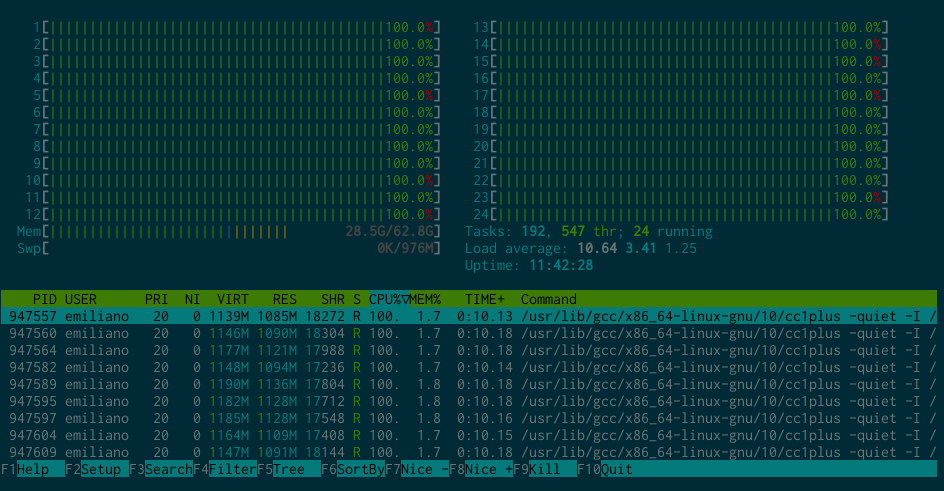
 Welcome to the 33th post in the rigorously raconteuring R recommendations series, or
 Continuing with
 I'm writing up a
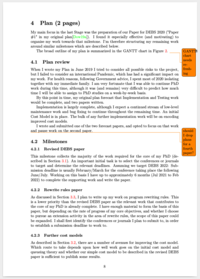 Two TODO items in the margin
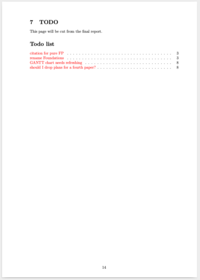 Collated TODOs in a list