Benjamin Mako Hill: NSF CAREER Award


May  2 16:38:37 server named[7372]: listening on IPv4 interface lo, 127.0.0.1#53
May  2 16:38:37 server named[7372]: listening on IPv4 interface eno4, 10.0.2.45#53
May  2 16:38:37 server named[7372]: listening on IPv4 interface eno4, 10.0.40.1#53
May  2 16:38:37 server named[7372]: listening on IPv4 interface eno4, 10.0.40.2#53
May  2 16:38:37 server named[7372]: listening on IPv4 interface eno4, 10.0.40.3#53
[...]
May  2 16:39:33 server named[7372]: listening on IPv4 interface eno4, 10.0.47.0#53
May  2 16:39:33 server named[7372]: listening on IPv4 interface eno4, 10.0.48.0#53
May  2 16:39:33 server named[7372]: listening on IPv4 interface eno4, 10.0.49.0#53
May  2 16:39:33 server named[7372]: listening on IPv6 interface lo, ::1#53
[...]
May  2 16:39:36 server named[7372]: zone localhost/IN: loaded serial 2
May  2 16:39:36 server named[7372]: all zones loaded
May  2 16:39:36 server named[7372]: running
May  2 16:39:36 server named[7372]: socket: file descriptor exceeds limit (123273/21000)
May  2 16:39:36 server named[7372]: managed-keys-zone: Unable to fetch DNSKEY set '.': not enough free resources
May  2 16:39:36 server named[7372]: socket: file descriptor exceeds limit (123273/21000)
The first thing I noticed is that a default configuration of BIND with 2560 local IPs (when just running in the default recursive mode) takes a minute to start and needed to open over 100,000 file handles. BIND also had some errors in that configuration which led to it not accepting shutdown requests. I filed Debian bug report #987927 [2] about this. One way of dealing with the errors in this situation on Debian is to edit /etc/default/named and put in the following line to allow BIND to access to many file handles:
OPTIONS="-u bind -S 150000"But the best thing to do for BIND when there are many IP addresses that aren t going to be used for DNS service is to put a directive like the following in the BIND configuration to specify the IP address or addresses that are used for the DNS service:
listen-on 10.0.2.45; ;I have just added the listen-on and listen-on-v6 directives to one of my servers with about a dozen IP addresses. While 2560 IP addresses is an unusual corner case it s not uncommon to have dozens of addresses on one system. dig When doing tests of Postfix for relaying mail I noticed that mail was being deferred with DNS problems (error was Host or domain name not found. Name service error for name=a838.example.com type=MX: Host not found, try again . I tested the DNS lookups with dig which failed with errors like the following:
dig -t mx a704.example.com socket.c:1740: internal_send: 10.0.2.45#53: Invalid argument socket.c:1740: internal_send: 10.0.2.45#53: Invalid argument socket.c:1740: internal_send: 10.0.2.45#53: Invalid argument ; <> DiG 9.16.13-Debian <> -t mx a704.example.com ;; global options: +cmd ;; connection timed out; no servers could be reachedHere is a sample of the strace output from tracing dig:bind(20, sa_family=AF_INET, sin_port=htons(0), sin_addr=inet_addr("0.0.0.0") , 16) = 0 recvmsg(20, msg_namelen=128 , 0) = -1 EAGAIN (Resource temporarily unavailable) write(4, "\24\0\0\0\375\377\377\377", 8) = 8 sendmsg(20, msg_name= sa_family=AF_INET, sin_port=htons(53), sin_addr=inet_addr("10.0.2.45") , msg_ namelen=16, msg_iov=[ iov_base="86\1 \0\1\0\0\0\0\0\1\4a704\7example\3com\0\0\17\0\1\0\0)\20\0\0\0\0 \0\0\f\0\n\0\10's\367\265\16bx\354", iov_len=57 ], msg_iovlen=1, msg_controllen=0, msg_flags=0 , 0) = -1 EINVAL (Invalid argument) write(2, "socket.c:1740: ", 15) = 15 write(2, "internal_send: 10.0.2.45#53: Invalid argument", 45) = 45 write(2, "\n", 1) = 1 futex(0x7f5a80696084, FUTEX_WAIT_PRIVATE, 0, NULL) = 0 futex(0x7f5a80696010, FUTEX_WAKE_PRIVATE, 1) = 0 futex(0x7f5a8069809c, FUTEX_WAKE_PRIVATE, 1) = 1 futex(0x7f5a80698020, FUTEX_WAKE_PRIVATE, 1) = 1 sendmsg(20, msg_name= sa_family=AF_INET, sin_port=htons(53), sin_addr=inet_addr("10.0.2.45") , msg_namelen=16, msg_iov=[ iov_base="86\1 \0\1\0\0\0\0\0\1\4a704\7example\3com\0\0\17\0\1\0\0)\20\0\0\0\0\0\0\f\0\n\0\10's\367\265\16bx\354", iov_len=57 ], msg_iovlen=1, msg_controllen=0, msg_flags=0 , 0) = -1 EINVAL (Invalid argument) write(2, "socket.c:1740: ", 15) = 15 write(2, "internal_send: 10.0.2.45#53: Invalid argument", 45) = 45 write(2, "\n", 1)Ubuntu bug #1702726 claims that an insufficient ARP cache was the cause of dig problems [3]. At the time I encountered the dig problems I was seeing lots of kernel error messages neighbour: arp_cache: neighbor table overflow which I solved by putting the following in /etc/sysctl.d/mine.conf:net.ipv4.neigh.default.gc_thresh3 = 4096 net.ipv4.neigh.default.gc_thresh2 = 2048 net.ipv4.neigh.default.gc_thresh1 = 1024Making that change (and having rebooted because I didn t need to run the server overnight) didn t entirely solve the problems. I have seen some DNS errors from Postfix since then but they are less common than before. When they happened I didn t have that error from dig. At this stage I m not certain that the ARP change fixed the dig problem although it seems likely (it s always difficult to be certain that you have solved a race condition instead of made it less common or just accidentally changed something else to conceal it). But it is clearly a good thing to have a large enough ARP cache so the above change is probably the right thing for most people (with the possibility of changing the numbers according to the required scale). Also people having that dig error should probably check their kernel message log, if the ARP cache isn t the cause then some other kernel networking issue might be related. Preliminary Results With Postfix I m seeing around 24,000 messages relayed per minute with more than 60% CPU time idle. I m not sure exactly how to count idle time when there are 12 CPU cores and 24 hyper-threads as having only 1 process scheduled for each pair of hyperthreads on a core is very different to having half the CPU cores unused. I ran my script to disable hyper-threads by telling the Linux kernel to disable each processor core that has the same core ID as another, it was buggy and disabled the second CPU altogether (better than finding this out on a production server). Going from 24 hyper-threads of 2 CPUs to 6 non-HT cores of a single CPU didn t change the thoughput and the idle time went to about 30%, so I have possibly halved the CPU capacity for these tasks by disabling all hyper-threads and one entire CPU which is surprising given that I theoretically reduced the CPU power by 75%. I think my focus now has to be on hyper-threading optimisation. Since 2006 the performance has gone from ~20 messages per minute on relatively commodity hardware to 24,000 messages per minute on server equipment that is uncommon for home use but which is also within range of home desktop PCs. I think that a typical desktop PC with a similar speed CPU, 32G of RAM and SSD storage would give the same performance. Moore s Law (that transistor count doubles approximately every 2 years) is often misquoted as having performance double every 2 years. In this case more than 1024* the performance over 15 years means the performance doubling every 18 months. Probably most of that is due to SATA SSDs massively outperforming IDE hard drives but it s still impressive. Notes I ve been using example.com for test purposes for a long time, but RFC2606 specifies .test, .example, and .invalid as reserved top level domains for such things. On the next iteration I ll change my scripts to use .test. My current test setup has a KVM virtual machine running my bhm program to receive mail which is taking between 20% and 50% of a CPU core in my tests so far. While that is happening the kvm process is reported as taking between 60% and 200% of a CPU core, so kvm takes as much as 4* the CPU of the guest due to the virtual networking overhead even though I m using the virtio-net-pci driver (the most efficient form of KVM networking for emulating a regular ethernet card). I ve also seen this in production with a virtual machine running a ToR relay node. I ve fixed a bug where Postal would try to send the SMTP quit command after encountering a TCP error which would cause an infinite loop and SEGV.
| Illustrator: | Pauline Baynes |
| Series: | Chronicles of Narnia #3 |
| Publisher: | Collier Books |
| Copyright: | 1952 |
| Printing: | 1978 |
| ISBN: | 0-02-044260-2 |
| Format: | Mass market |
| Pages: | 216 |
There was a boy named Eustace Clarence Scrubb and he almost deserved it.The Voyage of the Dawn Treader is the third Narnia book in original publication order (see my review of The Lion, the Witch and the Wardrobe for more about reading order). You could arguably start reading here; there are a lot of references to the previous books, but mostly as background material, and I don't think any of it is vital. If you wanted to sample a single Narnia book to see if you'd get along with the series, this is the one I'd recommend. Since I was a kid, The Voyage of the Dawn Treader has held the spot of my favorite of the series. I'm happy to report that it still holds up. Apart from one bit that didn't age well (more on that below), this is the book where the story and the world-building come together, in part because Lewis picks a plot shape that works with what he wants to write about. The younger two Pevensie children, Edmund and Lucy, are spending the summer with Uncle Harold and Aunt Alberta because their parents are in America. That means spending the summer with their cousin Eustace. C.S. Lewis had strong opinions about child-raising that crop up here and there in his books, and Harold and Alberta are his example of everything he dislikes: caricatured progressive, "scientific" parents who don't believe in fiction or mess or vices. Eustace therefore starts the book as a terror, a whiny bully who has only read boring practical books and is constantly scoffing at the Pevensies and making fun of their stories of Narnia. He is therefore entirely unprepared when the painting of a ship in the guest bedroom turns into a portal to the Narnia and dumps the three children into the middle of the ocean. Thankfully, they're in the middle of the ocean near the ship in the painting. That ship is the Dawn Treader, and onboard is Caspian from the previous book, now king of Narnia. He has (improbably) sorted things out in his kingdom and is now on a sea voyage to find seven honorable Telmarine lords who left Narnia while his uncle was usurping the throne. They're already days away from land, headed towards the Lone Islands and, beyond that, into uncharted seas. MAJOR SPOILERS BELOW. Obviously, Eustace gets a redemption arc, which is roughly the first half of this book. It's not a bad arc, but I am always happy when it's over. Lewis tries so hard to make Eustace insufferable that it becomes tedious. As an indoor kid who would not consider being dumped on a primitive sailing ship to be a grand adventure, I wanted to have more sympathy for him than the book would allow. The other problem with Eustace's initial character is that Lewis wants it to stem from "modern" parenting and not reading the right sort of books, but I don't buy it. I've known kids whose parents didn't believe in fiction, and they didn't act anything like this (and kids pick up a lot more via osmosis regardless of parenting than Lewis seems to realize). What Eustace acts like instead is an entitled, arrogant rich kid who is used to the world revolving around him, and it's fascinating to me how Lewis ignores class to focus on educational philosophy. The best part of Eustace's story is Reepicheep, which is just setup for Reepicheep becoming the best part of The Voyage of the Dawn Treader. Reepicheep, the leader of Narnia's talking mice, first appears in Prince Caspian, but there he's mostly played for laughs: the absurdly brave and dashing mouse who rushes into every fight he sees. In this book, he comes into his own as the courage and occasionally the moral conscience of the party. Caspian wants to explore and to find the lords of his past, the Pevensie kids want to have a sea adventure, and Eustace is in this book to have a redemption arc, but Reepicheep is the driving force at the heart of the voyage. He's going to Aslan's country beyond the sea, armed with a nursemaid's song about his destiny and a determination to be his best and most honorable self every step of the way, and nothing is going to stop him. Eustace, of course, takes an immediate dislike to a talking rodent. Reepicheep, in return, is the least interested of anyone on the ship in tolerating Eustace's obnoxious behavior and would be quite happy to duel him. But when Eustace is turned into a dragon, Reepicheep is the one who spends hours with him, telling him stories and ensuring he's not alone. It's beautifully handled, and my only complaint is that Lewis doesn't do enough with the Eustace and Reepicheep friendship (or indeed with Eustace at all) for the rest of the book. After Eustace's restoration and a few other relatively short incidents comes the second long section of the book and the part that didn't age well: the island of the Dufflepuds. It's a shame because the setup is wonderful: a cultivated island in the middle of nowhere with no one in sight, mysterious pounding sounds and voices, the fun of trying to figure out just what these invisible creatures could possibly be, and of course Lucy's foray into the second floor of a house, braving the lair of a magician to find and read one of the best books of magic in fantasy. Everything about how Lewis sets this scene is so well done. The kids are coming from an encounter with a sea serpent and a horrifically dangerous magic island and land on this scene of eerily normal domesticity. The most dangerous excursion is Lucy going upstairs in a brightly lit house with soft carpet in the middle of the day. And yet it's incredibly tense because Lewis knows exactly how to put you in Lucy's head, right down to having to stand with her back to an open door to read the book. And that book! The pages only turn forward, the spells are beautifully illustrated, and the sense of temptation is palpable. Lucy reading the eavesdropping spell is one of the more memorable bits in this series, at least for me, and makes a surprisingly subtle moral point about the practical reasons why invading other people's privacy is unwise and can just make you miserable. And then, when Lucy reads the visibility spell that was her goal, there's this exchange, which is pure C.S. Lewis:
"Oh Aslan," said she, "it was kind of you to come." "I have been here all the time," said he, "but you have just made me visible." "Aslan!" said Lucy almost a little reproachfully. "Don't make fun of me. As if anything I could do would make you visible!" "It did," said Aslan. "Did you think I wouldn't obey my own rules?"I love the subtlety of what's happening here: the way that Lucy is much more powerful than she thinks she is, but only because Aslan decided to make the rules that way and chooses to follow his own rules, making himself vulnerable in a fascinating way. The best part is that Lewis never belabors points like this; the characters immediately move on to talk about other things, and no one feels obligated to explain. But, unfortunately, along with the explanation of the thumping and the magician, we learn that the Dufflepuds are (remarkably dim-witted) dwarfs, the magician is their guardian (put there by Aslan, no less!), he transformed them into rather absurd shapes that they hate, and all of this is played for laughs. Once you notice that these are sentient creatures being treated essentially like pets (and physically transformed against their will), the level of paternalistic colonialism going on here is very off-putting. It's even worse that the Dufflepuds are memorably funny (washing dishes before dinner to save time afterwards!) and are arguably too dim to manage on their own, because Lewis made the authorial choice to write them that way. The "white man's burden" feeling is very strong. And Lewis could have made other choices! Coriakin the magician is a fascinating and somewhat morally ambiguous character. We learn later in the book that he's a star and his presence on the island is a punishment of sorts, leading to one of my other favorite bits of theology in this book:
"My son," said Ramandu, "it is not for you, a son of Adam, to know what faults a star can commit."Lewis could have kept most of the setup, kept the delightfully silly things the Dufflepuds believe, changed who was responsible for their transformation, and given Coriakin a less authoritarian role, and the story would have been so much stronger for it. After this, the story gets stranger and wilder, and it's in the last part that I think the true magic of this book lies. The entirety of The Voyage of the Dawn Treader is a progression from a relatively mundane sea voyage to something more awe-inspiring. The last few chapters are a tour de force of wonder: rejuvenating stars, sunbirds, the Witch's stone knife, undersea kingdoms, a sea of lilies, a wall of water, the cliffs of Aslan's country, and the literal end of the world. Lewis does it without much conflict, with sparse description in a very few pages, and with beautifully memorable touches like the quality of the light and the hush that falls over the ship. This is the part of Narnia that I point to and wonder why I don't see more emulation (although I should note that it is arguably an immram). Tolkien-style fantasy, with dwarfs and elves and magic rings and great battles, is everywhere, but I can't think of many examples of this sense of awe and discovery without great battles and detailed explanations. Or of characters like Reepicheep, who gets one of the best lines of the series:
"My own plans are made. While I can, I sail east in the Dawn Treader. When she fails me, I paddle east in my coracle. When she sinks, I shall swim east with my four paws. And when I can swim no longer, if I have not reached Aslan's country, or shot over the edge of the world in some vast cataract, I shall sink with my nose to the sunrise and Peepiceek shall be the head of the talking mice in Narnia."The last section of The Voyage of the Dawn Treader is one of my favorite endings of any book precisely because it's so different than the typical ending of a novel. The final return to England is always a bit disappointing in this series, but it's very short and is preceded by so much wonder that I don't mind. Aslan does appear to the kids as a lamb at the very end of the world, making Lewis's intended Christian context a bit more obvious, but even that isn't belabored, just left there for those who recognize the symbolism to notice. I was curious during this re-read to understand why The Voyage of the Dawn Treader is so much better than the first two books in the series. I think it's primarily due to two things: pacing, and a story structure that's better aligned with what Lewis wants to write about. For pacing, both The Lion, the Witch and the Wardrobe and Prince Caspian have surprisingly long setups for short books. In The Voyage of the Dawn Treader, by contrast, it takes only 35 pages to get the kids in Narnia, introduce all the characters, tour the ship, learn why Caspian is off on a sea voyage, establish where this book fits in the Narnian timeline, and have the kids be captured by slavers. None of the Narnia books are exactly slow, but Dawn Treader is the first book of the series that feels like it knows exactly where it's going and isn't wasting time getting there. The other structural success of this book is that it's a semi-episodic adventure, which means Lewis can stop trying to write about battles and political changes whose details he's clearly not interested in and instead focus wholeheartedly on sense-of-wonder exploration. The island-hopping structure lets Lewis play with ideas and drop them before they wear out their welcome. And the lack of major historical events also means that Aslan doesn't have to come in to resolve everything and instead can play the role of guardian angel. I think The Voyage of the Dawn Treader has the most compelling portrayal of Aslan in the series. He doesn't make decisions for the kids or tell them directly what to do the way he did in the previous two books. Instead, he shows up whenever they're about to make a dreadful mistake and does just enough to get them to make a better decision. Some readers may find this takes too much of the tension out of the book, but I have always appreciated it. It lets nervous child readers enjoy the adventures while knowing that Aslan will keep anything too bad from happening. He plays the role of a protective but non-interfering parent in a genre that usually doesn't have parents because they would intervene to prevent adventures. I enjoyed this book just as much as I remembered enjoying it during my childhood re-reads. Still the best book of the series. This, as with both The Lion, the Witch and the Wardrobe and Prince Caspian, was originally intended to be the last book of the series. That, of course, turned out to not be the case, and The Voyage of the Dawn Treader is followed (in both chronological and original publication order) by The Silver Chair. Rating: 9 out of 10
 One could think that nowadays having a machine with software raid doing dual boot should be easy, but... my experience showed that it is not that easy.Having a Windows machine do software raid is easy (I still don't understand why it doesn't really work like it should, but that is because I'm used to Linux software raid), and having software raid on Linux is also really easy. But doing so on a BIOS booted machine, on mbr disks (as Windows doesn't allow GPT on BIOS) is quite a pain.The problem is how Windows does all this, with it's dynamic disks. What happens with this is that you get from a partitioning like this:/dev/sda1 * 2048 206847 204800 100M 7 HPFS/NTFS/exFAT /dev/sda2 206848 312580095 312373248 149G 7 HPFS/NTFS/exFAT /dev/sda3 312580096 313165823 585728 286M 83 Linux /dev/sda4 313165824 957698047 644532224 307,3G fd Linux raid autodetect To something like this:/dev/sda1 63 2047 1985 992,5K 42 SFS /dev/sda2 * 2048 206847 204800 100M 42 SFS /dev/sda3 206848 312580095 312373248 149G 42 SFS /dev/sda4 312580096 976769006 664188911 316,7G 42 SFS These are the physical partitions as seen by fdisk, logical partitions are still like before, of course, so there is no problem in accesing them under Linux or windows, but what happens here is that Windows is using the first sectors for its dynamic disks stuff, so... you cannot use those to write grub info there :-(So... the solution I found here was to install Debian's mbr and make it boot grub, but then... where do I store grub's info?, well, to do this I'm using a btrfs /boot which is on partition 3, as btrfs has room for embedding grub's info, and I setup the software raid with ext4 on partition 4, like you can see on my first partition dump. Of course, you can have just btrfs with its own software raid, then you don't need the fourth partition or anything.There are however some caveats on doing all this, what I found was that I had to install grub manually using grub-install --no-floppy on /dev/sda3 and /dev/sdb3, as Debian's grub refused to give me the option to install there, also... several warnings came as a result, but things work ok anyway.One more warning, I did all this on Buster, but it looks like for Grub 2.04 which is included on Bullseye, things have gotten a bit bigger, so at least on my partitions there was no room for it, so I had to leave the old Buster's grub around for now, if anybody has any ideas on how to solve this... they are welcome.
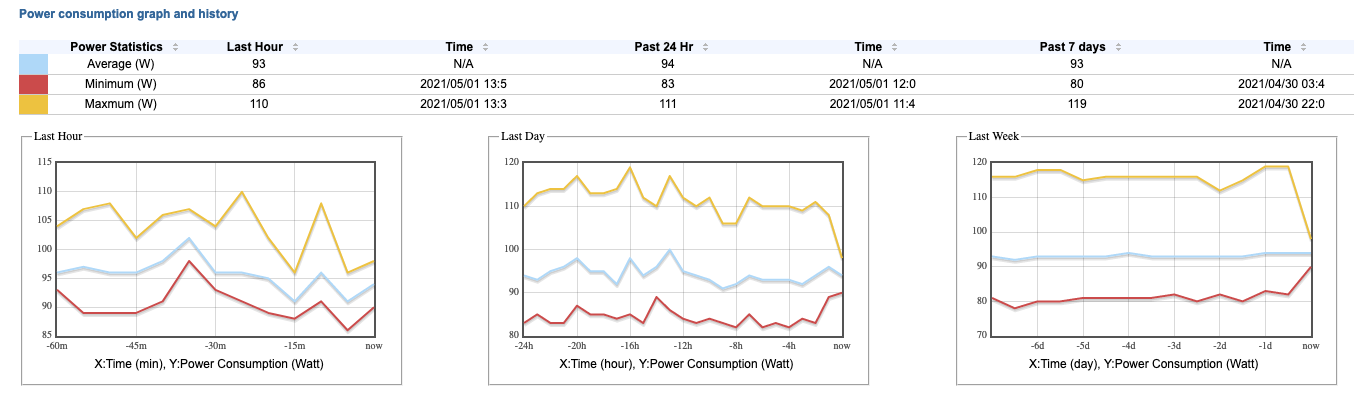 screenshot showing power consumption of server


:wq for today.
 May. Told my son about the months in English. The numbers are straightforward but couldn't remember what the other ones are.
He was amused when I told him Septem is seven in Latin, and September is the ninth month. Octo, novem, decem are similar.
 Here is my monthly update covering what I have been doing in the free software world during April 2021 (previous month):
django-email-from-template library to upload a Python wheel (.whl) file to PyPI. [...]
libsass-python (a Python implementation of the Sass CSS preprocessor) in order to make the build reproducible. (#319)
libsass-python (a Python implementation of the Sass CSS preprocessor) in order to make the build reproducible. [...
notes.git" repository.
date metadata attribute on reports, restoring the display of months on the homepage. [...]172 and 173 to Debian:
redis (5:6.2.2-1) (to experimental) New upstream release.
python-django:
2.2.20-1 New upstream security release.3.2-1 (to experimental) New major upstream release (release notes).hiredis (1.0.0-2) Build with SSL/TLS support (#987114), and overhaul various aspects of the packaging.
mtools (4.0.27-1) New upstream release.
avahi (CVE-2021-3468), exiv2 (CVE-2021-3482), file-roller (CVE-2020-36314), fluidsynth (CVE-2021-28421), gnuchess (CVE-2021-30184), gpac (CVE-2021-28300), imagemagick (CVE-2021-20309, CVE-2021-20243), ircii (CVE-2021-29376), jetty9 (CVE-2021-28163), libcaca (CVE-2021-30498, CVE-2021-30499), libjs-handlebars, libpano13, libpodofo (CVE-2021-30469, CVE-2021-30470, CVE-2021-30471, CVE-2021-30472), mediawiki, mpv (CVE-2021-30145), nettle (CVE-2021-20305), nginx (CVE-2020-36309), nim (CVE-2021-21372, CVE-2021-21373, CVE-2021-21374), node-glob-parent (CVE-2020-28469), openexr (CVE-2021-3474), python-django-registration (CVE-2021-21416), qt4-x11 (CVE-2021-3481), qtsvg-opensource-src (CVE-2021-3481), ruby-kramdown, scrollz (CVE-2021-29376), syncthing (CVE-2021-21404), thunderbird (CVE-2021-23991, CVE-2021-23992, CVE-2021-23993) & wordpress (CVE-2021-29447).
python-bleach, a whitelist-based HTML sanitisation library.
ChangeFeedbackControl request could have lead to out of bounds memory accesses in the X server. These issues could have led to privilege escalation for authorised clients, particularly on systems where the X server is running as a privileged user. I, therefore, issued both DLA 2627-1 and ELA 405-1 to address this problem.

 Having destroyed the third Cherry Stream keyboard in 4 years, I wanted to try
a more substantial keyboard for a change. After some research I decided that I
want a mechanical, wired, tenkeyless keyboard without any fancy LEDs.
At the end I settled for a Keychron C1 with red switches. It meets all
requirements, looks very nice and the price is reasonable.
Surprise!
After the keyboard was delivered, I connected it to my Debian machine and was
unpleasantly surprised to notice that the Function-keys did not work at all.
The keyboard shares the Multimedia keys with the F-keys and you have an
fn
key that supposedly switches between the two modes, like you re used to on a
laptop. On Linux, however you cannot access the F-keys at all: pressing fn
+ F1 or F1 makes no difference, you ll always get the Multimedia key.
Switching the keyboard between Windows and Mac mode makes no difference
either, in both modes the F-keys are not accessible.
Apparently Keychron is aware of the problem, because the quick start manual
tells you:
We have a Linux user group on facebook. Please search Keychron Linux Group on facebook. So you can better experience with our keyboard.Customer support at its finest! So at this point you should probably just send the keyboard back, get the refund and buy a proper one with functioning F-keys. The fix Test if this command fixes the issue and enables the
Fn + F-key-combos:
# as root:
echo 2 > /sys/module/hid_apple/parameters/fnmode
fn +
F-key (or the other way round). To switch the default mode of the F-keys to
Function- or Multimedia-mode, press and hold fn + X + L for 4 seconds.
If everything works as expected, you can make the change permanent by creating
the file /etc/modprobe.d/hid_apple.conf and adding the line:
options hid_apple fnmode=2


173. This version includes the following changes:
[ Chris Lamb ]
* Add support for showing annotations in PDF files.
  (Closes: reproducible-builds/diffoscope#249)
* Move to assert_diff in test_pdf.py.
[ Zachary T Welch ]
* Difference.__init__: Demote unified_diff argument to a Python "kwarg".
hugo serve --baseUrl=http://localhost/
firefox https://localhost:1313/
.gitlab-ci.yml file shipped (but not
currently used) in the repository. If push comes to shove, we can just publish
the site elsewhere and point DNS there.
And, of course, if DNS fails us, then we're in trouble, but that's the
situation anyway: we can always register a new domain name for the status page
when we need to. It doesn't seem like a priority at the moment.
Comments and feedback are welcome!
This article was first published on the Tor Project Blog.
 I wrote previously about my DeskPi Pro + 8GB Pi 4 setup. My main complaint at the time was the fact one of the forward facing USB ports broke off early on in my testing. For day to day use that hasn t been a problem, but it did mar the whole experience. Last week I received an unexpected email telling me The new updated PCB Board for your DeskPi order was shipped. . Apparently this was due to problems with identifying SSDs and WiFi/HDMI issues. I wasn t quite sure how much of the internals they d be replacing, so I was pleasantly surprised when it turned out to be most of them; including the PCB with the broken USB port on my device.
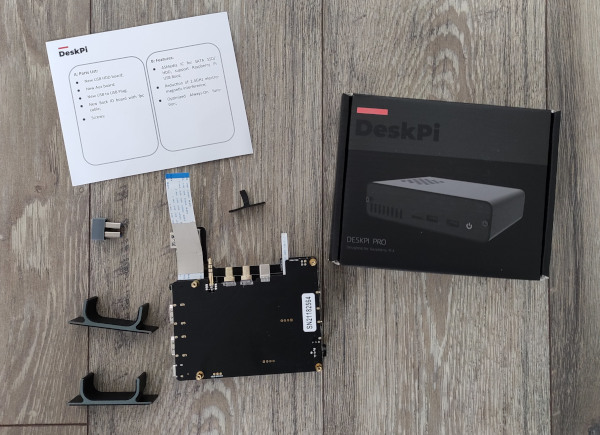 They also provided a set of feet allowing for vertical mounting of the device, which was a nice touch.
The USB/SATA bridge chip in use has changed; the original was:
usb 2-1: New USB device found, idVendor=152d, idProduct=0562, bcdDevice= 1.09
usb 2-1: New USB device strings: Mfr=1, Product=2, SerialNumber=3
usb 2-1: Product: RPi_SSD
usb 2-1: Manufacturer: 52Pi
usb 2-1: SerialNumber: DD5641988389F
usb 2-1: New USB device found, idVendor=174c, idProduct=1153, bcdDevice= 0.01
usb 2-1: New USB device strings: Mfr=2, Product=3, SerialNumber=1
usb 2-1: Product: AS2115
usb 2-1: Manufacturer: ASMedia
usb 2-1: SerialNumber: 00000000000000000000
reset_raspberrypi to the /etc/initramfs-tools/modules file - that way this module is available in the initramfs, the appropriate pre-USB reset can happen and everything works just fine again.
The other niggle with the new kernel was a regular set of errors in the kernel log:
mmc1: Timeout waiting for hardware cmd interrupt.
mmc1: sdhci: ============ SDHCI REGISTER DUMP ===========
sdhci_iproc for now - I m not using the wifi so loss of MMC isn t a problem.
Credit to DeskPi for how they handled this. I didn t have to do anything and didn t even realise anything was happening until I got the email with my tracking number and a description of what they were sending out in it. Delivery took less than a week. This is a great example of how to handle a product issue - no effort required on the part of the customer.
 I worked on research on FOSS foundations and published two reports:
Growing Open Source Projects with a Stable Foundation
This primer covers non-technical aspects that the majority of projects will have to consider at some point. It also explains how FOSS foundations can help projects grow and succeed.
This primer explains:
Next.