Search Results: "tach"

26 April 2016

Matthias Klumpp: A GNOME Software Hackfest report

Two weeks ago was the GNOME Software hackfest in London, and I ve been there! And I just now found the time to blog about it, but better do it late than never  . Arriving in London and finding the Red Hat offices After being stuck in trains for the weekend, but fortunately arriving at the airport in time, I finally made it to London with quite some delay due to the slow bus transfer from Stansted Airport. After finding the hotel, the next issue was to get food and a place which accepted my credit card, which was surprisingly hard in defence of London I must say though, that it was a Sunday, 7 p.m. and my card is somewhat special (in Canada, it managed to crash some card readers, so they needed a hard-reset). While searching for food, I also found the Red Hat offices where the hackfest was starting the next day by accident. My hotel, the office and the tower bridge were really close, which was awesome! I have been to London in 2008 the last time, and only for a day, so being that close to the city center was great. The hackfest didn t leave any time to visit the city much, but by being close to the center, one could hardly avoid the London experience  . Cool people working on great stuff towerbridge2016That s basically the summary for the hackfest  . It was awesome to meet with Richard Hughes again, since we haven t seen each other in person since 2011, but work on lots of stuff together. This was especially important, since we managed to solve quite some disagreements we had over stuff Richard even almost managed to make me give in to adding <kudos/> to the AppStream spec, something which I was pretty against supporting (it didn t make it yet, but I am no longer against the idea of having that the remaining issues are solvable). Meeting Iain Lane again (after FOSDEM) was also very nice, and also seeing other people I ve only worked with over IRC or bug reports (e.g. William, Kalev, ) was great. Also lots of new people were there, like guys from Endless, who build their low-budget computer for developing/emerging countries on top of GNOME and Linux technologies. It s pretty cool stuff they do, you should check out their website! (they also build their distribution on top of Debian, which is even more awesome, and something I didn t know before (because many Endless people I met before were associated with GNOME or Fedora, I kind of implicitly assumed the system was based on Fedora  )). The incarnation of GNOME Software used by endless looks pretty different from what the normal GNOME user sees, since it s adjusted for a different audience and input method. But it looks great, and is a good example for how versatile GS already is! And for upstream GNOME, we ve seen some pretty great mockups done by Endless too I hope those will make it into production somehow.
Ironically, a "snapstore" was close to the office ;-)

Ironically, a snapstore was close to the office ;-)

XdgApp and sandboxing of apps was also a big topic, aside from Ubuntu and Endless integration. Fortunately, Alexander Larsson was also there to answer all the sandboxing and XdgApp-questions. I used the time to follow up on a conversation with Alexander we started at FOSDEM this year, about the Limba vs. XdgApp bundling issue. While we are in-line on the sandboxing approach, the way how software is distributed is implemented differently in Limba and XdgApp, and it is bad to have too many bundling systems around (doesn t make for a good story where we can just tell developers ship as this bundling format, and it will be supported everywhere ). Talking with Alex about this was very nice, and I think there is a way out of the too-many-solutions dilemma, at least for Limba and XdgApp I will blog about that separately soon. On the Ubuntu side, a lot of bugs and issues were squashed and changes upstreamed to GNOME, and people were generally doing their best to reduce Richard s bus-factor on the project a little  . I mainly worked on AppStream issues, finishing up the last pieces of appstream-generator and running it against some sample package sets (and later that week against the whole Debian archive). I also started to implement support for showing AppStream issues in the Debian PTS (this work is not finished yet). I also managed to solve a few bugs in the old DEP-11 generator and prepare another release for Ubuntu. We also enjoyed some good Japanese food, and some incredibly great, but also suddenly very expensive Indian food (but that s a different story  ). The most important thing for me though was to get together with people actually using AppStream metadata in software centers and also more specialized places. This yielded some useful findings, e.g. that localized screenshots are not something weird, but actually a wanted feature of Endless for their curated AppStore. So localized screenshots will be part of the next AppStream spec. Also, there seems to be a general need to ship curation information for software centers somehow (which apps are featured? how are they styled? added special banners for some featured apps, app of the day features, etc.). This problem hasn t been solved, since it s highly implementation-specific, and AppStream should be distro-agnostic. But it is something we might be able to address in a generic way sooner or later (I need to talk to people at KDE and Elementary about it). In summary It was a great event! Going to conferences and hackfests always makes me feel like it moves projects leaps ahead, even if you do little coding. Sorting out issues together with people you see in person (rather than communicating with them via text messages or video chat), is IMHO always the most productive way to move forward (yeah, unless you do this every week, but I think you get my point  ). For me, being the only (and youngest ^^) developer at the hackfest who was not employed by any company in the FLOSS business, the hackfest was also motivating to continue to invest spare time into working on these projects. So, the only thing left to do is a huge shout out of THANK YOU to the Ubuntu Community Fund and therefore the Ubuntu community for sponsoring me! You rock! Also huge thanks to Canonical for organizing the sponsoring really quickly, so I didn t get into trouble with paying my flights.
Laney and attente walking on the Millennium Bridge after we walked the distance between Red Hat and Canonical's offices.

Laney and attente on the Millennium Bridge after we walked the distance between Red Hat and Canonical s offices.

To worried KDE people: No, I didn t leave the blue side I just generally work on cross-desktop stuff, and would like all desktops to work as well as possible

20 April 2016

Ben Hutchings: Experiments with signed kernels and modules in Debian

I've lately been working on support for Secure Boot in Debian, mostly in the packages maintained by the kernel team. My instructions for setting up UEFI Secure Boot are based on OVMF running on KVM/QEMU. All 'Designed for Windows' PCs should allow reconfiguration of SB, but it may not be easy to do so. They also assume that the firmware includes an EFI shell. Updated: Robert Edmonds pointed out that the 'Designed for Windows' requirements changed with Windows 10: The ability to reconfigure SB is indeed now optional for devices which are designed to always boot with a specific Secure Boot configuration. I also noticed that the requirements say that OEMs should not sign an EFI shell binary. Therefore I've revised the instructions to use efibootmgr instead. Background UEFI Secure Boot, when configured and enabled (which it is on most new PCs) requires that whatever it loads is signed with a trusted key. The one common trusted key for PCs is held by Microsoft, and while they will sign other people's code for a nominal fee, they require that it also validates the code it loads, i.e. the kernel or next stage boot loader. The kernel in turn is responsible for validating any code that could compromise its integrity (kernel modules, kexec images). Currently there are no such signed boot loaders in Debian, though the shim and grub-signed packages included in many other distributions should be usable. However it's possible to load an appropriately configured Linux kernel directly from the UEFI firmware (typically through the shell) which is what I'm doing at the moment. Packaging signed kernels Signing keys obviously need to be protected against disclosure; the private keys can't be included in a source package. We also won't install them on buildds separately, and generating signatures at build time would of course be unreproducible. So I've created a new source package, linux-signed, which contains detached signatures prepared offline. Currently the binary packages built from linux-signed also contain only detached signatures, which are applied as necessary at installation time. The signed kernel image (only on x86 for now) is named /boot/vmlinuz-kversion.efi.signed. However, since packages must not modify files owned by another package and I didn't want to dpkg-divert thousands of modules, the module signatures remain detached. Detached module signatures are a new invention of mine, and require changes in kmod and various other packages to support them. (An alternate might be to put signed modules under a different directory and drop a configuration file in /lib/depmod.d to make them higher priority. But then we end up with two copies of every module installed, which can be a substantial waste of space.) Preparation The packages you need to repeat the experiment: For Secure Boot, you'll then need to copy the signed kernel and the initrd onto the EFI system partition, normally mounted at /boot/efi. SB requires a Platform Key (PK) which will already be installed on a real PC. You can replace it but you don't need to. If you're using OVMF, there are no persistent keys so you do need to generate your own:
openssl req -new -x509 -newkey rsa:2048 -keyout pk.key -out pk.crt \
    -outform der -nodes
You'll also need to install the certificate for my kernel image signing key, which is under debian/certs in the linux-signed package. OVMF requires this in DER format:
openssl x509 -in linux-signed-1~exp3/debian/certs/linux-image-benh@debian.org.cert.pem \
    -out linux.crt -outform der 
You'll need to copy the certificate(s) to a FAT-formatted partition such as the EFI system partition, so that the firmware can read it. Use efibootmgr to add a boot entry for the kernel, for example:
efibootmgr -c -d /dev/sda -L linux-signed -l '\vmlinuz.efi' -u 'initrd=initrd.img root=/dev/sda2 ro quiet'
You should use the same kernel parameters as usual, except that you also need to specify the initrd filename using the initrd= parameter. The EFI stub code at the beginning of the kernel will load the initrd using EFI boot services. Enabling Secure Boot
  1. Reboot the system and enter UEFI setup
  2. Find the menu entry for Secure Boot customisation (in OVMF, it's under 'Device Manager' for some reason)
  3. In OVMF, enrol the PK from pk.crt
  4. Add linux.crt to the DB (whitelist database)
  5. Ensure that Secure Boot is enabled and in 'User Mode'
Booting the kernel in Secure Boot If all went well, Linux will boot as normal. You can confirm that Secure Boot was enabled by reading /sys/kernel/security/securelevel, which will contain 1 if it was. Module signature validation Module signatures are now always checked and unsigned modules will be given the 'E' taint flag. If Secure Boot is used or you add the kernel parameter module.sig_enforce=1, unsigned modules will be rejected. You can also turn on signature enforcement and turn off various other methods of modifying kernel code (such as kexec) by writing 1 to /sys/kernel/security/securelevel.

Reproducible builds folks: Reproducible builds: week 51 in Stretch cycle

What happened in the reproducible builds effort between April 10th and April 16th 2016: Toolchain fixes Antoine Beaupr suggested that gitpkg stops recording timestamps when creating upstream archives. Antoine Beaupr also pointed out that git-buildpackage diverges from the default gzip settings which is a problem for reproducibly recreating released tarballs which were made using the defaults. Alexis Bienven e submitted a patch extending sphinx SOURCE_DATE_EPOCH support to copyright year. Packages fixed The following packages have become reproducible due to changes in their build dependencies: atinject-jsr330, avis, brailleutils, charactermanaj, classycle, commons-io, commons-javaflow, commons-jci, gap-radiroot, jebl2, jetty, libcommons-el-java, libcommons-jxpath-java, libjackson-json-java, libjogl2-java, libmicroba-java, libproxool-java, libregexp-java, mobile-atlas-creator, octave-econometrics, octave-linear-algebra, octave-odepkg, octave-optiminterp, rapidsvn, remotetea, ruby-rinku, tachyon, xhtmlrenderer. The following packages became reproducible after getting fixed: Some uploads fixed some reproducibility issues, but not all of them: Patches submitted which have not made their way to the archive yet: diffoscope development Zbigniew J drzejewski-Szmek noted in #820631 that diffoscope doesn't work properly when a file contains several cpio archives. Package reviews 21 reviews have been added, 14 updated and 22 removed in this week. New issue found: timestamps_in_htm_by_gap. Chris Lamb reported 10 new FTBFS issues. Misc. The video and the slides from the talk "Reproducible builds ecosystem" at LibrePlanet 2016 have been published now. This week's edition was written by Lunar and Holger Levsen. h01ger automated the maintenance and publishing of this weekly newsletter via git.

Norbert Preining: GnuPG notes: subkeys, yubikey, gpg1 vs gpg2

Switching from one GnuPG master key to the usage of subkeys was long on my list of things I wanted to do, but never came around. With the advent of a YubiKey NEO in my pocket I finally took the plunge: reading through lots of web pages (and adding one here for confusion), trying to understand the procedures, and above all, understanding my own requirements! gpg-subkeys-yubi To sum up a long story, it was worth the plunge, and all over the security level of my working environment has improved considerable. While the advantages of subkeys are well documented (e.g., Debian Wiki), at the end of the day I was like probably many Debian Developers having one master key that was used for every action: mail decryption and signing, signing of uploads, etc. Traveling a lot I always felt uncomfortable. Despite a lengthy passphrase, I still didn t want my master key to get into wrong hands in case the laptop got stolen. Furthermore, I had my master key on several computers (work, laptop, mail server), which didn t help a lot either. With all this, I started to compile a list of requirements/objectives I wanted to have: Warning Before we start a word of caution make backups, best is to make backups at every stage. You don t want that an erroneous operations wipes out your precious keys without a backup! Preparation In the following I will assume that MASTERKEY environment variable contains the id of the master key to be converted. Furthermore, I have followed some of the advice here, so key ids will be shown in long format. Let us start with the current situation:
$ gpg -K $MASTERKEY
sec   4096R/0x6CACA448860CDC13 2010-09-14
      Key fingerprint = F7D8 A928 26E3 16A1 9FA0  ACF0 6CAC A448 860C DC13
uid                            Norbert Preining <norbert@preining.info>
uid                            Norbert Preining <preining@logic.at>
uid                            Norbert Preining <preining@debian.org>
uid                            Norbert Preining <preining@jaist.ac.jp>
ssb   4096R/0xD1D2BD14810F62B3 2010-09-14
In the following we will go through the following steps: Yubikey SmartCard setup There are several guides out there, but I will in very near future write one about using the NEO for various usage scenaria including GPG keys. Edit the current key The following can be done in one session or in different sessions, the screen logs are after starting with:
$ gpg --expert --edit-key $MASTERKEY
add expiry date Having an expiry date on your key serves two purposes: If you loose it, it will solve itself automatically, and furthermore, you are forced to deal with the key and refresh your gpg knowledge at least once a year. That are two perfect reasons to set expiry to one year. The following log selects each key in turn and sets its expiry date.
$ gpg --expert --edit-key $MASTERKEY
gpg (GnuPG) 1.4.20; Copyright (C) 2015 Free Software Foundation, Inc.
This is free software: you are free to change and redistribute it.
There is NO WARRANTY, to the extent permitted by law.
 
Secret key is available.
 
pub  4096R/0x6CACA448860CDC13  created: 2010-09-14  expires: never       usage: SC  
                               trust: ultimate      validity: ultimate
sub  4096R/0xD1D2BD14810F62B3  created: 2010-09-14  expires: never       usage: E   
[ultimate] (1). Norbert Preining <norbert@preining.info>
[ultimate] (2)  Norbert Preining <preining@logic.at>
[ultimate] (3)  Norbert Preining <preining@debian.org>
[ultimate] (4)  Norbert Preining <preining@jaist.ac.jp>
 
gpg> expire
Changing expiration time for the primary key.
Please specify how long the key should be valid.
         0 = key does not expire
      <n>  = key expires in n days
      <n>w = key expires in n weeks
      <n>m = key expires in n months
      <n>y = key expires in n years
Key is valid for? (0) 1y
Key expires at Mon 06 Feb 2017 08:09:16 PM JST
Is this correct? (y/N) y
 
You need a passphrase to unlock the secret key for
user: "Norbert Preining <norbert@preining.info>"
4096-bit RSA key, ID 0x6CACA448860CDC13, created 2010-09-14
 
Enter passphrase:
 
pub  4096R/0x6CACA448860CDC13  created: 2010-09-14  expires: 2017-02-06  usage: SC  
                               trust: ultimate      validity: ultimate
sub  4096R/0xD1D2BD14810F62B3  created: 2010-09-14  expires: never       usage: E   
[ultimate] (1). Norbert Preining <norbert@preining.info>
[ultimate] (2)  Norbert Preining <preining@logic.at>
[ultimate] (3)  Norbert Preining <preining@debian.org>
[ultimate] (4)  Norbert Preining <preining@jaist.ac.jp>
 
gpg> key 1
 
pub  4096R/0x6CACA448860CDC13  created: 2010-09-14  expires: 2017-02-06  usage: SC  
                               trust: ultimate      validity: ultimate
sub* 4096R/0xD1D2BD14810F62B3  created: 2010-09-14  expires: never       usage: E   
[ultimate] (1). Norbert Preining <norbert@preining.info>
[ultimate] (2)  Norbert Preining <preining@logic.at>
[ultimate] (3)  Norbert Preining <preining@debian.org>
[ultimate] (4)  Norbert Preining <preining@jaist.ac.jp>
 
gpg> expire
Changing expiration time for a subkey.
Please specify how long the key should be valid.
         0 = key does not expire
      <n>  = key expires in n days
      <n>w = key expires in n weeks
      <n>m = key expires in n months
      <n>y = key expires in n years
Key is valid for? (0) 1y
Key expires at Mon 06 Feb 2017 08:09:27 PM JST
Is this correct? (y/N) y
 
You need a passphrase to unlock the secret key for
user: "Norbert Preining <norbert@preining.info>"
4096-bit RSA key, ID 0x6CACA448860CDC13, created 2010-09-14
 
Enter passphrase:
 
pub  4096R/0x6CACA448860CDC13  created: 2010-09-14  expires: 2017-02-06  usage: SC  
                               trust: ultimate      validity: ultimate
sub* 4096R/0xD1D2BD14810F62B3  created: 2010-09-14  expires: 2017-02-06  usage: E   
[ultimate] (1). Norbert Preining <norbert@preining.info>
[ultimate] (2)  Norbert Preining <preining@logic.at>
[ultimate] (3)  Norbert Preining <preining@debian.org>
[ultimate] (4)  Norbert Preining <preining@jaist.ac.jp>
Add a photo Not strictly necessary, but an interesting feature. gpg suggests 240 288, I resized a photo of my head, greyscaled it, and optimized it with jpegoptim -s -m40 my-photo.jpg. The parameter 40 is the quality, I played around a bit to find the best balance between size and quality. The size should not be too big as the photo will be part of the key!
gpg> addphoto
 
Pick an image to use for your photo ID.  The image must be a JPEG file.
Remember that the image is stored within your public key.  If you use a
very large picture, your key will become very large as well!
Keeping the image close to 240x288 is a good size to use.
 
Enter JPEG filename for photo ID: GPG/norbert-head.jpg
Is this photo correct (y/N/q)? y
 
You need a passphrase to unlock the secret key for
user: "Norbert Preining <norbert@preining.info>"
4096-bit RSA key, ID 0x6CACA448860CDC13, created 2010-09-14
 
Enter passphrase:
 
pub  4096R/0x6CACA448860CDC13  created: 2010-09-14  expires: 2017-02-06  usage: SC  
                               trust: ultimate      validity: ultimate
sub* 4096R/0xD1D2BD14810F62B3  created: 2010-09-14  expires: 2017-02-06  usage: E   
[ultimate] (1). Norbert Preining <norbert@preining.info>
[ultimate] (2)  Norbert Preining <preining@logic.at>
[ultimate] (3)  Norbert Preining <preining@debian.org>
[ultimate] (4)  Norbert Preining <preining@jaist.ac.jp>
[ unknown] (5)  [jpeg image of size 4185]
Add subkeys of 2048bit for signing/encryption/authentication Now comes the interesting part, adding three subkeys: one for signing, one for encrypting, and one for authentication. The one for signing is the one you will use for signing your uploads to Debian as well as emails. The authentication key will later be used to provide ssh authentication. Note that you have to use the --expert expert option to edit-key (as shown above), otherwise gpg does not allow to do this. As I want to move the subkeys to the Yubikey NEO, a keysize of 2048bits is necessary. First for the signing:
gpg> addkey
Key is protected.
 
You need a passphrase to unlock the secret key for
user: "Norbert Preining <norbert@preining.info>"
4096-bit RSA key, ID 0x6CACA448860CDC13, created 2010-09-14
 
Enter passphrase:
 
Please select what kind of key you want:
   (3) DSA (sign only)
   (4) RSA (sign only)
   (5) Elgamal (encrypt only)
   (6) RSA (encrypt only)
   (7) DSA (set your own capabilities)
   (8) RSA (set your own capabilities)
Your selection? 4
RSA keys may be between 1024 and 4096 bits long.
What keysize do you want? (2048) 
Requested keysize is 2048 bits
Please specify how long the key should be valid.
         0 = key does not expire
      <n>  = key expires in n days
      <n>w = key expires in n weeks
      <n>m = key expires in n months
      <n>y = key expires in n years
Key is valid for? (0) 1y
Key expires at Mon 06 Feb 2017 08:10:06 PM JST
Is this correct? (y/N) y
Really create? (y/N) y
We need to generate a lot of random bytes. It is a good idea to perform
some other action (type on the keyboard, move the mouse, utilize the
disks) during the prime generation; this gives the random number
generator a better chance to gain enough entropy.
....+++++
..........+++++
 
pub  4096R/0x6CACA448860CDC13  created: 2010-09-14  expires: 2017-02-06  usage: SC  
                               trust: ultimate      validity: ultimate
sub* 4096R/0xD1D2BD14810F62B3  created: 2010-09-14  expires: 2017-02-06  usage: E   
sub  2048R/0xEC00B8DAD32266AA  created: 2016-02-07  expires: 2017-02-06  usage: S   
[ultimate] (1). Norbert Preining <norbert@preining.info>
[ultimate] (2)  Norbert Preining <preining@logic.at>
[ultimate] (3)  Norbert Preining <preining@debian.org>
[ultimate] (4)  Norbert Preining <preining@jaist.ac.jp>
[ unknown] (5)  [jpeg image of size 4185]
Now the same for encryption key:
gpg> addkey
Key is protected.
 
You need a passphrase to unlock the secret key for
user: "Norbert Preining <norbert@preining.info>"
4096-bit RSA key, ID 0x6CACA448860CDC13, created 2010-09-14
 
Enter passphrase:
 
Please select what kind of key you want:
   (3) DSA (sign only)
   (4) RSA (sign only)
   (5) Elgamal (encrypt only)
   (6) RSA (encrypt only)
   (7) DSA (set your own capabilities)
   (8) RSA (set your own capabilities)
Your selection? 6
RSA keys may be between 1024 and 4096 bits long.
What keysize do you want? (2048) 
Requested keysize is 2048 bits
Please specify how long the key should be valid.
         0 = key does not expire
      <n>  = key expires in n days
      <n>w = key expires in n weeks
      <n>m = key expires in n months
      <n>y = key expires in n years
Key is valid for? (0) 1y
Key expires at Mon 06 Feb 2017 08:10:20 PM JST
Is this correct? (y/N) y
Really create? (y/N) y
We need to generate a lot of random bytes. It is a good idea to perform
some other action (type on the keyboard, move the mouse, utilize the
disks) during the prime generation; this gives the random number
generator a better chance to gain enough entropy.
..+++++
........+++++
 
pub  4096R/0x6CACA448860CDC13  created: 2010-09-14  expires: 2017-02-06  usage: SC  
                               trust: ultimate      validity: ultimate
sub* 4096R/0xD1D2BD14810F62B3  created: 2010-09-14  expires: 2017-02-06  usage: E   
sub  2048R/0xEC00B8DAD32266AA  created: 2016-02-07  expires: 2017-02-06  usage: S   
sub  2048R/0xBF361ED434425B4C  created: 2016-02-07  expires: 2017-02-06  usage: E   
[ultimate] (1). Norbert Preining <norbert@preining.info>
[ultimate] (2)  Norbert Preining <preining@logic.at>
[ultimate] (3)  Norbert Preining <preining@debian.org>
[ultimate] (4)  Norbert Preining <preining@jaist.ac.jp>
[ unknown] (5)  [jpeg image of size 4185]
Finally for the authentication key. Note that only here the --expert is necessary! We use (8) RSA (set your own capabilities) and then toggle sign and encryption capabilities off, and authentication on.
gpg> addkey
Key is protected.
 
You need a passphrase to unlock the secret key for
user: "Norbert Preining <norbert@preining.info>"
4096-bit RSA key, ID 0x6CACA448860CDC13, created 2010-09-14
 
Enter passphrase:
 
Please select what kind of key you want:
   (3) DSA (sign only)
   (4) RSA (sign only)
   (5) Elgamal (encrypt only)
   (6) RSA (encrypt only)
   (7) DSA (set your own capabilities)
   (8) RSA (set your own capabilities)
Your selection? 8
 
Possible actions for a RSA key: Sign Encrypt Authenticate 
Current allowed actions: Sign Encrypt 
 
   (S) Toggle the sign capability
   (E) Toggle the encrypt capability
   (A) Toggle the authenticate capability
   (Q) Finished
 
Your selection? s
 
Possible actions for a RSA key: Sign Encrypt Authenticate 
Current allowed actions: Encrypt 
 
   (S) Toggle the sign capability
   (E) Toggle the encrypt capability
   (A) Toggle the authenticate capability
   (Q) Finished
 
Your selection? e
 
Possible actions for a RSA key: Sign Encrypt Authenticate 
Current allowed actions: 
 
   (S) Toggle the sign capability
   (E) Toggle the encrypt capability
   (A) Toggle the authenticate capability
   (Q) Finished
 
Your selection? a
 
Possible actions for a RSA key: Sign Encrypt Authenticate 
Current allowed actions: Authenticate 
 
   (S) Toggle the sign capability
   (E) Toggle the encrypt capability
   (A) Toggle the authenticate capability
   (Q) Finished
 
Your selection? q
RSA keys may be between 1024 and 4096 bits long.
What keysize do you want? (2048) 
Requested keysize is 2048 bits
Please specify how long the key should be valid.
         0 = key does not expire
      <n>  = key expires in n days
      <n>w = key expires in n weeks
      <n>m = key expires in n months
      <n>y = key expires in n years
Key is valid for? (0) 1y
Key expires at Mon 06 Feb 2017 08:10:34 PM JST
Is this correct? (y/N) y
Really create? (y/N) y
We need to generate a lot of random bytes. It is a good idea to perform
some other action (type on the keyboard, move the mouse, utilize the
disks) during the prime generation; this gives the random number
generator a better chance to gain enough entropy.
......+++++
+++++
 
pub  4096R/0x6CACA448860CDC13  created: 2010-09-14  expires: 2017-02-06  usage: SC  
                               trust: ultimate      validity: ultimate
sub* 4096R/0xD1D2BD14810F62B3  created: 2010-09-14  expires: 2017-02-06  usage: E   
sub  2048R/0xEC00B8DAD32266AA  created: 2016-02-07  expires: 2017-02-06  usage: S   
sub  2048R/0xBF361ED434425B4C  created: 2016-02-07  expires: 2017-02-06  usage: E   
sub  2048R/0x9C7CA4E294F04D49  created: 2016-02-07  expires: 2017-02-06  usage: A   
[ultimate] (1). Norbert Preining <norbert@preining.info>
[ultimate] (2)  Norbert Preining <preining@logic.at>
[ultimate] (3)  Norbert Preining <preining@debian.org>
[ultimate] (4)  Norbert Preining <preining@jaist.ac.jp>
[ unknown] (5)  [jpeg image of size 4185]
 
gpg> save
Check the current status Good point to take a break and inspect the current status. We should have one main key and three subkeys, all with expiry dates of 1 year ahead, and a photo also attached to the key:
$ gpg --expert --edit-key $MASTERKEY
gpg (GnuPG) 1.4.20; Copyright (C) 2015 Free Software Foundation, Inc.
This is free software: you are free to change and redistribute it.
There is NO WARRANTY, to the extent permitted by law.
 
Secret key is available.
 
gpg: checking the trustdb
gpg: public key 0x0FC3EC02FBBB8AB1 is 58138 seconds newer than the signature
gpg: 3 marginal(s) needed, 1 complete(s) needed, classic trust model
gpg: depth: 0  valid:   2  signed:  28  trust: 0-, 0q, 0n, 0m, 0f, 2u
gpg: depth: 1  valid:  28  signed:  41  trust: 28-, 0q, 0n, 0m, 0f, 0u
gpg: next trustdb check due at 2016-11-02
pub  4096R/0x6CACA448860CDC13  created: 2010-09-14  expires: 2017-02-06  usage: SC  
                               trust: ultimate      validity: ultimate
sub  4096R/0xD1D2BD14810F62B3  created: 2010-09-14  expires: 2017-02-06  usage: E   
sub  2048R/0xEC00B8DAD32266AA  created: 2016-02-07  expires: 2017-02-06  usage: S   
sub  2048R/0xBF361ED434425B4C  created: 2016-02-07  expires: 2017-02-06  usage: E   
sub  2048R/0x9C7CA4E294F04D49  created: 2016-02-07  expires: 2017-02-06  usage: A   
[ultimate] (1). Norbert Preining <norbert@preining.info>
[ultimate] (2)  Norbert Preining <preining@logic.at>
[ultimate] (3)  Norbert Preining <preining@debian.org>
[ultimate] (4)  Norbert Preining <preining@jaist.ac.jp>
[ultimate] (5)  [jpeg image of size 4185]
 
gpg>
Create revocation certificate In case something happens, like all your backups are burned, your computers are destroyed, or all data stolen by the NSA, it is a good idea to have an old fashioned paper print out of a revocation certificate which allows you to revoke the key even if you are not in possession of it. This should be printed out and kept in a safe place.
$ gpg --gen-revoke $MASTERKEY > GPG/revoke-certificate-$MASTERKEY.txt
 
sec  4096R/0x6CACA448860CDC13 2010-09-14 Norbert Preining <norbert@preining.info>
 
Create a revocation certificate for this key? (y/N) y
Please select the reason for the revocation:
  0 = No reason specified
  1 = Key has been compromised
  2 = Key is superseded
  3 = Key is no longer used
  Q = Cancel
(Probably you want to select 1 here)
Your decision? 1
Enter an optional description; end it with an empty line:
> 
Reason for revocation: Key has been compromised
(No description given)
Is this okay? (y/N) y
 
You need a passphrase to unlock the secret key for
user: "Norbert Preining <norbert@preining.info>"
4096-bit RSA key, ID 0x6CACA448860CDC13, created 2010-09-14
 
Enter passphrase:
 
ASCII armored output forced.
Revocation certificate created.
Please move it to a medium which you can hide away; if the NSA or KGB or Mossad gets access to this certificate, they can use it to make your key unusable. It is smart to print this certificate and store it away, just in case your media become unreadable. Create gpg 2.1 structure There are currently three versions of gpg available: classic (version 1) which is one static binary, perfect for servers or scripting tasks; stable (version 2.0) which is the modularized version supporting OpenPGP, S/MIME, and Secure Shell; and finally modern (version 2.1 and up) with enhanced features like support for Elliptic Curve cryptography. Debian currently ships version 1 as standard, and also the modern version (but there are traces in experimental of a pending transition). The newer versions of GnuPG are modularized and use an agent. For the following we need to kill any running instance of gpg-agent.
$ killall gpg-agent
After that a simple call to gpg2 to list the secret keys will convert the layout to the new standard:
$ gpg2 -K $MASTERKEY
gpg: keyserver option 'ca-cert-file' is obsolete; please use 'hkp-cacert' in dirmngr.conf
gpg: starting migration from earlier GnuPG versions
gpg: porting secret keys from '/home/norbert/.gnupg/secring.gpg' to gpg-agent
gpg: key 0xD2BF4AA309C5B094: secret key imported
gpg: key 0x6CACA448860CDC13: secret key imported
gpg: migration succeeded
sec   rsa4096/0x6CACA448860CDC13 2010-09-14 [SC] [expires: 2017-02-06]
      Key fingerprint = F7D8 A928 26E3 16A1 9FA0  ACF0 6CAC A448 860C DC13
uid                   [ultimate] Norbert Preining <norbert@preining.info>
uid                   [ultimate] Norbert Preining <preining@logic.at>
uid                   [ultimate] Norbert Preining <preining@debian.org>
uid                   [ultimate] Norbert Preining <preining@jaist.ac.jp>
uid                   [ultimate] [jpeg image of size 4185]
ssb   rsa4096/0xD1D2BD14810F62B3 2010-09-14 [E] [expires: 2017-02-06]
ssb   rsa2048/0xEC00B8DAD32266AA 2016-02-07 [S] [expires: 2017-02-06]
ssb   rsa2048/0xBF361ED434425B4C 2016-02-07 [E] [expires: 2017-02-06]
ssb   rsa2048/0x9C7CA4E294F04D49 2016-02-07 [A] [expires: 2017-02-06]
After this there will be new files/directories in the .gnupg directory, in particular: .gnupg/private-keys-v1.d/ which contains the private keys. Creating backup Now your .gnupg directory contains still all the keys, available for gpg1 and gpg2.1. You MUST MAKE A BACKUP NOW!!! on at least 3 USB sticks and maybe some other offline media. Keep them in a safe place, better in different and safe places, you will need them for extending the expiry date, signing other keys, etc. Warning concerning USB and vfat file systems gpg >= 2.1 requires gpg-agent which in turn needs a socket. If you have the backup on an USB drive (most often with vfat file system), you need to redirect the socket, as vfat does not support sockets! Edit /USBSTICK/gnupghome/S.gpg-agent and enter there
%Assuan%
socket=/dev/shm/S.gpg-agent
After that the socket will be created in /dev/shm/ instead and invoking gpg with gpg2 --homedir /USBSTICK/gnupghome will work. You have done your backups, right? Move sub keys to card As I mentioned, I want to have no keys on my laptop which I carry around to strange countries, instead I want to have them all on a Yubikey NEO. I will describe the setup and usage in details soon, but mention here only how to move the keys to the card. This requires a finished setup including change of pins. Note that when using gpg2 to move the keys to the card, the local copies are actually deleted, but only for the gpg2(.1) files. The gpg1 secret keys are still all in place.
$ gpg2 --edit-key $MASTERKEY
gpg (GnuPG) 2.1.11; Copyright (C) 2016 Free Software Foundation, Inc.
This is free software: you are free to change and redistribute it.
There is NO WARRANTY, to the extent permitted by law.
 
Secret key is available.
 
sec  rsa4096/0x6CACA448860CDC13
     created: 2010-09-14  expires: 2017-02-06  usage: SC  
     trust: ultimate      validity: ultimate
ssb  rsa4096/0xD1D2BD14810F62B3
     created: 2010-09-14  expires: 2017-02-06  usage: E   
ssb  rsa2048/0xEC00B8DAD32266AA
     created: 2016-02-07  expires: 2017-02-06  usage: S   
ssb  rsa2048/0xBF361ED434425B4C
     created: 2016-02-07  expires: 2017-02-06  usage: E   
ssb  rsa2048/0x9C7CA4E294F04D49
     created: 2016-02-07  expires: 2017-02-06  usage: A   
[ultimate] (1). Norbert Preining <norbert@preining.info>
[ultimate] (2)  Norbert Preining <preining@logic.at>
[ultimate] (3)  Norbert Preining <preining@debian.org>
[ultimate] (4)  Norbert Preining <preining@jaist.ac.jp>
[ultimate] (5)  [jpeg image of size 4185]
 
gpg> key 2
 
sec  rsa4096/0x6CACA448860CDC13
     created: 2010-09-14  expires: 2017-02-06  usage: SC  
     trust: ultimate      validity: ultimate
ssb  rsa4096/0xD1D2BD14810F62B3
     created: 2010-09-14  expires: 2017-02-06  usage: E   
ssb* rsa2048/0xEC00B8DAD32266AA
     created: 2016-02-07  expires: 2017-02-06  usage: S   
ssb  rsa2048/0xBF361ED434425B4C
     created: 2016-02-07  expires: 2017-02-06  usage: E   
ssb  rsa2048/0x9C7CA4E294F04D49
     created: 2016-02-07  expires: 2017-02-06  usage: A   
[ultimate] (1). Norbert Preining <norbert@preining.info>
[ultimate] (2)  Norbert Preining <preining@logic.at>
[ultimate] (3)  Norbert Preining <preining@debian.org>
[ultimate] (4)  Norbert Preining <preining@jaist.ac.jp>
[ultimate] (5)  [jpeg image of size 4185]
 
gpg> keytocard
Please select where to store the key:
   (1) Signature key
   (3) Authentication key
Your selection? 1
 
sec  rsa4096/0x6CACA448860CDC13
     created: 2010-09-14  expires: 2017-02-06  usage: SC  
     trust: ultimate      validity: ultimate
ssb  rsa4096/0xD1D2BD14810F62B3
     created: 2010-09-14  expires: 2017-02-06  usage: E   
ssb* rsa2048/0xEC00B8DAD32266AA
     created: 2016-02-07  expires: 2017-02-06  usage: S   
ssb  rsa2048/0xBF361ED434425B4C
     created: 2016-02-07  expires: 2017-02-06  usage: E   
ssb  rsa2048/0x9C7CA4E294F04D49
     created: 2016-02-07  expires: 2017-02-06  usage: A   
[ultimate] (1). Norbert Preining <norbert@preining.info>
[ultimate] (2)  Norbert Preining <preining@logic.at>
[ultimate] (3)  Norbert Preining <preining@debian.org>
[ultimate] (4)  Norbert Preining <preining@jaist.ac.jp>
[ultimate] (5)  [jpeg image of size 4185]
 
gpg> key 2
 
sec  rsa4096/0x6CACA448860CDC13
     created: 2010-09-14  expires: 2017-02-06  usage: SC  
     trust: ultimate      validity: ultimate
ssb  rsa4096/0xD1D2BD14810F62B3
     created: 2010-09-14  expires: 2017-02-06  usage: E   
ssb  rsa2048/0xEC00B8DAD32266AA
     created: 2016-02-07  expires: 2017-02-06  usage: S   
ssb  rsa2048/0xBF361ED434425B4C
     created: 2016-02-07  expires: 2017-02-06  usage: E   
ssb  rsa2048/0x9C7CA4E294F04D49
     created: 2016-02-07  expires: 2017-02-06  usage: A   
[ultimate] (1). Norbert Preining <norbert@preining.info>
[ultimate] (2)  Norbert Preining <preining@logic.at>
[ultimate] (3)  Norbert Preining <preining@debian.org>
[ultimate] (4)  Norbert Preining <preining@jaist.ac.jp>
[ultimate] (5)  [jpeg image of size 4185]
 
gpg> key 3
 
sec  rsa4096/0x6CACA448860CDC13
     created: 2010-09-14  expires: 2017-02-06  usage: SC  
     trust: ultimate      validity: ultimate
ssb  rsa4096/0xD1D2BD14810F62B3
     created: 2010-09-14  expires: 2017-02-06  usage: E   
ssb  rsa2048/0xEC00B8DAD32266AA
     created: 2016-02-07  expires: 2017-02-06  usage: S   
ssb* rsa2048/0xBF361ED434425B4C
     created: 2016-02-07  expires: 2017-02-06  usage: E   
ssb  rsa2048/0x9C7CA4E294F04D49
     created: 2016-02-07  expires: 2017-02-06  usage: A   
[ultimate] (1). Norbert Preining <norbert@preining.info>
[ultimate] (2)  Norbert Preining <preining@logic.at>
[ultimate] (3)  Norbert Preining <preining@debian.org>
[ultimate] (4)  Norbert Preining <preining@jaist.ac.jp>
[ultimate] (5)  [jpeg image of size 4185]
 
gpg> keytocard
Please select where to store the key:
   (2) Encryption key
Your selection? 2
 
sec  rsa4096/0x6CACA448860CDC13
     created: 2010-09-14  expires: 2017-02-06  usage: SC  
     trust: ultimate      validity: ultimate
ssb  rsa4096/0xD1D2BD14810F62B3
     created: 2010-09-14  expires: 2017-02-06  usage: E   
ssb  rsa2048/0xEC00B8DAD32266AA
     created: 2016-02-07  expires: 2017-02-06  usage: S   
ssb* rsa2048/0xBF361ED434425B4C
     created: 2016-02-07  expires: 2017-02-06  usage: E   
ssb  rsa2048/0x9C7CA4E294F04D49
     created: 2016-02-07  expires: 2017-02-06  usage: A   
[ultimate] (1). Norbert Preining <norbert@preining.info>
[ultimate] (2)  Norbert Preining <preining@logic.at>
[ultimate] (3)  Norbert Preining <preining@debian.org>
[ultimate] (4)  Norbert Preining <preining@jaist.ac.jp>
[ultimate] (5)  [jpeg image of size 4185]
 
gpg> key 3
 
sec  rsa4096/0x6CACA448860CDC13
     created: 2010-09-14  expires: 2017-02-06  usage: SC  
     trust: ultimate      validity: ultimate
ssb  rsa4096/0xD1D2BD14810F62B3
     created: 2010-09-14  expires: 2017-02-06  usage: E   
ssb  rsa2048/0xEC00B8DAD32266AA
     created: 2016-02-07  expires: 2017-02-06  usage: S   
ssb  rsa2048/0xBF361ED434425B4C
     created: 2016-02-07  expires: 2017-02-06  usage: E   
ssb  rsa2048/0x9C7CA4E294F04D49
     created: 2016-02-07  expires: 2017-02-06  usage: A   
[ultimate] (1). Norbert Preining <norbert@preining.info>
[ultimate] (2)  Norbert Preining <preining@logic.at>
[ultimate] (3)  Norbert Preining <preining@debian.org>
[ultimate] (4)  Norbert Preining <preining@jaist.ac.jp>
[ultimate] (5)  [jpeg image of size 4185]
 
gpg> key 4
 
sec  rsa4096/0x6CACA448860CDC13
     created: 2010-09-14  expires: 2017-02-06  usage: SC  
     trust: ultimate      validity: ultimate
ssb  rsa4096/0xD1D2BD14810F62B3
     created: 2010-09-14  expires: 2017-02-06  usage: E   
ssb  rsa2048/0xEC00B8DAD32266AA
     created: 2016-02-07  expires: 2017-02-06  usage: S   
ssb  rsa2048/0xBF361ED434425B4C
     created: 2016-02-07  expires: 2017-02-06  usage: E   
ssb* rsa2048/0x9C7CA4E294F04D49
     created: 2016-02-07  expires: 2017-02-06  usage: A   
[ultimate] (1). Norbert Preining <norbert@preining.info>
[ultimate] (2)  Norbert Preining <preining@logic.at>
[ultimate] (3)  Norbert Preining <preining@debian.org>
[ultimate] (4)  Norbert Preining <preining@jaist.ac.jp>
[ultimate] (5)  [jpeg image of size 4185]
 
gpg> keytocard
Please select where to store the key:
   (3) Authentication key
Your selection? 3
 
sec  rsa4096/0x6CACA448860CDC13
     created: 2010-09-14  expires: 2017-02-06  usage: SC  
     trust: ultimate      validity: ultimate
ssb  rsa4096/0xD1D2BD14810F62B3
     created: 2010-09-14  expires: 2017-02-06  usage: E   
ssb  rsa2048/0xEC00B8DAD32266AA
     created: 2016-02-07  expires: 2017-02-06  usage: S   
ssb  rsa2048/0xBF361ED434425B4C
     created: 2016-02-07  expires: 2017-02-06  usage: E   
ssb* rsa2048/0x9C7CA4E294F04D49
     created: 2016-02-07  expires: 2017-02-06  usage: A   
[ultimate] (1). Norbert Preining <norbert@preining.info>
[ultimate] (2)  Norbert Preining <preining@logic.at>
[ultimate] (3)  Norbert Preining <preining@debian.org>
[ultimate] (4)  Norbert Preining <preining@jaist.ac.jp>
[ultimate] (5)  [jpeg image of size 4185]
 
gpg> key 4
 
sec  rsa4096/0x6CACA448860CDC13
     created: 2010-09-14  expires: 2017-02-06  usage: SC  
     trust: ultimate      validity: ultimate
ssb  rsa4096/0xD1D2BD14810F62B3
     created: 2010-09-14  expires: 2017-02-06  usage: E   
ssb  rsa2048/0xEC00B8DAD32266AA
     created: 2016-02-07  expires: 2017-02-06  usage: S   
ssb  rsa2048/0xBF361ED434425B4C
     created: 2016-02-07  expires: 2017-02-06  usage: E   
ssb  rsa2048/0x9C7CA4E294F04D49
     created: 2016-02-07  expires: 2017-02-06  usage: A   
[ultimate] (1). Norbert Preining <norbert@preining.info>
[ultimate] (2)  Norbert Preining <preining@logic.at>
[ultimate] (3)  Norbert Preining <preining@debian.org>
[ultimate] (4)  Norbert Preining <preining@jaist.ac.jp>
[ultimate] (5)  [jpeg image of size 4185]
 
gpg> save
Note the repetition of selecting and deselecting keys. Current status After this procedure we are now in the following situation: In gpg words it looks like this:
$ gpg2 -K $MASTERKEY
gpg: keyserver option 'ca-cert-file' is obsolete; please use 'hkp-cacert' in dirmngr.conf
sec   rsa4096/0x6CACA448860CDC13 2010-09-14 [SC] [expires: 2017-02-06]
      Key fingerprint = F7D8 A928 26E3 16A1 9FA0  ACF0 6CAC A448 860C DC13
uid                   [ultimate] Norbert Preining <norbert@preining.info>
uid                   [ultimate] Norbert Preining <preining@logic.at>
uid                   [ultimate] Norbert Preining <preining@debian.org>
uid                   [ultimate] Norbert Preining <preining@jaist.ac.jp>
uid                   [ultimate] [jpeg image of size 4185]
ssb   rsa4096/0xD1D2BD14810F62B3 2010-09-14 [E] [expires: 2017-02-06]
ssb>  rsa2048/0xEC00B8DAD32266AA 2016-02-07 [S] [expires: 2017-02-06]
ssb>  rsa2048/0xBF361ED434425B4C 2016-02-07 [E] [expires: 2017-02-06]
ssb>  rsa2048/0x9C7CA4E294F04D49 2016-02-07 [A] [expires: 2017-02-06]
 
$ gpg -K $MASTERKEY
sec   4096R/0x6CACA448860CDC13 2010-09-14 [expires: 2017-02-06]
      Key fingerprint = F7D8 A928 26E3 16A1 9FA0  ACF0 6CAC A448 860C DC13
uid                            Norbert Preining <norbert@preining.info>
uid                            Norbert Preining <preining@logic.at>
uid                            Norbert Preining <preining@debian.org>
uid                            Norbert Preining <preining@jaist.ac.jp>
uid                            [jpeg image of size 4185]
ssb   4096R/0xD1D2BD14810F62B3 2010-09-14 [expires: 2017-02-06]
ssb   2048R/0xEC00B8DAD32266AA 2016-02-07 [expires: 2017-02-06]
ssb   2048R/0xBF361ED434425B4C 2016-02-07 [expires: 2017-02-06]
ssb   2048R/0x9C7CA4E294F04D49 2016-02-07 [expires: 2017-02-06]
 
$ gpg2 --card-status
 
....
Name of cardholder: Norbert Preining
....
PIN retry counter : 3 3 3
Signature counter : 0
Signature key ....: 5871 F824 2DCC 3660 2362  BE7D EC00 B8DA D322 66AA
      created ....: 2016-02-07 11:10:06
Encryption key....: 2501 195C 90AB F4D2 3DEA  A303 BF36 1ED4 3442 5B4C
      created ....: 2016-02-07 11:10:20
Authentication key: 9CFB 3775 C164 0E99 F0C8  014C 9C7C A4E2 94F0 4D49
      created ....: 2016-02-07 11:10:34
General key info..: sub  rsa2048/0xEC00B8DAD32266AA 2016-02-07 Norbert Preining <norbert@preining.info>
sec   rsa4096/0x6CACA448860CDC13  created: 2010-09-14  expires: 2017-02-06
ssb   rsa4096/0xD1D2BD14810F62B3  created: 2010-09-14  expires: 2017-02-06
ssb>  rsa2048/0xEC00B8DAD32266AA  created: 2016-02-07  expires: 2017-02-06
                                  card-no: 0006 03645719
ssb>  rsa2048/0xBF361ED434425B4C  created: 2016-02-07  expires: 2017-02-06
                                  card-no: 0006 03645719
ssb>  rsa2048/0x9C7CA4E294F04D49  created: 2016-02-07  expires: 2017-02-06
                                  card-no: 0006 03645719
$
Remove private master keys You are sure that you have a working backup? Did you try it with gpg --homedir ...? Only if you are really sure, continue. We are now removing the master key from both the gpg2 and gpg1 setup. removal for gpg2 gpg2 keeps the private keys in ~/.gnupg/private-keys-v1.d/KEYGRIP.key and the KEYGRIP can be found by adding --with-keygrip to the key listing. Be sure to delete the correct file, the one related to the master key.
$ gpg2 --with-keygrip --list-key $MASTERKEY
pub   rsa4096/0x6CACA448860CDC13 2010-09-14 [SC] [expires: 2017-02-06]
      Key fingerprint = F7D8 A928 26E3 16A1 9FA0  ACF0 6CAC A448 860C DC13
      Keygrip = 9DC1E90703856C1DE0EAC970CED7ABF5EE5EF79D
uid                   [ultimate] Norbert Preining <norbert@preining.info>
uid                   [ultimate] Norbert Preining <preining@logic.at>
uid                   [ultimate] Norbert Preining <preining@debian.org>
uid                   [ultimate] Norbert Preining <preining@jaist.ac.jp>
uid                   [ultimate] [jpeg image of size 4185]
sub   rsa4096/0xD1D2BD14810F62B3 2010-09-14 [E] [expires: 2017-02-06]
      Keygrip = 4B8FF57434DD989243666377376903281D861596
sub   rsa2048/0xEC00B8DAD32266AA 2016-02-07 [S] [expires: 2017-02-06]
      Keygrip = 39B14EF1392F2F251863A87AE4D44CE502755C39
sub   rsa2048/0xBF361ED434425B4C 2016-02-07 [E] [expires: 2017-02-06]
      Keygrip = E41C8DDB2A22976AE0DA8D7D11F586EA793203EA
sub   rsa2048/0x9C7CA4E294F04D49 2016-02-07 [A] [expires: 2017-02-06]
      Keygrip = A337DE390143074C6DBFEA64224359B9859B02FC
 
$ rm ~/.gnupg/private-keys-v1.d/9DC1E90703856C1DE0EAC970CED7ABF5EE5EF79D.key
$
After that the missing key is shown in gpg2 -K with an additional # meaning that the key is not available:
$ gpg2 -K $MASTERKEY
sec#  rsa4096/0x6CACA448860CDC13 2010-09-14 [SC] [expires: 2017-02-06]
...
removal for gpg1 Up to gpg v2.0 there is no simple way to delete only one part of the key. We export the subkeys, delete the private key, and reimport the subkeys:
$ gpg --output secret-subkeys --export-secret-subkeys $MASTERKEY
 
$ gpg --delete-secret-keys $MASTERKEY
 
sec  4096R/0x6CACA448860CDC13 2010-09-14 Norbert Preining <norbert@preining.info>
 
Delete this key from the keyring? (y/N) y
This is a secret key! - really delete? (y/N) y
 
$ gpg --import secret-subkeys
gpg: key 0x6CACA448860CDC13: secret key imported
gpg: key 0x6CACA448860CDC13: "Norbert Preining <norbert@preining.info>" not changed
gpg: Total number processed: 1
gpg:              unchanged: 1
gpg:       secret keys read: 1
gpg:   secret keys imported: 1
 
$
Current status We are basically at the stage we wanted to achieve: For gpg2.1 only the old encryption key is available, the master key is not, and the other sub keys are moved to the yubikey:
$ gpg2 -K $MASTERKEY
sec#  rsa4096/0x6CACA448860CDC13 2010-09-14 [SC] [expires: 2017-02-06]
      Key fingerprint = F7D8 A928 26E3 16A1 9FA0  ACF0 6CAC A448 860C DC13
uid                   [ultimate] Norbert Preining <norbert@preining.info>
uid                   [ultimate] Norbert Preining <preining@logic.at>
uid                   [ultimate] Norbert Preining <preining@debian.org>
uid                   [ultimate] Norbert Preining <preining@jaist.ac.jp>
uid                   [ultimate] [jpeg image of size 4185]
ssb   rsa4096/0xD1D2BD14810F62B3 2010-09-14 [E] [expires: 2017-02-06]
ssb>  rsa2048/0xEC00B8DAD32266AA 2016-02-07 [S] [expires: 2017-02-06]
ssb>  rsa2048/0xBF361ED434425B4C 2016-02-07 [E] [expires: 2017-02-06]
ssb>  rsa2048/0x9C7CA4E294F04D49 2016-02-07 [A] [expires: 2017-02-06]
$
And for gpg <= 2.0 the old encryption key and the sub keys are available, but the master key is not:
$ gpg -K $MASTERKEY
sec#  4096R/0x6CACA448860CDC13 2010-09-14 [expires: 2017-02-06]
      Key fingerprint = F7D8 A928 26E3 16A1 9FA0  ACF0 6CAC A448 860C DC13
uid                            Norbert Preining <norbert@preining.info>
uid                            Norbert Preining <preining@logic.at>
uid                            Norbert Preining <preining@debian.org>
uid                            Norbert Preining <preining@jaist.ac.jp>
uid                            [jpeg image of size 4185]
ssb   4096R/0xD1D2BD14810F62B3 2010-09-14 [expires: 2017-02-06]
ssb   2048R/0xEC00B8DAD32266AA 2016-02-07 [expires: 2017-02-06]
ssb   2048R/0xBF361ED434425B4C 2016-02-07 [expires: 2017-02-06]
ssb   2048R/0x9C7CA4E294F04D49 2016-02-07 [expires: 2017-02-06]
 
$
Split the .gnupg directory for mail server and laptop As mentioned, I want to have a gpg1 version available at the server where I read my emails, and be able to sign/encrypt emails there, while on my laptop no secret key is available. Thus I prepare two gnupg directories. For the mailserver the gpg2 specific files are removed:
$ cp -a .gnupg .gnupg-mail
$ cd .gnupg-mail
$ rm -rf private-keys-v1.d/ pubring.gpg~ reader_0.status
$ rm -rf S.gpg-agent* S.scdaemon .gpg-v21-migrated
On my laptop, where I did all this operation, I remove the gpg1 files, namely the outdated secring.gpg:
$ cd $HOME/.gnupg
$ rm secring.gpg
As a last step I move the .gnupg-mail directory to my mail server. Once could *expire* the old encryption key, but for now I leave it as is. Upload keys to keyservers If you are a Debian Developer, a simple update of your master key will suffice:
gpg --keyserver hkp://keyring.debian.org --send-key YOURMASTERKEYID
Note that the update from the keyring server to the actual Debian keyring takes up to one month. Until that time either do not upload anything, or use the (offline) master key for signing. After your key has been updated in the Debian keyring, signatures made with the signing subkey will be accepted for uploading to Debian. It might be also a good idea to upload your new keys to some keyservers like:
gpg --keyserver hkp://pool.sks-keyservers.net --send-key $MASTERKEY
Now you an also fix the configuration file skew between gpg1 and gpg2. Further remark I am currently trying to use the authentication key from my Yubikey NEO as ssh key, but bugs (see #795368 and #818969) prohibit it at the moment. Raphael Herzog gave a possible fix by killing the gpg-agent and restarting it with gpg-agent --daemon from an X terminal, and I can confirm that this worked. After one year before the key expires I need to extend the key validity for another year. For this you need the offline master key. I will describe the process when it becomes necessary. Reading list The following web sites have been useful in collecting the necessary information:
  1. https://iain.learmonth.me/yubikey-neo-gpg/
  2. https://iain.learmonth.me/yubikey-udev/
  3. http://blog.josefsson.org/2014/06/23/offline-gnupg-master-key-and-subkeys-on-yubikey-neo-smartcard/
  4. https://wiki.debian.org/Subkeys
  5. https://jclement.ca/articles/2015/gpg-smartcard/ as modernized version of (3)
  6. https://www.esev.com/blog/post/2015-01-pgp-ssh-key-on-yubikey-neo/ similar style, with ssh and gnome-keyring infos
  7. http://karlgrz.com/2fa-gpg-ssh-keys-with-pass-and-yubikey-neo/ also good reading
  8. https://help.riseup.net/en/security/message-security/openpgp/best-practices good and concise advise on gpg practices
My writing is mostly based on (5) with additions from (4). Please let me know of any errors, improvements, and fixes. I hope this walk-through might help others in the same situation.

13 April 2016

Mike Gabriel: IPv6: Broken by Design; Digital Ocean - How are we doing?

Recently, Digital Ocean (which I am a customer of) asked me "how they were doing". Well, yet another survey... Let's ignore this one for now... I thought some days ago. And then yesterday, I added IPv6 support to my main mail server (which runs at Hetzner, Germany). All my hosted/rented/whatever systems report back to this main mailserver. Now that that main mail server finally has its AAAA record and its own IPv6 address, all associated systems try to reach this main mail server via IPv6. Of course. Crippling IPv6 support by adding Port Blocks But, then, I see messages like these in my syslog files on droplets hosted at Digital Ocean:
Apr 13 10:10:59 <do-droplet> postfix/smtp[23469]: connect to mail.<mydomain>[<ipv6-address>]:25: Connection timed out
After some more research [1], I realized that the folks out there at DO really apply some port blockings to IPv6 networks, but not to IPv4 networks. Pardon me? From my DO droplets, I can nmap any port on my mail server (25,80,143,443, 465, 587, etc.) via the IPv4 connection, but not over the IPv6 connection. Wait, not fully true: ports 80 and 443 are not blocked, but the other aforementioned ports are definitely blocked. Is Digital Ocean a professional ISP or a WiFi hotspot provider at my nearest coffee place? (This really makes me scratch my head...). Routing only the first 16 addresses of allocated /64 prefixes The above was the second IPv6 brokeness I learned about DO, recently. An earlier issue with DO's IPv6 support, I encountered while I was deploying an IPv6 capable OpenVPN internet gateway via a droplet hosted at DO. Digital Ocean assigns full IPv6 /64 prefixes to each individual droplet (which is great), but only properly routes the first 16 IP addresses of such a /64 prefix [2]. Urgh? I had to work around this flaw by adding an IPv6-over-IPv4 tunnel and attaching an IPv6 /56 prefix obtained from Hurricane Electrics' tunnel broker service [3] to the OpenVPN server. Thanks, Digital Ocean, for reminding me about giving feedback So, today, I luckily received a reminder mail about DO's yet-another-survey survey. My opportunity!!! Here is the feedback, I gave:
DO service is basically good.
BUT: You as a provider SUCK when it comes to IPv6.
(1) http://pixelschatten.net/blocked-ipv6-ports/
-> SMTP/IMAP traffic blocked over IPv6, but not over IPv4... WTF?). I normally have all my systems report back to my main mail server. I expect this to work as it is the default on all Linux hosts nowadays, and that is: prefer IPv6 over IPv4.
(2) https://digitalocean.uservoice.com/forums/136585-digitalocean/suggestion...
-> Droplets get a full /64 prefix assigned, but only the first 16 addresses (or such) get routed properly. WTF?
Please do your homework on IPv6 and don't cripple your service by offering crippled IPv6 support.
I tell people, DO is great, but their IPv6 support is broken-by-design. Let me know, once this is about to change.
Mike Gabriel (aka sunweaver at debian dot org, Debian Developer)
Apology for the tone of the wording Now reading the feedback given, I realize that my tone has been quite impolite. I am sorry about this. However, the experienced IPv6 issues are indeed annoying. So please excuse me for having expressed my annoyance with such harsh words. And... I am still annoyed about myself paying an ISP for such a crippled IPv6 support. (I need to consider migrating the VMs to another hoster, unless there will be some dynamics observable in the near future). @Digital Ocean: Keep up the good work that you do in the realm of VM hosting. Evolve and grow up in the realm of IPv6 networking. Thank you! light+love
Mike [1] http://pixelschatten.net/blocked-ipv6-ports/
[2] https://digitalocean.uservoice.com/forums/136585-digitalocean/suggestion...
[3] https://tunnelbroker.net/

8 April 2016

Colin Watson: No more Hash Sum Mismatch errors

The Debian repository format was designed a long time ago. The oldest versions of it were produced with the help of tools such as dpkg-scanpackages and consumed by dselect access methods such as dpkg-ftp. The access methods just fetched a Packages file (perhaps compressed) and used it as an index of which packages were available; each package had an MD5 checksum to defend against transport errors, but being from a more innocent age there was no repository signing or other protection against man-in-the-middle attacks. An important and intentional feature of the early format was that, apart from the top-level Packages file, all other files were static in the sense that, once published, their content would never change without also changing the file name. This means that repositories can be efficiently copied around using rsync without having to tell it to re-checksum all files, and it avoids network races when fetching updates: the repository you re updating from might change in the middle of your update, but as long as the repository maintenance software keeps superseded packages around for a suitable grace period, you ll still be able to fetch them. The repository format evolved rather organically over time as different needs arose, by what one might call distributed consensus among the maintainers of the various client tools that consumed it. Of course all sorts of fields were added to the index files themselves, which have an extensible format so that this kind of thing is usually easy to do. At some point a Sources index for source packages was added, which worked pretty much the same way as Packages except for having a different set of fields. But by far the most significant change to the repository structure was the package pools project. The original repository layout put the packages themselves under the dists/ tree along with the index files. The dists/ tree is organised by suite (modern examples of which would be stable , stable-updates , testing , unstable , xenial , xenial-updates , and so on). This meant that making a release of Debian tended to involve copying lots of data around, and implementing the testing suite would have been very costly. Package pools solved this problem by moving individual package files out of dists/ and into a new pool/ tree, allowing those files to be shared between multiple suites with only a negligible cost in disk space and mirror bandwidth. From a database design perspective this is obviously much more sensible. As part of this project, the original Debian dinstall repository maintenance scripts were replaced by da-katie or dak , which among other things used a new apt-ftparchive program to build the index files; this replaced dpkg-scanpackages and dpkg-scansources, and included its own database cache which made a big difference to performance at the scale of a distribution. A few months after the initial implementation of package pools, Release files were added. These formed a sort of meta-index for each suite, telling APT which index files were available (main/binary-i386/Packages, non-free/source/Sources, and so on) and what their checksums were. Detached signatures were added alongside that (Release.gpg) so that it was now possible to fetch packages securely given a public key for the repository, and client-side verification support for this eventually made its way into Debian and Ubuntu. The repository structure stayed more or less like this for several years. At some point along the way, those of us by now involved in repository maintenance realised that an important property had been lost. I mentioned earlier that the original format allowed race-free updates, but this was no longer true with the introduction of the Release file. A client now had to fetch Release and then fetch whichever other index files such as Packages they wanted, typically in separate HTTP transactions. If a client was unlucky, these transactions would fall on either side of a mirror update and they d get a Hash Sum Mismatch error from APT. Worse, if a mirror was unlucky and also didn t go to special lengths to verify index integrity (most don t), its own updates could span an update of its upstream mirror and then all its clients would see mismatches until the next mirror update. This was compounded by using detached signatures, so Release and Release.gpg were fetched separately and could be out of sync. Fixing this has been a long road (the first time I remember talking about this was in late 2007!), and we ve had to take care to maintain client/server compatibility along the way. The first step was to add inline-signed versions of the Release file, called InRelease, so that there would no longer be a race between fetching Release and fetching its signature. APT has had this for a while, Debian s repository supports it as of stretch, and we finally implemented it for Ubuntu six months ago. Dealing with the other index files is more complicated, though; it isn t sensible to inline them, as clients usually only need to fetch a small fraction of all the indexes available for a given suite. The solution we ve ended up with, thanks to Michael Vogt s work implementing it in APT, is called by-hash and should be familiar in concept to people who ve used git: with the exception of the top-level InRelease file, index files for suites that support the by-hash mechanism may now be fetched using a URL based on one of their hashes listed in InRelease. This means that clients can now operate like this: This is now enabled by default in Ubuntu. It s only there as of xenial (16.04), since earlier versions of Ubuntu don t have the necessary support in APT. With this, hash mismatches on updates should be a thing of the past. There will still be some people who won t yet benefit from this. debmirror doesn t support by-hash yet; apt-cacher-ng only supports it as of xenial, although there s an easy configuration workaround. Full archive mirrors must make sure that they put new by-hash files in place before new InRelease files (I just fixed our recommended two-stage sync script to do this; ubumirror still needs some work; Debian s ftpsync is almost correct but needs a tweak for its handling of translation files, which I ve sent to its maintainers). Other mirrors and proxies that have specific handling of the repository format may need similar changes. Please let me know if you see strange things happening as a result of this change. It s useful to check the output of apt -o Debug::Acquire::http=true update to see exactly what requests are being issued.

4 April 2016

Matthew Garrett: TPMs, event logs, fine-grained measurements and avoiding fragility in remote-attestation

Trusted Platform Modules are fairly unintelligent devices. They can do some crypto, but they don't have any ability to directly monitor the state of the system they're attached to. This is worked around by having each stage of the boot process "measure" state into registers (Platform Configuration Registers, or PCRs) in the TPM by taking the SHA1 of the next boot component and performing an extend operation. Extend works like this:

New PCR value = SHA1(current value new hash)

ie, the TPM takes the current contents of the PCR (a 20-byte register), concatenates the new SHA1 to the end of that in order to obtain a 40-byte value, takes the SHA1 of this 40-byte value to obtain a 20-byte hash and sets the PCR value to this. This has a couple of interesting properties:But how do we know what those operations were? We control the bootloader and the kernel and we know what extend operations they performed, so that much is easy. But the firmware itself will have performed some number of operations (the firmware itself is measured, as is the firmware configuration, and certain aspects of the boot process that aren't in our control may also be measured) and we may not be able to reconstruct those from scratch.

Thankfully we have more than just the final PCR data. The firmware provides an interface to log each extend operation, and you can read the event log in /sys/kernel/security/tpm0/binary_bios_measurements. You can pull information out of that log and use it to reconstruct the writes the firmware made. Merge those with the writes you performed and you should be able to reconstruct the final TPM state. Hurrah!

The problem is that a lot of what you want to measure into the TPM may vary between machines or change in response to configuration changes or system updates. If you measure every module that grub loads, and if grub changes the order that it loads modules in, you also need to update your calculations of the end result. Thankfully there's a way around this - rather than making policy decisions based on the final TPM value, just use the final TPM value to ensure that the log is valid. If you extract each hash value from the log and simulate an extend operation, you should end up with the same value as is present in the TPM. If so, you know that the log is valid. At that point you can examine individual log entries without having to care about the order that they occurred in, which makes writing your policy significantly easier.

But there's another source of fragility. Imagine that you're measuring every command executed by grub (as is the case in the CoreOS grub). You want to ensure that no inappropriate commands have been run (such as ones that would allow you to modify the loaded kernel after it's been measured), but you also want to permit certain variations - for instance, you might have a primary root filesystem and a fallback root filesystem, and you're ok with either being passed as a kernel argument. One approach would be to write two lines of policy, but there's an even more flexible approach. If the bootloader logs the entire command into the event log, when replaying the log we can verify that the event description hashes to the value that was passed to the TPM. If it does, rather than testing against an explicit hash value, we can examine the string itself. If the event description matches a regular expression provided by the policy then we're good.

This approach makes it possible to write TPM policies that are resistant to changes in ordering and permit fine-grained definition of acceptable values, and which can cleanly separate out local policy, generated policy values and values that are provided by the firmware. The split between machine-specific policy and OS policy allows for the static machine-specific policy to be merged with OS-provided policy, making remote attestation viable even over automated system upgrades.

We've integrated an implementation of this kind of policy into the TPM support code we'd like to integrate into Kubernetes, and CoreOS will soon be generating known-good hashes at image build time. The combination of these means that people using Distributed Trusted Computing under Tectonic will be able to validate the state of their systems with nothing more than a minimal machine-specific policy description.

The support code for all of this should also start making it into other distributions in the near future (the grub code is already in Fedora 24), so with luck we can define a cross-distribution policy format and make it straightforward to handle this in a consistent way even in hetrogenous operating system environments. Remote attestation is a powerful tool for ensuring that your systems are in a valid state, but the difficulty of policy management has been a significant factor in making it difficult for people to deploy in their data centres. Making it easier for people to shield themselves against low-level boot attacks is a big step forward in improving the security of distributed workloads and makes bare-metal hosting a much more viable proposition.

comment count unavailable comments

30 March 2016

NOKUBI Takatsugu: GAME-ON the historical videogame exhibition

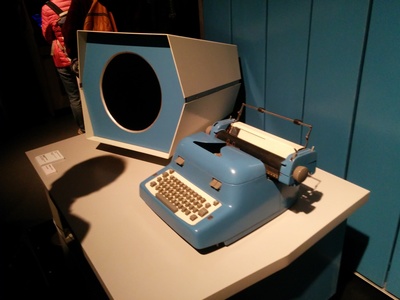
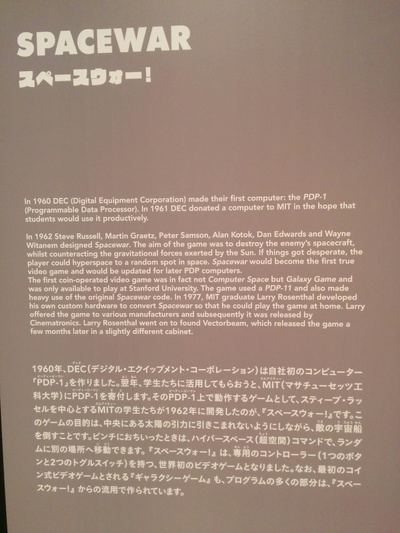
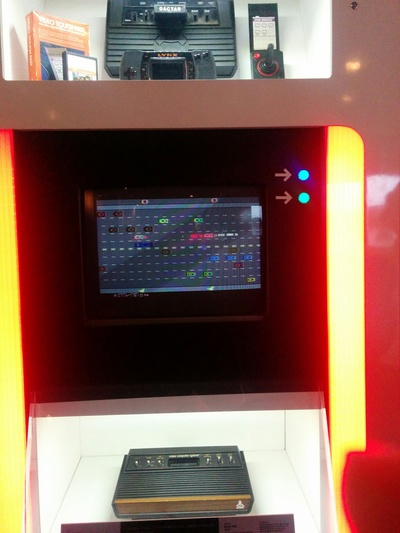
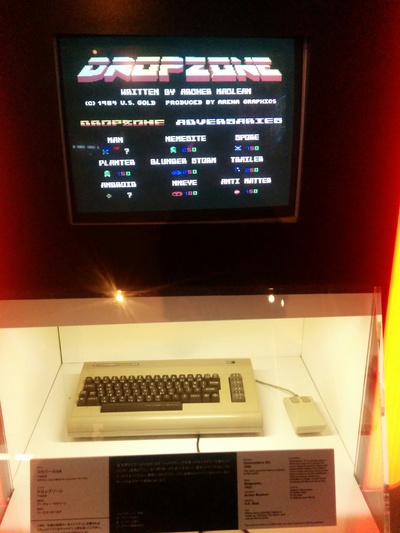
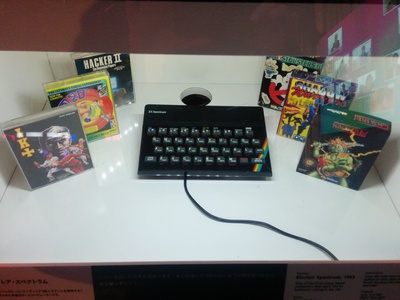
I attended GAME-ON last weedkend at Miraikan, The National Museum of Emerging Science and Innovation in Tokyo. There are many historical videogame hardware and software, and the bland-new PSVR exibition. DEC PDP-1 DisplayI can see the real DEC PDP-1 hardware. Unfortunately it is only haredware, not worked. And also PONG is exibited.
SPACEWAR description

SPACEWAR description

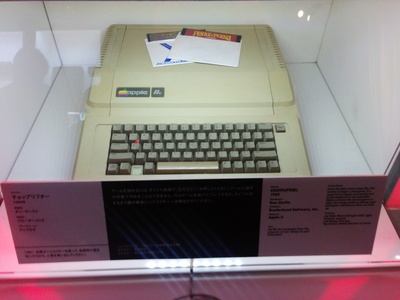
There are many old hardware Atari 2600, Commodore 64, Spectrum, and so on. Apple IIe Atari 2600/VCS Commodore 64 Spectrum Almost exhibition with English description, and officials can talk English, if you feel interested, go Miraikan until 30th May.

25 March 2016

Jonathan Carter: DebConf 16 Updates

debconf16-blogRegistration now open DebConf 16 is taking place in Cape Town, South Africa. For more information read the registration opening announcement. Quick summary Call for talk proposals open If you have a proposal for a session at DC16, please read the full call for proposals announcement. Quick info Video team If you re on the video team, or are planning to get involved then you might want to join the video team mailing list and #debconf-video IRC channel on oftc. Meetings are kicking off soon, if you re planning to join an IRC meeting, you can mark your availability on Framadate. Sponsoring DebConf 16 We have some great sponsors for DebConf 16 already, but sadly we don t have any local sponsors yet. Sponsorship is open to all, but if you know of a South African company in particular who might be interested, then feel free to send them a copy of the DebConf 16 Sponsorship Brochure which contains all the options and how to get in touch with the sponsorship team. Sponsoring DebConf has never been more accessible to South African companies so if you d like to get your company name on the Debian map and get some great exposure, then this is the perfect opportunity!

7 March 2016

Ritesh Raj Sarraf: Laptop Mode Tools 1.69 Released

Today is an auspicious day. For those who know (or follow) the Hindu religion will be familiar; Today is Maha Shivaratri On this day, It is great delight for me to be able to release Laptop Mode Tools, version 1.69 This release adds on many bug fixes and some enhancements. There is a new module (disabled by default) for cpuhotplug. The release tarball also includes a basic PolicyKit file for convenience, that packagers can use for the Laptop Mode Tools Graphical Configuration Interface. Apart from the policykit file, the graphical invocation script has been slightly fine tuned to work under pkexec and sudo. Some defaults have been tuned based on user requests - This should improve in situations where your External USB Mouse/Keyboard used to suspend after idle time periods. In January this year, I had the pleasure of meeting Bart Samwel in person at his office in Amsterdam. For those who don't know, Bart started off Laptop Mode Tools around 2004, and I took over maintenance around 2008. Meeting in person has been a delight, especially with the ones you work over email for years; This is something I cherished last year at Debconf 15 too. IMPORTANT:- Until now, Laptop Mode Tools project was hosted on Bart's webserver. Now, as you read, the homepage and mailing lists have changed. I'd urge all users to subscribe to the new mailing list and update their bookmarks. Homepage: https://github.com/rickysarraf/laptop-mode-tools/wiki Mailing List: https://groups.google.com/d/forum/laptop-mode-tools Note: For users who are not comfortable with creating a google a/c for mailing list subscription, you should still be able to subscribe with your personal email address. Please follow the steps in the mentioned homepage. Since last couple releases, I've also been providing RPM packages for Opensuse Tumbleweed and Fedora. The same should be available on the github release page. The Debian package will follow shortly in the Debian repository. Thank you and a Happy Maha Shivaratri. Har Har Mahadev.
1.69 - Mon Mar  7 17:44:42 IST 2016
    * Wait for all forked modules to complete
    * Add new module: cputhotplug
    * CPU online/offine is reverse here
    * Fix shell syntax
    * Install policykit file
    * Detach polling daemon from main process
    * Do NOT touch speed if throttling is not set
    * Restore to MAX speed when back to AC Power
    * Fix manpage about DISABLE_ETHERNET_ON_BATTERY setting
    * Update documentation about ENABLE_LAPTOP_MODE_ON_AC setting
    * Change powersaving default for USB class devices
    * Drop usbhid from default (black)list
    * Add usb keyboard driver to the list default list
    * Be consistent with passing args to LMT from different invokers
    * Honor device plug/unplug events on a per device basis;
      like how Chromium initially submitted this patch
    * Also be consistent with option in the event parser
    * Update links in README.md
    * Update new github homepage location
    * Add lmt-config-gui shell script

Categories:

Keywords:

Like:

3 March 2016

Simon Richter: Why sysvinit?

As most distributions have switched to systemd as default "init", some people have asked why we actually keep sysvinit around, as it's old and crusty, and systemd can do so much more. My answer is: systemd and sysvinit solve entirely different problems, and neither can ever replace the other fully. The big argument in favour of systemd is integration: when you keep everything in one process, it is easy to make sure that components talk to each other. That is nice, but kind of misses the point: integration could be done via IPC as well, and systemd uses a lot of it to separate privileges anyway. The tighter integration comes from something else: the configuration format. Where sysvinit uses a lot of shell scripts ("imperative" format), systemd uses explicit keywords ("descriptive" format), and this is the important design decision here: descriptive formats cannot do anything unanticipated, neither good nor bad. This is important for UI programmers: if there is a button that says "if I close the lid switch, suspend the laptop", then this needs to be connected to functionality that behaves this way, and this connection needs to work in both directions, so the user will find the active setting there when opening the dialog. So, we need to limit ourselves to a closed set of choices, so the UI people can prepare translations. This is the design tradeoff systemd makes: better integration in exchange for less flexibility. Of course, it is simple to allow "custom" actions everywhere, but that starts to break the "well-integrated" behaviour. There is an old blog post from Joey Hess about how to implement a simple alarm clock, using systemd, and this shows both how powerful and how limited the system is. On one hand, the single line WakeSystem=true takes care of the entire dependency chain attached to making sure the system is actually on -- when the system is going to suspend mode, some program needs to determine that there are scheduled jobs that should wake up the system, determined which of these is the next one, program the wakeup time into the hardware and only then allow the suspend to continue. On the other hand, the descriptive framework already breaks down in this simple example, because the default behaviour of the system is to go to sleep if the lid switch is closed, and the easiest way to fix this is to tell systemd to ignore the lid switch while the program is running. The IPC permissions disallow scheduled user jobs from setting this, so a "custom" action is taken that sets up the "ignore the lid switch" policy, changes to an unprivileged user, and runs the actual job. So, it is possible to get back flexibility, but this is traded for integration: while the job is running, any functionality that the "suspend laptop when the lid is closed" button had, is broken. For something simple as a switch on a personal laptop that breaks if the user configures something that is non-standard, that is acceptable. However, the keywords in the service unit files, the timer files, etc. are also part of a descriptive framework, and the services using them expect that the things they promise are kept by the framework, so there is a limit to how many exceptions you can grant. SystemV init really comes from the other direction here. Nothing is promised to init scripts but a vague notion that they will be run with sufficient privileges. There is no dependency tracking that ensures that certain services will always start before others, just priorities. You can add a dependency system like insserv if you like and make sure that all the requirements for it to work (i.e. services declaring their dependencies) are given, and there is a safe fallback of not parallelizing so we can always play it safe. Because there is so little promised to scripts, writing them becomes a bit tedious -- all of them have a large case statement where they parse the command line, all of them need to reimplement dropping privileges and finding the PID of a running process. There are lots of helpers for the more common things, like the LSB standard functions for colorful and matching console output, and Debian's start-stop-daemon for privilege and PID file handling, but in the end it remains each script's responsibility. Systemd will never be able to provide the same flexibility to admins while at the same time keeping the promises made in the descriptive language, and sysvinit will never reach the same amount of easy integration. I think it is fairly safe to predict both of these things, and I'd even go a step further: if any one of them tried, I'd ask the project managers what they were thinking. The only way to keep systems as complex as these running is to limit the scope of the project. With systemd, the complexity is kept in the internals, and it is important for manageability that all possible interactions are well-defined. That is a huge issue when writing adventure games, where you need to define interaction rules for each player action in combination with each object, and each pair of objects that can be combined with the "Use" action. Where adventure games would default to "This doesn't seem to work." or "I cannot use this.", this would not be a helpful error message when we're trying to boot, so we really need to cut down on actions and object types here. Sysvinit, on the other hand, is both more extreme in limiting the scope to very few actions (restart, wait, once) and only one object type (process that can be started and may occasionally terminate) in the main program, and a lot more open in what scripts outside the main program are allowed to do. The prime example for this is that the majority of configuration takes place outside the inittab even -- a script is responsible for the interface that services are registered by dropping init scripts into specific directories, and scripts can also create additional interfaces, but none of this is intrinsic to the init system itself. Which system is the right choice for your system is just that: your choice. You would choose a starting point, and customize what is necessary for your computer to do what you want it to do. Here's the thing: most users will be entirely happy with fully uncustomized systemd. It will suspend your laptop if you close the lid, and even give your download manager veto power. I fully support Debian's decision to use systemd as the default init for new installs, because it makes sense to use the default that is good for the vast majority of users. However, my opening statement still stands: systemd can never support all use cases, because it is constrained by its design. Trying to change that would turn it into an unmaintainable mess, and the authors are right in rejecting this. There are use cases that define the project, and use cases that are out of scope. This is what we need sysvinit for: the bits that the systemd project managers rightfully reject, but that are someone's use case. Telling these users to get lost would be extremely bad style for the "universal operating system." For example, if someone needs a service that asks a database server for a list of virtual machines to start, runs each in its private network namespace that is named after replacing part of the virtual machine name with the last two octets of the host machine's IP address, then binds a virtual Ethernet device into the network namespace and sets up a NAT rule that allows devices to talk to the public Internet and a firewall rule to stop VMs from talking to each other. Such a beast would live outside of systemd's world view. You can easily start it, but systemd would not know how to monitor it (as long as there is some process still running, is that a good sign), not know how to shut down one instance, not know how to map processes to instances and so on. SystemV init has the advantage here that none of these things are defined by the system, and as long as my init script has some code to handle "status", I can easily check up on my processes with the same interface I'd use for everything else. This requires me to have more knowledge of how the init system works, that is true, however I'd also venture that the learning curve for sysvinit is shallower. If you know shell scripting, you can understand what init scripts do, without memorizing special rules that govern how certain keywords interact, and keeping track of changes to these rules as the feature set is expanded. That said, I'm looking at becoming the new maintainer of the sysvinit package so we can continue to ship it and give our users a choice, but I'd definitely need help, as I only have a few systems left that won't run properly with systemd because of its nasty habit to keep lots of code in memory where sysvinit would unload it after use (by letting the shell process end), and these don't make good test systems. The overall plan is to set up a CI system that Ideally, I'd like to reach a state where we can actually ensure that the default configuration is somewhat similar regardless of which init system we use, and that it is possible to install with either (this is a nasty regression in jessie: bootstrapping a foreign-architecture system broke). This will take time, and step one is probably looking at bugs first -- I'm grateful for any help I can get here, primarily I'd like to hear about regressions via bug reports. tl;dr: as a distribution, we need both systemd and sysvinit. If you suggest that systemd can replace sysvinit, I will probably understand that you think that the systemd maintainers don't know project management. I'm reluctantly looking at becoming the official maintainer because I think it is important to keep around.
1 March 2016

Vincent Sanders: Hope is tomorrow's veneer over today's disappointment.

Recently I have been very hopeful about the 96boards Hikey SBC and as Evan Esar predicted I have therefore been very disappointed. I was given a Hikey after a Linaro connect event some time ago by another developer who could not get the system working usefully and this is the tale of what followed.
The Standard Design
This board design was presented as Linaro creating a standard for the 64bit Single Board Computer (SBC) market. So I had expected that a project with such lofty goals would have considered many factors and provided at least as good a solution as the existing 32bit boards.

The lamentable hubris of creating a completely new form factor unfortunately sets a pattern for the whole enterprise. Given the aim towards "makers" I would have accepted that the system would not be a ATX PC size motherboard, but mini/micro/nano and pico ITX have been available for several years.

If opting for a smaller "credit card" form factor why not use one of the common ones that have already been defined by systems such as the Raspberry Pi B+? Instead now every 96Board requires special cases and different expansion boards.

Not content with defining their own form factor the design also uses a 8-18V supply, this is the only SBC I own that is not fed from a 5V supply. I understand that a system might require more current than a micro USB connector can provide, but for example the Banana Pi manages with a DC barrel jack readily capable of delivering 25W which would seem more than enough

The new form factor forced the I/O connectors to be placed differently to other SBC, given the opportunity to concentrate all connectors on one edge (like ATX designs) and avoid the issues where two or three sides are used. The 96board design instead puts connectors on two edges removing any possible benefit this might have given.

The actual I/O connectors specified are rather strange. There is a mandate for HDMI removing the possibility of future display technology changes. The odd USB arrangement of two single sockets instead of a stacked seems to be an attempt to keep height down but the expansion headers and CPU heatsink mean this is largely moot.

The biggest issue though is mandating WIFI but not Ethernet (even as an option), everything else in the design I could logically understand but this makes no sense. It means the design is not useful for many applications without adding USB devices.

Expansion is presented as a 2mm pitch DIL socket for "low speed" signals and a high density connector for "high speed" signals. The positioning and arrangement of these connectors proffered an opportunity to improve upon previous SBC designs which was not taken. The use of 2mm pitch and low voltage signals instead of the more traditional 2.54mm pitch 3.3v signals means that most maker type applications will need adapting from the popular Raspberry Pi and Arduino style designs.

In summary the design appears to have been a Linaro project to favour one of their members which took a Hisilicon Android phone reference design and put it onto a board with no actual thought beyond getting it done. Then afterwards attempted to turn that into a specification, this has simply not worked as an approach.

My personal opinion is that this specification is fatally flawed and, is a direct cause of, the bizarre situation where the "consumer" specification exists alongside the "enterprise" edition which itself has an option of microATX form factor anyhow!
The ImplementationIf we ignore the specification appearing to be nothing more than a codification of the original HiKey design we can look at the HiKey as an implementation.

Initially the board required modifying to add headers to attach a USB to 1.8V LVTTL serial adaptor on the UART0 serial port. Once Andy Simpkins had made this change for me I was able to work through the instructions and attempt to install a bootloader and OS image.

The initial software was essentially HiSilicon vendor code using the Android fastboot system to configure booting. There was no source and the Ubuntu OS images were an obvious afterthought to the Android images. Just getting these images installed required a great deal of effort, repetition and debugging. It was such a dreadful experience this signalled the commencement one of the repeated hiatuses throughout this project, the allure of 64 bit ARM computing has its limits even for me.

When I returned to the project I attempted to use the system from the on-board eMMC but the pre-built binary only kernel and OS image were very limited. Building a replacement kernel , or even modules for the existing one proved fruitless and the system was dreadfully unstable.

I wanted to use the system as a builder for some Open Source projects but the system instability ruled this out. I considered attempting to use virtualisation which would also give better system isolation for builder systems. By using KVM running a modern host kernel and OS as a guest this would also avoid issues with the host systems limitations. At which point I discovered the system had no virtualisation enabled apparently because the bootloader lacked support.

In addition to these software issues there were hardware problems, despite forcing the use of USB for all additional connectivity the USB implementation was dreadful. For a start all USB peripherals have to run at the same speed! One cannot mix full (12Mbit) and high speed (480Mbit) devices which makes adding a USB Ethernet and SATA device challenging when you cannot use a keyboard.

And because I needed more challenges only one of the USB root hubs was functional. In effect this made the console serial port critical as it was the only reliable way to reconfigure the system without a keyboard or network link (and WIFI was not reliable either)

After another long pause in proceedings I decided that I should house all the components together and that perhaps being out on my bench might be the cause of some instability. I purchased a powered Amazon basics USB 2 hub, an Ethernet adaptor and a USB 2 SATA interface in the hope of accessing some larger mass storage.

The USB hub power supply was 12V DC which matched the Hikey requirements so I worked out I could use a single 4A capable supply and run a 3.5inch SATA hard drive too. I designed a laser cut enclosure and mounted all the components. As it turned out I only had a 2.5inch hard drive handy so the enclosure is a little over size. If I were redoing this design I would attempt to make it fit in 1U of height and be mountable in a 19inch rack instead it is an 83mm high (under 2U) box.

A new software release had also become available which purported to use an UEFI bootloader after struggling to install this version unsuccessfully, made somewhat more problematic by the undocumented change from UART0 (unpopulated header) to UART3 on the low speed 2mm pitch header. The system seemed to start the kernel which panicked and hung either booting from eMMC or SD card. Once again the project went on hold after spending tens of hours trying to make progress.
Third time's a charmAs the year rolled to a close I once again was persuaded to look at the hikey, I followed the much improved instructions and installed the shiny new November software release which appears to have been made for the re-release of the Hikey through LeMaker. This time I obtained a Debian "jessie" system that booted from the eMMC.

Having a booted system meant I could finally try and use it. I had decided to try and use the system to host virtual machines used as builders within the NetSurf CI system.

The basic OS uses a mixture of normal Debian packages with some replacements from Linaro repositories. I would have prefered to see more use of Debain packages even if they were from the backports repositories but on the positive side it is good to see the use of Debian instead of Ubuntu.

The kernel is a heavily patched 3.18 built in a predominantly monolithic (without modules) manner with the usual exceptions such as the mali and wifi drivers (both of which appear to be binary blobs). The use of a non-mainline capable SoC means the standard generic distribution kernels cannot be used and unless Linaro choose to distribute a kernel with the feature built in it is necessary to compile your own from sources.

The default install has a linaro user which I renamed to my user and ensured all the ssh keys and passwords on the system were changed. This is an important step when using this pre-supplied images as often a booted system is identical to every other copy.

To access mass storage my only option was via USB, indeed to add any additional expansion that is the only choice. The first issue here is that the USB host support is compiled in so when the host ports are initialised it is not possible to select a speed other than 12MBit. The speed is changed to 480Mbit by using a user space application found in the users home directory (why this is not a tool provided by a package and held in sbin I do not know).

When the usb_speed tool is run there is a chance that the previously enumerated devices will be rescanned and what was /dev/sda has become /dev/sdb if this happens there is a high probability that the system must be rebooted to prevent random crashes due to the "zombie" device.

Because the speed change operation is unreliable it cannot be reliably placed in the boot sequence so this must be executed by hand on each boot to get access to the mass storage.

NetSurf project already uses a x86_64 virtual host system which runs an LLVM physical volume from which we allocate logical volumes for each VM. I initially hoped to do this with the hikey but as soon as I tried to use the logical volume with a VM the system locked up with nothing shown on console. I did not really try very hard to discover why and instead simply used files on disc for virtual drives which seemed to work.

To provide reliable network access I used a USB attached Ethernet device, this like the mass storage suffered from unreliable enumeration and for similar reasons could not be automated requiring manually using the serial console to start the system.

Once the system was started I needed to install the guest VM. I had hoped I might be able to install locally from Debian install media as I do for x86 using the libvirt tools. After a great deal of trial and error I finally was forced to abandon this approach when I discovered the Linaro kernel is lacking iso9660 support so installing from standard media was not possible.

Instead I used the instructions provided by Leif Lindholm to create a virtual machine image on my PC and copied the result across. These instructions are great except I used version 2.5 of Qemu instead of 2.2 which had no negative effect. I also installed the Debian backports for Jessie to get an up to date 4.3 kernel.

After copying the image to the Hikey I started it by hand from the command line as a four core virtual machine and was successfully able to log in. The guest would operate for up to a day before stopping with output such as

$
Message from syslogd@ciworker13 at Jan 29 07:45:28 ...
kernel:[68903.702501] BUG: soft lockup - CPU#0 stuck for 27s! [mv:24089]

Message from syslogd@ciworker13 at Jan 29 07:45:28 ...

kernel:[68976.958028] BUG: soft lockup - CPU#2 stuck for 74s! [swapper/2:0]

Message from syslogd@ciworker13 at Jan 29 07:47:39 ...
kernel:[69103.199724] BUG: soft lockup - CPU#3 stuck for 99s! [swapper/3:0]

Message from syslogd@ciworker13 at Jan 29 07:53:21 ...
kernel:[69140.321145] BUG: soft lockup - CPU#3 stuck for 30s! [rs:main Q:Reg:505]

Message from syslogd@ciworker13 at Jan 29 07:53:21 ...
kernel:[69192.880804] BUG: soft lockup - CPU#0 stuck for 21s! [jbd2/vda3-8:107]

Message from syslogd@ciworker13 at Jan 29 07:53:21 ...
kernel:[69444.805235] BUG: soft lockup - CPU#3 stuck for 22s! [swapper/3:0]

Message from syslogd@ciworker13 at Jan 29 07:55:21 ...
kernel:[69570.177600] BUG: soft lockup - CPU#1 stuck for 112s! [systemd:1]

Timeout, server 192.168.7.211 not responding.

After this output the host system would not respond and had to be power cycled never mind the guest!

Once I changed to single core operation the system would run for some time until the host suffered from the dreaded kernel OOM killer. I was at a loss as to why the oom killer was running as the VM was only allocated half the physical memory (512MB) allowing the host what I presumed to be an adequate amount.

By adding a 512MB swapfile the system was able to push the few hundred kilobytes it wanted to swap and the system was now stable! The swapfile of course has to be started by hand as the external storage is unreliable and unavailable at boot.

I converted the qemu command line to a libvirt config using the virsh tool
virsh domxml-from-native qemu-argv cmdln.args
The converted configuration required manual editing to get a working system but now I have a libvirt based VM guest I can control along with all my other VM using the virt-manager tool.

This system is now stable and has been in production use for a month at time of writing. The one guest VM is a single core 512MB aarch64 system which takes over 1100 seconds (19 minutes) to do what a Banana Pi 2 dual core 1GB memory 32bit native ARM system manages in 300 seconds.

It seems the single core limited memory system with USB SATA attached storage is very, very slow.

I briefly attempted to run the CI system job natively within the host system but within minutes it crashed hard and required a power cycle to retrieve, it had also broken the UEFI boot. I must thank Leif for walking me through recovering the system otherwise I would have needed to start over.
ConclusionsI must stress these conclusions and observations are my own and do not represent anyone else.

My main conclusions are:

This project has taken almost a year to get to the final state and has been one of the least enjoyable within that time. The only reason I have a running system at the end of it is sheer bloody mindedness because after spending hundreds of hours of my free time I was not prepared to see it all go to waste.

To be fair, the road I travelled is now much smoother and if the application is suited to having a mobile phone without a screen then the Hikey probably works as a solution. For me, however, the Hikey product with the current hardware and software limitations is not something I would recommend in preference to other options.

Enrico Zini: Static site generators

I decided to rethink the state of my personal site, and try out some of the new static site generators that are available now. To do that, I jotted down a series of things that I want in a static site generator, then wrote a tool to convert my ikiwiki site to other formats, and set out to evaluate things. As a benchmark I did a full rebuild of my site, which currently contains 1164 static files and 458 markdown pages. My requirements Free layout for my site My / is mostly a high-level index to the site contents. Blog posts are at /blog. My talk archive is organised like a separate blog at /talks. I want the freedom to create other sections of the site, each with its own rss feed, located wherever I want in the site hierarchy. Assets next to posts I occasionally blog just a photo with a little comment, and I would like the .md page with the comment to live next to the image in the file system. I did not even know that I had this as a requirement until I found static site generators that mandated a completely different directory structure for markdown contents and for static assets. Multiple RSS/Atom feeds I want at least one RSS/Atom feed per tag, because I use tags for marking which articles go to http://planet.debian.org. I also want RSS/Atom feeds for specific parts of the site, like the blog and talks. Arbitrary contents in /index.html I want total control over the contents of the main home page of the site. Quick preview while editing contents I do not like to wait several seconds for the site to be rebuilt at every review iteration of the pages I write. This makes me feel like the task of editing is harder than it should, and makes me lose motivation to post. Reasonable time for a full site rebuild I want to be able to run a full rebuild of the site in a reasonable time. I could define "reasonable" in this case as how long I can stare at the screen without getting bored, starting to do something else, and forgetting what it was that I was doing with the site. It is ok if a rebuild takes something like 10 or 30 seconds. It is not ok if it takes minutes. Code and dependency ecosystems that I can work with I can deal with Python and Go. I cannot deal with Ruby or JavaScript. I forgot all about Perl. Also, if it isn't in Debian it does not exist. Decent themes out of the box One of my hopes in switching to a more mainstream generator is to pick and choose themes and easily give my site a more modern look. Hugo Hugo is written in Go and is in Debian testing. Full rebuild time for my site is acceptable, and it can even parallelize:
  $ time hugo
  real      0m5.285s
  user      0m9.556s
  sys       0m1.052s
Free layout for my site was hard to get. I could replace /index.html by editing the template page for it, but then I did not find out how to create another similar index in an arbitrary place. Also, archetypes are applied only on the first path component of new posts, but I would like them instead to be matched on the last path component first, and failing that traveling up to the path until the top. This should be easy to fix by reorganizing the content a bit around here For example, a path for a new blog post of mine could be blog/2016/debian/ and I would like it to match the debian archetype first, and failing that the blog archetype. Assets next to posts almost work. Hugo automatically generates one feed per taxonomy element, and one feed per section. This would be currently sufficient for me, although I don't like the idea that sections map 1 to 1 to toplevel directories in the site structure. Hugo has a server that watches the file system and rerenders pages as they are modified, so the quick preview while editing works fine. About themes, it took me several tries to find a theme that would render navigation elements for both sections and tags, and most themes would render by pages with white components all around, and expect me to somehow dig in and tweak them. That frustrated me, because for quite a while I could not tell if I had misconfigured Hugo's taxonomies or if the theme was just somehow incomplete. Nikola Nikola is written in Python and is in Debian testing. Full rebuild time for my site is almost two orders of magnitude more than Hugo, and I am miffed to find the phrases "Nikola is fast." or "Fast building process" in its front page and package description:
  $ time nikola build
  real      3m31.667s
  user      3m4.016s
  sys       0m24.684s
Free layout could be achieved fiddling with the site configuration to tell it where to read sources. Assets next to post work after tweaking the configuration, but they require to write inconsistent links in the markdown source: https://github.com/getnikola/nikola/issues/2266 I have a hard time accepting that that, because I want to author content with consistent semantic interlinking, because I want to be able 10 years from now to parse it and convert it to something else if a new technology comes out. Nikola generates one RSS/Atom feed per tag just fine. I have not tried generating feeds for different sections of the site. Incremental generation inside its built in server works fine. Pelican Pelican is written in Python and is in Debian testing. Full rebuild time for my site is acceptable:
  $ time pelican -d
  real      0m18.207s
  user      0m16.680s
  sys       0m1.448s
By default, pelican seems to put generate a single flat directory of html files regardless of the directory hierarchy of the sources. To have free layout, pelican needs some convincing in the configuration:
  PATH_METADATA = r"(?P<relpath>.+)\.md"
  ARTICLE_SAVE_AS = " relpath /index.html"
but even if I do that, the urls that it generates still point to just slug /index.html and I have not trivially found a configuration option to fix that accordingly. I got quite uncomfortable at the idea of needing to configure content generation and linking to match, instead of having one automatically being in sync with the other. Having assets next to posts seems to be possible (also setting STATIC_PATHS = ["."]), but I do not recall making progress on this front. I did not manage to generate a feed for each tag out of the box, and probably there is some knob in the configuration for it. I gave up with Pelican as trying it out felt like a constant process of hacking the configuration from defaults that do not make any sense for me, withouth even knowing if a configuration exists that would do what I need Ikiwiki Ikiwiki is written in Perl and is in Debian. Although I am not anymore proficient with Perl, I was already using it, so it was worth considering. Full rebuild time feels a bit on the slow side but is still acceptable:
  $ time ikiwiki --setup site.setup
  real      0m37.356s
  user      0m34.488s
  sys       0m1.536s
In terms of free site structure, all feeds for all or part of the site, ikiwiki just excels. I even considered writing a python web server that monitors the file system and calls ikiwiki --refresh when anything changes, and calling it a day. However, when I tried to re-theme my website around a simple bootstrap boilerplate, I found that to be hard, as a some of the HTML structure is hardcoded in Perl (and it's also my fault) and there is only so much that can be done by tweaking the (rather unreadable) templates. siterefactor During all these experiments I had built siterefactor to generate contents for all those static site engines, and it was going through all the contents quite fast:
  $ time ./siterefactor src dst -t hugo
  real  0m1.222s
  user  0m0.904s
  sys   0m0.308s
So I wondered how slow it would become if, instead of making it write markdown, I made it write HTML via python markdown and Jinja2:
  $ time ./siterefactor ~/zz/ikiwiki/pub/ ~/zz/ikiwiki/web -t web
  real  0m6.739s
  user  0m5.952s
  sys   0m0.416s
I then started wondering how slower it would become if I implemented postprocessing of all local URLs generated by Markdown to make sure they are kept consistent even if the path of a generated page is different than the path of its source. Not much slower, really. I then added taxonomies. And arbitrary Jinja2 templates in the input, able to generate page lists and RSS/Atom feeds. And theming. And realised that reading all the sources and cross-linking them took 0.2 seconds, and the rest was generation time. And that after cross-linking, each page can be generated independently from all the others. staticsite So my site is now generated with staticsite:
  $ time ssite build
  real  0m6.833s
  user  0m5.804s
  sys   0m0.500s
It's comparable with Hugo, and on a single process.

29 February 2016

Daniel Silverstone: Kicad hacking - Intra-sheet links and ERC

This is a bit of an odd posting since it's about something I've done but is also here to help me explain why I did it and thus perhaps encourage some discussion around the topic within the Kicad community...
Recently (as you will know if you follow this blog anywhere it is syndicated) I have started playing with Kicad for the development of some hardware projects I've had a desire for. In addition, some of you may be aware that I used to work for a hardware/software consultancy called Simtec, and there I got to play for a while with an EDA tool called Mentor Designview. Mentor was an expensive, slow, clunky, old-school EDA tool, but I grew to understand and like the workflow. I spent time looking at gEDA and Eagle when I wanted to get back into hardware hacking for my own ends; but neither did I really click with. On the other hand, a mere 10 minutes with Kicad and I knew I had found the tool I wanted to work with long-term. I designed the beer'o'meter project (a flow meter for the pub we are somehow intimately involved with) and then started on my first personal surface-mount project -- SamDAC which is a DAC designed to work with our HiFi in our study at home. As I worked on the SamDAC project, I realised that I was missing a very particular thing from Mentor, something which I had low-level been annoyed by while looking at other EDA tools -- Kicad lacks a mechanism to mark a wire as being linked to somewhere else on the same sheet. Almost all of the EDA tools I've looked at seem to lack this nicety, and honestly I miss it greatly, so I figured it was time to see if I could successfully hack on Kicad. Kicad is written in C++, and it has been mumble mumble years since I last did any C++, either for personal hacking or professionally, so it took a little while for that part of my brain to kick back in enough for me to grok the codebase. Kicad is not a small project, taking around ten minutes to build on my not-inconsiderable computer. And while it beavered away building, I spent time looking around the source code, particularly the schematic editor eeschema. To skip ahead a bit, after a couple of days of hacking around, I had a proof-of-concept for the intra-sheet links which I had been missing from my days with Mentor, and some ERC (electrical rules checking) to go alongside that to help produce schematics without unwanted "sharp corners". In total, I added: I forked the Kicad mirror on Github and pushed my own branch with this work to my Kicad fork. All of this is meant to allow schematic capture engineers to more clearly state their intentions regarding what they are drawing. The intra-sheet link could be thought of like a no-connect element, except instead of saying "this explicitly goes nowhere" we're saying "this explicitly goes somewhere else on this sheet, you can go look for it". Obviously, people who dislike (or simply don't want to use) such intra-sheet link elements can just disable that ERC tickybox and not be bothered by them in the least (well except for the toolbar button and menu item I suppose). Whether this work gets accepted into Kicad, or festers and dies on the vine, it was good fun developing it and I'd like to illustrate how it could help you, and why I wrote it in the first place:

A contrived story
Note, while this story is meant to be taken seriously, it is somewhat contrived, the examples are likely electrical madness, but please just think about the purpose of the checks etc.
To help to illustrate the feature and why it exists, I'd like to tell you a somewhat contrived story about Fred. Fred is a schematic capture engineer and his main job is to review schematics generated by his colleagues. Fred and his colleagues work with Kicad (hurrah) but of late they've been having a few issues with being able to cleanly review schematics. Fred's colleagues are not the neatest of engineers. In particular they tend to be quite lazy when it comes to running busses, which are not (for example) address and data busses, around their designs and they tend to simply have wires which end in mid-space and pick up somewhere else on the sheet. All this is perfectly reasonable of course, and Kicad handles it with aplomb. Sadly it seems quite error prone for Fred's workplace. As an example, Fred's colleague Ben has been designing the power supply for a particular board. As with most power supplies, plenty of capacitors are needed to stabilise the regulators and smooth the output. In the example below, the intent is that all of the capacitors are on the FOO net. Contrived problem example 1 Sadly there's a missing junction and/or slightly misplaced label in the upper section which means that C2 and C3 simply don't join to the FOO net. This could easily be missed, but the ERC can't spot it at all since there's more than one thing on each net, so the pins of the capacitors are connected to something. Fred is very sad that this kind of problem can sometimes escape notice by the schematic designer Ben, Fred himself, and the layout engineer, resulting in boards which simply do not work. Fred takes it upon himself to request that the strict wiring checks ERC is made mandatory for all designs, and that the design engineers be required to use intra-sheet link symbols when they have signals which wander off to other parts of the sheet like FOO does in the example. Without any further schematic changes, strict wiring checks enabled gives the following points of ERC concern for Ben to think about: Contrived problem example 2 As you can see, the ERC is pointing at the wire ends and the warnings are simply that the wires are dangling and that this is not acceptable. This warning is very like the pin-not-connected warnings which can be silenced with an explicit no-connect schematic element. Ben, being a well behaved and gentle soul, obeys the design edicts from Fred and seeks out the intra-sheet link symbols, clearing off the ERC markers and then adding intra-sheet links to his design: Contrived problem example 3 This silences the dangling end ERC check, which is good, however it results in another ERC warning: Contrived problem example 4 This time, the warning for Ben to deal with is that the intra-sheet links are pointless. Each exists without a companion to link to because of the net name hiccough in the top section. It takes Ben a moment to realise that the mistake which has been made is that a junction is missing in the top section. He adds the junction and bingo the ERC is clean once more: Contrived problem example 5 Now, this might not seem like much gain for so much effort, but Ben can now be more confident that the FOO net is properly linked across his design and Fred can know, when he looks at the top part of the design, that Ben intended for the FOO net to go somewhere else on the sheet and he can look for it.

Why do this at all? Okay, dropping out of our story now, let's discuss why these ERC checks are worthwhile and why the intra-sheet link schematic element is needed.
Note: This bit is here to remind me of why I did the work, and to hopefully explain a little more about why I think it's worth adding to Kicad...
Designers are (one assumes) human beings. As humans we (and I count myself here too) are prone to mistakes. Sadly mistakes are often subtle and could easily be thought of as deliberate if the right thought processes are not followed carefully when reviewing. Anyone who has ever done code review, proofread a document, or performed any such activity, will be quite familiar with the problems which can be introduced by a syntactically and semantically valid construct which simply turns out to be wrong in the greater context. When drawing designs, I often end up with bits of wire sticking out of schematic sections which are not yet complete. Sadly if I sleep between design sessions, I often lose track of whether such a dangling wire is meant to be attached to more stuff, or is simply left because the net is picked up elsewhere on the sheet. With intra-sheet link elements available, if I had intended the latter, I'd have just dropped such an element on the end of the wire before I stopped for the day. Also, when drawing designs, I sometimes forget to label a wire, especially if it has just passed through a filter or current-limiting resistor or similar. As such, even with intra-sheet link elements to show me when I mean for a net to go bimbling off across the sheet, I can sometimes end up with unnamed nets whose capacitors end up not used for anything useful. This is where the ERC comes in. By having the ERC complain if a wire dangles -- the design engineer won't forget to add links (or check more explicitly if the wire is meant to be attached to something else). By having junctions which don't actually link anything warned about, the engineer can't just slap a junction blob down on the end of a wire to silence that warning, since that doesn't mean anything to a reviewer later down the line. By having the ERC warn if a net has exactly one intra-sheet link attached to it, missing net names and errors such as that shown in my contrived example above can be spotted and corrected. Ultimately this entire piece of work is about ensuring that the intent of the design engineer is captured clearly in the schematic. If the design engineer meant to leave that wire dangling because it's joining to another bit of wire elsewhere on the sheet, they can put the intra-sheet links in to show this. The associated ERC checks are there purely to ensure that the validation of this intent is not bypassed accidentally, or deliberately, in order to make the use of this more worthwhile and to increase the usefulness of the ERC on designs where signals jump around on sheets where wiring them up directly would just create a mess.

28 February 2016

Ian Campbell: Hotswapping a failed RAID device

Recently I started getting SMART warnings from on of the disks in my home NAS (a QNAP TS-419P II armel/kirkwood device running Debian Jessie):
Device: /dev/disk/by-id/ata-ST3000DM001-1CH166_W1F2QSV6 [SAT], Self-Test Log error count increased from 0 to 1
Meaning it was now time to switch out that disk from the RAID5 array. Since everytime this happens I have to go and lookup again what to do I've decided to write it down this time. I configure SMART to talk about devices by-id (giving me their name and model number) so first I needed to figure out what the kernel was calling this device (although mdadm is happy with the by-id path, various other bits are not):
# readlink /dev/disk/by-id/ata-ST3000DM001-1CH166_W1F2QSV6 
../../sdd
Next I needed to mark the device as failed in the array:
# mdadm --detail /dev/md0 
/dev/md0:
[...]
          State : clean 
 Active Devices : 4
Working Devices : 4
 Failed Devices : 0
  Spare Devices : 0
[...]
    Number   Major   Minor   RaidDevice State
       5       8       48        0      active sync   /dev/sdd
       1       8       32        1      active sync   /dev/sdc
       6       8       16        2      active sync   /dev/sdb
       4       8        0        3      active sync   /dev/sda
# mdadm --fail /dev/md0 /dev/disk/by-id/ata-ST3000DM001-1CH166_W1F2QSV6 
mdadm: set /dev/disk/by-id/ata-ST3000DM001-1CH166_W1F2QSV6 faulty in /dev/md0
# mdadm --detail /dev/md0 
/dev/md0:
[...]
 Active Devices : 3
Working Devices : 3
 Failed Devices : 1
  Spare Devices : 0
[...]
Number   Major   Minor   RaidDevice State
   0       0        0        0      removed
   1       8       32        1      active sync   /dev/sdc
   6       8       16        2      active sync   /dev/sdb
   4       8        0        3      active sync   /dev/sda
   5       8       48        -      faulty   /dev/sdd
If it had been the RAID subsystem rather than SMART monitoring which had first spotted the issue then this would have happened already (and I would had received a different mail from the RAID checks instead of SMART). Once the disk is marked as failed then actually remove it from the array:
# mdadm --remove /dev/md0 /dev/disk/by-id/ata-ST3000DM001-1CH166_W1F2QSV6 
mdadm: hot removed /dev/disk/by-id/ata-ST3000DM001-1CH166_W1F2QSV6 from /dev/md0
And finally tell the kernel to delete the device:
# echo 1 > /sys/block/sdd/device/delete 
At this point I can physically swap the disks. At this point I noticed there were some interesting messages in dmesg, either from the echo to the delete node in sysfs or from the physical switch of the disks:
[1779238.656459] md: unbind<sdd>
[1779238.659455] md: export_rdev(sdd)
[1779258.686720] sd 3:0:0:0: [sdd] Synchronizing SCSI cache
[1779258.700507] sd 3:0:0:0: [sdd] Stopping disk
[1779259.377589] ata4.00: disabled
[1779371.126202] ata4: exception Emask 0x10 SAct 0x0 SErr 0x180000 action 0x6 frozen
[1779371.133740] ata4: edma_err_cause=00000020 pp_flags=00000000, SError=00180000
[1779371.141003] ata4: SError:   10B8B Dispar  
[1779371.145309] ata4: hard resetting link
[1779371.468708] ata4: SATA link down (SStatus 0 SControl 300)
[1779371.474340] ata4: EH complete
[1779557.416735] ata4: exception Emask 0x10 SAct 0x0 SErr 0x4010000 action 0xe frozen
[1779557.424356] ata4: edma_err_cause=00000010 pp_flags=00000000, dev connect
[1779557.431264] ata4: SError:   PHYRdyChg DevExch  
[1779557.436008] ata4: hard resetting link
[1779563.357089] ata4: link is slow to respond, please be patient (ready=0)
[1779567.449096] ata4: SRST failed (errno=-16)
[1779567.453316] ata4: hard resetting link
I wonder if I should have used another method to detach the disk, perhaps poking the controller rather than the disk (which rang a vague bell in my memory from last time this happened) but in the end the disk is broken and the kernel seems to have coped so I'm not too worried about it. It looked like the new disk had already been recognised:
[1779572.593471] scsi 3:0:0:0: Direct-Access     ATA      HGST HDN724040AL A5E0 PQ: 0 ANSI: 5
[1779572.604187] sd 3:0:0:0: [sdd] 7814037168 512-byte logical blocks: (4.00 TB/3.63 TiB)
[1779572.612171] sd 3:0:0:0: [sdd] 4096-byte physical blocks
[1779572.618252] sd 3:0:0:0: Attached scsi generic sg3 type 0
[1779572.626754] sd 3:0:0:0: [sdd] Write Protect is off
[1779572.631771] sd 3:0:0:0: [sdd] Mode Sense: 00 3a 00 00
[1779572.632588] sd 3:0:0:0: [sdd] Write cache: enabled, read cache: enabled, doesn't support DPO or FUA
[1779572.665609]  sdd: unknown partition table
[1779572.671522] sd 3:0:0:0: [sdd] Attached SCSI disk
[1779855.362331]  sdd: unknown partition table
So I skipped trying to figure out how to perform a SCSI rescan and went straight to identifying that the new disk was called:
/dev/disk/by-id/ata-HGST_HDN724040ALE640_PK1338P4GY8ENB
and then tried to do a SMART conveyancing self-test with:
# smartctl -t conveyance /dev/disk/by-id/ata-HGST_HDN724040ALE640_PK1338P4GY8ENB
But this particular drive seems to not support that, so I went straight to editing /etc/smartd.conf to replace the old disk with the new one and:
# service smartmontools reload
With all that I was ready to add the new disk to the array:
# mdadm --add /dev/md0 /dev/disk/by-id/ata-HGST_HDN724040ALE640_PK1338P4GY8ENB
mdadm: added /dev/disk/by-id/ata-HGST_HDN724040ALE640_PK1338P4GY8ENB
# mdadm --detail /dev/md0 
/dev/md0:
[...] 
      State : clean, degraded, recovering 
 Active Devices : 3
Working Devices : 4
 Failed Devices : 0
  Spare Devices : 1
[...]
 Rebuild Status : 0% complete
[...]
Number   Major   Minor   RaidDevice State
   5       8       48        0      spare rebuilding   /dev/sdd
   1       8       32        1      active sync   /dev/sdc
   6       8       16        2      active sync   /dev/sdb
   4       8        0        3      active sync   /dev/sda
# cat /proc/mdstat 
Personalities : [raid6] [raid5] [raid4] 
md0 : active raid5 sdd[5] sda[4] sdb[6] sdc[1]
      5860538880 blocks super 1.2 level 5, 512k chunk, algorithm 2 [4/3] [_UUU]
      [>....................]  recovery =  0.0% (364032/1953512960) finish=1162.4min speed=28002K/sec
So now all that was left was to wait about 20 hours (with fingers crossed a second disk didn't die! spoiler: it didn't)

14 February 2016

Lunar: Reproducible builds: week 42 in Stretch cycle

What happened in the reproducible builds effort between February 7th and February 13th 2016:

Toolchain fixes
  • James McCoy uploaded devscripts/2.16.1 which makes dcmd supports .buildinfo files. Original patch by josch.
  • Lisandro Dami n Nicanor P rez Meyer uploaded qt4-x11/4:4.8.7+dfsg-6 which make files created by qch reproducible by using a fixed date instead of the current time. Original patch by Dhole.
Norbert Preining rejected the patch submitted by Reiner Herrmann to make the CreationDate not appear in comments of DVI / PS files produced by TeX. He also mentioned that some timestamps can be replaced by using the -output-comment option and that the next version of pdftex will have patches inspired by reproducible build to mitigate the effects (see SOURCE_DATE_EPOCH patches) .

Packages fixed The following packages have become reproducible due to changes in their build dependencies: abntex, apt-dpkg-ref, arduino, c++-annotations, cfi, chaksem, clif, cppreference-doc, dejagnu, derivations, ecasound, fdutils, gnash, gnu-standards, gnuift, gsequencer, gss, gstreamer0.10, gstreamer1.0, harden-doc, haskell98-report, iproute2, java-policy, libbluray, libmodbus, lizardfs, mclibs, moon-buggy, nurpawiki, php-sasl, shishi, stealth, xmltex, xsom. The following packages became reproducible after getting fixed: Some uploads fixed some reproducibility issues, but not all of them: Patches submitted which have not made their way to the archive yet:
  • #813944 on cvm by Reiner Herrmann: remove gzip headers, fix permissions of some directories and the order of the md5sums.
  • #814019 on latexdiff by Reiner Herrmann: remove the current build date from documentation.
  • #814214 on rocksdb by Chris Lamb: add support for SOURCE_DATE_EPOCH.

reproducible.debian.net A new armhf build node has been added (thanks to Vagrant Cascadian) and integrated into the Jenkins setup for 4 new armhf builder jobs. (h01ger) All packages for Debian testing (Stretch) have been tested on armhf in just 42 days. It took 114 days to get the same point for unstable back when the armhf test infrastructure was much smaller. Package sets have been enabled for testing on armhf. (h01ger) Packages producing architecture-independent ( Arch:all ) binary packages together with architecture dependent packages targeted for specific architectures will now only be tested on matching architectures. (Steven Chamberlain, h01ger) As the Jenkins setup is now made of 252 different jobs, the overview has been split into 11 different smalller views. (h01ger)

Package reviews 222 reviews have been removed, 110 added and 50 updated in the previous week. 35 FTBFS reports were made by Chris Lamb, Danny Edel, and Niko Tyni.

Misc. The recordings of Ludovic Court s' talk at FOSDEM 16 about reproducible builds and GNU Guix is now available. One can also have a look at slides from Fabian Keil's talk about ElecrtroBSD and Baptiste Daroussin's talk about FreeBSD packages.

7 February 2016

Ben Armstrong: Bluff Trail icy dawn: Winter 2016

Before the rest of the family was up, I took a brief excursion to explore the first kilometre of the Bluff Trail and check out conditions. I turned at the ridge, satisfied I had seen enough to give an idea of what it s like out there, and then walked back the four kilometres home on the BLT Trail. I saw three joggers and their three dogs just before I exited the Bluff Trail on the way back, and later, two young men on the BLT with day packs approaching. The parking lot had gained two more cars for a total of three as I headed home. Exercising appropriate caution and judgement, the first loop is beautiful and rewarding, and I m not alone in feeling the draw of its delights this crisp morning. Click the first photo below to start the slideshow.
Click to start the slideshowClick to start the slideshow
At the parking lot, some ice, but passable with caution Trail head: a few mm of sleet Many footprints since last snowfall Thin ice encrusts the bog The boardwalk offers some loose traction Mental note: buy crampons More thin bog ice Bubbles captured in the bog ice Shelves hang above receding water First challenging boulder ascent Rewarding view at the crest Time to turn back here Flowing runnels alongside BLT Trail Home soon to fix breakfast If it looks like a tripod, it is Not a very adjustable tripod, however Pretty, encrusted pool The sun peeks out briefly Light creeps down the rock face Shimmering icy droplets and feathery moss Capped with a light dusting of sleet
facebooktwittergoogle_plusredditpinterestlinkedinmail

4 February 2016

Benjamin Mako Hill: Welcome Back Poster

My office door is on the second floor in front the major staircase in my building. I work with my door open so that my colleagues and my students know when I m in. The only time I consider deviating from this policy is the first week of the quarter when I m faced with a stream of students, usually lost on their way to class and that, embarrassingly, I am usually unable to help. I made this poster so that these conversations can, in a way, continue even when I am not in the office. early_quarter_doors_sign

1 February 2016

Lunar: Reproducible builds: week 40 in Stretch cycle

What happened in the reproducible builds effort between January 24th and January 30th:

Media coverage Holger Levsen was interviewed by the FOSDEM team to introduce his talk on Sunday 31st.

Toolchain fixes Jonas Smedegaard uploaded d-shlibs/0.63 which makes the order of dependencies generated by d-devlibdeps stable accross locales. Original patch by Reiner Herrmann.

Packages fixed The following 53 packages have become reproducible due to changes in their build dependencies: appstream-glib, aptitude, arbtt, btrfs-tools, cinnamon-settings-daemon, cppcheck, debian-security-support, easytag, gitit, gnash, gnome-control-center, gnome-keyring, gnome-shell, gnome-software, graphite2, gtk+2.0, gupnp, gvfs, gyp, hgview, htmlcxx, i3status, imms, irker, jmapviewer, katarakt, kmod, lastpass-cli, libaccounts-glib, libam7xxx, libldm, libopenobex, libsecret, linthesia, mate-session-manager, mpris-remote, network-manager, paprefs, php-opencloud, pisa, pyacidobasic, python-pymzml, python-pyscss, qtquick1-opensource-src, rdkit, ruby-rails-html-sanitizer, shellex, slony1-2, spacezero, spamprobe, sugar-toolkit-gtk3, tachyon, tgt. The following packages became reproducible after getting fixed: Some uploads fixed some reproducibility issues, but not all of them:
  • gnubg/1.05.000-4 by Russ Allbery.
  • grcompiler/4.2-6 by Hideki Yamane.
  • sdlgfx/2.0.25-5 fix by Felix Geyer, uploaded by Gianfranco Costamagna.
Patches submitted which have not made their way to the archive yet:
  • #812876 on glib2.0 by Lunar: ensure that functions are sorted using the C locale when giotypefuncs.c is generated.

diffoscope development diffoscope 48 was released on January 26th. It fixes several issues introduced by the retrieval of extra symbols from Debian debug packages. It also restores compatibility with older versions of binutils which does not support readelf --decompress.

strip-nondeterminism development strip-nondeterminism 0.015-1 was uploaded on January 27th. It fixes handling of signed JAR files which are now going to be ignored to keep the signatures intact.

Package reviews 54 reviews have been removed, 36 added and 17 updated in the previous week. 30 new FTBFS bugs have been submitted by Chris Lamb, Michael Tautschnig, Mattia Rizzolo, Tobias Frost.

Misc. Alexander Couzens and Bryan Newbold have been busy fixing more issues in OpenWrt. Version 1.6.3 of FreeBSD's package manager pkg(8) now supports SOURCE_DATE_EPOCH. Ross Karchner did a lightning talk about reproducible builds at his work place and shared the slides.

28 January 2016

Joachim Breitner: Dreaming of role playing

Recently, at a summer-school-like event, we were discussing pen-and-paper role playing. I m not sure if this was after a session of role-playing, but I was making the point that you don t need much or any at all of the rules, and scores, and dice, if you are one of the story-telling role players, and it can actually be more fun this way. As an example, I said, it can make sense if one of the players (and the game master, I suppose) reads up a lot about one aspect of the fantasy world, e.g. one geographical area, one cult, one person, and then this knowledge is used to create an exciting puzzle, even without any opponents. I m not quite sure, but I think I fell asleep shortly after, and I dreamed of such a role playing session. It was going roughly like this:
I (a human), and my fellows (at least a dwarf, not sure about the rest) went to some castle. It was empty, but scary. We crossed its hall, and went into a room on the other side. It was locked towards the hall by a door that covered the door frame only partly, and suddenly we could see a large Ogre, together with other foul folk not worth mentioning, hammered at the door. My group (which was a bit larger in that moment) all prepared shooting arrows at him the moment it burst through the door. I had the time to appreciate the ingenuity that we all waited for him to burst through, so that none of the arrows would bounce of the door, but it did not help, and we ran from the castle, over a field, through a forest, at the other side of which we could see, below a sleep slope, a house, so we went there. The path towards that was filled with tracks that looked surprisingly like car tracks. When we reached the spot there was no house any more, but rather a cold camp side. We saw digging tools, and helmets (strangely, baseball helmets) were arranged in a circle, as if it was a burial site. We set up camp there and slept. It occurred to me that I must have been the rightful owner of the castle, and it was taken by me from my brother and his wife, who denied my existence or something treacherously like that. When we woke up at the camp side, she were there, together with what must be my niece. My sister in law mocked us for fighting unsuccessfully at the castle, but my niece was surprised to see me, as I must have a very similar appearance to my brother. She said that her mother forbid it, but she nevertheless sneakily takes out something which looks like a Gameboy with a camera attachment and a CompactFlash card from her mothers purse, puts it in and take a photo of me. This is when I realize that I will get my castle back.
At that moment, I woke up. I somewhat liked the story (and it was a bit more coherent in my mind than what I then wrote down here), so I wanted to write it down. I quickly fetched my laptop. My friends at the summer school were a bit worried, and I promised not to mention their names and concrete places, and started writing. They distracted me, so I searched for a place of my own, lied down (why? no idea), and continued writing. I had to to touch writing on my belly, because my laptop was not actually there. I also noticed that I am back at the camp side, and that I am still wearing my back protector that I must have been wearing while fighting in the castle, and which I did not take off while sleeping at the camp side. Funnily, it was not a proper medieval amour, but rather my snowboarding back protector.
At that moment, I woke up. I somewhat liked the story (and it was a bit more coherent in my mind than what I then wrote down here), so I wanted to write it down. I quickly got up, started my laptop, and wrote it down. And this is what you are reading right now. Off to bed again, let s see what happens next.

Next.

Previous.