Search Results: "joey"

26 June 2010

Stefano Zacchiroli: Welcome, DebConf newbies!

and the newbies are ... A long time ago, in a couple of blog posts far far away, we have introduced the DebConf Newbies initiative. I'm hereby happy to announce the actual DebConf newbies and I'm looking forward to meet them at the forthcoming DebConf10 in New York City: Now, folks, please be kind with them, they (still) don't know how crazy we can be(come) during DebConf. Above all: do not harm them (too much) at Mao. In exchange, they have already promised that they will fix all RC bugs that will still be open at the beginning of DebConf10 (or maybe I've just read that in their minds, I don't quite remember ...). Does that mean that DebConf10 travel sponsoring is completely OK as of now? No, not really. This initiative was specifically targeting DebConf newbies, but several DebConf "regulars" are planning to attend too. For some of them the amazing DebConf sponsoring team has already found enough resources to secure their travel sponsorship, for quite some others it is not the case yet. This is a pity, because we know from the past that having more Debian folks at DebConf means more hacking, a better distribution, and a better community, ultimately it means a better Debian. Some of the readers of this blog post will be in the condition to improve the situation: it is as simple as donating to Debian or, better, becoming a DebConf10 sponsor by simply mailing the sponsoring team.

25 June 2010

Joey Hess: abram's

Going out to Abram's in early summer, when it starts to get uncomfortable, and sitting under the falls is a full-fledged tradition for me now. This time my camera worked, and I even brought a laptop (ziplocked) on the wade down the creek, so I spent the afternoon in the canyon. Office with a view..

22 June 2010

Joey Hess: longest day

Here on the porch at Dani's, enjoying the chill breeze as a distant storm passes by, and the last half hour of daylight, it seems right to have been awake to see the solstice dawn, and out in the world all day. Though after 16 hours, the part of the day spent napping in a hammock barely seems enough. Such an early start to this day, first visiting a small-town garage with Dad, where skype video calls were being made, and then racing the morning heat north, out of South Carolina. (I can't hear "frakking water" on the radio without snickering. Congratulations to all the news-people who pulled that phrase off today.) A long drive punctuated by picking up my passenger, and my own Goodbye Solo drive up by Blowing Rock, looking in the mirror at passenger dreaming in the backseat. Thinking about how, in the flat lands, cresting a long, slow hill, I often feel as if the road ahead could at any moment vanish, sending the car plunging into nothing; a latent agoraphobia. And in the mountains, as the road narrows and winds, I'm always confident it continues solidly around each blind bend.

12 June 2010

Bernd Zeimetz: styling changes in ikiwiki 3.20100610

Some minutes before the release of 3.20100610 we convinced Joey in #ikiwiki to commit the following changes: We hope that nobody wants to hit us with a bat now :-)

4 June 2010

Russell Coker: Securely Killing Processes

Joey Hess wrote on Debian-devel about the problem of init scripts not doing adequate checks before using the data from a PID file under /var/run to determine which process to kill [1]. Unfortunately that still doesn t quite solve the problem, there is still the issue of a race condition causing a process to die while you are doing the checks and then be replaced by another process. Below I have included the source code to a little program that will repeatedly fork() until it finds a particular PID and then have it s child call sleep(). So you can run a command such as kill -9 1234 ; ./a.out 1234 and then have this program take over the PID 1234. From testing with this it seems that when you have a shell with it s current working directory as /proc/1234 then once process 1234 is killed the current directory is empty, ls -l returns 0 entries. This isn t surprising, it s the standard Unix behavior when the working directory is removed. So if a program (or even a shell script) changes directory to /proc/1234 it can then verify all attributes of the process (it s CWD, it s root directory, the executable used to run it, it s UID, GID, supplemental groups, it s SE Linux context, and lots of other things all atomically. The only possibility for confusion is that a process might execute a SETUID or SETGID program or a program that has a label which triggers a SE Linux domain transition. It might also change some attributes without executing a new process, for example by using the setuid(), setgid(), setgroups(), or other similar system calls. For the purposes of killing a process I don t think that the possibility of it changing it s own attributes or executing a new program are serious problems, if you want to kill a process then you probably want to kill it after it has called setuid() etc. It seems to me that it would be useful to have a file named /proc/PID/signal (or something similar) to which you could write a number and then have the kernel send the signal in question to that process. So the commands kill -9 1234 and echo 9 > /proc/1234/signal would give the same result. But you could run the command cd /proc/1234 and then some time later you could run echo 9 > signal and know that you would kill the original process 1234 if it was still running and not some other process that replaced it. What do you think? Is this worthy of adding a new feature to the proc filesystem? The Source Run the following program with a single parameter which is the PID that you want it to take. It will keep looping through the PID space until it gets the one you specify, if the one you specify isn t available (EG you give it 1 as a parameter) then it will run forever. It will take some time to get a result on a slower system. On my P3-900MHz test system it took up to 72 seconds to get a result. #include <stdio.h>
#include <unistd.h>
#include <stdlib.h>
#include <sys/types.h>
#include <sys/wait.h> int main(int argc, char **argv)

if(argc != 2)

printf("Specify the desired PID on the command-line\n");
return 1;

pid_t wanted = (pid_t)atoi(argv[1]);
int rc;
int status;
while((rc = fork()) != wanted && rc != 0)

if(rc == -1)

printf("fork error\n");
return 1;

if(wait(&status) == -1)
printf("wait error\n");

if(rc == 0)

if(getpid() == wanted)

printf("Got pid %d, sleeping\n", wanted);
sleep(200);

return 0;

wait(&status);
return 0;

1 June 2010

Joey Hess: making the bed

This should solve the yurt's bed problem. Over the past two years I've learned there are really two: It's not a fully dry environment so anything left on the floor will mildew; and the yurt makes no pretense of having a level floor. Thus this custom bed with independently levelable legs, custom sized to hold together a multipart matress. In keeping with the yurt thing, it's disassemblable and portable, but not too easily. :) Couldn't have been done without Mark's skilled ripping of the plywood. Anna cut the smaller boards and assisted, and we were very happy with what we managed to accomplish in a few hours. It's sturdy, and even level.

29 May 2010

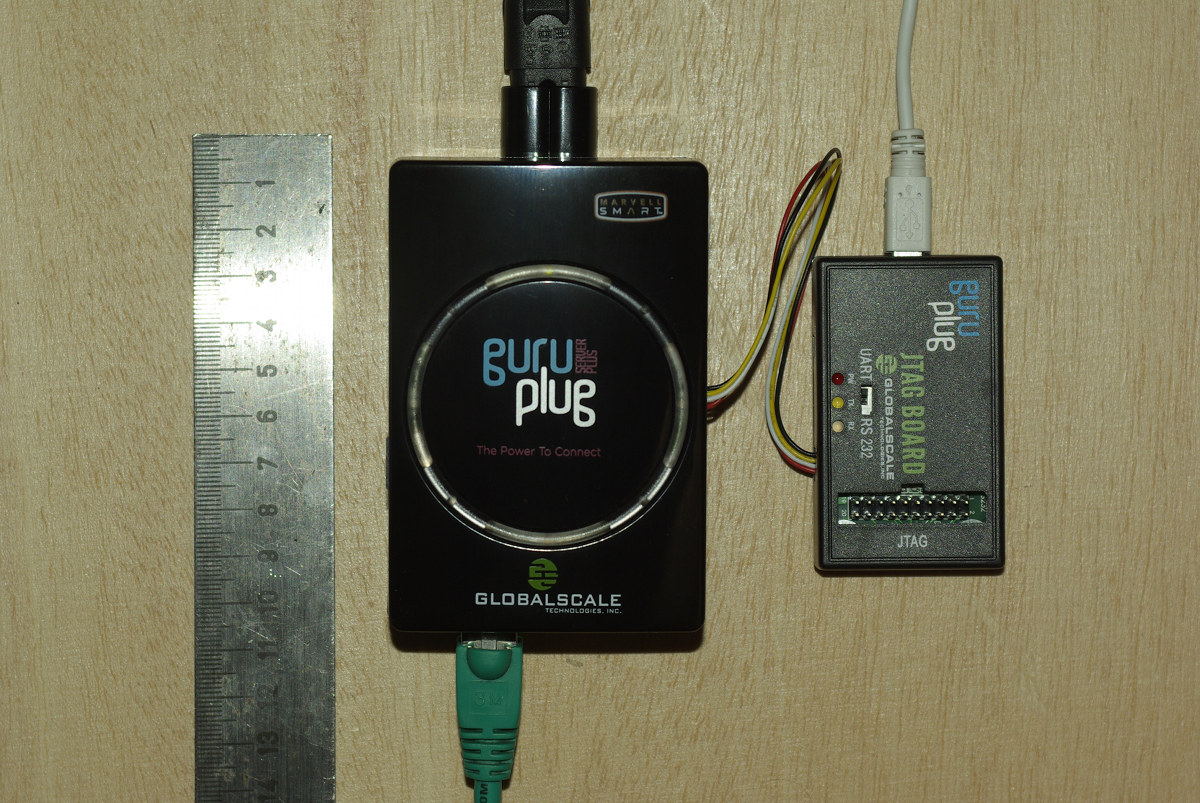
Bernd Zeimetz: installing debian on the guruplug server plus

Yesterday finally my GuruPlug Server Plus arrived. Took longer than expected, but as it seems Globalscale had some issues with the power supplies and they were replaced before shipping the GuruPlugs. GuruPlug Server Plus and JTAG Board

The GuruPlug Basically the GuruPlugs are an enhanced version of the well known SheevaPlugs, the biggest difference is probably the need for an external JTAG/UART<>RS232 board to access the serial console. Good thing is that the board comes with a normal JTAG connector and an additional RS232 connector and 2.5V DC power outlet, so it will be useful for other devices, too. Globalscale could have chosen different connectors with less wiggly cables, though. As I was not able to find a useful howto about installing Debian on the Guruplug, I've written down what I did to install Debian unstable on a micro SD card using the Debian installer for the GuruPlug. I did not have a look who modified the Debian installer to work on the plug, but thanks for that! The instructions below are based on Martin Michlmayer's awesome SheevaPlug documentation, the hints from oinkzwurgl.org/guruplug and various forum posts in the plugforum.

Preparations Please note that I'm not resposible for whatever you're doing with your plug. If you follow this tutorial and end up with a brick, it is your fault, not mine. To install the GuruPlug you need the JTAG Board. Connect the UART port to the GuruPlug and the JTAG board to your computer, it should show up as FTDI (thanks for using good chips!) USB<>Serial converter. Serial port settings are 115200, 8-N-1, no hw/sw flow control. The other thing you should prepare is a working tftpd, I'm using aftpd.
apt-get install aftpd
Recent versions share files from /srv/tftp/, in case you're running Lenny /var/lib/tftpboot/ should be the place to drop your files. When everything is connected properly the boot process should show up in minicom, make sure to press some key to enter uBoot. The first thing you should do is to save the original uBoot environment in case you want to restore the factory settings later. Run
printenv
and save the output somewhere.

Upgrading uBoot Unfortunately the uBoot version on the GuruPlug is pretty old and seems to have some issues in booting from USB devices, so the first thing you should do is to upgrade it. You might want to investigate if there is even a better, more recent uBoot version available somewhere, or build one on your own, but I didn't bother and took the uBoot.guruplug.bin from here. The main issue with that is that booting from USB still seems to be buggy (even for FAT partitions) and that ext2load is still not supported. Otherwise it works well :-). I'm mainly following Martin Michlmayer's tutorial again. Download the uBoot.guruplug.bin and drop it into the tftpd directory. Make sure you always set the plug's IP address (ipaddr) and your server's IP address (serverip) properly. I'll use 192.168.121.253 for the plug and 192.168.121.2 for the server in all examples, make sure to change that for your own needs. Stop if something goes wrong, especially when the tftp download failed.
setenv ipaddr 192.168.121.253
setenv serverip 192.168.121.2
tftp 0x6400000 uBoot.guruplug.bin
nand erase 0x00000000 0x0100000
nand write 0x6400000 0x0000000 0x80000
reset
Enter uBoot again after the reset.

Preparing the installer Download uImage and uInitrd to your tftpd directory. Although I've heard that setting mainlineLinux/arcNumber in the uBoot environment is not necessary anymore for very recent kernel, lets set them to make sure the Debian kernel works:
setenv mainlineLinux yes
setenv arcNumber 2097
saveenv
reset
Again, enter uBoot after the reset.

Running the installer Run the following in the uBoot console:
setenv ipaddr 192.168.121.253
setenv serverip 192.168.121.2
tftpboot 0x01100000 uInitrd
tftpboot 0x00800000 uImage
setenv bootargs console=ttyS0,115200n8 base-installer/initramfs-tools/driver-policy=most
bootm 0x00800000 0x01100000
You should see the installer starting now. You might want to follow the following hints:
  • Before configuring the network, go back and set the debconf priority to low, Then continue. While chosing the Debian mirror, chose sid as the Debian version to install. If you don't have sid as choice, use a different mirror. The kernel in testing does not boot on the GuruPlug, you need 2.6.32-13 from sid.
  • You might want to load the 'network console' installer component and continue via ssh. Makes things fater and colourful.
  • Suggested partitioning: I've installed Debian to an 8GB micro SDcard. The SDcard reader is connected via USB and shows up as /dev/sdb (/dev/sda should be the internal NAND and not shown by the installer). I've used 150MB ext2 for /boot and the rest of the space for /, using ext4. You might want to use the noatime option on both filesystems to avoid unnecessary write access to the SDcard. You might choose to add a swap partition, but SDcards are so slow, so I've skipped that.
When you continue the installation, you will hit the following problem:
  • The installer might fail on 'Make the system bootable' (not sure if it does for you, it did so with the kernel from testing).
  • The uBoot is not able to boot from your /boot anyway. USB support is buggy and ext2load missing.
We'll work around these issues by writing the kernel and initrd into the plug's NAND. To do so, enter a shell in the installer and chroot into the install target. We'll then create the necessary uImage.bin and uInitrd and scp them to our tftpd directory:
chroot /target /bin/bash
cd /boot
mkimage -n vmlinuz -A arm -O linux -T kernel -C none -a 0x00008000 -e 0x00008000 -d /boot/vmlinuz uImage.bin
mkimage -n 'vmlinuz initrd' -A arm -O linux -T ramdisk -C gzip -d /boot/initrd.img uInitrd
scp uI* root@192.168.121.2:/srv/tftp
Now leave the shell, finish the installation and reboot, enter uBoot again.

Make the plug bootable To write kernel and initrd to the NAND memory, we have to transfer it via tftp first, then erase the NAND area we want to write to and then write it to the NAND. The values I've chosen here should be fine for the current Debian kernel, but you might need to change the necessary size for the initrd. To do so have a look at the output while transferring the initrd - the transferred bytes are displayed. They have to fit into the amount of bytes you write (the last option to nand write.e).
setenv ipaddr 192.168.121.253
setenv serverip 192.168.121.2
tftp 0x6400000 uImage.bin
nand erase 0x100000 0x400000
nand write.e 0x6400000 0x100000 0x400000
tftp 0x6400000 uInitrd
nand erase 0x500000 0x1fb00000
nand write.e 0x6400000 0x500000 0x600000
Now we need to set the necessary boot options. Make sure to change the root device if you've chosen a different layout from that I've suggested above, or if you're not using a SDcard.
setenv bootargs_debian 'console=ttyS0,115200 root=/dev/sdb2'
setenv bootcmd_nand 'nand start; nand read.e 0x00800000 0x100000 0x400000; nand read.e 0x01100000 0x500000 0x600000'
setenv bootcmd 'setenv bootargs $(bootargs_debian); run bootcmd_nand; bootm 0x00800000 0x01100000'
saveenv
run bootcmd

Finish Your GuruPlug should boot your new Debian installation now. Have fun! I'll try to keep the howto updated for changes in uBoot and the installer, but I might not have the time to so quickly. Patches and comments are welcome!.
root@guruplug:~# uname -a
Linux guruplug 2.6.32-5-kirkwood #1 Fri May 21 05:44:29 UTC 2010 armv5tel GNU/Linux
root@guruplug:~# cat /proc/cpuinfo 
Processor   : Feroceon 88FR131 rev 1 (v5l)
BogoMIPS    : 1192.75
Features    : swp half thumb fastmult edsp 
CPU implementer : 0x56
CPU architecture: 5TE
CPU variant : 0x2
CPU part    : 0x131
CPU revision    : 1
Hardware    : Marvell GuruPlug Reference Board
Revision    : 0000
Serial      : 0000000000000000
root@guruplug:~# 

20 May 2010

Joey Hess: Presenting Kaxxt (on Ice)

 Here we have a robot  
 with a very pointy face.  
 His name is Kaxxt,  
 he lives in outer space.  
            -- Why The Lucky Stiff

Kaxxt is _why's concept of a card game to subtly introduce kids to some basics of programming, including branching, recursion and stack overflows. He introduced the concept at the end of his talk at the ART && CODE Symposium. I've adapted Kaxxt so it can be played using the Icehouse game pieces. They're a good fit, since Kaxxt is about lasers, and involves manipulating tokens to direct the lasers. Kaxxt on Ice is now open for playtesting. More...

15 May 2010

Joey Hess: life update

Today I strapped a kayack on a car (badly) and gingerly drove it out to the country, stopping for Greek food enroute. Now at my yurt, where I hung out and played Agricola all afternoon with my sister. Working on some processing of the 19 applicants for DebConfNewbies sponsorship while amazing venison potstickers are started. Tomorrow morning three kayackers will go out early and float down the river, and maybe find where the underriver creek emerges. Good times! Backing up a bit, the past two months have been significant ones. First, I quit my job. Then I almost bought a lot of land, which would have been huge, especially without an income. But it fell through just before closing, and I've had to push the idea of getting some land in the country back off into the indefinite future, where it probably belongs. Instead, Anna and Mark have been amazing, letting me come out here very regularly to unwind. And I've been very wound up, since there's a secret project under development that I can't discuss yet. Hmm, maybe not being on Facebook anymore will mean more personal blogging. That would be good. Now to go help with the potstickers..

26 April 2010

Debian News: Brief Updates: d-i l10n status, DebConf, snapshot service, GSOC

Stefano Zacchiroli: the DebConf Newbies initiative

DebConf newbies: we want you! You've probably already read a nice blog post by Joey about the DebConf Newbies initiative. Let me recap in case you didn't: Debian will invest some money to explicit sponsor DebConf10 attendance for "non-regulars", i.e. for those that have not attended DebConf ever, or quite in a while. If you are interested you should check the wiki page and mail Joey as requested. (Including a big thank you to him would be more than appropriate, given that he'll be taking care of most gory details.) Why are we doing this and why is it separate from the regular DebConf sponsorship process? Answering the latter is rather easy. The initiative has sponsoring criteria different than regular DebConf sponsoring (which is well oiled and taken care of by the DebConf orga team) and it didn't seem fair to mix the two, possibly keeping out from regular sponsoring requests some people, just because of this new initiative. Also, as we're well past the deadline for requesting regular DebConf sponsoring, it wouldn't have been nice to induce extra work to the DebConf sponsoring team (and Joey has been kind enough to volunteer anyhow, so ... :-) ). Answers to the former question (why are we doing this in the first place?) are possibly subjectives. My personal belief is that attending DebConf increases the enthusiasm of attendees and ultimately will make them better Debian citizens. It surely happened to me years ago: in the beginning of my Debian membership (as DD, since DMs did not exist back then) I just cared about my pet packages. It was only after meeting the Debian crowd in person at a FOSS event (LinuxTag 2004, IIRC) that I got really enthusiastic about Debian, gradually increasing my involvement in the project. I've never regretted it. I hope it can happen to some of you too, possibly starting with DebConf10.
See you in New York!

22 April 2010

Joey Hess: Sponsoring non-regulars for DebConf10

DebConf 10 will be held this August 1-7, in New York. I love DebConf, and I look forward to seeing friends at it each year. It rekindles my interest in the project; I leave each DebConf with new things to do. Many developers make it to most DebConfs, helped by the conference's impressive travel and lodging funding. But I know others have never gotten to experience DebConf, or have not been in years. If that's you, there's probably a reason. Maybe the scheduling never works out for you, and I can't help with that. But if your reason comes down to "money" or "they'd never pick me", we can help. This year there is special funding available for Debian Developers (and DMs) who have not been to DebConf before, or who have not been in years. Outgoing DPL Steve McIntyre has previusly mentioned this special funding, and his successor Stefano Zacchiroli has asked me to manage it, since it was originally my idea. Email me soon (before May 15th) to apply, or to suggest that a team member should be sponsored. This wiki page has the details. Let us get you to DebConf -- I promise you won't regret it! PS, going to dc10.png

16 April 2010

Joey Hess: 10 years

This month is the ten year anniversary of when I started blogging with this post. After a strong start in 2000 thanks to advogato.org, I slowed down, and 2003 saw no blog posts at all. Since then I have kept going fairly steadily, to no set schedule, writing when I feel the need. In all, 984 posts over ten years, or almost two posts per week. 205000 words. 650 pages if it were all bound into a book. (Sounds like a lot maybe, but the software I've grown to run the blog is 3 times longer.)

15 April 2010

Mike Hommey: Re: git reflex

Joey Hess writes about putting snapshot.debian.org into git, which is something I already mentioned on this blog. It turns out I used the snapshot.debian.org data a few months ago to try the idea again, and while I haven t done the math yet with the data I got in the end, the data during the experiment tells me we shouldn t expect much more than a 50% space reduction. There are two main reasons for that: a few number of packages actually take a whole lot of the archive space, and a whole lot of packages are simply data that don t benefit from being put in a git repository.

14 April 2010

Joey Hess: git reflex

snapshot.debian.org launched
with all Debian packages produced in the past 5 years
6.5 terabytes first Wikipedia database dump in 4.5 years
5.6 terabytes (32 gigabytes compressed) My reflex on seeing both of these was to think about putting them into git repositories. For snapshot.debian.org, injecting source packages into git repositories is easy with git-import-dsc (and it can also use pristine-tar to make the original tarballs accessible with a miminal overhead). I hope the snapshot.debian.org admins find time & space to do that, because being able to easily access git annotate data spanning 5 years for any package in the archive would be very useful. To produce a usable git repository from the Wikipedia dump would probably involve writing a custom git-fast-import that processed the huge xml dump, and chunked it up into individual files, and commits changing those files. Frankly, I do prefer wikis that store data in git in that format natively and don't have multi-month dump procedures. ;) How big would the git repos be? My SWAG is well under 1 terabyte for snapshot.debian.org, and between 30 and 300 gigabytes for the wikipedia data.

7 April 2010

Joey Hess: the neverending game

(While I have a lot big stuff going on in my life right now, I don't feel most of it's suitable for blogging. So here's a bit of insignificant fluff.) I have this nethack game that won't end. I started it before Christmas, and got much, much deeper into the dungeon than I've ever managed before. Taunted Jerry with it as we hung out over the holidays; he repeatedly losing while I quested and cleared out the castle, and genocided liches to get through the valley of the dead, and generally just kept building up a character that wouldn't quit. Yeoj the Student of Metals St:18/06 Dx:18 Co:18 In:16 Wi:18 Ch:14 Lawful Dlvl:42 $:0 HP:138(138) Pw:29(147) AC:-15 Xp:20/5196103 T:66175 Hungry Burdened I should mention: I mostly don't play nethack often, only swinging back around to give it another try every year or two. So for many years I'd play a few games that quickly ended in Yet Another Stupid Death, and occasionally feel proud when I got as far as Minetown or the Oracle. Recently, though, I've started focusing on Monks, and gotten rather good at playing them in the early game. So, this is my first character who got through the early game, completed the quest, and went well into the late-game. I know where that vibrating square is, I have plenty of wishes to round out my kit. So it would be an ascention candidate, except my chances of doing that on the first try are ... slim. And, do I want to? The descriptions of what I'd need to do to even try seem a bit tedious. So, unsure if he wants to ascend, and fearing YASD, my monk sits in his recently aquired tower at level 42 of the dungeon. For months. And so I can't play nethack. The character I'm role playing has decided to opt out of the game. (Oops, I meant to leave real life out of this, but it's somehow snuck back in there.) Meanwhile, this Dungeon Crawl Stone Soup that @Play keeps talking about looks interesting... (previously previously)

30 March 2010

Joey Hess: red letter day for gardening

A truckload of compost was dropped off today. Went out this evening to put together a raised bed for it, and when I looked up, I saw a wonderful surprise. I've been trying to catch this groundhog for ages. It's still fat from last year's garden and the whole other contents of the yard, and also, I think, pea shoots that came up recently. But it would not set foot in the trap for any bait, and I had given up (again) and planned to put the trap away this evening. I came out at just the right instant, to confuse the beast, already stressed by the appearance of big piles of dirt, to dodging for the wrong hiding place. It's now enjoying its new home out at the lake, and I'm looking forward to enjoying vegetables.

15 March 2010

Joey Hess: pre to droid

in which the Pre unsuprisingly continues to suck My Palm Pre was killed by a forced over the air WebOS upgrade. You can't avoid those upgrades, even if you are sure they'll be bad news. The previous WebOS upgrade spared my Debian partition, but lost all other customizations (including Palm Pre privacy fixes), and wasted hours. When I went to use my phone and it didn't even boot, and displayed only "http://palm.com/rom", I knew that was the last straw. (Shouldn't forcing an upgrade that breaks a working phone to the point that it can't even call 911 be well, illegal?) switching cell providers in the US: suprisingly doable I thought about ditching the smart phone and using VOIP, but I seem to have gotten addicted. So I got a Droid. That meant switching cell phone companies. I've heard a lot about how horrible the US cell phone company contracts are. My experience has me wondering if all that is well... not overblown, but oversimplified. I was half a year into a two year contract. Today I got my closing statement, and I really got out of it with no early termination fee. The trick seems to be, switch to a different cell phone company. They'll be happy to get you out of your old contract, salivating at the chance of locking you in to a new one. They probably have a script to use when calling to cancel. Or "know a guy". Or claim to know a guy, then just use a script, and get lucky. Given the hard sells and vague promises they tried on me, I assume that these places are where all the car salesmen ended up. Trust == 0. But it worked. If you're good on the phone, and are looking for a new business idea: Start a business of getting people out of their cell phone contracts, for a reasonable fee and no other obligation. Use loopholes like rate changes. As long as the cell phone companies can raise their monthly rate 2 cents, and 99.9999% of their users accept it, and they make untold millions of dollars, for free, they seem to not care if the remaining fraction use a loophole to get out. Especially if they're able to take advantage of other comanies loopholes to switch over users. So there seems to be a niche there in which one could prosper. droid first impressions So now I have a slightly larger lump in my pocket and the Pre is on a shelf, and will either be used for future development and testing of Debian piggyback ideas, or donated to someone like Lennart who can make good use of it. Compared with the Pre, the droid's hardware is all superior. The keyboard, especially, is great, with arrow keys, and all the symbols I need. At the same time, the phone is bigger, and oddly clunky. But in an endearing way. Only thing I really dislike about the hardware is the "back" button is easy to accidentially swipe while typing on the keyboard. Compared with WebOS, the Android UI has some clunkiness and non-obvious things. Like the status bar at the top not doing anything when you click on it. And there being no way to close an app. Especially annoying is that this means opening the web browser returns to whatever page I was on last, which is never what I want. The UI is however much, much snappier. I don't use the Google email, etc services so can't comment on them; I assume the amount of info Google is gathering about me went up by a few percentage points; I've blocked their analytics on my network to knock it back down. (PS: DuckDuckGo now avoids logging IP addresses at all.) The best thing is the ConnectBot application, which is a very usable shell and ssh client. It's a terminal, in my pocket, which I can easily use for an hour without feeling like my interactions are feeding through a stifling soda straw. Between the keyboard and the app, the Pre has nothing at all that compares. Under the hood, Android annoys me terribly, with its lack of busybox, its kernel that does not even have the ext* filesystem, its hard-partitioned storage, and its general lack of every single thing I like in a Linux system. Compare this with the Pre, which has a package manager, a userspace based on busybox with a full standard Linux stack (all the way up to PulseAudio) and a kernel with lots of standard filesystems, and even LVM. Sigh. It's amazing that WebOS and Android have found such broadly different ways to suck. There is significant interest and activity around running a Debian chroot on the Droid. The best tries so far put it on a loop mounted ext2 filesystem (which means you need to get ahold of a matching ext2.ko somehow), living on the FAT formatted SSD. And there are apparently some bad problems with IO to that starving/locking the system, so I have not tried it.

9 March 2010

Joey Hess: aloha btrfs

Last month I converted my laptop to btrfs to get some experience using this new, still experimental file system. The bugs tell the story: At this point I had a booting, working btrfs system. The bugs seen over the next weeks were strange: In the meantime, I did some initial work toward supporting btrfs in d-i, writing a basic partman-btrfs. One of the interesting open questions is how best to use subvolumes to split up a single btrfs filesystem. If the installer defines the right set of subvolumes, upgrades to be rolled back, without also rolling back /home and /srv. The remaining parts needed for d-i to support btrfs are fairly tractable, but are waiting until root on btrfs is bootable, and until the filesystem is not experimental. I gave up on the current experiement when I ran debsums on my laptop. (So that long thread was good for something!) It didn't find any corrupt files. But it did find a lot of md5sums files that were missing. Some of the packages with missing md5sums were upgraded just this week, and the md5sums files must have gone missing since. I have not seen anything that I can say with certainty was caused by btrfs, and not by some other cause, but since I can't trust the data on this laptop now (although git tells me everything in my home directory is ok), I'm reinstalling it, and saying aloha to btrfs, for now.

5 March 2010

Asheesh Laroia: What are you avoiding working on?

(Cross-posted from the OpenHatch blog.) I remember working on my first big group programming project back in college. The project involved some web scraping work; I enthusiastically took charge of that part. But a few weeks in, my code just wasn t working. I felt frustrated and helpless I m supposed to be the scraping expert, so why couldn t I fix the problems? I retreated into hiding and didn t want to think about the group of people or the project. A week later, I feebly ran svn update to see how the project had progressed. Oh! I exclaimed to myself. Someone made the data importer work! I felt a rush of relief. (While writing this paragraph, I sighed again remembering it.) When I talked to my teammate George, he mentioned off-handedly that he had fixed it. He didn t feel any of the anguish I felt or assign me the blame I thought I deserved. I guess if I had just asked for help earlier, I could have skipped the feelings of inadequacy entirely and George would have just fixed the bug. Half a decade later, I feel the same dread about the lack of Maildir support in Alpine. The bug is three years old! Ugh. This time, I m going to ask for help. So I listed the issue on the Alpine project page on OpenHatch. To put it there, here s what I did: For those of you who work on Free Software projects, what are the issues that drain you the same way? No bug tracker I ve seen has a field that says, I m avoiding working on this, and that sucks. To say that, list the issue on your project s OpenHatch page. So join in! What are the issues you don t want to think about? Once you share them, maybe a fellow developer or a new contributor will come by and help you out. Head to OpenHatch and let the world know. P.S. Do you have any ideas about how we can make these project pages more useful? Let us know! P.P.S. Dear Joey Hess and everyone else, sorry that Alpine still doesn t have Maildir support.

Next.

Previous.