Search Results: "hug"

2 March 2020

Russell Coker: Amazon Prime and Netflix

I ve been trying both Amazon Prime and Netflix. I signed up for the month free of Amazon Prime to watch Good Omens and Picard . Good Omens is definitely worth the effort of setting up the month free of Amazon Prime and is worth the month s subscription if you have used your free month in the past and Picard is ok. Content Amazon Prime has a medium amount of other content, I m now paying for a month of Amazon Prime mainly because there s enough documentaries to take a month. For reference there are plenty of good ones about war and about space exploration. There are also some really rubbish documentaries, for example a 2 part documentary about the Magna Carta where the second part starts with Grover Norquist claiming that the Magna Carta is justification for not having any taxes (the first part seemed ok). Netflix has a lot of great content. A big problem with Netflix is that there aren t good ways of searching and organising the content you want to watch. It would be really nice if Netflix could use some machine learning for recommendations and recommend shows based on what I ve liked and also what I ve disliked. On both Netflix and Amazon when you view the details of a show it gives a short list of similar shows which is nice. With Amazon I have no complaints about that. But with Netflix the content library is so great that you get lost in a maze of links. On the Android tablet interface for Netflix it shows 12 similar shows in a grid and on the web interface it s a row of 20 shows with looped scrolling. Then as you click a different show you get another list of 12/20 shows which will usually have some overlap with the previous one. It would be nice if you could easily swipe left on shows you don t like to avoid having them repeatedly presented to you. On Netflix I ve really enjoyed the Altered Carbon series (which is significantly more violent than I anticipated), Black Mirror (the episode written by Trent Reznor and starring Miley Cyrus is particularly good), and Love Death and Robots . Overall I currently rate Love Death and Robots as in many ways the best series I ve ever watched because the episodes are all short and get straight to the point. One advantage of online video is that they don t need to pad episodes out or cut them short to fit a TV time slot, they can use as much time as necessary to tell the story. Watch List Having a single row of shows to watch is fine for the amount of content that Amazon has, but for the Netflix content you can easily get 100 shows on your watch list and it would be good to be able to search my watch list by genre (it s a drag to flick through dozens of icons of war documentaries when I m in the mood for an action movie as the icons are somewhat similar). As well as a list of shows you selected to watch Netflix has a list of shows that have been recently watched with no way to edit it which is separate from the list of shows selected to watch. So if you watch 5 minutes of a show and decide that it sucks then it stays on the list until you have partially watched 10 other shows recently. For my usage the recently watched list is the most important thing as I m watching some serial shows and wouldn t want to go through the 100 shows on my watch list to find them. If I ve decided that a movie sucked after watching a bit of it I don t want to be reminded of it by seeing the icon every time I use Netflix for the next month. Amazon has only a single watch next list for shows that you have watched recently and shows that you selected as worth watching. It allows editing the list which is nice, but then Amazon also often keeps shows on the list when you have finished watching them and removed them from the to watch setting. Amazon s watch list is also generally buggy, at one time it decided that a movie was no longer available in my region but didn t let me remove it from the list. Quality Apparently the Netflix web interface on Linux only allows 720p video while the Amazon web interface on all platforms is limited to 720p. In any case my Internet connection is probably only good enough for 1080p at most. I haven t noticed any quality differences between Netflix and Amazon Prime. Multiple Users Netflix allows you to create profiles for multiple users with separate watch lists which is very handy. They also don t have IP address restrictions so it s a common practice for people to share a Netflix account with relatives. If you try to use Netflix when the maximum number of sessions for your account is in use it will show a list of what the other people on your account are watching (so if you share with your parents be careful about that). Amazon doesn t allow creating multiple profiles, but the content isn t that great. The trend in video streaming is for proprietary content to force users to subscribe to a service. So sharing an Amazon Prime account with a few people so you want watch the proprietary content would make sense. Watching Patterns Sometimes when I m particularly distracted I can t focus on one show for any length of time. Both Amazon and Netflix (and probably all other online streaming services) allow me to skip between shows easily. That s always been a feature of YouTube, but with YouTube you get recommended increasingly viral content until you find yourself watching utter rubbish. At least with Amazon and Netflix there is a minimum quality level even if that is reality TV. Conclusion Amazon Prime has a smaller range of content and some really rubbish documentaries. I don t mind the documentaries about UFOs and other fringe stuff as it s obvious what it is and you can avoid it. A documentary that has me watching for an hour before it s revealed to be a promo for Grover Norquist is really bad, did the hour of it that I watched have good content or just rubbish too? Netflix has a huge range of content and the quality level is generally very high. If you are going to watch TV then subscribing to Netflix is probably a good idea. It s reasonably cheap, has a good (not great) interface, and has a lot of content including some great original content. For Amazon maybe subscribe for 1 month every second year to binge watch the Amazon proprietary content that interests you.


29 February 2020

Chris Lamb: Free software activities in February 2020

Here is my monthly update covering what I have been doing in the free software world during February 2020 (previous month): For the Tails privacy-oriented operating system, I uploaded the following packages to Debian:
Reproducible builds One of the original promises of open source software is that distributed peer review and transparency of process results in enhanced end-user security. However, whilst anyone may inspect the source code of free and open source software for malicious flaws, almost all software today is distributed as pre-compiled binaries. This allows nefarious third-parties to compromise systems by injecting malicious code into ostensibly secure software during the various compilation and distribution processes. The motivation behind the Reproducible Builds effort is to provide the ability to demonstrate these binaries originated from a particular trusted source release: if identical results are generated from a given source in all circumstances, reproducible builds provides the means for multiple third-parties to reach a consensus on whether a build was compromised via distributed checksum validation or some other scheme. The initiative is proud to be a member project of the Software Freedom Conservancy, a not-for-profit 501(c)(3) charity focused on ethical technology and user freedom. Conservancy acts as a corporate umbrella allowing projects to operate as non-profit initiatives without managing their own corporate structure. If you like the work of the Conservancy or the Reproducible Builds project, please consider becoming an official supporter. This month, I: In our tooling, I also made the following changes to diffoscope, our in-depth and content-aware diff utility that can locate and diagnose reproducibility issues, including uploading version 137 to Debian:
Debian I submitted a Request for Package (RFP) bug for hsd, a blockchain-based top-level domain DNS protocol implementation that underpins Handshake and worked on some initial packaging. (#952472)
Debian LTS This month I have worked 18 hours on Debian Long Term Support (LTS) and 12 hours on its sister Extended LTS project. You can find out more about the project via the following video:
Uploads Finally, I made a non-maintainer upload of adminer (4.7.6-1) on behalf of Alexandre Rossi.

21 November 2017

Louis-Philippe V ronneau: DebConf Videoteam sprint report - day 2

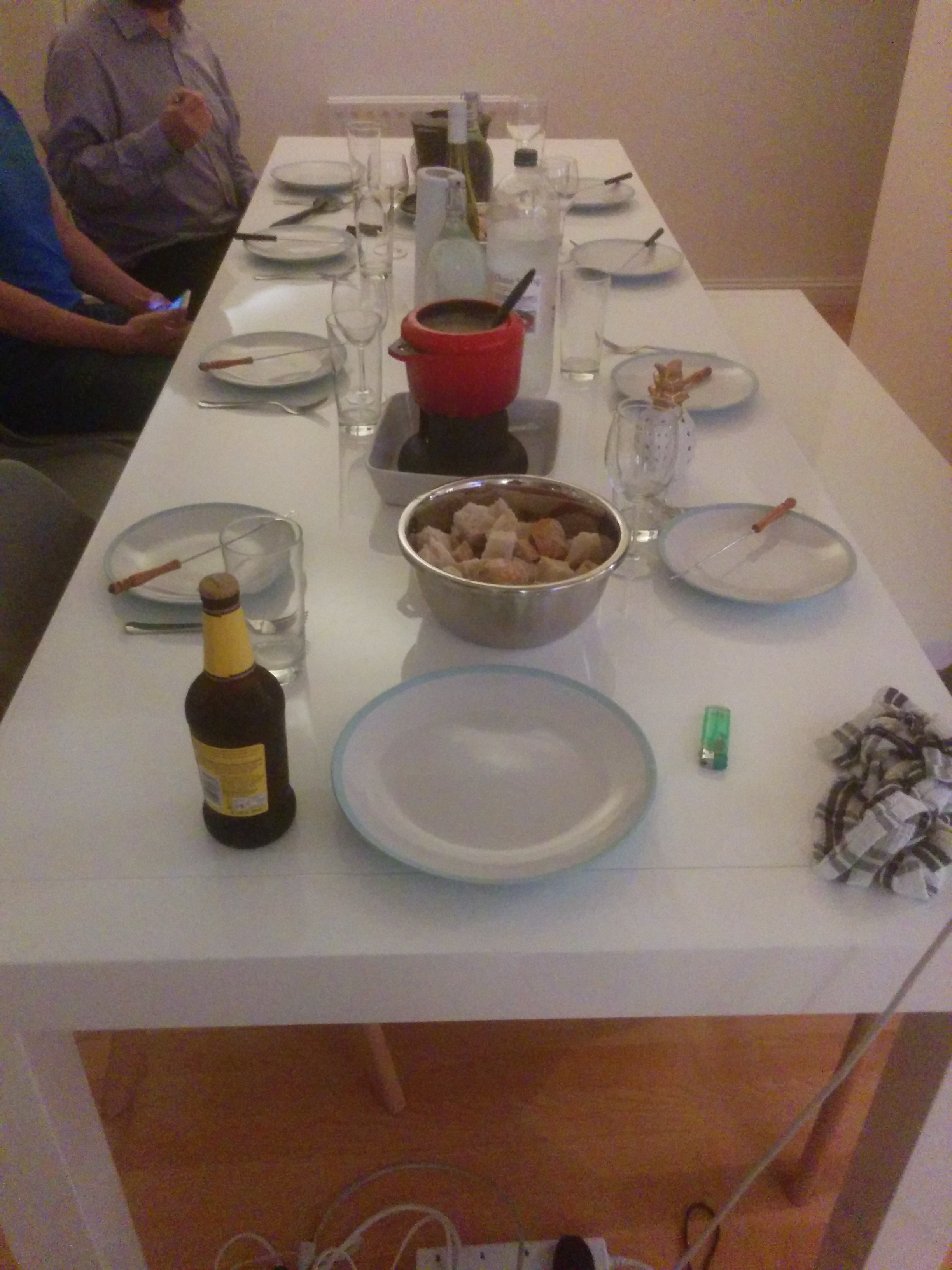
Another day, another videoteam report! It feels like we did a lot of work today, so let's jump right in: tumbleweed Stefano worked most of the day on the DebConf video archive metadata project. A bunch of videos already have been uploaded to YouTube. Here's some gold you might want to watch. By the end of our sprint, we should have generated metadata for most of our archive and uploaded a bunch of videos to YouTube. Don't worry though, YouTube is only a mirror and we'll keep our current archive as a video master. RattusRattus Andy joined us today! He hacked away with Stefano for most of the day, working on the metadata format for our videos and making schemes for our scraping tools. ivodd Ivo built and tested a good part of our video setup today, fixing bugs left and right in Ansible. We are prepared for the Cambridge Mini-DebConf! olasd Nicolas finished his scripts to automatically spool up and down our streaming mirrors via the DigitalOcean API today and ran our Ansible config against those machines to test our setup. pollo For my part, I completed a huge chunk of my sprint goals: we now have a website documenting our setup! It is currently hosted on Alioth pages, but olasd plans to make a request to DSA to have it hosted on the static.debian.org machine. The final URL will most likely be something like: https://video.debconf.org The documentation is still missing the streaming section (our streaming setup is not final yet, so not point in documenting that) and a section hosting guides for the volunteers. With some luck I might write those later this week. I've now moved on documentation our various Ansible roles. Oh, and we also ate some cheese fondue: Our fondue dinner

18 November 2017

Matthieu Caneill: MiniDebconf in Toulouse

I attended the MiniDebconf in Toulouse, which was hosted in the larger Capitole du Libre, a free software event with talks, presentation of associations, and a keysigning party. I didn't expect the event to be that big, and I was very impressed by its organization. Cheers to all the volunteers, it has been an amazing week-end! Here's a sum-up of the talks I attended. Du logiciel libre la monnaie libre Speaker: lo s The first talk I attended was, translated to English, "from free software to free money". lo s compared the 4 freedoms of free software with money, and what properties money needs to exhibit in order to be considered free. He then introduced 1, a project of free (as in free speech!) money, started in the region around Toulouse. Contrary to some distributed ledgers such as Bitcoin, 1 isn't based on an hash-based proof-of-work, but rather around a web of trust of people certifying each other, hence limiting the energy consumption required by the network to function. YunoHost Speaker: Jimmy Monin I then attended a presentation of YunoHost. Being an happy user myself, it was very nice to discover the future expected features, and also meet two of the developers. YunoHost is a Debian-based project, aimed at providing all the tools necessary to self-host applications, including email, website, calendar, development tools, and dozens of other packages. Premiers pas dans l'univers de Debian Speaker: Nicolas Dandrimont For the first talk of the MiniDebConf, Nicolas Dandrimont introduced Debian, its philosophy, and how it works with regards to upstreams and downstreams. He gave many details on the teams, the infrastructure, and the internals of Debian. Trusting your computer and system Speaker: Jonas Smedegaard Jonas introduced some security concepts, and how they are abused and often meaningless (to quote his own words, "secure is bullshit"). He described a few projects which lean towards a more secure and open hardware, for both phones and laptops. Automatiser la gestion de configuration de Debian avec Ansible Speaker: J r my Lecour J r my, from Evolix, introduced Ansible, and how they use it to manage hundreds of Debian servers. Ansible is a very powerful tool, and a huge ecosystem, in many ways similar to Puppet or Chef, except it is agent-less, using only ssh connections to communicate with remote machines. Very nice to compare their use of Ansible with mine, since that's the software I use at work for deploying experiments. Making Debian for everybody Speaker: Samuel Thibault Samuel gave a talk about accessibility, and the general availability of the tools in today's operating systems, including Debian. The lesson to take home is that we often don't do enough in this domain, particularly when considering some issues people might have that we don't always think about. Accessibility on computers (and elsewhere) should be the default, and never require complex setups. Retour d'exp rience : mise jour de milliers de terminaux Debian Speaker: Cyril Brulebois Cyril described a problem he was hired for, an update of thousands of Debian servers from wheezy to jessie, which he discovered afterwards was worse than initially thought, since the machines were running the out-of-date squeeze. Since they were not always administered with the best sysadmin practices, they were all exhibiting different configurations and different packages lists, which raised many issues and gave him interesting challenges. They were solved using Ansible, which also had the effect of standardizing their system administration practices. Retour d'exp rience : utilisation de Debian chez Evolix Speaker: Gr gory Colpart Gr gory described Evolix, a company which manages servers for their clients, and how they were inspired by Debian, for both their internal tools and their practices. It is very interesting to see that some of the Debian values can be easily exported for a more open and collaborative business. Lightning talks To close the conference, two lightning talks were presented, describing the switch from Windows XP to Debian in an ecologic association near Toulouse; and how snapshot.debian.org can be used with bisections to find the source of some regressions. Conclusion A big thank you to all the organizers and the associations who contributed to make this event a success. Cheers!

17 November 2017

Jonathan Carter: I am now a Debian Developer

It finally happened On the 6th of April 2017, I finally took the plunge and applied for Debian Developer status. On 1 August, during DebConf in Montr al, my application was approved. If you re paying attention to the dates you might notice that that was nearly 4 months ago already. I was trying to write a story about how it came to be, but it ended up long. Really long (current draft is around 20 times longer than this entire post). So I decided I d rather do a proper bio page one day and just do a super short version for now so that someone might end up actually reading it. How it started In 1999 no wait, I can t start there, as much as I want to, this is a short post, so In 2003, I started doing some contract work for the Shuttleworth Foundation. I was interested in collaborating with them on tuXlabs, a project to get Linux computers into schools. For the few months before that, I was mostly using SuSE Linux. The open source team at the Shuttleworth Foundation all used Debian though, which seemed like a bizarre choice to me since everything in Debian was really old and its boot-floppies installer program kept crashing on my very vanilla computers.
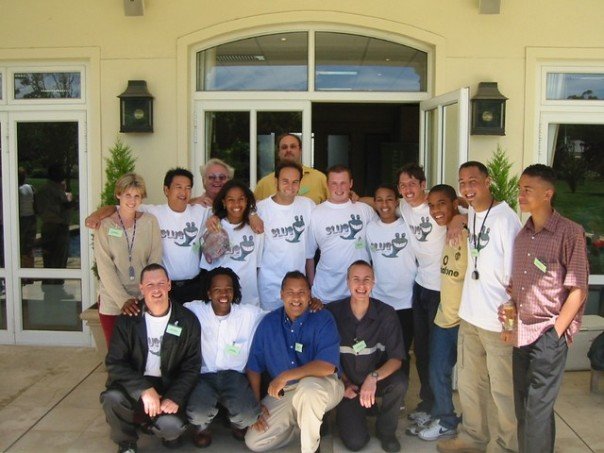
SLUG (Schools Linux Users Group) group photo. SLUG was founded to support the tuXlab schools that ran Linux.

My contract work then later turned into a full-time job there. This was a big deal for me, because I didn t want to support Windows ever again, and I didn t ever think that it would even be possible for me to get a job where I could work on free software full time. Since everyone in my team used Debian, I thought that I should probably give it another try. I did, and I hated it. One morning I went to talk to my manager, Thomas Black, and told him that I just don t get it and I need some help. Thomas was a big mentor to me during this phase. He told me that I should try upgrading to testing, which I did, and somehow I ended up on unstable, and I loved it. Before that I used to subscribe to a website called freshmeat that listed new releases of upstream software and then, I would download and compile it myself so that I always had the newest versions of everything. Debian unstable made that whole process obsolete, and I became a huge fan of it. Early on I also hit a problem where two packages tried to install the same file, and I was delighted to find how easily I could find package state and maintainer scripts and fix them to get my system going again. Thomas told me that anyone could become a Debian Developer and maintain packages in Debian and that I should check it out and joked that maybe I could eventually snap up highvoltage@debian.org . I just laughed because back then you might as well have told me that I could run for president of the United States, it really felt like something rather far-fetched and unobtainable at that point, but the seed was planted :) Ubuntu and beyond

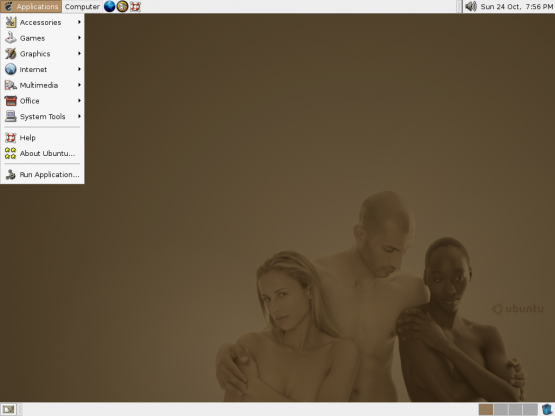
Ubuntu 4.10 default desktop Image from distrowatch

One day, Thomas told me that Mark is planning to provide official support for Debian unstable. The details were sparse, but this was still exciting news. A few months later Thomas gave me a CD with just warty written on it and said that I should install it on a server so that we can try it out. It was great, it used the new debian-installer and installed fine everywhere I tried it, and the software was nice and fresh. Later Thomas told me that this system is going to be called Ubuntu and the desktop edition has naked people on it. I wasn t sure what he meant and was kind of dumbfounded so I just laughed and said something like Uh ok . At least it made a lot more sense when I finally saw the desktop pre-release version and when it got the byline Linux for Human Beings . Fun fact, one of my first jobs at the foundation was to register the ubuntu.com domain name. Unfortunately I found it was already owned by a domain squatter and it was eventually handled by legal. Closer to Ubuntu s first release, Mark brought over a whole bunch of Debian developers that was working on Ubuntu over to the foundation and they were around for a few days getting some sun. Thomas kept saying Go talk to them! Go talk to them! , but I felt so intimidated by them that I couldn t even bring myself to walk up and say hello. In the interest of keeping this short, I m leaving out a lot of history but later on, I read through the Debian packaging policy and really started getting into packaging and also discovered Daniel Holbach s packaging tutorials on YouTube. These helped me tremendously. Some day (hopefully soon), I d like to do a similar video series that might help a new generation of packagers. I ve also been following DebConf online since DebConf 7, which was incredibly educational for me. Little did I know that just 5 years later I would even attend one, and another 5 years after that I d end up being on the DebConf Committee and have also already been on a local team for one.

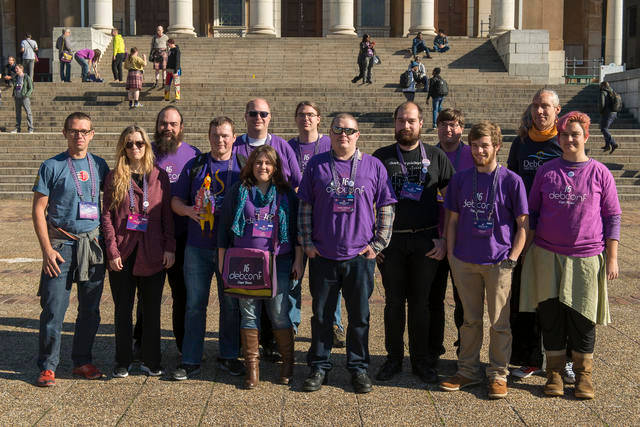
DebConf16 Organisers, Photo by Jurie Senekal.

It s been a long journey for me and I would like to help anyone who is also interested in becoming a Debian maintainer or developer. If you ever need help with your package, upload it to https://mentors.debian.net and if I have some spare time I ll certainly help you out and sponsor an upload. Thanks to everyone who have helped me along the way, I really appreciate it!

Raphaël Hertzog: Freexian s report about Debian Long Term Support, October 2017

A Debian LTS logoLike each month, here comes a report about the work of paid contributors to Debian LTS. Individual reports In October, about 197 work hours have been dispatched among 13 paid contributors. Their reports are available: Evolution of the situation The number of sponsored hours increased slightly to 183 hours per month. With the increasing number of security issues to deal with, and with the number of open issues not really going down, I decided to bump the funding target to what amounts to 1.5 full-time position. The security tracker currently lists 50 packages with a known CVE and the dla-needed.txt file 36 (we re a bit behind in CVE triaging apparently). Thanks to our sponsors New sponsors are in bold.

No comment Liked this article? Click here. My blog is Flattr-enabled.

2 November 2017

Antoine Beaupr : October 2017 report: LTS, feed2exec beta, pandoc filters, git mediawiki

Debian Long Term Support (LTS) This is my monthly Debian LTS report. This time I worked on the famous KRACK attack, git-annex, golang and the continuous stream of GraphicsMagick security issues.

WPA & KRACK update I spent most of my time this month on the Linux WPA code, to backport it to the old (~2012) wpa_supplicant release. I first published a patchset based on the patches shipped after the embargo for the oldstable/jessie release. After feedback from the list, I also built packages for i386 and ARM. I have also reviewed the WPA protocol to make sure I understood the implications of the changes required to backport the patches. For example, I removed the patches touching the WNM sleep mode code as that was introduced only in the 2.0 release. Chunks of code regarding state tracking were also not backported as they are part of the state tracking code introduced later, in 3ff3323. Finally, I still have concerns about the nonce setup in patch #5. In the last chunk, you'll notice peer->tk is reset, to_set to negotiate a new TK. The other approach I considered was to backport 1380fcbd9f ("TDLS: Do not modify RNonce for an TPK M1 frame with same INonce") but I figured I would play it safe and not introduce further variations. I should note that I share Matthew Green's observations regarding the opacity of the protocol. Normally, network protocols are freely available and security researchers like me can easily review them. In this case, I would have needed to read the opaque 802.11i-2004 pdf which is behind a TOS wall at the IEEE. I ended up reading up on the IEEE_802.11i-2004 Wikipedia article which gives a simpler view of the protocol. But it's a real problem to see such critical protocols developed behind closed doors like this. At Guido's suggestion, I sent the final patch upstream explaining the concerns I had with the patch. I have not, at the time of writing, received any response from upstream about this, unfortunately. I uploaded the fixed packages as DLA 1150-1 on October 31st.

Git-annex The next big chunk on my list was completing the work on git-annex (CVE-2017-12976) that I started in August. It turns out doing the backport was simpler than I expected, even with my rusty experience with Haskell. Type-checking really helps in doing the right thing, especially considering how Joey Hess implemented the fix: by introducing a new type. So I backported the patch from upstream and notified the security team that the jessie and stretch updates would be similarly easy. I shipped the backport to LTS as DLA-1144-1. I also shared the updated packages for jessie (which required a similar backport) and stretch (which didn't) and those Sebastien Delafond published those as DSA 4010-1.

Graphicsmagick Up next was yet another security vulnerability in the Graphicsmagick stack. This involved the usual deep dive into intricate and sometimes just unreasonable C code to try and fit a round tree in a square sinkhole. I'm always unsure about those patches, but the test suite passes, smoke tests show the vulnerability as fixed, and that's pretty much as good as it gets. The announcement (DLA 1154-1) turned out to be a little special because I had previously noticed that the penultimate announcement (DLA 1130-1) was never sent out. So I made a merged announcement to cover both instead of re-sending the original 3 weeks late, which may have been confusing for our users.

Triage & misc We always do a bit of triage even when not on frontdesk duty, so I: I also did smaller bits of work on: The latter reminded me of the concerns I have about the long-term maintainability of the golang ecosystem: because everything is statically linked, an update to a core library (say the SMTP library as in CVE-2017-15042, thankfully not affecting LTS) requires a full rebuild of all packages including the library in all distributions. So what would be a simple update in a shared library system could mean an explosion of work on statically linked infrastructures. This is a lot of work which can definitely be error-prone: as I've seen in other updates, some packages (for example the Ruby interpreter) just bit-rot on their own and eventually fail to build from source. We would also have to investigate all packages to see which one include the library, something which we are not well equipped for at this point. Wheezy was the first release shipping golang packages but at least it's shipping only one... Stretch has shipped with two golang versions (1.7 and 1.8) which will make maintenance ever harder in the long term.
We build our computers the way we build our cities--over time, without a plan, on top of ruins. - Ellen Ullman

Other free software work This month again, I was busy doing some serious yak shaving operations all over the internet, on top of publishing two of my largest LWN articles to date (2017-10-16-strategies-offline-pgp-key-storage and 2017-10-26-comparison-cryptographic-keycards).

feed2exec beta Since I announced this new project last month I have released it as a beta and it entered Debian. I have also wrote useful plugins like the wayback plugin that saves pages on the Wayback machine for eternal archival. The archive plugin can also similarly save pages to the local filesystem. I also added bash completion, expanded unit tests and documentation, fixed default file paths and a bunch of bugs, and refactored the code. Finally, I also started using two external Python libraries instead of rolling my own code: the pyxdg and requests-file libraries, the latter which I packaged in Debian (and fixed a bug in their test suite). The program is working pretty well for me. The only thing I feel is really missing now is a retry/fail mechanism. Right now, it's a little brittle: any network hiccup will yield an error email, which are readable to me but could be confusing to a new user. Strangely enough, I am particularly having trouble with (local!) DNS resolution that I need to look into, but that is probably unrelated with the software itself. Thankfully, the user can disable those with --loglevel=ERROR to silence WARNINGs. Furthermore, some plugins still have some rough edges. For example, The Transmission integration would probably work better as a distinct plugin instead of a simple exec call, because when it adds new torrents, the output is totally cryptic. That plugin could also leverage more feed parameters to save different files in different locations depending on the feed titles, something would be hard to do safely with the exec plugin now. I am keeping a steady flow of releases. I wish there was a way to see how effective I am at reaching out with this project, but unfortunately GitLab doesn't provide usage statistics... And I have received only a few comments on IRC about the project, so maybe I need to reach out more like it says in the fine manual. Always feels strange to have to promote your project like it's some new bubbly soap... Next steps for the project is a final review of the API and release production-ready 1.0.0. I am also thinking of making a small screencast to show the basic capabilities of the software, maybe with asciinema's upcoming audio support?

Pandoc filters As I mentioned earlier, I dove again in Haskell programming when working on the git-annex security update. But I also have a small Haskell program of my own - a Pandoc filter that I use to convert the HTML articles I publish on LWN.net into a Ikiwiki-compatible markdown version. It turns out the script was still missing a bunch of stuff: image sizes, proper table formatting, etc. I also worked hard on automating more bits of the publishing workflow by extracting the time from the article which allowed me to simply extract the full article into an almost final copy just by specifying the article ID. The only thing left is to add tags, and the article is complete. In the process, I learned about new weird Haskell constructs. Take this code, for example:
-- remove needless blockquote wrapper around some tables
--
-- haskell newbie tips:
--
-- @ is the "at-pattern", allows us to define both a name for the
-- construct and inspect the contents as once
--
--   is the "empty record pattern": it basically means "match the
-- arguments but ignore the args"
cleanBlock (BlockQuote t@[Table  ]) = t
Here the idea is to remove <blockquote> elements needlessly wrapping a <table>. I can't specify the Table type on its own, because then I couldn't address the table as a whole, only its parts. I could reconstruct the whole table bits by bits, but it wasn't as clean. The other pattern was how to, at last, address multiple string elements, which was difficult because Pandoc treats spaces specially:
cleanBlock (Plain (Strong (Str "Notifications":Space:Str "for":Space:Str "all":Space:Str "responses":_):_)) = []
The last bit that drove me crazy was the date parsing:
-- the "GAByline" div has a date, use it to generate the ikiwiki dates
--
-- this is distinct from cleanBlock because we do not want to have to
-- deal with time there: it is only here we need it, and we need to
-- pass it in here because we do not want to mess with IO (time is I/O
-- in haskell) all across the function hierarchy
cleanDates :: ZonedTime -> Block -> [Block]
-- this mouthful is just the way the data comes in from
-- LWN/Pandoc. there could be a cleaner way to represent this,
-- possibly with a record, but this is complicated and obscure enough.
cleanDates time (Div (_, [cls], _)
                 [Para [Str month, Space, Str day, Space, Str year], Para _])
    cls == "GAByline" = ikiwikiRawInline (ikiwikiMetaField "date"
                                           (iso8601Format (parseTimeOrError True defaultTimeLocale "%Y-%B-%e,"
                                                           (year ++ "-" ++ month ++ "-" ++ day) :: ZonedTime)))
                        ++ ikiwikiRawInline (ikiwikiMetaField "updated"
                                             (iso8601Format time))
                        ++ [Para []]
-- other elements just pass through
cleanDates time x = [x]
Now that seems just dirty, but it was even worse before. One thing I find difficult in adapting to coding in Haskell is that you need to take the habit of writing smaller functions. The language is really not well adapted to long discourse: it's more about getting small things connected together. Other languages (e.g. Python) discourage this because there's some overhead in calling functions (10 nanoseconds in my tests, but still), whereas functions are a fundamental and important construction in Haskell that are much more heavily optimized. So I constantly need to remind myself to split things up early, otherwise I can't do anything in Haskell. Other languages are more lenient, which does mean my code can be more dirty, but I feel get things done faster then. The oddity of Haskell makes frustrating to work with. It's like doing construction work but you're not allowed to get the floor dirty. When I build stuff, I don't mind things being dirty: I can cleanup afterwards. This is especially critical when you don't actually know how to make things clean in the first place, as Haskell will simply not let you do that at all. And obviously, I fought with Monads, or, more specifically, "I/O" or IO in this case. Turns out that getting the current time is IO in Haskell: indeed, it's not a "pure" function that will always return the same thing. But this means that I would have had to change the signature of all the functions that touched time to include IO. I eventually moved the time initialization up into main so that I had only one IO function and moved that timestamp downwards as simple argument. That way I could keep the rest of the code clean, which seems to be an acceptable pattern. I would of course be happy to get feedback from my Haskell readers (if any) to see how to improve that code. I am always eager to learn.

Git remote MediaWiki Few people know that there is a MediaWiki remote for Git which allow you to mirror a MediaWiki site as a Git repository. As a disaster recovery mechanism, I have been keeping such a historical backup of the Amateur radio wiki for a while now. This originally started as a homegrown Python script to also convert the contents in Markdown. My theory then was to see if we could switch from Mediawiki to Ikiwiki, but it took so long to implement that I never completed the work. When someone had the weird idea of renaming a page to some impossible long name on the wiki, my script broke. I tried to look at fixing it and then remember I also had a mirror running using the Git remote. It turns out it also broke on the same issue and that got me looking in the remote again. I got lost in a zillion issues, including fixing that specific issue, but I especially looked at the possibility of fetching all namespaces because I realized that the remote fetches only a part of the wiki by default. And that drove me to submit namespace support as a patch to the git mailing list. Finally, the discussion came back to how to actually maintain that contrib: in git core or outside? Finally, it looks like I'll be doing some maintenance that project outside of git, as I was granted access to the GitHub organisation...

Galore Yak Shaving Then there's the usual hodgepodge of fixes and random things I did over the month.
There is no [web extension] only XUL! - Inside joke

1 November 2017

Petter Reinholdtsen: Some notes on fault tolerant storage systems

If you care about how fault tolerant your storage is, you might find these articles and papers interesting. They have formed how I think of when designing a storage system. Several of these research papers are based on data collected from hundred thousands or millions of disk, and their findings are eye opening. The short story is simply do not implicitly trust RAID or redundant storage systems. Details matter. And unfortunately there are few options on Linux addressing all the identified issues. Both ZFS and Btrfs are doing a fairly good job, but have legal and practical issues on their own. I wonder how cluster file systems like Ceph do in this regard. After all, there is an old saying, you know you have a distributed system when the crash of a compyter you have never heard of stops you from getting any work done. The same holds true if fault tolerance do not work. Just remember, in the end, it do not matter how redundant, or how fault tolerant your storage is, if you do not continuously monitor its status to detect and replace failed disks.

28 October 2017

Russ Allbery: Review: Provenance

Review: Provenance, by Ann Leckie
Publisher: Orbit
Copyright: September 2017
ISBN: 0-316-38863-7
Format: Kindle
Pages: 448
In a rather desperate attempt to please her mother, Ingray has spent every resource she has on extracting the son of a political enemy from Compassionate Removal (think life imprisonment with really good marketing). The reason: vestiges, a cultural touchstone for Ingray's native planet of Hwae. These are invitation cards, floor tiles, wall panels, or just about anything that can be confirmed to have been physically present at an important or historical moment, or in the presence of a famous figure. The person Ingray is retrieving supposedly pulled off the biggest theft of vestiges in history. If she can locate them, it would be a huge coup for her highly-placed politician mother, and the one time she would be victorious in her forced rivalry with her brother. About the best thing that could be said for this plan is that it's audacious. The first obstacle is the arrival of the Geck on the station for a Conclave for renegotiation of the treaty with the Presger, possibly the most important thing going on in the galaxy at the moment, which strands her there without money for food. The second is that the person she has paid so much to extract from Compassionate Removal says they aren't the person she was looking for at all, and are not particularly interested in going with her to Hwae. Only a bit of creative thinking in the face of a visit from the local authorities, and the unexpected kindness of the captain from whom she booked travel, might get her home with the tatters of her plan intact. But she's clearly far out of her depth. Provenance is set in the same universe as Ancillary Justice and its sequels, but it is not set in the empire of the Radchaai. This is another human world entirely, one with smaller and more provincial concerns. The aftermath of Ancillary Mercy is playing out in the background (so do not, on risk of serious spoilers, read the start of this book without having read the previous trilogy), but this is in no way a sequel. Neither the characters nor the plot are involved in that aftermath. It's a story told at a much smaller scale, about two political families, cut-throat maneuvering, horrible parenting, the inexplicable importance of social artifacts, the weirdness of human/alien relations, and the merits of some very unlikely allies. Provenance is a very different type of story than Ancillary Justice, and Ingray is a very different protagonist. The shape of the plot reminded me of one of Lois McMaster Bujold's Miles Vorkosigan stories: hair-brained ideas, improvisation, and unlikely allies. But Ingray couldn't be more different than Miles. She starts the book overwhelmed, despairing, and not at all manic, and one spends the first part of the story feeling sorry for her and becoming quite certain that everything will go horribly wrong. The heart of this book is the parallel path Leckie takes the reader and the characters along as they discover just what Ingray's true talents and capabilities are. It's a book about being hopelessly bad at things one was pressured towards being good at, while being quietly and subtly good at the skills that let one survive a deeply dysfunctional family. There are lots of books with very active protagonists, and a depressing number of books with passive protagonists pushed around by the plot. There are very few books that pull off the delicate characterization that Leckie manages here: a protagonist who is rather hopeless at taking charge of the plot in the way everyone wants (but doesn't particularly expect) her to, but who charts her own path through the plot in an entirely unexpected way. It's a story that grows on you. The plot rhythm never works in quite the way one expects from other books, but it builds its own logic and its own rhythm, and reached a very emotionally satisfying conclusion. The Radchaai, or at least one Radchaai citizen, do show up eventually, providing a glimmer of outside view at the Ancillary Justice world. Even better, the Geck play a significant role. I adore Leckie's aliens: they're strange and confusing, but in a refreshingly blunt way rather than abusing gnomic utterances and incomprehensible intelligence. And the foot-stomping of the spider bot made me laugh every time. The stakes are a lot lower here than in Ancillary Justice, and Ingray isn't the sort of character who's going to change the world. But that's okay; indeed, one of the points of this book is why and how that's okay. I won't lie: I'd love more Breq, and I hope we eventually get an exploration of the larger consequences of her story. But this is a delightful story that made me happy and has defter character work than most SF being written. Recommended, but read the Ancillary trilogy first. One minor closing complaint, which didn't change my experience of the book but which I can't help quibbling about: I'm completely onboard with the three-gender system that Leckie uses for the Hwae (I wish more SF authors would play with social as well as technological ideas), and I think she wove it deftly into the story, but I wish she hadn't used Spivak pronouns for the third gender. (e/em/eir, for those who aren't familiar.) Any of the other gender-neutral pronouns look better to me and cause fewer problems for my involuntary proofreader. I prefer zie/zir for personal reasons, but sie/hir, zhe/zhim/zher, or even thon or per would read more smoothly. Eir is fine, but em looks like 'em and throws my brain into dialect mode and forces a re-parse, and e just looks like a typo. I know from lots of Usenet discussions of pronouns that I'm not the only one who has that reaction to Spivak. But it's a very minor nit. Rating: 8 out of 10

27 October 2017

Russ Allbery: Review: The Black Gryphon

Review: The Black Gryphon, by Mercedes Lackey & Larry Dixon
Series: Mage Wars #1
Publisher: DAW
Copyright: 1994
Printing: January 1995
ISBN: 0-88677-643-0
Format: Mass market
Pages: 460
The Mage Wars series (or the Gryphon series, which isn't its official title but which is in all of the titles) is part of the sprawling Valdemar mega-series, but it's a prequel to all of the other stories. It's also slightly challenging if you're reading in publication order, since it was published simultaneously with the Mage Storms series. If you're following publication order, in theory you should interleave the two series, but I hate doing that. I'm therefore reading it after Mage Winds and before Mage Storms. We'll see whether that was a good idea when I get to the next series. You could, if you really wanted to, read this series before any other Valdemar book. As a prequel from the deep past of Valdemar's world, it doesn't depend on the other series, and you'll get a rediscovery of lost knowledge feel from later books. The downside is that it's a rather boring introduction, and that order would spoil a lot of the revelatory flow of the other series (particularly Elspeth's adventures in the Mage Winds books). I'm now getting into the Valdemar books that I've only read once. I've been putting off continuing my Valdemar re-read because this series was next and I remember being rather bored with it the first time I read it. But I'm re-reading for the world-building and background as much as for the characters, and this is a huge chunk of world background that fills in the bones underneath Winds of Fate and its sequels. Here's why Dhorisha is a crater, here's why the Pelagiris forests are such a mess, here's where Ma'ar starts, here's the origin of both the gryphons and K'Leshya, and here, finally, we get to see the legendary Urtho on the page. The problem with writing novels set in the epic backstory of your universe is that it's hard to live up to the drama that readers have invented for themselves. A lot of The Black Gryphon is background to events Valdemar readers already know will happen, creating a corresponding lack of surprise. I reached the end of the book and said "yup, that's pretty much what everyone said had happened." Lackey and Dixon do try to do some interesting things here, one of which being the backgrounding of the war. The Black Gryphon starts in the middle of a long-running conflict between Urtho and Ma'ar and doesn't follow the generals or the battles. The protagonists, instead, are a kestra'chern (a type of psychiatrist and spiritual healer who also uses sex, with the expected conflicts of people who incorrectly think of them as prostitutes) and the eventual leader of the gryphons (Skandranon, who is referenced in later books and who provides the title). We get some combat scenes from Skandranon and later another gryphon, but a lot of the book is Amberdrake fighting the effects of the war instead of the details of the war itself. There's a deep and moving story in that idea, and in some of the attached love stories that play out in the army camps. There's also a great story somewhere around Urtho: a brilliant but detached mage who is way out of his depth trying to run an army but smart enough to gather good people around him. He's also a creator of new life, including the gryphons. The Black Gryphon tries to talk about Urtho's paternalism, the weird emotional currents of his relationship with his creations, and the places Urtho keeps things from others for, supposedly, their own good. If this book had looked a bit deeper at the support structure for an army that's trying to be humane, or at the ways in which Urtho strays far too close to being an abusive tyrant through inaction despite having the best of intentions at every step, I think it could have said something significant. Unfortunately, that's not this book. This book is full of relentlessly black and white morality (the flaw of much of the Valdemar series) that bleaches away interesting shades of grey. Urtho is good and wise by authorial fiat, and Ma'ar is the same utterly irredeemable force of evil that he is in other books. The story skitters over Urtho's odd tyrannies, making them all better with the pure power of friendship and good intentions. There just isn't much emotional depth, and while I don't expect that of Lackey in general, this story really needed that depth to work. What we get instead is repetition, as Lackey and Dixon hit the same emotional notes with Amberdrake repeatedly. This is one of those books that makes me wonder if Lackey was trying to write too many novels in a short time than was good for their individual quality. (Collaborations often mean that the lesser-known name is doing all the work, but Dixon is Lackey's husband and the tone of the book is sufficiently Lackey that I don't think that happened here.) It felt padded by Amberdrake turning over the same emotional rocks repeatedly, to largely the same effect. This is, in short, not Lackey's finest effort, although it does have its moments. As always, Lackey is at her best when writing psychological healing narratives. Zhaneel's story is a bit too easy, but the dynamic between Amberdrake and Winterhart is the best part of the book. And The Black Gryphon does tell the reader exactly what led up to the Cataclysm and why. There are no major surprises, but there are some small ones, and it's a nice payoff for the lore-obsessed (like me). This is missable unless you want the full world-building behind Valdemar's past, and it's not the best writing. But if you're heavily invested in the Valdemar universe, it's at least readable and provides an important bit of the history. Followed by The White Gryphon. Rating: 5 out of 10

23 October 2017

Arturo Borrero Gonz lez: New job at Wikimedia Foundation

Wikimedia Foundation logo Today it s my first day working at the Wikimedia Foundation, the non-profit foundation behind well-known projects like Wikipedia and others. This is a full-time, remote job as part of the Wikimedia Cloud Services team, as Operations Engineer. I will be working with modern infrastructure/hosting technologies such as OpenStack and Kubernetes to provide support to the Wikimedia movement and community. All contributors of the movement that provide value to the Wikimedia movement are welcome to use our resources. The recruitment process took several months and was really challenging, 6 or 7 interviews with different people with, of course, heavy technical checks. The Wikimedia Foundation has been always in my radar due to 2 facts:
  1. They serve a very relevant mission, commited to freedom of knowledge, community colaboration, focusing in the benefit that this provides to the society.
  2. They have a huge infrastructure/technological deployment which, among other things, allows Wikipedia to be one of the TOP5-TOP10 websites.
This new job is a big challenge for me and I m a bit nervous. I feel like this is a big step forward in my professional career and I will try to do my best :-) My new email address is aborrero@wikimedia.org. You can find me in IRC freenode as well, nick arturo. Great times ahead! :-)

20 October 2017

Rapha&#235;l Hertzog: Freexian s report about Debian Long Term Support, September 2017

A Debian LTS logoLike each month, here comes a report about the work of paid contributors to Debian LTS. Individual reports In August, about 170 work hours have been dispatched among 13 paid contributors. Their reports are available: Evolution of the situation The number of sponsored hours is the same as last month. But we have a new sponsor in the pipe. The security tracker currently lists 52 packages with a known CVE and the dla-needed.txt file 49. The number of packages with open issues decreased slightly compared to last month but we re not yet back to the usual situation. Thanks to our sponsors New sponsors are in bold.

No comment Liked this article? Click here. My blog is Flattr-enabled.

17 October 2017

Reproducible builds folks: Reproducible Builds: Weekly report #129

Here's what happened in the Reproducible Builds effort between Sunday October 8 and Saturday October 14 2017: Upcoming events Reproducible work in other projects Pierre Pronchery reported that that he has built the foundations for doing more reproducibility work in NetBSD. Packages fixed Upstream bugs and patches: Reproducibility non-maintainer uploads in Debian: QA fixes in Debian: Reviews of unreproducible packages 6 package reviews have been added, 30 have been updated and 37 have been removed in this week, adding to our knowledge about identified issues. Weekly QA work During our reproducibility testing, FTBFS bugs have been detected and reported by: diffoscope development reprotest development Version 0.7.3 was uploaded to unstable by Ximin Luo. It included contributions already covered by posts of the previous weeks, as well as new ones: Misc. This week's edition was written by Ximin Luo, Chris Lamb and Holger Levsen & reviewed by a bunch of Reproducible Builds folks on IRC & the mailing lists.

16 October 2017

Russ Allbery: Free software log (September 2017)

I said that I was going to start writing these regularly, so I'm going to stick to it, even when the results are rather underwhelming. One of the goals is to make the time for more free software work, and I do better at doing things that I record. The only piece of free software work for September was that I made rra-c-util compile cleanly with the Clang static analyzer. This was fairly tedious work that mostly involved unconfusing the compiler or converting (semi-intentional) crashes into explicit asserts, but it unblocks using the Clang static analyzer as part of the automated test suite of my other projects that are downstream of rra-c-util. One of the semantic changes I made was that the vector utilities in rra-c-util (which maintain a resizable array of strings) now always allocate room for at least one string pointer. This wastes a small amount of memory for empty vectors that are never used, but ensures that the strings struct member is always valid. This isn't, strictly speaking, a correctness fix, since all the checks were correct, but after some thought, I decided that humans might have the same problem that the static analyzer had. It's a lot easier to reason about a field that's never NULL. Similarly, the replacement function for a missing reallocarray now does an allocation of size 1 if given a size of 0, just to avoid edge case behavior. (I'm sure the behavior of a realloc with size 0 is defined somewhere in the C standard, but if I have to look it up, I'd rather not make a human reason about it.) I started on, but didn't finish, making rra-c-util compile without Clang warnings (at least for a chosen set of warnings). By far the hardest problem here are the Clang warnings for comparisons between unsigned and signed integers. In theory, I like this warning, since it's the cause of a lot of very obscure bugs. In practice, gah does C ever do this all over the place, and it's incredibly painful to avoid. (One of the biggest offenders is write, which returns a ssize_t that you almost always want to compare against a size_t.) I did a bunch of mechanical work, but I now have a lot of bits of code like:
     if (status < 0)
         return;
    written = (size_t) status;
    if (written < avail)
        buffer->left += written;
which is ugly and unsatisfying. And I also have a ton of casts, such as with:
    buffer_resize(buffer, (size_t) st.st_size + used);
since st.st_size is an off_t, which may be signed. This is all deeply unsatisfying and ugly, and I think it makes the code moderately harder to read, but I do think the warning will potentially catch bugs and even security issues. I'm still torn. Maybe I can find some nice macros or programming styles to avoid the worst of this problem. It definitely requires more thought, rather than just committing this huge mechanical change with lots of ugly code. Mostly, this kind of nonsense makes me want to stop working on C code and go finish learning Rust.... Anyway, apart from work, the biggest thing I managed to do last month that was vaguely related to free software was upgrading my personal servers to stretch (finally). That mostly went okay; only a few things made it unnecessarily exciting. The first was that one of my systems had a very tiny / partition that was too small to hold the downloaded debs for the upgrade, so I had to resize it (VM disk, partition, and file system), and that was a bit exciting because it has an old-style DOS partition table that isn't aligned (hmmm, which is probably why disk I/O is so slow on those VMs), so I had to use the obsolete fdisk -c=dos mode because I wasn't up for replacing the partition right then. The second was that my first try at an upgrade died with a segfault during the libc6 postinst and then every executable segfaulted. A mild panic and a rescue disk later (and thirty minutes and a lot of swearing), I tracked the problem down to libc6-xen. Nothing in the dependency structure between jessie and stretch forces libc6-xen to be upgraded in lockstep or removed, but it's earlier in the search path. So ld.so gets upgraded, and then finds the old libc6 from the libc6-xen package, and the mismatch causes immediate segfaults. A chroot dpkg --purge from the rescue disk solved the problem as soon as I knew what was going on, but that was a stressful half-hour. The third problem was something I should have known was going to be an issue: an old Perl program that does some internal stuff for one of the services I ran had a defined @array test that has been warning for eons and that I never fixed. That became a full syntax error with the most recent Perl, and then I fixed it incorrectly the first time and had a bunch of trouble tracking down what I'd broken. All sorted out now, and everything is happily running stretch. (ejabberd, which other folks had mentioned was a problem, went completely smoothly, although I suspect I now have too many of the plugin packages installed and should do a purging.)

14 October 2017

Norbert Preining: ScalaFX: ListView with CellFactory

I had a bit hard time to get ScalaFX to display a list of items in a scrollable space, and each item can be clicked. I use this in TLCockpit to display the list of documentation files in a TeX Live package, and open it directly from the application. Unfortunately there is not a huge amount of examples using ScalaFX out there in the web, so it took me a bit. My first try was using a VBox with various Labels in there, but this is not scrollable. In other areas I have used TreeTableView, so in this case using ListView should be fine. What I finally came up is the following code:
import scalafx.application.JFXApp
import scalafx.application.JFXApp.PrimaryStage
import scalafx.collections.ObservableBuffer
import scalafx.geometry.Orientation
import scalafx.scene.control. ListCell, ListView 
import scalafx.scene.input.MouseEvent
import scalafx.scene. Cursor, Scene 
import scalafx.scene.paint.Color
import scalafx.Includes._
object ApplicationMain extends JFXApp  
  val SomeStrings: Seq[String] = Seq("Hello", "World", "Enjoy")
  stage = new PrimaryStage  
    title = "ListViewExample"
    scene = new Scene  
      root =  
        new ListView[String]  
          orientation = Orientation.Vertical
          cellFactory =  
            p =>  
              val cell = new ListCell[String]
              cell.textFill = Color.Blue
              cell.cursor = Cursor.Hand
              cell.item.onChange   (_, _, str) => cell.text = str  
              cell.onMouseClicked =   me: MouseEvent => println("Do something with " + cell.text.value)  
              cell
             
           
          items = ObservableBuffer(SomeStrings)


Some comments to the code, at least as far I understand it: Once managed, it doesn t look so complicated, but took me some time.

11 October 2017

Steve Kemp: A busy week or two

It feels like the past week or two has been very busy, and so I'm looking forward to my "holiday" next month. I'm not really having a holiday of course, my wife is slowly returning to work, so I'll be taking a month of paternity leave, taking sole care of Oiva for the month of November. He's still a little angel, and now that he's reached 10 months old he's starting to get much more mobile - he's on the verge of walking, but not quite there yet. Mostly that means he wants you to hold his hands so that he can stand up, swaying back and forth before the inevitable collapse. Beyond spending most of my evenings taking care of him, from the moment I return from work to his bedtime (around 7:30PM), I've made the Debian Administration website both read-only and much simpler. In the past that site was powered by a lot of servers, I think around 11. Now it has only a small number of machines, which should slowly decrease. I've ripped out the database host, the redis host, the events-server, the planet-machine, the email-box, etc. Now we have a much simpler setup: Finally although I'm slowly making progress with "radio stuff" I've knocked up a simple hack which uses an ultrasonic sensor to determine whether I'm sat in front of my (home) PC. If I am everything is good. If I'm absent the music is stopped and the screen locked. Kinda neat. (Simple ESP8266 device wired to the sensor. When the state changes a message is posted to Mosquitto, where a listener reacts to the change(s).) Oh, not final. I've also transfered my mobile phone from DNA.fi to MoiMobile. Which should complete soon, right now my phone is in limbo, active on niether service. Oops.

10 October 2017

Yves-Alexis Perez: OpenPGP smartcard transition (part 1)

A long time ago, I switched my GnuPG setup to a smartcard based one. I kept using the same master key, but: I've been working with that setup for a few years now and it is working perfectly fine. The signature counter on the OpenPGP basic card is a bit north of 5000 which is large but not that huge, all considered (and not counting authentication and decryption key usage).

One very nice feature of using a smartcard is that my laptop (or other machines I work on) never manipulates the private key directly but only sends request to the card, which is a really huge improvement, in my opinion. But it's also not the perfect solution for me: the OpenPGP card uses a proprietary platform from ZeitControl, named BasicCard. We have very few information on the smartcard, besides the fact that Werner Koch trust ZeistControl to not mess up. One caveat for me is that the card does not use a certified secure microcontroler like you would find in smartcard chips found in debit card or electronic IDs. That means it's not really been audited by a competent hardware lab, and thus can't be considered secure against physical attacks. The cardOS software and the application implementing the OpenPGP specification are not public either and have not been audited either, to the best of my knowledge.

At one point I was interested in the Yubikey Neo, especially since the architecture Yubico used was common: a (supposedly) certified platform (secure microcontroler, card OS) and a GlobalPlatform / JavaCard virtual machine. The applet used in the Yubikey Neo is open-source, too, so you could take a look at it and identify any issue.

Unfortunately, Yubico transitioned to a less common and more proprietary infrastructure for Yubikey 4: it's not longer Javacard based, and they don't provide the applet source anymore. This was not really seen as a good move by a lot of people, including Konstantin Ryabitsev (kernel.org administrator). Also, it wasn't possible even for the Yubico Neo to actually build the applet yourself and inject it on the card: when the Yubikey leaves the facility, the applet is already installed and the smartcard is locked (for obvious security reason). I've tried asking about getting naked/empty Yubikey with developers keys to load the applet myself, but it' was apparently not possible or would have required signing an NDA with NXP (the chip maker), which is not really possible as an individual (not that I really want to anyway).

In the meantime, a coworker actually wrote an OpenPGP javacard applet, with the intention to support latest version of the OpenPGP specification, and especially elliptic curve cryptography. The applet is called SmartPGP and has been released on ANSSI github repository. I investigated a bit, and found a smartcard with correct specification: certified (in France or Germany), and supporting Javacard 3.0.4 (required for ECC). The card can do RSA2048 (unfortunately not RSA4096) and EC with NIST (secp256r1, secp384r1, secp521r1) and Brainpool (P256, P384, P512) curves.

I've ordered some cards, and when they arrived started playing. I've built the SmartPGP applet and pushed it to a smartcard, then generated some keys and tried with GnuPG. I'm right now in the process of migrating to a new smartcard based on that setup, which seems to work just fine after few days.

Part two of this serie will describe how to build the applet and inject it in the smartcard. The process is already documented here and there, but there are few things not to forget, like how to lock the card after provisionning, so I guess having the complete process somewhere might be useful in case some people want to reproduce it.

9 October 2017

Antonio Terceiro: pristine-tar updates

Introduction pristine-tar is a tool that is present in the workflow of a lot of Debian people. I adopted it last year after it has been orphaned by its creator Joey Hess. A little after that Tomasz Buchert joined me and we are now a functional two-person team. pristine-tar goals are to import the content of a pristine upstream tarball into a VCS repository, and being able to later reconstruct that exact same tarball, bit by bit, based on the contents in the VCS, so we don t have to store a full copy of that tarball. This is done by storing a binary delta files which can be used to reconstruct the original tarball from a tarball produced with the contents of the VCS. Ultimately, we want to make sure that the tarball that is uploaded to Debian is exactly the same as the one that has been downloaded from upstream, without having to keep a full copy of it around if all of its contents is already extracted in the VCS anyway. The current state of the art, and perspectives for the future pristine-tar solves a wicked problem, because our ability to reconstruct the original tarball is affected by changes in the behavior of tar and of all of the compression tools (gzip, bzip2, xz) and by what exact options were used when creating the original tarballs. Because of this, pristine-tar currently has a few embedded copies of old versions of compressors to be able to reconstruct tarballs produced by them, and also rely on a ever-evolving patch to tar that is been carried in Debian for a while. So basically keeping pristine-tar working is a game of Whac-A-Mole. Joey provided a good summary of the situation when he orphaned pristine-tar. Going forward, we may need to rely on other ways of ensuring integrity of upstream source code. That could take the form of signed git tags, signed uncompressed tarballs (so that the compression doesn t matter), or maybe even a different system for storing actual tarballs. Debian bug #871806 contains an interesting discussion on this topic. Recent improvements Even if keeping pristine-tar useful in the long term will be hard, too much of Debian work currently relies on it, so we can t just abandon it. Instead, we keep figuring out ways to improve. And I have good news: pristine-tar has recently received updates that improve the situation quite a bit. In order to be able to understand how better we are getting at it, I created a "visualization of the regression test suite results. With the help of data from there, let s look at the improvements made since pristine-tar 1.38, which was the version included in stretch. pristine-tar 1.39: xdelta3 by default. This was the first release made after the stretch release, and made xdelta3 the default delta generator for newly-imported tarballs. Existing tarballs with deltas produced by xdelta are still supported, this only affects new imports. The support for having multiple delta generator was written by Tomasz, and was already there since 1.35, but we decided to only flip the switch after using xdelta3 was supported in a stable release. pristine-tar 1.40: improved compression heuristics pristine-tar uses a few heuristics to produce the smaller delta possible, and this includes trying different compression options. In the release Tomasz included a contribution by Lennart Sorensen to also try the --gnu, which gretly improved the support for rsyncable gzip compressed files. We can see an example of the type of improvement we got in the regression test suite data for delta sizes for faad2_2.6.1.orig.tar.gz: In 1.40, the delta produced from the test tarball faad2_2.6.1.orig.tar.gz went down from 800KB, almost the same size of tarball itself, to 6.8KB pristine-tar 1.41: support for signatures This release saw the addition of support for storage and retrieval of upstream signatures, contributed by Chris Lamb. pristine-tar 1.42: optionally recompressing tarballs I had this idea and wanted to try it out: most of our problems reproducing tarballs come from tarballs produced with old compressors, or from changes in compressor behavior, or from uncommon compression options being used. What if we could just recompress the tarballs before importing then? Yes, this kind of breaks the pristine bit of the whole business, but on the other hand, 1) the contents of the tarball are not affected, and 2) even if the initial tarball is not bit by bit the same that upstream release, at least future uploads of that same upstream version with Debian revisions can be regenerated just fine. In some cases, as the case for the test tarball util-linux_2.30.1.orig.tar.xz, recompressing is what makes it possible to reproduce the tarball (and thus import it with pristine-tar) possible at all: util-linux_2.30.1.orig.tar.xz can only be imported after being recompressed In other cases, if the current heuristics can t produce a reasonably small delta, recompressing makes a huge difference. It s the case for mumble_1.1.8.orig.tar.gz: with recompression, the delta produced from mumble_1.1.8.orig.tar.gz goes from 1.2MB, or 99% of the size to the original tarball, to 14.6KB, 1% of the size of original tarball Recompressing is not enabled by default, and can be enabled by passing the --recompress option. If you are using pristine-tar via a wrapper tool like gbp-buildpackage, you can use the $PRISTINE_TAR environment variable to set options that will affect any pristine-tar invocations. Also, even if you enable recompression, pristine-tar will only try it if the delta generations fails completely, of if the delta produced from the original tarball is too large. You can control what too large means by using the --recompress-threshold-bytes and --recompress-threshold-percent options. See the pristine-tar(1) manual page for details.

8 October 2017

Daniel Pocock: A step change in managing your calendar, without social media

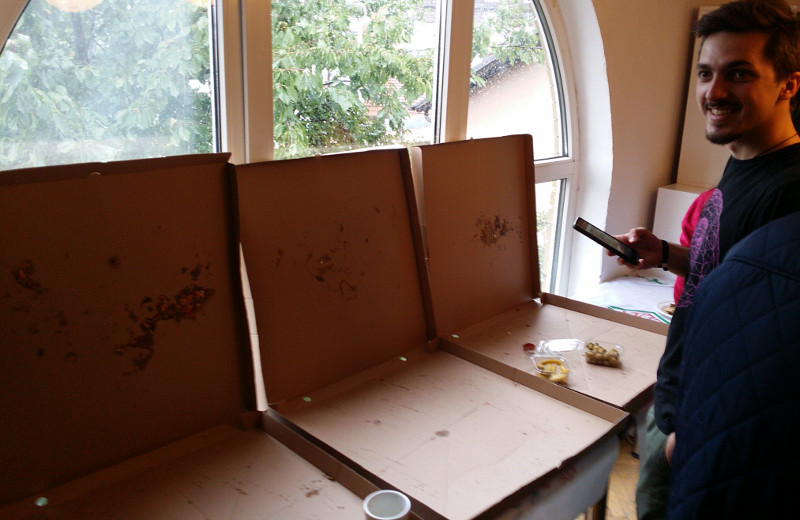
Have you been to an event recently involving free software or a related topic? How did you find it? Are you organizing an event and don't want to fall into the trap of using Facebook or Meetup or other services that compete for a share of your community's attention? Are you keen to find events in foreign destinations related to your interest areas to coincide with other travel intentions? Have you been concerned when your GSoC or Outreachy interns lost a week of their project going through the bureaucracy to get a visa for your community's event? Would you like to make it easier for them to find the best events in the countries that welcome and respect visitors? In many recent discussions about free software activism, people have struggled to break out of the illusion that social media is the way to cultivate new contacts. Wouldn't it be great to make more meaningful contacts by attending more a more diverse range of events rather than losing time on social media? Making it happen There are already a number of tools (for example, Drupal plugins and Wordpress plugins) for promoting your events on the web and in iCalendar format. There are also a number of sites like Agenda du Libre and GriCal who aggregate events from multiple communities where people can browse them. How can we take these concepts further and make a convenient, compelling and global solution? Can we harvest event data from a wide range of sources and compile it into a large database using something like PostgreSQL or a NoSQL solution or even a distributed solution like OpenDHT? Can we use big data techniques to mine these datasources and help match people to events without compromising on privacy? Why not build an automated iCalendar "to-do" list of deadlines for events you want to be reminded about, so you never miss the deadlines for travel sponsorship or submitting a talk proposal? I've started documenting an architecture for this on the Debian wiki and proposed it as an Outreachy project. It will also be offered as part of GSoC in 2018. Ways to get involved If you would like to help this project, please consider introducing yourself on the debian-outreach mailing list and helping to mentor or refer interns for the project. You can also help contribute ideas for the specification through the mailing list or wiki. Mini DebConf Prishtina 2017 This weekend I've been at the MiniDebConf in Prishtina, Kosovo. It has been hosted by the amazing Prishtina hackerspace community. Watch out for future events in Prishtina, the pizzas are huge, but that didn't stop them disappearing before we finished the photos:
6 October 2017

Scarlett Clark: KDE at #UbuntuRally in New York! KDE Applications snaps!

#UbuntuRally New York

KDE at #UbuntuRally New York

I was happy to attend Ubuntu Rally last week in New York with Aleix Pol to represent KDE.
We were able toaccomplish many things during this week, and that is a result of having direct contact with Snap developers.
So a big thank you out to Canonical for sponsoring me. I now have all of KDE core applications,
and many KDE extragear applications in the edge channel looking for testers.
I have also made a huge dent in also making the massive KDE PIM snap!
I hope to have this done by week end.
Most of our issue list made it onto TO-DO lists
So from KDE perspective, this sprint was a huge success!

Next.

Previous.