Search Results: "hertzog"

8 February 2011

Stefano Zacchiroli: ZOMG a Debian release

mythbustering a Debian release This is no news anymore, but in case you don't know yet: Debian 6.0 "Squeeze" has been released the past week-end. If you haven't yet downloaded Squeeze, stop reading this blog post right here and jump to: to choose your ISO; or check the release notes for upgrade instructions from Debian 5.0 "Lenny". Done?
Cool!
I hope you are now enjoying Squeeze as much as I've enjoyed being part of its development cycle which: I'm still shaked by the events, given the release happened in a sort of split context: the teams working on the final phases of the release (release team, ftp-masters, webmasters, cd, DSA, etc.) were "at home" hacking frantically on it, while many EU-based Debian people (including yours truly) were at FOSDEM representing Debian to the community with booth, talks, and answering the recurrent question so, have you released yet? . At FOSDEM, I've been personally submerged by congratulation messages that are not really for me, but rather for the Debian community at large. So: congratulations folks! People out there be them Debian users, users of some derivative, or Free Software enthusiasts in general seem to really love what we have achieved with Squeeze! The people that need to be thanked for this result are way too many, so I won't try to name names. Nonetheless, I've a few personal kudos to deliver to: I'm overwhelmed by happiness about all that and I'll cherish it forever as a souvenir of what a community of volunteers, driven by common ideals, can achieve. Now let's party and then roll up our sleeves for Wheezy, which is already open for development.
PS I've talked again at FOSDEM about the relevance of Debian in the Free Software ecosystem. I've the impression the message is getting through: check out the very nice article Why Debian matters more than ever by Zonker.

6 February 2011

Raphaël Hertzog: Debian 6.0 is out, Wheezy kicks off

As you probably already know, Debian released Squeeze aka Debian 6.0 this week-end. It was a really great week-end. I saw quite a few release already, but none with so much online social activity. Alexander and Meike Schmehl live commented the release on the Debian identi.ca account and Joey Hess held his Debian Party Line. On top of this, the team in charge of the website rolled out a new design on quite a few online services during the week-end including www.debian.org, wiki.debian.org, planet.debian.org and more. Congratulations to all the people who made this happen (and the release team in particular). It s great to see Debian achieve all of this. Do you know that it s the third time in a row that we manage to release in the 18-24 months timeframe? 3.1: June 2005 4.0: April 2007 5.0: February 2009 6.0: February 2011. Yes, despite our size and the fact that we are all volunteers, we have managed to stick to a reasonable schedule for a stable distribution that is deployed on a large scale. Wheezy kicks off The best part of the release for us the developers is that wheezy is now open for development and we can work on new features for the next release. ;-) And it started quickly: according to UDD, wheezy already features 488 new source packages that are not in squeeze, 1713 updated source packages and among those 1246 are new upstream versions. I really look forward to the upcoming projects and related discussions.
Click here to subscribe to my free newsletter and get my monthly analysis on what s going on in Debian and Ubuntu. Or just follow along via the RSS feed, Identi.ca, Twitter or Facebook.

For the curious, here are the UDD queries I used:
# Updated packages in wheezy
select count(source) from sources_uniq as su where (select version from sources_uniq where release='squeeze' and distribution='debian' and source = su.source) < su.version and release='wheezy' and distribution='debian';
# Updated with a new upstream version
select count(source) from sources_uniq as su where debversion(regexp_replace((select version from sources_uniq where release='squeeze' and distribution='debian' and source = su.source), '-.*', '')) < debversion(regexp_replace(su.version, '-.*', '')) and release='wheezy' and distribution='debian';
# New package in wheezy
select count(source) from sources_uniq as su where source not in (select source from sources_uniq where release='squeeze' and distribution='debian' and source = su.source) and release='wheezy' and distribution='debian';

No comment Liked this article? Click here. My blog is Flattr-enabled.

3 February 2011

Rapha&#235;l Hertzog: People behind Debian: Mike Hommey, Firefox/Iceweasel maintainer

Mike Hommey, our Iceweasel maintainer

For as long as I have known Mike, he s been maintaining one of the largest (and most widely used) package: Iceweasel, Debian s default web browser. It s effectively Mozilla s Firefox although it has been renamed to avoid some rules enforced by Mozilla s trademark policy. But we might see Firefox back in Debian read on to know Mike s plans. His story is also very interesting in that he went from simple user to Iceweasel maintainer, and now he s working for Mozilla Corporation. But you already knew that contributing to free software is a good way to grow skills and gain experience that are valuable on the job market, right? ;-) My questions are in bold, the rest is by Mike. Who are you? I am Mike Hommey. I am French, even if my name doesn t sound so. I have been a GNU/Linux user since 1995, using Debian since 1999, and started packaging in 2003. After a long time in the NM queue, I became a DD in 2005. The main reason I started being actively involved is quite selfish: I wanted some things done, and I just did them. My first packages were extensions for the Mozilla Suite, the old one that directly inherited from Netscape Communicator. Later on, I wanted some of these extensions to work with the new kid on the block: Phoenix; or maybe it was already Firebird. By then, integrating extensions was a hassle, and the mozilla-browser maintainer had come up with a script that would make it easier for extension packages. So I ported that script for use with Phoenix/Firebird and sent it to the BTS. Then Phoenix/Firebird became Firefox, and it grew a real extension manager. Except that is was entirely not suited for extensions installed by the packaging system. So I made it work better. And made a few more changes to make Firefox work better. All through patches or NMUs. Then I became co-maintainer, then Firefox couldn t keep its name and became Iceweasel, and, fast-forward until today, I m now taking care of Iceweasel/Xulrunner and Iceape in stable, unstable, experimental and an external repository. This 8 years-long story (wow, I hadn t even realized it had been that long until I wrote it) tells you something: newcomers shouldn t be afraid to stick their hands anywhere, even in big packages. I was only a Mozilla and Phoenix end-user when I started. Apart from Mozilla-related packaging, I also happen to (co-)maintain some other packages in Debian, most notably webkit, though I haven t been very active in the pkg-webkit team recently. There are several reasons for that, the main one being that there are other team members getting the job done. And I can t say that much about the pkg-mozilla team, since there are effectively no other team members. What s your biggest achievement within Debian? I am quite proud that Squeeze will be the first Debian release where Iceweasel works on all supported architectures. Previously, we only knew the package compiled on all these architectures. Starting with Squeeze, we know it passes several of the test suites coming with the source code. This ensures most of the browser is functional. It was actually far from being the case before, as it appeared when the test suites were first enabled. I think it is very important to have properly working packages on all our supported architectures. The current evolution of hardware shows how important it still is. Who would have thought a few years back that we would see ARM or MIPS based netbooks today ? What are your plans for Debian Wheezy? For Debian Wheezy, I would like to improve Iceweasel/Icedove/Iceape integration with the packaging system. Something that would allow to use the apt database to find extensions or plugins, on top of the current behaviour. I also want to improve desktop integration, most notably for KDE. Another thing I d like to see happen is to package google breakpad independently (its source code is currently embedded in chromium and iceweasel, though not built, as far as I know), and have our Mozilla products builds be able to send their crash reports upstream. It is very important that upstream gets direct visibility over what crashes on GNU/Linux systems. It helps making them aware of issues that would otherwise probably remain unnoticed, as there are much more users using distributions packages than upstream tarballs. And not all Debian users report crashes to the BTS. I know at least Fedora and SuSE are already doing it. More importantly, I want to avoid the sad situation we got with Squeeze, where we re going to release a 18 months old Iceweasel. We got there for a combination of reasons, one being that I was preparing for a freeze in December 2009 and focusing on getting 3.5 in shape instead of the then upcoming 3.6. The result was that we didn t get 3.6 packages before upstream released 3.6.3 in April 2010. By then it was too late, considering the uncertainty of the release schedule, to update reverse dependencies and get 3.6 ready for Squeeze. Things are different for 4.0. I m already getting ahead of things, and while reverse dependencies haven t been taken care of, all beta releases have been made available through http://mozilla.debian.net/, usually within hours after upstream release (sometimes even a few hours before official announcement, but always after availability on ftp.mozilla.org). A great share of our patches were also pushed upstream. Several things made that possible: There will be a couple major upstream releases until Wheezy comes along, and I want to make them available early in unstable, even if that means breaking reverse dependencies until they are fixed. Finally, I would like to get other people involved, starting with the Icedove maintainer. Volunteers are very much welcome, for any kind of involvement: bug triaging, documentation (which we are deeply lacking), testing, code People interested can contact the pkg-mozilla team list. As the Debian packaging gets less time consuming, I should be able to spend more time mentoring, which should help. If you could spend all your time on Debian, what would you work on? I actually have been working almost full time on Debian for a few months during a more-or-less purposeful unemployment period. That s when I attempted to add an alert popup when Iceweasel or extensions are upgraded (which was eventually removed because not working very effectively). That s when I worked on Iceweasel 3.6 and the first 4.0 betas. That s when I pushed more than 70 patches upstream, and got upstream commit access. I know for a fact that keeping up with upstream and answering bug reports is already time consuming, and time comes in finite quantity. Working full time on Debian allows to do more than that, as I ve been able to experience first hand. Unfortunately, that doesn t help pay the bills, so it would be best if time could be shared with other persons. Like, actual members in the pkg-mozilla team. ;) Anyways, if I were to work full time on Debian again, I d like to do more than packaging, and help improve some of our infrastructure, most notably the buildd network, to grow some automated way to get packages built on all or some of our architectures. Call that PPA if you want, though I don t think we need something exactly like PPA. We sure do have porter boxes, but there is a huge overhead to get packages built there: you need to first try, then see you lack build dependencies, then wait for admins to install them, then come back and launch your build, and finally come back again much later to see how it went. And that s when it goes smoothly. Repeat for each architecture. It s already cumbersome when it s a small package, so imagine when it s Iceweasel. I d like to be able to push a (signed) .dsc somewhere, say I want it built on that and that architecture, and get binary packages and logs back. It could then be up to developers to distribute them, or not. Sometimes, you re just interested in test suite results. Another related wish would be a way to access build trees of failed builds, possibly on the buildd where it failed. What s the biggest problem of Debian? Lack of contributors, lack of contributors, and lack of contributors. It can sound weird to say that in a community of 1000+ people. But the sad reality is that we ve seen, repeatedly, calls for help in various places from various understaffed teams (most often of effectively one member) for years. So there is obviously a problem getting people to invest time in these teams either on the long term, or at all. I know this is not a very significant metric, but it already should say a lot: I wouldn t be surprised if more than 2/3 of the number of source lines of code in Debian come from less than 5% of the number of packages in the archive, and see less than 5% of the DD/DM population involved. If someone feels like doing the actual math, I m curious to know how far I m from reality, and in what direction. We also lack manpower to be able to make our release development smoother. In a perfect world where manpower is not a scarce resource, we should work on $release+1 when $release is being frozen. Said otherwise, we should have been able to start working on Wheezy in August 2010, or even earlier. You ve been working for Mozilla Corporation for a few months. How does the work look like and what are you working on? I am actually not working full time for MoCo; I am only contracting for 4 days a week. That was a request I made to keep having enough spare time for Debian or other activities. I am working from home, and am pretty much free about when I work, as long as I work long enough. I take advantage of this freedom and the saved commuting time to live a healthier life by doing some sports in the daytime (which also happens to be cheaper). I mostly work with Taras Glek and other people on various aspects of Firefox startup performance. This involves pretty interesting low-level stuff, in which I actually got involved before being contracted. This work has nothing to do with packaging Iceweasel, though I can have a few opportunities to do things somehow related. You told in your blog that you were discussing with Mozilla how Debian could use the Firefox trademark. Can you tell us a bit about the progress you made? I have got an informal approval of the patches we are applying to the Iceweasel 4.0 beta packages. There are a few concerns about using the system cairo library, and the embedded copy of libpng needs to be used to have support for the animated PNGs that are used in the user interface and that are required in Firefox feature-set. Other than that, there are pretty much no objection on the technical side. We managed to get to some common ground as to how to manage stable updates and more generally, changes to our packages, but I m still waiting for an actual agreement draft. While I, as the maintainer, am fine with the way it should look according to my discussions with the people involved at Mozilla, I ll seek review from my fellow Debian Developers when I ll have something to show. I haven t decided yet how this will reflect on the Debian packages, though. For example, would Iceweasel stay? But I do hope Wheezy will get Firefox back. Is there someone in Debian that you admire for their contributions? Not someone, but all past, present and future release team members. This is a team that receives a lot of critics (and I indirectly gave one a few paragraphs ago), yet manages to keep doing an amazing job and its members are very committed to their task. I admire their dedication.
Thank you to Mike for the time spent answering my questions. I hope you enjoyed reading his answers as I did. Subscribe to my newsletter to get my monthly summary of the Debian/Ubuntu news and to not miss further interviews. You can also follow along on Identi.ca, Twitter and Facebook.

8 comments Liked this article? Click here. My blog is Flattr-enabled.

28 January 2011

Rapha&#235;l Hertzog: 3 ways to not clutter your Debian source package with autogenerated files

It s quite common that the upstream build system generates/updates some files but does not clean them up properly when you call make clean. In that case, when you rebuild the package a second time in the same tree, the generated Debian source package will contain those changes. You usually don t want those changes. They make your package harder to review because they contain unneeded modifications (either directly in the .diff.gz with the old source format, or in a new patch in debian/patches/debian-changes-<ver> with the 3.0 (quilt) source format). I ll show you 3 ways to avoid this problem. They are all workarounds, the proper fix would be to improve the upstream build system to really clean up the generated files. This is usually possible for files that are created , but it s much more cumbersome for files that are updated (you would have to keep a backup of the original file so that you can restore it). The traditional fix Instead of relying on the upstream build system to do the work, we modify the clean target in debian/rules to remove the files that are left-over. Since debian/rules clean is always called before a source package is built, those generated files are not included as changes compared to what upstream provided. A common work-around: always build from a clean state As you have noted, the problem only happens when you build (source and binaries) twice in a row in the same tree. Some VCS-helper tools always build the Debian package in a temporary tree which is exported from the VCS. This is the case of svn-buildpackage by default and of git-buildpackage if you use its --git-export-dir option. I don t like this solution because it solves the problem only for the maintainer. Anyone else who is working on top of the package without using the same VCS-helper tool would be affected by the problem. A new way to avoid the problem Since it s now possible to store dpkg-source options in the source package itself, we can conveniently have everybody use the --extend-diff-ignore option. It tells dpkg-source to ignore some files when checking whether we have made changes to upstream files. For example if you want to ignore changes made on the files config.sub , config.guess and Makefile you could put this in debian/source/options:
# Don't store changes on autogenerated files
extend-diff-ignore = "(^ /)(config\.sub config\.guess Makefile)$"
You need to know a bit about Perl regular expressions since that s what is used by dpkg-source to match the filenames to exclude. Note that this approach always works, even when you can t remove the file. So it saves you having to make a backup of the unmodified file just to be able to restore it before the next build.
Found it useful? Be sure to not miss other packaging tips (or lessons), click here to subscribe to my free newsletter and get new articles by email.

No comment Liked this article? Click here. My blog is Flattr-enabled.

26 January 2011

Rapha&#235;l Hertzog: My Debian related goals for 2011

Like last year, here s a list of Debian related projects that I d like to tackle this year. I might not do them all, but I like to write them down, I am more productive when I have concrete objectives.
  1. Translate my Debian book into English.
    I will run a fundraising campaign with Ulule.com and if enough people are interested, I will spend a few months with Roland Mas to translate the book. Hopefully this project can be completed until the summer.
  2. Finish multiarch support in dpkg.
    I m working on this with Guillem Jover right now, thanks to Linaro who is sponsoring my work.
  3. Make deb files use XZ compression by default.
    It s a simple change in dpkg-deb and it would literally save gigabytes of space on mirrors. It s particularly important so that single CD/DVD can have a more complete set of software. #556407 (on DAK) needs to be fixed first though and a project-wide discussion is in order. Some archs might want to have a different default.
  4. Be more reactive to review/merge dpkg patches.
    While we welcome help, we have a backlog of patches sitting in the BTS and it happened several times that we failed to review/merge submitted branches in a decent time. It s very frustrating for the contributor. I already tried to improve the situation by creating the Review/Merge Queue but nobody stepped up to help review and update the patches.
    As I am getting more familiar with the C part of dpkg, I hope to be able to jump in when Guillem doesn t have the time or the interest.
  5. Implement the rolling distribution proposed as part of the CUT project and try to improve the release process.
    I really want the new rolling distribution but it will inevitably have an impact on the release process. It can t be done as a standalone project. I would also like to see progress in the way we deal with transitions (see discussion here).
  6. Work more regularly on the developers-reference.
    Hopefully I will be able to combine this with my blog writing activities, i.e. write blog articles on the topics that the developers-reference shall cover and then adapt my articles with some docbook markup.
To the above list, I shall add a few supplementary goals related to funding my Debian work:
  1. Write a 10-lesson course called Smart Package Management .
    It will delivered by email to my newsletter subscribers.
  2. Create an information product (most likely an ebook or an online training) and sell it on my blog.
    The precise topic has not yet been defined although I have a few ideas. Is there something that you would like me to teach you? Leave your suggestions in a comment.
  3. By the end of the year, have at least 1/3 of my time funded by donations and/or earnings of my information products.
    More concretely it means 700 each month or a 9-fold increase compared to the current income level (around 80 /month mostly via Flattr).
That makes up lots of challenges for this year. You can help me reach those goals, join my Debian Supporters Guild and you ll be informed every time that I start something new or when you can help in specific ways.

6 comments Liked this article? Click here. My blog is Flattr-enabled.

24 January 2011

Rapha&#235;l Hertzog: Debian is eating its own dog food more than ever

In its Fast distributions and slow servers article, Joe Zonker Brockmeier explains the difficulties that Fedora has to use its own distribution on their infrastructure and echoes some questions they faced:
Why wouldn t a Linux distribution project wish to showcase the distribution by hosting its infrastructure using its own system?
I completely share the underlying assumption. Eating its own dog food is very important if you want to build a Linux distribution and claim with some confidence that it s of quality and usable. Debian does quite well nowadays in that respect. There were times where the mailing list server was using Qmail (non-free at that time, and thus not part of Debian) but that s long gone. We have also seen our build infrastructure relying on software that was not public and not packaged in Debian, but that also is history. The Debian System Administration team (DSA) maintains more than 140 servers running Debian. They mostly run the stable version of Debian but a few test machines are already running Squeeze since a few months (qa.debian.org for example). The Debian admins want to ensure that the next stable release of Debian still has everything they need and that the software they use still work as expected. Big kudos to the DSA team for this choice! I hope we ll be able to continue to live up to those standards for a long time to come. PS: If you want to learn more about the setup that the DSA team uses, head to dsa.debian.org. You ll find all their repositories and some of their internal documentation.
Subscribe to this blog by RSS, by email or on Facebook.

12 comments Liked this article? Click here. My blog is Flattr-enabled.

21 January 2011

Rapha&#235;l Hertzog: People behind Debian: Michael Vogt, synaptic and APT developer

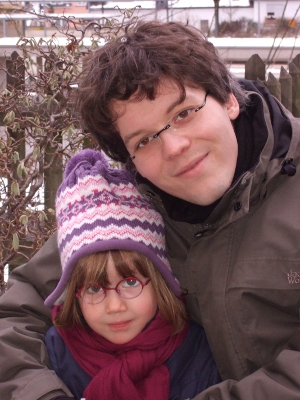
Michael and his daughter Marie

Michael has been around for more than 10 years and has always contributed to the APT software family. He s the author of the first real graphical interface to APT synaptic. Since then he created software-center as part of his work for Ubuntu. Being the most experienced APT developer, he s naturally the coordinator of the APT team. Check out what he has to say about APT s possible evolutions. My questions are in bold, the rest is by Michael. Who are you? My name is Michael Vogt, I m married and have two little daughters. We live in Germany (near to Trier) and I work for Canonical as a software developer. I joined Debian as a developer in early 2000 and started to contribute to Ubuntu in 2004. What s your biggest achievement within Debian or Ubuntu? I can not decide on a single one so I will just be a bit verbose. From the very beginning I was interested in improving the package manager experience and the UI on top for our users. I m proud of the work I did with synaptic. It was one of the earliest UIs on top of apt. Because of my work on synaptic I got into apt development as well and fixed bugs there and added new features. I still do most of the uploads here, but nowadays David Kalnischkies is the most active developer. I also wrote a bunch of tools like gdebi, update-notifier, update-manager, unattended-upgrade and software-properties to make the update/install situation for the user easier to deal with. Most of the tools are written in python so I added a lot of improvements to python-apt along the way, including the initial high level apt interface and a bunch of missing low-level apt_pkg features. Julian Andres Klode made a big push in this area recently and thanks to his effort the bindings are fully complete now and have good documentation. My most recent project is software-center. Its aim is to provide a UI strongly targeted for end-users. The goal of this project is to make finding and installing software easy and beautiful. We have a fantastic collection of software to offer and software-center tries to present it well (including screenshots, instant search results and soon ratings&reviews). This builds on great foundations like aptdaemon by Sebastian Heinlein, screenshots.debian.net by Christoph Haas, ddtp.debian.org by Michael Bramer, apt-xapian-index by Enrico Zini and many others (this is what I love about free software, it usually adds , rarely takes away ). What are your plans for Debian Wheezy? For apt I would love to see a more plugable architecture for the acquire system. It would be nice to be able to make apt-get update (and the frontends that use this from libapt) be able to download additional data (like debtags or additional index file that contains more end-user targeted information). I also want to add some scripts so that apt (optionally) creates btrfs snapshots on upgrade and provide some easy way to rollback in case of problems. There is also some interesting work going on around making the apt problem resolver a more plugable part. This way we should be able to do much faster development. software-center will get ratings&reviews in the upstream branch, I really hope we can get that into Wheezy. If you could spend all your time on Debian, what would you work on? In that case I would start with a refactor of apt to make it more robust about ABI breaks. It would be possible to move much faster once this problem is solved (its not even hard, it just need to be done). Then I would add a more complete testsuite. Another important problem to tackle is to make maintainer scripts more declarative. I triaged a lot of upgrade bug reports (mostly in ubuntu though) and a lot of them are caused by maintainer script failures. Worse is that depending on the error its really hard for the user to solve the problem. There is also a lot of code duplication. Having a central place that contains well tested code to do these jobs would be more robust. Triggers help us a lot here already, but I think there is still more room for improvement. What s the biggest problem of Debian? That s a hard question :) I mostly like Debian the way it is. What frustrated me in the past were flamewars that could have been avoided. To me being respectful to each other is important, I don t like flames and insults because I like solving problems and fighting like this rarely helps that. The other attitude I don t like is to blame people and complain instead of trying to help and be positive (the difference between it sucks because it does not support $foo instead of it would be so helpful if we had $foo because it enables me to let me do $bar ). For a long time, I had the feeling you were mostly alone working on APT and were just ensuring that it keeps working. Did you also had this feeling and are things better nowadays ? I felt a bit alone sometimes :) That being said, there were great people like Eugene V. Lyubimkin and Otavio Salvador during my time who did do a lot of good work (especially at release crunch times) and helped me with the maintenance (but got interested in other area than apt later). And now we have the unstoppable David Kalnischkies and Julian Andres Klode. Apt is too big for a single person, so I m very happy that especially David is doing superb work on the day-to-day tasks and fixes (plus big project like multiarch and the important but not very thankful testsuite work). We talk about apt stuff almost daily, doing code reviews and discuss bugs. This makes the development process much more fun and healthy. Julian Andres Klode is doing interesting work around making the resolver more plugable and Christian Perrier is as tireless as always when it comes to the translations merging. I did a quick grep over the bzr log output (including all branch merges) and count around ~4300 total commits (including all revisions of branches merged). Of that there ~950 commits from me plus an additional ~500 merges. It was more than just ensuring that it keeps working but I can see where this feeling comes from as I was never very verbose. Apt also was never my only project, I am involved in other upstream work like synaptic or update-manager or python-apt etc). This naturally reduced the time available to hack on apt and spend time doing the important day-to-day bug triage, response to mailing list messages etc. One the python-apt side Julian Andres Klode did great work to improve the code and the documentation. It s a really nice interface and if you need to do anything related to packages and love python I encourage you to try it. Its as simple as:
import apt
cache = apt.Cache()
cache["update-manager"].mark_install()
cache.commit()
Of course you can do much more with it (update-manager, software-center and lots of more tools use it). With pydoc apt you can get a good overview. The apt team always welcomes contributors. We have a mailing list and a irc channel and it s a great opportunity to solve real world problems. It does not matter if you want to help triage bugs or write documentation or write code, we welcome all contributors. You re also an Ubuntu developer employed by Canonical. Are you satisfied with the level of cooperation between both projects? What can we do to get Ubuntu to package new applications developed by Canonical directly in Debian? Again a tricky question :) When it comes to cooperation there is always room for improvement. I think (with my Canonical hat on) we do a lot better than we did in the past. And it s great to see the current DPL coming to Ubuntu events and talking about ways to improve the collaboration. One area that I feel that Debian would benefit is to be more positive about NMUs and shared source repositories (collab-maint and LowThresholdNmu are good steps here). The lower the cost is to push a patch/fix (e.g. via direct commit or upload) the more there will be. When it comes to getting packages into Debian I think the best solution is to have a person in Debian as a point of contact to help with that. Usually the amount of work is pretty small as the software will have a debian/* dir already with useful stuff in it. But it helps me a lot to have someone doing the Debian uploads, responding to the bugmail etc (even if the bugmail is just forwarded as upstream bugreports :) IMO it is a great opportunity especially for new packagers as they will not have to do a lot of packaging work to get those apps into Debian. This model works very well for me for e.g. gdebi (where Luca Falavigna is really helpful on the Debian side). Is there someone in Debian that you admire for his contributions? There are many people I admire. Probably too many to mention them all. I always find it hard to single out individual people because the project as a whole can be so proud of their achievements. The first name that comes to my mind is Jason Gunthorpe (the original apt author) who I ve never met. The next is Daniel Burrows who I met and was inspired by. David Kalnischkies is doing great work on apt. From contributing his first (small) patch to being able to virtually fix any problem and adding big features like multiarch support in about a year. Sebastian Heinlein for aptdaemon. Christian Perrier has always be one of my heroes because he cares so much about i18n. Christoph Haas for screenshots.debian.net, Michael Bramer for his work on debian translated package descriptions.
Thank you to Michael for the time spent answering my questions. I hope you enjoyed reading his answers as I did. Subscribe to my newsletter to get my monthly summary of the Debian/Ubuntu news and to not miss further interviews. You can also follow along on Identi.ca, Twitter and Facebook.

4 comments Liked this article? Click here. My blog is Flattr-enabled.

19 January 2011

Rapha&#235;l Hertzog: What I publish on Planet Debian and Planet Ubuntu

Up to now, Planet Debian and Planet Ubuntu were syndicating the main feed of my blog. I changed this recently (remember, I explained how I created my custom WordPress feed). Read on to learn why and subscribe to the main feed now if you want to get all my Debian/Ubuntu articles in the future. Planet Debian/Ubuntu are supposed to be windows into the lives of the contributors. Whatever they are doing. Obviously you get a lot of infos about Debian and Ubuntu since most contributors spend a lot of time working on those distributions. Due to this, those planets have also become dedicated medias to exchange between contributors. The problem I had is that my blog is more than just a place where I speak of what I do within Debian. As part of my evil plan, I set out my blog to become a great documentation resource for Debian/Ubuntu users. So when I wrote articles for users and/or beginners (like 5 reasons why a Debian package is more than a simple file archive or How to rebuild Debian packages), I got some remarks that it was odd to have those articles on Planet Debian because most contributors knew those things already. The bottom line is that from now on I ll decide on a case by case whether the article is suitable for Planet Debian&Ubuntu based on my feelings (and the feedback I get by email). But if you enjoyed my articles for users, I invite you to directly subscribe to my blog to make sure you ll get them all in the future: By the way I would like to thank you all. This blog has been created last July and I m glad to have already more than 1400 regular followers (spread over RSS/email/Twitter/Identi.ca/Facebook, not counting the thousands that read me via Planet Debian/Ubuntu). I hope you ll enjoy 2011 with me, and continue sharing the articles you like.

6 comments Liked this article? Click here. My blog is Flattr-enabled.

17 January 2011

Rapha&#235;l Hertzog: Review of my Debian related goals for 2010

Last year I shared my Debian related goals for 2010 . I announced that I would not be able to complete them all and indeed I have not, but I have still done more than what I expected. Let s have a look. Translate my Debian book into English and get it published: NOT DONE Or rather not yet done. It s still an important project of mine and I will do it this year. When I wrote this last year, I expected to find a publisher that would take care of everything but we failed to find a suitable one so we re going to do it ourselves. Cleanup the dpkg perl API and create libdpkg-perl: DONE libdpkg-perl has been introduced with dpkg 1.15.6. Create dpkg-buildflags: DONE dpkg-buildflags has been introduced with dpkg 1.15.7. It s not widely used yet and it won t really be until debhelper 7 supports it (see #544844). It would be nice to see progress on this front this year. Ensure the new source formats continue to gain acceptance: DONE The adoption rate has been steady, it clearly slowed down since the freeze though. I have implemented quite a few features to satisfy the needs of users, like the possibility to unapply the patches after the build, or the possibility to fail in case of unwanted upstream changes. Design a generic vcs-buildpackage infrastructure to be integrated in dpkg-dev: NOT DONE I believe it s something important on the long term but it never made it to my short-term TODO list and it s unlikely to change any time soon. Continue fixing dpkg bugs faster than they are reported: PARTLY DONE We have dealt with many bugs over the year, but we still have 20 more bugs than at the start of last year (370 vs 350). We re not doing bad compared to many other Debian teams but we can still benefit from some help. Start here if you re interested. Enhance our infrastructure to ease interaction between contributors and to have a better view of how each package is maintained: NOT DONE I am convinced that we need something to have a clearer idea of the commitments made by each contributor. I don t put the same amount of care in maintaining smarty-gettext that I do on dpkg. If we had a database of the stuff that we know we don t do well enough, it s easier to point new contributors towards those. Anyway, this project is still unlikely to come to the top of my priorities any time soon. Work on the developers-reference: NOT DONE We have switched the Maintainer field to debian-policy@lists.debian.org to have more review of the changes suggested through the bug tracking system but that has not changed much on the global situation. I still hope to become more active on it sometimes this year. Maybe by trying to make it more fun and creating the text for some of the wishlist bugs as blog articles first. Rewrite in C the last Perl scripts provided by the dpkg binary package: DONE Dpkg 1.15.8 was the first version working without Perl, I announced it in July. Integrate the 3-way merge tool for Debian changelogs in dpkg-dev: DONE dpkg-mergechangelogs is part of dpkg-dev since 1.15.7. I enjoy it regularly. Unfortunately it doesn t work well for cherry-picks. Would be nice to see this fixed, anyone up to the task? :-)
Click here to subscribe to my free newsletter and get my monthly analysis on what s going on in Debian and Ubuntu. Or just follow along via the RSS feed, Identi.ca, Twitter or Facebook.

One comment Liked this article? Click here. My blog is Flattr-enabled.

7 January 2011

Rapha&#235;l Hertzog: How to create custom RSS feeds with WordPress

WordPress has many alternate built-in feeds: per category, per tag, per author, per search-keyword. But in some cases, you want feeds built with some more advanced logic. Let s look at the available options. WordPress advanced built-in feeds You can create feeds for unions or intersections of tags, you just have to use a URL like /tag/foo,bar/feed/ (all articles tagged with foo or bar) or /tag/foo+bar/feed/ (all articles tagged with foo and bar). You can also have feeds excluding a category, although that requires you to know the category identifier (and hardcode it in the URL like this: /?feed=rss2&cat=-123 where 123 is the category id that you want to exclude). But there s no simple way to have a feed that excludes articles with a given tag. The best solution found involves creating a custom feed. I ll show you a variation of this below. Creating a custom feed
  1. First of, install the Feed Wrangler plugin, it will take care of registering our custom feeds with wordpress.
  2. Go to Settings > Feed Wrangler in your WordPress administrative interface and create a new feed, let s call it myfeed .
  3. You should now create a feed-myfeed.php file and put it in your current theme s directory. The initial content of that file should be this:
    <?php
    include('wp-includes/feed-rss2.php');
    ?>
  4. At this point, you already have a new feed that you can access at /feed/myfeed/ (or /?feed=myfeed). It s a complete feed like the main one.
Now, we re going to look at ways to customize this feed. We re going to do this by changing/overriding the default query that feed-rss2.php s loop will use. A feed excluding articles with a tag If you want to create a feed that excludes the tag foo , you could use this:
<?php
global $wp_query;
$tag = get_term_by("slug", "foo", "post_tag");
$args = array_merge(
        $wp_query->query,
        array('tag__not_in' => array($tag->term_id))
);
query_posts($args);
include('wp-includes/feed-rss2.php');
?>
That was relatively easy, thanks to the tag__not_in query parameter. Now you can further customize the feed by adding supplementary query parameters to the $args array. The documentation of query_posts details the various parameters that you can use. A feed excluding articles with a custom field (meta-data) I went further because I did not want to use a tag to exclude some posts: that tag would have been public even if it was only meaningful to me. So I decided to use a custom field to mark the posts to exclude from my new feed. I named the field no_syndication and I always give it the value 1 . This time it s not so easy because we have no query parameter that can be used to exclude posts based on custom fields. We re going to use the post__not_in parameter that can be used to exclude a list of posts. But we must first generate the list of posts that we want to exclude. Here we go:
<?php
global $wp_query;
$excluded = array();
$args_excluded = array(
    'numberposts'     => -1,
    'meta_key'        => 'no_syndication',
    'meta_value'      => 1,
    'post_type'       => 'post',
    'post_status'     => 'published'
);
foreach (get_posts($args_excluded) as $item)  
        $excluded[] = $item->ID;
 
$args = array_merge(
        $wp_query->query,
        array('post__not_in' => $excluded)
);
query_posts($args);
include('wp-includes/feed-rss2.php');
?>
A feed with modified content You might want to add a footer to the articles that are syndicated. I use the Ozh Better Feed plugin for this but it applies to all your feeds. You could do that sort of transformation only in your customized feed by using the WordPress filter named the_content_feed. Here s a simple example:
<?php
function myfeed_add_footer($content)  
        return $content . "<hr/>My footer here";
 
add_filter('the_content_feed', 'myfeed_add_footer');
include('wp-includes/feed-rss2.php');
?>
I ll stop here but obviously you have lots of options and many ways to tweak all the snippets above. They have been tested with WordPress 3.0.4. Note that in all those examples, I took care to not duplicate the code from feed-rss2.php, instead I used include() to execute it. That way my custom feeds will automatically benefit from all the future enhancements and fixes made by the WordPress developers. But if you have to modify the XML structure of your custom feeds, you can paste the content of feed-rss2.php in your file and change it like you want

One comment Liked this article? Click here. My blog is Flattr-enabled.

3 January 2011

Rapha&#235;l Hertzog: 16 Debian contributors that you can thank

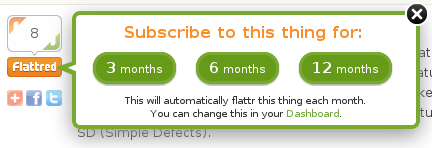
I put 5 EUR in Flattr each month and I like to spend those among other Debian contributors. That s why I keep a list of Debian people that I have seen on Flattr (for most of them I noticed through an article on Planet Debian). Directory of Debian contributors that you can thank I thought this list could be useful for others so I put it on a web page. Then I realized that limiting this to Flattr was not a good idea, and indeed several developers already propose multiple ways to be thanked. I went back through my list and looked up each developer s website to identify a Thank me page (it can be Donate , Support me , Amazon Wishlist , etc.). Obviously this means that Debian contributors who are not on Flattr do not appear on the initial list even if they have some Thank me page please help me fix this and send me the missing entries if you know of any. Click here to view the directory. The initial listing contains 16 developers and 8 of them have an additional (non-Flattr) Thank me link. Please note the warning I put on the page: the inclusion in the directory should not be taken as an endorsement of the amount or quality of the work done for Debian. You are supposed to make up your own judgment when deciding who you want to thank (but the links can help you learn more about what each contributor is doing). Flattr subscriptions explained Since this article replaces the traditional Flattr FOSS issue for this month, I wanted to introduce a new Flattr feature I recently discovered. With Flattr you have to click on some things every month or your monthly fee is given to a random charity. Now you can avoid this pitfall by subscribing to some things that you like. A subscription acts like an automatic click during a period of 3/6/12 months. If you want to subscribe to something, you just have to click a second time on the Flattr button and you will see this:
Screenshot with Flattr subscription choices Once you clicked on the desired duration, the subscription is recorded and the button will appear like this:

Screenshot with a subscribed flattr button Easy, isn t it? PS: I installed a WordPress plugin to make it super easy to share my articles on the most common social networks.

One comment Liked this article? Click here. My blog is Flattr-enabled.

23 December 2010

Rapha&#235;l Hertzog: People behind Debian: Mehdi Dogguy, release assistant

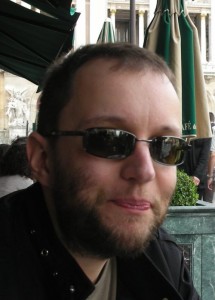
Mehdi Dogguy

Picture of Mehdi taken by Antoine Madet

Mehdi is a Debian developer for a bit more than a year, and he s already part of the Debian Release Team. His story is quite typical in that he started there by trying to help while observing the team do its work. That s a recurrent pattern for people who get co-opted in free software teams. Read on for more info about the release team, and Mehdi s opinion on many topics. My questions are in bold, the rest is by Mehdi (except for the additional information that I inserted in italics). Who are you? I m 27 years old. I grew up in Ariana in northern Tunisia, but have been living in Paris, France, since 2002. I m a PhD Student at the PPS laboratory where I study synchronous concurrent process calculi. I became interested in Debian when I saw one of my colleagues, Samuel Mimram (first sponsor and advocate) trying to resolve #440469, which is a bug reported against a program I wrote. We have never been able to resolve it but my intent to contribute was born there. Since then, I started to maintain some packages and help where I can. What s your biggest achievement within Debian? I don t think I had time to accomplish a lot yet :) I ve been mostly active in the OCaml team where we designed a tool to compute automatically the dependencies between OCaml packages, called dh-ocaml. This was a joint work with St phane Glondu, Sylvain Le Gall and Stefano Zacchiroli. I really appreciated the time spent with them while developing dh-ocaml. Some of the bits included in dh-ocaml have been included upstream in their latest release. I ve also tried to give a second life to the Buildd Status Pages because they were (kind of) abandoned. I intend to keep them alive and add new features to them. If you had a wand and could change one thing in Debian, what would that be? Make OCaml part of a default Debian installation :D But, since I m not a magician yet, I d stick to more realistic plans:

  1. A lot of desktop users fear Debian. I think that the Desktop installation offered by Debian today is very user-friendly and we should be able to attract more and more desktop users. Still, there is some work to be done in various places to make it even more attractive. The idea is trying to enhance the usability and integration of various tools together. Each fix could be easy or trivial but the final result would be an improved Desktop experience for our users. Our packaged software run well. So, each person can participate since the most difficult part is to find the broken scenarios. Fixes could be found together with maintainers, upstream or other interested people.

    I ll try to come up with a plan, a list of things that need polishing or fixes and gather a group of people to work on it. I d definitely be interested in participating in such a project and I hope that I ll find other people to help. If the plan is clear enough and has well described objectives and criteria, it could be proposed to the Release Team to consider it as a Release Goal for Wheezy.

  2. NMUs are a great way to make things move forward. But, sometimes, an NMU could break things or have some undesirable effects. For now, NMUers have to manually track the package s status for some time to be sure that everything is alright. It could be a good idea to be auto-subscribed to the bugs notifications of NMUed packages for some period of time (let s say for a month) to be aware of any new issues and try to fix them. NMUing a package is not just applying a patch and hitting enter after dput. It s also about making sure that the changes are correct and that no regressions have been introduced, etc

  3. Orphaned packages: It could be considered as too strict and not desired, but what about not keeping orphaned and buggy packages in Testing? What about removing them from the archive if they are buggy and still unmaintained for some period? Our ftp archive is growing. It could make sense to do some (more strict) housekeeping. I believe that this question can be raised during the next QA meeting. We should think about what we want to do with those packages before they rot in the archive.
[Raphael Hertzog: I would like to point out that pts-subscribe provided by devscripts makes it easy to temporarily subscribe to bug notifications after an Non-Maintainer Upload (NMU).] You re a Debian developer since August 2009 and you re already an assistant within the Release Management team. How did that happen and what is this about? In the OCaml team, we have to start a transition each time we upload a new version of the OCaml compiler (actually, for each package). So, some coordination with the Release Team is needed to make the transition happen. When we are ready to upload a new version of the compiler, we ask the Release Team for permission and wait for their ack. Sometimes, their reply is fast (e.g. if their is no conflicting transition running), but it s not always the case. While waiting for an ack, I used to check what was happening on debian-release@l.d.o. It made me more and more interested in the activities of the Release Team. Then (before getting my Debian account), I had the chance to participate in DebConf9 where I met Luk and Phil. It was a good occasion to see more about the tools used by the Release Team. During April 2010, I had some spare time and was able to implement a little tool called Jamie to inspect the relations between transitions. It helps us to quickly see which transitions can run in parallel, or what should wait. And one day (in May 2010, IIRC), I got offered by Adam to join the team. As members of the Release Team, we have multiple areas to work on:
  1. Taking care of transitions during the development cycle, which means making sure that some set of packages are correctly (re-)built or fixed against a specific (to each transition) set of packages, and finding a way to tell Britney that those packages can migrate and it would be great if she also shared the same opinion. [Raphael Hertzog: britney is the name of the software that controls the content of the Testing distribution.]
  2. Paying attention to what is happening in the archive (uploads, reported RC bugs, etc ). The idea is to try to detect unexpected transitions, blocked packages, make sure that RC bug fixes reach Testing in a reasonable period of time, etc
  3. During a freeze, making sure that unblock requests and freeze exceptions are not forgotten and try to make the RC bug count decrease.
There are other tasks that I ll let you discover by joining the game. Deciding what goes (or not) in the next stable release is a big responsibility and can be incredibly difficult at times. You have to make judgement calls all the time. What are your own criteria? That s a very hard to answer question (at least, for me). It really depends on the case . I try to follow the criteria that we publish in each release update. Sometimes, an unblock request doesn t match those criteria and we have to decide what to accept from the set of proposed changes. Generally, new features and non-fixes (read new upstream versions) changes are not the kind of changes that we would accept during the freeze. Some of them could be accepted if they are not intrusive, easy and well defended. When, I m not sure I try to ask other members of the Release Team to see if they share my opinion or if I missed something important during the review. The key point is to have a clear idea on what s the benefit of the proposed update, and compare it to the current situation. For example, accepting a new upstream release (even if it fixes some critical bugs) is taking a risk to break other features and that s why we (usually) ask for a backported fix. It s also worth noticing that (most of the time) we don t decide what goes in, but (more specifically) what version of a given package goes in and try to give to the contributors an idea on what kind of changes are acceptable during the freeze. There are some exceptions though. Most of them are to fix a critical package or feature. Do you have plans to improve the release process for Debian Wheezy? We do have plans to improve every bit in Debian. Wheezy will be the best release ever. We just don t know the details yet :) During our last meeting in Paris last October, the Release Team agreed to organize a meeting after Squeeze s release to discuss (among other questions) Wheezy s cycle. But the details of the meeting are not fixed yet (we still have plenty of time to organize it and other more important tasks to care about). We would like to be able to announce a clear roadmap for Wheezy and enhance our communication with the rest of the project. We certainly want to avoid what happened for Squeeze. Making things a bit more predictable for developers is one of our goals. Do you think the Constantly Usable Testing project will help? The original idea by Joey Hess is great because it allows d-i developers to work with a stable version of the archive. It allows them to focus on the new features they want to implement or the parts they want to fix (AIUI). It also allows to have constantly available and working installation images. Then, there is the idea of having a constantly usable Testing for users. The idea seems nice. People tend to like the idea behind CUT because they miss some software disappearing from Testing and because of the long delays for security fixes to reach Testing. If the Release Team has decided to remove a package from Testing, I think that there must be a reason for that. It either means that the software is broken, has unfixed security holes or was asked for the removal by its maintainer. I think that we should better try to spend some time to fix those packages, instead of throwing a broken version in a new suite. It could be argued that one could add experimental s version in CUT (or sid s) but every user is free to cherry-pick packages from the relevant suite when needed while still following Testing as a default branch. Besides, it s quite easy to see what was removed recently by checking the archive of debian-testing-changes or by querying UDD. IMO, It would be more useful to provide a better interface of that archive for our users. We could even imagine a program that alerts the user about installed software that got recently removed from Testing, to keep the user constantly aware any issue that could affect his machine. About the security or important updates, one has to recall the existence of Testing-security and testing-proposed-updates that are used specifically to let fixes reach Testing as soon as possible when it s not possible to go through Unstable. I m sure that the security team would appreciate some help to deal with security updates for Testing. We also have ways to speed migrate packages from Unstable to Testing. I have to admit that I m not convinced yet by the benefits brought by CUT for our users.
Thank you to Mehdi for the time spent answering my questions. I hope you enjoyed reading his answers as I did. Subscribe to my newsletter to get my monthly summary of the Debian/Ubuntu news and to not miss further interviews. You can also follow along on Identi.ca, Twitter and Facebook.

2 comments Liked this article? Click here. My blog is Flattr-enabled.

20 December 2010

Rapha&#235;l Hertzog: 5 reasons why Debian Unstable does not deserve its name

Debian Unstable (also known as sid) is one of the 3 distributions that Debian provides (along with Stable and Testing). It s not conceived as a product for end-users, instead it s the place where contributors are uploading newer packages. Daily. Yes that means that Unstable is a quickly moving target and it s not for everybody. But you can use it and your computer won t explode. 1. It contains mainly stable versions of the software Yes, you read it right. Unstable is not full of development versions of the various software. It happens on some software but then it s usually a conscious decision of the maintainer who believes that this specific version is already better than the previous one. The packages in sid are supposed to migrate to testing, the place where the next Debian stable release is prepared. So maintainers are advised to only upload stuff that is of release quality, the rest should be uploaded to experimental instead. 2. It doesn t break badly every other day Breakages happen but they are not a big deal usually. It has been long time since I could not reboot my computer after an upgrade or since the graphical interface was no longer working. The kind of breakages that you have is that one software stops working, or triggers an annoying bug, or that a few packages are uninstallable. In most cases, you can save yourself by downgrading to the version available in Testing. Or by finding a work-around in the bug tracking system. Or by not upgrading because you have apt-listbugs installed and you have been warned about the problem. 3. It s the basis of other distributions If Debian Unstable was really so bad, it would not be a good basis to build a derivative distribution, isn t it? But Ubuntu and SiduxAptosid (to name only two) are based on Debian Sid. 4. It s not inherently less secure than Stable or Testing High impact security vulnerabilities will usually be quickly fixed in Stable and Unstable. The stable upload is done by the security team while the unstable one is made by the maintainer. Testing will usually get the fix through the package uploaded to Unstable, so testing users get security updates with a delay. For less serious vulnerabilities, it s entirely possible that stable does not get any update at all. In that case, unstable/testing users are better served since they will get the fix with the next upstream version anyway. Of course, it happens that maintainers are busy or that something falls through the cracks, but there are other people watching RC bugs who will fix this if the maintainer doesn t react at all. 5. I use it on my main computer And many other people do the same. And you can do the same if you meet the criteria below: If you feel you are not ready for the jump, click here to subscribe to this blog (or here via the RSS feed), I ll surely teach some of the required skills in future articles. PS: All that said, if you have a working sid installation, do not upgrade it just before an important presentation, or before a trip. It will always break at the most annoying time. Unless you like to live dangerously, of course.

41 comments Liked this article? Click here. My blog is Flattr-enabled.

17 December 2010

Rapha&#235;l Hertzog: Avoid a newbie packager mistake: don t build your Debian packages with dpkg -b

In the last years, I have seen many people try to use dpkg --build to create Debian packages. Indeed, if you look up dpkg s and dpkg-deb s manual pages, this option seems to be what you have to use:

-b, --build directory [archive directory] Creates a debian archive from the filesystem tree stored in directory. directory must have a DEBIAN subdirectory, which contains the control information files such as the control file itself. This directory will not appear in the binary package s filesystem archive, but instead the files in it will be put in the binary package s control information area.
And indeed, dpkg-deb is what ultimately creates the .deb files (aka binary packages). But it s a low-level tool that you should not call yourself. If you want to properly package a new software, you should rather create a Debian source package that will transform upstream source code into policy-compliant binary packages. Creating a source package also involves preparing a directory tree (but with a debian sub-directory), it s probably more complicated than calling dpkg -b on a manually crafted directory. But the result is much more versatile: the tools used bring value by dynamically analyzing/modifying the files within your package (for example, the dependencies on C libraries that your package needs are automatically inserted). If this is news to you, you might want to check out the New Maintainers Guide and the Debian Policy.
Found it useful? Be sure to not miss other packaging tips (or lessons), click here to subscribe to my free newsletter and get new articles by email.

10 comments Liked this article? Click here. My blog is Flattr-enabled.

15 December 2010

Rapha&#235;l Hertzog: Howto to rebuild Debian packages

Being able to rebuild an existing Debian package is a very useful skill. It s a prerequisite for many tasks that an admin might want to perform at some point: enable a feature that is disabled in the official Debian package, rebuild a source package for another suite (for example build a Debian Testing package for use on Debian Stable, we call that backporting), include a bug fix that upstream developers prepared, etc. Discover the 4 steps to rebuild a Debian package. 1. Download the source package The preferred way to download source packages is to use APT. It can download them from the source repositories that you have configured in /etc/apt/sources.list, for example:
deb-src http://ftp.debian.org/debian unstable main contrib non-free
deb-src http://ftp.debian.org/debian testing main contrib non-free
deb-src http://ftp.debian.org/debian stable main contrib non-free
Note that the lines start with deb-src instead of the usual deb . This tells APT that we are interested in the source packages and not in the binary packages. After an apt-get update you can use apt-get source publican to retrieve the latest version of the source package publican . You can also indicate the distribution where the source package must be fetched with the syntax package/distribution . apt-get source publican/testing will grab the source package publican in the testing distribution and extract it in the current directory (with dpkg-source -x, thus you need to have installed the dpkg-dev package).
$ apt-get source publican/testing
Reading package lists... Done
Building dependency tree
Reading state information... Done
NOTICE: 'publican' packaging is maintained in the 'Git' version control system at:
git://git.debian.org/collab-maint/publican.git
Need to get 727 kB of source archives.
Get:1 http://nas/debian/ squeeze/main publican 2.1-2 (dsc) [2253 B]
Get:2 http://nas/debian/ squeeze/main publican 2.1-2 (tar) [720 kB]
Get:3 http://nas/debian/ squeeze/main publican 2.1-2 (diff) [4728 B]
Fetched 727 kB in 0s (2970 kB/s)
dpkg-source: info: extracting publican in publican-2.1
dpkg-source: info: unpacking publican_2.1.orig.tar.gz
dpkg-source: info: unpacking publican_2.1-2.debian.tar.gz
$ ls -dF publican*
publican-2.1/                 publican_2.1-2.dsc
publican_2.1-2.debian.tar.gz  publican_2.1.orig.tar.gz
If you don t want to use APT, or if the source package is not hosted in an APT source repository, you can download a complete source package with dget -u dsc-url where dsc-url is the URL of the .dsc file representing the source package. dget is provided by the devscripts package. Note that the -u option means that the origin of the source package is not verified before extraction. 2. Install the build-dependencies Again APT can do the grunt work for you, you just have to use apt-get build-dep foo to install the build-dependencies for the last version of the source package foo. It supports the same syntactic sugar than apt-get source so that you can run apt-get build-dep publican/testing to install the build-dependencies required to build the testing version of the publican source package. If you can t use APT for this, enter the directory where the source package has been unpacked and run dpkg-checkbuilddeps. It will spit out a list of unmet build dependencies (if there are any, otherwise it will print nothing and you can go ahead safely). With a bit of copy and paste and a apt-get install invocation, you ll install the required packages in a few seconds. 3. Do whatever changes you need I won t detail this step since it depends on your specific goal with the rebuild. You might have to edit debian/rules, or to apply a patch. But one thing is sure, if you have made any change or have recompiled the package in a different environment, you should really change its version number. You can do this with dch --local foo (again from the devscripts package), replace foo by a short name identifying you as the supplier of the updated version. It will update debian/changelog and invite you to write a small entry documenting your change. 4. Build the package The last step is also the simplest one now that everything is in place. You must be in the directory of the unpacked source package.
Now run either debuild -us -uc (recommended, requires the devscripts package) or directly dpkg-buildpackage -us -uc . The -us -uc options avoid the signature step in the build process that would generate a (harmless) failure at the end if you have no GPG key matching the name entered in the top entry of the Debian changelog.
$ cd publican-2.1
$ debuild -us -uc
 dpkg-buildpackage -rfakeroot -D -us -uc
dpkg-buildpackage: export CFLAGS from dpkg-buildflags (origin: vendor): -g -O2
dpkg-buildpackage: export CPPFLAGS from dpkg-buildflags (origin: vendor):
dpkg-buildpackage: export CXXFLAGS from dpkg-buildflags (origin: vendor): -g -O2
dpkg-buildpackage: export FFLAGS from dpkg-buildflags (origin: vendor): -g -O2
dpkg-buildpackage: export LDFLAGS from dpkg-buildflags (origin: vendor):
dpkg-buildpackage: source package publican
dpkg-buildpackage: source version 2.1-2rh1
dpkg-buildpackage: source changed by Rapha l Hertzog <hertzog>
 dpkg-source --before-build publican-2.1
dpkg-buildpackage: host architecture i386
[...]
dpkg-deb: building package  publican' in  ../publican_2.1-2rh1_all.deb'.
 dpkg-genchanges  >../publican_2.1-2rh1_i386.changes
dpkg-genchanges: not including original source code in upload
 dpkg-source --after-build publican-2.1
dpkg-buildpackage: binary and diff upload (original source NOT included)
Now running lintian...
Finished running lintian.
The build is over, the updated source and binary packages have been generated in the parent directory.
$ cd ..
$ ls -dF publican*
publican-2.1/                    publican_2.1-2rh1.dsc
publican_2.1-2.debian.tar.gz     publican_2.1-2rh1_i386.changes
publican_2.1-2.dsc               publican_2.1-2rh1_source.changes
publican_2.1-2rh1_all.deb        publican_2.1.orig.tar.gz
publican_2.1-2rh1.debian.tar.gz
Do you want to read more tutorials like this one? Click here to subscribe to my free newsletter, you can opt to receive future articles by email.

11 comments Liked this article? Click here. My blog is Flattr-enabled.

13 December 2010

Joey Hess: recent sightings

Anna visited the Hollow a month ago and blogged a "tour of an underground solar house". She was quietly taking pictures the whole time, and I'm atonished how well they capture the place. I was honored to be the first in Rapha l Hertzog's series of Debian developer interviews. My interview -- the others he's done since seemed better to me. I was pleasantly surprised to open Linux Weekly News this week and see an in-depth article about git-annex. LWN's well-researched content continually impresses. Finally, I was indirectly mentioned in November's Science magazine. I'll leave you to guess which of the articles is the one I influenced.

10 December 2010

Rapha&#235;l Hertzog: People behind Debian: David Kalnischkies, an APT developer

The two first interviews were dedicated to long-time Debian developers. This time I took the opposite approach, I interviewed David Kalnischkies who is not (yet) a Debian developer. But he s contributing to one of the most important software within Debian the APT package manager since 2009. You can already see him in many places in Debian sharing his APT knowledge when needed. English is not his native language and he s a bit shy, but he accepted the interview nevertheless. I would like to thank him for the efforts involved and I hope his story can inspire some people to take the leap and just start helping My questions are in bold, the rest is by David. Who are you? I am David Kalnischkies, 22 years old, living in the small town Erbach near Wiesbaden in Germany and I m studying computer science at the TU Darmstadt. Furthermore I am for more than half a decade now young group leader of my hometown. I never intended to get into this position, but it has similarities with my career in this internet-thingy here. I don t remember why, but in April 2009 I was at a stage that some simple bugs in APT annoyed me so much that I grabbed the source, and most importantly I don t know why I did it but I published my changes in Mai with #433007, a few more bugs and even a branch on launchpad. And this public branch got me into all this trouble in June: I got a mail from Mr. package managment Michael Vogt regarding this branch A few days later I joined an IRC session with him and closely after that my name appeared for the first time in a changelog entry. It s a strange but also addicting feeling to read your own name in an unfamiliar place. And even now after many IRC discussions, bugfixes and features, three Ubuntu Developer Summits and a Google Summer of Code in Debian, my name still appear in places I have never even thought about e.g. in an interview. What s your biggest achievement within Debian? I would like to answer MultiArch in APT as it was my Google Summer of Code project, but as it has (not much) use for the normal user at this point will hopefully change for wheezy I chose three smaller things in squeeze s APT that many people don t even know yet: If your impression is now that I only do APT stuff: that s completely right, but that s already more than enough for me for now as the toolchain behind the short name APT contains so many tools and use cases that you always have something different. You re an active member of the APT development team. Are there plans for APT in Debian Wheezy? What features can we expect? That s very hard to answer, as the team is too small to be able to really plan something. I mean, you can have fancy plans and everything and half a second later someone arrives on the mailing list with a small question which eats days of development time just for debugging But right now the TODO list contains (in no particular order): We will see what will get real for wheezy and what is postponed, but one thing is sure: more will be done for wheezy if you help! If you could spend all your time on Debian, what would you work on? I would spend it on APT s debbugs count zero would be cool to look at! We make progress in this regard, but with the current velocity we will reach it in ten years or so. Reading more mailing lists would be interesting, as I am kind of an information junky. Maintaining a package could be interesting to share the annoyance of a maintainer with handcrafted dependencies just to notice that APT doesn t get it in the way I intended it to be. Through, to make it feel real I need to train a few new APT contributors before so they can point my mistake out, but this unfortunately doesn t depend so much on time but on victims Maybe I could even be working on getting an official status. Beside that, I would love to be able to apt-get dist-upgrade the increasing mass of systems I and many others carry around in their pockets. In regards to my phone, this is already fixed, but there is much room for improvements. What s the biggest problem of Debian? You need to be lucky. You need to talk at the right time to the right person. That s not really a debian-only problem as such, but in a global project full of volunteers you can see it clearly as there are plenty of opportunities to be unlucky. For example, it s unlikely that an interview would be made with me now if Michael had not contacted me in June 2009. In a big project like Debian, you are basically completely lost without a mentor guiding you, so things like the debian-mentors list are good projects, but I am pretty certain they could benefit from some more helping hands. The other thing which I consider a problem is that and I read from time to time some people don t care for translations. That s bad. Yes, a developer is able to read English, otherwise s/he couldn t write code or participate on the mailinglists. Still, I personally prefer to use a translated application if I have the chance as it s simply easier for me to read in my mother tongue, not only because I am dyslexic, but because my mind still thinks in German and not in English. Yes, I could personally fix that by thinking in English only from now on, but its a quite big problem to convince my family which is not really familiar with tech-stuff to use something if they can t understand what is written on screen. It was hard enough to tell my mother how to write an SMS in a German interface. My phone with English words all over the place would be completely unusable for her despite the fact that my phone is powered by Debian and better for the task from a technical point of view. You are not yet an official Debian developer/maintainer, but you re already perceived in the community as one the most knowledgeable person about APT. It s a great start! What s your advice to other people who want to start contributing to Debian in general, and to APT in particular? It was never a goal in my life to start contributing . My goal was and still is to make my life easier by letting the computer work for me. At some point APT hindered the success of this goal, so it needed to be fixed. I didn t expect to open pandora s box. So, my advice is simple: Just start. Ignore the warning signs telling you that this is not easy. They are just telling you that you do something useful. Only artificial problems are easy. Further more, contribution to APT, dpkg or any other existing package is in no way harder than opening an ITP and working on your own, and it s cooler as you have a similar minded team around you to talk to. :) APT didn t accept release codenames as target release was one of the first things I fixed. If I had asked someone if that would be a good starting point the answer would have been a clear no , but I didn t search for a good starting point As a kid I can start playing football by just walking on the field and play or I can sit near the field, watching the others play, while analyzing which position would be the best for me to start ruling out one by one as the technical requirements seem too high Oh bicycle kick that sounds complicated I can t do that Julian Andreas Klode is working on a APT replacement, there s also Cupt by Eugene V. Lyubimkin. Both projects started because their authors are not satisfied with APT, they find APT s code difficult to hack partly due to the usage of C++. Do you share their concerns and what s your opinion on those projects? I don t think C++ is a concern in this regard, after all cupt is currently rewritten to C++0x and APT2 started in vala and is now C + glib last time I checked at least. I personally think that something is wrong if we need to advertise an application by saying in which language it is written The major problem for APT is probably that the code is old : APT does its job for more than 12 years now, under different maintainers with an always changing environment around it: so there are lines in APT which date from a time when nobody knew what a Breaks dependency is, that packages can have long descriptions which can be translated or even that package archives can be signed with a gpg key! And yet we take all those for granted today. APT has proven to adapt to these changes in the environment and became in this process very popular. So I don t think the point is near (if it will come at all) that APT can go into retirement as it is completely replaced by something else. The competitors one the other hand have their first 12 years still to go. And it will be interesting to see how they will evolve and what will be the state of the art in 2022 But you asked what I think about the competitors: I prefer the revolution from inside simply because I can see effects faster as more users will profit from it now. Cupt and co. obviously prefer the normal revolution. The goal is the same, creating the best package manager tool, but the chosen way to the goal is different. aptitude and cupt have an interactive resolver for example: that s something I dislike personally, for others that is the ultimate killer feature. cupt reading the same preference file as APT will have a different pinning result, which we should consider each time someone mentions the word drop-in replacement . APT2 isn t much more than the name which I completely dislike currently from a user point of view, so I can t really comment on that. All of them make me sad as each line invested in boilerplate code like configuration file parsing would be in my eyes better be spent in a bugfix or new feature instead, but I am not here to tell anyone what they should do in their free time But frankly, I don t see them really as competitors: I use the tools I use, if other do that too that s good, if not that s their problem. :) The thing that annoys me really are claims like plan is to remove APT by 2014 as this generates a vi vs. emacs like atmosphere we don t need. If some people really think emacs is a good editor who cares? I really hope we all can drink a beer in 2022 in Milliways, the restaurant at the end of the package universe, remembering the good old 2010 ;) Is there someone in Debian that you admire for his contributions? No, not one, many! Michael Vogt who has nearly the monopole of package manager maintainer by being upstream of APT, synaptics and software center to name only the biggest and still has the time to answer even the dumbest of my questions. :) Jason Gunthorpe for being one of the initial developers behind deity who I will probably never meet in person beside in old comments and commit logs. Christian Perrier for caring so much about translations. Obey Arthur Liu as a great admin for Debian s participation in Google s Summer of Code. Paul Wise for doing countless reviews on debian-mentors which are a good source of information not only for the maintainer of the package under review. I guess I need to stop here because you asked for just one. So let s end with some big words instead: I am just a little cog in the big debian wheel

Thank you to David Kalnischkies for the time spent answering my questions. I hope you enjoyed reading his answers as I did. Subscribe to my newsletter to get my monthly summary of the Debian/Ubuntu news and to not miss further interviews. You can also follow along on Identi.ca, Twitter and Facebook.

3 comments Liked this article? Click here. My blog is Flattr-enabled.

8 December 2010

Rapha&#235;l Hertzog: What s annoying with Flattr buttons on Planet Debian?

Dear Planet Debian readers, a significant number of people have expressed concerns over the presence of Flattr buttons on Planet Debian. The concerns were expressed in a thread on the debian-project mailing list and they were quite diverse. While the discussion brought some of the issues into light, it s not really possible to find out whether a specific concern is widely shared or not. That s why I set up a poll on selectricity.org. Please take a few minutes and rank the various options: put the most important concern first in the list, and sort the others by decreasing importance. If there are concerns that you do not agree with, put them below the entry named Special: I don t share the concerns quoted below . And to prove that you have read through all the options before voting, put the other special entry last (it s named Special: I know how condorcet voting works and thus I put this item last ). Click here to go to the poll. You need only one minute to vote and no login is required. PS: The discussion on debian-project is the reason why I changed the footer in my RSS feed to contain only plain text (in a smaller font). I also improved the wording to be more neutral.

27 comments Liked this article? Click here. My blog is Flattr-enabled.

6 December 2010

Rapha&#235;l Hertzog: State of the Debian-Ubuntu relationship

Debian welcoming contributions from derivativesThe relationship between Debian and Ubuntu has been the subject of many vigorous debates over the years, ever since Ubuntu s launch in 2004. Six years later, the situation has improved and both projects are communicating better. The Natty Narwhal Ubuntu Developer Summit (UDS) featured like all UDS for more than 2 years a Debian Health Check session where current cooperation issues and projects are discussed. A few days after that session, Lucas Nussbaum gave a talk during the mini-Debconf Paris detailing the relationship between both projects, both at the technical and social level. He also shared some concerns for Debian s future and gave his point of view on how Debian should address them. Both events give valuable insights on the current state of the relationship. Lucas Nussbaum s Debian-Ubuntu talk Lucas started by introducing himself. He s an Ubuntu developer since 2006 and a Debian developer since 2007. He has worked to improve the collaboration between both projects, notably by extending the Debian infrastructure to show Ubuntu-related information. He attended conferences for both projects (Debconf, UDS) and has friends in both communities. For all of these reasons, he believes himself to be qualified to speak on this topic. Collaboration at the technical level He then quickly explained the task of a distribution: taking upstream software, integrating it in standardized ways, doing quality assurance on the whole, delivering the result to users, and assuring some support afterward. He pointed out that in the case of Ubuntu, the distribution has one special upstream: Debian. Indeed Ubuntu gets most of its software from Debian (89%), and only 7% are new packages coming from other upstream projects (the remaining 4% are unknown, they are newer upstream releases of software available in Debian but he was not able to find out whether the Debian packaging had been reused or not). From all the packages imported from Debian, 17% have Ubuntu-specific changes. The reasons for those changes are varied: bugfixes, integration with Launchpad/Ubuntu One/etc., or toolchain changes. The above figures are based on Ubuntu Lucid (10.04) while excluding many Ubuntu-specific packages (language-pack-*, language-support-*, kde-l10n-*, *ubuntu*, *launchpad*). The different agendas and the differences in philosophy (Debian often seeking perfect solutions to problems; Ubuntu accepting temporary suboptimal workarounds) also explain why so many packages are modified on the Ubuntu side. It s simply not possible to always do the work in Debian first. But keeping changes in Ubuntu requires a lot of work since they merge with Debian unstable every 6 months. That s why they have a strong incentive to push changes to upstream and/or to Debian. There are 3 channels that Ubuntu uses to push changes to Debian: they file bug reports (between 250 to 400 during each Ubuntu release cycle), they interact directly with Debian maintainers (often the case when there s a maintenance team), or they do nothing and hope that the Debian maintainer will pick up the patch directly from the Debian Package Tracking System (it relays information provided by patches.ubuntu.com). Lucas pointed out that those changes are not the only thing that Debian should take back. Ubuntu has a huge user base resulting in lots of bug reports sitting in Launchpad, often without anyone taking care of them. Debian maintainers who already have enough bugs on their packages are obviously not interested in even more bugs, but those who are maintaining niche packages, with few reports, might be interested by the user feedback available in Launchpad. Even if some of the reports are Ubuntu-specific, many of them are advance warnings of problems that will affect Debian later on, when the toolchain catches up with Ubuntu s aggressive updates. To make this easier for Debian maintainers, Lucas improved the Debian Package Tracking System so that they can easily get Ubuntu bug reports for their packages even without interacting with Launchpad. Human feelings on both sides Lucas witnessed a big evolution in the perception of Ubuntu on the Debian side. The initial climate was rather negative: there were feelings of its work being stolen, claims of giving back that did not match the observations of the Debian maintainers, and problems with specific Canonical employees that reflected badly on Ubuntu as a whole. These days most Debian developers find something positive in Ubuntu: it brings a lot of new users to Linux, it provides something that works for their friends and family, it brings new developers to Debian, and it serves as a technological playground for Debian. On the Ubuntu side, the culture has changed as well. Debian is no longer so scary for Ubuntu contributors and contributing to Debian is The Right Thing to do. More and more Ubuntu developers are getting involved in Debian as well. But at the package level there s not always much to contribute, as many bugfixes are only temporary workarounds. And while Ubuntu s community follows this philosophy, Canonical is a for-profit company that contributes back mainly when it has compelling reasons to do so. Consequences for Debian In Lucas s eyes, the success of Ubuntu creates new problems. For many new users Linux is a synonym for Ubuntu, and since much innovation happens in Ubuntu first, Debian is overshadowed by its most popular derivative. He goes as far as saying that because of that Debian becomes less relevant . He went on to say that Debian needs to be relevant because the project defends important values that Ubuntu does not. And it needs to stay as an independent partner that filters what comes out of Ubuntu, ensuring that quality prevails in the long term. Fixing this problem is difficult, and the answer should not be to undermine Ubuntu. On the contrary, more cooperation is needed. If Debian developers are involved sooner in Ubuntu s projects, Debian will automatically get more credit. And if Ubuntu does more work in Debian, their work can be showcased sooner in the Debian context as well. The other solution that Lucas proposed is that Debian needs to communicate on why it s better than Ubuntu. Debian might not be better for everybody but there are many reasons why one could prefer Debian over Ubuntu. He listed some of them: Debian has better values since it s a volunteer-based project where decisions are made publicly and it has advocated the free software philosophy since 1993. On the other hand, Ubuntu is under control of Canonical where some decisions are imposed, it advocates some proprietary web services (Ubuntu One), the installer recommends adding proprietary software, and copyright assignments are required to contribute to Canonical projects. Debian is also better in terms of quality because every package has a maintainer who is often an expert in the field of the package. As a derivative, Ubuntu does not have the resources to do the same and instead most packages are maintained on a best effort basis by a limited set of developers who can t know everything about all packages. In conclusion, Lucas explained that Debian can neither ignore Ubuntu nor fight it. Instead it should consider Ubuntu as a chance and should leverage it to get back in the center of the FLOSS ecosystem . The Debian health check UDS session While this session has existed for some time, it s only the second time that a Debian Project Leader was present at UDS to discuss collaboration issues. During UDS-M (the previous summit), this increased involvement from Debian was a nice surprise to many. Stefano Zacchiroli the Debian leader collected and shared the feedback of Debian developers and the session ended up being very productive. Six months later is a good time to look back and verify if decisions made during UDS-M (see blueprint) have been followed through. Progress has been made On the Debian side, Stefano set up a Derivatives Front Desk so that derivative distributions (not just Ubuntu) have a clear point of contact when they are trying to cooperate but don t know where to start. It s also a good place to share experiences among the various derivatives. In parallel, a #debian-ubuntu channel has been started on OFTC (the IRC network used by Debian). With more than 50 regulars coming from both distributions, it s a good place for quick queries when you need advice on how to interact with the distribution that you re not familiar with. Ubuntu has updated its documentation to prominently feature how to cooperate with Debian. For example, the sponsorship process documentation explains how to forward patches both to the upstream developers and to Debian. It also recommends ensuring that the patch is not Ubuntu-specific and gives some explanation on how to do it (which includes checking against a list of common packaging changes made by Ubuntu). The Debian Derivative Front Desk is mentioned as a fallback when the Debian maintainer is unresponsive. While organizing Ubuntu Developer Week, Ubuntu now reaches out to Debian developers and tries to have sessions on working with Debian . Launchpad has also been extended to provide a list of bugs with attached patches and that information has been integrated in the Debian Package Tracking system by Lucas Nussbaum. Still some work to do Some of the work items have not been completed yet: many Debian maintainers would like a simpler way to issue a sync request (a process used to inject a package from Debian into Ubuntu). There s a requestsync command line tool provided by the ubuntu-dev-tools package (which is available in Debian) but it s not yet usable because Launchpad doesn t know the GPG keys of Debian maintainers. Another issue concerns packages which are first introduced in Ubuntu. Most of them have no reason to be Ubuntu-specific and should also end up in Debian. It has thus been suggested that people packaging new software for Ubuntu also upload them to Debian. They could however immediately file a request for adoption (RFA) to find another Debian maintainer if they don t plan to maintain it in the long term. If Ubuntu doesn t make this effort, it can take a long time until someone decides to reintegrate the Ubuntu package into Debian just because nobody knows about it. This represents an important shift in the Ubuntu process and it s not certain that it s going to work out. As with any important policy change, it can take several years until people are used to it. Both issues have been rescheduled for this release cycle, so they re still on the agenda. This time the UDS session was probably less interesting than the previous one. Stefano explained once more what Debian considers good collaboration practices: teams with members from both distributions, and forwarding of bugs if they have been well triaged and are known to apply to Debian. He also invited Ubuntu to discuss big changes with Debian before implementing them. An interesting suggestion that came up was that some Ubuntu developers could participate in Debcamp (one week hack-together before Debconf) to work with some Debian developers, go through Ubuntu patches, and merge the interesting bits. This would nicely complement Ubuntu s increased presence at Debconf: for the first time, community management team member Jorge Castro was at DebConf 10 giving a talk on collaboration between Debian and Ubuntu. There was also some brainstorming on how to identify packages where the collaboration is failing. A growing number of Ubuntu revisions (identified for example by a version like 1.0-1ubuntu62) could indicate that no synchronization was made with Debian, but it would also identify packages which are badly maintained on the Debian side. If Ubuntu consistently has a newer upstream version compared to Debian, it can also indicate a problem: maybe the person maintaining the package for Ubuntu would be better off doing the same work in Debian directly since the maintainer is lagging or not doing their work. Unfortunately this doesn t hold true for all packages since many Gnome packages are newer in Ubuntu but are actively maintained on both sides. Few of those discussions led to concrete decisions. It seems most proponents are reasonably satisfied with the current situation. Of course, one can always do better and Jono Bacon is going to ensure that all Canonical teams working on Ubuntu are aware of how to properly cooperate with Debian. The goal is to avoid heavy package modifications without coordination. Conclusion The Debian-Ubuntu relationships used to be a hot topic, but that s no longer the case thanks to regular efforts made on both sides. Conflicts between individuals still happen, but there are multiple places where they can be reported and discussed (#debian-ubuntu channel, Derivatives Front Desk at derivatives@debian.org on the Debian side or debian@ubuntu.com on the Ubuntu side). Documentation and infrastructure are in place to make it easier for volunteers to do the right thing. Despite all those process improvements, the best results still come out when people build personal relationships by discussing what they are doing. It often leads to tight cooperation, up to commit rights to the source repositories. Regular contacts help build a real sense of cooperation that no automated process can ever hope to achieve.

This article was first published in Linux Weekly News. You can get my monthly summary of the Debian/Ubuntu news, all you have to do is to click here to subscribe to my free newsletter.

5 comments Liked this article? Click here. My blog is Flattr-enabled.

4 December 2010

Rapha&#235;l Hertzog: Go2Linux interviewed me: the biggest problem of Debian

Guillermo Garron of Go2Linux enjoys a lot the People behind Debian interviews that I make. That s why he interviewed me (with somewhat similar questions) and published the result on his blog. Click here to read the full interview. I speak of my Debian projects, of the Ubuntu-Debian relationship, and more. The question that I would like to highlight is What s the biggest problem of Debian? . I answered this:
Our project identity is somewhat minimalistic. It evolves around the social contract and the Debian Free Software Guidelines. Both documents answer the question of what we re doing but we lack a clear answer to the question of how we re supposed to work towards our goals. It would be great if Debian could agree on some principles concerning topics like goal setting, collaboration, team work, politeness, respect. We could then advertise those and build on them while recruiting volunteers.
PS: The interview also hit LinuxToday.

No comment Liked this article? Click here. My blog is Flattr-enabled.

Next.

Previous.