Daniel Pocock: FOSSASIA 2016, pgDay Asia 2016 and MiniDebConf Singapore
What happened in the reproducible
builds effort between January 24th
and January 30th:
d-devlibdeps stable accross locales. Original patch by Reiner Herrmann.
giotypefuncs.c is generated.readelf --decompress.
pkg(8) now supports SOURCE_DATE_EPOCH.
Ross Karchner did a lightning talk about reproducible builds at his work place and shared the slides.
What happened in the reproducible
builds effort between January 3rd and January 9th 2016:
--fix-autoload-date option (on by default) to take autoload dates from changelog.
Lunar updated and sent the patch adding the generation of .buildinfo to dpkg.
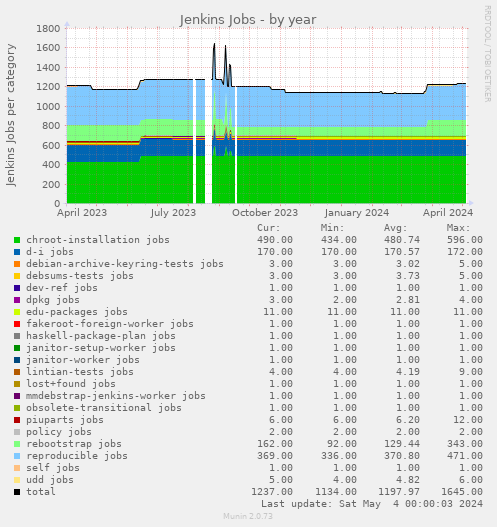
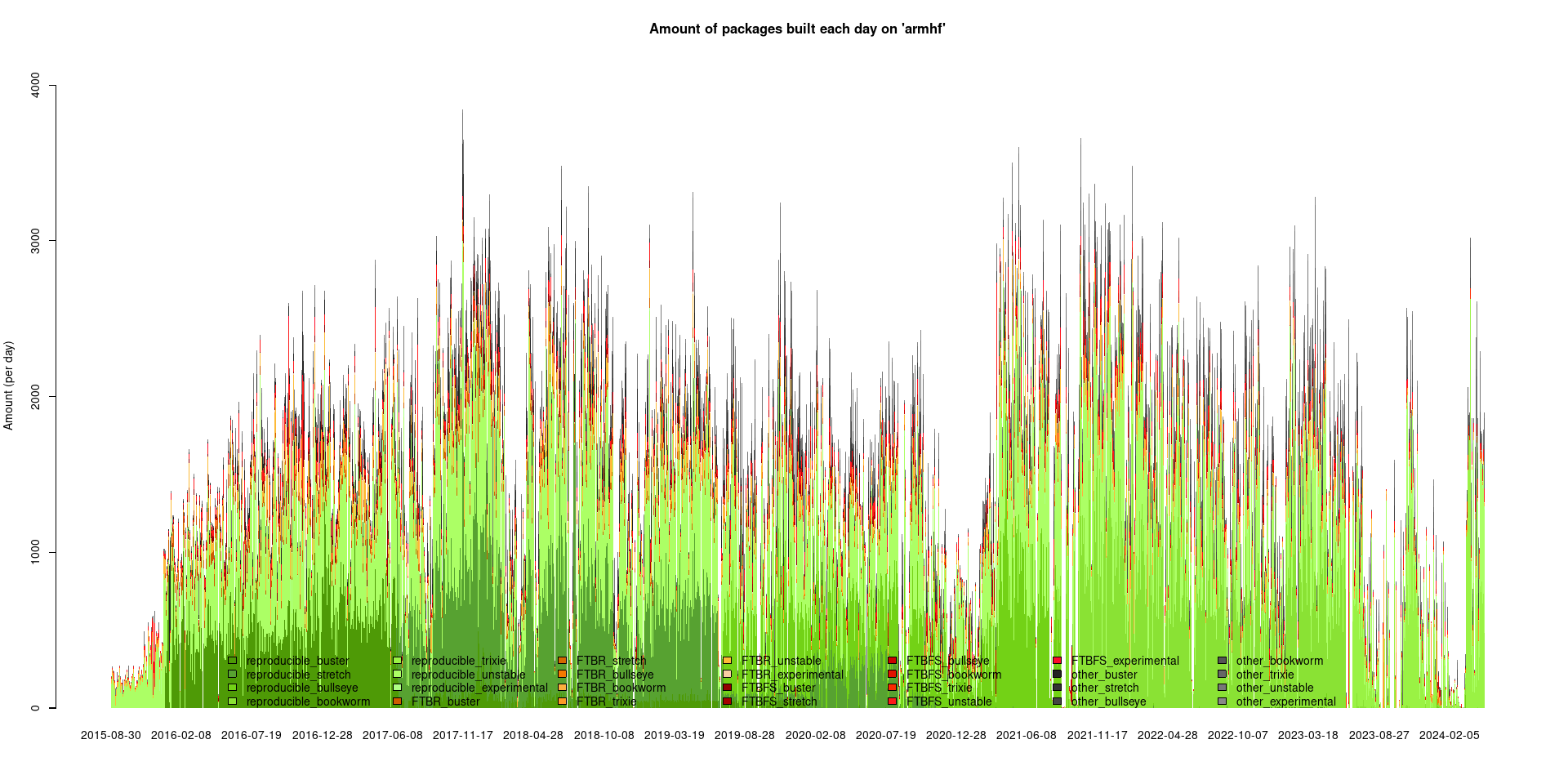
SOURCE_DATE_EPOCH in the build system.SOURCE_DATE_EPOCH in the build system.armhf build nodes provided by Vagrant Cascadian. This added 7 more armhf builder jobs. We now run around 900 tests of armhf packages each day. (h01ger)
The footer of each page now indicates by which Jenkins jobs build it. (h01ger)
Since moving to Japan, I got more and more interested in history, especially the recent history of the 20th century. The book I just finished, Ian Buruma (Wiki, home page) Wages of Guilt Memories of War in Germany and Japan (Independent, NYRB), has been a revelation for me. As an Austrian living in Japan, I am experiencing the discrepancy between these two countries with respect to their treatment of war legacy practically daily, and many of my blog entries revolve around the topic of Japanese non-reconciliation.
Willy Brandt went down on his knees in the Warsaw ghetto, after a functioning democracy had been established in the Federal Republic of Germany, not before. But Japan, shielded from the evil world, has grown into an Oskar Matzerath: opportunistic, stunted, and haunted by demons, which it tries to ignore by burying them in the sand, like Oskar s drum.
Ian Buruma, Wages of Guilt, Clearing Up the Ruins
The comparison of Germany and Japan with respect to their recent history as laid out in Buruma s book throws a spotlight on various aspects of the psychology of German and Japanese population, while at the same time not falling into the easy trap of explaining everything with difference in the guilt culture. A book of great depth and broad insights everyone having even the slightest interest in these topics should read.

This difference between (West) German and Japanese textbooks is not just a matter of detail; it shows a gap in perception.Only thinking about giving a halfway full account of this book is something impossible for me. The sheer amount of information, both on the German and Japanese side, is impressive. His incredible background (studies of Chinese literature and Japanese movie!) and long years as journalist, editor, etc, enriches the book with facets normally not available: In particular his knowledge of both the German and Japanese movie history, and the reflection of history in movies, were complete new aspects for me (see my recent post (in Japanese)). The book is comprised of four parts: The first with the chapters War Against the West and Romance of the Ruins; the second with the chapters Auschwitz, Hiroshima, and Nanking; the third with History on Trial, Textbook Resistance, and Memorials, Museums, and Monuments; and the last part with A Normal Country, Two Normal Towns, and Clearing Up the Ruins. Let us look at the chapters in turn:
Ian Buruma, Wages of Guilt, Romance of the Ruins
What is so convenient in the cases of Germany and Japan is that pacifism happens to be a high-minded way to dull the pain of historical guilt. Or, conversely, if one wallows in it, pacifism turns national guilt into a virtue, almost a mark of superiority, when compared to the complacency of other nations.
Hitler s doom and the emperor s speech, the end of one symbol and the odd continuity of another. Whatever their symbolic differences, both would be associated forever with ruins ruined cities, ruined people, ruined ideals.
Here the past had fossilized into something monumental or, as Adorno would have put it, museal.
The problem with this quasi-religious view of history is that it makes it hard to discuss past events in anything but nonsecular terms. Visions of absolute evil are unique, and they are beyond human explanation or even comprehension. To explain is hubristic and amoral. If this is true of Auschwitz, it is even more true of Hiroshima. The irony is that while there can be no justification for Auschwitz unless one believes in Hitler s murderous ideology, the case for Hiroshima is at least open to debate. The A-bomb might have saved lives; it might have shortened the war. But such arguments are incompatible with the Hiroshima spirit.
Yet the question remains whether the raping and killing of thousands of women, and the massacre of thousands, perhaps hundreds of thousands, of other unarmed people, in the course of six weeks, can still be called extreme conduct in the heat of battle. The question is pertinent, particularly when such extreme violence is justified by an ideology which teaches the aggressors that killing an inferior race is in accordance with the will of their divine emperor.
The Nuremberg trials were to be a history lesson, then, as well as a symbolic punishment of the German people a moral history lesson cloaked in all the ceremonial trappings of due legal process. They were the closest that man, or at least the men belonging to the victorious powers, could come to dispensing divine justice.Also, the differences in war trials in East and West Germany is compared. The East Germany Waldheimer trials, as well as the thorough purge of Nazis from East German jurisdiction and politics, which was in stark contrast to both West German s very restricted trials, as well as Japan s absolute non-purge of criminals.
As long as the emperor lived, Japanese would have trouble being honest about the past. For he had been formally responsible for everything, and by holding him responsible for nothing, everybody was absolved, except, of course, for a number of military and civilian scapegoats, Officers and Outlaws, who fell victim to victors justice.
The judges and some of the counsel for the ministry sat back with their eyes closed, in deep concentration, or fast asleep. Perhaps they were bored, because they had heard it all before. Perhaps they thought it was a pointless exercise, since they knew already how the case would end. But it was not a pointless exercise. For Ienaga Saburo had kept alive a vital debate for twenty-seven years. One cussed schoolteacher and several hundred supporters at the courthouse might not seem much, but it was enough to show that, this time, someone was fighting back.
The tragedy is not just that the suicide pilots died young. Soldiers (and civilians) do that in wars everywhere. What is so awful about the memory of their deaths is the cloying sentimentality that was meant to justify their self-immolation. There is no reason to suppose they didn t believe in the patriotic gush about cherry blossoms and sacrifice, no matter how conventional it was at the time. Which was exactly the point: they were made to rejoice in their own death. It was the exploitation of their youthful idealism that made it such a wicked enterprise. And this point is still completely missed at the Peace Museum today.
It was not an ignoble enterprise, but he should have recognized that Historisierung, even forty-three years after the war, was still a highly risky business. For a normal society, a society not haunted by ghosts, cannot be achieved by normalizing history, or by waving cross and garlic. More the other way around: when society has become sufficiently open and free to look back, from the point of view neither of the victim nor of the criminal, but of the critic, only then will the ghosts be laid to rest.On the Japanese side the case of Motoshima Hitoshi , who dared to question Hirohito:
Forty-three years have passed since the end of the war, and I think we have had enough chance to reflect on the nature of that war. From reading various accounts from abroad and having been a soldier myself, involved in military education, I do believe that the emperor bore responsibility for the war.which led to hitherto unseen of demonstration of extreme-right-wing groups issuing death treats that lead to a failed assassination of Motoshima, all under the completely complacent Japanese police and politics letting the right-wingers play their game.
By breaking a Japanese taboo, Motoshima struck a blow for a more open, more normal political society, and very nearly lost his life. Jenninger, I like to think, wanted to strike a blow for the same, but failed, and lost his job. Perhaps he wasn t up to the task. Or perhaps even West Germany was not yet normal enough to hear his message.
I asked him again about the local camp and the small hidden memorial. Dominik showed signs of distress. It was difficult, he admitted, very difficult. I know what you mean. But let me give you my personal opinion. When you have a crippled arm, you don t really want to show it around. It was a low point in our history, back then. But it was only twelve years in thousands of years of history. And so people tend to hide it, just as a person with a crippled arm is not likely to wear a short-sleeved shirt.A similar incident is recounted on the Japanese side, the Hanaoka incident (detailed article) and its unveiling by Nozoe Kenji, where 800 Chinese slave workers, after escaping from a forced-work camp for the Kajima Corporation, where rabbit-hunted down and slaughtered. He, too, got death threats, and was virtually expelled from his home area because he dared to publish his findings.
I think it is this basic distrust, this refusal to be told what to think by authorities, this cussed insistence on asking questions, on hearing the truth, that binds together Nozoe, Rosmus, and others like them. There are not many such people in Japan, or anywhere else for that matter. And I suspect they are not much liked wherever they live.
The state was run by virtually the same bureaucracy that ran the Japanese empire, and the electoral system was rigged to help the same corrupt conservative party to stay in power for almost forty years. This arrangement suited the United States, as well as Japanese bureaucrats, LDP politicians, and the large industrial combines, for it ensured that Japan remained a rich and stable ally against Communism. But it also helped to stifle public debate and stopped the Japanese from growing up politically.His description of current Japanese society, written in 1995, is still hauntingly true in 2016:
There is something intensely irritating about the infantilism of postwar Japanese culture: the ubiquitous chirping voices of women pretending to be girls; the Disneylandish architecture of Japanese main streets, where everything is reduced to a sugary cuteness; the screeching television talents rolling about and carrying on like kindergarten clowns; the armies of blue-suited salarymen straphanging on the subway trains, reading boys comics, the maudlin love for old school songs and cuddly mama-sans.
The Nanking Massacre, for leftists and many liberals too, is the main symbol of Japanese militarism, supported by the imperial (and imperialist) cult. Which is why it is a keystone of postwar pacifism. Article Nine of the constitution is necessary to avoid another Nanking Massacre. The nationalist right takes the opposite view. To restore the true identity of Japan, the emperor must be reinstated as a religious head of state, and Article Nine must be revised to make Japan a legitimate military power again. For this reason, the Nanking Massacre, or any other example of extreme Japanese aggression, has to be ignored, softened, or denied.While there are signs of resistance in the streets of Japan (Okinawa and the Hanako bay, the demonstrations against secrecy law and reversion of the constitution), we are still to see a change influenced by the people in a country ruled and distributed by oligarchs. I don t think there will be another Nanking Massacre in the near future, but Buruma s books shows that we are heading back to a nationalistic regime similar to pre-war times, just covered with a democratic veil to distract critics.
Ian Buruma, Wages of Guilt, Nanking
[ ] mainstream conservatives made a deliberate attempt to distract people s attention from war and politics by concentrating on economic growth.
The curious thing was that much of what attracted Japanese to Germany before the war Prussian authoritarianism, romantic nationalism, pseudo-scientific racialism had lingered in Japan while becoming distinctly unfashionable in Germany.In Romance of the Ruins:
The point of all this is that Ikeda s promise of riches was the final stage of what came to be known as the reverse course, the turn away from a leftist, pacifist, neutral Japan a Japan that would never again be involved in any wars, that would resist any form of imperialism, that had, in short, turned its back for good on its bloody past. The Double Your Incomes policy was a deliberate ploy to draw public attention away from constitutional issues.In Hiroshima:
The citizens of Hiroshima were indeed victims, primarily of their own military rulers. But when a local group of peace activists petitioned the city of Hiroshima in 1987 to incorporate the history of Japanese aggression into the Peace Memorial Museum, the request was turned down. The petition for an Aggressors Corner was prompted by junior high school students from Osaka, who had embarrassed Peace Museum officials by asking for an explanation about Japanese responsibility for the war.
The history of the war, or indeed any history, is indeed not what the Hiroshima spirit is about. This is why Auschwitz is the only comparison that is officially condoned. Anything else is too controversial, too much part of the flow of history .In Nanking, by the governmental pseudo-historian Tanaka:
Unlike in Europe or China, writes Tanaka, you won t find one instance of planned, systematic murder in the entire history of Japan. This is because the Japanese have a different sense of values from the Chinese or the Westerners.In History on Trial:
In 1950, Becker wrote that few things have done more to hinder true historical self-knowledge in Germany than the war crimes trials. He stuck to this belief. Becker must be taken seriously, for he is not a right-wing apologist for the Nazi past, but an eminent liberal.
There never were any Japanese war crimes trials, nor is there a Japanese Ludwigsburg. This is partly because there was no exact equivalent of the Holocaust. Even though the behavior of Japanese troops was often barbarous, and the psychological consequences of State Shinto and emperor worship were frequently as hysterical as Nazism, Japanese atrocities were part of a military campaign, not a planned genocide of a people that included the country s own citizens. And besides, those aspects of the war that were most revolting and furthest removed from actual combat, such as the medical experiments on human guinea pigs (known as logs ) carried out by Unit 731 in Manchuria, were passed over during the Tokyo trial. The knowledge compiled by the doctors of Unit 731 of freezing experiments, injection of deadly diseases, vivisections, among other things was considered so valuable by the Americans in 1945 that the doctors responsible were allowed to go free in exchange for their data.
Some Japanese have suggested that they should have conducted their own war crimes trials. The historian Hata Ikuhiko thought the Japanese leaders should have been tried according to existing Japanese laws, either in military or in civil courts. The Japanese judges, he believed, might well have been more severe than the Allied tribunal in Tokyo. And the consequences would have been healthier. If found guilty, the spirits of the defendants would not have ended up being enshrined at Yasukuni. The Tokyo trial, he said, purified the crimes of the accused and turned them into martyrs. If they had been tried in domestic courts, there is a good chance the real criminals would have been flushed out.
After it was over, the Nippon Times pointed out the flaws of the trial, but added that the Japanese people must ponder over why it is that there has been such a discrepancy between what they thought and what the rest of the world accepted almost as common knowledge. This is at the root of the tragedy which Japan brought upon herself.
Emperor Hirohito was not Hitler; Hitler was no mere Shrine. But the lethal consequences of the emperor-worshipping system of irresponsibilities did emerge during the Tokyo trial. The savagery of Japanese troops was legitimized, if not driven, by an ideology that did not include a Final Solution but was as racialist as Hider s National Socialism. The Japanese were the Asian Herrenvolk, descended from the gods.
Emperor Hirohito, the shadowy figure who changed after the war from navy uniforms to gray suits, was not personally comparable to Hitler, but his psychological role was remarkably similar.
In fact, MacArthur behaved like a traditional Japanese strongman (and was admired for doing so by many Japanese), using the imperial symbol to enhance his own power. As a result, he hurt the chances of a working Japanese democracy and seriously distorted history. For to keep the emperor in place (he could at least have been made to resign), Hirohito s past had to be freed from any blemish; the symbol had to be, so to speak, cleansed from what had been done in its name.In Memorials, Museums, and Monuments:
If one disregards, for a moment, the differences in style between Shinto and Christianity, the Yasukuni Shrine, with its relics, its sacred ground, its bronze paeans to noble sacrifice, is not so very different from many European memorials after World War I. By and large, World War II memorials in Europe and the United States (though not the Soviet Union) no longer glorify the sacrifice of the fallen soldier. The sacrificial cult and the romantic elevation of war to a higher spiritual plane no longer seemed appropriate after Auschwitz. The Christian knight, bearing the cross of king and country, was not resurrected. But in Japan, where the war was still truly a war (not a Holocaust), and the symbolism still redolent of religious exultation, such shrines as Yasukuni still carry the torch of nineteenth-century nationalism. Hence the image of the nation owing its restoration to the sacrifice of fallen soldiers.In A Normal Country:
The mayor received a letter from a Shinto priest in which the priest pointed out that it was un-Japanese to demand any more moral responsibility from the emperor than he had already taken. Had the emperor not demonstrated his deep sorrow every year, on the anniversary of Japan s surrender? Besides, he wrote, it was wrong to have spoken about the emperor in such a manner, even as the entire nation was deeply worried about his health. Then he came to the main point: It is a common error among Christians and people with Western inclinations, including so-called intellectuals, to fail to grasp that Western societies and Japanese society are based on fundamentally different religious concepts . . . Forgetting this premise, they attempt to place a Western structure on a Japanese foundation. I think this kind of mistake explains the demand for the emperor to bear full responsibility.In Two Normal Towns:
The bust of the man caught my attention, but not because it was in any way unusual; such busts of prominent local figures can be seen everywhere in Japan. This one, however, was particularly grandiose. Smiling across the yard, with a look of deep satisfaction over his many achievements, was Hatazawa Kyoichi. His various functions and titles were inscribed below his bust. He had been an important provincial bureaucrat, a pillar of the sumo wrestling establishment, a member of various Olympic committees, and the recipient of some of the highest honors in Japan. The song engraved on the smooth stone was composed in praise of his rich life. There was just one small gap in Hatazawa s life story as related on his monument: the years from 1941 to 1945 were missing. Yet he had not been idle then, for he was the man in charge of labor at the Hanaoka mines.In Clearing Up the Ruins:
But the question in American minds was understandable: could one trust a nation whose official spokesmen still refused to admit that their country had been responsible for starting a war? In these Japanese evasions there was something of the petulant child, stamping its foot, shouting that it had done nothing wrong, because everybody did it.
Japan seems at times not so much a nation of twelve-year-olds, to repeat General MacArthur s phrase, as a nation of people longing to be twelve-year-olds, or even younger, to be at that golden age when everything was secure and responsibility and conformity were not yet required.
For General MacArthur was right: in 1945, the Japanese people were political children. Until then, they had been forced into a position of complete submission to a state run by authoritarian bureaucrats and military men, and to a religious cult whose high priest was also formally chief of the armed forces and supreme monarch of the empire.
I saw Jew S ss that same year, at a screening for students of the film academy in Berlin. This showing, too, was followed by a discussion. The students, mostly from western Germany, but some from the east, were in their early twenties. They were dressed in the international uniform of jeans, anoraks, and work shirts. The professor was a man in his forties, a 68er named Karsten Witte. He began the discussion by saying that he wanted the students to concentrate on the aesthetics of the film more than the story. To describe the propaganda, he said, would simply be banal: We all know the what, so let s talk about the how. I thought of my fellow students at the film school in Tokyo more than fifteen years before. How many of them knew the what of the Japanese war in Asia.
The above sign was at the Melbourne Docks in December 2014 when I was returning from a cruise. I have no idea why there are 3 men and 1 woman on the sign (and a dock worker was also surprised when I explained why I was photographing it). I wonder whether a sign that had 3 women and 1 man would ever have been installed or not noticed if it was installed.
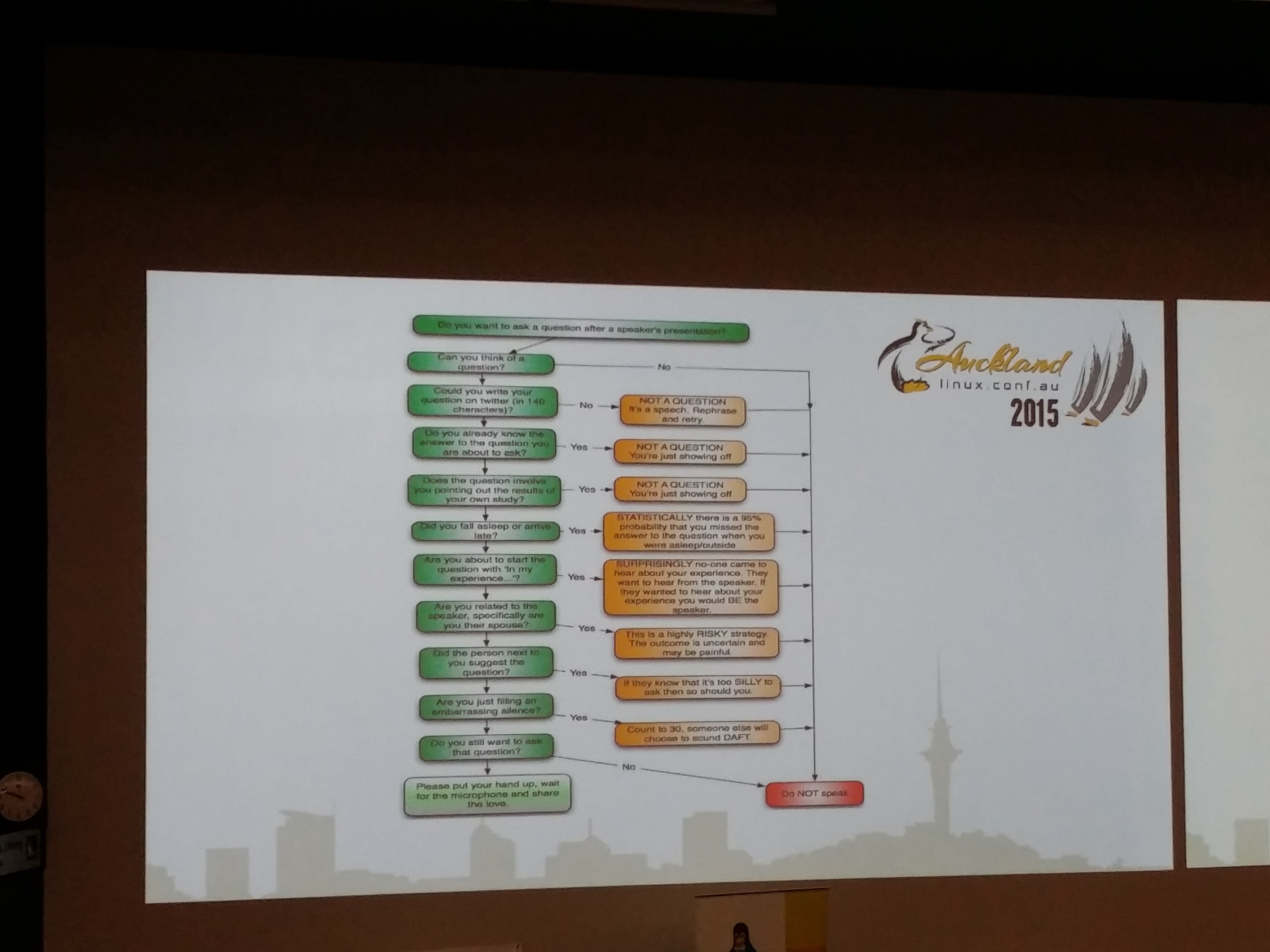
At the start of the first day of LCA 2015 the above was displayed at the keynote as a flow-chart for whether someone should ask a question at a lecture. Given that the first real item in the list is that a question should fit in a tweet I think it was inspired by my blog post about the length of conference questions [1].
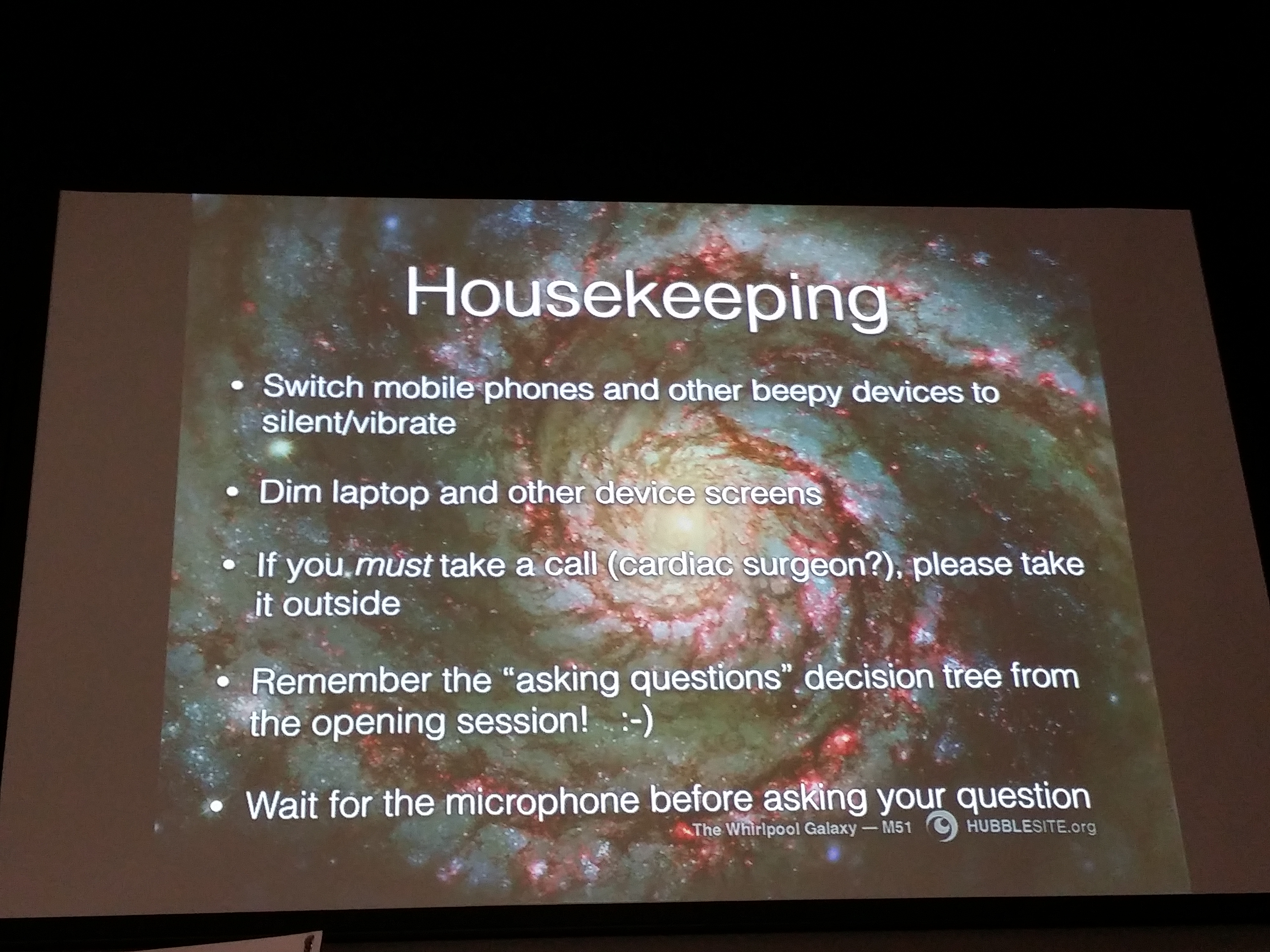
At the introduction to the Astronomy Miniconf the above slide was displayed. In addition to referencing the flow-chart for asking questions it recommends dimming laptop screens (among other things).
The above sign was at a restaurant in Auckland in January 2015. I thought that sort of sexist joke went out of fashion a few decades ago.
The above photo is from a Melbourne department store in February 2015. Why gender a nerf gun? That just doesn t make sense. Also it appeared that the only nerf crossbow was the purple/pink one, is a crossbow considered feminine nowadays?
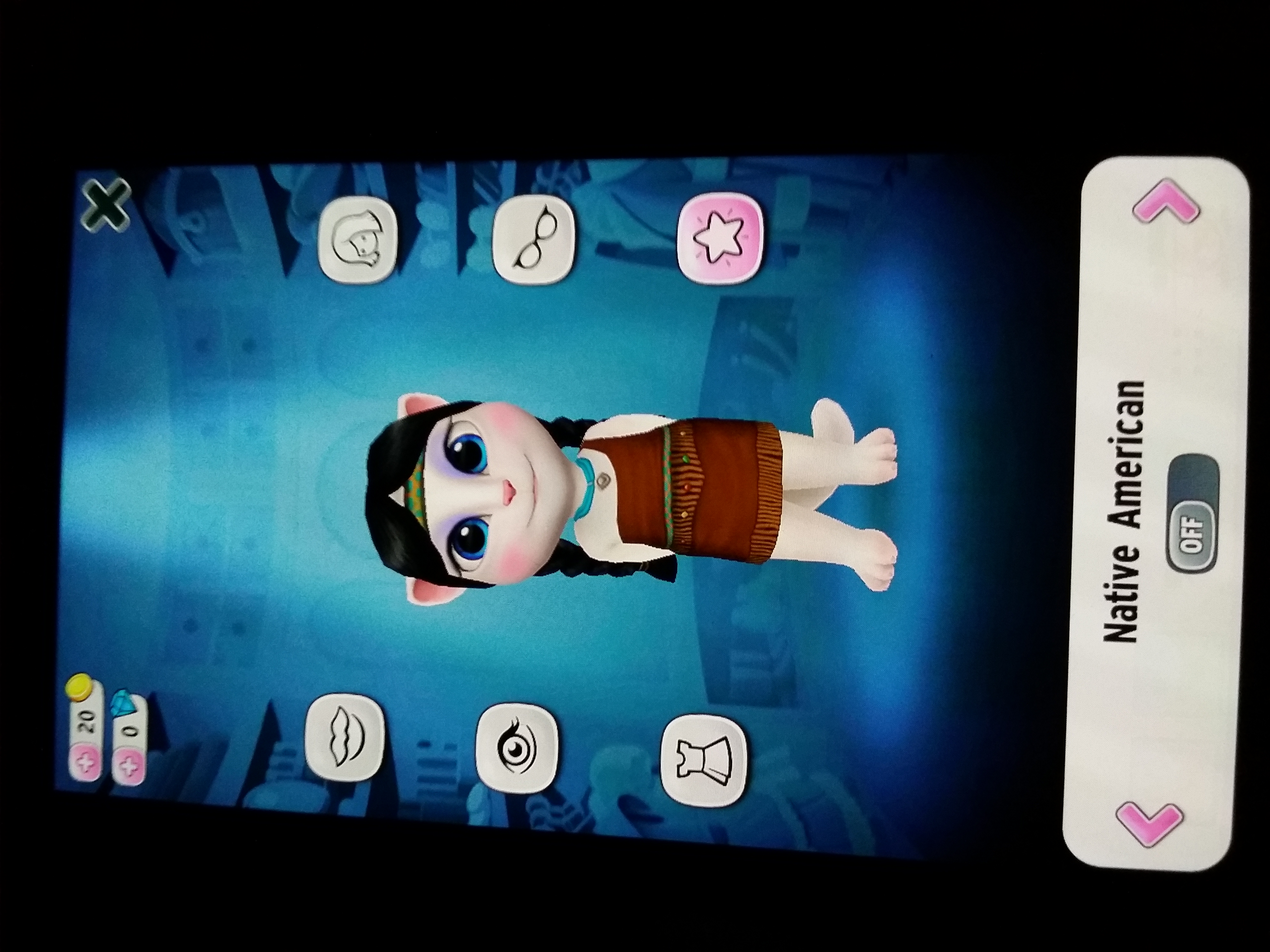
The above picture is a screen-shot of one of the Talking Angela series of Android games from March. Appropriating the traditional clothing of marginalised groups is a bad thing. People of Native American heritage who want to wear their traditional clothing face discrimination when they do so, when white people play dress-up in clothing that is a parody of Native American style it s really offensive. The site Racialicious.com has a tag for articles about appropriation [2].
The above was in a library advertising an Ebook reader. In this case they didn t even have pointlessly gendered products they just had pointlessly gendered adverts for the same product. They also perpetuate the myth that only girls read vampire books and only boys read about space. Also why is the girl lying down to read while the boy is sitting up?
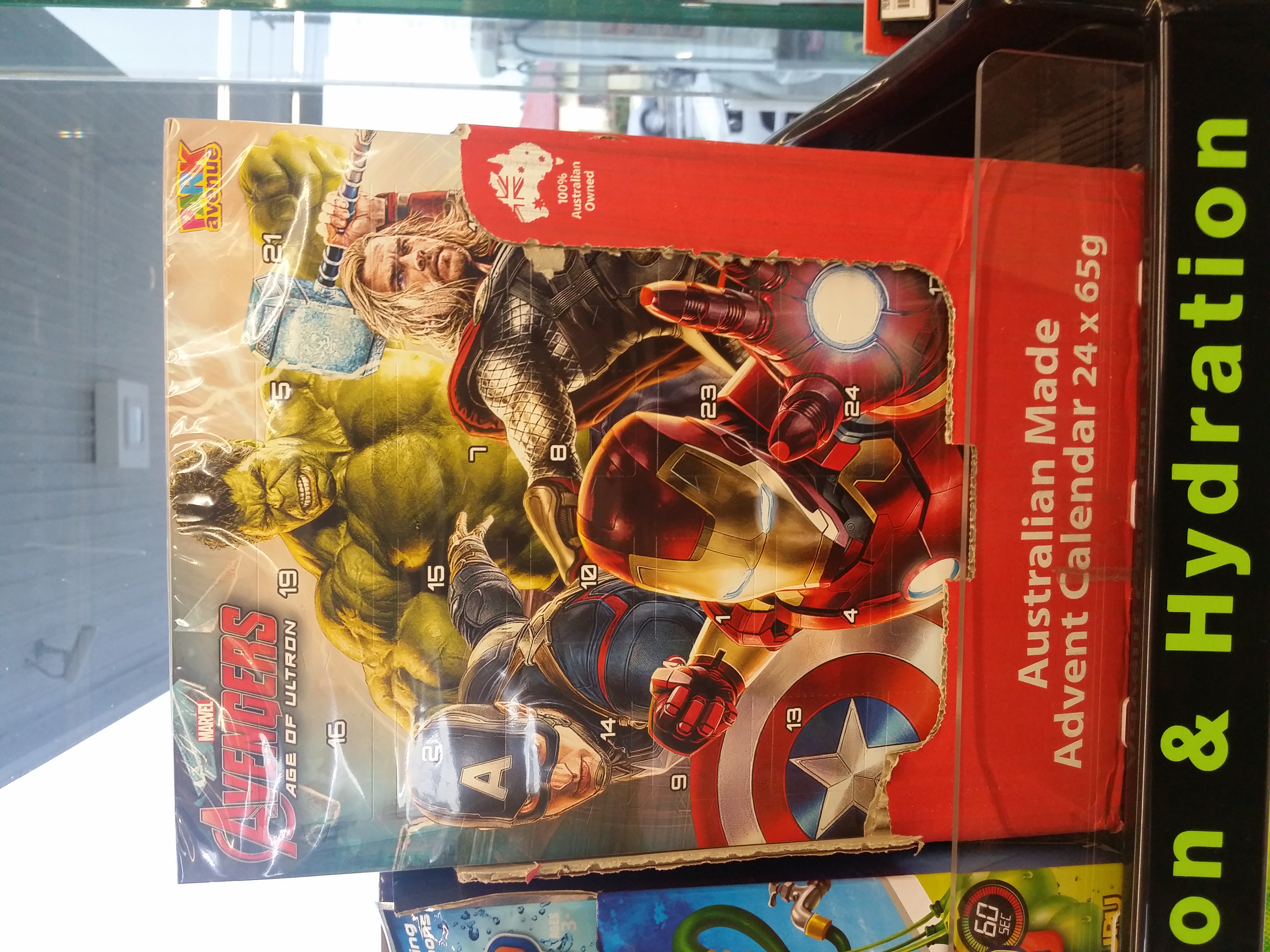
Above is an Advent calendar on sale in a petrol station. Having end of year holiday presents that have nothing to do with religious festivals makes sense. But Advent is a religious observance. I think this would be a better candidate for war on Christmas paranoia than a coffee cup of the wrong colour.
The above photo is of boys and girls pipette suckers. Pointlessly gendered recreational products like Nerf guns is one thing, but I think that doing it to scientific equipment is a bigger problem. Are scientists going to stop work if they can t find a pipette sucker of the desired gender? Is worrying about this going to distract them from their research (really bad if working with infectious or carcinogenic solutions). The Integra advertising claims to be doing this to promote breast cancer research which is also bogus. Here is a Sociological Images article about the problems of using pink to market breast cancer research [3] and the Sociological Images post about pinkwashing (boobies against breast cancer) is also worth reading [4].
As an aside I made a mistake in putting a pipette sucker over the woman s chest in that picture. The way that Integra portreyed her chest is relevant to analysis of this advert. But unfortunately I didn t photograph that.
Here is a link to my sociological images post from 2014 [5].
The elections for the new OpenStack board are coming closer
and this time the Open Source community has a great
opportunity of representation: Giuseppe Patern is standing as a candidate for the board.
Although Giuseppe is considered by HP and Forrester Research
among the top talented consultants in the world,
Gippa (as he s largely known in the industry) is still one of us ,
a nerd that grew up with a keyboard on his hands.
As he s one of the candidates of the OpenStack board,
Fabio Marzocca wishing to know more has interviewed him.
[FM] The hard question. You re a techie. Why the hell are you running for the board?
[GP] This is indeed a good question It all started as a challenge from some clients and friends that are working in the OpenStack project. The truth is that the board and most of the management of the foundation are from vendors. I m not questioning here if they do a good job or not, it is very likely that they tend to protect their own interests. In my opinion it lacks some community spirit that have fostered Linux development such as Debian and Ubuntu. That s why I m running for it, to bring the community where it should be.
[FM] Back to Debian and Ubuntu, could you tell us your story with Linux?
[GP] I discovered Linux in 1994, but only in 1996 things were serious. By the time I just finished high school and I applied for a job in a local Internet Service Provider. At 15 years I was well known in the local community as I was installing and maintaining several BBSes, so it wasn t hard to get the job. I can say it was love at first sight. I started with Slackware (was the first distro), but I moved into redhat first and then debian. When I was working for the IBM Linux Technology Center, I was in charge of helping porting Linux to PowerPC and backporting LVM to make it similar to AIX. Sun was also a good playground as they acquired Cobalt, a hardware appliance based on debian. Then I shifted more towards Enterprise Linux adoption with 6 years in RedHat and then I went to Canonical. I was happy to go back to Debian and Ubuntu community, because I still believe that Ubuntu Developer Summits (UDS) were the real spirit of a Linux community.
[FM] Another hard question. We know you re somehow involved in the rebellion of Devuan.org. What is your opinion about systemd?
[GP] Let me tell you that it s not totally black/white and let s see the two sides here. Something like systemd was indeed needed. Each distro has its own way of init ing the system and for a package maintainer or commercial software maker, maintaining different init behaviour is insane. And as an init replacement it totally makes sense. However, IMHO systemd went too far away, incorporating into its code something that should not happen. A DHCP client into an init system, seriously? I doubt it was in the spirit of the Unix and Linux system
However, in the real world of pets vs cattle , where application matters more than systems, having a systemd as it is, doesn t change that much.
[FM] OpenStack was incubated in Ubuntu and the roots are quite clear. Is there something else that you would like to see from Debian and Ubuntu in OpenStack?
[GP] Stability, if I can name just one. Currently OpenStack is released every 6 months, which was probably the best choice to speed up the development. However, this is now becoming a weakness, as enterprise customers can t upgrade their critical infrastructures every 6 months. Traditionally Debian is maniacally focused on given a bullet-proof distribution, this is something that in my opinion is missing from OpenStack.
[FM] Gippa, tell us just 2 or 3 topics you will bring to action in case of election
[GP] I d like to introduce an OpenStack LTS process, following the Ubuntu approach: while releasing every 6 months is fair enough for development and testing environments, having a stable release every 2-3 years can give enterprise customers the peace of mind they need while running production environments.
I d also love to see a consolidation of the core (Nova/Neutron/Cinder/Swift): vendors and developers are introducing new features and projects while I d love to see for example- a more stable and scalable Neutron and a more stable connection to Oslo (in particular rabbitmq).
In general, I would encourage more attention to who is actually deploying, integrating and using OpenStack every day. I would also try to foster the ecosystem of ISVs in order to release and certify their software for OpenStack. And last but not least- to see interoperation between regional datacenters: I dream of a world where companies in a given territory can work together , and this is only possible through standards. I hope that OpenStack can represent this standard.
[FM] When are the elections and how can we vote?
[GP] Individual Member Director elections for the 2016 Board will be held online from Monday January 11, 2016 to Friday January 15, 2016. More informations on the website.
What happened in the reproducible
builds effort between December 20th to December 26th:
Toolchain fixes
Mattia Rizzolo rebased our experimental versions of debhelper (twice!) and dpkg on top of the latest releases.
Reiner Herrmann submited a patch for mozilla-devscripts to sort the file list in generated preferences.js files.
To be able to lift the restriction that packages must be built in the same path, translation support for the __FILE__ C pre-processor macro would also be required. Joerg Sonnenberger submitted a patch back in 2010 that would still be useful today.
Chris Lamb started work on providing a deterministic mode for debootstrap.
Packages fixed
The following packages have become reproducible due to changes in their
build dependencies:
bouncycastle,
cairo-dock-plug-ins,
darktable,
gshare,
libgpod,
pafy,
ruby-redis-namespace,
ruby-rouge,
sparkleshare.
The following packages became reproducible after getting fixed:
SOURCE_DATE_EPOCH in the documentation generator.Makefile.tmpfs. (h01ger)
200 GiB have been added to jenkins.debian.net (thanks to ProfitBricks!) to make room for new jobs. The current count is at 962 and growing!
diffoscope development
Aside from some minor bugs that have been fixed, a one-line change made huge memory (and time) savings as the output of transformation tool is now streamed line by line instead of loaded entirely in memory at once.
disorderfs development
Andrew Ayer released disorderfs version 0.4.2-1 on December 22th. It fixes a memory corruption error when processing command line arguments that could cause command line options to be ignored.
Documentation update
Many small improvements for the documentation on reproducible-builds.org sent by Georg Koppen were merged.
Package reviews
666 (!) reviews have been removed, 189 added and 162 updated in the previous week.
151 new fail to build from source reports have been made by Chris West, Chris Lamb, Mattia Rizzolo, and Niko Tyni.
New issues identified: unsorted_filelist_in_xul_ext_preferences, nondeterminstic_output_generated_by_moarvm.
Misc.
Steven Chamberlain drew our attention to one analysis of the Juniper ScreenOS Authentication Backdoor: Whilst this may have been added in source code, it was well-disguised in the disassembly and just 7 instructions long. I thought this was a good example of the current state-of-the-art, and why we'd like our binaries and eventually, installer and VM images reproducible IMHO.
Joanna Rutkowska has mentioned possible ways for Qubes to become reproducible on their development mailing-list.
Here is my monthly update covering a large part of what I have been doing in the free software world (previously):
| Series: | Steerswomen #2 |
| Publisher: | Del Rey |
| Copyright: | 1992, 2001 |
| Printing: | 2001 |
| ISBN: | 0-345-46105-3 |
| Format: | Trade paperback |
| Pages: | 389 |
apt-get install yum yum-utils python-lzma
git clone git://git.openstack.org/openstack/diskimage-builder
virtualenv dib_env
. dib_env/bin/activate
pip install dib-utils
git clone git://git.openstack.org/openstack-infra/project-config
break=after-error \
TMP_DIR=~/tmp \
ELEMENTS_PATH=~/project-config/nodepool/elements \
DIB_DEV_USER_PASSWORD="password" DIB_DEV_USER_PWDLESS_SUDO=1 \
DISTRO=23 \
./bin/disk-image-create -x --no-tmpfs -t vhd \
fedora-minimal vm devuser simple-init \
openstack-repos puppet nodepool-base node-devstack
pip install shade
clouds:
rax:
profile: rackspace
auth:
username: your_rax_username
password: your_rax_password
project_id: your_rax_accountnum
regions:
- IAD
import shade
shade.simple_logging(debug=True)
cloud = shade.openstack_cloud(cloud='rax')
image = cloud.create_image('image-name', filename='image.vhd', wait=True)
nova boot --flavor=2 --image=image-uuid --config-drive 1 test-image
My flight from Athens where I had the pleasure to attend the first
reproducible world
summit
landed at the scheduled time in Paris (CDG). While people were getting
their bags and putting their coats on, one member of the cabin crew
announced that a police control will take place outside the plane and
that we should have ready identity documents. My seat was in the back of the
plane, so I had time to wait in the cold of the
jetway while all passengers
were controlled one after the other.
Three cops were set up right at the entrance of the terminal. One was taking
cards or passports and looking at people's face. He then passed it to another
cop in front of a suitcase that seemed to contain a scanner and a computer. The
third one was just standing against the wall watching. When it was my turn,
after scanning my passport, the cop had this nice gesture where she started to
move her hand holding the passport toward me just like she had just did a
hundred times before pulling it backward when the result appeared on the
screen.
I had the confirmation that I was registered as a dangerous political
activist in 2012 when David Dufresne published
Magasin G n ral. One
report from the interior intelligence service from
2008
was leaked to promote the book. My name had not been properly redacted
from the very first version that went online and was associated with a
political self-organized space in Dijon. Some Debian Developers had the
pleasure to visit that space in
2005,
2006, or 2007.
The report was full of mistakes, like almost all police
files,
so I don't want to comment on it.
The good news is that since then, I have stopped being paranoid. I knew,
and thus could take appropriate precautions. Just like every time I have
to approach an airport, all my (encrypted) electronic devices were
turned off. I had shaved a couple hours before. I know a lawyer ready
to represent me. I am fully aware that it's best to say as little as
possible.
Although it has been a while since I had such a blatant confirmation
that I was still a registered anarchist. It should not be a surprise
though. Once you are in, there's no way
out.
I was then asked to step aside while they proceeded with the rest of the
queue. I put my backpack down and leaned against the wall. Once they
were over, one of the cops asked me to follow him. We walked through the
corridors to reach the office of the border police. While we were
walking, they asked me a series of questions. I'm not mentioning the
pauses in between, but here's what I can remember:
Do you have a connection?The cop also commented that they had to do some simple checks and that they would then let me go as I was coming back. I did not trust this but said nothing. When then passed through a door where the cop had to use their badge to unlock it. I was asked to sit on a chair in the corridor between two offices (as far as I could see). I could hear one cop explaining the situation to the next: Il a une fiche. Ah, une fiche. They seemed quite puzzled that I was not controlled when I flew out on Monday. After some minutes, another cop came back asking me for my boarding pass. Some more minutes later, he came back asking me if the address on my passport was still valid. I replied no . They gave me a piece of paper asking me for my current address, a phone number and an email address. As these information are all easy to find, I thought it was easier to comply. I gave my
No.
Are you going to Paris?
To my parents' in the suburbs.
How long have you been staying in Greece?
5 days.
flipping the pages of my passport And you come back from the U.S. in Feb. 2015?
No, that was the maximum stay. I was there in August 2014.
Why were you in Greece? Vacations?
Work. I was at a meeting.
What do you do?
Free software.
What is that?
I am a developper.
Oh, computers.
Yes.
Is that why you also were in the US?
Yes, it was another conference.
And so you travel because of that. That's nice.
Are you a freelancer?
I work with a coop, but yes.
@irq7.fr address that I use for all public
administrations. When the cop saw it, he asked:
What is it?He gave me my passport back and showed me the way out. (I will spare you details on the discussion I had to listen while waiting between two cops about how one loved to build models of military weapons used in wars against communism because of his origins. And that he was pissed off because fucking Europe disallowed some (toxic) paints he was used to.) To the best of my understanding, what happened is that they made a phone call and were just asked to update my personal details by the intelligence service. I don't know, but I'm left to wonder if all these people might just have been controlled because I was on the flight. All-in-all this didn't take too long: one hour after leaving the plane I was on the platform for the regional trains. The cops stayed polite the whole time. I am privileged: French citizen, white, able to speak French with a teacher accent. I am pretty sure it would have not been that good if I had been displaying a long beard or a djellaba. I took the time to document this because I know too many people who think that what the French government is doing doesn't concern them. It does. It's been a couple of years now that antiterrorism is how governments keep people in check. But we are reaching a whole new level now. We are talking about cops keeping their guns while off duties, house searches at any hours without judge oversight, and the government wants to change the constitution to make the state of emergency permanent. We've seen so many abuses in just two weeks. It will not go well. Meanwhile, instead of asking themselves why young people are killing others and themselves, state officials prefer dropping bombs. Which will surely prevent people ready to die from using suicidal tactics, right? We are at the dawn of an environmental crisis that will end humanity. Every human on this planet is concerned. People get beaten up when they march to pressure governments to do something about it. We need to unite and resist. And yes, we are going to get hurt but freedom is not free.
I don't understand.
Is it your company?
It is a non-profit.
It s been a while since my last what s been happening behind the scenes e-mail so I m here to report on what has been happening within the GNOME Infrastructure, its future plans and my personal sensations about a challenge that started around three (3) years ago when Sriram Ramkrishna and Jeff Schroeder proposed my name as a possible candidate for coordinating the team that runs the systems behind the GNOME Project. All this followed by the official hiring achieved by Karen Sandler back in February 2013.
The GNOME Infrastructure has finally reached stability both in terms of reliability and uptime, we didn t have any service disruption this and the past year and services have been running smoothly as they were expected to in a project like the one we are managing.
As many of you know service disruptions and a total lack of maintenance were very common before I joined back in 2013, I m so glad the situation has dramatically changed and developers, users, passionates are now able to reach our websites, code repositories, build machines without experiencing slowness, downtimes or$ cd /git/GNOME/puppet && git shortlog -ns 3520 Andrea Veri 506 Olav Vitters 338 Owen W. Taylor 239 Patrick Uiterwijk 112 Jeff Schroeder 71 Christer Edwards 4 Daniel Mustieles 4 Matanya Moses 3 Tobias Mueller 2 John Carr 2 Ray Wang 1 Daniel Mustieles Garc a 1 Peter Baumgartenand from the Request Tracker database (52388 being my assigned ID):
mysql> select count(*) from Tickets where LastUpdatedBy = '52388'; +----------+ count(*) +----------+ 3613 +----------+ 1 row in set (0.01 sec) mysql> select count(*) from Tickets where LastUpdatedBy = '52388' and Status = 'Resolved'; +----------+ count(*) +----------+ 1596 +----------+ 1 row in set (0.03 sec)It s been a long run which made me proud, for the things I learnt, for the tasks I ve been able to accomplish, for the great support the GNOME community gave me all the time and most of all for the same fact of being part of the team responsible of the systems hosting the GNOME Project. Thank you GNOME community for your continued and never ending backing, we daily work to improve how the services we host are delivered to you and the support we receive back is fundamental for our passion and enthusiasm to remain high!
Sometime earlier last year, I started to help Philippe Massicotte with his gtrendsR package---which was then still "hiding" in relatively obscurity on BitBucket. I was able to assist with a few things related to internal data handling as well as package setup and package builds--but the package is really largely Philippe's. But then we both got busy, and it wasn't until this summer at the excellent useR! 2015 conference that we met and concluded that we really should finish the package. And we both remained busy...
Lo and behold, following a recent transfer to this GitHub repository, we finalised a number of outstanding issues. And Philippe was even kind enough to label me a co-author. And now the package is on CRAN as of yesterday. So install.packages("gtrendsR") away and enjoy!
Here is a quiick demo:
## load the package, and if options() are set appropriately, connect
## alternatively, also run gconnect("someuser", "somepassword")
library(gtrendsR)
## using the default connection, run a query for three terms
res <- gtrends(c("nhl", "nba", "nfl"))
## plot (in default mode) as time series
plot(res)
## plot via googeVis to browser
## highlighting regions (probably countries) and cities
plot(res, type = "region")
plot(res, type = "cities")
The time series (default) plot for this query came out as follows a couple of days ago:
One really nice feature of the package is the rather rich data structure. The result set for the query above is actually stored in the package and can be accessed. It contains a number of components:
R> data(sport_trend)
R> names(sport_trend)
[1] "query" "meta" "trend" "regions" "topmetros"
[6] "cities" "searches" "rising" "headers"
R>
So not only can one look at trends, but also at regions, metropolitan areas, and cities --- even plot this easily via package googleVis which is accessed via options in the default plot method. Furthermore, related searches and rising queries may give leads to dynamics within the search.
Please use the standard GitHub issue system for bug reports, suggestions and alike.
This post by Dirk Eddelbuettel originated on his Thinking inside the box blog. Please report excessive re-aggregation in third-party for-profit settings.
I don't really remember where or how I stumbled upon this four women so I'm sorry that I can't give credit where credit is due, and I even do believe that I started writing a blog entry about them already somewhere. Anyway, I want to present you today Salut Salon. They might play classic instruments, but not in a classic way. But see and hear yourself:
Next.