Matthew Garrett: Does free software benefit from ML models being derived works of training data?
 Github recently announced Copilot, a machine learning system that makes suggestions for you when you're writing code. It's apparently trained on all public code hosted on Github, which means there's a lot of free software in its training set. Github assert that the output of Copilot belongs to the user, although they admit that it may occasionally produce output that is identical to content from the training set.
Unsurprisingly, this has led to a number of questions along the lines of "If Copilot embeds code that is identical to GPLed training data, is my code now GPLed?". This is extremely understandable, but the underlying issue is actually more general than that. Even code under permissive licenses like BSD requires retention of copyright notices and disclaimers, and failing to include them is just as much a copyright violation as incorporating GPLed code into a work and not abiding by the terms of the GPL is.
But free software licenses only have power to the extent that copyright permits them to. If your code isn't a derived work of GPLed material, you have no obligation to follow the terms of the GPL. Github clearly believe that Copilot's output doesn't count as a derived work as far as US copyright law goes, and as a result the licenses on the training data don't apply to the output. Some people have interpreted this as an attack on free software - Copilot may insert code that's either identical or extremely similar to GPLed code, and claim that there are no license obligations created as a result, effectively allowing the laundering of GPLed code into proprietary software.
I'm completely unqualified to hold a strong opinion on whether Github's legal position is justifiable or not, and right now I'm also not interested in thinking about it too much. What I think is more interesting is what the impact of either position has on free software. Do we benefit more from a future where the output of Copilot (or similar projects) is considered a derived work of the training data, or one where it isn't? Having been involved in a bunch of GPL enforcement activities, it's very easy to think of this as something that weakens the GPL and, as a result, weakens free software. That was my initial reaction, but that's shifted over the past few days.
Let's look at the GNU manifesto, specifically this section:
The fact that the easiest way to copy a program is from one neighbor to another, the fact that a program has both source code and object code which are distinct, and the fact that a program is used rather than read and enjoyed, combine to create a situation in which a person who enforces a copyright is harming society as a whole both materially and spiritually; in which a person should not do so regardless of whether the law enables him to.
The GPL makes use of copyright law to ensure that GPLed work can't be taken from the commons. Anyone who produces a derived work of GPLed code is obliged to provide that work under the same terms. If software weren't copyrightable, the GPL would have no power. But this is the outcome Stallman wanted! The GPL doesn't exist because copyright is good, it exists because software being copyrightable is what enables the concept of proprietary software in the first place.
The powers that the GPL uses to enforce sharing of code are used by the authors of proprietary software to reduce that sharing. They attempt to forbid us from examining their code to determine how it works - they argue that anyone who does so is tainted, unable to contribute similar code to free software projects in case they produce a derived work of the original. Broadly speaking, the further the definition of a derived work reaches, the greater the power of proprietary software authors. If Oracle's argument that APIs are copyrightable had prevailed, it would have been disastrous for free software. If the Apple look and feel suit had established that Microsoft infringed Apple's copyright, we might be living in a future where we had no free software desktop environments.
When we argue for an interpretation of copyright law that enhances the power of the GPL, we're also enhancing the power of giant corporations with a lot of lawyers on hand. So let's look at this another way. If Github's interpretation of copyright law holds, we can train a model on proprietary code and extract concepts without having to worry about being tainted. The proprietary code itself won't enter the commons, but the ideas it embodies will. No more worries about whether you're literally copying the code that implements an algorithm you want to duplicate - simply start typing and let the model remove the risk for you.
There's a reasonable counter argument about equality here. How much GPL-influenced code is going to end up in proprietary projects when compared to the reverse? It's not an easy question to answer, but we should bear in mind that the majority of public repositories on Github aren't under an open source license. Copilot is already claiming to give us access to the concepts embodied in those repositories. Do these provide more value than is given up? I honestly don't know how to measure that. But what I do know is that free software was founded in a belief that software shouldn't be constrained by copyright, and our default stance shouldn't be to argue against the idea that copyright is weaker than we imagined.
(Edit: this post by Julia Reda makes some of the same arguments, but spends some more time focusing on a legal analysis of why having copyright cover the output of Copilot would be a problem)
 This is not only the Year of the Ox, but also the year of Debian 11, code-named
bullseye. The release lies ahead,
 How are you meant to write about an unfinished emancipation? Bodies of Light is a 2014 book by Glasgow-born Sarah Moss on the stirrings of women's suffrage in an arty clique in nineteenth-century England. Set in the intellectually smoggy cities of Manchester and London, we follow the studious and intelligent Alethia 'Ally' Moberly, who is struggling to gain the acceptance of herself, her mother and the General Medical Council.
'Alethia' may be the Greek goddess of truth, but our Ally is really searching for wisdom. Her strengths are her patience and bookish learning, and she acquires Latin as soon as she learns male doctors will use it to keep women away from the operating theatre. In fact, Ally's acquisition of language becomes a recurring leitmotif: replaying a suggestive dream involving a love interest, for instance, Ally thinks of 'dark, tumbling dreams for which she has a perfectly adequate vocabulary'. There are very few moments of sensuality in the book, and pairing it with Ally's understated wit achieves a wonderful effect.
The amount we learn about a character is adapted for effect as well. There are few psychological insights about Ally's sister, for example, and she thus becomes a fey, mysterious and almost Pre-Raphaelite figure

 This weekend we (
 A quick note to self to remind how I do backups of my Android device with rsync (and adb).
I have followed this guide:


 A new minor release of
 Fixed multi-track audio recording web page that was broken for a while.
 Tonight I m provisioning a new virtual machine at
 The Rcpp team is pleased to announce release 1.0.7 of

 I was quite impressed by the ability of this insect; yet to be. The way it has camouflaged itself is mesmerizing. I ll let the video do the talking as this one is going to be difficult to express in words.
 This release is mostly procedural to accomodate changes in

 Continuing with
 I woke up this morning to a lovely little gallery of pictures of our children that my wife had sent me via WhatsApp.
This has become the most common way we interact with family photos. We regularly send and receive photos to and from our families via WhatsApp, which re-compresses them for transit and temporary storage across their network.
The original photos, wherever they are, will be in a very high quality (as you get on most modern cameras) and will be backed up in perfect fidelity to either Apple or Google s photo storage solutions. But all of that seems moot, when the most frequent way we engage with the pictures is via a method which compresses so aggressively that you can clearly see the artefacts, even thumbnailed on a phone screen.
I still don t feel particularly happy with the solution in place for backing up the photos (or even: getting them off the phone). Both Apple and Google make it less than convenient to get them out of their respective walled gardens. I ve been evaluating the nextCloud app and a Nextcloud instance on my home NAS as a possible alternative.
 The
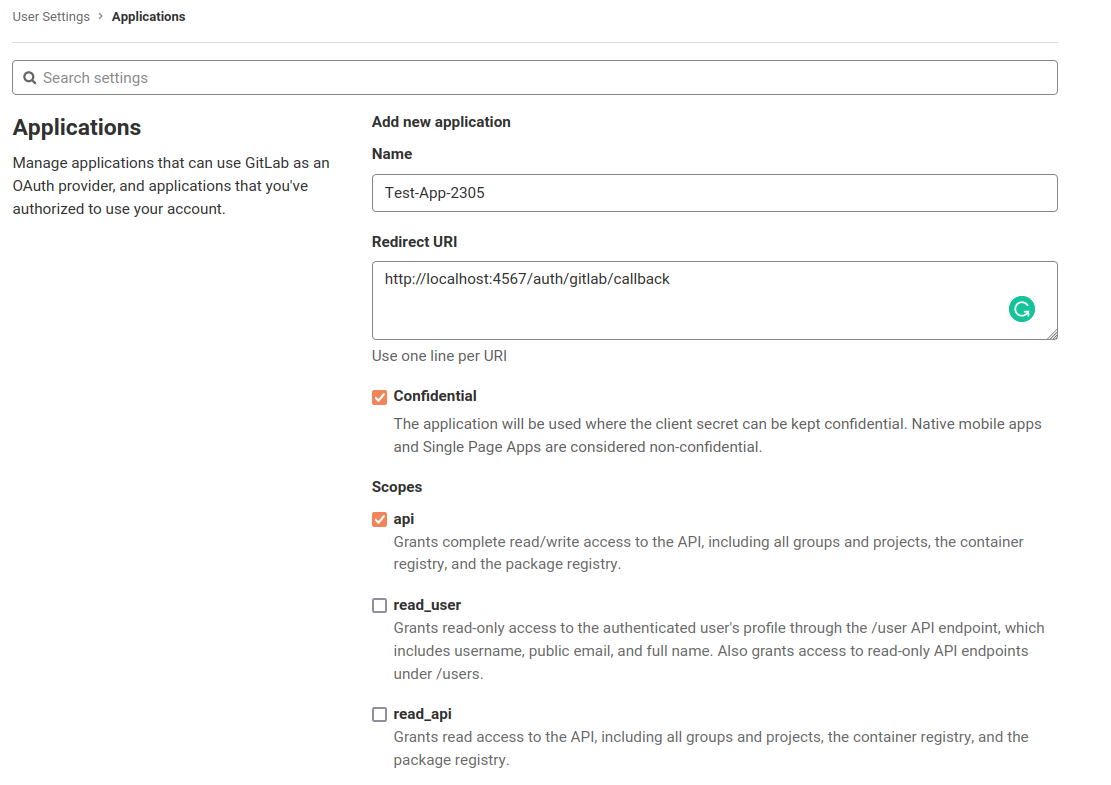
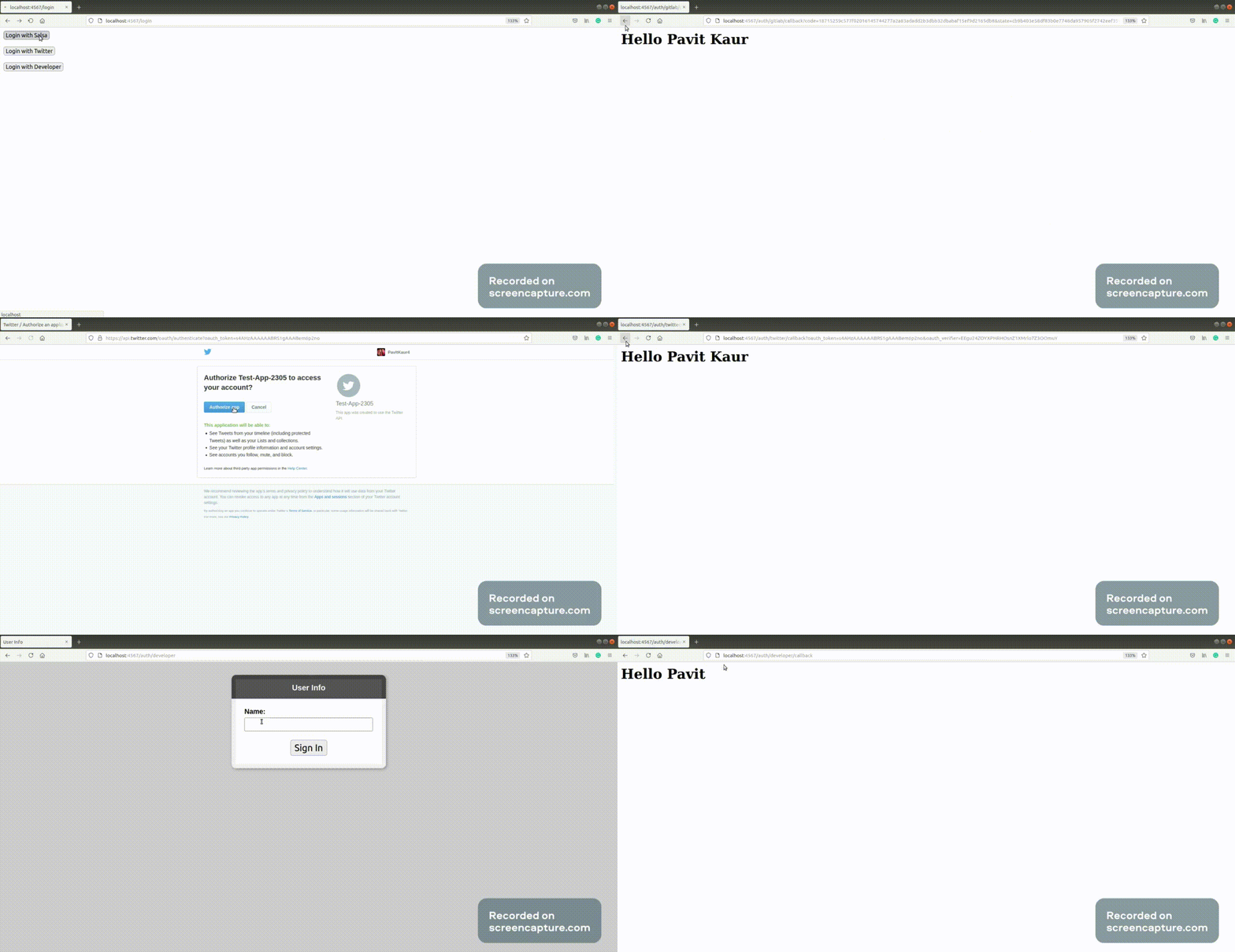 Here, I have already logged into my respective accounts so page for entring credentials does not show up but if the user has not logged into his account, he would be first asked to log in.
For complete code, you can check out: