Molly de Blanc: Updates (2)
I feel like I haven t had a lot to say about open source or, in general, tech for a while. From another perspective, I have a whole lot of heady things to say about open source and technology and writing about it seems like a questionable use of time when I have so much other writing and reading and job hunting to do. I will briefly share the two ideas I am obsessed with at the moment, and then try to write more about them later.
The Defensible-Charitable-Beneficent Trichotamy
I will just jokingly ha ha no but seriously maybe jk suggest calling this the de Blanc-West Theory, considering it s heavily based on ideas from Ben West.
Actions fall into one of the following categories:
Defensible: When an action is defensible, it is permissible, acceptable, or okay. We might not like it, but you can explain why you had to do it and we can t really object. This could also be considered the bare minimum.
Charitable: A charitable action is better than a defensible action in that it produces more good, and it goes above and beyond the minimum.
Beneficent: This is a genuinely good action that produces good. It is admirable.
I love J.J. Thomson example of Henry Fonda for this. For a full explanation see section three at this web site. For a summary: imagine that you re sick and the only thing that can cure you is Henry Fonda s cool touch on your fevered brow. It is Defensible for Henry Fonda to do nothing he doesn t owe you anything in particular. It is Charitable for, say if Henry Fonda happened to be in the room, to walk across it and touch your forehead. It is Beneficent for Henry Fonda to re-corporealize back into this life and travel to your bedside to sooth your strange illness. P.S. Henry Fonda died in 1982.
I don t think these ideas are particularly new, but it s important to think about what we re doing with technology and its design: are our decisions defensible, charitable, or beneficent? Which should they be? Why?
The Offsetting Harm-Ameliorating Harm-Doing Good Trichotamy
I ve been doing some research and writing around carbon credits. I owe a lot of thanks to Philip Withnall and Adam Lerner for talking with me through these ideas. Extrapolating from action and policy recommendations, I suggest the following trichotamy: Offsetting harm is attempting to look at the damage you ve done and try to make up for it in some capacity. In the context of, e.g., air travel, this would be purchasing carbon credits. Ameliorating harm is about addressing the particular harm you ve done. Instead of carbon credits, you would be supporting carbon capture technologies or perhaps giving to or otherwise supporting groups and ecosystems that are being harmed by your air travel. Doing Good is Doing Good. This would be like not traveling by air and choosing to still help the harm being caused by carbon emissions. These ideas are also likely not particularly new, but thinking about technology in this context is also useful, especially as we consider technology in the context of climate change.
I ve been doing some research and writing around carbon credits. I owe a lot of thanks to Philip Withnall and Adam Lerner for talking with me through these ideas. Extrapolating from action and policy recommendations, I suggest the following trichotamy: Offsetting harm is attempting to look at the damage you ve done and try to make up for it in some capacity. In the context of, e.g., air travel, this would be purchasing carbon credits. Ameliorating harm is about addressing the particular harm you ve done. Instead of carbon credits, you would be supporting carbon capture technologies or perhaps giving to or otherwise supporting groups and ecosystems that are being harmed by your air travel. Doing Good is Doing Good. This would be like not traveling by air and choosing to still help the harm being caused by carbon emissions. These ideas are also likely not particularly new, but thinking about technology in this context is also useful, especially as we consider technology in the context of climate change.
 I realised this week that my recent efforts to improve how Consfigurator makes
the fork(2) system call have also created a way to install executables to
remote systems which will execute arbitrary Common Lisp code. Distributing
precompiled programs using free software implementations of the Common Lisp
standard tends to be more of a hassle than with a lot of other high level
programming languages. Executables will often be hundreds of megabytes in
size even if your codebase is just a few megabytes, because the whole
interactive Common Lisp environment gets bundled along with your program s
code. Commercial Common Lisp implementations manage to do better, as I
understand it, by knowing how to shake out unused code paths. Consfigurator s
new mechanism uploads only changed source code, which might only be kilobytes
in size, and updates the executable on the remote system. So it should be
useful for deploying Common Lisp-powered web services, and the like.
Here s how it works. When you use Consfigurator you define an ASDF system
analagous to a Python package or Perl distribution called your consfig .
This defines HOST objects to represent the machines that you ll use
Consfigurator to manage, and any custom properties, functions those properties
call, etc.. An ASDF system can depend upon other systems; for example, every
consfig depends upon Consfigurator itself. When you execute Consfigurator
deployments, Consfigurator uploads the source code of any ASDF systems that
have changed since you last deployed this host, starts up Lisp on the remote
machine, and loads up all the systems. Now the remote Lisp image is in a
similarly clean state to when you ve just started up Lisp on your laptop and
loaded up the libraries you re going to use. Only then are the actual
deployment instructions are sent on stdin.
What I ve done this week is insert an extra step for the remote Lisp image in
between loading up all the ASDF systems and reading the deployment from stdin:
the image calls fork(2) and establishes a pipe to communicate with the child
process. The child process can be sent Lisp forms to evaluate, but for each
Lisp form it receives it will actually fork again, and have its child
process evaluate the form. Thus, going into the deployment, the original
remote Lisp image has the capability to have arbitrary Lisp forms evaluated in
a context in which all that has happened is that a statically defined set of
ASDF systems has been loaded the child processes never see the full
deployment instructions sent on stdin. Further, the child process responsible
for actually evaluating the Lisp form received from the first process first
forks off another child process and sets up its own control pipe, such that it
too has the capacbility to have arbitrary Lisp forms evaluated in a cleanly
loaded context, no matter what else it might put in its memory in the
meantime. (Things are set up such that the child processes responsible for
actually evaluating the Lisp forms never see the Lisp forms received for
evaluation by other child processes, either.)
So suppose now we have an ASDF system

 A new release 0.2.2 of
 I d like to shed some light at the process of Authentication since it s a fundamental building block in creating secure tools that need to communicate with other actors over the network. When tools and/or users interact with one another e.g., through a web browser both ends of the interactions need a way to make sure, they re communicating with the right party. Some bad actor might for example create a web page that looks like your bank s online banking portal.
 However, the growth rate seems to be decreasing. Maybe the low hanging fruit
have all been picked, or maybe we just need to help more people jump in the
automated testing bandwagon.
With that said, we would like to encourage and help more maintainers to add
autopkgtest to their packages. To that effect, I just created the

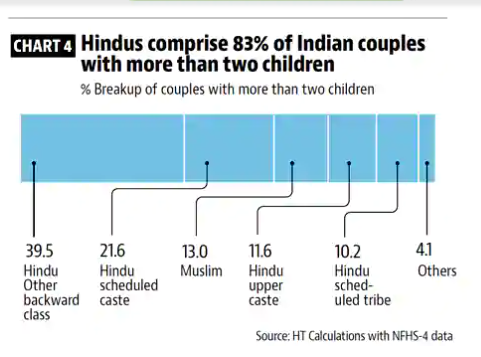 Hindus comprise 83% of Indian couples with more than two child children
 If one wants to, one can read a bit more about the Uttar Pradesh Population bill

 This release cleans up one microscopic wart of an R warning when installing and byte-compiling the package due to a


 Installing a new laptop
New is a 2nd hand Thinkpad T470p laptop that I intend to duel boot with windows.

 Bought BEHRINGER U-PHORIA 2-Channel UMC202HD.
My previous Q1002US mixer seemed to have unreliable right channel bus and was getting worried.
MIDAS preamp, simple to use. Connect it to Linux box and it works as a USB audio device with two channel of input. It has two inputs and hence it will probably look like a stereo recording. If I connect my XM8500 it turns out to be on the left channel, for example.
Looking at the waveforms, the noise floor is lower than Q1002US and I love it so far.
 Despite my best efforts, I often end up with a lot of branches in my
 I will be listing up my work done in the respective tasks.