Search Results: "sf"

24 January 2008

MJ Ray: Getting on the free software bus?

At a recent meeting, someone suggested kitting a bus out with free software as a sort of mobile computing lab for the villages and that it had already been done in Lancashire. I had a bit of a search around found one in Bristol on another computer and and now I don't find it in the search engines again. Anyone know about either of these? Got links? Are they still going?

22 January 2008

Matthew Johnson: Packaging Java with Javatools

I have just uploaded javatools 0.5 to unstable and it is currently waiting in NEW. Anyone wishing to try it out earlier can find source and packages (it's arch: all) at http://www.srcf.ucam.org/~mjj29/javatools/ . Javatools replaces the existing jarwrapper package and also contains programs to help packagers in creating packages for Java programs and libraries. Packaging tools The javahelper package consists of several small programs which make packaging Java programs and libraries easier. They are generally designed to work in the same fashion as the debhelper programs, but start with the jh_ prefix. All of the programs have their command line arguments documented in manpages. jh_build Many Java programs and libraries are distributed without sane build systems. jh_build provides a simple interface for building Java source code into Jars, including setting the appropriate entries in the manifest. In almost all cases all that needs to be done to call jh_build is to set JAVA_HOME and CLASSPATH and then call jh_build with the name of the jar and the directory containing the source.
JAVA_HOME=/usr/lib/jvm/java-gcj
CLASSPATH=/usr/share/java/esd.jar:/usr/share/java/jsch.jar
jh_build weirdx.jar src
   
This command will compile all the Java files under src , set the classpath in the manifest and build it all into weirdx.jar. A couple of other options are worth mentioning. If this jar contains an application rather than a library then the -m or --main option can be used to set the Main-Class attribute in the manifest which will allow the resulting jar file to be be executed jh_build also provides a --clean parameter which should be called in the clean target of debian/rules . jh_libs For library packages Debian Java policy currently requires that the libraries be installed to /usr/share/java in a versioned format and with an unversioned symlink. jh_libs will take a jar and correctly install it. As with debhelper programs, this can either take a jar as a parameter, or read a list of jars from a file in the Debian directory. It also follows the -p , -i and -s semantics of debhelper for selecting which packages to install the jar to. When operating on a package, jh_libs will read the list of library jars from debian/package.jlibs or debian/jlibs . The jlibs file is a list of jars to install, one per line, and works exactly the same as listing them on the command line. Each jar is installed to debian/package/usr/share/java/ in the appropriate versioned and unversioned forms. jh_depends jh_depends works like dpkg-shlibdeps, but for jar files. For each jar in the package it takes the jars on which it depends and finds the packages to which they belong. These are included in the debhelper substvars as $ java:Depends . The control file can then just list that variable which is filled in automatically. This is done by reading the Class-Path attribute from the manifest of each jar. Jar files should include this attribute to prevent applications which use them from needing a full recursive classpath in their startup scripts and to prevent unneccessary transitions when the library changes its dependencies. If the package is not built with jh_build and the upstream build system doesn't set it correctly then jh_manifest can be used to fix this. If the application uses executable jars (see Runtime support below) then jh_depends will also add the appropriate depends on jarwrapper and the correct Java runtime. jh_manifest Many upstream build systems do not set the Class-Path attribute in the jars they create. This leads to several unwanted problems, such as expanding the classpath which applications have to use and introducing unneccessary transitions. They also may not set the Main-Class attribute. Both of these are required for running jars with the -jar parameter. jh_manifest can fix the manifest files of jars. It can either read from a manifest file in the Debian directory or run in a mode which updates all the jars with the CLASSPATH environment variable. The manifest files can either be debian/package.manifest or debian/manifest . The format of this file is a list of jars and indented below each one a list of manifest elements to set:
usr/share/weirdx/weirdx.jar:
 Main-Class: com.jcraft.weirdx.WeirdX
 Debian-Java-Home: /usr/lib/jvm/java-gcj
   
jh_exec The Runtime support section below describes running executable jars directly. jh_exec will scan package directories for jars in the paths, or symlinks to jar from the paths, and ensure that they have been set executable if necessary. jh_makepkg jh_makepkg will create template Debian packages for Java programs and libraries similar to dh-make . It should be run in the source directory and it will create the orig.tar.gz and most of the files in the Debian directory, which need only small changes neccessary to build the package. java-propose-classpath Some upstreams have complicated classpaths which may not be obvious to the packager when using jh_manifest to set the Class-Path attribute. java-propose-classpath will unpack a jar and look at the symbols imported to the class files, then scan all the jars in /usr/share/java . This shouldn't be run in the build since it is slow, and there may be ambiguities that the packager must resolve. It is still very useful for the packager as most of the time it will get it right automatically. Runtime support Javatools also provides some runtime support. Unlike compiled programs, or purely interpreted programs with hash-bang lines, Java programs cannot be directly executed. Many upstreams expect them to be run using java -jar jarname or java classname . This is not generally acceptible in systems which expect to just be able to run the command or launch it from a menu. As a result, many packagers are writing wrapper scripts which just call java with the correct classpath, jar and main class. jarwrapper There is an alternative to wrapper scripts, however. The binfmt_misc kernel module allows the kernel to call out to a program in userspace to execute specific types of file. jarwrapper registers itself as a handler for executable jars. This is done by reading values from the manifest file. In order for executable jars to work the following attributes must or may be defined in the manifest. These attributes can be set using jh_build and jh_manifest . Putting it together This section shows the debian packaging generated by jh_makepkg for an application and a library using jh_build . Sample Library Packaging debian/control
Source: jsch
Section: libs
Priority: optional
Maintainer: Matthew Johnson 
Build-Depends: debhelper (>= 5), javahelper, java-gcj-compat-dev, libzlib-java
Standards-Version: 3.7.3
Homepage: http://www.jcraft.com/jsch/
Package: libjsch-java
Architecture: all
Depends: $ java:Depends , $ misc:Depends 
Description: Java secure channel
 JSch is a pure Java implementation of SSH2. JSch allows you to
 connect to an sshd server and use port forwarding, X11 forwarding,
 file transfer, etc., and you can integrate its functionality
 into your own Java programs. JSch is licensed under a BSD style
 license.
   
debian/rules
#!/usr/bin/make -f
export JAVA_HOME=/usr/lib/jvm/java-gcj
export CLASSPATH=/usr/share/java/zlib.jar
build: build-stamp
build-stamp:
	dh_testdir
	jh_build jsch.jar src
	touch $@
clean:
	dh_testdir
	dh_testroot
	jh_build --clean
	dh_clean
	rm -f build-stamp jsch.jar
install: build
	dh_testdir
	dh_testroot
	dh_clean -k
	dh_installdirs
binary-arch: build install
	# Java packages are arch: all, nothing to do here
binary-indep: build install
	# Create the package here
	dh_testdir
	dh_testroot
	dh_clean -k
	dh_install -i
	dh_installdocs -i
	dh_installchangelogs -i
	dh_javadoc -i --sourcedir=src 
	jh_libs -i
	jh_depends -i
	dh_compress -i
	dh_fixperms -i
	dh_installdeb -i
	dh_gencontrol -i
	dh_md5sums -i
	dh_builddeb -i
binary: binary-indep binary-arch
.PHONY: build clean binary-indep binary-arch binary install
   
debian/libjsch-java.jlibs
jsch.jar
   
Sample Application Packaging debian/control
Source: salliere
Section: misc
Priority: optional
Maintainer: Matthew Johnson 
Build-Depends: debhelper (>= 5), java-gcj-compat-dev, fastjar, 
               libmatthew-debug-java, libcsv-java,
               libitext-java, javahelper
Standards-Version: 3.7.3
Package: salliere
Architecture: all
Depends: $ java:Depends , $ misc:Depends 
Description: Short Description
 Long Description
   
debian/rules
#!/usr/bin/make -f
export JAVA_HOME=/usr/lib/jvm/java-gcj
export CLASSPATH=/usr/share/java/csv.jar:/usr/share/java/debug-disable.jar:/usr/share/java/itext.jar
build: build-stamp
build-stamp:
   dh_testdir
   # Build the package
   jh_build salliere.jar src
   touch $@
clean:
   dh_testdir
   dh_testroot
   jh_build --clean
   dh_clean
   rm -f build-stamp salliere.jar
install: build
   dh_testdir
   dh_testroot
   dh_clean -k
   dh_installdirs
binary-arch: build install
   # Java packages are arch: all, nothing to do here
binary-indep: build install
   # Create the package here
   dh_testdir
   dh_testroot
   dh_clean -k
   dh_install -i
   dh_installdocs -i
   dh_installchangelogs -i
   jh_manifest -i
   dh_link -i
   jh_exec -i
   jh_depends -i
   dh_compress -i
   dh_fixperms -i
   dh_installdeb -i
   dh_gencontrol -i
   dh_md5sums -i
   dh_builddeb -i
binary: binary-indep binary-arch
.PHONY: build clean binary-indep binary-arch binary install
   
debian/salliere.install
salliere.jar usr/share/salliere
   
debian/salliere.links
usr/share/salliere/salliere.jar usr/bin
   

21 January 2008

Gunnar Wolf: World Social Forum 2008 - Another world is possible

A phone call in December made me very proud: A colleague I met thanks to the Espora collective told me she was involved in the Mexican activities for this year's World Social Forum (FSM Mexico 2008 site). The Mexican activities? Yes. This year, the World Social Forum will not be held at one -or several- distinct places, but it will happen globally. There will be activities in tens of countries. The activity program for Mexico (full PDF version) is quite loaded - And I was invited to give one of the talks, this Friday (Jan 25) at 12:00, about Free Software for a Free Society, in the Foro Derecho a la Comunicaci n track.
I am very honored by this invitation! I just spent a couple of hours organizing/going through the topics I will be presenting. I hope to be able to be at some other of the forum's activities, as it just is too important and interesting to miss out!

20 January 2008

Ross Burton: Linux Wakeups

To satisfy an idle curiosity, I installed PowerTOP on my Zaurus to see how many wakeups a second it was doing. It started out at 112w/s, which isn't that great, but Richard told me that I should give our 2.6.24-rc8 kernel a go, because it has NO_HZ defined. To our surprise it booted, and to cut a long story short my Zaurus is currently idling at 5.4 wakeups per second, and 11% of those are about to be patched out of the kernel.

19 January 2008

Theodore Ts'o: Why I purchased the Sony PRS-505 Reader

Although I lot of people have been lauding the Kindle, I recently decided to go with the Sony PRS-505 instead. Yes, the Kindle has built-in EVDO access, and the ability to buy books without a computer, or even browse the web; and yes, the Sony has once again demonstrated it can’t create a compelling 21st century computer application to save its life. However, it had a few things that at least for me, made a better choice for me than the Kindle:
  1. The Sony is thinner — I want to be able to slip it into my laptop case and have it take the absolute minimum amount of space.
  2. The Sony simply looks much more elegant than the Kindle; steel with a leather cover simply looks a lot better than white, cheasy plastic.
  3. I’m not interested in buying a lot of DRM’ed ebooks; ergo, I won’t be buying may books from either Sony or Amazon’s web sites. It is highly likely that within 2 years I will be buying a more advanced eBook reader, possibly one with color, and I don’t want to be locked into a single format where I have to go and repurchase all of my books just because some the latest and greatest eBook reader uses an incompatible DRM technology from whatever Sony or Amazon has used.
  4. The Sony is $100 cheaper. Given that something better will be available within 2-3 years at the very most, and possibly sooner, I’m just not interested in spending $400 on a first generation prototype.
  5. Perhaps the most important, the Sony has the really, really good open source support. Kovid Goyal’s libprs500 project supports the Sony PRS-500 and PRS-505, and has very good version tools, allowing people to convert eBooks previously stored in HTML, PDF, TXT, Microsoft Reader (.lit), IDPF/Open eBook (.epub) into Sony’s format. And with a little bit of work, it does a very, very good job with the conversion. Better yet, its ability to convert multiple HTML pages into a single eBook, with credible table of contents, means that libprs500 can pull down the New York Times, the Economist, etc., automatically format it into a single eBook which you can save onto your Sony Reader, and then read it while you are on the airplane. No muss, no fuss. I can also take various books that are available on the web as HTML and also convert them into an eBook which can be used by the Sony Reader very easily.
This last point is I believe one of the best reasons why the Sony Reader will be able to compete very successfully with the Kindle. The libprs500 software is written as a python application, and it will work on Windows, Linux, and MacOS — and its GUI user interface is far better than the truly pathetic Sony Connect software. Score one for Open Source! In my opinion, Sony should send a very nice gift certificate to Kovid as a thank you; his open source project has added an immeasurable amount of value to their product. The only thing that you can’t do using the libprs500 software is buy DRM’ed books which are locked to the Sony Reader — but that isn’t something that many people will be particularly interested in, I suspect. OK, I did buy Pillars of the Earth, which was available on the Sony site for $6 dollars — hmm, cheaper than Amazon’s $9.99 — but that was an investment I was willing to flush down the toilet when the PRS-505 becomes obsolete, mainly so I could test what buying a DRM’ed book would be like from the Sony web site. But I probably won’t be buying many books with DRM that way. On the other hand, I am quite willing to spend quite a bit more money on non-DRM’ed books from publishes such as Baen Books. Here’s to the hope to the publishing industry figures things out faster than RIAA’s member companies. In the meantime, I will be mostly pretending that the both the Sony and Amazon eBook stores with their proprietary DRM’ed books don’t exist…

16 January 2008

Mark Brown: dpkg symbol versioning

About a month ago I added symbol version information to the zlib package, allowing dpkg-shlibdeps to calculate more relaxed dependencies for packages using the library. The results have been very satisfying so far - of the 1784 packages depending on zlib1g on amd64: Of course, zlib is a particularly good use case for this - both API and ABI are extremely stable and most of the changes in interface are in rarely used features - but it’s still good to see it working in practice. I don’t need to worry nearly so much as I would have done previously about keeping other packages out of testing. If you maintain a library written in C I would encourage you to take a look at implementing this, it’s very straightforward. Libraries written in other languages may cause more difficulty. There are some automatically generated symbol files in mole which provide a good starting point (I didn’t use them since upstream already had a more exact list of versions at which symbols were introduced) and support is already present in debhelper. The main things to watch out for when using the mole data are backwards compatible ABI changes which don’t just add new symbols (for example, if new values are accepted by a function) and variations between architectures. Kudos to Rapha l for all the work he’s put into this.

15 January 2008

Joey Hess: high country

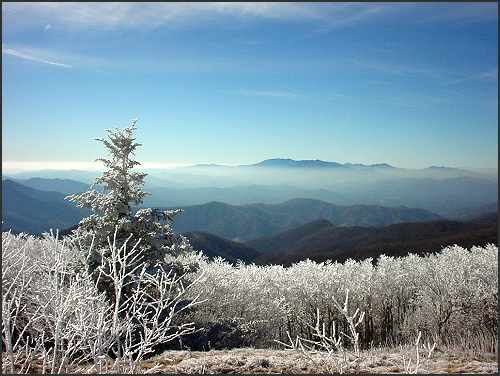
The past few weekends I've been drawn to the mountains. Two weeks ago I went up on Holston mtn after the snow had melted down here, and enjoyed a snowy hike on the AT. From there I drove over to Shady valley, and found the only gas station I've seen with a wood stove in it. I've never enved a gas station attendant their workplace before, but that was nice. Last weekend Maggie and I went up to Roan mtn. On road up we began to get glimpses of the peak in between the fog, and it looked strange, almost like there was snow, but not as white as you'd expect. While the ground was clear of snow, the windward side of each pine, rhododendron, and leaf of grass in the balds was outlined in a thick coat of frost. Gorgeous. As a sheltered Southerner, I've never seen anything like it, but I think it was soft rime, formed from the fog. We wished we'd brought a camera, but thanks to the magic of the 'net, here's a similar rime on Roan: rimeonroan.jpg
14 January 2008

MJ Ray: BeCTA advice, DfES e-Consultation

You may have seen the British Educational Communications and Technology Agency (Becta) advising:-
"Schools and colleges should make pupils, teachers and parents aware of the range of free-to-use products (such as office productivity suites) that are available, and how to use them,"
in reports like http://www.informationweek.com/windows/showArticle.jhtml?articleID=205602879&cid=RSSfeed_TechWeb There's also a consultation on "Home Access to Technology" running until Wednesday 2 April at http://www.dcsf.gov.uk/consultations/conDetails.cfm?consultationId=1522 where you may like to suggest that free software is a good route forwards. (Thanks to Christopher Dawkins for informing ALUG.) Are there other related things we could be doing? (Comments form goes to fsfe-uk.)

12 January 2008

Holger Levsen: xorg backports for etch updated

I'm uploading new backports of xorg for etch at this moment. They are based on what was on unstable on the 9th on January, which was xorg 1:7.3+10. Thanks to XSF for their great work!

I've also included a backport of Andres Salomons xserver-xorg-video-amd package, as the one in sid is not uptodate enough for the OLPC laptop.

11 January 2008

Holger Levsen: about Debian on the OLPC and OLPC Europe and more

Originally I planned to post this with the title "Last night I slept with 300 people" but this night happened two weeks ago... It was the night before the fourth and last day of the 24C3 were I slept in the gym :-) Actually I also planned to blog on the third day but then this day turned out to be really busy... and then I arrived home on new years eve and suddenly it was a week later and now it's the 10th of January. Time flies when you're having fun. And as you might have noticed it's not even the 10th anymore...

Timewarp back to the chaos communication congress! I think it's safe to say that the Debian booth at the 24C3 was a success. It was a nice meeting (and storage) point for Debian people, we collected quite some donations for t-shirts and stuff (the exact amount needs to be examined still) and we were able to help various users and contributors answering Debian specific questions of both kinds: how to install/configure/fix foo and packaging and other development questions from a number of people.. And we had a babelbox setup which was much better understood and perceived, once I added a sign explaining it :-)

Thanks a lot to the 24C3 organizers and the angels (thats how the congress volunteers are called) for making such a smooth and interesting conference as well as giving such a great space to the Debian booth! And equally thanks a lot to all the people operating our booth! For those who are interested to attend next year: roughly 64 talks were held in english, and 26 in german. I saw about five events live...


The sign hung for about an hour unmodified...

On the third day of the congress we had an OLPC.de meeting, which was quite productive and resulted in us founding OLPC Germany this monday. In the aftermath of this meeting I came up with the idea of having an OLPC Europe event at FOSDEM in Brussels in February, which by now has been accepted and scheduled by the FOSDEM organizers. Yay! So if you are in Europe and involved or interested in the OLPC, please mark the 23rd of February 15-17 localtime in your calendar :-) The idea of these projects is probably best summarized with "think global, act local and global", for more detail please read our vision. (And keep in mind this is in its very early stages.) OLPC Europe should also become an interface for all those european OLPC efforts which have been popping up recently and which all take up ressources in Cambridge, the OLPC "mothership", taking ressources away from the children of the world.

Then on the last day of the 24C3 congress I also gave the DebConf7 "thank you, Sponsor"-package to those four people from the freifunk community, who helped us out with accesspoints for Edinburgh. Much to my surprise and joy, they were really happy about it! Funnily two of those four are also among the three OpenWRT developers who ported OpenWRT to the OLPC laptop, which I borrowed to them somewhat in return :-) And now we work together in OLPC.de and .eu. Networking is sometimes really really fun.

Fast forward to 2008. Two days ago I finanlly had the time to to run etch, lenny and sid on the OLPC laptop (with wireless (including WPA), xorg and sound working and dualbooting with the original fedora install) and then yesterday I've created a usbstick which successfully booted a "d-i prototype". Yay! And best of all (for me), most of the actual work was done by other people, I just had to collect the pieces. My next steps will be documenting what I did and prepare a d-i image which actually works. I don't have pics yet (it's Debian running on a laptop, I guess you can imagine this), so for now I will just post another picture I received some three months ago and which made me incredibly happy at that time:


When I have a working d-i running on it, I'll post more pics.

9 January 2008

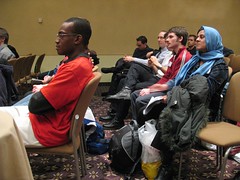
Simon Law: DemoCamp CUSEC 2


Audience
Originally uploaded by sfllaw.
It s been a long time since I ve written about our local unconferences, but a neat one coming up is DemoCamp CUSEC 2. It s attached to the Canadian Undergraduate Software Engineering Conference, which is being held in Montr al again. Last year, I did a demonstration on how to cook an omelette, with it being a metaphor for software engineering. This year, I m going to do something more prosaic and run a round of Powerpoint karaoke, under the guise of getting people to practise their presentation skills. Or it will be a convincing argument against its use. Show up if you can! Present something you ve been working on! (There are still some slots left.) It ll be exciting. DemoCamp CUSEC 2
Thursday, 17 January 2008
19:00 21:00
Centre Mont-Royal
2200 rue Mansfield
Free admission
( Sign up Google Maps )

Eddy Petrișor: my laptop is back

Yesterday I got my laptop back. It was in service since the 6th of December.

They replaced the battery, and although it looked like the built-in charge indicator was defect, actually the button on this battery is buried deeper than it was on the previous one and I have to press really hard on it to trigger it.

According to the tests made yesterday night, this battery holds for about 2.5-3 hours when playing music. Also it has 96% of its designed capacity. I guess is OK enough since I don't want to be spared from my laptop anymore.

Next on the agenda:
BTW, I still hold to my opinion that Dell and Emag suck, although I might buy desktops from Dell, laptops are a no-no until they fix their broken batteries and their broken "1-year warranty for batteries" policy.

[1] I bought a new NSLU2 after I left my laptop in service and it has been waiting since then to run the Debian Arm EABI (armel) port

7 January 2008

MJ Ray: Global Chat / Is EC to strengthen DRM/copy-control and require anti-P2P filters at ISPs?

I got this from a worker of Free Software Foundation Europe today:-

Quote
http://ec.europa.eu/avpolicy/other_actions/content_online/index_en.htm

The European Commission wants to simplify multi-territory licensing of
works, and in doing so is considering setting policy for:

* Interoperability and transparency of DRM
* Harmonised length of copyright
* Unauthorised up- and downloading

Key info from the EU release:-
"All stakeholders are invited to take position on the elements listed
in the Annex to the Communication by 29/02/2008."
"This Communication is launching a focused public consultation in
preparation for the adoption of a Recommendation on Creative Content
Online by the Council and the European Parliament, and is creating a
stakeholders' discussion and cooperation platform, the so-called
 "Content Online Platform", to initiate the work on forthcoming
challenges."

Communication on Creative Content Online in the Single Market
English Deutsch French pdf

6 January 2008

David Nusinow: First In A Totally Disconnected Series of Posts

I want to echo what Brice has said so well already. X is full of interesting problems and important things to work on. When you consider the free software that's out there, very little of it comes close to the importance of X in your day to day life. When we've done our job well, you don't even think about it because it just works, but when X fails it's like a minor catastrophe. Working on the kernel is largely considered to be something glorious and grand, but people tend to ignore X even though it plays very much in the same domain as the kernel. So working on X you not only get to play with interesting problems that are similar to the ones that the kernel folks get to play with, but you also get to work on software that's critically important and makes a significant difference in people's day to day lives.

Furthermore, X.org is a great organization to work in. The number of core contributers is very few (maybe 20 all told) so everyone knows who everyone else is and people are willing to help others out by answering questions about how things work. Reflecting this, the XSF has turned in to a fantastic team over the past few years, and it's one I couldn't be prouder to be a part of. Julien and Brice are doing insanely fantastic work, and we're constantly pushing to do a better job at just about everything, from collaborating with Ubuntu to using the best cutting edge tools out there for our work.

Despite all this though, as Brice said, we're overwhelmed by everything. We're still carrying hundreds of bugs in the Debian BTS alone, most of which we'll never have a chance to look at again. As mentioned elsewhere on planet upstream is totally swamped as well. There's just too many critical projects that need doing (new drivers, fixed drivers, adding capabilities to the server, and that's ignoring day to day needs like documentation and patch review) and too few people to do them effectively. We have a wonderful set of things to do and a great group of people to mentor motivated people to do them, and yet we're still lacking contributers to this critically important set of software.

So as Brice said, if you want to get involved in something that's essentially important to Linux and Free Software, if you want to get involved in something with great problems and really fantastic opportunities to make a difference, you can't do much better than getting involved in X. Brice's method of getting involved in processing bug reports is a perfect way to start. Another is to write much needed documentation. Another is to simply help the XSF maintain some small piece of the Xorg stack, be it a driver for some hardware that you own (the XSF only really runs two or three video drivers collectively so we badly need driver maintainers), or just start poking at something you're curious but mystified about like how mesa or the X server work. There's no magic to any of it, and while it can get complicated I promise that you will become a better coder or maintainer by working on something as challenging as X. You don't have to understand it all from the start, just picking a small thing to work on will be greatly appreciated. So drop us a note on the debian-x list or drop in to #debian-x on oftc and we'll help you get going.

Brice Goglin: Debian X.org notes - One year of X.org BTS maintenance

One year ago, I started triaging the X.org BTS (by replying to #163057 iirc). I closed almost 1600 bugs since then, bringing the remaining ones to about 900 today. I am kind of proud of Ender's graph (when the URL works...). Even if the actual BTS triaging is done now, I still try to take care of X.org bugs. And it's not that easy unfortunately... Almost 650 new bugs were opened this year against X.org packages. 250 of them are already fixed, more than one hundred have been forwarded upstream. It doesn't mean that 300 bugs still apply to our packaging. Most of our X packages are simple (apart from the xserver-xorg postinst mess that David is cleaning). But, there are lots of problems that we have no clue about, or that miss some info because people can't upgrade to unstable, ... I am sometimes tired of getting so many bugs without being able to do much about them. Maybe because upstream doesn't care enough about some problems (lots of drivers are unmaintained and get broken more and more when new features are added for a couple more important drivers). So, I sometimes tend to concentrate my work on what I like and trust. Some people noticed that xserver-xorg-video-ati get very often updated these days (6 uploads in the last 20 days). Of course, the reason is that I own a r300 board :) But also because its upstream devs are very good, it's very nice and easy to work with them. Of course, we have a lot of work and few people to do it. That's kind of sad since playing with X is very interesting. Most users are very happy when discovering things like RandR 1.2 or Compiz. Getting a chance to test them early and understand their internals is very cool. But, as said in some other posts, hacking on X.org doesn't seem to look fun. If you're interested anyway, taking care of the bugs is a very easy way to learn a lot. I had no clue about X one year ago and I learned a lot by taking care of the BTS. I would be glad to get some help now :)
(Permanent link) 

5 January 2008

Jeff Bailey: Disabled gnu.org email address

My next step in reducing the spam traffic in my life is removing my @gnu.org email address. This is one that has been good for me for 13 years but has largely been useful only as a spam trap. In fairness to the FSF, their spam filters have gotten really quite good in the last 5 years or so, but there's zero signal on that account so I may as well squish it.

I've set my alias in /com/mailer/aliases to :fail: with a 551, but the multi-level relay on monty-python seem to not respect that. I've filed a ticket, so that anyone trying that will get a proper message to say where to follow-on to.

The efforts seems to be making a difference. At the beginning of December, I had just over 11 thousand messages in my last-30-days spam folder. Right now it's 8925.

Chris Lamb: Debian packages sorted by build-time and build-space

Sorted by build-time
  1. openoffice.org - 7h02
  2. gcc-4.2 - 5h58
  3. gcc-snapshot - 4h17
  4. gcc-4.1 - 3h30
  5. ghc-cvs - 3h16
  6. linux-2.6 - 2h34
  7. gpc-4.1 - 2h25
  8. gclcvs - 2h21
  9. glibc - 2h15
  10. python2.5 - 2h09
  11. axiom - 2h07
  12. gnat-4.1 - 2h06
  13. gcj-4.1 - 1h52
  14. gromacs - 1h51
  15. mysql-dfsg-5.0 - 1h46
  16. acl2 - 1h44
  17. gcj-4.2 - 1h34
  18. ghc6 - 1h33
  19. python-kde3 - 1h32
  20. aegis - 1h25
Sorted by build-space
  1. openoffice.org - 7217MB
  2. nel - 2773MB
  3. gcc-snapshot - 2499MB
  4. koffice - 2247MB
  5. wxwidgets2.6 - 2151MB
  6. linux-2.6 - 2150MB
  7. webkit - 2059MB
  8. glibc - 2028MB
  9. xulrunner - 2023MB
  10. iceape - 2007MB
  11. boost - 1983MB
  12. mesa - 1943MB
  13. gcc-4.2 - 1943MB
  14. qt4-x11 - 1915MB
  15. python-kde3 - 1847MB
  16. gcc-4.1 - 1828MB
  17. gcj-4.1 - 1783MB
  18. eclipse - 1763MB
  19. iceweasel - 1727MB
  20. gcj-4.2 - 1722MB
No real surprises here. The data was collected from the Buildd logs using the latest “maybe-successful” i386 or amd64 build. Factoring into that the varied nature of the buildd machine specifications make this is data somewhat unreliable… It would be nice if someone could obtain (and post) results from a more, umm, controlled environment.

4 January 2008

Andrew Pollock: [life] Post-op, Day 1

I just called the ICU for an update before I head in for the day. She's apparently doing well, and can probably transfer out of the ICU later today, although apparently beds are tight in the ward. Update 1 I've managed to find somewhere with EVDO access, so I can update this in between ICU visits. She's looking really good this morning. She asked for some 7up, because her throat's really dry and sore from being intubated. She had something to eat at 6am. She hasn't had much sleep though, because the ICU has been too busy. She's getting turned every two hours, which isn't terribly enjoyable, but her pain is manageable. She's such a trooper. Update 2 Sarah's continuing to do well. The nurse sat her up on the side of her bed for lunch, and had half a roast beef sandwich and some fruit. Her throat's still pretty sore, and she's really preferring the liquids. Apparently her blood sugar is a bit high (something that can happen post-operatively) so they gave her some insulin before lunch. Getting her back down again looked a bit painful, as did shuffling her up the bed. Apparently there's a bed with her name on it in the intermediate ICU, so as soon as the doctor's order comes through to move her, she'll be moved. They'll also take out the central line and one of the peripheral lines at that time. Update 3 Last update today. Sarah was moved out of the ICU and into intermediate intensive care (where she'll remain until she's discharged) at 2:25pm. She got a private room again, which is very fortunate. It's nice and quiet, so she should get a good night's sleep. I can stay the night as well. One of the doctors from the team looking after her came by at about 5:50pm. She said the chest drain can come out in the next day or two. They took another x-ray this afternoon to check on some pleural effusion that they were worried about. When we asked the doctor about it this evening, she described it more as trapped air than trapped fluid, and that it should work itself out in the next few days. The x-ray showed that it was "stable", in that it hadn't really changed from the x-ray in the morning. They'll take another x-ray tomorrow morning to see how it's going. Other than that, she's continuing to do really well. The pain seems manageable. She got up into a chair for dinner (with help). They didn't give her any more insulin beforehand, so I presume her blood sugar is settling down again.

1 January 2008

Andrew Pollock: [life] Home again

Well, this is actually our fourth day home, I just haven't had the time or inclination to write anything until now. We had an uneventful trip home on the 29th. I think I'm getting more used to these long-haul flights, the time went pretty quickly. There is much to be said for Qantas' in-flight entertainment system. And Melatonin tablets. We had a good, jam-packed three weeks in Australia. We landed on a Sunday morning, at around 8am. Sarah's Aunty Glenda picked us up from the airport, and we stayed with her for the week. We caught up with two sets of friends on the Sunday, and managed to last until the evening without crashing. I spent the week working from the Sydney office. Jetlag is a wonderful thing for making me into a temporary morning person. I was at my desk by 8am every day. I'd forgotten how early the sun got up in Australia in the summer time. Monday in Sydney is Sunday in California, so Mondays are blissfully quiet and great for getting things done. The beauty of getting in by 8am meant I still caught Mountain View from about about 1pm onwards for the rest of the week, so that was good. I got a lot done while I was in the Sydney office. On Tuesday morning we went to the US Consulate to sort out Sarah's visa renewal. It was a no-brainer, and our passports were back at my parent's place within 48 hours. Thursday night was the Sydney office Christmas party. The Friday night we flew out of San Francisco was the Mountain View office one, so it was good to be able to catch a party somewhere. Got to love working for an international company. Photos here. Sarah spent the week in Sydney pottering around and catching up with relatives. Every night was booked out with dinner with friends. Photos from the week in Sydney are here. Next stop was Canberra for four days. We stayed with different friends each night. We'd really come to appreciate how bug-free California is. Apparently Canberra was having a particularly bad fly season this summer. They were just about carrying us away. We stayed a night with Rusty and Alli on their farm out at Majors Creek, which is always a nice getaway. It was great to see how the place is coming along. We won't recognise it next time we're there. At Canberra airport on the way to Brisbane, totally by chance, we bumped into our old upstairs neighbour Melissa, from when we lived in Turner. Her and her husband and kids moved to Brisbane around the time we moved from Turner to Ainslie, and we hadn't done a very good job of keeping in contact. To cap it off, she ended up sitting in the seat across the aisle from us on the plane, so we had a good old chinwag for an hour and half. Photos from Canberra are here. Then we got to Brisbane and did the family thing. It was good to see my family again, and show them all of the photos of Joshua and just spend time with them. Brisbane traffic has degenerated significantly in the last 12 months. The Gateway Arterial Motorway near the airport is a complete mess. There's a lot of construction going on for the new cross-city tunnel they're putting in. Probably the highlight of the trip was the mass outing to Australia Zoo. It's been a couple of years since we've been there, and boy, does that place just keep getting better. My hot tip is to save yourself a fortune, and a precious couple of hours, and avoid purchasing food from the catering area. It's sheer bedlam, and very expensive. The zoo is getting so big, that you really need all of 9am to 4:30pm to see it all properly, so you can save a lot of time by bringing your own lunch, or getting a pass-out and getting lunch from somewhere nearby. Photos from the zoo trip here The weather in all parts of Australia that we saw was pretty grey and wet for the most part. I'm not complaining, we need all the water we can get. It was sounding like most of the rain was falling outside the catchment areas though. It was nice to see Canberra not looking all brown and dry though. Photos from the time in Brisbane here. In a brief fit of spontaneity we decided to sign up for Qantas Club memberships. I'm really kicking myself for not getting lifetime membership back in 1999 when I sold my share of our business. I've done so much travelling since then, and it'd have really come in handy. As it happened, we got good use out of it this trip. The flight from Brisbane to Sydney was at 8:15am, so we left my parents' place at about 6:15am, sans breakfast or showers, and breakfasted at the Brisbane airport, and showered in the Sydney airport, as we had about 5 hours to kill until our flight to San Francisco departed.

31 December 2007

Joerg Jaspert: Circus FlicFlac

i just got back from a FlicFlac Show. It was a Christmas present for my mother, from my sister, her husband and myself. We did something similar last year, but this time I just have to blog about it. If you happen to be near (near as in about 200km distance) of a place where they perform - go and visit it. It’s definitely worth it. (If I would have to chose between a Debian meeting and going there - I would go there again. If that isn’t enough recommendation, I dont know what is).

Next.

Previous.