Review:
Regenesis, by C.J. Cherryh
| Series: |
Cyteen #2 |
| Publisher: |
DAW |
| Copyright: |
January 2009 |
| ISBN: |
0-7564-0592-0 |
| Format: |
Mass market |
| Pages: |
682 |
Regenesis is a direct sequel to
Cyteen, picking up very shortly after the end of that book and
featuring all of the same characters. It would be absolutely pointless to
read this book without first reading
Cyteen; all of the emotional
resonance and world-building that make
Regensis work are done
there, and you will almost certainly know whether you want to read it
after reading the first book. Besides,
Cyteen is one of the best
SF novels ever written and not the novel to skip.
Because this is such a direct sequel, it's impossible to provide a good
description of
Regenesis without spoiling at least characters and
general plot developments from
Cyteen. So stop reading here if
you've not yet read the previous book.
I've had this book for a while, and re-read
Cyteen in anticipation
of reading it, but I've been nervous about it. One of the best parts of
Cyteen is that Cherryh didn't belabor the ending, and I wasn't sure
what part of the plot could be reasonably extended. Making me more
nervous was the back-cover text that framed the novel as an investigation
of who actually killed the first Ari, a question that was fairly firmly in
the past by the end of
Cyteen and that neither I nor the characters
had much interest in answering.
Cyteen was also a magical blend of
sympathetic characters, taut tension, complex plotting, and wonderful
catharsis, the sort of lightning in a bottle that can rarely be caught
twice.
I need not have worried. If someone had told me that
Regenesis was
another 700 pages of my favorite section of
Cyteen, I would have
been dubious. But that's exactly what it is. And the characters only
care about Ari's murderer because it comes up, fairly late in the novel,
as a clue in another problem.
Ari, and Justin, are back in the safe laboratory environment of Reseune,
safe now that politics are not trying to kill or control them. Yanni has
taken over administration. There is a general truce, and even some deeper
agreement. Everyone can take a breath and relax, albeit with the presence
of Justin's father Jordan as an ongoing irritant and hostile factor. But
broader Union politics are not as stable: there is an election in progress
for the Defense councilor that may break the tenuous majority in favor of
Reseune and the Science Directorate, Yanni is working out a compromise to
gain more support by turning a terraforming project loose on a remote
world, and Ari isn't sure she likes that Eversnow idea at all. Then, just
as things seem to be turning Reseune's way, politics and interpersonal
relationships abruptly deteriorate, tensions with Jordan sharply worsen,
and there may be moles in Reseune's iron-clad security. Navigating the
crisis while keeping her chosen family safe will once again tax all of
Ari's abilities.
The third section of
Cyteen, where Ari finally has the tools to
take fate into her own hands and starts playing everyone off against each
other, is one of my favorite sections of any book. If it was yours as
well,
Regenesis is another 700 pages of exactly that. As an
extension and revisiting, it does lose a bit of immediacy and surprise
from the original, and
Regenesis is much less concerned with the
larger questions of azi society, the nature of thought and personality,
loyalty and authority, and the best model for the development of human
civilization. It's somewhat less far-thinking and more of a political
thriller. But it's a political thriller that recaptures much of the drama
and tension of
Cyteen and is full of exceptionally smart and
paranoid people thinking through all angles of a problem, working fast on
their feet, and successfully navigating tricky and treacherous political
landscapes.
And, like
Cyteen but unlike others of Cherryh's novels I've read,
it's a novel about empowerment, about seizing control of one's
surroundings and effectively using all of the capability and leverage at
one's fingertips. That gives it a thrilling catharsis that's almost as
good as
Cyteen.
It's also, like its predecessor, a surprisingly authoritarian novel. I
think it's in that, more than anything else in these books, that one sees
the impact of the azi.
Regenesis makes it clear that the story is
set, not in a typical society, but inside a sort of corporation, with an
essentially hierarchical governance structure. There are other SF novels
set within corporations (
Solitaire comes
to mind), but normally they follow peons or at best mid-level personnel or
field agents, or otherwise take the viewpoint of the employees or the
exploited. When they follow the corporate leaders, the focus usually
isn't down inside the organization, but out into the world, with the
corporation as silent resources on which the protagonist can draw.
Regenesis is much more of a balance. It's about decisions of the
future of humanity that characters feel they can make undemocratically (in
part because they or their predecessors have effectively engineered the
opinions of the democratic population), but it's also about how one
manages a top-down organization. And, most vitally, how one secures it.
Reseune is, as in the previous novel, a paranoid's suspicions come true;
everyone is out to get everyone else, or at least might be, and the level
of omnipresent security and threat forces a close parsing of alliances and
motivations that elevates loyalty to the greatest virtue.
In
Cyteen, we had long enough with Ari to see the basic shape of
her personality and her slight divergences from her predecessor, but her
actions are mostly driven by necessity.
Regenesis gives us more of
a picture of what she's like when her actions aren't forced, and here I
think Cherryh manages a masterpiece of subtle characterization. Ari has
diverged substantially from her predecessor without necessarily realizing
it, but in ways that are firmly grounded in the differences she found or
created between her life and the first Ari's. Specifically, she has
friends, confidents, and a community, which combined with past trauma has
made her fiercely, powerfully protective, and it's that protective
instinct that weaves the plot together. It's probably the most
significant way in which so much of the events of
Cyteen and
Regenesis are driven by people's varying reactions to trauma.
If you, like me, loved the last third of
Cyteen, read this, because
Regenesis is more of exactly that. Cherryh finds new politics, new
challenges, and a new and original plot within the same world and with the
same characters, but it has the same feel of maneuvering, analysis, and
decisive action. You will, as with
Cyteen have to be comfortable
with pages of internal monologue from really smart people thinking through
all sides of a problem. If you didn't like that in the previous book,
avoid this one; if you loved it, here's the sequel you didn't know you
were waiting for.
Rating: 9 out of 10
 Installing an operating system
When you want to install a new operating system, the first thing to do is to
get an installer medium, which usually involves two steps: downloading an
image, and writing it to a medium. There are two major types of media usable
for that purpose: optical discs and USB sticks. There used to be a third one,
floppy disks, but it is no longer used, and it was conceptually very similar to
USB sticks.Power-user
If you are a power-user, you probably use USB stick, to be able to reuse
them and because they are easier to carry. For you, writing an optical disc or
an USB drive is almost the same:

 I have been looking at backup solution for the last few days and I am stuck, so I am asking for pointers or suggestions.
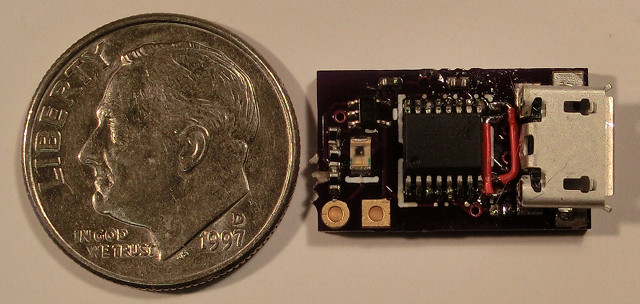
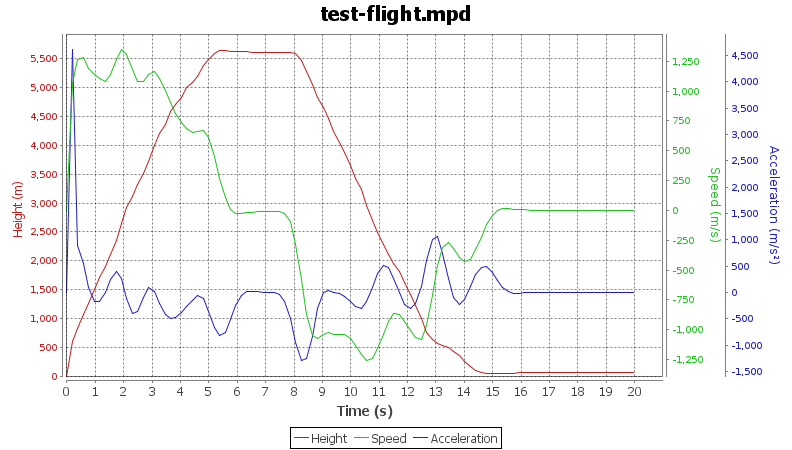
 MicroPeak Serial Interface Flight Logging for MicroPeak

 Doing my regular news scan, I stumbled across this:
 after having used