Search Results: "mak"

19 November 2015

Matthew Garrett: If it's not practical to redistribute free software, it's not free software in practice

I've previously written about Canonical's obnoxious IP policy and how Mark Shuttleworth admits it's deliberately vague. After spending some time discussing specific examples with Canonical, I've been explicitly told that while Canonical will gladly give me a cost-free trademark license permitting me to redistribute unmodified Ubuntu binaries, they will not tell me what Any redistribution of modified versions of Ubuntu must be approved, certified or provided by Canonical if you are going to associate it with the Trademarks. Otherwise you must remove and replace the Trademarks and will need to recompile the source code to create your own binaries actually means.

Why does this matter? The free software definition requires that you be able to redistribute software to other people in either unmodified or modified form without needing to ask for permission first. This makes it clear that Ubuntu itself isn't free software - distributing the individual binary packages without permission is forbidden, even if they wouldn't contain any infringing trademarks[1]. This is obnoxious, but not inherently toxic. The source packages for Ubuntu could still be free software, making it fairly straightforward to build a free software equivalent.

Unfortunately, while true in theory, this isn't true in practice. The issue here is the apparently simple phrase you must remove and replace the Trademarks and will need to recompile the source code. "Trademarks" is defined later as being the words "Ubuntu", "Kubuntu", "Juju", "Landscape", "Edubuntu" and "Xubuntu" in either textual or logo form. The naive interpretation of this is that you have to remove trademarks where they'd be infringing - for instance, shipping the Ubuntu bootsplash as part of a modified product would almost certainly be clear trademark infringement, so you shouldn't do that. But that's not what the policy actually says. It insists that all trademarks be removed, whether they would embody an infringement or not. If a README says "To build this software under Ubuntu, install the following packages", a literal reading of Canonical's policy would require you to remove or replace the word "Ubuntu" even though failing to do so wouldn't be a trademark infringement. If an @ubuntu.com email address is present in a changelog, you'd have to change it. You wouldn't be able to ship the juju-core package without renaming it and the application within. If this is what the policy means, it's so impractical to be able to rebuild Ubuntu that it's not free software in any meaningful way.

This seems like a pretty ludicrous interpretation, but it's one that Canonical refuse to explicitly rule out. Compare this to Red Hat's requirements around Fedora - if you replace the fedora-logos, fedora-release and fedora-release-notes packages with your own content, you're good. A policy like this satisfies the concerns that Dustin raised over people misrepresenting their products, but still makes it easy for users to distribute modified code to other users. There's nothing whatsoever stopping Canonical from adopting a similarly unambiguous policy.

Mark has repeatedly asserted that attempts to raise this issue are mere FUD, but he won't answer you if you ask him direct questions about this policy and will insist that it's necessary to protect Ubuntu's brand. The reality is that if Debian had had an identical policy in 2004, Ubuntu wouldn't exist. The effort required to strip all Debian trademarks from the source packages would have been immense[2], and this would have had to be repeated for every release. While this policy is in place, nobody's going to be able to take Ubuntu and build something better. It's grotesquely hypocritical, especially when the Ubuntu website still talks about their belief that people should be able to distribute modifications without licensing fees.

All that's required for Canonical to deal with this problem is to follow Fedora's lead and isolate their trademarks in a small set of packages, then tell users that those packages must be replaced if distributing a modified version of Ubuntu. If they're serious about this being a branding issue, they'll do it. And if I'm right that the policy is deliberately obfuscated so Canonical can encourage people to buy licenses, they won't. It's easy for them to prove me wrong, and I'll be delighted if they do. Let's see what happens.

[1] The policy is quite clear on this. If you want to distribute something other than an unmodified Ubuntu image, you have two choices:
  1. Gain approval or certification from Canonical
  2. Remove all trademarks and recompile the source code
Note that option 2 requires you to rebuild even if there are no trademarks to remove.

[2] Especially when every source package contains a directory called "debian"

comment count unavailable comments

Miriam Ruiz: Projects, Conflicts and Emotions

The Debian Project includes many people, groups and teams with different goals, priorities and ways of doing things. Diversity is a good thing, and the results of the continuous interaction, cooperation and competition among different points of view and components make up a successful developing framework both in Debian and in other Free / Libre / Open Source Software communities. The cost of this evolutionary paradigm is that sometimes there are subprojects that might have been extremely successful and useful that are surpassed by newer approaches, or that have to compete with alternative approaches that were not there before, and which might pursue different goals or have a different way of doing things that their developers find preferable in terms of modularity, scalability, stability, maintenance, aesthetics or any other reason. Whenever this happens, the emotional impact on the person or group of people that are behind the established component (or process, or organizational structure), that is being questioned and put under test by the newer approach can be important, particularly when they have invested a lot of time and effort and a considerable amount of emotional energy doing a great job for many years. Something they should be thanked for. This might be particularly hard when -for whatever reason- the communication between both teams is not too fluent or constant, and sometimes the author or authors of the solution that was considered mainstream until then might feel left out and their territory stolen. As generally development teams and technical people in the Free / Libre / Open Source world are more focused on results than on relationships, projects are generally not too good at managing this (emotional, relational) situations, even though they (we) are gradually learning and improving. What has happened with the Debian Live Project is indeed a hurtful situation, even though it s probably an unavoidable one. The Debian Live Project has done a great job for many years and it is sad to see it dying abruptly. A new competing approach is on its way with a different set of priorities and different way of doing things, and all that can be done at the moment is to thank Daniel for all his work, as well as everyone who has made the Debian Live Project successful for so many years, also thank the people who are investing their time and effort in developing something that might be even better. Lets wait and see. Source of the image: Conflict Modes and Managerial Styles by Ed Batista

17 November 2015

Norbert Preining: Debian/TeX Live 2015.20151116-1

One month has passed since the big multiarch update, and not one bug report concerning it did come in, that are good news. So here is a completely boring update with nothing more than the usual checkout from the TeX Live tlnet distribution as of yesterday. Debian - TeX Live 2015 I cannot recall anything particular to mention here, so this time let me go with the list of updated and new packages only: Updated packages alegreya, algorithm2e, animate, archaeologie, articleingud, attachfile, bankstatement, beebe, biber, biblatex, biblatex-manuscripts-philology, biblatex-opcit-booktitle, bidi, br-lex, bytefield, catcodes, chemfig, chemformula, chemgreek, comprehensive, computational-complexity, ctable, datetime2, dowith, dvipdfmx, dvipdfmx-def, dynamicnumber, e-french, epspdf, etoc, fetamont, findhyph, fix2col, gitinfo2, gradstudentresume, indextools, kotex-oblivoir, kotex-utils, kpathsea, l3build, l3experimental, l3kernel, l3packages, latex, latex2e-help-texinfo, lisp-on-tex, ltxfileinfo, luatexja, makedtx, mathastext, mathtools, mcf2graph, media9, medstarbeamer, morehype, nameauth, nicetext, ocgx2, perltex, preview, prftree, pst-eucl, pstricks, reledmac, resphilosophica, selnolig, substances, tcolorbox, tetex, teubner, tex4ht, texdoc, texinfo, texlive-scripts, toptesi, translations, turabian-formatting, uptex, xepersian, xetex, xetex-def, xint. New packages asciilist, babel-macedonian, bestpapers, bibtexperllibs, fixcmex, iffont, nucleardata, srcredact, texvc, xassoccnt. Enjoy.

16 November 2015

Daniel Pocock: Quick start using Blender for video editing

Updated 2015-11-16 for WebM Although it is mostly known for animation, Blender includes a non-linear video editing system that is available in all the current stable versions of Debian, Ubuntu and Fedora. Here are some screenshots showing how to start editing a video of a talk from a conference. In this case, there are two input files:
  • A video file from a DSLR camera, including an audio stream from a microphone on the camera
  • A separate audio file with sound captured by a lapel microphone attached to the speaker's smartphone. This is a much better quality sound and we would like this to replace the sound included in the video file.
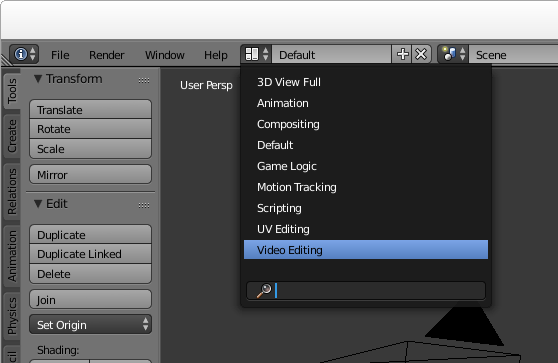
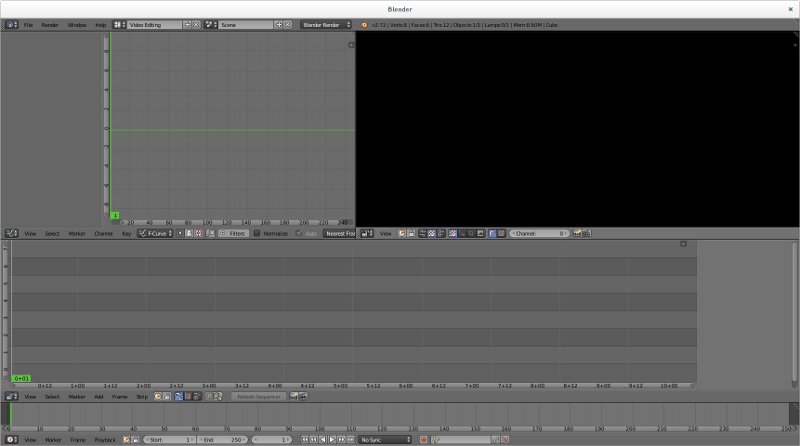
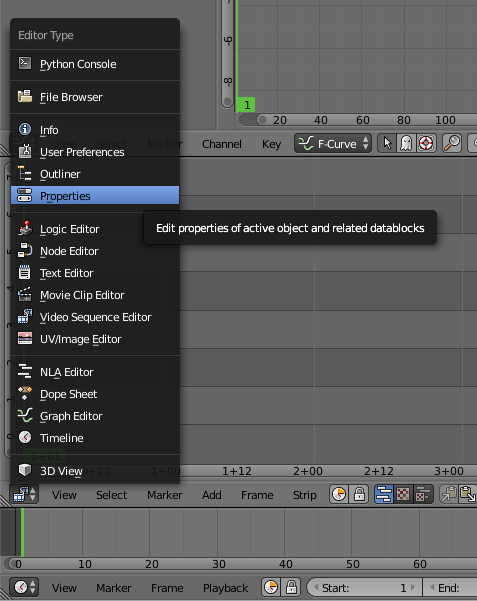
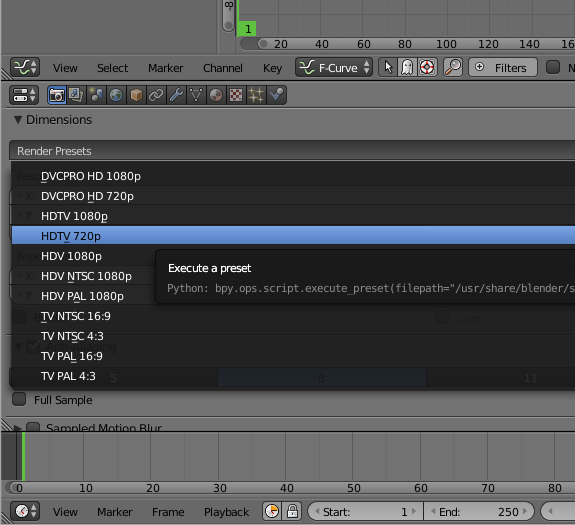
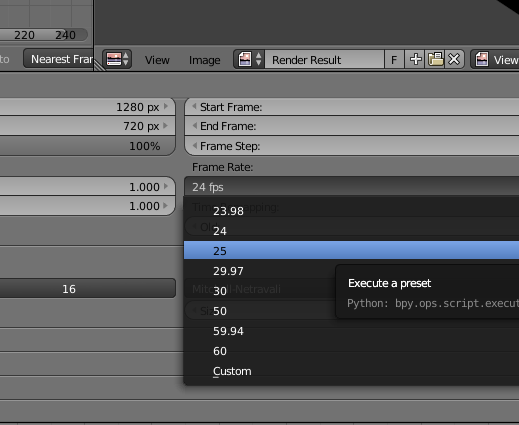
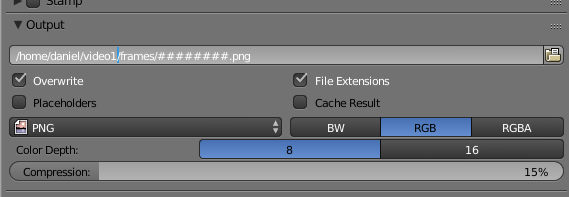
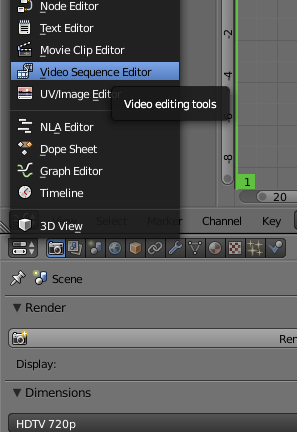
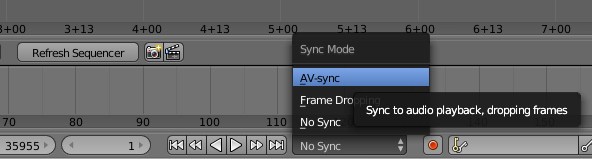
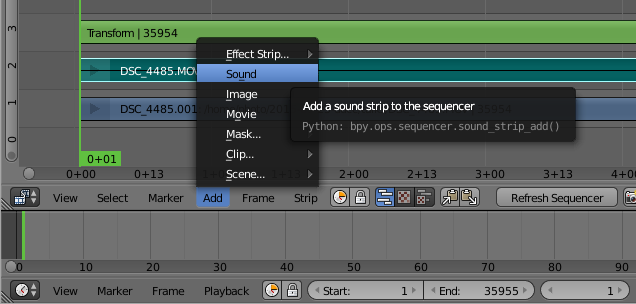
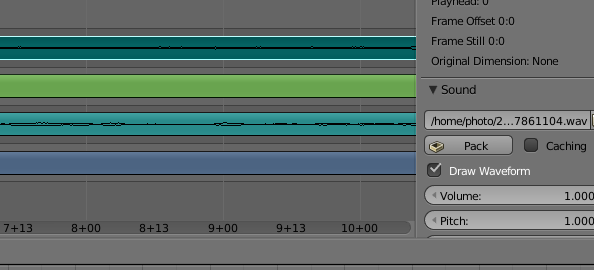
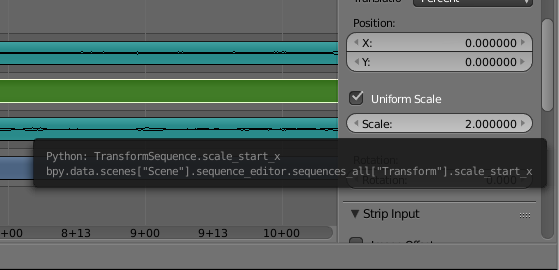
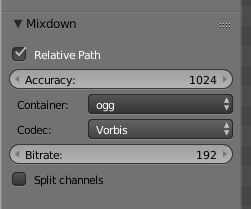
Open Blender and choose the video editing mode Launch Blender and choose the video sequence editor from the pull down menu at the top of the window: Now you should see all the video sequence editor controls: Setup the properties for your project Click the context menu under the strip editor panel and change the panel to a Properties panel: The video file we are playing with is 720p, so it seems reasonable to use 720p for the output too. Change that here: The input file is 25fps so we need to use exactly the same frame rate for the output, otherwise you will either observe the video going at the wrong speed or there will be a conversion that is CPU intensive and degrades the quality. Also check that the resolution_percentage setting under the picture dimensions is 100%: Now specify output to PNG files. Later we will combine them into a WebM file with a script. Specify the directory where the files will be placed and use the # placeholder to specify the number of digits to use to embed the frame number in the filename: Now your basic rendering properties are set. When you want to generate the output file, come back to this panel and use the Animation button at the top. Editing the video Use the context menu to change the properties panel back to the strip view panel: Add the video file: and then right click the video strip (the lower strip) to highlight it and then add a transform strip: Audio waveform Right click the audio strip to highlight it and then go to the properties on the right hand side and click to show the waveform: Rendering length By default, Blender assumes you want to render 250 frames of output. Looking in the properties to the right of the audio or video strip you can see the actual number of frames. Put that value in the box at the bottom of the window where it says 250: Enable AV-sync Also at the bottom of the window is a control to enable AV-sync. If your audio and video are not in sync when you preview, you need to set this AV-sync option and also make sure you set the frame rate correctly in the properties: Add the other sound strip Now add the other sound file that was recorded using the lapel microphone: Enable the waveform display for that sound strip too, this will allow you to align the sound strips precisely: You will need to listen to the strips to make an estimate of the time difference. Use this estimate to set the "start frame" in the properties for your audio strip, it will be a negative value if the audio strip starts before the video. You can then zoom the strip panel to show about 3 to 5 seconds of sound and try to align the peaks. An easy way to do this is to look for applause at the end of the audio strips, the applause generates a large peak that is easily visible. Once you have synced the audio, you can play the track and you should not be able to hear any echo. You can then silence the audio track from the camera by right clicking it, look in the properties to the right and change volume to 0. Make any transforms you require For example, to zoom in on the speaker, right click the transform strip (3rd from the bottom) and then in the panel on the right, click to enable "Uniform Scale" and then set the scale factor as required: Render the video output to PNG Click the context menu under the Curves panel and choose Properties again. Click the Animation button to generate a sequence of PNG files for each frame. Render the audio output On the Properties panel, click the Audio button near the top. Choose a filename for the generated audio file. Look on the bottom left-hand side of the window for the audio file settings, change it to the ogg container and Vorbis codec: Ensure the filename has a .ogg extension Now look at the top right-hand corner of the window for the Mixdown button. Click it and wait for Blender to generate the audio file. Combine the PNG files and audio file into a WebM video file You will need to have a few command line tools installed for manipulating the files from scripts. Install them using the package manager, for example, on a Debian or Ubuntu system: # apt-get install mjpegtools vpx-tools mkvtoolnix
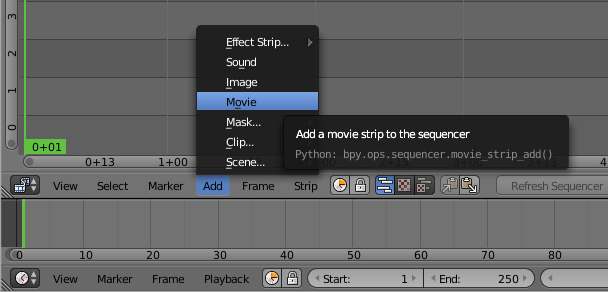
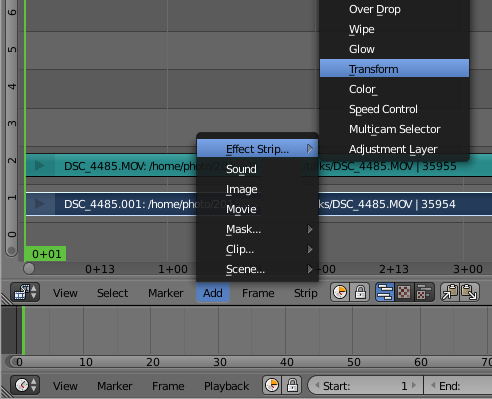
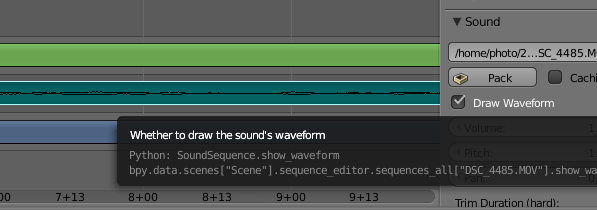
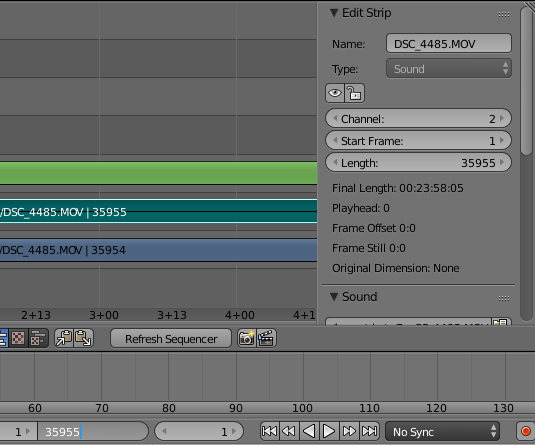

Now create a script like the following:
#!/bin/bash -e
# Set this to match the project properties
FRAME_RATE=25
# Set this to the rate you desire:
TARGET_BITRATE=1000
WORK_DIR=$ HOME /video1
PNG_DIR=$ WORK_DIR /frames
YUV_FILE=$ WORK_DIR /video.yuv
WEBM_FILE=$ WORK_DIR /video.webm
AUDIO_FILE=$ WORK_DIR /audio-mixed.ogg
NUM_FRAMES= find $ PNG_DIR  -type f   wc -l 
png2yuv -I p -f $FRAME_RATE -b 1 -n $NUM_FRAMES \
    -j $ PNG_DIR /%08d.png > $ YUV_FILE 
vpxenc --good --cpu-used=0 --auto-alt-ref=1 \
   --lag-in-frames=16 --end-usage=vbr --passes=2 \
   --threads=2 --target-bitrate=$ TARGET_BITRATE  \
   -o $ WEBM_FILE -noaudio $ YUV_FILE 
rm $ YUV_FILE 
mkvmerge -o $ WEBM_FILE  -w $ WEBM_FILE -noaudio $ AUDIO_FILE 
rm $ WEBM_FILE -noaudio
Next steps There are plenty of more comprehensive tutorials, including some videos on Youtube, explaining how to do more advanced things like fading in and out or zooming and panning dynamically at different points in the video. If the lighting is not good (faces too dark, for example), you can right click the video strip, go to the properties panel on the right hand side and click Modifiers, Add Strip Modifier and then select "Color Balance". Use the Lift, Gamma and Gain sliders to adjust the shadows, midtones and highlights respectively.

Steve Kemp: lumail2 nears another release

I'm pleased with the way that Lumail2 development is proceeding, and it is reaching a point where there will be a second source-release. I've made a lot of changes to the repository recently, and most of them boil down to moving code from the C++ side of the application, over to the Lua side. This morning, for example, I updated the handing of index.limit to be entirely Lua based.
When you open a Maildir folder you see the list of messages it contains, as you would expect. The notion of the index.limit is that you can limit the messages displayed, for example:
  • See all messages: Config:set( "index.limit", "all")
  • See only new/unread messages: Config:set( "index.limit", "new")
  • See only messages which arrived today: Config:set( "index.limit", "today")
  • See only messages which contain "Steve" in their formatted version: Config:set( "index.limit", "steve")
These are just examples that are present as defaults, but they give an idea of how things can work. I guess it isn't so different to Mutt's "limit" facilities - but thanks to the dynamic Lua nature of the application you can add your own with relative ease.
One of the biggest changes, recently, was the ability to display coloured text! That was always possible before, but a single line could only be one colour. Now colours can be mixed within a line, so this works as you might imagine: Panel:append( "$[RED]This is red, $[GREEN]green, $[WHITE]white, and $[CYAN]cyan!" ) Other changes include a persistant cache of "stuff", which is Lua-based, the inclusion of at least one luarocks library to parse Date: headers, and a simple API for all our objects. All good stuff. Perhaps time for a break in the next few weeks, but right now I think I'm making useful updates every other evening or so.

Julien Danjou: Profiling Python using cProfile: a concrete case

Writing programs is fun, but making them fast can be a pain. Python programs are no exception to that, but the basic profiling toolchain is actually not that complicated to use. Here, I would like to show you how you can quickly profile and analyze your Python code to find what part of the code you should optimize. What's profiling? Profiling a Python program is doing a dynamic analysis that measures the execution time of the program and everything that compose it. That means measuring the time spent in each of its functions. This will give you data about where your program is spending time, and what area might be worth optimizing. It's a very interesting exercise. Many people focus on local optimizations, such as determining e.g. which of the Python functions range or xrange is going to be faster. It turns out that knowing which one is faster may never be an issue in your program, and that the time gained by one of the functions above might not be worth the time you spend researching that, or arguing about it with your colleague. Trying to blindly optimize a program without measuring where it is actually spending its time is a useless exercise. Following your guts alone is not always sufficient. There are many types of profiling, as there are many things you can measure. In this exercise, we'll focus on CPU utilization profiling, meaning the time spent by each function executing instructions. Obviously, we could do many more kind of profiling and optimizations, such as memory profiling which would measure the memory used by each piece of code something I talk about in The Hacker's Guide to Python. cProfile Since Python 2.5, Python provides a C module called cProfile which has a reasonable overhead and offers a good enough feature set. The basic usage goes down to:
>>> import cProfile
>>> cProfile.run('2 + 2')
2 function calls in 0.000 seconds

Ordered by: standard name

ncalls tottime percall cumtime percall filename:lineno(function)
1 0.000 0.000 0.000 0.000 <string>:1(<module>)
1 0.000 0.000 0.000 0.000 method 'disable' of '_lsprof.Profiler' objects

Though you can also run a script with it, which turns out to be handy:
$ python -m cProfile -s cumtime lwn2pocket.py
72270 function calls (70640 primitive calls) in 4.481 seconds

Ordered by: cumulative time

ncalls tottime percall cumtime percall filename:lineno(function)
1 0.004 0.004 4.481 4.481 lwn2pocket.py:2(<module>)
1 0.001 0.001 4.296 4.296 lwn2pocket.py:51(main)
3 0.000 0.000 4.286 1.429 api.py:17(request)
3 0.000 0.000 4.268 1.423 sessions.py:386(request)
4/3 0.000 0.000 3.816 1.272 sessions.py:539(send)
4 0.000 0.000 2.965 0.741 adapters.py:323(send)
4 0.000 0.000 2.962 0.740 connectionpool.py:421(urlopen)
4 0.000 0.000 2.961 0.740 connectionpool.py:317(_make_request)
2 0.000 0.000 2.675 1.338 api.py:98(post)
30 0.000 0.000 1.621 0.054 ssl.py:727(recv)
30 0.000 0.000 1.621 0.054 ssl.py:610(read)
30 1.621 0.054 1.621 0.054 method 'read' of '_ssl._SSLSocket' objects
1 0.000 0.000 1.611 1.611 api.py:58(get)
4 0.000 0.000 1.572 0.393 httplib.py:1095(getresponse)
4 0.000 0.000 1.572 0.393 httplib.py:446(begin)
60 0.000 0.000 1.571 0.026 socket.py:410(readline)
4 0.000 0.000 1.571 0.393 httplib.py:407(_read_status)
1 0.000 0.000 1.462 1.462 pocket.py:44(wrapped)
1 0.000 0.000 1.462 1.462 pocket.py:152(make_request)
1 0.000 0.000 1.462 1.462 pocket.py:139(_make_request)
1 0.000 0.000 1.459 1.459 pocket.py:134(_post_request)
[ ]

This prints out all the function called, with the time spend in each and the number of times they have been called. Advanced visualization with KCacheGrind While being useful, the output format is very basic and does not make easy to grab knowledge for complete programs. For more advanced visualization, I leverage KCacheGrind. If you did any C programming and profiling these last years, you may have used it as it is primarily designed as front-end for Valgrind generated call-graphs. In order to use, you need to generate a cProfile result file, then convert it to KCacheGrind format. To do that, I use pyprof2calltree.
$ python -m cProfile -o myscript.cprof myscript.py
$ pyprof2calltree -k -i myscript.cprof

And the KCacheGrind window magically appears!
Concrete case: Carbonara optimization I was curious about the performances of Carbonara, the small timeserie library I wrote for Gnocchi. I decided to do some basic profiling to see if there was any obvious optimization to do. In order to profile a program, you need to run it. But running the whole program in profiling mode can generate a lot of data that you don't care about, and adds noise to what you're trying to understand. Since Gnocchi has thousands of unit tests and a few for Carbonara itself, I decided to profile the code used by these unit tests, as it's a good reflection of basic features of the library. Note that this is a good strategy for a curious and naive first-pass profiling. There's no way that you can make sure that the hotspots you will see in the unit tests are the actual hotspots you will encounter in production. Therefore, a profiling in conditions and with a scenario that mimics what's seen in production is often a necessity if you need to push your program optimization further and want to achieve perceivable and valuable gain. I activated cProfile using the method described above, creating a cProfile.Profile object around my tests (I actually started to implement that in testtools). I then run KCacheGrind as described above. Using KCacheGrind, I generated the following figures.
The test I profiled here is called test_fetch and is pretty easy to understand: it puts data in a timeserie object, and then fetch the aggregated result. The above list shows that 88 % of the ticks are spent in set_values (44 ticks over 50). This function is used to insert values into the timeserie, not to fetch the values. That means that it's really slow to insert data, and pretty fast to actually retrieve them. Reading the rest of the list indicates that several functions share the rest of the ticks, update, _first_block_timestamp, _truncate, _resample, etc. Some of the functions in the list are not part of Carbonara, so there's no point in looking to optimize them. The only thing that can be optimized is, sometimes, the number of times they're called.
The call graph gives me a bit more insight about what's going on here. Using my knowledge about how Carbonara works, I don't think that the whole stack on the left for _first_block_timestamp makes much sense. This function is supposed to find the first timestamp for an aggregate, e.g. with a timestamp of 13:34:45 and a period of 5 minutes, the function should return 13:30:00. The way it works currently is by calling the resample function from Pandas on a timeserie with only one element, but that seems to be very slow. Indeed, currently this function represents 25 % of the time spent by set_values (11 ticks on 44). Fortunately, I recently added a small function called _round_timestamp that does exactly what _first_block_timestamp needs that without calling any Pandas function, so no resample. So I ended up rewriting that function this way:
def _first_block_timestamp(self):
- ts = self.ts[-1:].resample(self.block_size)
- return (ts.index[-1] - (self.block_size * self.back_window))
+ rounded = self._round_timestamp(self.ts.index[-1], self.block_size)
+ return rounded - (self.block_size * self.back_window)

And then I re-run the exact same test to compare the output of cProfile.
The list of function seems quite different this time. The number of time spend used by set_values dropped from 88 % to 71 %.
The call stack for set_values shows that pretty well: we can't even see the _first_block_timestamp function as it is so fast that it totally disappeared from the display. It's now being considered insignificant by the profiler. So we just speed up the whole insertion process of values into Carbonara by a nice 25 % in a few minutes. Not that bad for a first naive pass, right?

Dirk Eddelbuettel: Rcpp 0.12.2: More refinements

The second update in the 0.12.* series of Rcpp is now on the CRAN network for GNU R. As usual, I will also push a Debian package. This follows the 0.12.0 release from late July which started to add some serious new features, and builds upon the 0.12.1 release in September. It also marks the sixth release this year where we managed to keep a steady bi-montly release frequency. Rcpp has become the most popular way of enhancing GNU R with C or C++ code. As of today, 512 packages on CRAN depend on Rcpp for making analytical code go faster and further. That is up by more than fifty package from the last release in September (and we recently blogged about crossing 500 dependents). This release once again features pull requests from two new contributors with Nathan Russell and Tianqi Chen joining in. As shown below, other recent contributors (such as such as Dan) are keeping at it too. Keep'em coming! Luke Tierney also email about a code smell he spotted and which we took care of. A big Thank You! to everybody helping with code, bug reports or documentation. See below for a detailed list of changes extracted from the NEWS file.

Changes in Rcpp version 0.12.2 (2015-11-14)
  • Changes in Rcpp API:
    • Correct return type in product of matrix dimensions (PR #374 by Florian)
    • Before creating a single String object from a SEXP, ensure that it is from a vector of length one (PR #376 by Dirk, fixing #375).
    • No longer use STRING_ELT as a left-hand side, thanks to a heads-up by Luke Tierney (PR #378 by Dirk, fixing #377).
    • Rcpp Module objects are now checked more carefully (PR #381 by Tianqi, fixing #380)
    • An overflow in Matrix column indexing was corrected (PR #390 by Qiang, fixing a bug reported by Allessandro on the list)
    • Nullable types can now be assigned R_NilValue in function signatures. (PR #395 by Dan, fixing issue #394)
    • operator<<() now always shows decimal points (PR #396 by Dan)
    • Matrix classes now have a transpose() function (PR #397 by Dirk fixing #383)
    • operator<<() for complex types was added (PRs #398 by Qiang and #399 by Dirk, fixing #187)
  • Changes in Rcpp Attributes:
    • Enable export of C++ interface for functions that return void.
  • Changes in Rcpp Sugar:
    • Added new Sugar function cummin(), cummax(), cumprod() (PR #389 by Nathan Russell fixing #388)
    • Enabled sugar math operations for subsets; e.g. x[y] + x[z]. (PR #393 by Kevin and Qiang, implementing #392)
  • Changes in Rcpp Documentation:
    • The NEWS file now links to GitHub issue tickets and pull requests.
    • The Rcpp.bib file with bibliographic references was updated.
Thanks to CRANberries, you can also look at a diff to the previous release As always, even fuller details are on the Rcpp Changelog page and the Rcpp page which also leads to the downloads page, the browseable doxygen docs and zip files of doxygen output for the standard formats. A local directory has source and documentation too. Questions, comments etc should go to the rcpp-devel mailing list off the R-Forge page.

This post by Dirk Eddelbuettel originated on his Thinking inside the box blog. Please report excessive re-aggregation in third-party for-profit settings.

Norbert Preining: Movies: Monuments Men and Interstellar

Over the rainy weekend we watched two movies: Monuments Men (in Japanese it is called Michelangelo Project!) and Interstellar. Both blockbuster movies from the usual American companies, they are light-years away when it comes to quality. The Monuments Men are boring, without a story, without depth, historically inaccurate, a complete failure. Interstellar, although a long movie, keeps you frozen in the seat while being as scientific as possible and starts your brain working heavily. monuments-men-interstellar My personal verdict: 3 rotten eggs (because Rotten Tomatoes are not stinky enough) for the Monuments Men, and 4 stars for Interstellar. Story First for the plot of the two movies: The Monuments Men is loosely based on a true story about rescuing pieces of art at the end of the second world war, before the Nazis destroy them or the Russian take them away. A group of art experts is sent into Europe and manages to find several hiding places of art taken by the Nazis. Interstellar is set in near future where the conditions on the earth are deteriorating to a degree that human life seems to be soon impossible. Some years before the movie plays a group of astronauts were sent through a wormhole into a different galaxy to search for new inhabitable planets. Now it is time to check out these planets, and try to establish colonies there. Cooper, a retired NASA officer and pilot, now working as farmer, and his daughter are guided by some mysterious way to a secret NASA facility. Cooper is drafted for being a pilot on the reconnaissance mission, and leaves earth and our galaxy through the same wormhole. (Not telling more!) Monuments Men Looking at the cast of Monuments Men (George Clooney, Matt Damon, Bill Murray, John Goodman, Jean Dujardin, Bob Balaban, Hugh Bonneville, and Cate Blanchett) one would expect a great movie but from the very first to the very last scene, it is a slowly meandering shallow flow of sticked together scenes without much coherence. Tension is generated only through unrelated events (stepping onto a landmine, patting a horse), but never developed properly. Dialogs are shallow and boring with one exception: When Frank Stokes (George Clooney) meets the one German and inquires general about the art, predicting his future being hanged. Historically, the movie is as inaccurate as it can be despite Clooney stating that 80 percent of the story is still completely true and accurate, and almost all of the scenes happened . That contrasts starkly with the verdict of Nigel Pollard (Swansea University): There s a kernel of history there, but The Monuments Men plays fast and loose with it in ways that are probably necessary to make the story work as a film, but the viewer ends up with a fairly confused notion of what the organisation was, and what it achieved. The movie leaves a bitter aftertaste, hailing of American heroism paired with the usual stereotypes (French amour, German retarded, Russian ignorance, etc). Together with the half baked dialogues it feels like a permanent coitus interruptus. Interstellar Interstellar cannot serve with a similar cast, but still a few known people (Matthew McConaughey, Anne Hathaway, and Michael Caine!). But I believe this is actually a sign of quality. Well balancing scientific accuracy and the requirements for blockbusters, the movie successfully spans the bridge between complicated science, in particular general gravity, and entertainment. While not going so far to call the move edutainment (like both the old and new Cosmos), it is surprising how much of hard science is packed into this movie. This is mostly thanks to the theoretical physicist Kip Thorne acting as scientific consultant for the movie, but also due to the director Christopher Nolan being serious about it and studying relativity at Caltech. Of course, scientific accuracy has limits nobody knows what happens if one crosses the event horizon of a black hole, and even the existence of wormholes is purely theoretical by now. Still, throughout the movie it follows the two requirements laid out by Kip Thorne: First, that nothing would violate established physical laws. Second, that all the wild speculations would spring from science and not from the fertile mind of a screenwriter. I think the biggest compliment was that, despite the length, despite a long day out (see next blog), despite the rather unfamiliar topic, my wife, who is normally not interested in space movies and that kind, didn t fall asleep throughout the movie, and I had to stop several times to explain details of the theory of gravity and astronomy. So in some sense it was perfect edutainment!

15 November 2015

Lunar: Reproducible builds: week 29 in Stretch cycle

What happened in the reproducible builds effort this week: Toolchain fixes Emmanuel Bourg uploaded eigenbase-resgen/1.3.0.13768-2 which uses of the scm-safe comment style by default to make them deterministic. Mattia Rizzolo started a new thread on debian-devel to ask a wider audience for issues about the -Wdate-time compile time flag. When enabled, GCC and clang print warnings when __DATE__, __TIME__, or __TIMESTAMP__ are used. Having the flag set by default would prompt maintainers to remove these source of unreproducibility from the sources. Packages fixed The following packages have become reproducible due to changes in their build dependencies: bmake, cyrus-imapd-2.4, drobo-utils, eigenbase-farrago, fhist, fstrcmp, git-dpm, intercal, libexplain, libtemplates-parser, mcl, openimageio, pcal, powstatd, ruby-aggregate, ruby-archive-tar-minitar, ruby-bert, ruby-dbd-odbc, ruby-dbd-pg, ruby-extendmatrix, ruby-rack-mobile-detect, ruby-remcached, ruby-stomp, ruby-test-declarative, ruby-wirble, vtprint. The following packages became reproducible after getting fixed: Some uploads fixed some reproducibility issues, but not all of them: Patches submitted which have not made their way to the archive yet: reproducible.debian.net The fifth and sixth armhf build nodes have been set up, resulting in five more builder jobs for armhf. More than 10,000 packages have now been identified as reproducible with the reproducible toolchain on armhf. (Vagrant Cascadian, h01ger) Helmut Grohne and Mattia Rizzolo now have root access on all 12 build nodes used by reproducible.debian.net and jenkins.debian.net. (h01ger) reproducible-builds.org is now linked from all package pages and the reproducible.debian.net dashboard. (h01ger) profitbricks-build5-amd64 and profitbricks-build6-amd64, responsible for running amd64 tests now run 398.26 days in the future. This means that one of the two builds that are being compared will be run on a different minute, hour, day, month, and year. This is not yet the case for armhf. FreeBSD tests are also done with 398.26 days difference. (h01ger) The design of the Arch Linux test page has been greatly improved. (Levente Polyak) diffoscope development Three releases of diffoscope happened this week numbered 39 to 41. It includes support for EPUB files (Reiner Herrmann) and Free Pascal unit files, usually having .ppu as extension (Paul Gevers). The rest of the changes were mostly targetting at making it easier to run diffoscope on other systems. The tlsh, rpm, and debian modules are now all optional. The test suite will properly skip tests that need optional tools or modules when they are not available. As a result, diffosope is now available on PyPI and thanks to the work of Levente Polyak in Arch Linux. Getting these versions in Debian was a bit cumbersome. Version 39 was uploaded with an expired key (according to the keyring on ftp.debian.org which will hopefully be updated soon) which is currently handled by keeping the files in the queue without REJECTing them. This prevented any other Debian Developpers to upload the same version. Version 40 was uploaded as a source-only upload but failed to build from source which had the undesirable side effect of removing the previous version from unstable. The package faild to build from source because it was built passing -I to debbuild. This excluded the ELF object files and static archives used by the test suite from the archive, preventing the test suite to work correctly. Hopefully, in a nearby future it will be possible to implement a sanity check to prevent such mistakes in the future. It has also been identified that ppudump outputs time in the system timezone without considering the TZ environment variable. Zachary Vance and Paul Gevers raised the issue on the appropriate channels. strip-nondeterminism development Chris Lamb released strip-nondeterminism version 0.014-1 which disables stripping Mono binaries as it is too aggressive and the source of the problem is being worked on by Mono upstream. Package reviews 133 reviews have been removed, 115 added and 103 updated this week. Chris West and Chris Lamb reported 57 new FTBFS bugs. Misc. The video of h01ger and Chris Lamb's talk at MiniDebConf Cambridge is now available. h01ger gave a talk at CCC Hamburg on November 13th, which was well received and sparked some interest among Gentoo folks. Slides and video should be available shortly. Frederick Kautz has started to revive Dhiru Kholia's work on testing Fedora packages. Your editor wish to once again thank #debian-reproducible regulars for reviewing these reports weeks after weeks.

Simon McVittie: Discworld Noir in a Windows 98 virtual machine on Linux

Discworld Noir was a superb adventure game, but is also notoriously unreliable, even in Windows on real hardware; using Wine is just not going to work. After many attempts at bringing it back into working order, I've settled on an approach that seems to work: now that qemu and libvirt have made virtualization and emulation easy, I can run it in a version of Windows that was current at the time of its release. Unfortunately, Windows 98 doesn't virtualize particularly well either, so this still became a relatively extensive yak-shaving exercise. discworldnoir-boxes.jpg These instructions assume that /srv/virt is a suitable place to put disk images, but you can use anywhere you want. The emulated PC After some trial and error, it seems to work if I configure qemu to emulate the following: A modern laptop CPU is an order of magnitude faster than what Discworld Noir needs, so full emulation isn't a problem, despite being inefficient. There is deliberately no networking, because Discworld Noir doesn't need it, and a 17 year old operating system with no privilege separation is very much not safe to use on the modern Internet! Software needed Windows 98 installation It seems to be easiest to do this bit by running qemu-system-i386 manually:
qemu-img create -f qcow2 /srv/virt/discworldnoir.qcow2 30G
qemu-system-i386 -hda /srv/virt/discworldnoir.qcow2 \
    -drive media=cdrom,format=raw,file=/srv/virt/windows98.iso \
    -no-kvm -vga cirrus -m 256 -cpu pentium3 -localtime
Don't start the installation immediately. Instead, boot the installation CD to a DOS prompt with CD-ROM support. From here, run
fdisk
and create a single partition filling the emulated hard disk. When finished, hard-reboot the virtual machine (press Ctrl+C on the qemu-system-i386 process and run it again). The DOS FORMAT.COM utility is on the Windows CD-ROM but not in the root directory or the default %PATH%, so you'll have to run:
d:\win98\format c:
to create the FAT filesystem. You might have to reboot again at this point. The reason for doing this the hard way is that the Windows 98 installer doesn't detect qemu as supporting ACPI. You want ACPI support, so that Windows will issue IDLE instructions from its idle loop, instead of occupying a CPU core with a busy-loop. To get that, boot to a DOS prompt again, and use:
setup /p j /iv
/p j forces ACPI support (Thanks to "Richard S" on the Virtualbox forums for this tip.) /iv is unimportant, but it disables the annoying "billboards" during installation, which advertised once-exciting features like support for dial-up modems and JPEG wallpaper. I used a "Typical" installation; there didn't seem to be much point in tweaking the installed package set when everything is so small by modern standards. Windows 98 has built-in support for the Cirrus VGA card that we're emulating, so after a few reboots, it should be able to run in a semi-modern resolution and colour depth. Discworld Noir apparently prefers a 640 480 16-bit video mode, so right-click on the desktop background, choose Properties and set that up. Audio drivers This is the part that took me the longest to get working. Of the sound cards that qemu can emulate, Windows 98 only supports the SoundBlaster 16 out of the box. Unfortunately, the Soundblaster 16 emulation in qemu is incomplete, and in particular version 2.1 (as shipped in Debian 8) has a tendency to make Windows lock up during boot. I've seen advice in various places to emulate an Eqsonic ES1370 (SoundBlaster AWE 64), but that didn't work for me: one of the drivers I tried caused Windows to lock up at a black screen during boot, and the other didn't detect the emulated hardware. The next-oldest sound card that qemu can emulate is a Realtek AC97, which was often found integrated into motherboards in the late 1990s. This one seems to work, with the "A400" driver bundle linked above. For Windows 98 first edition, you need a driver bundle that includes the old "VXD" drivers, not just the "WDM" drivers supported by Second Edition and newer. The easiest way to get that into qemu seems to be to turn it into a CD image:
genisoimage -o /srv/virt/discworldnoir-drivers.iso WDM_A400.exe
qemu-system-i386 -hda /srv/virt/discworldnoir.qcow2 \
    -drive media=cdrom,format=raw,file=/srv/virt/windows98.iso \
    -drive media=cdrom,format=raw,file=/srv/virt/discworldnoir-drivers.iso \
    -no-kvm -vga cirrus -m 256 -cpu pentium3 -localtime -soundhw ac97
Run the installer from E:, then reboot with the Windows 98 CD inserted, and Windows should install the driver. Installing Discworld Noir Boot up the virtual machine with CD 1 in the emulated drive:
qemu-system-i386 -hda /srv/virt/discworldnoir.qcow2 \
    -drive media=cdrom,format=raw,file=/srv/virt/DWN_ENG_1.iso \
    -no-kvm -vga cirrus -m 256 -cpu pentium3 -localtime -soundhw ac97
You might be thinking "... why not insert all three CDs into D:, E: and F:?" but the installer expects subsequent disks to appear in the same drive where CD 1 was initially, so that won't work. Instead, when prompted for a new CD, switch to the qemu monitor with Ctrl+Alt+2 (note that this is 2, not F2). At the (qemu) prompt, use info block to see a list of emulated drives, then issue a command like
change ide0-cd1 /srv/virt/DWN_ENG_2.iso
to swap the CD. Then switch back to Windows' console with Ctrl+Alt+1 and continue installation. I used a Full installation of Discworld Noir. Transferring the virtual machine to GNOME Boxes Having finished the "control freak" phase of installation, I wanted a slightly more user-friendly way to run this game, so I transferred the virtual machine to be used by libvirtd, which is the backend for both GNOME Boxes and virt-manager:
virsh create discworldnoir.xml
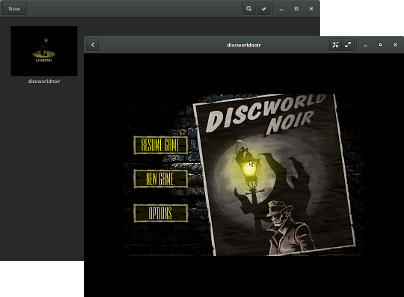
Here is the configuration I used. It's a mixture of automatic configuration from virt-manager, and hand-edited configuration to make it match the qemu-system-i386 command-line. Running the game If all goes well, you should now see a discworldnoir virtual machine in GNOME Boxes, in which you can boot Windows 98 and play the game. Have fun!

14 November 2015

Daniel Pocock: Migrating data from Windows phones

Many of the people who have bought Windows phones seek relief sooner or later. Sometimes this comes about due to peer pressure or the feeling of isolation, in other cases it is the frustration of the user interface or the realization that they can't run cool apps like Lumicall. Frequently, the user has been given the phone as a complimentary upgrade when extending a contract without perceiving the time, effort and potential cost involved in getting their data out of the phone, especially if they never owned a smartphone before. When a Windows phone user does decide to cut their losses, they are usually looking to a friend or colleague with technical expertise to help them out. Personally, I'm not sure that anybody I would regard as an IT expert has ever had a Windows phone though, meaning that many experts are probably also going to be scratching their heads when somebody asks them for help. Therefore, I've put together this brief guide to help deal with these phones more expediently when they are encountered. The Windows phones have really bad support for things like CalDAV and WebDAV so don't get your hopes up about using such methods to backup the data to any arbitrary server. Searching online you can find some hacks that involve creating a Google or iCloud account in the phone and then modifying the advanced settings to send the data to an arbitrary server. These techniques vary a lot between specific versions of the Windows Phone OS and so the techniques I've described below are probably easier. Identify the Windows Live / Hotmail account The user may not remember or realize that a Microsoft account was created when they first obtained the phone. It may have been created for them by the phone, a friend or the salesperson in the phone shop. Look in the settings (Accounts) to find the account ID / email address. If the user hasn't been using this account, they may not recognize it and probably won't know the password for it. It is essential to try and obtain (or reset) the password before going any further, so start with the password recovery process. Microsoft may insist on sending a password reset email to some other email address that the user has previously provided or linked to their phone. Extracting data from the phone In many cases, the easiest way to extract the data is to download it from Microsoft live.com rather than extracting it from the phone. Even if the user doesn't realize it, the data is probably all replicated in live.com and so there is no further loss of privacy by logging in there to extract it. Set up an IMAP mail client An IMAP client will be used to download the user's emails (from the live.com account they may never have used) and SMS. Install Mozilla Thunderbird (IceDove on Debian), GNOME Evolution or a similar program on the user's PC. Configure the IMAP mail client to connect to the live.com account. Some clients, like Thunderbird, will automatically set up all the server details when you enter the live.com account ID. For manual account setup, the details here may help. Email backup If the user was not using the live.com account ID for email correspondence, there may not be a lot of mail in it. There may be some billing receipts or other things that are worth keeping though. Create a new folder (or set of folders) in the user's preferred email account and drag and drop the messages from the live.com Inbox to the new folder(s). SMS backup SMS backup can also be done through live.com. It is slightly more complicated than email backup, but similar.
  • In the live.com Outlook email index page, look for the settings button and click Manage Categories.
  • Enable the Contacts and Photos categories with a tick in each of them.
  • Go back to the main Inbox page and look for the categories section on the bottom left-hand side of the screen, under the folder list. Click the Contacts category.
  • The page may now appear blank. That is normal.
  • On the top right-hand corner of the page, click the Arrange menu and choose Conversation.
  • All the SMS messages should now appear on the screen.
  • Under the mail folders list on the left-hand side of the page, click to create a new folder with a name like SMS.
  • Select all the SMS messages and look for the option to move them to a folder. Send them to the SMS folder you created.
  • Now use the IMAP mail client to locate the SMS folder and copy everything from there to a new folder in the user's preferred mail server or local disk.
Contacts backup On the top left-hand corner of the live.com email page, there is a chooser to select other live.com applications. Select People. You should now see a list of all the user's contacts. Look for the option to export them to Outlook and other programs. This will export them as a CSV file. You can now import the CSV file into another application. GNOME Evolution has an import wizard with an option for Outlook file format. To load the contacts into a WebDAV address book, such as DAViCal, configure the address book in Evolution and then select it as the destination when running the CSV import wizard. WARNING: beware of using the Mozilla Thunderbird address book with contact data from mobile devices and other sources. It can't handle more than two email addresses per contact and this can lead to silent data loss if contacts are not fully saved. Calendar backup Now go to the live.com application chooser again and select the calendar application. Microsoft provides instructions to extract the calendar, summarised here:
  • Look for the Share button at the top somewhere and click it.
  • On the left-hand side of the page, click Get a link
  • On the right-hand side, choose Show event details to ensure you get a full calendar and then click Create underneath it.
  • Look for the link with a webcals prefix. If you are downloading with a tool like wget, change the scheme prefix to https. Fetch the file from this link and save it with an ics extension.
  • Inspect the ics calendar file to make sure it looks like real iCalendar data.
You can now import the ics file into another application. GNOME Evolution has an import wizard with an option for iCalendar file format. To load the calendar entries into a CalDAV server, such as DAViCal, configure the calendar server in Evolution and then select it as the destination when running the import wizard. Backup the user's photos, videos and other data files Hopefully you will be able to do this step without going through live.com. Try enabling the MTP or PTP mode in the phone and attach it to the computer using the USB cable. Hopefully the computer will recognize it in at least one of those modes. Use the computer's file manager or another tool to simply backup the entire directory structure. Reset the phone to factory defaults Once the user has their hands on a real phone, it is likely they will never want to look at that Windows phone again. It is time to erase the Windows phone, there is no going back. Go to the Settings and About and tap the factory reset option. It is important to do this before obliterating the live.com account, otherwise there are scenarios where you could be locked out of the phone and unable to erase it. Erasing may take some time. The phone will reboot and then display an animation of some gears spinning around for a few minutes and then reboot again. Wait for it to completely erase. Permanently close the Microsoft live.com account Keeping track of multiple accounts and other services is tedious and frustrating for most people, especially with services that try to force the user to receive email in different places. You can help eliminate user fatigue by helping them permanently close the live.com account so they never have to worry about it again. Follow the instructions on the Microsoft site. At some point it will suggest certain actions you should take before closing the account, most can be ignored. One thing you should do is remove the link between the live.com account ID and the phone. It is a good idea to do this as otherwise you may have problems erasing the device, if you haven't already done so. Before completely closing the account, also verify that the factory reset of the phone completed successfully. Dispose of the Windows phone safely If you can identify any faults with the phone, the user may be able to return it under the terms of the warranty. Some phone companies may allow the user to exchange it for something more desirable when it fails under warranty. It may be tempting to sell the phone to a complete stranger on eBay or install a custom ROM on it. In practice, neither option may be worth the time and effort involved. You may be tempted to put it beyond use so nobody else will suffer with it, but please try to do so in a way that is respectful of the environment. Putting the data into a new phone Prepare the new phone with a suitable ROM such as Replicant or Cyanogenmod. Install the F-Droid app on the new phone. From F-droid, install the DAVdroid app. DAVdroid will allow you to quickly sync the new phone against any arbitrary CalDAV and WebDAV server to populate it with the user's calendar and contact / address book data. Now is a good time to install other interesting apps like Lumicall, Conversations and K-9 Mail.

Craig Small: Mixing pysnmp and stdin

Depending on the application, sometimes you want to have some socket operations going (such as loading a website) and have stdin being read. There are plenty of examples for this in python which usually boil down to making stdin behave like a socket and mixing it into the list of sockets select() cares about. A while ago I asked an email list could I have pysnmp use a different socket map so I could add my own sockets in (UDP, TCP and a zmq to name a few) and the Ilya the author of pysnmp explained how pysnmp can use a foreign socket map. This sample code below is merely an mixture of Ilya s example code and the way stdin gets mixed into the fold. I have also updated to the high-level pysnmp API which explains the slight differences in the calls.
  1. from time import time
  2. import sys
  3. import asyncore
  4. from pysnmp.hlapi import asyncore as snmpAC
  5. from pysnmp.carrier.asynsock.dispatch import AsynsockDispatcher
  6.  
  7.  
  8. class CmdlineClient(asyncore.file_dispatcher):
  9.     def handle_read(self):
  10.     buf = self.recv(1024)
  11.     print "you said  ".format(buf)
  12.  
  13.  
  14. def myCallback(snmpEngine, sendRequestHandle, errorIndication,
  15.                errorStatus, errorIndex, varBinds, cbCtx):
  16.     print "myCallback!!"
  17.     if errorIndication:
  18.         print(errorIndication)
  19.         return
  20.     if errorStatus:
  21.         print('%s at %s' % (errorStatus.prettyPrint(),
  22.               errorIndex and varBinds[int(errorIndex)-1] or '?')
  23.              )
  24.         return
  25.  
  26.     for oid, val in varBinds:
  27.     if val is None:
  28.         print(oid.prettyPrint())
  29.     else:
  30.         print('%s = %s' % (oid.prettyPrint(), val.prettyPrint()))
  31.  
  32. sharedSocketMap =   
  33. transportDispatcher = AsynsockDispatcher()
  34. transportDispatcher.setSocketMap(sharedSocketMap)
  35. snmpEngine = snmpAC.SnmpEngine()
  36. snmpEngine.registerTransportDispatcher(transportDispatcher)
  37. sharedSocketMap[sys.stdin] = CmdlineClient(sys.stdin)
  38.  
  39. snmpAC.getCmd(
  40.     snmpEngine,
  41.     snmpAC.CommunityData('public'),
  42.     snmpAC.UdpTransportTarget(('127.0.0.1', 161)),
  43.     snmpAC.ContextData(),
  44.     snmpAC.ObjectType(
  45.         snmpAC.ObjectIdentity('SNMPv2-MIB', 'sysDescr', 0)),
  46.     cbFun=myCallback)
  47.  
  48. while True:
  49.     asyncore.poll(timeout=0.5, map=sharedSocketMap)
  50.     if transportDispatcher.jobsArePending() or transportDispatcher.transportsAreWorking():
  51.         transportDispatcher.handleTimerTick(time())
Some interesting lines from the above code: With all this I can handle keyboard presses and network traffic, such as a simple SNMP poll.

13 November 2015

John Goerzen: Memories of a printer

I have a friend who hates printers. I ll call him Mark , because that, incidentally, is his name. His hatred for printers is partly my fault, but that is, ahem, a story for another time that involves him returning from a battle with a printer with a combination of weld dust, toner, and a deep scowl on his face. I also tend to hate printers. Driver issues, crinkled paper, toner spilling all over the place . everybody hates printers. But there is exactly one printer that I have never hated. It s almost 20 years old, and has some stories to tell. Nearly 20 years ago, I was about to move out of my parents house, and I needed a printer. I bought a LaserJet 6MP. This printer ought to have been made by Nokia. It s still running fine, 18 years later. It turned out to be one of the best investments in computing equipment I ve ever made. Its operating costs, by now, are cheaper than just about any printer you can buy today less than one cent per page. It has been supported by every major operating system for years. PostScript was important, because back then running Ghostscript to convert to PCL was both slow and a little error-prone. PostScript meant I didn t need a finicky lpr/lprng driver on my Linux workstation to print. It just printed. (Hat tip to anyone else that remembers the trial and error of constructing an /etc/printcap that would print both ASCII and PostScript files correctly!) Out of this printer have come plane and train tickets, taking me across the country to visit family and across the world to visit friends. It s printed resumes and recipes, music and university papers. I even printed wedding invitations and envelopes on them two years ago, painstakingly typeset in LaTeX and TeXmacs. I remember standing at the printer in the basement one evening, feeding envelope after envelope into the manual feed slot. (OK, so it did choke on a couple of envelopes, but overall it all worked great.) The problem, though, is that it needs a parallel port. I haven t had a PC with one of those in a long while. A few years ago, in a moment of foresight, I bought a little converter box that has an Ethernet port and a parallel port, with the idea that it would be pay for itself by letting me not maintain some old PC just to print. Well, it did, but now the converter box is dying! And they don t make them anymore. So I finally threw in the towel and bought a new LaserJet. It cost a third of what the 6MP did, has a copier, scanner, prints in color, does duplexing, has wifi and, yes, still supports PostScript strangely enough, a deciding factor in going with HP over Brother once again. (The other was image quality) We shall see if I am still using it when I m 50.

11 November 2015

Kees Cook: evolution of seccomp

I m excited to see other people thinking about userspace-to-kernel attack surface reduction ideas. Theo de Raadt recently published slides describing Pledge. This uses the same ideas that seccomp implements, but with less granularity. While seccomp works at the individual syscall level and in addition to killing processes, it allows for signaling, tracing, and errno spoofing. As de Raadt mentions, Pledge could be implemented with seccomp very easily: libseccomp would just categorize syscalls. I don t really understand the presentation s mention of Optional Security , though. Pledge, like seccomp, is an opt-in feature. Nothing in the kernel refuses to run unpledged programs. I assume his point was that when it gets ubiquitously built into programs (like stack protector), it s effectively not optional (which is alluded to later as comprehensive applicability ~= mandatory mitigation ). Regardless, this sensible (though optional) design gets me back to his slide on seccomp, which seems to have a number of misunderstandings: OpenBSD has some interesting advantages in the syscall filtering department, especially around sockets. Right now, it s hard for Linux syscall filtering to understand why a given socket is being used. Something like SOCK_DNS seems like it could be quite handy. Another nice feature of Pledge is the path whitelist feature. As it s still under development, I hope they expand this to include more things than just paths. Argument inspection is a weak point for seccomp, but under Linux, most of the arguments are ultimately exposed to the LSM layer. Last year I experimented with creating a seccomp LSM for path matching where programs could declare whitelists, similar to standard LSMs. So, yes, Linux could match this API on seccomp . It d just take some extensions to libseccomp to implement pledge(), as I described at the top. With OpenBSD doing a bunch of analysis work on common programs, it d be excellent to see this usable on Linux too. So far on Linux, only a few programs (e.g. Chrome, vsftpd) have bothered to do this using seccomp, and it could be argued that this is ultimately due to how fine grained it is.

2015, Kees Cook. This work is licensed under a Creative Commons Attribution-ShareAlike 3.0 License.
Creative Commons License

10 November 2015

Norbert Preining: Music check: Google versus Apple Is that all? You can do better, Google!

Ok, I have been an iPhone user since I moved to Japan and got my first smart-phone ever. First a 3s, then a 4s, then a 5s that I dropped into the toilet, so I switched the SIM back into the 4s to have a working phone. Furthermore, I am a heavy music listener and used iTunes Radio for 3 months. Since I am planning to change phones to an Android phone (being fed up with Apple s super-closed environment), I tried out Google Music Plus for about 3 months, too. Here is my verict Google Music is a big pain, far from iTunes in comfort and user friendliness. music-check-google-vs-apple My move to Android is not very much in danger. General description of the service In principle, iTunes Radio and Google Music Subscription do the same things: There are slight differences, that often create confusion, especially with Apple s services: If you are only signed in, you can listen to music stations and can skip some music (limited), but you cannot listen to arbitrary songs from the whole Apple Music library. Then there is another service from Apple, called iTunes Match, that only allows you to upload your music library to the cloud, but other than that again only listening to normal radio stations. Google Music is much simpler, there are only two options: By default it is free to have your music (up to 25000 songs) in the cloud, but if you want to listen to radio stations or any other music in the Google music store, you need a subscription. Prizes and features overview:
Apple Google
No subscription iTunes Match iTunes Radio No subscription With subscription
Prize 0 25$/year 10$/month 0 10$/month
(early access 8$)
Cloud space 0 100000 25000
Extra service Radio stations Radio stations Radio/all music Nothing Radio/all music
Music on the go the application Let us first consider the applications provided to listen to music on your smart phone: Apple Music can of course only be used on Apple devices, and uses the built-in Music application. Start up time is about a few seconds after a cold boot (all on my 4s), and music streaming starts with hardly any delay. Responsiveness is good, and the user interface is clear and easy. Google s application is available on iOS and Android. I have tested the latest version on iOS, but it is a pain in the butt: Managing your library Here iTunes is the way to go, bit of a pain when using Linux, but there are other reasons I have a Windows installation in parallel, so I don t mind to boot now and then into Windows. iTunes gives you very powerful tools to change all kind of data. Google gives you a few options: Use your iTunes library in this case all your playlists and ratings (but see later) are also uploaded. I am not sure what happens if I retag a song in iTunes, or change anything else in there. I guess the song will not be re-uploaded, but who knows for sure. Furthermore, you can edit your library via the web interface, but this is rather poor. Searching your library Over times your library grows and there are hundreds if not thousands of artists. So you want to search them. The natural way would be to scroll to the first letter of the artist you are searching, and then look it up. Well, that works perfectly in both Apple s and Google s application unless you are having artists written in some strange script like Japanese or Korean. iTunes allows you to set a field called something like Artist name for sorting , which allows me to put for example or into the artist field, and into the sort field Tomokawa Kazuki and Kim Doo Soo . This way I find the artists in the correct place. Google on the other hand uses simple Unicode order sorting how could you do that? This is simply plain wrong, and everyone should know that by now. Japanese people will never be able to find anything in their list. And in contrast to Goole Contacts Google Music does not support phonetic name fields (similar to the order sort artist) for artists. What I had to do now is to rename all the artists to include first the phonetic name, followed by the proper name, like in Tomokawa Kazuki ( ) . Something I strongly detest! Radio stations I might have a slightly peculiar music taste, but the radio stations mixed by Google are simply a pain. The reason is easy to explain: I live in Japan, and so what Google does is mixing about 80% of J-Pop into the radio, all those happy yodeling girlies I really dislike (see my Anti J-Pop campaign for alternatives yes, they do exist also in Japan!). iTunes radio is here more relaxed it seems. I appreciate Google s trial to cater to local (dis)taste, but besides voting down each and every song I hear I don t see any other option. And honestly, I cannot go through all this voting down without dying from pain inflicted by J-Pop. Other than this, the two radio stations are probably more or less the same but as I said, due to the local colorit it is hard to compare. Rating Ohhh, what a dire point. So there you have you well curated iTunes library with 5-star ratings. I used the ratings in a way that those songs I like get 1 star, those I even like more get 2 stars, and my absolute favorites got 5 stars. I didn t do any negative ratings. iTunes/iOS Music app allows you to easily adjust rating, and they are synced between devices. All as you would expect. Now for Google they did have a 5-star rating system at some time, but:
Thank you for your feedback. We ve decided to remove the 5-star Rating lab. This decision wasn t made lightly, but Thumbs Up/Down is integral for the future vision for Play Music and will be a central design point for our future releases. Please note that we ll continue to store your ratings that you ve set via the star lab or via iTunes, and we ll translate them to thumbs up/down (1-2 stars = thumbs down, 4-5 stars = thumbs up).
Here we go with the move to a new design they threw away the 5-star system, without any reason but integral for future vision rubbish sales speak. Besides being a very very poor rating system to have only an up and down (good-bad-don t care), the translation from my rating system to the thumbs up-down is just plain wrong. <rant>
Why on earth is the current movement to reduce functionality and rob users of control? Gnome 3 is the prime example of how we stupiditize users by taken any freedom from them in the name of simple design. Google now does the same. I am so sick of getting patronized this way, so Gnome3 was completely banished from my computer and replaced by Cinnamon, which uses the same (good) underlying technique, but takes users seriously!
</rant> Overall verdict As much as I would like to see Google Music a valid alternative to iTunes, by now it makes the impression of a quickly hacked together rotten piece of code that tries to get a share of the market without providing equivalent service. Google is using its market presence and convenience to convert people, not features and quality. I can only hope that this changes in the future. That still leaves me with the question move to Android or remain with iOS

9 November 2015

Ben Armstrong: The passing of Debian Live

Debian Live has passed on. And it has done so in not happy circumstances. (You can search the list archives for more if you are confused.) I have reposted here my response to this one thread because it s all I really want to say, after all of the years of working with the team. I d like to add as a postscript, that while the focus of this article was to remain positive in the face of Daniel s announcement of the closure of his project, that event has left a lot of users confused about the status of live support in Debian going forward. Read my posts here and here addressing that confusion.
On 09/11/15 12:47 PM, Daniel Baumann wrote:
> So long, and thanks for all the fish[7].
>
> Daniel
>
> [7] http://live.debian.net/project/downstream/ Enough bitter words have been said. I don t want to add any more. So: I m proud. Indeed, that long list of downstreams does speak to the impact you ve had in inspiring and equipping people to make their own live images. I m proud to have been a small part of this project. I m thankful. I m thankful that I was able to, through this project, contribute to something for a while that had a positive impact on many people, and made Debian more awesome. I remember the good times. I remember fondly the good times we had in the project s heyday. I certainly found your enthusiasm and vision for the project, Daniel, personally inspiring. It motivated me to contribute. Debconf10 was a highlight among those experiences, but also I had many good times and made many friendships online, too. I m sad. I m sad, because although I made some attempts to liaise between Debian Live and the CD and Installer teams, I don t feel I did an effective job there, and that contributed to the situation we now find ourselves in. If I did you or the project injury in trying to fulfill that role, please forgive me. I m hopeful. I m hopeful that whichever way we all go from here, that the bitterness will not be forever. That we ll heal. That we ll have learned. That we ll move on to accomplish new things, bigger and better things. Thank you, Daniel. Thank you, Debian Live team. Ben
facebooktwittergoogle_plusredditpinterestlinkedinmail

Mike Gabriel: Making appindicators available for non-Ubuntu platforms

As many (Debianic) people possibly know, the appindicator support (libindicator, libappindicator, etc.) in Debian is very weak and outdated. Various native indicators (e.g. indicator-* packages , where * is "datetime", "sound", "session", etc.) are missing or unmaintained in Debian and neither is the indicator-application service available (a service that allows other applications e.g., like the nm-applet tool to dock to the indicator area of the desktop's panel bar). Furthermore, no recent appindicator related uploads have been seen in Debian (last seen uploads are from 2013). I recently e-mailed with Andrew Starr-Bochicchio, one of the Ayatana Packaging team members, about the current Debian status of indicator packages specifically and Ayatana packages [1] in general. The below information summarizes (I hope) what I got from the mail exchange: read more

Lunar: Reproducible builds: week 28 in Stretch cycle

What happened in the reproducible builds effort this week: Toolchain fixes Chris Lamb filled a bug on python-setuptools with a patch to make the generated requires.txt files reproducible. The patch has been forwarded upstream. Chris also understood why the she-bang in some Python scripts kept being undeterministic: setuptools as called by dh-python could skip re-installing the scripts if the build had been too fast (under one second). #804339 offers a patch fixing the issue by passing --force to setup.py install. #804141 reported on gettext asks for support of SOURCE_DATE_EPOCH in gettextize. Santiago Vila pointed out that it doesn't felt appropriate as gettextize is supposed to be an interactive tool. The problem reported seems to be in avahi build system instead. Packages fixed The following packages became reproducible due to changes in their build dependencies: celestia, dsdo, fonts-taml-tscu, fte, hkgerman, ifrench-gut, ispell-czech, maven-assembly-plugin, maven-project-info-reports-plugin, python-avro, ruby-compass, signond, thepeg, wagon2, xjdic. The following packages became reproducible after getting fixed: Some uploads fixed some reproducibility issues but not all of them: Patches submitted which have not made their way to the archive yet: Chris Lamb closed a wrongly reopened bug against haskell-devscripts that was actually a problem in haddock. reproducible.debian.net FreeBSD tests are now run for three branches: master, stable/10, release/10.2.0. (h01ger) diffoscope development Support has been added for Free Pascal unit files (.ppc). (Paul Gevers) The homepage is now available using HTTPS, thanks to Let's Encrypt!. Work has been done to be able to publish diffoscope on the Python Package Index (also known as PyPI): the tlsh module is now optional, compatibility with python-magic has been added, and the fallback code to handle RPM has been fixed. Documentation update Reiner Herrmann, Paul Gevers, Niko Tyni, opi, and Dhole offered various fixes and wording improvements to the reproducible-builds.org. A mailing-list is now available to receive change notifications. NixOS, Guix, and Baserock are featured as projects working on reproducible builds. Package reviews 70 reviews have been removed, 74 added and 17 updated this week. Chris Lamb opened 22 new fail to build from source bugs. New issues this week: randomness_in_ocaml_provides, randomness_in_qdoc_page_id, randomness_in_python_setuptools_requires_txt, gettext_creates_ChangeLog_files_and_entries_with_current_date. Misc. h01ger and Chris Lamb presented Beyond reproducible builds at the MiniDebConf in Cambridge on November 8th. They gave an overview of where we stand and the changes in user tools, infrastructure, and development practices that we might want to see happening. Feedback on these thoughts are welcome. Slides are already available, and the video should be online soon. At the same event, a meeting happened with some members of the release team to discuss the best strategy regarding releases and reproducibility. Minutes have been posted on the Debian reproducible-builds mailing-list.

Ben Hutchings: Debian LTS work, October 2015

For my 11th month working on Debian LTS, I carried over 5.5 hours from September and was assigned another 13.5 hours of work by Freexian's Debian LTS initiative. I worked 14 of a possible 19 hours. As I mentioned in the report for September, I uploaded binutils and issued DLA-324-1 early in October. I fixed a few security issues in the kernel, uploaded and issued DLA-325-1. I had some email discussions about long-term support of the Linux kernel with Willy Tarreau (Linux 2.6.32 maintainer) and Greg Kroah-Hartman (overall stable maintainer). Greg normally selects one version per year to maintain as a 'longterm' branch for 2 years, after which he may hand it over to another maintainer. A few upstream versions have received long-term support entirely from another developer. We were in agreement that it's desirable to have fewer of these branches with more developers and distributions contributing to each, but didn't come to a conclusion about how to coordinate this. The topic came up again at the Kernel Summit, and Greg then agreed to select the first kernel version of each calendar year, starting with Linux 4.4 (expected in January). This doesn't fit well with Debian's current release schedule, but I mean to discuss with the release team whether the freeze date can be set to allow inclusion of 2017's LTS kernel. I spent another week in the 'front desk' role, where I triaged new security issues for squeeze. There was a mixture of serious and trivial, old and new (not affecting squeeze) issues. The many ntp issues announced in October were fixed in unstable by a new upstream release. I spent a long time digging out the specific commits that fixed them and comparing with the older version in squeeze. Several of the issues had been introduced in ntp 4.2.7 or 4.2.8 and therefore didn't affect squeeze (or the newer stable releases). Of the fixes that were needed, most applied with minimal changes. Having prepared an update, I asked the ntp maintainer, Kurt Roeckx, to review my work. (The package has a limited test suite and none of the fixes added new tests.) Following this review he added a few more patches, uploaded and issued DLA-335-1. MySQL 5.1, as shipped in squeeze, no longer receives security support from upstream, and the security fixes they do issue are mixed with other changes that make it impractical to backport them. The LTS team is planning to backport the mysql-5.5 package to squeeze while avoiding conflicts with the binaries built from mysql-5.1. Santiago Ruano Rinc n has prepared a backport and I spent some time reviewing this, but haven't yet sent my review comments.

Daniel Pocock: debian.org RTC: announcing XMPP, SIP presence and more

Announced 7 November 2015 on the debian-devel-announce mailing list. The Debian Project now has an XMPP service available to all Debian Developers. Your Debian.org email identity can be used as your XMPP address. The SIP service has also been upgraded and now supports presence. SIP and XMPP presence, rosters and messaging are not currently integrated. The Lumicall app has been improved to enable rapid setup for Debian.org SIP users. This announcement concludes the maintenance window on the RTC services. All services are now running on jessie (using packages from jessie-backports). XMPP and SIP enable a whole new world of real-time multimedia communications possibilities: video/webcam, VoIP, chat messaging, desktop sharing and distributed, federated communication are the most common use cases. Details about how to get started and get support are explained in the User Guide in the Debian wiki. As it is a wiki, you are completely welcome to help it evolve. Several of the people involved in the RTC team were also at the Cambridge mini-DebConf (7-8 November). The password for all these real time communication services can be set via the LDAP control panel. Please note that this password needs to be different to any of your other existing debian.org passwords. Please use a strong password and please keep it secure. Some of the infrastructure, like the TURN server, is shared by clients of both SIP and XMPP. Please configure your XMPP and SIP clients to use the TURN server for audio or video streaming to work most reliably through NAT. A key feature of both our XMPP and SIP services is that they support federated inter-connectivity with other domains. Please try it. The FedRTC service for Fedora developers is one example of another SIP service that supports federation. For details of how it works and how we establish trust between domains, please see the RTC Quick Start Guide. Please reach out to other communities you are involved with and help them consider enabling SIP and XMPP federation of their own communities/domains: as Metcalfe's law suggests, each extra person or community who embraces open standards like SIP and XMPP has far more than just an incremental impact on the value of these standards and makes them more pervasive. If you are keen to support and collaborate on the wider use of Free RTC technology, please consider joining the Free RTC mailing list sponsored by FSF Europe. There will also be a dedicated debian-rtc list for discussion of these technologies within Debian and derivatives. This service has been made possible by the efforts of the DSA team in the original SIP+WebRTC project and the more recent jessie upgrades and XMPP project. Real-time communications systems have specific expectations for network latency, connectivity, authentication schemes and various other things. Therefore, it is a great endorsement of the caliber of the team and the quality of the systems they have in place that they have been able to host this largely within their existing framework for Debian services. Feedback from the DSA team has also been helpful in improving the upstream software and packaging to make them convenient for system administrators everywhere. Special thanks to Peter Palfrader and Luca Filipozzi from the DSA team, Matthew Wild from the Prosody XMPP server project, Scott Godin from the reSIProcate project, Juliana Louback for her contributions to JSCommunicator during GSoC 2014, Iain Learmonth for helping get the RTC team up and running, Enrico Tassi, Sergei Golovan and Victor Seva for the Prosody and prosody-modules packaging and also the Debian backports team, especially Alexander Wirt, helping us ensure that rapidly evolving packages like those used in RTC are available on a stable Debian system.

Next.

Previous.