Search Results: "tb"

8 March 2009

Martin Michlmayr: D-Link DNS-323 and Conceptronic CH3SNAS support integrated in installer

I finally had a chance today to test the patches Matt Palmer created to add D-Link DNS-323 support to the Debian installer. I tested the patches on a Conceptronic CH3SNAS which, from a hardware perspective, is a D-Link DNS-323 (rev B1). I noticed that the firmware image specifies a number for the vendor, so we have to generate different installer images for the D-Link DNS-323 and Conceptronic CH3SNAS. That was easy enough to do and I was able to install Debian without any problems. The next steps are to write an installation guide and other documentation, and to improve the kernel (the power LED is blinking and cannot be changed, and fan control is missing).

Russell Coker: The FAIL Meme

One of the recent poor trends in mailing list discussions is to reply to a message with a comment such as FAIL or EPIC FAIL . The FAIL meme has been around for a while and actually does some in some situations, slate has a good article about it [1]. The first example cited in that article is that when Ben Bernanke and Henry Paulson testified before the Senate banking committee last month about Paulson s proposed bailout bill, a demonstrator in the audience held up an 8.5-by-11 piece of paper with one word scrawled on it in block letters: FAIL. . This is an effective form of political demonstration, short words generally work well on placards (if only because the letters can be larger and therefore read from a greater distance) and anyone can understand the meaning of FAIL in that context. There are some blogs dedicated to publicising supposed failures, failblog.org and ShipmentOfFail.com are two examples. I cite these as supposed failures because some of the pictures that they contain are obviously staged. It s basically an Internet equivalent of the Funniest Home Videos shows that I never watched because they were not particularly funny. So using the word FAIL on it s own can be an effective form of political protest and can be used for mildly amusing web sites. But where it falls down is when it s applied to a discussion that involves people who are from different cultures or have different levels of background knowledge - which covers most mailing list discussions. Something that might be obviously wrong to some people is often not obvious at all to others. For example being forced to reboot a computer for any reason other than a kernel upgrade seems obviously wrong to me (and to most people who use Linux or other Unix systems) but Windows users seem happy to reboot machines after applying patches or upgrades. So writing a message with FAIL as the only word in a discussion with Windows users would not be productive. It could however be reasonable to forward a link to a page on a Microsoft web site to Linux people for their amusement with FAIL as the only comment - anyone who would find the link in question amusing would require no more explanation. Sometimes when in a debate someone will write a message that only says FAIL , this is a very unconvincing argument that will not convince the opposition or any onlookers. Generally it seems that using FAIL in a discussion with other like-minded people when talking about someone outside your group for the purpose of amusement can be effective. But any other use is going to be a FAIL . As a more general rule single-word messages seem to have little value apart from certain limited situations. I have identified the following seven scenarios where a single word message is useful. Can anyone think of any others?

  1. Code review - someone posts code (or design for code) and people who like it will write ACK or something similar.

  2. Arranging a meeting - the question who wants to meet for lunch tomorrow has me as a valid answer.

  3. Voting - yes and no are valid answers for a poll, but a mailing list or forum probably isn t the best place for it.

  4. Citing an example to refute a claim - often a single word won t be a great response but may be adequate to prove a point.

  5. Answering a request for a recommendation - if asked to recommend a laptop I might say Thinkpad or if asked to recommend a server I might say HP . Both those answers are poor (I recommend EeePC for netbooks and Dell for small/cheap servers), so while such an answer would be useful it would be below my usual quality standards for email (I prefer to write at least two paragraphs explaining why I recommend something).

  6. Informing people that something has been done by replying to a request with the word Done .

  7. Agreeing to a contract or proposal with OK or Yes .

Update: I added another two reasonable uses of single word messages,

6 March 2009

Ingo Juergensmann: Gallery and missing exif information - solved!

Yesterday I asked for help because I was missing exif information in my Gallery2 installation. Today I found the reason for this, when I was trying get a random image block displayed in my blog, which fails as well.
There seems a bug in /usr/share/php/adodb/drivers/adodb-postgres7.inc.php:

Warning: pg_query_params() [function.pg-query-params]: Query failed: ERROR: column "g_userid" is of type integer but expression is of type text HINT: You will need to rewrite or cast the expression. in /usr/share/php/adodb/drivers/adodb-postgres7.inc.php on line 113
-1: ERROR: column "g_userid" is of type integer but expression is of type text HINT: You will need to rewrite or cast the expression.


ADOConnection._Execute(
INSERT INTO
g2_ImageBlockCacheMap
SELECT DISTINCT
?, ?, g2_Entity.g_creationTimestamp, g2_Entity.g_id, FLOOR(RANDOM()
..., Array[45]) % line 1007, file: adodb.inc.php


ADOConnection.Execute(
INSERT INTO
g2_ImageBlockCacheMap
SELECT DISTINCT
?, ?, g2_Entity.g_creationTimestamp, g2_Entity.g_id, FLOOR(RANDOM()
..., Array[45]) % line 952, file: GalleryStorageExtras.class


GalleryStorageExtras.execute(
INSERT INTO
[ImageBlockCacheMap]
SELECT DISTINCT
?, ?, [GalleryEntity::creationTimestamp], [GalleryEntity::id],
FLOOR(R..., Array[45]) % line 507,
file: GalleryStorage.class


GalleryStorage.execute(
INSERT INTO
[ImageBlockCacheMap]
SELECT DISTINCT
?, ?, [GalleryEntity::creationTimestamp], [GalleryEntity::id],
FLOOR(R..., Array[45]) % line 742,
file: ImageBlockHelper.class


ImageBlockHelper.cacheViewableTree(17) % line 520, file: ImageBlockHelper.class

Error performing imageblock.LoadImageBlock callback realpath(/usr/share/gallery2/modules/core/classes/../../../) realpath(/var/www/net/gallery.windfluechter.net/) Error (ERROR_STORAGE_FAILURE)

in modules/core/classes/GalleryStorage/GalleryStorageExtras.class at line 959 (GalleryCoreApi::error)
in modules/core/classes/GalleryStorage.class at line 507 (GalleryStorageExtras::execute)
in modules/imageblock/classes/ImageBlockHelper.class at line 742 (GalleryStorage::execute)
in modules/imageblock/classes/ImageBlockHelper.class at line 520 (ImageBlockHelper::cacheViewableTree)
in modules/imageblock/classes/ImageBlockHelper.class at line 283 (ImageBlockHelper::fetchViewableData)
in modules/imageblock/classes/ImageBlockHelper.class at line 93 (ImageBlockHelper::_getBlockData)
in modules/imageblock/Callbacks.inc at line 83 (ImageBlockHelper::loadImageBlocks)
in modules/core/classes/GalleryTemplateAdapter.class at line 1052 (ImageBlockCallbacks::callback)
in g2data/smarty/templates_c/%%626616196/matrix/%%A3A3EA3E218EA%%ImageBlock.tpl.php at line 5 (GalleryTemplateAdapter::callback)
in /usr/share/php/smarty/libs/Smarty.class.php at line 1868
in modules/core/classes/GalleryTemplateAdapter.class at line 983 (Smarty::_smarty_include)
in g2data/smarty/templates_c/%%626616196/matrix/%%B4B49B49848CB%%sidebar.tpl.php at line 7 (GalleryTemplateAdapter::block)
in /usr/share/php/smarty/libs/Smarty.class.php at line 1868
in modules/core/classes/GalleryTemplateAdapter.class at line 909 (Smarty::_smarty_include)
in g2data/smarty/templates_c/%%626616196/matrix/%%ADAD7AD74CEE9%%photo.tpl.php at line 12 (GalleryTemplateAdapter::theme)
in /usr/share/php/smarty/libs/Smarty.class.php at line 1868
in modules/core/classes/GalleryTemplateAdapter.class at line 909 (Smarty::_smarty_include)
in g2data/smarty/templates_c/%%626616196/matrix/%%3A3A83A818B59%%theme.tpl.php at line 55 (GalleryTemplateAdapter::theme)
in /usr/share/php/smarty/libs/Smarty.class.php at line 1262
in modules/core/classes/GallerySmarty.class at line 61 (Smarty::fetch)
in modules/core/classes/GalleryTemplate.class at line 219 (GallerySmarty::fetch)
in main.php at line 521 (GalleryTemplate::fetch)
in main.php at line 104
in main.php at line 88
* in main.php at line 3

file_exists(/var/www/net/gallery.windfluechter.net/g2data/cache/module/_all/0/0/GalleryPluginHelper_fetchPluginStatus.inc) getParameter smarty.compile_check for core plugin file_exists(/var/www/net/gallery.windfluechter.net/g2data/cache/module/core/0/0/0.inc) file_exists(/var/www/net/gallery.windfluechter.net/g2data/smarty/templates_c/%%626616196/matrix/%%C7C79C79EEB7F%%ItemInfo.tpl.php) strftime(%x, 1231148074) file_exists(/var/www/net/gallery.windfluechter.net/g2data/smarty/templates_c/%%626616196/matrix/%%F3F3EF3EB483E%%PhotoSizes.tpl.php) file_exists(/var/www/net/gallery.windfluechter.net/g2data/cache/entity/2/1/21143.inc) file_exists(/var/www/net/gallery.windfluechter.net/g2data/cache/entity/2/1/21080.inc) file_exists(/var/www/net/gallery.windfluechter.net/g2data/cache/entity/1/9/19996.inc) file_exists(/var/www/net/gallery.windfluechter.net/g2data/cache/entity/4/4/4457.inc) file_exists(/var/www/net/gallery.windfluechter.net/g2data/cache/entity/0/0/7.inc) file_exists(/var/www/net/gallery.windfluechter.net/g2data/smarty/templates_c/%%626616196/matrix/%%5A5A35A33504B%%Navigator.tpl.php) file_exists(/var/www/net/gallery.windfluechter.net/g2data/cache/entity/2/1/21148.inc) file_exists(/var/www/net/gallery.windfluechter.net/g2data/cache/entity/2/1/21588.inc) file_exists(/var/www/net/gallery.windfluechter.net/g2data/cache/entity/2/1/21127.inc) file_exists(/var/www/net/gallery.windfluechter.net/g2data/cache/entity/2/1/21138.inc) file_exists(/var/www/net/gallery.windfluechter.net/g2data/cache/entity/2/5/25248.inc) file_exists(/var/www/net/gallery.windfluechter.net/g2data/smarty/templates_c/%%626616196/matrix/%%F6F68F68636C4%%ExifInfo.tpl.php) postgres7 error: [-1: ERROR: current transaction is aborted, commands ignored until end of transaction block] in EXECUTE(" SELECT g2_Group.g_id, g2_Group.g_groupName FROM g2_UserGroupMap, g2_Group WHERE g2_Group.g_id = g2_UserGroupMap.g_groupId AND g2_UserGroupMap.g_userId = ? ORDER BY g2_Group.g_groupName ")


So, when there's the image block activated in theme setting, some queries like the above are failing and neither the image block nor the exif data block is displayed. The temporary solution is therefor to remove the image block from your theme or deactivate/uninstall the plugin at all. The long term solution will be to wait for an updated gallery2 after I've reported this bug to the BTS... ;)

UPDATE: #518572

Russell Coker: Case Sensitivity and Published Passwords

When I first started running a SE Linux Play Machine [1] I used passwords such as 123456 . Then for a while I had selinux but when I created a T-shirt design (see the main Play Machine page for details) I changed the password to SELINUX because that is easier to read on a shirt. Unfortunately the last time I rebuilt the Play Machine I used a password of selinux , some people worked this out and still logged in so I didn t realise that anything was wrong until a comment was placed on my blog yesterday. So for the past three weeks or so some people have been finding themselves unable to login. The password is now SELINUX again, sorry for any inconvenience. It s a pity that I can t make sshd a little less case sensitive for passwords. A PAM module to implement a caps-lock mode where the opposite case is tried would be useful for this case and some others too.

5 March 2009

Russell Coker: SE Linux Lenny Status Update

I previously described four levels of SE Linux support on the desktop [1]. Last night I updated my APT repository of SE Linux packages for Lenny (as described on my document about installing SE Linux [2]). I included a new policy package that supports logging in to a graphical session via gdm in either unconfined_t or user_t. This covers all the functionality I described as target 2 (some restricted users). I have tested this to a moderate degree. Target 3 was having all users restricted and no unconfined_t domain (the policy module unconfined.pp not being linked into the running policy). I had previously done a large part of the work towards that goal in preparation for running a SE Linux Play Machine (with public root password) [3] on Lenny - but until last night I had not published it. The combination of the policy needed to run with no unconfined_t domain and the policy to allow logging in as user_t via gdm should mean that a desktop system with gdm for graphical login that has no unconfined_t domain will work - but I have not tested this. So target 3 is likely to have been achieved, if testing reveals any problems in this regard then I ll release another policy update. So now the only remaining target is MLS. Also I have been setting up a mail server with a MySQL database for user account data and using Courier-Maildrop for delivery, so I ve written policy for that and also made some other improvements to the policy regarding complex mail servers.

4 March 2009

Jon Dowland: ubuntu netbook mockup.png

Jose Carlos Garcia Sogo: Innovation in netbooks

After the release of Asus Eee PC and the discovery of the market that was eager to buy cheap and wearable computers every laptop manufacturer has jumped into the hype and released their own versions of netbooks, with different success.
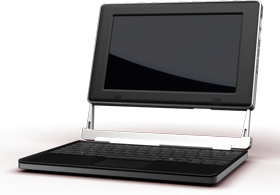
But somehow it was a cloning phase. Vendors were just cloning what Asus did, with more or less changes, but without innovating. Now, it seems that the path has opened again, from the open source and open hardware front, and it has been released AlwaysInnovating s touchbook. It is a netbook with a detachable keyboard (it is even sold separated) and built upon an ARM processor from Texas Instruments, and a 8GB microSD card. Thus they claim the battery last from 10 to 15h with the keyboard, and 3 to 5h in touchscreen mode.
As is said above, the whole machine is open source based. Software is based upon OpenEmbedded, and hardware schematics of the board are released under GPL on Beagleboard project. They say that you can also install Ubuntu, Android or even Windows CE on it. Update: Just discovered that AlwaysInnovating is a Gr goire Gentil startup. Gr gory is a Civil Engineer from cole des ponts et Chauss es. We know how to build things :-D

Russell Coker: You Have the Right to Not Search My Bag

This afternoon I was in a Safeway/Woolworths store (an Australian supermarket chain) and the lady on the checkout asked to inspect my backpack on the way out. The conversation went as follows:
Checkout Lady: Can I inspect your bag?
Me: Sure. - I put my backpack on the counter
CL: Could you open it for me?
Me: It s OK, you can do it.
CL: I m not allowed to open your bag, can you open it?
Me: I don t mind, you can open it. We iterated over the last two lines a few times, when it became clear that no progress was going to be made I asked Can I go now? and left. It seems rather pointless to demand to search someone s bag if you are not permitted to open it. Not that they have any power to search bags anyway. I discussed this with a police officer about 20 years ago and was told that store staff can do nothing other than refuse to allow you into their store in future if you don t agree to a bag search. Stores claim that it s a condition of entry that your bag be searched, but apparently that was not enforceable. Of course the law could have changed recently, I guess it would only require a terrorist threat related to supermarket products (baking soda can make your bread rise explosively) to get the law changed. The last time my bag was searched was when leaving a JB Hi-Fi store. I had a brand new EeePC (purchased from a different store) in one hand and a bag in the other. The EeePC was identical to ones that they had on display and they didn t even ask about it. It seems hardly worth the effort of searching bags when anyone can carry out expensive gear in their hand without being questioned.

Kartik Mistry: Private Email


* I had private email with God today..

3 March 2009

Obey Arthur Liu: Google Summer of Code 2009 at Debian needs you

2009-summer-of-code-logo-final-r3-no-url-011 In case you ve been living under a rock these past years, I shouldn t have to tell you what this is about :). Well, just in case.
The Google Summer of Code (GSoC) is an international program that offers student developers stipends to write code for various open source software projects. Debian has participated since 2006, mentoring dozens of students on Debian projects. The important part of the 2009 edition of the Google Summer of Code is going to start next week with the Organizations application period (March 9th). By that time, we should have listed a reasonable number of ideas on the dedicated wiki page. We will try this year to improve on the performance of the previous years, starting first with more and more dedicated manpower. If you have some time to spare to help manage our Summer of Code bid this year, we can make it a much better experience for the students and for Debian. Help is immediately needed in many areas. Some examples:

By mid-March, we will need: Further in the spring: In the summer: As you can see, there is much work ahead. It s time to pitch out your favorite pet project :)
Remember! The Summer of Code has become a prominent outreach forum for open source organizations. It puts a spotlight on each of them to provide a well-rounded and deep experience of open source development. Right now, you can help with the Wiki, join us on IRC on #debian-soc on OFTC or join the mailing-list at soc-coordination on alioth. The short flyers-friendly URL for the Summer of Code at Debian is : <http://wiki.debian.org/gsoc>. Publicize it! See you this summer!

2 March 2009

Ingo Juergensmann: HowTo: Migrate RAID1 to RAID5

As I wrote last week (German), I had the plan to make a RAID5 out of my existing RAID1 after I received my third 1 TB harddisk. Migrating to RAID5 doesn't work online yet, because mdadm doesn't support the use of --grow and --level together, as you can read in the man page when looking for "-l, --level":


-l, --level=
Set raid level. When used with --create, options are: linear, raid0, 0, stripe, raid1, 1, mirror, raid4,
4, raid5, 5, raid6, 6, raid10, 10, multipath, mp, faulty. Obviously some of these are synonymous.

When used with --build, only linear, stripe, raid0, 0, raid1, multipath, mp, and faulty are valid.

Not yet supported with --grow.


But there's always a way to obtain your goal. If you're brave enough you can find the solution by a quick internet search. Ok, I'm not that brave to try this without a backup, but you shouldn't do that kind of work without having a good backup anyway.

But before I describe the way how to do it, as usual a strong disclaimer: use this howto on your own risk! There's no warranty that this will work for you and you should take care to have a backup of your data. Whoever is doing this migration without having a backup risks the loss of all the data!

I'll describe the migration using an example... there are three logical volumes (LVs) with 1 GB in size each. This is enough for testing purposes and demonstrates how the migration works. You can use real partitions like swap partitions if you want. The LVs are r1, r2, and r3 and are within the Volume Group (VG) /dev/vg:


r1 vg -wi-a- 1.00G
r2 vg -wi-a- 1.00G
r3 vg -wi-a- 1.00G


Two of these LVs are being setup for a RAID1 /dev/md5:

CODE:
muaddib:/home/ij# mdadm --create /dev/md5 -l 1 -n 2 /dev/vg/r[12]
mdadm: /dev/vg/r1 appears to be part of a raid array:
level=raid1 devices=2 ctime=Thu Feb 26 16:16:59 2009
mdadm: /dev/vg/r2 appears to be part of a raid array:
level=raid1 devices=2 ctime=Thu Feb 26 16:16:59 2009
Continue creating array? yes
mdadm: array /dev/md5 started.


The warning to be a part of another raid array can be ignored. It's just a testing array. The result should look similar to:


md5 : active raid1 dm-12[1] dm-11[0]
1048512 blocks [2/2] [UU]
[========>............] resync = 40.2% (422900/1048512) finish=0.7min speed=14096K/sec


Now a filesystem can be created on the raid array and some data can be stored there:

CODE:
muaddib:/home/ij# mkfs.xfs -f /dev/md5
meta-data=/dev/md5 isize=256 agcount=4, agsize=65532 blks
= sectsz=512 attr=2
data = bsize=4096 blocks=262128, imaxpct=25
= sunit=0 swidth=0 blks
naming =version 2 bsize=4096 ascii-ci=0
log =internal log bsize=4096 blocks=1200, version=2
= sectsz=512 sunit=0 blks, lazy-count=0
realtime =none extsz=4096 blocks=0, rtextents=0
muaddib:/home/ij# mount /dev/md5 /mnt
muaddib:/home/ij# cp pics/backdrops/*.jpg /mnt/
muaddib:/home/ij# dir /mnt/
amigager_back1.jpg Dansk-Dunes14.jpg Dansk-Nature-2.jpg
CapeCod_085.jpg Dansk-Dunes15.jpg Dansk-Priel.jpg
ct-1-p1600.jpg Dansk-Dunes16.jpg Dansk-Woods-1.jpg
ct-2-p1600.jpg Dansk-Dunes17.jpg earth_lights_lrg.jpg
Dansk-Beach1.jpg Dansk-Dunes18.jpg HanseSail-AlterStrom2.jpg
Dansk-Beach2.jpg Dansk-Dunes2.jpg HanseSail-AlterStrom.jpg
Dansk-Beach3.jpg Dansk-Dunes3.jpg HanseSail-Mast.jpg
Dansk-Beach4.jpg Dansk-Dunes4.jpg HanseSail-Warnemuende.jpg
Dansk-Beach5.jpg Dansk-Dunes5.jpg LinuxInside_p1600.jpg
Dansk-Beachstones.jpg Dansk-Dunes6.jpg prerow.jpg
Dansk-Cliffs.jpg Dansk-Dunes7.jpg sgi-1440.jpg
Dansk-Dunes10.jpg Dansk-Dunes8.jpg sgi.jpg
Dansk-Dunes11.jpg Dansk-Dunes9.jpg Sonnenuntergang-2.jpg
Dansk-Dunes12.jpg Dansk-Dunes.jpg Sonnenuntergang.jpg
Dansk-Dunes13.jpg Dansk-Nature-1.jpg
muaddib:/home/ij# umount /mnt


After umounting the real challenge arise: creation of a RAID5 label! Normally this is no issue, but I guess you like your data and think twice before proceeding... but hey! You have a backup anyway, don't you?!

CODE:
muaddib:/home/ij# mdadm --create /dev/md5 --level=5 --raid-devices=2 /dev/vg/r[12]
mdadm: /dev/vg/r1 appears to be part of a raid array:
level=raid1 devices=2 ctime=Mon Mar 2 18:18:09 2009
mdadm: /dev/vg/r2 appears to be part of a raid array:
level=raid1 devices=2 ctime=Mon Mar 2 18:18:09 2009
Continue creating array? yes
mdadm: array /dev/md5 started.
muaddib:/home/ij# cat /proc/mdstat
md5 : active (auto-read-only) raid5 dm-12[2](S) dm-11[0]
1048512 blocks level 5, 64k chunk, algorithm 2 [2/1] [U_]
muaddib:/home/ij# cat /proc/mdstat
Personalities : [linear] [multipath] [raid0] [raid1] [raid6] [raid5] [raid4] [raid10]
md5 : active raid5 dm-12[2] dm-11[0]
1048512 blocks level 5, 64k chunk, algorithm 2 [2/1] [U_]
[>....................] recovery = 3.1% (33152/1048512) finish=0.5min speed=33152K/sec


After stopping /dev/md5 the new RAID5 label can be written. The data ought to be safe because of the RAID5 algorithm when running with 2 disks. To verify the theory you can mount /dev/md5 again. The next steps can be done with the array online.


muaddib:/home/ij# mount /dev/md5 /mnt
muaddib:/home/ij# dir /mnt/
amigager_back1.jpg Dansk-Dunes14.jpg Dansk-Nature-2.jpg
CapeCod_085.jpg Dansk-Dunes15.jpg Dansk-Priel.jpg
ct-1-p1600.jpg Dansk-Dunes16.jpg Dansk-Woods-1.jpg
ct-2-p1600.jpg Dansk-Dunes17.jpg earth_lights_lrg.jpg
Dansk-Beach1.jpg Dansk-Dunes18.jpg HanseSail-AlterStrom2.jpg
Dansk-Beach2.jpg Dansk-Dunes2.jpg HanseSail-AlterStrom.jpg
Dansk-Beach3.jpg Dansk-Dunes3.jpg HanseSail-Mast.jpg
Dansk-Beach4.jpg Dansk-Dunes4.jpg HanseSail-Warnemuende.jpg
Dansk-Beach5.jpg Dansk-Dunes5.jpg LinuxInside_p1600.jpg
Dansk-Beachstones.jpg Dansk-Dunes6.jpg prerow.jpg
Dansk-Cliffs.jpg Dansk-Dunes7.jpg sgi-1440.jpg
Dansk-Dunes10.jpg Dansk-Dunes8.jpg sgi.jpg
Dansk-Dunes11.jpg Dansk-Dunes9.jpg Sonnenuntergang-2.jpg
Dansk-Dunes12.jpg Dansk-Dunes.jpg Sonnenuntergang.jpg
Dansk-Dunes13.jpg Dansk-Nature-1.jpg


The next step is to add the third "disk":

CODE:
muaddib:/home/ij# mdadm --add /dev/md5 /dev/vg/r3
mdadm: added /dev/vg/r3
muaddib:/home/ij# cat /proc/mdstat
md5 : active raid5 dm-13[2](S) dm-12[1] dm-11[0]
1048512 blocks level 5, 64k chunk, algorithm 2 [2/2] [UU]


That was the first step. As you can see the third "disk" has been added as a spare device. Because we don't want a spare but a RAID5 we need to expand the number of disks to 3 and tell the RAID to grow it's capacity:

CODE:
muaddib:/home/ij# mdadm --grow /dev/md5 --raid-devices=3
mdadm: Need to backup 128K of critical section..
mdadm: ... critical section passed.
muaddib:/home/ij# cat /proc/mdstat
Personalities : [linear] [multipath] [raid0] [raid1] [raid6] [raid5] [raid4] [raid10]
md5 : active raid5 dm-13[2] dm-12[1] dm-11[0]
1048512 blocks super 0.91 level 5, 64k chunk, algorithm 2 [3/3] [UUU]
[>....................] reshape = 3.1% (33472/1048512) finish=3.0min speed=5578K/sec


The last two commands were made with the mounted filesystem that just needs to get enlarged. With XFS you make this happen by invoking xfs_growfs:

CODE:
muaddib:/home/ij# df -h /mnt
Filesystem Size Used Avail Use% Mounted on
/dev/md5 1020M 21M 1000M 2% /mnt
muaddib:/home/ij# xfs_growfs /mnt
meta-data=/dev/md5 isize=256 agcount=4, agsize=65532 blks
= sectsz=512 attr=2
data = bsize=4096 blocks=262128, imaxpct=25
= sunit=0 swidth=0 blks
naming =version 2 bsize=4096 ascii-ci=0
log =internal bsize=4096 blocks=1200, version=2
= sectsz=512 sunit=0 blks, lazy-count=0
realtime =none extsz=4096 blocks=0, rtextents=0
data blocks changed from 262128 to 524256
muaddib:/home/ij# df -h /mnt
Filesystem Size Used Avail Use% Mounted on
/dev/md5 2.0G 21M 2.0G 1% /mnt


Done!

If you have an LVM on your RAID you'll need to use the appropriate LVM tools to enlarge the PVs and VGs as well. But the hardest work is already done. The reshaping can take a lot of time, as you can see here:


md4 : active raid5 sda6[0] sdc6[2] sdb6[1]
969161152 blocks super 0.91 level 5, 64k chunk, algorithm 2 [3/3] [UUU]
[>....................] reshape = 2.8% (27990592/969161152) finish=1485.0min speed=10562K/sec


There might be other fallpits if you change your setup from 2-disk arrays to 3-disk arrays. For example you'll need to adopt the changes to your configuration files like /etc/mdadm/mdadm.conf. But this has not much to do with the migration from RAID1 to RAID5 itself.

Many thanks to Goswin Brederlow for his advice and writing a wishlist bug: #517731

Russell Coker: A Police SMS about Fire Risk

My wife and I have each received SMS messages from Vic.Police that say: Extreme weather expected tonight (Monday) & tomorrow. High wind & fire risk. Listen to the ABC local radio for emergency update. Do not reply to this message. Presumably the police are trying to contact everyone in Victoria. The problem seems to be related to the high wind speed that is forecast, the temperature is only predicted to be 32C (as opposed to the 38C that they were forecasting a few days ago and the temperatures of 46C or more a few weeks ago). The last reports were that the firefighters were still working on putting out fires, and the unclear news coverage seemed to suggest that some of the fires had been burning since the 7th of February. A day of extreme fire danger that starts without any fires would be bad enough, but starting with some fires that are already out of control is destined to give a very bad result. Below is the link to my previous post about people trying to take advantage of a tragedy to benefit their own political causes. For anyone who wants to rail against abortion, homosexuality, or the Greens party, please show some decency and do so based on relevant facts and do it at an appropriate time. I suggest that anyone who writes later this week about ways to avoid bushfires should be careful to check their claims for accuracy and scientific evidence (hint - the CSIRO and NASA have published a lot of useful background information). http://etbe.coker.com.au/2009/02/25/tragedy-and-profit/

Theodore Ts'o: SSD s, Journaling, and noatime/relatime

On occasion, you will see the advice that the ext3 file system is not suitable for Solid State Disks (SSD s) due to the extra writes caused by journaling and so Linux users using SSD s should use ext2 instead. However, is this folk wisdom actually true? This weekend, I decided to measure exactly what the write overhead of journaling actually is in actual practice. For this experiment I used ext4, since I recently added a feature to track the amount of writes to the file system over its lifetime (to better gauge the wear and tear on an SSD). Ext4 also has the advantage that (starting in 2.6.29), it can support operations with and without a journal, allowing me to do a controlled experiment where I could manipulate only that one variable. The test workload I chose was a simple one: For the first test, I ran the test using no special mount options, and the only difference being the presence or absence of the has_journal feature. (That is, the first file system was created using mke2fs -t ext4 /dev/closure/testext4, while the second file system was created using mke2fs -t ext4 -O ^has_journal /dev/closure/testext4.)
Amount of data written (in megabytes) on an ext4 filesystem
Operation with journal w/o journal percent change
git clone 367.7 353.0 4.00%
make 231.1 203.4 12.0%
make clean 14.6 7.7 47.3%
What the results show is that metadata-heavy workloads, such as make clean, do result in almost twice the amount data written to disk. This is to be expected, since all changes to metadata blocks are first written to the journal and the journal transaction committed before the metadata is written to their final location on disk. However, for more common workloads where we are writing data as well as modifying filesystem metadata blocks, the difference is much smaller: 4% for the git clone, and 12% for the actual kernel compile. The noatime mount option Can we do better? Yes, if we mount the file system using the noatime mount option:
Amount of data written (in megabytes) on an ext4 filesystem mounted with noatime
Operation with journal w/o journal percent change
git clone 367.0 353.0 3.81%
make 207.6 199.4 3.95%
make clean 6.45 3.73 42.17%
This reduces the extra cost of the journal in the git clone and make steps to be just under 4%. What this shows is that most of the extra meta-data cost without the noatime mount option was caused by update to the last update time for kernel source files and directories. The relatime mount option There is a newer alternative to the noatime mount option, relatime. The relatime mount option updates the last access time of a file only if the last modified or last inode changed time is newer than the last accessed time. This allows programs to be able to determine whether a file has been read size it was last modified. The usual (actually, only) example that is given of such an application is the mutt mail-reader, which uses the last accessed time to determine if new mail has been delivered to Unix mail spool files. Unfortunately, relatime is not free. As you can see below, it has roughly double the overhead of noatime (but roughly half the overhead of using the standard Posix atime semantics):
Amount of data written (in megabytes) on an ext4 filesystem mounted with relatime
Operation with journal w/o journal percent change
git clone 366.6 353.0 3.71%
make 216.8 203.7 6.04%
make clean 13.34 6.97 45.75%
Personally, I don t think relatime is worth it. There are other ways of working around the issue with mutt for example, you can use Maildir-style mailboxes, or you can use mutt s check_mbox_size option. If the goal is to reduce unnecessary disk writes, I would mount my file systems using noatime, and use other workarounds as necessary. Alternatively, you can use chattr +A to set the noatime flag on all files and directories where you don t want noatime semantics, and then clear the flag for the Unix mbox files where you care about the atime updates. Since the noatime flag is inherited by default, you can get this behaviour by setting running chattr +A /mntpt right after the filesystem is first created and mounted; all files and directories created in that file system will have the noatime file inherited. Comparing ext3 and ext2 filesystems
Amount of data written (in megabytes) on an ext3 and ext2 filesystem
Operation ext3 ext2 percent change
git clone 374.6 357.2 4.64%
make 230.9 204.4 11.48%
make clean 14.56 6.54 55.08%
Finally, just to round things out, I tried the same experiment using the ext3 and ext2 file systems. The difference between these results and the ones involving ext4 are the result of the fact that ext2 does not have the directory index feature (aka htree support), and both ext2 and ext3 do not have extents support, but rather use the less efficient indirect block scheme. The ext2 and ext3 allocators are also someone different from each other, and from ext4. Still, the results are substantially similar with the first set of Posix-compliant atime update numbers (I didn t bother to do noatime and relatime benchmark runs with ext2 and ext3, but I expect the results would be similar.) Conclusion So given all of this, where did the common folk wisdom that ext3 was not suitable for SSD s come from? Some of it may have been from people worrying too much about extreme workloads such as make clean ; but while doubling the write load sounds bad, going from 4MB to 7MB worth of writes isn t that much compared to the write load of actually doing the kernel compile or populating the kernel source tree. No, the problem was that first generation SSD s had a very bad problem with what has been called the write amplification effect , where a 4k write might cause a 128k region of the SSD to be erased and rewritten. In addition in order to provide safety against system crashes, ext3 has more synchronous write operations that is where ext3 waits for the write operation to be complete before moving on, and this caused a very pronounced and noticeable stuttering effect which was fairly annoying to users. However, the next generation of SSD s, such as Intel s X25-M SSD, have worked around the write amplification affect. What else have we learned? First of all, for normal workloads that include data writes, the overhead from journaling is actually relatively small (between 4 and 12%, depending on the workload). Further, than much of this overhead can be reduced by enabling the noatime option, with relatime providing some benefit, but ultimately if the goal is to reduce your file system s write load, especially where an SSD is involved, I would strongly recommend the use of noatime over relatime. Related posts (automatically generated):
  1. Should Filesystems Be Optimized for SSD s? In one of the comments to my last blog entry,...
  2. Aligning filesystems to an SSD s erase block size I recently purchased a new toy, an Intel X25-M SSD,...
  3. Fast ext4 fsck times This wasn t one of the things we were explicitly engineering...

28 February 2009

Russell Coker: Links February 2009

Michael Anissimov writes about the theft of computers from the Los Alamos nuclear weapons lab [1]. He suggests that this incident (and others like it) pose a great risk to out civilisation. He advocates donating towards The Lifeboat Foundation [2] to try and mitigate risks to humanity. They suggest pledging $1000 per year for 25 years. It s interesting to note that people in Pakistan pay $8 per month for net access that better by most objective metrics than that which most people in first world can get [3]. It seems that we need to remove the cartel for the local loop to get good net access, either deregulate it entirely or make it owned by the local government who are more directly responsive to the residents. Bruce Schneier wrote a post about a proposed US law to force all mobile phones with cameras to make a click sound when taking a picture [4]. The law is largely irrelevant, as it s been law in Japan for a while most phones are already designed in that way. One interesting comment from MarkH was: But if congress REALLY wishes to benefit the public, I suggest that all guns in the U.S. be required, before each discharge, to make loud sounds (with appropriate time sequencing) simulating the flintlock technology that was common at the beginning of U.S. history, including cocking, use of the ramrod, etc. This would give fair warning of an impending discharge, and would limit firing rates to a few per minute. ROFL Brief review of a Google Android phone vs an iPhone [5]. The Android G1 is now on sale in Australia! [6]. LWN has an article about the panel discussion at the LCA Security Mini-conf [7]. Jonathan Corbet has quoted me quite a bit in the article, thanks Jonathan! Peter Ward gave an interesting TED talk about Hydrogen Sulphide and mass extinctions [8]. The best available evidence is that one of the worst extinctions was caused by H2S in the atmosphere which was produced by bacteria. The bacteria in question like a large amount of CO2 in the atmosphere. It s yet another reason for reducing the CO2 production. Michael Anissimov has written a good article summarising some of the dangers of space exploration [9], he suggests colonising the sea, deserts, and Antartica first (all of which are much easier and safer). Until we gain the ability to create huge (miles wide or larger) air bubbles in space enclosed by rapidly self-healing transparent membranes, it will be cramped and overwhelmingly boring. You ll spend even more time on the Internet up there than down here, and your connection will be slow . A confined space and slow net access, that s like being on a plane.

26 February 2009

Theodore Ts'o: Fast ext4 fsck times, revisited

Last night I managed to finish up a rather satisfying improvement to ext4 s inode and block allocators. The ext4 s original allocator was actually a bit more simple-minded than ext3 s, in that it didn t implement the Orlov algorithm to spread out top-level directories for better filesystem aging. It also was buggy in certain ways, where it would return ENOSPC even when there were still plenty of inodes in the file system. So I had been working on extending ext3 s original Orlov allocator so it would work well with ext4. While I was at it, it occurred to me that one of the tricks I could play with ext4 s flex groups (which are higher-order collection of block groups), was to bias the block allocation algorithms such that the first block group in a flexgroup would be preferred for use by directories, and biased against data blocks for regular files. This meant that directory blocks would get clustered together, which cut a third off the time needed for e2fsck pass2:
Comparison of e2fsck times on an 32GB partition
Pass ext4 old allocator ext4 new allocator
time (s) I/O time (s) I/O
real user system MB read MB/s real user system MB read MB/s
1 6.69 4.06 0.90 82 12.25 6.70 3.63 1.58 82 12.23
2 13.34 2.30 3.78 133 9.97 4.24 1.27 2.46 133 31.36
3 0.02 0.01 0 1 63.85 0.01 0.01 0.01 1 82.69
4 0.28 0.27 0 0 0 0.23 0.22 0 0 0
5 2.60 2.31 0.03 1 0.38 2.42 2.15 0.07 1 0.41
Total 23.06 9.03 4.74 216 9.37 13.78 7.33 4.19 216 15.68

As you may recall from my previous observations on this blog, although we hadn t been explicitly engineering for this, a file system consistency check on an ext4 file system tends to be a factor of 6-8 faster than the e2fsck times on an equivalent ext3 file system, mainly due to the elimination of indirect blocks and the uninit_bg feature reducing the amount of disk reads necessary in e2fsck s pass 1. However, the ext4 layout optimizations didn t do much for e2fsck s pass 2. Well, the optimization of the block and inode allocators is complementary to the original ext4 fsck improvements, since it focuses on what we hadn t optimized the first time around: e2fsck pass 2 times have been cut by a third, and the overall fsck time has been cut by 40%. Not too shabby! Of course, we need to do more testing to make sure we haven t caused other file system benchmarks to degrade, although I m cautiously optimistic that this will end up being a net win. I suspect that some benchmarks will go up by a little, and others will go down a little, depending on how heavily the benchmark exercises directory operations versus sequential I/O patterns. If people want to test this new allocator, it is in the ext4 patch queue. If all goes well, I will hopefully be pushing it to Linus after 2.6.29 is released, at the next merge window.

horizontal separator For comparison s sake, here is a comparison of the fsck time of the same collection of files and directories, comparing ext3 and the original ext4 block and inode allocator. The file system in question is a 32GB install of Ubuntu Jaunty, with a personal home directory, a rather large Maildir directory, some linux kernel trees, and an e2fsprogs tree. It s basically the emergency environment I set up on my Netbook at FOSDEM. In all cases the file systems were freshly copied from the original root directory using the command rsync -axH / /mnt. It s actually a bit surprising to me that ext3 s pass 2 e2fsck times was that much better than e2fsck time under the old ext4 allocator. My previous experience has shown that the two are normally about the same, with a write throughput of around 9-10 MB/s on for e2fsck s pass 2 for both ext3 file systems and ext4 file systems with the original inode/block allocators. Hence, I would have expected ext3 s pass2 time to have been 12-13 seconds, and not 6. I m not sure how that happened, unless it was the luck of draw in terms of how things ended up getting allocated on disk. So I m not too sure what happened there, but overall things look quite good for ext4 and fsck times!
Comparison of e2fsck times on an 32GB partition
Pass ext3 ext4 old allocator
time (s) I/O time (s) I/O
real user system MB read MB/s real user system MB read MB/s
1 108.40 13.74 11.53 583 5.38 6.69 4.06 0.90 82 12.25
2 5.91 1.74 2.56 133 22.51 13.34 2.30 3.78 133 9.97
3 0.03 0.01 0 1 31.21 0.02 0.01 0 1 63.85
4 0.28 0.27 0 0 0 0.28 0.27 0 0 0
5 3.17 0.92 0.13 2 0.63 2.60 2.31 0.03 1 0.38
Total 118.15 16.75 14.25 718 6.08 23.06 9.03 4.74 216 9.37
Vital Statistics of the 32GB partition
312214 inodes used (14.89%)
263 non-contiguous files (0.1%)
198 non-contiguous directories (0.1%)
# of inodes with ind/dind/tind blocks: 0/0/0
Extent depth histogram: 292698/40
4388697 blocks used (52.32%)
0 bad blocks
1 large file
263549 regular files
28022 directories
5 character device files
1 block device file
5 fifos
615 links
20618 symbolic links (19450 fast symbolic links)
5 sockets
312820 files
Related posts (automatically generated):

  1. Fast ext4 fsck times This wasn t one of the things we were explicitly engineering...
  2. Wanted: Incremental Backup Solutions that Use a Database Dear Lazyweb, I m looking for recommendations for Open Source backup...
  3. Ext4 is now the primary filesystem on my laptop Over the weekend, I converted my laptop to use the...

Adrian von Bidder: Tech bits

Two small tricks that I feel should be circulated more widely, because Google only disclosed them to me after a few false starts: To figure out which processes are writing to the disk, I eventually found /proc/sys/vm/block_dump (see also chapter 5 of the Laptop Mode FAQ) which does exactly what I was hoping to find: it shows down to the level of process and file where disk writes are coming from. (Turns out, that kded and PowerDevil are currently appending to the .xsession-errors file regularly, keeping the disk busy on my new toy. Unlimited scrollback in konsole was the other culprit, but that one is switched off easily.) Since I want to start backup on my netbook when it comes online at home, I figured the DHCP server was the likely place to trigger this. But the execute feature to start hook scripts on the DHCP server (see the dhcp-eval man page) was only added quite recently, so google first showed me a huge load of discussions involving tail on syslog and parsing its output. (I also found the simple event correlator which might be useful where run command features are not available.)

25 February 2009

Lior Kaplan: Microsoft adapts slowly to the netbook wave


Quoting Microsoft Reports Second-Quarter Results :
Client revenue declined 8% as a result of PC market weakness and a continued shift to lower priced netbooks.
Sounds like Microsoft unwillingness to sell XP instead of Vista has a very big effect on it. The adaptaion to the new situation might come after the release on Windows 7. Let s just wait and see Also read Ballmer: Linux Bigger Competitor than Apple, and the follow ups made about the slide presented there. Posted in Proprietary software

Russell Coker: Links February 2009

Michael Anissimov writes about the theft of computers from the Los Alamos nuclear weapons lab [1]. He suggests that this incident (and others like it) pose a great risk to out civilisation. He advocates donating towards The Lifeboat Foundation [2] to try and mitigate risks to humanity. They suggest pledging $1000 per year for 25 years. It s interesting to note that people in Pakistan pay $8 per month for net access that better by most objective metrics than that which most people in first world can get [3]. It seems that we need to remove the cartel for the local loop to get good net access, either deregulate it entirely or make it owned by the local government who are more directly responsive to the residents. Bruce Schneier wrote a post about a proposed US law to force all mobile phones with cameras to make a click sound when taking a picture [4]. The law is largely irrelevant, as it s been law in Japan for a while most phones are already designed in that way. One interesting comment from MarkH was: But if congress REALLY wishes to benefit the public, I suggest that all guns in the U.S. be required, before each discharge, to make loud sounds (with appropriate time sequencing) simulating the flintlock technology that was common at the beginning of U.S. history, including cocking, use of the ramrod, etc. This would give fair warning of an impending discharge, and would limit firing rates to a few per minute. ROFL Brief review of a Google Android phone vs an iPhone [5]. The Android G1 is now on sale in Australia! [6]. LWN has an article about the panel discussion at the LCA Security Mini-conf [7]. Jonathan Corbet has quoted me quite a bit in the article, thanks Jonathan! Peter Ward gave an interesting TED talk about Hydrogen Sulphide and mass extinctions [8]. The best available evidence is that one of the worst extinctions was caused by H2S in the atmosphere which was produced by bacteria. The bacteria in question like a large amount of CO2 in the atmosphere. It s yet another reason for reducing the CO2 production. Michael Anissimov has written a good article summarising some of the dangers of space exploration [9], he suggests colonising the sea, deserts, and Antartica first (all of which are much easier and safer). Until we gain the ability to create huge (miles wide or larger) air bubbles in space enclosed by rapidly self-healing transparent membranes, it will be cramped and overwhelmingly boring. You ll spend even more time on the Internet up there than down here, and your connection will be slow . A confined space and slow net access, that s like being on a plane.

Andrew McMillan: Conference Audio: Problems, Procedures & Suggestions for the Future

I was going to reply to this in the mailing list, but after I spent half an hour furiously typing this, I thought it might be better to put it into a blog, for a slightly wider audience, perhaps a more permanent life and partly in an effort to end this thread on a more or less constructive note. The backchat for this is that the LCA 2009 video has started to go up on the web, and some talks have some gaps in the audio stream... Russell Coker wants to make a constructive suggestion, as follows: On Wed, 2009-02-25 at 18:02 +1100, Russell Coker wrote:
>
> I've pasted in the below paragraph (the third time I've included it in this
> thread) to reiterate my point. Note that I am not asking you to re-do any
> videos, I am making a suggestion for future people.
>
> # I suggest that in future when preparing such videos the sections with no
> # sound be omitted and replaced by a short note explaining the omission,
> # something like "sorry, due to technical difficulties four minutes of sound
> # were not available". Having a second ogg file for the lip-readers would be
> # an option although I expect that the demand would be minute.
> As someone who has not been at all involved with the production of the LCA videos, but who has been intimately involved with the process of streaming DebConf 6, 7 & 8, I think this sort of additional effort will only happen if people voluntarily do it themselves. Just the task of *watching* all of the produced videos is a huge job for one individual, but as a community of individuals it is quite likely that at least one individual in the community watches each video. If each person who was offended by the quality of post-production work took it upon themselves to fix up only one video then it is probable that we would see some changed. Otherwise I'm afraid it is unlikely. Further in his e-mail, Russell Coker wrote:
>
> My observation was that the microphones were put down AFTER they ceased
> operating. A non-functional lapel microphone is no better than a non-
> functional hand-held microphone.
>
> Having a large supply of new batteries would be one way of alleviating the
> problem (I believe that some of the instances were due to flat batteries).
> Another possibility is having two microphones on hand so that if one died the
> other could be turned on.
>
> A wired microphone that doesn't rely on battery power would probably be the
> most reliable option. That of course might not fit with OH&S issues. Most speakers are uncomfortable / unfamiliar with wired microphones. Spares are essential, of course, but the problem can usually be avoided by having a checklist for the audio person to confirm several things: Before the start of the talk: At the start of the talk: At the end of the talk: There are probably a couple of things that I've missed, but if you start with a checklist you pretty soon modify it into a *good* checklist, and it *really* helps when people are under fire. In fact lapel mics are not the best microphones for these kinds of presentations. The best mics are the ultra lightweight 'headset' models which place a the mic near to the speakers mouth. These do not suffer when the speaker turns their head hard to the left or right, at which points a lapel mic stops getting their speech. They also work well with that more hirsute minority so over-represented in our particular community (alas, that this set no longer includes Bdale :-) Of course DebConf has a large team of volunteers for streaming the conference, and has developed these kinds of procedures over a number of years. At DebConf there are usually only two main streams, each of which involves: Ideally that really is 7 people (times two streams), and you can get by if you can't find all of the last three, but the other four are increasingly desirable. We mostly manage to do that with volunteers for two streams at DebConf, but for five or more streams at LCA it is inevitably a lot harder, and the quality necessarily has to be cut back to match the resources available. While it is true that sound is critical to this communication, it is unfortunately also true that most people's (even most geek's) eyes glaze over when presented with a mysterious box with a mere 6 sliding potentiometers, let alone when there are 36 of them, each associated with another 8 rotary knobs, and a rats nest of cables worthy of the worst network nightmare they've seen, and where everything appears to be literally held in place with duct tape. So it is not so surprising then that while it is relatively easy to find a gadget mad geek capable of operating a camera, or even experienced with operating a camera, finding people with experience operating a sound mixer is an order of magnitude harder. At LCA the operation appears superficially to often involve a (single) speaker camera operator with a very basic sound mixer which has been configured once by an overworked person who is unobtainable during the actual talk to solve any audio problems. These people are volunteers, and are doing their best, but it simply isn't possible to get a consistently high quality of video and audio in those circumstances. So as one of the organising committee for LCA 2010 in Wellington I will be watching what we do, and although I don't intend to get personally involved in the video production (I've got plenty of other stuff on *my* plate :-) I do intend to provide what advice and assistance I can. I know that we hope to have some professionals involved (as volunteers), but how many volunteers, and with what levels of skill & experience, we are unlikely to know until much closer than the date. I'll also personally try and get a run-down on all of the audio equipment so that in an emergency, if I happen to be available, I can sub as a sound mixer operator. So we will try and do better in Wellington in 2010. Come to the conference, though, because we can make no guarantees, and if you do come to Wellington, and you see a single cameraman, and you know something about running a sound mixer, then perhaps you can come and volunteer to help out in that capacity, for the talks you are attending anyway. We'd really appreciate the help. And finally I must say thanks, in particular, to Holger Levsen for all the learning I have gained since joining the videoteam at DebConf5 in Helsinki in 2005. And too, to all of those past conference teams (LCA, DebConf and otherwise) who have put their best efforts into providing videos of the talks I couldn't see in person. I know it's a bloody hard job, and often a less high profile one, so:

Thank You.

Next.

Previous.