Search Results: "tim"

7 January 2026

Ravi Dwivedi: Why my Riseup account got suspended (and reinstated)

Disclaimer: The goal of this post is not to attack Riseup. In fact, I love Riseup and support their work.

Story Riseup is an email provider, known for its privacy-friendly email service. The service requires an invite from an existing Riseup email user to get an account. I created my account on Riseup in the year 2020, of course with the help of a friend who invited me. Since then, I have used the email address only occasionally, although it is logged into my Thunderbird all the time. Fast-forward to the 4th of January 2026, when Thunderbird suddenly told me that it could not log in to my Riseup account. When I tried logging in using their webmail, it said invalid password . Finally, I tried logging in to my account on their website, and was told that
Log in for that account is temporary suspended while we perform maintenance. Please try again later.
At this point, I suspected that the Riseup service itself was facing some issues. I asked a friend who had an account there if the service was up, and they said that it was. The issue seemed to be specific only to my account. I contacted Riseup support and informed them of the issue. They responded the next day (the 5th of January) saying:
The my-username-redacted account was found inviting another account that violated our terms of use. As a security measure we suspend all related accounts to ToS violations.
(Before we continue, I would like to take a moment and reflect upon how nice it was to receive response from a human rather than an AI bot a trend that is unfortunately becoming the norm nowadays.) I didn t know who violated their ToS, so I asked which account violated their terms. Riseup told me:
username-redacted@riseup.net attempted to create aliases that could be abused to impersonate riseup itself.
I asked a friend whom I invited a month before the incident, and they confirmed that the username belonged to them. When I asked what they did, they told me they tried creating aliases such as floatup and risedown. I also asked Riseup which aliases violated their terms, but their support didn t answer this. I explained to the Riseup support that the impersonation wasn t intentional, that the user hadn t sent any emails, and that I had been a user for more than 5 years and had donated to them in the past. Furthermore, I suggested that they should block the creation of such aliases if they think the aliases violate their terms, like how email providers typically don t allow users to create admin@ or abuse@ email addresses. After I explained myself, Riseup reinstated my account. Update on the 10th of January 2025: My friend told me that the alias that violated Riseup s terms was cloudadmin and his account was reinstated on the 7th of January.

Issues with suspension I have the following issues regarding the way the suspension took place
  • There was no way of challenging the suspension before the action was taken
  • The action taken against me was disproportionate. Remember that I didn t violate any terms. It was allegedly done by a user I invited. They could just block the aliases while continuing the discussion in parallel.
  • I was locked out of my account with no way of saving my emails and without any chance to migrate. What if that email address was being used for important stuff such as bank access or train tickets? I know people who use Riseup email for such purposes.
  • The violation wasn t even proven. I wasn t told which alias violated the terms and how could that be used to impersonate Riseup itself
When I brought up the issue of me getting locked out of my account without a way of downloading my emails or migrating my account, Riseup support responded by saying:
You must understand that we react [by] protecting our service, and therefore we cannot provide notice messages on the affected accounts. We need to act preventing any potential damage to the service that might affect the rest of the users, and that measure is not excessive (think on how abusers/spammers/scammers/etc could trick us and attempt any action before their account is suspended).
This didn t address my concerns, so let s move on to the next section.

Room for improvement Here s how I think Riseup s ban policy could be changed while still protecting against spammers and other bad actors:
  • Even if Riseup can t provide notice to blocked accounts, perhaps they can scale back limitations on the inviting account which wasn t even involved for example, by temporarily disabling invites from that account until the issue is resolved.
  • In this case, the person didn t impersonate Riseup, so Riseup could have just blocked the aliases and let the user know about it, rather than banning the account outright.
  • Riseup should give blocked users access to their existing emails so they have a chance to migrate them to a different provider. (Riseup could disable SMTP and maybe incoming emails but keep IMAP access open). I know people who use Riseup for important things such as bank or train tickets, and a sudden block like this is not a good idea.
  • Riseup should factor in the account profile in making these decisions. I had an account on their service for 5 years and I had only created around 5 invites. (I don t remember the exact number and there s no way to retrieve this information.) This is not exactly an attacker profile. I feel long-term users like this deserve an explanation for a ban.
I understand Riseup is a community-run service and does not have unlimited resources like big corporations or commercial email providers do. Their actions felt disproportionate to me because I don t know what issues they face behind the scenes. I hope someone can help to improve the policies, or at least shed light on why they are the way they are. Signing off now. Meet you in the next one! Thanks to Badri and Contrapunctus for reviewing this blog post

Thorsten Alteholz: My Debian Activities in December 2025

Debian LTS/ELTS This was my hundred-thirty-eighth month that I did some work for the Debian LTS initiative, started by Raphael Hertzog at Freexian. (As the LTS- and ELTS-teams have been merged now, there is only one paragraph left for both activities.) During my allocated time I uploaded or worked on: I also tried to backport the libcoap3-patches to Bookworm, but I am afraid the changes would be too intrusive.When I stumbled upon a comment for 7zip about finding the patches might be a hard , I couldn t believe it. Well, Daniel was right and I didn t find any. Furthermore I worked on suricata, marked some CVEs as not-affected or ignored, and added some new patches. Unfortunately my allocated time was spent before I could do a new upload. I also attended the monthly LTS/ELTS meeting. Last but not least I injected some packages for uploads to security-master. Debian Printing This month I uploaded a new upstream version or a bugfix version of: This work is generously funded by Freexian! Debian Lomiri I started to contribute to Lomiri packages, which are part of the Debian UBports Team. As a first step I took care of failing CI pipelines and tried to fix them. A next step would be to package some new Applications. This work is generously funded by Fre(i)e Software GmbH! Debian Astro This month I uploaded a new upstream version or a bugfix version of: Debian IoT This month I uploaded a new upstream version or a bugfix version of: Debian Mobcom Unfortunately I didn t found any time to work on this topic. misc This month I uploaded a new upstream version or a bugfix version of: Last but not least, I wish (almost) everbody a Happy New Year and hope that you are able to stick to your New Year s resolutions.

5 January 2026

Isoken Ibizugbe: Thinking About My Audience

Thinking about who I am addressing is a challenge, but it is an important one. As I write, I realize I m speaking to three distinct groups: my friends and family who are new to the world of tech, newcomers eager to join programs like Outreachy, and the technical experts who maintain and sustain the projects I work on.

What is FOSS anyway? To my friends and family: Free and Open Source Software (FOSS) refers to software that anyone can freely use, modify, and share. Think of it as a community garden, instead of one company owning the food, people from all over the world contribute, improve, and maintain it so everyone can benefit from it for free.

To the Aspiring Contributors Contributing to an open source project isn t just about writing code. It could involve going over a ton of documentation and understanding a specific coding style. You have to set up your environment and learn to treat documentation as a source of truth, even if it s something you help modify and improve later. Where I come from, this world is fairly unknown, and it seemed quite scary at first. However, I ve learned that asking questions and communicating are your best tools. Don t be afraid to do your part by investigating and reading, but remember that the community is there to help you grow.

Why Quality Matters For the past few weeks, I ve seen the importance of checking software quality before a release. Imagine you download a new desktop environment, try to open the calculator or the clock, and it crashes or refuses to start. How annoying is that? Or worse, you download software and can t even install it successfully. My work on creating tests for Debian using openQA is aimed at preventing these experiences. We simulate real user actions to make sure that when someone clicks Open, the application actually works.

Closing Thoughts In general, FOSS has empowered people to access and build technology freely. Whether you are here to use the software or you have the expertise to modify and explore it, there is a place for you in this community. I m writing this for you, whichever audience you belong to, to show that complex systems become less intimidating when you begin by asking questions.

Hellen Chemtai: Starting out on Open source: Try the OpenQA Debian Image Testing Project

Hello world  . I am an intern at Outreachy and contributing to the Debian Images Testing project since October 2025. This project is Open Source and everyone can contribute to it in any way. The project uses Open QA to automatically install Operating System Images and test them . We have a community here of contributors that is always ready to help out. The mentors and project maintainers are very open to contributions. They listen to any innovative ideas and point out what they have been doing so far. So far contributions have been in terms of: Contributing to this project requires some knowledge of Linux commands and Operating Systems. What we will learn later as we go on will be :
Preparation
Before any contribution begins, we would want to first try out the project and run a couple of tests. Get to understand what we are doing first. Let s say you are starting out as a Windows or MacOS user and you want to start contributing. I would recommend dual partitioning your device first. Do enough research and prepare the resources. The network install image just needs at-least 4 GB USB flash drive for dual booting. You will use Debian as the second operating system. Give enough space to Debian, I recommend around 150 GB or more. Also assign at-least 1 GB space to the /boot/efi directory to prevent the low space warnings after a while.This will be a way good way to learn about image installation which is part of the work . I do not recommend Virtual Box because it will hinder full use of system resources. This process will take a day or two.
Set Up and Testing
After dual booting. We log into our Debian System . The next step of instructions will take you through how we set up and run our tests. These instructions have many Linux commands. You will be learning if you are a newbie as you go through the steps. Try to understand these commands and do not blindly copy and paste. You can start your contributions here if you have a suggestion to add to the install docs. Run some tests then log in the Web UI as per the instructions to view your tests progress. Green means they ve passed. Blue means its still running. Red means failed.
Trying Out Ideas
Kudos if you have reached this point. The community of contributors will help if you are stuck. We get to try out our own variations of tests using variables. We will also rely on documentation to understand the configurations / test commands like these
openqa-cli api -X POST isos ISO=debian-13.1.0-amd64-netinst.iso DISTRI=debian VERSION=stable FLAVOR=netinst-iso ARCH=x86_64 BUILD=1310 #This is the test you will run on the guide
openqa-cli api -X POST isos ISO=debian-13.1.0-amd64-netinst.iso DISTRI=debian VERSION=stable FLAVOR=netinst-iso ARCH=x86_64 BUILD=1310 TEST=cinnamon #I have added a TEST variable that runs only cinnamon test suite
You can check specific test suites from the WebUI :
We get some failures at times. Here are some failed tests from a build I was working on.
Here we find the cinnamon test failed at locale module. Click on any module above and it will lead us to needles and point to the where the test failed. You can check the error or try to add a needle if its needle failure.
Try editing a test module and test your changes. Try out some ideas. Read the documentation folder and write some pseudo code. Interact with the community. Try working on some tasks from the community . Create your tests and add them to the configuration. There is a lot of stuff that can you can work on in this community. It may seem hard to grasp at first as a newbie to Open Source. The community will help you through out even if the problem seems small. We are very friendly and the code maintainers have extensive knowledge. Get to sit with us during one of our meetings and you will learn so much about the project. Learning , networking and communicating is part of contributing to the broader community.

Colin Watson: Free software activity in December 2025

About 95% of my Debian contributions this month were sponsored by Freexian. You can also support my work directly via Liberapay or GitHub Sponsors. Python packaging I upgraded these packages to new upstream versions: Python 3.14 is now a supported version in unstable, and we re working to get that into testing. As usual this is a pretty arduous effort because it requires going round and fixing lots of odds and ends across the whole ecosystem. We can deal with a fair number of problems by keeping up with upstream (see above), but there tends to be a long tail of packages whose upstreams are less active and where we need to chase them, or where problems only show up in Debian for one reason or another. I spent a lot of time working on this: Fixes for pytest 9: I filed lintian: Report Python egg-info files/directories to help us track the migration to pybuild-plugin-pyproject. I did some work on dh-python: Normalize names in pydist lookups and pyproject plugin: Support headers (the latter of which allowed converting python-persistent and zope.proxy to pybuild-plugin-pyproject, although it needed a follow-up fix). I fixed or helped to fix several other build/test failures: Other bugs: Other bits and pieces Code reviews

Bits from Debian: Debian welcomes Outreachy interns for December 2025-March 2026 round

Outreachy logo Debian continues participating in Outreachy, and as you might have already noticed, Debian has selected two interns for the Outreachy December 2025 - March 2026 round. After a busy contribution phase and a competitive selection process, Hellen Chemtai Taylor and Isoken Ibizugbe are officially working as interns on Debian Images Testing with OpenQA for the past month, mentored by T ssia Cam es Ara jo, Roland Clobus and Philip Hands. Congratulations and welcome Hellen Chemtai Taylor and Isoken Ibizugbe! The team also congratulates all candidates for their valuable contributions, with special thanks to those who manage to continue participating as volunteers. From the official website: Outreachy provides three-month internships for people from groups traditionally underrepresented in tech. Interns work remotely with mentors from Free and Open Source Software (FOSS) communities on projects ranging from programming, user experience, documentation, illustration and graphical design, to data science. The Outreachy programme is possible in Debian thanks to the efforts of Debian developers and contributors who dedicate their free time to mentor students and outreach tasks, and the Software Freedom Conservancy's administrative support, as well as the continued support of Debian's donors, who provide funding for the internships. Join us and help to improve Debian! You can follow the work of the Outreachy interns reading their blog posts (syndicated in Planet Debian), and chat with the team at the debian-openqa matrix channel. For Outreachy matters, the programme admins can be reached on #debian-outreach IRC/matrix channel and mailing list.

Vincent Bernat: Using eBPF to load-balance traffic across UDP sockets with Go

Akvorado collects sFlow and IPFIX flows over UDP. Because UDP does not retransmit lost packets, it needs to process them quickly. Akvorado runs several workers listening to the same port. The kernel should load-balance received packets fairly between these workers. However, this does not work as expected. A couple of workers exhibit high packet loss:
$ curl -s 127.0.0.1:8080/api/v0/inlet/metrics \
>   sed -n s/akvorado_inlet_flow_input_udp_in_dropped//p
packets_total listener="0.0.0.0:2055",worker="0"  0
packets_total listener="0.0.0.0:2055",worker="1"  0
packets_total listener="0.0.0.0:2055",worker="2"  0
packets_total listener="0.0.0.0:2055",worker="3"  1.614933572278264e+15
packets_total listener="0.0.0.0:2055",worker="4"  0
packets_total listener="0.0.0.0:2055",worker="5"  0
packets_total listener="0.0.0.0:2055",worker="6"  9.59964121598348e+14
packets_total listener="0.0.0.0:2055",worker="7"  0
eBPF can help by implementing an alternate balancing algorithm.

Options for load-balancing There are three methods to load-balance UDP packets across workers:
  1. One worker receives the packets and dispatches them to the other workers.
  2. All workers share the same socket.
  3. Each worker has its own socket, listening to the same port, with the SO_REUSEPORT socket option.

SO_REUSEPORT option Tom Hebert added the SO_REUSEPORT socket option in Linux 3.9. The cover letter for his patch series explains why this new option is better than the two existing ones from a performance point of view:
SO_REUSEPORT allows multiple listener sockets to be bound to the same port. [ ] Received packets are distributed to multiple sockets bound to the same port using a 4-tuple hash. The motivating case for SO_RESUSEPORT in TCP would be something like a web server binding to port 80 running with multiple threads, where each thread might have it s own listener socket. This could be done as an alternative to other models:
  1. have one listener thread which dispatches completed connections to workers, or
  2. accept on a single listener socket from multiple threads.
In case #1, the listener thread can easily become the bottleneck with high connection turn-over rate. In case #2, the proportion of connections accepted per thread tends to be uneven under high connection load. [ ] We have seen the disproportion to be as high as 3:1 ratio between thread accepting most connections and the one accepting the fewest. With SO_REUSEPORT the distribution is uniform. The motivating case for SO_REUSEPORT in UDP would be something like a DNS server. An alternative would be to receive on the same socket from multiple threads. As in the case of TCP, the load across these threads tends to be disproportionate and we also see a lot of contection on the socket lock.
Akvorado uses the SO_REUSEPORT option to dispatch the packets across the workers. However, because the distribution uses a 4-tuple hash, a single socket handles all the flows from one exporter.

SO_ATTACH_REUSEPORT_EBPF option In Linux 4.5, Craig Gallek added the SO_ATTACH_REUSEPORT_EBPF option to attach an eBPF program to select the target UDP socket. In Linux 4.6, he extended it to support TCP. The socket(7) manual page documents this mechanism:1
The BPF program must return an index between 0 and N-1 representing the socket which should receive the packet (where N is the number of sockets in the group). If the BPF program returns an invalid index, socket selection will fall back to the plain SO_REUSEPORT mechanism.
In Linux 4.19, Martin KaFai Lau added the BPF_PROG_TYPE_SK_REUSEPORT program type. Such an eBPF program selects the socket from a BPF_MAP_TYPE_REUSEPORT_ARRAY map instead. This new approach is more reliable when switching target sockets from one instance to another for example, when upgrading, a new instance can add its sockets and remove the old ones.

Load-balancing with eBPF and Go Altering the load-balancing algorithm for a group of sockets requires two steps:
  1. write and compile an eBPF program in C,2 and
  2. load it and attach it in Go.

eBPF program in C A simple load-balancing algorithm is to randomly choose the destination socket. The kernel provides the bpf_get_prandom_u32() helper function to get a pseudo-random number.
volatile const __u32 num_sockets; //  
struct  
    __uint(type, BPF_MAP_TYPE_REUSEPORT_SOCKARRAY);
    __type(key, __u32);
    __type(value, __u64);
    __uint(max_entries, 256);
  socket_map SEC(".maps"); //  
SEC("sk_reuseport")
int reuseport_balance_prog(struct sk_reuseport_md *reuse_md)
 
    __u32 index = bpf_get_prandom_u32() % num_sockets; //  
    bpf_sk_select_reuseport(reuse_md, &socket_map, &index, 0); //  
    return SK_PASS; //  
 
char _license[] SEC("license") = "GPL";
In , we declare a volatile constant for the number of sockets in the group. We will initialize this constant before loading the eBPF program into the kernel. In , we define the socket map. We will populate it with the socket file descriptors. In , we randomly select the index of the target socket.3 In , we invoke the bpf_sk_select_reuseport() helper to record our decision. Finally, in , we accept the packet.

Header files If you compile the C source with clang, you get errors due to missing headers. The recommended way to solve this is to generate a vmlinux.h file with bpftool:
$ bpftool btf dump file /sys/kernel/btf/vmlinux format c > vmlinux.h
Then, include the following headers:4
#include "vmlinux.h"
#include <bpf/bpf_helpers.h>
For my 6.17 kernel, the generated vmlinux.h is quite big: 2.7 MiB. Moreover, bpf/bpf_helpers.h is shipped with libbpf. This adds another dependency for users. As the eBPF program is quite small, I prefer to put the strict minimum in vmlinux.h by cherry-picking the definitions I need.

Compilation The eBPF Library for Go ships bpf2go, a tool to compile eBPF programs and to generate some scaffolding code. We create a gen.go file with the following content:
package main
//go:generate go tool bpf2go -tags linux reuseport reuseport_kern.c
After running go generate ./..., we can inspect the resulting objects with readelf and llvm-objdump:
$ readelf -S reuseport_bpfeb.o
There are 14 section headers, starting at offset 0x840:
  [Nr] Name              Type             Address           Offset
[ ]
  [ 3] sk_reuseport      PROGBITS         0000000000000000  00000040
  [ 6] .maps             PROGBITS         0000000000000000  000000c8
  [ 7] license           PROGBITS         0000000000000000  000000e8
[ ]
$ llvm-objdump -S reuseport_bpfeb.o
reuseport_bpfeb.o:  file format elf64-bpf
Disassembly of section sk_reuseport:
0000000000000000 <reuseport_balance_prog>:
;  
       0:   bf 61 00 00 00 00 00 00     r6 = r1
;     __u32 index = bpf_get_prandom_u32() % num_sockets;
       1:   85 00 00 00 00 00 00 07     call 0x7
[ ]

Usage from Go Let s set up 10 workers listening to the same port.5 Each socket enables the SO_REUSEPORT option before binding:6
var (
    err error
    fds []uintptr
    conns []*net.UDPConn
)
workers := 10
listenAddr := "127.0.0.1:0"
listenConfig := net.ListenConfig 
    Control: func(_, _ string, c syscall.RawConn) error  
        c.Control(func(fd uintptr)  
            err = unix.SetsockoptInt(int(fd), unix.SOL_SOCKET, unix.SO_REUSEPORT, 1)
            fds = append(fds, fd)
         )
        return err
     ,
 
for range workers  
    pconn, err := listenConfig.ListenPacket(t.Context(), "udp", listenAddr)
    if err != nil  
        t.Fatalf("ListenPacket() error:\n%+v", err)
     
    udpConn := pconn.(*net.UDPConn)
    listenAddr = udpConn.LocalAddr().String()
    conns = append(conns, udpConn)
 
The second step is to load the eBPF program, initialize the num_sockets variable, populate the socket map, and attach the program to the first socket.7
// Load the eBPF collection.
spec, err := loadReuseport()
if err != nil  
    t.Fatalf("loadVariables() error:\n%+v", err)
 
// Set "num_sockets" global variable to the number of file descriptors we will register
if err := spec.Variables["num_sockets"].Set(uint32(len(fds))); err != nil  
    t.Fatalf("NumSockets.Set() error:\n%+v", err)
 
// Load the map and the program into the kernel.
var objs reuseportObjects
if err := spec.LoadAndAssign(&objs, nil); err != nil  
    t.Fatalf("loadReuseportObjects() error:\n%+v", err)
 
t.Cleanup(func()   objs.Close()  )
// Assign the file descriptors to the socket map.
for worker, fd := range fds  
    if err := objs.reuseportMaps.SocketMap.Put(uint32(worker), uint64(fd)); err != nil  
        t.Fatalf("SocketMap.Put() error:\n%+v", err)
     
 
// Attach the eBPF program to the first socket.
socketFD := int(fds[0])
progFD := objs.reuseportPrograms.ReuseportBalanceProg.FD()
if err := unix.SetsockoptInt(socketFD, unix.SOL_SOCKET, unix.SO_ATTACH_REUSEPORT_EBPF, progFD); err != nil  
    t.Fatalf("SetsockoptInt() error:\n%+v", err)
 
We are now ready to process incoming packets. Each worker is a Go routine incrementing a counter for each received packet:8
var wg sync.WaitGroup
receivedPackets := make([]int, workers)
for worker := range workers  
    conn := conns[worker]
    packets := &receivedPackets[worker]
    wg.Go(func()  
        payload := make([]byte, 9000)
        for  
            if _, err := conn.Read(payload); err != nil  
                if errors.Is(err, net.ErrClosed)  
                    return
                 
                t.Logf("Read() error:\n%+v", err)
             
            *packets++
         
     )
 
Let s send 1000 packets:
sentPackets := 1000
conn, err := net.Dial("udp", conns[0].LocalAddr().String())
if err != nil  
    t.Fatalf("Dial() error:\n%+v", err)
 
defer conn.Close()
for range sentPackets  
    if _, err := conn.Write([]byte("hello world!")); err != nil  
        t.Fatalf("Write() error:\n%+v", err)
     
 
If we print the content of the receivedPackets array, we can check the balancing works as expected, with each worker getting about 100 packets:
=== RUN   TestUDPWorkerBalancing
    balancing_test.go:84: receivedPackets[0] = 107
    balancing_test.go:84: receivedPackets[1] = 92
    balancing_test.go:84: receivedPackets[2] = 99
    balancing_test.go:84: receivedPackets[3] = 105
    balancing_test.go:84: receivedPackets[4] = 107
    balancing_test.go:84: receivedPackets[5] = 96
    balancing_test.go:84: receivedPackets[6] = 102
    balancing_test.go:84: receivedPackets[7] = 105
    balancing_test.go:84: receivedPackets[8] = 99
    balancing_test.go:84: receivedPackets[9] = 88
    balancing_test.go:91: receivedPackets = 1000
    balancing_test.go:92: sentPackets     = 1000

Graceful restart You can also use SO_ATTACH_REUSEPORT_EBPF to gracefully restart an application. A new instance of the application binds to the same address and prepare its own version of the socket map. Once it attaches the eBPF program to the first socket, the kernel steers incoming packets to this new instance. The old instance needs to drain the already received packets before shutting down. To check we are not losing any packet, we spawn a Go routine to send as many packets as possible:
sentPackets := 0
notSentPackets := 0
done := make(chan bool)
conn, err := net.Dial("udp", conns1[0].LocalAddr().String())
if err != nil  
    t.Fatalf("Dial() error:\n%+v", err)
 
defer conn.Close()
go func()  
    for  
        if _, err := conn.Write([]byte("hello world!")); err != nil  
            notSentPackets++
          else  
            sentPackets++
         
        select  
        case <-done:
            return
        default:
         
     
 ()
Then, while the Go routine runs, we start the second set of workers. Once they are running, they start receiving packets. If we gracefully stop the initial set of workers, not a single packet is lost!9
=== RUN   TestGracefulRestart
    graceful_test.go:135: receivedPackets1[0] = 165
    graceful_test.go:135: receivedPackets1[1] = 195
    graceful_test.go:135: receivedPackets1[2] = 194
    graceful_test.go:135: receivedPackets1[3] = 190
    graceful_test.go:135: receivedPackets1[4] = 213
    graceful_test.go:135: receivedPackets1[5] = 187
    graceful_test.go:135: receivedPackets1[6] = 170
    graceful_test.go:135: receivedPackets1[7] = 190
    graceful_test.go:135: receivedPackets1[8] = 194
    graceful_test.go:135: receivedPackets1[9] = 155
    graceful_test.go:139: receivedPackets2[0] = 1631
    graceful_test.go:139: receivedPackets2[1] = 1582
    graceful_test.go:139: receivedPackets2[2] = 1594
    graceful_test.go:139: receivedPackets2[3] = 1611
    graceful_test.go:139: receivedPackets2[4] = 1571
    graceful_test.go:139: receivedPackets2[5] = 1660
    graceful_test.go:139: receivedPackets2[6] = 1587
    graceful_test.go:139: receivedPackets2[7] = 1605
    graceful_test.go:139: receivedPackets2[8] = 1631
    graceful_test.go:139: receivedPackets2[9] = 1689
    graceful_test.go:147: receivedPackets = 18014
    graceful_test.go:148: sentPackets     = 18014
Unfortunately, gracefully shutting down a UDP socket is not trivial in Go.10 Previously, we were terminating workers by closing their sockets. However, if we close them too soon, the application loses packets that were assigned to them but not yet processed. Before stopping, a worker needs to call conn.Read() until there are no more packets. A solution is to set a deadline for conn.Read() and check if we should stop the Go routine when the deadline is exceeded:
payload := make([]byte, 9000)
for  
    conn.SetReadDeadline(time.Now().Add(50 * time.Millisecond))
    if _, err := conn.Read(payload); err != nil  
        if errors.Is(err, os.ErrDeadlineExceeded)  
            select  
            case <-done:
                return
            default:
                continue
             
         
        t.Logf("Read() error:\n%+v", err)
     
    *packets++
 
With TCP, this aspect is simpler: after enabling the net.ipv4.tcp_migrate_req sysctl, the kernel automatically migrates waiting connections to a random socket in the same group. Alternatively, eBPF can also control this migration. Both features are available since Linux 5.14.

Addendum After implementing this strategy in Akvorado, all workers now drop packets!
$ curl -s 127.0.0.1:8080/api/v0/inlet/metrics \
>   sed -n s/akvorado_inlet_flow_input_udp_in_dropped//p
packets_total listener="0.0.0.0:2055",worker="0"  838673
packets_total listener="0.0.0.0:2055",worker="1"  843675
packets_total listener="0.0.0.0:2055",worker="2"  837922
packets_total listener="0.0.0.0:2055",worker="3"  841443
packets_total listener="0.0.0.0:2055",worker="4"  840668
packets_total listener="0.0.0.0:2055",worker="5"  850274
packets_total listener="0.0.0.0:2055",worker="6"  835488
packets_total listener="0.0.0.0:2055",worker="7"  834479
The root cause is the default limit of 32 records for Kafka batch sizes. This limit is too low because the brokers have a large overhead when handling each batch: they need to ensure they persist correctly before acknowledging them. Increasing the limit to 4096 records fixes this issue. While load-balancing incoming flows with eBPF remains useful, it did not solve the main issue. At least the even distribution of dropped packets helped identify the real bottleneck.

  1. The current version of the manual page is incomplete and does not cover the evolution introduced in Linux 4.19. There is a pending patch about this.
  2. Rust is another option. However, the program we use is so trivial that it does not make sense to use Rust.
  3. As bpf_get_prandom_u32() returns a pseudo-random 32-bit unsigned value, this method exhibits a very slight bias towards the first indexes. This is unlikely to be worth fixing.
  4. Some examples include <linux/bpf.h> instead of "vmlinux.h". This makes your eBPF program dependent on the installed kernel headers.
  5. listenAddr is initially set to 127.0.0.1:0 to allocate a random port. After the first iteration, it is updated with the allocated port.
  6. This is the setupSockets() function in fixtures_test.go.
  7. This is the setupEBPF() function in fixtures_test.go.
  8. The complete code is in balancing_test.go
  9. The complete code is in graceful_test.go
  10. In C, we would poll() both the socket and a pipe used to signal for shutdown. When the second condition is triggered, we drain the socket by executing a series of non-blocking read() until we get EWOULDBLOCK.

Jonathan McDowell: Free Software Activities for 2025

Given we ve entered a new year it s time for my annual recap of my Free Software activities for the previous calendar year. For previous years see 2019, 2020, 2021, 2022, 2023 + 2024.

Conferences My first conference of the year was FOSDEM. I d submitted a talk proposal about system attestation in production environments for the attestation devroom, but they had a lot of good submissions and mine was a bit more this is how we do it rather than here s some neat Free Software that does it . I m still trying to work out how to make some of the bits we do more open, but the problem is a lot of the neat stuff is about taking internal knowledge about what should be running and making sure that s the case, and what you end up with if you abstract that is a toolkit that still needs a lot of work to get something useful. I d more luck at DebConf25 where I gave a talk (Don t fear the TPM) trying to explain how TPMs could be useful in a Debian context. Naturally the comments section descended into a discussion about UEFI Secure Boot, which is a separate, if related, thing. DebConf also featured the usual catch up with fellow team members, hanging out with folk I hadn t seen in ages, and generally feeling a bit more invigorated about Debian. Other conferences I considered, but couldn t justify, were All Systems Go! and the Linux Plumbers Conference. I ve no doubt both would have had a bunch of interesting and relevant talks + discussions, but not enough this year. I m going to have to miss FOSDEM this year, due to travel later in the month, and I m uncertain if I m going to make DebConf (for a variety of reasons). That means I don t have a Free Software conference planned for 2026. Ironically FOSSY moving away from Portland makes it a less appealing option (I have Portland friends it would be good to visit). Other than potential Debian MiniConfs, anything else European I should consider?

Debian I continue to try and keep RetroArch in shape, with 1.22.2+dfsg-1 (and, shortly after, 1.22.2+dfsg-2 - git-buildpackage in trixie seems more strict about Build-Depends existing in the outside environment, and I keep forgetting I need Build-Depends-Arch and Build-Depends-Indep to be pretty much the same with a minimal Build-Depends that just has enough for the clean target) getting uploaded in December, and 1.20.0+dfsg-1, 1.20+dfsg-2 + 1.20+dfsg-3 all being uploaded earlier in the year. retroarch-assets had 1.20.0+dfsg-1 uploaded back in April. I need to find some time to get 1.22.0 packaged. libretro-snes9x got updated to 1.63+dfsg-1. sdcc saw 4.5.0+dfsg-1, 4.5.0+dfsg-2, 4.5.0+dfsg-3 (I love major GCC upgrades) and 4.5.0-dfsg-4 uploads. There s an outstanding bug around a LaTeX error building the manual, but this turns out to be a bug in the 2.5 RC for LyX. Huge credit to Tobias Quathamer for engaging with this, and Pavel Sanda + J rgen Spitzm ller from the LyX upstream for figuring out the issue + a fix. Pulseview saw 0.4.2-4 uploaded to fix issues with the GCC 15 + CMake upgrades. I should probably chase the sigrok upstream about new releases; I think there are a bunch of devices that have gained support in git without seeing a tagged release yet. I did an Electronics Team upload for gputils 1.5.2-2 to fix compilation with GCC 15. While I don t do a lot with storage devices these days if I can help it I still pay a little bit of attention to sg3-utils. That resulted in 1.48-2 and 1.48-3 uploads in 2025. libcli got a 1.10.7-3 upload to deal with the libcrypt-dev split out. Finally I got more up-to-date versions of libtorrent (0.15.7-1) and rtorrent (also 0.15.7-1) uploaded to experimental. There s a ppc64el build failure in libtorrent, but having asked on debian-powerpc this looks like a flaky test/code and I should probably go ahead and upload to unstable. I sponsored some uploads for Michel Lind - the initial uploads of plymouth-theme-hot-dog, and the separated out pykdumpfile package. Recognising the fact I wasn t contributing in a useful fashion to the Data Protection Team I set about trying to resign in an orderly fashion - see Andreas call for volunteers that went out in the last week. Shout out to Enrico for pointing out in the past that we should gracefully step down from things we re not actually managing to do, to avoid the perception it s all fine and no one else needs to step up. Took me too long to act on it. The Debian keyring team continues to operate smoothly, maintaining our monthly release cadence with a 3 month rotation ensuring all team members stay familiar with the process, and ensure their setups are still operational (especially important after Debian releases). I handled the 2025.03.23, 2025.06.24, 2025.06.27, 2025.09.18, 2025.12.08 + 2025.12.26 pushes.

Linux TPM related fixes were the theme of my kernel contributions in 2025, all within a work context. Some were just cleanups, but several fixed real issues that were causing us issues. I ve also tried to be more proactive about reviewing diffs in the TPM subsystem; it feels like a useful way to contribute, as well as making me more actively pay attention to what s going on there.

Personal projects I did some work on onak, my OpenPGP keyserver. That resulted in a 0.6.4 release, mainly driven by fixes for building with more recent CMake + GCC versions in Debian. I ve got a set of changes that should add RFC9580 (v6) support, but there s not a lot of test keys out there at present for making sure I m handling things properly. Equally there s a plan to remove Berkeley DB from Debian, which I m completely down with, but that means I need a new primary backend. I ve got a draft of LMDB support to replace that, but I need to go back and confirm I ve got all the important bits implemented before publishing it and committing to a DB layout. I d also like to add sqlite support as an option, but that needs some thought about trying to take proper advantage of its features, rather than just treating it as a key-value store. (I know everyone likes to hate on OpenPGP these days, but I continue to be interested by the whole web-of-trust piece of it, which nothing else I m aware of offers.) That about wraps up 2025. Nothing particularly earth shaking in there, more a case of continuing to tread water on the various things I m involved. I highly doubt 2026 will be much different, but I think that s ok. I scratch my own itches, and if that helps out other folk too then that s lovely, but not the primary goal.

Russell Coker: Phone Charging Speeds With Debian/Trixie

One of the problems I encountered with the PinePhone Pro (PPP) when I tried using it as a daily driver [1] was the charge speed, both slow charging and a bad ratio of charge speed to discharge speed. I also tried using a One Plus 6 (OP6) which had a better charge speed and battery life but I never got VoLTE to work [2] and VoLTE is a requirement for use in Australia and an increasing number of other countries. In my tests with the Librem 5 from Purism I had similar issues with charge speed [3]. What I want to do is get an acceptable ratio of charge time to use time for a free software phone. I don t necessarily object to a phone that can t last an 8 hour day on a charge, but I can t use a phone that needs to be on charge for 4 hours during the day. For this part I m testing the charge speed and will test the discharge speed when I have solved some issues with excessive CPU use. I tested with a cheap USB power monitoring device that is inline between the power cable and the phone. The device has no method of export so I just watched it and when the numbers fluctuated I tried to estimate the average. I only give the results to two significant digits which is about all the accuracy that is available, as I copied the numbers separately the V*A might not exactly equal the W. I idly considered rounding off Voltages to the nearest Volt and current to the half amp but the way the PC USB ports have voltage drop at higher currents is interesting. This post should be useful for people who want to try out FOSS phones but don t want to buy the range of phones and chargers that I have bought. Phones Tested I have seen claims about improvements with charging speed on the Librem 5 with recent updates so I decided to compare a number of phones running Debian/Trixie as well as some Android phones. I m comparing an old Samsung phone (which I tried running Droidian on but is now on Android) and a couple of Pixel phones with the three phones that I currently have running Debian for charging. Chargers Tested HP Z640 The Librem 5 had problems with charging on a port on the HP ML110 Gen9 I was using as a workstation. I have sold the ML110 and can t repeat that exact test but I tested on the HP z640 that I use now. The z640 is a much better workstation (quieter and better support for audio and other desktop features) and is also sold as a workstation. The z640 documentation says that of the front USB ports the top one can do fast charge (up to 1.5A) with USB Battery Charging Specification 1.2 . The only phone that would draw 1.5A on that port was the Librem 5 but the computer would only supply 4.4V at that current which is poor. For every phone I tested the bottom port on the front (which apparently doesn t have USB-BC or USB-PD) charged at least as fast as the top port and every phone other than the OP6 charged faster on the bottom port. The Librem 5 also had the fastest charge rate on the bottom port. So the rumours about the Librem 5 being updated to address the charge speed on PC ports seem to be correct. The Wikipedia page about USB Hardware says that the only way to get more than 1.5A from a USB port while operating within specifications is via USB-PD so as USB 3.0 ports the bottom 3 ports should be limited to 5V at 0.9A for 4.5W. The Librem 5 takes 2.0A and the voltage drops to 4.6V so that gives 9.2W. This shows that the z640 doesn t correctly limit power output and the Librem 5 will also take considerably more power than the specs allow. It would be really interesting to get a powerful PSU and see how much power a Librem 5 will take without negotiating USB-PD and it would also be interesting to see what happens when you short circuit a USB port in a HP z640. But I recommend not doing such tests on hardware you plan to keep using! Of the phones I tested the only one that was within specifications on the bottom port of the z640 was the OP6. I think that is more about it just charging slowly in every test than conforming to specs. Monitor The next test target is my 5120*2160 Kogan monitor with a USB-C port [4]. This worked quite well and apart from being a few percent slower on the PPP it outperformed the PC ports for every device due to using USB-PD (the only way to get more than 5V) and due to just having a more powerful PSU that doesn t have a voltage drop when more than 1A is drawn. Ali Charger The Ali Charger is a device that I bought from AliExpress is a 240W GaN charger supporting multiple USB-PD devices. I tested with the top USB-C port that can supply 100W to laptops. The Librem 5 has charging going off repeatedly on the Ali charger and doesn t charge properly. It s also the only charger for which the Librem 5 requests a higher voltage than 5V, so it seems that the Librem 5 has some issues with USB-PD. It would be interesting to know why this problem happens, but I expect that a USB signal debugger is needed to find that out. On AliExpress USB 2.0 sniffers go for about $50 each and with a quick search I couldn t see a USB 3.x or USB-C sniffer. So I m not going to spend my own money on a sniffer, but if anyone in Melbourne Australia owns a sniffer and wants to visit me and try it out then let me know. I ll also bring it to Everything Open 2026. Generally the Ali charger was about the best charger from my collection apart from the case of the Librem 5. Dell Dock I got a number of free Dell WD15 (aka K17A) USB-C powered docks as they are obsolete. They have VGA ports among other connections and for the HDMI and DisplayPort ports it doesn t support resolutions higher than FullHD if both ports are in use or 4K if a single port is in use. The resolutions aren t directly relevant to the charging but it does indicate the age of the design. The Dell dock seems to not support any voltages other than 5V for phones and 19V (20V requested) for laptops. Certainly not the 9V requested by the Pixel 7 Pro and Pixel 8 phones. I wonder if not supporting most fast charging speeds for phones was part of the reason why other people didn t want those docks and I got some for free. I hope that the newer Dell docks support 9V, a phone running Samsung Dex will display 4K output on a Dell dock and can productively use a keyboard and mouse. Getting equivalent functionality to Dex working properly on Debian phones is something I m interested in. Battery The Battery I tested with is a Chinese battery for charging phones and laptops, it s allegedly capable of 67W USB-PD supply but so far all I ve seen it supply is 20V 2.5A for my laptop. I bought the 67W battery just in case I need it for other laptops in future, the Thinkpad X1 Carbon I m using now will charge from a 30W battery. There seems to be an overall trend of the most shonky devices giving the best charging speeds. Dell and HP make quality gear although my tests show that some HP ports exceed specs. Kogan doesn t make monitors, they just put their brand on something cheap. Buying one of the cheapest chargers from AliExpress and one of the cheaper batteries from China I don t expect the highest quality and I am slightly relieved to have done enough tests with both of those that a fire now seems extremely unlikely. But it seems that the battery is one of the fastest charging devices I own and with the exception of the Librem 5 (which charges slowly on all ports and unreliably on several ports) the Ali charger is also one of the fastest ones. The Kogan monitor isn t far behind. Conclusion Voltage and Age The Samsung Galaxy Note 9 was released in 2018 as was the OP6. The PPP was first released in 2022 and the Librem 5 was first released in 2020, but I think they are both at a similar technology level to the Note 9 and OP6 as the companies that specialise in phones have a pipeline for bringing new features to market. The Pixel phones are newer and support USB-PD voltage selection while the other phones either don t support USB-PD or support it but only want 5V. Apart from the Librem 5 which wants a higher voltage but runs it at a low current and repeatedly disconnects. Idle Power One of the major problems I had in the past which prevented me from using a Debian phone as my daily driver is the ratio of idle power use to charging power. Now that the phones seem to charge faster if I can get the idle power use under control then it will be usable. Currently the Librem 5 running Trixie is using 6% CPU time (24% of a core) while idle and the screen is off (but Caffeine mode is enabled so no deep sleep). On the PPP the CPU use varies from about 2% and 20% (12% to 120% of one core), this was mainly plasmashell and kwin_wayland. The OP6 has idle CPU use a bit under 1% CPU time which means a bit under 8% of one core. The Librem 5 and PPP seem to have configuration issues with KDE Mobile and Pipewire that result in needless CPU use. With those issues addressed I might be able to make a Librem 5 or PPP a usable phone if I have a battery to charge it. The OP6 is an interesting point of comparison as a Debian phone but is not a viable option as a daily driver due to problems with VoLTE and also some instability it sometimes crashes or drops off Wifi. The Librem 5 charges at 9.2W from a a PC that doesn t obey specs and 10W from a battery. That s a reasonable charge rate and the fact that it can request 12V (unsuccessfully) opens the possibility to potential higher charge rates in future. That could allow a reasonable ratio of charge time to use time. The PPP has lower charging speeds then the Librem 5 but works more consistently as there was no charger I found that wouldn t work well with it. This is useful for the common case of charging from a random device in the office. But the fact that the Librem 5 takes 10W from the battery while the PPP only takes 6.3W would be an issue if using the phone while charging. Now I know the charge rates for different scenarios I can work on getting the phones to use significantly less power than that on average. Specifics for a Usable Phone The 57W battery or something equivalent is something I think I will always need to have around when using a PPP or Librem 5 as a daily driver. The ability to charge fast while at a desk is also an important criteria. The charge speed of my home PC is good in that regard and the charge speed of my monitor is even better. Getting something equivalent at a desktop of an office I work in is a possibility. Improving the Debian distribution for phones is necessary. That s something I plan to work on although the code is complex and in many cases I ll have to just file upstream bug reports. I have also ordered a FuriLabs FLX1s [5] which I believe will be better in some ways. I will blog about it when it arrives.
Phone Top z640 Bottom Z640 Monitor Ali Charger Dell Dock Battery Best Worst
Note9 4.8V 1.0A 5.2W 4.8V 1.6A 7.5W 4.9V 2.0A 9.5W 5.1V 1.9A 9.7W 4.8V 2.1A 10W 5.1V 2.1A 10W 5.1V 2.1A 10W 4.8V 1.0A 5.2W
Pixel 7 pro 4.9V 0.80A 4.2W 4.8V 1.2A 5.9W 9.1V 1.3A 12W 9.1V 1.2A 11W 4.9V 1.8A 8.7W 9.0V 1.3A 12W 9.1V 1.3A 12W 4.9V 0.80A 4.2W
Pixel 8 4.7V 1.2A 5.4W 4.7V 1.5A 7.2W 8.9V 2.1A 19W 9.1V 2.7A 24W 4.8V 2.3A 11.0W 9.1V 2.6A 24W 9.1V 2.7A 24W 4.7V 1.2A 5.4W
PPP 4.7V 1.2A 6.0W 4.8V 1.3A 6.8W 4.9V 1.4A 6.6W 5.0V 1.2A 5.8W 4.9V 1.4A 5.9W 5.1V 1.2A 6.3W 4.8V 1.3A 6.8W 5.0V 1.2A 5.8W
Librem 5 4.4V 1.5A 6.7W 4.6V 2.0A 9.2W 4.8V 2.4A 11.2W 12V 0.48A 5.8W 5.0V 0.56A 2.7W 5.1V 2.0A 10W 4.8V 2.4A 11.2W 5.0V 0.56A 2.7W
OnePlus6 5.0V 0.51A 2.5W 5.0V 0.50A 2.5W 5.0V 0.81A 4.0W 5.0V 0.75A 3.7W 5.0V 0.77A 3.7W 5.0V 0.77A 3.9W 5.0V 0.81A 4.0W 5.0V 0.50A 2.5W
Best 4.4V 1.5A 6.7W 4.6V 2.0A 9.2W 8.9V 2.1A 19W 9.1V 2.7A 24W 4.8V 2.3A 11.0W 9.1V 2.6A 24W

4 January 2026

Matthew Garrett: What is a PC compatible?

Wikipedia says An IBM PC compatible is any personal computer that is hardware- and software-compatible with the IBM Personal Computer (IBM PC) and its subsequent models . But what does this actually mean? The obvious literal interpretation is for a device to be PC compatible, all software originally written for the IBM 5150 must run on it. Is this a reasonable definition? Is it one that any modern hardware can meet? Before we dig into that, let s go back to the early days of the x86 industry. IBM had launched the PC built almost entirely around off-the-shelf Intel components, and shipped full schematics in the IBM PC Technical Reference Manual. Anyone could buy the same parts from Intel and build a compatible board. They d still need an operating system, but Microsoft was happy to sell MS-DOS to anyone who d turn up with money. The only thing stopping people from cloning the entire board was the BIOS, the component that sat between the raw hardware and much of the software running on it. The concept of a BIOS originated in CP/M, an operating system originally written in the 70s for systems based on the Intel 8080. At that point in time there was no meaningful standardisation - systems might use the same CPU but otherwise have entirely different hardware, and any software that made assumptions about the underlying hardware wouldn t run elsewhere. CP/M s BIOS was effectively an abstraction layer, a set of code that could be modified to suit the specific underlying hardware without needing to modify the rest of the OS. As long as applications only called BIOS functions, they didn t need to care about the underlying hardware and would run on all systems that had a working CP/M port. By 1979, boards based on the 8086, Intel s successor to the 8080, were hitting the market. The 8086 wasn t machine code compatible with the 8080, but 8080 assembly code could be assembled to 8086 instructions to simplify porting old code. Despite this, the 8086 version of CP/M was taking some time to appear, and a company called Seattle Computer Products started producing a new OS closely modelled on CP/M and using the same BIOS abstraction layer concept. When IBM started looking for an OS for their upcoming 8088 (an 8086 with an 8-bit data bus rather than a 16-bit one) based PC, a complicated chain of events resulted in Microsoft paying a one-off fee to Seattle Computer Products, porting their OS to IBM s hardware, and the rest is history. But one key part of this was that despite what was now MS-DOS existing only to support IBM s hardware, the BIOS abstraction remained, and the BIOS was owned by the hardware vendor - in this case, IBM. One key difference, though, was that while CP/M systems typically included the BIOS on boot media, IBM integrated it into ROM. This meant that MS-DOS floppies didn t include all the code needed to run on a PC - you needed IBM s BIOS. To begin with this wasn t obviously a problem in the US market since, in a way that seems extremely odd from where we are now in history, it wasn t clear that machine code was actually copyrightable. In 1982 Williams v. Artic determined that it could be even if fixed in ROM - this ended up having broader industry impact in Apple v. Franklin and it became clear that clone machines making use of the original vendor s ROM code wasn t going to fly. Anyone wanting to make hardware compatible with the PC was going to have to find another way. And here s where things diverge somewhat. Compaq famously performed clean-room reverse engineering of the IBM BIOS to produce a functionally equivalent implementation without violating copyright. Other vendors, well, were less fastidious - they came up with BIOS implementations that either implemented a subset of IBM s functionality, or didn t implement all the same behavioural quirks, and compatibility was restricted. In this era several vendors shipped customised versions of MS-DOS that supported different hardware (which you d think wouldn t be necessary given that s what the BIOS was for, but still), and the set of PC software that would run on their hardware varied wildly. This was the era where vendors even shipped systems based on the Intel 80186, an improved 8086 that was both faster than the 8086 at the same clock speed and was also available at higher clock speeds. Clone vendors saw an opportunity to ship hardware that outperformed the PC, and some of them went for it. You d think that IBM would have immediately jumped on this as well, but no - the 80186 integrated many components that were separate chips on 8086 (and 8088) based platforms, but crucially didn t maintain compatibility. As long as everything went via the BIOS this shouldn t have mattered, but there were many cases where going via the BIOS introduced performance overhead or simply didn t offer the functionality that people wanted, and since this was the era of single-user operating systems with no memory protection, there was nothing stopping developers from just hitting the hardware directly to get what they wanted. Changing the underlying hardware would break them. And that s what happened. IBM was the biggest player, so people targeted IBM s platform. When BIOS interfaces weren t sufficient they hit the hardware directly - and even if they weren t doing that, they d end up depending on behavioural quirks of IBM s BIOS implementation. The market for DOS-compatible but not PC-compatible mostly vanished, although there were notable exceptions - in Japan the PC-98 platform achieved significant success, largely as a result of the Japanese market being pretty distinct from the rest of the world at that point in time, but also because it actually handled Japanese at a point where the PC platform was basically restricted to ASCII or minor variants thereof. So, things remained fairly stable for some time. Underlying hardware changed - the 80286 introduced the ability to access more than a megabyte of address space and would promptly have broken a bunch of things except IBM came up with an utterly terrifying hack that bit me back in 2009, and which ended up sufficiently codified into Intel design that it was one mechanism for breaking the original XBox security. The first 286 PC even introduced a new keyboard controller that supported better keyboards but which remained backwards compatible with the original PC to avoid breaking software. Even when IBM launched the PS/2, the first significant rearchitecture of the PC platform with a brand new expansion bus and associated patents to prevent people cloning it without paying off IBM, they made sure that all the hardware was backwards compatible. For decades, PC compatibility meant not only supporting the officially supported interfaces, it meant supporting the underlying hardware. This is what made it possible to ship install media that was expected to work on any PC, even if you d need some additional media for hardware-specific drivers. It s something that still distinguishes the PC market from the ARM desktop market. But it s not as true as it used to be, and it s interesting to think about whether it ever was as true as people thought. Let s take an extreme case. If I buy a modern laptop, can I run 1981-era DOS on it? The answer is clearly no. First, modern systems largely don t implement the legacy BIOS. The entire abstraction layer that DOS relies on isn t there, having been replaced with UEFI. When UEFI first appeared it generally shipped with a Compatibility Services Module, a layer that would translate BIOS interrupts into UEFI calls, allowing vendors to ship hardware with more modern firmware and drivers without having to duplicate them to support older operating systems1. Is this system PC compatible? By the strictest of definitions, no. Ok. But the hardware is broadly the same, right? There s projects like CSMWrap that allow a CSM to be implemented on top of stock UEFI, so everything that hits BIOS should work just fine. And well yes, assuming they implement the BIOS interfaces fully, anything using the BIOS interfaces will be happy. But what about stuff that doesn t? Old software is going to expect that my Sound Blaster is going to be on a limited set of IRQs and is going to assume that it s going to be able to install its own interrupt handler and ACK those on the interrupt controller itself and that s really not going to work when you have a PCI card that s been mapped onto some APIC vector, and also if your keyboard is attached via USB or SPI then reading it via the CSM will work (because it s calling into UEFI to get the actual data) but trying to read the keyboard controller directly won t2, so you re still actually relying on the firmware to do the right thing but it s not, because the average person who wants to run DOS on a modern computer owns three fursuits and some knee length socks and while you are important and vital and I love you all you re not enough to actually convince a transglobal megacorp to flip the bit in the chipset that makes all this old stuff work. But imagine you are, or imagine you re the sort of person who (like me) thinks writing their own firmware for their weird Chinese Thinkpad knockoff motherboard is a good and sensible use of their time - can you make this work fully? Haha no of course not. Yes, you can probably make sure that the PCI Sound Blaster that s plugged into a Thunderbolt dock has interrupt routing to something that is absolutely no longer an 8259 but is pretending to be so you can just handle IRQ 5 yourself, and you can probably still even write some SMM code that will make your keyboard work, but what about the corner cases? What if you re trying to run something built with IBM Pascal 1.0? There s a risk that it ll assume that trying to access an address just over 1MB will give it the data stored just above 0, and now it ll break. It d work fine on an actual PC, and it won t work here, so are we PC compatible? That s a very interesting abstract question and I m going to entirely ignore it. Let s talk about PC graphics3. The original PC shipped with two different optional graphics cards - the Monochrome Display Adapter and the Color Graphics Adapter. If you wanted to run games you were doing it on CGA, because MDA had no mechanism to address individual pixels so you could only render full characters. So, even on the original PC, there was software that would run on some hardware but not on other hardware. Things got worse from there. CGA was, to put it mildly, shit. Even IBM knew this - in 1984 they launched the PCjr, intended to make the PC platform more attractive to home users. As well as maybe the worst keyboard ever to be associated with the IBM brand, IBM added some new video modes that allowed displaying more than 4 colours on screen at once4, and software that depended on that wouldn t display correctly on an original PC. Of course, because the PCjr was a complete commercial failure, it wouldn t display correctly on any future PCs either. This is going to become a theme. There s never been a properly specified PC graphics platform. BIOS support for advanced graphics modes5 ended up specified by VESA rather than IBM, and even then getting good performance involved hitting hardware directly. It wasn t until Microsoft specced DirectX that anything was broadly usable even if you limited yourself to Microsoft platforms, and this was an OS-level API rather than a hardware one. If you stick to BIOS interfaces then CGA-era code will work fine on graphics hardware produced up until the 20-teens, but if you were trying to hit CGA hardware registers directly then you re going to have a bad time. This isn t even a new thing - even if we restrict ourselves to the authentic IBM PC range (and ignore the PCjr), by the time we get to the Enhanced Graphics Adapter we re not entirely CGA compatible. Is an IBM PC/AT with EGA PC compatible? You d likely say yes , but there s software written for the original PC that won t work there. And, well, let s go even more basic. The original PC had a well defined CPU frequency and a well defined CPU that would take a well defined number of cycles to execute any given instruction. People could write software that depended on that. When CPUs got faster, some software broke. This resulted in systems with a Turbo Button - a button that would drop the clock rate to something approximating the original PC so stuff would stop breaking. It s fine, we d later end up with Windows crashing on fast machines because hardware details will absolutely bleed through. So, what s a PC compatible? No modern PC will run the DOS that the original PC ran. If you try hard enough you can get it into a state where it ll run most old software, as long as it doesn t have assumptions about memory segmentation or your CPU or want to talk to your GPU directly. And even then it ll potentially be unusable or crash because time is hard. The truth is that there s no way we can technically describe a PC Compatible now - or, honestly, ever. If you sent a modern PC back to 1981 the media would be amazed and also point out that it didn t run Flight Simulator. PC Compatible is a socially defined construct, just like Woman . We can get hung up on the details or we can just chill.

  1. Windows 7 is entirely happy to boot on UEFI systems except that it relies on being able to use a BIOS call to set the video mode during boot, which has resulted in things like UEFISeven to make that work on modern systems that don t provide BIOS compatibility
  2. Back in the 90s and early 2000s operating systems didn t necessarily have native drivers for USB input devices, so there was hardware support for trapping OS accesses to the keyboard controller and redirecting that into System Management Mode where some software that was invisible to the OS would speak to the USB controller and then fake a response anyway that s how I made a laptop that could boot unmodified MacOS X
  3. (my name will not be Wolfwings Shadowflight)
  4. Yes yes ok 8088 MPH demonstrates that if you really want to you can do better than that on CGA
  5. and by advanced we re still talking about the 90s, don t get excited

Valhalla's Things: And now for something completely different

Posted on January 4, 2026
Tags: topic:walking
Warning
mention of bodies being bodies and minds being minds, and not in the perfectly working sense.
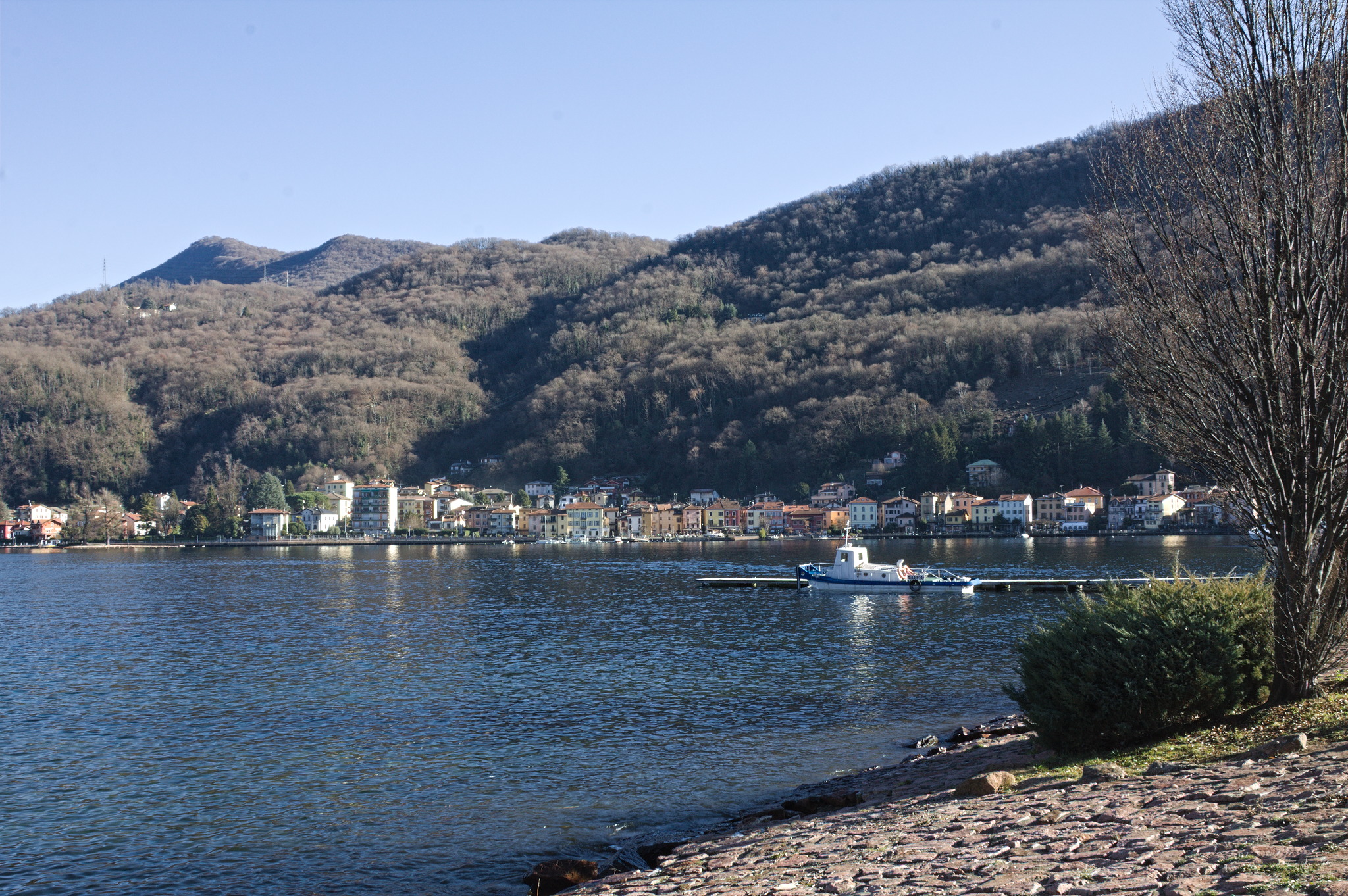
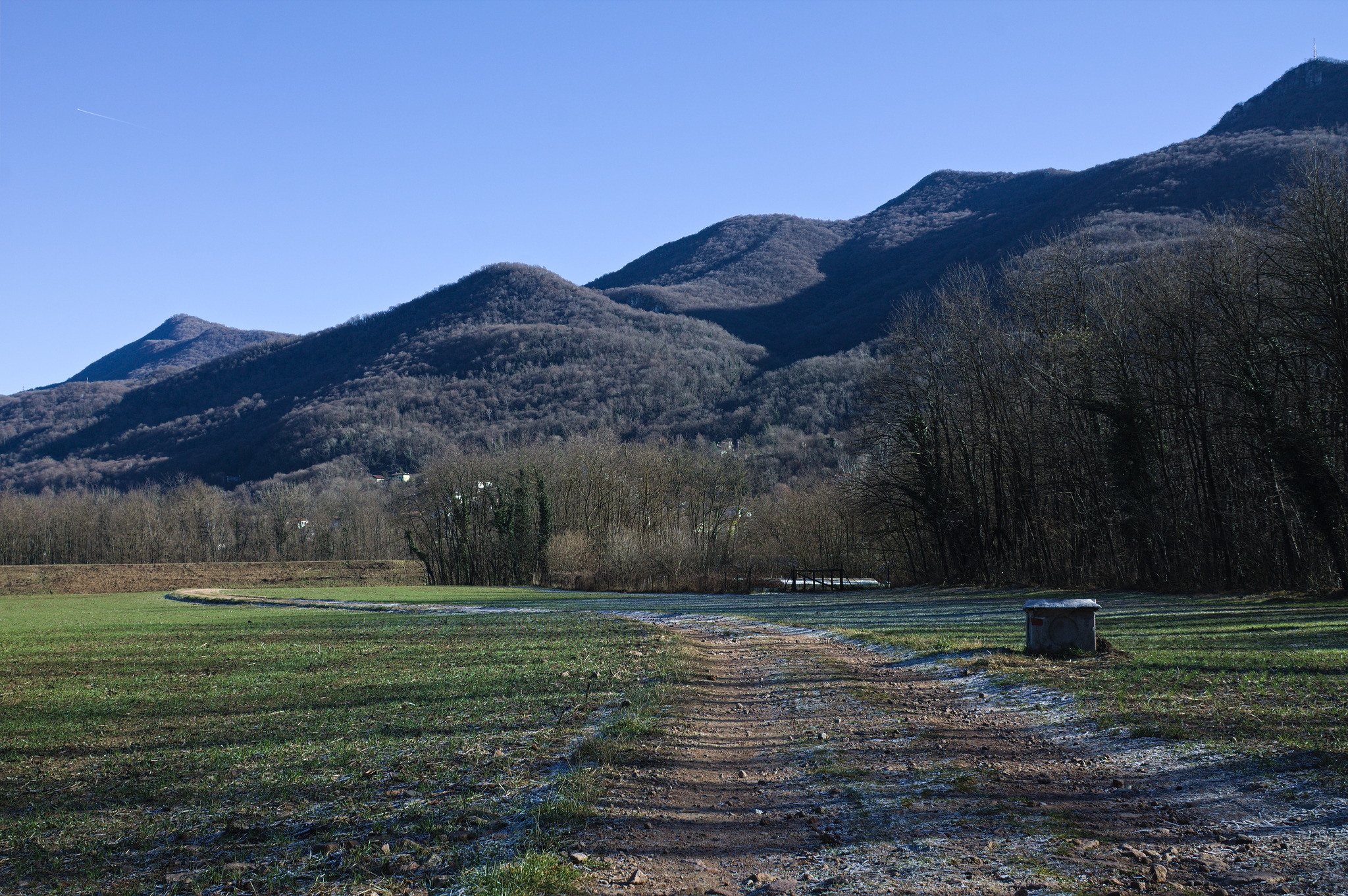
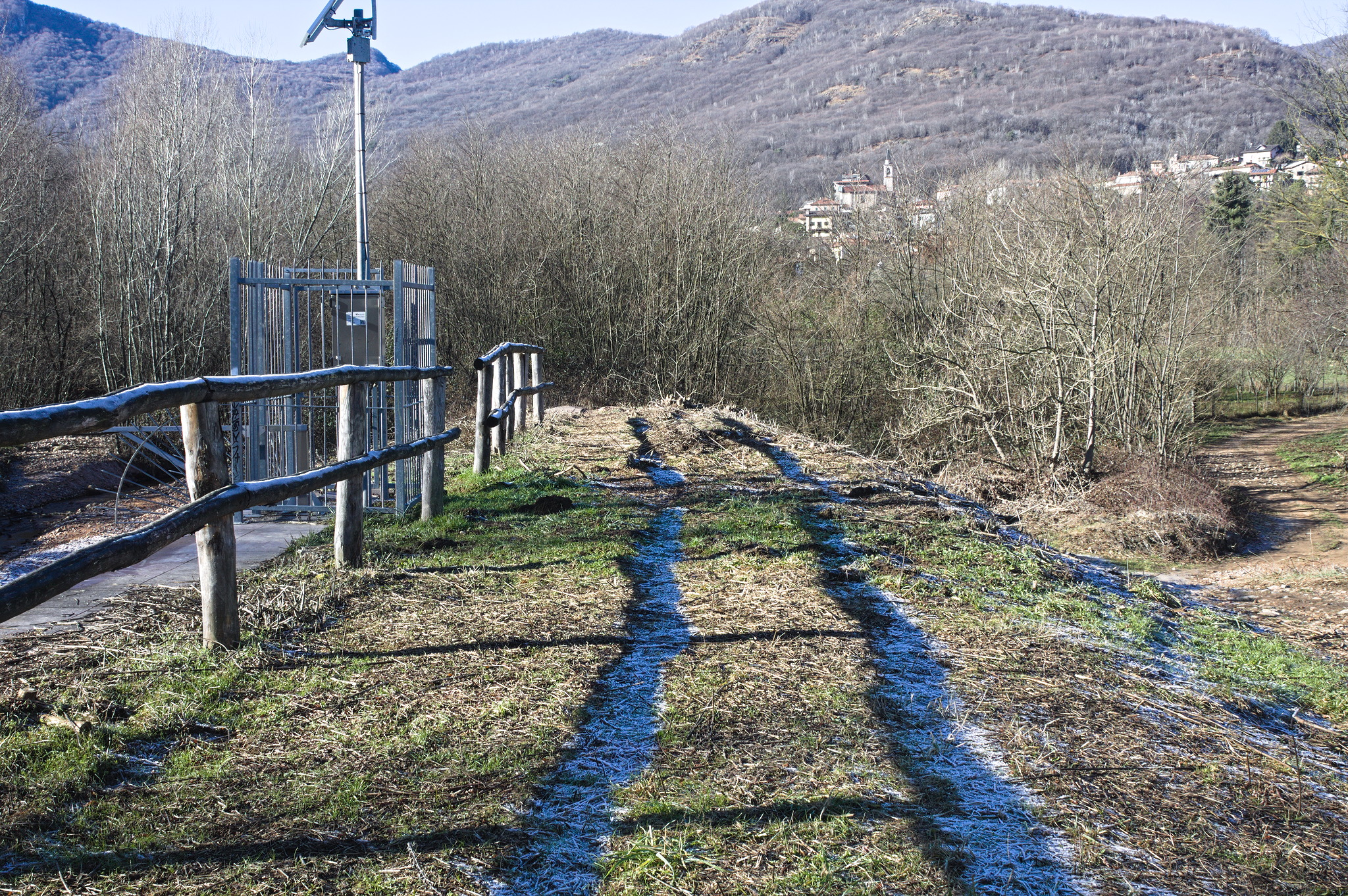
One side of Porto Ceresio along the lake: there is a small strip of houses, and the hills behind them are covered in woods. A boat is parked around the middle of the picture. A lot of the youtube channels I follow tend to involve somebody making things, so of course one of the videos my SO and I watched a few days ago was about walking around San Francisco Bay, and that recalled my desire to go to places by foot. Now, for health-related reasons doing it properly would be problematic, and thus I ve never trained for that, but during this Christmas holiday-heavy time I suggested my very patient SO the next best thing: instead of our usual 1.5 hours uphill walk in the woods, a 2 hours and a bit mostly flat walk on paved streets, plus some train, to a nearby town: Porto Ceresio, on the Italian side of Lake Lugano. I started to prepare for it on the day before, by deciding it was a good time to upgrade my PinePhone, and wait, I m still on Trixie? I could try Forky, what could possibly go wrong? And well, the phone was no longer able to boot, and reinstalling from the latest weekly had a system where the on-screen keyboard didn t appear, and I didn t want to bother finding out why, so re-installed another time from the 13.0 image, and between that, and distracting myself with widelands while waiting for the downloads and uploads and reboots etc., well, all of the afternoon and the best part of the evening disappeared. So, in a hurry, between the evening and the next morning I prepared a nice healthy lunch, full of all the important nutrients such as sugar, salt, mercury and arsenic. Tuna (mercury) soboro (sugar and salt) on rice and since I was in a hurry I didn t prepare any vegetables, but used pickles (more salt) and shio kombu (arsenic and various heavy metals, sugar and salt). Plus a green tea mochi for dessert, in case we felt low on sugar. :D Then on the day of the walk we woke up a bit later than usual, and then my body decided it was a good day for my belly to not exactly hurt, but not not-hurt either, and there I took an executive decision to wear a corset, because if something feels like it wants to burst open, wrapping it in a steel reinforced cage will make it stop. (I m not joking. It does. At least in those specific circumstances.) This was followed by hurrying through the things I had to do before leaving the house, having a brief anxiety attack and feeling feverish (it wasn t fever), and finally being able to leave the house just half an hour late. A stream running on rocks with the woods to both sides. And then, 10 minutes after we had left, realizing that I had written down the password for the train website, since it was no longer saved on the phone, but i had forgotten the bit of paper at home. We could have gone back to take it, but decided not to bother, as we could also hopefully buy paper-ish tickets at the train station (we could). Later on, I also realized I had also forgotten my GPS tracker, so I have no record of where we went exactly (but it s not hard to recognize it on a map) nor on what the temperature was. It s a shame, but by that point it was way too late to go back. Anyway, that probably was when Murphy felt we had paid our respects, and from then on everything went lovingly well! Routing had been done on the OpenStreetMap website, with OSRM, and it looked pretty easy to follow, but we also had access to an Android phone, so we used OSMAnd to check that we were still on track. It tried to lead us to the Statale (i.e. most important and most trafficked road) a few times, but we ignored it, and after a few turns and a few changes of the precise destination point we managed to get it to cooperate. At one point a helpful person asked us if we needed help, having seen us looking at the phone, and gave us indication for the next fork (that way to Cuasso al Piano, that way to Porto Ceresio), but it was pretty easy, since the way was clearly marked also for cars. Then we started to notice red and white markings on poles and other places, and on the next fork there was a signpost for hiking routes with our destination and we decided to follow it instead of the sign for cars. I knew that from our starting point to or destination there was also a hiking route, uphill both ways :) , through the hills, about 5 or 6 hours instead of two, but the sign was pointing downhill and we were past the point where we would expect too long of a detour. A wide and flat unpaved track passing through a flat grassy area with trees to the sides and rolling hills in the background. And indeed, after a short while the paved road ended, but the path continued on a wide and flat track, and was a welcome detour through what looked like water works to prevent flood damage from a stream. In a warmer season, with longer grass and ticks maybe the fact that I was wearing a long skirt may have been an issue, but in winter it was just fine. And soon afterwards, we were in Porto Ceresio. I think I have been there as a child, but I had no memory of it. On the other hand, it was about as I expected: a tiny town with a lakeside street full of houses built in the early 1900s when the area was an important tourism destination, with older buildings a bit higher up on the hills (because streams in this area will flood). And of course, getting there by foot rather than by train we also saw the parts where real people live (but not work: that s cross-border commuters country). Dried winter grass with two strips of frost, exactly under the shade of a fence. Soon after arriving in Porto Ceresio we stopped to eat our lunch on a bench at the lakeside; up to then we had been pretty comfortable in the clothing we had decided to wear: there was plenty of frost on the ground, in the shade, but the sun was warm and the temperatures were cleanly above freezing. Removing the gloves to eat, however, resulted in quite cold hands, and we didn t want to stay still for longer than strictly necessary. So we spent another hour and a bit walking around Porto Ceresio like proper tourists and taking pictures. There was an exhibition of nativity scenes all around the streets, but to get a map one had to go to either facebook or instagram, or wait for the opening hours of an office that were later than the train we planned to get to go back home, so we only saw maybe half of them, as we walked around: some were quite nice, some were nativity scenes, and some showed that the school children must have had some fun making them. three gnome adjacent creatures made of branches of evergreen trees, with a pointy hat made of moss, big white moustaches and red Christmas tree balls at the end of the hat and as a nose. They are wrapped in LED strings, and the lake can be seen in the background. Another Christmas decoration were groups of creatures made of evergreen branches that dotted the sidewalks around the lake: I took pictures of the first couple of groups, and then after seeing a few more something clicked in my brain, and I noticed that they were wrapped in green LED strings, like chains, and they had a red ball that was supposed to be the nose, but could just be around the mouth area, and suddenly I felt the need to play a certain chord to release them, but sadly I didn t have a weaponized guitar on me :D A bench in the shape of an open book, half of the pages folded in a reversed U to make the seat and half of the pages standing straight to form the backrest. It has the title page and beginning of the Constitution of the Italian Republic. Another thing that we noticed were some benches in the shape of books, with book quotations on them; most were on reading-related topics, but the one with the Constitution felt worth taking a picture of, especially these days. And then, our train was waiting at the station, and we had to go back home for the afternoon; it was a nice outing, if a bit brief, and we agreed to do it again, possibly with a bit of a detour to make the walk a bit longer. And then maybe one day we ll train to do the whole 5-6 hour thing through the hills.


3 January 2026

Benjamin Mako Hill: Effects of Algorithmic Flagging on Fairness: Quasi-experimental Evidence from Wikipedia

Note: I have not published blog posts about my academic papers over the past few years. To ensure that my blog contains a more comprehensive record of my published papers and to surface these for folks who missed them, I will be periodically (re)publishing blog posts about some older published projects. This particular post is closely based on a previously published post by Nate TeBlunthuis from the Community Data Science Blog. Many online platforms are adopting AI and machine learning as a tool to maintain order and high-quality information in the face of massive influxes of user-generated content. Of course, AI algorithms can be inaccurate, biased, or unfair. How do signals from AI predictions shape the fairness of online content moderation? How can we measure an algorithmic flagging system s effects? In our paper published at CSCW, Nate TeBlunthuis, together with myself and Aaron Halfaker, analyzed the RCFilters system: an add-on to Wikipedia that highlights and filters edits that a machine learning algorithm called ORES identifies as likely to be damaging to Wikipedia. This system has been deployed on large Wikipedia language editions and is similar to other algorithmic flagging systems that are becoming increasingly widespread. Our work measures the causal effect of being flagged in the RCFilters user interface.

Screenshot of Wikipedia edit metadata on Special:RecentChanges with RCFilters enabled. Highlighted edits with a colored circle to the left side of other metadata are flagged by ORES. Different circle and highlight colors (white, yellow, orange, and red in the figure) correspond to different levels of confidence that the edit is damaging. RCFilters does not specifically flag edits by new accounts or unregistered editors, but does support filtering changes by editor types.
Our work takes advantage of the fact that RCFilters, like many algorithmic flagging systems, create discontinuities in the relationship between the probability that a moderator should take action and whether a moderator actually does. This happens because the output of machine learning systems like ORES is typically a continuous score (in RCFilters, an estimated probability that a Wikipedia edit is damaging), while the flags (in RCFilters, the yellow, orange, or red highlights) are either on or off and are triggered when the score crosses some arbitrary threshold. As a result, edits slightly above the threshold are both more visible to moderators and appear more likely to be damaging than edits slightly below. Even though edits on either side of the threshold have virtually the same likelihood of truly being damaging, the flagged edits are substantially more likely to be reverted. This fact lets us use a method called regression discontinuity to make causal estimates of the effect of being flagged in RCFilters.
Charts showing the probability that an edit will be reverted as a function of ORES scores in the neighborhood of the discontinuous threshold that triggers the RCfilters flag. The jump in the increase in reversion chances is larger for registered editors compared to unregistered editors at both thresholds.
To understand how this system may affect the fairness of Wikipedia moderation, we estimate the effects of flagging on edits on different groups of editors. Comparing the magnitude of these estimates lets us measure how flagging is associated with several different definitions of fairness. Surprisingly, we found evidence that these flags improved fairness for categories of editors that have been widely perceived as troublesome particularly unregistered (anonymous) editors. This occurred because flagging has a much stronger effect on edits by the registered than on edits by the unregistered. We believe that our results are driven by the fact that algorithmic flags are especially helpful for finding damage that can t be easily detected otherwise. Wikipedia moderators can see the editor s registration status in the recent changes, watchlists, and edit history. Because unregistered editors are often troublesome, Wikipedia moderators attention is often focused on their contributions, with or without algorithmic flags. Algorithmic flags make damage by registered editors (in addition to unregistered editors) much more detectable to moderators and so help moderators focus on damage overall, not just damage by suspicious editors. As a result, the algorithmic flagging system decreases the bias that moderators have against unregistered editors. This finding is particularly surprising because the ORES algorithm we analyzed was itself demonstrably biased against unregistered editors (i.e., the algorithm tended to greatly overestimate the probability that edits by these editors were damaging). Despite the fact that the algorithms were biased, their introduction could still lead to less biased outcomes overall. Our work shows that although it is important to design predictive algorithms to avoid such biases, it is equally important to study fairness at the level of the broader sociotechnical system. Since we first published a preprint of our paper, a follow-up piece by Leijie Wang and Haiyi Zhu replicated much of our work and showed that differences between different Wikipedia communities may be another important factor driving the effect of the system. Overall, this work suggests that social signals and social context can interact with algorithmic signals, and together these can influence behavior in important and unexpected ways.

The full citation for the paper is: TeBlunthuis, Nathan, Benjamin Mako Hill, and Aaron Halfaker. 2021. Effects of Algorithmic Flagging on Fairness: Quasi-Experimental Evidence from Wikipedia. Proceedings of the ACM on Human-Computer Interaction 5 (CSCW): 56:1-56:27. https://doi.org/10.1145/3449130.

We have also released replication materials for the paper, including all the data and code used to conduct the analysis and compile the paper itself.

Louis-Philippe V ronneau: 2025 A Musical Retrospective

2026 already! The winter weather here has really been beautiful and I always enjoy this time of year. Writing this yearly musical retrospective has now become a beloved tradition of mine1 and I enjoy retracing the year's various events through albums I listened to and concerts I went to. Albums In 2025, I added 141 new albums to my collection, around 60% more than last year's haul. I think this might have been too much? I feel like I didn't have time to properly enjoy all of them and as such, I decided to slow down my acquisition spree sometimes in early December, around the time I normally do the complete opposite. This year again, I bought the vast majority of my music on Bandcamp. Most of the other albums I bought as CDs and ripped them. Concerts In 2025, I went to the following 25 (!!) concerts: Although I haven't touched metalfinder's code in a good while, my instance still works very well and I get the occasional match when a big-name artist in my collection comes in town. Most the venues that advertise on Bandsintown are tied to Ticketmaster though, which means most underground artists (i.e. most of the music I listen to) end up playing elsewhere. As such, shout out again to the Gancio project and to the folks running the Montreal instance. It continues to be a smash hit and most of the interesting concerts end up being advertised there. See you all in 2026!

  1. see the 2022, 2023 and 2024 entries

2 January 2026

Birger Schacht: Status update, December 2025

December 2025 started off with a nice event, namely a small gathering of Vienna based DDs. Some of us were at DebConf25 in Brest and we thought it might be nice to have a get-together of DDs in Vienna. A couple of months after DebConf25 I picked up the idea, let someone else ping the DDs, booked a table at a local cafe and in the end we were a group of 6 DDs. It was nice to put faces to names, names to nicknames and to hear what people are up to. We are definitely planning to repeat that! December also ended with a meeting of nerds: the 39th Chaos Communication Congress in Hamburg. As usual, I did not really have that much time to watch many talks. I tend to bookmark a lot of them in the scheduling app in advance, but once I m at the congress the social aspect is much more important and I try to only attend workshop or talks that are not recorded. Watching the recordings afterward is possible anyway (and I actually try to do that!). There was also a Debian Developers meetup at day 3, combined with the usual time confusion regarding UTC and CET. We talked about having a Debian table at 40c3, so maybe the timezone won t be that much of a problem in the next time. Two talks I recommend are CSS Clicker Training: Making games in a styling language and To sign or not to sign: Practical vulnerabilities in GPG & friends. Regarding package uploads this month did not happen that much, I only uploaded the new version (0.9.3) of labwc. I created two new releases for carl. First a 0.5 release that adds Today and SpecifiedDate as properties. I forwarded an issue about dates not being parsed correctly to the icalendar issue tracker and this was fixed a couple of days later (thanks!). I then created a 0.5.1 release containing that fix. I also started planning to move the carl repository back to codeberg, because Github feels more and more like an AI Slop platform. The work on debiverse also continued. I removed the tailwind CSS framework, and it was actually not that hard to reproduce all the needed CSS classes with custom CSS. I think that CSS frameworks make sense to a point, but once you start implementing stuff that the framework does not provide, it is easier if everything comes out of one set of rules. There was also the article Vanilla CSS is all you need which goes into the same direction and which gave me some ideas how to organize the CSS directives. I also refactored the filter generation for the listing filters and the HTML filter form is now generated from the FastAPI Query Parameter Model. Screenshot of the filter form For navigation I implemented a sidebar, that is hidden on small screens but can be toggled using a burger menu. Screenshot of the navigation bar I also stumbled upon An uncomfortable but necessary discussion about the Debian bug tracker, which raises some valid points. I think debiverse could be a solution to the first point of What could be a way forward? , namely: Create a new web service that parses the existing bug data and displays it in a rich format . But if there is ever another way than email to interact with bugs.debian.org, than this approach should not rely on passing on the commands via mail. If I click a button in a web interface to raise the severity, the severity should be raised right away - not 10 minutes later when the email is received. I think the individual parts (web, database, mail interface) should be decoupled and talk to each other via APIs.

1 January 2026

Dima Kogan: Using libpython3 without linking it in; and old Python, g++ compatibility patches

I just released mrcal 2.5; much more about that in a future post. Here, I'd like to talk about some implementation details.

libpython3 and linking
mrcal is a C library and a Python library. Much of mrcal itself interfaces the C and Python libraries. And it is common for external libraries to want to pass Python mrcal.cameramodel objects to their C code. The obvious way to do this is in a converter function in an O& argument to PyArg_ParseTupleAndKeywords(). I wrote this mrcal_cameramodel_converter() function, which opened a whole can of worms when thinking about the compiling and linking and distribution of this thing. mrcal_cameramodel_converter() is meant to be called by code that implements Python-wrapping of C code. This function will be called by the PyArg_ParseTupleAndKeywords() Python library function, and it uses the Python C API itself. Since it uses the Python C API, it would normally link against libpython. However:
  • The natural place to distribute this is in libmrcal.so, but this library doesn't touch Python, and I'd rather not pull in all of libpython for this utility function, even in the 99% case when that function won't even be called
  • In some cases linking to libpython actually breaks things, so I never do that anymore anyway. This is fine: since this code will only ever be called by libpython itself, we're guaranteed that libpython will already be loaded, and we don't need to ask for it.
OK, let's not link to libpython then. But if we do that, we're going to have unresolved references to our libpython calls, and the loader will complain when loading libmrcal.so, even if we're not actually calling those functions. This has an obvious solution: the references to the libpython calls should be marked weak. That won't generate unresolved-reference errors, and everything will be great. OK, how do we mark things weak? There're two usual methods:
  1. We mark the declaration (or definition?) or the relevant functions with __attribute__((weak))
  2. We weaken the symbols after the compile with objcopy --weaken.
Method 1 is more work: I don't want to keep track of what Python API calls I'm actually making. This is non-trivial, because some of the Py_...() invocations in my code are actually macros that call functions internally that I must weaken. Furthermore, all the functions are declared in Python.h that I don't control. I can re-declare stuff with __attribute__((weak)), but then I have to match the prototypes. And I have to hope that re-declaring these will make __attribute__((weak)) actually work. So clearly I want method 2. I implemented it:
python-cameramodel-converter.o: %.o:%.c
        $(c_build_rule); mv $@ _$@
        $(OBJCOPY) --wildcard --weaken-symbol='Py*' --weaken-symbol='_Py*' _$@ $@
Works great on my machine! But doesn't work on other people's machines. Because only the most recent objcopy tool actually works to weaken references. Apparently the older tools only weaken definitions, which isn't useful to me, and the tool only started handling references very recently. Well that sucks. I guess I will need to mark the symbols with __attribute__((weak)) after all. I use the nm tool to find the symbols that should be weakened, and I apply the attribute with this macro:
#define WEAKEN(f) extern __typeof__(f) f __attribute__((weak));
The prototypes are handled by __typeof__. So are we done? With gcc, we are done. With clang we are not done. Apparently this macro does not weaken symbols generated by inline function calls if using clang I have no idea if this is a bug. The Python internal machinery has some of these, so this doesn't weaken all the symbols. I give up on the people that both have a too-old objcopy and are using clang, and declare victory. So the logic ends up being:
  1. Compile
  2. objcopy --weaken
  3. nm to find the non-weak Python references
  4. If there aren't any, our objcopy call worked and we're done!
  5. Otherwise, compile again, but explicitly asking to weaken those symbols
  6. nm again to see if the compiler didn't do it
  7. If any non-weak references still remain, complain and give up.
Whew. This logic appears here and here. There were even more things to deal with here: calling nm and objcopy needed special attention and build-system support in case we were cross-building. I took care of it in mrbuild. This worked for a while. Until the converter code started to fail. Because .

Supporting old Python
. I was using PyTuple_GET_ITEM(). This is a macro to access PyTupleObject data. So the layout of PyTupleObject ended up encoded in libmrcal.so. But apparently this wasn't stable, and changed between Python3.13 and Python3.14. As described above, I'm not linking to libpython, so there's no NEEDED tag to make sure we pull in the right version. The solution was to call the PyTuple_GetItem() function instead. This is unsatisfying, and means that in theory other stuff here might stop working in some Python 3.future, but I'm ready to move on for now. There were other annoying gymnastics that had to be performed to make this work with old-but-not-super old tooling. The Python people deprecated PyModule_AddObject(), and added PyModule_Add() as a replacement. I want to support Pythons before and after this happened, so I needed some if statements. Today the old function still works, but eventually it will stop, and I will have needed to do this typing sooner or later.

Supporting old C++ compilers
mrcal is a C project, but it is common for people to want to #include the headers from C++. I widely use C99 designated initializers (27-years old in C!), which causes issues with not-very-old C++ compilers. I worked around this initialization in one spot, and disabled it a feature for a too-old compiler in another spot. Fortunately, semi-recent tooling supports my usages, so this is becoming a non-issue as time goes on.

Russ Allbery: 2025 Book Reading in Review

In 2025, I finished and reviewed 32 books, not counting another five books I've finished but not yet reviewed and which will therefore roll over to 2026. This was not a great reading year, although not my worst reading year since I started keeping track. I'm not entirely sure why, although part of the explanation was that I hit a bad stretch of books in spring of 2025 and got into a bit of a reading slump. Mostly, though, I shifted a lot of reading this year to short non-fiction (newsletters and doom-scrolling) and spent rather more time than I intended watching YouTube videos, and sadly each hour in the day can only be allocated one way. This year felt a bit like a holding pattern. I have some hopes of being more proactive and intentional in 2026. I'm still working on finding a good balance between all of my hobbies and the enjoyment of mindless entertainment. The best book I read this year was also the last book I reviewed (and yes, I snuck the review under the wire for that reason): Bethany Jacobs's This Brutal Moon, the conclusion of the Kindom Trilogy that started with These Burning Stars. I thought the first two books of the series were interesting but flawed, but the conclusion blew me away and improved the entire trilogy in retrospect. Like all books I rate 10 out of 10, I'm sure a large part of my reaction is idiosyncratic, but two friends of mine also loved the conclusion so it's not just me. The stand-out non-fiction book of the year was Rory Stewart's Politics on the Edge. I have a lot of disagreements with Stewart's political positions (the more I listen to him, the more disagreements I find), but he is an excellent memoirist who skewers the banality, superficiality, and contempt for competence that has become so prevailing in centrist and right-wing politics. It's hard not to read this book and despair of electoralism and the current structures of governments, but it's bracing to know that even some people I disagree with believe in the value of expertise. I also finished Suzanne Palmer's excellent Finder Chronicles series, reading The Scavenger Door and Ghostdrift. This series is some of the best science fiction I've read in a long time and I'm sad it is over (at least for now). Palmer has a new, unrelated book coming in 2026 (Ode to the Half-Broken), and I'm looking forward to reading that. This year, I experimented with re-reading books I had already reviewed for the first time since I started writing reviews. After my reading slump, I felt like revisiting something I knew I liked, and therefore re-read C.J. Cherryh's Cyteen and Regenesis. Cyteen mostly held up, but Regenesis was worse than I had remembered. I experimented with a way to add on to my previous reviews, but I didn't like the results and the whole process of re-reading and re-reviewing annoyed me. I'm counting this as a failed experiment, which means I've still not solved the problem of how to revisit series that I read long enough ago that I want to re-read them before picking up the new book. (You may have noticed that I've not read the new Jacqueline Carey Kushiel novel, for example.) You may have also noticed that I didn't start a new series re-read, or continue my semi-in-progress re-reads of Mercedes Lackey or David Eddings. I have tentative plans to kick off a new series re-read in 2026, but I'm not ready to commit to that yet. As always, I have no firm numeric goals for the next year, but I hope to avoid another reading slump and drag my reading attention back from lower-quality and mostly-depressing material in 2026. The full analysis includes some additional personal reading statistics, probably only of interest to me.


Russ Allbery: Review: This Brutal Moon

Review: This Brutal Moon, by Bethany Jacobs
Series: Kindom Trilogy #3
Publisher: Orbit
Copyright: December 2025
ISBN: 0-316-46373-6
Format: Kindle
Pages: 497
This Brutal Moon is a science fiction thriller with bits of cyberpunk and space opera. It concludes the trilogy begun with These Burning Stars. The three books tell one story in three volumes, and ideally you would read all three in close succession. There is a massive twist in the first book that I am still not trying to spoil, so please forgive some vague description. At the conclusion of These Burning Stars, Jacobs had moved a lot of pieces into position, but it was not yet clear to me where the plot was going, or even if it would come to a solid ending in three volumes as promised by the series title. It does. This Brutal Moon opens with some of the political maneuvering that characterized These Burning Stars, but once things start happening, the reader gets all of the action they could wish for and then some. I am pleased to report that, at least as far as I'm concerned, Jacobs nails the ending. Not only is it deeply satisfying, the characterization in this book is so good, and adds so smoothly to the characterization of the previous books, that I saw the whole series in a new light. I thought this was one of the best science fiction series finales I've ever read. Take that with a grain of salt, since some of those reasons are specific to me and the mood I was in when I read it, but this is fantastic stuff. There is a lot of action at the climax of this book, split across at least four vantage points and linked in a grand strategy with chaotic surprises. I kept all of the pieces straight and understood how they were linked thanks to Jacobs's clear narration, which is impressive given the number of pieces in motion. That's not the heart of this book, though. The action climax is payoff for the readers who want to see some ass-kicking, and it does contain some moving and memorable moments, but it relies on some questionable villain behavior and a convenient plot device introduced only in this volume. The action-thriller payoff is competent but not, I think, outstanding. What put this book into a category of its own were the characters, and specifically how Jacobs assembles sweeping political consequences from characters who, each alone, would never have brought about such a thing, and in some cases had little desire for it. Looking back on the trilogy, I think Jacobs has captured, among all of the violence and action-movie combat and space-opera politics, the understanding that political upheaval is a relay race. The people who have the personalities to start it don't have the personality required to nurture it or supply it, and those who can end it are yet again different. This series is a fascinating catalog of political actors the instigator, the idealist, the pragmatist, the soldier, the one who supports her friends, and several varieties and intensities of leaders and it respects all of them without anointing any of them as the One True Revolutionary. The characters are larger than life, yes, and this series isn't going to win awards for gritty realism, but it's saying something satisfyingly complex about where we find courage and how a cause is pushed forward by different people with different skills and emotions at different points in time. Sometimes accidentally, and often in entirely unexpected ways. As before, the main story is interwoven with flashbacks. This time, we finally see the full story of the destruction of the moon of Jeve. The reader has known about this since the first volume, but Jacobs has a few more secrets to show (including, I will admit, setting up a plot device) and some pointed commentary on resource extraction economies. I think this part of the book was a bit obviously constructed, although the characterization was great and the visible junction points of the plot didn't stop me from enjoying the thrill when the pieces came together. But the best part of this book was the fact there was 10% of it left after the climax. Jacobs wrote an actual denouement, and it was everything I wanted and then some. We get proper story conclusions for each of the characters, several powerful emotional gut punches, some remarkably subtle and thoughtful discussion of political construction for a series that tended more towards space-opera action, and a conclusion for the primary series relationship that may not be to every reader's taste but was utterly, perfectly, beautifully correct for mine. I spent a whole lot of the last fifty pages of this book trying not to cry, in the best way. The character evolution over the course of this series is simply superb. Each character ages like fine wine, developing more depth, more nuance, but without merging. They become more themselves, which is an impressive feat across at least four very different major characters. You can see the vulnerabilities and know what put them there, you can see the strengths they developed to compensate, and you can see why they need the support the other characters provide. And each of them is so delightfully different. This was so good. This was so precisely the type of story that I was in the mood for, with just the type of tenderness for its characters that I wanted, that I am certain I am not objective about it. It will be one of those books where other people will complain about flaws that I didn't see or didn't care about because it was doing the things I wanted from it so perfectly. It's so good that it elevated the entire trilogy; the journey was so worth the ending. I'm afraid this review will be less than helpful because it's mostly nonspecific raving. This series is such a spoiler minefield that I'd need a full spoiler review to be specific, but my reaction is so driven by emotion that I'm not sure that would help if the characters didn't strike you the way that they struck me. I think the best advice I can offer is to say that if you liked the emotional tone of the end of These Burning Stars (not the big plot twist, the character reaction to the political goal that you learn drove the plot), stick with the series, because that's a sign of the questions Jacobs is asking. If you didn't like the characters at the end (not the middle) of the first novel, bail out, because you're going to get a lot more of that. Highly, highly recommended, and the best thing I've read all year, with the caveats that you should read the content notes, and that some people are going to bounce off this series because it's too intense and melodramatic. That intensity will not let up, so if that's not what you're in the mood for, wait on this trilogy until you are. Content notes: Graphic violence, torture, mentions of off-screen child sexual assault, a graphic corpse, and a whole lot of trauma. One somewhat grumbly postscript: This is the sort of book where I need to not read other people's reviews because I'll get too defensive of it (it's just a book I liked!). But there is one bit of review commentary I've seen about the trilogy that annoys me enough I have to mention it. Other reviewers seem to be latching on to the Jeveni (an ethnic group in the trilogy) as Space Jews and then having various feelings about that. I can see some parallels, I'm not going to say that it's completely wrong, but I also beg people to read about a fictional oppressed ethnic and religious minority and not immediately think "oh, they must be stand-ins for Jews." That's kind of weird? And people from the US, in particular, perhaps should not read a story about an ethnic group enslaved due to their productive skill and economic value and think "they must be analogous to Jews, there are no other possible parallels here." There are a lot of other comparisons that can be made, including to the commonalities between the methods many different oppressed minorities have used to survive and preserve their culture. Rating: 10 out of 10





Daniel Baumann: P r ch storage (in Western Europe)

The majority of P r ch ( ) is stored in Asia (predominantly China, some in Malaysia and Taiwan) because of its climatic conditions:
  • warm (~30 C)
  • humid (~75% RH)
  • stable (comparatively small day to day, day to night, and seasonal differences)
These are ideal for ageing and allow efficient storage in simple storehouses, usually without the need for any air conditioning. The climate in Western European countries is significantly colder, drier, and more variable. However, residential houses offers throughout the year a warm (~20 C), humid (~50% RH), and stable baseline to start with. High quality, long term storage and ageing is possible too with some of the Asian procedures slightly adjusted for the local conditions. Nevertheless, fast accelerated ageing still doesn t work here (even with massive climate control). Personally I prefer the balanced, natural storage over the classical wet or dry , or the mixed traditional storage (of course all storage types are not that meaningful as they are all relative terms anyway). Also I don t like strong fermentation either (P r is not my favourite tea, I only drink it in the 3 months of winter). Therefore, my intention is primarily to preserve the tea while it continues to age normally, keep it in optimal drinking condition and don t rush its fermentation. The value of correct storage is of great importance and has a big effect on P r, and is often overlooked and underrated. Here s a short summary on how to store P r ch (in Western Europe).
P ' r ch  storage (in Western Europe) Image: some D y P r ch stored at home
1. Location
1.1 No light Choose a location with neither direct nor indirect sunlight (= ultraviolet radiation) exposure:
  • direct sunlight damages organic material ( bleeching )
  • indirect sunlight by heating up the containers inbalances the microclimate ( suppression )
1.2 No odors Choose a location with neither direct nor indirect odor exposure:
  • direct odor immissions (like incense, food, air polution, etc.) makes the tea undrinkable
  • indirect odor immissions (especially other teas stored next to it) taint the taste and dilute the flavours
Always use individual containers for each tea, store only identical tea of the same year and batch in the same container. Idealy never store one cake, brick or tuo on its own, buy multiples and store them together for better ageing.
2. Climate
2.1 Consistent temperature Use a location with no interference from any devices or structures next to it:
  • use an regular indoor location for mild temperature curves (i.e. no attics with large day/night temperature differences)
  • aim for >= 20 C average temperature for natural storage (i.e. no cold basements)
  • don t use a place next to any heat dissipating devices (like radiators, computers, etc.)
  • don t use a place next to an outside facing wall
  • always leave 5 to 10cm distance to a wall for air to circulate (generally prevents mold on the wall but also isolates the containers further from possible immissions)
As consistent temperature as possible allows even and steady fermentation. However, neither air conditioning or filtering is needed. Regular day to day, day to night, and season to season fluctuations are balanced out fine with otherwise correct indoor storage. Also humidity control is much more important for storage and ageing, and much less forgiving than temperature control.
2.2 Consistent humidity Use humidity control packs to ensure a stable humidity level:
  • aim for ~65% RH
Lower than 60% RH will (completely) dry out the tea, higher than 70% RH increases chances for mold.
3. Equipment
3.1 Proper containers Use containers that are long term available and that are easily stackable, both in form and dimensions as well as load-bearing capacity. They should be inexpensive, otherwise it s most likely scam (there are people selling snake-oil containers specifically for tea storage). For long term storage and ageing:
  • never use plastic: they leak chemicals over time (no tupperdors , mylar and zip lock bags, etc.)
  • never use cardboard or bamboo: they let to much air in, absorb too much humity and dry to slow
  • never use wood: they emit odors (no humidors)
  • never use clay: they absorb all humidity and dry out the tea (glazed or porcelain urns are acceptable for short term storage)
Always use sealed but not air tight, cleaned steal cans (i.e. with no oil residues from manufacturing; such as these).
3.2 Proper humidity control Use two-way humidity control packs to either absorb or add moisture depending on the needs:
  • use humidity control pack(s) in every container
  • use one 60g pack (such as these) per 500g of tea
3.3 Proper labels Put labels on the outside of the containers to not need to open them to know what is inside and disturbe the ageing:
  • write at least manufacturer and name, pressing year, and batch number on the label (such as these)
  • if desired and not otherwise kept track already elsewhere, add additional information such as the amount of items, weights, previous storage location/type, date of purchase, vendor, or price, etc.
3.4 Proper monitoring Measuring and checking temperature and humidity regularly prevents storage parameters turning bad going unnoticed:
  • put temperature and humidity measurement sensors (such as these) inside some of the containers (e.g. at least one in every different size/type of container)
  • keep at least one temperature and humidity measurement sensor next to the containers on the outside to monitor the storage location
4. Storage
4.1 Continued maintenance Before beginning to initially store a new tea, let it acclimatize for 2h after unpacking from transport (or longer if temperature differences between indoors and outdoors are high, i.e. in winter). Then continuesly:
  • once a month briefly air all containers for a minute or two
  • once a month check for mold, just to be safe
  • every 3 to 6 months check all humidity control packs for need of replacement
  • monitor battery life of temperature and humidity measurement sensors
Humidity control packs can be recharged (usually voiding any warranty) by submerging them for 2 days in distilled water and 4 hours drying on paper towl afterwards. Check with a weight scale after recharging, they should regain their original weight (e.g. 60g plus ~2 to 5g for the packaging).
Finally With a correct P r ch storage:
  • beginn to drink Sh ng P r ( ) roughly after about 10-15 years, or later
  • beginn to drink Sh u P r ( ) roughly after about 3-5 years, or later
Prepare the tea by breaking it into, or breaking off from it, ~5 to 10g pieces about 1 to 3 months ahead of drinking and consider increase humidity to 70% RH during that time. 2026

31 December 2025

Sergio Cipriano: Zero-Code Instrumentation of an Envoy TCP Proxy using eBPF

Zero-Code Instrumentation of an Envoy TCP Proxy using eBPF I recently had to debug an Envoy Network Load Balancer, and the options Envoy provides just weren't enough. We were seeing a small number of HTTP 499 errors caused by latency somewhere in our cloud, but it wasn't clear what the bottleneck was. As a result, each team had to set up additional instrumentation to catch latency spikes and figure out what was going on. My team is responsible for the LBaaS product (Load Balancer as a Service) and, of course, we are the first suspects when this kind of problem appear. Before going for the current solution, I read a lot of Envoy's documentation. It is possible to enable access logs for Envoy, but they don't provide the information required for this debug. This is an example of the output:
[2025-12-08T20:44:49.918Z] "- - -" 0 - 78 223 1 - "-" "-" "-" "-" "172.18.0.2:8080"
I won't go into detail about the line above, since it's not possible to trace the request using access logs alone. Envoy also has OpenTelemetry tracing, which is perfect for understanding sources of latency. Unfortunatly, it is only available for Application Load Balancers. Most of the HTTP 499 were happening every 10 minutes, so we managed to get some of the requests with tcpdump, Wireshark and using http headers to filter the requests. This approach helped us reproduce and track down the problem, but it wasn't a great solution. We clearly needed better tools to catch this kind of issue the next time it happened. Therefore, I decided to try out OpenTelemetry eBPF Instrumentation, also referred to as OBI. I saw the announcement of Grafana Beyla before it was renamed to OBI, but I didn't have the time or a strong reason to try it out until now. Even then, I really liked the idea, and the possibility of using eBPF to solve this instrumentation problem had been in the back of my mind. OBI promises zero-code automatic instrumentation for Linux services using eBPF, so I put together a minimal setup to see how well it works.

Reproducible setup I used the following tools: Setting up a TCP Proxy with Envoy was straightforward:
static_resources:
  listeners:
  - name: go_server_listener
    address:
      socket_address:
        address: 0.0.0.0
        port_value: 8000
    filter_chains:
    - filters:
      - name: envoy.filters.network.tcp_proxy
        typed_config:
          "@type": type.googleapis.com/envoy.extensions.filters.network.tcp_proxy.v3.TcpProxy
          stat_prefix: go_server_tcp
          cluster: go_server_cluster
  clusters:
  - name: go_server_cluster
    connect_timeout: 1s
    type: LOGICAL_DNS
    load_assignment:
      cluster_name: go_server_cluster
      endpoints:
      - lb_endpoints:
        - endpoint:
            address:
              socket_address:
                address: target-backend
                port_value: 8080
This is the simplest Envoy TCP proxy configuration: a listener on port 8000 forwarding traffic to a backend running on port 8080. For the backend, I used a basic Go HTTP server:
package main

import (
    "fmt"
    "net/http"
)

func main()  
    http.Handle("/", http.FileServer(http.Dir(".")))

    server := http.Server Addr: ":8080" 

    fmt.Println("Starting server on :8080")
    panic(server.ListenAndServe())
 
Finally, I wrapped everything together with Docker Compose:
services:
  autoinstrumenter:
    image: otel/ebpf-instrument:main
    pid: "service:envoy"
    privileged: true
    environment:
      OTEL_EBPF_TRACE_PRINTER: text
      OTEL_EBPF_OPEN_PORT: 8000

  envoy:
    image: envoyproxy/envoy:v1.33-latest
    ports:
      - 8000:8000
    volumes:
      - ./envoy.yaml:/etc/envoy/envoy.yaml 
    depends_on:
      - target-backend
  
  target-backend:
    image: golang:1.22-alpine
    command: go run /app/backend.go
    volumes:
      - ./backend.go:/app/backend.go:ro
    expose:
      - 8080
OBI should output traces to the standard output similar to this when a HTTP request is made to Envoy:
2025-12-08 20:44:49.12884449 (305.572 s[305.572 s]) HTTPClient 200 GET /(/) [172.18.0.3 as envoy:36832]->[172.18.0.2 as localhost:8080] contentLen:78B responseLen:0B svc=[envoy generic] traceparent=[00-529458a2be271956134872668dc5ee47-6dba451ec8935e3e[06c7f817e6a5dae2]-01]
2025-12-08 20:44:49.12884449 (1.260901ms[366.65 s]) HTTP 200 GET /(/) [172.18.0.1 as 172.18.0.1:36282]->[172.18.0.3 as envoy:8000] contentLen:78B responseLen:223B svc=[envoy generic] traceparent=[00-529458a2be271956134872668dc5ee47-06c7f817e6a5dae2[0000000000000000]-01]
This is exactly what we needed, with zero-code. The above trace shows:
  • 2025-12-08 20:44:49.12884449: time of the trace.
  • (1.260901ms[366.65 s]): total response time for the request, with the actual internal execution time of the request (not counting the request enqueuing time).
  • HTTP 200 GET /: protocol, response code, HTTP method, and URL path.
  • [172.18.0.1 as 172.18.0.1:36282]->[172.18.0.3 as envoy:8000]: source and destination host:port. The initial request originates from my machine through the gateway (172.18.0.1), hits the Envoy (172.23.0.3), the proxy then forwards it to the backend application (172.23.0.2).
  • contentLen:78B: HTTP Content-Length. I used curl and the default request size for it is 78B.
  • responseLen:223B: Size of the response body.
  • svc=[envoy generic]: traced service.
  • traceparent: ids to trace the parent request. We can see that the Envoy makes a request to the target and this request has the other one as parent.
Let's add one more Envoy to show that it's also possible to track multiple services.
  envoy1:
    image: envoyproxy/envoy:v1.33-latest
    ports:
      - 9000:9000
    volumes:
      - ./envoy1.yaml:/etc/envoy/envoy.yaml
    depends_on:
      - envoy
The new Envoy will listen on port 9000 and forward the request to the other Envoy listening on port 8000. Now we just need to change OBI open port variable to look at a range:
OTEL_EBPF_OPEN_PORT: 8000-9000
And change the pid field of the autoinstrumenter service to use the host's PID namespace inside the container:
pid: host
This is the output I got after one curl:
2025-12-09 12:28:05.12912285 (2.202041ms[1.524713ms]) HTTP 200 GET /(/) [172.19.0.1 as 172.19.0.1:59030]->[172.19.0.5 as envoy:9000] contentLen:78B responseLen:223B svc=[envoy generic] traceparent=[00-69977bee0c2964b8fe53cdd16f8a9d19-856c9f700e73bf0d[0000000000000000]-01]
2025-12-09 12:28:05.12912285 (1.389336ms[1.389336ms]) HTTPClient 200 GET /(/) [172.19.0.5 as envoy:59806]->[172.19.0.4 as localhost:8000] contentLen:78B responseLen:0B svc=[envoy generic] traceparent=[00-69977bee0c2964b8fe53cdd16f8a9d19-caa7f1ad1c68fa77[856c9f700e73bf0d]-01]
2025-12-09 12:28:05.12912285 (1.5431ms[848.574 s]) HTTP 200 GET /(/) [172.19.0.5 as 172.19.0.5:59806]->[172.19.0.4 as envoy:8000] contentLen:78B responseLen:223B svc=[envoy generic] traceparent=[00-69977bee0c2964b8fe53cdd16f8a9d19-cbca9d64d3d26b40[caa7f1ad1c68fa77]-01]
2025-12-09 12:28:05.12912285 (690.217 s[690.217 s]) HTTPClient 200 GET /(/) [172.19.0.4 as envoy:34256]->[172.19.0.3 as localhost:8080] contentLen:78B responseLen:0B svc=[envoy generic] traceparent=[00-69977bee0c2964b8fe53cdd16f8a9d19-5502f7760ed77b5b[cbca9d64d3d26b40]-01]
2025-12-09 12:28:05.12912285 (267.9 s[238.737 s]) HTTP 200 GET /(/) [172.19.0.4 as 172.19.0.4:34256]->[172.19.0.3 as backend:8080] contentLen:0B responseLen:0B svc=[backend go] traceparent=[00-69977bee0c2964b8fe53cdd16f8a9d19-ac05c7ebe26f2530[5502f7760ed77b5b]-01]
Each log line represents a span belonging to the same trace (69977bee0c2964b8fe53cdd16f8a9d19). For readability, I ordered the spans by their traceparent relationship, showing the request's path as it moves through the system: from the client-facing Envoy, through the internal Envoy hop, and finally to the Go backend. You can see both server-side (HTTP) and client-side (HTTPClient) spans at each hop, along with per-span latency, source and destination addresses, and response sizes, making it easy to pinpoint where time is spent along the request chain. The log lines are helpful, but we need better ways to visualize the traces and the metrics generated by OBI. I'll share another setup that more closely reflects what we actually use.

Production setup I'll be using the following tools this time: The goal of this setup is to mirror an environment similar to what I used in production. This time, I've omitted the load balancer and shifted the emphasis to observability instead. setup diagram I will run three HTTP servers on port 8080: two inside Incus containers and one on the host machine. The OBI process will export metrics and traces to an OpenTelemetry Collector, which will forward traces to Jaeger and expose a metrics endpoint for Prometheus to scrape. Grafana will also be added to visualize the collected metrics using dashboards. The aim of this approach is to instrument only one of the HTTP servers while ignoring the others. This simulates an environment with hundreds of Incus containers, where the objective is to debug a single container without being overwhelmed by excessive and irrelevant telemetry data from the rest of the system. OBI can filter metrics and traces based on attribute values, but I was not able to filter by process PID. This is where the OBI Collector comes into play, it allows me to use a processor to filter telemetry data by the PID of the process being instrumented. These are the steps to reproduce this setup:
  1. Create the incus containers.
$ incus launch images:debian/trixie server01
Launching server01
$ incus launch images:debian/trixie server02
Launching server02
  1. Start the HTTP server on each container.
$ apt install python3 --update -y
$ tee /etc/systemd/system/server.service > /dev/null <<'EOF'
[Unit]
Description=Python HTTP server
After=network.target
[Service]
User=root
Group=root
Type=simple
ExecStart=/usr/bin/python3 -m http.server 8080
Restart=always
StandardOutput=journal
StandardError=journal
[Install]
WantedBy=multi-user.target
EOF
$ systemctl start server.service
  1. Start the HTTP server on the host.
$ python3 -m http.server 8080
  1. Start the Docker compose.
services:
  autoinstrumenter:
    image: otel/ebpf-instrument:main
    pid: host
    privileged: true
    environment:
      OTEL_EBPF_CONFIG_PATH: /etc/obi/obi.yml 
    volumes:
      - ./obi.yml:/etc/obi/obi.yml

  otel-collector:
    image: otel/opentelemetry-collector-contrib:0.98.0
    command: ["--config=/etc/otel-collector-config.yml"]
    volumes:
      - ./otel-collector-config.yml:/etc/otel-collector-config.yml
    ports:
      - "4318:4318" # Otel Receiver
      - "8889:8889" # Prometheus Scrape
    depends_on:
      - autoinstrumenter
      - jaeger
      - prometheus

  prometheus:
    image: prom/prometheus
    volumes:
      - ./prometheus.yml:/etc/prometheus/prometheus.yml
    ports:
      - "9090:9090" # Prometheus UI

  grafana:
    image: grafana/grafana
    restart: always
    environment:
      - GF_SECURITY_ADMIN_USER=admin
      - GF_SECURITY_ADMIN_PASSWORD=RandomString123!
    volumes:
      - ./grafana-ds.yml:/etc/grafana/provisioning/datasources/datasource.yml
    ports:
      - "3000:3000" # Grafana UI

  jaeger:
    image: jaegertracing/all-in-one
    container_name: jaeger
    ports:
      - "16686:16686" # Jaeger UI
      - "4317:4317"  # Jaeger OTLP/gRPC Collector
Here's what the configuration files look like:
  • obi.yml:
log_level: INFO
trace_printer: text

discovery:
  instrument:
    - open_ports: 8080

otel_metrics_export:
  endpoint: http://otel-collector:4318
otel_traces_export:
  endpoint: http://otel-collector:4318
  • prometheus.yml:
global:
  scrape_interval: 5s

scrape_configs:
  - job_name: 'otel-collector'
    static_configs:
      - targets: ['otel-collector:8889']
  • grafana-ds.yml:
apiVersion: 1

datasources:
  - name: Prometheus
    type: prometheus
    access: proxy
    url: http://prometheus:9090
    isDefault: true
  • otel-collector-config.yml:
receivers:
  otlp:
    protocols:
      http:
        endpoint: otel-collector:4318

exporters:
  otlp/jaeger:
    endpoint: jaeger:4317
    tls:
      insecure: true

  prometheus:
    endpoint: 0.0.0.0:8889
    namespace: default

service:
  pipelines:
    traces:
      receivers: [otlp]
      exporters: [otlp/jaeger]

    metrics:
      receivers: [otlp] 
      exporters: [prometheus]
We're almost there, the OpenTelemetry Collector is just missing a processor. To create the processor filter, we can look at the OBI logs to find the PID of the HTTP server being instrumented:
autoinstrumenter-1    time=2025-12-30T19:57:17.593Z level=INFO msg="instrumenting process" component=discover.traceAttacher cmd=/usr/bin/python3.13 pid=297514 ino=460310 type=python service=""
autoinstrumenter-1    time=2025-12-30T19:57:18.320Z level=INFO msg="instrumenting process" component=discover.traceAttacher cmd=/usr/bin/python3.13 pid=310288 ino=722998 type=python service=""
autoinstrumenter-1    time=2025-12-30T19:57:18.512Z level=INFO msg="instrumenting process" component=discover.traceAttacher cmd=/usr/bin/python3.13 pid=315183 ino=2888480 type=python service=""
Which can also be obtained using standard GNU/Linux utilities:
$ cat /sys/fs/cgroup/lxc.payload.server01/system.slice/server.service/cgroup.procs 
297514
$ cat /sys/fs/cgroup/lxc.payload.server02/system.slice/server.service/cgroup.procs 
310288
$ ps -aux   grep http.server
USER         PID %CPU %MEM    VSZ   RSS TTY      STAT START   TIME COMMAND
1000000   297514  0.0  0.1  32120 14856 ?        Ss   16:03   0:00 /usr/bin/python3 -m http.server 8080
1000000   310288  0.0  0.1  32120 10616 ?        Ss   16:09   0:00 /usr/bin/python3 -m http.server 8080
cipriano  315183  0.0  0.1 103476 11480 pts/3    S+   16:17   0:00 python -m http.server 8080
If we search for the PID in the OpenTelemetry Collector endpoint where Prometheus metrics are exposed, we can find the attribute values to filter on.
$ curl http://localhost:8889/metrics   rg 297514
default_target_info host_id="148f400ad3ea",host_name="148f400ad3ea",instance="148f400ad3ea:297514",job="python3.13",os_type="linux",service_instance_id="148f400ad3ea:297514",service_name="python3.13",telemetry_sdk_language="python",telemetry_sdk_name="opentelemetry-ebpf-instrumentation",telemetry_sdk_version="main"  1
Now we just need to add the processor to the collector configuration:
processors: # <--- NEW BLOCK
  filter/host_id:
    traces:
      span:
        - 'resource.attributes["service.instance.id"] == "148f400ad3ea:297514"'

service:
  pipelines:
    traces:
      receivers: [otlp]
      processors: [filter/host_id] # <--- NEW LINE
      exporters: [otlp/jaeger]

    metrics:
      receivers: [otlp] 
      processors:  # <--- NEW BLOCK
        - filter/host_id
      exporters: [prometheus]
That's it! The processor will handle the filtering for us, and we'll only see traces and metrics from the HTTP server running in the server01 container. Below are some screenshots from Jaeger and Grafana: jaeger search will all traces one jaeger trace grafana request duration panel

Closing Notes I am still amazed at how powerful OBI can be. For those curious about the debug, we found out that a service responsible for the network orchestration of the Envoy containers was running netplan apply every 10 minutes because of a bug. Netplan apply causes interfaces to go down temporarily and this made the latency go above 500ms which caused the 499s.

Ravi Dwivedi: Transit through Kuala Lumpur

In my last post, Badri and I reached Kuala Lumpur - the capital of Malaysia - on the 7th of December 2024. We stayed in Bukit Bintang, the entertainment district of the city. Our accommodation was pre-booked at Manor by Mingle , a hostel where I had stayed for a couple of nights in a dormitory room earlier in February 2024. We paid 4937 rupees (the payment was online, so we paid in Indian rupees) for 3 nights for a private room. From the Terminal Bersepadu Selatan (TBS) bus station, we took the metro to the Plaza Rakyat LRT station, which was around 500 meters from the hostel. Upon arriving at the hostel, we presented our passports at their request, followed by a 20 ringgit (400 rupee) deposit which would be refunded once we returned the room keys at checkout.
Outside view of the hostel Manor by Mingle Manor by Mingle - the hostel where we stayed at during our KL transit. Photo by Ravi Dwivedi. Released under the CC-BY-SA 4.0.
Our room was upstairs and it had a bunk bed. I had seen bunk beds in dormitories before, but this was my first time seeing a bunk bed in a private room. The room did not have any toilets, so we had to use shared toilets. Unusually, the hostel was equipped with a pool. It also had a washing machine with dryers - this was one of the reasons we chose this hostel, because we were traveling light and hadn t packed too many clothes. The machine and dryer cost 10 ringgits (200 rupees) per use, and we only used it once. The hostel provided complimentary breakfast, which included coffee. Outside of breakfast hours, there was also a paid coffee machine. During our stay, we visited a gurdwara - a place of worship for Sikhs - which was within walking distance from our hostel. The name of the gurdwara was Gurdwara Sahib Mainduab. However, it wasn t as lively as I had thought. The gurdwara was locked from the inside, and we had to knock on the gate and call for someone to open it. A man opened the gate and invited us in. The gurdwara was small, and there was only one other visitor - a man worshipping upstairs. We went upstairs briefly, then settled down on the first floor. We had some conversations with the person downstairs who kindly made chai for us. They mentioned that the langar (community meal) is organized on every Friday, which was unlike the gurdwaras I have been to where the langar is served every day. We were there for an hour before we left. We also went to Adyar Ananda Bhavan (a restaurant chain) near our hostel to try the chain in Malaysia. The chain is famous in Southern India and also known by its short name A2B. We ordered
A dosa Dosa served at Adyar Ananda Bhavan. Photo by Ravi Dwivedi. Released under the CC-BY-SA 4.0.
All this came down to around 33 ringgits (including taxes), i.e. around 660 rupees. We also purchased some snacks such as murukku from there for our trip. We had planned a day trip to Malacca, but had to cancel it due to rain. We didn t do a lot in Kuala Lumpur, and it ended up acting as a transit point for us to other destinations: flights from Kuala Lumpur were cheaper than Singapore, and in one case a flight via Kuala Lumpur was even cheaper than a direct flight! We paid 15,000 rupees in total for the following three flights:
  1. Kuala Lumpur to Brunei,
  2. Brunei to Kuala Lumpur, and
  3. Kuala Lumpur to Ho Chi Minh City (Vietnam).
These were all AirAsia flights. The cheap tickets, however, did not include any checked-in luggage, and the cabin luggage weight limit was 7 kg. We also bought quite some stuff in Kuala Lumpur and Singapore, leading to an increase in the weight of our luggage. We estimated that it would be cheaper for us to take only essential items such as clothes, cameras, and laptops, and to leave behind souvenirs and other non-essentials in lockers at the TBS bus stand in Kuala Lumpur, than to pay more for check-in luggage. It would take 140 ringgits for us to add a checked-in bag from Kuala Lumpur to Bandar Seri Begawan and back, while the cost for lockers was 55 ringgits at the rate of 5 ringgits every six hours. We had seen these lockers when we alighted at the bus stand while coming from Johor Bahru. There might have been lockers in the airport itself as well, which would have been more convenient as we were planning to fly back in soon, but we weren t sure about finding lockers at the airport and we didn t want to waste time looking. We had an early morning flight for Brunei on the 10th of December. We checked out from our hostel on the night of the 9th of December, and left for TBS to take a bus to the airport. We took a metro from the nearest metro station to TBS. Upon reaching there, we put our luggage in the lockers. The lockers were automated and there was no staff there to guide us.
Lockers at TBS bus station Lockers at TBS bus station. Photo by Ravi Dwivedi. Released under the CC-BY-SA 4.0.
We bought a ticket for the airport bus from a counter at TBS for 26 ringgits for both of us. In order to give us tickets, the person at the counter asked for our passports, and we handed it over to them promptly. Since paying in cash did not provide any extra anonymity, I would advise others to book these buses online. In Malaysia, you also need a boarding pass for buses. The bus terminal had kiosks for getting these printed, but they were broken and we had to go to a counter to obtain them. The boarding pass mentioned our gate number and other details such as our names and departure time of the bus. The company was Jet Bus.
My boarding pass for the bus to the airport in Kuala Lumpur My boarding pass for the bus to the airport in Kuala Lumpur. Photo by Ravi Dwivedi. Released under the CC-BY-SA 4.0.

To go to our boarding gate, we had to scan our boarding pass to let the AFC gates open. Then we went downstairs, leading into the waiting area. It had departure boards listing the bus timings and their respective gates. We boarded our bus around 10 minutes before the departure time - 00:00 hours. It departed at its scheduled time and took 45 minutes to reach KL Airport Terminal 2, where we alighted. We reached 6 hours before our flight s departure time of 06:30. We stopped at a convenience store at the airport to have some snacks. Then we weighed our bags at a weighing machine to check whether we were within the weight limit. It turned out that we were. We went to an AirAsia counter to get our boarding passes. The lady at our counter checked our Brunei visas carefully and looked for any Brunei stamps on the passports to verify whether we had used that visa in the past. However, she didn t weigh our bags to check whether they were within the limit, and gave us our boarding passes. We had more than 4 hours to go before our flight. This was the downside of booking an early morning flight - we weren t able to get a full night s sleep. A couple of hours before our flight time, we were hanging around our boarding gate. The place was crowded, so there were no seats available. There were no charging points. There was a Burger King outlet there which had some seating space and charging points. As we were hungry, we ordered two cups of cappuccino coffee (15.9 ringgits) and one large french fries (8.9 ringgits) from Burger King. The total amount was 24 ringgits. When it was time to board the flight, we went to the waiting area for our boarding gates. Soon, we boarded the plane. It took 2.5 hours to reach the Brunei International Airport in the capital city of Bandar Seri Begawan.
View of Kuala Lumpur from the aeroplane View of Kuala Lumpur from the aeroplane. Photo by Ravi Dwivedi. Released under the CC-BY-SA 4.0.
Stay tuned for our experiences in Brunei! Credits: Thanks to Badri, Benson and Contrapunctus for reviewing the draft.

Next.

Previous.