Search Results: "tg"

8 October 2017

Daniel Pocock: A step change in managing your calendar, without social media

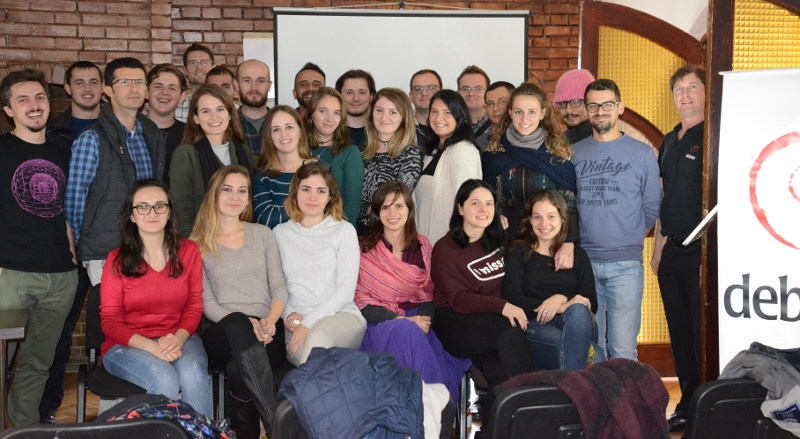
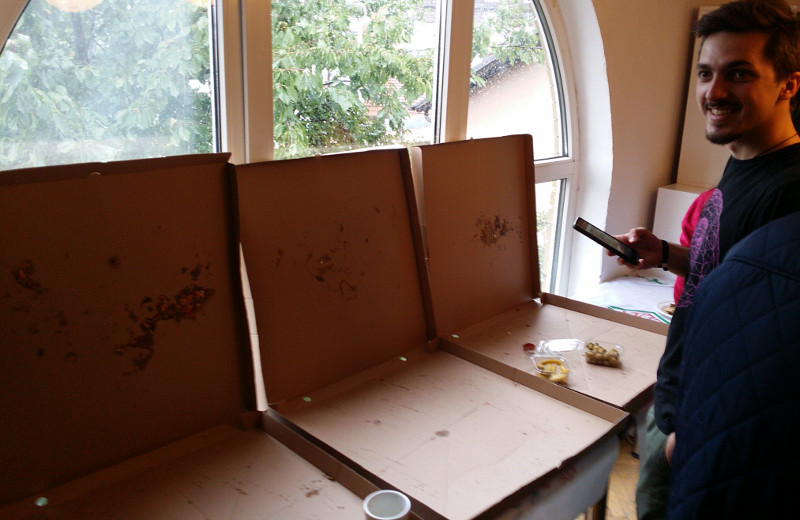
Have you been to an event recently involving free software or a related topic? How did you find it? Are you organizing an event and don't want to fall into the trap of using Facebook or Meetup or other services that compete for a share of your community's attention? Are you keen to find events in foreign destinations related to your interest areas to coincide with other travel intentions? Have you been concerned when your GSoC or Outreachy interns lost a week of their project going through the bureaucracy to get a visa for your community's event? Would you like to make it easier for them to find the best events in the countries that welcome and respect visitors? In many recent discussions about free software activism, people have struggled to break out of the illusion that social media is the way to cultivate new contacts. Wouldn't it be great to make more meaningful contacts by attending more a more diverse range of events rather than losing time on social media? Making it happen There are already a number of tools (for example, Drupal plugins and Wordpress plugins) for promoting your events on the web and in iCalendar format. There are also a number of sites like Agenda du Libre and GriCal who aggregate events from multiple communities where people can browse them. How can we take these concepts further and make a convenient, compelling and global solution? Can we harvest event data from a wide range of sources and compile it into a large database using something like PostgreSQL or a NoSQL solution or even a distributed solution like OpenDHT? Can we use big data techniques to mine these datasources and help match people to events without compromising on privacy? Why not build an automated iCalendar "to-do" list of deadlines for events you want to be reminded about, so you never miss the deadlines for travel sponsorship or submitting a talk proposal? I've started documenting an architecture for this on the Debian wiki and proposed it as an Outreachy project. It will also be offered as part of GSoC in 2018. Ways to get involved If you would like to help this project, please consider introducing yourself on the debian-outreach mailing list and helping to mentor or refer interns for the project. You can also help contribute ideas for the specification through the mailing list or wiki. Mini DebConf Prishtina 2017 This weekend I've been at the MiniDebConf in Prishtina, Kosovo. It has been hosted by the amazing Prishtina hackerspace community. Watch out for future events in Prishtina, the pizzas are huge, but that didn't stop them disappearing before we finished the photos:

6 October 2017

Scarlett Clark: KDE at #UbuntuRally in New York! KDE Applications snaps!

#UbuntuRally New York

KDE at #UbuntuRally New York

I was happy to attend Ubuntu Rally last week in New York with Aleix Pol to represent KDE.
We were able toaccomplish many things during this week, and that is a result of having direct contact with Snap developers.
So a big thank you out to Canonical for sponsoring me. I now have all of KDE core applications,
and many KDE extragear applications in the edge channel looking for testers.
I have also made a huge dent in also making the massive KDE PIM snap!
I hope to have this done by week end.
Most of our issue list made it onto TO-DO lists
So from KDE perspective, this sprint was a huge success!

2 October 2017

Uwe Kleine-K nig: IPv6 in my home network

I am lucky and get both IPv4 (without CGNAT) and IPv6 from my provider. Recently after upgrading my desk router (that is an Netgear WNDR3800 that serves the network on my desk) from OpenWRT to latest LEDE I looked into what can be improved in the IPv6 setup for both my home network (served by a FRITZ!Box) and my desk network. Unfortunately I was unable to improve the situation compared to what I already had before. Things that work Making IPv6 work in general was easy, just a few clicks in the configuration of the FRITZ!Box and it mostly worked. After that I have: Things that don't work There are a few things however that I'd like to have, that are not that easy it seems: ULA for both nets I let the two routers announce an ULA prefix each. Unfortunately I was unable to make the LEDE box announce its net on the wan interface for clients in the home net. So the hosts in the desk net know how to reach the hosts in the home net but not the other way round which makes it quite pointless. (It works fine as long as the FRITZ!Box announces a global net, but I'd like to have local communication work independent of the global connectivity.) To fix this I'd need something like radvd on my LEDE router, but that isn't provided by LEDE (or OpenWRT) any more as odhcpd is supposed to be used which AFAICT is unable to send RAs on the wan interface though. Ok, probably I could install bird, but that seems a bit oversized. I created an entry in the LEDE forum but without any reply up to now. Alternatively (but less pretty) I could setup an IPv6 route in the FRITZ!Box, but that only works with a newer firmware and as this router is owned by my provider I cannot update it. Firewalling The FRITZ!Box has a firewall that is not very configurable. I can punch a hole in it for hosts with a given interface-ID, but that only works for hosts in the home net, not the machines in the delegated subnet behind the LEDE router. In fact I think the FRITZ!Box should delegate firewalling for a delegated net also to the router of that subnet. So having a global address on the machines on my desk doesn't allow me to reach them from the internet. Update: according to the German changelog firmware 6.83 seems to include that feature. Cheers AVM. Now waiting for my provider to update ...

1 October 2017

Paul Wise: FLOSS Activities September 2017

Changes

Issues

Review

Administration
  • icns: merged patches
  • Debian: help guest user with access, investigate/escalate broken network, restart broken stunnels, investigate static.d.o storage, investigate weird RAID mails, ask hoster to investigate power issue,
  • Debian mentors: lintian/security updates & reboot
  • Debian wiki: merged & deployed patch, redirect DDTSS translator, redirect user support requests, whitelist email addresses, update email for accounts with bouncing email,
  • Debian derivatives census: merged/deployed patches
  • Debian PTS: debugged cron mails, deployed changes, reran scripts, fixed configuration file
  • Openmoko: debug reboot issue, debug load issues

Communication

Sponsors The samba bug was sponsored by my employer. All other work was done on a volunteer basis.

30 September 2017

Chris Lamb: Free software activities in September 2017

Here is my monthly update covering what I have been doing in the free software world in September 2017 (previous month):
Reproducible builds

Whilst anyone can inspect the source code of free software for malicious flaws, most software is distributed pre-compiled to end users. The motivation behind the Reproducible Builds effort is to allow verification that no flaws have been introduced either maliciously or accidentally during this compilation process by promising identical results are always generated from a given source, thus allowing multiple third-parties to come to a consensus on whether a build was compromised. I have generously been awarded a grant from the Core Infrastructure Initiative to fund my work in this area. This month I:
  • Published a short blog post about how to determine which packages on your system are reproducible. [...]
  • Submitted a pull request for Numpy to make the generated config.py files reproducible. [...]
  • Provided a patch to GTK upstream to ensure the immodules.cache files are reproducible. [...]
  • Within Debian:
    • Updated isdebianreproducibleyet.com, moving it to HTTPS, adding cachebusting as well as keeping the number up-to-date.
    • Submitted the following patches to fix reproducibility-related toolchain issues:
      • gdk-pixbuf: Make the output of gdk-pixbuf-query-loaders reproducible. (#875704)
      • texlive-bin: Make PDF IDs reproducible. (#874102)
    • Submitted a patch to fix a reproducibility issue in doit.
  • Categorised a large number of packages and issues in the Reproducible Builds "notes" repository.
  • Chaired our monthly IRC meeting. [...]
  • Worked on publishing our weekly reports. (#123, #124, #125, #126 & #127)


I also made the following changes to our tooling:
reproducible-check

reproducible-check is our script to determine which packages actually installed on your system are reproducible or not.

  • Handle multi-architecture systems correctly. (#875887)
  • Use the "restricted" data file to mask transient issues. (#875861)
  • Expire the cache file after one day and base the local cache filename on the remote name. [...] [...]
I also blogged about this utility. [...]
diffoscope

diffoscope is our in-depth and content-aware diff utility that can locate and diagnose reproducibility issues.

  • Filed an issue attempting to identify the causes behind an increased number of timeouts visible in our CI infrastructure, including running a number of benchmarks of recent versions. (#875324)
  • New features:
    • Add "binwalking" support to analyse concatenated CPIO archives such as initramfs images. (#820631).
    • Print a message if we are reading data from standard input. [...]
  • Bug fixes:
    • Loosen matching of file(1)'s output to ensure we correctly also match TTF files under file version 5.32. [...]
    • Correct references to path_apparent_size in comparators.utils.file and self.buf in diffoscope.diff. [...] [...]
  • Testing:
    • Make failing some critical flake8 tests result in a failed build. [...]
    • Check we identify all CPIO fixtures. [...]
  • Misc:
    • No need for try-assert-except block in setup.py. [...]
    • Compare types with identity not equality. [...] [...]
    • Use logging.py's lazy argument interpolation. [...]
    • Remove unused imports. [...]
    • Numerous PEP8, flake8, whitespace, other cosmetic tidy-ups.

strip-nondeterminism

strip-nondeterminism is our tool to remove specific non-deterministic results from a completed build.

  • Log which handler processed a file. (#876140). [...]

disorderfs

disorderfs is our FUSE-based filesystem that deliberately introduces non-determinism into directory system calls in order to flush out reproducibility issues.


Debian My activities as the current Debian Project Leader are covered in my monthly "Bits from the DPL" email to the debian-devel-announce mailing list.
Lintian I made a large number of changes to Lintian, the static analysis tool for Debian packages. It reports on various errors, omissions and general quality-assurance issues to maintainers: I also blogged specifically about the Lintian 2.5.54 release.

Patches contributed
  • debconf: Please add a context manager to debconf.py. (#877096)
  • nm.debian.org: Add pronouns to ALL_STATUS_DESC. (#875128)
  • user-setup: Please drop set_special_users hack added for "the convenience of heavy testers". (#875909)
  • postgresql-common: Please update README.Debian for PostgreSQL 10. (#876438)
  • django-sitetree: Should not mask test failures. (#877321)
  • charmtimetracker:
    • Missing binary dependency on libqt5sql5-sqlite. (#873918)
    • Please drop "Cross-Platform" from package description. (#873917)
I also submitted 5 patches for packages with incorrect calls to find(1) in debian/rules against hamster-applet, libkml, pyferret, python-gssapi & roundcube.

Debian LTS

This month I have been paid to work 15 hours on Debian Long Term Support (LTS). In that time I did the following:
  • "Frontdesk" duties, triaging CVEs, etc.
  • Documented an example usage of autopkgtests to test security changes.
  • Issued DLA 1084-1 and DLA 1085-1 for libidn and libidn2-0 to fix an integer overflow vulnerabilities in Punycode handling.
  • Issued DLA 1091-1 for unrar-free to prevent a directory traversal vulnerability from a specially-crafted .rar archive. This update introduces an regression test.
  • Issued DLA 1092-1 for libarchive to prevent malicious .xar archives causing a denial of service via a heap-based buffer over-read.
  • Issued DLA 1096-1 for wordpress-shibboleth, correcting an cross-site scripting vulnerability in the Shibboleth identity provider module.

Uploads
  • python-django:
    • 1.11.5-1 New upstream security release. (#874415)
    • 1.11.5-2 Apply upstream patch to fix QuerySet.defer() with "super" and "subclass" fields. (#876816)
    • 2.0~alpha1-2 New upstream alpha release of Django 2.0, dropping support for Python 2.x.
  • redis:
    • 4.0.2-1 New upstream release.
    • 4.0.2-2 Update 0004-redis-check-rdb autopkgtest test to ensure that the redis.rdb file exists before testing against it.
    • 4.0.2-2~bpo9+1 Upload to stretch-backports.
  • aptfs (0.11.0-1) New upstream release, moving away from using /var/lib/apt/lists internals. Thanks to Julian Andres Klode for a helpful bug report. (#874765)
  • lintian (2.5.53, 2.5.54) New upstream releases. (Documented in more detail above.)
  • bfs (1.1.2-1) New upstream release.
  • docbook-to-man (1:2.0.0-39) Tighten autopkgtests and enable testing via travis.debian.net.
  • python-daiquiri (1.3.0-1) New upstream release.

I also made the following non-maintainer uploads (NMUs):

Debian bugs filed
  • clipit: Please choose a sensible startup default in "live" mode. (#875903)
  • git-buildpackage: Please add a --reset option to gbp pull. (#875852)
  • bluez: Please default Device "friendly name" to hostname without domain. (#874094)
  • bugs.debian.org: Please explicitly link to packages,tracker .debian.org. (#876746)
  • Requests for packaging:
    • selfspy log everything you do on the computer. (#873955)
    • shoogle use the Google API from the shell. (#873916)

FTP Team

As a Debian FTP assistant I ACCEPTed 86 packages: bgw-replstatus, build-essential, caja-admin, caja-rename, calamares, cdiff, cockpit, colorized-logs, comptext, comptty, copyq, django-allauth, django-paintstore, django-q, django-test-without-migrations, docker-runc, emacs-db, emacs-uuid, esxml, fast5, flake8-docstrings, gcc-6-doc, gcc-7-doc, gcc-8, golang-github-go-logfmt-logfmt, golang-github-google-go-cmp, golang-github-nightlyone-lockfile, golang-github-oklog-ulid, golang-pault-go-macchanger, h2o, inhomog, ip4r, ldc, libayatana-appindicator, libbson-perl, libencoding-fixlatin-perl, libfile-monitor-lite-perl, libhtml-restrict-perl, libmojo-rabbitmq-client-perl, libmoosex-types-laxnum-perl, libparse-mime-perl, libplack-test-agent-perl, libpod-projectdocs-perl, libregexp-pattern-license-perl, libstring-trim-perl, libtext-simpletable-autowidth-perl, libvirt, linux, mac-fdisk, myspell-sq, node-coveralls, node-module-deps, nov-el, owncloud-client, pantomime-clojure, pg-dirtyread, pgfincore, pgpool2, pgsql-asn1oid, phpliteadmin, powerlevel9k, pyjokes, python-evdev, python-oslo.db, python-pygal, python-wsaccel, python3.7, r-cran-bindrcpp, r-cran-dotcall64, r-cran-glue, r-cran-gtable, r-cran-pkgconfig, r-cran-rlang, r-cran-spatstat.utils, resolvconf-admin, retro-gtk, ring-ssl-clojure, robot-detection, rpy2-2.8, ruby-hocon, sass-stylesheets-compass, selinux-dbus, selinux-python, statsmodels, webkit2-sharp & weston. I additionally filed 4 RC bugs against packages that had incomplete debian/copyright files against: comptext, comptext, ldc & python-oslo.concurrency.

28 September 2017

Russell Coker: Process Monitoring

Since forking the Mon project to etbemon [1] I ve been spending a lot of time working on the monitor scripts. Actually monitoring something is usually quite easy, deciding what to monitor tends to be the hard part. The process monitoring script ps.monitor is the one I m about to redesign. Here are some of my ideas for monitoring processes. Please comment if you have any suggestions for how do do things better. For people who don t use mon, the monitor scripts return 0 if everything is OK and 1 if there s a problem along with using stdout to display an error message. While I m not aware of anyone hooking mon scripts into a different monitoring system that s going to be easy to do. One thing I plan to work on in the future is interoperability between mon and other systems such as Nagios. Basic Monitoring
ps.monitor tor:1-1 master:1-2 auditd:1-1 cron:1-5 rsyslogd:1-1 dbus-daemon:1- sshd:1- watchdog:1-2
I m currently planning some sort of rewrite of the process monitoring script. The current functionality is to have a list of process names on the command line with minimum and maximum numbers for the instances of the process in question. The above is a sample of the configuration of the monitor. There are some limitations to this, the master process in this instance refers to the main process of Postfix, but other daemons use the same process name (it s one of those names that s wrong because it s so obvious). One obvious solution to this is to give the option of specifying the full path so that /usr/lib/postfix/sbin/master can be differentiated from all the other programs named master. The next issue is processes that may run on behalf of multiple users. With sshd there is a single process to accept new connections running as root and a process running under the UID of each logged in user. So the number of sshd processes running as root will be one greater than the number of root login sessions. This means that if a sysadmin logs in directly as root via ssh (which is controversial and not the topic of this post merely something that people do which I have to support) and the master process then crashes (or the sysadmin stops it either accidentally or deliberately) there won t be an alert about the missing process. Of course the correct thing to do is to have a monitor talk to port 22 and look for the string SSH-2.0-OpenSSH_ . Sometimes there are multiple instances of a daemon running under different UIDs that need to be monitored separately. So obviously we need the ability to monitor processes by UID. In many cases process monitoring can be replaced by monitoring of service ports. So if something is listening on port 25 then it probably means that the Postfix master process is running regardless of what other master processes there are. But for my use I find it handy to have multiple monitors, if I get a Jabber message about being unable to send mail to a server immediately followed by a Jabber message from that server saying that master isn t running I don t need to fully wake up to know where the problem is. SE Linux One feature that I want is monitoring SE Linux contexts of processes in the same way as monitoring UIDs. While I m not interested in writing tests for other security systems I would be happy to include code that other people write. So whatever I do I want to make it flexible enough to work with multiple security systems. Transient Processes Most daemons have a second process of the same name running during the startup process. This means if you monitor for exactly 1 instance of a process you may get an alert about 2 processes running when logrotate or something similar restarts the daemon. Also you may get an alert about 0 instances if the check happens to run at exactly the wrong time during the restart. My current way of dealing with this on my servers is to not alert until the second failure event with the alertafter 2 directive. The failure_interval directive allows specifying the time between checks when the monitor is in a failed state, setting that to a low value means that waiting for a second failure result doesn t delay the notification much. To deal with this I ve been thinking of making the ps.monitor script automatically check again after a specified delay. I think that solving the problem with a single parameter to the monitor script is better than using 2 configuration directives to mon to work around it. CPU Use Mon currently has a loadavg.monitor script that to check the load average. But that won t catch the case of a single process using too much CPU time but not enough to raise the system load average. Also it won t catch the case of a CPU hungry process going quiet (EG when the SETI at Home server goes down) while another process goes into an infinite loop. One way of addressing this would be to have the ps.monitor script have yet another configuration option to monitor CPU use, but this might get confusing. Another option would be to have a separate script that alerts on any process that uses more than a specified percentage of CPU time over it s lifetime or over the last few seconds unless it s in a whitelist of processes and users who are exempt from such checks. Probably every regular user would be exempt from such checks because you never know when they will run a file compression program. Also there is a short list of daemons that are excluded (like BOINC) and system processes (like gzip which is run from several cron jobs). Monitoring for Exclusion A common programming mistake is to call setuid() before setgid() which means that the program doesn t have permission to call setgid(). If return codes aren t checked (and people who make such rookie mistakes tend not to check return codes) then the process keeps elevated permissions. Checking for processes running as GID 0 but not UID 0 would be handy. As an aside a quick examination of a Debian/Testing workstation didn t show any obvious way that a process with GID 0 could gain elevated privileges, but that could change with one chmod 770 command. On a SE Linux system there should be only one process running with the domain init_t. Currently that doesn t happen in Stretch systems running daemons such as mysqld and tor due to policy not matching the recent functionality of systemd as requested by daemon service files. Such issues will keep occurring so we need automated tests for them. Automated tests for configuration errors that might impact system security is a bigger issue, I ll probably write a separate blog post about it.

27 September 2017

Enrico Zini: Qt cross-architecture development in Debian

Use case: use Debian Stable as an environment to run amd64 development machines to develop Qt applications for Raspberry Pi or other smallish armhf devices. Qt Creator is used as Integrated Development Environment, and it supports cross-compiling, running the built source on the target system, and remote debugging. Debian Stable (vanilla or Raspbian) runs on both the host and the target systems, so libraries can be kept in sync, and both systems have access to a vast amount of libraries, with security support. On top of that, armhf libraries can be installed with multiarch also in the host machine, so cross-builders have access to the exact same libraries as the target system. This sounds like a dream system. But. We're not quite there yet. cross-compile attempts I tried cross compiling a few packages:
$ sudo debootstrap stretch cross
$ echo "strech_cross"   sudo tee cross/etc/debian_chroot
$ sudo systemd-nspawn -D cross
# dpkg --add-architecture armhf
# echo "deb-src http://deb.debian.org/debian stretch main" >> /etc/apt/sources.list
# apt update
# apt install --no-install-recommends build-essential crossbuild-essential-armhf
Some packages work:
# apt source bc
# cd bc-1.06.95/
# apt-get build-dep -a armhf .
# dpkg-buildpackage -aarmhf -j2 -b
 
dh_auto_configure -- --prefix=/usr --with-readline
        ./configure --build=x86_64-linux-gnu --prefix=/usr --includedir=\$ prefix /include --mandir=\$ prefix /share/man --infodir=\$ prefix /share/info --sysconfdir=/etc --localstatedir=/var --disable-silent-rules --libdir=\$ prefix /lib/arm-linux-gnueabihf --libexecdir=\$ prefix /lib/arm-linux-gnueabihf --disable-maintainer-mode --disable-dependency-tracking --host=arm-linux-gnueabihf --prefix=/usr --with-readline
 
dpkg-deb: building package 'dc-dbgsym' in '../dc-dbgsym_1.06.95-9_armhf.deb'.
dpkg-deb: building package 'bc-dbgsym' in '../bc-dbgsym_1.06.95-9_armhf.deb'.
dpkg-deb: building package 'dc' in '../dc_1.06.95-9_armhf.deb'.
dpkg-deb: building package 'bc' in '../bc_1.06.95-9_armhf.deb'.
 dpkg-genbuildinfo --build=binary
 dpkg-genchanges --build=binary >../bc_1.06.95-9_armhf.changes
dpkg-genchanges: info: binary-only upload (no source code included)
 dpkg-source --after-build bc-1.06.95
dpkg-buildpackage: info: binary-only upload (no source included)
With qmake based Qt packages, qmake is not configured for cross-building, probably because it is not currently supported:
# apt source pumpa
# cd pumpa-0.9.3/
# apt-get build-dep -a armhf .
# dpkg-buildpackage -aarmhf -j2 -b
 
        qmake -makefile -nocache "QMAKE_CFLAGS_RELEASE=-g -O2 -fdebug-prefix-map=/root/pumpa-0.9.3=.
          -fstack-protector-strong -Wformat -Werror=format-security -Wdate-time -D_FORTIFY_SOURCE=2"
          "QMAKE_CFLAGS_DEBUG=-g -O2 -fdebug-prefix-map=/root/pumpa-0.9.3=. -fstack-protector-strong
          -Wformat -Werror=format-security -Wdate-time -D_FORTIFY_SOURCE=2"
          "QMAKE_CXXFLAGS_RELEASE=-g -O2 -fdebug-prefix-map=/root/pumpa-0.9.3=. -fstack-protector-strong
          -Wformat -Werror=format-security -Wdate-time -D_FORTIFY_SOURCE=2"
          "QMAKE_CXXFLAGS_DEBUG=-g -O2 -fdebug-prefix-map=/root/pumpa-0.9.3=. -fstack-protector-strong
          -Wformat -Werror=format-security -Wdate-time -D_FORTIFY_SOURCE=2"
          "QMAKE_LFLAGS_RELEASE=-Wl,-z,relro -Wl,-z,now"
          "QMAKE_LFLAGS_DEBUG=-Wl,-z,relro -Wl,-z,now" QMAKE_STRIP=: PREFIX=/usr
qmake: could not exec '/usr/lib/x86_64-linux-gnu/qt5/bin/qmake': No such file or directory
 
debian/rules:19: recipe for target 'build' failed
make: *** [build] Error 2
dpkg-buildpackage: error: debian/rules build gave error exit status 2
With cmake based Qt packages it goes a little better in that it finds the cross compiler, pkg-config and some multiarch paths, but then it tries to run armhf moc, which fails:
# apt source caneda
# cd caneda-0.3.0/
# apt-get build-dep -a armhf .
# dpkg-buildpackage -aarmhf -j2 -b
 
        cmake .. -DCMAKE_INSTALL_PREFIX=/usr -DCMAKE_VERBOSE_MAKEFILE=ON -DCMAKE_BUILD_TYPE=None
          -DCMAKE_INSTALL_SYSCONFDIR=/etc -DCMAKE_INSTALL_LOCALSTATEDIR=/var -DCMAKE_SYSTEM_NAME=Linux
          -DCMAKE_SYSTEM_PROCESSOR=arm -DCMAKE_C_COMPILER=arm-linux-gnueabihf-gcc
          -DCMAKE_CXX_COMPILER=arm-linux-gnueabihf-g\+\+
          -DPKG_CONFIG_EXECUTABLE=/usr/bin/arm-linux-gnueabihf-pkg-config
          -DCMAKE_INSTALL_LIBDIR=lib/arm-linux-gnueabihf
 
CMake Error at /usr/lib/arm-linux-gnueabihf/cmake/Qt5Core/Qt5CoreConfig.cmake:27 (message):
  The imported target "Qt5::Core" references the file
     "/usr/lib/arm-linux-gnueabihf/qt5/bin/moc"
  but this file does not exist.  Possible reasons include:
  * The file was deleted, renamed, or moved to another location.
  * An install or uninstall procedure did not complete successfully.
  * The installation package was faulty and contained
     "/usr/lib/arm-linux-gnueabihf/cmake/Qt5Core/Qt5CoreConfigExtras.cmake"
  but not all the files it references.
Note: Although I improvised a chroot to be able to fool around with it, I would use pbuilder or sbuild to do the actual builds. Helmut suggests pbuilder --host-arch or sbuild --host. Doing it the non-Debian way This guide in the meantime explains how to set up a cross-compiling Qt toolchain in a rather dirty way, by recompiling Qt pointing it at pieces of the Qt deployed on the Raspberry Pi. Following that guide, replacing the CROSS_COMPILE value with /usr/bin/arm-linux-gnueabihf- gave me a working qtbase, for which it is easy to create a Kit for Qt Creator that works, and supports linking applications with Debian development packages that do not use Qt. However, at that point I need to recompile all dependencies that use Qt myself, and I quickly got stuck at that monster of QtWebEngine, whose sources embed the whole of Chromium. Having a Qt based development environment in which I need to become the maintainer for the whole Qt toolchain is not a product I can offer to a customer. Cross compiling qmake based packages on stretch is not currently supported, so at the moment I had to suggest to postpone all plans for total world domination for at least two years. Cross-building Debian In the meantime, Helmut Grohne has been putting a lot of effort into making Debian packages cross-buildable:
helmut> enrico: yes, cross building is painful. we have ~26000 source packages. of those, ~13000 build arch-dep packages. of those, ~6000 have cross-satisfiable build-depends. of those, I tried cross building ~2300. of those 1300 cross built. so we are at about 10% working. helmut> enrico: plus there are some 607 source packages affected by some 326 bugs with patches. helmut> enrico: gogo nmu them helmut> enrico: I've filed some 1000 bugs (most of them with patches) now. around 600 are fixed :)
He is doing it mostly alone, and I would like people not to be alone when they do a lot of work in Debian, so Join Helmut in the effort of making Debian cross-buildable! Build any Debian package for any device right from the comfort of your own work computer! Have a single development environment seamlessly spanning architecture boundaries, with the power of all that there is in Debian! Join Helmut in the effort of making Debian cross-buildable! Apply here, or join #debian-bootstrap on OFTC! Cross-building Qt in Debian mitya57 summarised the situation on the KDE team side:
mitya57> we have cross-building stuff on our TODO list, but it will likely require a lot of time and neither Lisandro nor I have it currently. mitya57> see https://gobby.debian.org/export/Teams/KDE/qt-cross for a summary of what needs to be done. mitya57> Any help or patches are always welcome :))
qemu-user-static Helmut also suggested to use qemu-user-static to make the host system able to run binaries compiled for the target system, so that even if a non-cross-compiling Qt build tries to run moc and friends in their target architecture version, they would transparently succeed. At that point, it would just be a matter of replacing compiler paths to point to the native cross-compiling gcc, and the build would not be slowed down by much. Fixing bug #781226 would help in making it possible to configure a multiarch version of qmake as the qmake used for cross compiling. I have not had a chance of trying to cross-build in this way yet. In the meantime... Having qtcreator able to work on an amd64 devel machine and deploy/test/debug remotely on an arm target machine, where both machine run debian stable and have libraries in sync, would be a great thing to have even though packages do not cross-build yet. Helmut summarised the situation on IRC:
svuorela and others repeat that Qt upstream is not compatible with Debian's multiarch thinking, in that Qt upstream insists on having one toolchain for each pair of architectures, whereas the Debian way tends to be to make packages generic and split stuff such that it can be mixed and matched. An example being that you need to run qmake (thus you need qmake for the build architecture), but qmake also embeds the relevant paths and you need to query it for them (so you need qmake for the host architecture) Either you run it through qemu, or you have a particular cross qmake for your build/host pair, or you fix qt upstream to stop this madness
Building qmake in Debian for each host-target pair, even just limited to released architectures, would mean building Qt 100 times, and that's not going to scale. I wonder:

2 September 2017

Daniel Silverstone: F/LOSS activity, August 2017

Shockingly enough, my focus started out on Gitano once more. We managed a 1.1 release of Gitano during the Debian conference's "camp" which occurs in the week before the conference. This was a joint effort of myself, Richard Maw, and Richard Ipsum. I have to take my hat off to Richard Maw, because without his dedication to features, 1.1 would lack some stuff which Richard Ipsum proposed around ruleset support for basic readers/writers and frankly 1.1 would be a weaker release without it. Because of the debconf situation, we didn't have a Gitano developer day which, while sad, didn't slow us down much...

Not Gitano Of course, not everything I did in August was Gitano related. In fact once I had completed the 1.1 release and uploaded everything to Debian I decided that I was going to take a break from Gitano until the next developer day. (In fact there's even some patch series still unread on the mailing list which I will get to when I start the developer day.) I have long been interested in STM32 microcontrollers, using them in a variety of projects including the Entropy Key which some of you may remember. Jorge Aparicio was working on Cortex-M3 support (among other microcontrollers) in Rust and he then extended that to include a realtime framework called RTFM and from there I got interested in what I might be able to do with Rust on STM32. I noticed that there weren't any pure Rust implementations of the USB device stack which would be necessary in order to make a device, programmed in Rust, appear on a USB port for a computer to control/use. This tweaked my interest. As many of my readers are aware, I am very bad at doing things without some external motivation. As such, I then immediately offered to give a talk at a conference which should be happening in November, just so that I'd be forced to get on with learning and implementing the stack. I have been chronicling my work in this blog, and you're encouraged to go back and read them if you have similar interests. I'm sure that as my work progresses, I'll be doing more and more of that and less of Gitano, for at least the next two months. To bring that into context as F/LOSS work, I did end up submitting some patches to Jorge's STM32F103xx repository to support a couple more clock configuration entries so that USB and ADCs can be set up cleanly. So at least there's that.

22 August 2017

Jonathan McDowell: Notes on upgrading from Jessie to Stretch

I upgraded my last major machine from Jessie to Stretch last week. That machine was the one running the most services, but I d made notes while updating various others to ensure it went smoothly. Below are the things I noted along the way, both for my own reference and in case they are of use to anyone else. Other than those points things were pretty smooth. Nice work by all those involved!

11 August 2017

Thorsten Glaser: [PSA] Fixing CVE-2017-12836 (Debian #871810) in GNU cvs

Considering I ve become the de-facto upstream of cvs(GNU) even if not yet formally the de-iure upstream maintainer, fixing this bug obviously falls to me not quite the way I had planned passing this evening after coming home from work and a decent and, worse, very filling meal at the local Croatian restaurant. But, so s life. The problem here is basically that CVS invokes ssh(1) (well, rsh originally ) but doesn t add the argument separator -- before the (user-provided) hostname, which when starting with a hyphen-minus will be interpreted by ssh as an argument. (Apparently the other VCSes also had additional vulnerabilities such as not properly escaping semicoloi or pipes from the shell or unescaping percent-escaped fun characters, but that doesn t affect us.) The obvious fix and the one I implemented first is to simply add the dashes. This will also be backported to Debian , ,old old stable-security. Then I looked at other VCSes out of which only one did this, but they all added extra paranoia hostname checks (some of them passing invalid hostnames, such as those with underscores in them). OK, I thought, then also let s add extra checks to CVS repository reference handling. This will end up in Debian sid and MirBSD, pending passing the regression tests of course hah, while writing this article I had to fixup because a test failed. Anyway, it s not strictly necessary AFAICT to fix the issue. Update, about 2 hours past midnight (the testsuite runs for several hours): of course, the sanity testsuite (which itself is rather insane ) also needs adjustments, plus a bonus fix (for something that got broken when the recent allow-root-regex patch was merged and got fixed in the same go to night). tl;dr: a fix will end up in Debian *stable-security and can be taken out of my mail to the bugreport; another few changes for robustness are being tested and then added to both MirBSD and Debian sid. The impact is likely small, as it s hard to get a user (if you find one, in the first place) to use a crafted CVSROOT string, which is easy to spot as well. Update, Monday: apparently someone took care of the DSA and DLA yesterday after ACCEPTing the uploads thanks, I was outside during the day.

10 August 2017

Thorsten Glaser: New mksh and jupp releases, mksh FAQ, jupprc for JOE 4.4; MuseScore

mksh R56 was released with experimental fixes for the history no longer persisted when HISTFILE near-full and interactive shell cannot wait on coprocess by PID issues (I hope they do not introduce any regressioins) and otherwise as a bugfix release. You might wish to know the $EDITOR selection mechanism in dot.mkshrc changed. Some more alias characters are allowed again, and POSIX character classes (for ASCII, and EBCDIC, only) appeared by popular vote. mksh now has a FAQ; enjoy. Do feel free to contribute (answers, too, of course). The jupp text editor has also received a new release; asides from being much smaller, and updated (mksh too, btw) to Unicode 10, and some segfault fixes, it features falling back to using /dev/tty if stdin or stdout is not a terminal (for use on GNU with find xargs jupp, since they don t have our xargs(1) -o option yet), a new command to exit nonzero (sometimes, utilities invoking the generic visual editor need this), and presentation mode . Presentation mode, crediting Natureshadow, is basically putting your slides as (UTF-8, with fancy stuff inside) plaintext files into one directory, with sorting names (so e.g. zero-padded slide numbers as filenames), presenting them with jupp * in a fullscreen xterm. You d hit F6 to switch to one-file view first, then present by using F8 to go forward (F7 to go backward), and, for demonstrations, F9 to pipe the entire slide through an external command (could be just sh ) offering the previous one as default. Simple yet powerful; I imagine Sven Guckes would love it, were he not such a vim user. The new release is offered as source tarball (as usual) and in distribution packages, but also, again, a Win32 version as PKZIP archive (right-click on setup.inf and hit I nstall to install it). Note that this comes with its own (thankfully local) version of the Cygwin32 library (compatible down to Windows 95, apparently), so if you have Cygwin installed yourself you re better off compiling it there and using your own version instead. I ve also released a new DOS version of 2.8 with no code patches but an updated jupprc; the binary (self-extracting LHarc archive) this time comes with all resource files, not just jupp s. Today, the jupprc drop-in file for JOE 3.7 got a matching update (and some fixes for bugs discovered during that) and I added a new one for JOE 4.4 (the former being in Debian wheezy, the latter in jessie, stretch and buster/sid). It s a bit rudimentary (the new shell window functionality is absent) but, mostly, gives the desired jupp feeling, more so than just using stock jstar would. CVS ability to commit to multiple branches of a file at the same time, therefore grouping the commit (by commitid at least, unsure if cvsps et al. can be persuaded to recognise it). If you don t know what cvs(GNU) is: it is a proper (although not distributed) version control system and the best for centralised tasks. (For decentral tasks, abusing git as pseudo-VCS has won by popularity vote; take this as a comparison.) If desired, I can make these new versions available in my WTF APT repository on request. (Debian buster/sid users: please change https to http there, the site is only available with TLSv1.0 as it doesn t require bank-level security.) I d welcome it very much if people using an OS which does not yet carry either to package it there. Message me when one more is added, too In unrelated news I uploaded MuseScore 2.1 to Debian unstable, mostly because the maintainers are busy (though I could comaintain it if needed, I d just need help with the C++ and CMake details). Bonus side effect is that I can now build 2.2~ test versions with patches of mine added I plan to produce to fix some issues (and submit upstream) (read more )

4 August 2017

Daniel Silverstone: USB Device Stacks, on RTFM

I have been spending time with Jorge Aparicio's RTFM for Cortex M3 framework for writing Rust to target Cortex-M3 devices from Arm (and particularly the STM32F103 from ST Microelectronics). Jorge's work in this area has been of interest to me ever since I discovered him working on this stuff a while ago. I am very tempted by the idea of being able to implement code for the STM32 with the guarantees of Rust and the language features which I have come to love such as the trait system. I have been thinking to myself that, while I admire and appreciate the work done on the GNUK, I would like to, personally, have a go at implementing some kind of security token on an STM32 as a USB device. And with the advent of the RTFM for M3 work, and Jorge's magical tooling to make it easier to access and control the registers on an M3 microcontroller, I figured it'd be super-nice to do this in Rust, with all the advantages that entails in terms of isolating unsafe behaviour and generally having the potential to be more easily verified as not misbehaving. To do this though, means that I need a USB device stack which will work in the RTFM framework. Sadly it seems that, thus-far, only Jorge has been working on drivers for any of the M3 devices his framework supports. And one person can only do so much. So, in my infinite madness, I decided I should investigate the complexity of writing a USB device stack in Rust for the RTFM/M3 framework. (Why I thought this was a good idea is lost to the mists of late night Googling, but hey, it might make a good talk at the next conference I go to). As such, this blog post, and further ones along these lines, will serve as a partial tour of what I'm up to, and a partial aide-memoir for me about learning USB. If I get something horribly wrong, please DO contact me to correct me, otherwise I'll just continue to be wrong. If I've simplified something but it's still strictly correct, just let me know if it's an oversimplification since in a lot of cases there's no point in me putting the full details into a blog posting. I will mostly be considering USB2.0 protocol details but only really for low and full speed devices. (The hardware I'm targetting does low-speed and full-speed, but not high-speed. Though some similar HW does high-speed too, I don't have any to hand right now)

A brief introduction to USB In order to go much further, I needed a grounding in USB. It's a multi-layer protocol as you might expect, though we can probably ignore the actual electrical layer since any device we might hope to support will have to have a hardware block to deal with that. We will however need to consider the packet layer (since that will inform how the hardware block is implemented and thus its interface) and then the higher level protocols on top. USB is a deliberately asymmetric protocol. Devices are meant to be significantly easier to implement, both in terms of hardware and software, as compared with hosts. As such, despite some STM32s having OTG ports, I have no intention of supporting host mode at this time. USB is arranged into a set of busses which are, at least in the USB1.1 case, broadcast domains. As such, each device has an address assigned to it by the host during an early phase called 'configuration'. Once the address is assigned, the device is expected to only ever respond to messages addressed to it. Note that since everything is asymmetric in USB, the device can't send messages on its own, but has to be asked for them by the host, and as such the addressing is always from host toward device. USB devices then expose a number of endpoints through which communication can flow IN to the host or OUT to the device. Endpoints are not bidirectional, but the in and out endpoints do overlap in numbering. There is a special pair of endpoints, IN0 and OUT0 which, between them, form what I will call the device control endpoints. The device control endpoints are important since every USB device MUST implement them, and there are a number of well defined messages which pass over them to control the USB device. In theory a bare minimum USB device would implement only the device control endpoints.

Configurations, and Classes, and Interfaces, Oh My! In order for the host to understand what the USB device is, and what it is capable of, part of the device control endpoints' responsibility is to provide a set of descriptors which describe the device. These descriptors form a heirarchy and are then glommed together into a big lump of data which the host can download from the device in order to decide what it is and how to use it. Because of various historical reasons, where a multi-byte value is used, they are defined to be little-endian, though there are some BCD fields. Descriptors always start with a length byte and a type byte because that way the host can parse/skip as necessary, with ease. The first descriptor is the device descriptor, is a big one, and looks like this:
Device Descriptor
Field Name Byte start Byte length Encoding Meaning
bLength 0 1 Number Size of the descriptor in bytes (18)
bDescriptorType 1 1 Constant Device Descriptor (0x01)
bcdUSB 2 2 BCD USB spec version compiled with
bDeviceClass 4 1 Class Code, assigned by USB org (0 means "Look at interface descriptors", common value is 2 for CDC)
bDeviceSubClass 5 1 SubClass Code, assigned by USB org (usually 0)
bDeviceProtocol 6 1 Protocol Code, assigned by USB org (usually 0)
bMaxPacketSize 7 1 Number Max packet size for IN0/OUT0 (Valid are 8, 16, 32, 64)
idVendor 8 2 ID 16bit Vendor ID (Assigned by USB org)
idProduct 10 2 ID 16bit Product ID (Assigned by manufacturer)
bcdDevice 12 2 BCD Device version number (same encoding as bcdUSB)
iManufacturer 14 1 Index String index of manufacturer name (0 if unavailable)
iProduct 15 1 Index String index of product name (0 if unavailable)
iSerialNumber 16 1 Index String index of device serial number (0 if unavailable)
bNumConfigurations 17 1 Number Count of configurations the device has.
This looks quite complex, but breaks down into a relatively simple two halves. The first eight bytes carries everything necessary for the host to be able to configure itself and the device control endpoints properly in order to communicate effectively. Since eight bytes is the bare minimum a device must be able to transmit in one go, the host can guarantee to get those, and they tell it what kind of device it is, what USB protocol it supports, and what the maximum transfer size is for its device control endpoints. The encoding of the bcdUSB and bcdDevice fields is interesting too. It is of the form 0xMMmm where MM is the major number, mm the minor. So USB2.0 is encoded as 0x0200, USB1.1 as 0x0110 etc. If the device version is 17.36 then that'd be 0x1736. Other fields of note are bDeviceClass which can be 0 meaning that interfaces will specify their classes, and idVendor/idProduct which between them form the primary way for the specific USB device to be identified. The Index fields are indices into a string table which we'll look at later. For now it's enough to know that wherever a string index is needed, 0 can be provided to mean "no string here". The last field is bNumConfigurations and this indicates the number of ways in which this device might function. A USB device can provide any number of these configurations, though typically only one is provided. If the host wishes to switch between configurations then it will have to effectively entirely quiesce and reset the device. The next kind of descriptor is the configuration descriptor. This one is much shorter, but starts with the same two fields:
Configuration Descriptor
Field Name Byte start Byte length Encoding Meaning
bLength 0 1 Number Size of the descriptor in bytes (9)
bDescriptorType 1 1 Constant Configuration Descriptor (0x02)
wTotalLength 2 2 Number Size of the configuration in bytes, in total
bNumInterfaces 4 1 Number The number of interfaces in this configuration
bConfigurationValue 5 1 Number The value to use to select this configuration
iConfiguration 6 1 Index The name of this configuration (0 for unavailable)
bmAttributes 7 1 Bitmap Attributes field (see below)
bMaxPower 8 1 Number Maximum bus power this configuration will draw (in 2mA increments)
An important field to consider here is the bmAttributes field which tells the host some useful information. Bit 7 must be set, bit 6 is set if the device would be self-powered in this configuration, bit 5 indicates that the device would like to be able to wake the host from sleep mode, and bits 4 to 0 must be unset. The bMaxPower field is interesting because it encodes the power draw of the device (when set to this configuration). USB allows for up to 100mA of draw per device when it isn't yet configured, and up to 500mA when configured. The value may be used to decide if it's sensible to configure a device if the host is in a low power situation. Typically this field will be set to 50 to indicate the nominal 100mA is fine, or 250 to request the full 500mA. Finally, the wTotalLength field is interesting because it tells the host the total length of this configuration, including all the interface and endpoint descriptors which make it up. With this field, the host can allocate enough RAM to fetch the entire configuration descriptor block at once, simplifying matters dramatically for it. Each configuration has one or more interfaces. The interfaces group some endpoints together into a logical function. For example a configuration for a multifunction scanner/fax/printer might have an interface for the scanner function, one for the fax, and one for the printer. Endpoints are not shared among interfaces, so when building this table, be careful. Next, logically, come the interface descriptors:
Interface Descriptor
Field Name Byte start Byte length Encoding Meaning
bLength 0 1 Number Size of the descriptor in bytes (9)
bDescriptorType 1 1 Constant Interface Descriptor (0x04)
bInterfaceNumber 2 1 Number The number of the interface
bAlternateSetting 3 1 Number The interface alternate index
bNumEndpoints 4 1 Number The number of endpoints in this interface
bInterfaceClass 5 1 Class The interface class (USB Org defined)
bInterfaceSubClass 6 1 SubClass The interface subclass (USB Org defined)
bInterfaceProtocol 7 1 Protocol The interface protocol (USB Org defined)
iInterface 8 1 Index The name of the interface (or 0 if not provided)
The important values here are the class/subclass/protocol fields which provide a lot of information to the host about what the interface is. If the class is a USB Org defined one (e.g. 0x02 for Communications Device Class) then the host may already have drivers designed to work with the interface meaning that the device manufacturer doesn't have to provide host drivers. The bInterfaceNumber is used by the host to indicate this interface when sending messages, and the bAlternateSetting is a way to vary interfaces. Two interfaces with the came bInterfaceNumber but different bAlternateSettings can be switched between (like configurations, but) without resetting the device. Hopefully the rest of this descriptor is self-evident by now. The next descriptor kind is endpoint descriptors:
Endpoint Descriptor
Field Name Byte start Byte length Encoding Meaning
bLength 0 1 Number Size of the descriptor in bytes (7)
bDescriptorType 1 1 Constant Endpoint Descriptor (0x05)
bEndpointAddress 2 1 Endpoint Endpoint address (see below)
bmAttributes 3 1 Bitmap Endpoint attributes (see below)
wMaxPacketSize 4 2 Number Maximum packet size this endpoint can send/receive
bInterval 6 1 Number Interval for polling endpoint (in frames)
The bEndpointAddress is a 4 bit endpoint number (so there're 16 endpoint indices) and a bit to indicate IN vs. OUT. Bit 7 is the direction marker and bits 3 to 0 are the endpoint number. This means there are 32 endpoints in total, 16 in each direction, 2 of which are reserved (IN0 and OUT0) giving 30 endpoints available for interfaces to use in any given configuration. The bmAttributes bitmap covers the transfer type of the endpoint (more below), and the bInterval is an interval measured in frames (1ms for low or full speed, 125 s in high speed). bInterval is only valid for some endpoint types. The final descriptor kind is for the strings which we've seen indices for throughout the above. String descriptors have two forms:
String Descriptor (index zero)
Field Name Byte start Byte length Encoding Meaning
bLength 0 1 Number Size of the descriptor in bytes (variable)
bDescriptorType 1 1 Constant String Descriptor (0x03)
wLangID[0] 2 2 Number Language code zero (e.g. 0x0409 for en_US)
wLangID[n] 4.. 2 Number Language code n ...
This form (for descriptor 0) is that of a series of language IDs supported by the device. The device may support any number of languages. When the host requests a string descriptor, it will supply both the index of the string and also the language id it desires (from the list available in string descriptor zero). The host can tell how many language IDs are available simply by dividing bLength by 2 and subtracting 1 for the two header bytes. And for string descriptors of an index greater than zero:
String Descriptor (index greater than zero)
Field Name Byte start Byte length Encoding Meaning
bLength 0 1 Number Size of the descriptor in bytes (variable)
bDescriptorType 1 1 Constant String Descriptor (0x03)
bString 2.. .. Unicode The string, in "unicode" format
This second form of the string descriptor is simply the the string is in what the USB spec calls 'Unicode' format which is, as of 2005, defined to be UTF16-LE without a BOM or terminator. Since string descriptors are of a variable length, the host must request strings in two transactions. First a request for 2 bytes is sent, retrieving the bLength and bDescriptorType fields which can be checked and memory allocated. Then a request for bLength bytes can be sent to retrieve the entire string descriptor.

Putting that all together Phew, this is getting to be quite a long posting, so I'm going to leave this here and in my next post I'll talk about how the host and device pass packets to get all that information to the host, and how it gets used.

Dirk Eddelbuettel: R for System Adminstration

Just getting back from the most fun meetup I have been to in quite some time: episode 23 (by their count) of Open Source Open Mic hosted by Matt Godbolt and Joe Walnes here in Chicago. Nothing but a sequence of lightning talks. Plus beer and pizza. Sounds awesome? It was! We had fantastic talks across at least half a dozen languages, covering both new-ish (Pony) and interesting ones such (Rust, Go, ...) plus of course some Javascript and some Python, no Java (yay!) and a few batshit crazy things like a self-hosting database in its own (shell) code, a terminal gif viewer (!!), and more. And it gave me an opportunity to quickly (one evening and morning commute) jam out a presentation about what is in the title: R for system administration. And I am only half-joking. I had used R a couple of years ago when I needed to select, subset, modify, ... a large number of image files given some timestamp and filename patterns. And given how well R works in a vectorised manner with both regular expressions and timestamps, as well as on top of essentially all standard POSIX-style operating system / file-system functions, I picked up that thread again on the problem of ... cleaning up the file storage underlying CRANberries which by now has well over fifty-seven thousand (!!) tarballs of CRAN packages based on now ten years of CRANberries. So I showed how to prune this in essentially half a dozen lines of R (and data.table code), plus some motivation---all just right for a lightning talk. Seemingly the talk went well enough as quite a few folks gave a thumbs up and compliments over beers afterwards. But see for yourself as the slides are now uploaded to my standard talks page. My thanks to Matt and Joe for organizing the meetup. I think I will be back.

23 July 2017

Norbert Preining: Gaming: Refunct

A lovely little game, Refunct, just crossed my Steam installation. A simple platformer developed with much love. The game play consists of reviving a lost area by stepping on towers, finding buttons, and making more towers appear through this. The simple game play idea is enriched with wonderful lightening due to the movement of the sun. I really enjoyed the changing of environment and mood that was created by this effect.
Although not terrible useful by now, one can also swim and dive and enjoy the world from below, which is just an added nice bonus.
The game is currently (till Monday night as far as I see) on sale on Steam for 149 Yen, i.e., slightly above a Euro/Dollar. Well worth the investment for about 1h of game play. Addition: The fastest run at the moment is at 2:46.57, that is under 3min! I managed barely under 25min. Incredible.

18 July 2017

Reproducible builds folks: Reproducible Builds: week 116 in Stretch cycle

Here's what happened in the Reproducible Builds effort between Sunday July 9 and Saturday July 15 2017: Packages reviewed and fixed, and bugs filed Reviews of unreproducible packages 13 package reviews have been added, 12 have been updated and 19 have been removed in this week, adding to our knowledge about identified issues. 2 issue types have been added: 3 issue types have been updated: Weekly QA work During our reproducibility testing, FTBFS bugs have been detected and reported by: diffoscope development Version 84 was uploaded to unstable by Mattia Rizzolo. It included contributions already reported from the previous weeks, as well as new ones: After the release, development continued in git with contributions from: strip-nondeterminism development Versions 0.036-1, 0.037-1 and 0.038-1 were uploaded to unstable by Chris Lamb. They included contributions from: reprotest development Development continued in git with contributions from: buildinfo.debian.net development tests.reproducible-builds.org Misc. This week's edition was written by Bernhard M. Wiedemann, Chris Lamb, Mattia Rizzolo, Vagrant Cascadian & reviewed by a bunch of Reproducible Builds folks on IRC & the mailing lists.

6 July 2017

Thadeu Lima de Souza Cascardo: News on Debian on apexqtmo

I had been using my Samsung Galaxy S Relay 4G for almost three years when I decided to get a new phone. I would use this new phone for daily tasks and take the chance to get a new model for hacking in the future. My apexqtmo would still be my companion and would now be more available for real hacking. And so it also happened that its power button got stuck. It was not the first time, but now it would happen every so often, and would require me to disassemble it. So I managed to remove the plastic button and leave it with a hole so I could press the button with a screwdriver or a paperclip. That was the excuse I needed to get it to running Debian only. Though it's now always plugged on my laptop, I got the chance to hack on it on my scarce free time. As I managed to get a kernel I built myself running on it, I started fixing things like enabling devtmpfs. I didn't insist much on running systemd, though, and kept with System V. The Xorg issues were either on the server or the client, depending on which client I ran. I decided to give a chance to running the Android userspace on a chroot, but gave up after some work to get some firmware loaded. I managed to get the ALSA controls right after saving them inside a chroot on my CyanogenMod system. Then, restoring them on Debian allowed to play songs. Unfortunately, it seems I broke the audio jack when disassembling it. Otherwise, it would have been a great portable audio player. I even wrote a small program that would allow me to control mpd by swiping on the touchscreen. Then, as Debian release approached, I decided to investigate the framebuffer issue closely. I ended finding out that it was really a bug in the driver, and after fixing it, the X server and client crashes were gone. It was beautiful to get some desktop environment running with the right colors, get a calculator started and really using the phone as a mobile device. There are two lessons or findings here for me. The first one is that the current environments are really lacking. Even something like GPE can't work. The buttons are tiny, scrollbars are still the only way for scrolling, some of the time. No automatic virtual keyboards. So, there needs to be some investing in the existing environments, and maybe even the development of new environments for these kinds of devices. This was something I expected somehow, but it's still disappointing to know that we had so much of those developed in the past and now gone. I really miss Maemo. Running something like Qtopia would mean grabing a very old unmaintained software not available in Debian. There is still matchbox, but it's as subpar as the others I tested. The second lesson is that building a userspace to run on old kernels will still hit the problem of broken drivers. In my particular case, unless I wrote code for using Ion instead of the framebuffer, I would have had that problem. Or it would require me to add code to xorg-xserver that is not appropriate. Or fix the kernel drivers of available kernel sourcecodes. But this does not scale much more than doing the right thing and adding upstream support for these devices. So, I decided it was time I started working on upstream support for my device. I have it in progress and may send some upstream patches soon. I have USB and MMC/SDcard working fine. DRM is still a challenge, but thanks to Rob Clark, it's something I expect to get working soon, and after that, I would certainly celebrate. Maybe even consider starting the work on other devices a little sooner. Trying to review my post on GNU on smartphones, here is where I would put some of the status of my device and some extra notes. On Halium I am really glad people started this project. This was one of the things I criticized: that though Ubuntu Phone and FirefoxOS built on Android userspace, they were not easily portable to many devices out there. But as I am looking for a more pure GNU experience, let's call it that, Halium does not help much in that direction. But I'd like to see it flourish and allow people to use more OSes on more devices. Unfortunately, it suffers from similar problems as the strategy I was trying to go with. If you have a device with a very old kernel, you won't be able to run some of the latest userspace, even with Android userspace help. So, lots of devices would be left unsupported, unless we start working on some upstream support. On RYF Hardware My device is one of the worst out there. It's a modem that has a peripherical CPU. Much has already been said about Qualcomm chips being some of the least freedom-friendly. Ironically, it's some with the best upstream support, as far as I found out while doing this upstreaming work. Guess we'll have to wait for opencores, openrisc and risc-v to catch up here. Diversity Though I have been experimenting with Debian, the upstream work would sure benefit lots of other OSes out there, mainly GNU+Linux based ones, but also other non-GNU Linux based ones. Not so much for other kernels. On other options After the demise of Ubuntu Phone, I am glad to see UBports catching up. I hope the project is sustainable and produce more releases for more devices. Rooting This needs documentation. Most of the procedures rely on booting a recovery system, which means we are already past the root requirement. We simply boot our own system, then. However, for some debugging strategies, getting root on the OEM system is useful. So, try to get root on your system, but beware of malware out there. Booting Most of these devices will have their bootloaders in there. They may be unlocked, allowing unsigned kernels to be booted. Replacing these bootloaders is still going to be a challenge for another future phase. Though adding a second bootloader there, one that is freedom respecting, and that allows more control on that booting step to the user is something possible once you have some good upstream support. One could either use kexec for that, or try to use the same device tree for U-Boot, and use the knowledge of the device drivers for Linux on writing drivers for U-Boot, GRUB or Libreboot. Installation If you have root on your OEM system, this is something that could be worked on. Otherwise, there is magic-device-tool, whose approach is one that could be used. Kernels While I am working on adding Linux upstream support for my device, it would be wonderful to see more kernels supporting those gadgets. Hopefully, some of the device driver writing and reverse engineering could help with that, though I am not too much optimistic. But there is hope. Basic kernel drivers Adding the basic support, like USB and MMC, after clocks, gpios, regulators and what not, is the first step to a long road. But it would allow using the device as a board computer, under better control of the user. Hopefully, lots of eletronic garbage out there would have some use as control gadgets. Instead of buying a new board, just grab your old phone and put it to some nice use. Sensors, input devices, LEDs There are usually easy too. Some sensors may depend on your modem or some userspace code that is not that easily reverse engineered. But others would just require some device tree work, or some small input driver. Graphics Here, things may get complicated. Even basic video output is something I have some trouble with. Thanks to some other people's work, I have hope at least for my device. And using the vendor's linux source code, some framebuffer should be possible, even some DRM driver. But OpenGL or other 3D acceleration support requires much more work than that, and, at this moment, it's not something I am counting on. I am thankful for the work lots of people have been doing on this area, nonetheless. Wireless Be it Wifi or Bluetooth, things get ugly here. The vendor driver might be available. Rewriting it would take a long time. Even then, it would most likely require some non-free firmware loading. Using USB OTG here might be an option. Modem/GSM The work of the Replicant folks on that is what gives me some hope that it might be possible to get this working. Something I would leave to after I have a good interface experience in my hands. GPS Problem is similar to the Modem/GSM one, as some code lives in userspace, sometimes talking to the modem is a requirement to get GPS access, etc. Shells This is where I would like to see new projects, even if they work on current software to get them more friendly to these form factors. I consider doing some work there, though that's not really my area of expertise. Next steps For me, my next steps are getting what I have working upstream, keep working on DRM support, packaging GPE, then experimenting with some compositor code. In the middle of that, trying to get some other devices started. But documenting some of my work is something I realized I need to do more often, and this post is some try on that.

4 July 2017

Reproducible builds folks: Reproducible Builds: week 114 in Stretch cycle

Here's what happened in the Reproducible Builds effort between Sunday June 25 and Saturday July 1 2017: Upcoming and past events Our next IRC meeting is scheduled for July 6th at 17:00 UTC (agenda). Topics to be discussed include an update on our next Summit, a potential NMU campaign, a press release for buster, branding, etc. Toolchain development and fixes Packages fixed and bugs filed Ximin Luo uploaded dash, sensible-utils and xz-utils to the deferred uploads queue with a delay of 14 days. (We have had patches for these core packages for over a year now and the original maintainers seem inactive so Debian conventions allow for this.) Patches submitted upstream: Reviews of unreproducible packages 4 package reviews have been added, 4 have been updated and 35 have been removed in this week, adding to our knowledge about identified issues. One issue types has been updated: One issue type has been added: Weekly QA work During our reproducibility testing, FTBFS bugs have been detected and reported by: diffoscope development tests.reproducible-builds.org Misc. This week's edition was written by Chris Lamb, Ximin Luo, Holger Levsen, Bernhard Wiedemann, Vagrant Cascadian & reviewed by a bunch of Reproducible Builds folks on IRC & the mailing lists.

1 July 2017

Russ Allbery: Review: Make It Stick

Review: Make It Stick, by Peter C. Brown, et al.
Author: Peter C. Brown
Author: Henry L. Roediger III
Author: Mark A. McDaniel
Publisher: Belknap Press
Copyright: 2014
ISBN: 0-674-72901-3
Format: Kindle
Pages: 255
Another read for the work book club. "People generally are going about learning in the wrong ways." This is the first sentence of the preface of this book by two scientists (Roediger and McDaniel are both psychology researchers specializing in memory) and a novelist and former management consultant (Brown). The goal of Make It Stick is to apply empirical scientific research to the problem of learning, specifically retention of information for long-term use. The authors aim to convince the reader that subjective impressions of the effectiveness of study habits are highly deceptive, and that scientific evidence points strongly towards mildly counter-intuitive learning methods that don't feel like they're producing as good of results. I have such profound mixed feelings about this book. Let's start with the good. Make It Stick is a book containing actual science. The authors quote the studies, results, and scientific argument at length. There are copious footnotes and an index, as well as recommended reading. And the science is concrete and believable, as is the overlaid interpretation based on cognitive and memory research. The book's primary argument is that short-term and long-term memory are very different things, that what we're trying to achieve when we say "learning" is based heavily on long-term memory and recall of facts for an extended time after study, and that building this type of recall requires not letting our short-term memory do all the work. We tend towards study patterns that show obvious short-term improvement and that produce an increased feeling of effortless recall of the material, but those study patterns are training short-term memory and mean the knowledge slips away quickly. Choosing learning methods that instead make us struggle a little with what we're learning are significantly better. It's that struggle that leads to committing the material to long-term memory and building good recall pathways for it. On top of this convincingly-presented foundation, the authors walk through learning methods that feel worse in the moment but have better long-term effects: mixing practice of different related things (different types of solids when doing geometry problems, different pitches in batting practice) and switching types before you've mastered the one you're working on, forcing yourself to interpret and analyze material (such as writing a few paragraphs of summary in your own words) instead of re-reading it, and practicing material at spaced intervals far enough apart that you've forgotten some of the material and have to struggle to recall it. Possibly the most useful insight here (at least for me) was the role of testing in learning, not as just a way of measuring progress, but as a learning tool. Frequent, spaced, cumulative testing forces exactly the type of recall that builds long-term memory. The tests themselves help improve our retention of what we're learning. It's bad news for people like me who were delighted to leave school and not have to take a test again, but viewing tests as a more effective learning tool than re-reading and review (which they are) does cast them in a far more positive light. This is all solid stuff, and I'm very glad the research underlying this book exists and that I now know about it. But there are some significant problems with its presentation. The first is that there just isn't much here. The two long paragraphs above summarize nearly all of the useful content of this book. The authors certainly provide more elaboration, and I haven't talked about all of the study methods they mention or some of the useful examples of their application. But 80% of it is there, and the book is intentionally repetitive (because it tries to follow the authors' advice on learning theory). Make It Stick therefore becomes tedious and boring, particularly in the first four chapters. I was saying a lot of "yes, yes, you said that already" and falling asleep while trying to read it. The summaries at the end of the book are a bit better, but you will probably not need most of this book to get the core ideas. And then there's chapter five, which ends in a train wreck. Chapter five is on cognitive biases, and I see why the authors wanted to include it. The Dunning-Kruger effect is directly relevant to their topic. It undermines our ability to learn, and is yet another thing that testing helps avoid. Their discussion of Daniel Kahneman's two system theory (your fast, automatic, subconscious reactions and your slow, thoughtful, conscious processing) is somewhat less directly relevant, but it's interesting stuff, and it's at least somewhat related to the short-term and long-term memory dichotomy. But some of the stories they choose to use to illustrate this are... deeply unfortunate. Specifically, the authors decided to use US police work in multiple places as their example of choice for two-system thinking, and treat it completely uncritically. Some of you are probably already wincing because you can see where this is going. They interview a cop who, during scenario training for traffic stops, was surprised by the car trunk popping open and a man armed with a shotgun popping out of it. To this day, he still presses down on the trunk of the car as he walks up; it's become part of his checklist for every traffic stop. This would be a good example if the authors realized how badly his training has failed and deconstructed it, but they're apparently oblivious. I wanted to reach into the book and shake them. People have a limited number of things they can track and follow as part of a procedure, and some bad trainer has completely wasted part of this cop's attention in every traffic stop and thereby made him less safe! Just calculate the chances that someone would be curled up in an unlocked trunk with a shotgun and a cop would just happen to stop that car for some random reason, compared to any other threat the cop could use that same attention to watch for. This is exactly the type of scenario that's highly memorable but extremely improbable and therefore badly breaks human risk analysis. It's what Bruce Schneier calls a movie plot threat. The correct reaction to movie plot threats is to ignore them; wasting effort on mitigating them means not having that effort to spend on mitigating some other less memorable but more likely threat. This isn't the worst, though. The worst is the very next paragraph, also from police training, of showing up at a domestic call, seeing an armed person on the porch who stands up and walks away when ordered to drop their weapon, and not being sure how to react, resulting in that person (in the simulated exercise) killing the cop before they did anything. The authors actually use this as an example of how the cop was using system two and needed to train to use system one in that situation to react faster, and that this is part of the point of the training. Those of us who have been paying attention to the real world know what using system one here means: the person on the porch gets shot if they're black and doesn't get shot if they're white. The authors studiously refuse to even hint at this problem. I would have been perfectly happy if this book avoided the unconscious bias aspect of system one thinking. It's a bit far afield of the point of the book, and the authors are doubtless trying to stay apolitical. But that's why you pick some other example. You cannot just drop this kind of thing on the page and then refuse to even comment on it! It's like writing a chapter about the effect of mass transit on economic development, choosing Atlanta as one of your case studies, and then never mentioning race. Also, some editor seriously should have taken an ax to the sentence where the authors (for no justified reason) elaborate a story to describe a cop maiming a person, solely to make a cliched joke about how masculinity is defined by testicles and how people who lose body parts are less human. Thanks, book. This was bad enough that it dominated my memory of this chapter, but, reviewing the book for this review, I see it was just a few badly chosen examples at the end of the chapter and one pointless story at the start. The rest of the chapter is okay, although it largely summarizes things covered better in other books. The most useful part that's relevant to the topic of the book is probably the discussion of peer instruction. Just skip over all the police bits; you won't be missing anything. Thankfully, the rest of the book mostly avoids failing quite this hard. Chapter six does open with the authors obliviously falling for a string of textbook examples of survivorship bias (immediately after the chapter on cognitive biases!), but they shortly thereafter settle down to the accurate and satisfying work of critiquing theories of learning methods and types of intelligence. And by critiquing, I mean pointing out that they're mostly unscientific bullshit, which is fighting the good fight as far as I'm concerned. So, mixed feelings. The science seems solid, and is practical and directly applicable to my life. Make It Stick does an okay job at presenting it, but gets tedious and boring in places, particularly near the beginning. And there are a few train-wreck examples that had me yelling at the book and scribbling notes, which wasn't really the cure for boredom I was looking for. I recommend being aware of this research, and I'm glad the authors wrote this book, but I can't really recommend the book itself as a reading experience. Rating: 6 out of 10

Paul Wise: FLOSS Activities June 2017

Changes

Issues

Review

Administration
  • Debian: redirect 2 users to support channels, redirect 1 person to the mirrors team, investigate SMTP TLS question, fix ACL issue, restart dead exim4 service
  • Debian mentors: service restarts, security updates & reboot
  • Debian QA: deploy my changes
  • Debian website: release related rebuilds, rebuild installation-guide
  • Debian wiki: whitelist several email addresses, whitelist 1 domain
  • Debian package tracker: deploy my changes
  • Debian derivatives census: deploy my changes
  • Openmoko: security updates & reboots.

Communication

Sponsors All work was done on a volunteer basis.

Next.

Previous.