Search Results: "phil"

13 October 2014

Philipp Kern: pbuilder and pam_tmpdir

It turns out that my recent woes with pbuilder were all due to libpam-tmpdir being installed (at least two old bug reports exist about this issue: #576425 and #725434). I rather like my private temporary directory that cannot be accessed by other (potential) users on the same system. Previously I used a hook to fix this up by ensuring that the directory actually exists in the chroot, but somehow that recently broke.

A rather crude but working solution seems to be "session required pam_env.so user_readenv=1" in /etc/pam.d/sudo and "TMPDIR=/tmp" in /root/.pam_environment. One could probably skip pam_tmpdir.so for root, but I did not want to start fighting with pam-auth-update as this is in /etc/pam.d/common-session*.

9 October 2014

Chris Lamb: London Paris London 2014

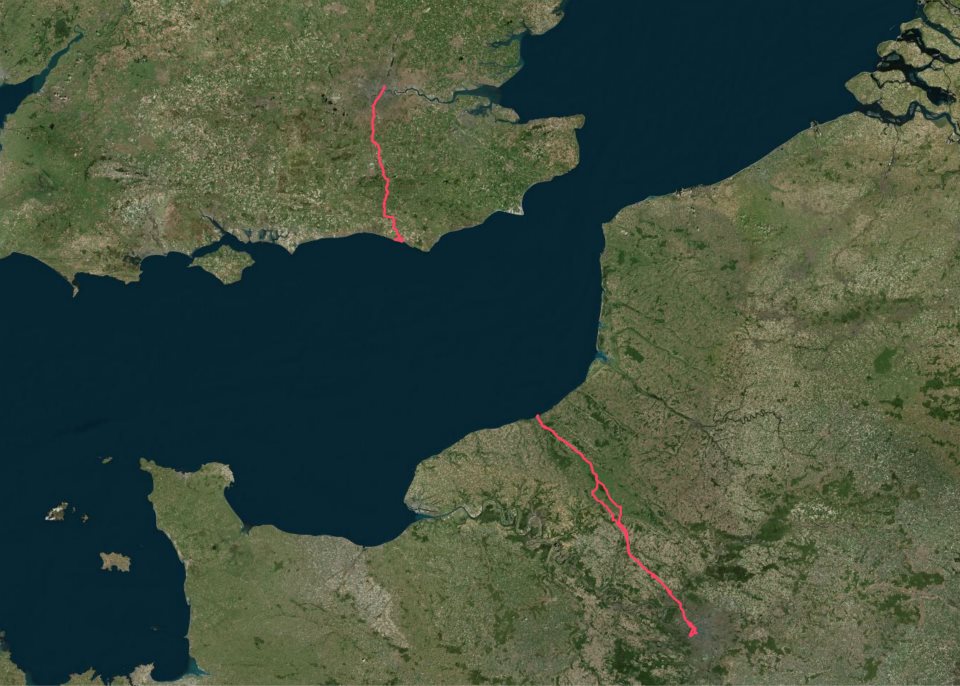
I've wanted to ride to Paris for a few months now but was put off by the hassle of taking a bicycle on the Eurostar, as well having a somewhat philosophical and aesthetic objection to taking a bike on a train in the first place. After all, if one already is possession of a mode of transport... My itinerary was straightforward:
Friday 12h00
London Newhaven
Friday 23h00
Newhaven Dieppe (ferry)
Saturday 04h00
Dieppe Paris
Saturday 23h00
(Sleep)
Sunday 07h00
Paris Dieppe
Sunday 18h00
Dieppe Newhaven (ferry)
Sunday 21h00
Newhaven Peacehaven
Sunday 23h00
(Sleep)
Monday 07h00
Peacehaven London
Packing list https://chris-lamb.co.uk/wp-content/2014/london-paris-london/01.jpg
  • Ferry ticket (unnecessary in the end)
  • Passport
  • Credit card
  • USB A male mini A male (charges phone, battery pack & front light)
  • USB A male mini B male (for charging or connecting to Edge 800)
  • USB mini A male OTG A female (for Edge 800 uploads via phone)
  • Waterproof pocket
  • Sleeping mask for ferry (probably unnecessary)
  • Battery pack

Not pictured:
  • Castelli Gabba Windstopper short-sleeve jersey
  • Castelli Velocissimo bib shorts
  • Castelli Nanoflex arm warmers
  • Castelli Squadra rain jacket
  • Garmin Edge 800
  • Phone
  • Front light: Lezyne Macro Drive
  • Rear lights: Knog Gekko (on bike), Knog Frog (on helmet)
  • Inner tubes (X2), Lezyne multitool, tire levers, hand pump

Day 1: London Newhaven
https://chris-lamb.co.uk/wp-content/2014/london-paris-london/02.jpg

Tower Bridge.

Many attempt to go from Tower Bridge Eiffel Tower (or Marble Arch Arc de Triomphe) in less than 24 hours. This would have been quite easy if I had left a couple of hours later.
https://chris-lamb.co.uk/wp-content/2014/london-paris-london/03.jpg

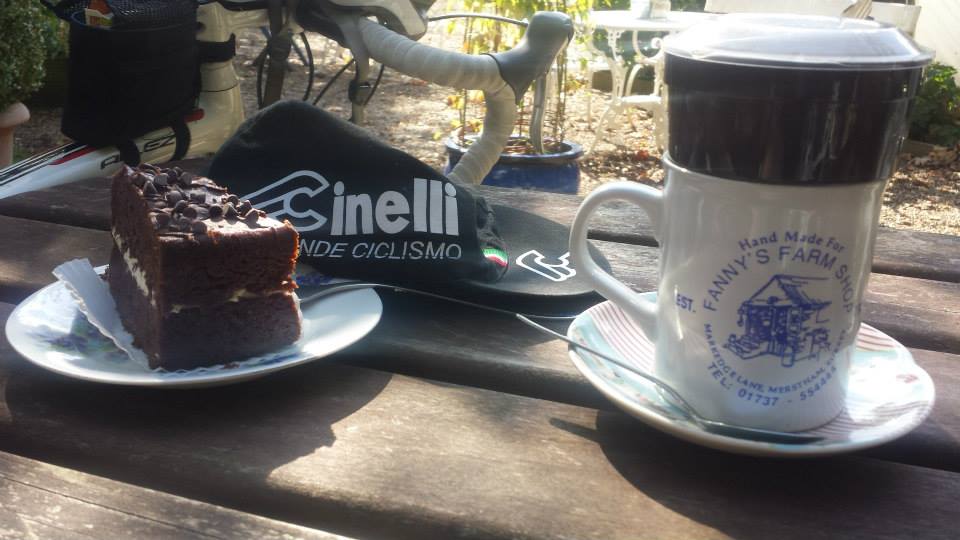
Fanny's Farm Shop, Merstham, Surrey.

https://chris-lamb.co.uk/wp-content/2014/london-paris-london/04.jpg

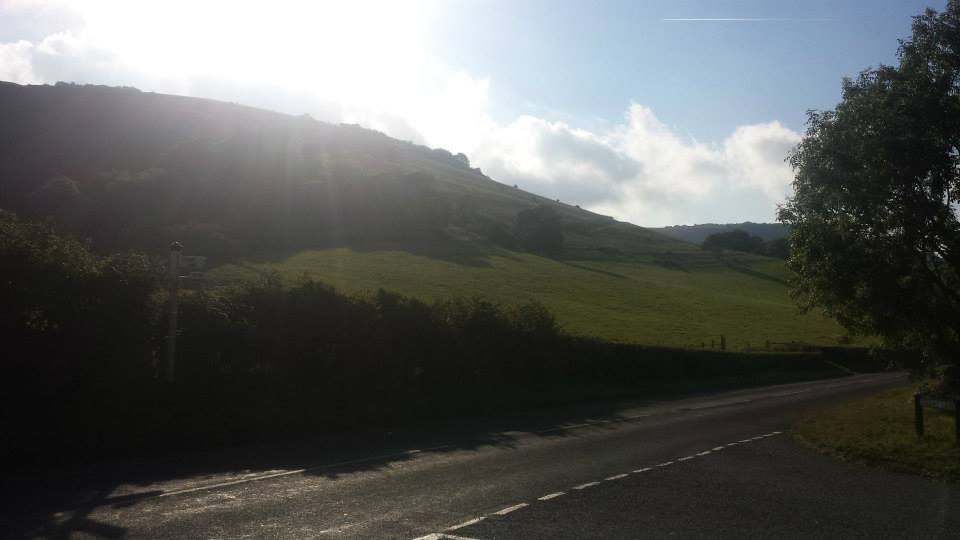
Plumpton, East Sussex.

https://chris-lamb.co.uk/wp-content/2014/london-paris-london/05.jpg

West Pier, Newhaven.

https://chris-lamb.co.uk/wp-content/2014/london-paris-london/07.jpg

Leaving Newhaven on the 23h00 ferry.


Day 2: Dieppe Paris
https://chris-lamb.co.uk/wp-content/2014/london-paris-london/09.jpg

Beauvoir-en-Lyons, Haute-Normandie.

https://chris-lamb.co.uk/wp-content/2014/london-paris-london/10.jpg

S rifontaine, Picardie.

https://chris-lamb.co.uk/wp-content/2014/london-paris-london/12.jpg

La tour Eiffel, Paris.

https://chris-lamb.co.uk/wp-content/2014/london-paris-london/13.jpg

Champ de Mars, Paris.

https://chris-lamb.co.uk/wp-content/2014/london-paris-london/15.jpg

Pont de Grenelle, Paris.


Day 3: Paris Dieppe
https://chris-lamb.co.uk/wp-content/2014/london-paris-london/18.jpg

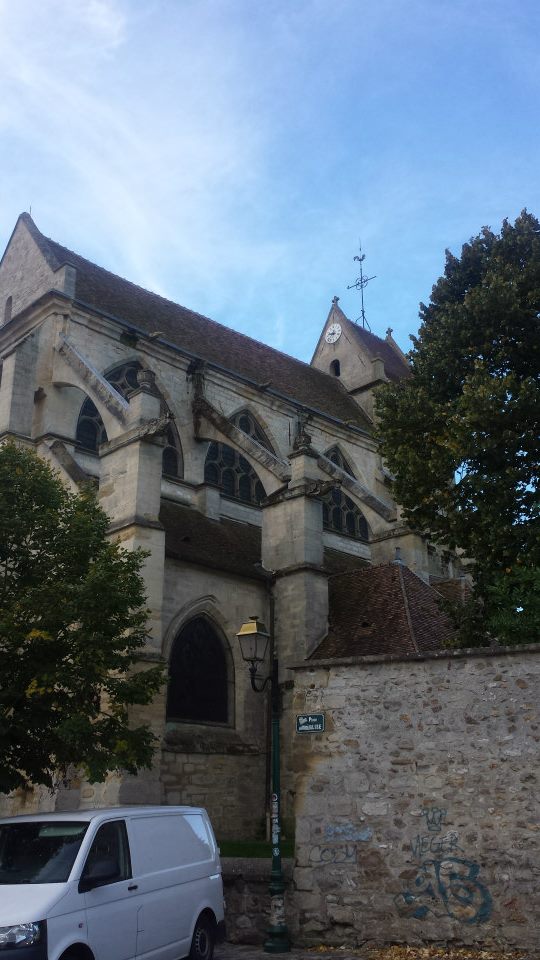
Cormeilles-en-Vexin, le-de-France.

https://chris-lamb.co.uk/wp-content/2014/london-paris-london/20.jpg

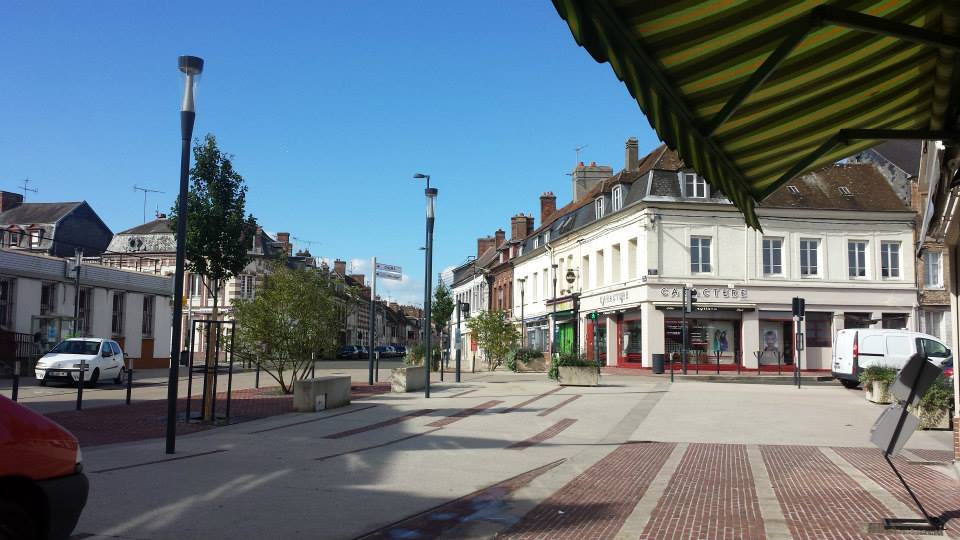
Gisors, Haute-Normandie.

https://chris-lamb.co.uk/wp-content/2014/london-paris-london/21.jpg

Paris-Brest, Gisors, Haute-Normandie.

Wikipedia: This pastry was created in 1910 to commemorate the Paris Brest bicycle race begun in 1891. Its circular shape is representative of a wheel. It became popular with riders on the Paris Brest cycle race, partly because of its energizing high caloric value, and is now found in p tisseries all over France.
https://chris-lamb.co.uk/wp-content/2014/london-paris-london/22.jpg

Gournay-en-Bray, Haute-Normandie.

https://chris-lamb.co.uk/wp-content/2014/london-paris-london/23.jpg

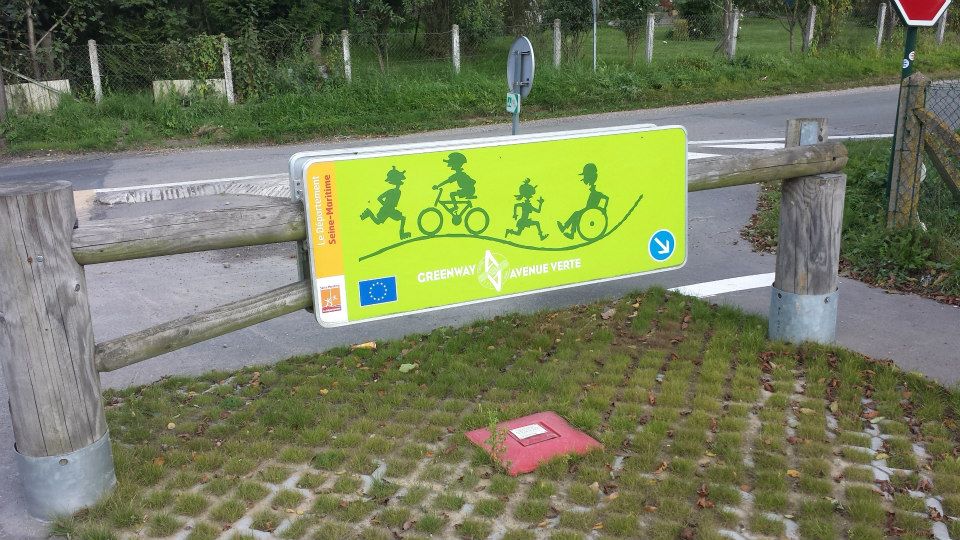
D but de l'Avenue Verte, Forges-les-Eaux, Haute-Normandie.

https://chris-lamb.co.uk/wp-content/2014/london-paris-london/24.jpg

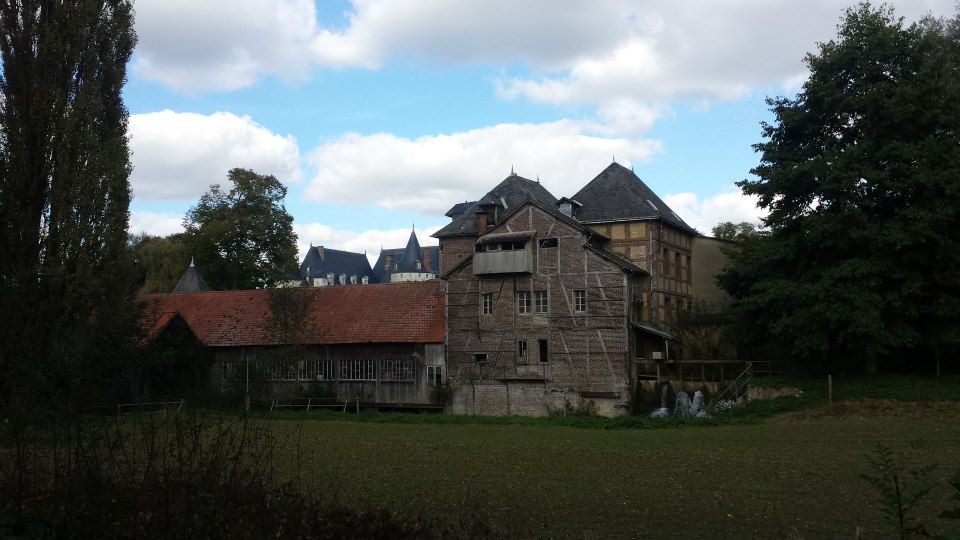
Mesni res-en-Bray, Haute-Normandie.

https://chris-lamb.co.uk/wp-content/2014/london-paris-london/26.jpg

Dieppe, Haute-Normandie.

https://chris-lamb.co.uk/wp-content/2014/london-paris-london/28.jpg

La Mancha .


Day 4: Peacehaven London
https://chris-lamb.co.uk/wp-content/2014/london-paris-london/29.jpg

Peacehaven, East Sussex.

https://chris-lamb.co.uk/wp-content/2014/london-paris-london/31.jpg

Highbrook, West Sussex.

https://chris-lamb.co.uk/wp-content/2014/london-paris-london/33.jpg

London weather.


Summary https://chris-lamb.co.uk/wp-content/2014/london-paris-london/34.jpg
Distance
588.17 km
Pedal turns
~105,795
My only non-obvious tips would be to buy a disposable blanket in the Newhaven Co-Op to help you sleep on the ferry. In addition, as the food on the ferry is good enough you only need to get to the terminal one hour before departure, avoiding time on your feet in unpicturesque Newhaven. In terms of equipment, I would bring another light for the 4AM start on L'Avenue Verte if only as a backup and I would have checked I could arrive at my Parisian Airbnb earlier in the day - I had to hang around for five hours in the heat before I could have a shower, properly relax, etc. I had been warned not to rely on being able to obtain enough water en route on Sunday but whilst most shops were indeed shut I saw a bustling tabac or boulangerie at least once every 20km so one would never be truly stuck. Route-wise, the surburbs of London and Paris are both equally dismal and unmotivating and there is about 50km of rather uninspiring and exposed riding on the D915. However, L'Avenue Verte is fantastic even in the pitch-black and the entire trip was worth it simply for the silent and beautiful Normandy sunrise. I will be back.

24 September 2014

Matthew Garrett: My free software will respect users or it will be bullshit

I had dinner with a friend this evening and ended up discussing the FSF's four freedoms. The fundamental premise of the discussion was that the freedoms guaranteed by free software are largely academic unless you fall into one of two categories - someone who is sufficiently skilled in the arts of software development to examine and modify software to meet their own needs, or someone who is sufficiently privileged[1] to be able to encourage developers to modify the software to meet their needs.

The problem is that most people don't fall into either of these categories, and so the benefits of free software are often largely theoretical to them. Concentrating on philosophical freedoms without considering whether these freedoms provide meaningful benefits to most users risks these freedoms being perceived as abstract ideals, divorced from the real world - nice to have, but fundamentally not important. How can we tie these freedoms to issues that affect users on a daily basis?

In the past the answer would probably have been along the lines of "Free software inherently respects users", but reality has pretty clearly disproven that. Unity is free software that is fundamentally designed to tie the user into services that provide financial benefit to Canonical, with user privacy as a secondary concern. Despite Android largely being free software, many users are left with phones that no longer receive security updates[2]. Textsecure is free software but the author requests that builds not be uploaded to third party app stores because there's no meaningful way for users to verify that the code has not been modified - and there's a direct incentive for hostile actors to modify the software in order to circumvent the security of messages sent via it.

We're left in an awkward situation. Free software is fundamental to providing user privacy. The ability for third parties to continue providing security updates is vital for ensuring user safety. But in the real world, we are failing to make this argument - the freedoms we provide are largely theoretical for most users. The nominal security and privacy benefits we provide frequently don't make it to the real world. If users do wish to take advantage of the four freedoms, they frequently do so at a potential cost of security and privacy. Our focus on the four freedoms may be coming at a cost to the pragmatic freedoms that our users desire - the freedom to be free of surveillance (be that government or corporate), the freedom to receive security updates without having to purchase new hardware on a regular basis, the freedom to choose to run free software without having to give up basic safety features.

That's why projects like the GNOME safety and privacy team are so important. This is an example of tying the four freedoms to real-world user benefits, demonstrating that free software can be written and managed in such a way that it actually makes life better for the average user. Designing code so that users are fundamentally in control of any privacy tradeoffs they make is critical to empowering users to make informed decisions. Committing to meaningful audits of all network transmissions to ensure they don't leak personal data is vital in demonstrating that developers fundamentally respect the rights of those users. Working on designing security measures that make it difficult for a user to be tricked into handing over access to private data is going to be a necessary precaution against hostile actors, and getting it wrong is going to ruin lives.

The four freedoms are only meaningful if they result in real-world benefits to the entire population, not a privileged minority. If your approach to releasing free software is merely to ensure that it has an approved license and throw it over the wall, you're doing it wrong. We need to design software from the ground up in such a way that those freedoms provide immediate and real benefits to our users. Anything else is a failure.

(title courtesy of My Feminism will be Intersectional or it will be Bullshit by Flavia Dzodan. While I'm less angry, I'm solidly convinced that free software that does nothing to respect or empower users is an absolute waste of time)

[1] Either in the sense of having enough money that you can simply pay, having enough background in the field that you can file meaningful bug reports or having enough followers on Twitter that simply complaining about something results in people fixing it for you

[2] The free software nature of Android often makes it possible for users to receive security updates from a third party, but this is not always the case. Free software makes this kind of support more likely, but it is in no way guaranteed.

comment count unavailable comments

12 September 2014

John Goerzen: The Thrill and Stress of Too Many Hobbies

Today, 4PM. Jacob and Oliver excitedly peer at the box in our kitchen a really big box, taller than them. Inside is is the first model airplane I d ever purchased. The three of us hunkered down on the kitchen floor, opened the box, unpacked the parts, examined the controller, and found the manual with cryptic assembly directions. Oliver turned some screws while Jacob checked out the levers on the controllers. Then they both left for a bit to play with their toy buses. A little while later, the three of us went outside. It was too windy to fly. I had never flied an RC plane before only RC quadcopters (much easier to fly), and some practice time on an RC simulator. But the excitement was too much. So out we went, and the plane took off perfectly, climbed, flew over the trees, and circled above our heads at my command. I even managed a good landing in the wind, despite about 5 aborted attempts due to coming in too high, wrong angle, too fast, or last-minute gusts of wind throwing everything off. I am not sure how I pulled that all off on my first flight, but somehow I did! It was thrilling! I ve had a lot of hobbies in my life. Computers have run through many of them; I learned Pascal (a programming language) at about the same time I learned cursive handwriting and started with C at around age 10. It was all fun. I ve been a Debian developer for some 18 years now, and have written a lot of code, and even books about code, over the years. Photography, music, literature, history, philosophy, and theology have been interests for quite some time as well. In the last few years, I ve picked up amateur radio, model aircraft, etc. And last month, Laura led me into Ada s Technical Books during our visit to Seattle, resulting in me getting interested in Arduino. (The boys and I have already built a light-activated crossing gate for their HO-gauge model trains, and Jacob can now say he s edited a few characters of C!) Sometimes I find ways to merge hobbies; I ve set up all sorts of amateur radio systems on Linux, take aerial photographs, and set up systems to stream music in my house. But I also have a lot less time for hobbies overall than I once did; other things in life, such as my children, are more important. Some of the code I once worked on actively I no longer use or maintain, and I feel guilty about that when people send bug reports that I have no interest in fixing anymore. Sometimes I feel a need to cut down, and perhaps have; and then, I get an interest in RC aircraft and find an airplane that is great for a beginner and fairly inexpensive. Perhaps it is the curse of being a curious person living in an interesting world. Do any of the rest of you have a large number of hobbies? How do you feel about that?

8 September 2014

Jaldhar Vyas: Debconf 14 - Days 1 and 2

Unfortunately I was not able to attend debconf this year but thanks to the awesome video team the all the talks are available for your viewing pleasure. In order to recreate an authentic Portland experience, I took my laptop into the shower along with a vegan donut and had my children stand outside yelling excerpts from salon.com in whiny Canadianesque accents. Here are some notes I took as I watched the talks. Welcome Talk
Debian in the Dark Ages of Free software - Stefan Zacchiroli Weapons of the Geek - Gabriella Coleman bugs.debian.org -- Database Ho! - Don Armstrong Grub Ancient and Modern - Colin and Watson One year of fedmsg in Debian - Nicolas Dandrimont Coming of Age: My Life with Debian - Christine Spang Status report of the Debian Printing Team - Didier Raboud

2 September 2014

Antonio Terceiro: DebConf 14: Community, Debian CI, Ruby, Redmine, and Noosfero

This time, for personal reasons I wasn t able to attend the full DebConf, which started on the Saturday August 22nd. I arrived at Portland on the Tuesday the 26th by noon, at the 4th of the conference. Even though I would like to arrive earlier, the loss was alleviated by the work of the amazing DebConf video team. I was able to follow remotely most of the sessions I would like to attend if I were there already. As I will say to everyone, DebConf is for sure the best conference I have ever attended. The technical and philosophical discussions that take place in talks, BoF sessions or even unplanned ad-hoc gathering are deep. The hacking moments where you have a chance to pair with fellow developers, with whom you usually only have contact remotely via IRC or email, are precious. That is all great. But definitively, catching up with old friends, and making new ones, is what makes DebConf so special. Your old friends are your old friends, and meeting them again after so much time is always a pleasure. New friendships will already start with a powerful bond, which is being part of the Debian community. Being only 4 hours behind my home time zone, jetlag wasn t a big problem during the day. However, I was waking up too early in the morning and consequently getting tired very early at night, so I mostly didn t go out after hacklabs were closed at 10PM. Despite all of the discussion, being in the audience for several talks, other social interactions and whatnot, during this DebConf I have managed to do quite some useful work. debci and the Debian Continuous Integration project I gave a talk where I discussed past, present, and future of debci and the Debian Continuous Integration project. The slides are available, as well as the video recording. One thing I want you to take away is that there is a difference between debci and the Debian Continuous Integration project: A few days before DebConf, C dric Boutillier managed to extract gem2deb-test-runner from gem2deb, so that autopkgtest tests can be run against any Ruby package that has tests by running gem2deb-test-runner --autopkgtest. gem2deb-test-runner will do the right thing, make sure that the tests don t use code from the source package, but instead run them against the installed package. Then, right after my talk I was glad to discover that the Perl team is also working on a similar tool that will automate running tests for their packages against the installed package. We agreed that they will send me a whitelist of packages in which we could just call that tool and have it do The Right Thing. We might be talking here about getting autopkgtest support (and consequentially continuous integration) for free for almost 2000 4000 packages. The missing bits for this to happen are: During a few days I have mentored Lucas Kanashiro, who also attended DebConf, on writing a patch to add support for email notifications in debci so maintainers can be pro-actively notified of status changes (pass/fail, fail/pass) in their packages. I have also started hacking on the support for distributed workers, based on the initial work by Martin Pitt: Ruby I had some discusion with Christian about making Rubygems install to $HOME by default when the user is not root. We discussed a few implementation options, and while I don t have a solution yet, we have a better understanding of the potential pitfalls. The Ruby BoF session on Friday produced a few interesting discussions. Some take away point include, but are not limited to: Redmine I was able to make Redmine work with the Rails 4 stack we currently have in unstable/testing. This required using a snapshot of the still unreleased version 3.0 based on the rails-4.1 branch in the upstream Subversion repository as source. I am a little nervous about using a upstream snapshot, though. According to the "roadmap of the project ":http://www.redmine.org/projects/redmine/roadmap the only purpose of the 3.0 release will be to upgrade to Rails 4, but before that happens there should be a 2.6.0 release that is also not released yet. 3.0 should be equivalent to that 2.6.0 version both feature-wise and, specially, bug-wise. The only problem is that we don t know what that 2.6.0 looks like yet. According to the roadmap it seems there is not much left in term of features for 2.6.0, though. The updated package is not in unstable yet, but will be soon. It needs more testing, and a good update to the documentation. Those interested in helping to test Redmine on jessie before the freeze please get in touch with me. Noosfero I gave a lighting talk on Noosfero, a platform for social networking websites I am upstream for. It is a Rails appplication licensed under the AGPLv3, and there are packages for wheezy. You can checkout the slides I used. Video recording is not available yet, but should be soon. That s it. I am looking forward to DebConf 15 at Heidelberg. :-)

24 August 2014

Lucas Nussbaum: on the Dark Ages of Free Software: a Free Service Definition ?

Stefano Zacchiroli opened DebConf 14 with an insightful talk titled Debian in the Dark Ages of Free Software (slides available, video available soon). He makes the point (quoting slide 16) that the Free Software community is winning a war that is becoming increasingly pointless: yes, users have 100% Free Software thin client at their fingertips [or are really a few steps from there]. But all their relevant computations happen elsewhere, on remote systems they do not control, in the Cloud. That give-up on control of computing is a huge and important problem, and probably the largest challenge for everybody caring about freedom, free speech, or privacy today. Stefano rightfully points out that we must do something about it. The big question is: how can we, as a community, address it? Towards a Free Service Definition? I believe that we all feel a bit lost with this issue because we are trying to attack it with our current tools & weapons. However, they are largely irrelevant here: the Free Software Definition is about software, and software is even to be understood strictly in it, as software programs. Applying it to services, or to computing in general, doesn t lead anywhere. In order to increase the general awareness about this issue, we should define more precisely what levels of control can be provided, to understand what services are not providing to users, and to make an informed decision about waiving a particular level of control when choosing to use a particular service. Benjamin Mako Hill pointed out yesterday during the post-talk chat that services are not black or white: there aren t impure and pure services. Instead, there s a graduation of possible levels of control for the computing we do. The Free Software Definition lists four freedoms how many freedoms, or types of control, should there be in a Free Service Definition, or a Controlled-Computing Definition? Again, this is not only about software: the platform on which a particular piece of software is executed has a huge impact on the available level of control: running your own instance of WordPress, or using an instance on wordpress.com, provides very different control (even if as Asheesh Laroia pointed out yesterday, WordPress does a pretty good job at providing export and import features to limit data lock-in). The creation of such a definition is an iterative process. I actually just realized today that (according to Wikipedia) the very first occurrence of an attempt at a Free Software Definition was published in 1986 (GNU s bulletin Vol 1 No.1, page 8) I thought it happened a couple of years earlier. Are there existing attempts at defining such freedoms or levels of controls, and at benchmarking such criteria against existing services? Such criteria would not only include control over software modifications and (re)distribution, but also likely include mentions of interoperability and open standards, both to enable the user to move to a compatible service, and to avoid forcing the user to use a particular implementation of a service. A better understanding of network effects is also needed: how much and what type of service lock-in is acceptable on social networks in exchange of functionality? I think that we should inspire from what was achieved during the last 30 years on Free Software. The tools that were produced are probably irrelevant to address this issue, but there s a lot to learn from the way they were designed. I really look forward to the day when we will have: Exciting times!

23 August 2014

Antti-Juhani Kaijanaho: A milestone toward a doctorate

Yesterday I received my official diploma for the degree of Licentiate of Philosophy. The degree lies between a Master s degree and a doctorate, and is not required; it consists of the coursework required for a doctorate, and a Licentiate Thesis, in which the student demonstrates good conversance with the field of research and the capability of independently and critically applying scientific research methods (official translation of the Government decree on university degrees 794/2004, Section 23 Paragraph 2). The title and abstract of my Licentiate Thesis follow:
Kaijanaho, Antti-Juhani
The extent of empirical evidence that could inform evidence-based design of programming languages. A systematic mapping study.
Jyv skyl : University of Jyv skyl , 2014, 243 p.
(Jyv skyl Licentiate Theses in Computing,
ISSN 1795-9713; 18)
ISBN 978-951-39-5790-2 (nid.)
ISBN 978-951-39-5791-9 (PDF)
Finnish summary Background: Programming language design is not usually informed by empirical studies. In other fields similar problems have inspired an evidence-based paradigm of practice. Central to it are secondary studies summarizing and consolidating the research literature. Aims: This systematic mapping study looks for empirical research that could inform evidence-based design of programming languages. Method: Manual and keyword-based searches were performed, as was a single round of snowballing. There were 2056 potentially relevant publications, of which 180 were selected for inclusion, because they reported empirical evidence on the efficacy of potential design decisions and were published on or before 2012. A thematic synthesis was created. Results: Included studies span four decades, but activity has been sparse until the last five years or so. The form of conditional statements and loops, as well as the choice between static and dynamic typing have all been studied empirically for efficacy in at least five studies each. Error proneness, programming comprehension, and human effort are the most common forms of efficacy studied. Experimenting with programmer participants is the most popular method. Conclusions: There clearly are language design decisions for which empirical evidence regarding efficacy exists; they may be of some use to language designers, and several of them may be ripe for systematic reviewing. There is concern that the lack of interest generated by studies in this topic area until the recent surge of activity may indicate serious issues in their research approach. Keywords: programming languages, programming language design, evidence-based paradigm, efficacy, research methods, systematic mapping study, thematic synthesis
A Licentiate Thesis is assessed by two examiners, usually drawn from outside of the home university; they write (either jointly or separately) a substantiated statement about the thesis, in which they suggest a grade. The final grade is almost always the one suggested by the examiners. I was very fortunate to have such prominent scientists as Dr. Stefan Hanenberg and Prof. Stein Krogdahl as the examiners of my thesis. They recommended, and I received, the grade very good (4 on a scale of 1 5). The thesis has been accepted for publication published in our faculty s licentiate thesis series and will in due course appear has appeared in our university s electronic database (along with a very small number of printed copies). In the mean time, if anyone wants an electronic preprint, send me email at antti-juhani.kaijanaho@jyu.fi.
Figure 1 of the thesis: an overview of the mapping processFigure 1 of the thesis: an overview of the mapping process
As you can imagine, the last couple of months in the spring were very stressful for me, as I pressed on to submit this thesis. After submission, it took me nearly two months to recover (which certain people who emailed me on Planet Haskell business during that period certainly noticed). It represents the fruit of almost four years of work (way more than normally is taken to complete a Licentiate Thesis, but never mind that), as I designed this study in Fall 2010.
Figure 8 of the thesis: Core studies per publication yearFigure 8 of the thesis: Core studies per publication year
Recently, I have been writing in my blog a series of posts in which I have been trying to clear my head about certain foundational issues that irritated me during the writing of the thesis. The thesis contains some of that, but that part of it is not very strong, as my examiners put it, for various reasons. The posts have been a deliberately non-academic attempt to shape the thoughts into words, to see what they look like fixed into a tangible form. (If you go read them, be warned: many of them are deliberately provocative, and many of them are intended as tentative in fact if not in phrasing; the series also is very incomplete at this time.) I closed my previous post, the latest post in that series, as follows:
In fact, the whole of 20th Century philosophy of science is a big pile of failed attempts to explain science; not one explanation is fully satisfactory. [...] Most scientists enjoy not pondering it, for it s a bit like being a cartoon character: so long as you don t look down, you can walk on air.
I wrote my Master s Thesis (PDF) in 2002. It was about the formal method called B ; but I took a lot of time and pages to examine the history and content of formal logic. My supervisor was, understandably, exasperated, but I did receive the highest possible grade for it (which I never have fully accepted I deserved). The main reason for that digression: I looked down, and I just had to go poke the bridge I was standing on to make sure I was not, in fact, walking on air. In the many years since, I ve taken a lot of time to study foundations, first of mathematics, and more recently of science. It is one reason it took me about eight years to come up with a doable doctoral project (and I am still amazed that my department kept employing me; but I suppose they like my teaching, as do I). The other reason was, it took me that long to realize how to study the design of programming languages without going where everyone has gone before. Debian people, if any are still reading, may find it interesting that I found significant use for the dctrl-tools toolset I have been writing for Debian for about fifteen years: I stored my data collection as a big pile of dctrl-format files. I ended up making some changes to the existing tools (I should upload the new version soon, I suppose), and I wrote another toolset (unfortunately one that is not general purpose, like the dctrl-tools are) in the process. For the Haskell people, I mainly have an apology for not attending to Planet Haskell duties in the summer; but I am back in business now. I also note, somewhat to my regret, that I found very few studies dealing with Haskell. I just checked; I mention Haskell several times in the background chapter, but it is not mentioned in the results chapter (because there were not studies worthy of special notice). I am already working on extending this work into a doctoral thesis. I expect, and hope, to complete that one faster.

Daniel Pocock: Want to be selected for Google Summer of Code 2015?

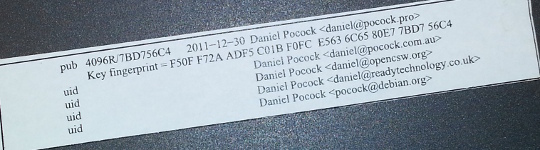
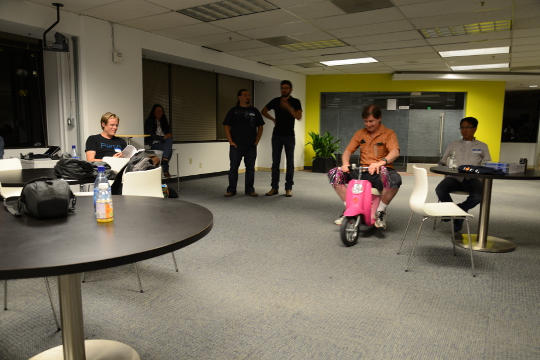
I've mentored a number of students in 2013 and 2014 for Debian and Ganglia and most of the companies I've worked with have run internships and graduate programs from time to time. GSoC 2014 has just finished and with all the excitement, many students are already asking what they can do to prepare and be selected in 2015. My own observation is that the more time the organization has to get to know the student, the more confident they can be selecting that student. Furthermore, the more time that the student has spent getting to know the free software community, the more easily they can complete GSoC. Here I present a list of things that students can do to maximize their chance of selection and career opportunities at the same time. These tips are useful for people applying for GSoC itself and related programs such as GNOME's Outreach Program for Women or graduate placements in companies. Disclaimers There is no guarantee that Google will run the program again in 2015 or any future year. There is no guarantee that any organization or mentor (including myself) will be involved until the official list of organizations is published by Google. Do not follow the advice of web sites that invite you to send pizza or anything else of value to prospective mentors. Following the steps in this page doesn't guarantee selection. That said, people who do follow these steps are much more likely to be considered and interviewed than somebody who hasn't done any of the things in this list. Understand what free software really is You may hear terms like free software and open source software used interchangeably. They don't mean exactly the same thing and many people use the term free software for the wrong things. Not all open source projects meet the definition of free software. Those that don't, usually as a result of deficiencies in their licenses, are fundamentally incompatible with the majority of software that does use genuinely free licenses. Google Summer of Code is about both writing and publishing your code and it is also about community. It is fundamental that you know the basics of licensing and how to choose a free license that empowers the community to collaborate on your code well after GSoC has finished. Please review the definition of free software early on and come back and review it from time to time. The The GNU Project / Free Software Foundation have excellent resources to help you understand what a free software license is and how it works to maximize community collaboration. Don't look for shortcuts There is no shortcut to GSoC selection and there is no shortcut to GSoC completion. The student stipend (USD $5,500 in 2014) is not paid to students unless they complete a minimum amount of valid code. This means that even if a student did find some shortcut to selection, it is unlikely they would be paid without completing meaningful work. If you are the right candidate for GSoC, you will not need a shortcut anyway. Are you the sort of person who can't leave a coding problem until you really feel it is fixed, even if you keep going all night? Have you ever woken up in the night with a dream about writing code still in your head? Do you become irritated by tedious or repetitive tasks and often think of ways to write code to eliminate such tasks? Does your family get cross with you because you take your laptop to Christmas dinner or some other significant occasion and start coding? If some of these statements summarize the way you think or feel you are probably a natural fit for GSoC. An opportunity money can't buy The GSoC stipend will not make you rich. It is intended to make sure you have enough money to survive through the summer and focus on your project. Professional developers make this much money in a week in leading business centers like New York, London and Singapore. When you get to that stage in 3-5 years, you will not even be thinking about exactly how much you made during internships. GSoC gives you an edge over other internships because it involves publicly promoting your work. Many companies still try to hide the potential of their best recruits for fear they will be poached or that they will be able to demand higher salaries. Everything you complete in GSoC is intended to be published and you get full credit for it. Imagine a young musician getting the opportunity to perform on the main stage at a rock festival. This is how the free software community works. It is a meritocracy and there is nobody to hold you back. Having a portfolio of free software that you have created or collaborated on and a wide network of professional contacts that you develop before, during and after GSoC will continue to pay you back for years to come. While other graduates are being screened through group interviews and testing days run by employers, people with a track record in a free software project often find they go straight to the final interview round. Register your domain name and make a permanent email address Free software is all about community and collaboration. Register your own domain name as this will become a focal point for your work and for people to get to know you as you become part of the community. This is sound advice for anybody working in IT, not just programmers. It gives the impression that you are confident and have a long term interest in a technology career. Choosing the provider: as a minimum, you want a provider that offers DNS management, static web site hosting, email forwarding and XMPP services all linked to your domain. You do not need to choose the provider that is linked to your internet connection at home and that is often not the best choice anyway. The XMPP foundation maintains a list of providers known to support XMPP. Create an email address within your domain name. The most basic domain hosting providers will let you forward the email address to a webmail or university email account of your choice. Configure your webmail to send replies using your personalized email address in the From header. Update your ~/.gitconfig file to use your personalized email address in your Git commits. Create a web site and blog Start writing a blog. Host it using your domain name. Some people blog every day, other people just blog once every two or three months. Create links from your web site to your other profiles, such as a Github profile page. This helps reinforce the pages/profiles that are genuinely related to you and avoid confusion with the pages of other developers. Many mentors are keen to see their students writing a weekly report on a blog during GSoC so starting a blog now gives you a head start. Mentors look at blogs during the selection process to try and gain insight into which topics a student is most suitable for. Create a profile on Github Github is one of the most widely used software development web sites. Github makes it quick and easy for you to publish your work and collaborate on the work of other people. Create an account today and get in the habbit of forking other projects, improving them, committing your changes and pushing the work back into your Github account. Github will quickly build a profile of your commits and this allows mentors to see and understand your interests and your strengths. In your Github profile, add a link to your web site/blog and make sure the email address you are using for Git commits (in the ~/.gitconfig file) is based on your personal domain. Start using PGP Pretty Good Privacy (PGP) is the industry standard in protecting your identity online. All serious free software projects use PGP to sign tags in Git, to sign official emails and to sign official release files. The most common way to start using PGP is with the GnuPG (GNU Privacy Guard) utility. It is installed by the package manager on most Linux systems. When you create your own PGP key, use the email address involving your domain name. This is the most permanent and stable solution. Print your key fingerprint using the gpg-key2ps command, it is in the signing-party package on most Linux systems. Keep copies of the fingerprint slips with you. This is what my own PGP fingerprint slip looks like. You can also print the key fingerprint on a business card for a more professional look. Using PGP, it is recommend that you sign any important messages you send but you do not have to encrypt the messages you send, especially if some of the people you send messages to (like family and friends) do not yet have the PGP software to decrypt them. If using the Thunderbird (Icedove) email client from Mozilla, you can easily send signed messages and validate the messages you receive using the Enigmail plugin. Get your PGP key signed Once you have a PGP key, you will need to find other developers to sign it. For people I mentor personally in GSoC, I'm keen to see that you try and find another Debian Developer in your area to sign your key as early as possible. Free software events Try and find all the free software events in your area in the months between now and the end of the next Google Summer of Code season. Aim to attend at least two of them before GSoC. Look closely at the schedules and find out about the individual speakers, the companies and the free software projects that are participating. For events that span more than one day, find out about the dinners, pub nights and other social parts of the event. Try and identify people who will attend the event who have been GSoC mentors or who intend to be. Contact them before the event, if you are keen to work on something in their domain they may be able to make time to discuss it with you in person. Take your PGP fingerprint slips. Even if you don't participate in a formal key-signing party at the event, you will still find some developers to sign your PGP key individually. You must take a photo ID document (such as your passport) for the other developer to check the name on your fingerprint but you do not give them a copy of the ID document. Events come in all shapes and sizes. FOSDEM is an example of one of the bigger events in Europe, linux.conf.au is a similarly large event in Australia. There are many, many more local events such as the Debian France mini-DebConf in Lyon, 2015. Many events are either free or free for students but please check carefully if there is a requirement to register before attending. On your blog, discuss which events you are attending and which sessions interest you. Write a blog during or after the event too, including photos. Quantcast generously hosted the Ganglia community meeting in San Francisco, October 2013. We had a wild time in their offices with mini-scooters, burgers, beers and the Ganglia book. That's me on the pink mini-scooter and Bernard Li, one of the other Ganglia GSoC 2014 admins is on the right. Install Linux GSoC is fundamentally about free software. Linux is to free software what a tree is to the forest. Using Linux every day on your personal computer dramatically increases your ability to interact with the free software community and increases the number of potential GSoC projects that you can participate in. This is not to say that people using Mac OS or Windows are unwelcome. I have worked with some great developers who were not Linux users. Linux gives you an edge though and the best time to gain that edge is now, while you are a student and well before you apply for GSoC. If you must run Windows for some applications used in your course, it will run just fine in a virtual machine using Virtual Box, a free software solution for desktop virtualization. Use Linux as the primary operating system. Here are links to download ISO DVD (and CD) images for some of the main Linux distributions: If you are nervous about getting started with Linux, install it on a spare PC or in a virtual machine before you install it on your main PC or laptop. Linux is much less demanding on the hardware than Windows so you can easily run it on a machine that is 5-10 years old. Having just 4GB of RAM and 20GB of hard disk is usually more than enough for a basic graphical desktop environment although having better hardware makes it faster. Your experiences installing and running Linux, especially if it requires some special effort to make it work with some of your hardware, make interesting topics for your blog. Decide which technologies you know best Personally, I have mentored students working with C, C++, Java, Python and JavaScript/HTML5. In a GSoC program, you will typically do most of your work in just one of these languages. From the outset, decide which language you will focus on and do everything you can to improve your competence with that language. For example, if you have already used Java in most of your course, plan on using Java in GSoC and make sure you read Effective Java (2nd Edition) by Joshua Bloch. Decide which themes appeal to you Find a topic that has long-term appeal for you. Maybe the topic relates to your course or maybe you already know what type of company you would like to work in. Here is a list of some topics and some of the relevant software projects:


  • System administration, servers and networking: consider projects involving monitoring, automation, packaging. Ganglia is a great community to get involved with and you will encounter the Ganglia software in many large companies and academic/research networks. Contributing to a Linux distribution like Debian or Fedora packaging is another great way to get into system administration.
  • Desktop and user interface: consider projects involving window managers and desktop tools or adding to the user interface of just about any other software.
  • Big data and data science: this can apply to just about any other theme. For example, data science techniques are frequently used now to improve system administration.
  • Business and accounting: consider accounting, CRM and ERP software.
  • Finance and trading: consider projects like R, market data software like OpenMAMA and connectivity software (Apache Camel)
  • Real-time communication (RTC), VoIP, webcam and chat: look at the JSCommunicator or the Jitsi project
  • Web (JavaScript, HTML5): look at the JSCommunicator
Before the GSoC application process begins, you should aim to learn as much as possible about the theme you prefer and also gain practical experience using the software relating to that theme. For example, if you are attracted to the business and accounting theme, install the PostBooks suite and get to know it. Maybe you know somebody who runs a small business: help them to upgrade to PostBooks and use it to prepare some reports. Make something Make some small project, less than two week's work, to demonstrate your skills. It is important to make something that somebody will use for a practical purpose, this will help you gain experience communicating with other users through Github. For an example, see the servlet Juliana Louback created for fixing phone numbers in December 2013. It has since been used as part of the Lumicall web site and Juliana was selected for a GSoC 2014 project with Debian. There is no better way to demonstrate to a prospective mentor that you are ready for GSoC than by completing and publishing some small project like this yourself. If you don't have any immediate project ideas, many developers will also be able to give you tips on small projects like this that you can attempt, just come and ask us on one of the mailing lists. Ideally, the project will be something that you would use anyway even if you do not end up participating in GSoC. Such projects are the most motivating and rewarding and usually end up becoming an example of your best work. To continue the example of somebody with a preference for business and accounting software, a small project you might create is a plugin or extension for PostBooks. Getting to know prospective mentors Many web sites provide useful information about the developers who contribute to free software projects. Some of these developers may be willing to be a GSoC mentor. For example, look through some of the following: Getting on the mentor's shortlist Once you have identified projects that are interesting to you and developers who work on those projects, it is important to get yourself on the developer's shortlist. Basically, the shortlist is a list of all students who the developer believes can complete the project. If I feel that a student is unlikely to complete a project or if I don't have enough information to judge a student's probability of success, that student will not be on my shortlist. If I don't have any student on my shortlist, then a project will not go ahead at all. If there are multiple students on the shortlist, then I will be looking more closely at each of them to try and work out who is the best match. One way to get a developer's attention is to look at bug reports they have created. Github makes it easy to see complaints or bug reports they have made about their own projects or other projects they depend on. Another way to do this is to search through their code for strings like FIXME and TODO. Projects with standalone bug trackers like the Debian bug tracker also provide an easy way to search for bug reports that a specific person has created or commented on. Once you find some relevant bug reports, email the developer. Ask if anybody else is working on those issues. Try and start with an issue that is particularly easy and where the solution is interesting for you. This will help you learn to compile and test the program before you try to fix any more complicated bugs. It may even be something you can work on as part of your academic program. Find successful projects from the previous year Contact organizations and ask them which GSoC projects were most successful. In many organizations, you can find the past students' project plans and their final reports published on the web. Read through the plans submitted by the students who were chosen. Then read through the final reports by the same students and see how they compare to the original plans. Start building your project proposal now Don't wait for the application period to begin. Start writing a project proposal now. When writing a proposal, it is important to include several things:
  • Think big: what is the goal at the end of the project? Does your work help the greater good in some way, such as increasing the market share of Linux on the desktop?
  • Details: what are specific challenges? What tools will you use?
  • Time management: what will you do each week? Are there weeks where you will not work on GSoC due to vacation or other events? These things are permitted but they must be in your plan if you know them in advance. If an accident or death in the family cut a week out of your GSoC project, which work would you skip and would your project still be useful without that? Having two weeks of flexible time in your plan makes it more resilient against interruptions.
  • Communication: are you on mailing lists, IRC and XMPP chat? Will you make a weekly report on your blog?
  • Users: who will benefit from your work?
  • Testing: who will test and validate your work throughout the project? Ideally, this should involve more than just the mentor.
If your project plan is good enough, could you put it on Kickstarter or another crowdfunding site? This is a good test of whether or not a project is going to be supported by a GSoC mentor. Learn about packaging and distributing software Packaging is a vital part of the free software lifecycle. It is very easy to upload a project to Github but it takes more effort to have it become an official package in systems like Debian, Fedora and Ubuntu. Packaging and the communities around Linux distributions help you reach out to users of your software and get valuable feedback and new contributors. This boosts the impact of your work. To start with, you may want to help the maintainer of an existing package. Debian packaging teams are existing communities that work in a team and welcome new contributors. The Debian Mentors initiative is another great starting place. In the Fedora world, the place to start may be in one of the Special Interest Groups (SIGs). Think from the mentor's perspective After the application deadline, mentors have just 2 or 3 weeks to choose the students. This is actually not a lot of time to be certain if a particular student is capable of completing a project. If the student has a published history of free software activity, the mentor feels a lot more confident about choosing the student. Some mentors have more than one good student while other mentors receive no applications from capable students. In this situation, it is very common for mentors to send each other details of students who may be suitable. Once again, if a student has a good Github profile and a blog, it is much easier for mentors to try and match that student with another project. GSoC logo generic Conclusion Getting into the world of software engineering is much like joining any other profession or even joining a new hobby or sporting activity. If you run, you probably have various types of shoe and a running watch and you may even spend a couple of nights at the track each week. If you enjoy playing a musical instrument, you probably have a collection of sheet music, accessories for your instrument and you may even aspire to build a recording studio in your garage (or you probably know somebody else who already did that). The things listed on this page will not just help you walk the walk and talk the talk of a software developer, they will put you on a track to being one of the leaders. If you look over the profiles of other software developers on the Internet, you will find they are doing most of the things on this page already. Even if you are not selected for GSoC at all or decide not to apply, working through the steps on this page will help you clarify your own ideas about your career and help you make new friends in the software engineering community.

31 July 2014

Russell Coker: Links July 2014

Dave Johnson wrote an interesting article for Salon about companies ripping off the tax system by claiming that all their income is produced in low tax countries [1]. Seb Lee-Delisle wrote an insightful article about how to ask to get paid to speak [2]. I should do that. Daniel Pocock wrote an informative article about the reConServer simple SIP conferencing server [3]. I should try it out, currently most people I want to conference with are using Google Hangouts, but getting away from Google is a good thing. Fran ois Marier wrote an informative post about hardening ssh servers [4]. S. E. Smith wrote an interesting article I Am Tired of Hearing Programmers Defend Gender Essentialism [5]. Bert Archer wrote an insightful article about lazy tourism [6]. His initial example of love locks breaking bridges was a bit silly (it s not difficult to cut locks off a bridge) but his general point about lazy/stupid tourism is good. Daniel Pocock wrote an insightful post about new developments in taxis, the London Taxi protest against Uber, and related changes [7]. His post convinced me that Uber is a good thing and should be supported. I checked the prices and unfortunately Uber is more expensive than normal taxis for my most common journey. Cory Doctorow wrote an insightful article for The Guardian about the moral issues related to government spying [8]. The Verge has an interesting review of the latest Lytro Lightbox camera [9]. Not nearly ready for me to use, but interesting technology. Prospect has an informative article by Kathryn Joyce about the Protestant child sex abuse scandal in the US [10]. Billy Graham s grandson is leading the work to reform churches so that they protect children instead of pedophiles. Prospect also has an article by Kathryn Joyce about Christians home-schooling kids to try and program them to be zealots and how that hurts kids [11]. The Daily Beast has an interesting article about the way that the extreme right wing in the US are trying to kill people, it s the right wing death panel [12]. Jay Michaelson wrote an informative article for The Daily Beast about right-wing hate groups in the US who promote the extreme homophobic legislation in Russia and other countries [13]. It also connects to the Koch brothers who seem to be associated with most evil. Elias Isquith wrote an insightful article for Salon about the current right-wing obsession with making homophobic discrimination an issue of religious liberty will hurt religious people [14]. He also describes how stupid the right-wing extremists are in relation to other issues too. EconomixComix.com has a really great comic explaning the economics of Social Security in the US [15]. They also have a comic explaining the TPP which is really good [16]. They sell a comic book about economics which I m sure is worth buying. We need to have comics explaining all technical topics, it s a good way of conveying concepts. When I was in primary school my parents gave me comic books covering nuclear physics and other science topics which were really good. Mia McKenzie wrote an insightful article for BlackGirlDangerous.com about dealing with racist white teachers [17]. I think that it would be ideal to have a school dedicated to each minority group with teachers from that group.

29 June 2014

Matthew Palmer: Adventures in DNSSEC

DNSSEC is one of those things that have been on the I should poke at that sometime list, but today I decided to actually get in and play around with it. Turns out it s pretty trivially easy to setup, but I got bitten by a few gotchas during testing, that I thought worthwhile to document. Since I like to explain things, a lot of this article isn t how to so much as how does .

Configuring The Resolver First off, you need a resolver1 that you can trust, and which implements DNSSEC validation. In theory, you could use your ISP s resolvers (if they re DNSSEC-enabled), or even Google s public resolvers (8.8.8.8 and 8.8.4.4), but it s really not recommended how much do you trust those, really? More importantly, how much do you trust the network path between them and you? Frankly, running a local on-host caching resolver is trivial, consumes next-to-no resources, and is highly recommended. It s what I did. I used unbound, finally casting free the venerable dnscache, which has served me well for many years. I chose unbound because it fits the do one small thing, and do it well philosophy that I cherish (unlike BIND), and because it s what all the cool kids appear to be using these days. Installing it was as simple as apt-get install unbound it s available in pretty much every distro, I believe. Out of the box, unbound in Debian wheezy comes configured for DNSSEC validation. Other methods of installation might not be so amenable, so just make sure your unbound.conf liiks like this, so that DNSSEC is enabled:
server:
    auto-trust-anchor-file: "/var/lib/unbound/root.key"
    val-log-level: 2
The val-log-level line isn t strictly required, but I found it useful to have unbound log info on validation failures to syslog. Season to taste. You also have to configure your system to actually use your new, shiny local resolver. Editing /etc/resolv.conf would, in an ideal world, work Just Fine, but between Magical Unhelpful Pixies (I m looking at you, NetworkManager) and DHCP, it often isn t that easy. Ultimately, though, you should configure your system so that the only resolver in /etc/resolv.conf is always 127.0.0.1. Anything else is a security hole waiting to happen. If you re using DHCP and a recent version of ISC dhclient, adding supersede domain-name-servers 127.0.0.1; to dhclient.conf should do the needful.

Weighing the (Trust) Anchor Whatever local resolver you choose, you need to tell it about trust anchors . This is a key (or keys) which are trusted to sign all the other data that the resolver will find. Like the rest of the DNS, DNSSEC is hierarchical, and you need to know who to start with before you can start. To resolve a name using DNS, you ask the root servers for the answer to a question (say, what is the address of www.example.com? ). The root server doesn t know the answer, but it knows who to ask, and it tells you where to go (typically, go ask the DNS servers for .com, which are X, Y, and Z ). Then you ask those servers, and they probably don t know, but they know who to ask, and they tell you to go ask those servers. This continues until you finally get a server which says, oh, yes, I know the answer to that! and hands over the information you re after. In DNSSEC, you get digital signatures that prove that the answers you get from each DNS server you ask are legit, and not forged. So when you ask the root servers, what is the address of www.example.com? , they answer, I don t know, but go ask DNS servers at addresses X, Y, and Z and by the way, you can trust this answer is legit because here s this signature you can check . To verify a signature is legit, you need to know that the key used to make the signature is trustworthy, and it wasn t just any ol key that made it similar to how an ink scribble on a page doesn t mean anything unless you know what the signature you re looking at should look like. DNSSEC has two ways to make sure you know who to trust. Firstly, those trust anchors I mentioned three paragraphs ago. These are the keys that the root servers use to sign the responses they send out. You tell unbound (or your local DNSSEC-enabled resolver of choice), if you see a signature provided by this trust anchor key, you can trust it to be legit . The second way to trust is key is to have someone you already trust say, oh, you can trust this key, too . This is done by providing more data in the answer that you get from the root servers. So the full answer you get from the root servers when you ask, what is the address of www.example.com? looks like this:
I don t know, but you should ask the DNS servers at addresses X, Y, and Z. You can trust their answers because they ll sign their responses with key K. Finally, you can trust that I m legit because of this signature I m providing you, generated from key T.
Assuming that T is the trust-anchor key you ve already told unbound to trust, it can then trust all of the information it got from that first question. When it then goes to DNS server X and asks, Hey, do you know the address of www.example.com? , that server can send back its own response saying:
Gee, shucks, I don t know, but DNS servers at P and Q can help you. You can trust them because they ll sign responses with key S. And just to show you I m on the level, check out this nifty signature I made, signed with key K.
Since a server we trust told us to trust key K, and then we got a response signed by key K that told us to trust key S, when we then go and ask server P and get a response signed by S, we re still demonstrably secure. Neat setup, right? Anyway, now you know all about trust anchors. How do you set it up? For unbound, it s capable of priming the trust anchor itself. It does this by retrieving a copy of the trust anchor from [a well-known HTTPS URL]((https://data.iana.org/root-anchors/root-anchors.xml), which provides a reasonable measure of security the trust anchor file should be safe as long as that HTTPS server is trustworthy. For the properly paranoid, you should determine an alternate means of verifying that you have the correct root key (a web search for DNSSEC root key attestation would probably be a good start).

Testing It s always handy to know that something s working as you expect. For something that s important for security, that goes double. So, how do you test that your DNSSEC-capable resolver is, indeed, working as designed? Well, firstly, you can test that the resolver, by itself, is working. This is simple: do a query for a zone known to have broken DNSSEC. Thankfully, some nice people (Comcast, specifically) have already set this up. You can test a resolver for DNSSEC-correctness with this command:
dig @127.0.0.1 www.dnssec-failed.org
If dig gives you back an IP address, something is broken. The correct, my DNSSEC works! response should be a status: SERVFAIL response. That s all well and good, but having a resolver that works isn t much good if nothing s actually using it. Your system configuration has probably got some other resolvers configured into it (such as those provided by a DHCP server), and you ll want to make sure those aren t getting used2. The trivial test is to visit http://www.dnssec-failed.org in your browser. If that comes back with a page, then something s still wrong. A more user-friendly test of your DNSSEC configuration is provided by http://dnssectest.sidnlabs.nl/test.php, which will display a page either way, and give you a tick or a cross depending on whether you re DNSSEC-enabled or not. One thing to be wary of when you re doing browser tests is caching. I spent far too long trying to work out why unbound wasn t working , when in actual fact it was working fine, it s just that both my browser and local caching proxy (squid) were caching DNS requests3. So, even after I d correctly setup unbound, visiting the test sites was providing me with erroneous results. Fixing up the browser was simple enough. In Chromium, visiting chrome://net-internals#dns will show you what s being cached, what resolv.conf settings are being used, and allow you to clear the browser s resolver cache. Squid was similarly simple, although it took me a while to figure out that it was causing me grief (software that just works , being so rare, tends to slip your mind, and so I often forget that squid is actually doing me good). Restarting squid has the appropriate result (clears the DNS cache), but in the end I decided that having another layer of caching wasn t going to help significantly when I ve got an on-host DNS cache already, in unbound. So, I just turned the knobs for DNS caching in squid right down:
negative_dns_ttl 1 second
positive_dns_ttl 1 second
And voila! All was well.

In summary DNSSEC is cool. It s easy to get going with, and over time it will provide more and more practical benefits (I am a DANE fanboi). Get started with it now, and you ll be ahead of the curve.
  1. A resolver is a program which takes a name, does all the DNS queries required to get the data associated with that name, and return it to whoever wanted to know. This can be a library which links to a client application, or it can be a separate program which receives DNS requests itself. There are usually both types of resolvers in use for a typical Linux system to resolve names. On every machine, in every program, there is the so-called stub resolver , which is part of libc, and does nothing except create DNS requests and send them to the addresses listed in resolv.conf. Also present, although not always running on every machine (typically your ISP or network admin has some running for everyone to share) are one or more recursive resolvers , which are separate programs which take DNS requests, do all of the queries themselves, and return the result to the stub resolver for presentation to the client program which made the request in the first place. You will see this material again.
  2. You can configure dhclient to use your local resolver instead of the DHCP-provided ones by simply setting:
    supersede domain-name-servers 127.0.0.1;
    
    in your dhclient.conf file.
  3. It also didn t help that I hadn t correctly knobbled dhclient the first time around, and so even when I thought I was only resolving against my local unbound server, it was still actually using the DHCP-provided resolvers

27 June 2014

Russ Allbery: Review: Due Diligence

Review: Due Diligence, by David Roodman
Publisher: Center for Global Development
Copyright: 2012
ISBN: 1-933286-48-2
Format: Trade paperback
Pages: 335
Due Diligence: An Impertinent Inquiry into Microfinance is a detailed analysis of the effects, philosophy, approaches, and merits of microfinance as an institution and as, increasingly, a charitable focus of the developed world. The author, David Roodman, was a senior fellow at the Center for Global Development at the time of writing this book, and is an expert in microfinance and economic development. This book starts as an overview and a history of the spectrum of microfinance institutions (something I found very valuable, since I knew very little about microfinance prior to Kiva's popularity), and then attempts a critical, data-driven analysis of whether, to what extent, and by which measures microfinance is successful. The most common aspect of microfinance, made popular and prominent by Kiva among others, is microcredit: small loans to people in developing countries. The underlying theory of microcredit is that lack of financial services handicaps prospective entrepreneurs and business owners in the third world, preventing them from growing businesses, funding expansion, and moving out of poverty. By extending relatively small amounts of credit to these people, or so the theory goes, they can better smooth out the uncertainties of day-to-day life and get the necessary capital to expand small local business. Microcredit is not the only type of microfinance, though, and Roodman's careful discussion of that point was one of the most informative parts of this book for me. It can also come in the form of microsavings tiny bank accounts or small-scale savings plans or microinsurance. Roodman makes a very interesting argument that these three forms of microfinance form two opposing continuums. Microcredit is the easiest to provide and microinsurance is the hardest, for many reasons he discusses including some that were surprising to me, but microinsurance is arguably the most helpful and beneficial to the individual poor and microcredit is the least. The opening history and survey does an excellent job showing the range of techniques and approaches used in microfinance, and showing the challenges of providing it. I had some vague understanding of the logistical challenges in serving areas far away from traditional infrastructure. I had much less understanding of the fascinating array of techniques in use, both inside and outside what's become the microfinance industry. Some of these techniques are brilliant examples of human economic creativity and skill at balancing incentives with risk protection. There are a much wider variety of approaches and instruments available than the individual or group loans that one typically sees on a site like Kiva, all with different trade-offs in group size, flexibility, rigidity, risk, and complexity. This book is well worth reading just to get a feel for the huge array of financial arrangements possible outside of the traditional banking structures that most readers of this review are used to. Another question Roodman answers thoroughly is why microfinance is so focused on microcredit. My vague unease with that was strengthened by reading David Graeber's Debt, which among many other things makes clear some of the social perils and power imbalances in lending. Due Diligence both crystallized that discomfort and explained why alternatives are difficult. Both microsavings and microinsurance necessarily involve considerably more regulation (which has both advantages and complexity), since they involve taking and safeguarding people's money and promising service in the future. Lenders require less trust; lenders instead extend trust and assume that risk themselves, and are in a position to do so. Microinsurance is also harder to explain and harder to target, although it is potentially the most helpful financial instrument when well-targeted. And microcredit can absorb huge influxes of capital from the outside, lending it out in a region, while both microsavings and microinsurance are necessarily built on the money already in the local economy and are inherently more resistant to external involvement. (I'm of the opinion this is a significant feature, but it makes it far harder for them to catch on as a charitable trend.) The heart of the book is a hard look at whether microfinance, and particularly microcredit, works. Roodman attempts this analysis for three different definitions of working: lifting people out of poverty (the most commonly claimed success), giving people more freedom and control over their lives even if their poverty level does not change in absolute terms, and developing the local economy. Sadly for charities like Kiva, microcredit does surprisingly poorly on the first two metrics. There is still little clear data, and the degree to which data from one region is applicable to a different region is highly debatable, but what evidence we have does not support the theory that microcredit lifts people out of poverty. In fact, the more intense the microcredit, the more likely it appears to be that credit pathologies common in the developed world, such as taking out loans from one organization to pay off loans from another, spirals of debt that is unlikely to ever be repaid, and aggressive debt collection methods, turn up in microcredit as well. The vision of the entrepreneur who succeeds through new-found access to capital is largely a myth. Indeed, the current packaging and presentation of loans to distant charities in developed countries means that even the supposed purpose of the loans is dubious. Loans are almost always presented as being for some sort of business activity, since that's what external charities want to fund, but money is fungible and the funds are more often used for all the things people normally need to use funds for: weddings, funerals, food for the family in hard times, paying off other loans to relatives, and other daily expenses. On the empowerment front, microcredit fairs little better, and here I particularly appreciated Roodman's clear-eyed and honest portrayal of common microcredit practices and their benefits for the creditors. For example, microcredit makes much of loaning to women, and presents this as a story of female empowerment. Roodman argues that there is some reality behind that, but it's also clear that microcredit organizations loan to women because women are more likely to repay not due to any inherent gender trait, but because women are easier to intimidate and shame into repaying. Similarly, the much-vaunted group loans, usually presented as a way for the community to support each other and teach each other financial skills, are most common in the poorest regions because they represent an outsourcing of costs. The main risk to the lender is that poor people have no such thing as credit histories, and detailed investigations of someone's trustworthiness is expensive. Groups are jointly liable and therefore will police themselves and check each other's reliability at no cost to the lender. Groups will also use intimidation tactics and even violence against members who don't or can't repay their share, without the lender having to get involved or have any responsibility for those tactics. Roodman takes a philosophical tone on this topic, noting several times that services for the very poor are generally of low quality and finance is no exception. I'm less inclined to be philosophical; after reading this book, I find it very hard to support group loans. This leaves economic development as the most compelling argument left for microcredit. This is weak tea for people like myself who wanted to believe in the transformative power of microcredit, but Roodman does a solid job explaining why it's still important. There is a great deal to be said for the perspective that only industrialization actually lifts people out of poverty on any substantial scale, and therefore the most useful type of aid is aid that somehow contributes towards industrialization. Building a native financial industry could arguably be such a step. And there seems to be some real merit and lasting effect to having a richer and more capable set of local financial institutions. However, here, it's not at all clear that external money helps. In fact, there's quite a bit of evidence that external money hurts, since it pushes microfinance institutions to find ways of using that money and pleasing external donors instead of building their infrastructure and capabilities as financial institutions. The earlier institutions, such as the Grameen Bank, seem to have done a better job at being local institutions woven into the local economy than have the later organizations that are largely supported by western donors. Roodman makes a good case for the usefulness of microfinance as a part of economic development, but it comes with a strong argument against too much external funding, and particularly against the practice of developed world donors funding specific loans. I came away from this book feeling like I had a much better understanding of the core problems and techniques of financial services for the poor, and with a strong desire to see more microsavings than microcredit. The two are closer in nature than I had expected, and Roodman's analysis of the similarities was fascinating, but microsavings seems less vulnerable to some of the credit pathologies. There is also some statistical evidence that microsavings does provide some modest reductions in poverty, while the evidence for microcredit is much less compelling. Sadly, from the perspective of a resident of the developed world such as myself who would very much like to help, neither microsavings nor effective microcredit seems likely to benefit from my contributions, and particularly not in the form of a site like Kiva. The end of this book is a long appendix that reprints multiple blog posts on related topics, including additional discussion of the problems with the Kiva model. Effectively, Kiva is a way for people like myself to subsidize microcredit organizations. It's not at all clear that subsidies are needed, and there's some reason to believe that they encourage negative and destructive behavior. The way they are marketed involves a certain amount of lying, or at least distortion, on the part of multiple actors in the microcredit picture. And they're a distraction from microsavings, and from microcredit based on loaning out savings from within the same local economy, both of which seem to have considerably more positive properties. Due Diligence is a book with a somewhat narrow target audience. It will appeal primarily to people with an interest in economics, particularly development economics, or who are evaluating microfinance charities or analyzing their support of groups like Kiva. But within that context, this is an excellent book, and I recommend it to your attention. Roodman is clear, thorough, and fair within my ability to measure that, and while no one book can be the final word on a topic, he adds considerable data and thoughtful analysis. If you are a supporter of Kiva, like I was, I fear you'll find this book rather discouraging. But it's better to have the information than not, and I found it a good reminder of the inherent drawbacks of loans and debt. There is, sadly, nothing magical about microcredit that removes those problems. Rating: 9 out of 10

18 June 2014

Matthias Klumpp: Tanglu 2 (Bartholomea annulata) status update #1

bartholomea-annulata

Bartholomea annulata (c) Kevin Bryant

It is time for a new Tanglu update, which has been overdue for a long time now! Many things happened in Tanglu development, so here is just a short overview of what was done in the past months. Infrastructure Debile The whole Tanglu distribution is now built with Debile, replacing Jenkins, which was difficult to use for package building purposes (although Jenkins is great for other things). You can see the Tanglu builders in action at buildd.tg.o. The migration to Debile took a lot of time (a lot more than expected), and blocked the Bartholomea development at the beginning, but now it is working smoothly. Many thanks to all people who have been involved with making Debile work for Tanglu, especially Jon Severinsson. And of course many thanks to the Debile developers for helping with the integration, Sylvestre Ledru and of course Paul Tagliamonte. Archive Server Migration Those who read the tanglu-announce mailinglist know this already: We moved the main archive server stuff at archive.tg.o to to a new location, and to a very powerful machine. We also added some additional security measures to it, to prevent attacks. The previous machine is now being used for the bugtracker at bugs.tg.o and for some other things, including an archive mirror and the new Tanglu User Forums. See more about that below :-) Transitions There is huge ongoing work on package transitions. Take a look at our transition tracker and the staging migration log to get a taste of it. Merging with Debian Unstable is also going on right now, and we are working on merging some of the Tanglu changes which are useful for Debian as well (or which just reduce the diff to Tanglu) back to their upstream packages. Installer Work on the Tanglu Live-Installer, although badly needed, has not yet been started (it s a task ready for taking by anyone who likes to do it!) however, some awesome progress has been made in making the Debian-Installer work for Tanglu, which allows us to perform minimal installations of the Tanglu base systems and allows easier support of alternative Tanglu falvours. The work on d-i also uncovered a bug which appeared with the latest version of findutils, which has been reported upstream before Debian could run into it. This awesome progress was possible thanks to the work of Philip Mu kovac and Thomas Funk (in really hard debug sessions).

Tanglu ForumsTanglu Users We finally have the long-awaited Tanglu user forums ready! As discussed in the last meeting, a popular demand on IRC and our mailing lists was a forum or Stackexchange-like service for users to communicate, since many people can work better with that than with mailinglists. Therefore, the new English TangluUsers forum is now ready at TangluUsers.org. The forum software is in an alpha version though, so we might experience some bugs which haven t been uncovered in the testing period. We will watch how the software performs and then decide if we stick to it or maybe switch to another one. But so far, we are really happy with the Misago Forums, and our usage of it already led to the inclusion of some patches against Misago. It also is actively maintained and has an active community. Misc Thingstanglu logo pure KDE We will ship with at least KDE Applications 4.13, maybe some 4.14 things as well (if we are lucky, since Tanglu will likely be in feature-freeze when this stuff is released). The other KDE parts will remain on their latest version from the 4.x series. For Tanglu 3, we might update KDE SC 4.x to KDE Frameworks 5 and use Plasma 5 though. GNOME Due to the lack manpower on the GNOME flavor, GNOME will ship in the same version available in Debian Sid maybe with some stuff pulled from Experimental, where it makes sense. A GNOME flavor is planned to be available. Common infrastructure We currently run with systemd 208, but a switch to 210 is planned. Tanglu 2 also targets the X.org server in version 1.16. For more changes, stay tuned. The kernel release for Bartholomea is also not yet decided. Artwork Work on the default Tanglu 2 design has started as well any artwork submissions are most welcome! Tanglu joins the OIN The Tanglu project is now a proud member (licensee) of the Open Invention Network (OIN), which build a pool of defensive patents to protect the Linux ecosystem from companies who are trying to use patents against Linux. Although the Tanglu community does not fully support the generally positive stance the OIN has about software patents, the OIN effort is very useful and we agree with it s goal. Therefore, Tanglu joined the OIN as licensee.
And that s the stuff for now! If you have further questions, just join us on #tanglu or #tanglu-devel on Freenode, or write to our newly created forum! You can, as always, also subscribe to our mailinglists to get in touch.

8 June 2014

Wouter Verhelst: Is Debian non-free?

According to the Free Software Foundation, the Debian distribution is not a Free System Distribution. While I, as a Debian Developer, disagree with that point of view, it should be obvious that the opinion of an organization that engages in politics (or, at the very least, in political lobbying) and of which I am not a member should not be my concern. However, it has long irked me the wrong way that these claims exist. A few weeks ago, I found the System distribution commitments page on Wikipedia. This does change the situation somewhat; I cannot say that a page explaining an opinion of the FSF is wrong; but if that opinion is copied nearly verbatim to a website which claims neutrality as one of its "Core content policies", then the situation is significantly different. When I originally found that page, it was immediately obvious where the content came from, but there was no reference listed, so I added a "citation needed" tag, the first time I ever did so on Wikipedia. Now, a few weeks later, a reference has been added, and the "citation needed" tag removed. However, as expected, the only reference which has been added is the highly opinionated document on the FSF's website, which is hardly neutral. I've added another tag (this time a "which" tag, asking for more clarification) and added a Talk page listing my concerns with the article. But I can't really explain in Wikipedia why I think the whole premise is wrong; that's what a blog is for. So, here goes. The FSF lists two reasons why they do not endorse Debian:
  1. The non-free and contrib repositories
  2. An unsubstantiated claim that "the installer in some cases recommends [...] non-free firmware files for the peripherals on the machine."
Let's have a look at them, each in turn.

Non-free and contrib It is true that Debian provides non-free software in separate repositories, and that software in these repositories does not comply with either the Debian Free Software Guidelines (DFSG) or the FSF's Free Software Definition. However, the non-free and contrib repositories are fairly small:
wouter@carillon:/var/lib/apt/lists$ awk -F':' 'BEGIN total=0 /^Size/ total+=$2 END print total ' ftp.be.debian.org_debian_dists_sid_non-free_binary-amd64_Packages
4398812934
That is, the non-free repository contains just over 4G of software (after installation). Contrib is even smaller:
wouter@carillon:/var/lib/apt/lists$ awk -F':' 'BEGIN total=0 /^Size/ total+=$2 END print total ' ftp.be.debian.org_debian_dists_sid_contrib_binary-amd64_Packages 
306578636
While, combined, this is approximately the same size as some other distributions, free and non-free together, it pales in comparison with the "main" repository:
wouter@carillon:/var/lib/apt/lists$ awk -F':' 'BEGIN total=0 /^Size/ total+=$2 END print total ' ftp.be.debian.org_debian_dists_sid_main_binary-amd64_Packages
60025033622
i.e., the "main" repository contains just shy of 60G of software. Of course, whether non-free is large or not should not matter at all; the fact that it exists in the first place is a problem for free software advocates. But of those 4 gigabytes, what exactly is the non-free repository used for? For that, the Debian popularity contest has a page specifically for the non-free section. Looking at this page, and ignoring the packages that are listed as "Not in sid" (which either means they were installed from third-party suppliers and therefore cannot be attributed to Debian, or were only available in older distributions so should not be held against the Debian of today anymore), we see three main uses of non-free:
  1. Various implementations of non-free algorithms (unrar, libfaac0, etc)
  2. A lot of packages containing non-free firmware
  3. A number of packages containing non-free documentation
The first package which does not fit any of those descriptions is iozone3, currently on the 64th position of the popularity contest (including packages "Not in sid"). The first item in this list is something which most free software advocates will try to avoid. After all, for all of those algorithms, alternatives exist, and so there is no real reason why one would want to use such software, other than "someone sent me a file encoded according to that algorithm, and I want to decode it". Debian gives you the option to do so, but a valid case could be made for not doing so. The second item in that list is really an alternate version of "the installer recommends non-free software", so I'll come back on that in the next section. The 3rd item in the above list deserves some special attention. Just over 10 years ago, Debian clarified its position where it clearly specified that documentation and programs (as both are interpreted as "software") should follow the same set of guidelines regarding freedom. The FSF disagrees with this position, and chose to release some of its documentation under the GFDL with invariant sections, which Debian decided is a non-free license in 2006. Since then, such GNU documentation would no longer be available were Debian to ditch the non-free repository.

Recommending non-free firmware As I said above, the FSF's page claims that the Debian installer recommends non-free firmware "in some cases", without going into much detail. Special care should be taken in understanding the word "recommend" here; wiktionary defines it as follows:
recommend (third-person singular simple present recommends, present participle recommending, simple past and past participle recommended)
  1. (transitive) To bestow commendation on; to represent favourably; to suggest, endorse or encourage as an appropriate choice.
The board recommends Philips, given his ample experience in similar positions.
  1. (transitive) To make acceptable; to attract favor to.
  2. (transitive) To advise, propose, counsel favorably
The therapist recommends resting the mind and exercising the body.
  1. (transitive, archaic) To commit, confide to another's care, confidence or acceptance, with favoring representations
A medieval oblate's parents recommended the boy for life to God and the monastery
However, according to the FSF, merely showing a firmware filename in unencrypted form counts as a recommendation. I've always found that use of the word "recommendation" to be dubious, at best. Ignoring that part, we can make the following observations: The debian-installer module ("udeb") which is responsible for configuring apt is called apt-mirror-setup (code in the apt-setup git repository). The actual debconf templates which allow the user to enable the non-free or contrib repositories are the apt-setup/non-free and apt-setup/contrib templates, and they look like this:
Template: apt-setup/non-free
Type: boolean
Default: false
# :sl1:
_Description: Use non-free software?
 Some non-free software has been made to work with Debian. Though this
 software is not at all a part of Debian, standard Debian tools can be used
 to install it. This software has varying licenses which may prevent you
 from using, modifying, or sharing it.
 .
 Please choose whether you want to have it available anyway.
Template: apt-setup/contrib
Type: boolean
Default: false
# :sl1:
_Description: Use contrib software?
 Some additional software has been made to work with Debian. Though this
 software is free, it depends on non-free software for its operation. This
 software is not a part of Debian, but standard Debian tools can be
 used to install it.
 .
 Please choose whether you want this software to be made available to you.
Note the lines Default: false, which imply that the default answer to these questions is to disable the non-free and contrib repositories. A question which defaults to false isn't a recommendation, nor do I read the text as any form of recommendation to install these repositories (quite the contrary, in fact). More important than whether the default is to enable or disable these repositories is whether this question is even shown to the user in normal installations. Whether this is the case isn't decided by any template; instead, it is decided by the code that calls the templates. That code currently looks like this:
STATE=1
while true; do
        case "$STATE" in
            1)
                db_input low apt-setup/non-free   true
                ;;
            2)
                # If they chose not to use non-free, ask about
                # contrib, with a default of no. If they chose to
                # use non-free, they get contrib too..
                db_get apt-setup/non-free
                if [ "$RET" = false ]; then
                        db_fget apt-setup/contrib seen
                        if [ "$RET" = false ]; then
                                db_set apt-setup/contrib false
                        fi
                        db_input low apt-setup/contrib   true
                else
                        db_fget apt-setup/contrib seen
                        if [ "$RET" = false ]; then
                                db_set apt-setup/contrib true
                        fi
                fi
                ;;
            *)
                break
                ;;
        esac
        if db_go; then
                STATE=$(($STATE + 1))
        else
                STATE=$(($STATE - 1))
        fi
done
Note the "low" in the db_input lines; it means the question is only shown at low priority, i.e., in "expert" mode. The result is that, unless you enable expert mode, you won't even see the question about the non-free repository, and it will be disabled by default. There won't even be any mention of it in your sources.list file. Of course, the above isn't about firmware files, which is what the FSF website claims. So, there is a second part to this story. If you run a system with hardware for which there is a non-free firmware package in the non-free repository, and you provided firmware for this hardware to the installer through various means, then the hw-detect module comes into play. This has code which currently looks like this:
# install cached firmware debs
if [ -d /var/cache/firmware ]; then
    for deb in /var/cache/firmware/*.deb; do
            if [ -f "$deb" ]; then
                    cp -a "$deb" /target/tmp
                    # TODO debconf passthrough
                    if ! in-target dpkg -i "/tmp/$(basename "$deb")"; then
                            # dpkg failed, force removal of package
                            in-target dpkg --force-depends --remove "$(deb_package "$deb")"   true
                    fi
                    rm -f "/target/tmp/$deb"
                    need_nonfree=1
            fi
    done
fi
if [ "$need_nonfree" ]; then
    db_set apt-setup/non-free true
fi
As can bee seen, if any firmware .deb files exist under /var/cache/firmware in the installer environment, then these will be installed on the target system and default answer to the apt-setup/non-free question will be changed to enable the non-free repository. How do such packages end up there? Well, that's done by the same hw-detect udeb, in a different script. The code there is a bit too long to quote in this already far too long blog post, but it boils down to:
  • If the installer detects missing firmware, the user is asked whether (s)he wants to install firmware, with the following template:
    Template: hw-detect/load_firmware
    Type: boolean
    Default: true
    # :sl2:
    _Description: Load missing firmware from removable media?
     Some of your hardware needs non-free firmware files to operate. The
     firmware can be loaded from removable media, such as a USB stick or
     floppy.
     .
     The missing firmware files are: $ FILES 
     .
     If you have such media available now, insert it, and continue.
    
  • If the user agreed to doing so (and to me, the above template does not read as a recommendation), any firmware .deb files that are provided to the installer are tested for the missing firmware files.
  • If any of those files are found, these .deb files are copied to the /var/cache/firmware directory, and the firmware files are made available to the running kernel.

Conclusion In my opinion, while some of the claims on the FSF website are correct, others are at the very least misleading. Debian does not recommend the use of non-free software; and while providing non-free firmware to the installer isn't too difficult, it isn't documented very well; and as such installing a system with non-free enabled isn't something you can easily do by accident. Debian and the FSF clearly disagree on certain things, and this disagreement, not any policies by the Debian project, is the main reason why the FSF won't encourage Debian as a free distribution. I don't think the Debian project will easily agree to get rid of the non-free repository while the FSF still produces non-free documentation or while non-free firmware is still a fact of life in this world. However, I do think the following should happen:
  1. The FSF should relicense its non-free documentation so it becomes truly free.
  2. Once that has happened, Debian should rename its non-free repository to a "hardware-support" repository (or something along those lines), and remove everything that does not exist solely for the support of proprietary hardware (i.e., non-free drivers, non-free firmware, etc).
  3. The installer could be clearer on the fact that if non-free firmware is found to be in use for the system, the user is using software that cannot be properly supported by the Debian project.
While the above wouldn't necessarily bring the opinions of the FSF and Debian 100% in line, it would at least bring their positions closer to eachother. Unfortunately, however, I doubt that this will happen; and that's a shame, because in the end, both Debian and the FSF want the same thing: a world where Free Software is the norm, not the exception.

Update
  • The first version of this text said that providing firmware is not very easy. As was pointed out to me, it isn't too hard, but it's not very well documented and not part of the 'regular' installer images.
  • Add contrib too, when we compare non-free and main
  • Clarify when GFDL is non-free

7 June 2014

Russ Allbery: Summer haul

More books. More reading is not yet happening, but I have hope. This particular set is quite random, mostly an excuse to pad out an order since My Real Children came out. Philip Ball Bright Earth (non-fiction)
Anthony Doerr All the Light We Cannot See (mainstream)
Leslie Jamison The Empathy Exams (non-fiction)
Dava Sobel Longitude (non-fiction)
Gore Vidal Julian (historical)
Jo Walton My Real Children (sff)
Markus Zusak The Book Thief (sff, sort of) My immediate inclination is to mark any book in which Death appears as a literal character as at least fantasy, but The Book Thief comes out of the mainstream genre, so we'll see what I think about the genre after reading it.

28 May 2014

John Goerzen: Review: The Wheel of Time

Five years ago, I opened The Eye of the World, the first book in the Wheel of Time series, and read:
Lord of the Morning, he said, I have come for you.

On the island, the air shimmered and coalesced. The black-clad man stood staring at the fiery mountain rising out of the plain. His face twisted in rage and contempt. You cannot escape so easily, Dragon. It is not done between us. It will not be done until the end of time. Then he was gone, and the mountain and the island stood alone. Waiting.
And then, as often, Robert Jordan began books citing some of the prophecy he invented:
And it came to pass in those days, as it had come before and would come again, that the Dark lay heavy on the land and weighed down the hearts of men, and the green things failed, and hope died. And men cried out to the Creator, saying, O Light of the Heavens, Light of the World, let the Promised One be born of the mountain, according to the prophecies, as he was in ages past and will be in ages to come. Let the Prince of the Morning sing to the land that green things will grow and the valleys give forth lambs. Let the arm of the Lord of the Dawn shelter us from the Dark, and the great sword of justice defend us. Let the Dragon ride again on the winds of time. from Charal Drianaan to Calamon,
The Cycle of the Dragon.
Author unknown, the Fourth Age
And then, the grand opening to each of the books in the 11,000-page series, something like this:
The Wheel of Time turns, and Ages come and pass, leaving memories that become legend. Legend fades to myth, and even myth is long forgotten when the Age that gave it birth comes again. In one Age, called the Third Age by some, an Age yet to come, an Age long past, a wind rose in the Mountains of Mist. The wind was not the beginning. There are neither beginnings nor endings to the turning of the Wheel of Time. But it was a beginning. Born below the ever cloud-capped peaks that gave the mountains their name, the wind blew east, out across the Sand Hills, once the shore of a great ocean, before the Breaking of the World. Down it flailed into the Two Rivers, into the tangled forest called the Westwood, and beat at two men walking with a cart and horse down the rock-strewn track called the Quarry Road.
And yesterday, 11,000 pages later, I have completed the series. Really, how could I have put down a book with such a majestic beginning as that? It hinted at the epic that was to come, the amazing literature I was going to read. I didn t read it straight through; I enjoyed books like War and Peace along the way. But what a trip the Wheel of Time series was. The characters were so detailed, so deep, the setting so elaborate, the plots so grand and also so small everyone from servants to queens were well-represented in the books. Not every section was a page-turner; in fact, around the 4th or 5th book, the series started to plod for a thousand pages or two, reading more like a history book than a novel. Sometimes the prejudices and stereotypes of the characters, particularly the sexism that both the men and women displayed, were frustrating to read. I never quite figured out of this was brilliant writing (making the reader feel frustrated at the plodding pace of the book when it was describing characters being frustrated at the plodding pace of events), or if it could have been trimmed down by 2/3 in some places. But really, the number of brilliant endings, laugh-out-loud situations, and page-turning suspense that somehow managed to build over hundreds, and then even thousands of pages, outweighed the flaws.
Politics is a foggy mire full of snakes. - The Eye of the World
Ah. Furlan washed his hands in one direction, then rubbed them in the other. Ah. Forgive me, Master Andra, but Lady Alys is a fierce sounding woman. Only with those who displease her, Lan said blandly. Her bite is far worse than her bark. Ah. Ah. Ah. Your rooms are this way. . . - The Dragon Reborn
One of the marks of truly good writing is that I leave a book or series with a sense of sadness or nostalgia, leaving characters that seem almost like friends. I felt that after finishing the last book in the series, A Memory of Light. The ending was deep, and satisfying, but ultimately left me wanting even more even more than 11,000 pages, somehow.
Elienda and Briain woke from the dream. She might have been speaking of the weather rather than two deaths among women she knew. We all must wake eventually. - Knife of Dreams
I was often touched by the way the Aiel referred to each other. A desert people, their fond farewall was may you always find water and shade. A fitting metaphor for anyone s life, I think. And they referred to their spouse as shade of my heart. Jordan touched on quite a few themes of religion and philosophy. In that quote above, he has the Aiel referring to death as waking from a dream. An intriguing metaphor, isn t it? He even writes conflicts of philosophy, religion, and culture into the series. I was particularly impressed with his treatment of theodicy and the problem of evil (the argument and religious response relating to the presence of evil in the world in the face of a loving God.) It is the most impressive treatment I have seen in fiction, and does a better job of advancing the theodistic argument than many philosophers have, I suspect. It is hard to really go into that one here because of the length and potential for spoilers. I can, however, comment on his treatment of existential nihilism the theory that life and the universe is without meaning, and the sometimes-related comment that what does anything matter then anyway? Here are a couple of quotes:
In Maradon, I saw what had been done to men who followed me. I saw Light in them, Min. Defying the Dark One no matter the length of his shadow. We will live, that defiance said. We will love and we will hope. And I saw him trying so hard to destroy that. He knows that if he could break them, it would mean something. Something much more than Maradon. Breaking the spirit of men he thirsts for that. He struck far harder than he otherwise would have because he wanted to break my spirit. His voice grew softer and he opened his eyes, looking down at her. And so I stood against him. - Towers of Midnight
What if I think it s all meaningless? he demanded with the loud voice of a king. What if I don t want it to keep turning? We live our lives by the blood of others! And those others become forgotten. What good is it if everything we know will fade? Great deeds or great tragedies, neither means anything! They will become legends, then those legends will be forgotten, then it will all start over again!

Why? Rand thought with wonder. Because each time we live, we get to love again.

It felt relaxing to stare out at that distant light, so welcoming and noble. Storms will soon come, it seemed to say. But for now, I am here. I am here. - The Gathering Storm
I unfortunately can t put in in its proper context due to spoilers, but it is a pivotal turning point in the series, relating to the preservation of the world. By giving what we might normally call a characteristic or behavior evil an almost-human voice and character, it can be discussed in interesting ways.
We are always more afraid than we wish to be, but we can always be braver than we expect. Hold on to your heart, and the Aes Sedai cannot harm what is really you, your heart. They are not nearly so far above us as we believed. May you always find water and shade, Egwene. And always remember your heart. - Lord of Chaos
Eben is dead. Would you want to forget your pain if you lost that hulking giant of yours? Have your feelings for him cut away like some spoiled chunk of flesh in an otherwise good roast? - The Gathering Storm
These quotes are examples of characters in the series dealing with difficult situations. In one, a character is yelled at for offering to use her special powers to numb the pain of another person over a death. It brings up a question that those of us that have known pain might find interesting: would we really have wanted our pain erased? And suggests perhaps not. That there is a benefit to it. That we get through it by embracing it by embracing it while still being true to our heart.
He had four rules concerning action and information. Never make a plan without knowing as much as you can of the enemy. Never be afraid to change your plans when you receive new information. Never believe you know everything. And never wait to know everything. - Lord of Chaos
Sometimes the series treats us to logical thinkers, whether they are generals or innkeepers, and gives us little tidbits like this one.
Androl brushed off his hands, smiling. Children were so adaptable. Before them, centuries of tradition, terror and superstition could melt away like butter left too long in the sun. - Towers of Midnight
And sometimes, things to chew over. Isn t that an interesting comment on prejudice? Children aren t born prejudiced; we can see how easily they make friends with anyone. It is sad that we teach them to be, isn t it? Wheel of Time is a fine story, expertly woven. But it is not just a story. It is true, in the sense that it illuminates truths, just like Romeo and Juliet can. In it, I see lessons and echoes of the civil rights era, comments on what makes good leaders, characters wrestling with decisions without adequate data, people putting on a mask of emotions, sacrifice, and the overall theme of the entire series: the power of love and compassion. The inspiration of the series for me well, it is there, but it may take a few more days to figure it out. I think it has something to do with this: The wind rose high and free, to soar in an open sky with no clouds.

7 May 2014

Mario Lang: Accessible single-player texas hold'em poker for iOS

I have been looking for an App like this since I got my first iOS device in december 2011. Finally, it is here! A single-player (bot-driven) poker app for iOS, THETA Poker Pro, fully accessible and usable with VoiceOver. AppleVis has a review. It doesn't happen very often, but App programmers in the iOS Universe do indeed sometimes think about Accessibility support, and the APIs provided by Apple are useful enough to allow programmers to write very accessible apps. You can say about Apple whatever you want, currently, it is the company providing the best accessibility support on the market. Why? Because they made accessibility a first-class citizen of their platform(s). This is where policy helps. If you can dictate top-down that you support people with disabilities, things actually start to happen. If you have to ask, hope, and wait, like it is with free software, things do not really progress as fast as the users need it. Back to THETA Poker Pro: The default configuration is already very useable with VoiceOver. However, if you want the cards placed on the board announced to you, so that you do not have to discover them manually by touch, you can enable the "Card Announcement" item in the Options menu. You can also set message delay a bit slower, such that all messages are actually fully spoken and not cut off sometimes. With these two settings adjusted, and maybe "Animation" set to "Very fast", the game feels extremely nice. There is actually nothing I would want to change, which does not happen very often when I test a program for its accessibility. With these settings changed, game play is very smooth with VoiceOver, you basically just have to tap your cards to check, tap the deck to fold, or tap your chips to raise. Very simple, and these three "buttons" are on the bottom of the screen, so rather easy and quick to find. All other activity is automatically announced by VoiceOver. I have played a few hundred hands already with this App. It is a wonderful way to pass time. For instance, I don't like to go to my doctor, because I usually wait up to two or three hours. I had to pay her a visit on monday. While waiting, I played "a few" hands, and suddenly, I was already called in. When I came out again, I checked the time and was rather surprised that yes, I have waited two hours again, but this time, I didn't notice! :-) Special thanks go to the author(s) of this app. It is a good example of an App that was not specially made for the blind, but which feels like it was. Thanks, you've made my week!
A small rant OTOH, it makes me sad when I think about my beloved Linux platform and GUI accessibility. We are stuck since 2004 with a bit of desktop support + a half-working Firefox. During the D-Bus rewrite, quality of GUI accessibility has dropped so much that I had to take time off from linux gui accessibility to stay sane. It is back to where it was in 2006, yay, but we haven't made a lot of real progress in the last 8 years. Granted, firefox has improved, but to my taste, not enough. I still do all my email, shell work, programming and some other things on Linux of course, but I notice that I do more and more casual stuff on iOS, it is just sooo much more useable. I do almost all my surfing with mobile safari, because it just works. Firefox works sometimes, and some other times working with it feels so slow that I am actually getting angry. The scratch-your-own-itch philosophy combined with a very small margin group is poison for success. We'd need much more funding, and people working actively on this stuff as their day job, if we ever want to be competitive with existing solutions.

28 April 2014

Daniel Pocock: SMS logins: an illusion of security

The IT security world is still reeling from the impact of the OpenSSL Heartbleed bug. Thanks to the bug, many experts have been reviewing other technologies to try and find similar risks. While Heartbleed was hidden away in the depths of the OpenSSL code base, another major security risk has been hiding in plain sight: SMS authentication for web site logins. Remarkably, a number of firms have started giving customers the ability to receive single-use passwords over SMS for logging into their secure web sites. Some have even insisted that customers can no longer log in without it, denying customers the right to make an important choice about their own security preferences. Unfortunately, SMS is no substitute to the one-time-passwords generated using proper authentication tokens or the use of other strong authentication schemes such as cryptographic smart cards. Even telephone companies themselves advise that SMS should not be used to secure financial transactions. Ocean's 11 in real life: exploiting the weakest link in the chain To deliver single-use SMS passwords, the SMS must travel through various networks from the firm's headquarters, to a wholesale SMS gateway, international SMS network and finally down the line of the local phone company. In comparison, properly certified token devices generate a code inside the device in the palm of your hand. The code only travels from the screen to your eyes. In a litany of frauds coming in all shapes and sizes, telephone networks have been exploited over and over again because they are almost always the weakest link in the chain. Using the mobile SMS network for authentication is not building on solid ground - some experts even feel it is downright stupidity. One of the most serious examples was the theft of $150,000,000 from a pension fund deposited with JP Morgan: it was described as a real-life case of Ocean's 11. The authentication was meant to be a phone call rather than an SMS: a phone company employee who was in on the scam duly ensured the call never reached the correct place. The insecurity of traditional telephone networks has been on display for all the world to see in the ongoing trial of News Corporation executives for phone hacking. If journalists from a tabloid newspaper can allegedly hack a dozen phones before their first cigarette of the day, is it really wise to use an insecure technology like SMS as the cornerstone of a security system for authorizing transactions? A fraud recently played out on many credit card holders in the UK exploited a low-tech feature of the phone system to trick people to believe they were safe by "calling back" to their bank. A plethora of new attack vectors The staggering reality of the situation is that attackers don't even have to directly hack their victim's phones to access SMS messages. As the Android API documentation demonstrates, SMS reception is notified to all apps in real-time. Apps can process the messages even when the phone is sleeping and the message is not read by the user. Just consider all the apps on a phone that have requested permission to read incoming messages. There was an uproar recently when a new version of the Facebook app started demanding permissions to read incoming SMS. The app can't be installed if the user doesn't agree to these new permissions. WhatsApp, another popular app that has SMS access rights, was recently exposed in a major security scandal which revealed they use a phone's IMEI number as the password. When people install an app like Tinder (which does not yet request SMS access) is the security of their bank account likely to be at the front of their mind? Even if Facebook intends no harm, they have opened the floodgates by further de-sensitizing users to the risks of giving apps un-necessary access to their data. These companies are looking for every piece of data that could give them an edge in their customer profiling and marketing programs. Having real-time access to your SMS is a powerful way for them to understand your activities and feelings at every moment in the day. To facilitate these data analysis techniques, replicating and archiving your messages into their cloud databases (whether you can see them there or not) is par for the course. The cloud, of course, has become a virtual smorgasboard for cyber-criminals, including both hackers and occasionally insiders wanting to peek at private data or harvest it en-masse. Social networking and communication sites are built on a philosophy of sharing data to create interaction and excitement. Unfortunately, this is orthogonal to the needs of security. In this context, the telephone network itself may no longer be the weakest link in the chain. The diligent attacker only needs to look for the cloud operator with an unplugged security hole and use their system as a stepping stone to read any SMS they want, when they want. Would you notice a stray SMS? Maybe you feel that you would notice a stray SMS carrying a login code for your bank account. Would you always be able to react faster than the criminal however? Thanks to social networks, or location data inadvertently leaked by other apps the attacker can easily work out whether you are on holiday, at the gym, at a party or sleeping or in some other situation where you are not likely to check messages immediately. If you receive a flood of SMS spam messages (deliberately sent by an attacker) in the middle of the night and you put your phone into silent mode and ignore it, you may well miss one message that was a login to your bank account. SMS technology was never designed for secure activities. The inconvenience of SMS While security is a headline issue these days, it is also worth reflecting on the inconvenience of SMS in some situations. Travel is at the top of the list: SMS doesn't work universally when abroad. These are usually the times when the only way to access the bank is through the web site. After dealing with the irritations of the hotel or airport wifi registration, do you really need more stress from your bank's systems too? For some networks, SMS can be delayed by hours or days, sometimes never arriving at all. Many people swap their SIM cards when travelling to avoid the excessive roaming charges and there is extra inconvenience in swapping SIM cards back again just to log in to a bank account. Worst of all, if you are tethering with a SIM card from the country you are visiting, then it is impossible for you to receive the SMS message from the bank on your regular SIM card while simultaneously maintaining the SSL connection to their web site over your new SIM card. Other problems like a flat battery, water damage or PIN permanently blocked by children playing with the phone can also leave you without access to your bank account for varying lengths of time. Is there any up-side to SMS authentication? The only potential benefit to SMS authentication is that it weeds out some of the most amateur attempts to compromise your bank account, but this is a false sense of security and it opens up new attack vectors through the cloud as we have just demonstrated. For all other purposes, it smells like a new form of security theater. A more likely reason why it has become popular amongst some firms is that many lenders want to ensure they have mobile phone numbers to contact customers when loan or credit card payments are missed. Making the mobile phone number mandatory for login ensures they almost always have the correct phone number for almost 100% of customers. It is not clear that this benefit justifies the failure to provide proper security and the inconvenience when travelling though. Opting out Next time you log in to a web site, if the firm does try to enrol you in an SMS authentication scheme, it may be a good idea to click the "No thanks" option. If you have already been registered into an SMS authentication scheme, fill out the online complaint form and inform the firm that you will only accept a proper authentication token or cryptographic smart card. These solutions are tried and tested and they are the correct tool for the job.


22 April 2014

Erich Schubert: Kernel-density based outlier detection and the need for customization

Outlier detection (also: anomaly detection, change detection) is an unsupervised data mining task that tries to identify the unexpected.
Most outlier detection methods are based on some notion of density: in an appropriate data representation, "normal" data is expected to cluster, and outliers are expected to be further away from the normal data.
This intuition can be quantified in different ways. Common heuristics include kNN outlier detection and the Local Outlier Factor (which uses a density quotient). One of the directions in my dissertation was to understand (also from a statistical point of view) how the output and the formal structure of these methods can be best understood.
I will present two smaller results of this analysis at the SIAM Data Mining 2014 conference: instead of the very heuristic density estimation found in above methods, we design a method (using the same generalized pattern) that uses a best-practise from statistics: Kernel Density Estimation. We aren't the first to attempt this (c.f. LDF), but we actuall retain the properties of the kernel, whereas the authors of LDF tried to mimic the LOF method too closely, and this way damaged the kernel.
The other result presented in this work is the need to customize. When working with real data, using "library algorithms" will more often than not fail. The reason is that real data isn't as nicely behaved - it's dirty, it seldom is normal distributed. And the problem that we're trying to solve is often much narrower. For best results, we need to integrate our preexisting knowledge of the data into the algorithm. Sometimes we can do so by preprocessing and feature transformation. But sometimes, we can also customize the algorithm easily.
Outlier detection algorithms aren't black magic, or carefully adjusted. They follow a rather simple logic, and this means that we can easily take only parts of these methods, and adjust them as necessary for our problem at hand!
The article persented at SDM will demonstrate such a use case: analyzing 1.2 million traffic accidents in the UK (from data.gov.uk) we are not interested in "classic" density based outliers - this would be a rare traffic accident on a small road somewhere in Scotland. Instead, we're interested in unusual concentrations of traffic accidents, i.e. blackspots.
The generalized pattern can be easily customized for this task. While this data does not allow automatic evaluation, many outliers could be easily verified using Google Earth and search: often, historic imagery on Google Earth showed that the road layout was changed, or that there are many news reports about the dangerous road. The data can also be nicely visualized, and I'd like to share these examples with you. First, here is a screenshot from Google Earth for one of the hotspots (Cherry Lane Roundabout, North of Heathrow airport, which used to be a double cut-through roundabout - one of the cut-throughs was removed since):
Screenshot of Cherry Lane Roundabout hotspot
Google Earth is best for exploring this result, because you can hide and show the density overlay to see the crossroad below; and you can go back in time to access historic imagery. Unfortunately, KML does not allow easy interactions (at least it didn't last time I checked).
I have also put the KML file on Google Drive. It will automatically display it on Google Maps (nice feature of Drive, kudos to Google!), but it should also allow you to download it. I've also explored the data on an Android tablet (but I don't think you can hide elements there, or access historic imagery as in the desktop application).
With a classic outlier detection method, this analysis would not have been possible. However, it was easy to customize the method; and the results are actually more meaningful: instead of relying on some heuristic to choose kernel bandwidth, I opted for choosing the bandwidth by physical arguments: 50 meters is a reasonable bandwidth for a crossroad / roundabout, and for comparison a radius of 2 kilometers is used to model the typical accident density in this region (there should other crossroads within 2 km in Europe).
Since I advocate reproducible science, the source code of the basic method will be in the next ELKI release. For the customization case studies, I plan to share them as a how-to or tutorial type of document in the ELKI wiki; probably also detailing data preprocessing and visualization aspects. The code for the customizations is not really suited for direct inclusion in the ELKI framework, but can serve as an example for advanced usage.
Reference:
E. Schubert, A. Zimek, H.-P. Kriegel
Generalized Outlier Detection with Flexible Kernel Density Estimates
In Proceedings of the 14th SIAM International Conference on Data Mining (SDM), Philadelphia, PA, 2014.
So TLDR of the story: A) try to use more established statistics (such as KDE), and B) don't expect an off-the-shelf solution to do magic, but customize the method for your problem.
P.S. if you happen to know nice post-doc positions in academia:
I'm actively looking for a position to continue my research. I'm working on scaling these methods to larger data and to make them work with various real data that I can find. Open-source, modular and efficient implementations are very important to me, and one of the directions I'd like to investigate is porting these methods to a distributed setting, for example using Spark. In order to get closer to "real" data, I've started to make these approaches work e.g. on textual data, mixed type data, multimedia etc. And of course, I like teaching; which is why I would prefer a position in academia.

21 April 2014

Russ Allbery: Review: Hyperbole and a Half

Review: Hyperbole and a Half, by Allie Brosh
Publisher: Touchstone
Copyright: November 2013
ISBN: 1-4767-6459-X
Format: Graphic novel
Pages: 373
It's fundamentally pointless to write this review. Some number of you have already heard of Hyperbole and a Half. Most of that group already own this book and are only reading this review so that you can remember how much fun you had reading it. But, even better, you could just stop reading this review and go read the book again. Some of you who have heard of Hyperbole and a Half didn't know that Allie Brosh had published a book. If that's you, you're probably not reading this review any more, since you're now at your favorite book seller buying a copy of the book, rendering the review somewhat pointless. For those of you who have not heard of Hyperbole and a Half, there's no need to read a review, because it's a blog. So, rather than reading this review, you can just follow that link and read it for yourself. If you find yourself laughing uncontrollably (and occasionally crying) and going "where can I get more of this?", well, there's a book. Which you could have also found out from the blog itself. Like I said, not much point. If you read the blog and don't particularly care for it, well, I greatly respect your position. The diversity of taste in the human race is what leads to our wonderful variety of culture, philosophy, and art, and I appreciate your substantial contribution to that diversity. However, you should now make a mental note to never trust my humor recommendations, and you shouldn't let this review change your mind. But, since I'm here, I may as well write a review anyway. Hyperbole and a Half is, as mentioned, a blog by Allie Brosh. Most of the posts are quite long and substantial and in the form of cartoons mixed with text, usually (but not always) telling some sort of story. The cartoon style is what is often called "MS Paint," meaning that it looks like something drawn in Microsoft Paint with its most basic tools. (Other examples of this style are the Oatmeal and Homestuck, although Brosh stays consistently with a rawer art style than either of those.) It looks extremely simple, like child drawings (and early childhood inspires much of Brosh's material), but once one gets used to it, one realizes that Brosh gets amazing expressiveness and character out of the art style. As an aside, yes, I am wholeheartedly recommending a book that is full of material about young children. Brosh is that good. The subtitle of this book is "unfortunate situations, flawed coping mechanisms, mayhem, and other things that happened," and it's mostly based on (exaggerated) incidents that occurred in Brosh's life. Most of them are hilarious. Some of them are both hilarious and stunning psychological insights. She has an amazing knack for storytelling and for exaggerating just the right moments of the story, or summing up emotions in a wonderful turn of phrase or a picture. She's also amazingly good at telling embarrassing stories about herself in a way that makes you empathize rather than just cringe, and then come away feeling like you understand both her and yourself better. If you've wandered around the Internet much, you have probably run across the phrase "clean ALL the things!" and the corresponding picture. That's from Hyperbole and a Half (specifically, "This is Why I'll Never Be an Adult") and is included in this book (improved; see below). It's even better in context. But, beyond storytelling, the other thing Brosh is amazingly good at is capturing internal mental states and emotions in a way that the reader understands and those who have experienced the emotion immediately go "yes, THAT." The apex of this is her two-part post on depression, which is hands-down the best description of depression that I've ever read. That judgment has been echoed by multiple friends of mine with depression. And yes, both of those posts are included in the book as well, although you can also read them on the web. As you've probably noticed, this book is partly a collection of material that's freely available on the web. Unlike some web comics collections, it's not entirely a reprint collection; there are entirely new stories here (which for me was enough by itself to buy the book). Brosh's post on the book says that it's about 50% new material. But the ones that aren't original have been edited and improved, sometimes substantially. For example, I did a quick comparison of the book version with the web version of "This is Why I'll Never be an Adult" and found Brosh redrew all of the cartoons for the story. The book is also gorgeous, if you care about such things like I do: high quality paper, thick pages, vibrant colors, and a comfortable heft to the hardcover version. It's the sort of book that feels like it will survive for decades, which is good since I intend to re-read it for decades. Brosh has a lot of material on-line, so obviously only a small fraction made it into the book and there's more to discover on the blog. I can particularly recommend "The Alot is Better Than You at Everything" and "Boyfriend Doesn't Have Ebola. Probably.". The latter, which is mostly about creating a better pain scale, is my favorite from the blog that didn't make it into the book. And there are two more examples of the sort of thing that you'll getting here. So ends the probably pointless review. I absolutely adore Hyperbole and a Half. It is my favorite web comic, even surpassing XKCD, which is saying something. Even if there were no material, I would have bought this book in hardcover to support Brosh and to have a high-quality printing of the blog posts. The reworkings and improvements of the republished material and the brand new additions are just bonuses. But there's no need to take my word for it; the best possible advertisement for Brosh's work is on-line, from which you can easily determine if you'll enjoy this book as much as I did. Even the back cover and the inside flaps are awesome. Rating: 10 out of 10

Next.

Previous.