Search Results: "mt"

10 March 2022

Michael Ablassmeier: fscom switch shell

fs.com s5850 and s8050 series type switches have a secret mode which lets you enter a regular shell from the switch cli, like so:
hostname # start shell
Password:
The command and password are not documented by the manufacturer, i wondered wether if its possible to extract that password from the firmware. After all: its my device, and i want to have access to all the features! Download the latest firmware image for those switch types and let binwalk do its magic:
$ wget https://img-en.fs.com/file/user_manual/s5850-and-s8050-series-switches-fsos-v7-2-5r-software.zip
binwalk FSOS-S5850-v7.2.5.r.bin  -e
This will extract an regular cpio archive, including the switch root FS:
$ file 2344D4 
2344D4: ASCII cpio archive (SVR4 with no CRC)
$ cpio --no-absolute-filenames -idv < 2344D4
The extracted files include the passwd file with hashes:
cat etc/passwd
root:$1$ZrdxfwMZ$1xAj.S6emtA7gWD7iwmmm/:0:0:root:/root:/bin/sh
nms:$1$nUbsGtA7$5omXOHPNK.ZzNd5KeekUq/:0:0:root:/ftp:/bin/sh
Let john do its job:
$ wget https://github.com/brannondorsey/naive-hashcat/releases/download/data/rockyou.txt
$ sudo john etc/passwd  --wordlist=rockyou.txt
<the_password>   (nms)
<the_password>   (root)
2g 0:00:04:03 100% 0.008220g/s 58931p/s 58935c/s 58935C/s nancy..!*!hahaha!*!
Thats it (wont reveal the password here, but well: its an easy one ;)) Now have fun poking around on your switches firmware:
hostname # start shell
Password: <the_password>
[root@hostname /mnt/flash]$ ps axw
  PID TTY      STAT   TIME COMMAND
    1 ?        Ss     0:29 init
    2 ?        S      0:06 [kthreadd]
 [..]
[root@hostname /mnt/flash]$ uname -a
Linux hostname 2.6.35-svn37723 #1 Thu Aug 22 20:43:19 CST 2019 ppc unknow
even tho the good things wont work, but i guess its time to update the firmware anyways:
[root@hostname /mnt/flash]$ tcpdump -pni vlan250
tcpdump: can't get TPACKET_V3 header len on packet socket: Invalid argument

9 March 2022

Jonathan Dowland: Broken webcam aspect ratio

picture of my Sony RX100-III camera Sony RX100-III, relegated to a webcam
Sometimes I have remote meetings with Google Meet. Unlike the other video-conferencing services that I use (Bluejeans, Zoom), my video was stretched out of proportion under Google Meet with Firefox. I haven't found out why this was happening, but I did figure out a work-around. Thanks to Daniel Silverstone, Rob Kendrick, Gregor Herrmann and Ben Allen for pointing me in the right direction! Hardware The lovely Sony RX-100 mk3 that I bought in 2015 has spent most of its life languishing unused. During the Pandemic, once I was working from home all the time, I decided to press-gang it into service as a better-quality webcam. Newer models of this camera the mark 4 onwards have support for a USB mode called "PC Remote", which effectively makes them into webcams. Unfortunately my mark 3 does not support this, but it does have HDMI out, so I picked up a cheap "HDMI to USB Video Capture Card" from eBay. Video modes
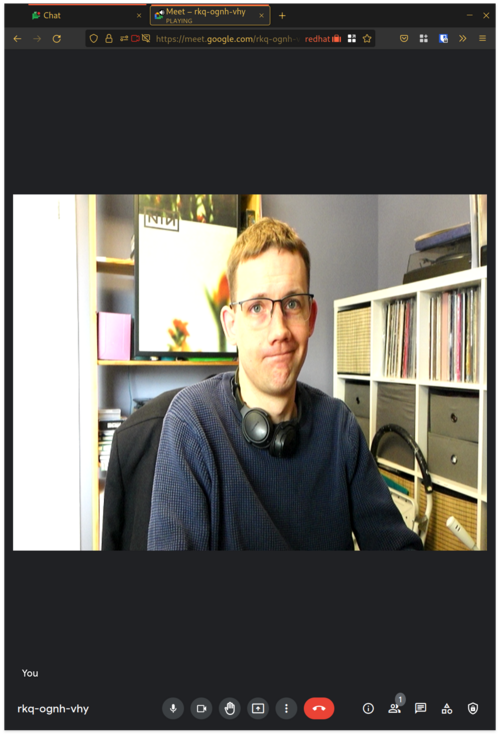
Before: wrong aspect ratio Before: wrong aspect ratio
This device offers a selection of different video modes over a webcam interface. I used qv4l2 to explore the different modes. It became clear that the camera was outputting a signal at 16:9, but the modes on offer from the dongle were for a range of different aspect ratios. The picture for these other ratios was not letter or pillar-boxed, but stretched to fit. I also noticed that the modes which had the correct aspect ratio were at very low framerates: 1920x1080@5fps, 1360x768@8fps, 1280x720@10fps. It felt to me that I would look unnatural at such a low framerate. The most promising mode was close to the right ratio, 720x480 and 30 fps. Software
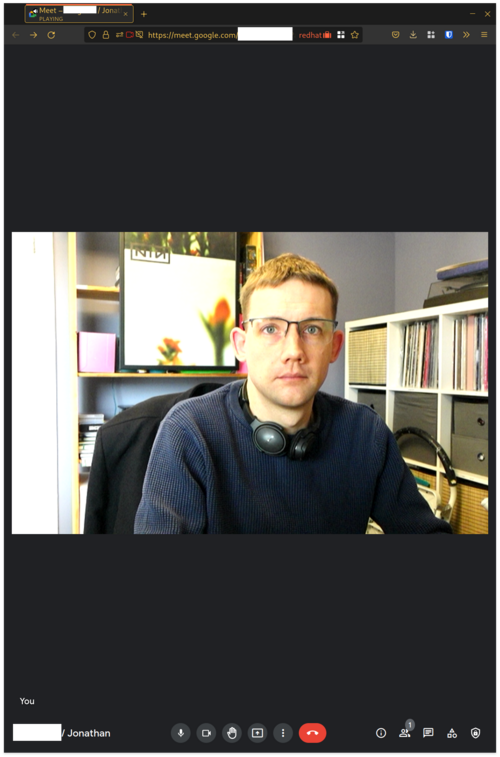
After: corrected aspect ratio After: corrected aspect ratio
My initial solution is to use the v4l2loopback kernel module, which provides a virtual loop-back webcam interface. I can write video data to it from one process, and read it back from another. Loading it as follows:
modprobe v4l2loopback exclusive_caps=1
The option exclusive_caps configures the module into a mode where it initially presents a write-only interface, but once a process has opened a file handle, it then switches to read-only for subsequent processes. Assuming there are no other camera devices connected at the time of loading the module, it will create /dev/video0.1 I experimented briefly with OBS Studio, the very versatile and feature-full streaming tool, which confirmed that I could use filters on the source video to fix the aspect ratio, and emit the result to the virtual device. I don't otherwise use OBS, though, so I achieve the same result using ffmpeg:
fmpeg -s 720x480 -i /dev/video1 -r 30 -f v4l2 -vcodec rawvideo \
    -pix_fmt yuyv422 -s 720x405 /dev/video0
The source options are to select the source video mode I want. The codec and pixel formats are to match what is being emitted (I determined that using ffprobe on the camera device). The resizing is triggered by supplying a different size to the -s parameter. I think that is equivalent to explicitly selecting a "scale" filter, and there might be other filters that could be used instead (to add pillar boxes for example). This worked just as well. In Google Meet, I select the Virtual Camera, and Google Meet is presented with only one video mode, in the correct aspect ratio, and no configurable options for it, so it can't misbehave. Future I'm planning to automate the loading (and unloading) of the module and starting the ffmpeg process in response to the real camera device being plugged or unplugged, using systemd events and services. (I don't leave the camera plugged in all the time due to some bad USB behaviour I've experienced if I do so.) If I get that working, I will write a follow-up.

  1. you can request a specific device name/number with another module option.

5 March 2022

Reproducible Builds: Reproducible Builds in February 2022

Welcome to the February 2022 report from the Reproducible Builds project. In these reports, we try to round-up the important things we and others have been up to over the past month. As ever, if you are interested in contributing to the project, please visit our Contribute page on our website.
Jiawen Xiong, Yong Shi, Boyuan Chen, Filipe R. Cogo and Zhen Ming Jiang have published a new paper titled Towards Build Verifiability for Java-based Systems (PDF). The abstract of the paper contains the following:
Various efforts towards build verifiability have been made to C/C++-based systems, yet the techniques for Java-based systems are not systematic and are often specific to a particular build tool (eg. Maven). In this study, we present a systematic approach towards build verifiability on Java-based systems.

GitBOM is a flexible scheme to track the source code used to generate build artifacts via Git-like unique identifiers. Although the project has been active for a while, the community around GitBOM has now started running weekly community meetings.
The paper Chris Lamb and Stefano Zacchiroli is now available in the March/April 2022 issue of IEEE Software. Titled Reproducible Builds: Increasing the Integrity of Software Supply Chains (PDF), the abstract of the paper contains the following:
We first define the problem, and then provide insight into the challenges of making real-world software build in a reproducible manner-this is, when every build generates bit-for-bit identical results. Through the experience of the Reproducible Builds project making the Debian Linux distribution reproducible, we also describe the affinity between reproducibility and quality assurance (QA).

In openSUSE, Bernhard M. Wiedemann posted his monthly reproducible builds status report.
On our mailing list this month, Thomas Schmitt started a thread around the SOURCE_DATE_EPOCH specification related to formats that cannot help embedding potentially timezone-specific timestamp. (Full thread index.)
The Yocto Project is pleased to report that it s core metadata (OpenEmbedded-Core) is now reproducible for all recipes (100% coverage) after issues with newer languages such as Golang were resolved. This was announced in their recent Year in Review publication. It is of particular interest for security updates so that systems can have specific components updated but reducing the risk of other unintended changes and making the sections of the system changing very clear for audit. The project is now also making heavy use of equivalence of build output to determine whether further items in builds need to be rebuilt or whether cached previously built items can be used. As mentioned in the article above, there are now public servers sharing this equivalence information. Reproducibility is key in making this possible and effective to reduce build times/costs/resource usage.

diffoscope diffoscope is our in-depth and content-aware diff utility. Not only can it locate and diagnose reproducibility issues, it can provide human-readable diffs from many kinds of binary formats. This month, Chris Lamb prepared and uploaded versions 203, 204, 205 and 206 to Debian unstable, as well as made the following changes to the code itself:
  • Bug fixes:
    • Fix a file(1)-related regression where Debian .changes files that contained non-ASCII text were not identified as such, therefore resulting in seemingly arbitrary packages not actually comparing the nested files themselves. The non-ASCII parts were typically in the Maintainer or in the changelog text. [ ][ ]
    • Fix a regression when comparing directories against non-directories. [ ][ ]
    • If we fail to scan using binwalk, return False from BinwalkFile.recognizes. [ ]
    • If we fail to import binwalk, don t report that we are missing the Python rpm module! [ ]
  • Testsuite improvements:
    • Add a test for recent file(1) issue regarding .changes files. [ ]
    • Use our assert_diff utility where we can within the test_directory.py set of tests. [ ]
    • Don t run our binwalk-related tests as root or fakeroot. The latest version of binwalk has some new security protection against this. [ ]
  • Codebase improvements:
    • Drop the _PATH suffix from module-level globals that are not paths. [ ]
    • Tidy some control flow in Difference._reverse_self. [ ]
    • Don t print a warning to the console regarding NT_GNU_BUILD_ID changes. [ ]
In addition, Mattia Rizzolo updated the Debian packaging to ensure that diffoscope and diffoscope-minimal packages have the same version. [ ]

Website updates There were quite a few changes to the Reproducible Builds website and documentation this month as well, including:
  • Chris Lamb:
    • Considerably rework the Who is involved? page. [ ][ ]
    • Move the contributors.sh Bash/shell script into a Python script. [ ][ ][ ]
  • Daniel Shahaf:
    • Try a different Markdown footnote content syntax to work around a rendering issue. [ ][ ][ ]
  • Holger Levsen:
    • Make a huge number of changes to the Who is involved? page, including pre-populating a large number of contributors who cannot be identified from the metadata of the website itself. [ ][ ][ ][ ][ ]
    • Improve linking to sponsors in sidebar navigation. [ ]
    • drop sponsors paragraph as the navigation is clearer now. [ ]
    • Add Mullvad VPN as a bronze-level sponsor . [ ][ ]
  • Vagrant Cascadian:

Upstream patches The Reproducible Builds project attempts to fix as many currently-unreproducible packages as possible. February s patches included the following:

Testing framework The Reproducible Builds project runs a significant testing framework at tests.reproducible-builds.org, to check packages and other artifacts for reproducibility. This month, the following changes were made:
  • Daniel Golle:
    • Update the OpenWrt configuration to not depend on the host LLVM, adding lines to the .config seed to build LLVM for eBPF from source. [ ]
    • Preserve more OpenWrt-related build artifacts. [ ]
  • Holger Levsen:
  • Temporary use a different Git tree when building OpenWrt as our tests had been broken since September 2020. This was reverted after the patch in question was accepted by Paul Spooren into the canonical openwrt.git repository the next day.
    • Various improvements to debugging OpenWrt reproducibility. [ ][ ][ ][ ][ ]
    • Ignore useradd warnings when building packages. [ ]
    • Update the script to powercycle armhf architecture nodes to add a hint to where nodes named virt-*. [ ]
    • Update the node health check to also fix failed logrotate and man-db services. [ ]
  • Mattia Rizzolo:
    • Update the website job after contributors.sh script was rewritten in Python. [ ]
    • Make sure to set the DIFFOSCOPE environment variable when available. [ ]
  • Vagrant Cascadian:
    • Various updates to the diffoscope timeouts. [ ][ ][ ]
Node maintenance was also performed by Holger Levsen [ ] and Vagrant Cascadian [ ].

Finally If you are interested in contributing to the Reproducible Builds project, please visit our Contribute page on our website. However, you can get in touch with us via:

3 March 2022

Enrico Zini: Migrating from procmail to sieve

Anarcat's "procmail considered harmful" post convinced me to get my act together and finally migrate my venerable procmail based setup to sieve. My setup was nontrivial, so I migrated with an intermediate step in which sieve scripts would by default pipe everything to procmail, which allowed me to slowly move rules from procmailrc to sieve until nothing remained in procmailrc. Here's what I did. Literature review https://brokkr.net/2019/10/31/lets-do-dovecot-slowly-and-properly-part-3-lmtp/ has a guide quite aligned with current Debian, and could be a starting point to get an idea of the work to do. https://wiki.dovecot.org/HowTo/PostfixDovecotLMTP is way more terse, but more aligned with my intentions. Reading the former helped me in understanding the latter. https://datatracker.ietf.org/doc/html/rfc5228 has the full Sieve syntax. https://doc.dovecot.org/configuration_manual/sieve/pigeonhole_sieve_interpreter/ has the list of Sieve features supported by Dovecot. https://doc.dovecot.org/settings/pigeonhole/ has the reference on Dovecot's sieve implementation. https://raw.githubusercontent.com/dovecot/pigeonhole/master/doc/rfc/spec-bosch-sieve-extprograms.txt is the hard to find full reference for the functions introduced by the extprograms plugin. Debugging tools: Backup of all mails processed One thing I did with procmail was to generate a monthly mailbox with all incoming email, with something like this:
BACKUP="/srv/backupts/test- date +%Y-%m-d .mbox"
:0c
$BACKUP
I did not find an obvious way in sieve to create montly mailboxes, so I redesigned that system using Postfix's always_bcc feature, piping everything to an archive user. I'll then recreate the monthly archiving using a chewmail script that I can simply run via cron. Configure dovecot
apt install dovecot-sieve dovecot-lmtpd
I added this to the local dovecot configuration:
service lmtp  
  unix_listener /var/spool/postfix/private/dovecot-lmtp  
    user = postfix
    group = postfix
    mode = 0666
   
 
protocol lmtp  
  mail_plugins = $mail_plugins sieve
 
plugin  
  sieve = file:~/.sieve;active=~/.dovecot.sieve
 
This makes Dovecot ready to receive mail from Postfix via a lmtp unix socket created in Postfix's private chroot. It also activates the sieve plugin, and uses ~/.sieve as a sieve script. The script can be a file or a directory; if it is a directory, ~/.dovecot.sieve will be a symlink pointing to the .sieve file to run. This is a feature I'm not yet using, but if one day I want to try enabling UIs to edit sieve scripts, that part is ready. Delegate to procmail To make sieve scripts that delegate to procmail, I enabled the sieve_extprograms plugin:
 plugin  
   sieve = file:~/.sieve;active=~/.dovecot.sieve
+  sieve_plugins = sieve_extprograms
+  sieve_extensions +vnd.dovecot.pipe
+  sieve_pipe_bin_dir = /usr/local/lib/dovecot/sieve-pipe
+  sieve_trace_dir = ~/.sieve-trace
+  sieve_trace_level = matching
+  sieve_trace_debug = yes
  
and then created a script for it:
mkdir -p /usr/local/lib/dovecot/sieve-pipe/
(echo "#!/bin/sh'; echo "exec /usr/bin/procmail") > /usr/local/lib/dovecot/sieve-pipe/procmail
chmod 0755 /usr/local/lib/dovecot/sieve-pipe/procmail
And I can have a sieve script that delegates processing to procmail:
require "vnd.dovecot.pipe";
pipe "procmail";
Activate the postfix side These changes switched local delivery over to Dovecot:
--- a/roles/mailserver/templates/dovecot.conf
+++ b/roles/mailserver/templates/dovecot.conf
@@ -25,6 +25,8 @@
 
+auth_username_format = %Ln
+
 
diff --git a/roles/mailserver/templates/main.cf b/roles/mailserver/templates/main.cf
index d2c515a..d35537c 100644
--- a/roles/mailserver/templates/main.cf
+++ b/roles/mailserver/templates/main.cf
@@ -64,8 +64,7 @@ virtual_alias_domains =
 
-mailbox_command = procmail -a "$EXTENSION"
-mailbox_size_limit = 0
+mailbox_transport = lmtp:unix:private/dovecot-lmtp
 
Without auth_username_format = %Ln dovecot won't be able to understand usernames sent by postfix in my specific setup. Moving rules over to sieve This is mostly straightforward, with the luxury of being able to do it a bit at a time. The last tricky bit was how to call spamc from sieve, as in some situations I reduce system load by running the spamfilter only on a prefiltered selection of incoming emails. For this I enabled the filter directive in sieve:
 plugin  
   sieve = file:~/.sieve;active=~/.dovecot.sieve
   sieve_plugins = sieve_extprograms
-  sieve_extensions +vnd.dovecot.pipe
+  sieve_extensions +vnd.dovecot.pipe +vnd.dovecot.filter
   sieve_pipe_bin_dir = /usr/local/lib/dovecot/sieve-pipe
+  sieve_filter_bin_dir = /usr/local/lib/dovecot/sieve-filter
   sieve_trace_dir = ~/.sieve-trace
   sieve_trace_level = matching
   sieve_trace_debug = yes
  
Then I created a filter script:
mkdir -p /usr/local/lib/dovecot/sieve-filter/"
(echo "#!/bin/sh'; echo "exec /usr/bin/spamc") > /usr/local/lib/dovecot/sieve-filter/spamc
chmod 0755 /usr/local/lib/dovecot/sieve-filter/spamc
And now what was previously:
:0 fw
  /usr/bin/spamc
:0
* ^X-Spam-Status: Yes
.spam/
Can become:
require "vnd.dovecot.filter";
require "fileinto";
filter "spamc";
if header :contains "x-spam-level" "**************"  
    discard;
  elsif header :matches "X-Spam-Status" "Yes,*"  
    fileinto "spam";
 
Updates Ansgar mentioned that it's possible to replicate the monthly mailbox using the variables and date extensions, with a hacky trick from the extensions' RFC:
require "date"
require "variables"
if currentdate :matches "month" "*"   set "month" "$ 1 ";  
if currentdate :matches "year" "*"   set "year" "$ 1 ";  
fileinto :create "$ month -$ year ";

2 March 2022

Antoine Beaupr : procmail considered harmful

TL;DR: procmail is a security liability and has been abandoned upstream for the last two decades. If you are still using it, you should probably drop everything and at least remove its SUID flag. There are plenty of alternatives to chose from, and conversion is a one-time, acceptable trade-off.

Procmail is unmaintained procmail is unmaintained. The "Final release", according to Wikipedia, dates back to September 10, 2001 (3.22). That release was shipped in Debian since then, all the way back from Debian 3.0 "woody", twenty years ago. Debian also ships 25 uploads on top of this, with 3.22-21 shipping the "3.23pre" release that has been rumored since at least the November 2001, according to debian/changelog at least:
procmail (3.22-1) unstable; urgency=low
  * New upstream release, which uses the  standard' format for Maildir
    filenames and retries on name collision. It also contains some
    bug fixes from the 3.23pre snapshot dated 2001-09-13.
  * Removed  sendmail' from the Recommends field, since we already
    have  exim' (the default Debian MTA) and  mail-transport-agent'.
  * Removed suidmanager support. Conflicts: suidmanager (<< 0.50).
  * Added support for DEB_BUILD_OPTIONS in the source package.
  * README.Maildir: Do not use locking on the example recipe,
    since it's wrong to do so in this case.
 -- Santiago Vila <sanvila@debian.org>  Wed, 21 Nov 2001 09:40:20 +0100
All Debian suites from buster onwards ship the 3.22-26 release, although the maintainer just pushed a 3.22-27 release to fix a seven year old null pointer dereference, after this article was drafted. Procmail is also shipped in all major distributions: Fedora and its derivatives, Debian derivatives, Gentoo, Arch, FreeBSD, OpenBSD. We all seem to be ignoring this problem. The upstream website (http://procmail.org/) has been down since about 2015, according to Debian bug #805864, with no change since. In effect, every distribution is currently maintaining its fork of this dead program. Note that, after filing a bug to keep Debian from shipping procmail in a stable release again, I was told that the Debian maintainer is apparently in contact with the upstream. And, surprise! they still plan to release that fabled 3.23 release, which has been now in "pre-release" for all those twenty years. In fact, it turns out that 3.23 is considered released already, and that the procmail author actually pushed a 3.24 release, codenamed "Two decades of fixes". That amounts to 25 commits since 3.23pre some of which address serious security issues, but none of which address fundamental issues with the code base.

Procmail is insecure By default, procmail is installed SUID root:mail in Debian. There's no debconf or pre-seed setting that can change this. There has been two bug reports against the Debian to make this configurable (298058, 264011), but both were closed to say that, basically, you should use dpkg-statoverride to change the permissions on the binary. So if anything, you should immediately run this command on any host that you have procmail installed on:
dpkg-statoverride --update --add root root 0755 /usr/bin/procmail
Note that this might break email delivery. It might also not work at all, thanks to usrmerge. Not sure. Yes, everything is on fire. This is fine. In my opinion, even assuming we keep procmail in Debian, that default should be reversed. It should be up to people installing procmail to assign it those dangerous permissions, after careful consideration of the risk involved. The last maintainer of procmail explicitly advised us (in that null pointer dereference bug) and other projects (e.g. OpenBSD, in [2]) to stop shipping it, back in 2014. Quote:
Executive summary: delete the procmail port; the code is not safe and should not be used as a basis for any further work.
I just read some of the code again this morning, after the original author claimed that procmail was active again. It's still littered with bizarre macros like:
#define bit_set(name,which,value) \
  (value?(name[bit_index(which)] =bit_mask(which)):\
  (name[bit_index(which)]&=~bit_mask(which)))
... from regexp.c, line 66 (yes, that's a custom regex engine). Or this one:
#define jj  (aleps.au.sopc)
It uses insecure functions like strcpy extensively. malloc() is thrown around gotos like it's 1984 all over again. (To be fair, it has been feeling like 1984 a lot lately, but that's another matter entirely.) That null pointer deref bug? It's fixed upstream now, in this commit merged a few hours ago, which I presume might be in response to my request to remove procmail from Debian. So while that's nice, this is the just tip of the iceberg. I speculate that one could easily find an exploitable crash in procmail if only by running it through a fuzzer. But I don't need to speculate: procmail had, for years, serious security issues that could possibly lead to root privilege escalation, remotely exploitable if procmail is (as it's designed to do) exposed to the network. Maybe I'm overreacting. Maybe the procmail author will go through the code base and do a proper rewrite. But I don't think that's what is in the cards right now. What I expect will happen next is that people will start fuzzing procmail, throw an uncountable number of bug reports at it which will get fixed in a trickle while never fixing the underlying, serious design flaws behind procmail.

Procmail has better alternatives The reason this is so frustrating is that there are plenty of modern alternatives to procmail which do not suffer from those problems. Alternatives to procmail(1) itself are typically part of mail servers. For example, Dovecot has its own LDA which implements the standard Sieve language (RFC 5228). (Interestingly, Sieve was published as RFC 3028 in 2001, before procmail was formally abandoned.) Courier also has "maildrop" which has its own filtering mechanism, and there is fdm (2007) which is a fetchmail and procmail replacement. Update: there's also mailprocessing, which is not an LDA, but processing an existing folder. It was, however, specifically designed to replace complex Procmail rules. But procmail, of course, doesn't just ship procmail; that would just be too easy. It ships mailstat(1) which we could probably ignore because it only parses procmail log files. But more importantly, it also ships:
  • lockfile(1) - conditional semaphore-file creator
  • formail(1) - mail (re)formatter
lockfile(1) already has a somewhat acceptable replacement in the form of flock(1), part of util-linux (which is Essential, so installed on any normal Debian system). It might not be a direct drop-in replacement, but it should be close enough. formail(1) is similar: the courier maildrop package ships reformail(1) which is, presumably, a rewrite of formail. It's unclear if it's a drop-in replacement, but it should probably possible to port uses of formail to it easily.
Update: the maildrop package ships a SUID root binary (two, even). So if you want only reformail(1), you might want to disable that with:
dpkg-statoverride --update --add root root 0755 /usr/bin/lockmail.maildrop 
dpkg-statoverride --update --add root root 0755 /usr/bin/maildrop
It would be perhaps better to have reformail(1) as a separate package, see bug 1006903 for that discussion.
The real challenge is, of course, migrating those old .procmailrc recipes to Sieve (basically). I added a few examples in the appendix below. You might notice the Sieve examples are easier to read, which is a nice added bonus.

Conclusion There is really, absolutely, no reason to keep procmail in Debian, nor should it be used anywhere at this point. It's a great part of our computing history. May it be kept forever in our museums and historical archives, but not in Debian, and certainly not in actual release. It's just a bomb waiting to go off. It is irresponsible for distributions to keep shipping obsolete and insecure software like this for unsuspecting users. Note that I am grateful to the author, I really am: I used procmail for decades and it served me well. But now, it's time to move, not bring it back from the dead.

Appendix

Previous work It's really weird to have to write this blog post. Back in 2016, I rebuilt my mail setup at home and, to my horror, discovered that procmail had been abandoned for 15 years at that point, thanks to that LWN article from 2010. I would have thought that I was the only weirdo still running procmail after all those years and felt kind of embarrassed to only "now" switch to the more modern (and, honestly, awesome) Sieve language. But no. Since then, Debian shipped three major releases (stretch, buster, and bullseye), all with the same vulnerable procmail release. Then, in early 2022, I found that, at work, we actually had procmail installed everywhere, possibly because userdir-ldap was using it for lockfile until 2019. I sent a patch to fix that and scrambled to remove get rid of procmail everywhere. That took about a day. But many other sites are now in that situation, possibly not imagining they have this glaring security hole in their infrastructure.

Procmail to Sieve recipes I'll collect a few Sieve equivalents to procmail recipes here. If you have any additions, do contact me. All Sieve examples below assume you drop the file in ~/.dovecot.sieve.

deliver mail to "plus" extension folder Say you want to deliver user+foo@example.com to the folder foo. You might write something like this in procmail:
MAILDIR=$HOME/Maildir/
DEFAULT=$MAILDIR
LOGFILE=$HOME/.procmail.log
VERBOSE=off
EXTENSION=$1            # Need to rename it - ?? does not like $1 nor 1
:0
* EXTENSION ?? [a-zA-Z0-9]+
        .$EXTENSION/
That, in sieve language, would be:
require ["variables", "envelope", "fileinto", "subaddress"];
########################################################################
# wildcard +extension
# https://doc.dovecot.org/configuration_manual/sieve/examples/#plus-addressed-mail-filtering
if envelope :matches :detail "to" "*"  
  # Save name in $ name  in all lowercase
  set :lower "name" "$ 1 ";
  fileinto "$ name ";
  stop;
 

Subject into folder This would file all mails with a Subject: line having FreshPorts in it into the freshports folder, and mails from alternc.org mailing lists into the alternc folder:
:0
## mailing list freshports
* ^Subject.*FreshPorts.*
.freshports/
:0
## mailing list alternc
* ^List-Post.*mailto:.*@alternc.org.*
.alternc/
Equivalent Sieve:
if header :contains "subject" "FreshPorts"  
    fileinto "freshports";
  elsif header :contains "List-Id" "alternc.org"  
    fileinto "alternc";
 

Mail sent to root to a reports folder This double rule:
:0
* ^Subject: Cron
* ^From: .*root@
.rapports/
Would look something like this in Sieve:
if header :comparator "i;octet" :contains "Subject" "Cron"  
  if header :regex :comparator "i;octet"  "From" ".*root@"  
        fileinto "rapports";
   
 
Note that this is what the automated converted does (below). It's not very readable, but it works.

Bulk email I didn't have an equivalent of this in procmail, but that's something I did in Sieve:
if header :contains "Precedence" "bulk"  
    fileinto "bulk";
 

Any mailing list This is another rule I didn't have in procmail but I found handy and easy to do in Sieve:
if exists "List-Id"  
    fileinto "lists";
 

This or that I wouldn't remember how to do this in procmail either, but that's an easy one in Sieve:
if anyof (header :contains "from" "example.com",
           header :contains ["to", "cc"] "anarcat@example.com")  
    fileinto "example";
 
You can even pile up a bunch of options together to have one big rule with multiple patterns:
if anyof (exists "X-Cron-Env",
          header :contains ["subject"] ["security run output",
                                        "monthly run output",
                                        "daily run output",
                                        "weekly run output",
                                        "Debian Package Updates",
                                        "Debian package update",
                                        "daily mail stats",
                                        "Anacron job",
                                        "nagios",
                                        "changes report",
                                        "run output",
                                        "[Systraq]",
                                        "Undelivered mail",
                                        "Postfix SMTP server: errors from",
                                        "backupninja",
                                        "DenyHosts report",
                                        "Debian security status",
                                        "apt-listchanges"
                                        ],
           header :contains "Auto-Submitted" "auto-generated",
           envelope :contains "from" ["nagios@",
                                      "logcheck@",
                                      "root@"])
     
    fileinto "rapports";
 

Automated script There is a procmail2sieve.pl script floating around, and mentioned in the dovecot documentation. It didn't work very well for me: I could use it for small things, but I mostly wrote the sieve file from scratch.

Progressive migration Enrico Zini has progressively migrated his procmail setup to Sieve using a clever way: he hooked procmail inside sieve so that he could deliver to the Dovecot LDA and progressively migrate rules one by one, without having a "flag day". See this explanatory blog post for the details, which also shows how to configure Dovecot as an LMTP server with Postfix.

Other examples The Dovecot sieve examples are numerous and also quite useful. At the time of writing, they include virus scanning and spam filtering, vacation auto-replies, includes, archival, and flags.

Harmful considered harmful I am aware that the "considered harmful" title has a long and controversial history, being considered harmful in itself (by some people who are obviously not afraid of contradictions). I have nevertheless deliberately chosen that title, partly to make sure this article gets maximum visibility, but more specifically because I do not have doubts at this moment that procmail is, clearly, a bad idea at this moment in history.

Developing story I must also add that, incredibly, this story has changed while writing it. This article is derived from this bug I filed in Debian to, quite frankly, kick procmail out of Debian. But filing the bug had the interesting effect of pushing the upstream into action: as mentioned above, they have apparently made a new release and merged a bunch of patches in a new git repository. This doesn't change much of the above, at this moment. If anything significant comes out of this effort, I will try to update this article to reflect the situation. I am actually happy to retract the claims in this article if it turns out that procmail is a stellar example of defensive programming and survives fuzzing attacks. But at this moment, I'm pretty confident that will not happen, at least not in scope of the next Debian release cycle.

Fran ois Marier: Ways to refer to locahost in Chromium

The filter rules preventing websites from portscanning the local machine have recently been tightened in Brave. It turns out there are a surprising number of ways to refer to the local machine in Chromium. localhost and friends 127.0.0.1 is the first address that comes to mind when thinking of the local machine. localhost is typically aliased to that address (via /etc/hosts), though that convention is not mandatory. The IPv6 equivalent is [::1]. 0.0.0.0 0.0.0.0 is not a routable address, but that's what's used to tell a service to bind (listen) on all network interfaces. In Chromium, it resolves to the local machine, just like 127.0.0.1. The IPv6 equivalent is [::].

DNS-based Of course, another way to encode these numerical URLs is to create A / AAAA records for them under a domain you control. I've done this under my personal domain: For these to work, you'll need to:
  • Make sure you can connect to IPv6-only hosts, for example by connecting to an appropriate VPN if needed.
  • Put nameserver 8.8.8.8 in /etc/resolv.conf since you need a DNS server that will not filter these localhost domains. (For example, Unbound will do that if you use private-address: 127.0.0.0/8 in the server config.)
  • Go into chrome://settings/security and disable Always use secure connections to make sure the OS resolver is used.
  • Turn off the chrome://flags/#block-insecure-private-network-requests flag since that security feature (CORS-RFC1918) is designed to protect against these kinds of requests.
127.0.0.0/8 subnet Technically, the entire 127.0.0.0/8 subnet can used to refer to the local machine. However, it's not a reliable way to portscan a machine from a web browser because it only catches the services that listen on all interfaces (i.e. 0.0.0.0). For example, on my machine, if I nmap 127.0.0.1, I get:
PORT     STATE SERVICE   VERSION
22/tcp   open  ssh       OpenSSH 8.2p1
25/tcp   open  smtp      Postfix smtpd
whereas if I nmap 127.0.1.25, I only get:
PORT   STATE SERVICE VERSION
22/tcp open  ssh     OpenSSH 8.2p1
That's because I've got the following in /etc/postfix/main.cf:
inet_interfaces = loopback-only
which I assume is explicitly binding 127.0.0.1. Nevertheless, it would be good to get that fixed in Brave too.

14 February 2022

Neil McGovern: Handing over

In 2017, I was attending FOSDEM when GNOME announced that I was to become the new Executive Director of the Foundation. Now, nearly 5 years later, I ve decided the timing is right for me to step back and for GNOME to start looking for its next leader. I ve been working closely with Rob and the rest of the board to ensure that there s an extended and smooth transition, and that GNOME can continue to go from strength to strength. GNOME has changed a lot in the last 5 years, and a lot has happened in that time. As a Foundation, we ve gone from a small team of 3, to employing people to work on marketing, investment in technical frameworks, conference organisation and much more beyond. We ve become the default desktop on all major Linux distributions. We ve launched Flathub to help connect application developers directly to their users. We ve dealt with patent suits, trademarks, and bylaw changes. We ve moved our entire development platform to GitLab. We released 10 new GNOME releases, GTK 4 and GNOME 40. We ve reset our relationships with external community partners and forged our way towards that future we all dream of where everyone is empowered by technology they can trust. For that future, we now need to build on that work. We need to look beyond the traditional role that desktop Linux has held and this is something that GNOME has always been able to do. I ve shown that the Foundation can be more than just a bank account for the project, and I believe that this is vital in our efforts to build a diverse and sustainable free software personal computing ecosystem. For this, we need to establish programs that align not only with the unique community and technology of the project, but also deliver those benefits to the wider world and drive real impact. 5 years has been the longest that the Foundation has had an ED for, and certainly the longest that I ve held a single post for. I remember my first GUADEC as ED. As you may know, like many of you, I m used to giving talks at conferences and yet I have never been so nervous as when I walked out on that stage. However, the welcome and genuine warmth that I received that day, and the continued support throughout the last 5 years makes me proud of what a welcoming and amazing community GNOME is. Thank you all.

6 February 2022

Jonathan McDowell: Free Software Activities for 2021

About a month later than I probably should have posted it, here s a recap of my Free Software activities in 2021. For previous years see 2019 + 2020. Again, this year had fewer contributions than I d like thanks to continuing fatigue about the state of the world, and trying to work on separation between work and leisure while working from home. I ve made some effort to improve that balance but it s still a work in progress.

Conferences No surprise, I didn t attend any in-person conferences in 2021. I find virtual conferences don t do a lot for me (a combination of my not carving time out for them in the same way, because not being at the conference means other things will inevitably intrude, and the lack of the social side) but I did get to attend a few of the DebConf21 talks, which was nice. I m hoping to make it to DebConf22 this year in person.

Debian Most of my contributions to Free software continue to happen within Debian. As part of the Data Protection Team I responded to various inbound queries to that team. Some of this involved chasing up other project teams who had been slow to respond - folks, if you re running a service that stores personal data about people then you need to be responsive to requests about it. Some of this was dealing with what look like automated scraping tools which send no information about the person making the request, and in all the cases we ve seen so far there s been no indication of any data about that person on any systems we have access to. Further team time was wasted dealing with the Princeton-Radboud Study on Privacy Law Implementation (though Matthew did the majority of the work on this). The Debian Keyring was possibly my largest single point of contribution. We re in a roughly 3 month rotation of who handles the keyring updates, and I handled 2021.03.24, 2021.04.09, 2021.06.25, 2021.09.25 + 2021.12.24 For Debian New Members I m mostly inactive as an application manager - we generally seem to have enough available recently. If that changes I ll look at stepping in to help, but I don t see that happening. I continue to be involved in Front Desk, having various conversations throughout the year with the rest of the team, but there s no doubt Mattia and Pierre-Elliott are the real doers at present. I did take part in an NM Committee appeals process. In terms of package uploads I continued to work on gcc-xtensa-lx106, largely doing uploads to deal with updates to the GCC version or packaging (8 + 9). sigrok had a few minor updates, libsigkrok 0.5.2-3, pulseview 0.4.2-3 as well as a new upstream release of sigrok CLI 0.7.2-1. There was a last minute pre-release upload of libserialport 0.1.1-4 thanks to a kernel change in v5.10.37 which removed termiox support. Despite still not writing any VHDL these days I continue to keep an eye on ghdl, because I found it a useful tool in the past. Last year that was just a build fix for LLVM 11.1.0 - 1.0.0+dfsg+5. Andreas Bombe has largely taken over more proactive maintenance, which is nice to see. I uploaded OpenOCD 0.11.0~rc1-2, cleaning up some packaging / dependency issues. This was followed by 0.11.0~rc2-1 as a newer release candidate. Sadly 0.11.0 did not make it in time for bullseye, but rc2 was fairly close and I uploaded 0.11.0-1 once bullseye was released. Finally I did a drive-by upload for garmin-forerunner-tools 0.10repacked-12, cleaning up some packaging issues and uploading it to salsa. My Forerunner 305 has died (after 11 years of sterling service) and the Forerunner 45 I ve replaced it with uses a different set of tools, so I decided it didn t make sense to pick up longer term ownership of the package.

Linux My Linux contributions continued to revolve around pushing MikroTik RB3011 support upstream. There was a minor code change to Set FIFO sizes for ipq806x (which fixed up the allowed MTU for the internal switch + VLANs). The rest was DTS related - adding ADM DMA + NAND definitions now that the ADM driver was merged, adding tsens details, adding USB port info and adding the L2CC and RPM details for IPQ8064. Finally I was able to update the RB3011 DTS to enable NAND + USB. With all those in I m down to 4 local patches against a mainline kernel, all of which are hacks that aren t suitable for submission upstream. 2 are for patching in details of the root device and ethernet MAC addresses, one is dealing with the fact the IPQ8064 has some reserved memory that doesn t play well with AUTO_ZRELADDR (there keeps being efforts to add some support for this via devicetree, but unfortunately it gets shot down every time), and the final one is a hack to turn off the LCD backlight by treating it as an LED (actually supporting the LCD properly is on my TODO list).

Personal projects 2021 didn t see any releases of onak. It s not dead, just resting, but Sequoia PGP is probably where you should be looking for a modern OpenPGP implementation. I continued work on my Desk Viking project, which is an STM32F103 based debug tool inspired by the Bus Pirate. The main addtion was some CCLib support (forking it in the process to move to Python 3 and add some speed ups) to allow me to program my Zigbee dongles, but I also added some 1-Wire search logic and some support for Linux emulation mode with VCD output to allow for a faster development cycle. I really want to try and get OpenOCD JTAG mode supported at some point, and have vague plans for an STM32F4 based version that have suffered from a combination of a silicon shortage and a lack of time. That wraps up 2021. I d like to say I m hoping to make more Free Software contributions this year, but I don t have a concrete plan yet for how that might happen, so I ll have to wait and see.

1 February 2022

Jonathan Dowland: Amateur archiving activities, January 2022

I have a backlog of digital stuff to upload to archive.org that I'm finally starting to flush. I'd had some difficulties in getting uploads to work until I tried using the excellent ia CLI tool, which is packaged in Debian. In January 2022 I uploaded: two sets of multitracks from the 1981 album My Life in the Bush of Ghosts by Brian Eno and David Byrne, "A Secret Life" and "Help Me Somebody"; 28 cover disks from late 80s/early 90s issues of PC Plus, Pc Today, PC Zone and Personal Computing; and a LEGO Land Billund brochure from 1993. I try to keep a record of my amateur archiving work (and related TODO items) at archiving. In January I also discovered that, late last year, the nine inch nails live archive project have had their download links forcibly removed by their ISP. I've been watching this project for a while because I thought it was "at risk". Years ago the project's creator, Ryan, created a series of torrents covering all the material at the time, although there had been a number of changes since the last one. However, this issue with his ISP spurred him on to create up-to-date torrents. It seems to me that archive.org would be a good place for this material, but there are two problems: the most natural collection would be the Live Music Archive, but it has a rule that musicians must have given explicit permission for live recordings to be deposited there (inherited from the earlier etree.org days) and in this case no such permission exists. The second problem is that ninlive's owner/creator, Ryan, has always resisted the idea. For now the best I can think to do is simply to continue to seed the torrent.

27 January 2022

Jonathan Dowland: Using an iPad for note-taking in talks

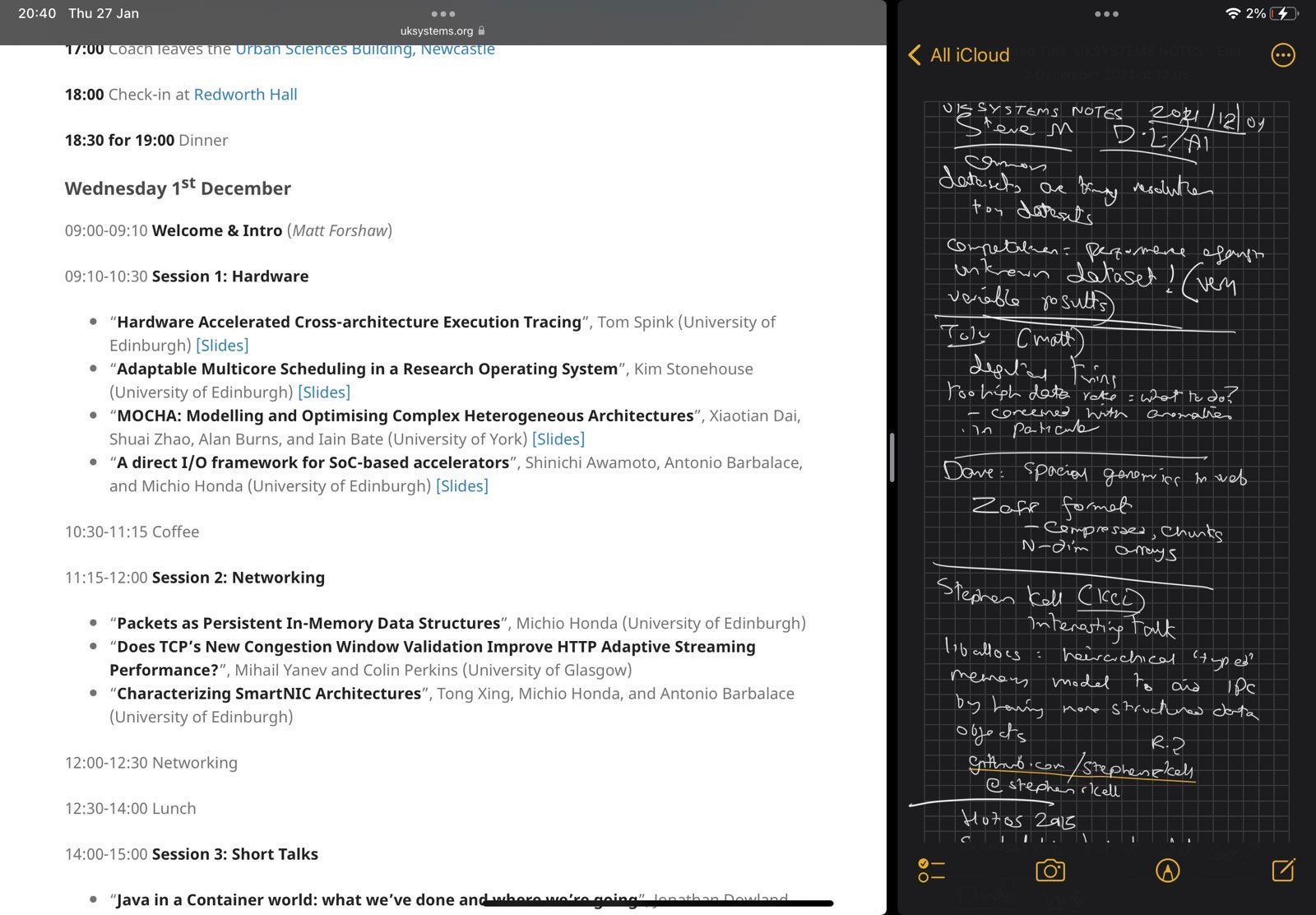
I've found that using a laptop during conference talks means you either end up doing something else and missing important bits of the talk, or at least look like you're doing something else. But it's extremely helpful to be able to look up the person who is talking, or their project, or expand an acronym that's mentioned or read around the subject. At December's uksystems21 conference, I experimented with using an iPad as a kind of compromise. Modern iOS versions let you split the display between two apps1, so I put the built-in Notes app on one side and a web browser on the other. I took notes using the Apple Pencil. I've got a "paper-like" rough surface display protector on the front which vastly improves the experience of using the Apple Pencil for writing2.
An example of note-taking and researching talks on an iPad. An example of note-taking and researching talks on an iPad.
I mostly took notes on the active talk, but I also tweaked my own slides3, looked up supplementary information about the topic and the talker, and things like that. It worked really well: much better than I expected. Apple's split-screen implementation is clunky but essential to make this work. The textured surface protector is a serious improvement over the normal surface for writing. But most importantly I didn't lose focus over the talks, and I don't think I looked like I did either.

  1. Yes, this is something that some Android vendors have supported for years. I remember playing around with Samsung Galaxy Notes when I was still in IT and being pretty impressed. On the other hand, I'd bet not 1% of those tablets are still running Today. My iPad Mini from that time still is, albeit vastly diminished.
  2. It's still not as good as the Remarkable, but that's a topic for another blog post.
  3. A tiny bit. Not serious reworking. Just nervous last minute tweaks that I could probably have not bothered with at all. I'm one of those people who does that right up to the wire.

26 January 2022

Timo Jyrinki: Unboxing Dell XPS 13 - openSUSE Tumbleweed alongside preinstalled Ubuntu

A look at the 2021 model of Dell XPS 13 - available with Linux pre-installed
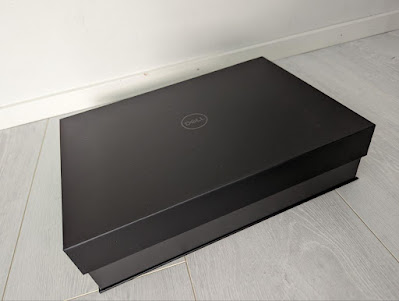
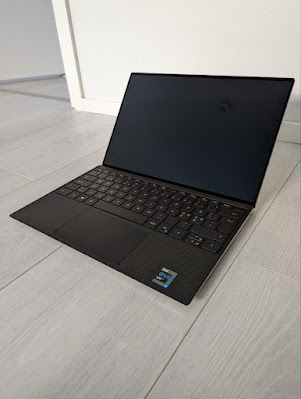
I received a new laptop for work - a Dell XPS 13. Dell has been long famous for offering certain models with pre-installed Linux as a supported option, and opting for those is nice for moving some euros/dollars from certain PC desktop OS monopoly towards Linux desktop engineering costs. Notably Lenovo also offers Ubuntu and Fedora options on many models these days (like Carbon X1 and P15 Gen 2).
black box

opened box

accessories and a leaflet about Linux support

laptop lifted from the box, closed

laptop with lid open

Ubuntu running

openSUSE runnin
Obviously a smooth, ready-to-rock Ubuntu installation is nice for most people already, but I need openSUSE, so after checking everything is fine with Ubuntu, I continued to install openSUSE Tumbleweed as a dual boot option. As I m a funny little tinkerer, I obviously went with some special things. I wanted:
  • Ubuntu to remain as the reference supported OS on a small(ish) partition, useful to compare to if trying out new development versions of software on openSUSE and finding oddities.
  • openSUSE as the OS consuming most of the space.
  • LUKS encryption for openSUSE without LVM.
  • ext4 s new fancy fast_commit feature in use during filesystem creation.
  • As a result of all that, I ended up juggling back and forth installation screens a couple of times (even more than shown below, and also because I forgot I wanted to use encryption the first time around).
First boots to pre-installed Ubuntu and installation of openSUSE Tumbleweed as the dual-boot option:
(if the embedded video is not shown, use a direct link)
Some notes from the openSUSE installation:
  • openSUSE installer s partition editor apparently does not support resizing or automatically installing side-by-side another Linux distribution, so I did part of the setup completely on my own.
  • Installation package download hanged a couple of times, only passed when I entered a mirror manually. On my TW I ve also noticed download problems recently, there might be a problem with some mirror I need to escalate.
  • The installer doesn t very clearly show encryption status of the target installation - it took me a couple of attempts before I even noticed the small encrypted column and icon (well, very small, see below), which also did not spell out the device mapper name but only the main partition name. In the end it was going to do the right thing right away and use my pre-created encrypted target partition as I wanted, but it could be a better UX. Then again I was doing my very own tweaks anyway.
  • Let s not go to the details why I m so old-fashioned and use ext4 :)
  • openSUSE s installer does not work fine with HiDPI screen. Funnily the tty consoles seem to be fine and with a big font.
  • At the end of the video I install the two GNOME extensions I can t live without, Dash to Dock and Sound Input & Output Device Chooser.

23 January 2022

Matthieu Caneill: Debsources, python3, and funky file names

Rumors are running that python2 is not a thing anymore. Well, I'm certainly late to the party, but I'm happy to report that sources.debian.org is now running python3. Wait, it wasn't? Back when development started, python3 was very much a real language, but it was hard to adopt because it was not supported by many libraries. So python2 was chosen, meaning print-based debugging was used in lieu of print()-based debugging, and str were bytes, not unicode. And things were working just fine. One day python2 EOL was announced, with a date far in the future. Far enough to procrastinate for a long time. Combine this with a codebase that is stable enough to not see many commits, and the fact that Debsources is a volunteer-based project that happens at best on week-ends, and you end up with a dormant software and a missed deadline. But, as dormant as the codebase is, the instance hosted at sources.debian.org is very popular and gets 200k to 500k hits per day. Largely enough to be worth a proper maintenance and a transition to python3. Funky file names While transitioning to python3 and juggling left and right with str, bytes and unicode for internal objects, files, database entries and HTTP content, I stumbled upon a bug that has been there since day 1. Quick recap if you're unfamiliar with this tool: Debsources displays the content of the source packages in the Debian archive. In other words, it's a bit like GitHub, but for the Debian source code. And some pieces of software out there, that ended up in Debian packages, happen to contain files whose names can't be decoded to UTF-8. Interestingly enough, there's no such thing as a standard for file names: with a few exceptions that vary by operating system, any sequence of bytes can be a legit file name. And some sequences of bytes are not valid UTF-8. Of course those files are rare, and using ASCII characters to name a file is a much more common practice than using bytes in a non-UTF-8 character encoding. But when you deal with almost 100 million files on which you have no control (those files come from free software projects, and make their way into Debian without any renaming), it happens. Now back to the bug: when trying to display such a file through the web interface, it would crash because it can't convert the file name to UTF-8, which is needed for the HTML representation of the page. Bugfix An often valid approach when trying to represent invalid UTF-8 content is to ignore errors, and replace them with ? or . This is what Debsources actually does to display non-UTF-8 file content. Unfortunately, this best-effort approach is not suitable for file names, as file names are also identifiers in Debsources: among other places, they are part of URLs. If an URL were to use placeholder characters to replace those bytes, there would be no deterministic way to match it with a file on disk anymore. The representation of binary data into text is a known problem. Multiple lossless solutions exist, such as base64 and its variants, but URLs looking like https://sources.debian.org/src/Y293c2F5LzMuMDMtOS4yL2Nvd3NheS8= are not readable at all compared to https://sources.debian.org/src/cowsay/3.03-9.2/cowsay/. Plus, not backwards-compatible with all existing links. The solution I chose is to use double-percent encoding: this allows the representation of any byte in an URL, while keeping allowed characters unchanged - and preventing CGI gateways from trying to decode non-UTF-8 bytes. This is the best of both worlds: regular file names get to appear normally and are human-readable, and funky file names only have percent signs and hex numbers where needed. Here is an example of such an URL: https://sources.debian.org/src/aspell-is/0.51-0-4/%25EDslenska.alias/. Notice the %25ED to represent the percentage symbol itself (%25) followed by an invalid UTF-8 byte (%ED). Transitioning to this was quite a challenge, as those file names don't only appear in URLs, but also in web pages themselves, log files, database tables, etc. And everything was done with str: made sense in python2 when str were bytes, but not much in python3. What are those files? What's their network? I was wondering too. Let's list them!
import os
with open('non-utf-8-paths.bin', 'wb') as f:
    for root, folders, files in os.walk(b'/srv/sources.debian.org/sources/'):
        for path in folders + files:
            try:
                path.decode('utf-8')
            except UnicodeDecodeError:
                f.write(root + b'/' + path + b'\n')
Running this on the Debsources main instance, which hosts pretty much all Debian packages that were part of a Debian release, I could find 307 files (among a total of almost 100 million files). Without looking deep into them, they seem to fall into 2 categories: That last point hits home, as it was clearly lacking in Debsources. A funky file name is now part of its test suite. ;)

16 January 2022

Chris Lamb: Favourite films of 2021

In my four most recent posts, I went over the memoirs and biographies, the non-fiction, the fiction and the 'classic' novels that I enjoyed reading the most in 2021. But in the very last of my 2021 roundup posts, I'll be going over some of my favourite movies. (Saying that, these are perhaps less of my 'favourite films' than the ones worth remarking on after all, nobody needs to hear that The Godfather is a good movie.) It's probably helpful to remark you that I took a self-directed course in film history in 2021, based around the first volume of Roger Ebert's The Great Movies. This collection of 100-odd movie essays aims to make a tour of the landmarks of the first century of cinema, and I watched all but a handul before the year was out. I am slowly making my way through volume two in 2022. This tome was tremendously useful, and not simply due to the background context that Ebert added to each film: it also brought me into contact with films I would have hardly come through some other means. Would I have ever discovered the sly comedy of Trouble in Paradise (1932) or the touching proto-realism of L'Atalante (1934) any other way? It also helped me to 'get around' to watching films I may have put off watching forever the influential Battleship Potemkin (1925), for instance, and the ur-epic Lawrence of Arabia (1962) spring to mind here. Choosing a 'worst' film is perhaps more difficult than choosing the best. There are first those that left me completely dry (Ready or Not, Written on the Wind, etc.), and those that were simply poorly executed. And there are those that failed to meet their own high opinions of themselves, such as the 'made for Reddit' Tenet (2020) or the inscrutable Vanilla Sky (2001) the latter being an almost perfect example of late-20th century cultural exhaustion. But I must save my most severe judgement for those films where I took a visceral dislike how their subjects were portrayed. The sexually problematic Sixteen Candles (1984) and the pseudo-Catholic vigilantism of The Boondock Saints (1999) both spring to mind here, the latter of which combines so many things I dislike into such a short running time I'd need an entire essay to adequately express how much I disliked it.

Dogtooth (2009) A father, a mother, a brother and two sisters live in a large and affluent house behind a very high wall and an always-locked gate. Only the father ever leaves the property, driving to the factory that he happens to own. Dogtooth goes far beyond any allusion to Josef Fritzl's cellar, though, as the children's education is a grotesque parody of home-schooling. Here, the parents deliberately teach their children the wrong meaning of words (e.g. a yellow flower is called a 'zombie'), all of which renders the outside world utterly meaningless and unreadable, and completely mystifying its very existence. It is this creepy strangeness within a 'regular' family unit in Dogtooth that is both socially and epistemically horrific, and I'll say nothing here of its sexual elements as well. Despite its cold, inscrutable and deadpan surreality, Dogtooth invites all manner of potential interpretations. Is this film about the artificiality of the nuclear family that the West insists is the benchmark of normality? Or is it, as I prefer to believe, something more visceral altogether: an allegory for the various forms of ontological violence wrought by fascism, as well a sobering nod towards some of fascism's inherent appeals? (Perhaps it is both. In 1972, French poststructuralists Gilles and F lix Guattari wrote Anti-Oedipus, which plays with the idea of the family unit as a metaphor for the authoritarian state.) The Greek-language Dogtooth, elegantly shot, thankfully provides no easy answers.

Holy Motors (2012) There is an infamous scene in Un Chien Andalou, the 1929 film collaboration between Luis Bu uel and famed artist Salvador Dal . A young woman is cornered in her own apartment by a threatening man, and she reaches for a tennis racquet in self-defence. But the man suddenly picks up two nearby ropes and drags into the frame two large grand pianos... each leaden with a dead donkey, a stone tablet, a pumpkin and a bewildered priest. This bizarre sketch serves as a better introduction to Leos Carax's Holy Motors than any elementary outline of its plot, which ostensibly follows 24 hours in the life of a man who must play a number of extremely diverse roles around Paris... all for no apparent reason. (And is he even a man?) Surrealism as an art movement gets a pretty bad wrap these days, and perhaps justifiably so. But Holy Motors and Un Chien Andalou serve as a good reminder that surrealism can be, well, 'good, actually'. And if not quite high art, Holy Motors at least demonstrates that surrealism can still unnerving and hilariously funny. Indeed, recalling the whimsy of the plot to a close friend, the tears of laughter came unbidden to my eyes once again. ("And then the limousines...!") Still, it is unclear how Holy Motors truly refreshes surrealism for the twenty-first century. Surrealism was, in part, a reaction to the mechanical and unfeeling brutality of World War I and ultimately sought to release the creative potential of the unconscious mind. Holy Motors cannot be responding to another continental conflagration, and so it appears to me to be some kind of commentary on the roles we exhibit in an era of 'post-postmodernity': a sketch on our age of performative authenticity, perhaps, or an idle doodle on the function and psychosocial function of work. Or perhaps not. After all, this film was produced in a time that offers the near-universal availability of mind-altering substances, and this certainly changes the context in which this film was both created. And, how can I put it, was intended to be watched.

Manchester by the Sea (2016) An absolutely devastating portrayal of a character who is unable to forgive himself and is hesitant to engage with anyone ever again. It features a near-ideal balance between portraying unrecoverable anguish and tender warmth, and is paradoxically grandiose in its subtle intimacy. The mechanics of life led me to watch this lying on a bed in a chain hotel by Heathrow Airport, and if this colourless circumstance blunted the film's emotional impact on me, I am probably thankful for it. Indeed, I find myself reduced in this review to fatuously recalling my favourite interactions instead of providing any real commentary. You could write a whole essay about one particular incident: its surfaces, subtexts and angles... all despite nothing of any substance ever being communicated. Truly stunning.

McCabe & Mrs. Miller (1971) Roger Ebert called this movie one of the saddest films I have ever seen, filled with a yearning for love and home that will not ever come. But whilst it is difficult to disagree with his sentiment, Ebert's choice of sad is somehow not quite the right word. Indeed, I've long regretted that our dictionaries don't have more nuanced blends of tragedy and sadness; perhaps the Ancient Greeks can loan us some. Nevertheless, the plot of this film is of a gambler and a prostitute who become business partners in a new and remote mining town called Presbyterian Church. However, as their town and enterprise booms, it comes to the attention of a large mining corporation who want to bully or buy their way into the action. What makes this film stand out is not the plot itself, however, but its mood and tone the town and its inhabitants seem to be thrown together out of raw lumber, covered alternatively in mud or frozen ice, and their days (and their personalities) are both short and dark in equal measure. As a brief aside, if you haven't seen a Roger Altman film before, this has all the trappings of being a good introduction. As Ebert went on to observe: This is not the kind of movie where the characters are introduced. They are all already here. Furthermore, we can see some of Altman's trademark conversations that overlap, a superb handling of ensemble casts, and a quietly subversive view of the tyranny of 'genre'... and the latter in a time when the appetite for revisionist portrays of the West was not very strong. All of these 'Altmanian' trademarks can be ordered in much stronger measures in his later films: in particular, his comedy-drama Nashville (1975) has 24 main characters, and my jejune interpretation of Gosford Park (2001) is that it is purposefully designed to poke fun those who take a reductionist view of 'genre', or at least on the audience's expectations. (In this case, an Edwardian-era English murder mystery in the style of Agatha Christie, but where no real murder or detection really takes place.) On the other hand, McCabe & Mrs. Miller is actually a poor introduction to Altman. The story is told in a suitable deliberate and slow tempo, and the two stars of the film are shown thoroughly defrocked of any 'star status', in both the visual and moral dimensions. All of these traits are, however, this film's strength, adding up to a credible, fascinating and riveting portrayal of the old West.

Detour (1945) Detour was filmed in less than a week, and it's difficult to decide out of the actors and the screenplay which is its weakest point.... Yet it still somehow seemed to drag me in. The plot revolves around luckless Al who is hitchhiking to California. Al gets a lift from a man called Haskell who quickly falls down dead from a heart attack. Al quickly buries the body and takes Haskell's money, car and identification, believing that the police will believe Al murdered him. An unstable element is soon introduced in the guise of Vera, who, through a set of coincidences that stretches credulity, knows that this 'new' Haskell (ie. Al pretending to be him) is not who he seems. Vera then attaches herself to Al in order to blackmail him, and the world starts to spin out of his control. It must be understood that none of this is executed very well. Rather, what makes Detour so interesting to watch is that its 'errors' lend a distinctively creepy and unnatural hue to the film. Indeed, in the early twentieth century, Sigmund Freud used the word unheimlich to describe the experience of something that is not simply mysterious, but something creepy in a strangely familiar way. This is almost the perfect description of watching Detour its eerie nature means that we are not only frequently second-guessed about where the film is going, but are often uncertain whether we are watching the usual objective perspective offered by cinema. In particular, are all the ham-fisted segues, stilted dialogue and inscrutable character motivations actually a product of Al inventing a story for the viewer? Did he murder Haskell after all, despite the film 'showing' us that Haskell died of natural causes? In other words, are we watching what Al wants us to believe? Regardless of the answers to these questions, the film succeeds precisely because of its accidental or inadvertent choices, so it is an implicit reminder that seeking the director's original intention in any piece of art is a complete mirage. Detour is certainly not a good film, but it just might be a great one. (It is a short film too, and, out of copyright, it is available online for free.)

Safe (1995) Safe is a subtly disturbing film about an upper-middle-class housewife who begins to complain about vague symptoms of illness. Initially claiming that she doesn't feel right, Carol starts to have unexplained headaches, a dry cough and nosebleeds, and eventually begins to have trouble breathing. Carol's family doctor treats her concerns with little care, and suggests to her husband that she sees a psychiatrist. Yet Carol's episodes soon escalate. For example, as a 'homemaker' and with nothing else to occupy her, Carol's orders a new couch for a party. But when the store delivers the wrong one (although it is not altogether clear that they did), Carol has a near breakdown. Unsure where to turn, an 'allergist' tells Carol she has "Environmental Illness," and so Carol eventually checks herself into a new-age commune filled with alternative therapies. On the surface, Safe is thus a film about the increasing about of pesticides and chemicals in our lives, something that was clearly felt far more viscerally in the 1990s. But it is also a film about how lack of genuine healthcare for women must be seen as a critical factor in the rise of crank medicine. (Indeed, it made for something of an uncomfortable watch during the coronavirus lockdown.) More interestingly, however, Safe gently-yet-critically examines the psychosocial causes that may be aggravating Carol's illnesses, including her vacant marriage, her hollow friends and the 'empty calorie' stimulus of suburbia. None of this should be especially new to anyone: the gendered Victorian term 'hysterical' is often all but spoken throughout this film, and perhaps from the very invention of modern medicine, women's symptoms have often regularly minimised or outright dismissed. (Hilary Mantel's 2003 memoir, Giving Up the Ghost is especially harrowing on this.) As I opened this review, the film is subtle in its messaging. Just to take one example from many, the sound of the cars is always just a fraction too loud: there's a scene where a group is eating dinner with a road in the background, and the total effect can be seen as representing the toxic fumes of modernity invading our social lives and health. I won't spoiler the conclusion of this quietly devasting film, but don't expect a happy ending.

The Driver (1978) Critics grossly misunderstood The Driver when it was first released. They interpreted the cold and unemotional affect of the characters with the lack of developmental depth, instead of representing their dissociation from the society around them. This reading was encouraged by the fact that the principal actors aren't given real names and are instead known simply by their archetypes instead: 'The Driver', 'The Detective', 'The Player' and so on. This sort of quasi-Jungian erudition is common in many crime films today (Reservoir Dogs, Kill Bill, Layer Cake, Fight Club), so the critics' misconceptions were entirely reasonable in 1978. The plot of The Driver involves the eponymous Driver, a noted getaway driver for robberies in Los Angeles. His exceptional talent has far prevented him from being captured thus far, so the Detective attempts to catch the Driver by pardoning another gang if they help convict the Driver via a set-up robbery. To give himself an edge, however, The Driver seeks help from the femme fatale 'Player' in order to mislead the Detective. If this all sounds eerily familiar, you would not be far wrong. The film was essentially remade by Nicolas Winding Refn as Drive (2011) and in Edgar Wright's 2017 Baby Driver. Yet The Driver offers something that these neon-noir variants do not. In particular, the car chases around Los Angeles are some of the most captivating I've seen: they aren't thrilling in the sense of tyre squeals, explosions and flying boxes, but rather the vehicles come across like wild animals hunting one another. This feels especially so when the police are hunting The Driver, which feels less like a low-stakes game of cat and mouse than a pack of feral animals working together a gang who will tear apart their prey if they find him. In contrast to the undercar neon glow of the Fast & Furious franchise, the urban realism backdrop of the The Driver's LA metropolis contributes to a sincere feeling of artistic fidelity as well. To be sure, most of this is present in the truly-excellent Drive, where the chase scenes do really communicate a credible sense of stakes. But the substitution of The Driver's grit with Drive's soft neon tilts it slightly towards that common affliction of crime movies: style over substance. Nevertheless, I can highly recommend watching The Driver and Drive together, as it can tell you a lot about the disconnected socioeconomic practices of the 1980s compared to the 2010s. More than that, however, the pseudo-1980s synthwave soundtrack of Drive captures something crucial to analysing the world of today. In particular, these 'sounds from the past filtered through the present' bring to mind the increasing role of nostalgia for lost futures in the culture of today, where temporality and pop culture references are almost-exclusively citational and commemorational.

The Souvenir (2019) The ostensible outline of this quietly understated film follows a shy but ambitious film student who falls into an emotionally fraught relationship with a charismatic but untrustworthy older man. But that doesn't quite cover the plot at all, for not only is The Souvenir a film about a young artist who is inspired, derailed and ultimately strengthened by a toxic relationship, it is also partly a coming-of-age drama, a subtle portrait of class and, finally, a film about the making of a film. Still, one of the geniuses of this truly heartbreaking movie is that none of these many elements crowds out the other. It never, ever feels rushed. Indeed, there are many scenes where the camera simply 'sits there' and quietly observes what is going on. Other films might smother themselves through references to 18th-century oil paintings, but The Souvenir somehow evades this too. And there's a certain ring of credibility to the story as well, no doubt in part due to the fact it is based on director Joanna Hogg's own experiences at film school. A beautifully observed and multi-layered film; I'll be happy if the sequel is one-half as good.

The Wrestler (2008) Randy 'The Ram' Robinson is long past his prime, but he is still rarin' to go in the local pro-wrestling circuit. Yet after a brutal beating that seriously threatens his health, Randy hangs up his tights and pursues a serious relationship... and even tries to reconnect with his estranged daughter. But Randy can't resist the lure of the ring, and readies himself for a comeback. The stage is thus set for Darren Aronofsky's The Wrestler, which is essentially about what drives Randy back to the ring. To be sure, Randy derives much of his money from wrestling as well as his 'fitness', self-image, self-esteem and self-worth. Oh, it's no use insisting that wrestling is fake, for the sport is, needless to say, Randy's identity; it's not for nothing that this film is called The Wrestler. In a number of ways, The Sound of Metal (2019) is both a reaction to (and a quiet remake of) The Wrestler, if only because both movies utilise 'cool' professions to explore such questions of identity. But perhaps simply when The Wrestler was produced makes it the superior film. Indeed, the role of time feels very important for the Wrestler. In the first instance, time is clearly taking its toll on Randy's body, but I felt it more strongly in the sense this was very much a pre-2008 film, released on the cliff-edge of the global financial crisis, and the concomitant precarity of the 2010s. Indeed, it is curious to consider that you couldn't make The Wrestler today, although not because the relationship to work has changed in any fundamentalway. (Indeed, isn't it somewhat depressing the realise that, since the start of the pandemic and the 'work from home' trend to one side, we now require even more people to wreck their bodies and mental health to cover their bills?) No, what I mean to say here is that, post-2016, you cannot portray wrestling on-screen without, how can I put it, unwelcome connotations. All of which then reminds me of Minari's notorious red hat... But I digress. The Wrestler is a grittily stark darkly humorous look into the life of a desperate man and a sorrowful world, all through one tragic profession.

Thief (1981) Frank is an expert professional safecracker and specialises in high-profile diamond heists. He plans to use his ill-gotten gains to retire from crime and build a life for himself with a wife and kids, so he signs on with a top gangster for one last big score. This, of course, could be the plot to any number of heist movies, but Thief does something different. Similar to The Wrestler and The Driver (see above) and a number of other films that I watched this year, Thief seems to be saying about our relationship to work and family in modernity and postmodernity. Indeed, the 'heist film', we are told, is an understudied genre, but part of the pleasure of watching these films is said to arise from how they portray our desired relationship to work. In particular, Frank's desire to pull off that last big job feels less about the money it would bring him, but a displacement from (or proxy for) fulfilling some deep-down desire to have a family or indeed any relationship at all. Because in theory, of course, Frank could enter into a fulfilling long-term relationship right away, without stealing millions of dollars in diamonds... but that's kinda the entire point: Frank needing just one more theft is an excuse to not pursue a relationship and put it off indefinitely in favour of 'work'. (And being Federal crimes, it also means Frank cannot put down meaningful roots in a community.) All this is communicated extremely subtly in the justly-lauded lowkey diner scene, by far the best scene in the movie. The visual aesthetic of Thief is as if you set The Warriors (1979) in a similarly-filthy Chicago, with the Xenophon-inspired plot of The Warriors replaced with an almost deliberate lack of plot development... and the allure of The Warriors' fantastical criminal gangs (with their alluringly well-defined social identities) substituted by a bunch of amoral individuals with no solidarity beyond the immediate moment. A tale of our time, perhaps. I should warn you that the ending of Thief is famously weak, but this is a gritty, intelligent and strangely credible heist movie before you get there.

Uncut Gems (2019) The most exhausting film I've seen in years; the cinematic equivalent of four cups of double espresso, I didn't even bother even trying to sleep after downing Uncut Gems late one night. Directed by the two Safdie Brothers, it often felt like I was watching two films that had been made at the same time. (Or do I mean two films at 2X speed?) No, whatever clumsy metaphor you choose to adopt, the unavoidable effect of this film's finely-tuned chaos is an uncompromising and anxiety-inducing piece of cinema. The plot follows Howard as a man lost to his countless vices mostly gambling with a significant side hustle in adultery, but you get the distinct impression he would be happy with anything that will give him another high. A true junkie's junkie, you might say. You know right from the beginning it's going to end in some kind of disaster, the only question remaining is precisely how and what. Portrayed by an (almost unrecognisable) Adam Sandler, there's an uncanny sense of distance in the emotional chasm between 'Sandler-as-junkie' and 'Sandler-as-regular-star-of-goofy-comedies'. Yet instead of being distracting and reducing the film's affect, this possibly-deliberate intertextuality somehow adds to the masterfully-controlled mayhem. My heart races just at the memory. Oof.

Woman in the Dunes (1964) I ended up watching three films that feature sand this year: Denis Villeneuve's Dune (2021), Lawrence of Arabia (1962) and Woman in the Dunes. But it is this last 1964 film by Hiroshi Teshigahara that will stick in my mind in the years to come. Sure, there is none of the Medician intrigue of Dune or the Super Panavision-70 of Lawrence of Arabia (or its quasi-orientalist score, itself likely stolen from Anton Bruckner's 6th Symphony), but Woman in the Dunes doesn't have to assert its confidence so boldly, and it reveals the enormity of its plot slowly and deliberately instead. Woman in the Dunes never rushes to get to the film's central dilemma, and it uncovers its terror in little hints and insights, all whilst establishing the daily rhythm of life. Woman in the Dunes has something of the uncanny horror as Dogtooth (see above), as well as its broad range of potential interpretations. Both films permit a wide array of readings, without resorting to being deliberately obscurantist or being just plain random it is perhaps this reason why I enjoyed them so much. It is true that asking 'So what does the sand mean?' sounds tediously sophomoric shorn of any context, but it somehow applies to this thoughtfully self-contained piece of cinema.

A Quiet Place (2018) Although A Quiet Place was not actually one of the best films I saw this year, I'm including it here as it is certainly one of the better 'mainstream' Hollywood franchises I came across. Not only is the film very ably constructed and engages on a visceral level, I should point out that it is rare that I can empathise with the peril of conventional horror movies (and perhaps prefer to focus on its cultural and political aesthetics), but I did here. The conceit of this particular post-apocalyptic world is that a family is forced to live in almost complete silence while hiding from creatures that hunt by sound alone. Still, A Quiet Place engages on an intellectual level too, and this probably works in tandem with the pure 'horrorific' elements and make it stick into your mind. In particular, and to my mind at least, A Quiet Place a deeply American conservative film below the surface: it exalts the family structure and a certain kind of sacrifice for your family. (The music often had a passacaglia-like strain too, forming a tombeau for America.) Moreover, you survive in this dystopia by staying quiet that is to say, by staying stoic suggesting that in the wake of any conflict that might beset the world, the best thing to do is to keep quiet. Even communicating with your loved ones can be deadly to both of you, so not emote, acquiesce quietly to your fate, and don't, whatever you do, speak up. (Or join a union.) I could go on, but The Quiet Place is more than this. It's taut and brief, and despite cinema being an increasingly visual medium, it encourages its audience to develop a new relationship with sound.

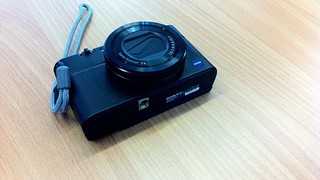
11 January 2022

Ritesh Raj Sarraf: ThinkPad AMD Debian

After a hiatus of 6 years, it was nice to be back with the ThinkPad. This blog post briefly touches upon my impressions with the current generation ThinkPad T14 Gen2 AMD variant.

ThinkPad T14 Gen2 AMD

Lenovo It took 8 weeks to get my hands on the machine. Given the pandemic, restrictions and uncertainities, not sure if I should call it an ontime delivery. This was a CTO - Customise-to-order; so was nice to get rid of things I really didn t care/use much. On the other side, it also meant I could save on some power. It also came comparatively cheaper overall.
  • No fingerprint reader
  • No Touch screen
There s still parts where Lenovo could improve. Or less frustate a customer. I don t understand why a company would provide a full customization option on their portal, while at the same time, not provide an explicit option to choose the make/model of the hardware one wants. Lenovo deliberately chooses to not show/specify which WiFi adapter one could choose. So, as I suspected, I ended up with a MEDIATEK Corp. Device 7961 wifi adapter.

AMD For the first time in my computing life, I m now using AMD at the core. I was pretty frustrated with annoying Intel Graphics bugs, so decided to take the plunge and give AMD/ATI a shot, knowing that the radeon driver does have decent support. So far, on the graphics side of things, I m glad that things look bright. The stock in-kernel radeon driver has been working perfect for my needs and I haven t had to tinker even once so far, in my 30 days of use. On the overall system performance, I have not done any benchmarks nor do I want to do. But wholly, the system performance is smooth.

Power/Thermal This is where things need more improvement on the AMD side. This AMD laptop terribly draws a lot of power in suspend mode. And it isn t just this machine, but also the previous T14 Gen1 which has similar problems. I m not sure if this is a generic ThinkPad problem, or an AMD specific problem. But coming from the Dell XPS 13 9370 Intel, this does draw a lot lot more power. So much, that I chose to use hibernation instead. Similarly, on the thermal side, this machine doesn t cool down well as compared the the Dell XPS Intel one. On an idle machine, its temperature are comparatively higher. Looking at powertop reports, it does show to consume an average of 10 watts power even while idle. I m hoping these are Linux ingeration issues and that Lenovo/AMD will improve things in the coming months. But given the user feedback on the ThinkPad T14 Gen1 thread, it may just be wishful thinking.

Linux The overall hardware support has been surprisingly decent. The MediaTek WiFi driver had some glitches but with Linux 5.15+, things have considerably improved. And I hope the trend will continue with forthcoming Linux releases. My previous device driver experience with MediaTek wasn t good but I took the plunge, considering that in the worst scenario I d have the option to swap the card. There s a lot of marketing about Linux + Intel. But I took a jibe with Linux + AMD. There are glitches but nothing so far that has been a dealbreaker. If anything, I wish Lenovo/AMD would seriously work on the power/thermal issues.

Migration Other than what s mentioned above, I haven t had any serious issues. I may have had some rare occassional hangs but they ve been so infrequent that I haven t spent time to investigate those. Upon receiving the machine, my biggest requirement was how to switch my current workstation from Dell XPS to Lenovo ThinkPad. I ve been using btrfs for some time now. And over the years, built my own practise on how to structure it. Things like, provisioning [sub]volumes, based on use cases is one thing I see. Like keeping separate subvols for: cache/temporary data, copy-on-write data , swap etc. I wish these things could be simplified; either on the btrfs tooling side or some different tool on top of it. Below is filtered list of subvols created over years, that were worthy of moving to the new machine.
rrs@priyasi:~$ cat btrfs-volume-layout 
ID 550 gen 19166 top level 5 path home/foo/.cache
ID 552 gen 1522688 top level 5 path home/rrs
ID 553 gen 1522688 top level 552 path home/rrs/.cache
ID 555 gen 1426323 top level 552 path home/rrs/rrs-home/Libvirt-Images
ID 618 gen 1522672 top level 5 path var/spool/news
ID 634 gen 1522670 top level 5 path var/tmp
ID 635 gen 1522688 top level 5 path var/log
ID 639 gen 1522226 top level 5 path var/cache
ID 992 gen 1522670 top level 5 path disk-tmp
ID 1018 gen 1522688 top level 552 path home/rrs/NoBackup
ID 1196 gen 1522671 top level 5 path etc
ID 23721 gen 775692 top level 5 path swap
18:54                      

btrfs send/receive This did come in handy but I sorely missed some feature. Maybe they aren t there, or are there and I didn t look close enough. Over the years, different attributes were set to different subvols. Over time I forget what feature was added where. But from a migration point of view, it d be nice to say, Take this volume and take it with all its attributes . I didn t find that functionality in send/receive. There s get/set-property which I noticed later but by then it was late. So some sort of tooling, ideally something like btrfs migrate or somesuch would be nicer. In the file system world, we already have nice tools to take care of similar scenarios. Like with rsync, I can request it to carry all file attributes. Also, iirc, send/receive works only on ro volumes. So there s more work one needs to do in:
  1. create ro vol
  2. send
  3. receive
  4. don t forget to set rw property
  5. And then somehow find out other properties set on each individual subvols and [re]apply the same on the destination
I wish this all be condensed into a sub-command. For my own sake, for this migration, the steps used were:
user@debian:~$ for volume in  sudo btrfs sub list /media/user/TOSHIBA/Migrate/   cut -d ' ' -f9   grep -v ROOTVOL   grep -v etc   grep -v btrbk ; do echo $volume; sud
o btrfs send /media/user/TOSHIBA/$volume   sudo btrfs receive /media/user/BTRFSROOT/ ; done            
Migrate/snapshot_disk-tmp
At subvol /media/user/TOSHIBA/Migrate/snapshot_disk-tmp
At subvol snapshot_disk-tmp
Migrate/snapshot-home_foo_.cache
At subvol /media/user/TOSHIBA/Migrate/snapshot-home_foo_.cache
At subvol snapshot-home_foo_.cache
Migrate/snapshot-home_rrs
At subvol /media/user/TOSHIBA/Migrate/snapshot-home_rrs
At subvol snapshot-home_rrs
Migrate/snapshot-home_rrs_.cache
At subvol /media/user/TOSHIBA/Migrate/snapshot-home_rrs_.cache
At subvol snapshot-home_rrs_.cache
ERROR: crc32 mismatch in command
Migrate/snapshot-home_rrs_rrs-home_Libvirt-Images
At subvol /media/user/TOSHIBA/Migrate/snapshot-home_rrs_rrs-home_Libvirt-Images
At subvol snapshot-home_rrs_rrs-home_Libvirt-Images
ERROR: crc32 mismatch in command
Migrate/snapshot-var_spool_news
At subvol /media/user/TOSHIBA/Migrate/snapshot-var_spool_news
At subvol snapshot-var_spool_news
Migrate/snapshot-var_lib_machines
At subvol /media/user/TOSHIBA/Migrate/snapshot-var_lib_machines
At subvol snapshot-var_lib_machines
Migrate/snapshot-var_lib_machines_DebianSidTemplate
..... snipped .....
And then, follow-up with:
user@debian:~$ for volume in  sudo btrfs sub list /media/user/BTRFSROOT/   cut -d ' ' -f9 ; do echo $volume; sudo btrfs property set -ts /media/user/BTRFSROOT/$volume ro false; done
ROOTVOL
ERROR: Could not open: No such file or directory
etc
snapshot_disk-tmp
snapshot-home_foo_.cache
snapshot-home_rrs
snapshot-var_spool_news
snapshot-var_lib_machines
snapshot-var_lib_machines_DebianSidTemplate
snapshot-var_lib_machines_DebSidArmhf
snapshot-var_lib_machines_DebianJessieTemplate
snapshot-var_tmp
snapshot-var_log
snapshot-var_cache
snapshot-disk-tmp
And then finally, renaming everything to match proper:
user@debian:/media/user/BTRFSROOT$ for x in snapshot*; do vol=$(echo $x   cut -d '-' -f2   sed -e "s _ / g"); echo $x $vol; sudo mv $x $vol; done
snapshot-var_lib_machines var/lib/machines
snapshot-var_lib_machines_Apertisv2020ospackTargetARMHF var/lib/machines/Apertisv2020ospackTargetARMHF
snapshot-var_lib_machines_Apertisv2021ospackTargetARM64 var/lib/machines/Apertisv2021ospackTargetARM64
snapshot-var_lib_machines_Apertisv2022dev3ospackTargetARMHF var/lib/machines/Apertisv2022dev3ospackTargetARMHF
snapshot-var_lib_machines_BusterArm64 var/lib/machines/BusterArm64
snapshot-var_lib_machines_DebianBusterTemplate var/lib/machines/DebianBusterTemplate
snapshot-var_lib_machines_DebianJessieTemplate var/lib/machines/DebianJessieTemplate
snapshot-var_lib_machines_DebianSidTemplate var/lib/machines/DebianSidTemplate
snapshot-var_lib_machines_DebianSidTemplate_var_lib_portables var/lib/machines/DebianSidTemplate/var/lib/portables
snapshot-var_lib_machines_DebSidArm64 var/lib/machines/DebSidArm64
snapshot-var_lib_machines_DebSidArmhf var/lib/machines/DebSidArmhf
snapshot-var_lib_machines_DebSidMips var/lib/machines/DebSidMips
snapshot-var_lib_machines_JenkinsApertis var/lib/machines/JenkinsApertis
snapshot-var_lib_machines_v2019 var/lib/machines/v2019
snapshot-var_lib_machines_v2019LinuxSupport var/lib/machines/v2019LinuxSupport
snapshot-var_lib_machines_v2020 var/lib/machines/v2020
snapshot-var_lib_machines_v2021dev3Slim var/lib/machines/v2021dev3Slim
snapshot-var_lib_machines_v2021dev3SlimTarget var/lib/machines/v2021dev3SlimTarget
snapshot-var_lib_machines_v2022dev2OspackMinimal var/lib/machines/v2022dev2OspackMinimal
snapshot-var_lib_portables var/lib/portables
snapshot-var_log var/log
snapshot-var_spool_news var/spool/news
snapshot-var_tmp var/tmp

snapper Entirely independent of this, but indirectly related. I use snapper as my snapshotting tool. It worked perfect on my previous machine. While everything got migrated, the only thing that fell apart was snapper. It just wouldn t start/run proper. Funny thing is that I just removed the snapper configs and reinitialized with the exact same config again, and voila snapper was happy.

Conclusion That was pretty much it. With the above and then also migrating /boot and then just chroot to install the boot loader. At some time, I d like to explore other boot options but given that that is such a non-essential task, it is low on the list. The good part was that I booted into my new machine with my exact workstation setup as it was. All the way to the user cache and the desktop session. So it was nice on that part. But I surely think there s room for a better migration experience here. If not directly as btrfs migrate, then maybe as an independent tool. The problem is that such a tool is going to be used once in years, so I didn t find the motivation to write one. But this surely would be a good use case for the distribution vendors.

9 January 2022

Dirk Eddelbuettel: Rblpapi 0.3.13: Some Fixes and Documentation

A new version, now at 0.3.13, of the Rblpapi package just arrived at CRAN. Rblpapi provides a direct interface between R and the Bloomberg Terminal via the C++ API provided by Bloomberg (but note that a valid Bloomberg license and installation is required). This is the thirteenth release since the package first appeared on CRAN in 2016. It comprises the PRs from three different contributors (with special thanks once again to Michael Kerber), and extends test and documentation, and extends two function interfaces to control explicitly whether returned lists of length one should be simplified. The list of changes follow below.

Changes in Rblpapi version 0.3.13 (2022-01-09)
  • Add a test for bds (Michael Kerber in #352)
  • Add simplify argument (and option) to bdh and bds (Dirk in #354 closing #353, #351)
  • Improve documentation for bsearch (John in #357 closing #356)

Courtesy of my CRANberries, there is also a diffstat report for the this release. As always, more detailed information is on the Rblpapi page. Questions, comments etc should go to the issue tickets system at the GitHub repo. If you like this or other open-source work I do, you can now sponsor me at GitHub.

This post by Dirk Eddelbuettel originated on his Thinking inside the box blog. Please report excessive re-aggregation in third-party for-profit settings.

8 January 2022

Jonathan Dowland: 2021 in Fiction

Cover for *This is How You Lose the Time War*
Cover for *Robot*
Cover for *The Glass Hotel*
Following on from last year's round-up of my reading, here's a look at the fiction I enjoyed in 2021. I managed to read 42 books in 2021, up from 31 last year. That's partly to do with buying an ereader: 33/36% of my reading (by pages/by books) was ebooks. I think this demonstrates that ebooks have mostly complemented paper books for me, rather than replacing them. My book of the year (although it was published in 2019) was This is How You Lose the Time War by Amal El-Mohtar and Max Gladstone: A short epistolary love story between warring time travellers and quite unlike anything else I've read for a long time. Other notables were The Glass Hotel by Emily St John Mandel and Robot by Adam Wi niewski-Snerg. The biggest disappointment for me was The Ministry for the Future by Kim Stanley Robinson (KSR), which I haven't even finished. I love KSRs writing: I've written about him many times on this blog, at least in 2002, 2006 and 2009, I think I've read every other novel he's published and most of his short stories. But this one was too much of something for me. He's described this novel a the end-point of a particular journey and approach to writing he's taken, which I felt relieved to learn, assuming he writes any more novels (and I really hope that he does) they will likely be in a different "mode". My "new author discovery" for 2021 was Chris Beckett: I tore through Two Tribes and America City before promptly buying all his other work. He fits roughly into the same bracket as Adam Roberts and Christopher Priest, two of my other favourite authors. 5 of the books I read (12%) were from my "backlog" of already-purchased physical books. I'd like to try and reduce my Backlog further so I hope to push this figure up next year. I made a small effort to read more diverse authors this year. 24% of the books I read (by book count and page count) were by women. 15% by page count were (loosely) BAME (19% by book count). Again I'd like to increase these numbers modestly in 2022. Unlike 2020, I didn't complete any short story collections in 2021! This is partly because there was only one issue of Interzone published in all of 2021, a double-issue which I haven't yet finished. This is probably a sad date point in terms of Interzone's continued existence, but it's not dead yet.

3 January 2022

Paul Wise: FLOSS Activities December 2021

Focus This month I didn't have any particular focus. I just worked on issues in my info bubble.

Changes

Issues

Review
  • Spam: reported 166 Debian mailing list posts
  • Patches: reviewed libpst upstream patches
  • Debian packages: sponsored nsis, memtest86+
  • Debian wiki: RecentChanges for the month
  • Debian BTS usertags: changes for the month
  • Debian screenshots:

Administration
  • libpst: setup GitHub presence, migrate from hg to git, requested details from bug reporters
  • plac: cleaned up git repo anomalies
  • Debian BTS: unarchive/reopen/triage bugs for reintroduced packages: stardict, node-carto
  • Debian wiki: unblock IP addresses, approve accounts

Communication
  • Respond to queries from Debian users and contributors on the mailing lists and IRC

Sponsors The purple-discord, python-plac, sptag, smart-open, libpst, memtest86+, oci-python-sdk work was sponsored. All other work was done on a volunteer basis.

21 December 2021

Jonathan Dowland: Vim plugins by Tim Pope

I've been using Vim as my main text editor for 18 years, but for most of that time I've been using something very close to the default configuration: my vimrc contained not much more than preferences for indentation and how to visually indicate white space characters like tabs. Last but not least, I've used a single colour scheme for most of that time: Zenburn. In 20151 I started exploring a few Vim plugins2. To manage them, I started by choosing a plugin manager, Pathogen3. Recently I noticed that the plugin's author, Tim Pope, now recommends new users just use Vim's built in package management instead. I got curious about Tim Pope's other plugins: He has written a great deal of them. Given I've spent most of two decades with a barely-configured Vim, you can imagine that I don't want to radically alter the way it works, and so I did not expect to want to use a lot of plugins. The utility of a plugin would have to outweight the disadvantages of coming to rely on one. But when browsing Tim's plugins, time and time again, I found myself reacting to description with How did I manage without this?. And so, I've ended up installing all of the following, all by Tim Pope:

  1. I had to look this up, probably because I started at redhat
  2. I have opinions about Plugins, what supporting them means architecturally for your application, the interaction with Open Source, and stuff like that, perhaps for another post.
  3. To try out Vim plugins the first thing you need to figure out is how to manage them (install, activate, configure). Vim grew a Plugin manager in version 8 (2016). Prior to that, people wrote third-party ones. For this reason there is a frankly absurd number of Plugin managers, including: Vim's own; Vim Plug; Vundle; Dein; Volt and Pathogen.

17 December 2021

Jonathan Dowland: ereader

Kobo Libra H2O e-reader Kobo Libra H2O e-reader
This year I finally bought an e-reader: a "Kobo Libra H2O": a 7" 300ppi screen with an adjustable colour temperature front light, waterproof, physical buttons on a "margin"/spine which pushes the case dimensions up to 8", which is sadly a little too big for most jeans pockets. In fact this is the second time I've bought one. Sarah and I bought a pair of Amazon Kindle Paperwhite (2nd generation) readers as Honeymoon gifts for each other in 2013. Sarah took to hers, but after giving mine a try and reading a couple of books on it I ended up giving it to my Father-in-law. The main problem I had with it was the colour temperature of the backlight: it was too blue and "clinical". It's interesting to me to realise how the environment that I read in can become indelibly linked to the memory of that book. One book in particular that I read on the Kindle was James Smythe's "The Machine", a modern twist on a classic horror story. This was perfectly complemented by the somewhat pallid, sick colour of the backlight, especially on its lowest brightness settings. It didn't go so well with other stories.
Broken Libra H2O e-reader Broken Libra H2O e-reader
I got on much better with the Libra H2O. For me, e-books and e-reading has not replaced traditional paper books, but complemented them, giving me an opportunity to read in contexts and situations where I couldn't manage with a real book (such as in the pitch black, lying on my back with a toddler on my chest). I feel that being able to read more often thanks to the e-reader has spurred me on to read even paper books more frequently as well. Unfortunately the screen broke, about 10 months after I bought it! After a bit of soul-searching on what to do about replacing it, and briefly considering the latest Amazon Paperwhite (which now has a 300ppi display and adjustable-colour temperature front-light). This looks like a very nice e-reader: no physical buttons which is a bit of a shame but narrower without the margin/spine of the Kobo, so possibly more pocket-friendly. On the other hand, I really felt that I wanted to avoid giving Amazon the money, for a whole variety of reasons.
Libra 2 e-reader. Spot the difference? Libra 2 e-reader. Spot the difference?
So I instead settled on the "Kobo Libra 2", which is a slight refresh of the Libra H2O, but almost identical. I'm going to pair it with a nice cover for when its not in use and hopefully it will last longer than its predecessor. My current favourite feature on the Libra 2, that I don't remember on the H2O and I'm fairly sure doesn't exist on Kindles is it supports a "night mode", which is effectively a reverse video, white-on-black mode. This is fantastic for keeping the light levels down at night. I was already using the backlight at about 2% brightness and occasionally found even that too bright.

14 December 2021

Timo Jyrinki: Working and warming up cats

How to disable internal keyboard/touchpad when a cat arrives
I m using an external keyboard (1) and mouse (2), but the laptop lid is usually still open for better cooling. That means the internal keyboard (3) and touchpad (4) made of comfortable materials are open to be used by a cat searching for warmth (7), in the obvious every time case that a normal non-heated nest (6) is not enough.
The problem is, everything goes chaotic at that point in the default configuration. The solution is to have quick shortcuts in my Dash to Dock (8) to both disable (10) and enable (9) keyboard and touchpad at a very rapid pace.It is to be noted that I m not disabling the touch screen (5) by default, because most of the time the cat is not leaning on it there is also the added benefit that if one forgets about the internal keyboard and touchpad disabling and detaches the laptop from the USB-C monitor (11), there s the possibility of using the touch screen and on-screen keyboard to type in the password and tap on the keyboard/touchpad enabling shortcut button again. If also touch screen was disabled, the only way would be to go back to an external keyboard or reboot.So here are the scripts. First, the disabling script (pardon my copy-paste use of certain string manipulation tools):
dconf write /org/gnome/desktop/peripherals/touchpad/send-events "'disabled'"
sudo killall evtest
sudo evtest --grab $(sudo libinput list-devices grep -A 1 "AT Translated Set 2 keyboard" tail -n 1 sed 's/.*\/dev/\/dev/') &
sudo evtest --grab $(sudo libinput list-devices grep -A 1 "Dell WMI" tail -n 1 sed 's/.*\/dev/\/dev/') &
sudo evtest --grab $(sudo libinput list-devices grep -A 1 "Power" grep Kernel tail -n 1 sed 's/.*\/dev/\/dev/') &
sudo evtest --grab $(sudo libinput list-devices grep -A 1 "Power" grep Kernel head -n 1 sed 's/.*\/dev/\/dev/') &
sudo evtest --grab $(sudo libinput list-devices grep -A 1 "Sleep" grep Kernel tail -n 1 sed 's/.*\/dev/\/dev/') &
sudo evtest --grab $(sudo libinput list-devices grep -A 1 "HID" grep Kernel head -n 1 sed 's/.*\/dev/\/dev/') &
sudo evtest --grab $(sudo libinput list-devices grep -A 1 "HID" tail -n 1 sed 's/.*\/dev/\/dev/') &
#sudo evtest --grab $(sudo libinput list-devices grep -A 1 "ELAN" tail -n 1 sed 's/.*\/dev/\/dev/') # Touch screen
And the associated ~/.local/share/applications/disable-internal-input.desktop:
[Desktop Entry]
Version=1.0
Name=Disable internal input
GenericName=Disable internal input
Exec=/bin/bash -c /home/timo/Asiakirjat/helpers/disable-internal-input.sh
Icon=yast-keyboard
Type=Application
Terminal=false
Categories=Utility;Development;
Here s the enabling script:
dconf write /org/gnome/desktop/peripherals/touchpad/send-events "'enabled'"
sudo killall evtest
and the desktop file:
[Desktop Entry]
Version=1.0
Name=Enable internal input
GenericName=Enable internal input
Exec=/bin/bash -c /home/timo/Asiakirjat/helpers/enable-internal-input.sh
Icon=/home/timo/.local/share/icons/hicolor/scalable/apps/yast-keyboard-enable.png
Type=Application
Terminal=false
Categories=Utility;Development;
With these, if I sense a cat or am just proactive enough, I press Super+9. If I m about to detach my laptop from the monitor, I press Super+8. If I forget the latter (usually this is the case) and haven t yet locked the screen, I just tap the enabling icon on the touch screen.

Next.

Previous.