Search Results: "matthew"

1 July 2011

Matthew Palmer: Metablogging

I ve taken the plunge, and converted my blog from a venerable but largely unmaintain(ed able) blosxom setup that I ve had since 2005 (OMG!) into a new and shiny Jekyll-backed system. The main benefits are that I m more comfortable hacking away at Jekyll (being written in Ruby), and my blog post submission no longer requires me to e-mail my blog posts to myself to put them up (that was just an artifact of how I set it up all those years ago, but it had worked so I wasn t willing to change it just for the sake of it). Jekyll s superior (for me) hackability has reaped dividends already I ve put together a home-grown comments system, which fulfils my primary requirements of being as close to completely statically-generated as it s possible to be (about 10 lines of PHP is the only dynamic content), and doesn t involve JavaScript or putting my blog comments in the cloud .

28 June 2011

Matthew Palmer: Water Saving Shower Heads

In a series of experiments performed over the past few days, I've determined that the actual mechanism by which "water saving" shower heads work is not, as you might naively imagine, reducing the amount of water dispersed per unit time. Instead, they make showering such an unpleasant experience that you perform amazing feats of speed washing so you can get out as quickly as possible. In extreme cases, I can imagine you would save even more water by just not washing at all.

Matthew Palmer: SSL Session Caching (in nginx)

Given that I was responsible for putting together the system architecture for Github when they moved away from their previous services provider to Anchor Systems, I keep an eye on what's going on there even though I've gotten out of professional IT. Recently(ish), Ryan Tomayko blogged about some experiments in using Amazon CloudFront as a CDN for static assets. While discussing as-yet unsolved performance issues, he quoted a tweet from Shopify's CEO (who I would have thought would have known better):
Protip to make SSL fast: terminate in your load balancer, that makes SSL session cookies actually work.
No, no, NO -- a million times NOOOOOO! Load balancers are, by their very nature, performance chokepoints. You can't horizontally scale your load balancer, because if you do (by, say, putting another load balancer in front of it -- don't laugh, I've seen it done) you've just re-introduced all the same problems that putting SSL on the load balancer was supposed to accomplish (that is, getting SSL session caching to work). The only thing you accomplish by putting your SSL sessions onto the load balancer is bring the moment your load balancer melts down through excessive CPU usage that much closer. I dunno, maybe Shopify doesn't actually do that much traffic or something, but I certainly wouldn't be signing up for that headache if it were my infrastructure. (Sidenote: yes, I know that you can get "SSL hardware accelerators", that put the basic crypto operations into dedicated silicon, but they're rarely cheap, and you can't horizontally scale those, either. They're effectively a specialised and outrageously expensive form of "scaling by bigger hardware" -- which is a valid method of scaling, but one with fairly terminal limitations that certainly wouldn't make it practical for Github). The problem you're trying to solve by centralising SSL operations is that SSL includes a mechanism whereby a client making a new TCP connection can say "here's the crypto details from last time I connected to you" and the server can just pull out all of the per-connection data that would otherwise take a long time (several TCP round trips and a smallish chunk of CPU time) to setup. This can make SSL connections a lot snappier (in Ryan's opinion, "We spend roughly as much time handshaking as we do generating the average dynamic request."), so they're a definite win if you can do it (and yes, you can do it). Webservers don't typically do this caching by default, but setting up a simple SSL session cache for a single nginx or Apache webserver is pretty trivial. Testing it is simple, too: just install gnutls-bin and run:
	gnutls-cli -V -r HOSTNAME  grep 'Session ID'
If all three Session IDs are the same, then you've got SSL session caching running. (If you're wondering why I'm using gnutls-cli rather than openssl s_client, it's because openssl is living in the pre-IPv6 dark ages, and I've got IPv6-only services running I wanted to test). So that's great for your little single-server hosting setup, but per-machine caches aren't much use when you're running behind a load balancer, Github style, because each SSL-enabled TCP connection can very well end up on a different server, and a per-machine cache won't help you very much. (If you think the answer to this problem is "session affinity", you're setting yourself up for a whole other world of pain and suffering.) Here's the kicker, though -- the SSL session is just a small, opaque chunk of bytes (OpenSSL appears to store it internally as an ASN.1 string, but that's an irrelevant implementation detail). An SSL session cache is just a mapping of the SSL session ID (a string) to the SSL session data (another string). We know how to do "shared key-value caches" -- we have the technology. There won't be too many large-scale sites out there that aren't using memcached (or something practically equivalent). So, rather than stuff around trying to run a load balancer with enough grunt to handle all your SSL communication for all time, you can continue to horizontally scale the whole site with as many backend webservers as you need. All that's needed is to teach your SSL-using server to talk to a shared key-value cache. Far be it for me to claim any sort of originality in this idea, though -- patches for Apache's mod_ssl to do this have been floating around for a while, and according to the release notes, the 2.4 series will have it all built-in. However, Github uses nginx, to great effect, and nobody's done the work to put this feature into nginx (that I could find, anyway). Until now. I present, for the edification of all, a series of patches to nginx 0.8.x to provide memcached-enabled SSL session caching. Porting them to other versions of nginx hopefully won't be too arduous, and if you ask nicely I might give it a shot. If you don't use memcached (gasp!), my work should at least be a template to allow you to hook into whatever system you prefer. Sharding the memcached calls wouldn't be hard either, but I'm not a huge fan of that when other options are available. I had originally hoped to be able to say "it works at Github!" as a testimonial, but for some reason it hasn't been deployed there yet (go forth and pester!), so instead I'm just releasing it out there for people to try out on a "well, I don't know that it doesn't work" basis. If it breaks anything, it's not my fault; feel free to supply patches if you want to fix anything I've missed.

27 June 2011

Matthew Palmer: SSL Session Caching (in nginx)

Given that I was responsible for putting together the system architecture for Github when they moved away from their previous services provider to Anchor Systems, I keep an eye on what's going on there even though I've gotten out of professional IT. Recently(ish), Ryan Tomayko blogged about some experiments in using Amazon CloudFront as a CDN for static assets. While discussing as-yet unsolved performance issues, he quoted a tweet from Shopify's CEO (who I would have thought would have known better):
Protip to make SSL fast: terminate in your load balancer, that makes SSL session cookies actually work.
No, no, NO -- a million times NOOOOOO! Load balancers are, by their very nature, performance chokepoints. You can't horizontally scale your load balancer, because if you do (by, say, putting another load balancer in front of it -- don't laugh, I've seen it done) you've just re-introduced all the same problems that putting SSL on the load balancer was supposed to accomplish (that is, getting SSL session caching to work). The only thing you accomplish by putting your SSL sessions onto the load balancer is bring the moment your load balancer melts down through excessive CPU usage that much closer. I dunno, maybe Shopify doesn't actually do that much traffic or something, but I certainly wouldn't be signing up for that headache if it were my infrastructure. (Sidenote: yes, I know that you can get "SSL hardware accelerators", that put the basic crypto operations into dedicated silicon, but they're rarely cheap, and you can't horizontally scale those, either. They're effectively a specialised and outrageously expensive form of "scaling by bigger hardware" -- which is a valid method of scaling, but one with fairly terminal limitations that certainly wouldn't make it practical for Github). The problem you're trying to solve by centralising SSL operations is that SSL includes a mechanism whereby a client making a new TCP connection can say "here's the crypto details from last time I connected to you" and the server can just pull out all of the per-connection data that would otherwise take a long time (several TCP round trips and a smallish chunk of CPU time) to setup. This can make SSL connections a lot snappier (in Ryan's opinion, "We spend roughly as much time handshaking as we do generating the average dynamic request."), so they're a definite win if you can do it (and yes, you can do it). Webservers don't typically do this caching by default, but setting up a simple SSL session cache for a single nginx or Apache webserver is pretty trivial. Testing it is simple, too: just install gnutls-bin and run:
	gnutls-cli -V -r HOSTNAME  grep 'Session ID'
If all three Session IDs are the same, then you've got SSL session caching running. (If you're wondering why I'm using gnutls-cli rather than openssl s_client, it's because openssl is living in the pre-IPv6 dark ages, and I've got IPv6-only services running I wanted to test). So that's great for your little single-server hosting setup, but per-machine caches aren't much use when you're running behind a load balancer, Github style, because each SSL-enabled TCP connection can very well end up on a different server, and a per-machine cache won't help you very much. (If you think the answer to this problem is "session affinity", you're setting yourself up for a whole other world of pain and suffering.) Here's the kicker, though -- the SSL session is just a small, opaque chunk of bytes (OpenSSL appears to store it internally as an ASN.1 string, but that's an irrelevant implementation detail). An SSL session cache is just a mapping of the SSL session ID (a string) to the SSL session data (another string). We know how to do "shared key-value caches" -- we have the technology. There won't be too many large-scale sites out there that aren't using memcached (or something practically equivalent). So, rather than stuff around trying to run a load balancer with enough grunt to handle all your SSL communication for all time, you can continue to horizontally scale the whole site with as many backend webservers as you need. All that's needed is to teach your SSL-using server to talk to a shared key-value cache. Far be it for me to claim any sort of originality in this idea, though -- patches for Apache's mod_ssl to do this have been floating around for a while, and according to the release notes, the 2.4 series will have it all built-in. However, Github uses nginx, to great effect, and nobody's done the work to put this feature into nginx (that I could find, anyway). Until now. I present, for the edification of all, a series of patches to nginx 0.8.x to provide memcached-enabled SSL session caching. Porting them to other versions of nginx hopefully won't be too arduous, and if you ask nicely I might give it a shot. If you don't use memcached (gasp!), my work should at least be a template to allow you to hook into whatever system you prefer. Sharding the memcached calls wouldn't be hard either, but I'm not a huge fan of that when other options are available. I had originally hoped to be able to say "it works at Github!" as a testimonial, but for some reason it hasn't been deployed there yet (go forth and pester!), so instead I'm just releasing it out there for people to try out on a "well, I don't know that it doesn't work" basis. If it breaks anything, it's not my fault; feel free to supply patches if you want to fix anything I've missed.

13 June 2011

Raphaël Hertzog: Why you should always have a network connection when installing Debian

This is a simple tip but an important one: when you re installing Debian, take the time required to ensure the machine is connected to the Internet with a wired connection. If you have DHCP available, the debian-installer will use it to configure the network. Why not use the wireless connection? Because debian-installer in Squeeze doesn t support WPA encryption, but only WEP. So if you re using WPA, picking the wireless connection will lead to no working network during the installation and this is to be avoided. If you re still using WEP, you can go ahead of course. If you only have a wireless connection with WPA, your might want to help the debian-installer team and add the required support. Matthew Palmer did some work on it a few months ago (see this mail and his branch in the netcfg git repository) but he resigned from the d-i team in the mean time. So WPA support is still not available in the wheezy debian-installer. Why is the network so important?
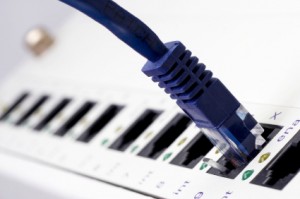

  1. The tasks that you select during the installation process might suggest installation of supplementary packages that are not available on your installation disc. If you install without network, the resulting system might differ from the expected one since it will be missing some packages that are available in the Debian repositories but not on your installation disc.
  2. Your installation media might be old and there are security updates that have been published. If you do your initial installation with network, the security updates will be installed before the reboot and thus before the services are exposed over the network.
  3. If you re not installing a desktop with network-manager (Debian s default GNOME Desktop provides it), the initial network configuration is important since this configuration is kept for the future. And you surely want network connectivity on your machine, don t you?
  4. Without network, APT s sources.list will not be properly configured to include an HTTP mirror of your country. And really, I prefer when apt-get install can work without the initial installation disc.
If you want to read more articles like this one, click here to subscribe to my free newsletter. You can also follow me on Identi.ca, Twitter and Facebook.

22 comments Liked this article? Click here. My blog is Flattr-enabled.

9 June 2011

Matthew Garrett: IPv6 routers

I have a WRT-54G. I've had it for some years. It's run a bunch of different firmware variants over that time, but they've all had something in common. There's no way to configure IPv6 without editing text files, installing packages and punching yourself in the face repeatedly. Adam blogged about doing so today, and I suspect he may be in need of some reconstructive surgery now.

I spent yesterday looking at disassembled ACPI tables and working out the sequence of commands the firmware was sending to the hard drive. I'm planning on spending tomorrow writing x86 assembler to parse EFI memory maps. I spend a lot of time caring about stupidly awkward implementation details worked out from staring at binary dumps. The last thing I want to do is have to spend more than three minutes working out how to get IPv6 working on my home network because that cuts into the time I can spend drinking to forget.

Thankfully this is the future and punching yourself in the face is now an optional extra rather than bundled. Recent versions of Tomato USB (ie, newer than actually released) have a nice web UI for this. I registered with Tunnelbroker.net, got a tunnel, copied the prefix and endpoint addresses into the UI, hit save and ever since then NetworkManager has given me a routable IPv6 address. It's like the future.

Because I'm lazy I ended up getting an unofficial build from here. The std built doesn't seem to include IPv6, so I grabbed the miniipv6 one. The cheat-sheet for identifying builds is here. And I didn't edit a single text file. Excellent.

( Comments Comment on this)

7 June 2011

Matthew Garrett: A use for EFI

Anyone who's been following anything I've written lately may be under the impression that I dislike EFI. They'd be entirely correct. It's an awful thing and I've lost far too much of my life to it. It complicates the process of booting for no real benefit to the OS. The only real advantage we've seen so far is that we can configure boot devices in a vaguely vendor-neutral manner without having to care about BIOS drive numbers. Woo.

But there is something else EFI gives us. We finally have more than 256 bytes of nvram available to us as standard. Enough nvram, in fact, for us to reasonably store crash output. Progress!

This isn't a novel concept. The UEFI spec provides for a specially segregated are of nvram for hardware error reports. This is lovely and not overly helpful for us, because they're supposed to be in a well-defined format that doesn't leave much scope for "I found a null pointer where I would really have preferred there not be one" followed by a pile of text, especially if the firmware's supposed to do something with it. Also, the record format has lots of metadata that I really don't care about. Apple have also been using EFI for this, creating a special variable that stores the crash data and letting them get away with just telling the user to turn their computer off and then turn it back on again.

EFI's not the only way this could be done, either. ACPI specifies something called the ERST, or Error Record Serialization Table. The OS can stick errors in here and then they can be retrieved later. Excellent! Except ERST is currently usually only present on high-end servers. But when ERST support was added to Linux, a generic interface called pstore went in as well.

Pstore's very simple. It's a virtual filesystem that has platform-specific plugins. The platform driver (such as ERST) registers with pstore and the ERST errors then get exposed as files in pstore. Deleting the files removes the records. pstore also registers with kmsg_dump, so when an oops happens the kernel output gets dumped back into a series of records. I'd been playing with pstore but really wanted something a little more convenient than an 8-socket server to test it with, so ended up writing a pstore backend that uses EFI variables. And now whenever I crash the kernel, pstore gives me a backtrace without me having to take photographs of the screen. Progress.

Patches are here. I should probably apologise to Seiji Aguchi, who was working on the same problem and posted a preliminary patch for some feedback last month. I replied to the thread without ever reading the patch and then promptly forgot about it, leading to me writing it all from scratch last week. Oops.

(There's an easter egg in the patchset. First person to find it doesn't win a prize. Sorry.)

( Comments Comment on this)

31 May 2011

Matthew Garrett: Rebooting

You'd think it'd be easy to reboot a PC, wouldn't you? But then you'd also think that it'd be straightforward to convince people that at least making some effort to be nice to each other would be a mutually beneficial proposal, and look how well that's worked for us.

Linux has a bunch of different ways to reset an x86. Some of them are 32-bit only and so I'm just going to ignore them because honestly just what are you doing with your life. Also, they're horrible. So, that leaves us with five of them.

Now, I'll admit that this all sounds pretty depressing. But people clearly sell computers with the expectation that they'll reboot correctly, so what's going on here?

A while back I did some tests with Windows running on top of qemu. This is a great way to evaluate OS behaviour, because you've got complete control of what's handed to the OS and what the OS tries to do to the hardware. And what I discovered was a little surprising. In the absence of an ACPI reboot vector, Windows will hit the keyboard controller, wait a while, hit it again and then give up. If an ACPI reboot vector is present, windows will poke it, try the keyboard controller, poke the ACPI vector again and try the keyboard controller one more time.

This turns out to be important. The first thing it means is that it generates two writes to the ACPI reboot vector. The second is that it leaves a gap between them while it's fiddling with the keyboard controller. And, shockingly, it turns out that on most systems the ACPI reboot vector points at 0xcf9 in system IO space. Even though most implementations nominally require two different values be written, it seems that this isn't a strict requirement and the ACPI method works.

3.0 will ship with this behaviour by default. It makes various machines work (some Apples, for instance), improves things on some others (some Thinkpads seem to sit around for extended periods of time otherwise) and hopefully avoids the need to add any more machine-specific quirks to the reboot code. There's still some divergence between us and Windows (mostly in how often we write to the keyboard controller), which can be cleaned up if it turns out to make a difference anywhere.

Now. Back to EFI bugs.

( Comments Comment on this)

25 May 2011

Matthew Garrett: Trials and tribulations with EFI

I wrote about some EFI implementation issues I'd seen on Macs a while back. Shortly afterwards we started seeing approximately identical bugs on some Intel reference platforms, and fixing it actually became more of a priority.

The fundamental problem is the same. We take the EFI memory map, identify the virtual addresses of the regions that will be required for runtime (mapping them into virtual address space if needed) and then call the firmware's SetVirtualAddressMap() implementation in order to let the firmware convert all its pointers. Sadly it seems that some firmware implementations call into sections of boot services code to do this, which is unfortunate because we've already taken that back to use as RAM. So, given that this is clearly against the spec, how does it ever work?

The tediously dull version is that Linux typically calls SetVirtualAddressMap() in the kernel, and everyone else does it in their bootloaders. The bootloader hasn't set up NX bits or anything, so it just happens to work there. We could just do it in the bootloader in Linux, but that makes doing things like kernel address space randomisation trickier, so it's not the favoured approach. So, instead, we can probably just reserve those ranges until after we've switched to virtual mode, and make sure the pages are executable. This ought to land in 2.6.40, or whatever it ends up being called.

(The alternative approach, of just never transitioning to physical mode, turns out to mysteriously fail on various machines. Calls to SetVariable() just give errors. We just don't know)

That still leaves the problem of SetVariable() on the test Mac trying to access a random address. That one turned out to be easier. There's 2MB of flash at the top of physical address space, and this was being presented as being broken into four separate EFI regions. While physically contiguous, Linux was mapping these to discontiguous virtual addresses. Apple's firmware appeared to assume that a pointer into one region could just be incremented into another. So because it's still easier to change the kernel than change Apple, 2.6.39 merges these regions to ensure they're contiguous.

Remaining problems include some machines seemingly not booting if they have 4GB of RAM or more and this Apple failing to communicate with its panel over the eDP auxchannel. Anyone got any idea how to dump the bios compatibility module out of a running EFI session?

( Comments Comment on this)

18 May 2011

Matthew Garrett: Macs and Linux

Firstly: If you want to buy a computer to run Linux on, don't buy a Mac.
Secondly: If you have a Mac and want to run Linux on it, the easiest approach is going to be to run it under virtualisation. Virtualbox is free, and worth every bit of what you're paying.
Thirdly: If you're going to boot Linux on bare-metal Apple hardware, boot it via BIOS emulation.
Fourthly: If you're going to boot Linux on bare-metal Apple hardware via EFI, and it doesn't work, write a patch. Apple's firmware has a number of quirks that I'm aware of and we're working through them, but anyone filing bugs against Apple hardware on EFI right now is likely to be ignored for a significant period of time until there's an expectation that it'll actually work. Maybe in six months or so.

( Comments Comment on this)

17 May 2011

Matthew Garrett: Copyright assignment

The fundamental problem with projects requiring copyright assignment is that there's an economic cost involved in me letting a competitor sell a closed version of my code without letting me sell a closed version of their code. If this cost is perceived as larger than the cost of maintaining my code outside the upstream tree, it's cheaper for me to fork than it is to sign over my rights. So if I have my own engineering resources, what rational benefit is there to me assigning my copyright?

( Comments Comment on this)

12 May 2011

Matthew Garrett: LightDM, or: an examination of a misunderstanding of the problem

LightDM's a from-scratch implementation of an X display manager, ie the piece of software that handles remote X connections, starts any local X servers, provides a login screen and kicks off the initial user session. It's split into a nominally desktop-agnostic core (built directly on xcb and glib) and greeters, the idea being that it's straightforward to implement an environment-specific greeter that integrates nicely with your desktop session. It's about 6500 lines of code in the core, 3500 lines of code in the gtk bindings to the core and about 1000 in the sample gtk greeter, for a total of about 11,000 lines of code for a full implementation. This compares to getting on for 60,000 in gdm. Ubuntu plan to switch to LightDM in their next release (11.10).

This is a ridiculous idea.

To a first approximation, when someone says "Lightweight" what they mean is "I don't understand the problems that the alternative solves". People see gtk and think "Gosh, that's kind of big for a toolkit library. I'll write my own". And at some point they have to write a file dialog. And then they need to implement support for handling remote filesystems. And then they need to know whether the system has a functioning network connection or not, and so they end up querying state from Network Manager. And then they suddenly have a library that's getting on for the size of gtk, has about the same level of complexity and has had much less testing because why would you want to use a lightweight toolkit that either does nothing or is 90% of the size of the alternative and crashes all the time.

Adding functionality means that code gets larger. Given two codebases that are of significantly different sizes, the two possible conclusions are either that (a) the smaller one is massively more competently written than the larger one, or (b) the smaller one does less. The gdm authors have never struck me as incompetent, even if some people may disagree with some of their design decisions, and the LightDM authors don't seem to have argued on that basis either. So the obvious conclusion is that LightDM does less.

And, indeed, LightDM does less. Part of this is by design - as the proposal to the Gnome development list shows, one of the key advantages of LightDM is claimed as it not starting a Gnome session. And from that statement alone, we can already see that there's been a massive failure of understanding the complexity of the problem.

Let's go back to the comparisons of code size. LightDM's simple GTK greeter is about 1000 lines of code. gdm's greeter is almost 20,000. Some of this is arbitrary shiny stuff like the slidy effects that occur, but a lot of it is additional functionality. For example, some of it is devoted to handling the interface with AccountsService so gdm can automatically update when users are created or deleted. Some of it is providing UI for accessibility functionality. Some of it is drawing a clock, which I'll admit may be a touch gratuitous.

But if your argument is that your software is better because it's doing less, you should be able to ensure that you can demonstrate that the differences aren't important. And the differences here are important. For example, one of the reasons gdm starts a local gnome session is that it wants gnome-power-manager to be there to handle power policy. Closing the lid of my laptop should suspend the system regardless of whether it's logged in or not. LightDM takes a different approach. Because there's no session, it has to take care of this kind of thing itself. So the backend daemon code speaks to upower directly, and the greeters ask the daemon to implement their policy decisions.

This is pretty obviously miserable. Now you've got two sets of policy - one at the login screen, and one in your session. How do I ensure they're consistent? The only sane solution is to ignore the functionality the backend provides and have my greeter run gnome-power-manager. And now how about accessibility preferences? Again, if I want to have the same selection of policy, I need to run the same code. So you end up with a greeter that's about as complex and large as the gdm one, and unused functionality in the backend. Lighter weight through code duplication. We have always been at war with Eurasia.

The entirety of LightDM's design is based on a false premise - that you can move a large set of common greeter functionality into a daemon and just leave UI presentation up to the greeter code. And if you believe that, then yes, you can absolutely implement a greeter in 1000 lines of code. It'll behave differently to your desktop - the range of policy you can implement will be limited to what the daemon provides, even if your desktop environment has a different range of features. It'll have worse accessibility for much the same reason. And eventually you'll end up with a daemon that's absolutely huge in order to attempt to provide the superset of functionality that each different desktop makes use of.

The only real problem LightDM solves is that it makes it easier to write custom greeters, and if you're really seeking to differentiate your project based on your login screen then maybe your priorities are a little out of line. I'm sure that Ubuntu will release with a beautiful 3D greeter that has a wonderful transition to the desktop. It's just a shame that it won't do any of the useful things that the existing implementations already do.

And if you think that when LightDM finally has the full feature set of gdm, kdm and lxdm it'll still be fewer lines of code and take less memory - I hear the BSD kernel is lighter weight than Linux. Have fun with it.

( Comments Comment on this)

Matthew Palmer: How to Frustrate Your Train Driver

  1. Find a shift where the meal break is later than average. These are especially common in the afternoon, where there's a lot of trains to drive during the peak to get everyone home. Make sure to execute your fiendish plan on the last run before the meal break.
  2. Buy a big helping of hot chips, making sure to load up on the delicious condiments like malt vinegar.
  3. Sit right behind the driver's cab with your deep fried basket of deliciousness. With a battery operated fan, you can increase deliciousness penetration considerably, but it's something of a "nuclear option".
  4. Put your ear to the cab door to hear the loud growling sounds coming from the driver's stomach.
  5. ...
  6. PROFIT!
  7. The only thing saving me from bursting out the cab door screaming "The chips! I wants them!" was the fact I had a nut bar in my bag. They were particularly delicious smelling chips.

Matthew Palmer: Websites and Accessability

Is there something a little odd about the Deaf Society of NSW having a website with a frontpage, and other rather crucial bits like course information lookup forms, that are built entirely using flash. Given that, as far as I know, screen reading software and flash aren't best of friends? I guess they figure that as long as people are catering to their disability, everyone else can fend for themselves. A slightly more charitable interpretation might be that blind people aren't going to be real keen to learn sign language, but I would have thought that a bit of consideration might be shown, for the purposes of solidarity or something.

27 April 2011

Matthew Garrett: On platforms

At some stage the seminal KDE vs Gnome paper vanished from its original home, and while it's still available in a few places (such as here) it set me thinking. What are the fundamental differences between Gnome and KDE development? There's lots of little differences (2006: Gnome parties on a beach. Akademy has melted ice cream in the rain) but they're both basically communities made up of people who are interested in developing a functional and interesting desktop experience. So why do the end results have so little in common?

Then I read this and something that had been floating around in my mind began to solidify. KDE assumes a platform and attempts to work around its shortcomings. Gnome helps define the platform and works on fixing its shortcomings.

It's pretty easy to see this across the platform. The developer of the Gnome Bluetooth support has multiple commits to the underlying Bluetooth stack, while nobody who's committed to bluedevil appears to. The main developer of the Gnome Networkmanager support is Networkmanager upstream, with the same applying to the Gnome power management infrastructure. And when Gnome developers find limitations in graphics drivers, those tend to be fixed in the graphics drivers rather than worked around in the UI code. KDE builds on top of what's already there, while Gnome is happy to flatten some mountains first.

I should emphasise that I'm not criticising KDE here[1]. These are both rational development models. One optimises for making things work and will compromise on functionality in order to be more portable to different underlying operating systems. The other optimises for additional functionality at the cost of being tied to a much smaller number of underlying operating systems that have to be completely up to date. But understanding that this distinction exists is key to understanding fundamental differences between the projects, and any argument about which is better or about how there should be more collaboration has to take these fundamentally different approaches into consideration. My personal belief is that a tightly integrated platform is going to produce a more compelling product in the long run than one built on top a series of abstraction layers, but we'll see what happens in the long run.

And then, of course, there's Unity and Canonical's gradual effort to turn Ubuntu into a platform distinct from either Gnome or KDE. But that's a separate post.

[1] Well, except for the melted ice cream at Akademy 2006. But I think that's fair.

(comment count unavailable Comments Comment on this)

3 April 2011

Matthew Palmer: "Every Debian developer is also an Ubuntu developer" indeed...

... to the degree that you may get unsolicited e-mails from Canonical flunkies, asking about your project timeline and status on an Ubuntu bug that is so crucial that it needs its very own project manager, but which isn't important enough to forward to the Debian bug tracker. At the time I got the e-mail, I had already decided to give up on d-i development, so I had a brief gape at the sheer chutzpah of the thing and deleted it. In retrospect, I shouldn't have done that. I've needed a good laugh a few times since then, and re-reading that e-mail would have done nicely. Anyone got one of these e-mails that they kept, so I can keep the lulz going 4eva? E-mail me.

23 March 2011

Matthew Garrett: HTC are still incredible fuckheads

Update: Despite another email yesterday reasserting the 90-120 days lie, the source code has now landed on HTC's site.

As has been discussed before, HTC have a somewhat "interesting" interpretation of the GPL that allows them to claim they don't need to provide source code until between 90 and 120 days after the release of binaries. It's probably noteworthy that the FSF (who, you know, wrote the license and all) disagree with this interpretation, as do the kernel copyright holders (who, you know, wrote the code that the license covers) I've talked to about it. Anyway, after a pile of screaming and shouting from all sides HTC have tended to release their source code in a timely manner. So things seemed better.

HTC released the Thunderbolt last week and we're back to the 90-120 day song and dance. It's probably worth remembering that by behaving in this way HTC gain a competitive advantage over any vendors who obey the terms of their license - HTC can incorporate improvements made by others without releasing their own until through a significant portion of the lifecycle of their phone.

As far as I'm concerned, every single Thunderbolt sold so far embodies a copyright infringement. Wilfully engaging in copyright infringement for commercial benefit is typically frowned upon by courts, especially if by doing so a foreign company is gaining commercial advantage over a domestic one. If you think Microsoft's patent assault on Android is a problem, just imagine what they could do if they hired one significant Linux kernel developer and used their copyrights to attack the overwhelming majority of Android vendors who fail to comply with the GPL. It probably wouldn't be industry ending (companies would merely have improve their compliance procedures) but it'd do a huge deal of damage in the short term. It's insane for companies to behave this way. Don't reward them by giving them your money.

I'll be talking about this at the Linux Foundation Collaboration Summit next month, along with an update on my study of the compliance of Android tablets. I'm hoping that there'll be further developments after that.

(comment count unavailable Comments Comment on this)

22 March 2011

Matthew Garrett: Archos update

Archos confirmed to me that they don't have source code for their RK2818-based models at the moment, which means the 7" home tablet (version 2) and the Arnova range all appear to be infringing. For a company that is actually on the better end of the scale for compliance, that's somewhat disheartening. My understanding is that the Arnova and "home tablet" ranges (as opposed to the "internet tablet" range) are subcontracted or rebadging exercises, so there's probably less corporate oversight than for the internally developed hardware. This is, obviously, not an excuse.

(comment count unavailable Comments Comment on this)

20 March 2011

Matthew Garrett: Archos tablets

Has anyone tried to obtain the kernel source for the Archos 7 home tablet V2 or the Arnova range (ie, anything Archos is shipping that's based on the RK2818 rather than the RK2808)? If so, what was the response? The source from their site only appears to be for the RK2808 devices.

(comment count unavailable Comments Comment on this)

Next.

Previous.