Jonathan Dowland: 2020 in Fiction



| Series: | The Scholomance #1 |
| Publisher: | Del Rey |
| Copyright: | 2020 |
| ISBN: | 0-593-12849-4 |
| Format: | Kindle |
| Pages: | 319 |
| Publisher: | Atria Books |
| Copyright: | January 2021 |
| ISBN: | 1-9821-4013-5 |
| Format: | Kindle |
| Pages: | 216 |


On April 1st 2020, our for-profit Endless Mobile officially became a nonprofit as the Endless OS Foundation, focused on the #DigitalDivide.Our updated status was a long time coming: we began our transformation to a nonprofit organization in late 2019 with the realization that the true charter and passions of our team would be greatly accelerated without the constraints of for-profit goals, investors and sales strategies standing in the way of our mission of digital access and equity for all. But for 8 years we made a go of it commercially, headquartered in Silicon Valley and framing ourselves as a tech startup with access to the venture capital and partnerships on our doorstep. We believed that a successful commercial channel would be the most efficient way to scale the impact of bringing computer devices and access to communities in need. We still believe this we ve just learned through our experience that we don t have the funding to enter the computer and OS marketplace head-on. With the social impact goal first, and the hope of any revenue a secondary goal, we have had many successes in those 8 years bridging the digital divide throughout the world, from Brazil, to Kenya, and the USA. We ve learned a huge amount which will go on to inform our strategy as a nonprofit.
Endless always had a social impact mission at its heart. COVID-19 brought new urgency and purpose to our team s decision to officially step in the social welfare space.Our unique perspective One thing we learned as a for-profit is that the OS and technology we ve built has some unique properties which are hugely impactful as a working solution to digital equity barriers. And our experience deploying in the field around the world for 8 years has left us uniquely informed via many iterations and incremental improvements.

We develop technology to solve access equity issues, but it s equally as valid to find another organization s offering and partner in a way that increases their positive impact.The analogy to Free and Open Source Software is very strong while Endless has always used and contributed to a wide variety of FOSS projects, we ve also had a tension where we ve been trying to hold some pieces back and capture value such as our own application or content ecosystem, our own hardware platform necessarily making us competitors to other organisations even though they were hoping to achieve the same things as us. As a nonprofit we can let these ideas go and just pick the best partners and technologies to help the people we re trying to reach.

We define the 4 digital equity barriers we exist to impact as:It doesn t matter who makes the solutions that break these barriers; what matters is how we assist in enabling people to use technology to gain access to the education and opportunities these barriers block. Our goal therefore is to simply ensure that solutions exist building them ourselves and with partners such as the FOSS community and other nonprofits proving them with real-world deployments, and sharing our results as widely as possible to allow for better adoption globally. If we define our goal purely in terms of whether people are using Endless OS, we are effectively restricting the reach and scale of our solutions to the audience we can reach directly with Endless OS downloads, installs and propagation. Conversely, partnerships that scale impact are a win-win-win for us, our partners, and the communities we all serve. Engineering impact Our Endless engineering roots and capabilities feed our unique ability to build and deploy all of our solutions, and the practical experience of deploying them gives us evidence and credibility as we advocate for their use. Either activity would be weaker without the other.
1. barriers to devices
2. barriers to connectivity
3. barriers to literacy
4. barriers to engagement
Our engineering roots and capabilities feed our unique ability to build and deploy digital divide solutions.Our partners in various engineering communities will have already seen our change in approach. Particularly, with GNOME we are working hard to invest in upstream and reconcile the long-standing differences between our experience and GNOME. If successful, many more people can benefit from our work than just users of Endless OS. We re working with Learning Equality on Kolibri to build a better app experience for Linux desktop users and bring content publishers into our ecosystem for the first time, and we ve also taken our very own Hack, the immersive and fun destination for kids learning to code, released it for non-Endless systems on Flathub, and made it fully open-source.

We are adopting a build, validate, advocate strategy.As examples, we have just launched the Endless Key (link) as an offline solution for students during the COVID-19 at-home distance learning challenges. This project is also establishing a first-ever partnership of well-known online educational brands to reach an underserved offline audience with valuable learning resources. We are developing a pay-as-you-go platform and new partnerships that will allow families to own laptops via micro-payments that are built directly into the operating system, even if they cannot qualify for standard retail financing. And during the pandemic, we ve partnered with Teach For America to focus on very practical digital equity needs in the USA s urban and rural communities. One part of the world-wide digital divide solution We are one solution provider for the complex matrix of issues known collectively as the #DigitalDivide, and these issues will not disappear after the pandemic. Digital equity was an issue long before COVID-19, and we are not so naive to think it can be solved by any single institution, or by the time the pandemic recedes. It will take time and a coalition of partnerships to win. We are in for the long-haul and we are always looking for partners, especially now as we are finding our feet in the nonprofit world. We d love to hear from you, so please feel free to reach out to me I m ramcq on IRC, RocketChat, Twitter, LinkedIn or rob@endlessos.org.
1. build the technology (or assist in the making)
2. validate by community adoption
3. advocate for its wider use

 Like each month, have a look at the work funded by Freexian s Debian LTS offering.
Debian project funding
In December, we put aside 2100 EUR to fund Debian projects. The first project proposal (a tracker.debian.org improvement for the security team) was received and quickly approved by the paid contributors, then we opened a request for bids and the bid winner was announced today (it was easy, we had only one candidate). Hopefully this first project will be completed until our next report.
We re looking forward to receive more projects from various Debian teams! Learn more about the rationale behind this initiative in this article.
Debian LTS contributors
In December, 12 contributors have been paid to work on Debian LTS, their reports are available:
| Publisher: | Picador |
| Copyright: | 2018 |
| Printing: | 2019 |
| ISBN: | 1-5098-4115-6 |
| Format: | Kindle |
| Pages: | 344 |
System CPU Pressure: avg10=0.87 avg60=0.99 avg300=1.00 total=20556310510
/system.slice avg10=0.86 avg60=0.92 avg300=0.97 total=18238772699
/system.slice/system-tor.slice avg10=0.85 avg60=0.69 avg300=0.60 total=11996599996
/system.slice/system-tor.slice/tor@default.service avg10=0.83 avg60=0.69 avg300=0.59 total=5358485146
System IO Pressure: avg10=18.30 avg60=35.85 avg300=42.85 total=310383148314
 full avg10=13.95 avg60=27.72 avg300=33.60 total=216001337513
/system.slice avg10=2.78 avg60=3.86 avg300=5.74 total=51574347007
/system.slice full avg10=1.87 avg60=2.87 avg300=4.36 total=35513103577
/system.slice/mariadb.service avg10=1.33 avg60=3.07 avg300=3.68 total=2559016514
/system.slice/mariadb.service full avg10=1.29 avg60=3.01 avg300=3.61 total=2508485595
/system.slice/matrix-synapse.service avg10=2.74 avg60=3.92 avg300=4.95 total=20466738903
/system.slice/matrix-synapse.service full avg10=2.74 avg60=3.92 avg300=4.95 total=20435187166
Above is an extract from the output of the loadaverage check. It shows that tor is a major user of CPU time (the VM runs a ToR relay node and has close to 100% of one core devoted to that task). It also shows that Mariadb and Matrix are the main users of disk IO. When I installed Matrix the Debian package told me that using SQLite would give lower performance than MySQL, but that didn t seem like a big deal as the server only has a few users. Maybe I should move Matrix to the Mariadb instance. to improve overall system performance. So far I have not written any code to display the memory PSI files. I don t have a lack of RAM on systems I run at the moment and don t have a good test case for this. I welcome patches from people who have the ability to test this and get some benefit from it. We are probably about 6 months away from a new release of Debian and this is probably the last thing I need to do to make etbemon ready for that.
hosts file
The hosts file is reasonable as it is relatively cross-platform (Linux and Windows and Mac, I think), but how the heck do you edit hosts on your phone?
And furthermore, it has some significant downsides.
First, /etc/hosts lists individual hosts, so for an entire ad network, the example I had had two screens of host names. This is really unmaintainable, since rotating host names, or having a gazillion of them is trivial.
Second, it cannot return negative answers. I.e. you have to give each of those hosts a valid IPv4/IPv6, and have something either reply with 404 or another 4xx response, or not listen on port 80/443. Too annoying.
And finally, it s a client-side solution, so one would have to replicate it across all clients in a home, and keep it in sync.
RPZs to configure things, some of them quite detailed - e.g. this one, or a simple/more straightforward one here.
The upstream BIND documentation also explains things quite well here, so you can go that route as well. It looks a bit hairy for me thought, but it works, and since it is a standard, it can be more easily deployed.
There are many discussions on the internet about how to configure RPZs, how to not even resolve the names (if you re going to return something explicitly/statically), etc. so there are docs, but again it seems a bit overdone.
rules.lua):
ads = newDS()
ads:add( 'evilads.com', 'evilads.well-known-cdn.com', 'moreads.net' )

function preresolve(dq)
  if ads:check(dq.qname) then
    dq.rcode = pdns.NXDOMAIN
    return true;
  end
  return false;
endunbound, which is a combined authoritative name server and recursive resolver in one, and dnsmasq (which is even more things, I think):
For my LANs I use unbound, and then block this kind of thing inThanks for the info!/etc/unbound/unbound.conf.d/block.conf, with stuff like:But then for things that are mobile, and might get out of the LAN, such as laptops, I also block with dnsmasq in /etc/dnsmasq.d/block.conf, with stuff like:server: local-zone: adsite.example.com refuseI still use ublock-origin to block stuff at the browser level, though, for yet an extra layer of noise suppression. :)address=/adsite.example.com/
| Publisher: | Little, Brown and Company |
| Copyright: | October 2020 |
| ISBN: | 0-316-46134-2 |
| Format: | Kindle |
| Pages: | 315 |
Like each month, here comes a report about the work of paid contributors to Debian LTS.
Individual reports
In November, 239.25 work hours have been dispatched among 13 paid contributors. Their reports are available:
One comment Liked this article? Click here. My blog is Flattr-enabled.
| Publisher: | Riverhead Books |
| Copyright: | 2019 |
| ISBN: | 0-7352-1095-0 |
| Format: | Kindle |
| Pages: | 276 |
 TL;DR: Some mildly tricky tricks allow you to select subgoals by name, like in Isabelle. This leads to more readable proofs, and proofs that are more robust against changes.
Lemma star_app: forall T (s1 s2 : list T) (re : reg_exp T),
  s1 =~ Star re ->
  s2 =~ Star re ->
  s1 ++ s2 =~ Star re.
Proof.
  intros T s1 s2 re H1.
  remember (Star re) as re'.
   generalize dependent s2.
  induction H1.
  - (* MEmpty *) discriminate.
  - (* MChar *) discriminate.
  - (* MApp *) discriminate.
  - (* MUnionL *) discriminate.
  - (* MUnionR *) discriminate.
  - (* MStar0 *)
    injection Heqre' as Heqre''. intros s H. apply H.
  - (* MStarApp *)
    injection Heqre' as Heqre''.
    intros s3 H1. rewrite <- app_assoc.
    apply MStarApp.
    + apply H1_.
    + apply IHexp_match2.
      * rewrite Heqre''. reflexivity.
      * apply H1.
Qed.s =~ re which indicates that the string s matches the regular expression re): After some preparation, the invocation of a tactic like induction (could also be inversion or others) creates a number of new goals, one of for each rule of the relation. Then the modern(!) Coq user uses proof bullets to focus the goals, one after another, in order, to solve them.
We can see from this example that proof bullets (which were a big improvement) are not quite satisfactory, and the author of this proof felt the need to annotate each subproof with the case it corresponds to.
But these are mere comments! This is unsatisfactory, as there is nothing keeping them correct as my proof changes. And anyone who came to Coq from Isabelle is just flabbergasted that the state of art in Coq is still at that level
So, wouldn t it be great if
MEmpty)Require Import NamedCases.case <name>, , as follows:
Reserved Notation "s =~ re" (at level 80).
Inductive exp_match  T  : list T -> reg_exp T -> Prop :=
    MEmpty:
    case empty,
    [] =~ EmptyStr
    MChar:
    case char,
    forall x,
    [x] =~ (Char x)
    MApp:
    case app,
    forall s1 re1 s2 re2
    (H1 : s1 =~ re1)
    (H2 : s2 =~ re2),
    (s1 ++ s2) =~ (App re1 re2)
    MUnionL:
    case union_l,
    forall s1 re1 re2
    (H1 : s1 =~ re1),
    s1 =~ (Union re1 re2)
    MUnionR:
    case union_r,
    forall re1 s2 re2
    (H2 : s2 =~ re2),
    s2 =~ (Union re1 re2)
    MStar0:
    case star0,
    forall re,
    [] =~ (Star re)
    MStarApp:
    case star_app,
    forall s1 s2 re
    (H1 : s1 =~ re)
    (H2 : s2 =~ (Star re)),
    (s1 ++ s2) =~ (Star re)
where "s =~ re" := (exp_match s re).case <name>, lines are added. ; name_cases to name the cases, and then I can use the relatively new named goal focusing feature ([name]: , which I suggested two years ago, and was implemented by Th o Zimmermann) to focus a specific case:
Lemma star_app2: forall T (s1 s2 : list T) (re : reg_exp T),
  s1 =~ Star re ->
  s2 =~ Star re ->
  s1 ++ s2 =~ Star re.
Proof.
  intros T s1 s2 re H1.
  remember (Star re) as re'.
   generalize dependent s2.
  induction H1; name_cases.
  [empty]:
     discriminate.

  [char]:
     discriminate.

  [app]:
     discriminate.

  [unionL]:
     discriminate.

  [unionR]:
    discriminate.

  [star0]:
    injection Heqre' as Heqre''. intros s H. apply H.

  [starApp]:
    injection Heqre' as Heqre''.
    intros s3 H1. rewrite <- app_assoc.
    apply MStarApp; clear_names.
    + apply H1_.
    + apply IHexp_match2.
      * rewrite Heqre''. reflexivity.
      * apply H1.

Qed. ; try discriminate after the induction. This means there are suddenly only two goals left. With bullets, the first bullet would now suddenly focus a different goal, and my proof script would likely fail somewhere. With named goals, I get a helpful error message No such goal: empty and I can t even enter the first subproof. So let me delete these goals and, just to show off, focus the remaining goals in the wrong order:
Lemma star_app: forall T (s1 s2 : list T) (re : reg_exp T),
  s1 =~ Star re ->
  s2 =~ Star re ->
  s1 ++ s2 =~ Star re.
Proof.
  intros T s1 s2 re H1.
  remember (Star re) as re'.
   generalize dependent s2.
  induction H1; name_cases; try discriminate.
  [starApp]:
    injection Heqre' as Heqre''.
    intros s3 H1. rewrite <- app_assoc.
    apply MStarApp; clear_names.
    + apply H1_.
    + apply IHexp_match2.
      * rewrite Heqre''. reflexivity.
      * apply H1.

  [star0]:
    injection Heqre' as Heqre''. intros s H. apply H.

Qed.clear_names tactic yet that I had to use after apply MStarApp. What I am showing here is a hack, and it shows these case names are extra hypothesis (of a trivially true type CaseName), and this tactic gets rid of it.
Inductive Palindrome  T  : list T -> Prop :=
  EmptyPalin:
  case emptyP,
  Palindrome []
  SingletonPalin:
  case singletonP,
  forall x,
  Palindrome [x]
  GrowPalin:
  case growP,
  forall l x,
  Palindrome l -> Palindrome ([x] ++ l ++ [x])
.
Lemma palindrome_star_of_two:
  forall T (s : list T) x y,
  Palindrome s -> s =~ Star (App (Char x) (Char y)) ->
  s = [] \/ x = y.
Proof.
  intros T s x y HPalin HRe.
induction HPalin; inversion HRe; name_cases.Show Existentials will tell us their names (and Coq 8.13 will just show them in the proof state window). These names not only help us focus the goal in a reliable way; they even assist us in understanding what goal we have to deal with. For example, the last goal arose from the GrowP rule and the StarApp rule. Neat!
  [emptyP_star0]:
    left. reflexivity.

  [emptyP_starApp]:
     left. reflexivity.

  [singletonP_starApp]:
    inversion HRe; clear HRe.
    inversion H5; clear H5.
    inversion H10; clear H10.
    inversion H11; clear H11.
    subst.
    inversion H3.

 [growP_starApp]:
    admit. (* I did not complete the proof *)
induction tactic would just do the right thing here. I hope eventually this will be the case, and this section will just be curiosity but until, it may actually be helpful.
CaseName, and a hypothesis name : CaseName indicates that this goal arose from the that case.
Inductive CaseName := CaseNameI.StarApp: forall (starApp : CaseName), to name this case.Notation "'case' x , t" := (forall x : CaseName , t) (at level 200).CaseName assumptions when using the introduction forms, I wrote these tactics:
Ltac clear_names := try exact CaseNameI.
Ltac named_constructor  := constructor; [ exact CaseNameI   idtac .. ].
Ltac named_econstructor := econstructor; [ exact CaseNameI idtac .. ].name_cases. What it does is relatively simple:
For each subgoal: Take all hypotheses of type CaseName, concatenate their names, change the name of the current goal to that, and clear these hypotheses
Unfortunately, my grasp of Coq tactic programming is rather rudimentary, and the only way I manged to solve this is a horrible monster of Ltac2, including hand-rolled imperative implementations of string concatenation and a little nested Ltac1 tactic within. You have been warned:
From Ltac2 Require Import Ltac2.
From Ltac2 Require Option.
Set Default Proof Mode "Classic".
Ltac name_cases := ltac2:(
  (* Horribly manual string manipulations. Does this mean I should
     go to the Ocaml level?
  *)
  let strcpy s1 s2 o :=
    let rec go := fun n =>
      match Int.lt n (String.length s2) with
        true => String.set s1 (Int.add o n) (String.get s2 n); go (Int.add n 1)
        false => ()
      end
    in go 0
  in
  let concat := fun s1 s2 =>
    let l := Int.add (Int.add (String.length s1) (String.length s2)) 1 in
    let s := String.make l (Char.of_int 95) in
    strcpy s s1 0;
    strcpy s s2 (Int.add (String.length s1) 1);
    s
  in
  Control.enter (let rec go () :=
    lazy_match! goal with
      [ h1 : CaseName, h2 : CaseName  - _ ] =>
      (* Multiple case names? Combine them (and recurse) *)
      let h := concat (Ident.to_string h1) (Ident.to_string h2) in
      Std.clear [h1; h2];
      let h := Option.get (Ident.of_string h) in
      assert ($h := CaseNameI);
      go ()
      [ _ : CaseName  - _ ] =>
      (* A single case name? Set current goal name accordingly. *)
      ltac1:(
        (* How to do this in ltac2? *)
        lazymatch goal with
          [ H : CaseName  - _ ] => refine ?[H]; clear H
        end
      )
      [  - _ ] =>
      Control.backtrack_tactic_failure "Did not find any CaseName hypotheses"
    end
  in go)
). In some ways it is sad and interesting to see how personal liberty is viewed in India. And how it differs from those having the highest fame and power can get a different kind of justice then the rest cannot.
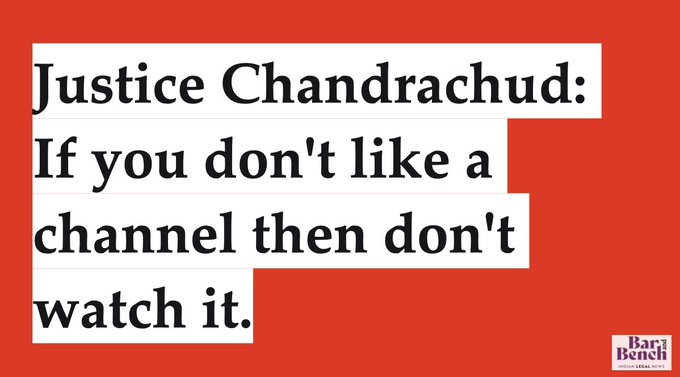 Justice Chandrachud If you don t like a channel then don t watch it. 11th November 2020 .
 Information and Broadcasting Ministry bringing OTT services as well as news within its ambit.
Like each month, here comes a report about the work of paid contributors to Debian LTS.
Individual reports
In October, 221.50 work hours have been dispatched among 13 paid contributors. Their reports are available:

No comment Liked this article? Click here. My blog is Flattr-enabled.
Next.