Search Results: "bod"

29 June 2023

Russ Allbery: Review: Semiosis

Review: Semiosis, by Sue Burke
Series: Semiosis #1
Publisher: Tor
Copyright: February 2018
ISBN: 0-7653-9137-6
Format: Kindle
Pages: 333
Semiosis is a first-contact science fiction novel and the first half of a duology. It was Sue Burke's first novel. In the 2060s, with the Earth plagued by environmental issues, a group of utopians decided to found a colony on another planet. Their goal is to live in harmony with an unspoiled nature. They wrote a suitably high-minded founding document, the Constitution of the Commonwealth of Pax, and set out in cold sleep on an interstellar voyage. 158 years later, they awoke in orbit around a planet with a highly-developed ecology, which they named Pax. Two pods and several colonists were lost on landing, but the rest remained determined to follow through with their plan. Not that they had many alternatives. Pax does not have cities or technological mammalian life, just as they hoped. It does, however, have intelligent life. This novel struggled to win me over for reasons that aren't the fault of Burke's writing. The first is that it is divided into seven parts, each telling the story of a different generation. Intellectually, I like this technique for telling an anthropological story that follows a human society over time. But emotionally, I am a character reader first and foremost, and I struggle with books where I can't follow the same character throughout. It makes the novel feel more like a fix-up of short stories, and I'm not much of a short story reader. Second, this is one of those stories where a human colony loses access to its technology and falls back to a primitive lifestyle. This is a concept I find viscerally unpleasant and very difficult to read about. I don't mind reading stories that start at the lower technological level and rediscover lost technology, but the process of going backwards, losing knowledge, surrounded by breaking technology that can never be repaired, is disturbing at a level that throws me out of the story. It doesn't help that the original colonists chose to embrace that reversion. Some of this wasn't intentional some vital equipment was destroyed when they landed but a lot of it was the plan from the start. They are the type of fanatics who embrace a one-way trip and cannibalizing the equipment used to make it in order to show their devotion to the cause. I spent the first part of the book thinking the founding colonists were unbelievably foolish, but then they started enforcing an even more restrictive way of life on their children and that tipped me over into considering them immoral. This was the sort of political movement that purged all religion and political philosophy other than their one true way so that they could raise "uncorrupted" children. Burke does recognize how deeply abusive this is. The second part of the book, which focuses on the children of the initial colonists, was both my favorite section and had my favorite protagonist, precisely because someone put words to the criticisms that I'd been thinking since the start of the book. The book started off on a bad foot with me, but if it had kept up the momentum of political revolution and rethinking provided by the second part, it might have won me over. That leads to the third problem, though, which is the first contact part of the story. (If you've heard anything about this series, you probably know what the alien intelligence is, and even if not you can probably guess, but I'll avoid spoilers anyway.) This is another case where the idea is great, but I often don't get along with it as a reader. I'm a starships and AIs and space habitats sort of SF reader by preference and tend to struggle with biological SF, even though I think it's great more of it is being written. In this case, mind-altering chemicals enter the picture early in the story, and while this makes perfect sense given the world-building, this is another one of my visceral dislikes. A closely related problem is that the primary alien character is, by human standards, a narcissistic asshole. This is for very good story and world-building reasons. I bought the explanation that Burke offers, I like the way this shows how there's no reason to believe humans have a superior form of intelligence, and I think Burke's speculations on the nature of that alien intelligence are fascinating. There are a lot of good reasons to think that alien morality would be wildly different from human morality. But, well, I'm still a human reading this book and I detested the alien, which is kind of a problem given how significant of a character it is. That's a lot baggage for a story to overcome. It says something about how well-thought-out the world-building is that it kept my attention anyway. Burke uses the generational structure very effectively. Events, preferences, or even whims early in the novel turn into rituals or traditions. Early characters take on outsized roles in history. The humans stick with the rather absurd constitution of Pax, but do so in a way that feels true to how humans reinterpret and stretch and layer meaning on top of wholly inadequate documents written in complete ignorance of the challenges that later generations will encounter. I would have been happier without the misery and sickness and messy physicality of this abusive colonization project, but watching generations of humans patch together a mostly functioning society was intellectually satisfying. The alien interactions were also solid, with the caveat that it's probably impossible to avoid a lot of anthropomorphizing. If I were going to sum up the theme of the novel in a sentence, it's that even humans who think they want to live in harmony with nature are carrying more arrogance about what that harmony would look like than they realize. In most respects the human colonists stumbled across the best-case scenario for them on this world, and it was still harder than anything they had imagined. Unfortunately, I thought the tail end of the book had the weakest plot. It fell back on a story that could have happened in a lot of first-contact novels, rather than the highly original negotiation over ecological niches that happened in the first half of the book. Out of eight viewpoint characters in this book, I only liked one of them (Sylvia). Tatiana and Lucille were okay, and I might have warmed to them if they'd had more time in the spotlight, but I felt like they kept making bad decisions. That's the main reason why I can't really recommend it; I read for characters, I didn't really like the characters, and it's hard for a book to recover from that. It made the story feel chilly and distant, more of an intellectual exercise than the sort of engrossing emotional experience I prefer. But, that said, this is solid SF speculation. If your preferred balance of ideas and characters is tilted more towards ideas than mine, and particularly if you like interesting aliens and don't mind the loss of technology setting, this may well be to your liking. Even with all of my complaints, I'm curious enough about the world that I am tempted to read the sequel, since its plot appears to involve more of the kind of SF elements I like. Followed by Interference. Content warning: Rape, and a whole lot of illness and death. Rating: 6 out of 10

28 June 2023

Russ Allbery: Review: Translation State

Review: Translation State, by Ann Leckie
Publisher: Orbit
Copyright: June 2023
ISBN: 0-316-29024-6
Format: Kindle
Pages: 354
Translation State is a science fiction novel set in the same universe as the Imperial Radch series and Provenance. It is not truly a sequel of any of those books, but as with Provenance, it has significant spoilers for the conclusion of Ancillary Mercy. Provenance takes place earlier, but it's plot is unrelated as far as I can recall. Enea has spent much of hir adult life living with hir difficult and somewhat abusive grandmanan and, in recent years, running her household. Now, Grandmanan is dead, and the relatives who have been waiting to inherit Grandmanan's wealth are descending like a flock of vultures and treating hir like a servant. Enea can barely stand to be around them. It is therefore somewhat satisfying to watch their reactions when they discover that there is no estate. Grandmanan had been in debt and sold her family title to support herself for the rest of her life. Enea will receive an allowance and an arranged job that expects a minimum of effort. Everyone else gets nothing. It's still a wrenching dislocation from everything Enea has known, but at least sie can relax, travel, and not worry about money. Enea's new job for the Office of Diplomacy is to track down a fugitive who disappeared two hundred years earlier. The request came from the Radchaai Translators Office, the agency responsible for the treaty with the alien Presger, and was resurrected due to the upcoming conclave to renegotiate the treaty. No one truly expects Enea to find this person or any trace of them. It's a perfect quiet job to reward hir with travel and a stipend for putting up with Grandmanan all these years. This plan lasts until Enea's boredom and sense of duty get the better of hir. Enea is one of three viewpoint characters. Reet lives a quiet life in which he only rarely thinks about murdering people. He has a menial job in Rurusk Station, at least until he falls in with an ethnic club that may be a cover for more political intentions. Qven... well, Qven is something else entirely. Provenance started with some references to the Imperial Radch trilogy but then diverged into its own story. Translation State does the opposite. It starts as a cozy pseudo-detective story following Enea and a slice-of-life story following Reet, interspersed with baffling chapters from Qven, but by the end of the book the characters are hip-deep in the trilogy aftermath. It's not the direct continuation of the political question of the trilogy that I'm still partly hoping for, but it's adjacent. As you might suspect from the title, this story is about Presger Translators. Exactly how is not entirely obvious at the start, but it doesn't take long for the reader to figure it out. Leckie fills in a few gaps in the world-building and complicates (but mostly retains) the delightfully askew perspective Presger Translators have on the world. For me, though, the best part of the book was the political maneuvering once the setup is complete and all the characters are in the same place. The ending, unfortunately, dragged a little bit; the destination of the story was obvious but delayed by characters not talking to each other. I tend to find this irritating, but I know tastes differ. I was happily enjoying Translation State but thinking that it didn't suck me in as much as the original trilogy, and even started wondering if I'd elevated the Imperial Radch trilogy too high in my memory. Then an AI ship showed up and my brain immediately got fully invested in the story. I'm very happy to get whatever other stories in this universe Leckie is willing to write, but I would have been even happier if a ship appeared as more than a supporting character. To the surprise of no one who reads my reviews, I clearly have strong preferences in protagonists. This wasn't one of my favorites, but it was a solidly good book, and I will continue to read everything Ann Leckie writes. If you liked Provenance, I think you'll like this one as well. We once again get a bit more information about the aliens in this universe, and this time around we get more Radchaai politics, but the overall tone is closer to Provenance. Great powers are in play, but the focus is mostly on the smaller scale. Recommended, but of course read the Imperial Radch trilogy first. Note that Translation State uses a couple of sets of neopronouns to represent different gender systems. My brain still struggles with parsing them grammatically, but this book was good practice. It was worth the effort to watch people get annoyed at the Radchaai unwillingness to acknowledge more than one gender. Content warning: Cannibalism (Presger Translators are very strange), sexual assault. Rating: 8 out of 10

25 June 2023

Jonathan McDowell: Figuring out the right card for foreign currency transactions

While travel these days is much reduced I still end up in Dublin regularly enough (though less so now I m not working directly with folk there), and have the occasional US trip. Given that I live and work in the UK, and thus get paid in GBP ( ), this leads to the question of what to do about USD ($) and EUR ( ) transaction. USD turns out to be easy; I still have a US account from when I lived there and keeping it active has, so far, not proved to be a problem. EUR is tricker. In an ideal world I d find a fee-free account that would allow normal Eurozone transfers and provide me with a suitable debit + credit card for use while travelling. I ve found options with a fee, but I don t have enough Euro transactions to make it worthwhile. A friend pointed me at the HSBC Global Money debit card, which claims no fees for currency conversions from and competitive rates. As I already have an account with HSBC it was easy to sign up to try it out. And, having recently been on trip to CenterParcs, I had the perfect opportunity to compare it to my (and my wife s) existing cards to see how the rates played out. In particular I ve always meant to figure out if the cards that don t charge a loading rate end up with the same exchange rate as the cards that do have a separate per transaction charge. So, armed with the HSBC Global Money card, a Monzo debit card, a Nationwide debit card, and a co-operative debit card, we engage on a week of eating out in the interests of data! The results will probably shock no one who s properly looked into this themselves. All the cards were on the VISA network, they all ended up at around 1 1.15. According to Xe that was roughly the mid-market rate for the week I was away, so it seems like trusting VISA to do the currency conversion is a reasonable thing to do. The problem comes with the range of charges:
Card Exchange rate Charge %
Co-Op 1.15 2.65%
HSBC 1.15 0.00%
Monzo 1.15 0.00%
Nationwide 1.15 2.99%
This matches what Nationwide claims for its foreign transaction fees, though Co-Op claims 2.75% and the numbers looked more like 2.65% on the small transactions we incurred. So, the HSBC Global Money card is definitely a decent option. However Monzo is just a good, and has the advantage that it s a normal current account rather than something slightly different you have to funnel money into. Both are let down by the fact you need to use an app to check your balance etc - Monzo seems to only have extremely basic web access to any of their accounts and HSBC don t expose the Global Money account at all via web banking, only the phone app. Finally, what I really want is to be able to do this with a credit card, especially for things like online purchases or staying at hotels. My current credit card suffers from a per-transaction charge, but while looking up the Nationwide debit charge %age to confirm it matched what I saw I discovered that Nationwide credit cards do not charge a fee. So I think I ll be investigating that for my next trip.

Russ Allbery: Review: The Wee Free Men

Review: The Wee Free Men, by Terry Pratchett
Series: Discworld #30
Publisher: HarperTempest
Copyright: 2003
Printing: 2006
ISBN: 0-06-001238-2
Format: Mass market
Pages: 375
The Wee Free Men is the 30th Discworld novel but the first Tiffany Aching book and doesn't rely on prior knowledge of Discworld, although the witches from previous books do appear. You could start here, although I think the tail end of the book has more impact if you already know who Granny Weatherwax and Nanny Ogg are. The Amazing Maurice and His Educated Rodents was the first Discworld novel written to be young adult, and although I could see that if I squinted, it didn't feel that obviously YA to me. The Wee Free Men is clearly young adult (or perhaps middle grade), right down to the quintessential protagonist: a nine-year-old girl who is practical and determined and a bit of a misfit and does a lot of growing up over the course of the story. Tiffany Aching is the youngest daughter in a large Aching family that comes from a long history of Aching families living in the Chalk. She has a pile of older relatives and one younger brother named Wentworth who is an annoying toddler obsessed with sweets. Her family work a farm that is theoretically the property of the local baron but has been in their family for years. There is always lots to do and Tiffany is an excellent dairymaid, so people mostly leave her alone with her thoughts and her tiny collection of books from her grandmother. Her now-deceased Grandma Aching was a witch. Tiffany, as it turns out, is also a witch, not that she knows that. As the book opens, certain... things are trying to get into her world from elsewhere. The first is a green monster that pops up out of the river and attempts to snatch Wentworth, much to Tiffany's annoyance. She identifies it as Jenny Green-Teeth via a book of fairy tales and dispatches it with a frying pan, somewhat to her surprise, but worse are coming. Even more surprised by her frying pan offensive are the Nac Mac Feegle, last seen in Carpe Jugulum, who know something about where this intrusion is coming from. In short order, the Aching farm has a Nac Mac Feegle infestation. This is, unfortunately, another book about Discworld's version of fairy (or elves, as they were called in Lords and Ladies). I find stories about the fae somewhat hit and miss, and Pratchett's version is one of my least favorites. The Discworld Queen of Fairy is mostly a one-dimensional evil monster and not a very interesting one. A big chunk of the plot is an extended sequence of dreams that annoyed me and went on for about twice as long as it needed to. That's the downside of this book. The upside is that Tiffany Aching is exactly the type of protagonist I loved reading about as a kid, and still love reading about as an adult. She's thoughtful, curious, observant, determined, and uninterested in taking any nonsense from anyone. She has a lot to learn, both about the world and about herself, but she doesn't have to be taught lessons twice and she has a powerful innate sense of justice. She also has a delightfully sarcastic sense of humor.
"Zoology, eh? That's a big word, isn't it." "No, actually it isn't," said Tiffany. "Patronizing is a big word. Zoology is really quite short."
One of the best things that Pratchett does with this book is let Tiffany dislike her little brother. Wentworth eventually ends up in trouble and Tiffany has to go rescue him, which of course she does because he's her baby brother. But she doesn't like him; he's annoying and sticky and constantly going on about sweets and never says anything interesting. Tiffany is aware that she's supposed to love him because he's her little brother, but of course this is not how love actually works, and she doesn't. But she goes and rescues him anyway, because that's the right thing to do, and because he's hers. There are a lot of adult novels that show the nuanced and sometimes uncomfortable emotions we have about family members, but this sort of thing is a bit rarer in novels pitched at pre-teens, and I loved it. One valid way to read it is that Tiffany is neurodivergent, but I think she simply has a reasonable reaction to a brother who is endlessly annoying and too young to have many redeeming qualities in her eyes, and no one forces her to have a more socially expected one. It doesn't matter what you feel about things; it matters what you do, and as long as you do the right thing, you can have whatever feelings about it you want. This is a great lesson for this type of book. The other part of this book that I adored was the stories of Grandma Aching. Tiffany is fairly matter-of-fact about her dead grandmother at the start of the book, but it becomes clear over the course of the story that she's grieving in her own way. Grandma Aching was a taciturn shepherd who rarely put more than two words together and was much better with sheep than people, but she was the local witch in the way that Granny Weatherwax was a witch, and Tiffany was paying close attention. They never managed to communicate as much as either of them wanted, but the love shines through Tiffany's memories. Grandma Aching was teaching her how to be a witch: not the magical parts, but the far more important parts about justice and fairness and respect for other people. This was a great introduction of a new character and a solid middle-grade or young YA novel. I was not a fan of the villain and I can take or leave the Nac Mac Feegle (who are basically Scottish Smurfs crossed with ants and are a little too obviously the comic relief, for all that they're also effective warriors). But Tiffany is great and the stories of Grandma Aching are even better. This was not as good as Night Watch (very few things are), but it was well worth reading. Followed in publication order by Monstrous Regiment. The next Tiffany Aching novel is A Hat Full of Sky. Rating: 8 out of 10

24 June 2023

Steve Kemp: Simple REPL for CP/M, in Z80 assembly

So my previous post documented a couple of simple "scripting languages" for small computers, allowing basic operations in a compact/terse fashion. I mentioned that I might be tempted to write something similar for CP/M, in Z80 assembly, and the result is here: To sum up it allows running programs like this:
0m 16k rP _ _ 
C3 03 EA 00 00 C3 06 DC 00 00 00 00 00 00 00 00
Numbers automatically get saved to the A-register, the accumulator. In addition to that there are three dedicated registers: So the program above: TLDR: Dump the first sixteen bytes of RAM, at address 0x0000, to the console. Though this program allows delays, RAM read/write, I/O port input and output, as well as loops it's both kinda fun, and kinda pointless. I guess you could spend hours flashing lights and having other similar fun. But only if you're like me! All told the code compiles down to about 800 bytes and uses less than ten bytes of RAM to store register-state. It could be smaller with some effort, but it was written a bit adhoc and I think I'm probably done now.

Russ Allbery: Review: Rose/House

Review: Rose/House, by Arkady Martine
Publisher: Subterranean Press
Copyright: 2023
ISBN: 1-64524-034-7
Format: Kindle
Pages: 109
Arkady Martine is the author of the wonderful Teixcalaan duology, a political space opera. Rose/House is a standalone science fiction novella in an entirely different subgenre. Basit Deniau was a legendary architect whose trademark was infusing his houses with artificial intelligences. A house AI is common in this future setting, but what Deniau did was another kind of genius. He has been dead for a year when this story opens. The carbon of his body has been compressed into diamond and displayed on a plinth deep inside his final creation. Rose House. Dr. Selene Gisil was his student. It was not a comfortable relationship. She is now the only person permitted entry into Rose House, allowed to examine its interior architecture and the archive of Deniau's work that is stored there. Once per year, she may enter for precisely one week. No one else in the world is permitted to enter, ever. Selene went in the first time she was allowed. She lasted three days before fleeing. There is a law in the United States, the Federal Artificial Intelligence Surveillance Act, that sets some requirements for the behavior of artificial intelligences. One of its requirements is a duty-of-care notification: an artificial intelligence must report the presence of a dead body to the nearest law enforcement agency. Rose House's call to the China Lake Police Precinct to report the presence of a dead body in the sealed house follows the requirements of the law to the letter.
"Cause of death," said Maritza. I'm a piece of architecture, Detective. How should I know how humans are like to die? After that the line went to the dull hang-up tone, and Rose House would not take her return calls. Not even once.
Rose/House has some of the structure of a locked-room mystery. Someone is dead, but no one at the scene can get inside the house to see who. Selene is the only person who can enter, but she was in Turkey at the time of the killing and has an air-tight alibi. How could someone be in the house at all? And how did they die? It also has some of the structure of a police procedural. First one and then the other detective of the tiny local precinct are pulled into the investigation, starting, as one might expect, by calling Selene Gisil. But I'm not sure I would describe this novella as following either of those genres. By the end of the story, we do learn some of the things one might expect to learn from a detective novel, but that never felt like the true thrust of the story. If you want a detailed explanation of what happened, or the pleasure of trying to guess the murderer before the story tells you, this may not be the novella for you. Instead, Martine was aiming for disturbing eeriness. This is not quite horror nothing explicitly horrific happens, although a couple of scenes are disturbing but Rose House is deeply unsettling. The best character of the story is Maritza, the detective initially assigned to the case, who is trying to ignore the weirdness and do her job. The way she approaches that task leads to some fascinating interactions with Rose House that I thought were the best parts of the story. This story was not really my thing, even though I love stories about sentient buildings and there are moments in this story where Rose House is delightfully nonhuman in exactly the way that I enjoy. The story is told in a way that requires the reader to piece together the details of the conclusion themselves, and I prefer more explicit explanation in stories that start with a puzzle. It's also a bit too close to horror for me, specifically in the way that the characters (Selene most notably) have disturbing and oddly intense emotional reactions to environments that are only partly described. But I read this a few weeks ago and I'm still thinking about it, so it clearly is doing something right. If you like horror, or at least half-explained eeriness, it's likely you will enjoy this more than I did. This portrayal of AI is an intriguing one, and I'd enjoy reading more about it in a story focused on character and plot rather than atmosphere. Rating: 6 out of 10

22 June 2023

Russ Allbery: Review: Furious Heaven

Review: Furious Heaven, by Kate Elliott
Series: Sun Chronicles #2
Publisher: Tor
Copyright: 2023
ISBN: 1-250-86701-0
Format: Kindle
Pages: 725
Furious Heaven is the middle book of a trilogy and a direct sequel to Unconquerable Sun. Don't start here. I also had some trouble remembering what happened in the previous book (grumble recaps mutter), and there are a lot of threads, so I would try to minimize the time between books unless you have a good memory for plot details. This is installment two of gender-swapped Alexander the Great in space. When we last left Sun and her Companions, Elliott had established the major players in this interstellar balance of power and set off some opening skirmishes, but the real battles were yet to come. Sun was trying to build her reputation and power base while carefully staying on the good side of Queen-Marshal Eirene, her mother and the person credited with saving the Republic of Chaonia from foreign dominance. The best parts of the first book weren't Sun herself but wily Persephone, one of her Companions, whose viewpoint chapters told a more human-level story of finding her place inside a close-knit pre-existing friendship group. Furious Heaven turns that all on its head. The details are spoilers (insofar as a plot closely tracking the life of Alexander the Great can contain spoilers), but the best parts of the second book are the chapters about or around Sun. What I find most impressive about this series so far is Elliott's ability to write Sun as charismatic in a way that I can believe as a reader. That was hit and miss at the start of the series, got better towards the end of Unconquerable Sun, and was wholly effective here. From me, that's high but perhaps unreliable praise; I typically find people others describe as charismatic to be some combination of disturbing, uncomfortable, dangerous, or obviously fake. This is a rare case of intentionally-written fictional charisma that worked for me. Elliott does not do this by toning down Sun's ambition. Sun, even more than her mother, is explicitly trying to gather power and bend the universe (and the people in it) to her will. She treats people as resources, even those she's the closest to, and she's ruthless in pursuit of her goals. But she's also honorable, straightforward, and generous to the people around her. She doesn't lie about her intentions; she follows a strict moral code of her own, keeps her friends' secrets, listens sincerely to their advice, and has the sort of battlefield charisma where she refuses to ask anyone else to take risks she personally wouldn't take. And her use of symbolism and spectacle isn't just superficial; she finds the points of connection between the symbols and her values so that she can sincerely believe in what she's doing. I am fascinated by how Elliott shapes the story around her charisma. Writing an Alexander analogue is difficult; one has to write a tactical genius with the kind of magnetic attraction that enabled him to lead an army across the known world, and make this believable to the reader. Elliott gives Sun good propaganda outlets and makes her astonishingly decisive (and, of course, uses the power of the author to ensure those decisions are good ones), but she also shows how Sun is constantly absorbing information and updating her assumptions to lay the groundwork for those split-second decisions. Sun uses her Companions like a foundation and a recovery platform, leaning on them and relying on them to gather her breath and flesh out her understanding, and then leaping from them towards her next goal. Elliott writes her as thinking just a tiny bit faster than the reader, taking actions I was starting to expect but slightly before I had put together my expectation. It's a subtle but difficult tightrope to walk as the writer, and it was incredibly effective for me. The downside of Furious Heaven is that, despite kicking the action into a much higher gear, this book sprawls. There are five viewpoint characters (Persephone and the Phene Empire character Apama from the first book, plus two new ones), as well as a few interlude chapters from yet more viewpoints. Apama's thread, which felt like a minor subplot of the first book, starts paying off in this book by showing the internal political details of Sun's enemy. That already means the reader has to track two largely separate and important stories. Add on a Persephone side plot about her family and a new plot thread about other political factions and it's a bit too much. Elliott does a good job avoiding reader confusion, but she still loses narrative momentum and reader interest due to the sheer scope. Persephone's thread in particular was a bit disappointing after being the highlight of the previous book. She spends a lot of her emotional energy on tedious and annoying sniping at Jade, which accomplishes little other than making them both seem immature and out of step with the significance of what's going on elsewhere. This is also a middle book of a trilogy, and it shows. It provides a satisfying increase in intensity and gets the true plot of the trilogy well underway, but nothing is resolved and a lot of new questions and plot threads are raised. I had similar problems with Cold Fire, the middle book of the other Kate Elliott trilogy I've read, and this book is 200 pages longer. Elliott loves world-building and huge, complex plots; I have a soft spot for them too, but they mean the story is full of stuff, and it's hard to maintain the same level of reader interest across all the complications and viewpoints. That said, I truly love the world-building. Elliott gives her world historical layers, with multiple levels of lost technology, lost history, and fallen empires, and backs it up with enough set pieces and fragments of invented history that I was enthralled. There are at least five major factions with different histories, cultures, and approaches to technology, and although they all share a history, they interpret that history in fascinatingly different ways. This world feels both lived in and full of important mysteries. Elliott also has a knack for backing the ambitions of her characters with symbolism that defines the shape of that ambition. The title comes from a (translated) verse of an in-universe song called the Hymn of Leaving, which is sung at funerals and is about the flight on generation ships from the now-lost Celestial Empire, the founding myth of this region of space:
Crossing the ocean of stars we leave our home behind us.
We are the spears cast at the furious heaven
And we will burn one by one into ashes
As with the last sparks we vanish.
This memory we carry to our own death which awaits us
And from which none of us will return.
Do not forget. Goodbye forever.
This is not great poetry, but it explains so much about the psychology of the characters. Sun repeatedly describes herself and her allies as spears cast at the furious heaven. Her mother's life mission was to make Chaonia a respected independent power. Hers is much more than that, reaching back into myth for stories of impossible leaps into space, burning brightly against the hostile power of the universe itself. A question about a series like this is why one should want to read about a gender-swapped Alexander the Great in space, rather than just reading about Alexander himself. One good (and sufficient) answer is that both the gender swap and the space parts are inherently interesting. But the other place that Elliott uses the science fiction background is to give Sun motives beyond sheer personal ambition. At a critical moment in the story, just like Alexander, Sun takes a detour to consult an Oracle. Because this is a science fiction novel, it's a great SF set piece involving a mysterious AI. But also because this is a science fiction story, Sun doesn't only ask about her personal ambitions. I won't spoil the exact questions; I think the moment is better not knowing what she'll ask. But they're science fiction questions, reader questions, the kinds of things Elliott has been building curiosity about for a book and a half by the time we reach that scene. Half the fun of reading a good epic space opera is learning the mysteries hidden in the layers of world-building. Aligning the goals of the protagonist with the goals of the reader is a simple storytelling trick, but oh, so effective. Structurally, this is not that great of a book. There's a lot of build-up and only some payoff, and there were several bits I found grating. But I am thoroughly invested in this universe now. The third book can't come soon enough. Followed by Lady Chaos, which is still being written at the time of this review. Rating: 7 out of 10

15 June 2023

Shirish Agarwal: Ayisha, Manju Warrier, Debutsav, Books

Ayisha After a long time I saw a movie that I enjoyed wholeheartedly. And it unexpectedly touched my heart. The name of the movie is Ayisha. The first frame of the movie itself sets the pace where we see Ayisha (Manju Warrier) who decides to help out a gang as lot of women were being hassled. So she agrees to hoodwink cops and help launder some money. Then she is shown to work as a maid for an elite Arab family. To portray a Muslim character in these polarized times really shows guts especially when the othering of the Muslim has been happening 24 7. In fact, just few days back I was shocked to learn that Muslim homes were being marked as Jews homes had been marked in the 1930 s. Not just homes but also businesses too. And after few days in a total hypocritical fashion one of the judges says that you cannot push people to buy or not buy from a shop. This is after systemically doing the whole hate campaign for almost 2 weeks. What value the judge s statements are after 2 weeks ??? The poison has already seeped in  But I m drifting from the topic/movie.

The real fun of the movie is the beautiful relationship that happens between Ayisha and Mama, she is the biggest maternal figure in the house and in fact, her command is what goes in the house. The house or palace which is the perfect description is shown as being opulent but not as rich as both Mama and Ayisha are, spiritually and emotionally both giving and sharing of each other. Almost a mother daughter relationship, although with others she is shown as having a bit of an iron hand. Halfway through the movie we come to know that Ayisha was also a dramatist and an actress having worked in early Malayalam movies. I do not want to go through all the ups and downs as that is the beauty of the movie and it needs to be seen for that aspect. I am always sort of in two worlds where should I promote a book or series or movie or not because most of the time it is the unexpected that works. When we have expectation it doesn t. Avatar, the Way of the Water is an exception, not many movies I can recall like that where I had expectations and still the movie surpassed it. So maybe go with no expectations at all

Manju Warrier Manju Warrier should actually be called Manju Warrior as she chose to be with the survivor rather than the sexism that is prevalent in the Malayalam film industry which actually is more or less a mirror of Bollywood and society as whole. These three links should give enough background knowledge as to what has been happening although I m sure my Malayalam friends would more than add to that knowledge whatever may be missing. In quite a few movies, the women are making inroads without significant male strength. Especially Manju s movies have no male lead for the last few movies. Whether that is deliberate part on Manju or an obstacle being put in front of her. Anyone knows that having a male lead and a female lead enriches the value of a movie quite a bit. This doesn t mean one is better than the other but having both enriches the end product, as simple as that. This is sadly not happening. Having POSH training and having an ICC is something that each organization should look forward for. It s kind of mandatory need of hour, especially when we have young people all around us. I am hopeful that people who are from Kerala would shed some more background light on what has been happening.

Books I haven t yet submitted an application for Debconf. But my idea is irrespective of whether or not I m there, I do hope we can have a library where people can donate books and people can take away books as well. A kind of circular marketplace/library where just somebody notes what books are available. Even if 100 odd people are coming to Debconf that easily means 100 books of various languages. That in itself would be interesting and to see what people are reading, wanting to discuss etc. We could even have readings. IIRC, in 2016 we had a children s area, maybe we could do some readings from some books to children which fuels their imagination. Even people like me who are deaf would be willing to look at excerpts and be charmed by them. For instance, in all my forays of fantasy literature except for Babylon Steel I haven t read one book that has a female lead character and I have read probably around 100 odd fantasy books till date. Not a lot but still to my mind, is a big gap as far as literature is concerned. How would more women write fantasy if they don t have heroes to look forward to :(. Or maybe I may be missing some authors and characters that others know and I do not. Do others feel the same or this question hasn t even been asked ??? Dunno. Please let me know.

Debutsav So apparently Debutsav is happening 2 days from now. While I did come to know about it few days back I had to think whether I want to apply for this or apply for Debconf as I physically, emotionally can t do justice to both even though they are a few months apart. I wish all the best for the attendees as well as presenters sharing all the projects and hopefully somebody shares at least some of the projects that are presented there so we may know what new projects or softwares to follow or whatever. Till later.

Thomas Lange: 20.000 customized images created by the FAI.me build service

The counter of the FAI.me build service has reached 20.000. This counter was added shortly after the service was started in November 2017. Since then, this service has built more than 21.000 installation images and more than 1300 cloud disk images. In the last few month we had averaged 100 requests per week. Some statistics which settings are popular: I still have some more ideas for the future: Build your own custom Live ISO Thanks for all your feedback I got to improve this service. The build service is available on the FAI project website at https://fai-project.org/FAIme

11 June 2023

Michael Prokop: What to expect from Debian/bookworm #newinbookworm

Bookworm Banner, Copyright 2022 Juliette Taka Debian v12 with codename bookworm was released as new stable release on 10th of June 2023. Similar to what we had with #newinbullseye and previous releases, now it s time for #newinbookworm! I was the driving force at several of my customers to be well prepared for bookworm. As usual with major upgrades, there are some things to be aware of, and hereby I m starting my public notes on bookworm that might be worth also for other folks. My focus is primarily on server systems and looking at things from a sysadmin perspective. Further readings As usual start at the official Debian release notes, make sure to especially go through What s new in Debian 12 + Issues to be aware of for bookworm. Package versions As a starting point, let s look at some selected packages and their versions in bullseye vs. bookworm as of 2023-02-10 (mainly having amd64 in mind):
Package bullseye/v11 bookworm/v12
ansible 2.10.7 2.14.3
apache 2.4.56 2.4.57
apt 2.2.4 2.6.1
bash 5.1 5.2.15
ceph 14.2.21 16.2.11
docker 20.10.5 20.10.24
dovecot 2.3.13 2.3.19
dpkg 1.20.12 1.21.22
emacs 27.1 28.2
gcc 10.2.1 12.2.0
git 2.30.2 2.39.2
golang 1.15 1.19
libc 2.31 2.36
linux kernel 5.10 6.1
llvm 11.0 14.0
lxc 4.0.6 5.0.2
mariadb 10.5 10.11
nginx 1.18.0 1.22.1
nodejs 12.22 18.13
openjdk 11.0.18 + 17.0.6 17.0.6
openssh 8.4p1 9.2p1
openssl 1.1.1n 3.0.8-1
perl 5.32.1 5.36.0
php 7.4+76 8.2+93
podman 3.0.1 4.3.1
postfix 3.5.18 3.7.5
postgres 13 15
puppet 5.5.22 7.23.0
python2 2.7.18 (gone!)
python3 3.9.2 3.11.2
qemu/kvm 5.2 7.2
ruby 2.7+2 3.1
rust 1.48.0 1.63.0
samba 4.13.13 4.17.8
systemd 247.3 252.6
unattended-upgrades 2.8 2.9.1
util-linux 2.36.1 2.38.1
vagrant 2.2.14 2.3.4
vim 8.2.2434 9.0.1378
zsh 5.8 5.9
Linux Kernel The bookworm release ships a Linux kernel based on version 6.1, whereas bullseye shipped kernel 5.10. As usual there are plenty of changes in the kernel area, including better hardware support, and this might warrant a separate blog entry, but to highlight some changes: See Kernelnewbies.org for further changes between kernel versions. Configuration management puppet s upstream sadly still doesn t provide packages for bookworm (see PA-4995), though Debian provides puppet-agent and puppetserver packages, and even puppetdb is back again, see release notes for further information. ansible is also available and made it with version 2.14 into bookworm. Prometheus stack Prometheus server was updated from v2.24.1 to v2.42.0 and all the exporters that got shipped with bullseye are still around (in more recent versions of course). Virtualization docker (v20.10.24), ganeti (v3.0.2-3), libvirt (v9.0.0-4), lxc (v5.0.2-1), podman (v4.3.1), openstack (Zed), qemu/kvm (v7.2), xen (v4.17.1) are all still around. Vagrant is available in version 2.3.4, also Vagrant upstream provides their packages for bookworm already. If you re relying on VirtualBox, be aware that upstream doesn t provide packages for bookworm yet (see ticket 21524), but thankfully version 7.0.8-dfsg-2 is available from Debian/unstable (as of 2023-06-10) (VirtualBox isn t shipped with stable releases since quite some time due to lack of cooperation from upstream on security support for older releases, see #794466). rsync rsync was updated from v3.2.3 to v3.2.7, and we got a few new options: OpenSSH OpenSSH was updated from v8.4p1 to v9.2p1, so if you re interested in all the changes, check out the release notes between those version (8.5, 8.6, 8.7, 8.8, 8.9, 9.0, 9.1 + 9.2). Let s highlight some notable new features: One important change you might wanna be aware of is that as of OpenSSH v8.8, RSA signatures using the SHA-1 hash algorithm got disabled by default, but RSA/SHA-256/512 AKA RSA-SHA2 gets used instead. OpenSSH has supported RFC8332 RSA/SHA-256/512 signatures since release 7.2 and existing ssh-rsa keys will automatically use the stronger algorithm where possible. A good overview is also available at SSH: Signature Algorithm ssh-rsa Error. Now tools/libraries not supporting RSA-SHA2 fail to connect to OpenSSH as present in bookworm. For example python3-paramiko v2.7.2-1 as present in bullseye doesn t support RSA-SHA2. It tries to connect using the deprecated RSA-SHA-1, which is no longer offered by default with OpenSSH as present in bookworm, and then fails. Support for RSA/SHA-256/512 signatures in Paramiko was requested e.g. at #1734, and eventually got added to Paramiko and in the end the change made it into Paramiko versions >=2.9.0. Paramiko in bookworm works fine, and a backport by rebuilding the python3-paramiko package from bookworm for bullseye solves the problem (BTDT). Misc unsorted Thanks to everyone involved in the release, happy upgrading to bookworm, and let s continue with working towards Debian/trixie. :)

10 June 2023

Marco d'Itri: On having a track record in operating systems development

Now that Debian 12 has been released with proprietary firmwares on the official media, non-optional merged-/usr and systemd adopted by everybody, I want to take a moment to list, not without some pride, a few things that I was right about over the last 20 years: Accepting the obvious solution about firmwares took 18 years. My work on the merged-/usr transition started in 2014, and the first discussions about replacing sysvinit are from 2011. The general adoption of udev (and dynamic device names, and persistent network interface names...) took less time in comparison and no large-scale flame wars, since people could enable it at their own pace. But it required countless little debates in the Debian Bug Tracking System: I still remember the people insisting that they would never use this newfangled dynamic /dev/, or complaining about their beloved /dev/cdrom symbolic link and persistent network interface names. So follow me for more rants about inevitable technologies.

6 June 2023

Shirish Agarwal: Odisha Train Crash and Coverup, Demonetization 2.0 & NHFS-6 Survey

Just a few days back we came to know about the horrific Train Crash that happened in Odisha (Orissa). There are some things that are known and somethings that can be inferred by observance. Sadly, it seems the incident is going to be covered up  . Some of the facts that have not been contested in the public domain are that there were three lines. One loop line on which the Goods Train was standing and there was an up and a down line. So three lines were there. Apparently, the signalling system and the inter-locking system had issues as highlighted by an official about a month back. That letter, thankfully is in the public domain and I have downloaded it as well. It s a letter that goes to 4 pages. The RW is incensed that the letter got leaked and is in public domain. They are blaming everyone and espousing conspiracy theories rather than taking the minister to task. Incidentally, the Minister has three ministries that he currently holds. Ministry of Communication, Ministry of Electronics and Information Technology (MEIT), and Railways Ministry. Each Ministry in itself is important and has revenues of more than 6 lakh crore rupees. How he is able to do justice to all the three ministries is beyond me  The other thing is funds both for safety and relaying of tracks has been either not sanctioned or unutilized. In fact, CAG and the Railway Brass had shared how derailments have increased and unfulfilled vacancies but they were given no importance  In fact, not talking about safety in the recently held Chintan Shivir (brainstorming session) tells you how much the Govt. is serious about safety. In fact, most of the programme was on high speed rail which is a white elephant. I have shared a whitepaper done by RW in the U.S. that tells how high-speed rail doesn t make economic sense. And that is an economy that is 20 times + the Indian Economy. Even the Chinese are stopping with HSR as it doesn t make economic sense. Incidentally, Air Fares again went up 200% yesterday. Somebody shared in the region of 20k + for an Air ticket from their place to Bangalore  Coming back to the story itself. the Goods Train was on the loopline. Some say it was a little bit on the outer, some say otherwise, but it is established that it was on the loopline. This is standard behavior on and around Railway Stations around the world. Whether it was in the Inner or Outer doesn t make much of a difference with what happened next. The first train that collided with the goods train was the 12864 (SMVB-HWH) Yashwantpur Howrah Express and got derailed on to the next track where from the opposite direction 12841 (Shalimar- Bangalore) Coramandel Express was coming. Now they have said that around 300 people have died and that seems to be part of the cover-up. Both the trains are long trains, having between 23 odd coaches each. Even if you have reserved tickets you have 80 odd people in a coach and usually in most of these trains, it is at least double of that. Lot of money goes to TC and then above (Corruption). The Railway fares have gone up enormously but that s a question for perhaps another time  . So at the very least, we could be looking at more than 1000 people having died. The numbers are being under-reported so that nobody has to take responsibility. The Railways itself has told that it is unable to identify 80% of the people who have died. This means that 80% were unreserved ticket holders or a majority of them. There have been disturbing images as how bodies have been flung over on tractors and whatnot to be either buried or cremated without a thought. We are in peak summer season so bodies will start to rot within 24-48 hours  No arrangements made to cool the bodies and take some information and identifying marks or whatever. The whole thing being done in a very callous manner, not giving dignity to even those who have died for no fault of their own. The dissent note also tells that a cover-up is also in the picture. Apparently, India doesn t have nor does it feel to have a need for something like the NTSB that the U.S. used when it hauled both the plane manufacturer (Boeing) and the FAA when the 737 Max went down due to improper data collection and sharing of data with pilots. And with no accountability being fixed to Minister or any of the senior staff, a small junior staff person may be fired. Perhaps the same official that actually told them about the signal failures almost 3 months back  There were and are also some reports that some jugaadu /temporary fixes were applied to signalling and inter-locking just before this incident happened. I do not know nor confirm one way or the other if the above happened. I can however point out that if such a thing happened, then usually a traffic block is announced and all traffic on those lines are stopped. This has been the thing I know for decades. Traveling between Mumbai and Pune multiple times over the years am aware about traffic block. If some repair work was going on and it wasn t able to complete the work within the time-frame then that may well have contributed to the accident. There is also a bit muddying of the waters where it is being said that one of the trains was 4 hours late, which one is conflicting stories. On top of the whole thing, they have put the case to be investigated by CBI and hinting at sabotage. They also tried to paint a religious structure as mosque, later turned out to be a temple. The RW says done by Muslims as it was Friday not taking into account as shared before that most Railway maintenance works are usually done between Friday Monday. This is a practice followed not just in India but world over. There has been also move over a decade to remove wooden sleepers and have concrete sleepers. Unlike the wooden ones they do not expand and contract as much and their life is much more longer than the wooden ones. Funds had been marked (although lower than last few years) but not yet spent. As we know in case of any accident, it is when all the holes in cheese line up it happens. Fukushima is a great example of that, no sea wall even though Japan is no stranger to Tsunamis. External power at the same level as the plant. (10 meters above sea-level), no training for cascading failures scenarios which is what happened. The Days mini-series shares some but not all the faults that happened at Fukushima and the Govt. response to it. There is a difference though, the Japanese Prime Minister resigned on moral grounds. Here, nor the PM, nor the Minister would be resigning on moral grounds or otherwise :(. Zero accountability and that was partly a natural disaster, here it s man-made. In fact, both the Minister and the Prime Minister arrived with their entourages, did a PR blitzkrieg showing how concerned they are. Within 50 hours, the lines were cleared. The part-time Railway Minister shared that he knows the root cause and then few hours later has given the case to CBI. All are saying, wait for the inquiry report. To date, none of the accidents even in this Govt. has produced an investigation report. And even if it did, I am sure it will whitewash as it did in case of Adani as I had shared before in the previous blog post. Incidentally, it is reported that Adani paid off some of its debt, but when questioned as to where they got the money, complete silence on that part :(. As can be seen cover-up after cover-up  FWIW, the Coramandel Express is known as the Migrant train so has a huge number of passengers, the other one which was collided with is known as sick train as huge number of cancer patients use it to travel to Chennai and come back

Demonetization 2.0 Few days back, India announced demonetization 2.0. Surprised, don t be. Apparently, INR 2k/- is being used for corruption and Mr. Modi is unhappy about it. He actually didn t like the INR 2k/- note but was told that it was needed, who told him we are unaware to date. At that time the RBI Governor was Mr. Urjit Patel who didn t say about INR 2k/- he had said that INR 1k/- note redesigned would come in the market. That has yet to happen. What has happened is that just like INR 500/- and INR 1k/- note is concerned, RBI will no longer honor the INR 2k/- note. Obviously, this has made our neighbors angry, namely Nepal, Sri Lanka, Bhutan etc. who do some trading with us. 2 Deccan herald columns share the limelight on it. Apparently, India wants to be the world s currency reserve but doesn t want to play by the rules for everyone else. It was pointed out that both the U.S. and Singapore had retired their currencies but they will honor that promise even today. The Singapore example being a bit closer (as it s in Asia) is perhaps a bit more relevant than the U.S. one. Singapore retired the SGD $10,000 as of 2014 but even in 2022, it remains as legal tender. They also retired the SGD $1,000 in 2020 but still remains legal tender.

So let s have a fictitious example to illustrate what is meant by what Singapore has done. Let s say I go to Singapore, rent a flat, and find a $1000 note in that house somewhere. Both practically and theoretically, I could go down to any of the banks, get the amount transferred to my wallet, bank account etc. and nobody will question. Because they have promised the same. Interestingly, the Singapore Dollar has been pretty resilient against the USD for quite a number of years vis-a-vis other Asian currencies. Most of the INR 2k/- notes were also found and exchanged in Gujarat in just a few days (The PM and HM s state.). I am sure you are looking into the mental gymnastics that the RW indulge in :(. What is sadder that most of the people who try to defend can t make sense one way or the other and start to name-call and get personal as they have nothing else

Disability questions dropped in NHFS-6 Just came to know today that in the upcoming National Family Health Survey-6 disability questions are being dropped. Why is this important. To put it simply, if you don t have numbers, you won t and can t make policies for them. India is one of the worst countries to live if you are disabled. The easiest way to share to draw attention is most Railway platforms are not at level with people. Just as Mick Lynch shares in the UK, the same is pretty much true for India too. Meanwhile in Europe, they do make an effort to be level so even disabled people have some dignity. If your public transport is sorted, then people would want much more and you will be obligated to provide for them as they are citizens. Here, we have had many reports of women being sexually molested when being transferred from platform to coach irrespective of their age or whatnot  The main takeaway is if you do not have their voice, you won t make policies for them. They won t go away but you will make life hell for them. One thing to keep in mind that most people assume that most people are disabled from birth. This may or may not be true. For e.g. in the above triple Railways accidents, there are bound to be disabled people or newly disabled people who were healthy before the accident. The most common accident is road accidents, some involving pedestrians and vehicles or both, the easiest is Ministry of Road Transport data that says 4,00,000 people sustained injuries in 2021 alone in road mishaps. And this is in a country where even accidents are highly under-reported, for more than one reason. The biggest reason especially in 2 and 4 wheeler is the increased premium they would have to pay if in an accident, so they usually compromise with the other and pay off the Traffic Inspector. Sadly, I haven t read a new book, although there are a few books I m looking forward to have. People living in India and neighbors please be careful as more heat waves are expected. Till later.

2 June 2023

Jelmer Vernooij: Porting Python projects to Rust

I ve recently been working on porting some of my Python code to rust, both for performance reasons, and because of the strong typing in the language. As a fan of Haskell, I also just really enjoy using the language. Porting any large project to a new language can be a challenge. There is a temptation to do a rewrite from the ground-up in idiomatic rust and using all new fancy features of the language.
Porting in one go However, this is a bit of a trap:
  • It blocks other work. It can take a long time to finish the rewrite, during which time there is no good place to make other bug fixes/feature changes. If you make the change in the python branch, then you may also have to patch the in-progress rust fork.
  • No immediate return on investment. While the rewrite is happening, all of the investment in it is sunk costs.
  • Throughout the process, you can only run the tests for subsystems that have already been ported. It s common to find subtle bugs later in code ported early.
  • Understanding existing code, porting it and making it idiomatic rust all at the same time takes more time and post-facto debugging.
Iterative porting Instead, we ve found that it works much better to take an iterative approach. One of the hidden gems of rust is the excellent PyO3 crate, which allows creating python bindings for rust code in a way that is several times less verbose and less painful than C or SWIG. Because of rust s strong ownership model, it s also really hard to muck up e.g. reference counts when creating Python bindings for rust code. We port individual functions or classes to rust one at a time, starting with functionality that doesn t have dependencies on other python code and gradually working our way up the call stack. Each subsystem of the code is converted to two matching rust crates: one with a port of the code to pure rust, and one with python bindings for the rust code. Generally multiple python modules end up being a single pair of rust crates. The signature for the pure Rust code follow rust conventions, but the business logic is mostly ported as-is (just in rust syntax) and the signatures of the python bindings match that of the original python code. This then allows running the original python tests to verify that the code still behaves the same way. Changes can also immediately land on the main branch. A subsequent step is usually to refactor the rust code to be more idiomatic - all the while keeping the tests passing. There is also the potential to e.g. switch to using external rust crates (with perhaps subtly different behaviour), or drop functionality altogether. At some point, we will also port the tests from python to rust, and potentially drop the python bindings - once all the caller s have been converted to rust.
Example For example, imagine I have a Python module janitor/mail_filter.py with this function:
 1
 2
 3
 4
 5
 6
 7
 8
 9
10
11
12
13
14
15
16
def parse_plain_text_body(text):
   lines = text.splitlines()
   for i, line in enumerate(lines):
       if line == 'Reply to this email directly or view it on GitHub:':
           return lines[i + 1].split('#')[0]
       if (line == 'For more details, see:'
               and lines[i + 1].startswith('https://code.launchpad.net/')):
           return lines[i + 1]
       try:
           (field, value) = line.split(':', 1)
       except ValueError:
           continue
       if field.lower() == 'merge request url':
           return value.strip()
   return None
Porting this to rust naively (in a crate I ve called mailfilter ) it might look something like this:
 1
 2
 3
 4
 5
 6
 7
 8
 9
10
11
12
13
14
15
16
17
18
19
20
pub fn parse_plain_text_body(text: &str) -> Option<String>  
     let lines: Vec<&str> = text.lines().collect();
     for (i, line) in lines.iter().enumerate()  
         if line == &"Reply to this email directly or view it on GitHub:"  
             return Some(lines[i + 1].split('#').next().unwrap().to_string());
          
         if line == &"For more details, see:"
             && lines[i + 1].starts_with("https://code.launchpad.net/")
          
             return Some(lines[i + 1].to_string());
          
         if let Some((field, value)) = line.split_once(':')  
             if field.to_lowercase() == "merge request url"  
                 return Some(value.trim().to_string());


     None
  
Bindings are created in a crate called mailfilter-py, which looks like this:
 1
 2
 3
 4
 5
 6
 7
 8
 9
10
11
12
13
use pyo3::prelude::*;
 #[pyfunction]
 fn parse_plain_text_body(text: &str) -> Option<String>  
     janitor_mail_filter::parse_plain_text_body(text)
  
 #[pymodule]
 pub fn _mail_filter(py: Python, m: &PyModule) -> PyResult<()>  
     m.add_function(wrap_pyfunction!(parse_plain_text_body, m)?)?;
     Ok(())
  
The metadata for the crates is what you d expect. mailfilter-py uses PyO3 and depends on mailfilter.
 1
 2
 3
 4
 5
 6
 7
 8
 9
10
11
12
[package]
 name = "mailfilter-py"
 version = "0.0.0"
 authors = ["Jelmer Vernoo  <jelmer@jelmer.uk>"]
 edition = "2018"
 [lib]
 crate-type = ["cdylib"]
 [dependencies]
 janitor-mail-filter =   path = "../mailfilter"  
 pyo3 =   version = ">=0.14", features = ["extension-module"] 
I use python-setuptools-rust to get the python ecosystem to build the python bindings. Here is what setup.py looks like:
1
2
3
4
5
6
7
8
9
#!/usr/bin/python3
from setuptools import setup
from setuptools_rust import RustExtension, Binding
setup(
        rust_extensions=[RustExtension(
        "janitor._mailfilter", "crates/mailfilter-py/Cargo.toml",
        binding=Binding.PyO3)],
)
And of course, setuptools-rust needs to be listed as a setup requirement in pyproject.toml or setup.cfg. After that, we can replace the original python code with a simple import and verify that the tests still run:
1
from ._mailfilter import parse_plain_text_body
Of course, not all bindings are as simple as this. Iterators in particular are more complicated, as is code that has a loose idea of ownership in python. But I ve found that the time investment is usually well worth the ability to land changes on the development head early and often. I d be curious to hear if people have had success with other approaches to porting Python code to Rust. If you do, please leave a comment.

1 June 2023

Gunnar Wolf: Cheatable e-voting booths in Coahuila, Mexico, detected at the last minute

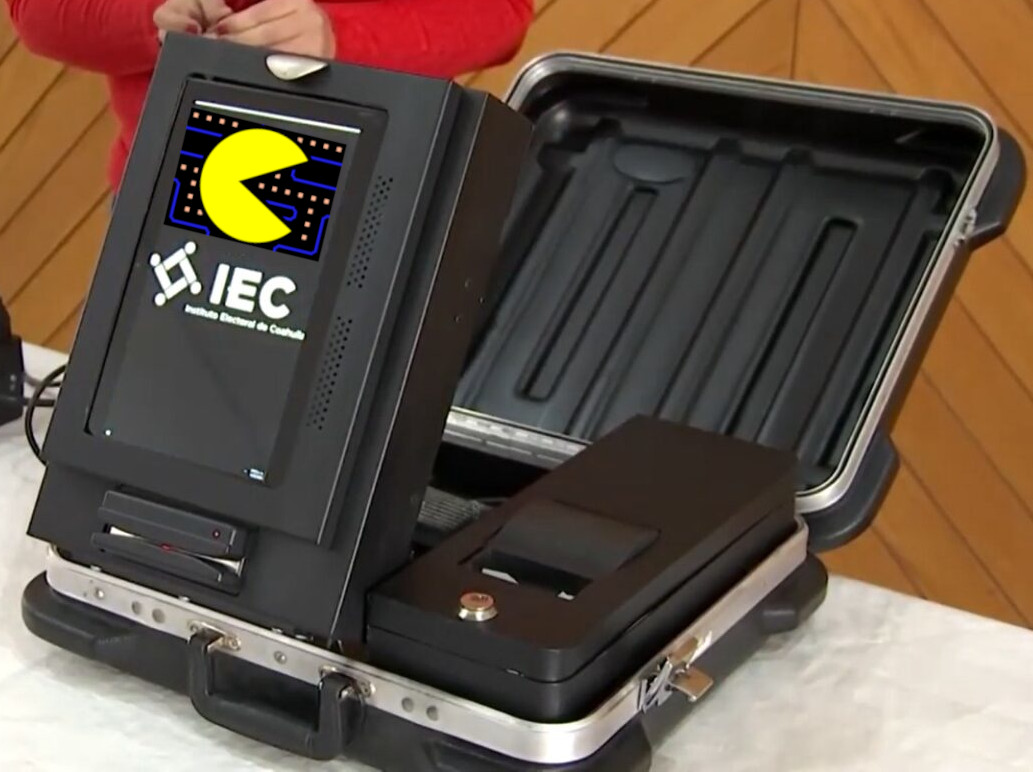
It s been a very long time I haven t blogged about e-voting, although some might remember it s been a topic I have long worked with; particularly, it was the topic of my 2018 Masters thesis, plus some five articles I wrote in the 2010-2018 period. After the thesis, I have to admit I got weary of the subject, and haven t pursued it anymore. So, I was saddened and dismayed to read that once again, as it has already happened the electoral authorities would set up a pilot e-voting program in the local elections this year, that would probably lead to a wider deployment next year, in the Federal elections. This year ( this week!), two States will have elections for their Governors and local Legislative branches: Coahuila (North, bordering with Texas) and Mexico (Center, surrounding Mexico City). They are very different states, demographically and in their development level. Pilot programs with e-voting booths have been seen in four states TTBOMK in the last ~15 years: Jalisco (West), Mexico City, State of Mexico and Coahuila. In Coahuila, several universities have teamed up with the Electoral Institute to develop their e-voting booth; a good thing that I can say about how this has been done in my country is that, at least, the Electoral Institute is providing their own implementations, instead of sourcing with e-booth vendors (which have their long, tragic story mostly in the USA, but also in other places). Not only that: They are subjecting the machines to audit processes. Not open audit processes, as demanded by academics in the field, but nevertheless, external, rigorous audit processes. But still, what me and other colleagues with Computer Security background oppose to is not a specific e-voting implementation, but the adoption of e-voting in general. If for nothing else, because of the extra complexity it brings, because of the many more checks that have to be put in place, and Because as programmers, we are aware of the ease with which bugs can creep in any given implementation both honest bugs (mistakes) and, much worse, bugs that are secretly requested and paid for. Anyway, leave this bit aside for a while. I m not implying there was any ill intent in the design or implementation of these e-voting booths. Two days ago, the Electoral Institute announced there was an important bug found in the Coahuila implementation. The bug consists, as far as I can understand from the information reported in newspapers, in: The problem was that the activation codes remained active after voting, so a voter could vote multiple times. This seems like an easy problem to be patched It most likely is. However, given the inability to patch, properly test, and deploy in a timely manner the fix to all of the booths (even though only 74 e-voting booths were to be deployed for this pilot), the whole pilot for Coahuila was scratched; Mexico State is voting with a different implementation that is not affected by this issue. This illustrates very well one of the main issues with e-voting technology: It requires a team of domain-specific experts to perform a highly specialized task (code and physical audits). I am happy and proud to say that part of the auditing experts were the professors of the Information Security Masters program of ESIME Culhuac n (the Masters program I was part of). The reaction by the Electoral Institute was correct. As far as I understand, there is no evidence suggesting this bug could have been purposefully built, but it s not impossible to rule it out. A traditional, paper-and-ink-based process is not only immune to attacks (or mistakes!) based on code such as this one, but can be audited by anybody. And that is, I believe, a fundamental property of democracy: ensuring the process is done right is not limited to a handful of domain experts. Not only that: In Mexico, I am sure there are hundreds of very proficient developers that could perform a code and equipment audit such as this one, but the audits are open by invitation only, so being an expert is not enough to get clearance to do this. In a democracy, the whole process should be observable and verifiable by anybody interested in doing so. Some links about this news:

31 May 2023

Arturo Borrero Gonz lez: Wikimedia Hackathon 2023 Athens summary

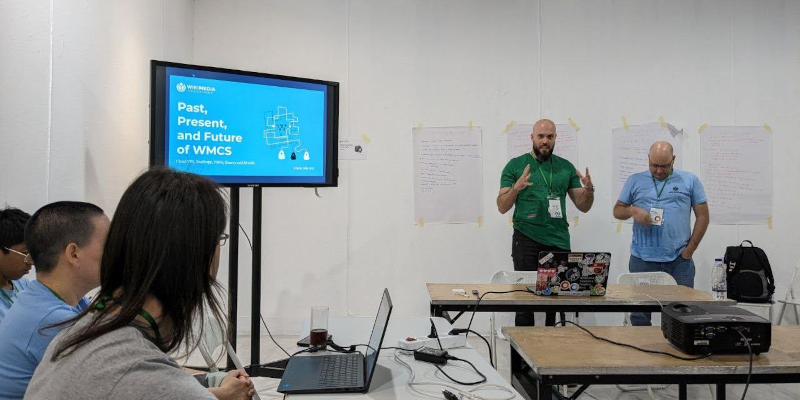
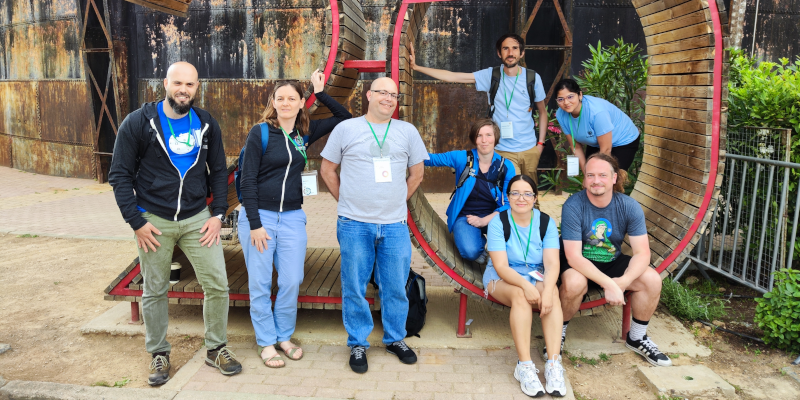
Post logo During the weekend of 19-23 May 2023 I attended the Wikimedia hackathon 2023 in Athens, Greece. The event physically reunited folks interested in the more technological aspects of the Wikimedia movement in person for the first time since 2019. The scope of the hacking projects include (but was not limited to) tools, wikipedia bots, gadgets, server and network infrastructure, data and other technical systems. My role in the event was two-fold: on one hand I was in the event because of my role as SRE in the Wikimedia Cloud Services team, where we provided very valuable services to the community, and I was expected to support the technical contributors of the movement that were around. Additionally, and because of that same role, I did some hacking myself too, which was specially augmented given I generally collaborate on a daily basis with some community members that were present in the hacking room. The hackathon had some conference-style track and I ran a session with my coworker Bryan, called Past, Present and Future of Wikimedia Cloud Services (Toolforge and friends) (slides) which was very satisfying to deliver given the friendly space that it was. I attended a bunch of other sessions, and all of them were interesting and well presented. The number of ML themes that were present in the program schedule was exciting. I definitely learned a lot from attending those sessions, from how LLMs work, some fascinating applications for them in the wikimedia space, to what were some industry trends for training and hosting ML models. Session Despite the sessions, the main purpose of the hackathon was, well, hacking. While I was in the hacking space for more than 12 hours each day, my ability to get things done was greatly reduced by the constant conversations, help requests, and other social interactions with the folks. Don t get me wrong, I embraced that reality with joy, because the social bonding aspect of it is perhaps the main reason why we gathered in person instead of virtually. That being said, this is a rough list of what I did: The hackathon was also the final days of Technical Engagement as an umbrella group for WMCS and Developer Advocacy teams within the Technology department of the Wikimedia Foundation because of an internal reorg.. We used the chance to reflect on the pleasant time we have had together since 2019 and take a final picture of the few of us that were in person in the event. Technical Engagement It wasn t the first Wikimedia Hackathon for me, and I felt the same as in previous iterations: it was a welcoming space, and I was surrounded by friends and nice human beings. I ended the event with a profound feeling of being privileged, because I was part of the Wikimedia movement, and because I was invited to participate in it.

Russ Allbery: Review: Night Watch

Review: Night Watch, by Terry Pratchett
Series: Discworld #29
Publisher: Harper
Copyright: November 2002
Printing: August 2014
ISBN: 0-06-230740-1
Format: Mass market
Pages: 451
Night Watch is the 29th Discworld novel and the sixth Watch novel. I would really like to tell people they could start here if they wanted to, for reasons that I will get into in a moment, but I think I would be doing you a disservice. The emotional heft added by having read the previous Watch novels and followed Vimes's character evolution is significant. It's the 25th of May. Vimes is about to become a father. He and several of the other members of the Watch are wearing sprigs of lilac for reasons that Sergeant Colon is quite vehemently uninterested in explaining. A serial killer named Carcer the Watch has been after for weeks has just murdered an off-duty sergeant. It's a tense and awkward sort of day and Vimes is feeling weird and wistful, remembering the days when he was a copper and not a manager who has to dress up in ceremonial armor and meet with committees. That may be part of why, when the message comes over the clacks that the Watch have Carcer cornered on the roof of the New Hall of the Unseen University, Vimes responds in person. He's grappling with Carcer on the roof of the University Library in the middle of a magical storm when lightning strikes. When he wakes up, he's in the past, shortly after he joined the Watch and shortly before the events of the 25th of May that the older Watch members so vividly remember and don't talk about. I have been saying recently in Discworld reviews that it felt like Pratchett was on the verge of a breakout book that's head and shoulders above Discworld prior to that point. This is it. This is that book. The setup here is masterful: the sprigs of lilac that slowly tell the reader something is going on, the refusal of any of the older Watch members to talk about it, the scene in the graveyard to establish the stakes, the disconcerting fact that Vetinari is wearing a sprig of lilac as well, and the feeling of building tension that matches the growing electrical storm. And Pratchett never gives into the temptation to explain everything and tip his hand prematurely. We know the 25th is coming and something is going to happen, and the reader can put together hints from Vimes's thoughts, but Pratchett lets us guess and sometimes be right and sometimes be wrong. Vimes is trying to change history, which adds another layer of uncertainty and enjoyment as the reader tries to piece together both the true history and the changes. This is a masterful job at a "what if?" story. And, beneath that, the commentary on policing and government and ethics is astonishingly good. In a review of an earlier Watch novel, I compared Pratchett to Dickens in the way that he focuses on a sort of common-sense morality rather than political theory. That is true here too, but oh that moral analysis is sharp enough to slide into you like a knife. This is not the Vimes that we first met in Guards! Guards!. He has has turned his cynical stubbornness into a working theory of policing, and it's subtle and complicated and full of nuance that he only barely knows how to explain. But he knows how to show it to people.
Keep the peace. That was the thing. People often failed to understand what that meant. You'd go to some life-threatening disturbance like a couple of neighbors scrapping in the street over who owned the hedge between their properties, and they'd both be bursting with aggrieved self-righteousness, both yelling, their wives would either be having a private scrap on the side or would have adjourned to a kitchen for a shared pot of tea and a chat, and they all expected you to sort it out. And they could never understand that it wasn't your job. Sorting it out was a job for a good surveyor and a couple of lawyers, maybe. Your job was to quell the impulse to bang their stupid fat heads together, to ignore the affronted speeches of dodgy self-justification, to get them to stop shouting and to get them off the street. Once that had been achieved, your job was over. You weren't some walking god, dispensing finely tuned natural justice. Your job was simply to bring back peace.
When Vimes is thrown back in time, he has to pick up the role of his own mentor, the person who taught him what policing should be like. His younger self is right there, watching everything he does, and he's desperately afraid he'll screw it up and set a worse example. Make history worse when he's trying to make it better. It's a beautifully well-done bit of tension that uses time travel as the hook to show both how difficult mentorship is and also how irritating one's earlier naive self would be.
He wondered if it was at all possible to give this idiot some lessons in basic politics. That was always the dream, wasn't it? "I wish I'd known then what I know now"? But when you got older you found out that you now wasn't you then. You then was a twerp. You then was what you had to be to start out on the rocky road of becoming you now, and one of the rocky patches on that road was being a twerp.
The backdrop of this story, as advertised by the map at the front of the book, is a revolution of sorts. And the revolution does matter, but not in the obvious way. It creates space and circumstance for some other things to happen that are all about the abuse of policing as a tool of politics rather than Vimes's principle of keeping the peace. I mentioned when reviewing Men at Arms that it was an awkward book to read in the United States in 2020. This book tackles the ethics of policing head-on, in exactly the way that book didn't. It's also a marvelous bit of competence porn. Somehow over the years, Vimes has become extremely good at what he does, and not just in the obvious cop-walking-a-beat sort of ways. He's become a leader. It's not something he thinks about, even when thrown back in time, but it's something Pratchett can show the reader directly, and have the other characters in the book comment on. There is so much more that I'd like to say, but so much would be spoilers, and I think Night Watch is more effective when you have the suspense of slowly puzzling out what's going to happen. Pratchett's pacing is exquisite. It's also one of the rare Discworld novels where Pratchett fully commits to a point of view and lets Vimes tell the story. There are a few interludes with other people, but the only other significant protagonist is, quite fittingly, Vetinari. I won't say anything more about that except to note that the relationship between Vimes and Vetinari is one of the best bits of fascinating subtlety in all of Discworld. I think it's also telling that nothing about Night Watch reads as parody. Sure, there is a nod to Back to the Future in the lightning storm, and it's impossible to write a book about police and street revolutions without making the reader think about Les Miserables, but nothing about this plot matches either of those stories. This is Pratchett telling his own story in his own world, unapologetically, and without trying to wedge it into parody shape, and it is so much the better book for it. The one quibble I have with the book is that the bits with the Time Monks don't really work. Lu-Tze is annoying and flippant given the emotional stakes of this story, the interludes with him are frustrating and out of step with the rest of the book, and the time travel hand-waving doesn't add much. I see structurally why Pratchett put this in: it gives Vimes (and the reader) a time frame and a deadline, it establishes some of the ground rules and stakes, and it provides a couple of important opportunities for exposition so that the reader doesn't get lost. But it's not good story. The rest of the book is so amazingly good, though, that it doesn't matter (and the framing stories for "what if?" explorations almost never make much sense). The other thing I have a bit of a quibble with is outside the book. Night Watch, as you may have guessed by now, is the origin of the May 25th Pratchett memes that you will be familiar with if you've spent much time around SFF fandom. But this book is dramatically different from what I was expecting based on the memes. You will, for example see a lot of people posting "Truth, Justice, Freedom, Reasonably Priced Love, And a Hard-Boiled Egg!", and before reading the book it sounds like a Pratchett-style humorous revolutionary slogan. And I guess it is, sort of, but, well... I have to quote the scene:
"You'd like Freedom, Truth, and Justice, wouldn't you, Comrade Sergeant?" said Reg encouragingly. "I'd like a hard-boiled egg," said Vimes, shaking the match out. There was some nervous laughter, but Reg looked offended. "In the circumstances, Sergeant, I think we should set our sights a little higher " "Well, yes, we could," said Vimes, coming down the steps. He glanced at the sheets of papers in front of Reg. The man cared. He really did. And he was serious. He really was. "But...well, Reg, tomorrow the sun will come up again, and I'm pretty sure that whatever happens we won't have found Freedom, and there won't be a whole lot of Justice, and I'm damn sure we won't have found Truth. But it's just possible that I might get a hard-boiled egg."
I think I'm feeling defensive of the heart of this book because it's such an emotional gut punch and says such complicated and nuanced things about politics and ethics (and such deeply cynical things about revolution). But I think if I were to try to represent this story in a meme, it would be the "angels rise up" song, with all the layers of meaning that it gains in this story. I'm still at the point where the lilac sprigs remind me of Sergeant Colon becoming quietly furious at the overstep of someone who wasn't there. There's one other thing I want to say about that scene: I'm not naturally on Vimes's side of this argument. I think it's important to note that Vimes's attitude throughout this book is profoundly, deeply conservative. The hard-boiled egg captures that perfectly: it's a bit of physical comfort, something you can buy or make, something that's part of the day-to-day wheels of the city that Vimes talks about elsewhere in Night Watch. It's a rejection of revolution, something that Vimes does elsewhere far more explicitly. Vimes is a cop. He is in some profound sense a defender of the status quo. He doesn't believe things are going to fundamentally change, and it's not clear he would want them to if they did. And yet. And yet, this is where Pratchett's Dickensian morality comes out. Vimes is a conservative at heart. He's grumpy and cynical and jaded and he doesn't like change. But if you put him in a situation where people are being hurt, he will break every rule and twist every principle to stop it.
He wanted to go home. He wanted it so much that he trembled at the thought. But if the price of that was selling good men to the night, if the price was filling those graves, if the price was not fighting with every trick he knew... then it was too high. It wasn't a decision that he was making, he knew. It was happening far below the areas of the brain that made decisions. It was something built in. There was no universe, anywhere, where a Sam Vimes would give in on this, because if he did then he wouldn't be Sam Vimes any more.
This is truly exceptional stuff. It is the best Discworld novel I have read, by far. I feel like this was the Watch novel that Pratchett was always trying to write, and he had to write five other novels first to figure out how to write it. And maybe to prepare Discworld readers to read it. There are a lot of Discworld novels that are great on their own merits, but also it is 100% worth reading all the Watch novels just so that you can read this book. Followed in publication order by The Wee Free Men and later, thematically, by Thud!. Rating: 10 out of 10

30 May 2023

Russ Allbery: Review: The Mimicking of Known Successes

Review: The Mimicking of Known Successes, by Malka Older
Series: Mossa and Pleiti #1
Publisher: Tordotcom
Copyright: 2023
ISBN: 1-250-86051-2
Format: Kindle
Pages: 169
The Mimicking of Known Successes is a science fiction mystery novella, the first of an expected series. (The second novella is scheduled to be published in February of 2024.) Mossa is an Investigator, called in after a man disappears from the eastward platform on the 4 63' line. It's an isolated platform, five hours away from Mossa's base, and home to only four residential buildings and a pub. The most likely explanation is that the man jumped, but his behavior before he disappeared doesn't seem consistent with that theory. He was bragging about being from Valdegeld University, talking to anyone who would listen about the important work he was doing not typically the behavior of someone who is suicidal. Valdegeld is the obvious next stop in the investigation. Pleiti is a Classics scholar at Valdegeld. She is also Mossa's ex-girlfriend, making her both an obvious and a fraught person to ask for investigative help. Mossa is the last person she expected to be waiting for her on the railcar platform when she returns from a trip to visit her parents. The Mimicking of Known Successes is mostly a mystery, following Mossa's attempts to untangle the story of what happened to the disappeared man, but as you might have guessed there's a substantial sapphic romance subplot. It's also at least adjacent to Sherlock Holmes: Mossa is brilliant, observant, somewhat monomaniacal, and very bad at human relationships. All of this story except for the prologue is told from Pleiti's perspective as she plays a bit of a Watson role, finding Mossa unreadable, attractive, frustrating, and charming in turn. Following more recent Holmes adaptations, Mossa is portrayed as probably neurodivergent, although the story doesn't attach any specific labels. I have no strong opinions about this novella. It was fine? There's a mystery with a few twists, there's a sapphic romance of the second chance variety, there's a bit of action and a bit of hurt/comfort after the action, and it all felt comfortably entertaining but kind of predictable. Susan Stepney has a "passes the time" review rating, and while that may be a bit harsh, that's about where I ended up. The most interesting part of the story is the science fiction setting. We're some indefinite period into the future. Humans have completely messed up Earth to the point of making it uninhabitable. We then took a shot at terraforming Mars and messed that planet up to the point of uninhabitability as well. Now, what's left of humanity (maybe not all of it the story isn't clear) lives on platforms connected by rail lines high in the atmosphere of Jupiter. (Everyone in the story calls Jupiter "Giant" for reasons that I didn't follow, given that they didn't rename any of its moons.) Pleiti's position as a Classics scholar means that she studies Earth and its now-lost ecosystems, whereas the Modern faculty focus on their new platform life. This background does become relevant to the mystery, although exactly how is not clear at the start. I wouldn't call this a very realistic setting. One has to accept that people are living on platforms attached to artificial rings around the solar system's largest planet and walk around in shirt sleeves and only minor technological support due to "atmoshields" of some unspecified capability, and where the native atmosphere plays the role of London fog. Everything feels vaguely Edwardian, including to the occasional human porter and message runner, which matches the story concept but seems unlikely as a plausible future culture. I also disbelieve in humanity's ability to do anything to Earth that would make it less inhabitable than the clouds of Jupiter. That said, the setting is a lot of fun, which is probably more important. It's fun to try to visualize, and it has that slightly off-balance, occasionally surprising feel of science fiction settings where everyone is recognizably human but the things they consider routine and unremarkable are unexpected by the reader. This novella also has a great title. The Mimicking of Known Successes is simultaneously a reference a specific plot point from late in the story, a nod to the shape of the romance, and an acknowledgment of the Holmes pastiche, and all of those references work even better once you know what the plot point is. That was nicely done. This was not very memorable apart from the setting, but it was pleasant enough. I can't say that I'm inspired to pre-order the next novella in this series, but I also wouldn't object to reading it. If you're in the mood for gender-swapped Holmes in an exotic setting, you could do worse. Followed by The Imposition of Unnecessary Obstacles. Rating: 6 out of 10

29 May 2023

Shirish Agarwal: Pearls of Luthra, Dahaad, Tetris & Discord.

Pearls of Luthra Pearls of Luthra is the first book by Brian Jacques and I think I am going to be a fan of his work. This particular book you have to be wary of. While it is a beautiful book with quite a few illustrations, I have to warn that if you are somebody who feels hungry at the very mention of food, then you will be hungry throughout the book. There isn t a single page where food isn t mentioned and not just any kind of food, the kind of food that is geared towards sweet tooth. So if you fancy tarts or chocolates or anything sweet you will right at home. The book also touches upon various teas and wines and various liquors but food is where it shines in literally. The tale is very much like a Harry Potter adventure but isn t as dark as HP was. In fact, apart from one death and one ear missing rest of our heroes and heroines and there are quite a few. I don t want to give too much away as it s a book to be treasured.

Dahaad Dahaad (the roar) is Sonakshi Sinha s entry in OTT/Web Series. The stage is set somewhere in North India while the exploits are based on a real life person called Cyanide Mohan who killed 20 women between 2005-2009. In the web series however, the antagonist s crimes are done over a period of 12 years and has 29 women as his victims. Apart from that it s pretty much a copy of what was done by the person above. It s a melting pot of a series which quite a few stories enmeshed along with the main one. The main onus and plot of the movie is about women from lower economic and caste order whose families want them to be wed but cannot due to huge demands for dowry. Now in such a situation, if a person were to give them a bit of attention, promise marriage and ask them to steal a bit and come with him and whatever, they will do it. The same modus operandi was done by Cynaide Mohan. He had a car that was not actually is but used it show off that he s from a richer background, entice the women, have sex, promise marriage and in the morning after pill there will be cynaide which the women unwittingly will consume. This is also framed by the protagonist Sonakshi Sinha to her mother as her mother is also forcing her to get married as she is becoming older. She shows some of the photographs of the victims and says that while the perpetrator is guilty but so is the overall society that puts women in such vulnerable positions. AFAIK, that is still the state of things. In fact, there is a series called Indian Matchmaking that has all the snobbishness that you want. How many people could have a lifestyle like the ones shown in that, less than 2% of the population. It s actually shows like the above that make the whole thing even more precarious  Apart from it, the show also shows prejudice about caste and background. I wouldn t go much into it as it s worth seeing and experiencing.

Tetris Tetris in many a ways is a story of greed. It s also a story of a lone inventor who had to wait almost 20 odd years to profit from his invention. Forbes does a marvelous job of giving some more background and foreground info. about Tetris, the inventor and the producer that went to strike it rich. It also does share about copyright misrepresentation happens but does nothing to address it. Could talk a whole lot but better to see the movie and draw your own conclusions. For me it was 4/5.

Discord Discord became Discord 2.0 and is a blank to me. A blank page. Can t do anything. First I thought it was a bug. Waited for a few days as sometimes webservices do fix themselves. But two weeks on and it still wasn t fixed then decided to look under. One of the tools in Firefox is Web Developer Tools ( CTRL+Shift+I) that tells you if an element of a page is not appearing or at least gives you a hint. To me it gave me the following
Content Security Policy: Ignoring 'unsafe-inline' within script-src or style-src: nonce-source or hash-source specified
Content Security Policy: The page s settings blocked the loading of a resource at data:text/css,%0A%20%20%20%20%20%20%20%2 ( style-src ). data:44:30
Content Security Policy: Ignoring 'unsafe-inline' within script-src or style-src: nonce-source or hash-source specified
TypeError: AudioContext is not a constructor 138875 https://discord.com/assets/cbf3a75da6e6b6a4202e.js:262 l https://discord.com/assets/f5f0b113e28d4d12ba16.js:1ed46a18578285e5c048b.js:241:118 What is being done is dom.webaudio.enabled being disabled in Firefox. Then on a hunch, searched on reddit and saw the following. Be careful while visiting the link as it s labelled NSFW although to my mind there wasn t anything remotely NSFW about it. They do mention using another tool AudioContext Fingerprint Defender which supposedly fakes or spoofs an id. As this add-on isn t tracked by Firefox privacy team it s hard for me to say anything positive or negative. So, in the end I stopped using discord as the alternative was being tracked by them  Last but not the least, saw this about a week back. Sooner or later this had to happen as Elon tries to make money off Twitter.

26 May 2023

Valhalla's Things: Correspondence Book

Posted on May 26, 2023
A Coptic bound book open to the first page with the title  Book of <space> Correspondence / Volume <space> Years <space> I write letters. The kind that are written on paper with a dip pen 1 and ink, stamped and sent through the post, spend a few days or weeks maturing like good wine in a depot somewhere2, and then get delivered to the recipient. Some of them (mostly cards) are to people who will receive them and thank me via xmpp (that sounds odd, but actually works out nicely), but others are proper letters with long texts that I exchange with penpals. Most of those are fountain pen frea^Wenthusiasts, so I usually use a different ink each time, and try to vary the paper, and I need to keep track of what I ve used. Some time ago, I ve read a Victorian book3 which recommended keeping a correspondence book to register all mail received and sent, the topics and whether it had been replied or otherwise acted upon. I don t have the mail traffic of a Victorian lady (or even middle class woman), but this looked like something fun to do, and if I added fields for the inks and paper used it would also have useful side effect. A page with writing lines with the title of the field below it: it has a number and then date, sender / recipient (at the ends of the same line, in reply to / replied, ink, paper, pen, topics / notes. So I headed over to the obvious program anybody would use for these things (XeLaTeX, of course) and quickly designed a page with fields for the basic thinks I want to record; it was a bit hurried, and I may improve on it the next time I make one, but I expect this one to last me two or three years, and it is good enough. I ve decided to make it A6 sized, so that it doesn t require a lot of space on my busy desktop, and it could be carried inside a portable desktop, if I ever decide to finish the one for which I ve made a mockup years ago :) Picture of book open to the correspondent pages: the fields are name, letters sent, letters received, address and notes. I ve also added a few pages for the addresses of my correspondents (and an index of the letters I ve exchanged with them), and a few empty pages for other notes. Then I ve used my a6_book.py script to rearrange the A6 pages into signatures and impress them on A4; to reduce later effort I ve added an option to order the pages in such a way that if I then cut four A4 sheet in half at a time (the limit of my rotary cutter) the signatures are ready to be folded. It s not the default because it requires that the pages are a multiple of 32 rather than just 16 (and they are padded up with empty pages if they aren t). If you re also interested in making one, here are the files: the book open to the page of letter two, which is repeated twice. After printing (an older version where some of the pages are repeated. whoops, but it only happened 4 times, and it s not a big deal), it was time for binding this into a book. I ve opted for Coptic stitch, so that the book will open completely flat and writing on it will be easier and the covers are 2 mm cardboard covered in linen-look bookbinding paper (sadly I no longer have a source for bookbinding cloth made from actual cloth). The grey cover of the book with the word correspondence, a stylised envelope and a border in blue. I tried to screenprint a simple design on the cover: the first attempt was unusable (the paper was smaller than the screen, so I couldn t keep it in the right place and moved as I was screenprinting); on the second attempt I used some masking tape to keep the paper in place, and they were a bit better, but I need more practice with the technique. Finally, I decided that for such a Victorian thing I will use an Iron-gall ink, but it s Rohrer & Knlingner Scabiosa, with a purple undertone, because life s too short to use blue-black ink :D And now, I m off to write an actual letter, rather than writing online about things that are related to letter writing.
  1. not a quill! I m a modern person who uses steel nibs!
  2. Milano Roserio, I m looking at you. a month to deliver a postcard from Lombardy to Ticino? not even a letter, which could have hidden contraband, a postcard.
  3. I think. I ve looked at some plausible candidates and couldn t find the source.

Valhalla's Things: Late Victorian Combinations

Posted on May 26, 2023
A woman wearing a white linen combination suite, with a very fitted top, small sleevelets that cover the armpits (to protect the next layers from sweat) and split drawers. The suite buttons up along the front (where it is a bit tight around the bust) and has a line of lace at the neckline and two tucks plus some lace at the legs. Some time ago, on an early Friday afternoon our internet connection died. After a reasonable time had passed we called the customer service, they told us that they would look into it and then call us back. On Friday evening we had not heard from them, and I was starting to get worried. At the time in the evening when I would have been relaxing online I grabbed the first Victorian sewing-related book I found on my hard disk and started to read it. For the record, it wasn t actually Victorian, it was Margaret J. Blair. System of Sewing and Garment Drafting. from 1904, but I also had available for comparison the earlier and smaller Margaret Blair. System of Garment Drafting. from 1897. A page from the book showing the top part of a pattern with all construction lines Anyway, this book had a system to draft a pair of combinations (chemise top + drawers); and months ago I had already tried to draft a pair from another system, but they didn t really fit and they were dropped low on the priority list, so on a whim I decided to try and draft them again with this new-to-me system. Around 23:00 in the night the pattern was ready, and I realized that my SO had gone to sleep without waiting for me, as I looked too busy to be interrupted. The next few days were quite stressful (we didn t get our internet back until Wednesday) and while I couldn t work at my day job I didn t sew as much as I could have done, but by the end of the week I had an almost complete mockup from an old sheet, and could see that it wasn t great, but it was a good start. One reason why the mockup took a whole week is that of course I started to sew by machine, but then I wanted flat-felled seams, and felling them by hand is so much neater, isn t it? And let me just say, I m grateful for the fact that I don t depend on streaming services for media, but I have a healthy mix of DVDs and stuff I had already temporary downloaded to watch later, because handsewing and being stressed out without watching something is not really great. Anyway, the mockup was a bit short on the crotch, but by the time I could try it on and be sure I was invested enough in it that I decided to work around the issue by inserting a strip of lace around the waist. And then I went back to the pattern to fix it properly, and found out that I had drafted the back of the drawers completely wrong, making a seam shorter rather than longer as it should have been. ooops. I fixed the pattern, and then decided that YOLO and cut the new version directly on some lightweight linen fabric I had originally planned to use in this project. The result is still not perfect, but good enough, and I finished it with a very restrained amount of lace at the neckline and hems, wore it one day when the weather was warm (loved the linen on the skin) and it s ready to be worn again when the weather will be back to being warm (hopefully not too soon). The last problem was taking pictures of this underwear in a way that preserves the decency (and it even had to be outdoors, for the light!). This was solved by wearing leggings and a matched long sleeved shirt under the combinations, and then promptly forgetting everything about decency and, well, you can see what happened. A woman mooning by keeping the back of split drawers open with her hands, but at least there are black leggings under them. The pattern is, as usual, published on my pattern website as #FreeSoftWear. And then, I started thinking about knits. In the late Victorian and Edwardian eras knit underwear was a thing, also thanks to the influence of various aspects of the rational dress movement; reformers such as Gustav J ger advocated for wool underwear, but mail order catalogues from the era such as https://archive.org/details/cataloguefallwin00macy (starting from page 67) have listings for both cotton and wool ones. From what I could find, back then they would have been either handknit at home or made to shape on industrial knitting machines; patterns for the former are available online, but the latter would probably require a knitting machine that I don t currently1 have. However, this is underwear that is not going to be seen by anybody2, and I believe that by using flat knit fabric one can get a decent functional approximation. In The Stash I have a few meters of a worked cotton jersey with a pretty comfy feel, and to make a long story short: this happened. a woman wearing a black cotton jersey combination suite; the front is sewn shut, but the neck is wide and finished with elastic.  The top part is pretty fitted, but becomes baggier around the crotch area and the legs are a comfortable width. I suspect that the linen one will get worn a lot this summer (linen on the skin. nothing else need to be said), while the cotton one will be stored away for winter. And then maybe I may make a couple more, if I find out that I m using it enough.

  1. cue ominous music. But first I would need space to actually keep and use it :)
  2. other than me, my SO, any costuming friend I may happen to change in the presence of, and everybody on the internet in these pictures.

Next.

Previous.