Daniel Kahn Gillmor: Changes for GnuPG in Debian
 The GNU Privacy Guard (GnuPG) upstream team maintains three branches of development: 1.4 ("classic"), 2.0 ("stable"), and 2.1 ("modern").They differ in various ways: software architecture, supported algorithms, network transport mechanisms, protocol versions, development activity, co-installability, etc.Debian currently ships two versions of GnuPG in every maintained suite -- in particular,
/usr/bin/gpg has historically always been provided by the "classic" branch.That's going to change!Debian unstable will soon be moving to the "modern" branch for providing /usr/bin/gpg. This will give several advantages for Debian and its users in the future, but it will require a transition. Hopefully we can make it a smooth one.What are the benefits?Compared to "classic", The "modern" branch has:- updated crypto (including elliptic curves)
- componentized architecture (e.g. libraries, some daemonized processes)
- improved key storage
- better network access (including talking to keyservers over tor)
- stronger defaults
- more active upstream development
- safer info representation (e.g. no more key IDs, fingerprints easier to copy-and-paste)
If you want to try this out, the changes are already made in experimental. Please experiment!What does this mean for end users?If you're an end user and you don't use GnuPG directly, you shouldn't notice much of a change once the packages start to move through the rest of the archive.Even if you do use GnuPG regularly, you shouldn't notice too much of a difference. One of the main differences is that all access to your secret key will be handled through gpg-agent, which should be automatically launched as needed. This means that operations like signing and decryption will cause gpg-agent to prompt the the user to unlock any locked keys directly, rather than gpg itself prompting the user.If you have an existing keyring, you may also notice a difference based on a change of how your public keys are managed, though again this transition should ideally be smooth enough that you won't notice unless you care to investigate more deeply.If you use GnuPG regularly, you might want to read the NEWS file that ships with GnuPG and related packages for updates that should help you through the transition.If you use GnuPG in a language other than English, please install the gnupg-l10n package, which contains the localization/translation files. For versions where those files are split out of the main package, gnupg explicitly Recommends: gnupg-l10n already, so it should be brought in for new installations by default.If you have an archive of old data that depends on known-broken algorithms, PGP3 keys, or other deprecated material, you'll need to have "classic" GnuPG around to access it. That will be provided in the gnupg1 packageWhat does this mean for package maintainers?If you maintain a package that depends on gnupg: be aware that the gnupg package in debian is going through this transition.A few general thoughts:- If your package
Depends: gnupg for signature verification only, you might prefer to have it Depends: gpgv instead. gpgv is a much simpler tool that the full-blown GnuPG suite, and should be easier to manage. I'm happy to help with such a transition (we've made it recently with apt already) - If your package
Depends: gnupg and expects ~/.gnupg/ to be laid out in a certain way, that's almost certainly going to break at some point. ~/.gnupg/ is GnuPG's internal storage, and it's not recommended to rely on any specific data structures there, as they may change. gpg offers commands like --export, --import, and --delete for manipulating its persistent storage. please use them instead! - If your package depends on parsing or displaying
gpg's output for the user, please make sure you use its special machine-readable form (--with-colons). Parsing the human-readable text is not advised and may change from version to version.
If you maintain a package that depends on gnupg2 and tries to use gpg2 instead of gpg, that should stay ok. However, at some point it'd be nice to get rid of /usr/bin/gpg2 and just have one expected binary (gpg). So you can help with that:- Look for places where your package expects
gpg2 and make it try gpg instead. If you can make your code fall back cleanly - Change your dependencies to indicate
gnupg (>= 2) - Patch
lintian to encourage other people to make this switch ;)
What specifically needs to happen?The last major step for this transition was renaming the source package for "classic" GnuPG to be gnupg1. This transition is currently in the ftp-master's NEW queue. Once it makes it through that queue, and both gnupg1 and gnupg2 have been in experimental for a few days without reports of dangerous breakage, we'll upload both gnupg1 and gnupg2 to unstable.We'll also need to do some triage on the BTS, reassigning some reports which are really only relevant for the "classic" branch.Please report bugs via the BTS as usual! You're also welcome to ask questions and make suggestions on #debian-gnupg on irc.oftc.net, or to mail the Debian GnuPG packaging team at pkg-gnupg-maint@lists.alioth.debian.org.Happy hacking!Tags: gnupg
gnupg-l10n package, which contains the localization/translation files. For versions where those files are split out of the main package, gnupg explicitly Recommends: gnupg-l10n already, so it should be brought in for new installations by default.If you have an archive of old data that depends on known-broken algorithms, PGP3 keys, or other deprecated material, you'll need to have "classic" GnuPG around to access it. That will be provided in the gnupg1 packageWhat does this mean for package maintainers?If you maintain a package that depends on gnupg: be aware that the gnupg package in debian is going through this transition.A few general thoughts:- If your package
Depends: gnupg for signature verification only, you might prefer to have it Depends: gpgv instead. gpgv is a much simpler tool that the full-blown GnuPG suite, and should be easier to manage. I'm happy to help with such a transition (we've made it recently with apt already) - If your package
Depends: gnupg and expects ~/.gnupg/ to be laid out in a certain way, that's almost certainly going to break at some point. ~/.gnupg/ is GnuPG's internal storage, and it's not recommended to rely on any specific data structures there, as they may change. gpg offers commands like --export, --import, and --delete for manipulating its persistent storage. please use them instead! - If your package depends on parsing or displaying
gpg's output for the user, please make sure you use its special machine-readable form (--with-colons). Parsing the human-readable text is not advised and may change from version to version.
If you maintain a package that depends on gnupg2 and tries to use gpg2 instead of gpg, that should stay ok. However, at some point it'd be nice to get rid of /usr/bin/gpg2 and just have one expected binary (gpg). So you can help with that:- Look for places where your package expects
gpg2 and make it try gpg instead. If you can make your code fall back cleanly - Change your dependencies to indicate
gnupg (>= 2) - Patch
lintian to encourage other people to make this switch ;)
What specifically needs to happen?The last major step for this transition was renaming the source package for "classic" GnuPG to be gnupg1. This transition is currently in the ftp-master's NEW queue. Once it makes it through that queue, and both gnupg1 and gnupg2 have been in experimental for a few days without reports of dangerous breakage, we'll upload both gnupg1 and gnupg2 to unstable.We'll also need to do some triage on the BTS, reassigning some reports which are really only relevant for the "classic" branch.Please report bugs via the BTS as usual! You're also welcome to ask questions and make suggestions on #debian-gnupg on irc.oftc.net, or to mail the Debian GnuPG packaging team at pkg-gnupg-maint@lists.alioth.debian.org.Happy hacking!Tags: gnupg
Depends: gnupg for signature verification only, you might prefer to have it Depends: gpgv instead. gpgv is a much simpler tool that the full-blown GnuPG suite, and should be easier to manage. I'm happy to help with such a transition (we've made it recently with apt already)Depends: gnupg and expects ~/.gnupg/ to be laid out in a certain way, that's almost certainly going to break at some point. ~/.gnupg/ is GnuPG's internal storage, and it's not recommended to rely on any specific data structures there, as they may change. gpg offers commands like --export, --import, and --delete for manipulating its persistent storage. please use them instead!gpg's output for the user, please make sure you use its special machine-readable form (--with-colons). Parsing the human-readable text is not advised and may change from version to version.gpg2 and make it try gpg instead. If you can make your code fall back cleanlygnupg (>= 2)lintian to encourage other people to make this switch ;)gnupg1. This transition is currently in the ftp-master's NEW queue. Once it makes it through that queue, and both gnupg1 and gnupg2 have been in experimental for a few days without reports of dangerous breakage, we'll upload both gnupg1 and gnupg2 to unstable.We'll also need to do some triage on the BTS, reassigning some reports which are really only relevant for the "classic" branch.Please report bugs via the BTS as usual! You're also welcome to ask questions and make suggestions on #debian-gnupg on irc.oftc.net, or to mail the Debian GnuPG packaging team at pkg-gnupg-maint@lists.alioth.debian.org.Happy hacking!Tags: gnupg
 A new release, now at version number 0.6.10, of the






 For a few years I did not attempt any serious task on the Amazon cloud. It
took me a bit of time to get back my automatisms and adapt myself to the
changes. In particular, the cheapest instances,

 This is a repost and update of my retirement letter sent privately to Debian last month, July 10, 2016. At that time I received many notes of appreciation and good wishes which I treasure. Now, I d like to say goodbye to the broader Debian community and, as well, indicate which of the cleanup items have since been addressed in strikethrough style and with annotations. Also, I d like to stay in touch with many of you, so I have added some comments oriented towards those of you who are interested in doing that
 Now, business. These things remain to clean up upon my departure, and I d appreciate help from QA, and anyone else who can lend a hand. My packages are effectively orphaned, but I haven t the time to do any of the cleanup myself, so please speak up if you can help.


 Here is my monthly update covering a large part of what I have been doing in the free software world (

 Unless you're into hardware hacking and want to hook wires up to the GPIO
pins, the best hardware feature is the complete keyboard, with even
Escape and Control and arrow keys. You can ssh around and run vi on it,
run your favorite REPL (I use ghci) to do quick programming, etc.
The keyboard is small and a little strange, but you get used
to it quickly; your QWERTY muscle memory is transferrable to it.
I had fun installing nethack on it and handing it to my sister who
had never played nethack before, to watch her learn to play.
The screen resolution is 480x272, which is pretty tiny. And, it's a cheap
resistive touchscreen, with a bezil around it. This makes it very hard to
use scroll bars and icons near the edge of the screen. The customized
interface that ships with it avoids these problems, and so I've been using
that for now. When I have time, I plan to put a fullscreen window
manager on it, and write a
 About a year ago, I bought a Projector after I finally admitted that I could
actually use a TV in my apartment. I settled on buying a

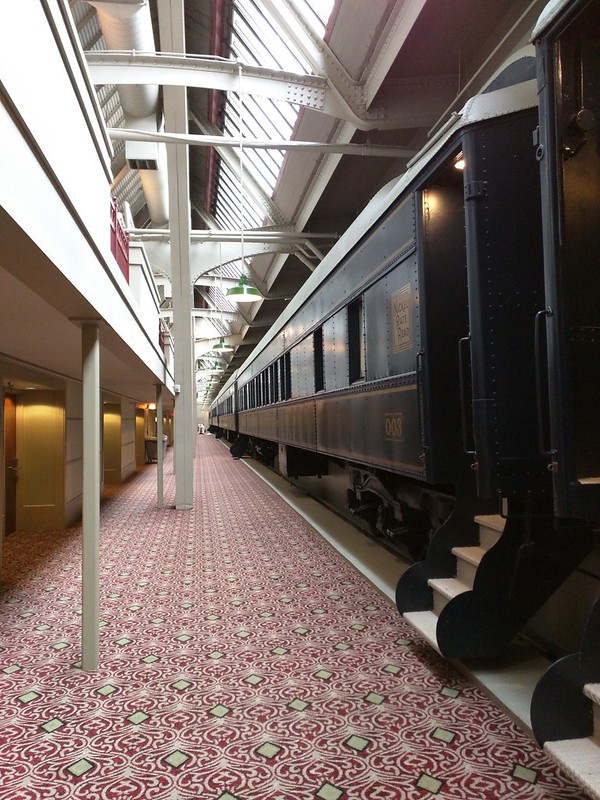
 Talks have been finished, and as a special present to the participants, Pavneet has organized an excursion that probably was one of the best I ever had. First we visited the
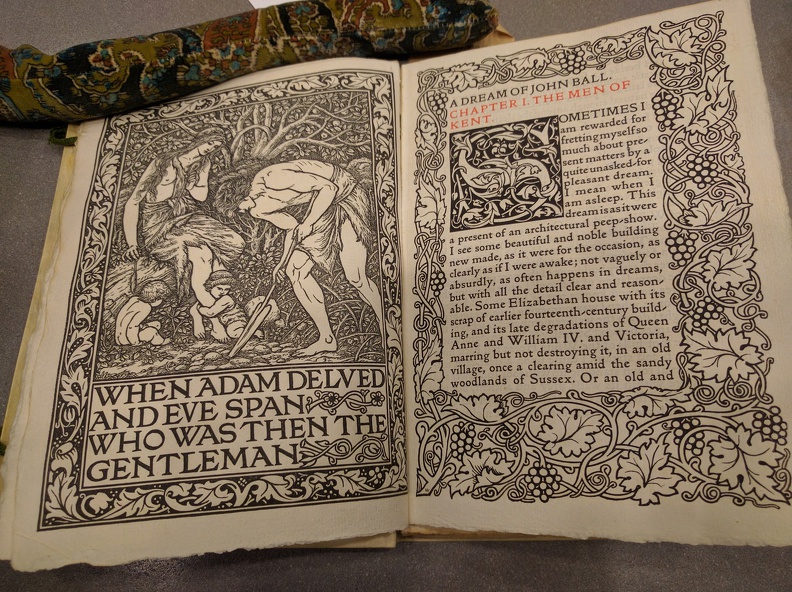












 During the ceremony, Pavneet also announced the winners of the


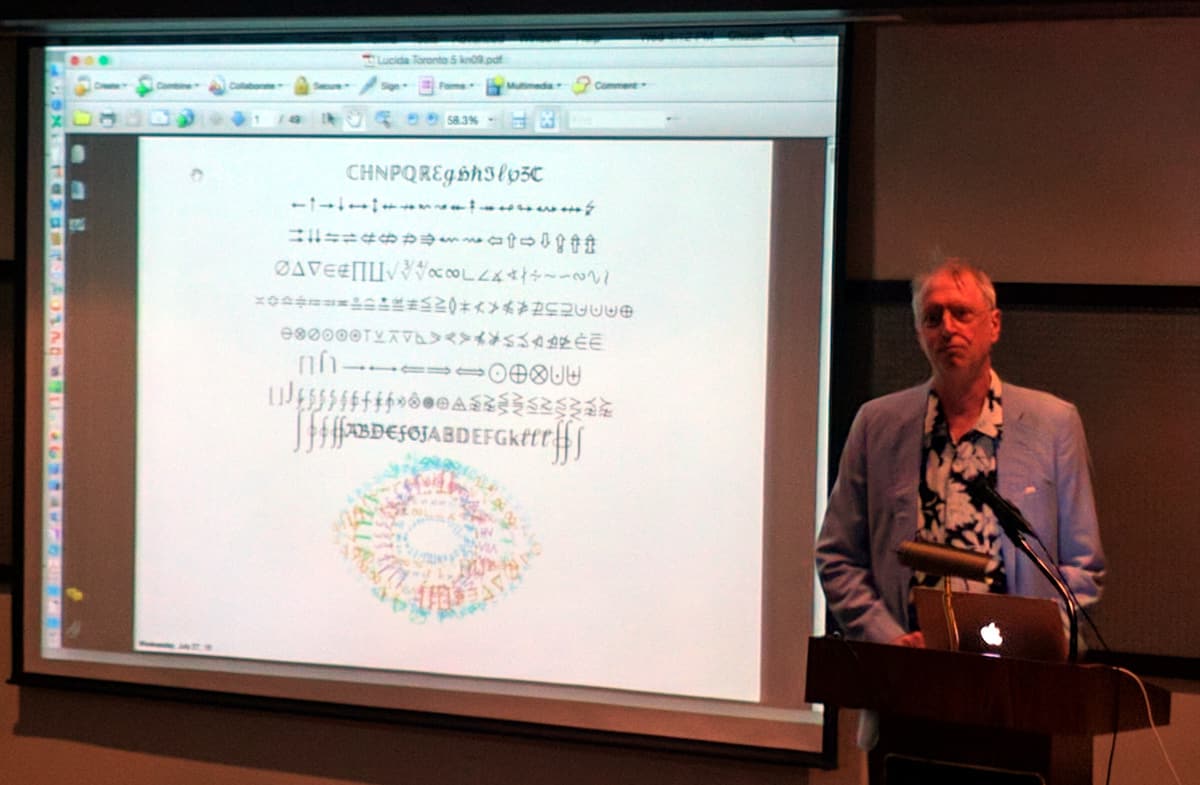
 Excellent life music in a bit schick/sophisticated atmosphere was a good finish for this excellent day. With Herb from MacTeX and his wife we killed two bottles of red wine, before slowly tingling back to the hotel.
A great finishing day of talks.