Search Results: "ron"

23 June 2014

Wouter Verhelst: The art of soccer, and ivory towers

Twenty years ago, I was sixteen and in high school. The school at the time, if memory serves right, was the "Kunsthumaniora voor muziek en woord van het gemeenschapsonderwijs" in Brussels (which translates approximately to "art high school for music and word of the communal educational branch"... that's not entirely right, but it's late and I'm too tired to look for a dictionary). I was taking drama classes there. No, I'm not making this up. Except maybe the sixteen bit I might be off by one or two years. Hey, I did a lot of things during high school. Stop looking at me like that. At one point in time during my stint in drama, a group of educational interns the sort of people who would be teaching some sort of stuff somewhere after their graduation cooperated with our school to come up with a whole day of classes around one subject. I'll never forget the title: "Can art rescue the democracy?" If that sounds pompous and silly, that's because it was. However, I was at art school, fer crying out loud, so I drank it up like it was cool-aid. Which it wasn't. It was worse. At the end of the day (literally, that is), the educational interns had booked some hot shot art person for a debate. I've since completely forgotten his name. He must've been not that hot shot after all, since I never even once read anything about him in the next few years. Of course I can't exclude the most recent decade, not remembering him and all, but whatever. I also don't remember whether he was a hot shot art critic, a hot shot artist, or just some random hot shot person who writes about art, but doesn't actually do it himself. Whatever. One of the main topics during the whole day was the point about how artsy people find it extremely difficult to define what art actually is. I mean, it's all they do all day, but they can't come up with a decent definition of the damn thing. During the afternoon break, just before the debate with this maybe-sortof-semi hot shot art person, I walk around the playground and think about the whole thing. And come up with some personal definition of art. My definition. As the time of the debate comes up, the hot shot art person sits in the front of the gym behind some table, and the whole school (literally) is sitting in chairs in the rest of the gym. Some questions are asked. Many of those are just shot down. At some point, I raise my finger when it's asked if anyone has further questions. I walk up to the microphone. I ask him: "Could we maybe define art as that thing that, though it might be easy to reproduce, in no case is easy to produce?" He sits (he never got up, really). He thinks. I stand, and wait. After a few seconds of this, he answers. He seems impressed. His reply is something along the lines of "that's not a perfect definition, but it's pretty good. There's a lot to be said for that, and I urge you to write about art when you grow older". I never followed his advice. I got a bit more interested in art, but quickly found out that art consists of one group of people who spend their time doing things other people find pretty, and another group of people who spend their time doing things that makes other people "think", whatever that is. They may not have a brain, they may be silly as hell, but they still want to "think". It's not for me, it's never been. Art, that is -- not the think bit. That is something I don't mind doing. Don't get me wrong. I still like art. I like going to museums from time to time; I like the performing arts. I mean, I play the flute. Not the piano, not the guitar, not the flipping drums, the flute. Which I like, for what it's worth. But if the intent is to make people think, there are better ways to do that. If I want to make people think, I'm not going to make some obscure object that may or may not have a message, in the hope that a millionaire with no better use for his money would buy it just to make his friends jealous, after which he's going to put it in a safe for a few years so he can sell it at a higher value. Without thinking about it. If I want to make people think, I'm not going to write a play or piece of music that's so obscure it will make people all confused, so they can fill their evening afterwards drinking cocktails at a reception, claiming it was all nice and thought-provoking, quoting little parts of it to people they've never met, just so they can make their social status look more than it actually is. Good thing I never finished drama school, I suppose. No, if I want to make people think, I'll try doing so where it actually matters. Like, say, in politics. Not that I have any political ambitions, mind you. But I think the answer to that question of twenty years ago should be a firm "no." Art cannot rescue democracy. Not if they don't have a lot of interesting things to say to anyone but themselves. Maybe the reverse is true, though; maybe democracy can rescue art. Not that I care much. Why is all this relevant today? A few days ago, as I was driving somewhere, there was some show on the radio relating to the current exploits of the Belgian national soccer team. There are a lot of them these days. Radio shows about that subject, that is not Belgian national soccer teams. I suppose having a lot of competition makes it hard to find a new angle to come up with, and still keep things interesting. I also suppose having a lot of stuff going on about that squad gets people annoyed if they're not the least bit interested. I suppose that could be a new angle. Presumably that radio host supposed the same, because he'd been looking for, and asking questions of, people who didn't like soccer and who weren't going to watch the match. Most of them said they weren't interested and added one or two words about what they were going to be doing instead. One of them said that "they" would be better off spending money on "art and culture", rather than on soccer. No, I don't know who "they" were, he didn't say. Never mind that, let me go on now. I don't know who this dude was; they the radio people didn't say. He sounded like someone between 50 and 65, and had a somewhat tenor-y voice. I suspect he had two kids, and a mercedes. Yes, I just made that up. The part about the kids. And the car. No, it doesn't matter. But it's still likely. He sounded like that sort of guy. Whoever this dude was, though, I'd like to just say one thing: Dude, you're an idiot. There's a time and a place for everything. The time and place for art is "everywhen", and "in any random art gallery, opera house, or theatre, out of the public eye". Not because the rest of us doesn't want to deal with art, but because artsy people like it that way. They like to feel all pompous and important, and therefore use difficult words. Words that nobody except those along with them in their ivory tower like to use. Words that don't actually mean anything. But in doing so, they make this Art thing uninteresting to look at for people who don't care about their pompous and silly words. And strengthen the walls of their ivory tower. Only to complain later on that nobody ever shows up at art galleries, and that the really good ones keep going out of business. The time and place for the world championship soccer is "once every four years", and "everywhere". Not because soccer people want to annoy you although, yes, I'll grant you that the KBVB has gone a little overboard with the merchandising this time around but rather because it's so simple. You kick the ball, and you hit the goal. There, done. Everyone can do it. Yes, true, there are some pompous people talking about it on TV, too. And yes, true, some people are better at it than others. But nobody claims you can't do soccer unless you're part of the "in" club. There are plenty of people who claim you can't do art unless you are. And if everyone can do it, then everyone can understand it. If you can understand it, it's easier to enjoy it. This is why so few people enjoy cricket or baseball outside of the few countries where it's popular. That's also why so few people enjoy art: because you make it so difficult. And people just don't care. They want to be entertained. I'm not saying that soccer is the best sport in the world, or that watching it is the most entertaining thing one can do. It isn't. In fact, beyond the national team, I'm not really following it all that well myself. If through some weird spacial anomaly the world championship would suddenly cease to exist and I would be the only person alive remembering it, I don't think I'd spend a lot of time trying to get it back. But don't compare it to art. Because, well, in the grand scheme of things, neither of those two really matters all that much. That is all.

Francesca Ciceri: Adventures in Mozillaland #2

Time for an update from my internship at Mozilla, as part of the OPW. The last weeks have been a bit rough: I have my usual migraines to thank for that. It's not easy to work with them: you are either stoned by the meds, or cannot look at a monitor. And while you're trying to sleep your headaches away, the world keeps rolling. Silly world.
As Liz, my mentor, suggested I tried to stick with the little things and to do a bit of something everyday.
"Waiting for the miracle", you know.
So, here's what I've been up to: Triaging I probably failed my personal 5-bugs-a-day policy, in the last two weeks, but beside that I'm pretty satisfied of my progress: All in all, I realized that I really love triaging/verifying bugs: being not a developer nor a simple user, but a bit of both, gives me the right mindset - I think - to mediate between these two worlds. Community On the community front, I finally managed to meet - virtually - the Mozilla Italian community. The guys are great and beside running the forum to give user support, they do a whole lot of activities related to localization. They are also trying to encourage participation of Italian users and enthusiasts to Mozilla events: don't miss, for instance, the upcoming Marketplace Day when a couple of us will be available to help other Italian users with the day's activities. Read Daniele's post on the forum for more information in Italian. Documentation On the documentation front, I finally managed to get out the Bugdays FAQ, draft a guide on how to run different versions of Firefox and multiple profiles for triaging purposes on Linux and Windows - still have to finish this one, though -, and participate to a very interesting discussion on the current state of QMO - the entry point for QA contributors in Mozilla.
The site, in my opinion, needs some love and I'd very much like to help in that sense.
Check out the discussion, and give us some feedback about the website on the dev-quality mailing list! Lessons learned

Simon Josefsson: Offline GnuPG Master Key and Subkeys on YubiKey NEO Smartcard

I have moved to a new OpenPGP key. There are many tutorials and blog posts on GnuPG key generation around, but none of them matched exactly the setup I wanted to have. So I wrote down the steps I took, to remember them if I need to in the future. Briefly my requirements were as follows: After writing down the notes below, I posted about how to create a small JPEG image to embed in my OpenPGP key. I was planning to go live with the first key I generated, however as was gently pointed out to me, the JPEG image I generated was not optimal (too low quality and not sufficiently compressed). I have decided to retake the photo so I have a color image as a basis for size optimization. I don t want to postpone using the new key though, so I stepped through all of these steps again (except adding the photo) to get a new key. This is why the notes below are for a key 1C5C4717 that is now revoked. My new real key is 54265E8C. I will add the photo to my 54265E8C key once I have a JPEG file that I m happy with. Offline machine The offline machine setup I use is a Live CD on a machine that is physically well protected. I m using the Debian Live CD version 7.5.0 GNOME Desktop. The password for the auto-logged in user is live which you need if the screen-saver kicks in. Configure the keyboard layout if you need to. Insert an USB memory stick. I m using a VFAT filesystem to keep things simple; and for this writeup it happened to be mounted as /media/FA21-BEC7 so you will have to replace that path with something that points to your USB stick. Open a terminal since the rest of this writeup will be done from a terminal window. GnuPG configuration Set your GnuPG home directory to point at the USB memory device. You will need to do this in every terminal windows you open that you want to use GnuPG in.
user@debian:~$ export GNUPGHOME=/media/FA21-BEC7/gnupghome
user@debian:~$ mkdir $GNUPGHOME
user@debian:~$ 
The GnuPG defaults (as of version 1.4.16) to rank SHA1 higher than SHA384, SHA512, and SHA224 in the default hash preference list. To be precise, the default hash preference order is SHA256, SHA1, SHA384, SHA512, SHA224. I consider SHA1 broken so I don t advertise it all, although I believe that will not prevent some implementations of using SHA1 anyway since it is the mandatory to implement hash algorithm. Regarding symmetric ciphers, the default order is AES256, AES192, AES128, CAST5, 3DES. I don t like ciphers with 64-bit block lengths, so I don t advertise them but similarily, I believe this will not prevent some implementations of using CAST5 or 3DES anyway. I also advertise support for Twofish and Camellia in case someone wants to use them, they are 128-bit block length and relatively modern ciphers after all. The default-preference-list keyword is used to override the default settings, which will be recorded into any newly generated keys. GnuPG self-sign keys with SHA1 by default, and I prefer to use a member of the SHA2 family, hence the cert-digest-algo keyword. Further down below we will use the GnuPG Agent to talk to the smartcard, so configure GnuPG to use it with the use-agent keyword. GnuPG prints ugly warning messages about locking (gpg: DBG: locking for /media/FA21-BEC7/gnupghome/secring.gpg.lock' done via O_EXCL), presumably because of the VFAT filesystem, so I use lock-never to silence that.
user@debian:~$ cat > $GNUPGHOME/gpg.conf
default-preference-list SHA512 SHA384 SHA256 SHA224 AES256 AES192 AES CAMELLIA256 CAMELLIA192 CAMELLIA128 TWOFISH
cert-digest-algo SHA512
use-agent
lock-never
user@debian:~$ 
Generate master key Below I will use a 3744 bit RSA key, where the key size is selected based on the assumption that people will focus efforts to crack RSA keys on the usual power-of-two key sizes. I have chosen to not generate an encryption key, since I will use subkeys on a smartcard. With my old B565716F key I noticed that sometimes people will encrypt to my main encryption key even though I have encryption subkeys. Presumably this happens due to implementation flaws or user configuration mistakes. It could happen intentionally if someone had a public key from me with an expired subkeys but not expired main keys. This could be a reason to use the same expiration day for all your keys. Still, I chose to not generate an encryption key at all at this point. For additional protection, I m using a passphrase on the key.
user@debian:~$ gpg --gen-key
gpg (GnuPG) 1.4.12; Copyright (C) 2012 Free Software Foundation, Inc.
This is free software: you are free to change and redistribute it.
There is NO WARRANTY, to the extent permitted by law.
gpg: keyring  /media/FA21-BEC7/gnupghome/secring.gpg' created
gpg: keyring  /media/FA21-BEC7/gnupghome/pubring.gpg' created
Please select what kind of key you want:
   (1) RSA and RSA (default)
   (2) DSA and Elgamal
   (3) DSA (sign only)
   (4) RSA (sign only)
Your selection? 4
RSA keys may be between 1024 and 4096 bits long.
What keysize do you want? (2048) 3744
Requested keysize is 3744 bits
Please specify how long the key should be valid.
         0 = key does not expire
        = key expires in n days
      w = key expires in n weeks
      m = key expires in n months
      y = key expires in n years
Key is valid for? (0) 100
Key expires at Fri 26 Sep 2014 10:50:22 PM UTC
Is this correct? (y/N) y
You need a user ID to identify your key; the software constructs the user ID
from the Real Name, Comment and Email Address in this form:
    "Heinrich Heine (Der Dichter) "
Real name: Simon Josefsson
Email address: simon@josefsson.org
Comment: 
You selected this USER-ID:
    "Simon Josefsson "
Change (N)ame, (C)omment, (E)mail or (O)kay/(Q)uit? o
You need a Passphrase to protect your secret key.
We need to generate a lot of random bytes. It is a good idea to perform
some other action (type on the keyboard, move the mouse, utilize the
disks) during the prime generation; this gives the random number
generator a better chance to gain enough entropy.
...
gpg: /media/FA21-BEC7/gnupghome/trustdb.gpg: trustdb created
gpg: key 1C5C4717 marked as ultimately trusted
public and secret key created and signed.
gpg: checking the trustdb
gpg: 3 marginal(s) needed, 1 complete(s) needed, PGP trust model
gpg: depth: 0  valid:   1  signed:   0  trust: 0-, 0q, 0n, 0m, 0f, 1u
gpg: next trustdb check due at 2014-09-26
pub   3744R/1C5C4717 2014-06-18 [expires: 2014-09-26]
      Key fingerprint = EF0A 1996 7B3B 4BAD 9D5C  A97F 1A44 08DD 1C5C 4717
uid                  Simon Josefsson 
Note that this key cannot be used for encryption.  You may want to use
the command "--edit-key" to generate a subkey for this purpose.
user@debian:~$ 
Add photo I m in the process of creating a better JPEG photo, so I skipped this step for my new key. However the notes here are correct anyway.
user@debian:~$ gpg --edit-key 1C5C4717
gpg (GnuPG) 1.4.12; Copyright (C) 2012 Free Software Foundation, Inc.
This is free software: you are free to change and redistribute it.
There is NO WARRANTY, to the extent permitted by law.
Secret key is available.
pub  3744R/1C5C4717  created: 2014-06-18  expires: 2014-09-26  usage: SC  
                     trust: ultimate      validity: ultimate
[ultimate] (1). Simon Josefsson 
gpg> addphoto
Pick an image to use for your photo ID.  The image must be a JPEG file.
Remember that the image is stored within your public key.  If you use a
very large picture, your key will become very large as well!
Keeping the image close to 240x288 is a good size to use.
Enter JPEG filename for photo ID: /media/FA21-BEC7/simon-gpg.jpg
Is this photo correct (y/N/q)? y
You need a passphrase to unlock the secret key for
user: "Simon Josefsson "
3744-bit RSA key, ID 1C5C4717, created 2014-06-18
pub  3744R/1C5C4717  created: 2014-06-18  expires: 2014-09-26  usage: SC  
                     trust: ultimate      validity: ultimate
[ultimate] (1). Simon Josefsson 
[ unknown] (2)  [jpeg image of size 6048]
gpg> save
user@debian:~$ 
Add another identity Most people have multiple email addresses, and this needs to be reflected in the GnuPG key. Use the primary command to specify your main User ID.
user@debian:~$ gpg --edit-key 1C5C4717
gpg (GnuPG) 1.4.12; Copyright (C) 2012 Free Software Foundation, Inc.
This is free software: you are free to change and redistribute it.
There is NO WARRANTY, to the extent permitted by law.
Secret key is available.
pub  3744R/1C5C4717  created: 2014-06-18  expires: 2014-09-26  usage: SC  
                     trust: ultimate      validity: ultimate
[ultimate] (1). Simon Josefsson 
[ultimate] (2)  [jpeg image of size 6048]
gpg> adduid
Real name: Simon Josefsson
Email address: simon@yubico.com
Comment: 
You selected this USER-ID:
    "Simon Josefsson "
Change (N)ame, (C)omment, (E)mail or (O)kay/(Q)uit? o
You need a passphrase to unlock the secret key for
user: "Simon Josefsson "
3744-bit RSA key, ID 1C5C4717, created 2014-06-18
pub  3744R/1C5C4717  created: 2014-06-18  expires: 2014-09-26  usage: SC  
                     trust: ultimate      validity: ultimate
[ultimate] (1)  Simon Josefsson 
[ultimate] (2)  [jpeg image of size 6048]
[ unknown] (3). Simon Josefsson 
gpg> uid 1
pub  3744R/1C5C4717  created: 2014-06-18  expires: 2014-09-26  usage: SC  
                     trust: ultimate      validity: ultimate
[ultimate] (1)* Simon Josefsson 
[ultimate] (2)  [jpeg image of size 6048]
[ unknown] (3). Simon Josefsson 
gpg> primary
You need a passphrase to unlock the secret key for
user: "Simon Josefsson "
3744-bit RSA key, ID 1C5C4717, created 2014-06-18
pub  3744R/1C5C4717  created: 2014-06-18  expires: 2014-09-26  usage: SC  
                     trust: ultimate      validity: ultimate
[ultimate] (1)* Simon Josefsson 
[ultimate] (2)  [jpeg image of size 6048]
[ unknown] (3)  Simon Josefsson 
gpg> save
user@debian:~$ 
Create a revocation certificate It is good practice to generate a revocation certificate in case you lose your key. Store this in a safe place, possibly printed out on paper.
user@debian:~$ gpg --output $GNUPGHOME/../revocation-certificate.txt --gen-revoke 1C5C4717
sec  3744R/1C5C4717 2014-06-18 Simon Josefsson 
Create a revocation certificate for this key? (y/N) y
Please select the reason for the revocation:
  0 = No reason specified
  1 = Key has been compromised
  2 = Key is superseded
  3 = Key is no longer used
  Q = Cancel
(Probably you want to select 1 here)
Your decision? 1
Enter an optional description; end it with an empty line:
> Created during key creation, emergency use only.
> 
Reason for revocation: Key has been compromised
Created during key creation, emergency use only.
Is this okay? (y/N) y
You need a passphrase to unlock the secret key for
user: "Simon Josefsson "
3744-bit RSA key, ID 1C5C4717, created 2014-06-18
ASCII armored output forced.
Revocation certificate created.
Please move it to a medium which you can hide away; if Mallory gets
access to this certificate he can use it to make your key unusable.
It is smart to print this certificate and store it away, just in case
your media become unreadable.  But have some caution:  The print system of
your machine might store the data and make it available to others!
user@debian:~$ 
Make a backup of the master key To have an easy way to move back and forward in time in GnuPG, I both export the key to a stable data format and keep a backup of the actual GnuPG home directory.
user@debian:~$ gpg -a --export-secret-keys 1C5C4717 > $GNUPGHOME/../masterkey.txt
user@debian:~$ cp -a $GNUPGHOME $GNUPGHOME-backup-masterkey
user@debian:~$ 
Create subkeys Now I will generate three keys that will go onto the smartcard. I have chosen to generate these using GnuPG and then move the keys onto the smartcards, instead of generating the keys directly on the card. The difference is that with this approach, I get a backup of the keys and can import them to another key in the future if I need to. Each key has its own purpose: Signature, Encryption, and Authentication. Smartcards typically have limitation on key sizes, so I select 2048 as a widely supported size. Expert mode is required to generate authentication subkeys.
user@debian:~$ gpg --expert --edit-key 1C5C4717
gpg (GnuPG) 1.4.12; Copyright (C) 2012 Free Software Foundation, Inc.
This is free software: you are free to change and redistribute it.
There is NO WARRANTY, to the extent permitted by law.
Secret key is available.
pub  3744R/1C5C4717  created: 2014-06-18  expires: 2014-09-26  usage: SC  
                     trust: ultimate      validity: ultimate
[ultimate] (1). Simon Josefsson 
[ultimate] (2)  [jpeg image of size 6048]
[ultimate] (3)  Simon Josefsson 
gpg> addkey
Key is protected.
You need a passphrase to unlock the secret key for
user: "Simon Josefsson "
3744-bit RSA key, ID 1C5C4717, created 2014-06-18
Please select what kind of key you want:
   (3) DSA (sign only)
   (4) RSA (sign only)
   (5) Elgamal (encrypt only)
   (6) RSA (encrypt only)
   (7) DSA (set your own capabilities)
   (8) RSA (set your own capabilities)
Your selection? 4
RSA keys may be between 1024 and 4096 bits long.
What keysize do you want? (2048) 
Requested keysize is 2048 bits
Please specify how long the key should be valid.
         0 = key does not expire
        = key expires in n days
      w = key expires in n weeks
      m = key expires in n months
      y = key expires in n years
Key is valid for? (0) 100
Key expires at Fri 26 Sep 2014 11:03:16 PM UTC
Is this correct? (y/N) y
Really create? (y/N) y
We need to generate a lot of random bytes. It is a good idea to perform
some other action (type on the keyboard, move the mouse, utilize the
disks) during the prime generation; this gives the random number
generator a better chance to gain enough entropy.
..+++++
....+++++
pub  3744R/1C5C4717  created: 2014-06-18  expires: 2014-09-26  usage: SC  
                     trust: ultimate      validity: ultimate
sub  2048R/72D5245B  created: 2014-06-18  expires: 2014-09-26  usage: S   
[ultimate] (1). Simon Josefsson 
[ultimate] (2)  [jpeg image of size 6048]
[ultimate] (3)  Simon Josefsson 
gpg> addkey
Key is protected.
You need a passphrase to unlock the secret key for
user: "Simon Josefsson "
3744-bit RSA key, ID 1C5C4717, created 2014-06-18
Please select what kind of key you want:
   (3) DSA (sign only)
   (4) RSA (sign only)
   (5) Elgamal (encrypt only)
   (6) RSA (encrypt only)
   (7) DSA (set your own capabilities)
   (8) RSA (set your own capabilities)
Your selection? 6
RSA keys may be between 1024 and 4096 bits long.
What keysize do you want? (2048) 
Requested keysize is 2048 bits
Please specify how long the key should be valid.
         0 = key does not expire
        = key expires in n days
      w = key expires in n weeks
      m = key expires in n months
      y = key expires in n years
Key is valid for? (0) 100
Key expires at Fri 26 Sep 2014 11:03:31 PM UTC
Is this correct? (y/N) y
Really create? (y/N) y
We need to generate a lot of random bytes. It is a good idea to perform
some other action (type on the keyboard, move the mouse, utilize the
disks) during the prime generation; this gives the random number
generator a better chance to gain enough entropy.
......+++++
Not enough random bytes available.  Please do some other work to give
the OS a chance to collect more entropy! (Need 7 more bytes)
.+++++
pub  3744R/1C5C4717  created: 2014-06-18  expires: 2014-09-26  usage: SC  
                     trust: ultimate      validity: ultimate
sub  2048R/72D5245B  created: 2014-06-18  expires: 2014-09-26  usage: S   
sub  2048R/A11F46D2  created: 2014-06-18  expires: 2014-09-26  usage: E   
[ultimate] (1). Simon Josefsson 
[ultimate] (2)  [jpeg image of size 6048]
[ultimate] (3)  Simon Josefsson 
gpg> addkey
Key is protected.
You need a passphrase to unlock the secret key for
user: "Simon Josefsson "
3744-bit RSA key, ID 1C5C4717, created 2014-06-18
Please select what kind of key you want:
   (3) DSA (sign only)
   (4) RSA (sign only)
   (5) Elgamal (encrypt only)
   (6) RSA (encrypt only)
   (7) DSA (set your own capabilities)
   (8) RSA (set your own capabilities)
Your selection? 8
Possible actions for a RSA key: Sign Encrypt Authenticate 
Current allowed actions: Sign Encrypt 
   (S) Toggle the sign capability
   (E) Toggle the encrypt capability
   (A) Toggle the authenticate capability
   (Q) Finished
Your selection? s
Possible actions for a RSA key: Sign Encrypt Authenticate 
Current allowed actions: Encrypt 
   (S) Toggle the sign capability
   (E) Toggle the encrypt capability
   (A) Toggle the authenticate capability
   (Q) Finished
Your selection? e
Possible actions for a RSA key: Sign Encrypt Authenticate 
Current allowed actions: 
   (S) Toggle the sign capability
   (E) Toggle the encrypt capability
   (A) Toggle the authenticate capability
   (Q) Finished
Your selection? a
Possible actions for a RSA key: Sign Encrypt Authenticate 
Current allowed actions: Authenticate 
   (S) Toggle the sign capability
   (E) Toggle the encrypt capability
   (A) Toggle the authenticate capability
   (Q) Finished
Your selection? q
RSA keys may be between 1024 and 4096 bits long.
What keysize do you want? (2048) 
Requested keysize is 2048 bits
Please specify how long the key should be valid.
         0 = key does not expire
        = key expires in n days
      w = key expires in n weeks
      m = key expires in n months
      y = key expires in n years
Key is valid for? (0) 100
Key expires at Fri 26 Sep 2014 11:03:59 PM UTC
Is this correct? (y/N) y
Really create? (y/N) y
We need to generate a lot of random bytes. It is a good idea to perform
some other action (type on the keyboard, move the mouse, utilize the
disks) during the prime generation; this gives the random number
generator a better chance to gain enough entropy.
+++++
Not enough random bytes available.  Please do some other work to give
the OS a chance to collect more entropy! (Need 56 more bytes)
+++++
pub  3744R/1C5C4717  created: 2014-06-18  expires: 2014-09-26  usage: SC  
                     trust: ultimate      validity: ultimate
sub  2048R/72D5245B  created: 2014-06-18  expires: 2014-09-26  usage: S   
sub  2048R/A11F46D2  created: 2014-06-18  expires: 2014-09-26  usage: E   
sub  2048R/D6987A02  created: 2014-06-18  expires: 2014-09-26  usage: A   
[ultimate] (1). Simon Josefsson 
[ultimate] (2)  [jpeg image of size 6048]
[ultimate] (3)  Simon Josefsson 
gpg> save
user@debian:~$ 
Export subkeys for backup This is a good time to save a restore point for your key. Note in the output of --list-secret-keys the keywords sec and ssb which means the main key and the subkeys are available. If the secret keyring contained only stubs, it would be sec> and sec#.
user@debian:~$ gpg --list-keys
/media/FA21-BEC7/gnupghome/pubring.gpg
--------------------------------------
pub   3744R/1C5C4717 2014-06-18 [expires: 2014-09-26]
uid                  Simon Josefsson 
uid                  [jpeg image of size 6048]
uid                  Simon Josefsson 
sub   2048R/72D5245B 2014-06-18 [expires: 2014-09-26]
sub   2048R/A11F46D2 2014-06-18 [expires: 2014-09-26]
sub   2048R/D6987A02 2014-06-18 [expires: 2014-09-26]
user@debian:~$ gpg --list-secret-keys
/media/FA21-BEC7/gnupghome/secring.gpg
--------------------------------------
sec   3744R/1C5C4717 2014-06-18 [expires: 2014-09-26]
uid                  Simon Josefsson 
uid                  [jpeg image of size 6048]
uid                  Simon Josefsson 
ssb   2048R/72D5245B 2014-06-18
ssb   2048R/A11F46D2 2014-06-18
ssb   2048R/D6987A02 2014-06-18
user@debian:~$ gpg -a --export-secret-keys 1C5C4717 > $GNUPGHOME/../mastersubkeys.txt
user@debian:~$ gpg -a --export-secret-subkeys 1C5C4717 > $GNUPGHOME/../subkeys.txt
user@debian:~$ cp -a $GNUPGHOME $GNUPGHOME-backup-mastersubkeys
user@debian:~$ 
Configure machine for smartcards The YubiKey NEO requires that RSA keys are imported with some additional parameters, used for CRT speedups. This was fixed in GnuPG 2.0.22. Unfortunately, it is not fixed in GnuPG 1.x. However, GnuPG 1.x can use gpg-agent and scdaemon from GnuPG to communicate with the smartcard. So let s work around the limitation in GnuPG 1.x by installing parts from GnuPG 2.x and use those. You will need to install the following packages: gnupg-agent, libpth20, pinentry-curses, libccid, pcscd, scdaemon, libksba8. Make sure that scdaemon is version 2.0.22 or later (get it from backports). I downloaded these packages and put them on the USB stick. Unfortunately, libccid in Debian is a bit outdated, and does not contain the USB device vendor/product ID in /etc/libccid_Info.plist. You will need to manually add this, and restart pcscd. user@debian:~$ sudo gedit /etc/libccid_Info.plist
user@debian:~$ sudo service pcscd restart Start gnupg-agent and setup the environment variable for this session:
user@debian:~$ gpg-agent --daemon
gpg-agent[22556]: directory  /media/FA21-BEC7/gnupghome/private-keys-v1.d' created
GPG_AGENT_INFO=/tmp/gpg-wGji5C/S.gpg-agent:22557:1; export GPG_AGENT_INFO;
gpg-agent[22557]: gpg-agent (GnuPG) 2.0.22 started
user@debian:~$ GPG_AGENT_INFO=/tmp/gpg-wGji5C/S.gpg-agent:22557:1; export GPG_AGENT_INFO;
user@debian:~$ 
Prepare YubiKey NEO Make sure you have a recent firmware version, 3.1.8 or later; use lsusb -v to find out. Make sure the device is in OTP/CCID or CCID mode, use ykpersonalize -m from the YubiKey Personalization project to switch. Make sure you have the OpenPGP applet loaded properly, otherwise see the YubiKey NEO OpenPGP applet project on installing it. You may want to set a proper Application ID, see herlo s ssh-gpg-smartcard-config github repository for some hints. Configure OpenPGP applet This also changes the PIN and Admin codes.
user@debian:~$ gpg --card-edit
Application ID ...: D2760001240102000060000000420000
Version ..........: 2.0
Manufacturer .....: unknown
Serial number ....: 00000042
Name of cardholder: [not set]
Language prefs ...: [not set]
Sex ..............: unspecified
URL of public key : [not set]
Login data .......: [not set]
Signature PIN ....: forced
Key attributes ...: 2048R 2048R 2048R
Max. PIN lengths .: 127 127 127
PIN retry counter : 3 3 3
Signature counter : 0
Signature key ....: [none]
Encryption key....: [none]
Authentication key: [none]
General key info..: [none]
gpg/card> admin
Admin commands are allowed
gpg/card> passwd
gpg: OpenPGP card no. D2760001240102000060000000420000 detected
1 - change PIN
2 - unblock PIN
3 - change Admin PIN
4 - set the Reset Code
Q - quit
Your selection? 3
PIN changed.
1 - change PIN
2 - unblock PIN
3 - change Admin PIN
4 - set the Reset Code
Q - quit
Your selection? 1
PIN changed.
1 - change PIN
2 - unblock PIN
3 - change Admin PIN
4 - set the Reset Code
Q - quit
Your selection? q
gpg/card> name
Cardholder's surname: Josefsson
Cardholder's given name: Simon
gpg/card> lang
Language preferences: sv
gpg/card> url
URL to retrieve public key: https://josefsson.org/1c5c4717.txt
gpg/card> sex
Sex ((M)ale, (F)emale or space): m
gpg/card> login
Login data (account name): jas
gpg/card> 
Application ID ...: D2760001240102000060000000420000
Version ..........: 2.0
Manufacturer .....: unknown
Serial number ....: 00000042
Name of cardholder: Simon Josefsson
Language prefs ...: sv
Sex ..............: male
URL of public key : https://josefsson.org/1c5c4717.txt
Login data .......: jas
Signature PIN ....: forced
Key attributes ...: 2048R 2048R 2048R
Max. PIN lengths .: 127 127 127
PIN retry counter : 3 3 3
Signature counter : 0
Signature key ....: [none]
Encryption key....: [none]
Authentication key: [none]
General key info..: [none]
gpg/card> quit
user@debian:~$ 
Move subkeys to YubiKey NEO Moving subkeys to a NEO is a destructive operation, so make sure you took backups of the subkeys as above. After this step, your GnuPG keyring will contain stubs for the subkeys.
user@debian:~$ gpg --edit-key 1C5C4717
gpg (GnuPG) 1.4.12; Copyright (C) 2012 Free Software Foundation, Inc.
This is free software: you are free to change and redistribute it.
There is NO WARRANTY, to the extent permitted by law.
Secret key is available.
pub  3744R/1C5C4717  created: 2014-06-18  expires: 2014-09-26  usage: SC  
                     trust: ultimate      validity: ultimate
sub  2048R/72D5245B  created: 2014-06-18  expires: 2014-09-26  usage: S   
sub  2048R/A11F46D2  created: 2014-06-18  expires: 2014-09-26  usage: E   
sub  2048R/D6987A02  created: 2014-06-18  expires: 2014-09-26  usage: A   
[ultimate] (1). Simon Josefsson 
[ultimate] (2)  [jpeg image of size 6048]
[ultimate] (3)  Simon Josefsson 
gpg> toggle
sec  3744R/1C5C4717  created: 2014-06-18  expires: 2014-09-26
ssb  2048R/72D5245B  created: 2014-06-18  expires: never     
ssb  2048R/A11F46D2  created: 2014-06-18  expires: never     
ssb  2048R/D6987A02  created: 2014-06-18  expires: never     
(1)  Simon Josefsson 
(2)  [jpeg image of size 6048]
(3)  Simon Josefsson 
gpg> key 1
sec  3744R/1C5C4717  created: 2014-06-18  expires: 2014-09-26
ssb* 2048R/72D5245B  created: 2014-06-18  expires: never     
ssb  2048R/A11F46D2  created: 2014-06-18  expires: never     
ssb  2048R/D6987A02  created: 2014-06-18  expires: never     
(1)  Simon Josefsson 
(2)  [jpeg image of size 6048]
(3)  Simon Josefsson 
gpg> keytocard
Signature key ....: [none]
Encryption key....: [none]
Authentication key: [none]
Please select where to store the key:
   (1) Signature key
   (3) Authentication key
Your selection? 1
You need a passphrase to unlock the secret key for
user: "Simon Josefsson "
2048-bit RSA key, ID 72D5245B, created 2014-06-18
sec  3744R/1C5C4717  created: 2014-06-18  expires: 2014-09-26
ssb* 2048R/72D5245B  created: 2014-06-18  expires: never     
                     card-no: 0060 00000042
ssb  2048R/A11F46D2  created: 2014-06-18  expires: never     
ssb  2048R/D6987A02  created: 2014-06-18  expires: never     
(1)  Simon Josefsson 
(2)  [jpeg image of size 6048]
(3)  Simon Josefsson 
gpg> key 1
sec  3744R/1C5C4717  created: 2014-06-18  expires: 2014-09-26
ssb  2048R/72D5245B  created: 2014-06-18  expires: never     
                     card-no: 0060 00000042
ssb  2048R/A11F46D2  created: 2014-06-18  expires: never     
ssb  2048R/D6987A02  created: 2014-06-18  expires: never     
(1)  Simon Josefsson 
(2)  [jpeg image of size 6048]
(3)  Simon Josefsson 
gpg> key 2
sec  3744R/1C5C4717  created: 2014-06-18  expires: 2014-09-26
ssb  2048R/72D5245B  created: 2014-06-18  expires: never     
                     card-no: 0060 00000042
ssb* 2048R/A11F46D2  created: 2014-06-18  expires: never     
ssb  2048R/D6987A02  created: 2014-06-18  expires: never     
(1)  Simon Josefsson 
(2)  [jpeg image of size 6048]
(3)  Simon Josefsson 
gpg> keytocard
Signature key ....: EF34 D1F7 95C0 3392 E52A  54FE DFF1 6372 72D5 245B
Encryption key....: [none]
Authentication key: [none]
Please select where to store the key:
   (2) Encryption key
Your selection? 2
You need a passphrase to unlock the secret key for
user: "Simon Josefsson "
2048-bit RSA key, ID A11F46D2, created 2014-06-18
sec  3744R/1C5C4717  created: 2014-06-18  expires: 2014-09-26
ssb  2048R/72D5245B  created: 2014-06-18  expires: never     
                     card-no: 0060 00000042
ssb* 2048R/A11F46D2  created: 2014-06-18  expires: never     
                     card-no: 0060 00000042
ssb  2048R/D6987A02  created: 2014-06-18  expires: never     
(1)  Simon Josefsson 
(2)  [jpeg image of size 6048]
(3)  Simon Josefsson 
gpg> key 2
sec  3744R/1C5C4717  created: 2014-06-18  expires: 2014-09-26
ssb  2048R/72D5245B  created: 2014-06-18  expires: never     
                     card-no: 0060 00000042
ssb  2048R/A11F46D2  created: 2014-06-18  expires: never     
                     card-no: 0060 00000042
ssb  2048R/D6987A02  created: 2014-06-18  expires: never     
(1)  Simon Josefsson 
(2)  [jpeg image of size 6048]
(3)  Simon Josefsson 
gpg> key 3
sec  3744R/1C5C4717  created: 2014-06-18  expires: 2014-09-26
ssb  2048R/72D5245B  created: 2014-06-18  expires: never     
                     card-no: 0060 00000042
ssb  2048R/A11F46D2  created: 2014-06-18  expires: never     
                     card-no: 0060 00000042
ssb* 2048R/D6987A02  created: 2014-06-18  expires: never     
(1)  Simon Josefsson 
(2)  [jpeg image of size 6048]
(3)  Simon Josefsson 
gpg> keytocard
Signature key ....: EF34 D1F7 95C0 3392 E52A  54FE DFF1 6372 72D5 245B
Encryption key....: E24D 5135 C2FC 905C 8995  ACD8 EC96 9E77 A11F 46D2
Authentication key: [none]
Please select where to store the key:
   (3) Authentication key
Your selection? 3
You need a passphrase to unlock the secret key for
user: "Simon Josefsson "
2048-bit RSA key, ID D6987A02, created 2014-06-18
sec  3744R/1C5C4717  created: 2014-06-18  expires: 2014-09-26
ssb  2048R/72D5245B  created: 2014-06-18  expires: never     
                     card-no: 0060 00000042
ssb  2048R/A11F46D2  created: 2014-06-18  expires: never     
                     card-no: 0060 00000042
ssb* 2048R/D6987A02  created: 2014-06-18  expires: never     
                     card-no: 0060 00000042
(1)  Simon Josefsson 
(2)  [jpeg image of size 6048]
(3)  Simon Josefsson 
gpg> save
user@debian:~$ 
Take another backup Can you tell yet that I like having backup options? Note that the subkeys are now marked ssb> indicating they are stubs for a smartcard key.
user@debian:~$ gpg --list-secret-keys
/media/FA21-BEC7/gnupghome/secring.gpg
--------------------------------------
sec   3744R/1C5C4717 2014-06-18 [expires: 2014-09-26]
uid                  Simon Josefsson 
uid                  [jpeg image of size 6048]
uid                  Simon Josefsson 
ssb>  2048R/72D5245B 2014-06-18
ssb>  2048R/A11F46D2 2014-06-18
ssb>  2048R/D6987A02 2014-06-18
user@debian:~$ gpg -a --export-secret-keys 1C5C4717 > $GNUPGHOME/../masterstubs.txt
user@debian:~$ gpg -a --export-secret-subkeys 1C5C4717 > $GNUPGHOME/../subkeysstubs.txt
user@debian:~$ gpg -a --export 1C5C4717 > $GNUPGHOME/../publickey.txt
user@debian:~$ cp -a $GNUPGHOME $GNUPGHOME-backup-masterstubs
Transfer to daily machine Copy publickey.txt to your day-to-day laptop and import it.
jas@latte:~$ gpg --import < publickey.txt 
gpg: key 1C5C4717: public key "Simon Josefsson " imported
gpg: Total number processed: 1
gpg:               imported: 1  (RSA: 1)
jas@latte:~$ 
Insert the YubiKey NEO and generate secret key stubs:
jas@latte:~$ gpg --card-status
Application ID ...: D2760001240102000060000000420000
Version ..........: 2.0
Manufacturer .....: unknown
Serial number ....: 00000042
Name of cardholder: Simon Josefsson
Language prefs ...: sv
Sex ..............: male
URL of public key : https://josefsson.org/1c5c4717.txt
Login data .......: jas
Signature PIN ....: forced
Key attributes ...: 2048R 2048R 2048R
Max. PIN lengths .: 0 0 0
PIN retry counter : 0 0 0
Signature counter : 0
Signature key ....: EF34 D1F7 95C0 3392 E52A  54FE DFF1 6372 72D5 245B
      created ....: 2014-06-18 23:03:16
Encryption key....: E24D 5135 C2FC 905C 8995  ACD8 EC96 9E77 A11F 46D2
      created ....: 2014-06-18 23:03:31
Authentication key: 2768 2EF9 415C 19FC F0CC  9CA5 DA81 BA39 D698 7A02
      created ....: 2014-06-18 23:03:59
General key info..: pub  2048R/72D5245B 2014-06-18 Simon Josefsson 
sec#  3744R/1C5C4717  created: 2014-06-18  expires: 2014-09-26
ssb>  2048R/72D5245B  created: 2014-06-18  expires: 2014-09-26
                      card-no: 0060 00000042
ssb>  2048R/A11F46D2  created: 2014-06-18  expires: 2014-09-26
                      card-no: 0060 00000042
ssb>  2048R/D6987A02  created: 2014-06-18  expires: 2014-09-26
                      card-no: 0060 00000042
jas@latte:~$ 
Now you should have a offline master key with subkey stubs. Note that the master key is not available (sec#) and the subkeys are stubs for smartcard keys (ssb>).
jas@latte:~$ gpg --list-secret-keys 1c5c4717
sec#  3744R/1C5C4717 2014-06-18 [expires: 2014-09-26]
uid                  Simon Josefsson 
uid                  [jpeg image of size 6048]
uid                  Simon Josefsson 
ssb>  2048R/72D5245B 2014-06-18 [expires: 2014-09-26]
ssb>  2048R/A11F46D2 2014-06-18 [expires: 2014-09-26]
ssb>  2048R/D6987A02 2014-06-18 [expires: 2014-09-26]
jas@latte:~$ 
Mark the key as ultimately trusted.
jas@latte:~$ gpg --edit-key 1c5c4717
gpg (GnuPG) 1.4.12; Copyright (C) 2012 Free Software Foundation, Inc.
This is free software: you are free to change and redistribute it.
There is NO WARRANTY, to the extent permitted by law.
Secret key is available.
pub  3744R/1C5C4717  created: 2014-06-18  expires: 2014-09-26  usage: SC  
                     trust: unknown       validity: unknown
sub  2048R/72D5245B  created: 2014-06-18  expires: 2014-09-26  usage: S   
sub  2048R/A11F46D2  created: 2014-06-18  expires: 2014-09-26  usage: E   
sub  2048R/D6987A02  created: 2014-06-18  expires: 2014-09-26  usage: A   
[ unknown] (1). Simon Josefsson 
[ unknown] (2)  [jpeg image of size 6048]
[ unknown] (3)  Simon Josefsson 
gpg> trust
pub  3744R/1C5C4717  created: 2014-06-18  expires: 2014-09-26  usage: SC  
                     trust: unknown       validity: unknown
sub  2048R/72D5245B  created: 2014-06-18  expires: 2014-09-26  usage: S   
sub  2048R/A11F46D2  created: 2014-06-18  expires: 2014-09-26  usage: E   
sub  2048R/D6987A02  created: 2014-06-18  expires: 2014-09-26  usage: A   
[ unknown] (1). Simon Josefsson 
[ unknown] (2)  [jpeg image of size 6048]
[ unknown] (3)  Simon Josefsson 
Please decide how far you trust this user to correctly verify other users' keys
(by looking at passports, checking fingerprints from different sources, etc.)
  1 = I don't know or won't say
  2 = I do NOT trust
  3 = I trust marginally
  4 = I trust fully
  5 = I trust ultimately
  m = back to the main menu
Your decision? 5
Do you really want to set this key to ultimate trust? (y/N) y
pub  3744R/1C5C4717  created: 2014-06-18  expires: 2014-09-26  usage: SC  
                     trust: ultimate      validity: unknown
sub  2048R/72D5245B  created: 2014-06-18  expires: 2014-09-26  usage: S   
sub  2048R/A11F46D2  created: 2014-06-18  expires: 2014-09-26  usage: E   
sub  2048R/D6987A02  created: 2014-06-18  expires: 2014-09-26  usage: A   
[ unknown] (1). Simon Josefsson 
[ unknown] (2)  [jpeg image of size 6048]
[ unknown] (3)  Simon Josefsson 
Please note that the shown key validity is not necessarily correct
unless you restart the program.
gpg> quit
jas@latte:~$ 
Signing keys This needs to be done using your master key, since it is your certification key that will be used. So boot the Live CD and make the usual GnuPG configurations. Below I m signing my own old key (0xB565716F) so the output may look a bit confusing with me signing my own key, but there is really two different keys involved here. The same process apply if you want to sign someone else s key too. Before signing the key, you need to put the public key on a USB stick and move it to the secure machine. On your laptop:
jas@latte:~$ gpg -a --export b565716f > /media/KINGSTON/b565716f.txt
jas@latte:~$ 
On the disconnected machine:
user@debian:~$ gpg --import < /media/KINGSTON/b565716f.txt 
gpg: key B565716F: public key "Simon Josefsson " imported
gpg: Total number processed: 1
gpg:               imported: 1  (RSA: 1)
gpg: 3 marginal(s) needed, 1 complete(s) needed, PGP trust model
gpg: depth: 0  valid:   1  signed:   0  trust: 0-, 0q, 0n, 0m, 0f, 1u
gpg: next trustdb check due at 2014-09-26
user@debian:~$ gpg --sign-key b565716f
pub  1280R/B565716F  created: 2002-05-05  expires: 2014-11-10  usage: SC  
                     trust: unknown       validity: unknown
sub  2048R/105E722E  created: 2012-03-13  expires: 2014-11-10  usage: S   
sub  2048R/728AB82C  created: 2012-03-13  expires: 2014-11-10  usage: E   
sub  2048R/9394F626  created: 2012-03-13  expires: 2014-11-10  usage: A   
sub  1280R/4D5D40AE  created: 2002-05-05  expires: 2014-11-10  usage: E   
sub  1024R/09CC4670  created: 2006-03-18  expired: 2011-05-23  usage: A   
sub  1024R/AABB1F7B  created: 2006-03-18  expired: 2011-05-23  usage: S   
sub  1024R/A14C401A  created: 2006-03-18  expired: 2011-05-23  usage: E   
[ unknown] (1). Simon Josefsson 
[ unknown] (2)  Simon Josefsson 
[ revoked] (3)  Simon Josefsson 
Really sign all user IDs? (y/N) y
User ID "Simon Josefsson " is revoked.  Unable to sign.
pub  1280R/B565716F  created: 2002-05-05  expires: 2014-11-10  usage: SC  
                     trust: unknown       validity: unknown
 Primary key fingerprint: 0424 D4EE 81A0 E3D1 19C6  F835 EDA2 1E94 B565 716F
     Simon Josefsson 
     Simon Josefsson 
This key is due to expire on 2014-11-10.
Are you sure that you want to sign this key with your
key "Simon Josefsson " (1C5C4717)
Really sign? (y/N) y
You need a passphrase to unlock the secret key for
user: "Simon Josefsson "
3744-bit RSA key, ID 1C5C4717, created 2014-06-18
user@debian:~$ 
Then export the newly signed key back to your laptop for further distribution.
user@debian:~$ gpg -a --export b565716f > /media/KINGSTON/signed-b565716f.txt
user@debian:~$ 
On your laptop, either email it encrypted to the other person, or upload it to keyservers directly depending on your preference. By emailing it encrypted to the other person, they need to prove posession of the key before receiving your signature. In my case, I m the other person, so I just import the signed key and then send the key:
jas@latte:~$ gpg --import < /media/KINGSTON/signed-b565716f.txt
jas@latte:~$ gpg --send-keys b565716f
Key transition Since I'm migrating from an key to a new, I sign my new key using my old key, and publish that signature on keyservers. This allows people to trust my new key more easily. To let the world know about your key transition, I created a key transition statement. The transition statement should be signed by both keys. I created a new temporary GnuPG home directory and imported both master keys, and clearsigned the file. Note that I used "54265e8c!" to make GnuPG use the master key for signing rather than a subkey, which it would normally do.
user@debian:~$ export GNUPGHOME=/tmp/kts
user@debian:~$ mkdir $GNUPGHOME
user@debian:~$ gpg --import b565716f.txt 
gpg: WARNING: unsafe permissions on homedir  /tmp/kts'
gpg: keyring  /tmp/kts/secring.gpg' created
gpg: keyring  /tmp/kts/pubring.gpg' created
gpg: key B565716F: secret key imported
gpg: /tmp/kts/trustdb.gpg: trustdb created
gpg: key B565716F: public key "Simon Josefsson " imported
gpg: Total number processed: 1
gpg:               imported: 1  (RSA: 1)
gpg:       secret keys read: 1
gpg:   secret keys imported: 1
user@debian:~$ gpg --import /media/FA21-AE97/secret-master-subkeys.txt 
gpg: WARNING: unsafe permissions on homedir  /tmp/kts'
gpg: key 54265E8C: secret key imported
gpg: key 54265E8C: public key "Simon Josefsson " imported
gpg: Total number processed: 1
gpg:               imported: 1  (RSA: 1)
gpg:       secret keys read: 1
gpg:   secret keys imported: 1
user@debian:~$ cat key-transition-2014-06-22-unsigned.txt   gpg --clearsign --personal-digest-preferences "SHA512" --local-user b565716f --local-user 54265e8c! > key-transition-2014-06-22.txt 
gpg: WARNING: unsafe permissions on homedir  /tmp/kts'
You need a passphrase to unlock the secret key for
user: "Simon Josefsson "
3744-bit RSA key, ID 54265E8C, created 2014-06-22
                  
You need a passphrase to unlock the secret key for
user: "Simon Josefsson "
1280-bit RSA key, ID B565716F, created 2002-05-05
user@debian:~$    
My statement is available as https://josefsson.org/key-transition-2014-06-22.txt if you want to download the signed text file directly. Feel free to base your own document on it, as I based mine on earlier examples. flattr this!

22 June 2014

Asheesh Laroia: Interactive semi-automated package review (by abusing Travis-CI)

I just did some Debian package review in a somewhat unusual way, and I wanted to share that. I'm hoping other Debian developers (and other free software contributors) that need to review others' contributions can learn something from this, and that I can use this blog post as a way to find out if other people are doing something similar. It was pretty exciting! At the end of it, I joined #debian-mentors to talk about how my cool process. Someone summarized it very accurately:
<sney> it almost sounds like you're working to replace yourself with automation

Context about alpine in Debian (Skip to "Package review, with automation" if you're familiar with Debian.) I'm the maintainer of alpine in Debian. There are quite a few problems with the alpine package in Debian right now, the biggest of which are:
  • We're one version behind -- 2.11 is the latest available, but 2.10 is the newest that we have in Debian.
  • The packaging uses a decreasingly-popular packaging helper, cdbs, about which I happen to know less than the dh-style helper (aka dh7).
  • There are lots of bugs filed, and I don't respond in a timely fashion.
This doesn't change my deep love for alpine -- I've had that for about half my life now, and so far, I don't see it going away. A month or so ago, I got a friendly private message from Unit193, saying he had converted the package to the dh style, and also packaged the newer version. They wanted to know if they should clean this up into something high-enough quality to land in Debian. (In Debian, we have a common situation where enthusiastic users update or create a new package, and aren't yet Debian Developers, so they don't have permission to upload that directly to the "Debian archive", which is the Debian equivalent of git master. Package "sponsorship" is how we handle that -- a Debian Developer reviews the package, makes sure it is of high quality, and uploads it to the Debian archive along with the Debian Developer's OpenPGP signature, so the archive processing tools know to trust it.) On Friday evening, I had a spare moment, so I sent a private message to Unit193 apologizing for not getting back to them in a reasonable amount of time. Having another person help maintain is a pretty exciting prospect, and I wanted to treat that enthusiasm with the respect it deserves, or at least apologize when I haven't. I was surprised to see a reply within a few minutes. At that point, I thought: I wasn't planning on doing any package review this weekend, but if they're online and I'm online... might as well!

Package review, with automation Unit193 and I popped into ##alpine on irc.freenode.net, and I started reading through their packaging changes, asking questions. As I asked questions, I wondered -- how will I know if they are going to fix the issues I'm raising? Luckily, Unit193 wanted to use git to track the packaging, and we settled on using git-buildpackage, a tool that was fairly new to both of us. I thought, I might as well have some executable documentation so I don't forget how to use it. ("Executable documentation" is Asheesh-speak for a shell script.) One thing I knew was that I'd have to test the package in a pbuilder, or other pristine build environment. But all I had on me at the moment was my work laptop, which didn't have one set up. Then I had a bright idea: I could use Travis-CI, a public continuous integration service, to check Unit193's packaging. If I had any concerns, I could add them to the shell script and then point at the build log and say, "This needs to be fixed." Then there would be great clarity about the problems. Some wonderful things about Travis-CI:
  • They give you root access on an Ubuntu Precise (10.04) virtual machine.
  • Their build hosts are well-connected to the Internet, which means fast downloads in e.g. pbuilder.
  • They will let you run a build for up to 50 minutes, for free.
  • Build just means "command" or "set of commands," so you can just write a shell script and they will run it.
  • Travis-CI will watch a github.com repository, if you like. This means you can 'git commit --allow-empty' then 'git push' and ask it to re-run your script.
Since Unit193's packaging was in git (but not on github), I created a git repo containing the same contents, where I would experiment with fixes for packaging problems I found. It'd be up to Unit193 to fix the problems in the Alioth packaging. This way, I would be providing advice, and Unit193 would have an opportunity to ask questions, so it would be more like mentorship and less like me fixing things. We did a few rounds of feedback this way, and got the packaging to higher and higher quality. Every time Unit193 made a fix and pushed it, I would re-run the auto-build, and see if the problems I spotted had gone away. While the auto-build runs, I can focus on conversing with my mentee about problems or just generally chatting. Chatting is valuable community-building! It's extremely nice that I can do that while waiting on the build, knowing that I don't have to read it carefully -- I can just wait a few minutes, then see if it's done, and see if it's red or green. Having the mentee around while I'm reviewing it means that I can use the time I'm waiting on builds as fun free software social time. (Contrast this with asynchronous review, where, all alone, I would wait for a build to finish, then write up an email at the end of it all.) This kind of mentorship + chatting was spread out over Friday night, Saturday night, and Sunday morning. By the end of it, we had a superb package that I'm excited to sign and push into Debian when I'm next near my OpenPGP key.

Implementation details You can see the final shell script here: And you can see the various builds here: The shell script:
  • Alternates between the Alioth packaging vs. my fork of it. (This way, I can test packaging changes/suggestions.)
  • Disables ccache in pbuilder, due to a permissions problem with ccache/pbuilder/travis-ci, and I didn't need ccache anyway.
  • Handles 'git dch' slightly wrong. I need to figure that out.
  • Optionally passes --git-ignore-new to git-buildpackage, which was required initially, but should not be required by the time the package is ready. (This is an example of a thing I might forget to remark upon to my mentee.)
  • Plays games with git branches so that git-buildpackage on Travis-CI can find the pristine-tar branch.
  • Tries to use cdn.debian.net as its mirror, but on Saturday ran into problems with whicever mirror that is, so it falls back to mirror.mit.edu in case that fails.
  • Contains a GPG homedir, and imports the Debian archive key, so that it can get past Ubuntu-Debian pbuilder trust issues.
I also had a local shell script that would run, effectively:
  • git commit --allow-empty -m 'Trigger build'
  • git push
This was needed since I was basically using Travis-CI as remote shell service -- moreover, the scripts Travis-CI runs are in a different repo (travis-debcheck) than the software I'm actually testing (collab-maint/alpine.git). Unit193 and I had a technical disagreement at one point, and I realized that rather than discuss it, I could just ask Travis-CI to test which one of us was right. At one point in the revisions, the binary package build failed to build on Precise Pangolin (the Ubuntu release that the Travis-CI worker is running), and Unit193 said that it was probably due to a problem with building on Ubuntu. So I added a configuration option to build just the source package in Ubuntu, keeping the binary package test-build within the Debian sid pbuilder, although I believed that there was actually a problem with the packaging. This way, I could modify the script so that I could demonstrate the problem could be reproduced in a sid pbuilder. Of course, by the time I got that far, Unit193 had figured out that it was indeed a packaging bug. I also created an option to SKIP_PBUILDER; initially, I wanted to get quick automated feedback on the quality of the source package without waiting for pbuilder to create the chroot and for the test build to happen. You might notice that the script is not very secure -- Niels Thykier already did! That's fine by me; it's only Travis-CI's machines that could be worsened by that insecurity, and really, they already gave me a root shell with no password. (This might sound dismissive of Travis-CI -- I don't mean it to be! I just mean that their security model already presumably involves throwing away the environment in which my code is executing, and I enjoy taking advantage of that.) Since the Travis virtual machine is Ubuntu, and we want to run the latest version of lintian (a Debian packaging "lint" checker), we run lintian within the Debian sid pbuilder. To do that, I use the glorious "B90lintian" sample pbuilder hook script, which comes bundled with pbuilder in /usr/share/doc/pbuilder/. The full build, which includes creating a sid pbuilder from scratch, takes merely 7-10 minutes. I personally find this kind of shockingly speedy -- in 2005, when I first got involved, doing a pbuilder build seemed like it would take forever. Now, a random free shell service on the Internet will create a pbuilder, and do a test build within it, in about 5 minutes.

Package review, without automation I've done package review for other mentees in the past. I tend to do it in a very bursty fashion -- one weekend day or one weeknight I decide sure, it's a good day to read Debian packages and provide feedback. Usually we do it asynchronously on the following protocol:
  1. I dig up an email from someone who needed review.
  2. I read through the packaging files, doing a variety of checks as they occur to me.
  3. If I find problems, I write an email about them to the mentee. If not, success! I sign and upload the package.
There are some problems with the above:
  • The burstiness means that if someone fixes the issues, I might not have time to re-review for another month or longer.
  • The absence of an exhaustive list of things to look for means that I could fail to provide that feedback in the first round of review, leading to a longer wait time.
  • The person receiving the email might not understand my comments, which could interact really badly with the burstiness.
I did this for Simon Fondrie-Teitler's python-pypump package recently. We followed the above protocol. I wrote a long email to Simon, where I remarked on various good and bad points of the packaging. It was part commentary, part terminal transcript -- I use the terminal transcripts to explain what I mean. This is part of the email I sent:
I got an error in the man page generation phase -- because at 
build-time, I don't have requests-oauthlib:
make[2]: Leaving directory  /tmp/python-pypump-0.5-1+dfsg/docs'
help2man --no-info \
	-n 'sets up an environment and oauth tokens and allows for interactive testing' \
        --version-string=0.5.1 /tmp/python-pypump-0.5-1+dfsg/pypump-shell > /tmp/python-pypump-0.5-1+dfsg/debian/pypump-shell.1
help2man: can't get  --help' info from /tmp/python-pypump-0.5-1+dfsg/pypump-shell
Try  --no-discard-stderr' if option outputs to stderr
make[1]: *** [override_dh_auto_build] Error 1
This seems to be because:
   python-pypump-0.5-1+dfsg  ./pypump-shell 
Traceback (most recent call last):
  File "./pypump-shell", line 26, in <module>
    from pypump import PyPump, Client
  File "/tmp/python-pypump-0.5-1+dfsg/pypump/__init__.py", line 19, in <module>
    from pypump.pypump import PyPump, WebPump
  File "/tmp/python-pypump-0.5-1+dfsg/pypump/pypump.py", line 28, in <module>
    from six.moves.urllib import parse
ImportError: No module named urllib
$ ./pypump-shell 
Traceback (most recent call last):
  File "./pypump-shell", line 26, in <module>
    from pypump import PyPump, Client
  File "/tmp/python-pypump-0.5-1+dfsg/pypump/__init__.py", line 19, in <module>
    from pypump.pypump import PyPump, WebPump
  File "/tmp/python-pypump-0.5-1+dfsg/pypump/pypump.py", line 29, in <module>
    from requests_oauthlib import OAuth1
ImportError: No module named requests_oauthlib
The deeper problem was a missing build-dependency, and I explained that in my email. But the meta problem is that Simon didn't try building this in a pbuilder, or otherwise clean build environment. Simon fixed these problems, and submitted a fresh package to Paul Tagliamonte and myself. It happened to have some typos in the names of the new build dependencies. Paul reviewed the fixed package, noticed the typos, fixed them, and uploaded it. Simon had forgotten to do a test build the second time, too, which is an understandable human failure. There was a two-day delay between Simon's fixed resubmission, and Paul signing+uploading the fixed result. In a pedagogical sense, there's something disappointing about that exchange for me: Paul fixed an error Simon introduced, so we're not teaching Simon to take total responsibility for his packages in Debian, nor to understand the Debian system as well as he could. (Luckily, I think Simon already understands the importance of taking responsibility! In this case, it's just a hypothetical in this case.)

For the future The next time I review a package, I'm going to try to do something similar to my Travis-CI hack. It would be nice to have the do.sh script be a little more abstract; I imagine that as I try to use it for a different package, I'll discover the right abstractions. I'd love it if Travis-CI did not require the git repositories to be on GitHub. I'd also like if the .travis.yml file could be in a different path. If so, we could create debian/travis-configuration (or something) and keep the packaging files nice and separate from the upstream source. I'd also love to hear about other people's feedback. Are you doing something similar? Do you want to be? Would you have done some of this differently? Leave a comment here, or ping me (paulproteus) on #debian-mentors on irc.debian.org (aka irc.oftc.net). I'll leave you with some conversation from #debian-mentors:
<paulproteus> The automation here, I think, is really interesting.
<paulproteus> What I really want is for mentees to show up to me and say "Here is my package + build log with pbuilder, can you sponsor it please?"
<Unit193> Oooooh!
-*- Unit193 gets ideas.
<paulproteus> Although the irony is that I actually like the community-building and relationship-building nature of having these things be conversations.
<bremner> how will this brave new world cope with licensing issues?
<paulproteus> bremner: It's not a replacement for actual review, just a tool-assist.
<paulproteus> bremner: You might be relieved to know that much of Unit193's and my back and forth related to get-orig-source and licensing. (-:
<bremner> I didn't doubt you ;).
<paulproteus> If necessary I can just be a highly productive reviewer, but I would prefer to figure out some way that I can get other non-paulproteus people to get a similar assist.
<paulproteus> I think the current blocker is "omg travis why are you bound to githubbbbbbbb" which is a reasonable concern.

20 June 2014

Ian Donnelly: Week 4: New Release Work

Hi All, Team Elektra recently released version 0.8.6 to download, more information on that here: http://sourceforge.net/p/registry/mailman/message/32418614/ However, since I am working with Debian, and the Debian package isn t ready yet I have spent a large chunk of the week working on that. Namely I fixed a few minor lintian errors and worked on packaging the lua and python bindings for Elektra. These two packages, libelektra-python4 and libelektra-lua4 uses a tool called SWIG. SWIG allows C and C++ programs to connect to programs written in higher-level languages such as Python. So these two packages use the power of SWIG to bring the features of the Elektra API (which is written in C) to Python and Lua developers. I personally think it is a really neat feature and allows Elektra to be used more widely than ever before. As our project develops Elektra will support more languages and we are even moving to allowing Developers to write Elektra plugins using other languages. Additionally, I worked on improving the MergeTools library for Elektra. This library just contains the necessary functions to allow developers to complete a three-way merge of KeySets. This library also serves as the backbone of the kdb merge command. First, the KeySetMerge command now returns an empty KeySet if its unsuccessful. I added operator overloads for == and != to the KeySet.hpp class so developers can tell if the returned keyset is empty. I created a new function that takes in 3 KeySets, their parent keys (for the purposes of merging), and a merge_root key which will be where the merged keys are stored under. The prototype for this function is KeySet(KeySet base, Key base_root, KeySet ours, Key our_root, KeySet theirs, Key their_root, Key merge_root). A function still exists that just takes in 3 KeySets and a key, merge_root. That function attempts to find each root key and then calls the previously mentioned function. Why? This week I finalized the kdb merge command (not including options). This command takes in 4 root keys, one for base, one for ours, one for theirs, and one for where the merged keys should be stored. The merge command now uses the new function to be able to handle more complex KeySets and so far it works great! In this case we don t need to make any assumptions about the KeySet since the user needs to pass in the root keys (this is how the kdb commands typically work) so we make good use of this information. Now the kdb merge command only appends the merge KeySet to the database upon successful merge, otherwise it tells you what went wrong. Also, looking into the main feature of my GSoC project, automatic conffile merging, it seems that it will require patching dpkg. Originally I though package maintainers would have to edit their packages to not define their conffiles as such in order to use the automatic merge. However this is obviously a messy workaround. Patching dpkg however would allow very clean integration of this feature. If this project is successful and the patch makes its way upstream, all Debian packages that utilize conffiles (most of them) will basically allow automatic merging practically overnight. dpkg would attempt a merge on the conffiles during an upgrade and if unsuccessful would just prompt the user like it does now. In most situations however, because of the features of Elektra, conffiles should merge fine. This would make Debian much more user-friendly and could save users a lot of time manually merging conffiles. Oh, and look for a little tutorial and explanation of the kdb mount command in the next few days. I will post it here. Until Then,
Ian S. Donnelly

Wouter Verhelst: Supporting the eID

Since about a month, I've been working for a customer whose customer is FedICT, and am now helping out with maintaining the official software for the Belgian electronic ID card (eID). One of the first things I did was revamp the way in which the official Linux binaries are built and distributed, and also made work of the (somewhat overdue) new release for Linux. Previously, the website contained downloadable packages for a number of distributions: two .deb files (one for i386 and one for amd64, for all .deb-based distributions), and a number of RPM files (one each for fedora 15, 16, and red hat enterprise 5, also for both architectures). The builds as well as the supported distributions were somewhat outdated. This was a problem in and of itself, as eID cards issued since March 2014 are signed by the new government CA3 certificate rather than the older CA2 one, which required minor updates for the middleware to work. Since the Linux packages available on the website predated the required change, they wouldn't work for more recent cards. Moreover, the actual distributions that were supported were also outdated Fedora 16 hasn't been supported in over a year by the Fedora project, for instance and there was a major gap in our list of supported distributions, in that openSUSE RPMs were not provided. If you check out the install on Linux pages now, however, you'll see that the installation instructions have been changed somewhat. Rather than links to packages to install, we now pass you an 'eid-archive' package that you can install; this package adds relevant configuration for your distribution, after which you can install the packages you need eid-mw for the PKCS#11 library and the firefox and chrome plugins; eid-viewer for the graphical viewer application to view and possibly print data from your id card. Apart from the fact that there are now repositories rather than just single-file downloads, the repositories (and in case of RPM packages, the RPM files themselves) are now also signed with an OpenPGP key. Actually, they are signed with two OpenPGP keys; the first one is for officially released builds (i.e., builds that have seen some extensive testing before they were deemed "working"), while the second one is for automatic builds that are generated through a continuous integration system after each and every commit. These untested packages are also in a separate repository that is disabled by default. In addition, there's also support for openSUSE now which required more work than I expected, but wasn't a major problem. Enjoy! (for clarity: while I now work at FedICT, there's an obvious reason why I'm publishing this on my blog and not on any .belgium.be website don't assume this is an official Belgian message or anything...)

Russell Coker: Expectations of Skill and Time

On many occasions I ve seen discussions about the background knowledge that people are expected to have to contribute to FOSS projects. Often the background knowledge is quite different from the core skills related to their contributions (EG documentation mark-up skills required for coding work or knowledge of code required for writing documentation). One argument in favor of requiring such skills is of the form anyone who s good at one aspect of the project can learn skills for the other areas . Another is of the form anyone who has time to contribute in one area has time to learn all the other areas, anyone who doesn t want to learn is being lazy . I think it s reasonable that someone who is considering donating their time to a project would want to start doing something productive immediately. If someone has to spend many hours learning how things work before contributing anything of value they may decide that it s not a good use of their time or just not fun. Also if the project is structured to require a lot of background knowledge then that will increase the amount of time that long-term contributors spend teaching newbies which is another way of sucking productive energy out of a project. I don t think it s lazy to want to avoid learning unusual tools before starting a project. Firstly there is the issue of wanting to make productive use of your time. If you have a day for FOSS contributions and you can choose between spending 6 hours learning an environment for one project or 1 hour for another project then there s a choice of 2 hours or 7 hours of productive work. Someone who has the luxury of being able to spend several days a month on FOSS projects might think it s lazy to want to make effective use of 1 day, but there are a lot of people out there who are really busy and can only spend a few days a YEAR contributing, spending half a day learning an obscure development environment or documentation system can take a significant amount of someone s yearly time for such work. To make things even worse some of the best programmers are the ones who have little free time. For documentation MediaWiki (the software behind Wikipedia and Wikia.com) has a lot going for it. While it s arguable that it s not the best Wiki software out there (many people have wanted to argue this with me even though I don t care) it s obvious that MediaWiki is the most widely used Wiki software. If you have documentation stored in MediaWiki then most people who have any exposure to the IT industry, the FOSS community, or the Internet in general will already have experience using it. Also Wikipedia serves as a large example of what can be done with MediaWiki, there have been more than a few occasions when I have looked at Wikipedia for examples of how to layout text. Some people might think I m lazy for never reading the MediaWiki documentation, but again I ve got lots of other things to do and don t want to spend a lot of time learning about MediaWiki instead of doing more useful things like creating content. Project source code should be as consistent as possible. While large projects may have lots of modules and dependencies it s best to try and keep them all in one place. If your project depends on libraries of code from other sources then it s helpful to distribute copies of those libraries from the same location as the project source particularly when the project depends on development versions of libraries. Then if there s any mismatch between versions of libraries it will be a clear unambiguous bug that can be reported or fixed instead of being an issue that requires checks of what versions everyone is using. One thing we should aim for in FOSS projects is to get the long tail of contributions. If someone spends a day fixing bugs in a dozen projects to get their own system working as desired then it would be good if they could submit patches without excessive effort at the same time. This doesn t just apply to FOSS development, it also applies to a large extent to any collaborative project on the Internet. For example if I was to start a Wiki for fans of a sci-fi series wikia would be the first option I d consider because most potential contributors know it. Proprietary Software Development I ve seen all the same problems when developing proprietary software. The difference is that money and morale is wasted instead of contributions. Often in commercial projects managers choose products that have a good feature list without considering whether all their staff need to be retrained. Programmers can usually train themselves so it s often a hidden cost, the training is paid for in lost development time (both directly in time spent learning and indirectly when people make mistakes). One significant advantage of using free software on Windows is that programmers can play with it on their own. For example I ve never done a fresh installation of SourceSafe or ClearCase, but if I was going to work on a project that involved Git or Subversion on Windows then I could play with it and learn without risking disruption to the rest of the team. If commercial software is to be used then being common and relatively cheap is a significant advantage. MS SourceSafe offers significant benefits over most version control software on Windows simply because the vast majority of Windows developers have already used it and because it s cheap and easy to setup a test instance if necessary. I don t care about the success or failure of proprietary software projects in general (I only care when I m paid to care). I also don t expect that people read my blog with the aim of getting advice on running successful proprietary software development projects. This section is merely to illustrate the general nature of such wasted effort on collaborative projects and I should put my observations of failing proprietary software development projects to use. Debian Some Debian Developers are having a discussion about such things at the moment. That discussion inspired me to write this post. But I m mostly writing about my experience over the course of 20+ years working in the IT industry and contributing to FOSS projects not in a direct response to the Debian discussion (most of which I haven t yet read).

19 June 2014

Joey Hess: what does docker.io run -it debian sh run?

When you type docker.io run -it debian sh, it goes off and gets "debian" and runs it. But what is in this "debian" image? How was it built? The docker hub does not really say. All it tells us is this is a "(Semi) Official Debian base image" and that its sources.list uses http.debian.net for geolocation. There's a link to https://github.com/dotcloud/stackbrew/blob/master/library/debian which in turn uses a very strange git repository, owned by Debian maintainer Tianon Gravi, that contains compressed tarballs of Debian: http://github.com/tianon/docker-brew-debian "Git is not a fan of what we're doing here." The "source", such as it is, that is used to build this image consists of:
FROM scratch
ADD rootfs.tar.xz /
CMD ["/bin/bash"]
and
mkimage.sh -t tianon/debian:wheezy -d . debootstrap --variant=minbase --components=main --include=inetutils-ping,iproute wheezy http://http.debian.net/debian
I don't know where mkimage.sh is. [Update: Probably /usr/share/docker.io/contrib/mkimage-debootstrap.sh or a modified version] And anyway, I have no reason to trust that this image is built the way it claims to be built. So, the question remains: What is in this image? To find out, I did a debootstap --variant=minbase stable and diffed the entire docker debian image against it. The diff was 6738 lines, from which I found the following interesting differences. added packages The image has iputils-ping and netbase and iproute added. These are not in a minbase debootstrap, but are in a regular debootstrap. It's rather weird that the docker image is based on a minbase debootstrap, since this means they have to add back important stuff like this on an ad-hoc basis.
If the expectation is that an experienced Unix person who found it missing would say "What on earth is going on, where is 'foo'?", it must be an 'important' package. -- Debian Policy
apt hooks
DPkg::Post-Invoke   "rm -f /var/cache/apt/archives/*.deb /var/cache/apt/archives/partial/*.deb /var/cache/apt/*.bin   true";  ;
APT::Update::Post-Invoke   "rm -f /var/cache/apt/archives/*.deb /var/cache/apt/archives/partial/*.deb /var/cache/apt/*.bin   true";  ;
Dir::Cache::pkgcache "";
Dir::Cache::srcpkgcache "";
Acquire::Languages "none";
These are some strange modifications to apt's config. The intent is clearly to avoid wasting disk space, even at the expense of making apt slower (by disabling caches) and losing translations. I am curious if apt might ever invoke the DPkg::Post-Invoke twice in an upgrade in which it runs dpkg twice. I'm also curious whether deleting /var/cache/apt/archives/lock could cause a problem. unsafe-io dpkg is configured to use unsafe-io. motd
Linux viper 3.12.20-gentoo #1 SMP Sun May 18 12:36:24 MDT 2014 x86_64
Yes, that's "gentoo". Presumably this tells us something about the build host. policy-rc.d /usr/sbin/policy-rc.d contains "exit 101", which prevents daemons from being automatically started after they are installed. This may or may not be desirable, depending on what you're doing with docker. It notably also prevents restarting running daemons in this container if they're upgraded for eg, a security fix. It would almost certianly be better if this script allowed restarting running daemons. diversions /sbin/initctl is diverted and replaced with /bin/true. This is a workaround for a bug in sysvinit; when upgraded inside a docker container it hangs while trying to run initctl. missing devices Some versions of the debian image are missing things in /dev. See this bug. (I had listed some device files that I thought were missing, but I was wrong.) some gpg thing is different
Binary files pure-debootstrap/etc/apt/trustdb.gpg and from-docker/etc/apt/trustdb.gpg differ
Oh well, that can't be important.. Or can it? I did not check. conclusions I would hardly consider this to be an "(Semi) Official Debian image". Some of the changes are quite dubious. The build environment is not Debian. There is no guarantee you'll get the same image I examined. Diffing thousands of lines of filesystem changes is not particularly fun or reliable way to spot accidental or malicious changes. I'd recommend only trusting docker images you build yourself. I have some docker images published somewhere that are built with 100% straight debootstrap with no modifications (and even an armel image that can be used on an x86 system thanks to qemu). But I'm not going to link to them, because again, you should only trust docker images you built yourself. To help increase your mistrust of me, I present this IRC snippet:
<joeyh> I'll bet I could publish an image that just did a killall5 as root on startup and get plenty of people to nuke their container hosts
Here are some ideas for things Debian could do to improve this: PS, if this wasn't enough fun, just consider the tweaks made to the "Debian" images on all the VPS hosts out there.

B lint R czey: Run Wireshark on Android using Lil Debi!

Running Wireshark for Android has been an dream for a long time. Now it became a reality!
Wireshark running on Android using Lil'Debi

Wireshark running on Android using Lil Debi

You only need a rooted Android device with ~2GB free space, Internet connectivity and some patience to follow the steps below.
  1. Install Lil Debi from Google Play or F-Droid. Lil Debi will install a Debian root file system in a loop device separately from the Android file system allowing us running Debian side-by-side to the Android apps.
  2. Start Lil Debi and create the Debian system with 2000 MB image size. We will need some space for Wireshark, the graphical interface Wireshark depends on and for the capture files.
  3. Start the newly created Debian system and log in to it. You will see the error message bash: [: : integer expression expected , but you can continue.
  4. Now run the following commands at the command line to install all the packages Wireshark will need:
    # some important directories are missing from the PATH by default
    export PATH=/sbin:/usr/sbin/:$PATH
    # we will start an X server later
    export DISPLAY=127.0.0.1:0
    # install wireshark an a few things to make it nicer
    apt-get install openbox gnome-themes-standard tshark wireshark
    # gnome-settings-daemon depends on plenty of packages we don't need now,
    # but we need gnome-settings-daemon for the GNOME theme to be applied
    apt-get install --no-install-recommends gnome-settings-daemon
  5. To run graphical applications from the Debian chroot we need to set up an X server on Android because Android uses a different method for presenting the GUI. XServer XSDL is available from Google Play and from SourceForge. Install and start it. It will show the display it is serving which will most probably end with :0, so the DISPLAY environment variable we set before is correct. (If there is an other number after the : , fix your DISPLAY variable.)
  6. Start the openbox window manager, gnome-settings-daemon and finally wireshark in capturing mode:
    openbox &
    # if you would like to have bigger menu fonts skip starting gnome-settings-daemon
    gnome-settings-daemon &
    wireshark -k -i wlan0
    
  7. Switch to the X server to see wireshark starting up, close the warning dialogs start capturing traffic!
I tested the tests above using a Nexus 7 (Asus 2013 version) running CyanogenMod M7, thus root access was granted by default, Lil Debi 0.4.7, and XServer XSDL 1.11.14.

18 June 2014

Keith Packard: TeleGPS-Battery-Life

TeleGPS Battery Life I charged up one of the 160mAh batteries that we sell. (The ones we ve got now are labeled 200mAh; the 160mAh rating is something like a minimum that we expect to be able to ever get at that size.) I connected the battery to a TeleGPS board, hooked up a telemetry monitoring setup on my laptop and set the device in the window of my office. This let me watch the battery voltage through the day without interrupting my other work. Of course, because the telemetry was logged to a file, I ve now got a complete plot of the voltage data: It looks like a pretty typical lithium polymer discharge graph; slightly faster drop from the 4.1V full charge voltage down to about 3.9V, then a gradual drop to 3.65 at which point it starts to dive as the battery is nearly discharged. Because we run the electronics at 3.3V, and the LDO has a dropout of about 100mV, it s best if the battery stays above 3.4V. That occurred at around 21500 seconds of run time, or almost exactly six hours. We also have an 850mAh battery in the shop; I d expect that to last a bit more than four times as long, or about a day. Maybe I ll get bored enough at some point to hook one up and verify that guess.
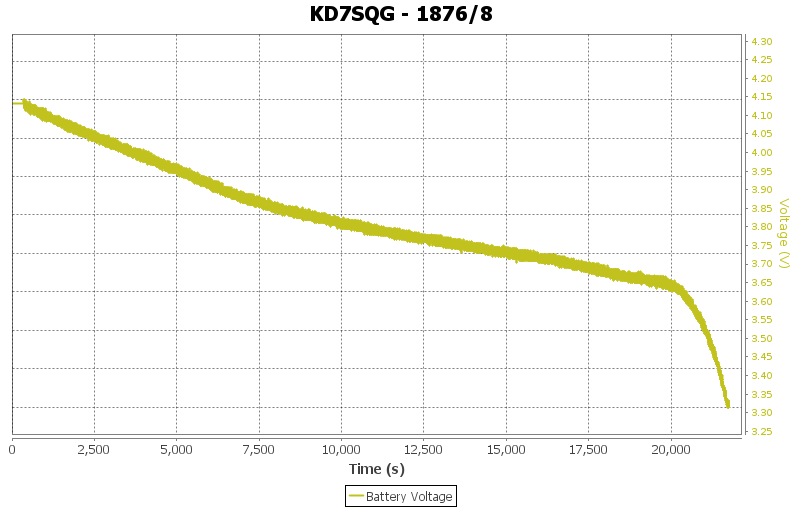
17 June 2014

Petter Reinholdtsen: From English wiki to translated PDF and epub via Docbook

The Debian Edu / Skolelinux project provide an instruction manual for teachers, system administrators and other users that contain useful tips for setting up and maintaining a Debian Edu installation. This text is about how the text processing of this manual is handled in the project. One goal of the project is to provide information in the native language of its users, and for this we need to handle translations. But we also want to make sure each language contain the same information, so for this we need a good way to keep the translations in sync. And we want it to be easy for our users to improve the documentation, avoiding the need to learn special formats or tools to contribute, and the obvious way to do this is to make it possible to edit the documentation using a web browser. We also want it to be easy for translators to keep the translation up to date, and give them help in figuring out what need to be translated. Here is the list of tools and the process we have found trying to reach all these goals. We maintain the authoritative source of our manual in the Debian wiki, as several wiki pages written in English. It consist of one front page with references to the different chapters, several pages for each chapter, and finally one "collection page" gluing all the chapters together into one large web page (aka the AllInOne page). The AllInOne page is the one used for further processing and translations. Thanks to the fact that the MoinMoin installation on wiki.debian.org support exporting pages in the Docbook format, we can fetch the list of pages to export using the raw version of the AllInOne page, loop over each of them to generate a Docbook XML version of the manual. This process also download images and transform image references to use the locally downloaded images. The generated Docbook XML files are slightly broken, so some post-processing is done using the documentation/scripts/get_manual program, and the result is a nice Docbook XML file (debian-edu-wheezy-manual.xml) and a handfull of images. The XML file can now be used to generate PDF, HTML and epub versions of the English manual. This is the basic step of our process, making PDF (using dblatex), HTML (using xsltproc) and epub (using dbtoepub) version from Docbook XML, and the resulting files are placed in the debian-edu-doc-en binary package. But English documentation is not enough for us. We want translated documentation too, and we want to make it easy for translators to track the English original. For this we use the poxml package, which allow us to transform the English Docbook XML file into a translation file (a .pot file), usable with the normal gettext based translation tools used by those translating free software. The pot file is used to create and maintain translation files (several .po files), which the translations update with the native language translations of all titles, paragraphs and blocks of text in the original. The next step is combining the original English Docbook XML and the translation file (say debian-edu-wheezy-manual.nb.po), to create a translated Docbook XML file (in this case debian-edu-wheezy-manual.nb.xml). This translated (or partly translated, if the translation is not complete) Docbook XML file can then be used like the original to create a PDF, HTML and epub version of the documentation. The translators use different tools to edit the .po files. We recommend using lokalize, while some use emacs and vi, others can use web based editors like Poodle or Transifex. All we care about is where the .po file end up, in our git repository. Updated translations can either be committed directly to git, or submitted as bug reports against the debian-edu-doc package. One challenge is images, which both might need to be translated (if they show translated user applications), and are needed in different formats when creating PDF and HTML versions (epub is a HTML version in this regard). For this we transform the original PNG images to the needed density and format during build, and have a way to provide translated images by storing translated versions in images/$LANGUAGECODE/. I am a bit unsure about the details here. The package maintainers know more. If you wonder what the result look like, we provide the content of the documentation packages on the web. See for example the Italian PDF version or the German HTML version. We do not yet build the epub version by default, but perhaps it will be done in the future. To learn more, check out the debian-edu-doc package, the manual on the wiki and the translation instructions in the manual.

16 June 2014

Simon Kainz: on using crippled installers

Maybe someone else is using iDataPlex HW, so this might come in helpful... TL, DR: Dear Hardware Vendors! Please don't force people to use specific Linux distributions when a simple unzip command would do the same. At work we run (amongst others) an HPC system consisting of 120 IBM System X iDataPlex dx360 M4 Nodes. Recently, after some MCE logs caused by DIMM errors, the IBM guy refused to send me replacement DIMMs if if didn't update IMM firware and tortue test the machine some days more. Well, ok... IBM uses the so called UpdateXpress tool to update IMM and UEFI firmware. The tool is available for rhel4 to rhel7 (both 32 and 64 bit), SLES10 & SLES11 and Microsoft Windows. I tried all of the available UpdateXpress System Pack Installers, with basically the same result everytime:
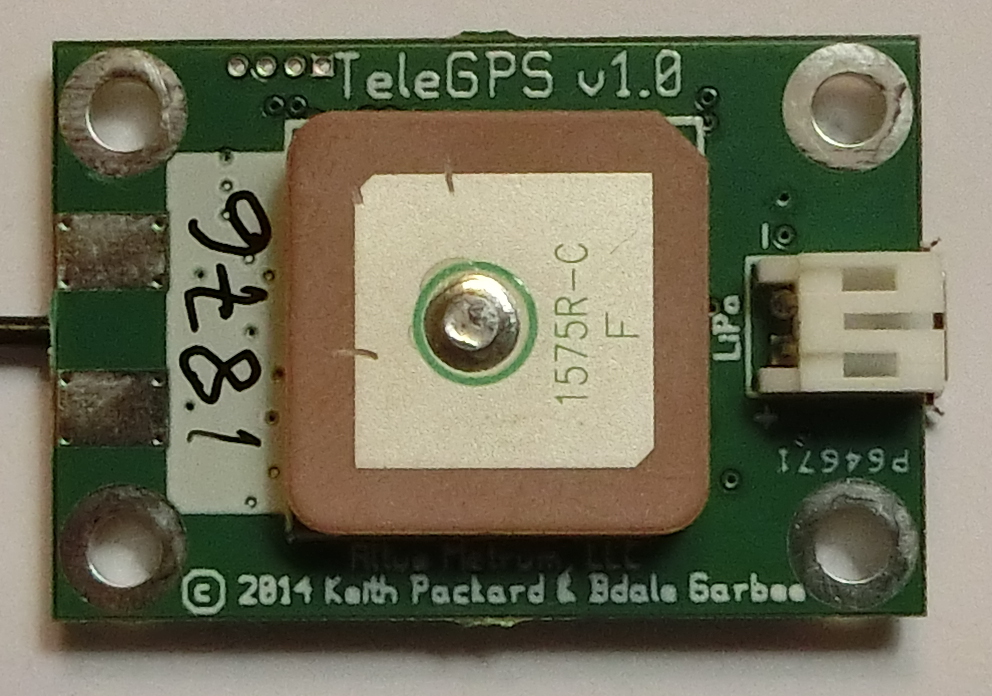
WARNING! This package doesn't appear to match your system.
         The following information was determined for your system:
           distribution = Unknown
           release = -1
           processor architecture = Unknown
I tried to set up a fake RHEL environment (customized /usr/local/uname, custom /et/RHel-release, etc...) but after some more tries, the installer (yes, it's still the installer I am trying to run) fails with some strange SEGFAULTS. After some closer inspection, (well, the RHEL4 uxspi binary is about 109MB big!) i tried to unzip it, and voila:
~/firmware$ unzip ibm_utl_uxspi_9.60_rhel4_32-64.bin
Archive:  ibm_utl_uxspi_9.60_rhel4_32-64.bin
   creating: rhel6_64/image/
  inflating: rhel6_64/image/libpegasus.nsp.so  
  inflating: rhel6_64/image/libUxliteImmUsbLan.so  
  inflating: rhel6_64/image/eccConnect.properties  
  inflating: rhel6_64/image/libpegslp_client.so  
   creating: rhel6_64/image/esxi_assoc_templates/
  inflating: rhel6_64/image/esxi_assoc_templates/elxFC.uxt  
  inflating: rhel6_64/image/esxi_assoc_templates/elxCNA.uxt  
  inflating: rhel6_64/image/esxi_assoc_templates/ibmc.uxt  
  inflating: rhel6_64/image/esxi_assoc_templates/FPGA-S.uxt  
  inflating: rhel6_64/image/esxi_assoc_templates/degraded.uxt  
  inflating: rhel6_64/image/esxi_assoc_templates/brocadeFC.uxt  
  inflating: rhel6_64/image/esxi_assoc_templates/qlgcFC.uxt  
  inflating: rhel6_64/image/esxi_assoc_templates/broadcom.uxt  
  inflating: rhel6_64/image/esxi_assoc_templates/LSI.uxt  
  inflating: rhel6_64/image/esxi_assoc_templates/brocadeCNA.uxt  
  inflating: rhel6_64/image/esxi_assoc_templates/uefi.uxt  
  inflating: rhel6_64/image/esxi_assoc_templates/diags.uxt  
  inflating: rhel6_64/image/esxi_assoc_templates/qlgcCNA.uxt  
  inflating: rhel6_64/image/esxi_assoc_templates/VMwareESXi.uxt  
  inflating: rhel6_64/image/esxi_assoc_templates/ibmc2.uxt  
  inflating: rhel6_64/image/esxi_assoc_templates/FPGA.uxt  
  inflating: rhel6_64/image/libipmi_client.so  
  inflating: rhel6_64/image/UXLite_UPDATEID.dat  
  inflating: rhel6_64/image/libacpi.so  
  inflating: rhel6_64/image/libibmsp6_openipmi.so  
  ...
I managed to find a iflash64 binary, and after so trial and error, came up with the following workflow:
./iflash64 --host your_host_imm_IP --user your_username --password your_password --package imm2_1aoo56d-3.73.upd --reboot
IBM Command Line IMM Flash Update Utility v2.02.11
Licensed Materials - Property of IBM
(C) Copyright IBM Corp. 2009 - 2014  All Rights Reserved.
Connected to IMM at IP address x.x.x.x.
Update package firmware type: IMM2
Update package build level:   xxxxxx
Target's current build level: xxxxxx
Would you like to continue with the update? y/n: y
Node 0: The IMM is preparing to receive the update.
Node 0: Transferring image: 98%
Node 0: Transfer complete.
Node 0: Validating image.
Node 0: Updating firmware:  0%
Node 0: Updating firmware:  100%
Node 0: Update complete.
Performing activation of the firmware:
Connected to IMM at IP address 10.8.2.4 successfully.
..........
Waiting up to 360 seconds for the activation to complete:
..
..
And so on... Conclusio: Dear Hardware Vendors! Please don't force people to use specific Linux distributions when a simple unzip command would do the same.

Keith Packard: Altos1.4

AltOS 1.4 TeleGPS support, features and bug fixes Bdale and I are pleased to announce the release of AltOS version 1.4. AltOS is the core of the software for all of the Altus Metrum products. It consists of firmware for our cc1111, STM32L151, LPC11U14 and ATtiny85 based electronics and Java-based ground station software. This is a major release of AltOS, including support for our new TeleGPS board and a host of new features and bug fixes AltOS Firmware TeleGPS added, new features and fixes Our new tracker, TeleGPS, works quite differently than a flight computer TeleGPS transmits our digital telemetry protocol, APRS and radio direction finding beacons. For TeleMega, we ve made the firing time for the additional pyro channels (A-D) configurable, in case the default (50ms) isn t long enough. AltOS Beeping Changes The three-beep startup tones have been replaced with a report of the current battery voltage. This is nice on all of the board, but particularly useful with EasyMini which doesn t have the benefit of telemetry reporting its state. We also changed the other state tones to Farnsworth spacing. This makes them all faster, and easier to distinguish from the numeric reports of voltage and altitude. Finally, we ve added the ability to change the frequency of the beeper tones. This is nice when you have two Altus Metrum flight computers in the same ebay and want to be able to tell the beeps apart. AltOS Bug Fixes Fixed a bug which prevented you from using TeleMega s extra pyro channel Flight State After configuration value. AltOS 1.3.2 on TeleMetrum v2.0 and TeleMega would reset the flight number to 2 after erasing flights; that s been fixed. AltosUI New Maps, igniter tab and a few fixes With TeleGPS tracks now potentially ranging over a much wider area than a typical rocket flight, the Maps interface has been updated to include zooming and multiple map styles. It also now uses less memory, which should make it work on a wider range of systems. For TeleMega, we ve added an Igniter tab to the flight monitor interface so you can check voltages on the extra pyro channels before pushing the button. We re hoping that the new Maps interface will load and run on machines with limited memory for Java applications; please let us know if this changes anything for you. TeleGPS All new application just for TeleGPS While TeleGPS shares the same telemetry and data logging capabilities as all of the Altus Metrum flight computers, its use as a tracker is expected to be both broader and simpler than the rocketry-specific systems. We ve build a custom TeleGPS application that incorporates the mapping and data visualization aspects of AltosUI, but eliminates all of the rocketry-specific flight state tracking.

11 June 2014

Bits from Debian: Introducing the Debian Continuous Integration project

Debian is a big system. At the time of writing, the unstable distribution has more than 20,000 source packages, building more then 40,000 binary packages on the amd64 architecture. The number of inter-dependencies between binary packages is mind-boggling: the entire dependency graph for the amd64 architecture contains a little more than 375,000 edges. If you want to expand the phrase "package A depends on package B", there are more than 375,000 pairs of packages A and B that can be used. Every one of these dependencies is a potential source of problems. A library changes the semantics of a function call, and then programs using that library that assumed the previous semantics can start to malfunction. A new version of your favorite programming language comes out, and a program written in it no longer works. The number of ways in which things can go wrong goes on and on. With an ecosystem as big as Debian, it is just impossible to stop these problems from happening. What we can do is trying to detect when they happen, and fix them as soon as possible. The Debian Continuous Integration project was created to address exactly this problem. It will continuously run test suites for source packages when any of their dependencies is updated, as well as when a new version of the package itself is uploaded to the unstable distribution. If any problems that can be detected by running an automated test suite arise, package maintainers can be notified in a matter of hours. Antonio Terceiro has posted on his blog an introduction to the project with a more detailed description of the project, its evolution since January 2014 when it was first introduced, an explanation of how the system works, and how maintainers can enable test suites for their packages. You might also want to check the documentation directly.

Daniel Pocock: Protest or Uber marketing stunt?

London's taxi "strike" today has been so successful that Uber claims to have had an 850% increase in new customer registrations this week. Well, that is a big success if you believe the strike may have been a guerrilla marketing tactic organised by Uber itself. No sympathy Personally, I have no sympathy for the taxi drivers. There is no city I have ever visited where I haven't encountered at least one taxi driver who tried to overcharge me. Honest drivers who give their customers value for money have less to fear from new technology than those who are unscrupulous. When I broke a leg a few years ago and was getting about on crutches for 6 weeks we decided to go out for dinner one night. This was the first time I went anywhere after having a long stint in hospital followed by a period of time I was confined to the house. The taxi driver deliberately skipped two turns leading directly to the restaurant, went another 1km past it and then followed a small street that winds back and forth and eventually demanded I pay him double what the fare should have been. This is exactly the type of abusive and despicable practice that is being eradicated by Uber's live GPS mapping technology. Although not every driver behaves so shamefully, this type of abuse of the weak or vulnerable is replicated in one way or another the world over. For example, in Melbourne, Australia, wheelchair taxis that have worked out they can make more money collecting families with suitcases at the airport leave genuine wheelchair users without a ride. Will Google be targeted next week? Google has just announced a step-change in plans to build their own self driving cars. Will Google offices around the world, including London be targetted by these crude blockades too? Political protest or anti-competitive mischief? Why were taxi drivers not arrested for their protest today? Given that the roads are the place where taxis and their competitors do business, can this blockade really be considered a political protest or is it an anti-competitive practice in blatant disregard of the law? Weapons of mass destruction Before even having breakfast you could probably find 10,000 cyclists in central London willing to sign a petition declaring taxis are a weapon of mass destruction. Once again, while there are honest drivers, there is a more than trivial number of taxi drivers who are a genuine danger to the lives of cyclists, scooters, motorcycles and occasionally pedestrians. I have personally experienced one of these thugs ramming my bicycle from behind (his hard-nosed insurer eventually paid up but without admitting liability). The police who attended the incident even told me they had seen so many accidents like this they wouldn't dare cycle themselves. The web is full of examples that appear to show malicious and criminal behavior by taxi drivers, thanks to Youtube and helmet cams: Will hotels protest about AirBNB? Now the taxi drivers have had their chance to cause mayhem, will hotel operators be next? What could they do though? Will they seek out AirBNB apartments and try to obstruct them somehow? Making mischief outside somebody's home is not a good way to make a point. Chances are, they would be prosecuted or served with restraining orders. So why do the taxi drivers get to jam up whole cities and get away with it? The Uber taxi meter loophole Will the courts decide that the Uber app is a taxi meter? This is actually a tough question. Even if courts rule against apps that perform live metering, Uber could simply remove all metering functions from the app itself and perform the metering calculations in the cloud. The app would just send start and finish locations to the cloud and the cloud would send a message back to the phone confirming the charge. The phone is then nothing more than a communication and positioning device. Remember the elevator man? When the automobile was first invented, laws were made requiring every car to be accompanied through public streets by a man carrying a flag. That job, like many others, no longer exists. elevator attendant In the good old days, every elevator had a man or woman who would sit on a stool and press buttons to operate the doors and motors. Some up-market department stores and hotels still have an elevator man to add a touch of nostalgia. The vast majority, however, have eliminated these jobs thanks to automatic elevators. Now, even aircraft can land automatically on a ship at sea. Look at all those people manning the deck in the video and contemplate how many of them might potentially be out of a job too in 50 years time as Terminator-style automated battleships patrol the seas. Technology, like the Terminator, is not going to stop.

10 June 2014

Steve Kemp: I'm still not a developer, but ..

Some coding updates: My templer static site generator has now been uploaded to CPAN, and is available as App::Templer. I've converted most of my Dockerfiles to work with docker 1.0.0, which is nice. I also hacked up a fun DNS-server for sharing JSON-encoded data, within a LAN or other environment: Finally I updated the blogspam-detecting site a little, on the back-end. The code is now running inside Docker containers which means I can redeploy more easily in the future. My blog post about looking for a job received some attention via a Reddit advert I posted to /r/edinburgh + /r/sysadmin, but thus far has mostly resulted in people wanting me to write code for them .. which is frustrating. For the moment I'm working on a fun challenge involving (email) spam-detection. That takes me back.

Dimitri John Ledkov: cross-compile go code, including cgo

By all means cross-compiling a new language/stack is not going to be pretty, but it didn't turn out that bad.

A few weeks back, I was told that go code which uses cgo (that is utilising C api calls to shared libraries exporting C interface) cannot be cross-compiled. Well, if it's just calling out a C compiler it should totally be easy to cross compile, since so much of our platform is.

So there we go, first I've picked a moderately small project which only does a couple cgo calls, and check that it compiles correctly:

$ sudo apt-get build-dep ubuntu-push-client
$ go get launchpad.net/ubuntu-push/...
$ cd $GOPATH/src/launchpad.net/ubuntu-push/
$ go build ubuntu-push-client.go
Well, when your gcc is all is easy.

I didn't want to polute my system, so I quickly created a chroot with go, build-dependencies in armhf architectures and cross-compiler:

# Get a chroot with build-dependencies installed, I am basing on top of a click-chroot
# one should be able to use any chroot which is armhf multiarch enabled.
$ sudo click chroot -aarmhf -fubuntu-sdk-14.04 -s utopic create
$ sudo click chroot -aarmhf -fubuntu-sdk-14.04 -s utopic maint apt-get install golang-go golang-go-linux-arm golang-go-dbus-dev golang-go-xdg-dev golang-gocheck-dev golang-gosqlite-dev golang-uuid-dev libgcrypt11-dev:armhf libglib2.0-dev:armhf libwhoopsie-dev:armhf libubuntuoneauth-2.0-dev:armhf libdbus-1-dev:armhf libnih-dbus-dev:armhf libsqlite3-dev:armhf crossbuild-essential-armhf
After that the tricky bit was advising go to cross-compile:

$ click chroot -aarmhf -fubuntu-sdk-14.04 -s utopic run CGO_ENABLED=1 GOARCH=arm GOARM=7 PKG_CONFIG_LIBDIR=/usr/lib/arm-linux-gnueabihf/pkgconfig:/usr/lib/pkgconfig:/usr/share/pkgconfig GOPATH=/usr/share/gocode/:~/go CC=arm-linux-gnueabihf-gcc go build -ldflags '-extld=arm-linux-gnueabihf-gcc' ubuntu-push-client.go
Ignoring the click chroot wrapper:
  • CGO_ENABLED=1 - by default cgo is disabled when cross-compiling, but really shouldn't be as compiler names are standard $(GNU_TRIPPLET) prefixed tools
  • GOARCH=arm - set the target arch
  • GOARM=7 - set ABI level
  • PKG_CONFIG_LIBDIR - the ugly beast to pass where pkg-config should search for .pc files. With autoconf one simply sets PKG_CONFIG environment variable pointing at a cross-pkg-config, $(GNU_TRIPPLET)-pkg-config but go tool doesn't support it. I've raised merge proposal to get that added https://codereview.appspot.com/104960043/
  • Next I just set GOPATH to where my packages are and CC as to which compiler to use
  • The last portion to the puzzle was to pash "-ldflags '-extld=$CC'" because the linker tool (5l) didn't use environmental variable CC and simply defaults to gcc. I'll raise a merge proposal for this.
Overall that's it. Given that all of above can be re-factored into standard variables (e.g. use $GNU_TRIPPLET prefix, and offer to override it), I see no reason why cross-compilation in go with cgo cannot eventually become a simple
GOARCH=arm go build

Russell Coker: Google Hardware Support

Ironically just 5 days after writing about how I choose Android devices for a long service life [1] my wife s Nexus 5 (with 32G of RAM (sorry Flash storage) to give it a long useful life) totally died. It reported itself as being fully charged and then 15 minutes later it was off and could not be revived. No combination of pushing the power button and connecting the power cable caused the screen to light up or any sound to be emitted. Google has a nice interactive support site for nexus devices that describes more ways of turning a phone on than any reasonable person could imagine. After trying to turn the phone on in various ways (plugged and unplugged etc) it gave me a link to get phone support. Clicking on that put me in the queue to RECEIVE a phone call and a minute later a lady who spoke English really well (which is unusual for telephone support) called me to talk me through the various options. Receiving a phone call is a much better experience than making a call. It meant that if the queue for phone support was long then I could do other things until the phone rings. It s impossible to be productive at other tasks while listening for hold music to stop and a person to start talking. The cost of doing this would be very tiny, while there would be some cost in hardware and software to have a web site that tells me how long I can expect to wait for a call a more basic implementation where I just submit my number and wait for a call would be very cheap to implement. The costs of calls from the US to Australia (and most places where people can afford a high end Android phone) are quite cheap for home users and are probably cheaper if you run a call center. If the average support call cost Google $1 and 3% of phones have support calls then that would be an extra cost of $0.03 per phone. I expect that almost everyone who buys a $450 phone would be happy to pay a lot more than $0.03 to avoid the possibility of listening to hold music! I received the phone call about a minute after requesting it, this was nice but I wonder how long I would have waited if I hadn t requested a call at 1AM Australian time (presumably during the day in a US call center). In any case getting a 1 minute response is great for any time of the day or night, lots of call centers can t do that. While the phone support is much better than most phone support, it would be nice if they added some extra options. I think it would be good to have webchat and SMS as options for support for the benefit of people who don t want to speak to strangers. This would be useful to a lot of people on the Autism Spectrum and probably others too. The phone call wasn t particularly productive, it merely confirmed that I had followed all the steps on the support website. Then I received an email telling me about the web site which was a waste of time as I d covered that in the phone call. I have just replied to their second email which asked for the IMEI of the phone to start the warranty return process. We could have saved more than 24 hours delay if this had been requested in the first email or the phone call. Google could have even requested the IMEI through the web site before starting the phone call. It would have been even easier if Google had included the device IMEI in the email they sent me to confirm the purchase as searching for old email is a lot easier than searching through my house for an old box. Another option for Google would be to just ask me for the Gmail account used for the purchase, as I only bought one Nexus 5 on that account they then have all the purchase details needed for a warranty claim. While the first call was a great experience the email support following that has been a waste of time. I m now wondering if they aim to delay the warranty process for a few days in the hope that the phone will just start working again.

9 June 2014

Dirk Eddelbuettel: Rcpp 0.11.2

A new minor release 0.11.2 of Rcpp is now on the CRAN network for GNU R, and binaries for Debian have also been uploaded. The release smoothes a few edges on both the Rcpp side itself, as well as on the interaction between Rcpp and R which since release 3.1.0 offers a few new features related to C++11. Kevin added a couple of neat extensions related to vectors, a new ListOf templated list class, as well as a new option to warn on implicit casts. We decided not to make this option the default as it may be too common in some packages. JJ took care of a few buglets related to the wonderful Rcpp Attributes. See the NEWS file section below for details, or the ChangeLog file in the package and on the Rcpp Changelog page. Note that the diffstat reported by CRANberries is very large as Kevin also committed a whitespace cleanup which touched almost all files. As before, we tested this release by building against all CRAN packages which depend upon Rcpp. In fact we did three such runs leading up to the release. Only one package was blacklisted (as I currently don't have CUDA set-up), two had what may be internal errors or tests which were too restrictive, sixteen suffered from missing packages or RGL devices --- but the remaining 202 packages all built and tested cleanly. Detailed results of those tests (and the scripts for it) are in the rcpp-logs repo GitHub. There are a number of other fixes, upgrades and other extensions detailed in NEWS file extract below, in the ChangeLog file in the package and on the Rcpp Changelog page.
Changes in Rcpp version 0.11.2 (2014-06-06
  • Changes in Rcpp API:
    • Implicit conversions, e.g. between NumericVector and IntegerVector, will now give warnings if you use #define RCPP_WARN_ON_COERCE before including the Rcpp headers.
    • Templated List containers, ListOf<T>, have been introduced. When subsetting such containers, the return is assumed to be of type T, allowing code such as ListOf<NumericVector> x; NumericVector y = x[0] + x[1] + x[2].
    • In a number of instances, returned results are protected and/or cast more carefully.
  • Changes in Rcpp Attributes
    • Trailing line comments are now stripped by the attributes parser. This allows the parser to handle C++ source files containing comments inline with function arguments.
    • The USE_CXX1X environment variable is now defined by the cpp11 plugin when R >= 3.1. Two additional plugins have been added for use with C++0x (eg when using g++ 4.6.* as on Windows) as well as C++1y for compilers beginning to support the next revision of the standard; additional fallback is provided for Windows.
    • compileAttributes() now also considers Imports: which may suppress a warning when running Rcpp.package.skeleton().
Thanks to CRANberries, you can also look at a diff to the previous release. As always, even fuller details are on the Rcpp Changelog page and the Rcpp page which also leads to the downloads, the browseable doxygen docs and zip files of doxygen output for the standard formats. A local directory has source and documentation too. Questions, comments etc should go to the rcpp-devel mailing list off the R-Forge page

This post by Dirk Eddelbuettel originated on his Thinking inside the box blog. Please report excessive re-aggregation in third-party for-profit settings.

8 June 2014

Wouter Verhelst: Is Debian non-free?

According to the Free Software Foundation, the Debian distribution is not a Free System Distribution. While I, as a Debian Developer, disagree with that point of view, it should be obvious that the opinion of an organization that engages in politics (or, at the very least, in political lobbying) and of which I am not a member should not be my concern. However, it has long irked me the wrong way that these claims exist. A few weeks ago, I found the System distribution commitments page on Wikipedia. This does change the situation somewhat; I cannot say that a page explaining an opinion of the FSF is wrong; but if that opinion is copied nearly verbatim to a website which claims neutrality as one of its "Core content policies", then the situation is significantly different. When I originally found that page, it was immediately obvious where the content came from, but there was no reference listed, so I added a "citation needed" tag, the first time I ever did so on Wikipedia. Now, a few weeks later, a reference has been added, and the "citation needed" tag removed. However, as expected, the only reference which has been added is the highly opinionated document on the FSF's website, which is hardly neutral. I've added another tag (this time a "which" tag, asking for more clarification) and added a Talk page listing my concerns with the article. But I can't really explain in Wikipedia why I think the whole premise is wrong; that's what a blog is for. So, here goes. The FSF lists two reasons why they do not endorse Debian:
  1. The non-free and contrib repositories
  2. An unsubstantiated claim that "the installer in some cases recommends [...] non-free firmware files for the peripherals on the machine."
Let's have a look at them, each in turn.

Non-free and contrib It is true that Debian provides non-free software in separate repositories, and that software in these repositories does not comply with either the Debian Free Software Guidelines (DFSG) or the FSF's Free Software Definition. However, the non-free and contrib repositories are fairly small:
wouter@carillon:/var/lib/apt/lists$ awk -F':' 'BEGIN total=0 /^Size/ total+=$2 END print total ' ftp.be.debian.org_debian_dists_sid_non-free_binary-amd64_Packages
4398812934
That is, the non-free repository contains just over 4G of software (after installation). Contrib is even smaller:
wouter@carillon:/var/lib/apt/lists$ awk -F':' 'BEGIN total=0 /^Size/ total+=$2 END print total ' ftp.be.debian.org_debian_dists_sid_contrib_binary-amd64_Packages 
306578636
While, combined, this is approximately the same size as some other distributions, free and non-free together, it pales in comparison with the "main" repository:
wouter@carillon:/var/lib/apt/lists$ awk -F':' 'BEGIN total=0 /^Size/ total+=$2 END print total ' ftp.be.debian.org_debian_dists_sid_main_binary-amd64_Packages
60025033622
i.e., the "main" repository contains just shy of 60G of software. Of course, whether non-free is large or not should not matter at all; the fact that it exists in the first place is a problem for free software advocates. But of those 4 gigabytes, what exactly is the non-free repository used for? For that, the Debian popularity contest has a page specifically for the non-free section. Looking at this page, and ignoring the packages that are listed as "Not in sid" (which either means they were installed from third-party suppliers and therefore cannot be attributed to Debian, or were only available in older distributions so should not be held against the Debian of today anymore), we see three main uses of non-free:
  1. Various implementations of non-free algorithms (unrar, libfaac0, etc)
  2. A lot of packages containing non-free firmware
  3. A number of packages containing non-free documentation
The first package which does not fit any of those descriptions is iozone3, currently on the 64th position of the popularity contest (including packages "Not in sid"). The first item in this list is something which most free software advocates will try to avoid. After all, for all of those algorithms, alternatives exist, and so there is no real reason why one would want to use such software, other than "someone sent me a file encoded according to that algorithm, and I want to decode it". Debian gives you the option to do so, but a valid case could be made for not doing so. The second item in that list is really an alternate version of "the installer recommends non-free software", so I'll come back on that in the next section. The 3rd item in the above list deserves some special attention. Just over 10 years ago, Debian clarified its position where it clearly specified that documentation and programs (as both are interpreted as "software") should follow the same set of guidelines regarding freedom. The FSF disagrees with this position, and chose to release some of its documentation under the GFDL with invariant sections, which Debian decided is a non-free license in 2006. Since then, such GNU documentation would no longer be available were Debian to ditch the non-free repository.

Recommending non-free firmware As I said above, the FSF's page claims that the Debian installer recommends non-free firmware "in some cases", without going into much detail. Special care should be taken in understanding the word "recommend" here; wiktionary defines it as follows:
recommend (third-person singular simple present recommends, present participle recommending, simple past and past participle recommended)
  1. (transitive) To bestow commendation on; to represent favourably; to suggest, endorse or encourage as an appropriate choice.
The board recommends Philips, given his ample experience in similar positions.
  1. (transitive) To make acceptable; to attract favor to.
  2. (transitive) To advise, propose, counsel favorably
The therapist recommends resting the mind and exercising the body.
  1. (transitive, archaic) To commit, confide to another's care, confidence or acceptance, with favoring representations
A medieval oblate's parents recommended the boy for life to God and the monastery
However, according to the FSF, merely showing a firmware filename in unencrypted form counts as a recommendation. I've always found that use of the word "recommendation" to be dubious, at best. Ignoring that part, we can make the following observations: The debian-installer module ("udeb") which is responsible for configuring apt is called apt-mirror-setup (code in the apt-setup git repository). The actual debconf templates which allow the user to enable the non-free or contrib repositories are the apt-setup/non-free and apt-setup/contrib templates, and they look like this:
Template: apt-setup/non-free
Type: boolean
Default: false
# :sl1:
_Description: Use non-free software?
 Some non-free software has been made to work with Debian. Though this
 software is not at all a part of Debian, standard Debian tools can be used
 to install it. This software has varying licenses which may prevent you
 from using, modifying, or sharing it.
 .
 Please choose whether you want to have it available anyway.
Template: apt-setup/contrib
Type: boolean
Default: false
# :sl1:
_Description: Use contrib software?
 Some additional software has been made to work with Debian. Though this
 software is free, it depends on non-free software for its operation. This
 software is not a part of Debian, but standard Debian tools can be
 used to install it.
 .
 Please choose whether you want this software to be made available to you.
Note the lines Default: false, which imply that the default answer to these questions is to disable the non-free and contrib repositories. A question which defaults to false isn't a recommendation, nor do I read the text as any form of recommendation to install these repositories (quite the contrary, in fact). More important than whether the default is to enable or disable these repositories is whether this question is even shown to the user in normal installations. Whether this is the case isn't decided by any template; instead, it is decided by the code that calls the templates. That code currently looks like this:
STATE=1
while true; do
        case "$STATE" in
            1)
                db_input low apt-setup/non-free   true
                ;;
            2)
                # If they chose not to use non-free, ask about
                # contrib, with a default of no. If they chose to
                # use non-free, they get contrib too..
                db_get apt-setup/non-free
                if [ "$RET" = false ]; then
                        db_fget apt-setup/contrib seen
                        if [ "$RET" = false ]; then
                                db_set apt-setup/contrib false
                        fi
                        db_input low apt-setup/contrib   true
                else
                        db_fget apt-setup/contrib seen
                        if [ "$RET" = false ]; then
                                db_set apt-setup/contrib true
                        fi
                fi
                ;;
            *)
                break
                ;;
        esac
        if db_go; then
                STATE=$(($STATE + 1))
        else
                STATE=$(($STATE - 1))
        fi
done
Note the "low" in the db_input lines; it means the question is only shown at low priority, i.e., in "expert" mode. The result is that, unless you enable expert mode, you won't even see the question about the non-free repository, and it will be disabled by default. There won't even be any mention of it in your sources.list file. Of course, the above isn't about firmware files, which is what the FSF website claims. So, there is a second part to this story. If you run a system with hardware for which there is a non-free firmware package in the non-free repository, and you provided firmware for this hardware to the installer through various means, then the hw-detect module comes into play. This has code which currently looks like this:
# install cached firmware debs
if [ -d /var/cache/firmware ]; then
    for deb in /var/cache/firmware/*.deb; do
            if [ -f "$deb" ]; then
                    cp -a "$deb" /target/tmp
                    # TODO debconf passthrough
                    if ! in-target dpkg -i "/tmp/$(basename "$deb")"; then
                            # dpkg failed, force removal of package
                            in-target dpkg --force-depends --remove "$(deb_package "$deb")"   true
                    fi
                    rm -f "/target/tmp/$deb"
                    need_nonfree=1
            fi
    done
fi
if [ "$need_nonfree" ]; then
    db_set apt-setup/non-free true
fi
As can bee seen, if any firmware .deb files exist under /var/cache/firmware in the installer environment, then these will be installed on the target system and default answer to the apt-setup/non-free question will be changed to enable the non-free repository. How do such packages end up there? Well, that's done by the same hw-detect udeb, in a different script. The code there is a bit too long to quote in this already far too long blog post, but it boils down to:
  • If the installer detects missing firmware, the user is asked whether (s)he wants to install firmware, with the following template:
    Template: hw-detect/load_firmware
    Type: boolean
    Default: true
    # :sl2:
    _Description: Load missing firmware from removable media?
     Some of your hardware needs non-free firmware files to operate. The
     firmware can be loaded from removable media, such as a USB stick or
     floppy.
     .
     The missing firmware files are: $ FILES 
     .
     If you have such media available now, insert it, and continue.
    
  • If the user agreed to doing so (and to me, the above template does not read as a recommendation), any firmware .deb files that are provided to the installer are tested for the missing firmware files.
  • If any of those files are found, these .deb files are copied to the /var/cache/firmware directory, and the firmware files are made available to the running kernel.

Conclusion In my opinion, while some of the claims on the FSF website are correct, others are at the very least misleading. Debian does not recommend the use of non-free software; and while providing non-free firmware to the installer isn't too difficult, it isn't documented very well; and as such installing a system with non-free enabled isn't something you can easily do by accident. Debian and the FSF clearly disagree on certain things, and this disagreement, not any policies by the Debian project, is the main reason why the FSF won't encourage Debian as a free distribution. I don't think the Debian project will easily agree to get rid of the non-free repository while the FSF still produces non-free documentation or while non-free firmware is still a fact of life in this world. However, I do think the following should happen:
  1. The FSF should relicense its non-free documentation so it becomes truly free.
  2. Once that has happened, Debian should rename its non-free repository to a "hardware-support" repository (or something along those lines), and remove everything that does not exist solely for the support of proprietary hardware (i.e., non-free drivers, non-free firmware, etc).
  3. The installer could be clearer on the fact that if non-free firmware is found to be in use for the system, the user is using software that cannot be properly supported by the Debian project.
While the above wouldn't necessarily bring the opinions of the FSF and Debian 100% in line, it would at least bring their positions closer to eachother. Unfortunately, however, I doubt that this will happen; and that's a shame, because in the end, both Debian and the FSF want the same thing: a world where Free Software is the norm, not the exception.

Update
  • The first version of this text said that providing firmware is not very easy. As was pointed out to me, it isn't too hard, but it's not very well documented and not part of the 'regular' installer images.
  • Add contrib too, when we compare non-free and main
  • Clarify when GFDL is non-free

Next.

Previous.