The dovecot version which will be released with bullseye seems to require some
subtle config adjustment if you
use ssl (ok that should be almost everyone)
and you would like to execute doveadm as a user, who can not read the ssl cert and
keys (quite likely).
I guess one of the common cases is executing doveadm pw e.g. if you use
postfixadmin. For myself
that manifested in the nginx error log, which I use in combination with php-fpm, as.
2021/04/19 20:22:59 [error] 307467#307467: *13 FastCGI sent in stderr: "PHP message:
Failed to read password from /usr/bin/doveadm pw ... stderr: doveconf: Fatal:
Error in configuration file /etc/dovecot/conf.d/10-ssl.conf line 12: ssl_cert:
Can't open file /etc/dovecot/private/dovecot.pem: Permission denied
You easily see the same error message if you just execute something like doveadm pw -p test123.
The workaround is to move your ssl configuration to a new file which is only readable by root,
and create a dummy one which disables ssl, and has a !include_try on the real one. Maybe
best explained by showing the modification:
A new version 0.3.11 of Rblpapi is now arriving at CRAN. It comes two years after the release of version Rblpapit 0.3.10 and brings a few updates and extensions.
Rblpapi provides a direct interface between R and the Bloomberg Terminal via the C++ API provided by Bloomberg (but note that a valid Bloomberg license and installation is required).
This is the eleventh release since the package first appeared on CRAN in 2016. Changes are detailed below. Special thanks to James, Maxime and Michael for sending us pull requests.
Changes in Rblpapi version 0.3.11 (2021-04-20)
Support blpAutoAuthenticate and B-PIPE access, refactor and generalise authentication (James Bell in #285)
Switch unit tests framework to tinytest (Dirk in #332)
Courtesy of my CRANberries, there is also a diffstat report for the this release. As always, more detailed information is on the Rblpapi page. Questions, comments etc should go to the issue tickets system at the GitHub repo.
If you like this or other open-source work I do, you can now sponsor me at GitHub.
I ve mostly had the preference of controlling my data rather than depend on someone else. That s one reason why I still believe email to be my most reliable medium for data storage, one that is not plagued/locked by a single entity. If I had the resources, I d prefer all digital data to be broken down to its simplest form for storage, like email format, and empower the user with it i.e. their data.
Yes, there are free services that are indirectly forced upon common users, and many of us get attracted to it. Many of us do not think that the information, which is shared for the free service in return, is of much importance. Which may be fair, depending on the individual, given that they get certain services without paying any direct dime.
New age communication
So first, we had email and usenet. As I mentioned above, email was designed with fine intentions. Intentions that make it stand even today, independently.
But not everything, back then, was that great either. For example, instant messaging was very closed and centralised then too. Things like: ICQ, MSN, Yahoo Messenger; all were centralized. I wonder if people still have access to their ICQ logs.
Not much has chagned in the current day either. We now have domination by: Facebook Messenger, Google Whatever the new marketing term they introdcue, WhatsApp, Telegram, Signal etc. To my knowledge, they are all centralized.
Over all this time, I m yet to see a product come up with good (business) intentions, to really empower the end user. In this information age, the most invaluable data is user activity. That s one data everyone is after. If you decline to share that bit of free data in exchange for the free services, mind you, that that free service like Facebook, Google, Instagram, WhatsApp, Truecaller, Twitter; none of it would come to you at all. Try it out.
So the reality is that while you may not be valuating the data you offer in exchange correctly, there s a lot that is reaped from it. But still, I think each user has (and should have) the freedom to opt in for these tech giants and give them their personal bit, for free services in return. That is a decent barter deal. And it is a choice that one if free to choose
Retaining my data
I m fond of keeping an archive folder in my mailbox. A folder that holds significant events in the form of an email usually, if documented. Over the years, I chose to resort to the email format because I felt it was more reliable in the longer term than any other formats.
The next best would be plain text.
In my lifetime, I have learnt a lot from the internet; so it is natural that my preference has been with it. Mailing Lists, IRCs, HOWTOs, Guides, Blog posts; all have helped. And over the years, I ve come across hundreds of such content that I d always like to preserve.
Now there are multiple ways to preserving data. Like, for example, big tech giants. In most usual cases, your data for your lifetime, should be fine with a tech giant. In some odd scenarios, you may be unlucky if you relied on a service provider that went bankrupt. But seriously, I think users should be fine if they host their data with Microsoft, Google etc; as long as they abide by their policies.
There s also the catch of alignment. As the user, you should ensure to align (and transition) with the product offerings of your service provider. Otherwise, what may look constant and always reliable, will vanish in the blink of an eye. I guess Google Plus would be a good example. There was some Google Feed service too. Maybe Google Photos in the near decade future, just like Google Picasa in the previous (or current) decade.
History what is
On the topic of retaining information, lets take a small drift. I still admire our ancestors. I don t know what went in their mind when they were documenting events in the form of scriptures, carvings, temples, churches, mosques etc; but one things for sure, they were able to leave a fine means of communication. They are all gone but a large number of those events are evident through the creations that they left. Some of those events have been strong enough that further rulers/invaders have had tough times trying to wipe it out from history. Remember, history is usually not the truth, but the statement to be believed by the teller. And the teller is usually the survivor, or the winner you may call.
But still, the information retention techniques were better.
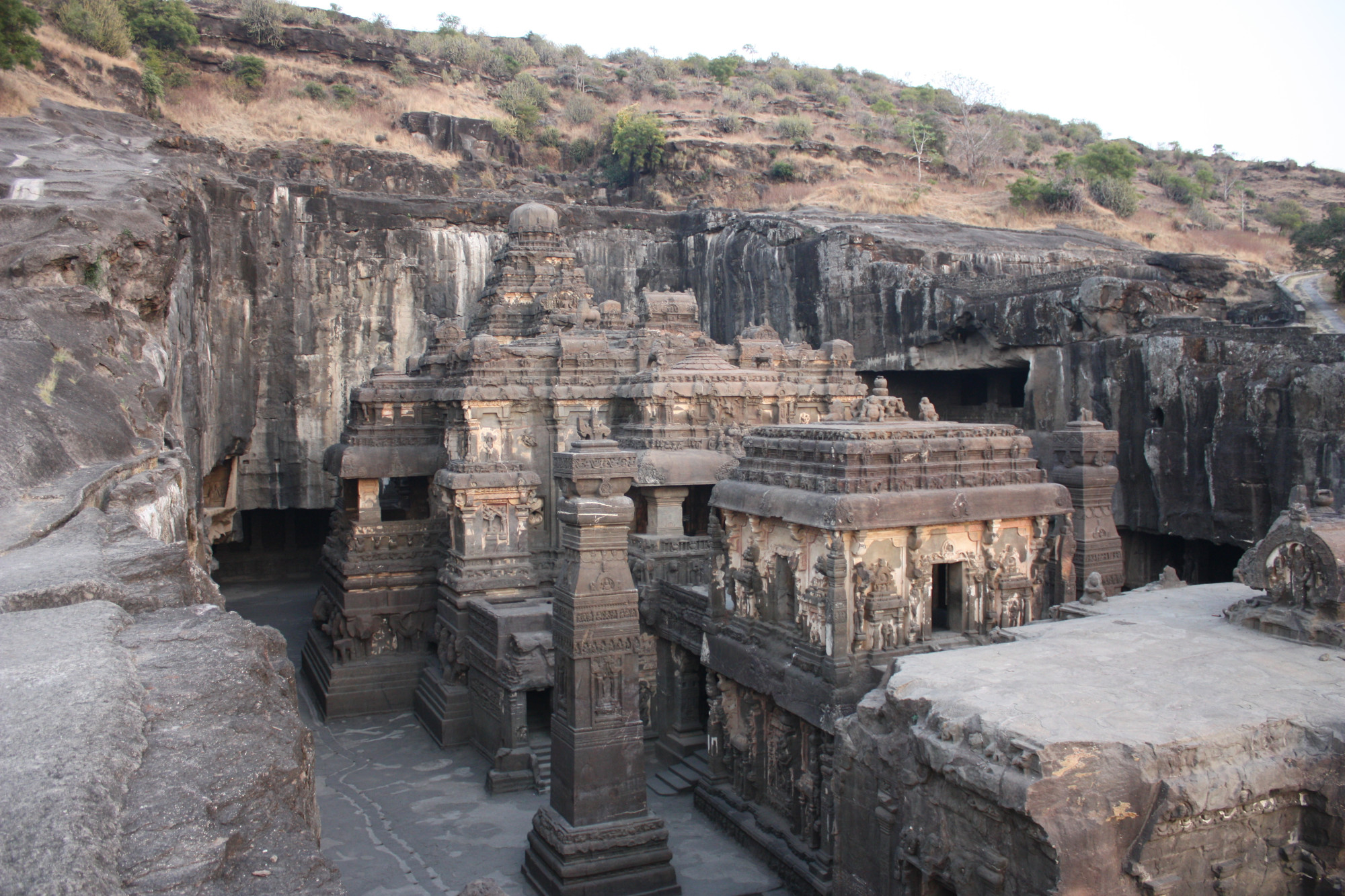
I haven t visited, but admire whosoever built the Kailasa Temple, Ellora, without which, we d be made to believe what not by all invaders and rulers of the region. But the majestic standing of the temple, is a fine example of the history and the events that have occured in the past.
Ellora Temple - The majectic carving believed to be carved out of a single stone
Dominance has the power to rewrite history and unfortunately that s true and it has done its part. It is just that in a mere human s defined lifetime, it is not possible to witness the transtion from current to history, and say that I was there then and I m here now, and this is not the reality.
And if not dominance, there s always the other bit, hearsay. With it, you can always put anything up for dispute. Because there s no way one can go back in time and produce a fine evidence.
There s also a part about religion. Religion can be highly sentimental. And religion can be a solid way to get an agenda going. For example, in India - a country which today consitutionally is a secular country, there have been multiple attempts to discard the belief, that never ever did the thing called Ramayana exist. That the Rama Setu, nicely reworded as Adam s Bridge by who so ever, is a mere result of science. Now Rama, or Hanumana, or Ravana, or Valmiki, aren t going to come over and prove that that is true or false. So such subjects serve as a solid base to get an agenda going. And probably we ve even succeeded in proving and believing that there was never an event like Ramayana or the Mahabharata. Nor was there ever any empire other than the Moghul or the British Empire.
But yes, whosoever made the Ellora Temple or the manymanymore of such creations, did a fine job of making a dent for the future, to know of what the history possibly could also be.
Enough of the drift
So, in my opinion, having events documented is important. It d be nice to have skills documented too so that it can be passed over generations but that s a debatable topic. But events, I believe should be documented. And documented in the best possible ways so that its existence is not diminished.
A documentation in the form of certain carvings on a rock is far more better than links and posts shared on Facebook, Twitter, Reddit etc. For one, these are all corporate entities with vested interests and can pretext excuse in the name of compliance and conformance.
So, for the helpless state and generation I am in, I felt email was the best possible independent form of data retention in today s age. If I really had the resources, I d not rely on digital age. This age has no guarantee of retaining and recording information in any reliable manner. Instead, it is just mostly junk, which is manipulative and changeable, conditionally.
Email and RSS
So for my communication, I like to prefer emails over any other means. That doesn t mean I don t use the current trends. I do. But this blog is mostly about penning my desires. And desire be to have communication over email format.
Such is the case that for information useful over the internet, I crave to have it formatted in email for archival.
RSS feeds is my most common mode of keeping track of information I care about. Not all that I care for is available in RSS feeds but hey such is life. And adaptability is okay.
But my preference is still RSS.
So I use RSS feeds through a fine software called feed2imap. A software that fits my bill fairly well.
feed2imap is:
An rss feed news aggregator
Pulls and extracts news feeds in the form of an email
Can push the converted email over pop/imap
Can convert all image content to email mime attachment
In a gist, it makes the online content available to me offline in the most admired email format
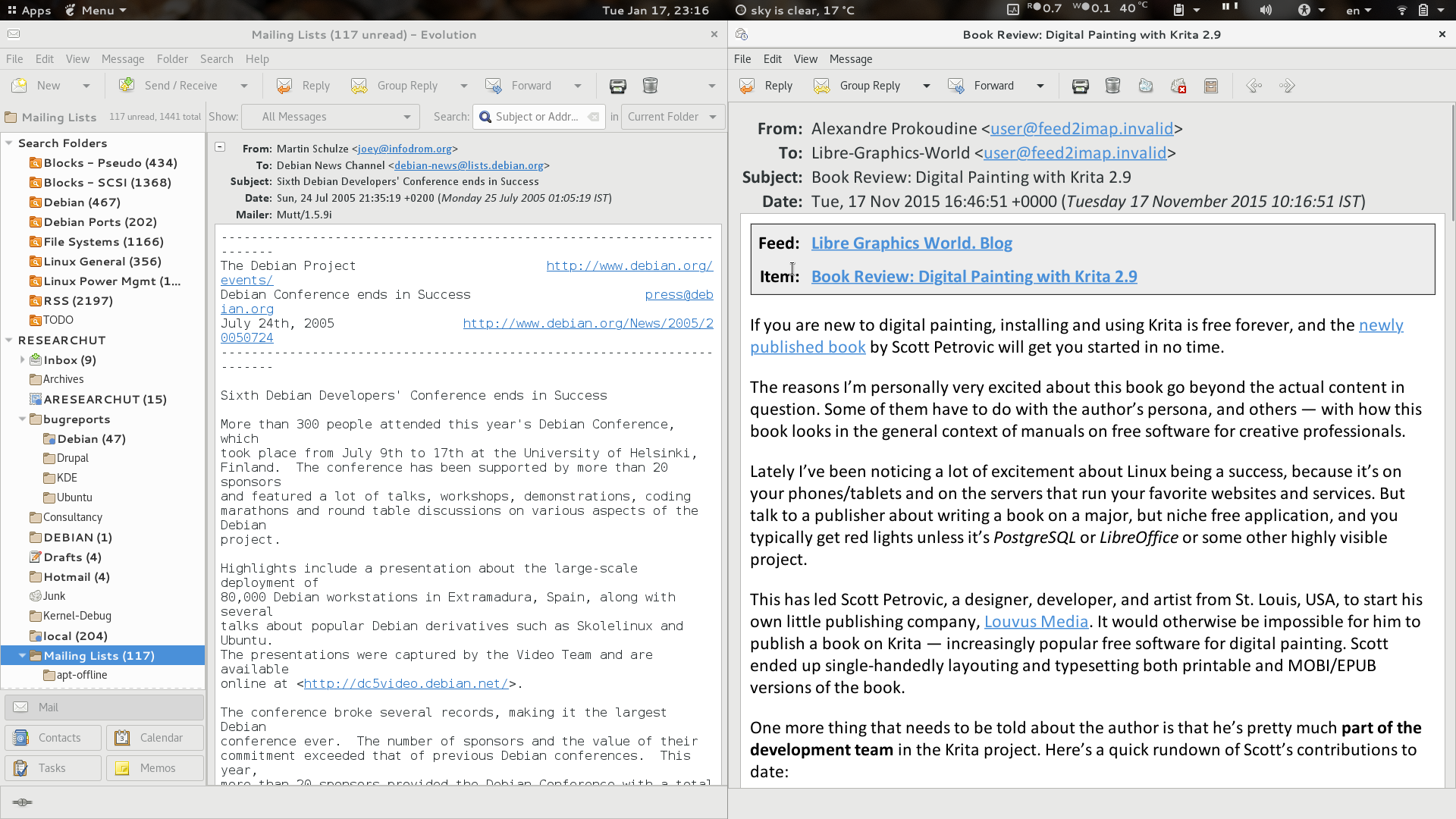
In my mail box, in today s day, my preferred email client is Evolution. It does a good job of dealing with such emails (rss feed items). An image example of accessing the rrs feed item through it is below
RSS News Item through Evolution
The good part is that my actual data is always independent of such MUAs. Tomorrow, as technology - trends - economics evolve, something new would come as a replacement but my data would still be mine.
Mobile trends
Trends have shown. Data mobility is a commodity expectation now. As such, I wanted to have something fill in that gap for me. So that I could access my information - which I ve preferred in a format - easily in today s trendy options.
I tried multiple options on my current preferred platform of choice for mobiles, i.e. Android. Finally I came across Aqua Mail, which fits in most of my requirements.
Aqua Mail does
Connect to my laptop over imap
Can sync the requested folders
Can sync requested data for offlince accessibility
Can present the synchronized data in a quite flexible and customizable manner, to match my taste
Has a very extensible User Interface, allowing me to customize it to my taste
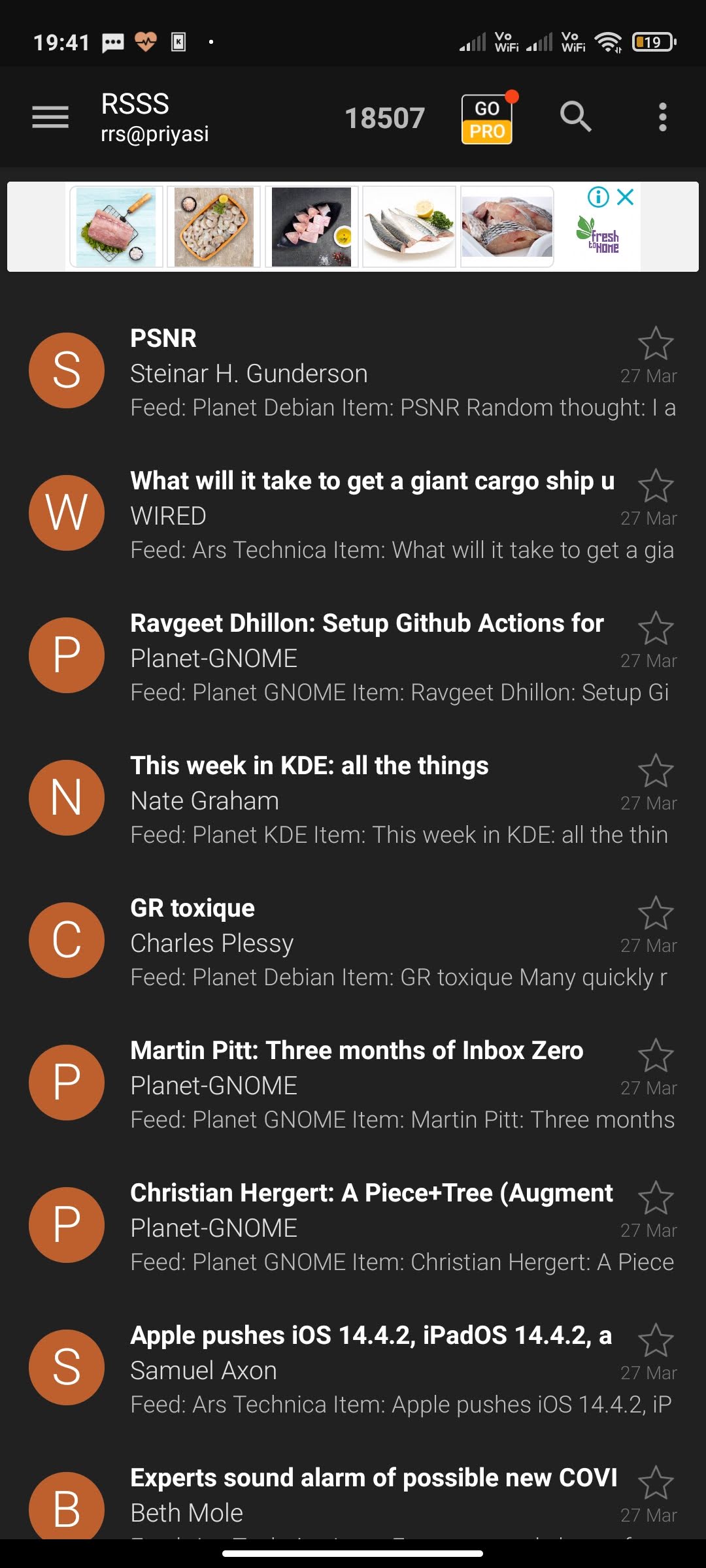
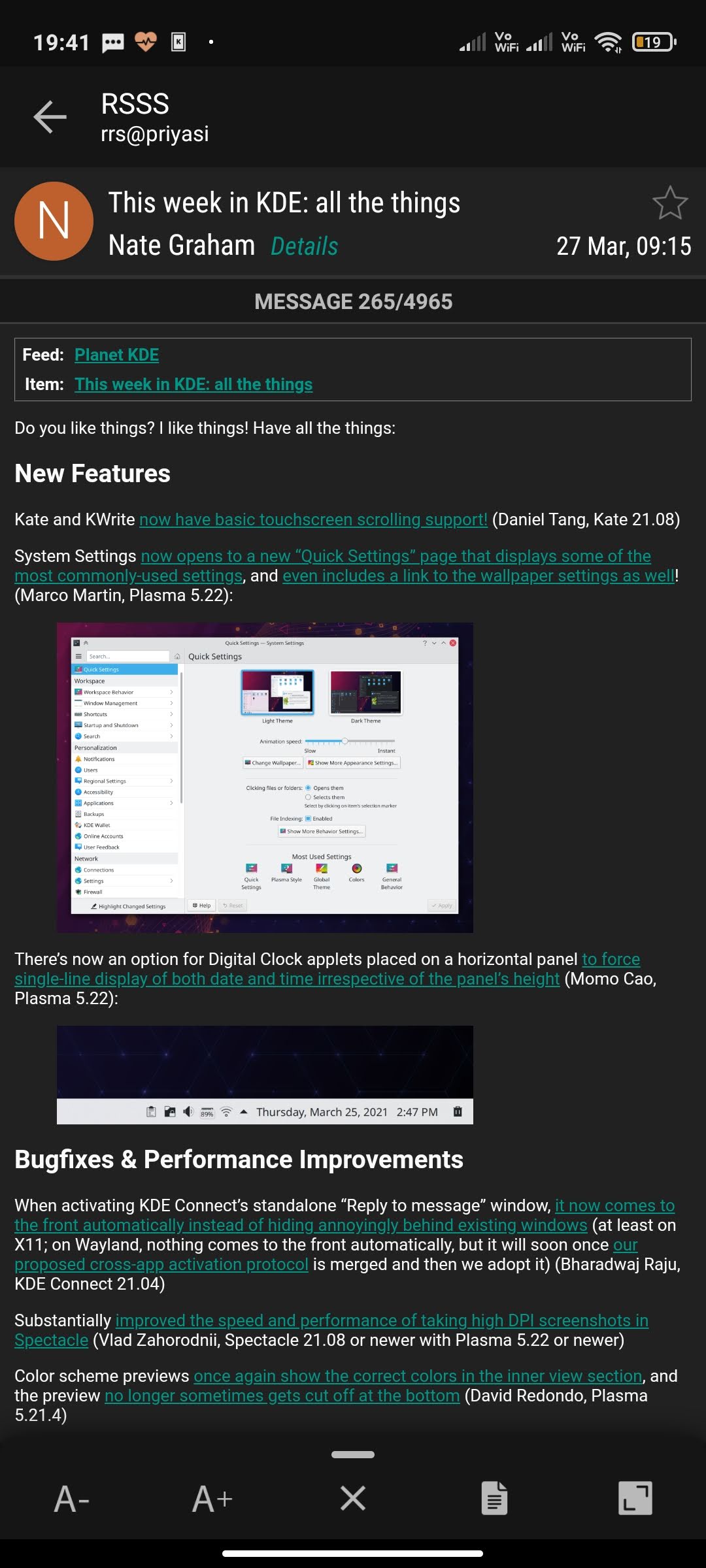
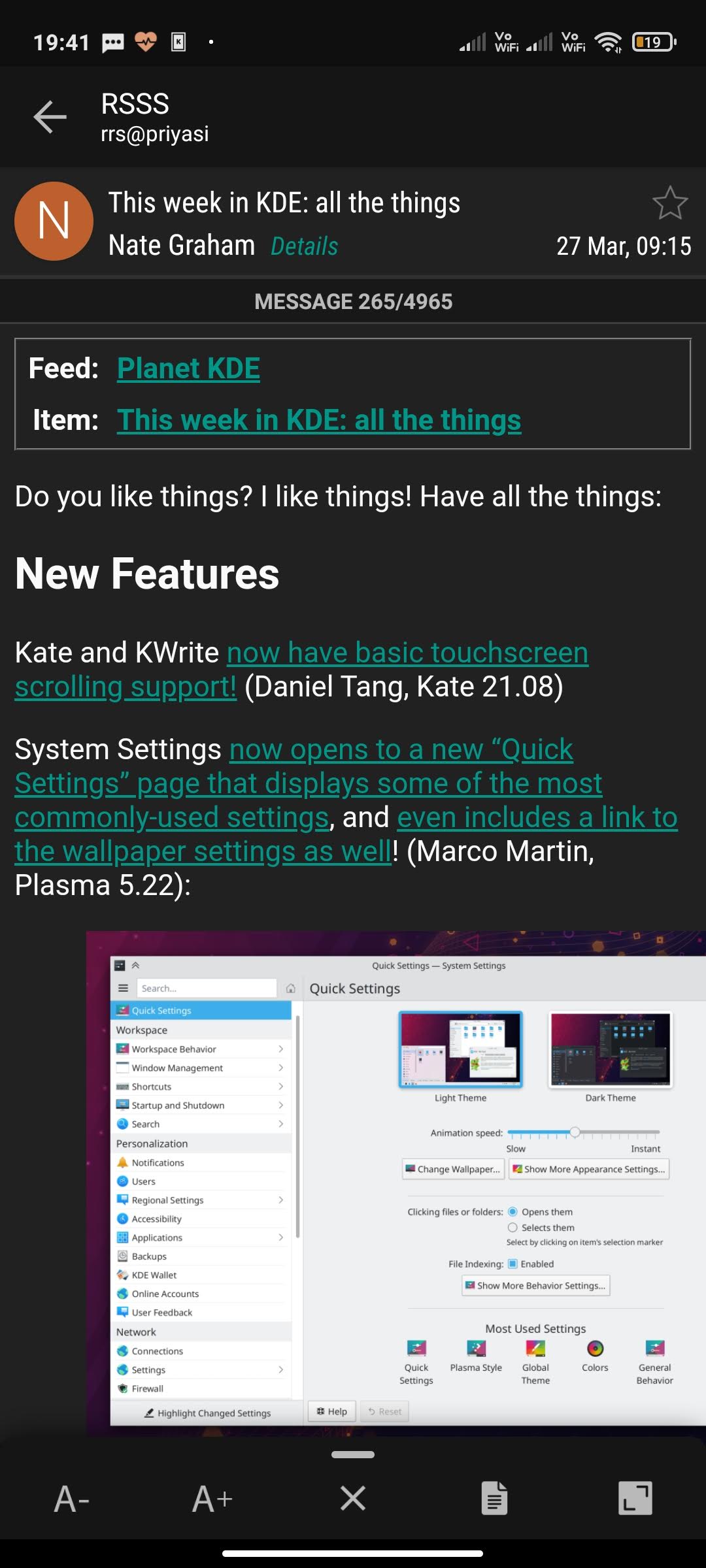
Pictures can do a better job of describing my english words.
Aqua Mail Message List Interface
Aqua Mail Message View Normal
Aqua Mail Message View Zoomed - Fit to Screen
All of this done with no dependence on network connectivity, post the sync. And all information is stored is best possible simple format.
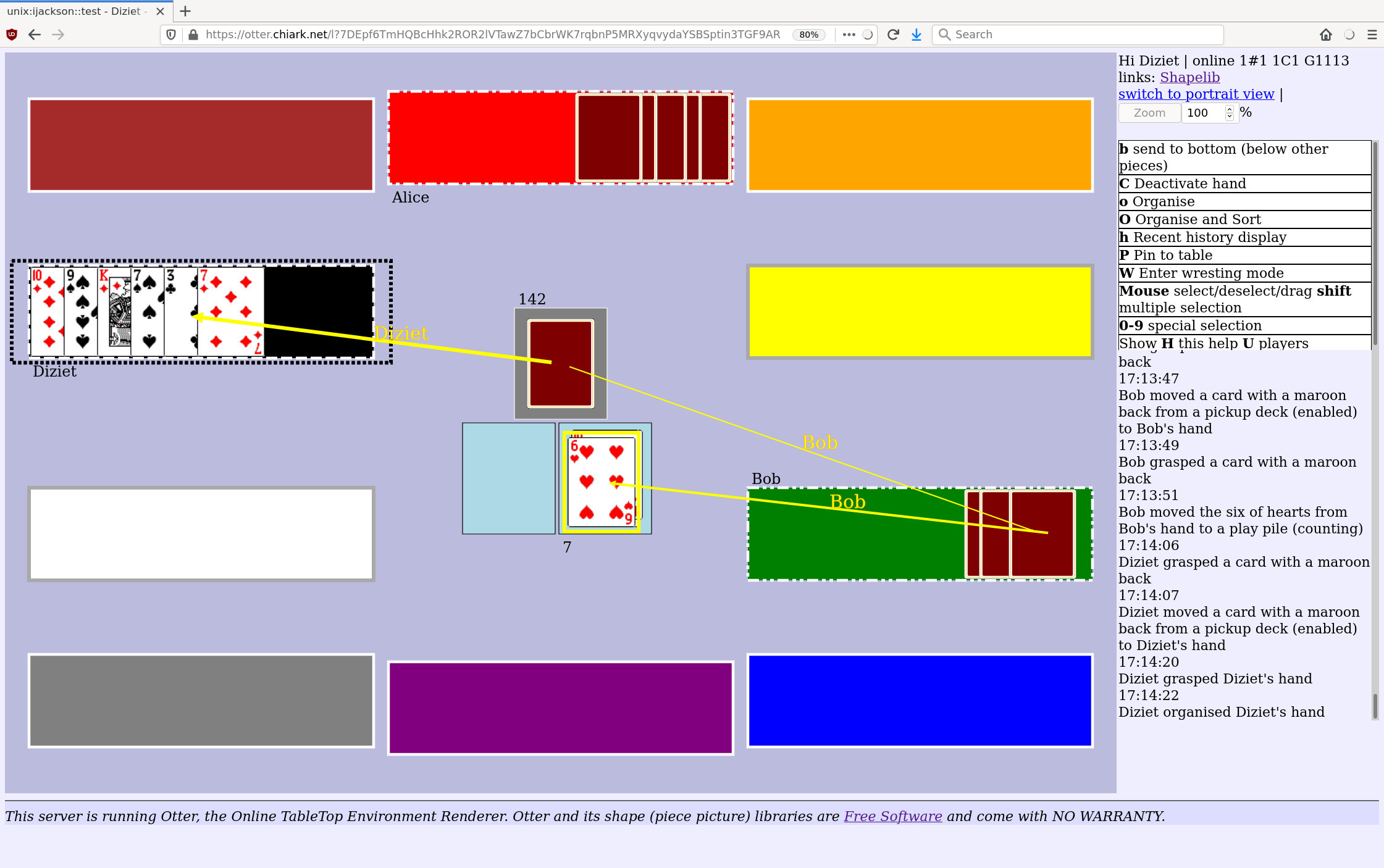
One of the things that I found most vexing about lockdown was that I was unable to play some of my favourite board games. There are online systems for many games, but not all. And online systems cannot support games like Mao where the players make up the rules as we go along.
I had an idea for how to solve this problem, and set about implementing it. The result is Otter (the Online Table Top Environment Renderer).
We have played a number of fun games of Penultima with it, and have recently branched out into Mao. The Otter is now ready to be released!
More about Otter
(cribbed shamelessly from the README)
Otter, the Online Table Top Environment Renderer, is an online game system.
But it is not like most online game systems. It does not know (nor does it need to know) the rules of the game you are playing. Instead, it lets you and your friends play with common tabletop/boardgame elements such as hands of cards, boards, and so on.
So it s something like a tabletop simulator (but it does not have any 3D, or a physics engine, or anything like that).
This means that with Otter:
Supporting a new game, that Otter doesn t know about yet, would usually not involve writing or modifying any computer programs.
If Otter already has the necessary game elements (cards, say) all you need to do is write a spec file saying what should be on the table at the start of the game. For example, most Whist variants that start with a standard pack of 52 cards are already playable.
You can play games where the rules change as the game goes along, or are made up by the players, or are too complicated to write as a computer program.
House rules are no problem, since the computer isn t enforcing the rules - you and your friends are.
Everyone can interact with different items on the game table, at any time. (Otter doesn t know about your game s turn-taking, so doesn t know whose turn it might be.)
Installation and usage
Otter is fully functional, but the installation and account management arrangements are rather unsophisticated and un-webby. And there is not currently any publicly available instance you can use to try it out.
Users on chiark will find an instance there.
Other people who who are interested in hosting games (of Penultima or Mao, or other games we might support) will have to find a Unix host or VM to install Otter on, and will probably want help from a Unix sysadmin.
Otter is distributed via git, and is available on Salsa, Debian's gitlab instance.
There is documentation online.
Future plans
I have a number of ideas for improvement, which go off in many different directions.
Quite high up on my priority list is making it possible for players to upload and share game materials (cards, boards, pieces, and so on), rather than just using the ones which are bundled with Otter itself (or dumping files ad-hoc on the server). This will make it much easier to play new games. One big reason I wrote Otter is that I wanted to liberate boardgame players from the need to implemet their game rules as computer code.
The game management and account management is currently done with a command line tool. It would be lovely to improve that, but making a fully-featured management web ui would be a lot of work.
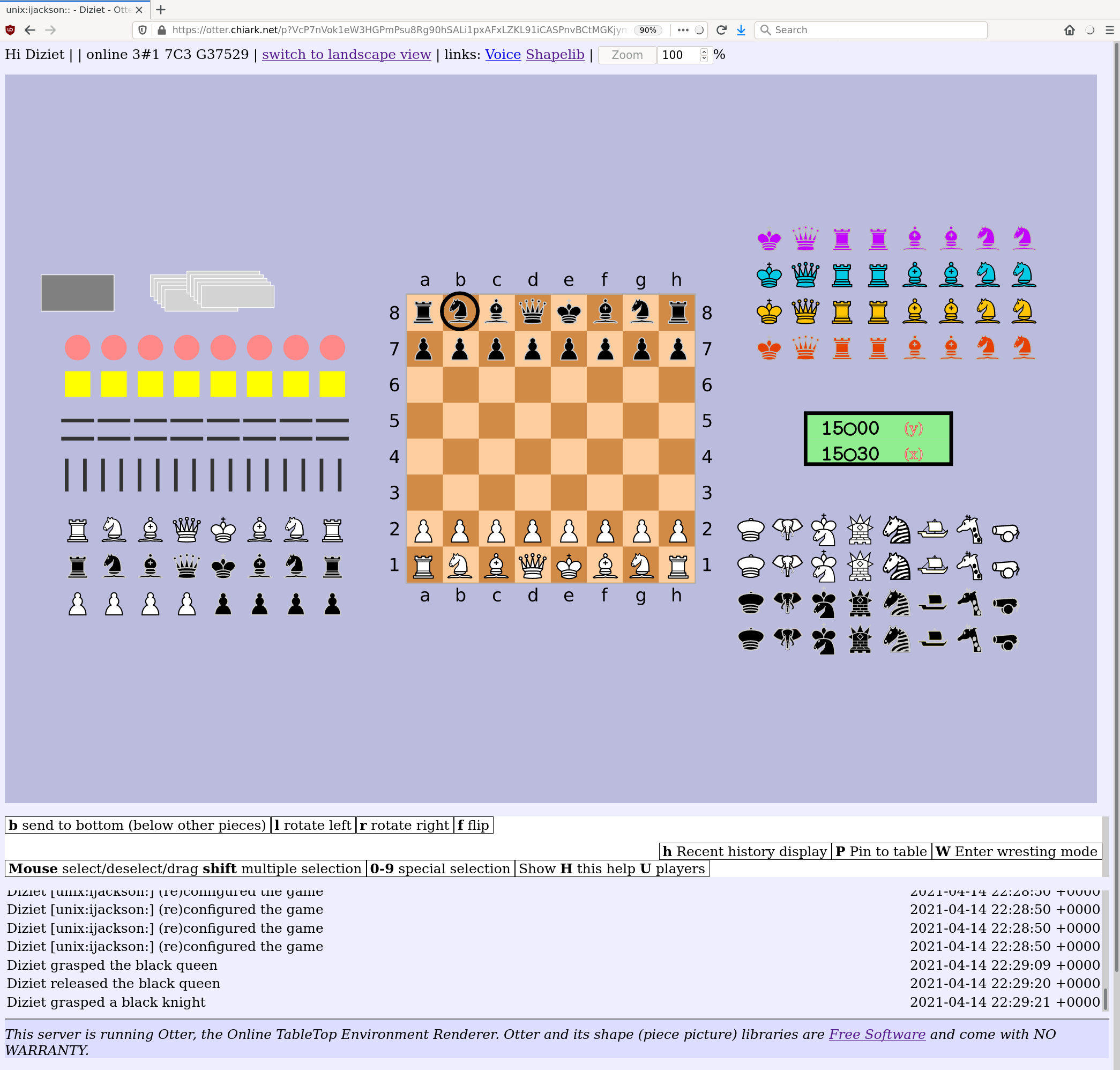
Screenshots!
(Click for the full size images.)
I ve been experimenting with IMA/EVM. Here is the Sourceforge page for the upstream project [1]. The aim of that project is to check hashes and maybe public key signatures on files before performing read/exec type operations on them. It can be used as the next logical step from booting a signed kernel with TPM. I am a long way from getting that sort of thing going, just getting the kernel to boot and load keys is my current challenge and isn t helped due to the lack of documentation on error messages. This blog post started as a way of documenting the error messages so future people who google errors can get a useful result. I am not trying to document everything, just help people get through some of the first problems.
I am using Debian for my work, but some of this will apply to other distributions (particularly the kernel error messages). The Debian distribution has the ima-evm-utils but no other support for IMA/EVM. To get this going in Debian you need to compile your own kernel with IMA support and then boot it with kernel command-line options to enable IMA, in recent kernels that includes lsm=integrity as a mandatory requirement to prevent a kernel Oops after mounting the initrd (there is already a patch to fix this).
If you want to just use IMA (not get involved in development) then a good option would be to use RHEL (here is their documentation) [2] or SUSE (here is their documentation) [3]. Note that both RHEL and SUSE use older kernels so their documentation WILL lead you astray if you try and use the latest kernel.org kernel.
The Debian initrd
I created a script named /etc/initramfs-tools/hooks/keys with the following contents to copy the key(s) from /etc/keys to the initrd where the kernel will load it/them. The kernel configuration determines whether x509_evm.der or x509_ima.der (or maybe both) is loaded. I haven t yet worked out which key is needed when.
To get the below result I used the above script to generate a key, it is the /usr/share/doc/ima-evm-utils/examples/ima-genkey.sh script from the ima-evm-utils package but changed to use the key generated from kernel compilation to sign it. You can copy the files in the certs directory from one kernel build tree to another to have the same certificate and use the same initrd configuration. After generating the key I copied x509_evm.der to /etc/keys on the target host and built the initrd before rebooting.
Errors
Here are some of the kernel error messages I received along with my best interpretation of what they mean.
[ 1.062031] integrity: Loading X.509 certificate: /etc/keys/x509_ima.der
[ 1.063689] integrity: Problem loading X.509 certificate -74
Error -74 means -EBADMSG, which means there s something wrong with the certificate file. I have got that from /etc/keys/x509_ima.der not being in der format and I have got it from a der file that contained a key pair that wasn t signed.
The voting period and tally of votes for the Debian Project Leader election has just concluded, and the winner is Jonathan Carter!
455 of 1,018 Developers voted using the Condorcet method.
More information about the results of the voting are available on the Debian Project Leader Elections 2021 page.
Many thanks to Jonathan Carter and Sruthi Chandran for their campaigns, and to our Developers for voting.
A new version of the RcppAPT package interfacing from R to the C++ library behind the awesome apt, apt-get, apt-cache, commands and their cache powering Debian, Ubuntu and the like arrived on CRAN yesterday. This comes a good year after the previous maintenance update for release 0.0.6.
RcppAPT allows you to query the (Debian or Ubuntu) package dependency graph at will, with build-dependencies (if you have deb-src entries), reverse dependencies, and all other goodies. See the vignette and examples for illustrations.
The maintenance release responds to call for updates from CRAN desiring that make all implicit dependencies on packages markdown and rmarkdown explicit via a Suggests: entry. Two of the many packages I maintain were part of the (large !!) list in the CRAN email, and this is one of them. While making the update, we refreshed two other packaging details.
Changes in version 0.0.7 (2021-04-16)
Add rmarkdown to Suggests: as an implicit conditional dependency
Switch vignette to minidown and its water framework, add minidown to Suggests as well
Previously in George Orwell travel posts: Sutton Courtenay, Marrakesh, Hampstead, Paris, Southwold & The River Orwell.
Wallington is a small village in Hertfordshire, approximately fifty miles north of London and twenty-five miles from the outskirts of Cambridge. George Orwell lived at No. 2 Kits Lane, better known as 'The Stores', on a mostly-permanent basis from 1936 to 1940, but he would continue to journey up from London on occasional weekends until 1947.
His first reference to The Stores can be found in early 1936, where Orwell wrote from Lancashire during research for The Road to Wigan Pier to lament that he would very much like "to do some work again impossible, of course, in the [current] surroundings":
I am arranging to take a cottage at Wallington near Baldock in Herts, rather a pig in a poke because I have never seen it, but I am trusting the friends who have chosen it for me, and it is very cheap, only 7s. 6d. a week [ 20 in 2021].
For those not steeped in English colloquialisms, "a pig in a poke" is an item bought without seeing it in advance. In fact, one general insight that may be drawn from reading Orwell's extant correspondence is just how much he relied on a close network of friends, belying the lazy and hagiographical picture of an independent and solitary figure. (Still, even Orwell cultivated this image at times, such as in a patently autobiographical essay he wrote in 1946. But note the off-hand reference to varicose veins here, for they would shortly re-appear as a symbol of Winston's repressed humanity in Nineteen Eighty-Four.)
Nevertheless, the porcine reference in Orwell's idiom is particularly apt, given that he wrote the bulk of Animal Farm at The Stores his 1945 novella, of course, portraying a revolution betrayed by allegorical pigs. Orwell even drew inspiration for his 'fairy story' from Wallington itself, principally by naming the novel's farm 'Manor Farm', just as it is in the village. But the allusion to the purchase of goods is just as appropriate, as Orwell returned The Stores to its former status as the village shop, even going so far as to drill peepholes in a door to keep an Orwellian eye on the jars of sweets. (Unfortunately, we cannot complete a tidy circle of references, as whilst it is certainly Napoleon Animal Farm's substitute for Stalin who is quoted as describing Britain as "a nation of shopkeepers", it was actually the maraisardBertrand Bar re who first used the phrase).
"It isn't what you might call luxurious", he wrote in typical British understatement, but Orwell did warmly emote on his animals. He kept hens in Wallington (perhaps even inspiring the opening line of Animal Farm: "Mr Jones, of the Manor Farm, had locked the hen-houses for the night, but was too drunk to remember to shut the pop-holes.") and a photograph even survives of Orwell feeding his pet goat, Muriel. Orwell's goat was the eponymous inspiration for the white goat in Animal Farm, a decidedly under-analysed character who, to me, serves to represent an intelligentsia that is highly perceptive of the declining political climate but, seemingly content with merely observing it, does not offer any meaningful opposition. Muriel's aesthetic of resistance, particularly in her reporting on the changes made to the Seven Commandments of the farm, thus rehearses the well-meaning (yet functionally ineffective) affinity for 'fact checking' which proliferates today. But I digress.
There is a tendency to "read Orwell backwards", so I must point out that Orwell wrote several other works whilst at The Stores as well. This includes his Homage to Catalonia, his aforementioned The Road to Wigan Pier, not to mention countless indispensable reviews and essays as well. Indeed, another result of focusing exclusively on Orwell's last works is that we only encounter his ideas in their highly-refined forms, whilst in reality, it often took many years for concepts to fully mature we first see, for instance, the now-infamous idea of "2 + 2 = 5" in an essay written in 1939.
This is important to understand for two reasons. Although the ostentatiously austere Barnhill might have housed the physical labour of its writing, it is refreshing to reflect that the philosophical heavy-lifting of Nineteen Eighty-Four may have been performed in a relatively undistinguished North Hertfordshire village. But perhaps more importantly, it emphasises that Orwell was just a man, and that any of us is fully capable of equally significant insight, with to quote Christopher Hitchens "little except a battered typewriter and a certain resilience."
The red commemorative plaque not only limits Orwell's tenure to the time he was permanently in the village, it omits all reference to his first wife, Eileen O'Shaughnessy, whom he married in the village church in 1936.Wallington's Manor Farm, the inspiration for the farm in Animal Farm. The lower sign enjoins the public to inform the police "if you see anyone on the [church] roof acting suspiciously". Non-UK-residents may be surprised to learn about the systematic theft of lead.
In the past, I've talked about building a Z80-based computer. I made some progress towards that goal, in the sense that I took the initial (trivial steps) towards making something:
I built a clock-circuit.
I wired up a Z80 processor to the clock.
I got the thing running an endless stream of NOP instructions.
No RAM/ROM connected, tying all the bus-lines low, meaning every attempted memory-read returned 0x00 which is the Z80 NOP instruction.
But then I stalled, repeatedly, at designing an interface to RAM and ROM, so that it could actually do something useful. Over the lockdown I've been in two minds about getting sucked back down the rabbit-hole, so I compromised. I did a bit of searching on tindie, and similar places, and figured I'd buy a Z80-based single board computer. My requirements were minimal:
It must run CP/M.
The source-code to "everything" must be available.
I want it to run standalone, and connect to a host via a serial-port.
With those goals there were a bunch of boards to choose from, rc2014 is the standard choice - a well engineered system which uses a common backplane and lets you build mini-boards to add functionality. So first you build the CPU-card, then the RAM card, then the flash-disk card, etc. Over-engineered in one sense, extensible in another. (There are some single-board variants to cut down on soldering overhead, at a cost of less flexibility.)
After a while I came across https://8bitstack.co.uk/, which describes a simple board called the the Z80 playground.
The advantage of this design is that it loads code from a USB stick, making it easy to transfer files to/from it, without the need for a compact flash card, or similar. The downside is that the system has only 64K RAM, meaning it cannot run CP/M 3, only 2.2. (CP/M 3.x requires more RAM, and a banking/paging system setup to swap between pages.)
When the system boots it loads code from an EEPROM, which then fetches the CP/M files from the USB-stick, copies them into RAM and executes them. The memory map can be split so you either have ROM & RAM, or you have just RAM (after the boot the ROM will be switched off). To change the initial stuff you need to reprogram the EEPROM, after that it's just a matter of adding binaries to the stick or transferring them over the serial port.
In only a couple of hours I got the basic stuff working as well as I needed:
A z80-assembler on my Linux desktop to build simple binaries.
An installation of Turbo Pascal 3.00A on the system itself.
The Zork trilogy installed, along with Hitchhikers guide.
I had some fun with a CP/M emulator to get my hand back in things before the board arrived, and using that I tested my first "real" assembly language program (cls to clear the screen), as well as got the hang of using the wordstar keyboard shortcuts as used within the turbo pascal environment.
I have some plans for development:
Add command-line history (page-up/page-down) for the CP/M command-processor.
Add paging to TYPE, and allow terminating with Q.
Nothing major, but fun changes that won't be too difficult to implement.
Since CP/M 2.x has no concept of sub-directories you end up using drives for everything, I implemented a "search-path" so that when you type "FOO" it will attempt to run "A:FOO.COM" if there is no file matching on the current-drive. That's a nicer user-experience at all.
I also wrote some Z80-assembly code to search all drives for an executable, if not found in current drive and not already qualified. Remember CP/M doesn't have a concept of sub-directories) that's actually pretty useful:
  B>LOCATE H*.COM
  P:HELLO   COM
  P:HELLO2  COM
  G:HITCH   COM
  E:HYPHEN  COM
I've also written some other trivial assembly language tools, which was surprisingly relaxing. Especially once I got back into the zen mode of optimizing for size.
I forked the upstream repository, mostly to tidy up the contents, rather than because I want to go into my own direction. I'll keep the contents in sync, because there's no point splitting a community even further - I guess there are fewer than 100 of these boards in the wild, probably far far fewer!
There is a serious problem with Dreamwidth, which is impeding access for many RSS reader tools.
This started at around 0500 UTC on Wednesday morning, according to my own RSS reader cron job. A friend found #43443 in the DW ticket tracker, where a user of a minority web browser found they were blocked.
Local tests demonstrated that Dreamwidth had applied blocking by the HTTP User-Agent header, and were rejecting all user-agents not specifically permitted. Today, this rule has been relaxed and unknown user-agents are permitted. But user-agents for general http client libraries are still blocked.
I'm aware of three unresolved tickets about this:
#43444#43445#43447
We're told there by a volunteer member of Dreamwidth's support staff that this has been done deliberately for "blocking automated traffic". I'm sure the volunteer is just relaying what they've been told by whoever is struggling to deal with what I suppose is probably a spam problem. But it's still rather unsatisfactory.
I have suggested in my own ticket that a good solution might be to apply the new block only to posting and commenting (eg, maybe, by applying it only to HTTP POST requests). If the problem is indeed spam then that ought to be good enough, and would still let RSS readers work properly.
I'm told that this new blocking has been done by "implementing" (actually, configuring or enabling) "some AWS rules for blocking automated traffic". I don't know what facilities AWS provides. This kind of helplessness is of course precisely the kind of thing that the Free Software movement is against and precisely the kind of thing that proprietary services like AWS produce.
I don't know if this blog entry will appear on planet.debian.org and on other people's reader's and aggregators. I think it will at least be seen by other Dreamwidth users. I thought I would post here in the hope that other Dreamwidth users might be able to help get this fixed. At the very least other Dreamwidth blog owners need to know that many of their readers may not be seeing their posts at all.
If this problem is not fixed I will have to move my blog. One of the main points of having a blog is publishing it via RSS. RSS readers are of course based on general http client libraries and many if not most RSS readers have not bothered to customise their user-agent. Those are currently blocked.
I released version 2.6 of ledger2beancount, a ledger to beancount converter.
Here are the changes in 2.6:
Round calculated total if needed for price==cost comparison
Add narration_tag config variable to set narration from metadata
Retain unconsummated payee/payer metadata
Ensure UTF-8 output and assume UTF-8 input
Document UTF-8 issue on Windows systems
Add option to move posting-level tags to the transaction itself
Add support for the alias sub-directive of account declarations
Add support for the payee sub-directive of account declarations
Support configuration file called .ledger2beancount.yaml
Fix uninitialised value warning in hledger mode
Print warning if account in assertion has sub-accounts
Set commodity for commodity-less balance assertion
Expand path name of beancount_header config variable
Document handling of buckets
Document pre- and post-processing examples
Add Dockerfile to create Docker image
Thanks to Alexander Baier, Daniele Nicolodi, and GitHub users bratekarate, faaafo and mefromthepast for various bug reports and other input.
Thanks to Dennis Lee for adding a Dockerfile and to Vinod Kurup for fixing a bug.
Thanks to Stefano Zacchiroli for testing.
You can get ledger2beancount from GitHub.
Firstly a disclaimer, I m not an expert on this and I m not trying to instruct anyone who is aiming to become an expert. The aim of this blog post is to help someone who has a single kernel issue they want to debug as part of doing something that s mostly not kernel coding. I welcome comments about the second step to kernel debugging for the benefit of people who need more than this (which might include me next week). Also suggestions for people who can t use a kvm/qemu debugger would be good.
Below is a command to run qemu with GDB. It should be run from the Linux kernel source directory. You can add other qemu options for a blog device and virtual networking if necessary, but the bug I encountered gave an oops from the initrd so I didn t need to go further. The nokaslr is to avoid address space randomisation which deliberately makes debugging tasks harder (from a certain perspective debugging a kernel and compromising a kernel are fairly similar). Loading the bzImage is fine, gdb can map that to the different file it looks at later on.
The command to run GDB is gdb vmlinux , when at the GDB prompt you can run the command target remote localhost:1200 to connect to the GDB server port 1200. Note that there is nothing special about port 1200, it was given in an example I saw and is as good as any other port. It is important that you run GDB against the vmlinux file in the main directory not any of the several stripped and packaged files, GDB can t handle a bzImage file but that s OK, it ends up much the same in RAM.
When the target remote command is processed the kernel will be suspended by the debugger, if you are looking for a bug early in the boot you may need to be quick about this. Using qemu-system-x86_64 instead of kvm slows things down and can help in that regard. The bug I was hunting happened 1.6 seconds after kernel load with KVM and 7.8 seconds after kernel load with qemu. I am not aware of all the implications of the kvm vs qemu decision on debugging. If your bug is a race condition then trying both would be a good strategy.
After the target remote command you can debug the kernel just like any other program.
If you put a breakpoint on print_modules() that will catch the operation of printing an Oops which can be handy.
Armadillo is a powerful and expressive C++ template library for linear algebra aiming towards a good balance between speed and ease of use with a syntax deliberately close to a Matlab. RcppArmadillo integrates this library with the R environment and language and is widely used by (currently) 852 other packages on CRAN.
This new release brings us the just release Armadillo 10.4.0. Upstream moves at a speed that is a little faster than the cadence CRAN likes. We release RcppArmadillo 0.10.2.2.0 on March 9; and upstream 10.3.0 came out shortly thereafter. We aim to accomodate CRAN with (roughly) monthly (or less frequent) releases) so by the time we were ready 10.4.0 had just come out.
As it turns, the full testing had a benefit. Among the (currently) 852 CRAN packages using RcppArmadillo, two were failing tests. This is due to a subtle, but important point. Early on we realized that it would be beneficial if the standard R control over random-number creation and seeding affected Armadillo too, which Conrad accomodated kindly with an optional RNG interface which RcppArmadillo supplies. With recent changes he made, the R side saw normally-distributed draws (via the Armadillo interface) changed, which lead to the two changes. All hail unit tests. So I mentioned this to Conrad, and with the usual Chicago-Brisbane time difference late my evening a fix was in my inbox. The CRAN upload was then halted as I had missed that due to other changes he had made random draws from a Gamma would now call std::rand() which CRAN flags. Another email to Brisbane, another late (one-line) fix back and all was good. We still encountered one package with an error but flagged this as internal to that package s setup, so Uwe let RcppArmadillo onto CRAN, I contacted that package s maintainer who was very receptive and a change should be forthcoming. So with all that we have 0.10.4.0.0 on CRAN giving us Armadillo 10.4.0.
The full set of changes follows. As Armadillo 10.3.0 was not uploaded to CRAN, its changes are included too.
Changes in RcppArmadillo version 0.10.4.0.0 (2021-04-12)
Upgraded to Armadillo release 10.4.0 (Pressure Cooker)
faster handling of triangular matrices by log_det()
added log_det_sympd() for log determinant of symmetric positive matrices
added ARMA_WARN_LEVEL configuration option, to control the degree of emitted warning messages
reduced the default degree of warning messages, so that failed decompositions, failed saving/loading, etc, no longer emit warnings
Apply one upstream corrections for arma::randn draws when using alternative (here R) generator, and arma::randg.
Changes in RcppArmadillo version 0.10.3.0.0 (2021-03-10)
Upgraded to Armadillo release 10.3 (Sunrise Chaos)
faster handling of symmetric positive definite matrices by pinv()
expanded .save() / .load() for dense matrices to handle coord_ascii format
for out of bounds access, element accessors now throw the more nuanced std::out_of_range exception, instead of only std::logic_error
First up, I am alive and well. I have been receiving calls from friends for quite sometime but now that I have become deaf, it is a pain and the hearing aids aren t all that useful. But moreover, where we have been finding ourselves each and every day sinking lower and lower feels absurd as to what to write and not write about India. Thankfully, I ran across this piece which does tell in far more detail than I ever could. The only interesting and somewhat positive news I had is from south of India otherwise sad days, especially for the poor. The saddest story is that this time Covid has reached alarming proportions in India and surprise, surprise this time the villain for many is my state of Maharashtra even though it hasn t received its share of GST proceeds for last two years and this was Kerala s perspective, different state, different party, different political ideology altogether.
Kerala Finance Minister Thomas Issac views on GST, October 22, 2020 Indian Express.
I briefly also share the death of somewhat liberal Film censorship in India unlike Italy which abolished film censorship altogether. I don t really want spend too much on how we have become No. 2 in Covid cases in the world and perhaps death also. Many people still believe in herd immunity but don t really know what it means. So without taking too much time and effort, bid adieu. May post when I m hopefully emotionally feeling better, stronger
I ve just setup the Yama LSM module on some of my Linux systems. Yama controls ptrace which is the debugging and tracing API for Unix systems. The aim is to prevent a compromised process from using ptrace to compromise other processes and cause more damage. In most cases a process which can ptrace another process which usually means having capability SYS_PTRACE (IE being root) or having the same UID as the target process can interfere with that process in other ways such as modifying it s configuration and data files. But even so I think it has the potential for making things more difficult for attackers without making the system more difficult to use.
If you put kernel.yama.ptrace_scope = 1 in sysctl.conf (or write 1 to /proc/sys/kernel/yama/ptrace_scope) then a user process can only trace it s child processes. This means that strace -p and gdb -p will fail when run as non-root but apart from that everything else will work. Generally strace -p (tracing the system calls of another process) is of most use to the sysadmin who can do it as root. The command gdb -p and variants of it are commonly used by developers so yama wouldn t be a good thing on a system that is primarily used for software development.
Another option is kernel.yama.ptrace_scope = 3 which means no-one can trace and it can t be disabled without a reboot. This could be a good option for production servers that have no need for software development. It wouldn t work well for a small server where the sysadmin needs to debug everything, but when dozens or hundreds of servers have their configuration rolled out via a provisioning tool this would be a good setting to include.
See Documentation/admin-guide/LSM/Yama.rst in the kernel source for the details.
When running with capability SYS_PTRACE (IE root shell) you can ptrace anything else and if necessary disable Yama by writing 0 to /proc/sys/kernel/yama/ptrace_scope .
I am enabling mode 1 on all my systems because I think it will make things harder for attackers while not making things more difficult for me.
Also note that SE Linux restricts SYS_PTRACE and also restricts cross-domain ptrace access, so the combination with Yama makes things extra difficult for an attacker.
Yama is enabled in the Debian kernels by default so it s very easy to setup for Debian users, just edit /etc/sysctl.d/whatever.conf and it will be enabled on boot.
I ve been watching the show Riverdale on Netflix recently. It s an interesting modern take on the Archie comics. Having watched Josie and the Pussycats in Outer Space when I was younger I was anticipating something aimed towards a similar audience. As solving mysteries and crimes was apparently a major theme of the show I anticipated something along similar lines to Scooby Doo, some suspense and some spooky things, but then a happy ending where criminals get arrested and no-one gets hurt or killed while the vast majority of people are nice. Instead the first episode has a teen being murdered and Ms Grundy being obsessed with 15yo boys and sleeping with Archie (who s supposed to be 15 but played by a 20yo actor).
Everyone in the show has some dark secret. The filming has a dark theme, the sky is usually overcast and it s generally gloomy. This is a significant contrast to Veronica Mars which has some similarities in having a young cast, a sassy female sleuth, and some similar plot elements. Veronica Mars has a bright theme and a significant comedy element in spite of dealing with some dark issues (murder, rape, child sex abuse, and more). But Riverdale is just dark. Anyone who watches this with their kids expecting something like Scooby Doo is in for a big surprise.
There are lots of interesting stylistic elements in the show. Lots of clothing and uniform designs that seem to date from the 1940 s. It seems like some alternate universe where kids have smartphones and laptops while dressing in the style of the 1940s. One thing that annoyed me was construction workers using tools like sledge-hammers instead of excavators. A society that has smart phones but no earth-moving equipment isn t plausible.
On the upside there is a racial mix in the show that more accurately reflects American society than the original Archie comics and homophobia is much less common than in most parts of our society. For both race issues and gay/lesbian issues the show treats them in an accurate way (portraying some bigotry) while the main characters aren t racist or homophobic.
I think it s generally an OK show and recommend it to people who want a dark show. It s a good show to watch while doing something on a laptop so you can check Wikipedia for the references to 1940s stuff (like when Bikinis were invented). I m half way through season 3 which isn t as good as the first 2, I don t know if it will get better later in the season or whether I should have stopped after season 2.
I don t usually review fiction, but the interesting aesthetics of the show made it deserve a review.
The Viability of Small Disks
Less than a year ago I wrote a blog post about storage trends [1]. My main point in that post was that disks smaller than 2TB weren t viable then and 2TB disks wouldn t be economically viable in the near future.
Now MSY has 2TB disks for $72 and 2TB SSD for $245, saving $173 if you get a hard drive (compared to saving $240 10 months ago). Given the difference in performance and noise 2TB hard drives won t be worth using for most applications nowadays.
NVMe vs SSD
Last year NVMe prices were very comparable for SSD prices, I was hoping that trend would continue and SSDs would go away. Now for sizes 1TB and smaller NVMe and SSD prices are very similar, but for 2TB the NVMe prices are twice that of SSD presumably partly due to poor demand for 2TB NVMe. There are also no NVMe devices larger than 2TB on sale at MSY (a store which caters to home stuff not special server equipment) but SSDs go up to 8TB.
It seems that NVMe is only really suitable for workstation storage and for cache etc on a server. So SATA SSDs will be around for a while.
Small Servers
There are a range of low end servers which support a limited number of disks. Dell has 2 disk servers and 4 disk servers. If one of those had 8TB SSDs you could have 8TB of RAID-1 or 24TB of RAID-Z storage in a low end server. That covers the vast majority of servers (small business or workgroup servers tend to have less than 8TB of storage).
Larger Servers
Anandtech has an article on Seagates roadmap to 120TB disks [2]. They currently sell 20TB disks using HAMR technology
Currently the biggest disks that MSY sells are 10TB for $395, which was also the biggest disk they were selling last year. Last year MSY only sold SSDs up to 2TB in size (larger ones were available from other companies at much higher prices), now they sell 8TB SSDs for $949 (4* capacity increase in less than a year). Seagate is planning 30TB disks for 2023, if SSDs continue to increase in capacity by 4* per year we could have 128TB SSDs in 2023. If you needed a server with 100TB of storage then having 2 or 3 SSDs in a RAID array would be much easier to manage and faster than 4*30TB disks in an array.
When you have a server with many disks you can expect to have more disk failures due to vibration. One time I built a server with 18 disks and took disks from 2 smaller servers that had 4 and 5 disks. The 9 disks which had been working reliably for years started having problems within weeks of running in the bigger server. This is one of the many reasons for paying extra for SSD storage.
Seagate is apparently planning 50TB disks for 2026 and 100TB disks for 2030. If that s the best they can do then SSD vendors should be able to sell larger products sooner at prices that are competitive. Matching hard drive prices is not required, getting to less than 4* the price should be enough for most customers.
The Anandtech article is worth reading, it mentions some interesting features that Seagate are developing such as having 2 actuators (which they call Mach.2) so the drive can access 2 different tracks at the same time. That can double the performance of a disk, but that doesn t change things much when SSDs are more than 100* faster. Presumably the Mach.2 disks will be SAS and incredibly expensive while providing significantly less performance than affordable SATA SSDs.
Computer Cases
In my last post I speculated on the appearance of smaller cases designed to not have DVD drives or 3.5 hard drives. Such cases still haven t appeared apart from special purpose machines like the NUC that were available last year.
It would be nice if we could get a new industry standard for smaller power supplies. Currently power supplies are expected to be almost 5 inches wide (due to the expectation of a 5.25 DVD drive mounted horizontally). We need some industry standards for smaller PCs that aren t like the NUC, the NUC is very nice, but most people who build their own PC need more space than that. I still think that planning on USB DVD drives is the right way to go. I ve got 4PCs in my home that are regularly used and CDs and DVDs are used so rarely that sharing a single DVD drive among all 4 wouldn t be a problem.
Conclusion
I m tempted to get a couple of 4TB SSDs for my home server which cost $487 each, it currently has 2*500G SSDs and 3*4TB disks. I would have to remove some unused files but that s probably not too hard to do as I have lots of old backups etc on there. Another possibility is to use 2*4TB SSDs for most stuff and 2*4TB disks for backups.
I m recommending that all my clients only use SSDs for their storage. I only have one client with enough storage that disks are the only option (100TB of storage) but they moved all the functions of that server to AWS and use S3 for the storage. Now I don t have any clients doing anything with storage that can t be done in a better way on SSD for a price difference that s easy for them to afford.
Affordable SSD also makes RAID-1 in workstations more viable. 2 disks in a PC is noisy if you have an office full of them and produces enough waste heat to be a reliability issue (most people don t cool their offices adequately on weekends). 2 SSDs in a PC is no problem at all. As 500G SSDs are available for $73 it s not a significant cost to install 2 of them in every PC in the office (more cost for my time than hardware). I generally won t recommend that hard drives be replaced with SSDs in systems that are working well. But if a machine runs out of space then replacing it with SSDs in a RAID-1 is a good choice.
Moore s law might cover SSDs, but it definitely doesn t cover hard drives. Hard drives have fallen way behind developments of most other parts of computers over the last 30 years, hopefully they will go away soon.
The Debian Janitor is an automated
system that commits fixes for (minor) issues in Debian packages that can be
fixed by software. It gradually started proposing merges in early
December. The first set of changes sent out ran lintian-brush on sid packages maintained in
Git. This post is part of a series about the progress of the Janitor.
The upstream ontologist is a project that extracts metadata about upstream projects in a consistent format. It does this with a combination of heuristics and reading ecosystem-specific metadata files, such as Python s setup.py, rust s Cargo.toml as well as e.g. scanning README files.
Supported Data Sources
It will extract information from a wide variety of sources, including:
Supported Fields
Fields that it currently provides include:
Homepage: homepage URL
Name: name of the upstream project
Contact: contact address of some sort of the upstream (e-mail, mailing list URL)
Repository: VCSURL
Repository-Browse: Web URL for viewing the VCS
Bug-Database: Bug database URL (for web viewing, generally)
Bug-Submit: URL to use to submit new bugs (either on the web or an e-mail address)
Screenshots: List of URLs with screenshots
Archive: Archive used - e.g. SourceForge
Security-Contact: e-mail or URL with instructions for reporting security issues
Documentation: Link to documentation on the web:
Wiki: Wiki URL
Summary: one-line description of the project
Description: longer description of the project
License: Single line license description (e.g. GPL 2.0 ) as declared in the metadata[1]
Copyright: List of copyright holders
Version: Current upstream version
Security-MD: URL to markdown file with security policy
All data fields have a certainty associated with them ( certain , confident , likely or possible ), which gets set depending on how the data was derived or where it was found. If multiple possible values were found for a specific field, then the value with the highest certainty is taken.
Interface
The ontologist provides a high-level Python API as well as two command-line tools that can write output in two different formats:
For example, running guess-upstream-metadata on dulwich:
 % guess-upstream-metadata
 <string>:2: (INFO/1) Duplicate implicit target name: "contributing".
 Name: dulwich
 Repository: https://www.dulwich.io/code/
 X-Security-MD: https://github.com/dulwich/dulwich/tree/HEAD/SECURITY.md
 X-Version: 0.20.21
 Bug-Database: https://github.com/dulwich/dulwich/issues
 X-Summary: Python Git Library
 X-Description:
   This is the Dulwich project.
   It aims to provide an interface to git repos (both local and remote) that
   doesn't call out to git directly but instead uses pure Python.
 X-License: Apache License, version 2 or GNU General Public License, version 2 or later.
 Bug-Submit: https://github.com/dulwich/dulwich/issues/new
Lintian-Brush
lintian-brush can update DEP-12-style debian/upstream/metadata files that hold information about the upstream project that is packaged as well as the Homepage in the debian/control file based on information provided by the upstream ontologist. By default, it only imports data with the highest certainty - you can override this by specifying the uncertain command-line flag.
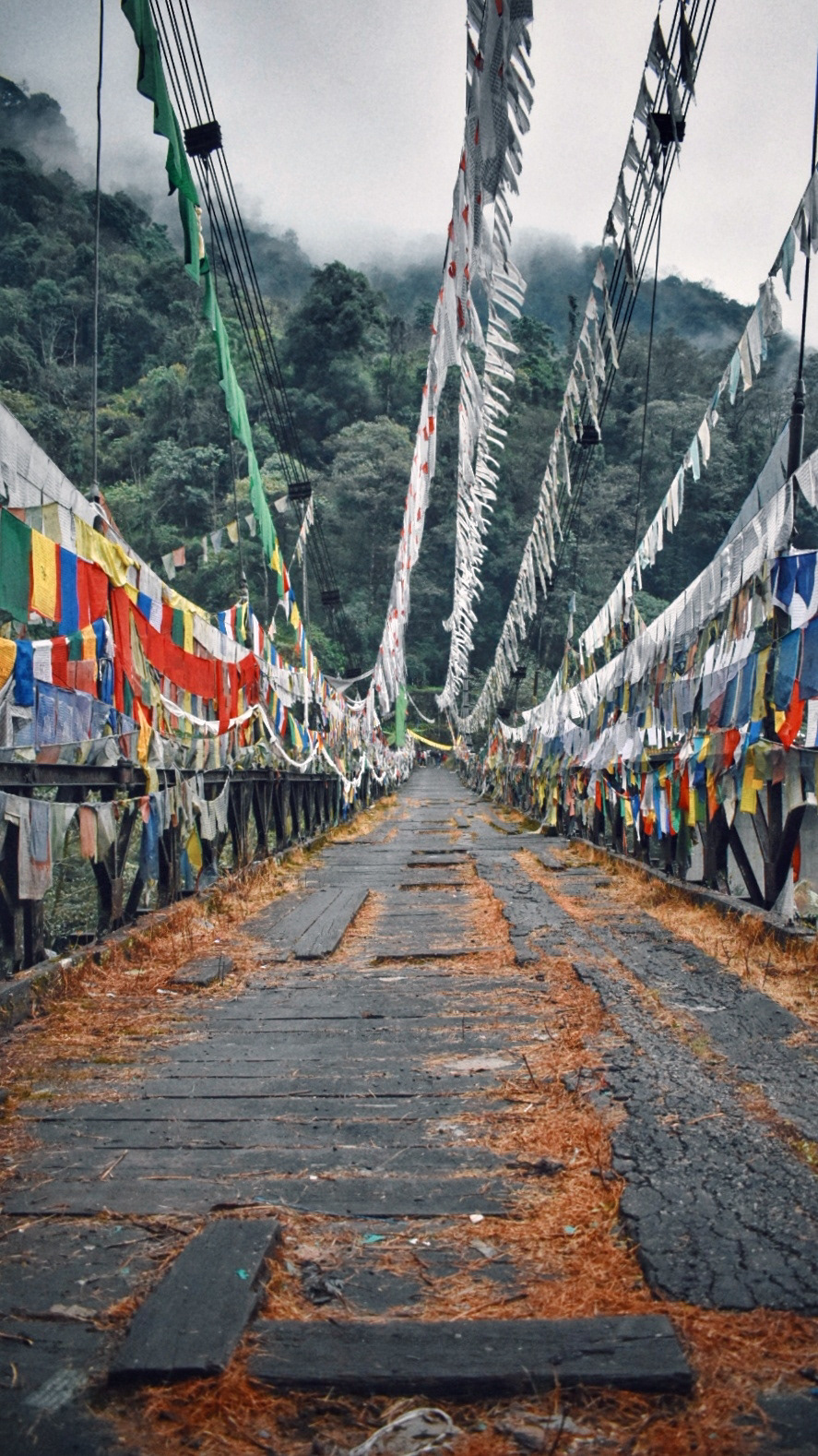
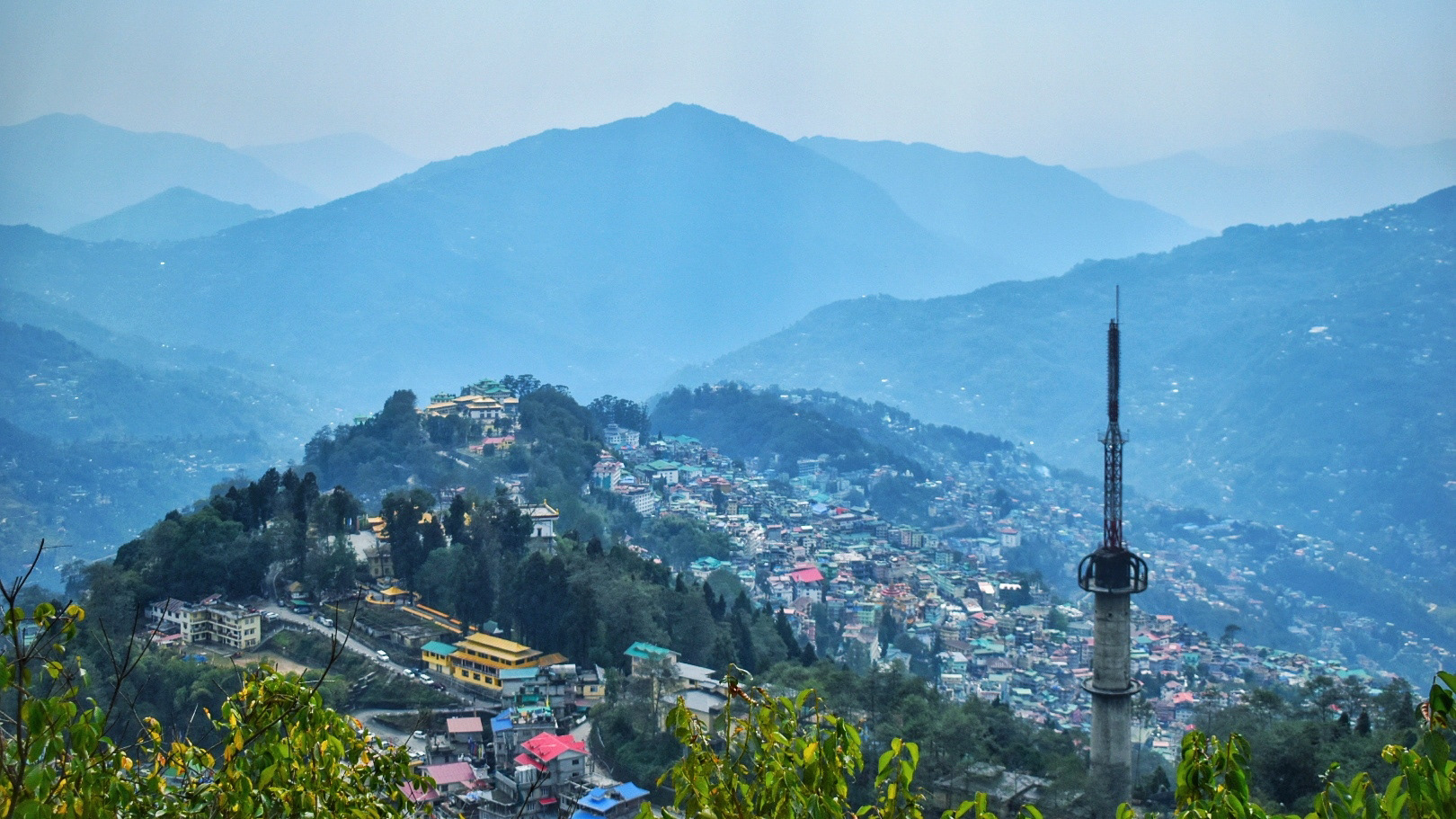
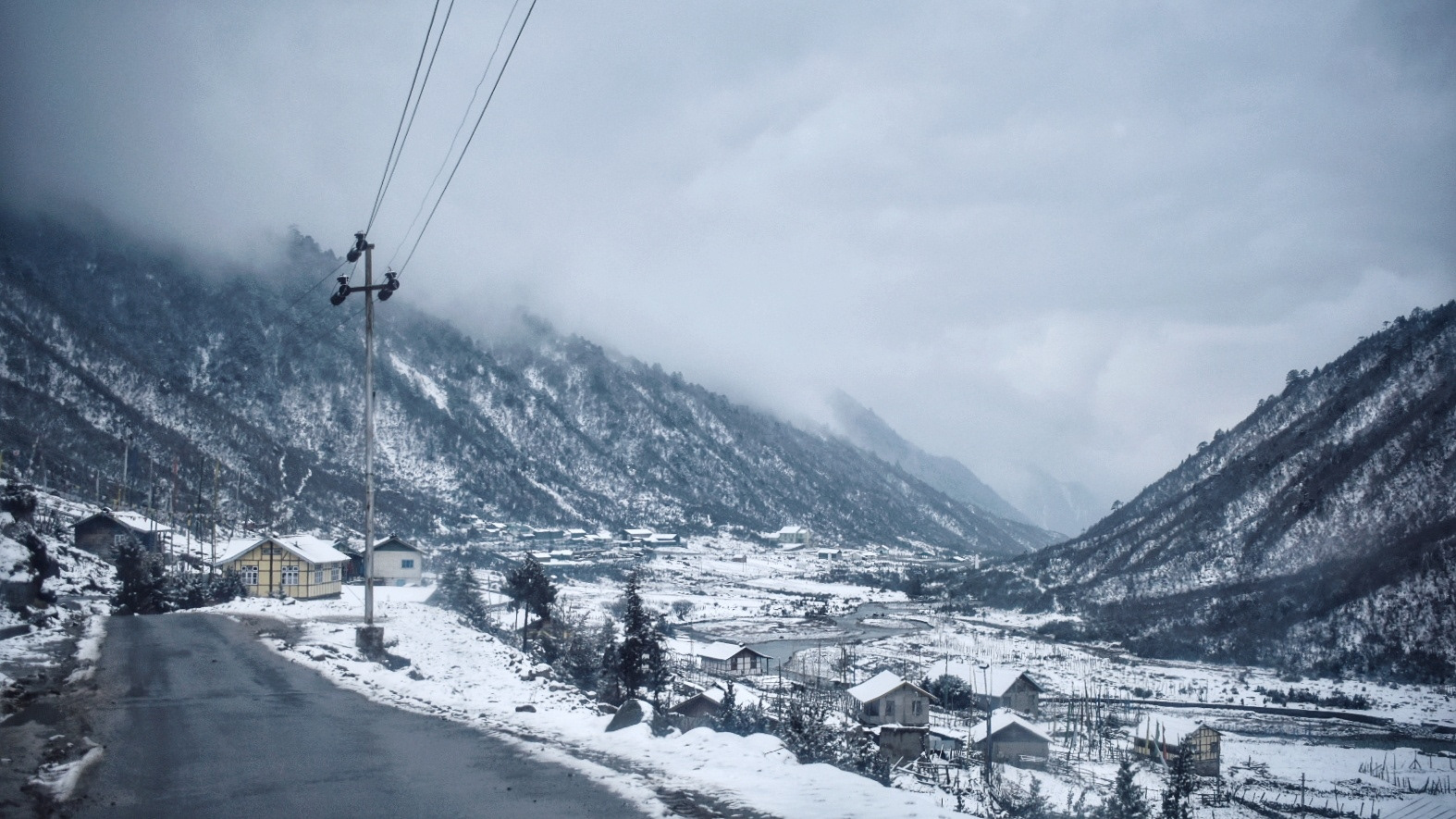
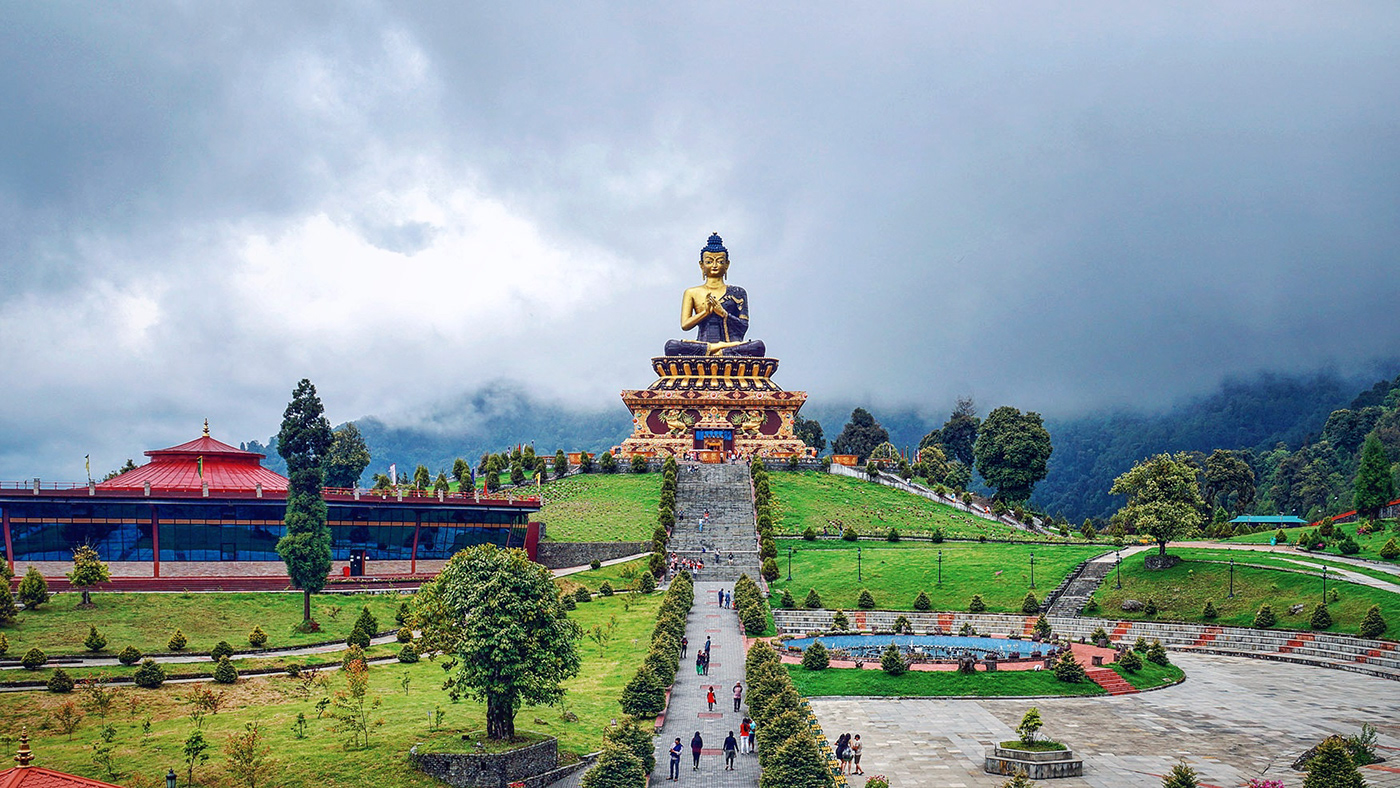
Host to Kanchenjunga, the world s third-highest mountain peak and the endangered Red Panda, Sikkim is a state in northeastern India. Nestled between Nepal, Tibet (China), Bhutan and West Bengal (India), the state offers a smorgasbord of cultures and cuisines. That said, it s hardly surprising that the old spice route meanders through western Sikkim, connecting Lhasa with the ports of Bengal. Although the latter could also be attributed to cardamom (kali elaichi), a perennial herb native to Sikkim, which the state is the second-largest producer of, globally. Lastly, having been to and lived in India, all my life, I can confidently say Sikkim is one of the cleanest & safest regions in India, making it ideal for first-time backpackers.
Brief History
17th century: The Kingdom of Sikkim is founded by the Namgyal dynasty and ruled by Buddhist priest-kings known as the Chogyal.
1890: Sikkim becomes a princely state of British India.
1947: Sikkim continues its protectorate status with the Union of India, post-Indian-independence.
1973: Anti-royalist riots take place in front of the Chogyal's palace, by Nepalis seeking greater representation.
1975: Referendum leads to the deposition of the monarchy and Sikkim joins India as its 22nd state.
Languages
Official: English, Nepali, Sikkimese/Bhotia and Lepcha
Though Hindi and Nepali share the same script (Devanagari), they are not mutually intelligible. Yet, most people in Sikkim can understand and speak Hindi.
Ethnicity
Nepalis: Migrated in large numbers (from Nepal) and soon became the dominant community
Bhutias: People of Tibetan origin. Major inhabitants in Northern Sikkim.
Lepchas: Original inhabitants of Sikkim
Food
Tibetan/Nepali dishes (mostly consumed during winter)
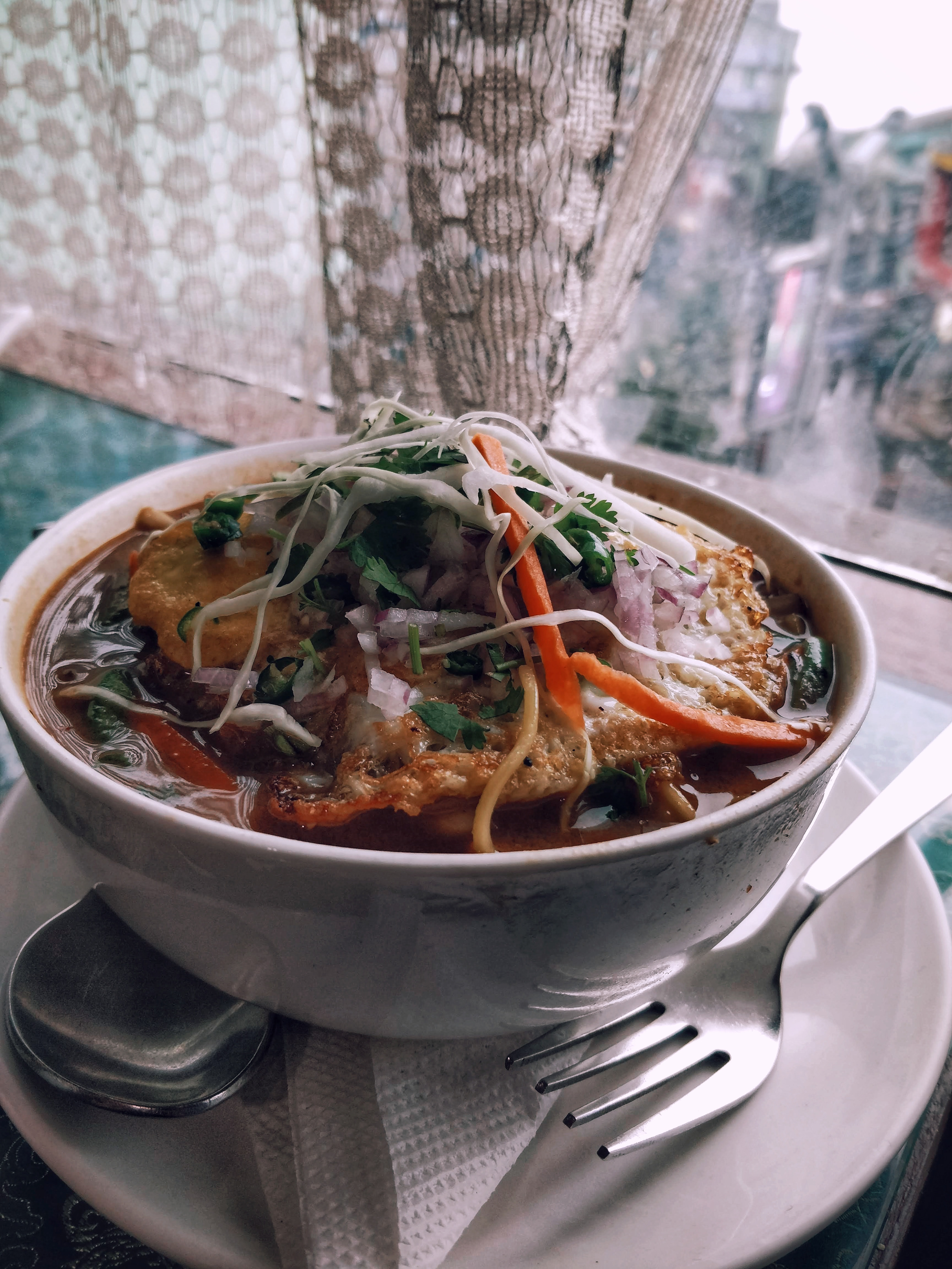
Thukpa: Noodle soup, rich in spices and vegetables. Usually contains some form of meat. Common variations: Thenthuk and Gyathuk
Momos: Steamed or fried dumplings, usually with a meat filling.
Saadheko: Spicy marinated chicken salad.
Gundruk Soup: A soup made from Gundruk, a fermented leafy green vegetable.
Sinki : A fermented radish tap-root product, traditionally consumed as a base for soup and as a pickle. Eerily similar to Kimchi.
While pork and beef are pretty common, finding vegetarian dishes is equally easy.
Staple: Dal-Bhat with Subzi. Rice is a lot more common than wheat (rice) possibly due to greater carb content and proximity to West Bengal, India s largest producer of Rice.
Good places to eat in Gangtok
Hamro Bhansa Ghar, Nimtho (Nepali)
Taste of Tibet
Dragon Wok (Chinese & Japanese)
Buddhism in Sikkim
Bayul Demojong (Sikkim), is the most sacred Land in the Himalayas as per the belief of the Northern Buddhists and various religious texts.
Sikkim was blessed by Guru Padmasambhava, the great Buddhist saint who visited Sikkim in the 8th century and consecrated the land.
However, Buddhism is said to have reached Sikkim only in the 17th century with the arrival of three Tibetan monks viz. Rigdzin Goedki Demthruchen, Mon Kathok Sonam Gyaltshen & Rigdzin Legden Je at Yuksom. Together, they established a Buddhist monastery.
In 1642 they crowned Phuntsog Namgyal as the first monarch of Sikkim and gave him the title of Chogyal, or Dharma Raja.
The faith became popular through its royal patronage and soon many villages had their own monastery.
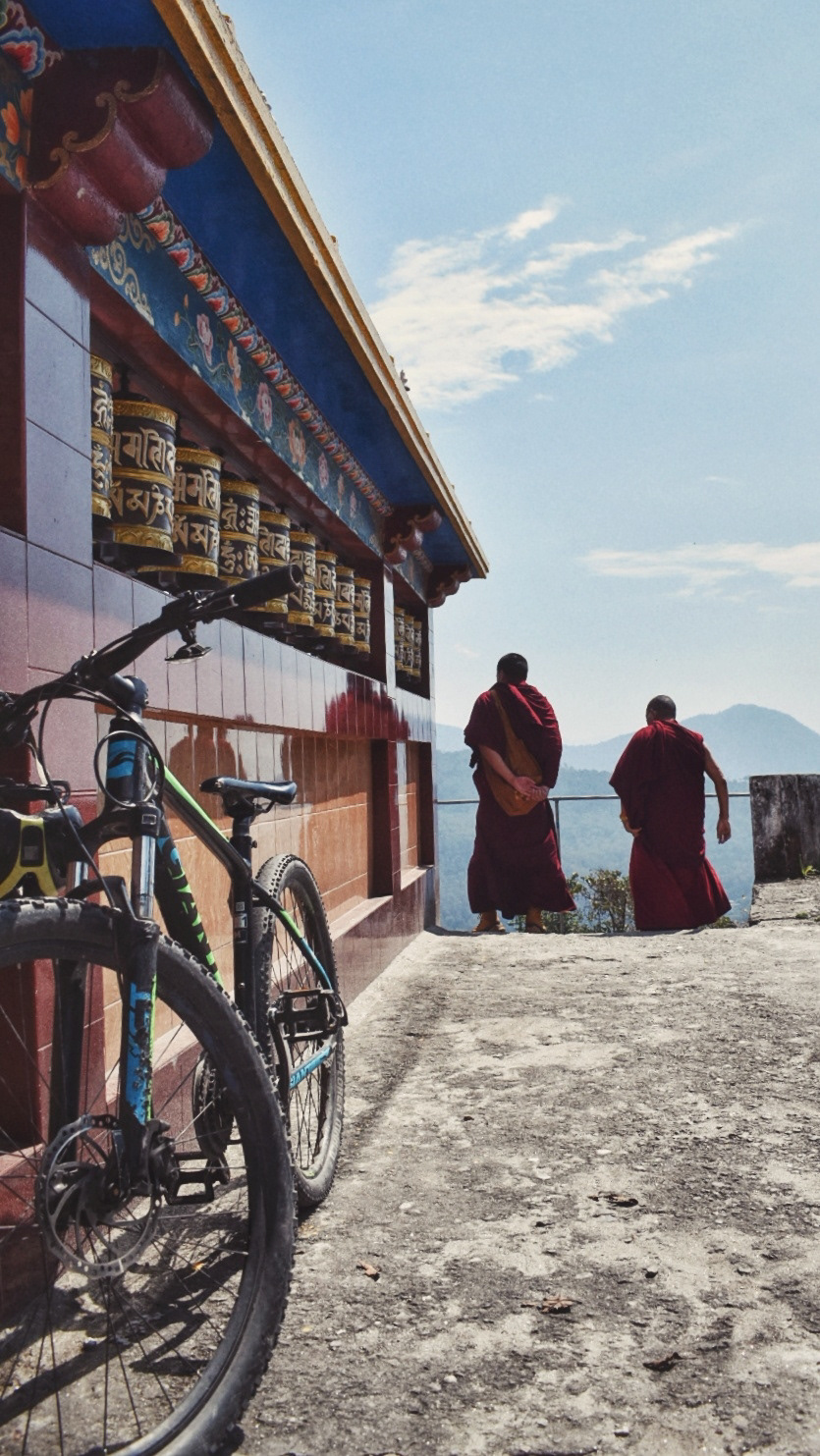
Today Sikkim has over 200 monasteries.
Major monasteries
Rumtek Monastery, 20Km from Gangtok
Lingdum/Ranka Monastery, 17Km from Gangtok
Phodong Monastery, 28Km from Gangtok
Ralang Monastery, 10Km from Ravangla
Tsuklakhang Monastery, Royal Palace, Gangtok
Enchey Monastery, Gangtok
Tashiding Monastery, 35Km from Ravangla
Reaching Sikkim
Gangtok, being the capital, is easiest to reach amongst other regions, by public transport and shared cabs.
About 20 minutes from Siliguri and 4 hours from Gangtok.
Reserved cabs cost about INR 3000. Shared cabs from INR 350.
By Road:
NH10 connects Siliguri to Gangtok
If you can t find buses plying to Gangtok directly, reach Siliguri and then take a cab to Gangtok.
Sikkim Nationalised Transport Div. also runs hourly buses between Siliguri and Gangtok and daily buses on other common routes. They re cheaper than shared cabs.
Wizzride also operates shared cabs between Siliguri/Bagdogra/NJP, Gangtok and Darjeeling. They cost about the same as shared cabs but pack in half as many people in luxury cars (Innova, Xylo, etc.) and are hence more comfortable.
The easiest & most economical way to explore North Sikkim is the 3D/2N package offered by shared-cab drivers.
This includes food, permits, cab rides and accommodation (1N in Lachen and 1N in Lachung)
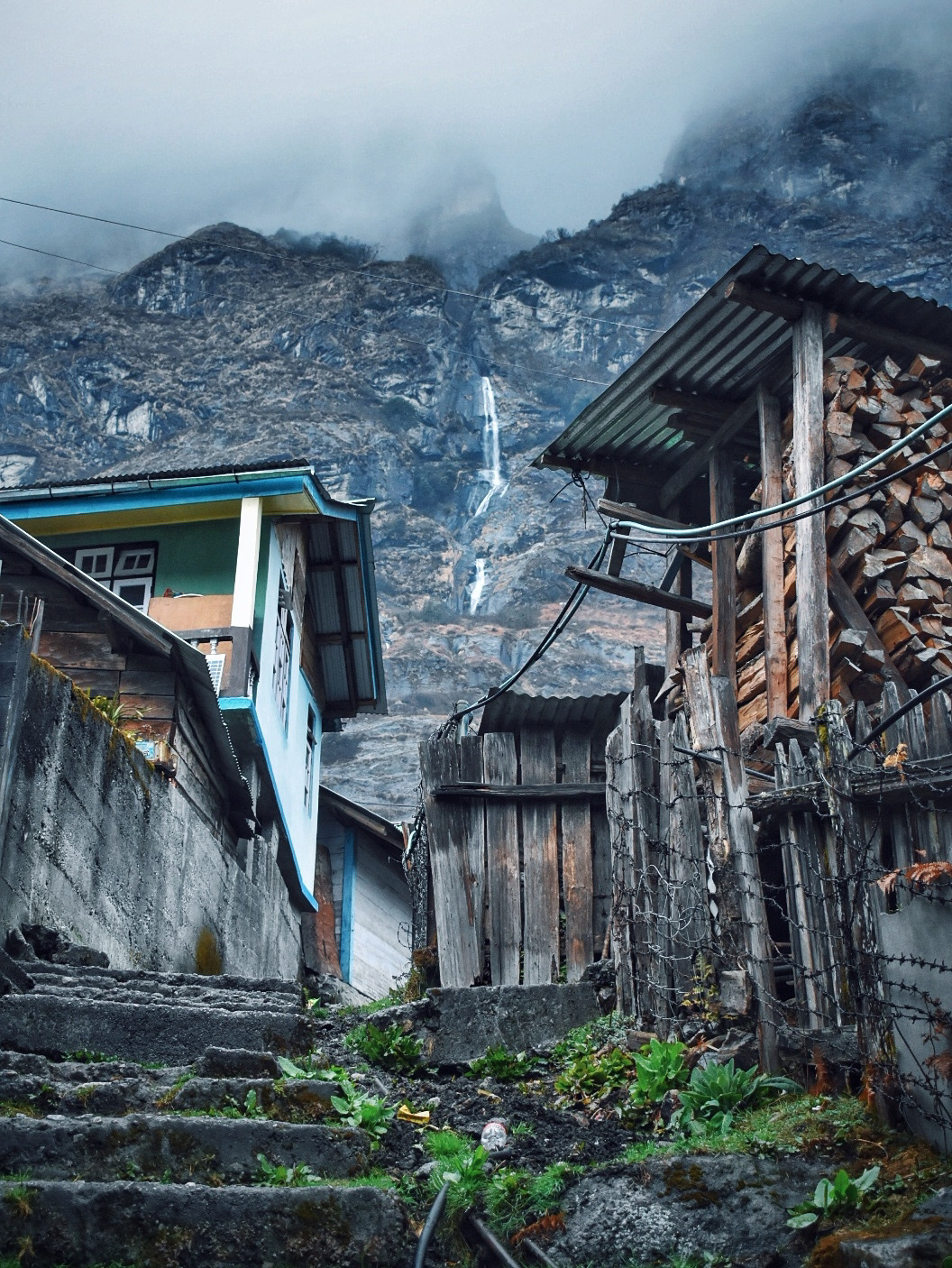
The accommodation on both nights are at homestays with bare necessities, so keep your hopes low.
In the spirit of sustainable tourism, you ll be asked to discard single-use plastic bottles, so please carry a bottle that you can refill along the way.
Zero Point and Gurdongmer Lake are snow-capped throughout the year
3D/2N Shared-cab Package Itinerary
Day 1
Gangtok (10am) - Chungthang - Lachung (stay)
Day 2
Pre-lunch : Lachung (6am) - Yumthang Valley [12,139ft] - Zero Point - Lachung [15,300ft]
Post-lunch : Lachung - Chungthang - Lachen (stay)
Day 3
Pre-lunch : Lachen (5am) - Kala Patthar - Gurdongmer Lake [16,910ft] - Lachen
Post-lunch : Lachen - Chungthang - Gangtok (7pm)
This itinerary is idealistic and depends on the level of snowfall.
Some drivers might switch up Day 2 and 3 itineraries by visiting Lachen and then Lachung, depending upon the weather.
Areas beyond Lachen & Lachung are heavily militarized since the Indo-China border is only a few miles away.
East Sikkim
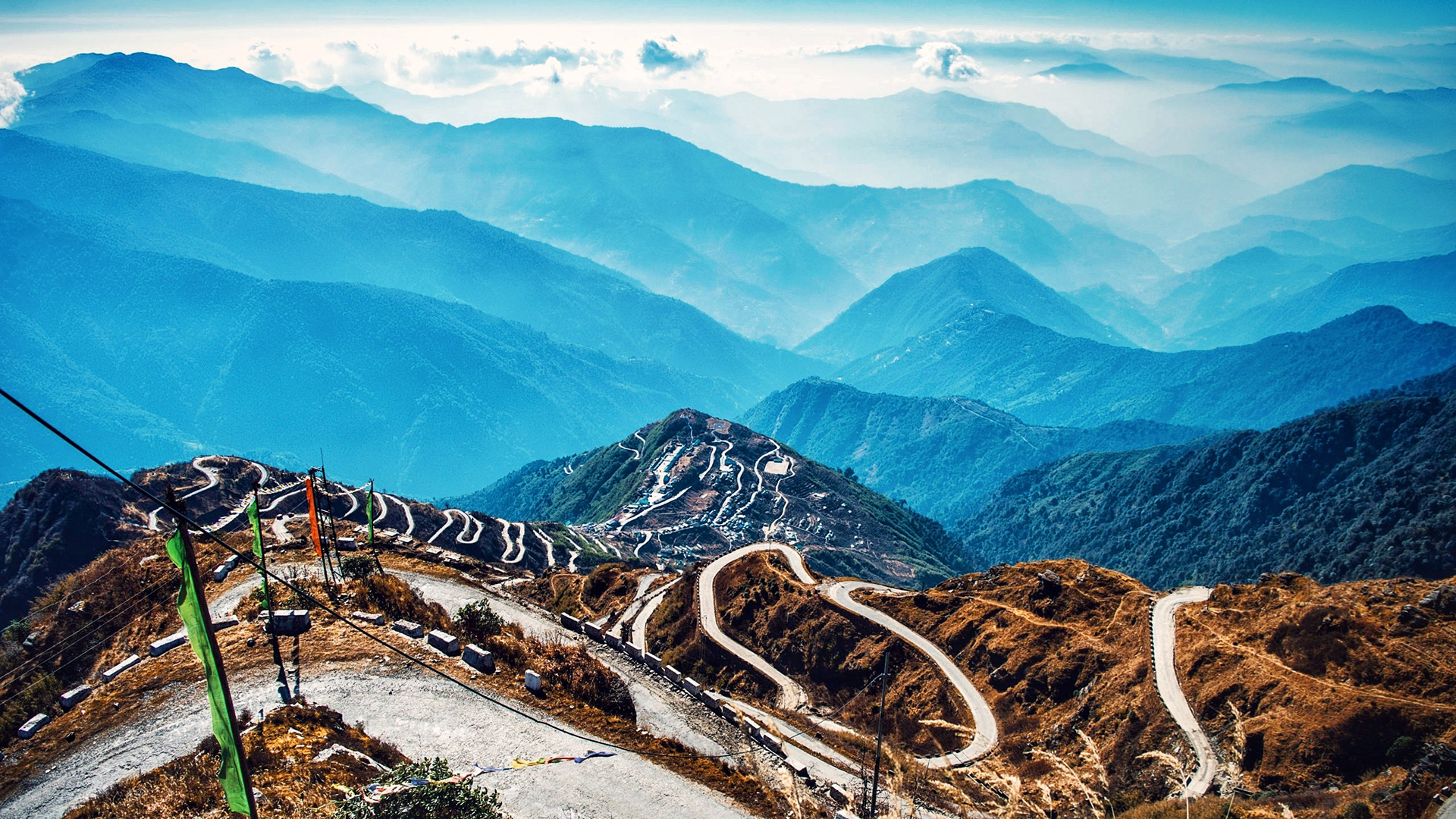
Zuluk and Silk Route
Time needed: 2D/1N
Zuluk [9,400ft] is a small hamlet with an excellent view of the eastern Himalayan range including the Kanchenjunga.
Was once a transit point to the historic Silk Route from Tibet (Lhasa) to India (West Bengal).
The drive from Gangtok to Zuluk takes at least four hours. Hence, it makes sense to spend the night at a homestay and space out your trip to Zuluk
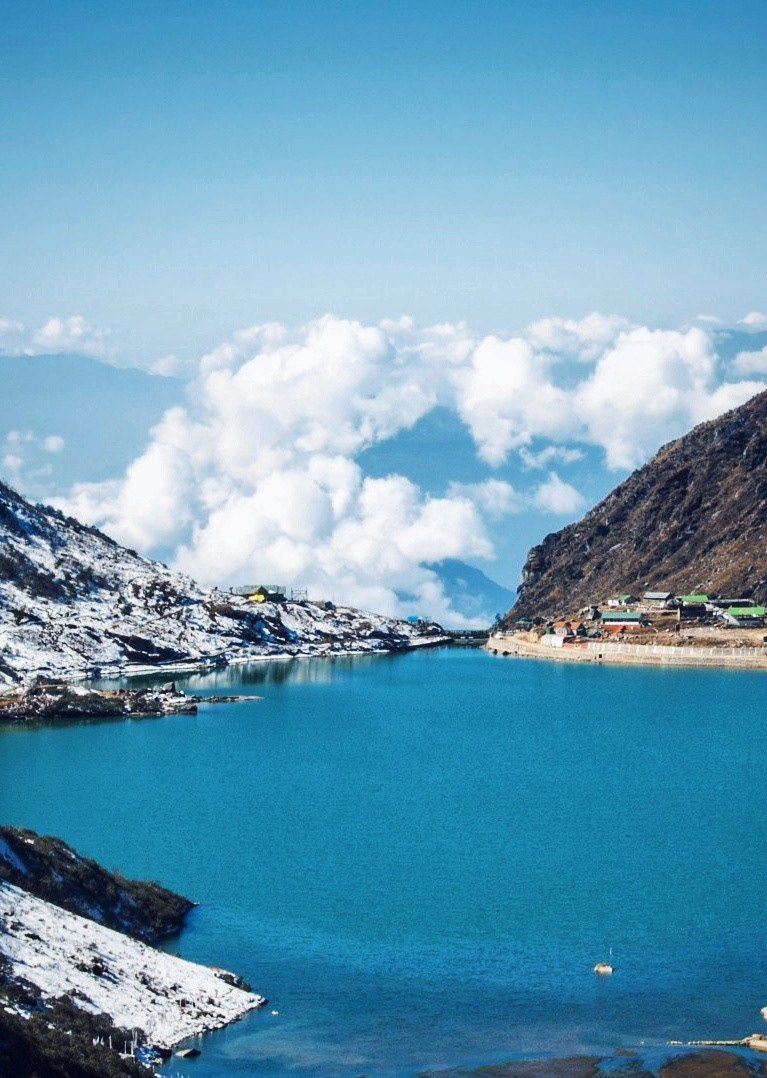
Tsomgo Lake and Nathula
Time Needed : 1D
A Protected Area Permit is required to visit these places, due to their proximity to the Chinese border
Located on the Indo-Tibetan border crossing of the Old Silk Route, it is one of the three open trading posts between India and China.
Plays a key role in the Sino-Indian Trade and also serves as an official Border Personnel Meeting(BPM) Point.
May get cordoned off by the Indian Army in event of heavy snowfall or for other security reasons.
West Sikkim
Time needed: 3N/1N
Hostels at Pelling : Mochilerro Ostillo
Itinerary
Day 1: Gangtok - Ravangla - Pelling
Leave Gangtok early, for Ravangla through the Temi Tea Estate route.
Spend some time at the tea garden and then visit Buddha Park at Ravangla
Head to Pelling from Ravangla
Day 2: Pelling sightseeing
Hire a cab and visit Skywalk, Pemayangtse Monastery, Rabdentse Ruins, Kecheopalri Lake, Kanchenjunga Falls.
Day 3: Pelling - Gangtok/Siliguri
Wake up early to catch a glimpse of Kanchenjunga at the Pelling Helipad around sunrise
Head back to Gangtok on a shared-cab
You could take a bus/taxi back to Siliguri if Pelling is your last stop.
Darjeeling
In my opinion, Darjeeling is lovely for a two-day detour on your way back to Bagdogra/Siliguri and not any longer (unless you re a Bengali couple on a honeymoon)
Once a part of Sikkim, Darjeeling was ceded to the East India Company after a series of wars, with Sikkim briefly receiving a grant from EIC for gifting Darjeeling to the latter
Post-independence, Darjeeling was merged with the state of West Bengal.
Reach Darjeeling by noon and check in to your Hostel. I stayed at Hideout.
Spend the evening visiting either a monastery (or the Batasia Loop), Nehru Road and Mall Road.
Grab dinner at Glenary whilst listening to live music.
Day 2:
Wake up early to catch the sunrise and a glimpse of Kanchenjunga at Tiger Hill. Since Tiger Hill is 10km from Darjeeling and requires a permit, book your taxi in advance.
Alternatively, if you don t want to get up at 4am or shell out INR1500 on the cab to Tiger Hill, walk to the Kanchenjunga View Point down Mall Road
Next, queue up outside Keventers for breakfast with a view in a century-old cafe
Get a cab at Gandhi Road and visit a tea garden (Happy Valley is the closest) and the Ropeway. I was lucky to meet 6 other backpackers at my hostel and we ended up pooling the cab at INR 200 per person, with INR 1400 being on the expensive side, but you could bargain.
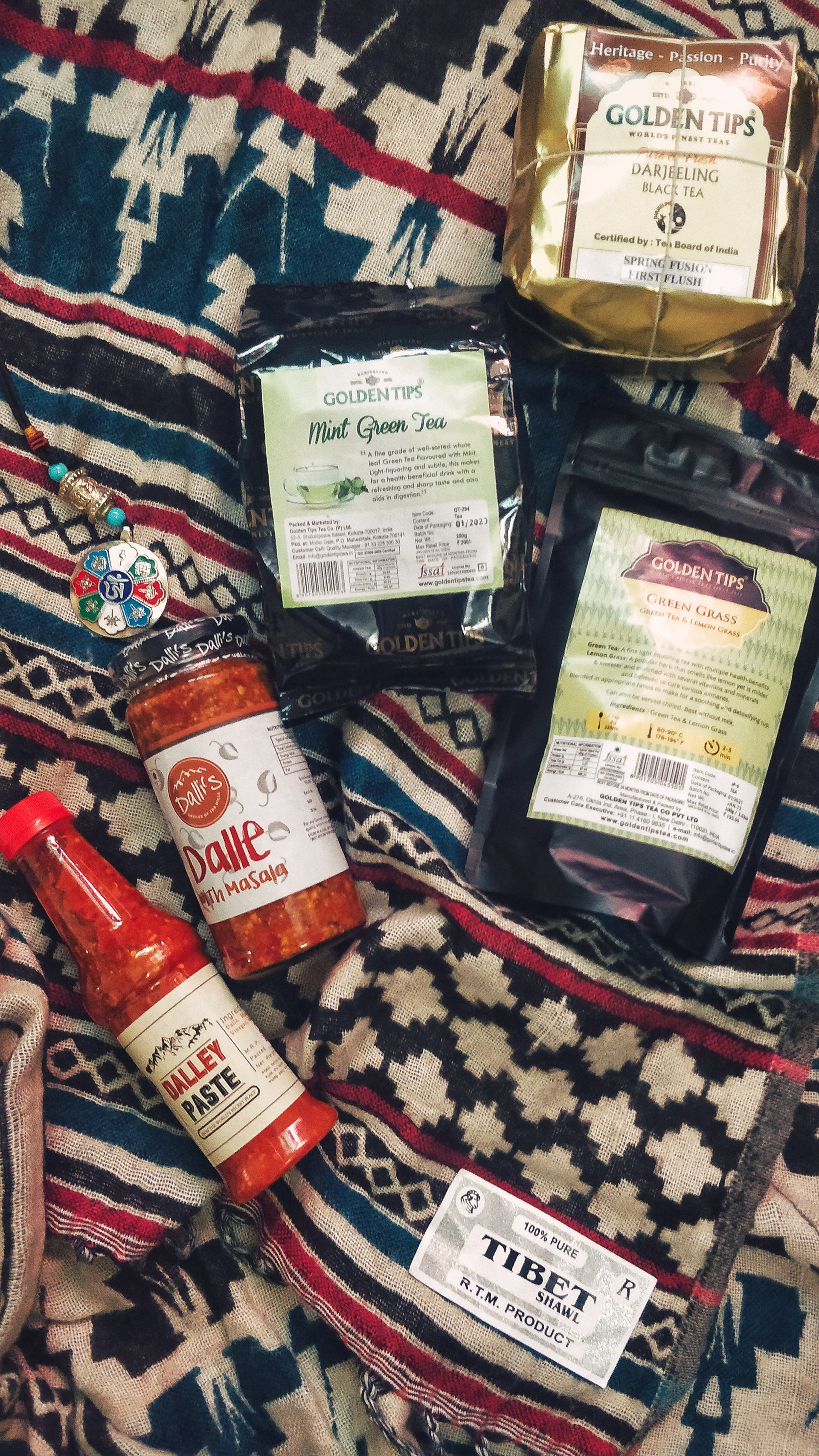
Get lunch, buy some tea at Golden Tips, pack your bags and hop on a shared-cab back to Siliguri. It took us about 4hrs to reach Siliguri, with an hour to spare before my train.
If you ve still got time on your hands, then check out the Peace Pagoda and the Darjeeling Himalayan Railway (Toy Train). At INR 1500, I found the latter to be too expensive and skipped it.
Tips and hacks
Download offline maps, especially when you re exploring Northern Sikkim.
Food and booze are the cheapest in Gangtok. Stash up before heading to other regions.
In rural areas and some cafes, you may get to try Rhododendron Wine, made from Rhododendron arboreum a.k.a Gurans. Its production is a little hush-hush since the flower is considered holy and is also the National Flower of Nepal.
If you don t want to invest in a new jacket, boots or a pair of gloves, you can always rent them at nominal rates from your hotel or little stores around tourist sites.
Check the weather of a region before heading there. Low visibility and precipitation can quite literally dampen your experience.
Keep your itinerary flexible to accommodate for rest and impromptu plans.
Shops and restaurants close by 8pm in Sikkim and Darjeeling. Plan for the same.
Carry
a couple of extra pairs of socks (woollen, if possible)
a pair of slippers to wear indoors
a reusable water bottle
an umbrella
a power bank
a couple of tablets of Diamox. Helps deal with altitude sickness
extra clothes and wet bags since you may not get a chance to wash/dry your clothes
a few passport size photographs
Shared-cab hacks
Intercity rides can be exhausting. If you can afford it, pay for an additional seat.
Call shotgun on the drives beyond Lachen and Lachung. The views are breathtaking.
Return cabs tend to be cheaper (WB cabs travelling from SK and vice-versa)
Cost
My median daily expenditure (back when I went to Sikkim in early March 2021) was INR 1350.
This includes stay (bunk bed), food, wine and transit (shared cabs)
In my defence, I splurged on food, wine and extra seats in shared cabs, but if you re on a budget, you could easily get by on INR 1 - 1.2k per day.
For a 9-day trip, I ended up shelling out nearly INR 15k, including 2AC trains to & from Kolkata
Note : Summer (March to May) and Autumn (October to December) are peak seasons, and thereby more expensive to travel around.
Souvenirs and things you should buy
Buddhist souvenirs :
Colourful Prayer Flags (great for tying on bikes or behind car windshields)
Miniature Prayer/Mani Wheels
Lucky Charms, Pendants and Key Chains
Cham Dance masks and robes
Singing Bowls
Common symbols: Om mani padme hum, Ashtamangala, Zodiac signs
 A new version 0.3.11 of
 I ve mostly had the preference of controlling my data rather than depend on someone else. That s one reason why I still believe email to be my most reliable medium for data storage, one that is not plagued/locked by a single entity. If I had the resources, I d prefer all digital data to be broken down to its simplest form for storage, like email format, and empower the user with it i.e. their data.
Yes, there are free services that are indirectly forced upon common users, and many of us get attracted to it. Many of us do not think that the information, which is shared for the free service in return, is of much importance. Which may be fair, depending on the individual, given that they get certain services without paying any direct dime.
 The voting period and tally of votes for the Debian Project Leader election has just concluded, and the winner is Jonathan Carter!
455 of 1,018 Developers voted using the


 The red commemorative plaque not only limits Orwell's tenure to the time he was permanently in the village, it omits all reference to his first wife, Eileen O'Shaughnessy, whom he married in the village church in 1936.
 Wallington's Manor Farm, the inspiration for the farm in Animal Farm. The lower sign enjoins the public to inform the police "if you see anyone on the [church] roof acting suspiciously". Non-UK-residents may be surprised to learn about the systematic theft of lead.
 In the past, I've talked about building a Z80-based computer. I made some progress towards that goal, in the sense that I took the initial (trivial steps) towards making something:
 I released version 2.6 of

 First up, I am alive and well. I have been receiving calls from friends for quite sometime but now that I have become deaf, it is a pain and the hearing aids aren t all that useful. But moreover, where we have been finding ourselves each and every day sinking lower and lower feels absurd as to what to write and not write about India. Thankfully, I ran across this