Search Results: "tb"

25 April 2009

Russell Coker: Creating a Double-Ended Bun


The people who made the above magazine advert gave it two top-halves to the burger bun. But I think that there is actually a demand for such buns, and that it is possible to make them! Traditional buns have a flat bottom where they rest on a baking tray. One solution to this problem would be to bake in outer space, another possible solution would be to develop a rapid baking process that allows baking in a free-fall aeroplane, but both of these would be unreasonably expensive. It seems that it would be viable to bake double-ended buns by having a rapidly rising column of hot air to suspend the bun. The terminal velocity of a bun would probably not be that high (maybe 60Km/h) and it should be quite easy to have a pipe full of hot air that bakes the buns. As slight variations in the density and shape of the bun would affect the air-flow it would be necessary to closely monitor the process and adjust the air speed to keep the bun afloat. Manufacturing cheap ovens that use LASERs to monitor the position of the bun should not be difficult. This might blow the sesame seeds off the bun, but this problem may also be solvable through careful design of the bun shape to make it less aerodynamic and by strongly attaching the seeds. I m not sure how you would do this.

23 April 2009

Biella Coleman: Viral Videos

I am sure many have seen this video pirates. drugs. gay marriage and I think it speaks for itself. But I have to say, this video caught be off guard early this morning when I am first exposed to the day s viral videos, memes, and other savory and unsavory delights. Though I have been consuming and digesting this stuff for awhile now, I am still amazed by the craziness, creativity, outrageousness (often offense) that circulates every day, without fail, on the internets. Most of the stuff, even if pretty low brow can be said to be artistic in one classical sense of art: l art pour l art , with the aesthetics being focused on some combination of shock, irony, and humor. But how about the political activists? They are not dipping into this genre enough and it s high time they use start using these tactics/viral videos to shock/shame their opponents, using the sugar coating of humor and raw audacity to spread their message.

Adrian von Bidder: Let's kill KHTML

Reading Kyle's view on Konqueror and KHTML's current status: I couldn't agree more. I use konqueror instead of Firefox because I quite like its GUI, and its integration into KDE is obviously better than Firefox'. Issues with various websites prompt me to have an Iceweasel window open as well quite a large part of the time. Let's just switch to WebKit, so the market only has to care about Gecko and WebKit and can ignore one more marginal rendering engine. I see libqt-webkit 4.5 is in experimental and a Google query on debian konqueror webkit at least shows an Ubuntu packaging effort of the Konqueror WebKit KPart, so the days of khtml on my Desktop are certainly nearing its end. At this point: Kudos to the KDE folks (Debian and upstream). KDE4.2 is really, really usable, the remaining issues are really small. And, if I don't try to manually interfer like I did in my first attempt, migrating the KDE settings from ~/.kde4 to ~/.kde actually did work just fine on my netbook.

22 April 2009

Russell Coker: Links April 2009

P. W. Singer gave an interesting TED talk about the use of robots in war [1]. He briefly covered some of the ethical and social issues related to robot soldiers as well as showing many pictures of existing robots. Since November 2007 there has been a request for Google Gears to support Iceweasel (the Debian name for Firefox due to trademark issues)[2]. Apparently supporting this different name is not easy for the Google people. If you visit the Google Gears Terms and Conditions page [3] then it will work with Iceweasel on the i386 platform - but not for AMD64 (or at least not my Debian/Lenny AMD64 system). Charles Moore gave a disturbing TED talk about the Great Pacific Garbage Patch [4]. Pollution in the oceans from waste plastic is worse than I realised. Ressuka documented how to solve the Time went backwards problem on Xen DomUs [5]. Run echo jiffies > /sys/devices/system/clocksource/clocksource0/current_clocksource or use clocksource=jiffies in your DomU kernel boot parameter list. Nassim Taleb [6] has written Ten principles for a Black Swan-proof world [7], this is in regard to the current US financial crisis. It s worth noting that he made a significant amount of money due to successfully predicting some aspects of the crisis. James Duncan Davidson has some good advice for speakers based on his experience in filming presentations [8]. Some of the ones that were not obvious to me were:
Take off your name-tag - it doesn t look good
Stay in the part of the stage with the best light

Gunnar Wolf: The streets and the numbers of Cuernavaca

I usually use this blog to post about stuff I have written or that is somehow related to my work / professional life. This time, however, I'll just use it to share with you a short text my father published in the column he writes in the La Uni n de Morelos newspaper, Academia de Ciencias de Morelos: La Ciencia, desde Morelos para el mundo. My father has lived for over 20 years in Cuernavaca, la Ciudad de la Eterna Primavera (the city of the eternal Springtime), ~80Km south of Mexico City. Cuernavaca was for long years known mostly as a weekend city for Mexico City's middle-upper class, but it has grown way beyond that. According to Wikipedia, in Cuernavaca's metropolitan area there are about 700,000 inhabitants. And the city is blatantly built with no planning, no urbanistic analysis of any kind. I have been familiar for many years with the program to put some rational order renumber Cuernavaca's streets. Roberto Tamariz, the sociologist who built my father's house (yes, in a stroke of genius he acted as an architect for a piece of land he had bought - the results are quite decent, given his real occupation, but his lack of architectural background tends to literally come up from the floor every now and then), was involved in a municipal project to renumber Cuernavaca's streets, probably some 15 years ago. Anyway, Roberto's work was never really finished due to the severe lackings of our political culture. In this (one-and-a-third pages long, quite easy to read) text I am attaching to this post, my father writes about Cuernavaca's strange street naming system, the mathematical solutions (and political intrincacies) about renumbering a two dimensional space (and, of course, he could not help but wander into the third- and fourth-dimentional spaces, although very briefly). I like how this guy writes, all in all. Enjoy!
AttachmentSize
Calles y numeros de Cuernavaca.pdf231.99 KB

Martin Michlmayr: OSI signs an MOU with the Korea Software Copyright Committee

I visited Seoul last week to represent the Open Source Initiative (OSI) at an open source conference and to sign a Memorandum of Understanding (MOU) with the Korea Software Copyright Committee (SOCOP). SOCOP organized a conference with the title "Free Open Source Software License Insight Conference", and the international speakers included Brett Smith of the FSF, Brendan Scott of Open Source Law, Michael Cot of RedMonk and myself. From the questions we received, it seems that there is a lot of interest in legal questions related to open source. There were a number of folks from hardware companies that asked specific questions what they could do and couldn't do (e.g. related to including sources for GPL code and properly giving credit for BSD code). I think the conference was a great success. The talks were of high value and we got good questions. The audience was quite mixed, ranging from managers to developers. Even though they had simultaneous translation of the talks, the majority of the people listened in English... this gives me hope that some of these folks will end up becoming involved in the international open source community. Mr Koo and Dr Michlmayr signing MOU SOCOP is working on a number of activities related to open source, including: The day after the conference, I went to the SOCOP office to sign the MOU between SOCOP and OSI with Mr Yung Bo Koo, the chairman of SOCOP. The MOU says that we'll share knowledge and expertise, help with promotional activities and support each other's activities in other ways. I was delighted to sign the MOU between SOCOP and OSI, and I look forward to a fruitful cooperation between our organizations in the future. It's great to see so much interest and so many activities around open source in the Republic of Korea.

Russell Coker: Vibration and Strange SATA Performance

Almost two years ago I blogged about a strange performance problem with SATA disks [1]. The problem was that certain regions of a disk gave poor linear read performance on some machines, but performed well on machines which appeared to be identical. I discovered what the problem was shortly after that but was prevented from disclosing the solution due to an SGI NDA. The fact that SGI now no longer exists as a separate company decreases my obligations under the NDA. The fact that the sysadmins of the University of Toronto published all the most important data entirely removes my obligations in this regard [2]. In their Wiki they write after SGI installed rubber grommits around the 5 or 6 tiny fans in the xe210 nodes, the read and write plots now look like and then some graphs showing good disk performance appear. The problem was that a certain brand and model of disk was particularly sensitive to vibrations. When that model of disk was installed in some machines then the vibrations would interfere with disk reads. It seems that there was some sort of harmonic frequency between the vibration of the disk and that of the cooling fans which explains why some sections of the disk were read slowly and some gave normal performance (my previous post has the graphs which show a pattern). Some other servers of the same make and model didn t have that problem, so it seemed that some slight manufacturing differences in the machines determined whether the vibration would affect the disk performance. One thing that I ve been meaning to do is to test the performance of disks while being vibrated. I was thinking of getting a large bass speaker, a powerful amplifier, and using the sound hardware in a PC to produce a range of frequencies. Then having the hard disk securely attached to a piece of plywood which would be in front of the speaker. But as I haven t had time to do this over the last couple of years it seems unlikely that I will do it any time soon. Hopefully this blog post will inspire someone to do such tests. One thing to note if you want to do this is that it s quite likely to damage the speaker, powerful bass sounds that are sustained can melt parts of the coil in a speaker. So buy a speaker second-hand. If someone in my region (Melbourne) wants to try this then I can donate some old IDE disks. I can offer advice on how to run the tests for anyone who is interested. Also it s worth considering that systems which make less noise might deliver better performance.

21 April 2009

Russell Coker: Mo Rewards

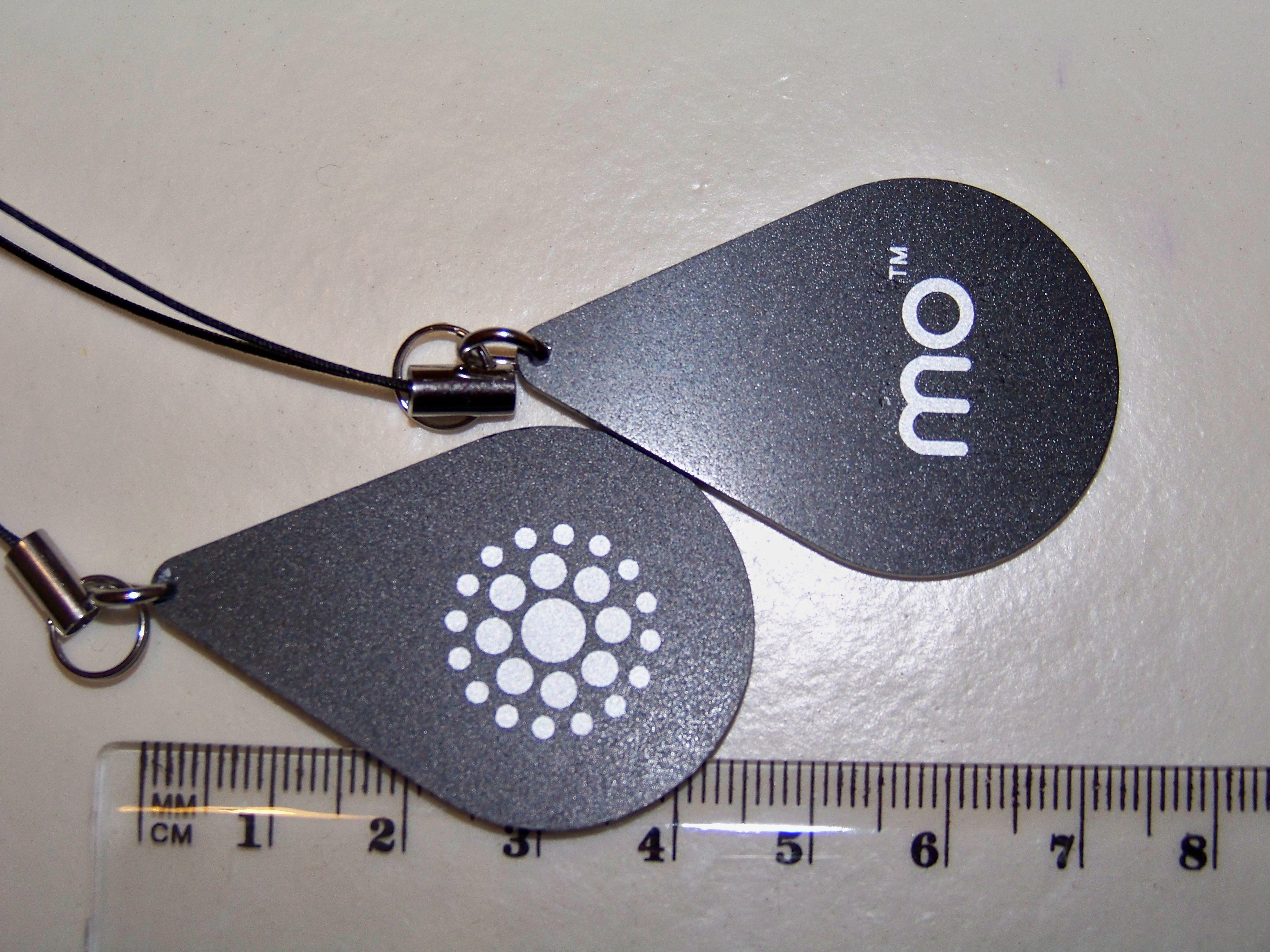
While shopping at Highpoint [1] today I noticed that they had a new loyalty system. It s called Mo Rewards [2] (for which the real web site is at MoCoMedia.net [3] which has no link from the main site because they didn t care enough about their web presence). The way that Mo works is that everyone gets a free RFID token similar to the two in the above photograph. The token comes with a pseudo-random seven letter code that you have to SMS to register it to your phone. You SMS the code and then receive a confirmation SMS. After that you can wave your token near a detector any time you visit the shopping center and you will receive three SMS messages with discount offers. You can send an SMS with your gender and birth-year to receive more targeted offers. To redeem offers you have to wave your token near a detector at the store so they know who is using the offers. Then of course once the database knows that you are a regular customer at a certain shop they can send you targeted advertising to entice you to buy from that shop on every visit. I presume that they have some sort of bidding system for adverts from the shops of a similar nature to the Google advertising. It s an interesting system and a lot better than most loyalty programs. One interesting thing about this is that high quality RFID devices are being given out for free. The tokens are quite solidly constructed and could be used for a variety of other purposes. I couldn t find anyone offering RFID tags at a reasonable price with a quick Google search (the cheapest was $75 for 100 tags - and they were the fragile ones used for marking stock in shops). So a hobbyist who wanted to do some RFID stuff could buy a cheap reader under one of the demo offers (where you get a reader and a small quantity of keys for a reasonable price) and then collect free RFID tokens from shopping centers. I expect that the number of people who would do such things is small enough to not be statistically significant and therefore not affect the business model. The tags are given out freely with no requirement that you must use them for the expected purpose (Mo Rewards) instead of using them for your own RFID work.

Russell Coker: Amusing Thanks.txt Entry

My SE Linux Play Machine [1] has a file named thanks.txt for users to send messages to me [2]. On a number of occasions people have offered to give me things in exchange for the password for the bofh account (the one with sysadm_r privileges). I ve been offered stolen credit cards, a ponzi scheme of root access to servers on the net, and various other stuff. Today I received an amusing joke entry: Hello Kind Sir, I am Dr. Adamu Salaam, the the bank manager of bank of africa (BOA) Burkina Faso West I am sending you this message about the $3.14159 million dollars in bank account number 2718281828450945. I will give you this money in exchange for the password to the bofh account. The amount of money is based on the value of Pi. The account number is based on the mathematical constant e [3]. It s a pity that the author of that one didn t sign their real name. Whoever created that should have claimed credit for their work.

20 April 2009

Russell Coker: The Future of Electric Cars

TED published an interesting interview with Shai Agassi about electric cars [1]. One idea that I hadn t heard before is that of moving car batteries between regions as they lose capacity. An old battery for an electric car that can only handle short journeys may be useful in a region where journeys are typically short. On a similar note I expect that in a few decades the less prosperous countries will import old electric vehicles and fit them with 4 or more batteries. Last time I checked the Prius battery pack weighed about 120Kg, so the car would be usable with 4 battery packs if driven at low speeds. Shai Agassi also gave a TED talk on this topic [2]. The real solution for the problem of providing convenient and affordable electric vehicles is to start by recharging the batteries whenever the vehicle is parked (at the office, shopping center, home, etc). Then on the rare occasions when the car is being driven for longer distances and the battery gets flat it can be swapped for a charged battery. They have apparently designed a robot for changing car batteries, so changing the battery would be like driving through a car-wash. He describes this as an economic model that decouples the expensive battery from the car, so you pay for the use of the battery not the ownership - just as with a petrol car you pay for the petrol you use not for a portion of the ownership of an oil well. He also pointed out that cars produce 25% of the world s CO2 emissions, so his plan for all electric cars everywhere seems to be an essential part of solving the environmental problems. He then compared this to the UK parliamentary discussion on ending slavery, at the time slaves provided 25% of the energy used by the UK. After a month of discussion the decision was made to make the moral choice and end slavery regardless of the cost.

Bdale Garbee: TeleMetrum First Flight

Today was the season opener for Tripoli Colorado at their launch site on the buffalo ranch near Hartsel, Colorado. After huge snowfalls along the front range of the mountains in the last few days, we were a little tentative about going, but it turned out to be nearly perfect flying conditions! There was apparently much less snow this week on the high plains west of the front range, and by this morning the snow had almost entirely disappeared, the skies were clear and blue, and the winds were calm except for a few gusty bursts in the afternoon. This launch site is really something special, at 8800 feet above mean sea level, in the middle of a huge area of wide-open short grass prairie. We love flying there, and today the drive to and from the launch site through the snow-covered Colorado Rockies was just beautiful! Son Robert and I flew three rockets today, including his LOC/Precision Lil Nuke with added payload section on an Aerotech G54W-M reload, and our Polecat Aerospace 5.5 inch Goblin kit on one of the relatively new Aerotech I245G-M "Mojave Green" green-flame reloads. But by far the highlight of the day was flying my Giant Leap Vertical Assault on a Cesaroni J335 red-flame reload... with serial number 1 of TeleMetrum on board collecting our first-ever flight data! From the ground, it looked like a textbook perfect dual-deploy flight, with a small drogue chute out at apogee around 4000 feet above ground, and the main chute deploying at 700 feet above ground for a beautiful, soft landing only a couple minutes walk from the launch rail. The ejection events were controlled by a PerfectFlite MiniAlt/WD. The data recovered from it shows a big negative spike in the altitude right at apogee, coincident with firing of the apogee deployment charge. I have to assume this means the aft bulkhead on the avionics bay in the reconstructed coupler section isn't sealing well, and some pressure from the apogee deployment charge leaked in to the avionics bay "fooling" the altimeter into thinking the altitude was lower for a sample or two. Clearly, that needs to get fixed before that airframe flies again. Further evidence that we had a mighty kick from the apogee ejection charge was discovered when we went to clean the motor casing. The Cesaroni reloads are packaged in a plastic liner tube that slides into the reusable aluminum case. When we pulled the spent reload out of the case, it was significantly shorter than when it was loaded, suggesting that the ejection charge forced the forward closure on the reload backwards compressing the heat-softened plastic. This could be evidence that the reconstructed coupler was slow to separate from the booster airframe due to excessive friction? The flight data recovered from the TeleMetrum board looks great until apogee, when the data collection stopped. Since I flew firmware that was compiled and flashed on the flight line from Keith's latest git commit as of this morning, it's entirely possible that there was a software bug that caused data collection to terminate at apogee. We'll investigate that. But I personally think what actually happened is that we experienced a temporary short in the power supply at the time the apogee ejection charge fired. On extraction of the electronics sled from the avionics bay this evening, I noticed that one of the mounting screws has gone missing. If it wasn't snug enough, and vibrated loose during flight, it could have been torn loose at the time of the ejection event and shorted something as it rattled around in the avionics bay. The screw is now just missing, but may have fallen out when we were extracting data on the flight line just after the flight without being noticed at the time. So I'm not inclined to worry much about this, at least until we can get some more flight data! Keith post-processed the raw flight data and presented me with a plot showing two traces, acceleration and barometric altitude. The data from the accelerometer closely matches the published data for the motor we flew, which is a really cool result, and my 10-year-old son enjoyed figuring out why the rocket showed negative acceleration after the motor burn out but was still climbing. (See, there really is some science education hidden in the fun!) All in all, we had a great time, and it's totally cool to have data from a first flight of TeleMetrum! Can't wait to fly it again!

19 April 2009

Andreas Metzler: snowboarding season 08/09

Due to the later date of easter this year we had a rather long season this year. I started snowboarding on 2008-12-06 and stopped today 2009-04-19. Following up on previous entries here is the balance sheet:
2005/062006/072007/082008/09
number of (partial) days25172937
Dam ls1010510
Diedamskopf1542423
Warth/Schr cken0304
total meters of altitude12463474096219936226774
highscore10247m8321m12108m11272m
# of runs309189503551
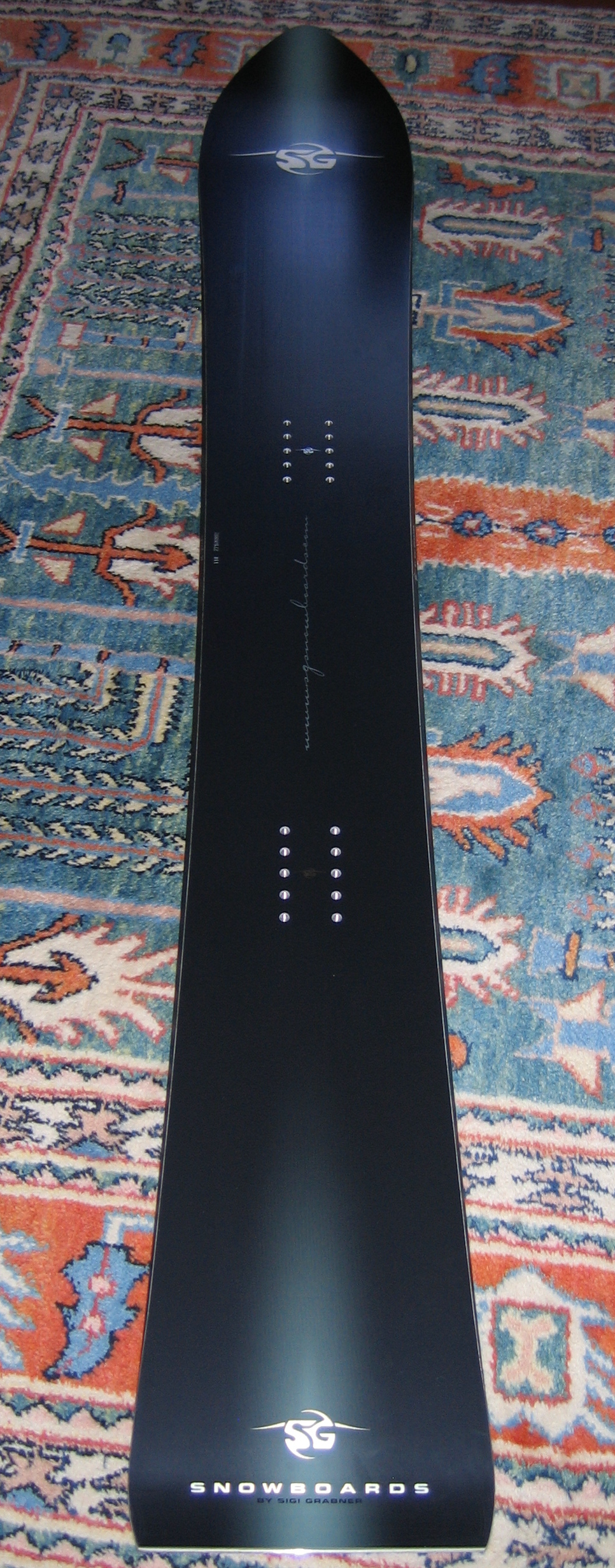
In the second half of the season we actually had a lot of snow, up two 130 cm down at 800m above sealevel. Complete snow cover lasted from December until mid of April. Riding was good, I did not have any major injury, my skills did not increase though. The addition of a snowboard, a SG Speed 173 to my quiver worked out well. Loads of fun and less danger in slushy conditions (nose-in) compared to the shorter slalom board. Now the waiting starts. ;-)

David Welton: BikeChatter.com: Pro Cycling @ twitter and live Amstel Gold chat

Bicycle racing, especially professional road cycling, is really the only sport I follow, but I do so with a passion. Other people are glued to the TV during soccer games, or football, or basketball, or cricket, or whatever. I'm there during the current spring classics season (my favorite races of the year), and the Giro d'Italia and Tour de France. So it was a cool discovery to find people like Lance Armstrong, Levi Leipheimer, George Hincapie, Robbie McEwen and others using Twitter. Some of them really provide a unique window into the life of a professional bike racer, especially all the things that we don't see outside race day. I figured that if it's interesting to me, it's probably interesting to other people too, so I put together this site to aggregate twitter updates related to professional cycling: http://www.bikechatter.com As an extra, I also added a chat widget from Mibbit.com, in order to make it easy to chat with others while races are going on: http://www.bikechatter.com/chat The next race is the Amstel Gold classic, in the Netherlands, today (Sunday April 19th), at about 15:30 CEST (Rome, Paris, Berlin, etc...). Feel free to join us! The site is quite new, and probably has a few bugs, and as is obvious, my UI ideas are to make things very simple and direct, so any comments or suggestions on how to improve it, or new features you'd like to see are welcome. ... and now I'm off for my Sunday bike ride - see you this afternoon!

18 April 2009

Sandro Tosi: Chain scripts execution in git hooks

The common git hook is something like:
#!/bin/sh

exec "another script"
and since "exec" replace the current script with the other one, only one command can be execute in a hook. Even more, the common hook takes input from the standard input, so the first command takes it, and the second?

The real situation was reportbug post-receive hook, that looked like:
#!/bin/sh

exec /usr/local/bin/git-commit-notice
but I wanted to add seanius' tagpending hook to it. The solution I found was:
#!/bin/sh

# to save stdin on a file to pass to both scripts
cat > post-receive_tmpfile

/usr/local/bin/git-commit-notice < post-receive_tmpfile
/git/reportbug/reportbug.git/hooks/git-post-receive-url-notifications.py < post-receive_tmpfile

rm post-receive_tmpfile
that saves the stdin to a file, passed again to both the scripts.

Of course, I'd be happy to hear more elegant solutions :)

Joey Hess: roan balds

This week I've been feeling wound up and constrained. Thought I was going to be sick and miss this, but it cleared up overnight and me and some tamales made it to Roan Mountain in time for lunch and a long afternoon hike.
typical gorgeous view from round Bald
Roan highlands
from the rocks across Engine Gap to Round Bald and Roan High Knob
Roan highlands
more There was snow here just five days ago, so no sign of spring yet on top of the Mountain, but still a warm gorgeous day. Sunburn!

Bastian Venthur: Using rng for bug triaging

Reportbug-NG s ability to filter and sort bugreports in various ways can greatly help triaging bugreports after a certain criterion. In this example I use the bugs of the KDE team, because they have quite a lot of bugs and are currently on a bug triage. Two releases ago I tried to help them cleaning their BTS from obsolete bugeports. My tactic back then was to find bugreports where no action has been taken for a long time. I noticed that there was no easy way to find such bugs since neither reportbug nor the BTS allowed to sort the bugs this way, so finding the candidates I searched for was very cumbersome. So let s try to find those bugs with rng: To get all bugs belonging to the KDE team start rng with the maintainer as argument:
rng debian-qt-kde@lists.debian.org
After rng started you see a table with all bugreports against the packages of the KDE team. To find potentially solved or unreproducible bugs, click on the last column header to sort the list by the date of the last action. The date of the last action is the date where the bugreport received it s last mail (including control@b.d.o mails). You will see that there are quite a lot bugs which haven t been touched for more than two years. Many of them don t have a unreproducible or moreinfo tag. If you want to help the KDE team, you can now start trying to reproduce the bug. If that s not possible you can tag them with moreinfo and unreproducible. If there is no reply in roughly one month or so it s probably safe to close this bug. To quickly find a lot of other candidates to close one can use the filter of rng. Just enter moreinfo in the filter and the table will reduce to all bugreports containing this word or tag. Now you can again sort this list by date of last action and you will see quite a lot bugs bugs where more info was requested but no action took place for more than one year. Those need to be inspected, but probably quite a few of them are safe to close. This example shows how filtering and sorting can greatly help to find certain bugs and support bug triaging. But please: don t carelessly close very old bugs! Read the reports and try to reproduce them, find matching bugreports in upstream s BTS and ask the submitter if in doubt.

17 April 2009

Biella Coleman: Need to do some gender tracking?

Here is the tool for you.

David Welton: Hecl - for Quilting!

Looking through the logs for HeclBuilder.com, I found this site: http://www.patchwork-quilt-forum.de/dreieck-aus-quadrat-t2457-s20.html Which, according to the translation is a discussion on a German site dedicated to patchwork quilting about calculating the right lengths to cut triangles of cloth. I thought it was really cool to see - not because I'm interested in quilting, or the program is anything brilliant (it's simple and functional), but because enabling stuff like this is part of what I built Hecl for: to make mobile phone applications easier, quicker, and simpler to create. Someone went and typed in the code on Heclbuilder, got the program running, and now a number of people have a handy tool to do some calculations for their hobby, which is a heck of a lot easier than fooling around with SDK's, Eclipse or Netbeans, and so on and so forth. I hope to see more of that sort of thing in the future.

16 April 2009

Stefano Zacchiroli: happy term Steve

DPL candidacy woes Well, time to face it publicly: I lost and Steve/Luk won, it is as simple as that :-) This post is to: All in all, standing for DPL has been worth and interesting no matter the result. Time to get back to my usual Debian duties now ...

15 April 2009

Stefano Zacchiroli: xmonad + gnome on Debian

... finally I'm tiling too! Short story: I've just switched to xmonad as my window manager of choice within a Gnome desktop environment; I give some tips on how to achieve that quickly on a current Debian/unstable machine. /me and tiling window managers I switched to Gnome a long time ago. The benefit of that over good old window managers is enjoying an integrated environment and a workplace that you can find on other machines (e.g., the netbook you installed for your mother, the office desktop, the student lab machines, ...). Still, I've never been particularly happy about Gnome's default window manager: metacity. The feature I was missing the most is the ability to configure windows programmatically so that they appear where and how I want by default; sadly enough, the Gnome session mechanism is not yet able to do that properly. Hence, I've tried various time switching to a tiling window manager, imposing the extra requirement that it should integrate with Gnome. The coolest guy on the block of that area seems to be awesome and I gave it a try some months ago. I liked most of its (sometime revolutionary) principles, like window tagging, but I equally hated various aspects of it: People nowadays tell me that awesome works fine with Gnome, so maybe I've just been unlucky back then, but sometime the first impression does count. I've never considered seriously xmonad, thinking (with no sound reason, apparently) that it was a project of the series: "I'm a fan of programming language $LANG, all my apps should be written in $LANG, my window manager is no exception", with LANG=haskell. Then two things happened:
  1. a couple of weeks ago I stumbled upon the xmonad wiki and documentation, and I was impressed by the average quality of the information shipped there. It is not something you usually find in "language showcase" projects.
  2. Patrick blogged about its switch to xmonad + Gnome, with enthusiastic feedback. If that's not a sign I don't know what it can be :-)
Getting started with xmonad + Gnome on Debian There is a page explaining how to use xmonad with Gnome in the xmonad wiki, but a handful of additional tips will help you get started in Debian, even if you know (almost) nothing about Haskell (yet). The (crazy) way in which xmonad works is that you create your config file as ~/.xmonad/xmonad.hs. That file is a full fledged Haskell program, which gets compiled to obtain your own xmonad executable which you run as your own window manager. /usr/bin/xmonad is the executable you initially run, but is just a wrapper around the compilation + run mechanism The modMask setting means that ALT will get delivered to applications, while all xmonad commands are delivered via the infamous windows key: no more conflicts between apps and WM \o/. The default Gnome configuration is quite nice: you can retain your Nautilus desktop (in spite of what is written on the wiki), mod-p will get you a gnome-run dialog box, and appropriate padding for the (upper!) Gnome panel. The only glitch is that you will get 9 desktops which can clutter your workspace switched. My solution is to have the appler show workspaces on 2 rows but beware of bug 524065, which is really annoying. The above example will make the pidgin buddy list and run application dialog box float by default. The commented line is an example of how to deliver specific windows to arbitrary workspaces. To find out window properties on which match in your xmonad.hs, my magic command is xprop egrep "CLASS NAME". Note that you don't need to care about panel placement because it is already taken care of by the default gnome config. Still beware of not using myManageHook as your only management hook, you should update the default one using the <+> monad as I did above. xmonad rant So, what's wrong with xmonad + Gnome in Debian? Well, the fact that it will take about 200 Mb of disk space on amd64 by default. o_O Why so? Because xmonad is affected by the static linking hell which seems to be shared by modern statically typed functional languages, including in the category both Haskell and my beloved OCaml. In short, applications written for those language link statically code written in the implementation language in most cases; they rely on legacy shared libraries only for bindings to C libraries. For xmonad that means that if you are fine with the default configuration you will get a cheap 2 Mb binary package. If you are not, you will need to write your conffile ... which is a Haskell program ... using several contrib libraries ... and needing ghc6 to be compiled and run as your own window manager executable. This is plainly dumb and induces all the usual problems of static linking, like disk consumption due to non-shared (Haskell) code, and worries about staying up to date with the latest library release in case of fixes (including security fixes) need to be propagated to user executables. Truth to be said, /usr/bin/xmonad does a wonderful job in hiding all this to the final user, but still the design choice is an unpleasant one.

Next.

Previous.