Search Results: "spa"

16 December 2013

Craig Sanders: shopping online whinge of the day

There are numerous benefits to shopping online you can order stuff and pay for it from the comfort of your own home and it ll arrive on your doorstep in just a few days. wonderful, and so many words have been written about the benefits over the years that there s no need to belabour the point, But there are some things about it that really suck and make me NOT want to order stuff online most of the time my distaste for the privacy and delivery problems is enough to dissauade me from buying anything, helped by the fact that I live a fairly non-consumerist lifestyle (and for a geek, I have an almost non-existent gadget-fetish) but occasionally I want or need something that isn t available locally or which my ill-health makes impractical to buy in person (i ve been effectively housebound or in hospital for most of the year) so here are the things that piss me off most about shopping online.
  1. Loss of anonymity and privacy. You can walk into any shop and pay cash for whatever you want, they don t need to know who you are or where you live, and they don t get to accidentally add you to a mailing list against your express wishes oh, we didn t realise that when you said DO NOT SPAM ME, you actually meant DO NOT SPAM ME we ll just keep spamming you for another six months until we get around to processing your removal request . partial solution: use a different email address with each online shop. boycott the shop and destroy the address if they spam. what sucks is that this is actually necessary. it doesn t matter how loudly I say DO NOT SPAM ME. DO NOT ADD ME TO ANY MAILING LISTS. DO NOT ASK ME TO COMPLETE A SURVEY. DO NOT CONTACT ME FOR ANY REASON NOT DIRECTLY RELATED TO DELIVERING MY ORDER. MY PERSONAL INFORMATION IS PROVIDED SOLELY SO THAT YOU CAN SHIP MY ORDER TO ME AND MAY NOT BE USED FOR ANY OTHER PURPOSE. FAILURE TO RESPECT MY PRIVACY WILL RESULT IN IMMEDIATE AND PERMANENT BOYCOTT (yes, that IS the text I use in the comments/instructions field of every order I place), marketing vermin will decide that I really want their spam after all because their spam is super interesting and important and isn t really spam at all.
  2. nosy demands for unneccessary information. OK, they need your addresss to ship your parcel but they don t need your phone number, and they don t need to tie your order to your facebook or other bullshit social-spam account. most online order forms have phone number as a required field. Fortunately, they usually accept 0000000 or some other bogus non-phone number as a valid number .if not, i give them their own phone number.
  3. the thing that really shits me the most about online shopping is that both couriers and australia post suck. the lazy fuckers usually don t even bother attempting to deliver to residential addressess. at best, they just stick a non-delivery card in your letterbox without even attempting to knock on the door ..and sometimes they don t even bother doing that. the delivery driver just files a bogus failed to deliver or recipient refused delivery with their office.
i ve made four online purchases in the last month and a half. only one of them was delivered correctly to my door, even though I was sitting at my desk in the front room of the house, a few feet from my front door, and regularly monitoring the parcel s tracking web page so I knew it was arriving. parcel 1 (Nov 16): DHL from NZ to AU. delivered perfectly. delivered in about two days for $17. order value: around $35. parcel 2 (Nov 20): Aust Post from WA to Vic, Express Post (costs a few bucks more than standard post). order value: around $80. lazy driver didn t bother to attempt delivery. left card in letter box. i had to pick it up 2 days later from a post office the next suburb over (it wasn t there yet on the first attempt to pick up, the next day). Aust Post offered to maybe put me in touch with their re-delivery people who might possibly be able to re-deliver the parcel next week sometime maybe, if they felt like it. knowing that I had another hospital appt the next week, I declined (if i hadn t, it would have been an absolute certainty that they would try to deliver it while i was out). parcel 3 (nov 29): DHL from NZ to AU. order value: around $85. lazy courier didn t even bother to leave a card, just logged it as Recipient refused delivery . This refused delivery lie infuriated me when i saw it on the tracking page so i phoned and yelled at them a lot. DHL delivered it later the same day. if they hadn t I would have had to get myself over to the other side of town during business hours and pick it up from their South Melbourne depot. parcel 4 (today, Dec 16): Aust Post from NSW to Vic, Express Post . order value: around $160. lazy driver didn t even bother to leave a card, just logged it as Attempted delivery being carded to Australia Post outlet . Complete bullshit. There was no delivery attempt, not even a card in the letterbox, let alone a knock on the door with my parcel. Rang Aust Post on 8847 9045 (a phone number curiously absent from their tracking page, but which I had written down after their failure to deliver on Nov 20) and complained. they claim that they will try to deliver it today. i ll believe it when I see it. UPDATE @4.30pm: no, it s not going to be delivered today. they say they might choose to deliver it tomorrow or sometime in the future, if the delivery center manager feels like it. i told them that this is not an option my parcel WILL be delivered, it is what they were paid to do so it is what they ARE going to do. btw, the tracking page says that they attempted delivery at 12.15 today (they didn t not even a card in the letterbox), but the tracking page wasn t updated with that until about 2.30pm. by a complete non-coincidence their delivery center allegedly closes at 2pm, so it s impossible to complain about non-delivery in time for the complaint to do any good. Score so far: DHL 50% delivery rate. Aust Post: 100% failure rate. Annoyance Rate: extremely high. Desire to repeat the experience: non-existent. The Australia Post delivery problems are particularly annoying. I ve always thought of the network of local post offices to be a huge advantage for parcel delivery if i m not home, my parcel will go to a local post office and I can pick it up from there. And this is a great advantage. I used to take advantage of it when I was well enough to work. In fact, I d insist on delivery by Aust. Post rather than by a courier for exactly this reason, a local post office is far more convenient than some courier s depot on the other side of town or out in some far outer-suburban hellhole. But when it s used as an excuse to not even bother attempting delivery, it sucks. I m not well, and I should have been lying in bed reading or sleeping today, not wasting what little energy I have waiting for a parcel that never arrived and I certainly shouldn t have to phone Aust Post or DHL to yell at them for failing to do the job that they have been paid to do. shopping online whinge of the day is a post from: Errata

15 December 2013

Alessandro Ghedini: Building Debian packages using Linux namespaces

In the past few days I have been messing around with Linux namespaces, and developed a little tool (pflask) that automates the creation of simple Linux containers based on them (a sort of chroot(8) on steroids if you will). While the whole raison d' tre behind this project was "just because", and many more mature solutions exist, I decided that it'd be nice to find an actual use case for this (otherwise I tend to lose interest pretty quickly) so I wrote a lil (and rather dumb) pbuilder clone that uses pflask instead of chroot. The nice thing about pflask is that, differently from e.g. LXC, it doesn't need any pre-configuration and can be used directly on a vanilla debootstrap(8)ed Debian system:
$ sudo mkdir -p /var/cache/pflask
$ sudo debootstrap --variant=buildd $DIST /var/cache/pflask/base-$DIST-$ARCH
Where $DIST and $ARCH are e.g. unstable and amd64. Once that's done just run pflask-debuild on the package sources:
$ apt-get source somepackage
$ cd somepackage-XYX
$ pflask-debuild
The script will take care of creating a new container, chroot(2)ing into it, installing all the required dependencies, building and signing the package (it also runs lintian!). The main difference from pbuilder is that pflask will mount a copy-on-write filesystem (using AuFS) on the / of the container so that any modification (e.g. installation of packages) can be easily discarded once the container terminates (similarly to what cowbuilder(8) does, modulo the hardlinks hack). Additionally, thanks to the mount namespace created inside the container, all of this will be isolated from the host system and other containers, so that multiple packages can be built simultaneously on the same base debootstrapped directory. Another possibility would be that of disabling the network inside the container using a network namespace, in order to prevent the package build system from downloading stuff from Internet while at the same time maintaining the network active on the host system, but I haven't done any experiment in this direction yet. Note though that all of this is rather crude and experimental, but as a little hack it seems to work rather well (YMMV).

Chris Lamb: Developing responsive websites using the Awesome window manager

Responsive web design is a techinique for offering the optimal user experience across different browser devices without the overhead of separate "mobile" sites or native applications. Whilst there are hundreds of browser plugins that can make it easier to test responsive websites by resizing your browser window, this can also be achieved with a scriptable window manager such as Awesome:
resize = function(width, height, text)
  return function(c)
    local w = capi.screen[c.screen].workarea
    local geo = c:geometry()
    awful.client.floating.set(c, true)
    -- Float before raising
    c:raise()
    naughty.notify(  text = text, timeout = 0.5  )
    c:geometry( 
      x = geo.x,
      -- Constrain Y to workspace or it can start too high
      y = (w.y > geo["y"]) and w.y or geo["y"],
      width = width,
      height = height,
     )
  end
end
resize_reset = function (c)
  awful.client.floating.set(c, false)
end
clientkeys = awful.util.table.join(
  -- [..]
  awful.key(  modkey  , "1", resize( 460, 650, "Extra small")),
  awful.key(  modkey  , "2", resize( 780, 750, "Small")),
  awful.key(  modkey  , "3", resize(1024, 800, "Medium")),
  awful.key(  modkey  , "4", resize(1250, 850, "Large")),
  awful.key(  modkey  , "5", resize_reset)
)
Alt+ 1,2,3,4 will then float and resize the current window to various common device sizes (mine are based on the Bootstrap 3 breakpoints) and Alt+5 will reset it. Not being a plugin has many advantages: not only is it a browser-agnostic solution and one can use keyboard shortcuts not available to plugin developers, it also feels more aesthetically pleasing to solve a problem at the correct abstraction layer.

Russell Coker: Dell PowerEdge T110

In June 2008 I received a Dell PowerEdge T105 server to run in my home for a client [1]. That system has run well for over 5 years for the purposes of my client and also as my own home fileserver and as a workstation. But now it s getting a bit old, while it was still basically working the cooling fans were getting noisy, faster systems are available, and it was crashing occasionally which could have been due to hardware or software. On the 7th of November I got a new Dell PowerEdge T110. It s got a i3-3220 CPU (speed of 4218 according to cpubenchmark.net) which is a lot better than the AMD 1212 (speed of 982). It takes up to 4*3.5 SATA disks (as opposed to 2 disks) and has more options for memory expansion. Next time I run out of disk space I ll add another RAID-1 pair of disks instead of buying new disks. Generally this system is much the same as the one it replaces. It s a cheap server which unfortunately lacks sound hardware and usable video hardware. Sound is a problem I already solved with USB speakers but for the new system I bought a PCIe video card. Fortunately the system has PCIe*16 sockets (which apparently only have PCIe*8 wires) which avoids the problem I had in the past trying to obtain a suitable video card. The crashes turned out to be due to BTRFS and now that I ve made some tweaks everything is running well. I ll probably buy another Dell PowerEdge in about 5 years time.

Hideki Yamane: my Desktop Environment broken - any help?


Recently, my GNOME environment was broken suddenly. Startup GNOME Shell cause segfault and die. I cannot use GDM3 at all.

henrich@hp:~ $ grep gnome-shell /var/log/syslog
Dec 15 10:51:12 hp kernel: [34944.969581] gnome-shell[10054]: segfault at 84 ip 00007f6c6186a7b9 sp 00007fff59f1dbc0 error 4 in libcogl.so.12.1.1[7f6c61821000+97000]
Dec 15 10:51:12 hp gnome-session[9565]: WARNING: Application 'gnome-shell.desktop' killed by signal 11
Dec 15 10:51:14 hp kernel: [34946.429046] gnome-shell[10202]: segfault at 84 ip 00007ffa2ae877b9 sp 00007fff2bc5c7d0 error 4 in libcogl.so.12.1.1[7ffa2ae3e000+97000]
Dec 15 10:51:14 hp gnome-session[9565]: WARNING: Application 'gnome-shell.desktop' killed by signal 11
Dec 15 10:51:14 hp gnome-session[9565]: WARNING: App 'gnome-shell.desktop' respawning too quickly
So, I've switched to KDM, and install xfce4. However, I faced to another problem - it cannot show any icons (desktop and panel).


Odd Chromium window (why red?).


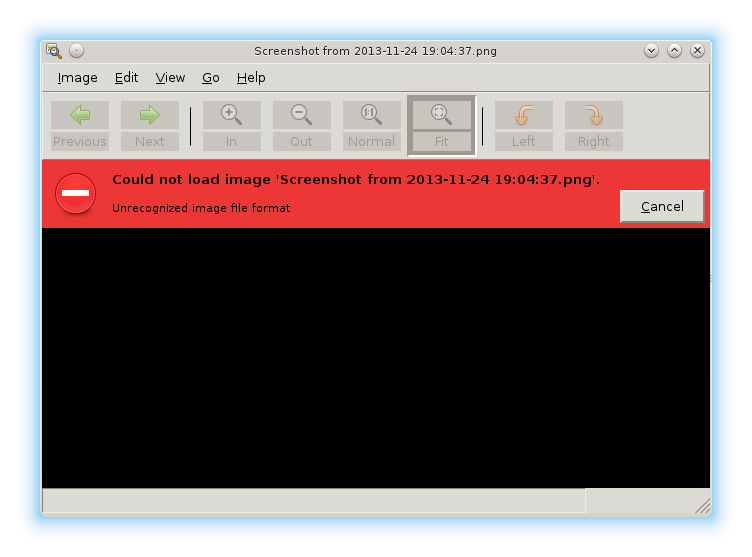
Also eog says "Could not load image" "Unrecognized image file format" - Well, why? It's just a .png file. (screenshot on KDE4)
Shotwell cause segfault, too :-( (and some other GTK applications)

I cannot point out broken component. Dear lazyweb, could you tell me how to fix this situation, please?


13 December 2013

Daniel Kahn Gillmor: OpenPGP Key IDs are not useful

Fingerprints and Key IDsOpenPGPv4 fingerprints are made from an SHA-1 digest over the key's public key material, creation date, and some boilerplate. SHA-1 digests are 160 bits in length. The "long key ID" of a key is the last 64 bits of the key's fingerprint. The "short key ID" of a key is the last 32 bits of the key's fingerprint. You can see both of the key IDs as a hash in and of themselves, as "32-bit truncated SHA-1" is a sort of hash (albeit not a cryptographically secure one). I'm arguing here that short Key IDs and long Key IDs are actually useless, and we should stop using them entirely where we can do so. We certainly should not be exposing normal human users to them. (Note that I am not arguing that OpenPGP v4 fingerprints themselves are cryptographically insecure. I do not believe that there are any serious cryptographic risks currently associated with OpenPGP v4 fingerprints. This post is about Key IDs specifically, not fingerprints.)Key IDs have serious problemsAsheesh pointed out two years ago that OpenPGP short key IDs are bad because they are trivial to replicate. This is called a preimage attack against the short key ID (which is just a truncated fingerprint). Today, David Leon Gil demonstrated that a collision attack against the long key ID is also trivial. A collision attack differs from a preimage attack in that the attacker gets to generate two different things that both have the same digest. Collision attacks are easier than preimage attacks because of the birthday paradox. dlg's colliding keys are not a surprise, but hopefully the explicit demonstration can serve as a wakeup call to help us improve our infrastructure. So this is not a way to spoof a specific target's long key ID on its own. But it indicates that it's more of a worry than most people tend to think about or plan for. And remember that for a search space as small as 64-bits (the long key ID), if you want to find a pre-image against any one of 2k keys, your search is actually only in a (64-k)-bit space to find a single pre-image. The particularly bad news: gpg doesn't cope well with the two keys that have the same long key ID:
0 dkg@alice:~$ gpg --import x
gpg: key B8EBE1AF: public key "9E669861368BCA0BE42DAF7DDDA252EBB8EBE1AF" imported
gpg: Total number processed: 1
gpg:               imported: 1  (RSA: 1)
0 dkg@alice:~$ gpg --import y
gpg: key B8EBE1AF: doesn't match our copy
gpg: Total number processed: 1
2 dkg@alice:~$ 
This probably also means that caff (from the signing-party package) will also choke when trying to deal with these two keys. I'm sure there are other OpenPGP-related tools that will fail in the face of two keys with matching 64-bit key IDs. We should not use Key IDs I am more convinced than ever that key IDs (both short and long) are actively problematic to real-world use of OpenPGP. We want two things from a key management framework: unforgability, and human-intelligible handles. Key IDs fail at both. So reasonable tools should not expose either short or long key IDs to users, or use them internally if they can avoid them. They do not have any properties we want, and in the worst case, they actively mislead people or lead them into harm. What reasonable tool should do that? How to replace Key IDs If we're not going to use Key IDs, what should we do instead? For anything human-facing, we should be using human-intelligible things like user IDs and creation dates. These are trivial to forge, but people can relate to them. This is better than offering the user something that is also trivial to forge, but that people cannot relate to. The job of any key management UI should be to interpret the cryptographic assurances provided by the certifications and present that to the user in a comprehensible way. For anything not human-facing (e.g. key management data storage, etc), we should be using the full key itself. We'll also want to store the full fingerprint as an index, since that is used for communication and key exchange (e.g. on calling cards). There remain parts of the spec (e.g. PK-ESK, Issuer subpackets) that make some use of the long key ID in ways that provide some measure of convenience but no real cryptographic security. We should fix the spec to stop using those, and either remove them entirely, or replace them with the full fingerprints. These fixes are not as urgent as the user-facing changes or the critical internal indexing fixes, though. Key IDs are not useful. We should stop using them.Tags: collision, crypto, gpg, openpgp, pgp, security

11 December 2013

Gustavo Noronha Silva: WebKitGTK+ hackfest 5.0 (2013)!

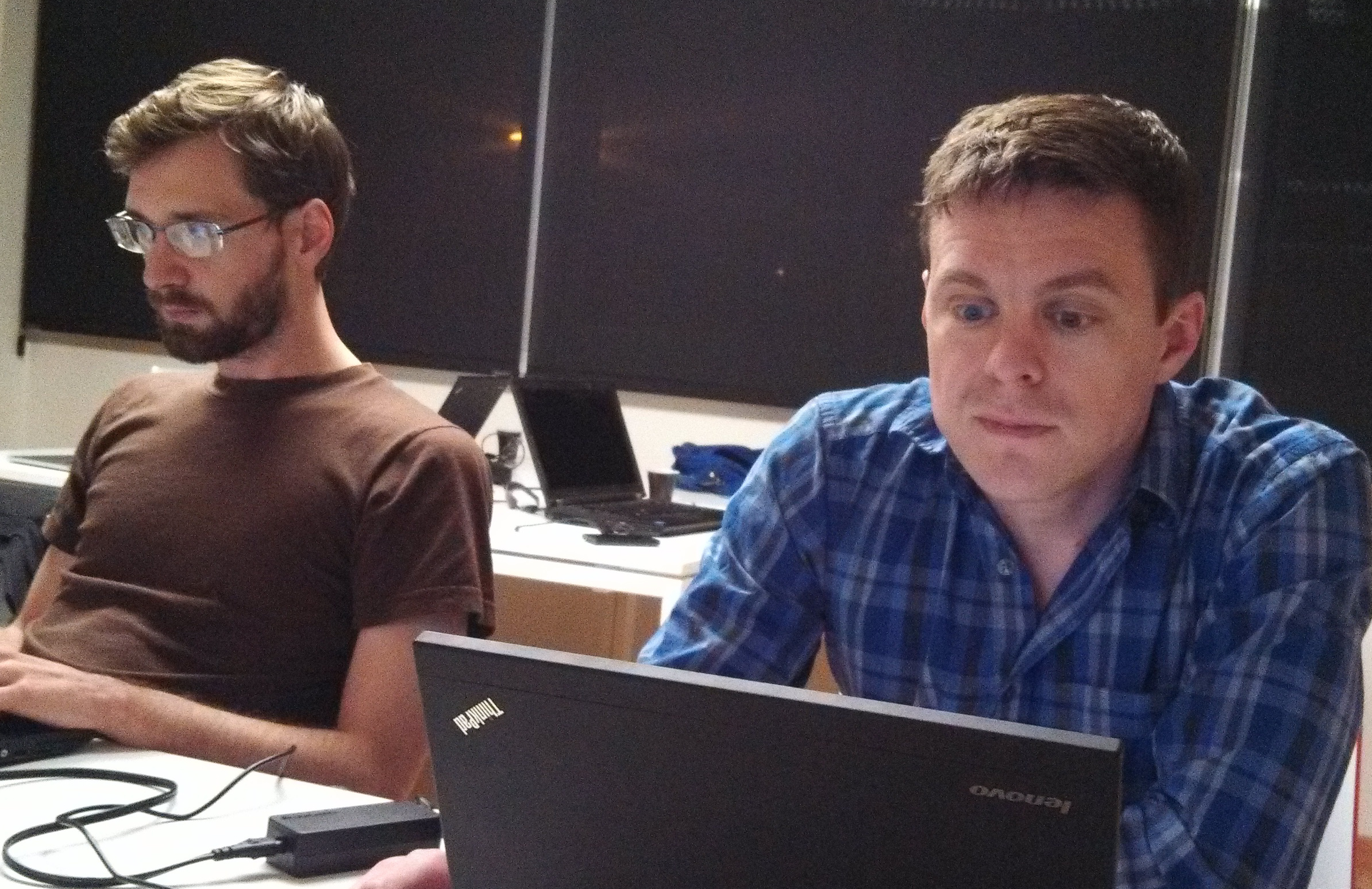
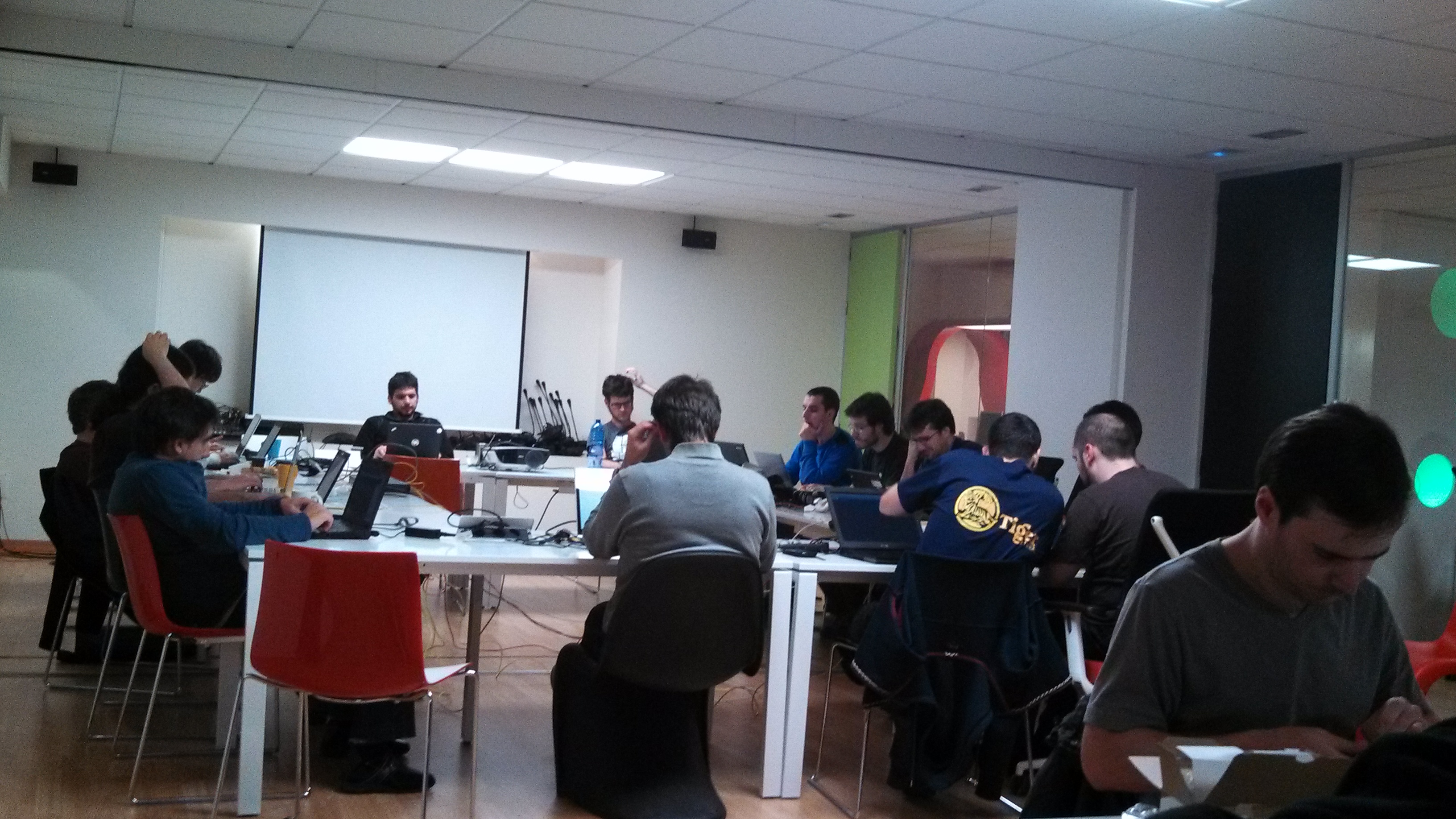
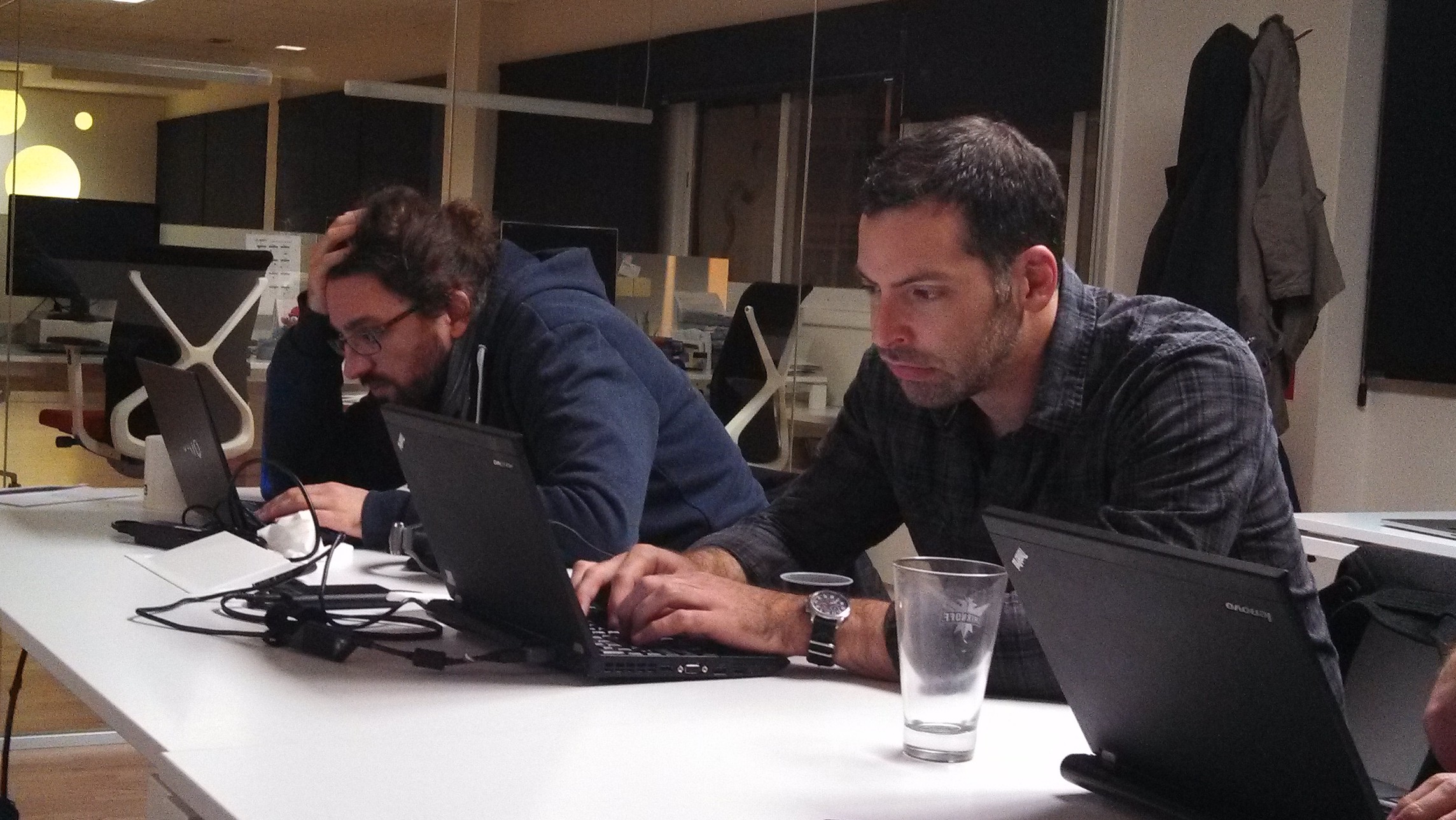
For the fifth year in a row the fearless WebKitGTK+ hackers have gathered in A Coru a to bring GNOME and the web closer. Igalia has organized and hosted it as usual, welcoming a record 30 people to its office. The GNOME foundation has sponsored my trip allowing me to fly the cool 18 seats propeller airplane from Lisbon to A Coru a, which is a nice adventure, and have pulpo a feira for dinner, which I simply love! That in addition to enjoying the company of so many great hackers.
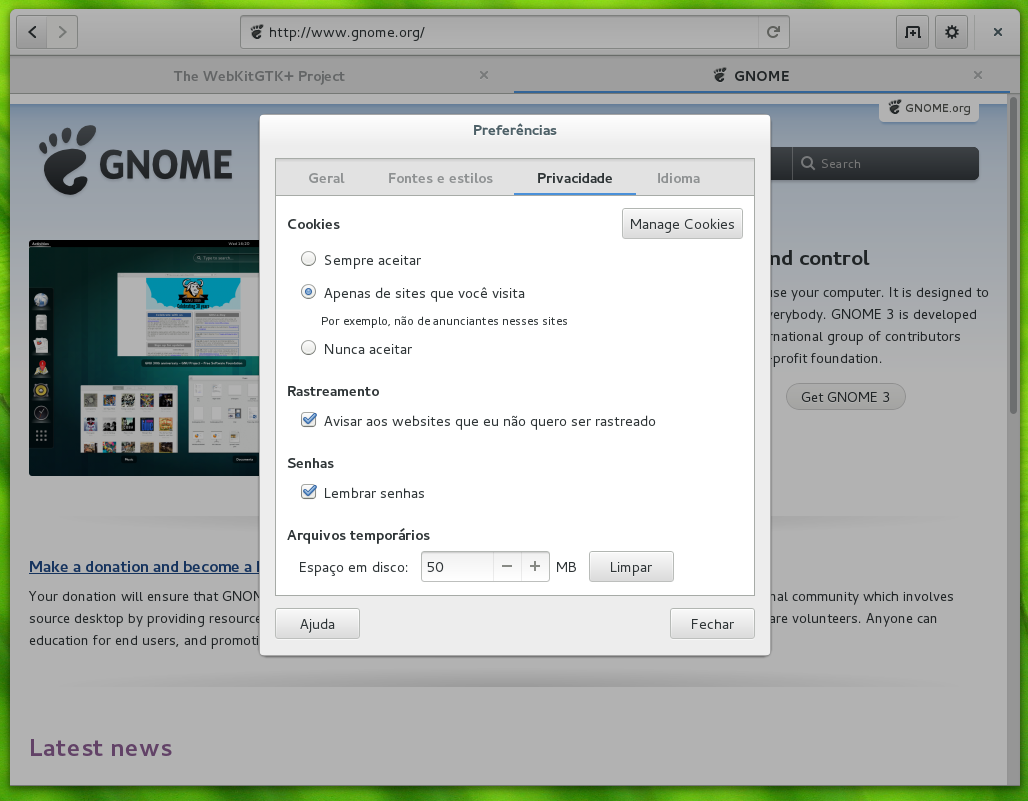
Web with wider tabs and the new prefs dialog

Web with wider tabs and the new prefs dialog

The goals for the hackfest have been ambitious, as usual, but we made good headway on them. Web the browser (AKA Epiphany) has seen a ton of little improvements, with Carlos splitting the shell search provider to a separate binary, which allowed us to remove some hacks from the session management code from the browser. It also makes testing changes to Web more convenient again. Jon McCan has been pounding at Web s UI making it more sleek, with tabs that expand to make better use of available horizontal space in the tab bar, new dialogs for preferences, cookies and password handling. I have made my tiny contribution by making it not keep tabs that were created just for what turned out to be a download around. For this last day of hackfest I plan to also fix an issue with text encoding detection and help track down a hang that happens upon page load.
Martin Robinson and Dan Winship hack

Martin Robinson and Dan Winship hack

Martin Robinson and myself have as usual dived into the more disgusting and wide-reaching maintainership tasks that we have lots of trouble pushing forward on our day-to-day lives. Porting our build system to CMake has been one of these long-term goals, not because we love CMake (we don t) or because we hate autotools (we do), but because it should make people s lives easier when adding new files to the build, and should also make our build less hacky and quicker it is sad to see how slow our build can be when compared to something like Chromium, and we think a big part of the problem lies on how complex and dumb autotools and make can be. We have picked up a few of our old branches, brought them up-to-date and landed, which now lets us build the main WebKit2GTK+ library through cmake in trunk. This is an important first step, but there s plenty to do.
Hackers take advantage of the icecream network for faster builds

Hackers take advantage of the icecream network for faster builds

Under the hood, Dan Winship has been pushing HTTP2 support for libsoup forward, with a dead-tree version of the spec by his side. He is refactoring libsoup internals to accomodate the new code paths. Still on the HTTP front, I have been updating soup s MIME type sniffing support to match the newest living specification, which includes specification for several new types and a new security feature introduced by Internet Explorer and later adopted by other browsers. The huge task of preparing the ground for a one process per tab (or other kinds of process separation, this will still be topic for discussion for a while) has been pushed forward by several hackers, with Carlos Garcia and Andy Wingo leading the charge.
Jon and Guillaume battling code

Jon and Guillaume battling code

Other than that I have been putting in some more work on improving the integration of the new Web Inspector with WebKitGTK+. Carlos has reviewed the patch to allow attaching the inspector to the right side of the window, but we have decided to split it in two, one providing the functionality and one the API that will allow browsers to customize how that is done. There s a lot of work to be done here, I plan to land at least this first patch durign the hackfest. I have also fought one more battle in the never-ending User-Agent sniffing war, in which we cannot win, it looks like.
Hackers chillin' at A Coru a

Hackers chillin at A Coru a

I am very happy to be here for the fifth year in a row, and I hope we will be meeting here for many more years to come! Thanks a lot to Igalia for sponsoring and hosting the hackfest, and to the GNOME foundation for making it possible for me to attend! See you in 2014!

10 December 2013

Dimitri John Ledkov: Hi! My name is... (what?) My name is... (who?) My name is... Slim Shady

On the 21st of November I have become a British citizen, and on the 9th of December I have changed my name by signing a statutory declaration with the following clauses:
I absolutely and entirely renounce, relinquish and abandon the use of my former name of Dmitrijs edkovs and assume, adopt and determine to take and use from the date hereof the new name of Dimitri John Ledkov in substitution for my former name of Dmitrijs edkovs.
I shall at all times hereafter, in all records, deeds, documents and other writings and in all actions and proceedings, as well as in all dealings and transactions and on all occasions whatsoever, use and subscribe my new name of Dimitri John Ledkov in substitution for my former name of Dmitrijs edkovs so relinquished to the intent that I may hereafter be called, known and identified by the new name of Dimitri John Ledkov and not by my former name of Dmitrijs edkovs.
I authorise and require all persons, at all times, to identify, describe and address me by my new name of Dimitri John Ledkov. I make this solemn declaration conscientiously, believing the same to be true and by virtue of the provisions of the Statutory Declarations Act 1835.
Now I need to get new passport, IDs and change my name pretty much everywhere. I have started the ball rolling and hopefully I'll be known by my new name everywhere soon enough.

Regards,

Dimitri.

8 December 2013

Russell Coker: A Better University

I previously wrote about the financial value of a university degree [1], my general conclusion is that the value is decreasing for most fields of employment that don t have a legal requirement for a degree. In the past I wrote about some ideas for a home university [2], basically extending the home-schooling concept to a university level. I recently read John Scalzi s post about being poor [3], many of the comments address the difficulty of getting to college and how it impacts career possibilities. From reading that it seems that my ideas about a home university are mostly based around what middle-class people can afford. Also getting a job afterwards will probably be a lot easier for someone who was born into the middle classes. It seems to me that a large part of the problem with the university system is the expectation that they will both provide for academic research and train people for jobs. Dr. David Helfand has some great ideas for running a university to give the higher education that a university is supposed to provide rather than the work training that most universities actually provide [4]. His ideas aren t theoretical, they have been implemented and proven to work. Note that Dr Helfand s talk starts slowly, the second half is the best (for those of you with short attention spans). The fact that most people think of a university degree in terms of getting a job seems to be a failure of the university system to fulfill it s original aim. If Dr Helfand s ideas take off then it would really address the problem of universities not educating people. But that still leaves the issue of job training. Is a Degree Mandatory? I think that to some degree people expect that a university degree is necessary job training even when it isn t. I wonder what would happen if it was generally agreed that the right thing to do was to search for a job between the end of high school and the start of university, then anyone who got a suitable offer could defer their university course and see what career success they could achieve without it. When I was at school the general idea was that after completing year 12 everyone just had a holiday until the start of university as the entire point of school was to get into university. While hiring managers prefer candidates who have degrees they also prefer to hire people who will accept a lower salary, so hiring an 18yo with no degree may give better value than a 21yo who has a degree. I believe that making university degrees more accessible has reduced inequality which is a good thing. But making degrees mandatory (which is widely believed by high school students and thus is the situation that they have to deal with) contributes to greater inequality. While university doesn t cost much by middle-class standards it is still expensive for poor people. If a university degree wasn t considered to be mandatory then the number of people employed to teach at a university level would be smaller. This would hopefully mean that the average skill of university lecturers would increase (I hope that the least skillful lecturers would be the ones to find work elsewhere).

John Goerzen: Results with btrfs and zfs

The recent news that openSUSE considers btrfs safe for users prompted me to consider using it. And indeed I did. I was already familiar with zfs, so considered this a good opportunity to experiment with btrfs. btrfs makes an intriguing filesystem for all sorts of workloads. The benefits of btrfs and zfs are well-documented elsewhere. There are a number of features btrfs has that zfs lacks. For instance: The feature set of ZFS that btrfs lacks is well-documented elsewhere, but there are a few odd btrfs missteps: btrfs would be fine if it worked reliably. I should say at the outset that I have never lost any data due to it, but it has caused enough kernel panics that I ve lost count. I several times had a file that produced a panic when I tried to delete it, several times when it took more than 12 hours to unmount a btrfs filesystem, behaviors where hardlink-heavy workloads take days longer to complete than on zfs or ext4, and that s just the ones I wrote about. I tried to use btrfs balance to change the metadata allocation on the filesystem, and never did get it to complete; it seemed to go into an endless I/O pattern after the first 1GB of metadata and never got past that. I didn t bother trying the live migration of data from one disk to another on this filesystem. I wanted btrfs to work. I really, really did. But I just can t see it working. I tried it on my laptop, but had to turn of CoW on my virtual machine s disk because of the rm bug. I tried it on my backup devices, but it was unusable there due to being so slow. (Also, the hardlink behavior is broken by default and requires btrfstune -r. Yipe.) At this point, I don t think it is really all that worth bothering with. I think the SuSE decision is misguided and ill-informed. btrfs will be an awesome filesystem. I am quite sure it will, and will in time probably displace zfs as the most advanced filesystem out there. But that time is not yet here. In the meantime, I m going to build a Debian Live Rescue CD with zfsonlinux on it. Because I don t ever set up a system I can t repair.

7 December 2013

Dirk Eddelbuettel: R and Big Data at Big Data Summit at UI Research Park

I spent yesterday at the very enjoyable Big Data Summit held at the University of Illinois Research Park at the edge of the University of Illinois at Urbana-Champaign. campus. My (short) presentation was part of a panel session on R and Big Data which Doug Simpson of the UIUC Statistics department had put together very well. We heard from a vendor / technology provider with Christopher Nguyen from Adatao talking about their "Big R", from industry with Andy Stevens talking about a number of some real-life challenges with big data at John Deere, from academia with Jonathon Greenberg talking about R and HPC for geospatial research and I added a few short comments and links about R, HPC and Rcpp. My few slides are now up on my talks / presentations page. Overall, a good day with a number of interesting presentations and of course a number of engaging hallway discussions.

This post by Dirk Eddelbuettel originated on his Thinking inside the box blog. Please report excessive re-aggregation in third-party for-profit settings.

Hideki Yamane: I was in Mini DebConf in Taiwan 2013

I've done GPG key sign for Mini DebConf in Taiwan 2013 participates, and written an article for Japanese magazine, Software Design 2014/Jan. This means, my short trip has been ended, at last.


In this event, I've talked about "local community" for Debian, a bit (PDF/ODF are in Debian Wiki).
Local Community for Debian (2013 Taiwan miniDebConf) from Hideki Yamane

Probably you know, most of Debian contributors are in Euro/America(North and South), not in Asia. But there are lots of talented people. It means: there is huge possibility for Debian :)


I hope we Asian Debian people unite and publish its community work more, and do "DebConf in Asia" - in the future.

6 December 2013

Steve Kemp: So PaaS

I just realised a lot of my projects are deployed in the same way: This includes both Apache-based projects, and node.js projects. I'm sure I could generalize this, and do clever things with git-hooks. Right now for example I have run-scripts which look like this:
#!/bin/sh
#
# /etc/service/blogspam.js/run - Runs the blogspam.net API.
#
# update the repository.
git pull --update --quiet
# install dependencies, if appropriate.
npm install
# launche
exec node server.js
It seems the only thing that differs is the name of the directory and the remote git clone URL. With a bit of scripting magic I'm sure you could push applications to a virgin Debian installation and have it do the right thing. I think the only obvious thing I'm missing is a list of Debian dependencies. Perhaps adding soemthing like the packages.json file I could add an extra step:
apt-get update -qq
apt-get install --yes --force-yes $(cat packages.apt)
Making deployments easy is a good thing, and consistency helps..

Gunnar Wolf: For people in Mexico: Workshop next Wednesday! Video editing from the command line (by Chema Serralde, @joseserralde)

(Yes, yes... Maybe I should post in Spanish.. But hey, gotta keep consistecy in my blog!) General, public, open invitation Are you in Mexico City, or do you plan to be next Wednesday (December 11)? Are you interested in video edition? In Free Software? I will have the pleasure to host at home the great Chema Serralde, a good friend, and a multifacetic guru both in the technical and musical areas. He will present a workshop: Video editing from the command line. I asked Chema for an outline of his talk, but given he is a busy guy, I will basically translate the introduction he prepared for this same material in FSL Vallarta, held two weeks ago.

With the help of the commandline, you can become a multimedia guru. We will edit a video using just a terminal. This skill will surprise your friends and your couple. But the most important is that this knowledge is just an excuse to understand step by step what does a video CODEC mean, what is a FORMAT, and how video and audio editors work; by using this knowledge, you will be able to set the basis for multimedia editing, without the promises and secrets of propietary editors. How much does my file weigh and why? How to improve a video file's quality? Why cannot I read my camera's information from GNU/Linux? By the end of this workshop, we well see how some libraries help you develop your first audio and video application, what are their main APIs and uses.
Logistics Everybody is welcome to come for free, no questions asked, no fees collected. I can offer coffee for all, but if you want anything else to eat/drink, you are welcome to bring it. We do require you to reserve and confirm your place (mail me to my usual mail address). We have limited space, and I must set an absolute quota of 10 participants. Some people hide their address... Mine is quite publicly known: Av. Copilco 233, just by Parque Hugo Margain, on the Northern edge of UNAM (Metro Copilco). The course starts at 16:00, and lasts... As long as we make it last ;-) So, that said... See you there! :-D [update]: Chema sent me the list of topics he plans to cover. Copy/pasting from his mail, in Spanish:
TALLER REL MPAGO DE EDICI N AUDIOVISUAL EN L NEA DE COMANDO
Jos Mar a Serralde Ruiz, facilitador
  1. Editando como cavern cola.
    1. Manipulaci n b sica de archivos multimedia en entornos POSIX.
    2. S un Bash VJ (videojockey)
    3. Vaciando y entubando
  2. Editando como cient fico.
    1. Encabezados y fourcc
    2. 3 familias de CODECS de v deo y sus patentes
    3. 3 famlias de CODECS de audio y sus patentes
    4. Muxers, demuxers y muxes.
  3. Editando como artista.
    1. Cajas de herramientas en software libre para procesamiento de v deo.
    2. Procesamiento en tiempo real de v deo (el que se crea artista pierde)
    3. Derritiendo v deo, audio con calcetines MELT + SOX
Software necesario (sistemas operativos POSIX, windouseros acercarse con el af n de repensar sus vidas): mplayer, avconv/ffmpeg (libavcodec), melt, sox, imagemagick

3 December 2013

Matthew Garrett: Subverting security with kexec

(Discussion of a presentation I gave at Kiwicon last month)

Kexec is a Linux kernel feature intended to allow the booting of a replacement kernel at runtime. There's a few reasons you might want to do that, such as using Linux as a bootloader[1], rebooting without having to wait for the firmware to reinitialise or booting into a minimal kernel and userspace that can be booted on crash in order to save system state for later analysis.

But kexec's significantly more flexible than this. The kexec system call interface takes a list of segments (ie, pointers to a userspace buffer and the desired target destination) and an entry point. The kernel relocates those segments and jumps to the entry point. That entry point is typically code referred to as purgatory, due to the fact that it lives between the world of the first kernel and the world of the second kernel. The purgatory code sets up the environment for the second kernel and then jumps to it. The first kernel doesn't need to know anything about what the second kernel is or does. While it's conventional to load Linux, you can load just about anything.

The most important thing to note here is that none of this is signed. In other words, despite us having a robust in-kernel mechanism for ensuring that only signed modules can be inserted into the kernel, root can still load arbitrary code via kexec and execute it. This seems like a somewhat irritating way to patch the running kernel, so thankfully there's a much more straightforward approach.

I modified kexec to add an additional loader and uploaded the code here. Build and install it. Make sure that /sys/module/module/parameters/sig_enforce on your system is "Y". Then, as root, do something like:
kexec --type="dummy" --address= printf "0x%x" $(( $(grep "B sig_enforce" /proc/kallsyms awk ' print "0x"$1 ') & 0x7fffffff)) --value=0 --load-preserve-context --mem-max=0x10000 /bin/true
to load it[2]. Now do kexec -e and watch colours flash and check /sys/module/module/parameters/sig_enforce again.

The beauty of this approach is that it doesn't rely on any kernel bugs - it's using kernel functionality that was explicitly designed to let you do this kind of thing (ie, run arbitrary code in ring 0). There's not really any way to fix it beyond adding a new system call that has rather tighter restrictions on the binaries that can be loaded. If you're using signed modules but still permit kexec, you're not really adding any additional security.

But that's not the most interesting way to use kexec. If you can load arbitrary code into the kernel, you can load anything. Including, say, the Windows kernel. ReactOS provides a bootloader that's able to boot the Windows 2003 kernel, and it shouldn't be too difficult for a sufficiently enterprising individual to work out how to get Windows 8 booting. Things are a little trickier on UEFI - you need to tell the firmware which virtual physical map to use, and you can only do it once. If Linux has already done that, it's going to be difficult to set up a different map for Windows. Thankfully, there's an easy workaround. Just boot with the "noefi" kernel argument and the kernel will skip UEFI setup, letting you set up your own map.

Why would you want to do this? The most obvious reason is avoiding Secure Boot restrictions. Secure Boot, if enabled, is explicitly designed to stop you booting modified kernels unless you've added your own keys. But if you boot a signed Linux distribution with kexec enabled (like, say, Ubuntu) then you're able to boot a modified Windows kernel that will still believe it was booted securely. That means you can disable stuff like the Early Launch Anti-Malware feature or driver signing, or just stick whatever code you want directly into the kernel. In most cases all you'd need for this would be a bootloader, kernel and an initrd containing support for the main storage, an ntfs driver and a copy of kexec-tools. That should be well under 10MB, so it'll easily fit on the EFI system partition. Copy it over the Windows bootloader and you should be able to boot a modified Windows kernel without any terribly obvious graphical glitches in the process.

And that's the story of why kexec is disabled on Fedora when Secure Boot is enabled.

[1] That way you only have to write most drivers once
[2] The address section finds the address of the sig_enforce symbol in the kernel, and the value argument tells the dummy code what value to set that address to. --load-preserve-context informs the kernel that it should save hardware state in order to permit returning to the original kernel. --mem-max indicates the highest address that the kernel needs to back up. /bin/true is just there to satisfy the argument parser.

comment count unavailable comments

Craig Small: procps-ng 3.3.9

Procps version 3.3.9 was released today. As there has been some API changes and fixes which means the library has changed again. There is a fine balance between fixing or enhancing library functions and keeping the API stable, with the added problem it wasn t a terribly good one to start with. Besides the API change, the following changes were made: Tar file is at sourceforge at https://sourceforge.net/projects/procps-ng/files/Production/

Russell Coker: Preferring Not To

I ve just read Bartleby the Scrivener which is a short story about a scrivener who refused to work saying I d prefer not to . It reminded me of some situations in the computer industry. I ve never seen a single case where someone preferred not to work when everyone around them (colleagues and management) wanted them to work. But then the incidence of having an entire team and management wanting to work efficiently isn t nearly as common as one might imagine. In some cases it s desired that someone not work, such as a former colleague who was hired as a sysadmin but did nothing but change backup tapes (a few hours work per week). Not having him login as root improved the general reliability of the servers but it was fortunate that we never needed to restore from backups One time I had a colleague who preferred to spend most of his time in the office searching the Internet for videos of street fights. I have often told colleagues that I would prefer them to work, but in the case of a guy who s only hobby is street-fighting I decided to let it go. Managing people can be difficult, particularly for someone who doesn t like disagreements. Some managers that I ve reported to seemed to prefer not to manage in an apparent attempt to avoid disputes. One time when I complained about a colleague not even having a suitable computer to permit doing any work a manager responded with the rhetorical question what do you expect me to do? . That manager didn t do any annual reviews of staff for over a year, he only eventually did some reviews because he was told that his scheduled promotion was on hold until he got them done. I got the impression that at least two levels of management preferred not to work at that company. Sometimes it just gets weird though, such as the occasion when I was the only member of a team and the manager who was supposedly managing no-one but me never seemed to have time to have a meeting with me. But he didn t want me to bypass him and talk directly to other people in the company, so he preferred not to work and not to have anyone else do his job. Most of the companies that I ve worked for in a full-time capacity didn t seem to have any effective technical interviews (note that I ve mostly worked for financial companies and ISPs not free software companies). So it seems that anyone with minimal computer skills who wants a well paying job could just send out a CV to a bunch of recruiting agencies, get interviewed by enough companies to eventually hit one without a technical interview process and then find a job that doesn t require work. Depression The Wikipedia page about Bartleby the Scrivener [2] suggests that Bartleby was depressed. I wonder how much of the lack of performance I ve witnessed has been due to depression. There appears to be a strong correlation between work environments that cause depression and people preferring not to work. Maybe managers should be considering how to make work less depressing to try and get more effective employees (in terms of quality and quantity of work). One example of this is the sysadmin team death spiral I ve witnessed where no-one can automate solving problems (EG by cron jobs to manage resource usage and analysis tools to find minor problems before they become major problems) because everyone is dedicated to fixing things that break needlessly (EG systems crashing due to lack of disk space). When people start getting control over recurring problems and automating things then the work becomes increasingly about solving problems and less about implementing the same manual processes every day/week and it s more fun and effective for everyone. At the BoF on depression at LCA 2013 one delegate stated that many companies have people in HR who can arrange support for depressed employees. Apparently if you are depressed and you work for a company that s large enough to have a HR department then it can be beneficial to talk to HR about it. That probably works well in the case where an employee is depressed but the company is working well. But in the case where the company isn t working well it seems unlikely to help. David Graeber wrote an interesting article about Bullshit Jobs [3]. He goes a bit far, I don t think that late night pizza delivery is a bullshit job and actuaries are useful to society. But his points about the existence of useless jobs are reasonable. Management Levels I sometimes wonder whether there is some benefit in establishing social norms about working and then having management take little interest in how it happens. If a team works well together then management could just set deadlines (which would be negotiated with employees who know what s possible) and let the team work out how to do it. Then instead of having one manager for each team of ~10 people who theoretically tracks what everyone is doing you could have one manager for a dozen teams who just tracks overall team performance essentially remove a layer of management. Valve is famous for having no formal management structure and for getting things done, unfortunately that apparently allows school-style cliques to block actions [4]. But I think that the Valve experiment is useful and provides some ideas that can be used by other companies. Maybe if instead of requiring consensus of the entire company for hiring decisions they only required consensus of the team things would have worked better. Of course another down-side to such things is that hierarchical management can be good for avoiding discrimination and bullying. The article I cited about Valve compares it to high-school. It could be that Valve employees were all nice people who only hired other nice people. But if similar systems were implemented in many companies then some would surely end up being like a typical high school with all the bullying and mistreatment of minority groups that entails. Michael O. Church wrote an interesting article in which he divides employees into four categories, loser , clueless , psychopaths , and technocrats (note that he didn t invent the first three names) [5]. In his model the clueless category includes most middle-management. I think that there are some problems with Michael s model and I m not arguing for a technocracy (which is how this post might be interpreted in terms of his ideas). But I think he demonstrates some of the real problems in the way companies are managed and in his model the losers prefer not to work as long as they can get paid. Conclusion I don t have any good solutions to these problems to offer. It seems that the best we can hope for is incremental change to make work less depressing, to have the minimal amount of management, and to avoid bullshit jobs .

2 December 2013

Roland Mas: Rsyncing a BackupPC storage pool, efficiently

BackupPC is a pretty good backup system. Its configuration is rather flexible, it has nice expiry policies, and it can store duplicated file contents only once (for files that are shared across hosts or don't change in time) within a compressed pool of data. However, it doesn't do much to help pushing the data to off-site storage, or at least not very efficiently. So if you have a BackupPC instance running on a Raspberry Pi or a plug computer at home, it's a bit tricky to protect your data against loss due to burglary or home fire. The obvious solution would be to rsync the storage pool to a remote site. However, the current pooling system relies heavily on hardlinks, and rsync is notoriously inefficient with those. In the home backup server scenario, this means that even if the computer is more powerful than a Pi and can handle the memory requirements of rsync, you'll often end up transferring way too much data. So, since the obvious solution doesn't work straight away, what do we do? Why, we fix it, of course. With a little look into the storage pool, we notice that the bulk of the data is stored in files with an abstract name (related to the contents) within a $prefix/pool directory; the files with concrete names looking much like their original are stored within $prefix/pc, and they're actually the same files because they're hardlinks. Knowing this (that rsync doesn't), we can make a smarter replication tool, by

  1. pushing only the pool with standard rsync;
  2. storing locally, and recreating remotely, the structure of hardlinks;
  3. pushing everything again with standard rsync.
Steps 1 and 3 are simple invocations of rsync -aH; step 2 can be implemented using the following two scripts. Run store-hardlinks.pl locally, push the links file, then run restore-hardlinks.pl on the remote server. This will ensure that files already present in the pool are also hardlinked in their natural location. store-hardlinks.pl:
#! /usr/bin/perl -w
use strict;
use Storable qw(nstore);
use File::Find;
use vars qw/$prefix $poolpath $pcpath %i2cpool %todo $store/;
$prefix = '/var/lib/backuppc';
$poolpath = '$prefix/cpool';
$pcpath = '$prefix/pc';
$store = '$prefix/links';
# for the convenience of &wanted calls, including -eval statements:
use vars qw/*name *dir *prune/;
*name   = *File::Find::name;
*dir    = *File::Find::dir;
*prune  = *File::Find::prune;
# Scan pool
File::Find::find( wanted => \&wanted_pool , $poolpath);
# Scan PC dirs
File::Find::find( wanted => \&wanted_pc , $pcpath);
nstore \%todo, $store;
exit;
sub wanted_pc  
    my ($dev,$ino,$mode,$nlink,$uid,$gid);
    (($dev,$ino,$mode,$nlink,$uid,$gid) = lstat($_)) &&
      -f _ &&
      ($nlink > 1) &&
      do  
      $name =~ s,$pcpath/,,;
      if (defined $i2cpool $ino )  
      $todo $name  = $i2cpool $ino ;


sub wanted_pool  
    my ($dev,$ino,$mode,$nlink,$uid,$gid);
    (($dev,$ino,$mode,$nlink,$uid,$gid) = lstat($_)) &&
      -f _ &&
      ($nlink > 1) &&
      do  
      $name =~ s,$poolpath/,,;
      $i2cpool $ino  = $name;
     
 
restore-hardlinks.pl:
#! /usr/bin/perl -w
use strict;
use Storable;
use File::Path qw/make_path/;
use vars qw/$prefix $poolpath $pcpath %todo $store/;
$prefix = '/srv/backuppc-mirror';
$poolpath = "$prefix/cpool";
$pcpath = "$prefix/pc";
$store = "$prefix/links";
%todo = % retrieve ($store) ;
my ($dev,$ino,$mode,$nlink,$uid,$gid);
foreach my $src (keys %todo)  
    my $inode;
    my $dest = $todo $src ;
    my $dpath = "$poolpath/$dest";
    my $spath = "$pcpath/$src";
    my $sdir = $spath;
    $sdir =~ s,/[^/]*?$,,;
    make_path ($sdir);
    next unless -e $dpath;
    if (! -e $spath)  
      link $dpath, $spath;
      next;
     
    (($dev,$ino,$mode,$nlink,$uid,$gid) = lstat($spath));
    $inode = $ino;
    (($dev,$ino,$mode,$nlink,$uid,$gid) = lstat($dpath));
    if ($ino != $inode)  
      unlink $spath;
      link $dpath, $spath;
     
 
The initial transfer can still take forever if the pool is large (and if you're pushing it through the small end of an ADSL link ), but at least the files are only transferred once. Note: This is only useful for current versions of BackupPC. Apparently BackupPC 4 will have a different pooling system without hardlinks, and the following hack will no longer be required. For now, though, here it is.

Ben Hutchings: Upgrading from Android 2.3 'Gingerbread' to 4.3 'Jelly Bean'

Replacing my phone My first Android phone was a ZTE Blade (sold as Orange San Francisco here in the UK). It originally shipped with Android 2.1 but was upgradable to 2.3 thanks to CyanogenMod (or other unofficial mods). However there's little sign of an upgrade to 4.x; the apps I want to use are pushing the limits of its CPU, RAM and internal storage; and I've never got very good at typing on a soft keyboard. So it seemed like time to get a newer phone with a hard keyboard (and still with a SD slot). After a little research with the CyanogenMod compatibility list and some time looking at reviews, I settled on the Samsung Galaxy S Relay 4G, which was exclusive to T-Mobile USA but is being resold through eBay. It shipped with Android 4.0 but I immediately installed CyanogenMod 10.2 (Android 4.3). This was a bit of an adventure as I bought the Blade with CM already installed and wasn't familiar with the multiple steps that were necessary. Copying my data The last step, and the real subject of this entry, was to move my data across. Much of this was on a SD card which I could simply plug into the Relay. The internal files had to be backed up onto this card and then restored, using the recovery environment (ClockworkMod) on each phone. After rebooting the Relay into the full Android system, my apps and settings were mostly present but I was immediately confronted with a series of error dialogs reporting that 'Unfortunately, Dialler has stopped' - and the same for 'Clock' and 'the process android.process.acore' (whatever that is). What went wrong There are thankfully more detailed error logs in the filesystem, under /data/system/dropbox (this is for logging at the Java level; if a process is terminated by a fatal signal it's logged to /data/tombstones). There are several ways to get at them, but I used recovery mode and adb to get a root shell where I could easily read and write files as necessary. The Contacts (aka People) database upgrade fails with an SQLiteException, apparently because it doesn't account for upgrading from the schema used in 2.3:
Process: android.process.acore
Flags: 0x883e45
Package: com.android.providers.applications v18 (4.3.1-f963020e38)
Package: com.android.providers.contacts v18 (4.3.1-f963020e38)
Package: com.android.providers.userdictionary v18 (4.3.1-f963020e38)
Build: samsung/apexqtmo/apexqtmo:4.1.2/JZO54K/T699UVBMC5:user/release-keys
android.database.sqlite.SQLiteException: no such column: phonebook_label (code 1): , while compiling: UPDATE raw_contacts SET display_name_source=?,display_name=?,display_name_alt=?,phonetic_name=?,phonetic_name_style=?,sort_key=?,phonebook_label=?,phonebook_bucket=?,sort_key_alt=?,phonebook_label_alt=?,phonebook_bucket_alt=? WHERE _id=?
...
        at com.android.providers.contacts.ContactsDatabaseHelper.updateRawContactDisplayName(ContactsDatabaseHelper.java:5344)
        at com.android.providers.contacts.ContactsDatabaseHelper.upgradeToVersion504(ContactsDatabaseHelper.java:3580)
        at com.android.providers.contacts.ContactsDatabaseHelper.onUpgrade(ContactsDatabaseHelper.java:2261)
...
Clock fails somewhat similarly though it apparently didn't try to upgrade:
Process: com.android.deskclock
Flags: 0xc8be45
Package: com.android.deskclock v203 (2.0.3)
Build: samsung/apexqtmo/apexqtmo:4.1.2/JZO54K/T699UVBMC5:user/release-keys
android.database.sqlite.SQLiteException: no such column: incvol (code 1): , while compiling: SELECT _id, hour, minutes, daysofweek, alarmtime, enabled, vibrate, message, alert, incvol, profile FROM alarms WHERE (enabled=1)
...
        at com.android.deskclock.AlarmProvider.query(AlarmProvider.java:73)
        at android.content.ContentProvider.query(ContentProvider.java:744)
        at android.content.ContentProvider$Transport.query(ContentProvider.java:199)
        at android.content.ContentResolver.query(ContentResolver.java:414)
        at android.content.ContentResolver.query(ContentResolver.java:357)
        at com.android.deskclock.Alarms.getFilteredAlarmsCursor(Alarms.java:165)
        at com.android.deskclock.Alarms.calculateNextAlert(Alarms.java:344)
        at com.android.deskclock.Alarms.setNextAlert(Alarms.java:417)
        at com.android.deskclock.Alarms.saveSnoozeAlert(Alarms.java:510)
        at com.android.deskclock.AlarmInitReceiver$1.run(AlarmInitReceiver.java:49)
...
The media player fails with a NullPointerException:
Process: com.andrew.apollo:main
Flags: 0x98be65
Package: com.andrew.apollo v2 (1.1)
Build: samsung/apexqtmo/apexqtmo:4.1.2/JZO54K/T699UVBMC5:user/release-keys
java.lang.NullPointerException
        at com.andrew.apollo.MusicPlaybackService.stop(MusicPlaybackService.java:878)
        at com.andrew.apollo.MusicPlaybackService.openCurrentAndMaybeNext(MusicPlaybackService.java:1048)
        at com.andrew.apollo.MusicPlaybackService.openCurrentAndNext(MusicPlaybackService.java:1031)
        at com.andrew.apollo.MusicPlaybackService.access$1500(MusicPlaybackService.java:74)
        at com.andrew.apollo.MusicPlaybackService$MusicPlayerHandler.handleMessage(MusicPlaybackService.java:2337)
        at android.os.Handler.dispatchMessage(Handler.java:99)
        at android.os.Looper.loop(Looper.java:137)
        at android.os.HandlerThread.run(HandlerThread.java:61)
Fixing the problem Maybe I could have worked out how to upgrade the relevant databases myself, but I went for simpler solutions. The clock settings are easy to re-enter and most of the media player state is regenerated by scanning files on the SD card. So I just deleted those on the Relay:
  rm -rf /data/data/com.android.deskclock
  rm -rf /data/data/com.android.providers.media
The contacts were what I really cared about, and there are actually specific menu items in Contacts to export and import those (using VCF format), side-stepping the database upgrade. So I did:
  1. Insert SD card in Blade
  2. Open Contacts and export to VCF (I forget where this is in the menus but it was easy to find)
  3. Remove broken Contacts database on Relay:
    rm -rf /data/data/com.android.providers.contacts
  4. Insert SD card in Relay
  5. Move exported contacts to internal storage:
    mv /storage/sdcard1/*.vcf /storage/emulated/legacy
  6. Open People and tap the menu key, 'Import/export', 'Import from storage', then the filename
This may not include all data, and in particular it doesn't seem to include attached photos. But that was good enough for me.

1 December 2013

Marco d'Itri: Easily installing Debian on a Cubieboard

I recently bought a Cubieboard to replace my old Sheevaplug which has finally blown a power supply capacitor (this appears to be a common defect of Sheevaplugs), so I am publishing these instructions which show how to install Debian on sunxi systems (i.e. based on the Allwinner A10 SoC or one of its newer versions) with no need for cross compilers, emulators or ugly FAT partitions. This should work on any sunxi system as long as U-Boot is at least version 2012.10. The first step is to erase the beginning of SD card to remove anything in the unpartitioned space which may confuse U-Boot, partition and format it as desired. The first partition must begin at 1MB (1024*1024/512=2048 sectors) because the leading unpartitioned space is used by the boot loaders.
dd if=/dev/zero of=/dev/mmcblk0 bs=1M count=1
parted /dev/mmcblk0
  mklabel msdos
  mkpart primary ext4 2048s 15G
  unit s
  print
  mkpart primary linux-swap ... -1
mkfs.ext4 -L root /dev/mmcblk0p1
mkswap --label swap /dev/mmcblk0p2
Download the boot loaders and an initial kernel and install them:
tar xf cubieboard_hwpack.tar.xz
dd if=bootloader/sunxi-spl.bin of=/dev/mmcblk0 bs=1024 seek=8
dd if=bootloader/u-boot.bin of=/dev/mmcblk0 bs=1024 seek=32
mount /dev/mmcblk0p1 /mnt
mkdir /mnt/boot/
cp kernel/script.bin kernel/uImage /mnt/boot/
script.bin is Allwinner's proprietary equivalent of the device tree: it will be needed until sunxi support will be fully merged in mainline kernels. U-Boot needs to be configured to load the kernel from the ext4 file system (join the lines at \\, this is not a supported syntax!):
cat << END > /mnt/boot/uEnv.txt
# kernel=uImage
root=/dev/mmcblk0p1 rootwait
boot_mmc=ext4load mmc 0:1 0x43000000 boot/script.bin && ext4load mmc 0:1 0x48000000 boot/$ kernel  \\
  && watchdog 0 && bootm 0x48000000
END
Now the system is bootable: add your own root file system or build one with debootstrap. My old Sheevaplug tutorial shows how to do this without a working ARM system or emulator (beware: the other parts are quite obsolete and should not be trusted blindly). If you have an old armel install around it will work as well, and you can easily cross-grade it to armhf as long as it is up to date to at least wheezy (the newer, the better). You can also just use busybox for a quick test:
mkdir /mnt/bin/
dpkg-deb -x .../busybox-static_1.21.0-1_armhf.deb .
cp bin/busybox /mnt/bin/
ln -s busybox /mnt/bin/sh
After booting the busybox root file system you can run busybox --install /bin/ to install links for all the supported commands. Until Debian kernels will support sunxi (do not hold your breath: there are still many parts which are not yet in mainline) I recommend to install one of Roman's kernels:
dpkg -i linux-image-3.4.67-r0-s-rm2+_3.4.67-r0-s-rm2+-10.00.Custom_armhf.deb
mkimage -A arm -O linux -T kernel -C none -a 40008000 -e 40008000 \
  -n uImage -d /boot/vmlinuz-3.4.67-r0-s-rm2+ /boot/uImage-3.4.67-r0-s-rm2+
It is not needed with these kernels for most setups, but an initramfs can be created with:
update-initramfs -c -k 3.4.67-r0-s-rm2+
mkimage -A arm -T ramdisk -C none -n uInitrd \
  -d /boot/initrd.img-3.4.67-r0-s-rm2+ /boot/uInitrd-3.4.67-r0-s-rm2+
/boot/uEnv.txt will have to be updated to load the initramfs. Since the Cubieboard lacks a factory-burned MAC address you should either configure one in script.bin or (much easier) add it to /etc/network/interfaces:
iface eth0 inet dhcp
        hwaddress ether xx:xx:xx:xx:xx:xx
To learn more about the Allwinner SoCs boot process you can consult 1 and 2.

Next.

Previous.