Search Results: "az"

24 February 2008

Jaldhar Vyas: The 2008 Things Jaldhar Discovered Last Year That Everyone Else Knew About Already Awards

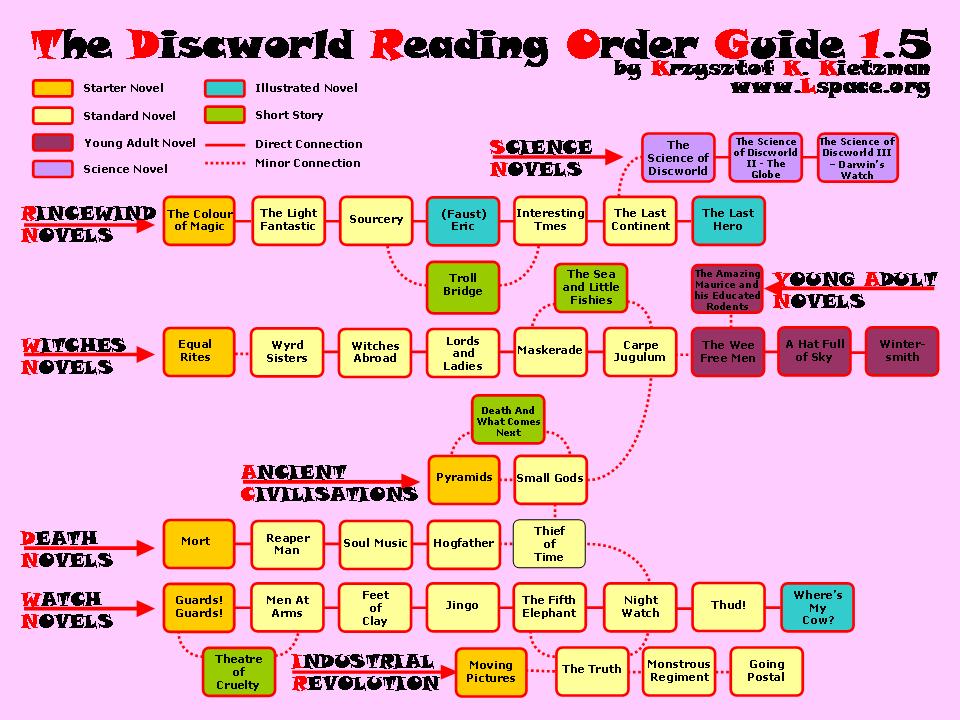
And the Golden Sombrero goes to... Another awards show took place today but nobody is paying any attention to that. All of Hollywoods elite can be found at the King Plaza Buffet in Jersey City for the 80th annual Things Jaldhar Discovered Last Year That Every Else Knew About Already Awards. (Known in the industry as "the Golden Sombreros") Here is a list of the winners. Game: Hungry Hungry Hippos This game is awesome! But don't play with three year olds. They cheat. Book: Discworld series by Terry Prachett When The Color Of Magic came out in 1983, I dismissed it as merely "The Hichhikers Guide to Mordor" but last year I read it again and this time it grew on me. Since then I've been steadily reading the whole series since June at an average of one a week. Music: Rammstein Smell the umlauts! I have no idea what they are actually going on about but this is what Metal is supposed to sound like. Mental Condition: Oedipus Complex All of sudden last October or so, my son started screaming and crying whenever I got anywhere near my wife and he would cling to her like the proverbial limpet. Then three months later, just as suddenly, he stopped. Very strange, not to mention creepy. Linux command: grep --color=auto Everyone knows GNU ls can be colorized but did you know the same is true of GNU grep? I didn't. Why wasn't I informed of this earlier? L. Ron Hubbard Lifetime Achievement Award: Coke Zero I used to drink way more Coke than was good for me so I decided to give it up. Diet sodas don't taste very good so I was resigned to not drinking soda at all. Luckily for me Coke Zero has no calories or sodium but does have caffeine and a taste like actual Coca-Cola. Perfect!

John Goerzen: Git looks really nice, until....

So I have been learning about Git this weekend. It has some really nice-looking features for sure -- some things Mercurial doesn't have.

I was getting interested in switching, until I found what I consider a big problem.

Many projects that use git require you to submit things using git-format-patch instead of pushing/pulling from you. They don't want your merge history.

git-format-patch, though, doesn't preserve SHA1s, nor does it preserve merges.

Now, say we started from a common base where line 10 of file X said "hi", I locally changed it to "foo", upstream changed it to "bar", and at merge time I decide that we were both wrong and change it to "baz". I don't want to lose the fact that I once had it at "foo", in case it turns out later that really was the right decision.

When we track upstream changes, and submit with git format-patch, the canonical way to merge upstream appears to be:

git fetch; get rebase origin/master

Now, problem with that is it loses your original pre-conflict code on a case like this.

There appears to be no clean way around that whatsoever. I tried a separate "submission" branch, that rebases a local development-with-merge branch, but it requires a ton of git rebase --skip during the rebase process.

Thoughts?

Mike Hommey: Testing the crazy idea

So, MadCoder had doubts about the crazy idea, so I took a little time to do a test with a package I maintain, namely, xulrunner. First, take all the deb files in the history of the package (at least, everything that is available on snapshot.debian.net today).
wget -O - -q http://snapshot.debian.net/archive/pool/x/xulrunner/binary-amd64/Packages.gz gzip -cd > list
awk '/^Filename:/ print $2 ' list xargs -I wget http://snapshot.debian.net/archive/
Next, commit all these in a different repo per package name :
perl -e 'use Dpkg::Version qw(vercmp); sub v my $f = $_[0]; $f =~ s/.*_(.*)_.*/$1/; $f print sort vercmp(v($a), v($b)); map s/^Filename: .*\///; $_ grep /^Filename:/ ;’ list while read f; do
    pkg=$ f%_*_*
    [ ! -d $pkg ] && mkdir $pkg && ( cd $pkg ; git init )
    cd $pkg
    ar -x ../$f
    mkdir data control
    tar -C data -zxf data.tar.gz
    tar -C control -zxf control.tar.gz
    git add data control
    git commit -q -m $f
    rm -rf data control data.tar.gz control.tar.gz debian-binary
    cd ..
done
Finally, evaluate sizes for each package, respectively, of all .deb files, their content imported in git (only the .git directory, including the index ; some space could be gained removing it), and the “optimized” git repository (after git gc, without modifying delta depth or window size, which may even improve the result)
awk '/^Package:/ print $2 ' list sort -u while read p; do
    du -c --si $ p _*.deb tail -1
    du -s --si $p
    cd $p; git gc ; cd ..
    echo
done
17M total
16M libmozjs0d
4.7M libmozjs0d
34M total
31M libmozjs0d-dbg
14M libmozjs0d-dbg
4.7M total
7.1M libnspr4-0d
1.3M libnspr4-0d
9.2M total
12M libnspr4-0d-dbg
2.8M libnspr4-0d-dbg
25M total
28M libnss3-0d
4.6M libnss3-0d
81M total
61M libnss3-0d-dbg
21M libnss3-0d-dbg
15M total
16M libnss3-tools
3.1M libnss3-tools
288M total
265M libxul0d
146M libxul0d
2.0G total
1.8G libxul0d-dbg
1.1G libxul0d-dbg
5.1M total
6.8M python-xpcom
1.1M python-xpcom
2.5M total
5.6M spidermonkey-bin
861k spidermonkey-bin
13M total
14M xulrunner
2.0M xulrunner
3.3M total
5.9M xulrunner-gnome-support
979k xulrunner-gnome-support
So these packages, stored in git, take between 15 and roughly 50 percent of the .deb size, which may be a nice improvement. Il would be interesting to know how these numbers evolve with time. Some files, such as the changelog.Debian.gz files, would also benefit from being stored in plain text instead of gzipped form. Note git gc took a while and a lot of memory for libxul0d-dbg. Also note these don’t include delta files that would be necessary to recreate the original .deb file, but this shouldn’t make a huge difference.

Andreas Metzler: hardware sucks

I have been pondering buying an entry level color laser printer, mainly for my dad (Vista) but of course at least bw-text should work with Linux, too. As expected, the situation is slightly worse than I expected. I started looking at not low end inkjets, too, The first likely candidate Canon PIXMA iP3500 or iP4500 made a quite entertaining research on the linux side. There are no free drivers and Canon's binary ones are strange. Quoting the wnpp bug:

Mike Hommey: Crazy ideas

I often have a bunch of somewhat crazy ideas, and I don’t have any time available to test or implement them, which is sad. So just in case these crazy ideas would scratch someone’s itch, I’m going to throw them in the wild. I’ve been using git for a few months, now, and used it not only for source code management, but for efficient storage, too. *VERY* efficient. I’ll have to write about that some day. Anyways, while installing pristine-tar, today, I just thought it would be neat to have an equivalent pristine-deb, to store deb files efficiently. I’m pretty sure someone else thought about this possibility, but it’s still better that such ideas come to the ears (eyes, actually) of someone that could implement them. Such a pristine-deb tool could be used to… store packages from snapshot.debian.net. That would reduce the amount of space required for the archive dramatically, IMHO. I’m pretty sure old packages are not requested that much, so they could be generated on-the-fly from a CGI script placed as a GET action, so that urls wouldn’t change. The same could probably be applied to archive.debian.org. It could even save enough space that archive.debian.org could host snapshot.debian.net. But that depends on the average package content and its average evolution, which I have absolutely no idea about. Update: It would also be interesting to have the .diff.gz files in there, too ; it would obviously allow to have an easy view of the contents, such as copyright files, changelogs, and other bits of information available on packages.debian.org. Update 2: Actually, pristine-deb would as easy as storing 2 pristine-tars (one for control.tar.gz and one for data.tar.gz), and a debian-binary file. The .deb can be aggregated with
ar -rc file.deb debian-binary control.tar.gz data.tar.gz

23 February 2008

MJ Ray: Current Issues / Weston-super-Mare Post Offices Threatened with Closure

A list of post offices under threat has been published on a LibDem web site.  I can't tell how accurate this list is - the official one will be published on the 26th (Update: the leaked list was correct) - but it includes my three nearest post offices (by travel time).  I'm amazed by this.  What idiot drew up this list?  Are they trying to create Post Office deserts?

How would these closures affect you?  If it's bad, sign the petition and get ready to answer the consultation and tell your local community.

22 February 2008

Russell Coker: Watching While Waiting

Over the past four years every visit to a doctor or hospital has involved some time spent in a waiting room, in the case of hospital visits it has often been more than an hour waiting. Each of those waiting rooms has had a selection of bad magazines and a TV. If I ever visit a hospital after 8PM then I might have a chance of seeing something that I want to watch on TV, but otherwise it’s all awful. Fortunately there are better things that they could do. It would not be difficult to get a basic PC and install all the content from ted.com (and possibly other sites with quality free content) and have some sort of video juke-box program running. TED not only has lectures about arts and science but also performances by musicians and dancers. The chance that a random person can find something they enjoy in TED’s archives seems significantly greater than the chance of finding something worth watching in the daytime-soap TV segment. But TED is far from the only option available, there are quite a number of free video sites and the ones that include advertising in the video stream would probably be more than happy to have their content copied on to juke boxes.

Benjamin Mako Hill: Credit Card Numbers

Every since I found out that the first digits of any credit card denote the issuer identifier (i.e., folks can tell who issued a credit card and what type it is just from the first digit or two) I've been annoyed almost each time I have to input credit card information on the web. Any decent credit card system knows that if a sixteen digit credit card number starts with 4, it's a Visa. And yet, each time anyone buys anything on the web, they must select "Visa" from the drop-down box. On a certain level we all know this; People in stores and restaurants never have to select the type of card before swiping. /copyrighteous/images/amazon_cc_selectbox.png When I'm feeling generous, I imagine this is so that the credit card companies can give an extra reminder that they only accept certain credit cards -- not being able to select a card type in an "essential" input field constrained to multiple choices is a pretty strong reminder. When I'm feeling less generous, I suspect it might be so that the companies can subtly remind us that they have their own brand credit cards that we might like to acquire.

21 February 2008

Simon Richter: Lazyweb: not hogging the event loop

I'm (again) writing a library that is supposed to be cross-platform, but needs sort of an event loop, which I'd rather leave in the main program and just give them a bunch of file descriptors to watch and a timeout. Problem is, file descriptors are platform dependent. There are a few approaches to this. The mighty ASIO simply annexes the entire loop, and just tells people to hook into it if they need anything -- it works, but on the downside you get threads for free when you didn't want or need them. Simply spawning a new thread for everyone isn't a solution either, as it requires me to do lots of synchronised inter-thread communication -- and on Windows, file handles are thread affine, so I cannot even call into the same library from different threads. I will probably go with ASIO for this project, but I'm fairly certain that there are better solutions out there.

John Goerzen: Death sure is cost-effective, isn't it?

I just read Death Be Not Proud (But It Is Cost-Effective) by Chez Pazienza. In his story, Chez talks about his stay in the hospital to have a marble-sized brain tumor removed. Across the room during his stay in neuro ICU, he saw a person far worse off than himself: staples all around his head, barely able to stay conscious, unable to speak. After a few days of this, Chez asked the nurse what had happened to the other person.

It was the same thing.

The difference? Chez had good insurance, and the other person didn't. So Chez got the modern surgery with the latest technology, and the other guy got the Neolithic version. The other patient's family came to visit, clearly heartbroken at his condition, not knowing whether he'd ever be the same. And knowing that even if he'd survive, he'd have years of physical therapy ahead of him.

Then there was the story of the girl whose insurance company denied a liver transplant, calling it "experimental", sending her to her death. He says:

Regardless of what Fox business-creature Neil Cavuto may have to say on the subject, healthcare and profit are two thoroughly antithetical concepts. Giving CEOs the authority to stand on the edge of the arena and issue a final thumbs-up or down while we lay incapacitated or dying is like charging a lion with protecting the Christians.


I entirely agree.

19 February 2008

Lior Kaplan: The 2nd Debian Openoffice.org bug triage


In 24 hours 21% of the triage is already done due to an amazing responsiveness from Debian’s openoffice.org users. From the total of 285 bugs targeted by the triage, 35 were closed and 27 were reproduced. Another 20 bugs are in my processing queue. With today’s result the total bug count for openoffice.org in Debian crossed the 300 outstanding bugs mark. I hope to lower it to the area of 200 by the end of this triage. I must say most users were very happy to see their bugs’ get some attention, and some were really happy to see their bug was already fixed. I got a few mails with very warm words about the triage, openoffice.org in debian and the project in general. Getting this feedback from users is one of the things that motivates me to keep and contribute to Debian in general, and to do bug triages in particular. One issue I noticed is that some of our users don’t know how to close bug reports. While it’s more important they’ll know how to report bugs than how to close them, it’s a good idea to refer them to “Closing bug reports” on Developers’ information regarding the bug processing system.

18 February 2008

Sune Vuorela: digital cameras

Dear lazyweb I have been looking for a small nice digital camera, one that of course takes nice pictures, but besides that have the following technical features: I want it to be using a generic cable for charging and transfering pictures because I am not that good at not loosing cables and chargers and such so a replacement cable should be very easy to get. And I want it to be a usb mass storage because I want it working with any computer. It kind of seems hard to figure out what devices to look at. Most “technical specifications” doesn’t contain information on wether it is a USB A => USB mini B cable or some vendor specific cable, nor do they contain information on wether it is a usb mass storage device or a device requiring mtp/ptp. Canon looks like it is doing mtp/ptp over a generic cable - and with a external charger.
Samsung tells deep inside their manuals that it uses the usb mass storage driver. Samsung uses a vendor specific cable, but is also charged thru this cable.
Kodak seems to be using a generic cable, a external charger and undefined how the communication with the computer is.
Olympus seems to be using a vendor specific cable and a external charger. But it is a bit unclear. Seems to be able to do both mtp and usb mass storage
HP seems to use a generic cable, standard AA batteries and no charger bundled, seems to be configured to use usb mass storage.
Sony uses memory sticks which are just too expensive.
Casio seems to use a generic cable, a external charger and is a bit unclear about communication. Could be usb mass storage though.
Nikon seems to use generic cable, mtp protocol and a external charger Argf. What have I missed?

Filip Van Raemdonck: PHP and SSL with Lighttpd on Debian Etch

First, a question: dear lazyweb, how do I completely disable non-SSL access with lighttpd? I can't seem to find how to have a lighttpd SSL-only configuration. (and only binding port 80 on localhost does not count for an answer)

On to the subject. While it's easy to add SSL to lighttpd and enable PHP (through fastcgi) — and Debian makes it even easier with it's lighty-enable-mod tool — if you only do it once in a blue moon then it's not exactly resident knowledge. So here are the steps to do it, on Debian Etch:
  1. apt-get the lighttpd, php4-cgi or php5-cgi, and openssl packages
  2. lighty-enable-mod fastcgi
  3. if using php5, update the path to the cgi binary in /etc/lighttpd/conf-available/10-fastcgi.conf (it's preconfigured for php4)
  4. lighty-enable-mod ssl
  5. update the path to the SSL certificate in /etc/lighttpd/conf-available/10-ssl.conf
  6. restart the lighttpd server
That's all there is to it. Well, strictly speaking there's a step 4a: install a certificate; but that's arguably not a part of the configuration process.
(for reference: openssl req -new -x509 -keyout /etc/lighttpd/selfcert.pem -out /etc/lighttpd/selfcert.pem -days 365 -nodes will generate a self-signed certificate)

Kartik Mistry: Kartik Mistry


* I am not going to Freed.in/2008 too! Damn. I’ll miss amazing talks and friends.

Michal Čihař: Network manager not working?

For a long time I had problems on my work computers with Network manager still thinking that it is not connected. And I was really lazy to debug it. But as more and more application take online/offline settings from it, this became more and more annoying. After some googling I found out that the problem might be in /etc/network/interfaces file, which is parsed by Network manager. Some "complex" things might confuse it. Well in my case the complex thing was calling of some script in post-up. Commenting this out magically fixes everything. Moving script to /etc/network/if-up.d/ also is not a big problem, but why the hell the Network manager thing does not tell where the problem is?

Eddy Petrișor: [VCS/SCM] same language, different lingo

When people say "lightweight branches":

Export means:
There are several other differences in the VCS/SCM lingo paralel uses, if you want to look closely, but these are enough for now...

No wonder we have communication problems and people don't grasp the power of a new tool when it changes the meaning of previously used terms.

Russell Coker: Oracle Unbreakable Linux

Matt Bottrell writes about the Oracle Linux offerings presented at LCA 2008 [1] The one thing that Oracle does which I really object to is the “unbreakable” part of their advertising. They have pictures of penguins in armour and the only reasonable assumption is that their system is more secure in some way. As far as I am aware they offer no security features other than those which are available in Red Hat Enterprise Linux, CentOS, and Fedora. The unbreakable claims were also made before Oracle even had their own Linux distribution, which gave them even less reason for the claims. If someone is going to be given credit for making Linux unbreakable then the contributors list for the SE Linux project [2] is one possible starting point. Another possibility is that credit could be given to Red Hat for introducing so many security features to the mainstream Linux users before any other distribution. In terms of improving the security of databases it’s probably best to give credit to Kaigai Kohei and the PostgreSQL team for Security Enhanced PostgreSQL [3]. I believe that NEC also deserves some credit for sponsoring Kaigai’s work, I am not sure whether NEC directly sponsored his recent work on SE-PostgreSQL but they certainly sponsored his past work (and are credited on the NSA web site for this). Oracle’s Linux distribution is based on CentOS and/or Red Hat Enterprise Linux (RHEL). The situation with RHEL is that the source is freely available to everyone but binaries are only available to people who pay for support. CentOS is a free recompile of RHEL and a good choice of a distribution if you want a server with long-term support and don’t want to pay Red Hat (I run many servers on CentOS). While Matt gets most things right in his post there is one statement that I believe to be wrong, he writes “One of the craziest statements I heard during the talk was that Oracle will only support their products running under a VM if it’s within Oracle VM“. My knowledge of Xen causes me to have great concerns about reliability. My conversations with MySQL people about how intensive database servers are and how they can reveal bugs in the OS and hardware are backed up by my own experience in benchmarking systems. Therefore I think it’s quite reasonable to decline to support software running under someone else’s Xen build in the same way as you might refuse to support software running under a different kernel version (for exactly the same reasons). Matt however goes on to make some very reasonable requests of Oracle. The demand for native packages of Oracle is significant, I can’t imagine official Debian package support appearing in the near future, but RPM support for RHEL etc would make things easier for everyone (including Oracle). A better installation process for Oracle would also be a good thing. My observation is that most Oracle installations are not used for intensive work and use database features that are a sub-set of what MySQL offers. I’ve seen a few Oracle installations which have no more than three tables! The installation and management of Oracle is a significant cost factor. For example I used to work for a company that employed a full-time Oracle DBA for a database with only a few tables and very small amounts of access (he spent most of his time watching videos of fights and car crashes that he downloaded from the net). Adding one extra salary for a database is a significant expense (although the huge Oracle license fees may make it seem insignificant).

17 February 2008

Martin F. Krafft: Places in Melbourne

On my way home from New Zealand, I spent a (Friday) night in Melbourne. Peter, Donna, Andrew, and Mark, all of whom I knew from LCA 2008, came out and helped me get away from the after-work-craze that filled centre city. Thanks to them, I found (and refound) a couple of places worth noting: NP: The Phoenix Foundation: Happy Ending Update: Joel points out that the Australia on Collins shopping centre on 260 Collins street has free wireless

16 February 2008

Philipp Kern: Python IDE wanted

Dear Lazyweb, is there a nice free and open Python IDE available? I was impressed by Eclipse's Java support when I had to code a project for my studies but I hate the language thoroughly. I also had a quick glance at NetBeans IDE which provides a Ruby IDE. It looked really nice with working code completion and refactoring support. Now I was a Ruby fanboy some time ago and switched to Python partly for (a bit) more performance and also because of better bindings to various libraries. Until now I coded Python in vim, but well, an IDE would be nice and I wonder why a language with as much drive as Python has lacks a nice free IDE. I also had to work with Visual Studio 2008 recently to port Gobby to Windows with proper C++ exceptions. The IntelliSense feature (their marketing speak for code completion) worked quite well with the given C++ code, but that IDE just got into my way. (Apart from the compiler having a different opinion about what real C++ is like, in contrast to gcc's opinion.) As my pyblosxom (heh) still lacks a comment plugin please mail me suggestions (if you have some) to my debian.org address. Uh, and a nice sticker: http://www.fosdem.org/2008/promo/going-to

15 February 2008

Joerg Jaspert: PostgreSQL Continuous Archiving and Point-In-Time Recovery (PITR)

A nice feature from PostgreSQL are “write ahead log” (WAL) files. Quoting from the PostgreSQL website they describe every change made to the database’s data files. […] if the system crashes, the database can be restored to consistency by “replaying” the log entries made since the last checkpoint. This basically enables online backup of your database cluster. And as you end up having the complete log of all actions within your database(s) you are also able to go back in time to any point you like. I won’t write a complete howto about it, as the PostgreSQL docs are pretty good, just some notes how I did my setup, as a kind of reminder for me when I have to do it again.
There must be a place to store WAL files which ends up not being on the same machine, otherwise it doesn’t make much sense. For me that means scp to a different host, but an NFS mount or some storage array or drbd device might also be an option. Much of the following is for the scp method, but easily adaptable to other storage methods. I need a target user on the host I copy files to, and as I did the setup for the pentabarf database running on host skinner, I helpfully named it pentabarf-backup. The copy process can’t be interactive so the postgres user on the database host needs to have a passwordless SSH key to login to the pentabarf-backup user on the backup host. To limit my bad feeling about “passwordless key to login” I restrict the key by adding
from="skinner.debconf.org,72.32.250.224,72.32.79.241",no-port-forwarding,no-X11-forwarding,no-agent-forwarding,no-pty 
in front of it while copying it to the pentabarf-backup users .ssh/authorized_keys file. I need a few directories, namely pentabarf-WAL-skinner, pentabarf-tarballs and pg_xlog-skinner for the stuff to backup, created in the home of the pentabarf-backup user. Next step is to tell PostgreSQL our wish to have online backups. Add the following statements to your postgresql.conf, adapting the values to your needs:
archive_command = 'ssh backup test ! -f pentabarf-WAL-skinner/%f && rsync -az %p backup:pentabarf-WAL-skinner/%f'
checkpoint_timeout = 1h
archive_timeout = 12h
The above tells PostGreSQL that i want it to archive the files using ssh to my backup host and transfer files with rsync (via ssh), but only if they do not exist yet. It also tells it to archive the files at least once every 12 hours. The effect is that WAL files get copied over when they are “full” or after 12 hours passed, whatever happens first. Don’t set it too low, as the file will always have the full, fixed size and you waste space transferring mostly-empty files. In case you are concerned with the possibly slow speed of a network link, the PostgreSQL site has the following to say about this: The speed of the archiving command is not important, so long as it can keep up with the average rate at which your server generates WAL data. Normal operation continues even if the archiving process falls a little behind. I haven’t had a problem with the speed yet. A 16MB file every (at least) 12 hours isn’t that bad. Now that we have done all the setup and are able to transfer WAL files, we need a base backup to start with. Issue a SELECT pg_start_backup(‘BASE_BACKUP’); as a database superuser and then backup the database cluster by backing up the whole clusters data/ directory (and every other location if you use tablespaces). When you are done issue SELECT pg_stop_backup(); and you are done with your base backup. You might want to exclude pg_xlog/ to save space, you don’t need it.
As I’m lazy I use a script (written by Peter ‘weasel’ Palfrader), you can get it here, but whatever you take is fine. If you use the script just make sure to adapt the variables in the script to values that fit your system. From now on you should do such base backups in regular intervals, I run them once a week, as recovery does need the last base backup plus all WAL files from then on. Doing regular base backups limits the amount of WAL files you need to keep around / you need to replay.
Reading the above you might find that there is a window of up to 12 hours from which I do not have backups. True, and to make this window way smaller, I am using another script (also written by weasel), get it here, together with an init script. This synchronizes the pg_xlog/ directory to my backup host every 5 minutes, so in case of a server crash I can replay everything up to the last 5 minutes. Recovery using WAL files This is pretty simple, and also good documented at the PostgreSQL site again. For my scenario it basically boils down to
  1. Stop postgres
  2. Move away the cluster.
    mv /var/lib/postgresql/8.2 /var/lib/postgresql/8.2_old
  3. Restore the backup dump, be careful to have the file rights correct. For the above described setup that means copy and untar the latest tarballs created weekly.
  4. Recreate pg_xlog:
      mkdir /var/lib/postgresql/8.2/main/pg_xlog
      chown postgres:postgres /var/lib/postgresql/8.2/main/pg_xlog
      chmod 40700 /var/lib/postgresql/8.2/main/pg_xlog
      mkdir /var/lib/postgresql/8.2/main/pg_xlog/archive_status
      chown postgres:postgres /var/lib/postgresql/8.2/main/pg_xlog/archive_status
      chmod 40700 /var/lib/postgresql/8.2/main/pg_xlog/archive_status
     
  5. Copy possibly unarchived WAL files from /var/lib/postgresql/8.2_old/main/pg_xlog into the newly created pg_xlog.
  6. Copy all the WAL segment files that are needed over from the backup host. That should be all the files on the backup host, directory pentabarf-WAL-skinner/. You should be able to limit it by taking all those files >= the latest *.backup file.
  7. Create a recovery command file recovery.conf in the cluster data directory. You may also want to temporarily modify pg_hba.conf to prevent ordinary users from connecting until you are sure the recovery has worked. The content of recovery.conf is
          restore_command = 'cp /tmp/pg-WAL/%f "%p"'
         
    Make sure that the file location you specify is the location you put the WAL segment files into in the prior step.
  8. Start the server, it will go into recover mode and proceed to read through all the archived WAL files it needs.
  9. Look at the database and decide if you like what you see.
Of course the procedure can be slightly adapted, so you end up with a database state from 2 weeks ago. Or 3 days. Or whatever you may need (and have WAL files for). There are many possibilities, and there is a lot of text on the PostgreSQL page that I don’t want to duplicate here, so please read it. Also, I’m not using this as the sole and only way to backup my database(s), they are all still dumped into SQL files every day. This is just additional.

Next.

Previous.