Search Results: "tb"

5 June 2009

Paul van Tilburg: Iceland, Here I Come!

I am all set for my trip to Iceland! (Well, except for the actual packing of stuff.) The purpose of the trip is a work visit and holiday combined. In the first week (maybe extended to 9 days), I will be working at the Reykjavik University on some process algebra things and possible present my past work. During my time there I can stay at the appartment of Arnar, whom I ve met when he was attending our university for his Master s. Thanks for providing me with accomodation and congrats with obtaining your Master s degree! When my days at the RU are over, I will explore, tour, hike around the island with him and some of his friends. Very much looking forward to that! Some travel information for Sunday June 7 (travelling with Iceland Air):
09:45 Leaving by foot/bus/train to the airport
14:00 Departure from Schiphol with flight FI503 (UTC+0200)
15:00 Arrive at Keflavik Airport (UTC+0000)
I will be returning on Sunday June 28:
16:30 Departure from Keflavik Airport with flight FI504 (UTC+0000)
21:30 Arrive at Schiphol (UTC+0200)
I will attempt to keep you all updated via this journal and/or the usual microblogging sources: Twitter / Jaiku / Luonica.

Joachim Breitner: Third place in AI programming contest

My contribution to the programming contest held by the German FreiesMagazin got a third place out of 13 submissions. This is quite good, considering that I only wrote a small wrapper around the generic game-tree Haskell library by Colin Adams, and hardly gave any serious thought into the problem.All entires are available for download. I have annotated the table containing the results with the line count as given by ohcount:
W D L Points Language Code lines
1. Kroschinsky 904 242 54 2954 Python 589
2. Schulz 858 263 79 2837 Python 544
3. Breitner 837 281 82 2792 Haskell 264
4. Jackermeier 754 306 140 2568 Perl 183
5. Roth 574 338 288 2060 C++ 1731
6. Eitel 567 355 278 2056 Ruby 352
7. Reichel 342 328 530 1354 Python 266
8. Zimmermann 303 400 497 1309 Java 1070
9. Apensiv 190 353 657 923 Perl 410
10. Maraun 150 300 750 750 C++ 690
11. Golemo 131 319 750 712 Python 104
12. Ziegelwanger 120 337 743 697 C++ 868
13. Fuest 32 254 914 350 Python 645
Note that the line count for my haskell program includes the game-tree library, which I bundled in my submission. Without it, it s 156 lines of code I had to write, which is second best in the code golf category.If you look at the timing statistics, you will see that my program took the longest. When the contest was started, the timelimit was one minute per round which I of course tried to use as much as possibly, by increasing the search tree depth. Later into the contest, the rules were changed to limit it to one minute for a whole game, and that long-running programs will get points deducted. I did some minor changes based on a profiling run, but did otherwise not care too much about performance. I would have tried to improve the runtime by using Haskell s good ability for parallelization. But when I asked on what kind of machine the code will be run, but they would not tell me. They said that this is a hobby programmer s contest where allowing for parallelization were not fair, so I did not work in that direction.All in all it was a positive experience, showing of Haskell s qualities as a language that you can quickly get good results with.

Martin Michlmayr: Corporate participation in open source communities

Someone recently asked me a few question about corporate participation in open source communities and I thought I'd share my thoughts on this topic here. Are there differences between an open source project done for a corporation and one done for personal reasons? There are many different ways to run an open source project, led by a corporation or by someone else. Some projects that are run by corporations have few outside contributors. This is often the case with projects that require copyright assignment (i.e. contributors have to assign their copyright to the corporation). These projects may not gain all the benefits of a true open source community, such as outside contributions or high levels of peer review. However, they may still be very successful projects and may have high levels of quality. Projects done by a corporation may have better planning and may have more resources than other projects. When a corporation, especially a large one, starts or becomes involves in a project it can also give credibility to the project and attract a lot of interest to the project. This means that projects done by corporations may have a bigger impact and might also be more visible in terms of publicity. How do corporations successfully utilize an open source community? Corporations can benefit from an open source community in many ways. For example, they can often find people who will review their code or make code contributions. If people become excited about what the corporation does, they might also spread the word and create viral marketing for the corporation. Establishing a community around one's project is often also a good way to identify people to hire since you already have experience working with them and know their capabilities. How do open source communities successfully utilize their corporate relationships? Corporations can make several unique contributions. For example, large corporations can use their name to attract attention to a project and give it credibility. Furthermore, corporations have some capabilities that personal contributors often don't have access. They may have special testing equipment (such as servers with thousands of CPUs or hard drives) or access to a testing lab where a professional usability test can be done. Finally, corporations can sponsor developer conferences, which are typically very effective means for the community to come together and work on activities together. It is important for projects to remember that corporations are not charities and that they will invest in an open source project for a reason. Therefore, they have to ensure that the corporation will get tangible outcomes from their involvement or sponsorship, otherwise they may not stay involved in the long run. What are the risks for a corporation when working with an open source community? One risk is that the code (or other form of contribution) is not accepted. However, this is a risk any contributor to a project faces. Before making any sort of contribution, it is therefore important to become familiar with the project and its culture. Every project has their own "do's" and "don'ts" that have to be followed. Another risk is that a corporation will invest in a community project that later on is abandoned by the community. However, in this case, the corporation could take the lead and continue to maintain the project. What are the risks for an open source community when working with a corporation? One potential risk is that the corporation will assert too much control over the project. It's important for projects to ensure that the community as a whole has influence over the direction of a project rather than one particular player. Are certain certifications needed in order for someone to participate in open source projects for a corporation? Certifications are not needed to get involved in or start a project. However, it is important to become familiar with the open source community and the project one wants to contribute to. A good first step is to read the book Producing Open Source Software by Karl Fogel which is available online. As a next step, the community in which someone wants to get involved in should be studied, for example by reading the mailing list archives. This will help to become familiar with the culture of a project as well as the mechanisms to contribute to the project. How do open source communities communicate and collaborate with corporations? In the best case, employees from corporations would interact in the project like any other contributor. That is, they should use the existing communication channels, such as mailing lists, IRC or developer gatherings. Many companies are good at working "with the community" but the ideal scenario is for a company to be part of the community and to work "in the community", just like other contributors. This is the most effective way for them to make changes to the code and project. Of course, not every corporation will get involved in a project directly. That's why it makes sense for projects to collaborate with corporations in other ways. For example, projects can talk directly to companies to get samples of their hardware in order to add support for them in their software. Projects can also work directly with corporations to find out how their project can better meet the needs of enterprise users.

4 June 2009

Russell Coker: Linux Rate-Limiting of an ADSL Link

After great pain I ve got tc working on some Linux routers. The difficulty with limiting an ADSL link is that the ADSL modem has significant buffers and the link between the Linux machine and the modem is significantly faster than the ADSL upstream channel. This means that the transmission speed needs to be artificially limited, a speed of about 95% the maximum channel speed is often recommended. As ADSL upstream speed often varies (at least in my experience) that means that you must limit the transmission speed to 95% of the lowest speed that you expect to see - which of course means a significant drop in performance when the ADSL link is performing well. I use the HTB queuing discipline to limit the transmission rate. My transmission speed varies between 550kbit and 680kbit in my rough tests. So I start by limiting the overall device performance to 550kbit. Then I have three different classes with IDs 1:10, 1:20, and 1:30 with rates of 64kbit, 480kbit, and 128kbit respectively. It is often recommended that the inferior classes have a total bandwidth allowance that is equal to the allowance for the overall link, but I have the three inferior classes allocated with 672kbit - I think that this will work as it will be quite rare that all classes will be in operation at the same time and fairly unlikely that I will ever have all three classes running at maximum speed. I will be interested to see any comments about this, I might have misunderstood the issues related to this. Each class has a SFQ queue discipline associated with it for fair queuing within the class. It might be a bit of overkill, I expect to only have one data channel in operation on the VOIP class so it probably does no good there and my usage pattern is such that if the 480kbit connection is anywhere near busy then it s due to a single large transfer. But with the power of a P3 CPU applied to the task of routing at ADSL speeds it really doesn t matter if some CPU time is wasted. Then the tc filter lines associate iptables marks with the classes. Now this is only a tiny fraction of what tc can do. But I think that this basic configuration with the rate limits changed will suit many ADSL router configurations, it may not be an ideal configuration for most ADSL routers but it will probably be a viable configuration that will be better than having no traffic shaping. Below is the shell script that I am using: #!/bin/bash -e DEV=ppp0 tc qdisc del dev $DEV parent root handle 1:0 2> /dev/null true
tc qdisc add dev $DEV parent root handle 1:0 htb default 30 # limit the rate to slightly lower than DSL line speed
tc class add dev $DEV parent 1:0 classid 1:1 htb rate 550kbit prio 1 # sub classes for each traffic type
# 10 is VOIP, 20 is default, 30 is the test network
tc class add dev $DEV parent 1:1 classid 1:10 htb rate 64kbit burst 6k prio 2
tc class add dev $DEV parent 1:1 classid 1:20 htb rate 480kbit burst 12k prio 3
tc class add dev $DEV parent 1:1 classid 1:30 htb rate 128kbit burst 12k prio 4 # use an sfq under each class to share the bandwidth
tc qdisc add dev $DEV parent 1:10 handle 10: sfq
tc qdisc add dev $DEV parent 1:20 handle 20: sfq
tc qdisc add dev $DEV parent 1:30 handle 30: sfq tc filter add dev $DEV parent 1: protocol ip prio 1 handle 1 fw classid 1:10
tc filter add dev $DEV parent 1: protocol ip prio 2 handle 2 fw classid 1:20
tc filter add dev $DEV parent 1: protocol ip prio 3 handle 3 fw classid 1:30 iptables -t mangle -F POSTROUTING
iptables -t mangle -A POSTROUTING -j MARK --set-mark 2
iptables -t mangle -A POSTROUTING -p tcp --sport 22 -j MARK --set-mark 3
iptables -t mangle -A POSTROUTING -d $VOIPSERVER -j MARK --set-mark 1

3 June 2009

Sandro Tosi: Reportbug: Where we're now, where we're headed

Lately, it's being an active period for Reportbug, and I'm happy about that.

As you might have noticed, this is a quite busy period for me due to non-Debian stuff, so I had to freeze a lot of Debian activities. Due to this, also several projects for Reportbug enhancements have stopped.

In particular for SOAP BTS interrogation. It's a nice topic, and I'd like to guide it myself, but we'll talk about it from August/September ;)

In the meantime, Carl is flooding us with his stream of patches, and it's hard to keep up with that, and Luca is working on making Gtk+ backend more stable and usable and we're thrilled a big number of people tried it and reported bugs (damn, I keep forgetting to disable 'reportbug reportbug' !! ;) ).

So, have fun using reportbug, don't be scare to report bug on it, and if you have some time to devote to it and want to send use patches, you know you'll be welcome :)

UPDATE: I forgot to add that the total bugs count is now at the lower point since I entered reportbug team!

2 June 2009

Russell Coker: How not to write the way dumb people think smart people write

Don Marti has written an amusing and informative little post about the way that ill-educated people use phrases in print [1]. The one example that didn t fit with the tone of his post was the use of half mast to refer to a flag on land, that one is used often enough (both in print and verbally) that intelligent people will make that mistake. Here are some that he missed:

  1. The expression bailing them out can be used to refer to someone who helps someone escape from a difficult situation. That might refer to bailing water from a leaky boat or might refer to posting bail to secure someone s release from prison while awaiting trial. It certainly doesn t refer to baling which is the creation of a bundle (such as a bale of hay). I m sure that a farmer would appreciate some help at baling time, but such help would hardly qualify as rescue from a difficult situation.

  2. The expression woe is me is used (usually in a sarcastic manner) to refer to someone who feels that their situation is sorrowful. It is not whoah is me , I suspect that the word whoah was invented long after the expression woe is me became commonly used.

  3. Made up words such as worserer and worstest. I can understand that people such as Keith Olbermann [2] may find it a challenge to describe some of the bad people in the world, but he is articulate enough to rise to that challenge while using real words.

Can anyone add any more to this list?

31 May 2009

Martin Michlmayr: Initial thoughts on the new QNAP TS-219P

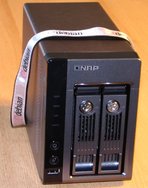
QNAP TS-219P QNAP has announced a new device earlier this month, the QNAP TS-219P. The specs are very similar to the TS-219 (1.2 GHz Kirkwood CPU, 512 MB RAM and 16 MB flash) but the device is smaller and has some other advantages. What I like about the new TS-219P: What I don't like so much: Since the TS-219 and TS-219P are quite similar, Debian and the installer will work without any problems. I updated my QNAP page to document the QNAP TS-219P, including some pictures of the new device.
Russell Coker: Expectations and Fandom

Russ Allbery has written about the hostile reactions of sci-fi fans toward the delay of a book release [1]. Russ makes some good points regarding the issue of whether paying $100 for some books entitles a reader to have the rest of the series written (in summary - no, the author owes the fans nothing). Russ also notes that when someone makes a public promise to do something (such as writing a book) they will probably be feeling bad about being unable to live up to that, and harassing them about it is not going to make them feel any better - or make them better able to do the work. Charles Stross has written a blog post about this topic, he makes some interesting points and the comments illustrate most of them [2]. One comment claims that the author of the delayed book in question flaunts his NFL watching while the same person also criticises the author for writing a blog. This level of contempt for the author amazes me. In case anyone is interested I watch The Bill and Desperate Housewives every week. Anyone who wishes to criticise me for watching soapies instead of documentaries is welcome to do so. But I will not make any apologies for spending some of my time doing things other than coding. If I watch Desperate Housewives instead of fixing a bug that inconveniences you then you just have to deal with it. I believe that taking a regular break from work is a basic human right, apart from which there is evidence to show that working excessive hours decreases the quality and quantity of work that is completed [3]. It seems to me that members of the free software community are in a better position regarding fans than most creative people, and that this is largely due to how transparent the development process is. The most influential members of the user (fan) base are software developers. While people will be disappointed when software is not released on time or has some bugs many users know what is involved and understand that no testing will find all bugs. Even some basic shell scripting can teach people the difficulties of programming and convince them to have a little more patience than they might otherwise have. So the typical user of free software will have some idea of what is required to write software while the typical reader of a novel has no idea of what is involved in writing a book. Another benefit for the free software community in this regard is the open development process. When users are unhappy about release delays (as some Debian users were before Lenny was released) they can easily look at the bug list. If a user is pushy they can be invited to fix some bugs themselves, if they investigate the matter and discover that the bugs are too difficult for them to fix then they will probably feel compelled to stop hassling the people who can fix the bugs. Complaints from users regarding the release process can be turned around with the software is late because YOU haven t fixed any bugs . Please note that submitting bug reports is NOT criticism, it is in fact helping the development process (particularly when the bug reports contain information on how to fix the problems). This exposes another significant difference between writing software and writing a book. Even if I was a talented author I would not be able to offer any assistance to an author who had trouble completing a work simply because I wouldn t have the same vision for the plot of a book. But it s not uncommon for software development projects to be forked if the users are unhappy with some aspect of how they work, and it s also not uncommon for a programmer to voluntarily give one of their projects to another developer - sometimes developers try and convince other people to take projects from them when they don t have enough time. Even without changing the ownership of a project, anyone can submit a patch. The patches that I have received from users of my software have generally been of a high quality and it has taken little work to merge them. A final difference is that any programmer can produce a private fork of a project. I have lost count of the number of times that I have produced custom versions of free software for my own personal use or for the use of my clients. Sometimes the modifications that I made were unsuitable for wider use (IE they broke things for usage cases that I didn t care about) so I just privately made the software do what I needed. This makes the upstream developer (or team) and other contributors irrelevant to fixing the problem in question. Now this is not to say that the free software community is perfect. But it seems that certain types of bad behavior that we see demonstrated in the sci-fi fandom circles are uncommon and the people who demonstrate them are significantly outnumbered by people who oppose such actions. Publicly criticising a programmer for watching the NFL in their spare time is akin to holding a sign saying kick me . As I am a fan of science fiction (and hope to write some in the near future) I wonder whether the sci-fi community could be changed to have a culture more like that of the free software community. The web site 365tomorrows.com publishes a short sci-fi story every day [4], they have been doing this for a few years now. They started out publishing work by a small team of authors with the aim of writing a story a day for a year. Now they also take submissions from users and they have a forum for budding authors to discuss their work. The site Protagonize.com is based on the idea of collaborative fiction [5]. I wonder whether the increasing number of sci-fi fans who join such forums will change the nature of the community. Maybe when a book is delayed the fans could take comfort in an increasing amount of fan-fiction based on characters from that book, I expect that the fan fiction will probably not impress all authors - and some may be offended by having their characters used in pornographic fan fiction. But that might just lead to a market shift towards authors who are not overly concerned about such things. When attending sci-fi book signings I ve noticed fans who appear to have stalking tendencies. I have been wondering how much of this is another symptom of the same problem and how much of it is due to science fiction attracting some people who don t understand the concept of personal space and who haven t considered the mathematics of interactions between famous people and fans - as one of many fans the famous person will not remember your fan letters or whether they have met you before, it s not possible. I look forward to the day when a well known author can have lunch with some fans after a book signing and not be afraid of weird fans. I wonder if Cory Doctorow [6] already has such cool fans, Cory seems to be one of the leaders in the new open way of writing and releasing sci-fi so it seems likely that he would be among the first to reap the benefits. I m sure that most authors would like to have lunch or dinner with their fans if they could be assured that the probability of getting stuck with a nutty fan was extremely low.

Russell Coker: LG U990 Viewty

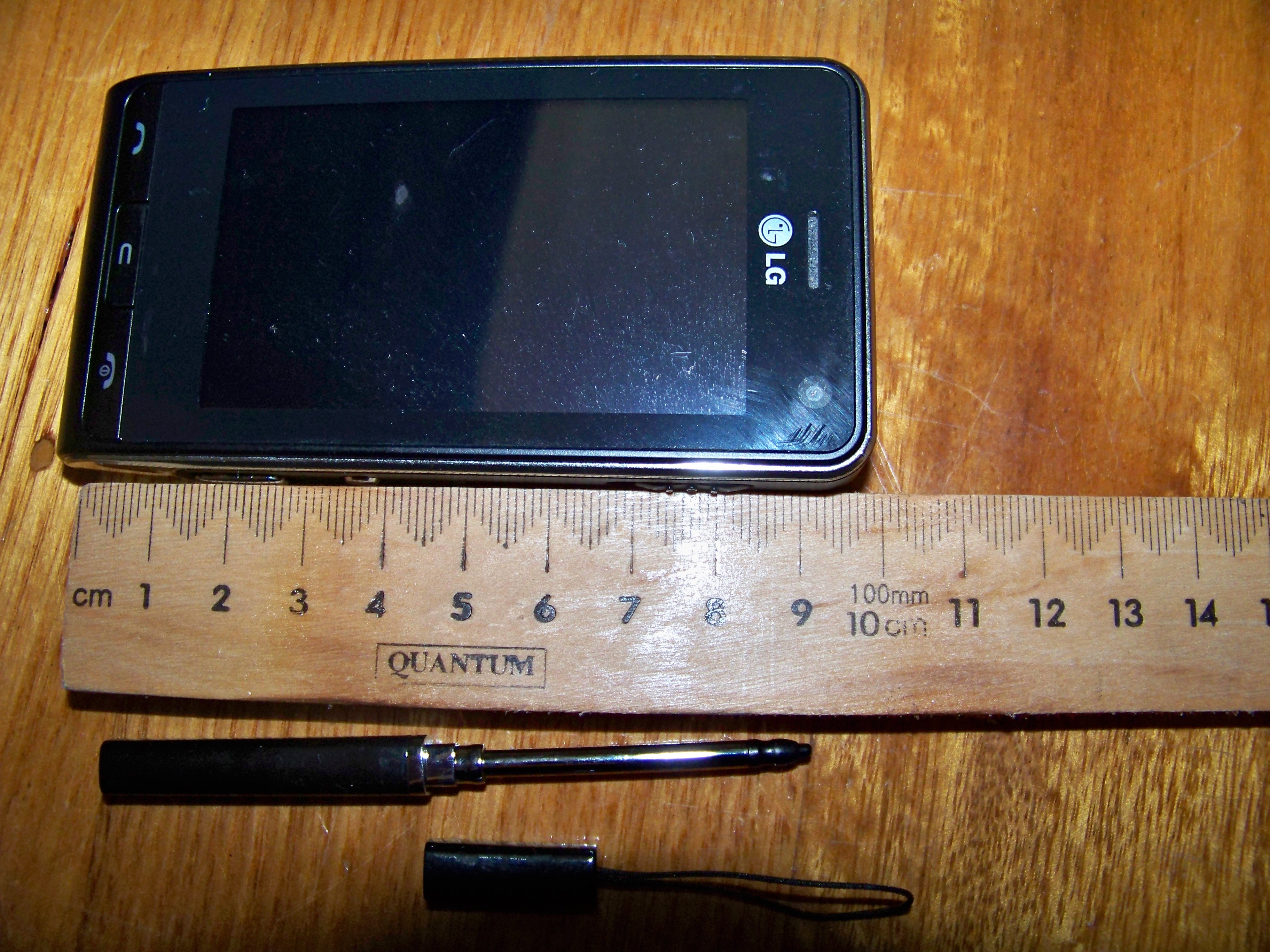
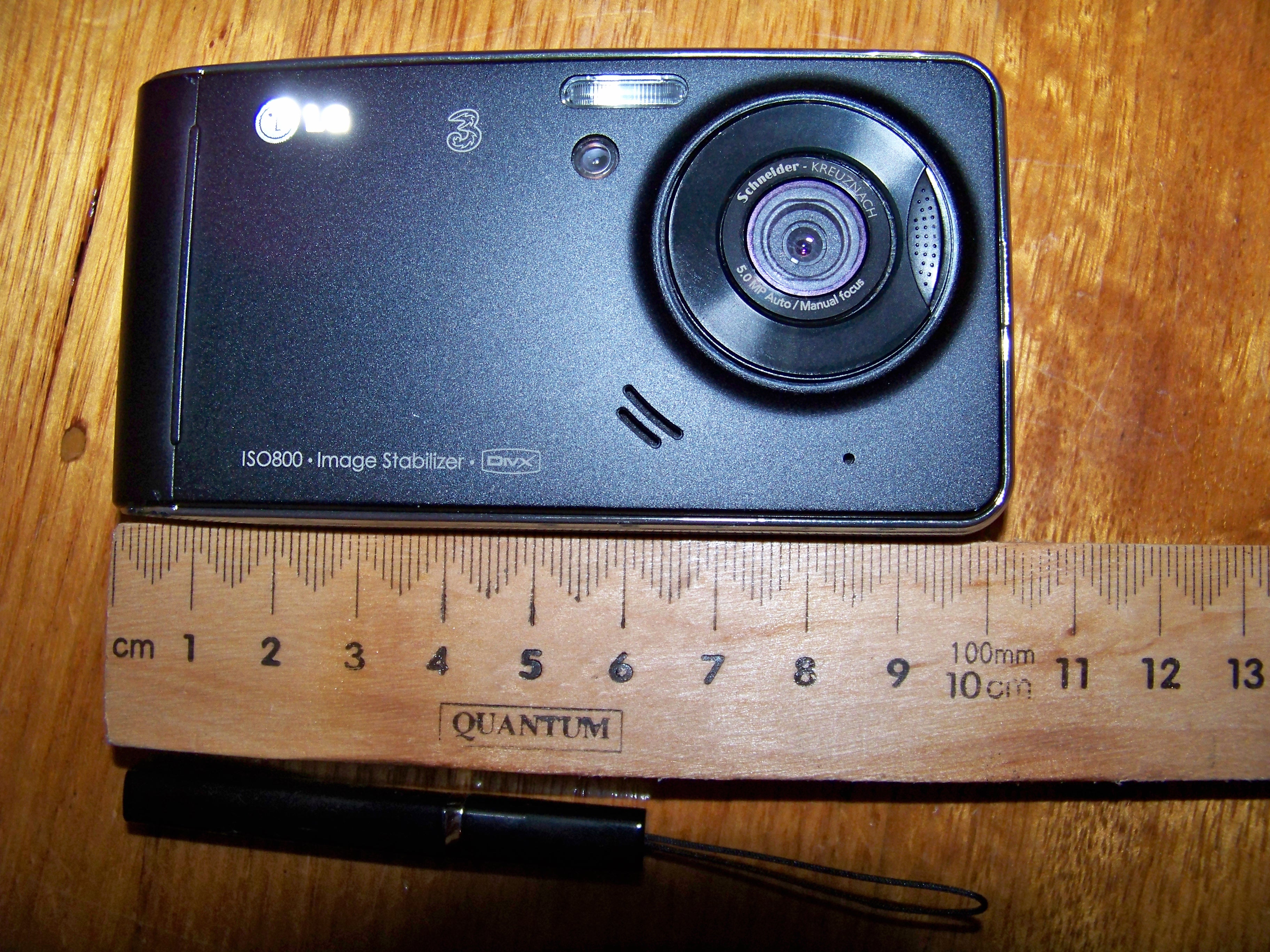
I have just got a LG U990 Viewty mobile phone [1]. It s a 3G phone and came free on the $29 monthly cap plan from Three (minimum monthly spend is $29 - but this is free if you use $29 per month). My previous plan was the $29 cap but had a minimum spend of $20 per month, as I never happened to use less than $29 per month I am not paying more. For a modern mobile phone the actual phone functionality is a sideline. If a device was strictly designed to be a phone then I think it would be very similar to the Nokia phones that were available 5+ years ago - the Nokia I had in 1999 performed every phone function that I desired of it. Like most modern phones the LG U990 Viewty suffers in it s phone functionality from the desire to make it do non-phone tasks and from the desire to cripple it to meet the desires of the carriers (not the desires of the users). For example the home screen will always have at least two buttons for paid Three services and I have no configuration option to remove them. Replacing them with speed dial options for a couple of numbers that I regularly call would be handy. As the main screen is a touch-screen there is no excuse for this, they should allow the software to be reconfigured with more useful options. Eventually the Android will kill most of the other phones and this problem of phones being designed to suit the telephone companies instead of the users will be solved. One of the most annoying mis-features of the phone is that it doesn t properly handle address book entries with multiple phone numbers. One of my friends turns his mobile off when he is at home, so I regularly call his mobile and then immediately call his home number if the mobile is unavailable. With my previous two mobile phones I could press the dial button to bring up the list of previous calls and then use the arrow buttons to select from the other numbers that are attached to the same address-book entry, so with three button presses I would be dialing his other number. With the Viewty I have to go back to the address book. The compelling feature of the Viewty is the camera and display. It has a 5MP camera which makes it the second highest resolution camera-phone offered by Three - the LG Renoir (KC910) has 8MP but needs a $99 plan for it to be free. It also has a 240*320 resolution touch-screen display (in a quick search in January when I bought my phone the best resolution display I could find on a phone is 240*400 in the LG Renoir). While the camera is documented as being 5mp there are no specs available about the resolution of the CCD. I want to use the native resolution of the CCD for pictures (I think interpolation is a waste of space). The CCD might actually be 5mp, a picture of the 1400*1050 resolution screen on my Thinkpad allows me to read all the text even when small fonts are in use, so the CCD resolution must be significantly greater than 1400*1050. This is a really important feature as the Viewty will work well for making screen-shots for bug reports about crashed computers (several of my clients have expressed interest in getting one after seeing such a demonstration). One annoying problem is that the camera software takes a while to load, my trusty Sony digital camera starts a lot faster and the LG U890 phone I used for the past two years is also a lot faster and more convenient. This won t work well for photographing unexpected events. When I am traveling by public transport I will photograph the relevant pages of my street directory as I can zoom in to photos of the maps and read the street names, it saves some weight when traveling. The 2G micro-SD card (which incidentally cost $10 from OfficeWorks) will allow me to store a lot of maps. One interesting feature is the video recording capabilities. It can do 640*480 resolution at 30fps (which is pretty good) and 320*240 resolution at 120fps (they claim that you can film a balloon popping). In my quick tests the standard 640*480*30fps mode works well, but the 120fps mode requires much brighter light than most of my test environments, so I have not yet got it working properly. The phone has a reasonable voice recording function, it can record considerably more than 34 hours of audio and the quality is reasonably good if you use an external microphone. It is however quite poor if you use the built-in microphone for a dictaphone function, it seems that quality is poor at any distance. I had wanted to record my LCA mini-conf talks with my phone but unfortunately forgot to bring the adapter for the external microphone. It s a pity that the phone doesn t have a standard microphone socket as I have misplaced my Viewty microphone, when designing the phone they should assume that misplacing attachments is a common occurrence and design it to use common parts. I recently spoke to a journalist who uses his mobile phone to record interviews. He said that his phone supported phone calls, voice recording, and taking pictures - all the essential tasks for his work. It seems that the Viewty would be better than most phones for journalistic work apart from the issue of low quality voice recording when you have misplaced your external microphone. The text editor is unfriendly in the keyboard mode (I have not tried hand-writing recognition), one thing I don t like is the fact that the letters jump when you press them. This does allow changing a letter by moving the stylus before releasing the press (some people consider this a great feature). There are no cursor control keys (which is a serious omission), and the keyboard doesn t resemble a real keyboard. My iPaQ is far better for writing (I once wrote a full-length magazine article on an iPaQ). The stylus is quite strange and interesting. In the picture of the front of the phone the stylus is compacted with it s lid on. In the picture of the back of the phone the stylus is extended with the lid off. The end of the stylus clips in to the lid so that removing the lid drags the central part out of the body. It s an interesting design and with the string on the lid allows the stylus to be attached to the phone when it s not being used. But I have never used it. Even with an iPaQ (which had a proper stylus that attached firmly inside the body of the device) I often used a fingernail on the touch screen. I have not felt the need to ever use a stylus with my Viewty. One final noteworthy thing is the support for Google services. It seems to have client support for YouTube, Google Maps, GMail, and Blogger. This seems to be a major win for Google, the Viewty is one of the most popular phones at the moment and I expect that lots of people who buy them will now have an incentive to use the Google services. Between these sorts of deals and the Android I think that it will be necessary to have some sort of anti-trust action against Google. Google are generally doing good things for the users. I have been quite satisfied to use Google search, Google advertising on my blog, and Gmail. Also I have been moderately happy with Blogger (it was good when I started blogging) and Google Maps is useful on occasion. So generally I am happy with Google, but monopolies are bad for the users so I think that if things continue on their current trend then Google may have to be split into several little Googlets some time in the next few years.

29 May 2009

Russell Coker: Links May 2009

An interesting opinion post in the NY Times describes the research on early education and how it can affect IQ [1]. Among other things children from poor families who are adopted into upper middle-class families tend to end up with higher IQ scores. The article notes that half the population in 1917 would be regarded as mentally retarded by today s standards - finally we have an explanation for WW1! Two Dominos employees tarnish the brand s image with a prank video on Youtube [2]. The next obvious step is for activists to seek jobs at such companies for the purpose of influencing companies. The animal rights protesters outside KFC stores haven t achieved much, but if they worked for KFC and made some nasty videos they would really encourage a change of action. I predict that chain stores will be spending a lot more on security and background checks for their employees in the near future. Cory Doctorow has written an amusing article titled Big Entertainment Wants to Party Like It s 1996 about how the entertainment industry is killing itself by conducting back-room negotiations about new copyright laws [3]. Nate Silver gave a TED talk about racism in elections [4]. The most interesting point was demonstrating statistically that people who don t meet people of other races tend to be more racist. It seems to me that the use of the X-Face: header in email and the use of HackerGotchi in Planets can help reduce the level of racism on the Internet. Cory Doctorow writes about his Geeky writing [5]. His idea for an organised system for donating books to libraries will hopefully be fully implemented soon - it should be easy to do and the incremental costs will decrease as the scope increases. Cory Doctorow writes about the perverse laws that protect criticism of copyright works but stifle praise [6]. In a similar note he has documented a plan for trademark and copyright holders to allow fans to create derivitive works while preserving the original rights AND sharing the profits [7]. So if Cory s idea became popular someone who wanted to create some art work based on a Coke bottle (which is trademarked) could pay the Coca-Cola company a reasonable rate, include an appropriate disclaimer, and things would work out well for everyone. Also this would allow small artists to develop new products that could be used by the large companies (I m sure that anyone who legally released an artwork that turned out to be an effective advert for Coke would receive a lucrative job offer). Bruce Schneier s blog has an interesting article about the poor quality of software used for breath alcohol detectors [8]. It s a great concern that innocent people are being punished due to bad software, but it s only a small part of the problems with the legal system. Mary Roach gave a TED talk 10 Things You Didn t Know About Orgasm [9]. Not as insightful as the usual TED talk, but strange and interesting.

Jordi Mallach: Barcelona

Last weekend I finally managed to travel to Barcelona to visit my family and some friends. As my agenda was quite packed with stuff to do, I was unable to find out if any of the Ubunteros had arrived early for UDS, and I left just after lunch on Sunday. Unfortunately, I had totally missed that before UDS, Canonical held their allhands meeting, and it would have been easy to meet them on Friday night after I got in the city. What a pitty, and sorry about this, mdz, I would have loved to meet... :( In other Barcelona news, I'm sure that UDS attendees will be astonished (or fed up!) by the football crazyness going on right now. Last night I went to a culer bar near Woody and enjoyed watching how Bar a claimed brilliantly their 3rd Champions Cup. For someone who normally doesn't care that much about football, the last few weeks have been incredible. Today I visited my 96 year old grandfather, and even if he has lost much of his expressiveness and energy since the last few months, today he was visibly happy and proud of what his Bar a has managed to accomplish this season. Three titles, plus literally going over Real Madrid in Santiago Bernabeu. Bar a is definitely m s que un club, and I'm happy that my grandfather was able to enjoy it.

28 May 2009

Sandro Tosi: Update on the Matplotlib book

Some people asked me how's the book writing is going. Ah you're right, it's a loooong time I didn't say anything of the progress, and here it is.

I've just turned the half of the book: about 10 days ago I've sent the 5th chapter (out of 10) and up to now I've covered this (high-level) contents by chapter:

  1. installation & setup
  2. first contact with mpl
  3. some more stuff (like graph types)
  4. OO style and some advanced things
  5. GTK embedding
6th (and current) chapter is about Qt, so even KDE guys will be happy :)

I found several problems when working with GUI design programs: both Glade and Qt Designer made me scream a lot; but probably it's just me that I'm not so used to GUIs :)

Other arguments will be: Wx, web, real use cases.

In particular for the last part (real cases) I'd like to hear some proposals from you. I've already got something in mind, but users opinion will help me direct my work better.

Sorry, I've got to "drop/reduce" the science chapter (it was superseded by the real use-cases one) since I don't think this is the right place for it. Of course, a couple of "science examples" might come into the mentioned chapter, but your proposals have to be at a low-medium level.

27 May 2009

Stephan Peijnik: update-manager weekly update #0

It has been more than a month since I last wrote about my work on update-manager during this year s Google Summer Of Code and I am somewhat ashamed I wasn t able to provide you with updates more regularly. So first of all, yes, I did do some work and yes, there has been quite some progress. Basically both private and university stuff have kept me from writing and that s why I d like to start with this series of weekly updates today.
This series are meant to summarize what has happened during a week of writing code and give you an overview of what s happening. This first issue however will sum up the past month. So let me begin explaining what has happened since my last post. update-manager bazaar repository All code I have written so far is available through a public bazaar branch on launchpad.net. My branch s page can be found here and provides you with its history and of course instructions on how to obtain the code. The location is only temporary though, as I am going to move hosting over to alioth.debian.org. This is on my task list for next week. modular design I have ripped apart nearly all of update-manager and put it together in a more modular way, which should implementing new frontends or backends more easy, whilst also simplifying code maintenance. The new design consists of four major parts: backend implementation When I started working on update-manager it heavily relied on synaptic and used it to do the dirty-work. However, together with my mentor, mvo, I decided to drop synaptic support and rather concentrate on using python-apt. This means that the only backend implementation right now is a python-apt backend. The python-apt backend is currently a work in progress, but already includes some basic functionality. Right now it can (re-)load the package cache and package lists and is able to provide a list of packages which are upgradable to the frontend.
Whilst implementing these functions I noticed some shortcomings of python-apt itself, fixed those and got mvo included in his python-apt branch at launchpad. frontend implementation I started re-implementing the Gtk frontend as provided through current update-manager and right now it visualizes the package cache reloading process and provides users with a list of upgradable packages. However, that s pretty much all of the functionality it includes right now, which is why implementing more functions is pretty much on the top of my todo list. Additionally I have ported the text frontend, as included in Ubuntu, to the new modular system, and this frontend s code really shows how easy adding a frontend with the new modular design is. This frontend contains the same functionality as the Gtk frontend. distribution specific code The core described above does not include any distribution specific code anymore, which is the main focus of this project. The implementations of distribution-specific functionality contains classifiers for update categories for both Debian and Ubuntu, whilst I focused on getting things right with the Debian implementation for now. These classifiers allow the frontend to let the user know which kind of update they are about to install, like a security update, a recommended upgrade or a third-party (unofficial) upgrade. documentation As update-manager was poorly (read: hardly at all) documented I started documenting the API using sphinx. However, right now the generated documentation cannot be found anywhere yet. This should change as soon as an alioth project for update-manager has been created. next week s tasks I would also like to provide you with my task list for the coming week. The list, ordered by priority, is: As you can see this list is rather short. This can mainly be attributed to a few university assignments, and instead of providing a long list of tasks which I probably won t be able to finish I rather keep the list short and hopefully get things not on this list done too.

Biella Coleman: Journal of Legal Anthropology

Something I have been thinking a lot about lately is why social science and humanities journals have been slower to move toward the land of open access in comparison to the hard sciences. There are a few obvious reasons but there are others which are still a mystery to me. I understand why existing journals can t easily pry away from established relations and obligations so I am not all that surprised that these journals, whether in the hard sciences or soft , have not gone open access. But perhaps newly minted journals are in better position to start right off the bat with an OA agreement. This is what the International Journal of Communication recently did and I am sure there are other examples. So today I was disappointed to find out that the following new Anthropology journal theJournal of Legal Anthropology has seemingly gone down a traditionalist copyright route. But I don t just want to point fingers here as I know editors are often in a very difficult position when seeking sponsorship and support for a new journal. That is, achieving OA, I understand is no walk in the park. And yet given their mission and given that it is a legal journal, it also makes sense to have some sort of open format:
International in scope, we hope it will be accessible beyond a specialist legal anthropology area and, in practice, both widen what is understood within the discipline of anthropology as legal and position the legal as also socio-cultural in terms of contemporary anthropology. The journal is produced by anthropologists interested in making anthropology accessible (translatable) in other settings and disciplines, and by legal practitioners with support from academics working in human rights, conflict and related areas
A walled garden is not suited for the flowers of access to grow. But perhaps they tried and failed. If this is the case, it would also be good to learn of these experiences, which can be used in future cases to pave the path toward greater access.

Michael Casadevall: Jaunty Retrospect

Guess its my time to post something about my feelings on Jaunty.

The Good:
* armel successfully birthed
* powerpc well on the way to be well maintained
- Kernel and installer work mostly done by TheMuso (thanks :-))
- Image testing by the people of #ubuntu-ps3, myself, and TheMuso
- powerpc, and powerpc+ps3 both in the release annoucements for Kubuntu and Xubuntu :-)
* Kubuntu upgraded to KDE 4.2
* Xubuntu upgraded to Xfce 4.6
* PowerPC FTBFS rate in main very low. ia64, and sparc looking more improved.

The Bad:
* SPARC, ia64, and HPPA remain fairly foobar w.r.t. to the installer and kernel

The Ugly:
* The drama over notifications and update-manager

All and all though, I think its been a fairly good cycle. Looking forward to karmic.

Michal Čihař: Gammu test version 1.24.91

I finally find time to make another release of Gammu. This time there are major changes in SMS decoding, especially for recent Nokia phones, what should fix several problems seen with previous code. Besides this there is usual bunch of bug fixes. Full list of changes follows: You can download from usual place: http://cihar.com/gammu/, Debian users will find packages in experimental soon, SUSE, Fedora and Mandriva users can check experimental repository in OpenSuse Build Service.

24 May 2009

Bernd Zeimetz: howto set android developer device permissions with udev

As there're several, more or less well working howtos about creating udev rules to allow access to the USB debug devices of Android phones out there in the wild, I decided to write my own one. It works at least for Debian Testing/Squeeze. The udev rules file I provide here works at least for the HTC Dream models (aka T-Mobile G1 and Google Devphone). As a computer may be used by more than one user, I've decided to create a group called androiddev. Members of the group will be allowed to access the debug interface. Running (hint: become root first) addgroup --system androiddev will create the group for you. Add your developers to the group with adduser username androiddev (of course replace username with the user you'd like to add) and we're ready to configure udev. Open /etc/udev/android.rules in an editor and add the following lines:
SUBSYSTEMS=="usb", ATTRS idVendor =="0bb4", ATTRS idProduct =="0c01", MODE="0660", OWNER="root", GROUP="androiddev", SYMLINK+="android%n"
SUBSYSTEMS=="usb", ATTRS idVendor =="0bb4", ATTRS idProduct =="0c02", MODE="0660", OWNER="root", GROUP="androiddev", SYMLINK+="android%n"
Now we need to link the created rules file into /etc/udev/rules.d ln -s ../android.rules /etc/udev/rules.d/90-android.rules and tell udev to reload the rules: /etc/init.d/udev reload That's it. Don't forget to re-login to make sure your new shiny group will show up! Now have fun with adb and fastboot :) Thanks to TauPan from #debian/freenode.net who gave me the idea for this blog post.

22 May 2009

Kartik Mistry: artha


* This package looks promising. Upstream is here. Artha in Action

Andreas Metzler: GnuTLS 2.7.12 available in experimental

Yesterday I have uploaded the second release candidate of GnuTLS 2.8 (i.e. version 2.7.12) to experimental. Apart from the usual shiny new features there are two changes to the infrastructure.

21 May 2009

Kurt Roeckx: Audio ripping: Drive offsets

Thanks to Thomas Vander Stichele I've found out that when ripping an audio CD you get a different file depending on the CD drive you use because they don't all start reading at the same position and that for most drives this is a constant offset. So if you know what offset your drive has, you can compare rips done with a different drive. I was under the impression that this offset was always a multiple of the sector size, because audio CDs do not have a reliable way to detect the position. But it seems this offset can in the middle of a sector too. It looks like they agreed on some standard to compare the drive offsets. You can find a list of drives here and here. Cdparanoia has an option you can use to correct for that offset. But I started wondering where this error comes from. There is no real reason why all CD drives shouldn't be able to return the same thing. There is very little real info about it out there, and I basically get the impression that someone just decided to use something as base value. It isn't really a problem, since this is about very small time. To fully understand this, I think it's important to understand the basic layout of an audio CD. A sector (frame) of a CD contains 2352 bytes (588 samples) main data and 96 byte of sub-channel data. You have 75 such sectors per second, giving you a total of 44100 samples per second. A sector is made up of 98 sub-frames. Each such sub-frame has 24 bytes (6 samples) of main data, 4 bytes of C1 error correction and 4 bytes of C2 error correction, and 1 "byte" of sub-channel data. The first 2 sub-frames are used to mark the beginning of the sector. It contains a special pattern at the location of the sub-channel data. The first sub-frame contains S0 and the second S1. So you are left with 96 byte of sub-channel data. The highest bit of the sub-channel byte is used for the P sub-channel, bit 6 for the Q sub-channel, and so on until the W sub-channel. So the sub-channel has 96 bits (12 byte) per sector and each bit is in a different sub-frame. If you go look at the offsets, you'll notice there are a lot of drives that have an offset that's a multiple of 6 samples, but there are also a lot that aren't a multiple of 6. In the P and Q sub-channels you can see at what place you're reading. The P channel is a "pause" flag. At least 2 seconds before the track starts the P flag is turned on and the second sector of the track it's turned off again. All bits of P sub-channel should be the same for the whole sector, it can only change after an S0/S1. In the Q channel you can have different information depending on what is in the first byte. The most useful one is "mode 1", which contain things like the track number, index in the track, and time indication for both the current track and the whole disc, and a CRC. Mode 1 should be in at least 9 out of 10 sectors. So you known perfectly at which location you are. There is just 1 small problem, the sub-channels do not have any error correction, but does have a CRC. And there are lots of sectors with the information in it. So I wondered if the drives just didn't look at S0/S1 and that the sub channel data was shifted too. So I changed cdparanoia to log the sub-channel data and dumped it. I've tried this with a total of 6 drives, and also look at what the drive offset is. This are the drives I've used and the offsets they have:
Driveoffset
SONY DVD RW DRU-700A VY03 +12
PLEXTOR CD-R PX-W4012A 1.00 +98
PLEXTOR CD-R PX-R412C 1.06 +355
TSSTcorp CD/DVDW TS-L532A TI5a1 +116
HL-DT-ST DVD-ROM GDR-H30N 1.00i +6
ASUS CD-S520/A 1.7L +1858
Some notes: I can perfectly understand that it might be off by 1 or more sector, like the ASUS. I could also understand that it might be off by 1 or more sub-frames, but then I wouldn't expect to get proper values for the sub-channel data. Having an offset not be a multiple of the sub-frame makes no sense to me. So I can only come to the conclusion that this are all firmware issues.

Next.

Previous.