Search Results: "agi"

7 March 2010

Andrew Pollock: [debian] Bits from the ISC DHCP maintainer

It's been a while since I made an upload of anything DHCP-related, so I thought a general update was deserved. The lovely test infrastructure that I built had to be cannibalised to stand in for some other hardware that failed on me, so that prevented me from being able to test as easily. Add to that, the distractions of moving house, and I just haven't had the time to do any work on the DHCP 4.1 packaging. That said, I haven't been completely idle. I've been pressing the ISC DHCP developers to incorporate the LDAP patch, which is extremely popular in some quarters. At the same time, I was able to flush the author of the LDAP patch (he'd seemed to have disappeared) and connected the two parties together. Hopefully we'll see something in 4.2 Today, I updated the 4.1 packages in experimental to 4.1.1, which includes a reintroduced LDAP patch. I think if there's no unfavourable feedback, I'll look at uploading this to unstable in the next month or so, and the great transition to DHCP 4 can commence (assuming the release time is cool with this). If I could just figure out how to do bridged networking with KVM and still use NetworkManager for my WiFi, I could probably set up a similar test environment to what I had before, on my laptop...

5 March 2010

Sandro Tosi: Code syntax highlighting on Blogger

Blogger has no feature to highlight code syntax in blog posts. But google-code-prettify comes to rescue.

The information in their README are quite generic, and treat the situation where you're directly managing the website files, which is not the case for Blogger.

Luka Marinko wrote a very nice blog post describing how to use google-code-prettify on Blogger; I'm going to follow his advices right away!

4 March 2010

Russell Coker: Opera and Trusting Applications vs Trusting Servers

The Opera-Mini Dispute I have just read an interesting article about the Opera browser [1]. The article is very critical of Opera-Mini on the iPhone for many reasons most of which don t interest me greatly. There are lots of technical trade-offs that you can make when designing an application for a constrained environment (EG a phone with low resolution and low bandwidth). What does interest me is the criticism of the Opera Mini browser for proxying all Internet access (including HTTPS) through their own servers, this has been getting some traction around the Internet. Now it is obvious that if you have one server sitting on the net that proxies connections to lots of banks then there will be potential for abuse. What apparently isn t obvious to as many people is the fact that you have to trust the application. Causes of Software Security Problems When people think about computer security they usually think about worms and viruses that exploit existing bugs in software and about Trojan horse software that the user has to be tricked into running. These are both significant problems. But another problem is that of malicious software releases. I think that this is significantly different from Trojan horses because instead of having an application which was written for the sole purpose of tricking people (as is most similar to Greek history) you have an application that was written by many people who genuinely want to make a good product but you have a single person or small group that hijacks it. Rumor has it that rates well in excess of $10,000 are sometimes paid for previously unknown security vulnerabilities in widely used software. It seems likely that a programmer who was in a desperate financial situation could bolster their salary by deliberately putting bugs in software and then selling the exploits, this would not be a trivial task (making such bugs appear to be genuine mistakes would take some skill) but there are lots of people who could do it and plausibly deny any accusation other than carelessness. There have been many examples of gambling addicts who have done more foolish things to fund their habit. I don t think it s plausible to believe that every security flaw which has been discovered in widely used software was there purely as the result of a mistake. Given the huge number of programmers who have the skill needed to deliberately introduce a security flaw into the source of a program and conceal it from their colleagues I think it s quite likely that someone has done so and attempted to profit from it. Note that even if it could be proven that it was impossible to profit from creating a security flaw in a program that would not be sufficient to prove that it never happened. There is plenty of evidence of people committing crimes in the mistaken belief that it would be profitable for them. Should We Trust a Proprietary Application or an Internet Server? I agree with the people who don t like the Opera proxy idea, I would rather run a web browser on my phone that directly accesses the Internet. But I don t think that the web browser that is built in to my current smart-phone is particularly secure. It seems usual for a PC to need a security update for the base OS or the web browser at least once a year while mobile phones have a standard service life of two years without any updates. I suspect that there is a lot of flawed code running on smart phones that never get updated. It seems to me that the risks with Opera are the single point of failure of the proxy server in addition to the issues of code quality while the risks with the browser that is on my smart-phone is just the quality of the code. I suspect that Opera may do a better job of updating their software to fix security issues so this may mitigate the risk from using their proxy. At the moment China is producing a significant portion of the world s smart-phones. Some brands like LG are designed and manufactured in China, others are manufactured in China for marketing/engineering companies based in Europe and the US. A casual browse of information regarding Falun Gong makes the character of the Chinese leadership quite clear [2], I think that everything that comes out of China should be considered to be less trustworthy than equivalent products from Europe and the US. So I think that anyone who owns a Chinese mobile phone and rails against the Opera Mini hasn t considered the issue enough. I don t think it s possible to prove that an Opera Mini with it s proxy is more or less of a risk than a Chinese smart-phone. I m quite happy with my LG Viewty [3] but I wouldn t use it for Internet banking or checking my main email account. Also we have to keep in mind that mobile phones are really owned by telephone companies. You might pay for your phone or even get it unlocked so you can run it on a different network, but you won t get the custom menus of your telco removed. Most phones are designed to meet the needs of telcos not users and I doubt that secure Internet banking is a priority for a telco. Update: You can buy unlocked mobile phones. But AFAIK the Android is the only phone which might be described as not being designed for the needs of the telcos over the needs of the users. So while you can get a phone without custom menus for a telco, you probably can t get a phone that was specifically designed for what you want to do. The Scope of the Problem Mobile phones are not the extent of the problem, I think that anyone who buys a PC from a Chinese manufacturer and doesn t immediately wipe the hard drive and do a fresh OS install is taking an unreasonable risk. The same thing goes for anyone who buys a PC from a store where it s handled by low wage employees, I can imagine someone on a minimum income accepting a cash payment to run some special software on every PC before it goes out the door that wouldn t be any more difficult or risky than the employees who copy customer credit card numbers (a reasonably common crime). It s also quite conceivable that any major commercial software company could have a rogue employee who is deliberately introducing bugs into it s software. That includes Apple. If the iPhone OS was compromised before it shipped then the issue of browser security wouldn t matter much. I agree that having the minimum possible number of potential security weak points is a good idea. They should allow Opera Mini users to select that HTTPS traffic should not be proxied. But I don t think that merely not using a proxy would create a safe platform for Internet banking. In terms of mobile phones most things are done in the wrong way to try and get more money out of the users. Choose whichever phone or browser you want and it will probably still be a huge security risk. Harald Welte is doing some really good work on developing free software for running a GSM network [4]. But until that project gets to the stage of being widely usable I think that we just have to accept a certain level of security risk when using mobile phones.

3 March 2010

Stefano Zacchiroli: RC bugs of the week - issue 23

RCBW - #23 Wacky week, last week. Not only I've (almost) completed my moving to the new house, but we have also had guests in the lab for some full-immersion-paper-writing. That had left very little time for RC squashing, but I've catched up a bit in the week-end. Without any further ado, here are this week's squashes: Random points: In totally unrelated news: I've bought my ticket for DebConf10 (YAY!), according to my usual debconf customs: 4 days of debcamp + all the conf. See you there (in a while). ... and congrats to Adnan for the winning DebConf11 bid!

Wouter Verhelst: dpkg vs RPM

Thomas blogs about some issues he had with his N900's facebook plugin. This post isn't about that, as I don't use facebook. But as part of his blog post, he mentions the following:
This reminded me of a pet peeve I have with those people who claim Debian s packaging system to be far superior to rpm apparently dpkg doesn t have any equivalent of rpm -qv which allows you to verify that the files that should be installed by a package are indeed on disk
True, probably because the script would be so trivial:
for i in $(cat /var/lib/dpkg/info/nbd-client.list)
do
	[ -f "$i" -o -d "$i" ]   echo "$i missing"
done
There, that wasn't hard, was it? Now I'm not sure whether rpm's -qv option actually checks the checksum of the files, too. If it does that, then the semantically similar way would be:
(cd / && md5sum -c var/lib/dpkg/info/nbd-client.md5sums)
... except that MD5 is totally and utterly useless these days, and that we should be changing to something else. And that md5sums is an optional feature, provided by some, but not all, packages. And it may also be that maemo packages don't have md5sums (which would make sense). But, anyway.

2 March 2010

C.J. Adams-Collier: Locale configuration post-Intrepid

I was reminded this morning after a bit of chatter on #debian-cli that my previous write-up on setting one s locale on Ubuntu is out-of-date. Instead of running dpkg-reconfigure locales and selecting your locale, the new incantation is as follows: Magic
$ sudo locale-gen en_US.UTF-8
Environment Variables You ll also want to set some environment variables. Put something like the following in your ~/.bashrc:
LANG=en_US.UTF-8
LANGUAGE=en_US.UTF-8
LC_CTYPE=en_US.UTF-8
LC_MESSAGES=en_US.UTF-8
LC_ALL=en_US.UTF-8
export LANG LANGUAGE LC_CTYPE LC_MESSAGES LC_ALL
You would of course replace en_US.UTF-8 with whichever locale you want to generate.

28 February 2010

Jordi Mallach: Tinyproxy 1.8

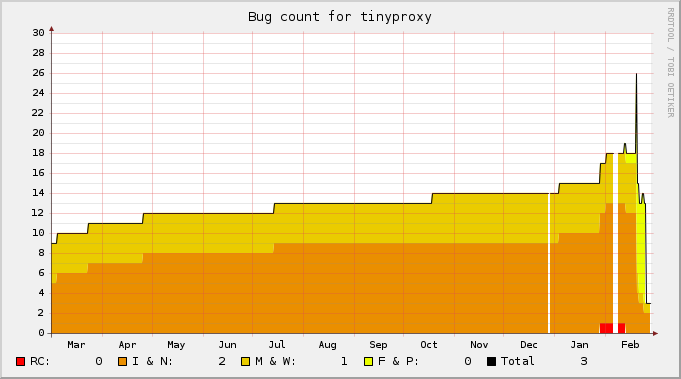
A while ago, I was asked to recompile Tinyproxy to enable transparent proxying support, which was not being compiled in etch's Debian package. As it tends to happen, once I got the source and looked into doing a quick rebuild with --enable-transparent-proxy, I noticed the package was in such a bad shape, that I couldn't just leave it like that, so I found myself doing a few more changes, which mostly involved updating the packaging so it didn't suck a lot, and splitting the Debian patches so things could be sent upstream or dropped when new versions appeared. However, even if Ed had asked me to go ahead and take over the package, this was meant to be a one-day effort, and soon I had forgotten about Tinyproxy, except for the ocassional bug mail getting through the PTS. It also didn't help that Tinyproxy had been pretty much dead upstream for years. So lately, a few bug reports were reporting a gasp new major Tinyproxy release, after 7 years of basically nothing. OMG, what do I see, there's a Git repo! And an upstream Bugzilla! Somehow, feeling I owed Ed a reply to his unanswered request, I went ahead and tagged tinyproxy 1.6.3-3.2 in collab-maint, and started working on the new version. Adding myself to Uploaders, and getting rid of the make no unnecessary changes vetto, I rewrote most of the packaging. And for a change, I looked for and found a #tinyproxy channel on IRC and told muks and obnox that the days of Tinyproxy's stay in the Debian/Ubuntu limbo were over.

They were happy to get a few bugs and patches forwareded upstream, and asked me why all of this hadn't happened before. Pitty is that a few longstanding issues were well known in Debian but not so obvious for the new upstream maintainers, and are present in 1.8.0. Hopefully all will be dealt with in 1.8.1 or the next major version. The lesson is: if you work on an apparently abandoned package, after cleaning the mess in your NMU, try to spend 15 more minutes trying to contact upstream (if available), pointing them at the patch tracker and our list of bugs: chances are many are still useful. Also, contact the Debian maintainer, and if they ask you to take over, at least post a RFA so someone else can. If you're a Tinyproxy user, I'd be happy to hear if the current package in Debian unstable works for you. If you were having weird issues with 1.6.x, chances are 1.8 will fix them. The package can be installed on stable with no extra dependencies, so if you're feeling adventurous, go ahead and upgrade.

Siegfried Gevatter: Zeitgeist Data-Source Registry

This post is about an upcoming feature in Zeitgeist 0.3.3 and is so far only available in checkouts from trunk or our PPA. It is expected to be released within the next weeks. Some weeks ago I implemented a new feature in Zeitgeist and I figured I d drop some lines about it. I m talking about a data-source registry. You may be wondering, what the hell is that even, a data-source? . So Zeitgeist is a database, a global event log, but it doesn t do any magic indexing or monitoring by itself; the information it logs needs to come from somewhere be it applications sending it to Zeitgeist themselves, daemons, plugins for applications, etc. Any such entity is called a data-source . Having a register of all data-sources interacting with Zeitgeist provides some benefits, like for example:
Screenshot of tools/gtk/zeitgeist-data-sources-gtk.py

Prototype of a data-source management user-interface

More details When they register, data-sources will need to provide the following information: an unique ID, a name (may be localized), a description (may be localized) and optionally a template specifying what sort of events it logs. Additionally, the last timestamp the data-source was seen by Zeitgeist, whether it is running right now and whether it is enabled will also be available. It is important to note that registration is not compulsory; while it is highly encouraged for data-sources to use it, is it still possible to anonymously insert information into Zeitgeist (for example from a shell script). The event template is also only informational, and will not be enforced by Zeitgeist at this time. Avoiding duplicates from GTK Recently Used You may know that zeitgeist-datahub provides basic support for applications which have no direct Zeitgeist support but do use GTK s RecentManager, which is not as detailed as we would like, but it is better than nothing. However, until now we had a problem: when applications had support for both, GTK s Recently Used and Zeitgeist (be it native or as an extension), it was possible for duplicate events to be inserted or other sorts of conflicts between both data-sources. Now that we have the information from the registry available, we ve been able to solve this modifying our Recently Used data-source to ignore any events concerning applications which already have another data-source logging the same types of events.

In case you don t care at all about what I m talking here and you just want to see fancy interfaces, go check this out. Related posts:
  1. Zeitgeist is out!
  2. Introduction to Zeitgeist 0.2 s API
  3. Zeitgeist Hackfest (II)

No comments
Siegfried-Angel Gevatter Pujals, 2010. Permalink License Post tags: , ,

25 February 2010

Bdale Garbee: TeleDongle v0.2 Boards Are Here

This afternoon, a box arrived from Advanced Circuits, containing 108 fully assembled TeleDongle boards! This is not only the first "intended for sale" build of hardware from the Altus Metrum family of projects, it's also the first time that I've ever sent out one of my board designs for someone else to assemble. I therefore approached the turn-on and test of the first board out of the box with more than a little trepidation... fortunately, for no reason! I'm immensely pleased to report that TeleDongle serial number 100 turned on and works entirely as expected! I celebrated by packaging it in a cool little Hammond translucent blue plastic box with a USB cable, yielding the first prototype of a fully packaged TeleDongle board such as we anticipate selling for use receiving data from rockets carrying TeleMetrum boards. We also intend to sell these boards as-is (flashed with default firmware and measured oscillator cal value) to folks who'd like a robust wireless link for their next microcontroller project, whether rocket-related or not. I will, of course, post something here when we're ready to start taking orders. Now we just need the weather to cooperate long enough to log more test flights of TeleMetrum. The new version looks great so far, but I want a few more flights before I'll be confident enough to place an order with our assembler for a run of those too... Stay tuned!

21 February 2010

Colin Watson: Catching up

I did a bit of catching up on my Debian backlog over the last week or so. Among the things I got round to: So nothing really earth-shaking, and as ever openssh could use some attention, but I feel a bit better about my backlog now. I do still have a critical bug in makepasswd to fix, and a sponsored upload of parrot; those are the next two things on my to-do list.

20 February 2010

Martin F. Krafft: Charge advertisers for the last mile

ISPs fight a raging war over net neutrality because their infrastructure cannot keep up with the increasing demand (or rather supply) of content. Therefore, ISPs want to charge the users premiums if they wish to use certain services on the Net. For instance, since videos are usually large in size, one would have to purchase e.g. the platinum package to be able to access video hosting sites. It would be a serious loss of freedom if they won, and the Internet would never be the same. Let s turn that idea around: since sites that use advertising make money off every visitor, they are really the ones that should pay the ISPs so that they can improve their infrastructure. The same applies to sites that make money off visitors in other ways. At the moment, users pay to access the network (which is like paying a taxi to get to the market), so that they can visit sites where advertisers make money showing ads to the visitor, which might actually let them to pay a manufacturer for a product the end user pays twice, and the advertisers take in money, leeching off the ISPs investing into their infrastructure. I think that the advertiser and not the consumer should pay the ISP to keep the infrastructure afloat improve it even. The manufacturer should then pay the advertisers for displaying the ad, and the user consumes if s/he chooses to and everyone only pays once, for services they want. This will help improve competition among providers, which should always be the goal. If my ISP would start to record the volume of HTTP traffic I produce for each target site, charge the targets appropriately (they could start with a couple at first), and I d get free connectivity in turn, I d be quite happy. The ISP wouldn t have to look at the contents at all for that. I don t yet know what to do if the target sites choose not to pay up. ISPs could block them, or throttle or deprioritise traffic, but either of those might simply lead to an exodus of users, just like premiums would. As usual, this just needs to be done by many ISPs in concert. Are you listening?

18 February 2010

Martin-Éric Racine: Ubuntu/Lucid: recovering from yesterday's messy update

Yesterday a silly oversight in the packaging of udev in Ubuntu/Lucid produced a breakage that consistently makes dpkg barf. Here's a simple command line recipe to recover from it. In your terminal application, type: sudo sed -i 's#copy_exec /lib/udev/firmware.sh#copy_exec /lib/udev/firmware#' /usr/share/initramfs-tools/hooks/udev && sudo dpkg -a --configure && sudo aptitude update && sudo aptitude safe-upgrade ...then press enter. You should be able to resume normal operation right after. PS: as suggested by others, I revised the above snippet to use sed locally, since not everyone has patch installed.

17 February 2010

Masayuki Hatta: Freenet for Debian

The recent development of the situation in China or Iran reminds me of the importance AND fragility of the freedom of speech on the Net. As the influence by the Net on the general public grows, attempts by governments to control and tame the Net will be aggravated, in a more sophisticated, crowd-pleasing way (for example, by claiming a need for Internet Driver's Licenses). How can we deal with this? Freenet can be a key to solve this problem. After almost 10 years of continuous development, it seems that it finally became an usable product(I don't say it's perfect -- there are still a lot of things to be done, especially around its UI). Freenet has its own dark side and I don't expect that it will become the standard way of the communication over the Net, but we always need the last resort to enjoy our everyday life. Unfortunately, most of Freenet-related information on the Net, especially about the installation method on GNU/Linux, are severely outdated. Freenet is a Free Software(GPL'd), and Debian did have a .deb package for Freenet long long ago, but it's basically gone and defunct. Since the pace of current development is quite fast and sometimes the backward compatibility is broken, it's not really a good idea to ITP and upload Freenet to the main Debian archive for now. Thus, I cooked up up-to-date .deb packages of the modern Freenet and publish them by myself on people.debian.org. I tried to follow the Debian packaging convention as much as possible, so at least they can be installed & uninstalled cleanly ;-) Also, Build-Deps are carefully set, so you may rebuild it without much hassle if you need. Add the following to your /etc/apt/sources.list:
deb http://people.debian.org/~mhatta/debian/freenet ./
deb-src http://people.debian.org/~mhatta/debian/freenet ./
Then run "apt-get update" and install "fred" package. This is basically all you need(you might also want jSite or FMS). Then take a look at /usr/share/doc/fred/README.Debian. You might need to copy seednodes.fref into /var/lib/fred if you want to use Freenet's Opennet mode for the first time. After that, access http://localhost:8888 and follow the instructions. Recommended readings on the modern Freenet: Enjoy.

Tag this post with del.icio.us!

Michal Čihař: phpMyAdmin slowly goes to Git

As can be already visible from our SourceForge.net devel page or from repository listing, there are already some Git repositories for phpMyAdmin. They are not yet being used for development, they are there just for developers to get used to new workflow. The only exception are scripts and localized_docs repositories, which were made master as of today and will not receive updates from SVN anymore. Anyway the repository should have same content as SVN (as of yesterday) so if you find any problems with that please let me know so that I can fix migration magic.

16 February 2010

Randall Donald: RFH: nvidia-graphics-drivers -- Developer needed to take on major role in packaging team

Thought I might post this here as well.

Package: wnpp
Severity: normal

Greetings,

I am placing this Request for Help as I can no longer do the majority of
the work on the NVIDIA packages. Although some people have offered time
and work over recent years, there really needs to be another Developer
or Maintainer that can take on a lot of work. Also I feel an injection
of fresh spirit would be helpful in some of the areas requiring an
overhaul. I am not stepping away, however. I just wish to reduce my role
in a way that is more comfortable and beneficial to the team and
project.

Randall Donald

Ana Beatriz Guerrero Lopez: Not the Debian-KDE post you were waiting for

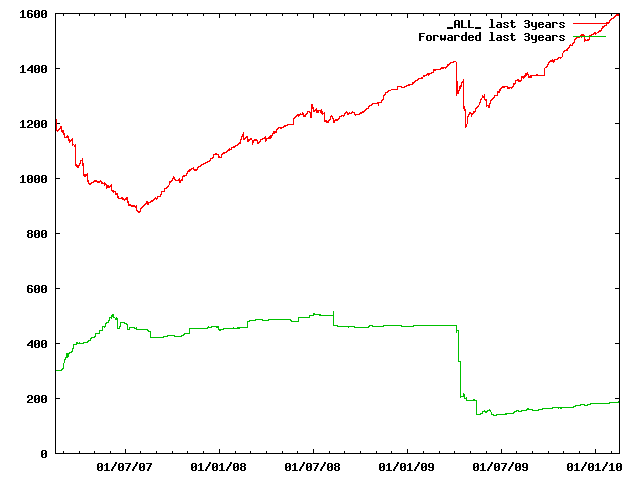
Sorry! I cannot tell you when KDE 4.4 will be uploaded to unstable. I am not working on that. My initial plan was writing about other tasks I am planning to work on and asking for your help. But I realized people would be more interested in knowing about KDE 4.4 packages. Once you know about this, I might trick you into helping in others areas ;) Debian packages for KDE 4.4 are being worked on, just slowly and of course, keeping on with the quality you are used to. There will be also some changes that have been in some people s TODO for long time. The goal is having them in very good shape for Squeeze, that will ship with some point release of 4.4. The doubt is which point release will be: 4.4.2? 4.4.3 ? The schedule for the point releases has not been made yet, so it makes a bit harder trying to predict it. In the same lines, I can not tell you when Squeeze will be released neither, it needs to be frozen first! If you want to know about the reasons of this delay, it is simple math: KDE has been growing a lot of more than the number of people working in Debian packages of KDE. I am not talking about size in lines of code in KDE, it is more the number of new dependencies that the KDE team have to take care now too: soprano, libutempter, Have you wondered why some are under the name of Debian Krap maintainers? :) And there are releases much more often than in the KDE 3 times. You might have notice not only 4.3.5 have been skipped, it also was the case with 4.2.3 or 4.1.4. This is not good or bad, it is just the same number of maintainers (or less) with more work. And what is worse with more bugs open in the Debian BTS! I think reiterated calls for not to file upstream bugs in the Debian BTS and directly in KDE bugzilla (see my blog post about this here) have helped but still we have a large amount of bugs piled through the years. This graph could give you an estimate how we tried in the past fighting against without too much success:
Number of bugs reported against KDE in Debian in the last 3 years Olivier Vitrat, we miss you :) One of the most heavy (and boring) talks that needs to be done for the KDE 4.4 packages is the copyright checking. I am not sure a total newbie can help with this, but if you have knowledge about licenses and you want to try helping, we are waiting for you. About other areas of the packaging maintenance, if you are interested in start learning and helping with future releases, you are welcome to start lurking in the #debian-qt-kde channel in OFTC and in the mailing lists. Update February 21th: 4.4.0 is for sure not being uploaded into the archive. Probably KDE SC 4.4.1 to be released 2nd March will be uploaded to unstable or experimental.

Christian Perrier: Bug #570000

(you were awaiting this one, weren't you?) Ron Murray reported the Debian bug #570000 on Monday February 15th, against the gnome-keyring-daemon package. Bug #560000 was reported as of December 8th 2009. We're behind our "10,000 bugs in 2 months" pace by one week, so that's a small drop in the bug reporting rate, this time. I hope that people remember the Bug #600000 contest. Bets are closed now (the wiki page is still opened for modifications but I'll revert them if they are late bets). Being 30,000 bugs away from #600000, it's time to image when that bug could happen. The current "2 months+1 week/10,000 bugs" says it would happen around September 10th. With the "2 months/10,000 bugs" that would be August 15th, just after DebConf 10. The closest bet as of now seem to be either Miod Vallat or Kanru Chen. I probably lost already (I did bet June 30th) unless I imagine a very massive bug filing. Too bad Matt Arnold, Thomas Preudhomme, Nicolau Werneck and Odd Henriksen, you already lost!

15 February 2010

Gustavo Noronha Silva: WebKitGTK+, and the Page Cache

So, one of the things I get to do during work hours for Collabora is to contribute code, and do maintenance tasks for WebKitGTK+, and have been doing so since early last year, working on all kinds of things, from improving the network backend to handle the real-world web, to fixing scrolling problems, while reviewing patches from the many awesome developers who have been joining us (more on that later =D). One of the big features I have worked on this past month or so, along with Xan Lopez is the Page Cache. The page cache is a feature of web browsers that makes going back, and forward between pages in the same view very fast. It s better explained in this post, but to summarize, the idea is that instead of destroying all the work you have done since downloading the resources, and having to reparse/rebuild the structures the view uses to display the page from the cached resources, you hit pause on the page, and store the whole thing as is, and when coming back to it, you just hit play. You can see in the video two instances of Epiphany, one with the page cache enabled, one with it disabled. Easy to see which was has it enabled. Thanks to KiBi for the suggestion regarding a page that shows this easily =D. <video controls="controls" height="302" src="http://kov.eti.br/media/webkit/page-cache.ogv" width="450"></video> We initially thought we had this feature enabled, since our initialization functions (that exists since before the current maintainers were involved) did setup the number of desired pages in the cache, but during the hackfest we held in December we found out we were fooled all this time. Enabling the page cache does make going back faster, but also made lots of things become unstable and crash. Since then, we have been working on figuring out all the problems, and fixing them, using help from adventurous users of in-development software ;D. I believe we re now at a point in which I can happily declare the GTK+ port has a working page cache in trunk! If you re interested in the nasty details, bear with me! Let me go back in time a bit, and show you what problems we had. First, some background: the GTK+ port deviates a lot from the other ports when it comes to scrolling. This is because, when designing this part of the port, Holger Freyther had a very nice idea in mind: that the WebView should be a first-class citizen GTK+ scrollable widget. Meaning it would use GTK+ s adjustments for scrolling, and be able to interact with any parent scrolling widget, be it a GtkScrolledWindow, or a MokoFingerScroll. We cannot just throw away all the rest of the scrolling code in WebCore, though, that deals with all the details related to interacting with the DOM, and JavaScript code. This means our WebView contains adjustments that need to be set, and unset on our port s version of WebKit s own representation of the view, called the FrameView, to interact with it, and to get updates on the bounds of content, and such. For every load, in the non-page-cache case, a new FrameView is created, the previous one is destroyed - this means we need to set the adjustments on every load. The problem starts when you have the page cache enabled, because the code path used to do what is called commit the load of a cached page (that is, start replacing the content that is currently being displayed by the one that should now be displayed) is completely different, and we were not setting the adjustments on this new view, so we started with that. But all was not well. We were still having weird behaviour with scrollbars disappearing, and becoming the wrong size, and worse, crashes when back was hit. We then started investigating in more detail how it is that the page cache does its magic, to try and figure out the source of all evil. It turns out that when you leave a page that can be cached, the existing FrameView is no longer destroyed - it is stored as is in a CachedFrame to be restored if you go back, and a new one is created for the new page. This was having the undesired effect of having the adjustment be set in more than one FrameView at once, causing all kinds of (predictable, after we knew for real what was going on) unwanted effects. Thus, we reworked the code to make sure the adjustments are only ever set in one FrameView at once, making sure they are unset when the FrameView is being frozen, and reset when it s being restored from the page cache. Last, but not least, it was discovered that going back to a page that contained resources with data: URIs (such as Google results pages which contain a small number of image hits) also caused a crash. This was because our network backend was not storing the data: URI in the ResourceResponse objects it fed into WebCore. The page cache relies on those responses to recreate the requests it uses to artificially replay the load when restoring the page from the page cache, so we fixed that as well. What can be taken from all this? Building browsers is a lot of hard work! I can t think how we could deal with this level of complexity without the awesome testing suite of WebKit. The good news is all of those issues I talked about in this post are now covered by the automate tests that run as part of the normal buildbot cycle in our bots, so we re covered for the future, at least for these specific problems =D.

Russell Coker: Links February 2010

Popular Mechanics has a good article about 911 [1]. Experts in all the relevant fields were consulted to debunk popular myths. It s an old article but I hadn t read it before and learned a lot. Former CIA analyst Raw McGovern and former FBI attorney/special agent Coleen Rowley, a colleague in Veteran Intelligence Professionals for Sanity wrote an interesting article titled Why Counter-Terrorism Is in Shambles [2]. Such sanity from people who are associated with the intelligence industry is unusual. Gizmodo has an amusing and informative poster about the true risks of airline travel post 911 [3]. Reuters has an interesting article about drug smugglers using Gulfstream and 727 aircraft to smuggle cocaine from South America to Africa [4]. They claim a link to al Quaeda, but such a link seems tenuous from the evidence provided, it does seem reasonable to claim that groups who claim affiliation to al Quaeda are involved in smuggling anyone can claim anything really. An 8yo boy is on the TSA terrorism watch list , he regularly gets frisked when traveling by air [5]. His mother had a security clearance to fly on Air Force 2 when Al Gore was the Vice President, any sane security system would look at the parents rather than an 8yo child children of that age aren t going to independently become terrorists. The Dallas Observer has an interesting article by Kimberly Thorpe about how to beat debt collectors [6]. Apparently most debt collectors break the law in some way and can be sued for damages with a typical settlement of $3,500. Some debtors are suing multiple debt collectors, after one debt collector is successfully sued the debt is passed to another collector who also breaks the law. What I really like about this is that the community of people who sue debt collectors keep the industry honest and protect the majority of the population who don t have the time or interest for engaging in law suits. Read Write Web has an informative article about SourceForge being forced to deny access to people in Cuba, Iran, North Korea, Sudan and Syria [7]. A problem for free software developers is that we often don t know the location of the people we collaborate with so it s best to be as open as possible. This means that the US is not a good place to host servers, probably some part of the EU would be better. Also this sort of thing makes the field of free software development less welcoming to US citizens. Did the congress people learn nothing in high-school? They should know that someone who starts a campaign of ostracism may end up being in the small group. Google is developing a new Native Client (NaCl) system that seems to be like Microsoft ActiveX [8]. I can t imagine this doing anything that couldn t be done with Java, it seems most likely to just marginalise the less popular platforms which isn t in the best interests of Google. Kevin Kelly of the Technium wrote an interesting post about 1000 true fans [9]. The concept is that if you are doing creative work you only need 1000 dedicated fans who buy everything you sell to make a living. If you make $20 per year from each of the 1000 fans and you will earn enough to live. Make $100 per year from each of the 1000 fans and you will be earning more money than most people. The updates show that artists who try this aren t having much success yet, but the Internet population is still increasing dramatically PaxStreamline offers an innovation in commercial air-conditioning, apparently a significant amount of electricity is wasted on heating the air after chilling it excessively to remove moisture [10]. So instead of cooling it they use a liquid dessicant to extract the moisture. Ben Schwartz explains why you should never create files in H.264 or MPEG formats, unless you have a special commercial license then you (and your viewers) will all be liable for patent infringement for any type of commercial use [11]. Note that storing the data on a web site with Google adverts counts as commercial use. I wonder if all those digital cameras and mobile phones that create MPEG videos have appropriate licenses, maybe uploading a file created on your phone breaches the patent. J. K. Rowling (author of Harry Potter) gave an inspiring speech for Harvard graduates [12]. I particularly liked the following reference to her work for Amnesty International Choosing to live in narrow spaces leads to a form of mental agoraphobia, and that brings its own terrors. I think the willfully unimaginative see more monsters. They are often more afraid . Peter Eigen gave an interesting TED talk about the formation of Transparency International and the economic problems that are caused by corruption [13]. The Monthly Review has an interesting article about the failure of the US justice system [14]. The prison industrial complex has captured part of the US government, neo-liberalism is to blame. 59% of Americans agree that homosexuals ought to be able to serve in the U.S. military. But 70 percent believe that gays and lesbians ought to be able to serve in the military [15]. Apparently 11% of Americans think that gays and lesbians are better than homosexuals .

John Goerzen: Review: Linux IM Software

I ve been looking at instant messaging and chat software lately. Briefly stated, I connect to Jabber and IRC networks from at least three different computers. I don t like having to sign in and out on different machines. One of the nice features about Jabber (XMPP) is that I can have clients signing in from all over the place and it will automatically route messages to the active one. If the clients are smart enough, that is. Gajim I have been using Gajim as my primary chat client for some time now. It has a good feature set, but has had a history of being a bit buggy for me. It used to have issues when starting up: sometimes it would try to fire up two copies of itself. It still has a bug when being fired up from a terminal: if you run gajim & exit, it will simply die. You have to wait a few seconds to close the terminal you launched it from. It has also had issues with failing to reconnect properly after a dropped network connection and generating spurious resource already in use errors. Upgrades sometimes fix bugs, and sometimes introduce them. The latest one I ve been dealing with is its auto-idle support. Sometimes it will fail to recognize that I am back at the machine. Even weirder, sometimes it will set one of my accounts to available status, but not the other. So much for my complaints about Gajim; it also has some good sides. It has excellent multi-account support. You can have it present your multiple accounts as separate sections in the roster, or you can have them merged. Then, say, all your contacts in a group called Friends will be listed together, regardless of which account you use to contact them. The Jabber protocol (XMPP) permits you to connect from multiple clients. Each client specifies a numeric priority for its connection. When someone sends you a message, it will be sent to the connection with the highest priority. The obvious feature, then, is to lower your priority when you are away (or auto-away due to being idle), so that you always get IMs at the device you are actively using. Gajim supports this via letting you specify timeouts that get you into different away states, and using the advanced configuration editor, you can also set the priority that each state goes to. So, if Gajim actually recognized your idleness correctly, this would be great. I do also have AIM and MSN accounts which I use rarely. I run Jabber gateways to each of these on my server, so there is no need for me to use a multiprotocol client. That also is nice because then I can use a simple Jabber client on my phone, laptop, whatever and see all my contacts. Gajim does not support voice or video calls. Due to an apparent bug in Facebook, the latest Gajim release won t connect to Facebook servers, but there is a patch that claims to fix it. Psi Psi is another single-protocol Jabber client, and like Gajim, it runs on Linux, Windows, and MacOS. Psi has a nicer GUI than Gajim, and is more stable. It is not quite as featureful, and one huge omission is that it doesn t support dropping priority on auto-away (though it, weirdly, does support a dropped priority when you manually set yourself away). Psi doesn t support account merging, so it always shows my contacts from one account separately from those from another. I like having the option in Gajim. There is a fork of Psi known variously as psi-dev or psi-plus or Psi+. It adds that missing priority feature and some others. Unfortunately, I ve had it crash on me several times. Not only that, but the documentation, wiki, bug tracker, everything is available only in Russian. That is not very helpful to me, unfortunately. Psi+ still doesn t support account merging. Both branches of Psi support media calling. Kopete Kopete is a KDE multiprotocol instant messenger client. I gave it only about 10 minutes of time because it is far from meeting my needs. It doesn t support adjustable priorities that I can tell. It also doesn t support XMPP service discovery, which is used to do things like establish links to other chat networks using a Jabber gateway. It also has no way to access ejabberd s send message to all online users feature (which can be accessed via service discovery), which I need in emergencies at work. It does offer multimedia calls, but that s about it. Update: A comment pointed out that Kopete can do service discovery, though it is in a very non-obvious place. However, it still can t adjust priority when auto-away, so I still can t use it. Pidgin Pidgin is a multiprotocol chat client. I have been avoiding it for years, with the legitimate fear that it was jack of all trades, master of none. Last I looked at it, it had the same limitations that Kopete does. But these days, it is more capable. It supports all those XMPP features. It supports priority dropping by default, and with a plugin, you can even configure all the priority levels just like with Gajim. It also has decent, though not excellent, IRC protocol support. Pidgin supports account merging and in fact, it doesn t support any other mode. You can, for instance, tell it that a given person on IRC is the same as a given Jabber ID. That works, but it s annoying because you have to manually do it on every machine you re running Pidgin on. Worse, they used to support a view without merged accounts, but don t anymore, and they think that s a feature. Pidgin does still miss some nifty features that Gajim and Psi both have. Both of those clients will not only tell you that someone is away, but if you hover over their name, tell you how long someone has been away. (Gajim says away since , while Pidgin shows last status at . Same data either way.) Pidgin has the data to show this, but doesn t. You can manually find it in the system log if you like, but unhelpfully, it s not on the log for an individual person. Also, the Jabber protocol supports notifications while in a chat: The contact is typing , paying attention to a conversation, or closed the chat window. Psi and Gajim have configurable support for these; you can send whatever notifications your privacy preferences say. Pidgin, alas, removed that option, and again they see this as a feature. Pidgin, as a result, makes me rather nervous. They keep removing useful features. What will they remove next? It is difficult to change colors in Pidgin. It follows the Gtk theme, and there is a special plugin that will override some, but not all, Gtk options. Empathy Empathy supports neither priority dropping when away nor service discovery, so it s not usable for me. Its feature set appears sparse in general, although it has a unique desktop sharing option. Update: this section added in response to a comment. On IRC I also use IRC, and have been using Xchat for that for quite some time now. I tried IRC in Pidgin. It has OK IRC support, but not great. It can automatically identify to nickserv, but it is under-documented and doesn t support multiple IRC servers for a given network. I ve started using xchat with the bip IRC proxy, which makes connecting from multiple machines easier.

Next.

Previous.