Search Results: "edd"

27 January 2006

Dirk Eddelbuettel: New beancounter release 0.8.3

A new beancounter version has been uploaded to Debian, CPAN and my beancounter pages here; the Freshmeat beancounter record has also been updated. This version contains a few fixes and enhancements: we can now use FX data backpopulation via the PACIFIC server at the Sauder School of Business at UBC in Vancouver. Also, a new command 'lspositions' was added to show non-aggregated positions; thanks to Robert Schmied, we now catch (bad) market caps in trillions (as sometimes seen from the LSE); we updated the default currency mappings for Yahoo!'s semi-broken FX data service and make a few code cleanups and fixes here and there.

Dirk Eddelbuettel: New smtm bug fix releases 1.6.7 and 1.6.8

Minor (Debian) bug fix releases 1.6.7 and 1.6.8 went out for smtm, and to CPAN to keep things in sync. As we no longer need to depends on an explicit Tk::PNG package--it appears that the default Perl-Tk package can now deal with PNG images. No actual code was changed, only the Debian dependency (and, a minor mistake, Build-Dependency) were updated so no need to grab the CPAN versions.

26 January 2006

Edd Dumbill: Google web authoring stats: less spin please

I've been looking with interest at the Google Web Authoring Statistics report, having just completed an overview for IBM developerWorks of the two contenders pushing forward on HTML, WHATWG and XHTML. A snapshot of HTML tags in use tells us a lot about the current usages of HTML and the take-up of future pathways such as XHTML. That said, I'm quite disappointed with the ways these results have been presented. Firstly, the report as published has no author attribution. From the writing and other sources, I am given to understand it's Ian Hickson, the prime proponent behind WHATWG, but nowhere is this made plain. A date of publication would also be useful on the document. Secondly, the graphs are given as SVG, which is laudable, but leaves those using IE or pre-1.5 Firefox browsers out in the cold. There's nothing in the data that means they couldn't be presented as PNG images. This is simply making a statement about browsers. Thirdly, the report mixes political viewpoints about the HTML standard in with observations about the data. The report references WHATWG's HTML5 in various places without setting it in the context of the various ways forward. Hickson's views over XHTML 1.0 and the text/html media type were presented without recognition of it at least being a contentious issue, rather than a matter of fact. If authorship were attributed, this bias could be contextualised somewhat, but as it is it can only be construed as Google's endorsement of a particular viewpoint. Don't get me wrong, I think this survey is highly valuable and congratulate Google's staff on the work done. I enjoyed reading the commentary very much, within the context I was able to place it in. However, I think Google needs to raise their game here, by attributing authorship and separating the editorialising from the presentation of the results. The exclusion of non-SVG capable browsers from the results is also inexcusable, and rather against the general spirit of scholarship and the web. Fascinating and enlightening as the current report is, without some basic information such as authorship it's hard to take it seriously as an addition to the body of research on the web.

25 January 2006

Matthew Palmer: LCA 2006: Samba 4 -- Oh My!

It's always worth catching a talk from Andrew Tridgell. He's very funny, informative, and always makes his topic accessable to the entire audience. This year's Tridge Talk was on Samba 4, which has just released it's first technology preview. As always, the room was packed -- I really feel for any speaker who's in a parallel session against Tridge, because he's always such a big drawcard, no matter what the topic. The technology in Samba 4 is quite impressive. They've built their own LDAP server, since OpenLDAP is quite strict in it's standards compliance, and that's the last thing you want when you're trying to interoperate with Microsoft. They needed a Kerberos server as well, but in this case Heimdal Kerberos is suitable and nicely integrated. There's also some very strange stuff inside -- for example, there's an embedded JavaScript engine inside, to drive the all-new, hypercool, AJAX-enabled SWAT. Yes, you read that right, parts of Samba 4 are powered by JavaScript. But of course, a talk is always so much more impressive with a demo. The chosen feature was the entertainingly named "Vampire tap" functionality -- "now with longer fangs". You take a Win2k3 domain controller, a Windows XP workstation joined to that domain, and a Samba 4 server. Point the Samba server's fangs at the Win2k3 box, wait a few seconds, shut down the Win2k3 server, change a couple of settings in Samba, restart the Samba service, and then log in again on the Windows XP machine. It all Just Worked. I avoid supporting Windows machines wherever possible, but when such an eventuality is unavoidable, it looks like Samba 4 will make the process significantly less painful.

23 January 2006

Edd Dumbill: Lovely DITA, DocBook fades?

Sorry. Couldn't resist. Following on from my previous look at XTech proposals, I wanted to comment on one of the hot topics contributed to the Applications track. While this track will push all the buttons (we've got Rails, RSS, web services, content management and more) one of the really striking things was the number of proposals on the topic of DITA. If you're not a regular in the tech docs world, then DITA is probably at best just another acronym you've seen whizzing by. DITA stands for the Darwin Information Typing Architecture, and it's a new document format making waves in the world of technical documentation. From a casual documenter's point of view, the obvious question is probably "what does this mean for DocBook?" Does the mass of enthusiasm mean DocBook's on its way out? In short, no. DocBook and DITA compared  DITA and DocBook are actually rather different beasts. DocBook is a sound DTD for writing technical books and articles, with the structure that such forms imply. DITA is focused on creating modular technical documents, with the intent for easy reuse across varied delivery methods. It's intended for topic-oriented documentation, which may be chopped about and rearranged within a variety of contexts and for a variety of display devices. DITA is a DTD and a set of rules for writing online contextual documentation such as software help files. There's a lot more to it than I'll write here, but here a few more differences between DocBook and DITA: There's a real need for something like DITA, which addresses concerns that didn't really exist in the same way when DocBook first emerged at O'Reilly in the early 1990s. DITA and open source projects I'm looking forward to learning more about DITA, but one thing that immediately strikes me about it is its relevance to some of the documentation problems faced by open source projects. DocBook has never quite clicked as a documentation format for some collaboratively maintained projects, probably because the inevitable book-like nature of the result necessitates sole or restricted authorship, and heavy editing. Instead one of the increasingly popular ways for providing documentation has been the wiki. You guessed it, a topic-based architecture. What wikis seem to lack, however, is any way of providing a thought-out progression through the content. In essence, the information architecture side of things. Had I been able to attend every session from XTech last year, I'd have heard Paul Prescod talk about what DITA and wikis have in common.
There may be a downside, however. DITA looks impressively engineered, but it may be too industrial-strength for many. My initial investigations suggests that while there's emergent commercial tool support, there's not much going on in the open source field (although there is the DITA Open Toolkit, which looks to have been produced in close association with OASIS technical committee now in charge of DITA.)
As DocBook guru Norm Walsh observes, DocBook can play in this space too. With additions such as those Norm proposes, DocBook could play host to DITA's major features. (Norm writes "With a couple of hours of hacking, I've implemented on top of DocBook the four key features of DITA that I could identify.") Though these possibilities are intriguing, I think that, for open source projects, things need to get simpler rather than harder. More reading:

22 January 2006

Edd Dumbill: Firebug: neutralizes nasty niffs

Sometimes, coding for the web is like having a co-worker with a body odor problem. Everyone's far too polite to say anything, so you all put up with it and nobody tells the poor smelly soul. Meanwhile, they sense something's wrong but don't know what. Web browsers are so insanely great at making sense of tag soup, that if you code only for the end-result--a reasonable strategy, adopted by most when starting out--you can get into all sorts of tangles. Misery ensues: you're stuck with days of fiddling in the dark. You know something's up, but it's hard to see what's going wrong. In that sense, browsers are lousy at one half of Postel's law. They get the "liberal in what you accept" bit right, but they don't help the developer one bit in implementing "be conservative in what you do." Using three or four different validators for HTML, CSS, etc. often helps a lot, but the state of the browser as an integrated development platform leaves something to be desired. Firebug is a Firefox extension that goes a long way to providing integrated web application debugging. It is a full-featured error console that shows your errors in Javascript, CSS (a godsend!) and XML. Not only that, but it does full logging for XMLHttpRequest calls, so it's a powerful tool for debugging AJAX applications as well. Firebug also manages to bundle in a DOM inspector, and a command line for evaluating Javascript. With these features, Firebug should let me throw out about four separate extensions I already had installed that do a similar thing. The final star turn in Firebug's act is a Javascript call to log information to its console, the equivalent of the all important debugging printf() call in C. I hope this means this will make it easier to deploy things such as unit test frameworks for AJAX applications. Firebug in action on the BBC home page Although its author Joe Hewitt cautions us to remember that Firebug is still an alpha release, I'd still recommend rushing to install it. If you're developing anything for the web browser this year, it's the most important tool you'll find. While it won't rid you of the problems of cross-browser compatibility, Firebug will speed you in uncovering the smelly bits of your web application.

21 January 2006

Edd Dumbill: Why Rails?

When I moved this blog from being Zope-backed to using Rails several people got in touch to ask why. This is a brief explanation of why I've moved.Firstly I should point out I've had a long and mostly happy experience with Zope. I got into Zope originally because I'd spent some time in constructing web frameworks from scratch (we're talking 1995-1999 here) and found that not only does a framework need good templating, it needs reusable components within that.Zope seemed like a good fit, so I spent some time getting up to speed and was happy there. However, there were some things that didn't make me feel completely comfortable. Zope offered a very stark choice between developing through the web based interface (DTML methods, etc.) and writing raw Python. To do really useful stuff, you had to get into the Python side of things, but also learn a lot about Zope guts that wasn't really well documented.I spent more time than I probably should have had to reading Zope's own source code in order to figure out how things worked. Fine, for my own silly little projects, but not practical in general. It was hard to get the overall view of a project, and hard to test. The learning curve was a little too steep, I suppose.
So, once I'd got to a certain point I stopped, and looked around for a platform that gave me more code visibility and testability. Loyal readers will know I've looked at ASP.NET and Python, Quixote and Cheetah. ASP.NET I rejected because I didn't view Mono's web application server as mature enough at the time, and I also had reservations about ASP.NET's non-free baggage. Python, Quixote and Cheetah looked a lot more friendly.What I wrote about Quixote and Cheetah at the time was "this combination isn't adequately presented and described anywhere." These were good technologies, but not integrated as a framework. I started work on integrating them, and made some interesting progress. I was correct that Python lacked a solid modern framework, and the time was certainly right for it, as we can now see by the emergence of Django and TurboGears.
However, at the same time I started looking at Rails and found out that it did pretty much what I wanted. To be honest, I'd avoided it for a while as a friend once did me the disservice of calling Ruby a cross between Python and Perl. "Why ruin Python?", I thought. And it takes me a while to get over the hype barrier before I conclude that there's a "there" there.
Now I've been using Rails for a while, I find its attractions have changed for me. The thrill of not having to write basic functionality over and over again has given way to more select pleasures. Writing in Ruby itself is a rewarding experience, as its idioms become plainer over time.Sure, you can write Java or Perl in any language, and that's where I started off. But the subtle elegance of the Ruby idiom is a slowly appreciated and highly satisfying flavour. For developers who consider themselves as poets and artists too, I can't think of a better language.

20 January 2006

Edd Dumbill: On the internet, everyone can see your underpants

The controversy over Apple's "photocast" extensions, and the strangeness of their iTunes RSS enhancements, is illustrative of the transition that software companies need to make as they become web-enabled. It's no longer enough to make your applications and hardware pretty and functional, but the guts that other people get to see must look good too. This is one reason that people prefer RELAX NG over XML Schema, for instance. Where markup is concerned, it turns out that the excuse "only computers will read it, and we'll provide tools to generate it" doesn't cut it. The web's had a view-source mentality since it started, and the aesthetics of markup matter a great deal. They matter not only because they're nice for geeks to look at, but also because well-structured and standards-compliant markup is simply more interoperable. The end user experience is ultimately improved. Microsoft now gets this, I think. It's not hard--you just need to have your engineers exposed to the web, not hidden in some blinkered bunker. It's a shame that Apple doesn't yet understand that the aesthetics of markup count. Even their new web tool, iWeb, lacks somewhat in this department. Apple do so well in the rest of the computing experience, these poor web efforts really stand out. It was rather sad to read the disappointment OS X-hugging web developers felt with the iPhoto RSS use. Will Apple "get" the web better someday? I hope so, because we'll all benefit.

19 January 2006

Riku Voipio: I hate installing computers

Now, suppose you get a new laptop and a desktop, more time will be wasted installing Linux on the laptop? Wrong. The Ibm Thinkpad x40 installed pretty much without a glitch. Of course, to avoid the problems [info]mjg59 had I chose a x40 with builtin wlan, so I saved my from some grief I could have hit.

The desktop (Dell optiplex gx270) installed fine all the way to X - ok, so the frigging xfree86 config still doesn't work I thought. Again, wrong. After half a day of fighting, I got it in 640x480 resolution at 256 colors. But nothing better. A posting on the dell forums revealed the cause - Dell has been shipping machines with broken bios for half an year! Am I the only one this gives the creepy "we support only windows" feeling? Unsuprisingly, the suggested BIOS downgrade refused. So I was stuck for some days with 640x480. Finally. finding out Christian Zietz had written a hack around it, I actually have an usable desktop!

Personally, using d-i has been a more pleasant experience than bootfloppies ever was. Thanks for everyone involved!

On the embedded hardware front I have not been as frustrated as liw. Trimming a minimal debian which still has all the needed hardware support and fits into the memory limits _is_ on the other hand frustrating - netbase drags an inetd and bluez drags in gconf,orbit and almost half of gnome(!).

Axel Beckert: New talk proposal, new Linux distribution found

After talking with some LinuxTag guys about which kind of talks are still missing for the upcoming LinuxTag, I submitted another proposal for a still only roughly sketched talk: KISS – Keep it simple and stupid, also on the web.
KISS – “Keep it simple and stupid” is an old and successful principle in the Unix world: Small and simple programs, doing only one thing, but they’re doing perfect, fast and reliable. This principle can also work on the web and make webservers or surf terminals out of already discharged computers.
I planned to show “simple” (or at least “simple to use”) tools like Blosxom or the Website Meta Language, a more slim webserver than Apache (e.g. fefe’s fnord or one of the ACME webservers thttpd, mini_httpd or micro_httpd), slim web-browsers (e.g. like Dillo, Opera, glinks, ViewML or Minimo) and one or more Linux distributions optimized for low end PCs. While thinking about low end PCs, usually the following distributions come to my mind: DeLi Linux, fli4l and Debian Woody. But none of them seems to fit for my talk as perfectly as I would like: Since I first read about viewml on the DeLi Linux page, I looked for Debian packages of viewml today. apt-cache search hasn’t found anything on Woody or Sarge and packages.debian.org is still down, so I used Google. I found out, that there at least was a viewml package in Debian since at least 2001, so I expect, it just didn’t make it to stable. But I also found this interesting page on a webserver called www.ubuntulite.org. Ubuntu Lite? That sounds very interesting, since I see Ubuntu not as the baddest idea (expect for it’s horribly resource hunger and only offering one package per application by default ;-), but having an Ubuntu derivative prepackaged for low end PCs and with several webbrowsers instead of only Epiphany (and probably Firefox, don’t they?) would be perfect for my purpose. So I’m currently downloading an Ubuntu Lite ISO and will give it a try on one of my Pentium MMX boxes. Unfortunately it doesn’t seem to support Pentium I or AMD K5 since Ubuntu itself only supports i686 and upwards. :-/ But this also means, that it’s no occasion for my Pentium I Compaq LTE 5100 (which I probably will name pony), but currently, after Bartosz’ recent post on Planet Debian, it looks like Debian GNU/kFreeBSD could also be an interesting OS, since it fits all requirements perfectly: Free, Modern, Exotic and all conveniences of Debian. ;-)

Now Playing: Jefferson Starship — We Built This City

Edd Dumbill: Rails, Bazaar and SwitchTower

I have just submitted an enhancement to SwitchTower to let you use Bazaar as a source control system. SwitchTower is a deployment framework for Ruby on Rails applications, allowing fine-grained control over deployment of Rails applications to one or many servers.  My contributed module lets people who use Bazaar join in the fun. Until such time as my patch is approved, save it in the app/switchtower/scm directory of your Rails app. The module assumes that the Rails application is in the root of your tree. In your SwitchTower deploy.rb file, add:
set :repository, "you@example.com--archive/whatever--trunk--1.0"
set :scm, :baz
set :checkout, "export"
The "export" setting can be omitted if you really want baz to check out all the arch directories full of version control junk onto your live servers. Note that the repository follows a specific version. If you branch your deployed version, you'll need to change the repository to the new version.

17 January 2006

Gunnar Wolf: No antialiased fonts here, thank you

Edd Dumbill writes from time to time about hinting or using the right fonts so they look nicer - At the first glance, I found three such articles in ~six weeks.
I don't know if I'm too atypical in this area as well... But for most of my work, I prefer fonts not to be beautified by antialiasing. Strangely, it seems to depend on which program (or, maybe, activity) I am working - I have no grudge against antialiasing in a web browser, but I swear to God that if you antialias my emacs or my xterms, I will hate you. It just gets more tiring.
I have no rational explanation for this - I just noticed the fact after using it for a while. I get more tired if the borders of the letters are not crisp - and I don't really care about the little details in smaller sized fonts.
Maybe that's part of the reason antialiasing is nicer in the browser - After all, it is common to find text too small to read there. At 1280x1024 (or 1400x1050 on the laptop) with the usual font size, I get a nice 170x66 rxvt. That's quite OK for most of the work that requires attention - and for following large amounts of text, decreasing the font size to a somewhat tiring size gives me a nice 200x92 window - almost always enough room. Crisp fonts. Easy to read.
Does anybody else feel the same, or am I just too looney?

Aigars Mahinovs: Ok, I read the first GPLv3 draft. I found multiple...

Ok, I read the first GPLv3 draft. I found multiple problems, some good, some quite bad:

  • Section 2 - The output from running it is covered by this License only if the output, given its content, constitutes a work based on the Program.: does this mean that documents written in Abiword is covered by GPL? (Edit: I misread the sentence here, it really states just the oposite of what I thought :P)
  • Section 3 - Regardless of any other provision of this License, no permission is given to distribute covered works that illegally invade users' privacy, nor for modes of distribution that deny users that run covered works the full exercise of the legal rights granted by this License.: does this mean that one can not make a locked down system where users can not write outside the homedir, make /home a separate partition and mount it with noexec parameter thus denying all simple users the right of running modified versions of these programs (at least on this system)?
  • Section 4. - You may copy and distribute verbatim copies of the Program's source code as you receive it, in any medium, provided that you conspicuously and appropriately publish on each copy an appropriate copyright
    notice;: does that mean that I have to write "Copyright by this and that and this and that and this and that" on every CD that I record in my home to give to my friends? It sounds as bad as the original BSD advertisement clause.
  • Section 5.b - You must license the entire modified work, as a whole, under this License to anyone who comes into possession of a copy.: I suggest adding "legally" before "comes", because otherwise, for example, if a company is making an internal modification of a GPL program with some secret information embedded into the code (some very internal communication routine, passwords, codes, ...) and some industrial thief steals this modified code for a blackhat hacker, he can claim that he "came into possession of a copy" and thus he has all the legal rights use it and that no trade secret laws can apply.
  • in some places "Corresponding Source" is used instead of "Complete Corresponding Source Code" (Edit: I was pointed to a place in the middle of the licence where "CS" is defined equal to "CCSC". Still, not the best style - either declare that upfront or use one style trough the document)
  • Section 9. - it is not clearly stated that using the covered work indicates acceptance of the Licence, but it is explicitly stated for modification and propagation.
  • Section 13. - I really do not like geographic limitations. Anyone can state "this program has a progress bar, which is patented in USA, so you can not use it in USA unless you have the patent" for basically any program thus very easily discriminating against quite a few people. If it is illegal by other means, leave it be illegal by those means - do not impose additional illegality on it via copyright. Law in some countries and patent situation can change more easily then the licence for old free software projects with many contributors.


I have not yet read any comments from either FSF or any other people and I am not a lawyer, but I hope that these problems will be fixed in next drafts.

16 January 2006

Edd Dumbill: Trends in core XML and RDF technologies

As I sort through the proposals submitted for XTech, it's interesting to note which technologies and ideas dominate. I'll share some observations here as I work through them.I've just completed a first review of the core technologies track, which focuses on the nitty-gritty of XML and its related standards. These themes stood out:Of course, just because these are the major themes, it doesn't mean they'll squeeze out equally great presentations on other topics.I'll post more observations as I continue to review the proposals. 

Pierre Habouzit: Married ...

it's done ... You know what ? it's awkward to type with a ring ... I will get used to it I suppose ... anyway, that was a very nice wedding celebration. update : a photo of the wedding (me and my wife[1])
Notes [1] that feels odd to write ...

Edd Dumbill: Linux fonts: still wanting

Fonts on Linux have had a chequered history. Mostly, they've been bad. Once, there was an excuse for this: GNOME and KDE were unable to render anti-aliased text, and there was a paucity of decent free TrueType fonts. Now, with Xft, Freetype and Bitstream Vera fonts things are different. Unfortunately, it's hard to find Linux distributions that have gone the extra mile to make the fonts look good by default. Let's take a brief look through default fonts in various operating systems. OS X Tiger default fonts Mac OS X offers a great default, which looks good on all modern machines. No user configuration required. Windows default fonts Windows default is blocky, as there's no anti-aliasing to speak of, but the hinting on the fonts is excellent and they're crisp. If you dig a bit and find the crazily hidden Display properties - Appearance - Effects dialog, you can turn on ClearType. Windows ClearType fonts  Windows ClearType offers a pleasing level of font smoothing. Now, let's look at the GNOME default, taken from a screenshot on the GNOME 2.12 start page. GNOME default fonts This is pretty much how default GNOME looks on any machine. In particular, it's the default look you get when you install Ubuntu. This corresponds to a setting of full hinting in the font preferences, with the font Bitstream Vera Sans. The quality of the type, however, is poor.  It has a spidery and ungainly quality to it.
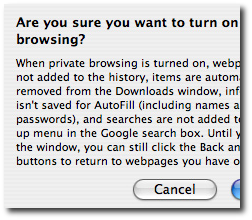
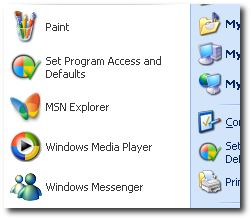
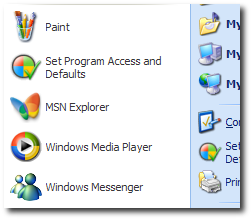
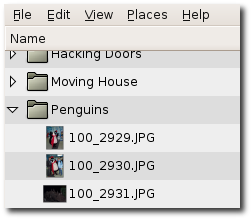
In and of itself, Vera is not an ugly font. There's some combination of the font's hinting and the Freetype hinting engine that conspires to make things ugly. On my desktop I've tried to work around this by altering the font settings somewhat. GNOME: Edd's fonts The effect isn't perfect, but a lot better to look at. The font is Bitstream Vera Sans as before. To get this, I had to switch off any hinting then slowly play with the DPI setting until I get letterforms that rendered neatly. Alas, this brings problems of its own. For a start, not all popular GNOME applications respect this setting. Firefox often gets its own idea about such matters as screen DPI, and OpenOffice.org2 completely ignores my hinting preferences and gives me nasty looking menu bars. Murray Cumming's recent GNOME for bad eyesight blog post also gets into many of these issues. For most users without time or inclination to hunt this down the choice is either to live with the ugliness, or opt for an operating system that gets it right.(Lest I seem churlish here, I should celebrate the amazing work done with internationalization on the Linux desktop, which continues to bring computing access to many in the world for whom choice is a luxury.)  There is one Linux distribution that makes a reasonable job of good-looking fonts. The Fedora Core 4 distribution ships with a different default font and out of the box settings giving reasonably attractive letterforms. Courtesy of OSDIR, here are GNOME and KDE screenshots. However, I'm pretty sure it doesn't solve the rest of the font integration issues.
I'm no typography expert, but I find that good-looking fonts enable me to work more effectively. And on the advocacy side, I want my Linux desktop to look as good or better than the OS X and Windows alternatives. Lots of great effort was made getting us to the point of anti-aliased rendering and the licensing of the Bitstream Vera Fonts. Having got this far, it seems a shame not to hunt down the remaining irritations in font handling.Further reading: 

15 January 2006

Edd Dumbill: A clean sweep

Firstly, if you haven't the faintest interest in the software I use to write this weblog, please feel free to go and do something more interesting right now. Now I'm in the company of dedicated readers of colophons, I will proceed. Redesign and reimplementation  This weblog, which has now been running for over two and a half years, originally ran on some custom software I'd hacked up in Zope: at that time my web development platform of choice. Today, I've relaunched with another custom content management engine, this time written using Rails. It's been a lot of fun to write, and a good excuse to sharpen my Rails skills further. The design has also been fun. It's a little basic right now, but I hope easy to read. Of course, the font is Lucida Grande, which ensures that I am fully Web 2.0 compliant.
The main new feature is that the tags I give articles are now made public. I used to tag posts for my RSS feed, but not publish them on the site. Now they are public--what few tags I currently have--and it's possible to find RSS and Atom feeds just for certain subsections of my writing. I worry sometimes about spamming the various Planet aggregator sites my blog features in, so this gives me a way to direct content specifically at them. That said, at least for Planet XML I like hearing about everything the community members have to say, not just their on-topic posts. New URLs My blog now has a new location, http://times.usefulinc.com/, and new places for  RSS and Atom feeds: Tools used

Edd Dumbill: XTech call for participation closes today

A last-minute reminder to get your XTech proposals in today. All the proposals I've seen so far are deeply wonderful: reviewing and choosing is going to be very, very difficult! Submit proposals here.

Edd Dumbill: Are web services and e-business interesting?

A couple of people have commented to me on the lack of explicit reference to web services or e-business technologies in the XTech call for participation. It's worth explaining why this is so. On web services: I consider the low-level specs here (SOAP, REST, WSDL) now to fall under "core technologies" track, and the higher level stuff (WS-*) to be often vacuous spec-mongering. Also, over the years, the quality of web service proposals submitted to the conference has been notably poor compared to all the other topics. A lot of this was to do with the hype web services received. On e-business, some useful submissions have been forthcoming, but never more than a few. My suspicion is that the OASIS stream of events is more interesting for most people in this space--I'd love to hear otherwise. I do view e-business presentations as on-topic, but I would like to find those that genuinely present something worthwhile. While many people often say they'd like to see more case studies, turnout for these is always low at the conference itself, so I've shied away from them somewhat. The thing with case studies is that they're necessarily related to a domain, and it's easy to for attendees to assume there's not transferable experience to be heard. I guess I don't believe either that all the problems in the e-business space are unique to that area. Identity, federated service location, transactions are all topics that deserve a broad audience. However, I acknowledge that I do not work daily in the e-business sphere and I would dearly love to hear somebody who does do a presentation on why there's really some solid things going on there now. Exchange of best practices is more necessary than ever. More reason not to hive off e-business from the other matters in the conference. For a similar reason I've mixed semantic web topics throughout the tracks as well. If anyone working in e-business didn't get useful knowledge out of XTech, I'd be astounded. Likewise, those working in e-business have plenty useful to say to the rest of the conference.
  • only 4 days left to submit a proposal for XTech 2006 (Amsterdam, May 16-19) -- do it now

Edd Dumbill: Paul Graham, XTech and holidays

Just a quick pre-holiday update on the state of XTech 2006. We've had, as usual, some amazing paper submissions so far, so please keep them coming. Don't forget, too, that we're also asking for tutorial submissions. These should be half-day or full-day and, as well as the free conference registration all speakers get, we pay an honorarium to tutors. Deadline is 9 January at the latest. One very exciting bit of news I have is that Paul Graham has agreed to deliver one of the keynote sessions at XTech. I'm very pleased about this, and it follows in the tradition we've established of having interesting and challenging speakers, rather than putting plenary sessions up for sale to sponsors. Amsterdam. 16-19 May 2006. What could be better? As for the holidays, I hope to be spending some time catching up on my open source work, and also carrying on my work with Rails. A busy couple of months at work, combined with no fewer than two bad server hardware issues, has eroded free time considerably. So to anyone waiting on me for something, I do apologise. One final pointer: IBM developerWorks have published the first part of my examination of the future of HTML, focusing on WHATWG. Look out very soon for the second part, looking at the various activities underway at the W3C. I know that my editor at least awaits this eagerly! Thanks to everyone who's read this blog during the year, and for the many interesting and helpful conversations that have come from it. Happy Christmas!

Next.

Previous.