Search Results: "ana"

21 December 2013

Russell Coker: Links December 2013

Andres Lozano gave an interesting TED talk about the use of electrodes inside the brain (deep brain stimulation) to treat Alzheimers disease, Parkinson s disease, and depression [1]. Daniel Pocock wrote an interesting post commenting on some bad political decisions being made in Australia titled Evacuating Australia [2]. You can read that as a suggestion to leave Australia or to try and make Australia better. Marco Tempest gave an interesting TED talk about Nikola Tesla [3]. The presentation method is one that I ve never seen before so I recommend watching the talk even if you already know all about Tesla. Charmian Gooch gave an interesting TED talk about global corruption [4]. I think we need people to send the information on shell company ownership to organisations like Wikileaks. The punishment for leaking such information would be a lot less than Chelsea Manning is getting and the chance of getting caught is also low. Rich Mogul wrote an interesting and insightful article for Macworld about the Apple approach to security problems [5]. To avoid the problem of users disabling security features they work to make the secure way of doing things EASIER for the user. That won t work with all security problems but it s something we need to think about when working on computer security. Ray Raphael gave an interesting TED talk about the parts of the US revolution that don t appear in history books [6]. He warns the listener to beware of the narrative forms, but another way to interpret his talk is that you should present your version of history in the narrative form that is best accepted. That lesson is well known and it s easy to see history being deliberately distorted in most media outlets. Will Wright gave an interesting TED talk about how he designed the game Spore and his ideas about games in general [7]. Spore is a really good game. Chris Lintott gave an interesting TED talk about crowd-sourced astronomy titled How to Discover a Planet from Your Sofa [8]. He referenced the Zooniverse.org site which lists many crowd-sourced science projects [9]. Jake Socha gave an interesting TED talk about flying snakes, you have to see this to believe it [10]. Nikita Bier gave an interesting TED talk about his webapp to analyse economic policies [11]. Apparently 60% of people were going to vote in their best economic interest before seeing his site and 66% would do so afterwards that could change an election result. Anya Kamenetz wrote an interesting article for Salon about The Iliad Project which aims to use Indigogo to help identify new anti-biotics [12]. The current ways of discovering anti-biotics aren t working, lets hope this one does. Peter Finocchiaro wrote an interesting Salon article about how right-wing politicians in the US were opposed to Nelson Mandela [13] racism meets anti-communism. Katie McDonough wrote an interesting Salon article about Rick Santorum and Bill O Reilly comparing Obamacare to apartheid while supposedly honoring Nelson Mandela [14], Katie also notes that Nelson enshrined universal healthcare in the South African constitution something all countries should do. Mary Elizabeth Williams wrote a Salon article about Susan Boyle s announcement about being diagnosed with Asperger Syndrome [15]. Not a surprise though, some people can be diagnosed with Autism by merely watching them on TV. Amelia Hill wrote an article for The Guardian/The Observer about the educational results of Home Schooling [16]. Apparently Home-Schooled kids learn significantly more and home-educated children of working-class parents achieved considerably higher marks in tests than the children of professional, middle-class parents and that gender differences in exam results disappear among home-taught children . Wow, Home Schooling beats gender and class problems! I m sure it s even better for GLBT kids too. Robert Reich wrote an interesting Salon article about the way rich people in the US give tax-deductable (taxpayer supported) donations to charities that benefit themselves [17]. Dan Savage wrote a very funny review of Sarah Palin s latest Christmas book, one classic quote is why should I have to read the whole thing? Lord knows Sarah Palin didn t write the whole thing [18]. He makes a good point that we should use the term happy holidays instead of happy Christmas just to show that we aren t assholes.

Christian Perrier: So, what's up with bubulle in Debian?

This is the end of the year and time for me to look back and summarize what happened to my Debian life during 2013. In short, it clearly seems that this year is the "year after peak of involvment" year. Up to 2010 included, my involvment in Debian constantly increased. 2011 and 2012 have seen some kind of stagnation with still some high involvment in some areas (i18n obviously, DebConf-related stuff, font packaging...) but already some reduction in others (D-I for instance...where the overall involvment of Debian developers is nos quite low, Kibi excepted). But, clearly, in 2013, something changed. And, indeed, it's easy to see what happened. In 2007, I started to motivate myself to resume my practice of sports (I used to be a well-trained volleyball player back in 80's) and I started running. More and more and more and more. 992km in 2008, 1700km in 2009 (and my first marathon), 2200km in 2010 (and my first ultras), 2500km in 2011 (and my first 80km), 2900km in 2012 (and more ultras) and....about 4700km in 2013 (with many many firsts). What changed is now obvious. Running and sports (and related activites such as a lot of socializing with other runners) took over free software activities. Last summer and autumn made it clear, indeed. While I was attending my 10th DebConf in a row (I think we're very few people to have achieved this), it was not my summer's "peak". I spent some great time in Switzerland, still enjoyed a lot meeting again with old and new friends from all over the world. I did some good hacking and achived quite some good things over there. But, still, that was not what I will keep from this summer because.....I had two great moutain races in July and August and *this* is what I'll keep. So, here we are: I'm reducing my involvment in Debian, obviously. Some things are handed over to other people, formally or informally. Some other things will indeed wait for someone to pick them up....or might slowly die as it sometimes happens in this project. I will very probably not attend DebConf14 in Portland even though I have been among the people who were enthusiastic when we picked that bid. But the dates conflict with the Ultra Tour du Mont-Blanc races in Chamonix, where I'll hopefully try to complete my first "over 100km" race in moutains. I will probably decline being part of the Debconf bids team for DC15 as well as the sponsoring team. I nearly stopped working on Samba packages and will not attend SambaXP in May. That's my challenge now. I don't want to completely quit this project and it's indeed harder than it seems, when one's involvment is going down. I'm currently trying to find the right balance to still stay involved in what has been a great part of my life in the last 15-20 years. For instance, I'll try to successfully mentor two applicants from the Outreach Program for Women. Or still continue to work occasionnally on font packages. Or still continue to manage D-I i18n. But you'll be seeing (and hearing) me less. The challenge is to still continue seeing and hearing me about Debian and free software and it's indeed less easy than it seems. I hope I'll succeed.

Kees Cook: DOM scraping

For a long time now I ve used mechanize (via either Perl or Python) for doing website interaction automation. Stuff like playing web games, checking the weather, or reviewing my balance at the bank. However, as the use of javascript continues to increase, it s getting harder and harder to screen-scrape without actually processing DOM events. To do that, really only browsers are doing the right thing, so getting attached to an actual browser DOM is generally the only way to do any kind of web interaction automation. It seems the thing furthest along this path is Selenium. Initially, I spent some time trying to make it work with Firefox, but gave up. Instead, this seems to work nicely with Chrome via the Chrome WebDriver. And even better, all of this works out of the box on Ubuntu 13.10 via python-selenium and chromium-chromedriver. Running /usr/lib/chromium-browser/chromedriver2_server from chromium-chromedriver starts a network listener on port 9515. This is the WebDriver API that Selenium can talk to. When requests are made, chromedriver2_server spawns Chrome, and all the interactions happen against that browser. Since I prefer Python, I avoided the Java interfaces and focused on the Python bindings:
#!/usr/bin/env python
import sys
from selenium import webdriver
from selenium.common.exceptions import NoSuchElementException
from selenium.webdriver.common.keys import Keys
caps = webdriver.DesiredCapabilities.CHROME
browser = webdriver.Remote("http://localhost:9515", caps)
browser.get("https://bank.example.com/")
assert "My Bank" in browser.title
try:
    elem = browser.find_element_by_name("userid")
    elem.send_keys("username")
    elem = browser.find_element_by_name("password")
    elem.send_keys("wheee my password" + Keys.RETURN)
except NoSuchElementException:
    print "Could not find login elements"
    sys.exit(1)
assert "Account Balances" in browser.title
xpath = "//div[text()='Balance']/../../td[2]/div[contains(text(),'$')]"
balance = browser.find_element_by_xpath(xpath).text
print balance
browser.close()
This would work pretty great, but if you need to save any state between sessions, you ll want to be able to change where Chrome stores data (since by default in this configuration, it uses an empty temporary directory via --user-data-dir=). Happily, various things about the browser environment can be controlled, including the command line arguments. This is configurable by expanding the desired capabilities variable:
caps = webdriver.DesiredCapabilities.CHROME
caps["chromeOptions"] =  
        "args": ["--user-data-dir=/home/user/somewhere/to/store/your/session"],
     
A great thing about this is that you get to actually watch the browser do its work. However, in cases where this interaction is going to be fully automated, you likely won t have a Xorg session running, so you ll need to wrap the WebDriver in one (since it launches Chrome). I used Xvfb for this:
#!/bin/bash
# Start WebDriver under fake X and wait for it to be listening
xvfb-run /usr/lib/chromium-browser/chromedriver2_server &
pid=$!
while ! nc -q0 -w0 localhost 9515; do
    sleep 1
done
the-chrome-script
rc=$?
# Shut down WebDriver
kill $pid
exit $rc
Alternatively, all of this could be done in the python script too, but I figured it s easier to keep the support infrastructure separate from the actual test script itself. I actually leave the xvfb-run call external too, so it s easier to debug the browser in my own X session. One bug I encountered was that the WebDriver s cache of the browser s DOM can sometimes get out of sync with the actual browser s DOM. I didn t find a solution to this, but managed to work around it. I m hoping later versions fix this. :)

2013, Kees Cook. This work is licensed under a Creative Commons Attribution-ShareAlike 3.0 License.
Creative Commons License

20 December 2013

Lars Wirzenius: Configuring gitano

I recently set up a Gitano instance as http://git.liw.fi/. Gitano is a very nice git server, which adds user and group management and access control in front of git itself, and keeps all configuration in git, where it's traceable and auditable nicely. It's also a command line based thing, rather than a slow, resource-hungry web application, and so much more to my liking. Daniel, the Gitano upstream, has a "gitano-all" source tree for creating an unofficial Gitano Debian package, which includes cgit, a fast git web interface. This is not ever going to be accepted in Debian, of course, but it makes it easier to install Gitano on your server. This hanky-panky is needed because Gitano and cgit both use libgit2, and that's a library without a stable API at this time. This makes is difficult to package for Debian. cgit seems to embed other such projects as well. Anyway, once you've installed the Gitano software (and cgit, if you want that), there's the matter of setting up a Gitano instance. Each Gitano instance is its own Unix user, accessed over ssh. Thus, one machine can host any number of Gitano instances, and they'll be nicely isolated from each other by normal Unix setup. Each instance manages its own set of Gitano users and group, which only exist within that instance. Users are identified by ssh public keys: there are no passwords. Here's my slightly edited checklist for setting up a Gitano instance. It assumes Gitano and cgit and their dependencies are installed. Setup Gitano itself: Setup a git daemon for public git repositories:
git stream tcp nowait nobody /usr/bin/git 
git daemon --inetd 
--interpolated-path=/home/git/repos/%D /home/git/repos
Setup cgit and Apache:
# CGIT stuff
DirectoryIndex /cgi-bin/cgit/cgit.cgi
Alias /cgit.png /usr/share/cgit/htdocs/cgit.png
Alias /cgit.css /usr/share/cgit/htdocs/cgit.css
<Directory "/home/git/repos">
    Options FollowSymlinks Indexes
    Allow from all
    AllowOverride none
    Order allow,deny
</Directory>
# Enable caching of up to 1000 output entriess
cache-size=1000
# Specify some default clone prefixes
clone-prefix=git://testgit
# Specify the css url
css=/cgit.css
# Specify the logo url
logo=/cgit.png
# Show extra links for each repository on the index page
enable-index-links=1
# Show number of affected files per commit on the log pages
enable-log-filecount=1
# Show number of added/removed lines per commit on the log pages
enable-log-linecount=1
# Set the title and heading of the repository index page
root-title=testgit
root-desc=Lars's test git repositories
# Allow download of tar.gz, tar.bz2 and zip-files
snapshots=tar.gz
#source-filter=/usr/lib/cgit/filters/syntax-highlighting.sh
remove-suffix=1
enable-git-config=1
strict-export=git-daemon-export-ok
scan-path=/home/git/repos
##
## List of common mimetypes
##
mimetype.git=image/git
mimetype.html=text/html
mimetype.jpg=image/jpeg
mimetype.pdf=application/pdf
mimetype.png=image/png
mimetype.svg=image/svg+xml
Finally, you should review, and possibly alter, Gitano access control rules. Some Gitano commands: Happy hacking. PS. I wrote a yarn test suite for my Gitano ACL, which may be interesting if you're new to Gitano.

Riku Voipio: Replicant on Galaxy S3

I recently got my self and Galaxy S3 for testing out Replicant, an android image made out of only open source components. Why Galaxy S3? It is well supported in Replicant, almost every driver is already open source. The hardware specs are acceptable, 1.4Ghz quad core, 1GB ram, microsd, and all the peripheral chips one expects for a phone. Galaxy S3 has sold insanely (50 million units supposedly), meaning I won't run out of accessories and aftermarket spare parts any time soon. The massive installed base also means a huge potential user community. S3 is still available as new, with two years of warranty. Why notWhile the S3 is still available new, it is safe to assume production is ending already - 1.5 year old product is ancient history in mobile world! It remains to be seen how much the massive user base will defend against the obsolescence. Upstream kernel support for "old" cpu is open question, replicant is still basing kernel on vendor kernel. Bootloader is unlocked, but it can't be changed due to trusted^Wtreacherous computing, preventing things like boot from sd card. Finally, not everything is open source, the GPU (mali) driver while being reverse engineered, is taking it's time - and the GPS hasn't been reversed yet. Installing replicant Before install, from the original installation, you might want to take a copy of firmware files (since replicant won't provide them). enable developer mode on the S3 and:
sudo apt-get install android-tools
mkdir firmware
adb pull /system/vendor/firmware/
adb pull /system/etc/wifi
After then, just follow official replicant install guide for S3. If you don't mind closed source firmwares, post-install you need to push the firmware files back:

adb shell
mount -o remount,rw /system
adb push . /system/vendor/firmware
Here was my first catch, the wifi firmwares from jelly bean based image were not compatible with older ICS based replicant. Using replicant
Booting to replicant is fast, few seconds to the pin screen. You are treated with the standard android lockscreen, usual slide/pin/pattern options are available. Basic functions like phone, sms and web browsing have icons from the homescreen and work without a hitch. Likewise camera seems to work, really the only smartphone feature missing is GPS. Sidenote - this image looks a LOT better on the S3 than on my thinkpad. No wonder people are flocking to phones and tablets when laptop makers use such crappy components.
The grid menu has the standard android AOSP opensource applications in the ICS style menu with the extra of f-droid icon - which is the installer for open source applications. F-droid is it's own project that complements replicant project by maintaining a catalog of Free Software.
F-droid brings hundreds of open source applications not only for replicant, but for any other android users, including platforms with android compatibility, such as Jolla's Sailfish OS. Of course f-droid client is open source, like the f-droid server (in Debian too). F-droid server is not just repository management, it can take care of building and deploying android apps.
The WebKit based android browser renders web sites without issues, and if you are not happy with, you can download Firefox from f-droid. Many websites will notice you are mobile, and provide mobile web sites, which is sometimes good and sometimes annoying. Worse, some pages detect you are android and only offer you to load their closed android app for viewing the page. OTOH I am already viewing their closed source website, so using closed source app to view it isn't much worse. This keyboard is again the android standard one, but for most unixy people the hacker's keyboard with arrow buttons and ctrl/alt will probably be the one you want. Closing thoughts While using replicant has been very smooth, the lack of GPS is becoming a deal-breaker. I could just copy the gpsd from cyanogen, like some have done, but it kind of beats the purpose of having replicant on the phone. So it might be that I move back to cyanogen, unless I find time to help reverse engineering the BCM4751 GPS.

19 December 2013

Matthew Palmer: Truly, nothing is safe

Quoted from a recent Debian Security Advisory:
Genkin, Shamir and Tromer discovered that RSA key material could be extracted by using the sound generated by the computer during the decryption of some chosen ciphertexts.
Side channel attacks are the ones that terrify me the most. You can cryptanalyse the algorithm and audit the implementation as much as you like, and then still disclose key material because your computer makes noise.

18 December 2013

Joey Hess: what charlie's missing about bitcoin

(Posted as a comment to Charles Stross's blog post about bitcoin) Bitcoin is a piece of software which tries to implement a particular SFnal future. One in which the world currency is de-centralized, deflationary, all early bitcoin adopters own their own planetoids, and all visitors are automatically charged for the air they breath. Thing is, the real world is more complicated than that. Assuming Bitcoin did manage to become an important currency, countries would naturally try to regulate it. In 30 years, by the time bitcoin mining has slowed right down, the legal system will be fully caught up to the internet. Bitcoin tries to make its code the law (as Lessig used to say), but the law can certainly affect its code. The law could, for example, require that bitcoin be changed to stop increasing the difficulty of mining new blocks. Then bitcoin is suddenly an inflationary currency. This would be a hard fork in the block chain, but one enforced by financial regulators. Miners would be tracked down and forced to comply. Some would perhaps go underground and run the deflationary bitcoin network on TOR hidden services. Lots of possible ways it could play out. That's only one scenario, covering one of the many problems with Bitcoin that make Charlie hate it. So it seems to me that Bitcoin should be a gold mine for Science Fiction authors, if nothing else..

C.J. Adams-Collier: Maxine is now running on mariadb

So back when I was working for MySQL AB as support manager for MaxDB, I created an IRC bot to help manage the #maxdb channel on Freenode. We didn t get a lot of traffic, and Daniel De Graaf mentioned that he could use a bot to help manage some iptables factoids over on #netfilter. So I had her join. He taught her all sorts of interesting things. She stored these factoids in a MySQL database. I have just migrated from MySQL to MariaDB which I compiled from source. Here are the packages: http://www.colliertech.org/~cjac/debian/
cjac@mariadb:~$ mysql -u root -p
Enter password: 
Welcome to the MariaDB monitor.  Commands end with ; or \g.
Your MariaDB connection id is 5322
Server version: 5.5.32-MariaDB-1-log (Debian)
Copyright (c) 2000, 2013, Oracle, Monty Program Ab and others.
Type 'help;' or '\h' for help. Type '\c' to clear the current input statement.
MariaDB [(none)]> use maxine;
Reading table information for completion of table and column names
You can turn off this feature to get a quicker startup with -A
Database changed
MariaDB [maxine]> 
15:22 < cj> maxine: iptables?
15:22 < maxine> hmmm... iptables is a generic table structure for the 
                definition of rulesets. Each rule within a chain consists of a 
                number of classifiers (iptables matches) and one optional 
                connected action (iptables target).

Antoine Beaupr : Password reset of Speedstream 5200 modems

After an extended downtime on my ADSL uplink at home during a nice snowstorm, I got curious and wanted to find out the SNR (Signal to Noise Ratio) I had on my line, to try to explain why it was down. It turned out it was more complicated than I thought, because the modem was locked down by Bell Canada (even though I am not a customer). There was a Windows utility, but since I haven't been running this pathetic operating system in years, I had to find an alternative. Fortunately, the author of that utility posted a description of the packet format used for the password reset, and here I was trying to send raw ethernet frames using Linux (for testing and, why not!) and FreeBSD (because I use FreeBSD for routing, because I dislike iptables). The result is this somewhat poorly written C program, available in this git repository. It uses raw sockets in Linux but the BPF (Berkeley Packet Filter) in FreeBSD, as their interface is a little broken for raw sockets. See the README file for more information. Enjoy.

17 December 2013

Joey Hess: completely linux distribution-independent packaging

Sometimes it makes sense to ship a program to linux users in ready-to-run form that will work no matter what distribution they are using. This is hard. Often a commerical linux game will bundle up a few of the more problimatic libraries, and ship a dynamic executable that still depends on other system libaries. These days they're building and shipping entire Debian derivatives instead, to avoid needing to deal with that. There have been a few efforts to provide so-called one click install package systems that AFAIK, have not been widely used. I don't know if they generally solved the problem. More modern appoaches seem to be things like docker, which move the application bundle into a containerized environment. I have not looked at these, but so far it does not seem to have spread widely enough to be a practical choice if you're wanting to provide something that will work for a majority of linux users. So, I'm surprised that I seem to have managed to solve this problem using nothing more than some ugly shell scripts. My standalone tarballs of git-annex now seem fairly good at running on a very wide variety of systems. For example, I unpacked the tarball into the Debian-Installer initramfs and git-annex could run there. I can delete all of /usr and it keeps working! All it needs is a basic sh, which even busybox provides. Looks likely that the new armel standalone tarball of git-annex will soon be working on embedded systems as odd as the Synology NAS, and it's already been verified to work on Raspbian. (I'm curious if it would work on Android, but that might be a stretch.) Currently these tarballs are built for a specific architecture, but there's no particular reason a single one couldn't combine binaries built for each supported architecture. technical details The main trick is to ship a copy of ld-linux.so, as well as all the glibc libraries and associated files, and of course every other library and file the application needs. Shipping ld-linux.so lets a shell script wrapper be made around each binary, that runs ld-linux.so and passes it the library directories to search. This way the binary can be run, bypassing the system's own dynamic linker (which might not like it) and using the included glibc. For example a shell script that runs the git binary from the bundle:
exec "$GIT_ANNEX_LINKER" --library-path "$GIT_ANNEX_LD_LIBRARY_PATH" "$GIT_ANNEX_SHIMMED/git/git" "$@"
I have to set quite a lot of environment variables, to avoid using any files from the system and instead use ones from my tarball. One important one is GCONV_PATH. Note that LD_LIBRARY_PATH does not have to be set, and this is nice because it allows running a few programs from the host system, such as its web browser. worse is better Of course I'll take a proper distribution package anytime over this. Still, it seems to work quite well, in all the horrible cases that require it.

16 December 2013

Russ Allbery: krb5-strength 2.2

krb5-strength provides a plugin and external password checking program implementation of password strength checking for Kerberos KDCs. Management at Stanford has decided that we want to impose different character class restrictions by length, with longer passwords having fewer required character classes. This release therefore adds more comprehensive character class requirement support, including the ability to set varying requirements based on the length of the password. This release also improves the cdbmake-wordlist utility, adding support for removing words longer than a maximum length and filtering out words that match a user-provided regular expression. It can also be run in filter mode to generate a new wordlist instead of a CDB file. Finally, a file descriptor and memory leak in the embedded version of CrackLib has been fixed. (This was already fixed in the regular CrackLib release.) You can get the latest version from the krb5-strength distribution page.

Craig Sanders: shopping online whinge of the day

There are numerous benefits to shopping online you can order stuff and pay for it from the comfort of your own home and it ll arrive on your doorstep in just a few days. wonderful, and so many words have been written about the benefits over the years that there s no need to belabour the point, But there are some things about it that really suck and make me NOT want to order stuff online most of the time my distaste for the privacy and delivery problems is enough to dissauade me from buying anything, helped by the fact that I live a fairly non-consumerist lifestyle (and for a geek, I have an almost non-existent gadget-fetish) but occasionally I want or need something that isn t available locally or which my ill-health makes impractical to buy in person (i ve been effectively housebound or in hospital for most of the year) so here are the things that piss me off most about shopping online.
  1. Loss of anonymity and privacy. You can walk into any shop and pay cash for whatever you want, they don t need to know who you are or where you live, and they don t get to accidentally add you to a mailing list against your express wishes oh, we didn t realise that when you said DO NOT SPAM ME, you actually meant DO NOT SPAM ME we ll just keep spamming you for another six months until we get around to processing your removal request . partial solution: use a different email address with each online shop. boycott the shop and destroy the address if they spam. what sucks is that this is actually necessary. it doesn t matter how loudly I say DO NOT SPAM ME. DO NOT ADD ME TO ANY MAILING LISTS. DO NOT ASK ME TO COMPLETE A SURVEY. DO NOT CONTACT ME FOR ANY REASON NOT DIRECTLY RELATED TO DELIVERING MY ORDER. MY PERSONAL INFORMATION IS PROVIDED SOLELY SO THAT YOU CAN SHIP MY ORDER TO ME AND MAY NOT BE USED FOR ANY OTHER PURPOSE. FAILURE TO RESPECT MY PRIVACY WILL RESULT IN IMMEDIATE AND PERMANENT BOYCOTT (yes, that IS the text I use in the comments/instructions field of every order I place), marketing vermin will decide that I really want their spam after all because their spam is super interesting and important and isn t really spam at all.
  2. nosy demands for unneccessary information. OK, they need your addresss to ship your parcel but they don t need your phone number, and they don t need to tie your order to your facebook or other bullshit social-spam account. most online order forms have phone number as a required field. Fortunately, they usually accept 0000000 or some other bogus non-phone number as a valid number .if not, i give them their own phone number.
  3. the thing that really shits me the most about online shopping is that both couriers and australia post suck. the lazy fuckers usually don t even bother attempting to deliver to residential addressess. at best, they just stick a non-delivery card in your letterbox without even attempting to knock on the door ..and sometimes they don t even bother doing that. the delivery driver just files a bogus failed to deliver or recipient refused delivery with their office.
i ve made four online purchases in the last month and a half. only one of them was delivered correctly to my door, even though I was sitting at my desk in the front room of the house, a few feet from my front door, and regularly monitoring the parcel s tracking web page so I knew it was arriving. parcel 1 (Nov 16): DHL from NZ to AU. delivered perfectly. delivered in about two days for $17. order value: around $35. parcel 2 (Nov 20): Aust Post from WA to Vic, Express Post (costs a few bucks more than standard post). order value: around $80. lazy driver didn t bother to attempt delivery. left card in letter box. i had to pick it up 2 days later from a post office the next suburb over (it wasn t there yet on the first attempt to pick up, the next day). Aust Post offered to maybe put me in touch with their re-delivery people who might possibly be able to re-deliver the parcel next week sometime maybe, if they felt like it. knowing that I had another hospital appt the next week, I declined (if i hadn t, it would have been an absolute certainty that they would try to deliver it while i was out). parcel 3 (nov 29): DHL from NZ to AU. order value: around $85. lazy courier didn t even bother to leave a card, just logged it as Recipient refused delivery . This refused delivery lie infuriated me when i saw it on the tracking page so i phoned and yelled at them a lot. DHL delivered it later the same day. if they hadn t I would have had to get myself over to the other side of town during business hours and pick it up from their South Melbourne depot. parcel 4 (today, Dec 16): Aust Post from NSW to Vic, Express Post . order value: around $160. lazy driver didn t even bother to leave a card, just logged it as Attempted delivery being carded to Australia Post outlet . Complete bullshit. There was no delivery attempt, not even a card in the letterbox, let alone a knock on the door with my parcel. Rang Aust Post on 8847 9045 (a phone number curiously absent from their tracking page, but which I had written down after their failure to deliver on Nov 20) and complained. they claim that they will try to deliver it today. i ll believe it when I see it. UPDATE @4.30pm: no, it s not going to be delivered today. they say they might choose to deliver it tomorrow or sometime in the future, if the delivery center manager feels like it. i told them that this is not an option my parcel WILL be delivered, it is what they were paid to do so it is what they ARE going to do. btw, the tracking page says that they attempted delivery at 12.15 today (they didn t not even a card in the letterbox), but the tracking page wasn t updated with that until about 2.30pm. by a complete non-coincidence their delivery center allegedly closes at 2pm, so it s impossible to complain about non-delivery in time for the complaint to do any good. Score so far: DHL 50% delivery rate. Aust Post: 100% failure rate. Annoyance Rate: extremely high. Desire to repeat the experience: non-existent. The Australia Post delivery problems are particularly annoying. I ve always thought of the network of local post offices to be a huge advantage for parcel delivery if i m not home, my parcel will go to a local post office and I can pick it up from there. And this is a great advantage. I used to take advantage of it when I was well enough to work. In fact, I d insist on delivery by Aust. Post rather than by a courier for exactly this reason, a local post office is far more convenient than some courier s depot on the other side of town or out in some far outer-suburban hellhole. But when it s used as an excuse to not even bother attempting delivery, it sucks. I m not well, and I should have been lying in bed reading or sleeping today, not wasting what little energy I have waiting for a parcel that never arrived and I certainly shouldn t have to phone Aust Post or DHL to yell at them for failing to do the job that they have been paid to do. shopping online whinge of the day is a post from: Errata

15 December 2013

Chris Lamb: Developing responsive websites using the Awesome window manager

Responsive web design is a techinique for offering the optimal user experience across different browser devices without the overhead of separate "mobile" sites or native applications. Whilst there are hundreds of browser plugins that can make it easier to test responsive websites by resizing your browser window, this can also be achieved with a scriptable window manager such as Awesome:
resize = function(width, height, text)
  return function(c)
    local w = capi.screen[c.screen].workarea
    local geo = c:geometry()
    awful.client.floating.set(c, true)
    -- Float before raising
    c:raise()
    naughty.notify(  text = text, timeout = 0.5  )
    c:geometry( 
      x = geo.x,
      -- Constrain Y to workspace or it can start too high
      y = (w.y > geo["y"]) and w.y or geo["y"],
      width = width,
      height = height,
     )
  end
end
resize_reset = function (c)
  awful.client.floating.set(c, false)
end
clientkeys = awful.util.table.join(
  -- [..]
  awful.key(  modkey  , "1", resize( 460, 650, "Extra small")),
  awful.key(  modkey  , "2", resize( 780, 750, "Small")),
  awful.key(  modkey  , "3", resize(1024, 800, "Medium")),
  awful.key(  modkey  , "4", resize(1250, 850, "Large")),
  awful.key(  modkey  , "5", resize_reset)
)
Alt+ 1,2,3,4 will then float and resize the current window to various common device sizes (mine are based on the Bootstrap 3 breakpoints) and Alt+5 will reset it. Not being a plugin has many advantages: not only is it a browser-agnostic solution and one can use keyboard shortcuts not available to plugin developers, it also feels more aesthetically pleasing to solve a problem at the correct abstraction layer.

14 December 2013

Richard Hartmann: SteamOS

So SteamOS has been released. While that's marginally interesting in and as of itself, there are two observations to be made:
  1. Microsoft, Nintendo, and Sony will feel an impact. More functionality on cheaper hardware which can easily by upgraded; I bet quite a few managers are not happy, at the moment.
  2. While the stand-alone Linux Steam client was initially targeted at Ubuntu, SteamOS is based on Debian Wheezy.
Actual Linux (not Android) for the end user The first one means more Linux installations. In the living room. On a machine that children are really focussed on and will want to play with, quite literally. The next logical step is for people who play games to install SteamOS on their other machines; desktops, laptops, everywhere they want to game. This could really be the tipping point where the average adolescent computer enthusiast does not need to reboot into Linux to fool around with, but the other way round: To need to boot to Windows for a few select legacy applications which don't run on the FLOSS variant of Wine like Office or Photoshop. And once this momentum starts to shift, other software vendors will follow the money trail. Could 2014 finally be.... the year of Linux on the desktop...? Debian vs Debian-based The latter one is also really interesting... Obviously, I don't know why Valve decided to go down this road, but there are several reasons which come to mind: What we are left with is a major player entering the ring of Linux for end-users and choosing Debian over Ubuntu. Hopefully, improvements to the base system will be fed back upstream, enabling all Debian-based distributions to profit easily, not only Ubuntu-based ones. I am willing to bet that two years ago, SteamOS would have been based on Ubuntu, not Debian. Recently, there's been a lot of backlash over various decisions which Canonical forced onto Ubuntu and it will be interesting to see how this plays out in the long run... I will be interesting to see how much pain Linux Mint and Kubuntu will endure. Forecast Users All in all, we are looking at a massive influx of new users into the Debian ecosystem. How massive? 65 million registered users massive. 7 million concurrent users at once, 1.2 million users actively playing the top 100 games at the same time massive. This is huge. Contributors In time, a substantial part of that userbase will switch over one or more of their machines over to SteamOS. The tinkerers among them will realize they can install plain Debian and install Steam as a package. The hackers among those will start to improve upon their systems; and what better way to do that then to go upstream? If even a tiny fraction of users makes it this far, the count of actively involved contributors with Debian will skyrocket if we let them join. Raspbian and some other not-quite-ideal decisions come to mind. Vendors Commercial software vendors need to stay profitable. Thus, they are forced to support distributions which promise enough paying users. In the past, this meant mainly SuSE and Red Hat; they had commercial backers, went through certifications, etc. In the recent past, this also meant Ubuntu. All of a sudden, Debian stable has a potential market of tens of millions of average computer users and computer enthusiasts. A lot of whom will want to continue to use their OS of choice at work, as well. Oh boy...

13 December 2013

Daniel Kahn Gillmor: OpenPGP Key IDs are not useful

Fingerprints and Key IDsOpenPGPv4 fingerprints are made from an SHA-1 digest over the key's public key material, creation date, and some boilerplate. SHA-1 digests are 160 bits in length. The "long key ID" of a key is the last 64 bits of the key's fingerprint. The "short key ID" of a key is the last 32 bits of the key's fingerprint. You can see both of the key IDs as a hash in and of themselves, as "32-bit truncated SHA-1" is a sort of hash (albeit not a cryptographically secure one). I'm arguing here that short Key IDs and long Key IDs are actually useless, and we should stop using them entirely where we can do so. We certainly should not be exposing normal human users to them. (Note that I am not arguing that OpenPGP v4 fingerprints themselves are cryptographically insecure. I do not believe that there are any serious cryptographic risks currently associated with OpenPGP v4 fingerprints. This post is about Key IDs specifically, not fingerprints.)Key IDs have serious problemsAsheesh pointed out two years ago that OpenPGP short key IDs are bad because they are trivial to replicate. This is called a preimage attack against the short key ID (which is just a truncated fingerprint). Today, David Leon Gil demonstrated that a collision attack against the long key ID is also trivial. A collision attack differs from a preimage attack in that the attacker gets to generate two different things that both have the same digest. Collision attacks are easier than preimage attacks because of the birthday paradox. dlg's colliding keys are not a surprise, but hopefully the explicit demonstration can serve as a wakeup call to help us improve our infrastructure. So this is not a way to spoof a specific target's long key ID on its own. But it indicates that it's more of a worry than most people tend to think about or plan for. And remember that for a search space as small as 64-bits (the long key ID), if you want to find a pre-image against any one of 2k keys, your search is actually only in a (64-k)-bit space to find a single pre-image. The particularly bad news: gpg doesn't cope well with the two keys that have the same long key ID:
0 dkg@alice:~$ gpg --import x
gpg: key B8EBE1AF: public key "9E669861368BCA0BE42DAF7DDDA252EBB8EBE1AF" imported
gpg: Total number processed: 1
gpg:               imported: 1  (RSA: 1)
0 dkg@alice:~$ gpg --import y
gpg: key B8EBE1AF: doesn't match our copy
gpg: Total number processed: 1
2 dkg@alice:~$ 
This probably also means that caff (from the signing-party package) will also choke when trying to deal with these two keys. I'm sure there are other OpenPGP-related tools that will fail in the face of two keys with matching 64-bit key IDs. We should not use Key IDs I am more convinced than ever that key IDs (both short and long) are actively problematic to real-world use of OpenPGP. We want two things from a key management framework: unforgability, and human-intelligible handles. Key IDs fail at both. So reasonable tools should not expose either short or long key IDs to users, or use them internally if they can avoid them. They do not have any properties we want, and in the worst case, they actively mislead people or lead them into harm. What reasonable tool should do that? How to replace Key IDs If we're not going to use Key IDs, what should we do instead? For anything human-facing, we should be using human-intelligible things like user IDs and creation dates. These are trivial to forge, but people can relate to them. This is better than offering the user something that is also trivial to forge, but that people cannot relate to. The job of any key management UI should be to interpret the cryptographic assurances provided by the certifications and present that to the user in a comprehensible way. For anything not human-facing (e.g. key management data storage, etc), we should be using the full key itself. We'll also want to store the full fingerprint as an index, since that is used for communication and key exchange (e.g. on calling cards). There remain parts of the spec (e.g. PK-ESK, Issuer subpackets) that make some use of the long key ID in ways that provide some measure of convenience but no real cryptographic security. We should fix the spec to stop using those, and either remove them entirely, or replace them with the full fingerprints. These fixes are not as urgent as the user-facing changes or the critical internal indexing fixes, though. Key IDs are not useful. We should stop using them.Tags: collision, crypto, gpg, openpgp, pgp, security

Sylvain Le Gall: Release of OASIS 0.4.0

I am happy to announce that OASIS v0.4.0 has just been released. Logo OASIS small OASIS is a tool to help OCaml developers to integrate configure, build and install systems in their projects. It should help to create standard entry points in the source code build system, allowing external tools to analyse projects easily. This tool is freely inspired by Cabal which is the same kind of tool for Haskell. You can find the new release here and the changelog here. More information about OASIS in general on the OASIS website. I have recently resumed my work on OASIS and this will be hopefully the new version that will lead to quicker iteration in the development of OASIS. The development process was slowdown by the fact, that I feared introducing new fields in _oasis or regression. This was a pain and I decided to change my development model. Features The most important step is the introduction of AlphaFeatures and BetaFeatures fields. They allow to introduce pieces of code that will only be activated if certain features are listed in those fields. It should help to be always ready to release. The features also cover other aspect like flag_tests and flag_docs which has been introduced in OASIS v0.3.0. In fact the features API is now used to introduce all enhancement while keeping backward compatibility with regard to OASISFormat. Rather than defining a ~since_version:0.3 for fields we use a feature that handle the maturity level of the feature. When I feel a specific feature is ready to ship, I just change the InDev Alpha to InDev Beta and then SinceVersion 0.4. On the long term, when we won't support anymore a version of OASIS that existed before the SinceVersion, the feature will always be true and I will fully integrate it in the code. The only constraint around features is: if you use AlphaFeatures or BetaFeatures field, you must use the latest OASISFormat... Features section in the manual. Example of features available: Automate Another topic is automation of testing releases. For OASIS v0.3.0, I ran tests on all platforms manually, late in the development of v0.3.0 and it was painful to fix. So I have decided to setup a Jenkins instance that automate testing on Linux. On the long term, I plan to also setup a Mac OS X builder and start looking at Windows as well. This should help me catch errors early and be able to fix them quickly. However, for v0.4.0 I have decided to just release what I have and which has mainly be tested on Linux. The point here is to quickly release and iterate, rather than wait for perfection. Hopefully end user testing will allow to quickly discover new bugs. Time boxed release In the coming months, I will try to do time boxed releases. I will try to release version of OASIS every 15th of the month. The point here is to try to iterate faster and avoid long delay between release. See you in 1 month for the next release.

11 December 2013

Gustavo Noronha Silva: WebKitGTK+ hackfest 5.0 (2013)!

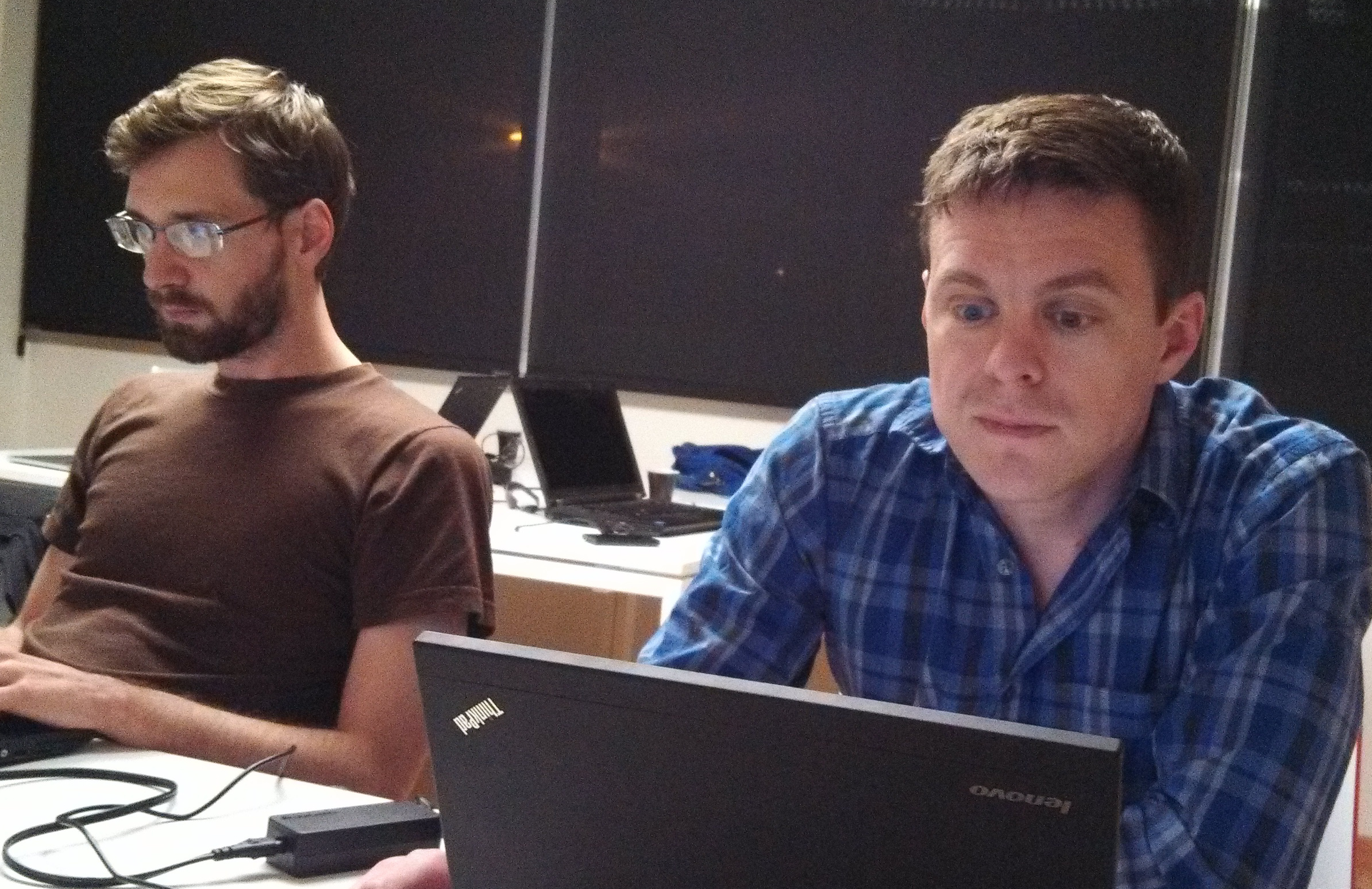
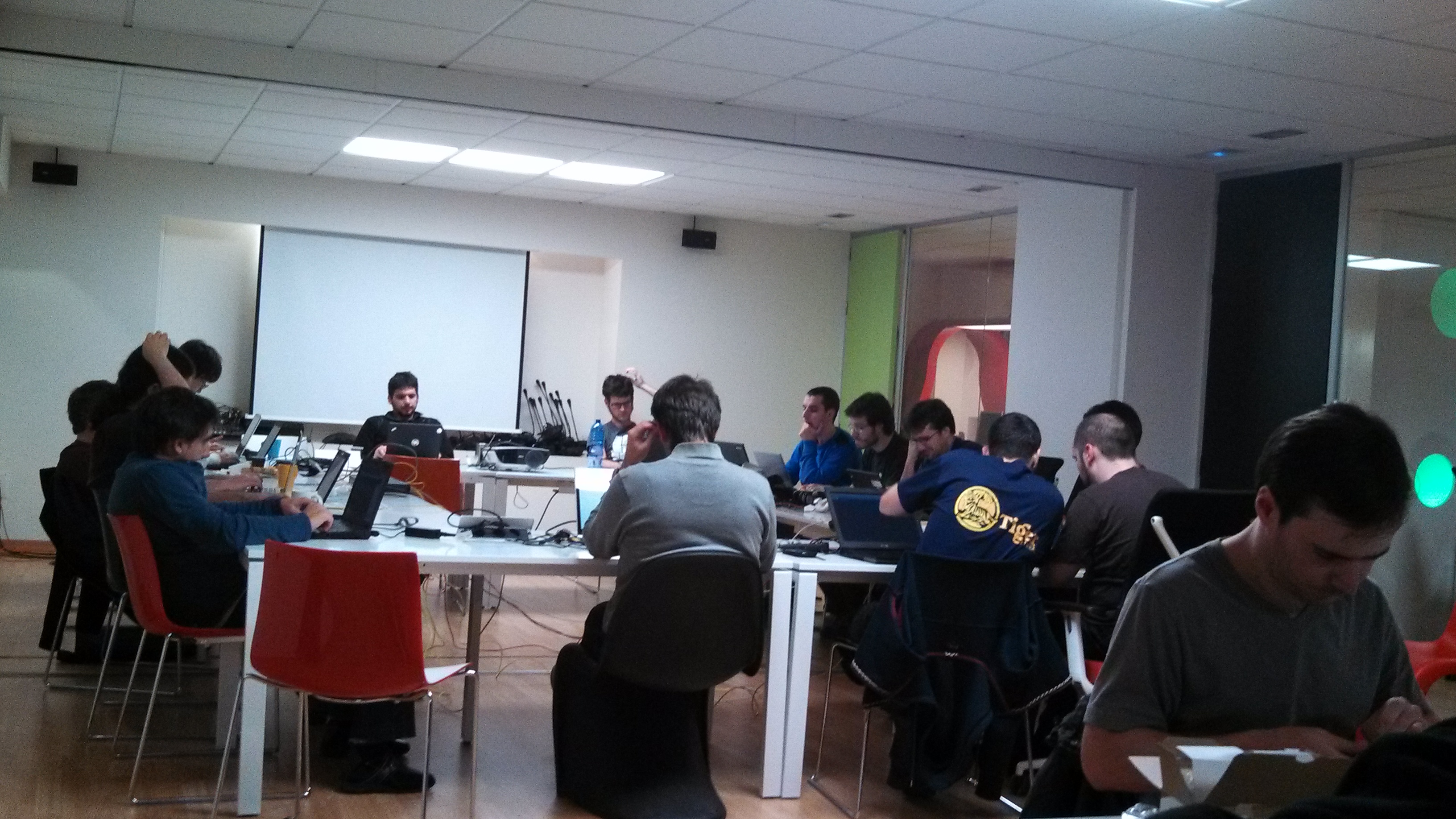
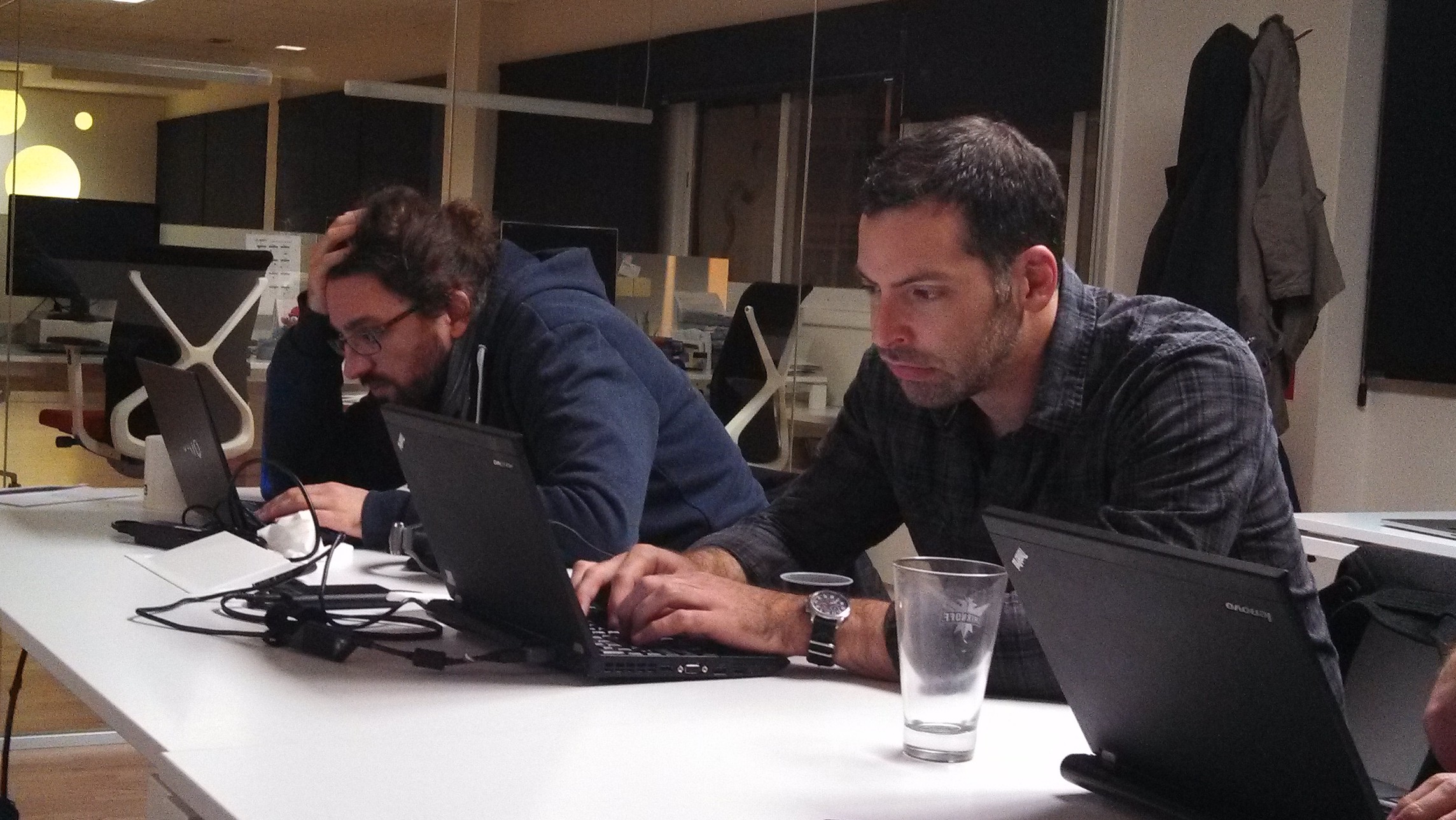
For the fifth year in a row the fearless WebKitGTK+ hackers have gathered in A Coru a to bring GNOME and the web closer. Igalia has organized and hosted it as usual, welcoming a record 30 people to its office. The GNOME foundation has sponsored my trip allowing me to fly the cool 18 seats propeller airplane from Lisbon to A Coru a, which is a nice adventure, and have pulpo a feira for dinner, which I simply love! That in addition to enjoying the company of so many great hackers.
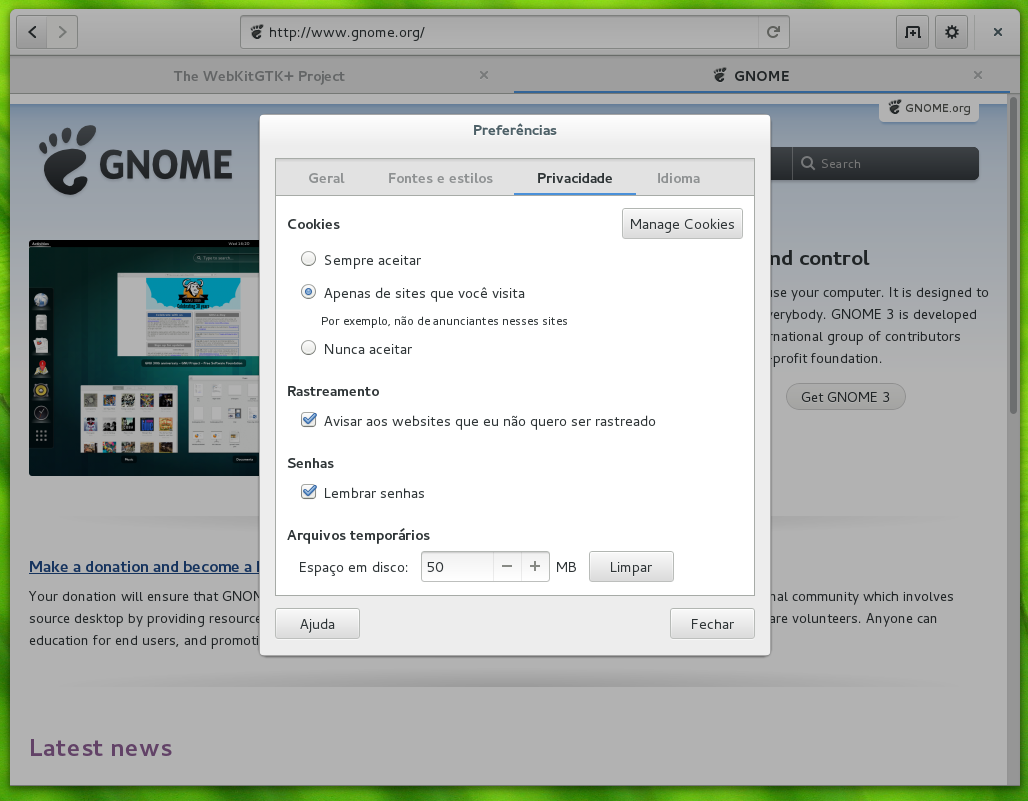
Web with wider tabs and the new prefs dialog

Web with wider tabs and the new prefs dialog

The goals for the hackfest have been ambitious, as usual, but we made good headway on them. Web the browser (AKA Epiphany) has seen a ton of little improvements, with Carlos splitting the shell search provider to a separate binary, which allowed us to remove some hacks from the session management code from the browser. It also makes testing changes to Web more convenient again. Jon McCan has been pounding at Web s UI making it more sleek, with tabs that expand to make better use of available horizontal space in the tab bar, new dialogs for preferences, cookies and password handling. I have made my tiny contribution by making it not keep tabs that were created just for what turned out to be a download around. For this last day of hackfest I plan to also fix an issue with text encoding detection and help track down a hang that happens upon page load.
Martin Robinson and Dan Winship hack

Martin Robinson and Dan Winship hack

Martin Robinson and myself have as usual dived into the more disgusting and wide-reaching maintainership tasks that we have lots of trouble pushing forward on our day-to-day lives. Porting our build system to CMake has been one of these long-term goals, not because we love CMake (we don t) or because we hate autotools (we do), but because it should make people s lives easier when adding new files to the build, and should also make our build less hacky and quicker it is sad to see how slow our build can be when compared to something like Chromium, and we think a big part of the problem lies on how complex and dumb autotools and make can be. We have picked up a few of our old branches, brought them up-to-date and landed, which now lets us build the main WebKit2GTK+ library through cmake in trunk. This is an important first step, but there s plenty to do.
Hackers take advantage of the icecream network for faster builds

Hackers take advantage of the icecream network for faster builds

Under the hood, Dan Winship has been pushing HTTP2 support for libsoup forward, with a dead-tree version of the spec by his side. He is refactoring libsoup internals to accomodate the new code paths. Still on the HTTP front, I have been updating soup s MIME type sniffing support to match the newest living specification, which includes specification for several new types and a new security feature introduced by Internet Explorer and later adopted by other browsers. The huge task of preparing the ground for a one process per tab (or other kinds of process separation, this will still be topic for discussion for a while) has been pushed forward by several hackers, with Carlos Garcia and Andy Wingo leading the charge.
Jon and Guillaume battling code

Jon and Guillaume battling code

Other than that I have been putting in some more work on improving the integration of the new Web Inspector with WebKitGTK+. Carlos has reviewed the patch to allow attaching the inspector to the right side of the window, but we have decided to split it in two, one providing the functionality and one the API that will allow browsers to customize how that is done. There s a lot of work to be done here, I plan to land at least this first patch durign the hackfest. I have also fought one more battle in the never-ending User-Agent sniffing war, in which we cannot win, it looks like.
Hackers chillin' at A Coru a

Hackers chillin at A Coru a

I am very happy to be here for the fifth year in a row, and I hope we will be meeting here for many more years to come! Thanks a lot to Igalia for sponsoring and hosting the hackfest, and to the GNOME foundation for making it possible for me to attend! See you in 2014!

8 December 2013

Russell Coker: A Better University

I previously wrote about the financial value of a university degree [1], my general conclusion is that the value is decreasing for most fields of employment that don t have a legal requirement for a degree. In the past I wrote about some ideas for a home university [2], basically extending the home-schooling concept to a university level. I recently read John Scalzi s post about being poor [3], many of the comments address the difficulty of getting to college and how it impacts career possibilities. From reading that it seems that my ideas about a home university are mostly based around what middle-class people can afford. Also getting a job afterwards will probably be a lot easier for someone who was born into the middle classes. It seems to me that a large part of the problem with the university system is the expectation that they will both provide for academic research and train people for jobs. Dr. David Helfand has some great ideas for running a university to give the higher education that a university is supposed to provide rather than the work training that most universities actually provide [4]. His ideas aren t theoretical, they have been implemented and proven to work. Note that Dr Helfand s talk starts slowly, the second half is the best (for those of you with short attention spans). The fact that most people think of a university degree in terms of getting a job seems to be a failure of the university system to fulfill it s original aim. If Dr Helfand s ideas take off then it would really address the problem of universities not educating people. But that still leaves the issue of job training. Is a Degree Mandatory? I think that to some degree people expect that a university degree is necessary job training even when it isn t. I wonder what would happen if it was generally agreed that the right thing to do was to search for a job between the end of high school and the start of university, then anyone who got a suitable offer could defer their university course and see what career success they could achieve without it. When I was at school the general idea was that after completing year 12 everyone just had a holiday until the start of university as the entire point of school was to get into university. While hiring managers prefer candidates who have degrees they also prefer to hire people who will accept a lower salary, so hiring an 18yo with no degree may give better value than a 21yo who has a degree. I believe that making university degrees more accessible has reduced inequality which is a good thing. But making degrees mandatory (which is widely believed by high school students and thus is the situation that they have to deal with) contributes to greater inequality. While university doesn t cost much by middle-class standards it is still expensive for poor people. If a university degree wasn t considered to be mandatory then the number of people employed to teach at a university level would be smaller. This would hopefully mean that the average skill of university lecturers would increase (I hope that the least skillful lecturers would be the ones to find work elsewhere).

7 December 2013

Dirk Eddelbuettel: R and Big Data at Big Data Summit at UI Research Park

I spent yesterday at the very enjoyable Big Data Summit held at the University of Illinois Research Park at the edge of the University of Illinois at Urbana-Champaign. campus. My (short) presentation was part of a panel session on R and Big Data which Doug Simpson of the UIUC Statistics department had put together very well. We heard from a vendor / technology provider with Christopher Nguyen from Adatao talking about their "Big R", from industry with Andy Stevens talking about a number of some real-life challenges with big data at John Deere, from academia with Jonathon Greenberg talking about R and HPC for geospatial research and I added a few short comments and links about R, HPC and Rcpp. My few slides are now up on my talks / presentations page. Overall, a good day with a number of interesting presentations and of course a number of engaging hallway discussions.

This post by Dirk Eddelbuettel originated on his Thinking inside the box blog. Please report excessive re-aggregation in third-party for-profit settings.

6 December 2013

Petter Reinholdtsen: Debian Edu interview: Klaus Knopper

It has been a while since I managed to publish the last interview, but the Debian Edu / Skolelinux community is still going strong, and yesterday we even had a new school administrator show up on #debian-edu to share his success story with installing Debian Edu at their school. This time I have been able to get some helpful comments from the creator of Knoppix, Klaus Knopper, who was involved in a Skolelinux project in Germany a few years ago. Who are you, and how do you spend your days? I am Klaus Knopper. I have a master degree in electrical engineering, and is currently professor in information management at the university of applied sciences Kaiserslautern / Germany and freelance Open Source software developer and consultant. All of this is pretty much of the work I spend my days with. Apart from teaching, I'm also conducting some more or less experimental projects like the Knoppix GNU/Linux live system (Debian-based like Skolelinux), ADRIANE (a blind-friendly talking desktop system) and LINBO (Linux-based network boot console, a fast remote install and repair system supporting various operating systems). How did you get in contact with the Skolelinux / Debian Edu project? The credit for this have to go to Kurt Gramlich, who is the German coordinator for Skolelinux. We were looking for an all-in-one open source community-supported distribution for schools, and Kurt introduced us to Skolelinux for this purpose. What do you see as the advantages of Skolelinux / Debian Edu? What do you see as the disadvantages of Skolelinux / Debian Edu? For these reasons and experience from our project, I would now rather consider using plain Debian for schools next time, until Skolelinux is more closely integrated into Debian and becomes upgradeable without reinstallation. Which free software do you use daily? GNU/Linux with LXDE desktop, bash for interactive dialog and programming, texlive for documentation and correspondence, occasionally LibreOffice for document format conversion. Various programming languages for teaching. Which strategy do you believe is the right one to use to get schools to use free software? Strong arguments are

Next.

Previous.