Search Results: "agi"

4 April 2010

Russell Coker: Health and Status Monitoring via Smart Phone

Health Monitoring Eric Topol gave an interesting TED talk about wireless medical monitoring devices [1]. The potential for helping diabetics and other people who need ongoing treatment is obvious as is the potential for helping pregnant women and other people who might suddenly need medical treatment at short notice. One significant positive potential for this is integration with multiple services. For example Eric s talk showed a graph of sleep levels on a mobile phone, the deep sleep (which is apparently the most restorative) was shown in sections that were significantly less than one hour in duration. I often receive SMS messages about network problems during the night, the vast majority of them aren t that important and can be delayed without any problem. If my phone could determine that I was in deep sleep and delay sending me a NAGIOS report for up to 30 minutes then it would help me sleep while not making any significant impact on my work in repairing server problems it s not as if I would be immediately productive if woken from deep sleep anyway. Status and Attention Monitoring Eric Horvitz, Carl Kadie, Tim Paek, and David Hovel of Microsoft Research wrote an interesting paper titled Models of Attention in Computing and Communication: From Principles to Applications [2]. In that paper they describe various methods for tracking user attention and filtering messages so that the user won t be needlessly distracted by unimportant messages when they are busy. The next logical step is to integrate that with a smart phone (maybe Android would be good for this) to screen calls, unknown callers could be automatically directed to voice-mail and known good callers could be given an automated prompt as to whether they think that their call is important enough to be worth the distraction. It seems to me that combining health and status monitoring would be the sensible thing to do. If a bio-sensor array indicates that someone is more stressed than usual then decreasing their availability for phone calls would make sense. It would also be trivial to analyse calls and determine which callers are likely to cause stress and block their calls at inconvenient times. What we Need Of course there are lots of security implications in this. Having multiple networked devices tracking and collating information on health and all activity (including video-monitoring in the Microsoft model) has a lot of potential for malicious use. This is one of many reasons that we need to generally improve computer security. We also need to have free software implementations of such things. We don t want Microsoft to get a monopoly on status monitoring. Also it seems that smart Nike shoes that can work with the iPhone [3] are the leading mass-market implementation of health monitoring, everything related to health-care should be as open as possible. I m happy for Nike to make their own special products, but we need to have them work with open systems and make the data available as widely as possible. There is the real potential for people to needlessly die if health data is not available in open formats! According to the Wikipedia page Nike has been shipping products using a proprietary 2.4GHz wireless network since 2006 [4], it would be a really good hardware project to devise a way of making compatible sensors and readers. We also need some free software for monitoring the user status to avoid interrupting them. Finally we need some software to integrate all the data. Canonical s Desktop Experience team are doing some interesting work on managing desktop notifications that will be in Ubuntu Lucid [5], they appear to have some basic support for masking notifications based on priority. Please keep up the great work Canonical people, and please consider working on advanced status monitoring next!

3 April 2010

Russ Allbery: Tie::ShadowHash 1.00

This is a Perl module that lets you stack multiple hash-like data sources together and treat them like a merged hash. Queries on the hash are satisfied by the first hash in the stack that has the desired key and iteration through the hash iterates through each in turn. You can store or delete elements from the hash and those changes are reflected in later uses, but the underlying data sources are not changed; all modifications are kept as local overrides. There's also some convenience support for treating text files as hashes. I wrote this module eons ago and have always been fairly proud of it, but so far as I knew, no one ever used it. It was going to be used in a new version of News::Gateway, but as long-time followers of my development work know, that module is kind of cursed. So I'd mostly forgotten about it. Imagine my surprise when it turned out that Wiki::Toolkit started using it, and then someone wanted to package it for Debian! I found out about that because of a discussion on debian-perl about how to name the package, since I always used to abbreviate my CPAN distribution names and it was in CPAN as ShadowHash. This release dusts the module off, converts the VCS from CVS to Git, updates the coding style and documentation, fixes the test suite to use Test::More, and fixes a few long-standing bugs that I noticed when reading through the code with fresh eyes. It also now has a proper 1.00 version number, since I don't expect to have to make backward-incompatible changes to it. You can get the latest version from the Tie::ShadowHash distribution page.

31 March 2010

Erich Schubert: ELKI 0.3 released

ELKI: Environment for DeveLoping KDD-Applications Supported by Index-Structureshas been a major part of my research the last one and a half year. In a few words, it's a Java environment for research on data mining algorithms.In reality, it's a huge piece of software, providing various data types, parsers, distance functions (including specialized distance functions for color histograms or time series; 20+ total), index structures and tons of algorithms (with a focus on clustering, correlation clustering, subspace clustering and outlier detection methods; 40+ total). And providing a way to plug all these together in just about any way you can imagine. In fact, some algorithms are implemented just by plugging together other algorithms and distance functions.The 0.3 release adds more than a dozen outlier detection algorithms (the total is somewhere like 16, with some extra ones I didn't get around to clean up for the release branch yet) and a whole set of visualizations and a new convenience GUI for easier parameterization.It's all on the ELKI homepage.If you know what WEKA is, then ELKI is probably also interesting for you. But currently, we do not have much classification in ELKI. If you are into classification, you'll be better of with WEKA. ELKI is aiming to be to Knowledge Discovery in Databases (you know, the unsupervised thing) to what WEKA is to the Machine Learning (you know, the supervised thing) world.If you don't know all these terms, you'll probably need to browse through some literature to get familiar with the concepts and some of the algorithms. ELKI is not (yet?) an application that will just work on whatever data you want to throw at it. RapidMiner is another established application that can help you there better.As for application in commercial use, note that ELKI is designed in a way to be extensible (to help us in research) and clean (to help in teaching; I constantly have some students use ELKI as base for their projects), and it also is a moving target. The next release will likely feature a completely new database layer, to allow us to add our latest index structure research and support online algorithms. Performance and the ability to scale to arbitrary sizes of data is not of high priority to us.So for commercial applications, you might want to implement it on your own, connect it to your favourite DBMS and optimize it how you need it yourself. (When we need to scale, we'll just run it on a 128 GB system, that will take us far enough). Plus, you'll have to talk to us about a license.But: if you are interested in unsupervised data mining, such as clustering and outlier detection, then ELKI might offer you are large library to base your research on, without having to start from scratch with everything.

30 March 2010

David Welton: Where Tcl and Tk Went Wrong

I've been pondering this subject for a while, and I think I'm finally ready to write about it.
Tcl was, for many years, my go-to language of choice. It's still near and dear to me in many ways, and I even worked on a portion of a book about it ( http://journal.dedasys.com/2009/09/15/tcl-and-the-tk-toolkit-2nd-edition ). However, examining what "went wrong" is quite interesting, if one attempts, as much as possible, a dispassionate, analytical approach that aims to gain knowledge, rather than assign blame or paper over real defects with a rose-colored vision of things. It has made me consider, and learn, about a variety of aspects of the software industry, such as economics and marketing, that I had not previously been interested in. Indeed, my thesis is that Tcl and Tk's problems primarily stem from economic and marketing (human) factors, rather than any serious defects with the technology itself. Before we go further, I want to say that Tcl is not "dying". It is still a very widely used language, with a lot of code in production, and, importantly, a healthy, diverse, and highly talented core team that is dedicated to maintaining and improving the code. That said, since its "heyday" in the late 90ies, it has not ... "thrived", I guess we can say. I would also like to state that "hindsight is 20-20" - it's easy to criticize after the fact, and not nearly so easy to do the right thing in the right moment. This was one reason why I was reticent to write this article. Let me repeat that I am writing it not out of malice or frustration (I went through a "frustrated" phase, but that's in the past), but because at this point I think it's a genuinely interesting "case history" of a the rise and gentle decline of a widely used software system, and that there is a lot to be learned. At the height of its popularity, Tcl was up there with Perl, which was the scripting language in those days. Perl, Tcl, and Python were often mentioned together. Ruby existed, but was virtually unknown outside of Japan. PHP was on the rise, but still hadn't really come into its own. Lua hadn't really carved out a niche for itself yet, either. Tcl is no longer one of the popular languages, these days, so to say it hasn't had problems is to bury one's head in the sand: it has fallen in terms of popularity. To examine what went wrong, we should probably start off with what went right: These features led to Tcl being widely used, from Cisco routers to advanced television graphics generation programs to the AOLserver web server, which was busy serving out large quantities of dynamic web pages when many of us were still fiddling around with comparatively slow and clunky CGI programs in Perl. Note also that there have been a lot of cool things to have gone into Tcl in the mean time. It has a lot of impressive features; many more than most people realize, and has had a lot of them for a while. Check out http://www.tcl.tk to learn more about the "good stuff". But that's not the point of this article... There was a healthy, active community of developers producing lots of interesting add-ons for the language, and working on the language itself. This culminated in its adoption by Sun Microsystems, which hired the language's creator, Dr. John Ousterhout, and a team of people, who added a lot of great features to the language. Quoting from Ousterhout's history of Tcl page:

The additional resources provided by Sun allowed us to make major improvements to Tcl and Tk. Scott Stanton and Ray Johnson ported Tcl and Tk to Windows and the Macintosh, so that Tcl became an outstanding cross-platform development environment; Windows quickly came to be the most common platform. Jacob Levy and Scott Stanton overhauled the I/O system and added socket support, so that Tcl could easily be used for a variety of network applications. Brian Lewis built a bytecode compiler for Tcl scripts, which provided speedups of as much as a factor of 10x. Jacob Levy implemented Safe-Tcl, a powerful security model that allows untrusted scripts to be evaluated safely. Jacob Levy and Laurent Demailly built a Tcl plugin, so that Tcl scripts can be evaluated in a Web browser, and we created Jacl and TclBlend, which allow Tcl and Java to work closely together. We added many other smaller improvements, such as dynamic loading, namespaces, time and date support, binary I/O, additional file manipulation commands, and an improved font mechanism. Unfortunately, after several years, Sun decided that they wanted to promote one and only one language. And that language was Java. So Ousterhout and many people from his team decamped to a startup that Ousterhout founded, called Scriptics, where the Tcl and Tk innovations continued:

In 1998, Scriptics made several patch releases for Tcl 8.0 to fix bugs and add small new features, such as a better support for the [incr Tcl] extension. In April 1999, Scriptics made its first major open source release, Tcl/Tk 8.1. This release added Unicode support (for internationalization), thread safety (for multi-threaded server applications), and an all-new regular expression package by Henry Spencer that included many new features as well as Unicode support.
However, as many a company based around open source was to find later, it's a tough space to be in. Scriptics changed its name to Ajuba, and was eventually sold (at a healthy profit, apparently, making it a relative dot com success story, all in all) to Interwoven, for the "B2B" technology that Ajuba had developed. Interwoven was not interested in Tcl, particularly, so, to create a system for the ongoing development and governance of the language, the "Tcl Core Team" was created. This was something of a blow to Tcl, but certainly not fatal: Perl, Python, Ruby, PHP, Lua have all had some paid corporate support, but it has by no means been constant, or included large teams. At the same time in the late 90ies, open source was really starting to take off in general. Programmers were making all kinds of progress, and had begun to make Linux into what is today the world's most widely used server platform, and laying the groundwork for the KDE and Gnome desktops. While these may still not be widely used, they are for the most part very polished systems, and leaps and bounds better than what passed for the 'Unix desktop' experience in the 90ies. One of the key bits of work that was added to Tk was to make it look pretty good on Microsoft Windows systems. This was in an time when the "enterprisey" folks were turning away from Unix in the form of AIX, Solaris, HPUX, et al. and taking up NT as the platform of choice, so it was in some ways sensible to make Tk work well there, and in any case as a cross platform GUI toolkit, it ought to work well there in any case. And, on the Unix side, Tk emulated the expensive, professional Motif look and feel that serious Unix programmers used. What could go wrong? As Gnome and KDE continued to mature, though, what would become one of Tk's major (in my opinion) marketing blunders took root. I have it on good authority, from someone who was there in the office, that the Scriptics guys working on Tcl and Tk viewed Gnome and KDE (and the Gtk and Qt toolkits) as not really worth their while. To be fair, since Tk has always been under a liberal BSD style license, the Qt toolkit has always been "off limits". Still, though, the attitude was that Tk was a standalone system, and since it ran on pretty much any Unix system, it didn't need to bother with Gnome or KDE. Gradually, though, as more and more people used Gnome and KDE exclusively on Linux, the Tk look and feel began to look more and more antiquated, a relic from the 1990ies when Motif (which has since pretty much disappeared) was king. Tk applications started to really stand out by not looking at all like the rest of the operating system. And, while Linux may not be responsible for a vast portion of the world's desktops, it is widely used by developers, who were turned off by the increasingly creaky look of the Tk applications they saw. Tk is and was actually a fairly flexible system, and it would have been possible to tweak the look and feel to make it look a bit better on Linux, without even doing any major work. Maybe not perfect, but certainly better looking. Nothing happened, though. Another problem was that Tk and Tcl made it so easy to create GUIs that anyone could, and did, despite, in many cases, a complete lack of design skills. You can't particularly blame the tools for how they're used, but there was certainly a cultural problem: if you read most of the early Tcl and Tk books, and even many of the modern ones, there are hundreds of pages dedicated to exactly how to use Tk, but few to none explaining even basic user interface concepts, or even admonitions to the user to seek out that knowledge prior to attempting a serious GUI program. The end result is that a lot of Tk programs, besides just looking "old fashioned" had fairly poor user interfaces because they were made by programmers who did not have a UI/design culture. Contrast that with Gnome and KDE, which have made a point of focusing on how to make a good GUI for their systems, complete with guidelines about how applications should behave. It may have taken them some time to get things right, but they have done a lot to try and instill a culture of creating high quality, well-integrated GUI's that are consistent with the system where they run. Lately, there has been a lot of work to update the Tk look and feel, and it has finally started to bear fruit. However, in terms of marketing, the damage has already been done: the image of "old, crufty Tk" has been firmly planted in countless developers' minds, and no amount of facts are going to displace it in the near future. Another problem Tcl faced, as it grew, was the tug-of-war between those wishing to see it small, light, and easy to distribute embedded within some other program, and those wishing it to become a "full-fledged" programming language, with lots of tools for solving every day programs. Unfortunately, that tug of war seems to have left it somewhere in the middle. Lua is probably more popular these days as an embedded language, because it is very small, and very fast, and doesn't have as much "baggage" as Tcl. Meaning, of course, that it doesn't do as much as Tcl either, but for a system where one merely wishes to embed a scripting language, without much 'extra stuff', Tcl's extra functionality is perhaps a burden rather than a bonus. On the other hand, while Perl was happily chugging along with their CPAN system for distributing code, giving users easy access to a huge array of add-on functionality, and Python was building up a "batteries included" distribution, that included a lot of very useful software straight out of the box. Tcl, on the other hand, chose to keep the core distribution smallish, and only lately has got some semblance of a packaging and distribution system, that is, however, run by ActiveState, and is (at least according to a cursory glance at the Tcl'ers wiki), not even fully open source. The lack of a good distribution mechanism, and, in the meantime, eschewing a larger, batteries-included main distribution left Tcl users with a language that, out of the box, did significantly less than the competition. Technically, a Python style "big" distribution would not have been all that difficult, so once again, I think this is a marketing problem: a failure of the Tcl Core Team to observe the "market", assess what users needed, and act on it in a timely manner. Somewhat related to the large Tcl vs small Tcl issue was one particular extension, or extensions to the language that was noticeably absent: a system for writing "object oriented" code. Tcl, at heart, will never be an OO language through and through, like Ruby or Smalltalk, but that doesn't mean that an OO system for it is not a useful way of organizing larger Tcl systems. Indeed, Tcl's syntax is flexible enough that it's possible to write an OO system in Tcl itself, or, optimizing for speed, utilizing the extensive C API in order to create new commands. Over the years, a number of such systems have arisen, the most well-known being "Incr Tcl" (a play on the incr command, which is akin to += 1 in languages like C). However, none of these extensions was ever included with the standard Tcl distribution or somehow "blessed" as the official OO system for Tcl. This meant that a newcomer to Tcl wishing to organize their code according to OO principles had to pick a system to use from several competing options. And of course, newcomers are the least able to judge a complex feature like that in a language, making it a doubly stressful choice. Furthermore, even experienced Tcl programmers who wanted to share their code could not utilize an OO system if they wanted their code to work with just standard Tcl. Also, if their code had a dependancy on some OO system, it would require the user to download not only the extension in question, but the OO system it was built on, which, naturally, might conflict with whatever OO system the user had already selected! As of Tcl 8.6, thanks to the work of Donal Fellows, Tcl is finally integrating the building blocks of an OO system in the core itself, but this effort is probably something like 10 years too late. Some other more or less minor things that have taken too long to get integrated in the Tcl or Tk distributions include the PNG format (still not there in a production release of Tcl), a readline-based command line (Tkcon is nice, but not a replacement for simply being able to type "tclsh" and get a nice, functional shell like Python, Ruby and most other languages have. This could easily lead to a bad first experience for someone trying out Tcl). Tcl also took too long to integrate a first-class hash type (accessed with the 'dict' command), which only appeared in 8.5. Its "arrays" aren't bad, but don't quite have the full power of a hash table as dict implements them. Once again, the code to do these things was/is out there, it has just been a matter of integrating it into Tcl and Tk, which has been a slow process. One actual technical problem that Tcl faces is the concept that all values must be representable as a string. This is more or less ok for things like lists, hash tables or numbers, but is problematic when the user wishes to represent a value that simply isn't a string. A basic example is a file handle, which at the C API level is a FILE*. How does Tcl get around this? It keeps an internal hash table with a Tcl-script accessible string, such as "file5" that points to a FILE * value that is used internally by file commands. This works pretty well, but there is a big "but": since you can compose a string like "file5" at any time, that must be able to access the actual file pointer, you can't do any sort of "garbage collection" to determine when to clean things up automatically. Other languages have explicit references to resources, so the program "knows" when a resource is no longer referenced by the rest of the program, and can clean it up. Therefore, the programmer must explicity free any resources referenced this way. This explanation is simplifying things somewhat, but it is something I view as a technical problem with Tcl. If you've been following along, you've noticed a lot of "these days" and "recently". That's because Tcl is still very actively developed, with a lot of new ideas going into it. However, if you look at the release dates, it seems that after Ajuba was sold off, and Ousterhout pretty much abandoned an active role in the language for good, placing it in the hands of the Tcl Core Team, there was a lull in the momentum, with Tcl 8.5 taking 5 years to be released. This is actually, in my opinion, an interesting phenomenon in languages: you risk hitting some kind of local maximum when your language is popular enough to have a lot of users who will be angry if things are changed or accidentally broken in the course of big upheavals. So you have to slow down, go carefully, and not rock the boat too much. On the other hand, there is an opportunity cost in that newer languages with less to lose can race ahead of you, adding all kinds of cool and handy new things, or simply fix and remove "broken" features. Erlang is another system that has, in my opinion, suffered from this problem to some degree, but this article is long enough already! Once again, though, not really a technical issue, but a problem with how the code was managed (and not an easy one to solve, at that). A Tcl failure that I was personally involved with was the web infrastructure. What went on to become Apache Rivet was one of the first open source Apache/Tcl projects, and was actually quite a nice system: it was significantly faster than PHP, and of course made use of Tcl, which at the time had a large library of existing code, and could be easily repurposed for projects outside the web (or the other way around: non-web code could be brought in to a web-based project). One thing I ought to have done differently with the Apache Rivet project was listen to the wise advice of Damon Courtney, my "partner in crime" on the project, who wanted to see Apache Rivet have a fairly "fat" distribution with lots of useful goodies. Rails and Django, these days, have shown that that's a sensible approach, rather than relying on lots of little extensions that the user has to go around and collect. The code was out there, I should have helped make Rivet do more "out of the box". A problem that is and it isn't: the syntax. Tcl's syntax is amazingly flexible. Since everything is a command, you can write new commands in Tcl itself - and that goes for control structures, too! For instance, Tcl has a "while" command, but no "do ... while". It's very easy to implement that in Tcl itself. You simply can't do that in most "everyday" languages. However, this comes at something of a "cost". The syntax, for your average programmer who doesn't want to go too far out of their comfort zone, is perhaps a little bit further afield from the C family of languages than they would prefer. Still though, a "human" problem, rather than a technical one. Perhaps, sadly, the message is that you'd better not "scare" people when introducing a new language, by showing people something that doesn't look at least a little bit familiar. Conclusions? First and foremost, that, gradually, Tcl and Tk continue to be improved. However, if one visits developer forums, there are also a lot of negatives associated with the Tcl and Tk "brands", and I am not sure if it will be possible to rectify that. So what can we learn from the rise and subsequent "stagnation" of Tcl?

29 March 2010

Andrew Pollock: [tech] Netflix instant streaming on the Nintendo Wii

On Saturday we received the disc from Netflix that enables instant streaming on the Wii. This gave me a good excuse to plug the Wii back in, as I hadn't gotten around to it since we moved house. The set up procedure is very nice. You put in the disc, start the "game", and it spits out a code. You go to http://www.netflix.com/Wii and enter the code. I imagine it looks for a request from the Wii with that code, and an authenticated submission with the same code from a web browser, within a certain period of time, and puts two and two together. It beats having to enter your username and password for your Netflix account on the Wii. The UI is very nice. You get a horizontal list of the titles in your Watch Instantly queue, and you just pick what you want to watch, and away you go. The video quality seemed fine. We'll definitely be watching more stuff from our Watch Instantly queue now. Full disclosure: I am a Netflix shareholder

28 March 2010

Clint Adams: DPL Campaign Questions 009

Serafeim Zanikolas:
With respect to attracting new contributors, please ponder the idea of a formal one-on-one mentoring scheme (as opposed to one-off interactions via d-mentors).
I see nothing particularly objectionable about this. A long time ago people were talking about replacing NM with a saner mentoring process, and I am certain that mentoring occurs unofficially. I see no reason that you could not set up a formal one-on-one mentoring infrastructure with or without the Project's blessing. Charles Plessy:
So my question to other candidates is simple: what is your opinion and program about membership?
I think that we have enough inequality in the project as it is. That is why I consider DM to be a bad thing, even though it has practical benefits. I think that NM is probably fundamentally broken, and I get a bit nervous when people are talking about increasing the amount of NM indoctrination or bureaucracy. I would be in favor of exploring the replacement of NM with some kind of mentorship-type process, though I would worry it would not scale. I would be in favor of exploring the replacement of NM with something like Lars's proposal a while back, though I would worry that it would encourage popularity contests and cliques and cabals. Raphael Hertzog:
1/ Do you believe that it's a good move to standardize our packaging tools? (example: debhelper is almost standard, quilt is gaining status of the standard patch system thanks to the new source format) 3/ Do you have any preference on the tools that we should try to standardize on (which source format/patch system, dh7/CDBS/yada/etc., VCS helper, etc.)? 4/ Organizing changes that have an impact on (a large part of all) the archive is very difficult: How can we change our processes so that doing/organizing such changes is less of a burden? 5/ I have the feeling that Debian is innovating less than it used to do. We are more often followers rather than leaders. Do you share that feeling? What shall we do to make that change?
1/ I think that we should standardize on dpkg-dev. If there are features which absolutely every package needs, it would seem the logical place to add them. 3/ Right now I wish everyone were using git, but I do not believe in forcing them. Of the available source formats, I like 3.0 (quilt) with no additional patch system, and no package helpers at all. I am not quite sure what a VCS helper is so I have no known preference to express. 4/ I am not sure whether or not what you are talking about should, in fact, be less of a burden, and why it should or should not, so I do not have a valid opinion on how to change the process. 5/ I do share that feeling. I think that sometimes we get bullied by Ubuntu when there are things we would do for our own benefit which would make their lives difficult. I think that people are generally resistant to change, even when it would be of little cost to them and great benefit to someone else. These problems are social and might be correctable with a better spirit of teamwork and cooperation. However, I do not think we should be innovating just for innovation's sake or to be known as the most innovative kid on the block. We should be making my favorite operating system.

Russell Coker: Autism vs Asperger Syndrome

Diagnostic Changes for Autism Spectrum Disorders Currently Asperger Syndrome (AS) is one of a group of conditions that are grouped into the category Autism Spectrum Disorders (ASD). The American Psychiatric Association plans to merge Asperger s Disorder into Autism Spectrum Disorder [1] in version 5 of their Diagnostic and Statistical Manual (DSM). Apparently a primary reason for the change is the difficulty in assessing people into the various categories (AS, Autism, and PDD-NOS) and some variation in diagnosis between regions. Professor Simon Baron-Cohen (a leading researcher on Autism and Asperger Syndrome) wrote an insightful article about this for the New York Times [2]. He suggests that while genetic research about the causes of Autism Spectrum Disorders (ASDs) is in progress there should be no change. If it turns out that AS and Autism have the same genetic cause then that would be good evidence to combine them into a single diagnostic category. If however they turn out to have different genetic causes then they would need different categories and he suggests that changes should be delayed until this issue is resolved. Simon also raises the issue of the status of people who have already been diagnosed, this is one of the social issues relating to a change in diagnostic criteria. Social Issues related to Diagnosis Unlike some disorders listed in the DSM, many (possibly most) people with AS really care about such things. I think that a common reaction to being diagnosed with Aspergers is to make the study of ASDs a Special Interest , which therefore makes it impossible to ignore what the psychologists are doing in this regard. The biggest problem with changing the diagnostic criteria in this regard is that AS has a good reputation. Some people even think that it s generally a good thing and seem to imagine that every child who is diagnosed with it will end up working for Google! This means that parents will be less likely to reject a diagnosis and therefore will be more likely to try and create a good environment for their child and seek appropriate therapies (such as social skills training and occupational therapy). I expect that a child who is diagnosed as Autistic but who doesn t obviously conform to the worst stereotypes will likely have their parents reject the diagnosis which will lead to a bad result for everyone concerned. The contrary view in this issue is that people who are on the spectrum but who insist that they aren t Autistic are prejudiced and they should embrace the Autism Spectrum label as a measure of solidarity [3], while that s a reasonable point it s not going to happen in the short term. Also there is the issue of adult diagnosis of AS, there are lots of adults who could benefit from being diagnosed and obstacles to such diagnosis (such as associating it with a label that is not well accepted such as Autism) are not going to do any good for anyone. Is Asperger Syndrome really that similar to Autism? Roy Richard Grinker (Professor of Anthropology) wrote a positive article for the New York Times about the diagnostic changes [4]. He seems to think that because in some cases it is difficult to distinguish the difference between Autism and AS they should be in a single diagnostic criteria. Based on that logic you could say that no-one should be diagnosed with an ASD because there is never a clear dividing line between the Neuro-Typical and those who are on the spectrum! Some people are clearly on the spectrum, some clearly aren t, and some are near the border. Roy cites his daughter and Temple Grandin as examples of Autistic people who have greater ability to relate to animals than someone who is Neuro-Typical (NT). I don t have any particular skills in terms of relating to animals. Animals have smaller brains than humans and have thoughts that are less complex and more related to short-term issues, this makes them easier to predict in some situations. I do have significantly better skills in figuring out how to operate machines than most NTs, and this doesn t appear to be uncommon among Aspies. I ve read some of the material that Temple Grandin has written and watched the video of her TED talk, and I get a strong impression that she isn t like me. Even the Aspies who are the least successful in terms of their career (IE quite unlike Temple Grandin) often seem to be like me, I can understand the way they think and recognise that the problems they face are similar to mine but merely more severe. It seems to me that there are significant personality differences between people who have an affinity for animals and those who have an affinity for machines, maths, and engineering. I wouldn t be surprised if it was discovered that Autism and AS had different genetic causes, and this might mean that someone could have both sets of genes. It is obvious that the dividing line between Autism and AS is not that clear. It also seems that part of the diagnosis as implemented by psychologists may be based on the ability to act like an NT and succeed by objective criteria IE earn a good salary in the case of adults. One thing that Roy does get right is that he notes that among people diagnosed with AS and Autism there are both high and low functioning individuals. One thing that Roy gets wrong is the implication that Autistic people can become Aspies. An adult who is assessed without background information on their childhood may get a different diagnosis. If someone was reassessed as an adult with the full facts about their childhood available then (barring DSM changes) the same diagnosis should be returned. Conclusion It appears that this DSM change is going through regardless of the opinion of the people who are affected. While there is a logical basis for giving more weight to researchers than to the research subjects (who are bound to be more biased) it seems that there are some things you can t properly understand unless you live them. When a good portion of the research subjects feel compelled to share their experiences with anyone who will listen it is disappointing that so few of the researchers appear to be listening.

Clint Adams: DPL Campaign Questions 007

Bernd Zeimetz:
From the other candidates I'd like to know their opinion and plans (if there are any) about license/copyright requirements in Debian.
I believe that intellectual property laws are wrong and should be abolished, so I am not particularly in favor of giving copyrights any more respect than necessary. However, I do not think that Debian is the place to undermine copyright, and that we should attempt to maintain standards which not only protect people from legal liability, but are also in the best interests of our developers and users. I do not know what level of nitpicking best serves our developers and users. A GR seems like an interesting way of determining at part of that. Anthony Towns:
What's your estimate of the current number of Debian users?
I do not have one. While I do acknowledge that the number of users does affect us in terms of potential contributor base, and scaling issues (including bug reporting), I do not think that the exact number is important at all to what we do. Also I would hope that whichever DPL is elected chooses to focus on practical matters rather than academic exercises. Kurt Roeckx:
I think that one of issues we have is that there is alot of work to be done by some teams, some of them even regularaly mail that they need more members, but they seem to have a hard time keeping the numbers up, burning the other team members out. What are your ideas to make sure those teams keep running?
Note that I do not think it appropriate either for core teams to choose their own members or to reserve the privilege of demanding that a new person be able to work with them in a certain way. An ideal team member should be able to work with anyone. If the existing delegates are unable to work with new people, perhaps they are not ideal team members. Charles Plessy:
During the discussions that started after the GR, I suggested that the GR proposer should have more control about the options put to the vote. In particular, it would be useful if he can refuse an option that would disequilibrate the voting system. That would make him responsible for the success of the GR: discarding a popular option is taking the risk that the whole GR is refused and the option is accepted as a separate GR, which is the kind of public failure that I expect that people will avoid.
I do not think GR proposers should have any special control over general resolutions beyond what is Constitutionally granted at present. In fact, I would prefer if people did not try to propose multiple options or strategically craft ballots for any purpose. To me, the only honest method is to propose the outcome one genuinely wants to win, and let our strange and special brand of parliamentary procedure take care of the rest. As for the supermajority issue, I am not a huge fan of political word games. Debian distributes non-free software. We have a non-free section within our normal infrastructure, and while it is segregated and does not receive quite the same love that main does, it is still very much part of what we work on and distribute from our official infrastructure. So there is no amount of word lawyering, cognitive dissonance, or NM indoctrination that can make me believe that it is an honest statement to say that non-free is not part of Debian. Likewise I do not believe in redefining success or the meanings of Foundation Documents. I do not think that we should allow ourselves to pass any kind of magical resolution that contravenes the DFSG or Social Contract without actually modifying them. That seems utterly absurd to me, and I have seen what has become of the United States government.

27 March 2010

Clint Adams: DPL Campaign Questions 006

Gerfried Fuchs:
I have a question to the candidates: History has shown that DPLs more or less disappear not too long after their period or at least reduce their visible efforts immensly. I wonder where you see the reasons for this trend, what your impression is about it and wether you try to follow that trend or what you will try to do to not have this happen to you, too.
I think that some DPLs are overwhelmed by the amount of requests they receive, and more importantly, are overwhelmed by the feeling of futility from perceiving that it is impossible to fix the things that they had intended to fix. So, unless there are other factors I would need to adapt to, I would try to discourage the number of private requests, and to not lose hope and faith in Debian. I imagine that delegation could be very useful in both these areas. Gunnar Wolf:
What would be different if there was no leader? Where would the project lose more? Would it gain in some aspect?
The DPL is theoretically one of the most important checks against the power of delegates. The absence of a DPL would thus increase any power imbalance in the the project, and likely to make the fighting between core teams even more political and harmful. Communities and teams are destabilized by egos because people stop paying attention to their healthy shared goals and the people around them and instead focus on their own individual success. So if the project were to achieve some kind of anarchic utopia where this is not an issue, I could imagine that the DPL would be the last remaining ego threat, and removing that role would make things better. However, we are nowhere near that now, and I think the DPL can do more good on this front. Yavor Doganov:
What do you think the project should do (with or without or regardless of your help as potential DPL) to preserve this goodness (maximum supported architectures) for as long as possible? Do you think it is "goodness" or you're in the "good riddance" camp?
I definitely think that one of our strengths is being available on a large number of architectures, and beyond that, providing nearly identical experiences on each of those platforms. I am saddened when porters or package maintainers make decisions to stray from the norm on a particular architecture, because I truly enjoy the consistency. I have run Debian on i386, sparc, hppa, powerpc, amd64, and in the few cases where something was different, I found it irksome. However, there is definitely a point where the cost in maintaining a release architecture far exceeds the benefit, and at that time I think we must regretfully bid it farewell. So you are right that porters are a precious resource, and as DPL I would try to reduce their attrition. Speaking as a former porter, I found the unresponsiveness and uncooperativeness of certain buildd maintainers (especially when not porters themselves) to be extremely demotivating. I would try to find a way mitigate porters being demotivated in such a way.

Clint Adams: DPL Campaign Questions 003

Dmitrijs Ledkovs:
Sometimes technical Debian discussions (mailing lists, bug reports, blog posts, etc.) become personal flame-wars. Do you think current frequency/amount of heated discussions is acceptable for the Debian project? What would you do to reduce those?
I do think that the current frequency/amount of heated discussion, as I perceive it, is acceptable for the project. I think that it is acceptable because it demonstrates that we have problems, and we should not be trying to hide problems. A code of conduct, or CoC, is something that treats symptoms but not causes. As DPL I would encourage the identification and resolution of the root causes. Why are people so angry? Why is there lack of respect? Why are people not asking these questions? In any healthy, functional organization, there are shared goals. Shared goals, obviously, contribute to a feeling of unity of purpose, and perhaps a vague and general direction to follow. Another thing is the spirit of cooperation and teamwork, and perhaps this is most important. Such spirit does not flourish when there are power inequalities or hierarchical structures. Such spirit does not flourish when you say that it is reasonable to make someone ask for permission to do things that anyone should be able to do. Such spirit does not flourish when things like ego and greed get in the way. Anyone can claim to be a team player, but it is rare that I actually encounter one. Paul Wise:
Which project and external Debian-related communications media do you follow? and contribute to? As well as a general list I'm interested in specific lists (for eg #debian, #debian-devel, debian-devel@l.d.o, debian-project@l.d.o, the Hardware forum on forums.d.n etc). How do you see those two lists changing if you become DPL? Which of these communications media do you feel is important for the DPL to read?
I am subscribed to over 50 Debian mailing lists. I do not follow them all. I am currently on #debian-glibc, #debian-devel, #debian-women, #spi, #alioth, #debian.de, #debian-devel.de, #debian-devel-fr, #debian-release, #debian-kernel, #debian-private, #debian-dak, #debian-devel-changes, #debian-ftp, #debian-buildd, #debian-games, #debian-dpkg, and #debian-bugs. I do not follow them all. I joined #debian-admin after a misunderstanding which led me to believe that it had become open and transparent, and was kicked out after about a week. I do not read any web forums, as I find them to be unbearable. As for external media, I occasionally read LWN. The only specific change I would anticipate after becoming DPL is the addition of leader@debian.org. I feel that it is important for the DPL to have a grasp of what is going on in the project, but I would not cite anything other than debian-devel-announce@lists.debian.org to be required reading. As for tones and perceptions on these various communications channels, I cannot say that external perception is entirely unimportant. However, if Debian is made the best it can be, I think external perception will become positive or not matter very much. So unless there are specific public relations needs arising out of a particular incident, I imagine that I would prefer to focus on improving Debian rather than improving Debian's external image.

Tollef Fog Heen: Why I think you should publish your infrastructure

GNOME's current sysadmin team is entirely voluneer-based, but as they are having problems finding enough (trusted) volunteers they are looking at hiring a part-time sysadmin. From looking at the GNOME wiki, it looks like they have had a meeting about the shortage of sysadmins. Citing from the minutes
The biggest problem that we've always had with the maintaining an active sysadmin team is the need for trust. If somebody shows up and wants to help out with a GNOME coding project, then it's easy to build up trust over time. Suggest a project, have the person send patches, review the patches, if the patches are good, eventually give them direct commit access. However, for sysadmin work, we get a lot of people who want to help out, but it's very hard for someone to contribute without being given a "dangerous" level of access to the GNOME systems.
Without having looked very hard, I would guess at the GNOME infrastructure being about as open as most proprietary software projects. There's no way for me, as a third party to take a look at their infrastructure, take a look at their ticket backlog and submit patches for problems. Similarly, their nagios setup is behind a password prompt, so there's no way for me to look at what services often have performance problems, suggest new monitors or point out any servers or services that are not monitored. I'm not saying this to pick on GNOME, and as I'll touch on below, they do seem to mostly do the right thing, and as one of the Freedesktop.org sysadmins, I know we're not any better at least not yet. One way to make it at least somewhat easier to contribute and get involved is to use a tool like Chef or Puppet and publishing the recipes. This won't magically make everything transparent, but it'll be a big step up. Ideally, the recipes should be complete enough that you can bootstrap a working system from them and so easier reproduce the infrastructure and any problems. It seems like GNOME is using puppet, but I couldn't find the recipes. Moving a complete infrastructure from something managed by hand to something managed using automation tools is a fairly big and involved process. However, if you're serious about getting more people involved in your sysadmin team, I think it's one of the more reasonable ways to opening up. It also means that when one of your servers is stolen, catches fire or suffers other catastrophic failure you can rebuild the service much quicker. My last point is to open up your ticket tracker. Most tickets aren't security sensitive, so provide a way for people to mark those tickets that are sensitive as such and make the rest public. The GNOME wiki makes this a bit confusing as it talks a bit about RT, but it seems like they actually use bugzilla for sysadmin tickets and just hide security-sensitive ones.

Clint Adams: DPL Campaign Questions 002

Raphael Hertzog:
Imagine a DD contacts you, she wants to setup an infrastructure to finance Debian related projects (i.e. paying people to enable them to work on the projects that they'd like to do for Debian) but she wants to avoid the main mistakes made during Dunc-Tank; in her project: - everybody can propose projects to be financed - the projects to be financed are selected by the Debian developers and by the donors - eligible projects can only concern new developements and not recurring tasks
I am imagining that this contact took place in public. I see very few legitimate and good reasons to approach the DPL privately, and as DPL I would encourage people to to work toward transparency unless there were very good reasons to do otherwise. I would begin by telling her about the beauty of Debian as a gift economy community, and point out how great it is that I do not need to pay people to respond to my bug reports, apply my patches, release new versions, or develop any code not funded by corporate sponsors. I would recount my recent experience with a different free software community, where there was much talk of the motivational power of money, and how best to link PayPal to bug tracking systems and write a boilerplate email response template suggesting a donation of $5,000 to help facilitate the development of any feature requests. I would confess my suspicion that if this trend continues, any goodness in that community will be driven elsewhere, and the gift economy, which I believe to be a very important basis for free software, will be severely undermined. When I have completed my feeble attempt at political persuasion, if she is still firm and stubborn in her desire to proceed (and when monetary greed is involved, I expect this kind of stubbornness), I would suggest the following points: Then I would ask her once again not to do anything like this. Dmitrijs Ledkovs:
Please finish "In ten years I'd like Debian...."
In ten years I'd like Debian to still be my favorite operating system. In ten years I'd like Debian to be egalitarian and cooperative. In ten years I'd like Debian to be completely free software, without a non-free section.

26 March 2010

John Goerzen: Trip part 3: L beck

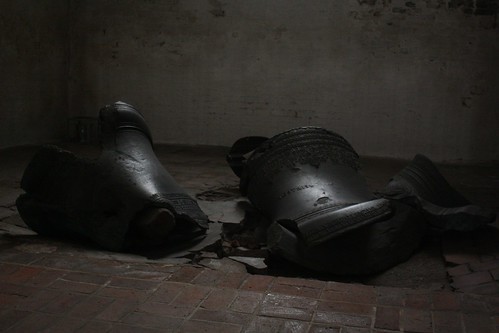
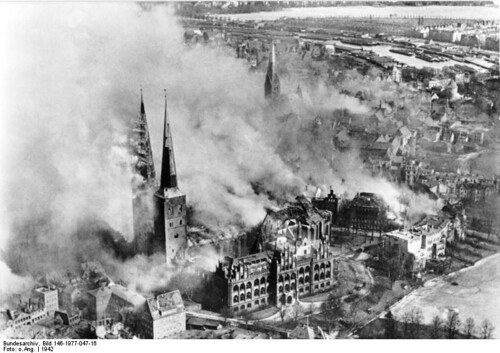
Note: This post was written in March 14-15 and posted after our return. When I think about L beck, the first thing that strikes me is the feeling of history underfoot. It struck me most when we set foot inside the Marienkirche. I had never quite felt a wave of a feeling of stepping back in time like that before. The stones on the floor were uneven and imperfect. L beck has had a wet and snowy winter, so the city had spread sand everywhere: sidewalks and roads. Walking into any grand church, I could hear the sound of sand under the shoes of everyone nearby, and feel it under my own shoes. I think I will long associate with L beck the feeling of walking into a grand old church, looking up at the top of the old building at seemingly impossible heights, while feeling the grit of sand and uneven stone beneath my feet. IMG_2643 Marienkirche isn t perfect, like some American churches I ve been in, such as the Basilica of Notre Dame. It doesn t have a lot of gold, either, and both of these attributes are wonderful. Look at a column of bricks, and you can see that each brick isn t exactly like its neighbor, and the entire column isn t perfectly straight. Lots of things in L beck are so old that they aren t perfectly straight, and it made me think that our American notion of always having to fix such things might be somewhat off sometimes. IMG_2629 Look up, and you see the frescos from the 1300s, revealed after many years after the building was struck by an allied bombing raid in 1942. This heavily damaged the building and knocked down plaster from the walls and ceiling, revealing the old artwork. Many parts of Marienkirche were lost as a result of the bombing, which perhaps adds to its slightly sparse and ancient feel. The church bells were sadly melted and crashed to the ground due to the bombing, and have been left exactly where they fell as a memorial. IMG_2641 Look down, and you see the uneven floor, and the concrete slabs above where important people were buried under the floor an attribute common to many of the churches we visited. It was common to see dates of graves from the 1600s and 1700s, though in some places it would go as far back as the 900s. The main part of the church has no heating or cooling, and visiting it on a day just a bit above freezing adds to the feeling of, well, old. Marienkirche has to be my favorite sight in L beck. Walking around the city, I get a similar feel. Many streets and sidewalks are made of stone. The streets that weren t damaged in the war have rows of beautiful old facades. Walk down many streets, and every so often I d see a little tunnel ( just wide enough for a coffin ) that goes under the street-facing houses to a nice little inner courtyard. These are open to the public, but tend to be very quiet and somewhat private. In the courtyard are smaller houses, which would have originally been used by the less wealthy. We also saw the L beck Dom (cathedral), which had a small museum about the destruction due to the Royal Air Force bombing in 1942. It was very sad to see the photo of the Dom in ruins, still smoking, even now. Burning L beck Cathedral after an air raid in 1942 I can only imagine what it must have felt like to residents of L beck to wake up to see many of their priceless centuries-old landmarks and places of worship so horribly destroyed and all of this for little strategic purpose really focused on the morale of the enemy civil population . It s sad that the allies would do such a short-sighted and terrible thing. Europeans have long had to live with the legacy of war upon war, while we Americans have rarely had to see the consequences of war up close. I think it would be good for more of us to visit these sites and come up face to face with what a bomb can do, and then perhaps we will be more judicious with them in the future. Shifting gears now to where we stayed: Andreas & Sigrid, with whom we stayed, have a beautiful 500-year-old house, with lots of original wood beams exposed, and some very old paintings on the walls and ceilings. Nearby were excellent bakeries and a chocolate shop. Terah and I visited it today and bought some very good chocolate. And this brings me to the second thing I ll remember: Andreas & Sigrid s children, Lukas and Rahel. Now, Terah knows no German, I know only a little bit, and the children know no English. So it was a bit slow getting to know each other to start out, but we managed to work around the communication barrier and had a great time. Terah played board games with Rahel, while with me, she kept inventing games to play: hiding somewhere, saying Hallo! , and laughing at how many unsuccessful attempts I might make to find her. I showed Lukas the camera on my Droid, which he used a lot, though a racing game on Terah s iPod Touch was more exciting. They both enjoyed looking at videos of American trains a bit, but especially pictures of our house and yard with Jacob and Oliver. They tried to teach me the German words for things, and also made futile attempts to correct my pronunciation! When we were leaving today, Rahel came over and gave me a kiss on the hand, then the same to Terah s hand, then a little kiss on one of our suitcases. It was touching and sweet. This was one of those experiences no guidebook prepared me for, and no tour bus would have provided. It is something neat to make friends with children despite the large language barrier. On to the rest of the visit We had arrived a little late into Hamburg. After getting our bags and some Euros at an ATM, the next step was to find the bus to L beck. No signs for it were evident, so I found an information desk. The person at the desk was carrying on a conversation in German with the person ahead of me in line. I figured an information desk person in a busy airport would speak English, and was all ready to ask Sprechen Sie Englisch? , but when I walked up, he got a polite smile, and said, Good morning! How can I help? Guess I m obvious. He directed me to the bus, gave me a brochure about it, and told me what time it would leave. Terah and I found the spot to wait, and for a moment I stepped inside the airport terminal. Terah won t let me forget that someone came up to her and asked a question in German, whereas I was spoken to in English. Anyhow, we found the bus, managed to communicate with the driver that doesn t speak English, and sat next to the friendly person that was talking to Terah. He turned out to be a violin player from Munich, and we had a great conversation for the next hour he asking questions about the USA, us asking questions about Germany and Munich. At one point, he commented, You two are so open minded and you re also Americans! He sounded surprised. We exchanged email addresses at the train station. Andreas found us there, and we walked through the city to his house, with him pointing out the sights along the way. L beck is a beautiful city, and though it was damaged in World War II, much of the really old parts still remain. The famous Holstentor Gate has a museum inside, which was fascinating to visit. On Sunday, we went to church with the family we were staying with, Andreas helpfully translating for us. There I met a British Python programmer, which was fun. His wife is a social worker, which was fun for Terah. Monday it was time to get on the train to Berlin. We again walked through a cold and rainy city to the Hauptbahnhof, ready to head to Berlin. There we got on a train to Hamburg, then an ICE train to Berlin. Despite having just a few minutes for a connection in Hamburg, it all went perfectly smoothly. The train left Leipzig about 10 seconds late the clock inside turned over to the minute, then the doors closed and we were off. Impressive. Note: the rest of my photos from L beck are available on Flickr.

25 March 2010

Randall Donald: Considering Retirement

I have been a developer with Debian since 2001 but my work has decreased steadily as my career and home life get busier. I think I'm at a point where I need to create a clean break and take a step away. But here is my problem: I am the only and founding DD on the NVIDIA packaging team. There is a DM now that works on libvdpau but despite attempts to have more DD's join, only Debian users have answered the call on a part-time or patch submitting basis. So does anybody want to take to the packaging of these babies before I mostly likely orphan them? Andres Mejia would of course keep libvdpau. Thank you for your attention.

Neil Williams: lintian, source format 3.0 and blog comments

Regarding my previous post on source format 3.0, I think it came across that I was blaming lintian entirely which would be unfair.

(As a side-note, a bug in serendipity XMLRPC resulting in all entries having comments disabled has led to a welcome effect of spreading the discussion more widely than a series of comments on my own site could have achieved. I'm happy with this state of affairs, so it you want to comment, either contact me by private email or put your comments on your own blog. I won't be enabling comments any time soon.)

The extended information behind the lintian warning is one thing (I've explained my position on that to Russ privately) - my main objection is to how such a warning was pushed into lintian and the entire use 3.0 or be damned approach that seems to be being adopted.

IMHO, source format 3.0 is not good enough to be the standard dpkg source format for a simple reason: It offers nothing to well maintained packages. Not all packages need NMU's - ever. Not all packages have patches - ever. Native packages and packages with the Debian maintainer upstream gain nothing from 3.0, as far as I can see.

I have 67 source packages - after much very careful consideration, I have found that a handful of those (less than 10) actually benefit from 3.0 and the rest are all unaffected. None of the packages that I will keep on 1.0 have ever had an NMU since I've been maintainer, most are either native or entirely under my sole upstream control. I will decide whether Debian gets a .tar.gz or a .tar.bz2 and although I generally offer both for download where I can, I see no reason to adopt .tar.bz2 as my default for Debian packaging.

Adding a redundant directory and file is obnoxious. I fail to see why debian/source-format would not have been perfectly suitable. Nevertheless, I will do what is necessary to avoid 3.0 until there is a compelling technical reason to adopt it.

The imperative for those in favour of 3.0 is to convince me that there is a reason TO change, not to make it difficult for me NOT to change. I do not need any reason to avoid 3.0 other than I do not have a good enough reason to move from 1.0. Making developers feel like luddites or incompetent merely because the proponents of 3.0 have failed to convince others to move to 3.0 is just insulting. You want me to use 3.0? Explain why I should bother - the current "reasons" on the Wiki page are simply not good enough and any rehash of those will be ignored. Come up with something new or respect my decision and let me get on with more important stuff.

24 March 2010

John Goerzen: Review: Travel as a Political Act by Rick Steves

Rick Steves is known for writing books, and producing public TV shows, about travel to Europe. He encourages people to get out of their comfort zone, advocates staying in homes instead of hotels, and giving yourself permission to struggle to communicate in a land of unfamiliar language. That way, you get to experience not just the landmarks, but the culture and history. That was the approach we favored in our recent trip to Europe, and after being there (and seeing tour groups), I think Rick Steves is right on. On the plane to Europe, I read his Travel as a Political Act. This is not a guidebook, but more a book about the philosophy of travel. As usual with my book reviews, unless indicated otherwise, all quotes here come from the book. He starts out with this statement:
I ve taught people how to travel. I focus mostly on the logistics: finding the right hotel, avoiding long lines But that s not why we travel. We travel to have enlightening experiences, to meet inspirational people, to be stimulated, to learn, and to grow. Travel has taught me the fun in having my cultural furniture rearranged and my ethnocentric self-assuredness walloped.
I read this book mostly on the plane to Hamburg, or the week prior to leaving. I can credit Rick Steves directly for encouraging me to strike up a conversation with a random German on the bus from Hamburg to L beck, which I ll discuss here in a couple of days. Probably the biggest lament from Rick Steves is that the people that really ought to travel the ones that are so sure that their ways are correct and best are least likely to do so.
Make a decision that on any trip you take, you ll make a point to be open to new experiences, seek options that get you out of your comfort zone, and be a cultural chameleon trying on new ways of looking at things and striving to become a temporary local. My best vacations have been both fun and intensely educational Travel challenges truths that we were raised thinking were self-evident and God-given. Leaving home, we learn that other people find different truths to be self-evident. We realize that it just makes sense to give everyone a little wiggle room.
The book is set with an introductory encouragement to travel, followed by seven vignettes of different countries he s visited, and descriptions of how it s impacted him. He gave a lesson of the opening of the German Reichstag (parliament building), which he was present for in 1999. He was surrounded by teary-eyed Germans and a few tourists so preoccupied with trivialities forgotten camera batteries, needing a Coke, the lack of air-conditioning that they were missing out on this once-in-a-lifetime opportunity to celebrate a great moment with the German people. He comments that we can learn from other countries that no one country has a monopoly on good ideas, and it is plenty patriotic to insist what we adopt good ideas (such as drug policy) from other countries and adopt them for our own. Particularly touching to me was the description and photo of a memorial in El Salvador, very much looking like the American Vietnam memorial except that one remembering loved ones lost fighting the United States. How many Americans even know that we were involved in a damaging war in El Salvador? A large part of his book was, for me, preaching to the choir, as this comment illustrated:
In the European view, America is trapped in an inescapable cycle to feed its military-industrial complex: As we bulk up our military, we look for opportunities to make use of it. (When your only tool is a hammer, you treat every problem like a nail.) And then, when we employ our military unwisely, we create more enemies which makes us feel the need to grow our military even more. If an American diplomat complained to his European counterpart, America is doing all the heavly lifting when it comes to military, the European might respond, Well, you seem to be enjoying it. We re building roads and bridges instead.
That s a sentiment I ve agreed with for quite some time already, and as such, some parts of the book moved slowly for me though I imagine his target audience included people that had never seriously considered these arguments before. Then there were surprising facts:
by the end of World War I, an estimated half of all the men in France between the ages of 15 and 30 were casualties. When some Americans, frustrated at France s reluctance to follow us into a war, call the French surrender monkeys, I believe it shows their ignorance of history.
And again, I d agree with him on that point. The vignette on Iran was particularly interesting, as he described his experiences in person, they sounded far different than the picture we often get in the media. I have realized, incidentally, that I am terrible at writing book reviews. So rather than inflict more paragraphs upon you with this one, I ll summarize by saying that this is a touching, informative, and motivational book, which I highly recommend. I ll leave you with this quote:
Mark Twain wrote, Travel is fatal to prejudice, bigotry, and narrow-mindedness. These wise words can be a reallying cry for all travelers once comfortably back home. When courageous leaders in our community combat small-mindedness and ignorance travelers can stand with them in solidarity.
I didn t travel to make some sort of statement or as a political act. But I was enriched in many ways by travel of course the obvious ones of contemplating the history of a 900-year-old beautiful church, but also in seeing the different character of different cities, being with two families for a couple of days, and seeing different approaches to common problems. I am very glad I wasn t shut off from this behind a tinted window in a tour bus.

Theppitak Karoonboonyanan: The Mini-DebCamp in Khon Kaen

So, Thailand Mini-DebCamp 2010 in Khon Kaen has already ended. It's another memorable event I've joined, and especially for this one, been in the organizing team. We owed many people for its success. I'd like to thank our guest DDs for their talks, many of which are improvised. Special thanks to Paul Wise and Yakiharu Yabuki for preparing the talks on Debian Social Contract and Debian packaging in one night, so our audiences can prepare themselves for the Bug Squashing Party in the next 3 consecutive days. Thanks Paul Wise, Andrew Lee, Yakiharu Yabuki, Daiki Ueno, Christian Perrier and our local participants for their efforts in tackling more than 50 bugs during the BSP, 30 of which have been closed and 14 with proposed patches. Thanks Christian Perrier for several talks in the last two days. We also had Andrew Lee's talk on Debian EzGo project, along with talks from our local distro developers (Linux SIS, Linux TLE) on what are being worked on and what can be pushed into Debian. And Neutron Soutmun had presented some future plan on the RahuNAS, a captive portal software based on Debian. A special agenda had been arranged to improve Debian mirroring in Thailand. Chatchai Jantaraprim, the ftp.th.debian.org maintainer, had shared us the backgrounds and motivations behind the official mirror setup for Thailand. Andrew Lee, the ftp.tw.debian.org maintainer, had introduced us to the Debian mirroring infrastructure, and encouraged the local mirror Debian mirror maintainers to do it Debian way. We had exchanged experiences and problems found among the current mirror sites, which can be much useful for their improvements, as well as cooperation in the future. Christian Perrier had also introduced us to the Debian translation workflow and how to coordinate translation via mailing list. This can be useful in the future for Thai if we can form a team, rather than a single-handed translation as present. Christian's talk on Debian contribution paths, along with their fresh hands-on experience in the BSP, had indeed motivated many local people to join Debian. I've been told by some people that they wanted to actually join Debian after this event, after just having a wish to do so for a long time. And Christian's yet another talk on key signing, with live demonstration, was really helpful for Thai audiences, as few of us were familiar with the concept and practice. Yes, taking care of PGP key does require special cares! Night chats and parties were also cool. We enjoyed the drinks (especially, Debian wine!), snacks, and chats together, and exchanged many stories. For me personally, it made me feel Debian as a live community, with people living in it. For the record, we even had a real bug squashing party, as fried bugs are among well-known Esaan dishes. And we had immediately got new voluntary vegetarians because of it! Hee hee.. Hello Christian, I witnessed it. ;-) And thumbs up to Yabuki for his bravery! Yes, it's a wonderful event for me indeed. Thanks Khon Kaen University (Kitt Tientanopajai et. al.) for hosting it. Thanks NECTEC Information and Mobile Applications Program and Science Park KKU for the financial support. Thanks NECTEC people for taking care of foreign participants in traveling between Bangkok and Khon Kaen. And thanks all participants for their contributions to make this event a great one! Picture credits: Supphachoke Suntiwichaya, DebConf Gallery

Adnan Hodzic: Need help setting up my Linux development platform

Maintaining stable life with unstable distro? This post may sound ludicrous to some of you but please hear me out. I ve been on Debian unstable/Sid for awhile now and it was all cool until yesterday. Besides my work on Debian DebConf/some devel, I m university student, also I do web devel which is my primary source of income, besides all those I try to go out on weekends and have some kind of social life. Somehow I manage to do all these things and I d say I manage them pretty successfully too. Now I m hardcore to the bone, but this is just too much, last week started working on immense web devel project didn t sleep more then 2hrs/day whole week; I also didn t shut down my notebook and just kept it on suspend as I usually do. Either way I was about to print/scan something and I connect my printer and what happens? My whole system freezes, now I ll let you figure out the result of doing hard reset and having a lot of gedit docs open at that time. And yes, I did had that bug reported awhile ago, can t find it now, but it was fixed, seems like it s back again. In the end I m left with weekend completing the lost work + late school work + eclipse 3.5.2-2 ought to be uploaded. I do almost all the work (didn t upload eclipse) and literally pass out on Sunday. Wake up sometime on Monday, wasn t able to get up from bed. Plan: Change my base distro, keep Sid as dualboot or virtual machine

Now, for my time of being Sid user this isn t the first time something like this happened, and by this I mean unexpected/unprovoked bugs. I might not be as hardcore as I used to be, or it s just that I don t have time anymore. So my plan is to get Stable or even Ubuntu for my work/study platform, while I d have dual boot or virtual machine of Debian Unstable/Sid. I m sure I can t be the only one who s doing this, so please give me your advice on this one.
1. Main question is dualboot or virtual machine? Reason I d like it to be a virtual machine instead of dual boot is that my notebook HDD is 64GB SSD (Lenovo X300). By todays standards 64GB is quite small, while the price of SSD is quite opposite of small. So I d like to use this only for my main/base OS, nothing else. Since I use external HDD s having it virtual it s more convenient for me to carry around my image/s. Other day I ordered 4GB of RAM so I shouldn t have problems with performance of this virtual machine. Or even with that much RAM, devel on virtual machine is just not possible? 2. In case I go for Ubuntu, and decide to start packaging for Ubuntu as well, what s the best way to have my work/packages synced within both Debian and Ubuntu (sshfs?). 3. How do I take my PGP keys with me? If I just copy .gnupg and .ssh will that be enough? 4. Can I have same keys both on my host machine and virtual machine at the same time? 5. Some other idea of sticking with Sid?
Input to any of these questions/other suggestions would be greatly appreciated.

21 March 2010

Alejandro Rios P.: MiniDebconf at Panama (day Three)

Today is the last day of this conference, which has been a great experience of interaction between Central America and Caribbean communities. Yesterday we had packaging, BTS, kernel, pbuilder and quilt related talks. We also expanded the web of trust with a key signing party with almost 30 participants. Even a BoF about people interested in VoIP was held before going downtown to share some beers :)

This morning we had talks about hands on maintaining and translation tasks, we had also a group photo, and a quick visit to the Panama Canal.

Although it has been hard for me to and others to identify common areas of interest towards future work in Debian, it seems to me that these could be centered around l10n and i18n issues, along with packaging and digital inclusion projects.

C.J. Adams-Collier: IronRuby continuous integration back online

We haven t done much work on keeping the continuous integration (CI) machines online, and there haven t been any new builds since November of 09. I should set Nagios to remind us when things get off track or something. The recent acceptance of the DLR into Debian and our intention to get the next release produced has inspired me (and maybe others) to get things back up. Ivan and I put a couple of Hudson instances up recently that you can reach via hudson-windows.colliertech.org and hudson-linux.colliertech.org. The linux instance is dropping new builds of IronRuby to http://dlrci.colliertech.org/ironruby/. I expect we can tweak the build script a bit and have it also produce IronPython builds. This would hypothetically drop the builds to http://dlrci.colliertech.org/ironpython/. Ivan mentioned that we may get CNAME records which would activate the windows-builds.ironruby.net and linux-builds.ironruby.net hosts as well. Note that these builds are being produced from the linux branch of git://github.com/casualjim/ironruby.git Thanks for your work on this, Ivan!

Next.

Previous.