Jan Wagner: [bpo] Couple new packages uploaded
 In the last days I uploaded several (new) packages to backports.org:
- mailscanner 4.79.11-2~bpo50+1
- icinga 1.0.1-3~bpo50+1 (NEW queue)
- nagios3 3.2.0-5~bpo50+1
- php-suhosin 0.9.31-1~bpo50+1 (NEW queue)
In the last days I uploaded several (new) packages to backports.org:
 I'm helping out on the talks committee for debconf 10 this summer in NYC (so yes, i'm going to be here for it, even though i don't have that little badge thingy). This is a call for interested folks to let us know what you want to see at debconf! Talks If you haven't already, submit your proposal for a talk, performance, debate, panel, BoF session, etc! We know you've got good ideas, and the final call for contributions went out yesterday, due in less than a week. Please propose your event soon! Tracks Also, we want to introduce Tracks as a new idea for debconf this summer. A good track would thematically group a consecutive set of debconf events (talks, panels, debates, performances, etc) to encourage a better understanding of a broader theme. For this to work, we need a few good people to act as track coordinators for the areas where they are knowledgeable and engaged. A track coordinator would have a chance to set the tone and scope for their track, schedule events, assemble panels or debates, introduce speakers, and report back at the end of debconf to the larger gathering. We also hope that a coordinator could identify potential good work being done in their area, encourage people to submit relevant events for debconf, and shepherd proposals in their track through the submission process. Are you interested in coordinating a track on some topic? Or do you have a suggestion for someone else who might do a good job on a topic you want to see well-represented at debconf? You can contact the talk committee privately if you have questions at talks@debconf.org, or you can contact the whole team publicly at debconf-team@lists.debconf.org. Some ideas about possible tracks:
#!/bin/bash
set -e
set -u
var1="something with
space and
linefeeds"
var1=$ var1//
/_
echo $var1
VAR1=$ VAR1##sync:archive:
 Yesterday I finally found the time to update gimp-plugin-registry, the (hopefully!) largest and best collection of plugins for The GIMP. As usual here comes a short summary of the changes:
 So you ve seen people talking about WebKit2, perhaps have seen someone claiming it drops support for Linux , and you ve been wondering what the hell that means for WebKitGTK+. Well, welcome to the preemptive Q&A section with WebKitGTK+ maintainers =D. Let s first explore some history so we can better understand what exactly is going on.
What exactly is WebKit2?
Currently, when we say WebKit we really mean one of the ports that are built on top of WebCore using the WebKit layer. WebCore is the part that does all of the hard Web-related work, WebKit an API layer that exposes WebCore functionality in a coherent way, so that the platform-specific ports can expose a public API layer for their applications to use, which is usually also called WebKit . This WebKit layer was designed by Apple to build the Mac, and Windows ports it maintains, and was later released as Free Software so that other ports, such as the GTK+, Qt, EFL ports could be built on top of it, instead of having to do all the heavy lifting from WebCore directly.
 WebKit2 is nothing more than the second version of that interface, with a whole lot of changes on what you can expect from it, and on how it interacts with WebCore, and the platform-specific API and UI. First of all, the first WebKit was not API stable, and that interface was usually not made public by the various ports - they only exposed their platform-specific APIs. WebKit2 is being designed to provide a stable, cross-platform, C-based, non-blocking public API. This is huge. It will allow cross-platform code to be written without having to consider language, and port differences for basic functionality.
The second big change is the API will be made fully non-blocking. Currently most things you do are asynchronous already, but some of them may be completed in a synchronous ways (like, loading a string into WebKit instead of an URI). This is important for responsiveness, and is also a very important need for what comes next: process splitting.
WebKit2 will bring into WebKit proper the concept of splitting the UI process from the Web process, similar to what Chromium has. It also much more awesome than what Chrome has for a large number of reasons, including, but not limited to:

udd=> select source, all_bugs from bugs_count where source = 'reportbug';but the result is the same: less than 100 bugs against reportbug! Yay!
source all_bugs
----------+----------
reportbug 91

 My blog is written in English, even though I sometimes post content relevant locally. Anyway, I want this to be as widely known as possible. We are about to launch a website/community for my University's cyclists, BiciUNAMonos. Please note the site I'm linking is still very preliminary in several ways. But that's the least relevant for now.
I am translating here a message written by fellow cyclist (and researcher in the Institute of Astronomy of my University) Sergio Mendoza.
Regarding the fatal cycling accident in Ciudad Universitaria Yesterday night I got home, and was quite surprised to open my mailbox and find a considerable amount of messages under the subject Urgent: Fallen cyclist! I immediately noticed something was very wrong, and was surprised they were contacting me. When I decided to read the first such message, I realized what happened: Dr. Jorge Villanueva was run over by the Puma [internal University service] bus number 14, route 2, which was being driven over the speed limit. This happened last Sunday, April 11. On Sundays, all of Ciudad Universitaria becomes a cycling and running circuit. I was immediately brought back to the moment that, when I was leaving my office in the Astronomy Institute and heading towards Cerro del Agua avenue, a lady driving over the speed limit on the circuit that comes from Metro Universidad threw her car at me. I saw her at a few centimeters distance from her windshield... To the day I don't know how I pulled my bike away, as I was going to hit the windshield with my shoulder. Everything happened in slow motion, I just heard several cars honking at this imprudent lady. I didn't have a scratch, but got excessively close to getting a strong hit, and with the adrenaline raging I gave a kind caress with my closed fist to her brand new car. I had to free my adrenaline somehow... My legs were trembling when I tried to pedal. I told her, lady, I am excessively visible in my bike, why did you do this? , she didn't answer, she just looked despectively at me. This kind of accidents happen every day in the University and its main entries. Precisely today, a University professor threw his car at me entering the University via Cerro del Agua. When I reached him and confronted him, he told me completely sure of his words that I was invading the lane with my bike, and that it was my fault. Anybody would have thought a car-driving university professor is capable of reading the Metropolitant Transit Regulations that clearly states on its 1st article: The priority for using the public space, for the different transport modes will be according to the following priorization: I. Pedestrians; II. Cyclists; III. Users and providers of massive, collective or individual public transport service; IV. users of particular automotor transport; and V. users and providers of freight transport. We are now organizing to put up the first ghost bike in Ciudad Universitaria. This happens few days before the formal inauguration of BiciUNAMonos, the universitary association of urban cyclists; we will do this remembering our university mate. I see every day more people in the University hitting their bike pedals to get to their faculties, centers and research institutes, but what is striking is the lack of University infrastructure. The few cycleways we have are built to use a bycicle system that is open only until 16:00. It is good, but it is in no way useful for those of us who use the bike every day and at every hour, no matter the weather. The main problem lies at the communication points, when cyclists arrive from outside Ciudad Universitaria and have to take the regular circuits to reach the cycleways. The Transit Regulation, in the 1st article I quoted above, defines in an excellent way the priorities that must exist to allow human movility. In this regard we have to mention that:Coincidentally, today I also had a freightening experience. Taking one of my usual routes to work, going up from the sporting area in the Western half of the campus (just before where the map lists the highest point in my ride), just by Investigaciones Biom dicas, I heard a car hitting the breaks behind me and passing me (on my right side) quite narrowly. I was, as always, driving towards the center of the lane, to be able to respond to unforseen events (as this one, precisely). The Universitary authorities had the great(?) idea of placing round, small bumps before the Pumabus stations to avoid drivers parking in front of them. I have seen a strong accident caused by them, and was close to suffering one myself some months ago. I know that just after Biom dicas there are some such bumps, so I never ride too much to the right I don't know what was on this driver's head. Ciudad Universitaria has a 40 Km/h speed limit. Yes, it might seem too low - Circuits are wide and well planned. But there is a lot of cyclist and pedestrian transit, at all times, and I must recognize such a limit is well in place. I often take a longer route to my Institute, bordering the University along Av. Delf n Madrigal. People tell me I'm crazy, as this is an avenue that's often taken at high speed - Usually, cars pass me by between 60 and 80 Km/h. However, I even feel safer going that way than going inside the University. Contrary to the popular belief, Universitary people do not have better driving habits than the bulk of the population. And it's often much easier to drive along a way where the traffic even if it goes at three times my speed runs only in one direction, unlike the swarming of people going in every possible direction inside the main campus. Anyway, last Sunday we lost a University professor, we lost a cyclist. Some people lost a friend, a family member. We have to make this case well known, we have to speak with the authorities so they see the Bicipuma system is good, but not enough. Cycling is the only way to go for a city as complex as ours. A much needed first step is to allow proper vial connections linking the University and the many avenues that surround it. Another one is to make a campaign so the cyclists are not seen as Sergio regards as intruders in the streets The street belongs to us all. Cyclists should never drive on walkways or among pedestrians. Drivers need to learn to share the streets with us.The last thing I wanted was to formally announce BiciUNAMonos reminding a fallen cyclist and dedicating a ghost bycicle to his memory in Ciudad Universtiaria, but we don't have a choice. We have to make it very clear to the University community that the bicycle is the best transport system, and that the drivers' imprudence inside Ciudad Universitaria must be strongly punished. Sergio Mendoza
- The pedestrians must be enormously protected with walkways and semaphores to allow them to safely walk. In Ciudad Unviersitaria there are many places that don't even have a walkway or semaphores, and drivers do not respect the pedestrian's preference. Also, now in the central area of Ciudad Universitaria we have the Pumabus system on a confined lane, providing an excellent service to the pedestrians to move within the campus.
- The cyclist comes next in this priorization, but there is nothing obvious for him. There are a couple of cyclist ways, usually invaded by pedestrians, and explicitly made to use the Bicipuma system. Cyclists need their own lane for circulation in the Universitary circuit; pedestrians have walkways, Pumab s has its confined lanes, but the cyclists still lack it. The third lane that remains is precisely for the IV and V entries in the Metropolitan Transport Regulations. They can perfectly share the remaining lane in the campus.
President
http://www.biciunamonos.org
 This note goes out to the maintainers and contributors of Free and
open source projects. (Cross-posted
at the OpenHatch blog.)
I recently had the chance to look at
Mozilla Quality Assurance's research
into
the people who help out with testing versions of Firefox.
I saw numbers that really spoke to my experience as a volunteer.
On one hand, the vast majority of people put in three or fewer hours a week,
most of whom put in one hour or fewer (such as zero).
 On the other hand, a huge number wish they could put in a lot more:
 Now imagine you're that one-hour-a-week contributor. You have all these other
bits of your life tugging at your time. You want to make sure that when
you sit down to work on free software, you're doing something that really
helps out. Otherwise, not only will you feel bad that you aren't giving
free software as much time as you wish, you'll feel bad that you're not even
making a difference.
In my experience, even reading the project mailing list counts toward
that time you're putting into the project. But that doesn't feel productive.
So fellow contributors, I have a request for you: Would you be willing to make
it super easy for someone to stand waiting, on guard, for instructions from
you? Imagine if all they had to do is click a button on your website, write a little
bit of info about what they could do, and you would suggest something for them
to work on. Maybe you can offer them a bitesize bug to fix, or maybe you need someone
to download and test the latest version before you release it. If you're handing out
assignments, then part-time contributors don't have to spend their time figuring out
what they should do.
I want to tell you that I can give you such a button. It would look like this:
 To get it, you just have to add a little snippet of HTML to your project website.
Just go to the OpenHatch project list.
and find your project. If it's not there yet, search for it, and click the link
to create it. Then find the box labeled "Have your own website?" and click.
Ta-da! HTML source code you can copy-paste. Since OpenHatch itself is an open
source project, we added the button to our own
"source code, etc." page.
When people click it, they appear in a list of "People willing to help" on your
project's OpenHatch page. Like all the friendly faces on the
Gwibber page.
Would you try it, too?
 I've become passingly interested in Linux's capabilities
functionality, as a
way of reducing
full-blown UID 0 requirements.
Unrelated to this, one of my few gripes about Python, coming from Perl, was
the inability to do anything like Perl's $0 to alter the appearance
of the running program. I used to use this functionality in Perl a lot to
provide cheap insight into what a long running Perl script was up to.
Well the other day, I was rather excited to learn that Dennis
Kaarsemaker has written a Python interface to capabilities, which also
implements a set_proctitle()
function.
The python-prctl module isn't currently available in Debian, but as Dennis
has all of the packaging in the Git repository, I've
offered to sponsor it for him if he wishes.
 a short overview of my RC bug activities. more than usual, most of them in
the debian perl group, some of them new bugs.
 Upload accepted by organisers.
Upload time has been 3h49'29" (my watch says 27", eh!).
That was a good one, really (actually, I can compare to only 3 as it
was my fourth marathon after Paris and Cologne 2009, plus the
unofficial Rambouillet Forest marathon I ran alone 6 weeks after Paris
2009).
For marathoners around, here are the chronometric data. Please note
that GPS watches tend to overestimate the distance, mostly because of
the jerky way one runs in mass events, as well as geometric
considerations related to the imprecision of GPS (imprecision may be
lateral and thus the line recorded by the watch is often less straight
than the real one). For instance, according to my watch, Paris
marathon was 42.63km long, so an overestimate by nearly 500meters. As
a consequence, the recorded speed of 5'23"/km should be corrected to
5'25". So, times below should be increased by 2 seconds.

Freitag, 9. April 2010 21:45
[Nokia N97]
Changes of Events in writeprotected calendar on this phone are not permitted. These changes were ignored: test, 04/09/2010 23:00
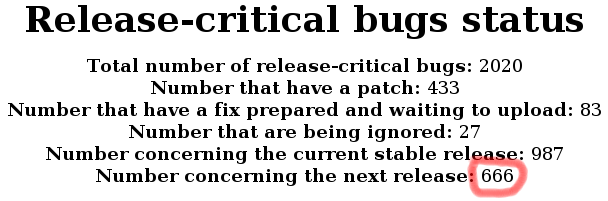 It is getting down, even though the current number is
scary. My personal
RC bug count is not so mystical and as low as 205 RC bugs to
go, which is quite encouraging. Without any further ado, here are
this week squashes:

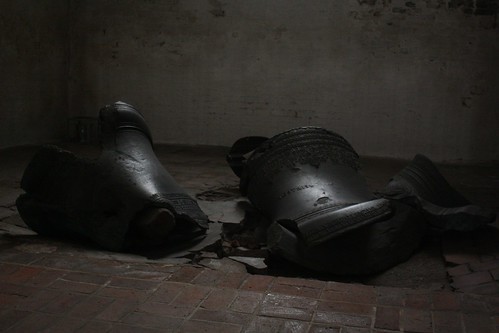 Seeing these church bells in L beck wasn t easy for me. They melted and fell to the ground after an air raid in 1942, and have been left exactly as they fell.
I wasn t alive in 1942, and even my parents hadn t yet been born. My grandfather was relocated by the American government because he refused to fight in the military for religious reasons.
And yet, I still felt a sense of embarrassment, being an American standing there in Germany next to those bells. My country* did things like this. Why? Even if there s a war on, and whatever the other side may be doing, do we really have to bomb all their churches?
Then, we went to the Dom (cathedral). It has a small gallery of photos of the destruction in 1942, and how it took 40 years to restore (though some original works are simply irreplaceable.)
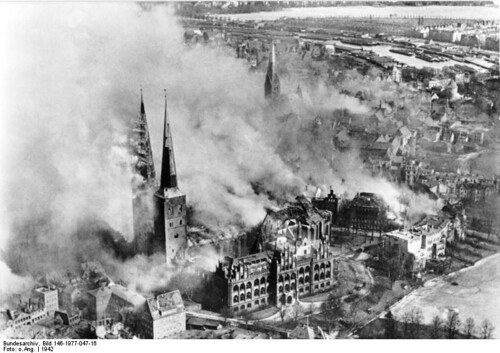 I had just been walking through the beautiful Dom, and then saw pictures like that. It was very sad. I imagined the people in 1942, seeing the smoking remains of so many buildings that had been important to the town for centuries. Places where, no doubt, some of them worshiped, and their parents and grandparents had too. I imagined my sadness if a country bombed one of the churches that my ancestors helped start or build. I felt ashamed of what the democracy in which I live (and its allies) did to the Dom, to Marienkirche, and to the other churches and civilians there.
Then, a few days ago, Wikileaks posted a video from an American helicopter in which our soldiers begged Come on, let us shoot! at people, most or all of which were completely unarmed. They killed a bunch of people. Then a van came to try to get the wounded to the hospital. Then the soldiers in helicopter killed those people, and wounded some children. Even if they thought their lives were in danger, I d expect to hear some quiet sadness at what they thought was a regrettable need to use force. Instead, you d hear them cheering whenever they killed someone, as if they had just won a round on some video game. They killed civilians, and considered it a fun experience and a mission accomplished. There was no sadness for knocking a man to the ground, leaving him writhing. Just jokes. There was no more care for human life here than there was 60 years ago.
It saddens me that every year we celebrate our military on independence day celebrating its ability to kill, not its ability to feed. I wish that we could rather celebrate the times Americans have saved lives, whether in Berlin or in Port-au-Prince, or helped to topple dictatorships. Military power shouldn t be our first choice so often.
L beck wasn t attacked for any strategic purpose; the British did it to destroy the morale of the enemy civil population , as the Americans did in Dresden or the Germans in London. In other words, those bells fell to the ground for no reason other than that they were German. People lost their lives for the same reason in Germany and in London. The British had no reason to believe that those civilians meant them any harm, that they were anything but caught between two strong powers. And the same held true in Iraq.
When we went to Berlin, we walked through the replica of Checkpoint Charlie, with the big sign announcing that you are leaving the American sector. There is little positive to be said about the Cold War, but there is something the British and American military did of which I am not the least ashamed: the Berlin Airlift. Although I didn t see it, I feel a sense of the USA having been a force for good when I read about the Berlin Airlift Monument at Tempelhof, which has the names of the 70 British and American men that lost their lives in the airlift (due to accidents), above the inscription They gave their lives for the freedom of Berlin. That s the spirit I wish we d see more often in the world today: people giving their lives not just for their own security, but for strangers in need on a different continent.
We Americans have been, compared to many countries in Europe, relatively sheltered from the ravages of war in our own midst. I wish that more of us would have the opportunity to gaze at fallen church bells, to wonder through a magnificent old church and then to see photos of it on fire, or to see a monument to our soldiers in a far away land. Perhaps then we could better learn from history, and see firsthand that some of our most positive contributions to the world have come in the form of coal and candy bars instead of incendiary devices.
A small post script
Many historic buildings or locations we saw in Germany had plaques on their exterior with a brief history, often in German and in English. I was interested to note that some (though not all) of these plaques had language such as destroyed by fire in 1942 , with no mention that the cause of the fire was a bombing. I was even more interested to note that same sort of description at several sites in Prague Castle, mentioning that the original building was lost in the fire of 1142. It was only on the third or fourth building in the Castle that we learned that the fire of 1142 was caused by a military siege of Prague Castle.
* I know it was the British at L beck, but the Americans did similar things elsewhere.
I also acknowledge that, at a macro level at least, the Berlin Airlift wasn t purely an altruistic act, as there were geopolitical factors in play. But I am speaking of the actions of the airmen here, who took on considerable risk to help others.
Next.
