Bits from Debian: OpenStreetMap migrates to Debian 12
 You may have seen this toot
announcing OpenStreetMap's migration to Debian on their infrastructure.
After 18 years on Ubuntu, we've upgraded the @openstreetmap servers to Debian 12 (Bookworm). openstreetmap.org is now faster using Ruby 3.1. Onward to new mapping adventures! Thank you to the team for the smooth transition. #OpenStreetMap #DebianWe spoke with Grant Slater, the Senior Site Reliability Engineer for the OpenStreetMap Foundation. Grant shares: Why did you choose Debian?
There is a large overlap between OpenStreetMap mappers and the Debian community. Debian also has excellent coverage of OpenStreetMap tools and utilities, which helped with the decision to switch to Debian. The Debian package maintainers do an excellent job of maintaining their packages - e.g.: osm2pgsql, osmium-tool etc. Part of our reason to move to Debian was to get closer to the maintainers of the packages that we depend on. Debian maintainers appear to be heavily invested in the software packages that they support and we see critical bugs get fixed.What drove this decision to migrate?
OpenStreetMap.org is primarily run on actual physical hardware that our team manages. We attempt to squeeze as much performance from our systems as possible, with some services being particularly I/O bound. We ran into some severe I/O performance issues with kernels ~6.0 to < ~6.6 on systems with NVMe storage. This pushed us onto newer mainline kernels, which led us toward Debian. On Debian 12 we could simply install the backport kernel and the performance issues were solved.How was the transition managed?
Thankfully we manage our server setup nearly completely with code. We also use Test Kitchen with inspec to test this infrastructure code. Tests run locally using Podman or Docker containers, but also run as part of our git code pipeline. We added Debian as a test target platform and fixed up the infrastructure code until all the tests passed. The changes required were relatively small, simple package name or config filename changes mostly.What was your timeline of transition?
In August 2024 we moved the www.openstreetmap.org Ruby on Rails servers across to Debian. We haven't yet finished moving everything across to Debian, but we will upgrade the rest when it makes sense. Some systems may wait until the next hardware upgrade cycle. Our focus is to build a stable and reliable platform for OpenStreetMap mappers.How has the transition from another Linux distribution to Debian gone?
We are still in the process of fully migrating between Linux distributions, but we can share that we recently moved our frontend servers to Debian 12 (from Ubuntu 22.04) which bumped the Ruby version from 3.0 to 3.1 which allowed us to also upgrade the version of Ruby on Rails that we use for www.openstreetmap.org. We also changed our chef code for managing the network interfaces from using netplan (default in Ubuntu, made by Canonical) to directly using systemd-networkd to manage the network interfaces, to allow commonality between how we manage the interfaces in Ubuntu and our upcoming Debian systems. Over the years we've standardised our networking setup to use 802.3ad bonded interfaces for redundancy, with VLANs to segment traffic; this setup worked well with systemd-networkd. We use netboot.xyz for PXE networking booting OS installers for our systems and use IPMI for the out-of-band management. We remotely re-installed a test server to Debian 12, and fixed a few minor issues missed by our chef tests. We were pleasantly surprised how smoothly the migration to Debian went. In a few limited cases we've used Debian Backports for a few packages where we've absolutely had to have a newer feature. The Debian package maintainers are fantastic. What definitely helped us is our code is libre/free/open-source, with most of the core OpenStreetMap software like osm2pgsql already in Debian and well packaged. In some cases we do run pre-release or custom patches of OpenStreetMap software; with Ubuntu we used launchpad.net's Personal Package Archives (PPA) to build and host deb repositories for these custom packages. We were initially perplexed by the myriad of options in Debian (see this list - eeek!), but received some helpful guidance from a Debian contributor and we now manage our own deb repository using aptly. For the moment we're currently building deb packages locally and pushing to aptly; ideally we'd like to replace this with a git driven pipeline for building the custom packages in the future.Thank you for taking the time to share your experience with us.
Thank you to all the awesome people who make Debian!
We are overjoyed to share this in-use case which demonstrates our commitment to stability, development, and long term support. Debian offers users, companies, and organisations the ability to plan, scope, develop, and maintain at their own pace using a rock solid stable Linux distribution with responsive developers. Does your organisation use Debian in some capacity? We would love to hear about it and your use of 'The Universal Operating System'. Reach out to us at Press@debian.org - we would be happy to add your organisation to our 'Who's Using Debian?' page and to share your story! About Debian The Debian Project is an association of individuals who have made common cause to create a free operating system. This operating system that we have created is called Debian. Installers and images, such as live systems, offline installers for systems without a network connection, installers for other CPU architectures, or cloud instances, can be found at Getting Debian.
 My trek to Toulouse was seamless. I hopped on a bus from my home in Bristol to the airport, then took a short flight. I luxuriated in seat 1A, making me the first to disembark a mere ten minutes later, I was already on the bus heading to my hotel.


 Once settled, I wasted no time exploring the charms of Toulouse. Just a short stroll from my hotel, I found myself beside a tranquil canal, its waters mirroring the golden hues of the trees lining its banks. Autumn in Toulouse painted the city in warm oranges and reds, creating a picturesque backdrop that was a joy to wander through. Every corner of the street revealed more of the city's rich cultural tapestry and striking architecture. Known affectionately as 'La Ville Rose' (The Pink City) for its unique terracotta brickwork, Toulouse captivated me with its blend of historical allure and vibrant modern life.

 Prior to the main event, the MiniDebCamp provided two days of hacking at
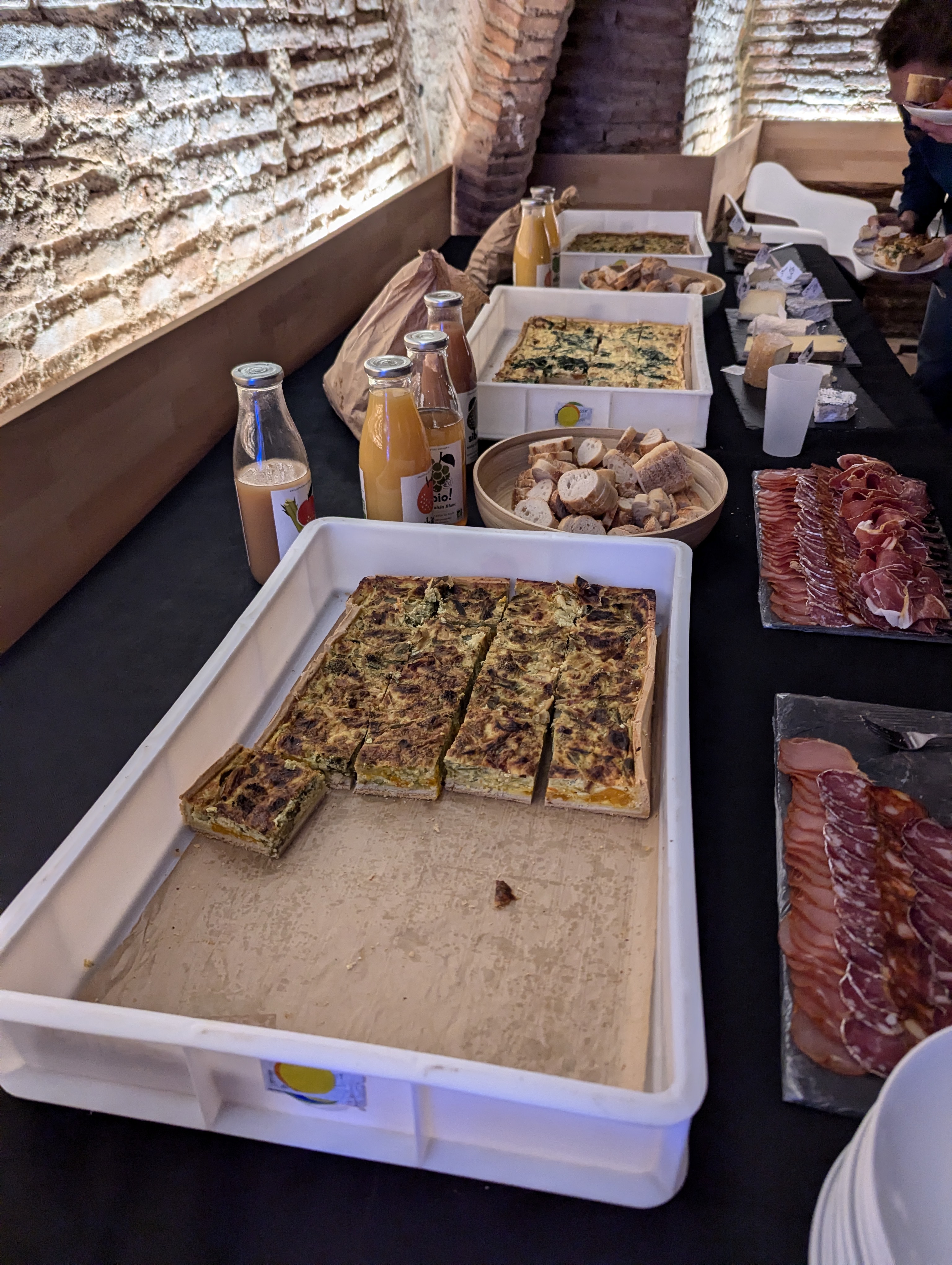


 The hospitality was exceptional. Our lunches boasted a delicious array of quiches, an enticing charcuterie board, and a superb selection of cheeses, all perfectly complemented by exquisite petite fours. Each item was not only a feast for the eyes but also a delight for the palate.
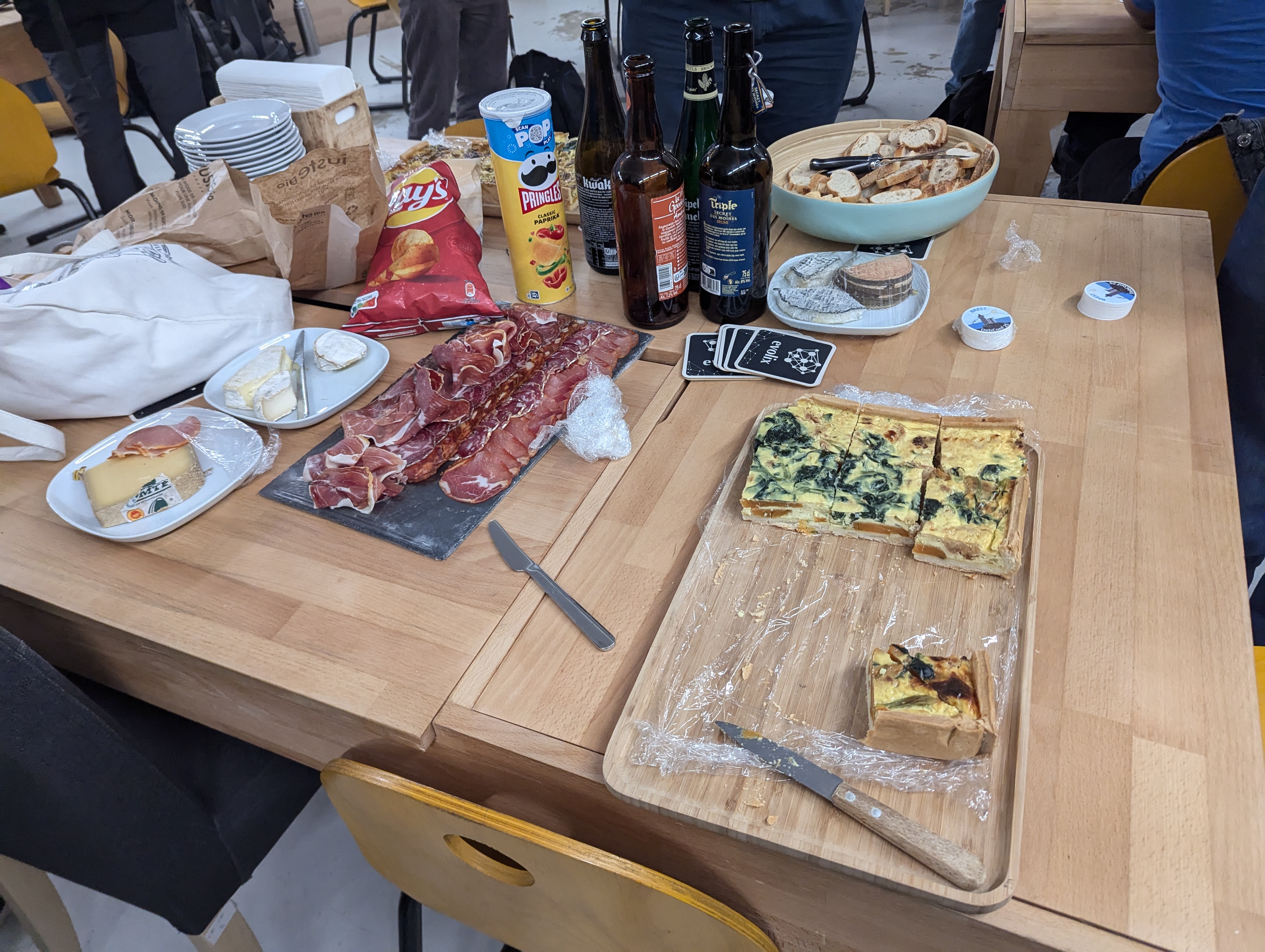
 Leftovers from these gourmet feasts fuelled our impromptu cheese and wine party on Thursday evening a highlight where informal chats blended seamlessly with serious software discussions.

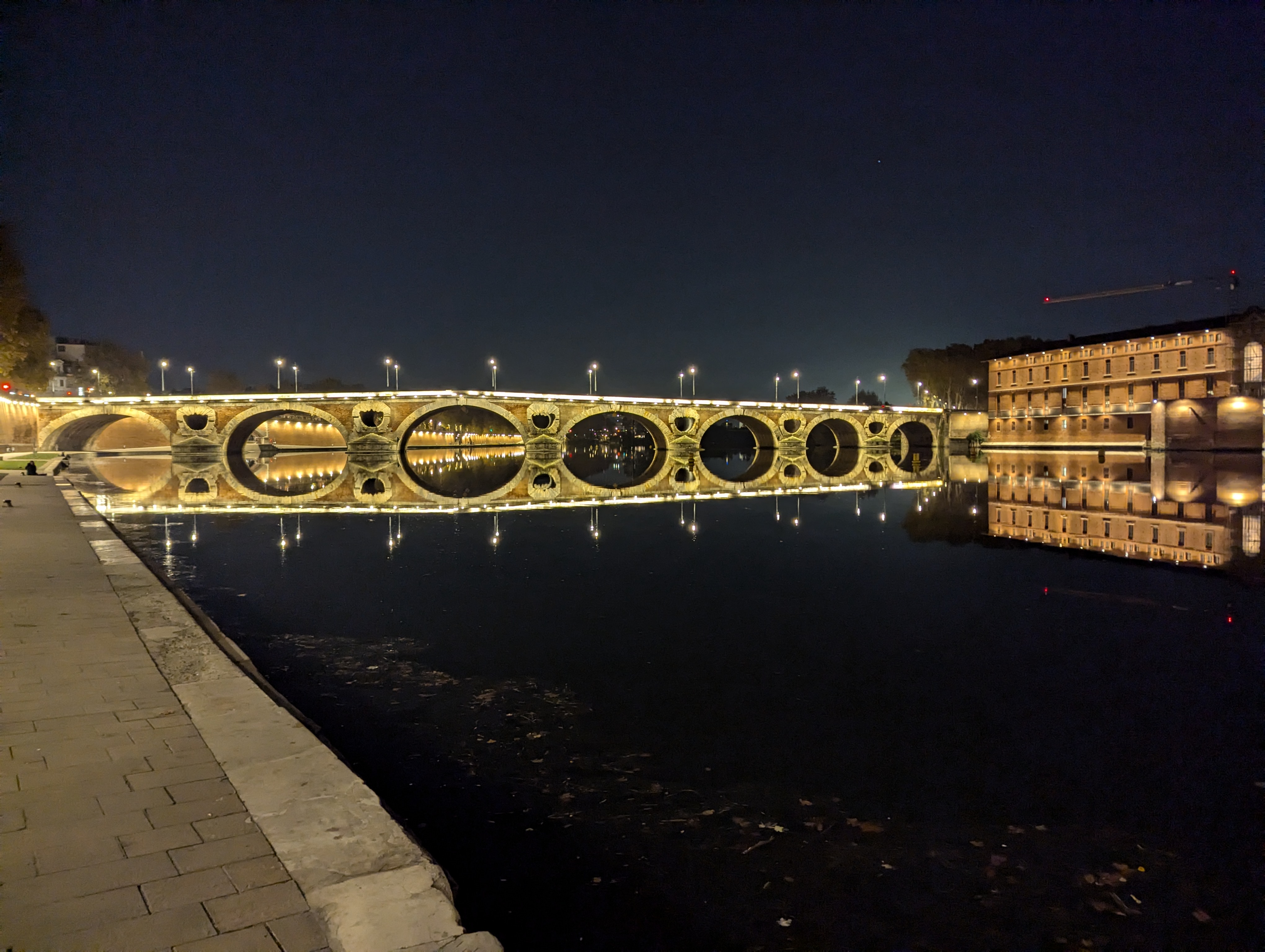

 The enchantment of Toulouse doesn't dim with the setting sun; instead, it transforms. My evening strolls took me along the banks of the Garonne, under a sky just turning from twilight to velvet blue. The river, a dark mirror, perfectly reflected the illuminated grandeur of the city's architecture. Notably, the dome of the
 The MiniDebConf itself, part of the larger Capitole du Libre event, was a fantastic immersion into the world of free software. Unlike the ticket-free FOSDEM, this conference required QR codes for entry and even had bag searches, adding an unusual layer of security for a software conference.
Highlights included the crepe-making by the organisers, reminiscent of street food scenes from larger festivals. The availability of crepes for MiniDebConf attendees and the presence of food trucks added a festive air, albeit with the inevitable long queues familiar to any festival-goer.

 The city's

 Toulouse's markets were a delightful discovery. From a spontaneous visit to a market near my hotel upon arrival, to cycling past bustling marketplaces, each day presented new local flavours and crafts to explore.
The


 Our conference wrapped up with a spontaneous gathering at La Brasserie Les Arcades in Place du Capitole. Finding a caf that could accommodate 30 of us on a Sunday evening without a booking felt like striking gold. What began with coffee and ice cream smoothly transitioned into dinner, where I enjoyed a delicious braised duck leg with green peppercorn sauce. This meal rounded off the trip with lively conversations and shared experiences.


 Returning from Toulouse, I found myself once again in seat 1A, offering the advantage of being the first off the plane, both on departure and arrival. My flight touched down in Bristol ahead of schedule, and within ten minutes, I was on the A1 bus, making my way back into the heart of Bristol.
 Notes to self. And anyone else who might find them useful. Following are some ssacli commands which I use infrequently enough that they fall out of cache. This may repeat information in other blogs, but since I search my posts first when commands slip my mind, I thought I d include them here, too.
 Our Debian User Group met on November 2nd after a somewhat longer summer hiatus
than normal. It was lovely to see a bunch of people again and to be able to
dedicate a whole day to hacking :)
Here is what we did:
lavamind:








 The number of FAIme jobs has reached 30.000. Yeah!
