Search Results: "phil"

15 July 2015

Matthew Garrett: Canonical's Ubuntu IP policy is garbage

(In order to avoid any ambiguity here, this is a personal opinion. The Free Software Foundation's opinion on this matter is here)

Canonical have a legal policy surrounding reuse of Intellectual Property they own in Ubuntu, and you can find it here. It's recently been modified to handle concerns raised by various people including the Free Software Foundation[1], who have some further opinions on the matter here. The net outcome is that Canonical made it explicit that if the license a piece of software is under explicitly says you can do something, you can do that even if the Ubuntu IP policy would otherwise forbid it.

Unfortunately, "Canonical have made it explicit that they're not attempting to violate the GPL" is about the nicest thing you can say about this. The most troubling statement is Any redistribution of modified versions of Ubuntu must be approved, certified or provided by Canonical if you are going to associate it with the Trademarks. Otherwise you must remove and replace the Trademarks and will need to recompile the source code to create your own binaries.. The apparent aim here is to avoid situations where people take Ubuntu, modify it and continue to pass it off as Ubuntu. But it reaches far further than that. Cases where this may apply include (but are not limited to):
In each of these cases, a strict reading of the policy indicates that you are distributing a modified version of Ubuntu and therefore must either get it approved by Canonical or remove the trademarks and rebuild everything. The strange thing is that this doesn't limit itself to rebuilding packages that include Canonical's trademarks - there's a requirement that you rebuild all binaries.

Now obviously this is good engineering practice in a whole bunch of ways, but it's a huge pain in the ass. And to make things worse, Canonical won't clarify what they consider to be use of their trademarks. Many Ubuntu packages rebuilt from Debian include the word "ubuntu" in their version string. Many Ubuntu packages will contain the word "ubuntu" in maintainer email addresses. Many Ubuntu packages include references to Ubuntu (for instance, documentation might say "This configuration file is located under /etc/default in Debian and Ubuntu"). And many Ubuntu packages will include the compiler version string, which will include the word "ubuntu". Realistically, there's no risk of confusion by using the trademarks in this way, and as a consequence there would be no infringement under trademark law. But Canonical aren't using trademark law here. Canonical assert that they hold copyright over binaries that they have built form source, and require that for you to have permission to redistribute these binaries under copyright law you must remove the trademarks. This means that it doesn't matter whether your use of the trademarks would be infringing or not - you're required to remove them, because fuck you that's why.

This is a huge overreach. It's hostile to free software, in that it makes it significantly more difficult to produce derivative works of Ubuntu and doesn't benefit the community in the process. It's hostile to our understanding of IP law, in that it claims that the mechanical process of turning source code into binaries creates an independently copyrightable work. And in some cases it may make it impossible to create derivative works that interoperate with Ubuntu due to applications making assumptions about the presence of strings.

It'd be easy write this off as an over the top misinterpretation of the policy if it hadn't been confirmed by the Ubuntu Community Manager that any binaries shipped by Ubuntu under licenses that don't grant an explicit right to redistribute the binaries can't be redistributed without permission or rebuilding. When I asked for clarification from Canonical over a year ago, I got no response[2]. Perhaps Canonical don't want to force you to remove every single use of the word Ubuntu from derivative works, but their policy is written such that the natural reading is that they do, and they've refused every single opportunity they've been given to clarify the point.

So, we're left with a policy that makes it hugely impractical to redistribute modified versions of Ubuntu unless Canonical approve of it. That's not freedom, and it's certainly not Ubuntu. If Canonical are serious about participating in the free software community then they need to demonstrate their willingness to continue improving this policy to bring it closer to our goals. Failure to do so will give a strong indication of their priorities.

[1] While I'm a member of the FSF's board of directors, I'm not involved in the majority of the FSF's day to day activities and was not part of this process
[2] Nebula's OS was a mixture of binary packages we pulled straight from Ubuntu and packages we rebuilt, so we were obviously pretty interested in what the answer was

comment count unavailable comments

17 June 2015

Norbert Preining: Gaming: Portal

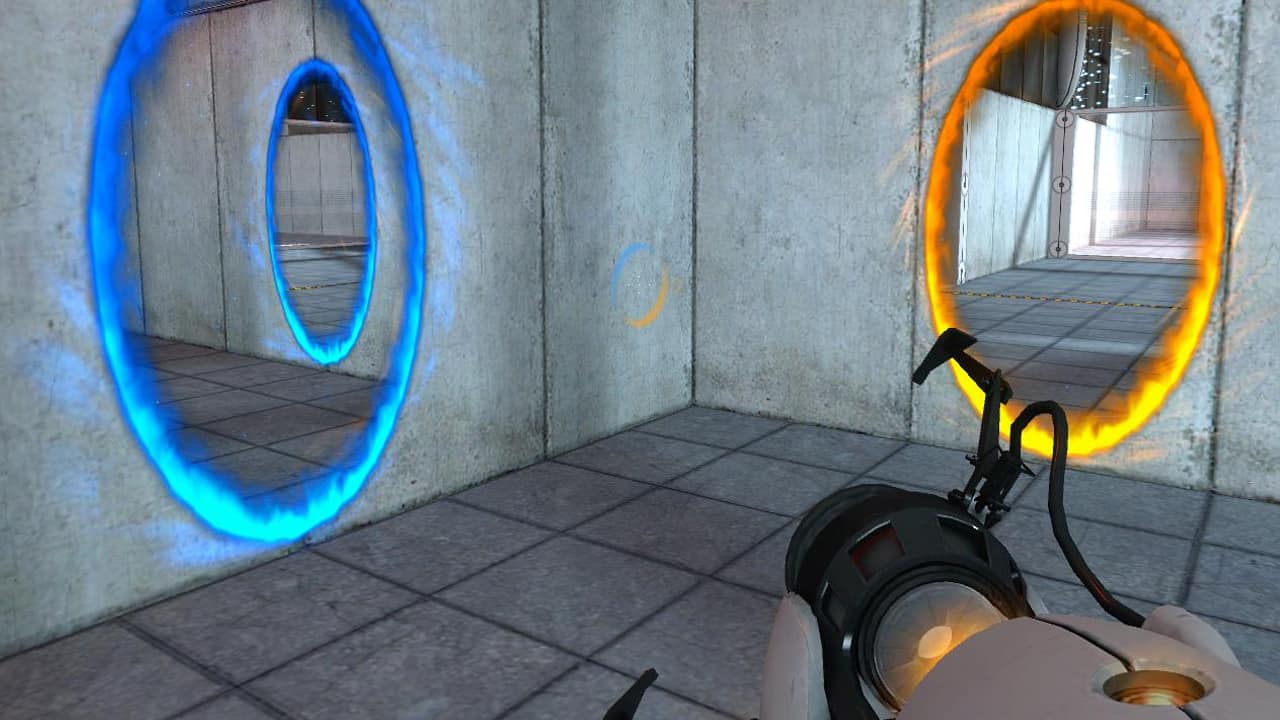
Ok, I have to admit, I sometimes do game and recently I finished Portal. Quite old (released in 2007), but still lots of fun. I started playing it about one year ago, off and on, until I recently finished the last level. Took me about 1 year of playing to finish the actual playing time of about 10h I guess you can see how much an addict I am  portalhazards I have never been a gamer, and I think there are only three set of games I played for extended periods of time:
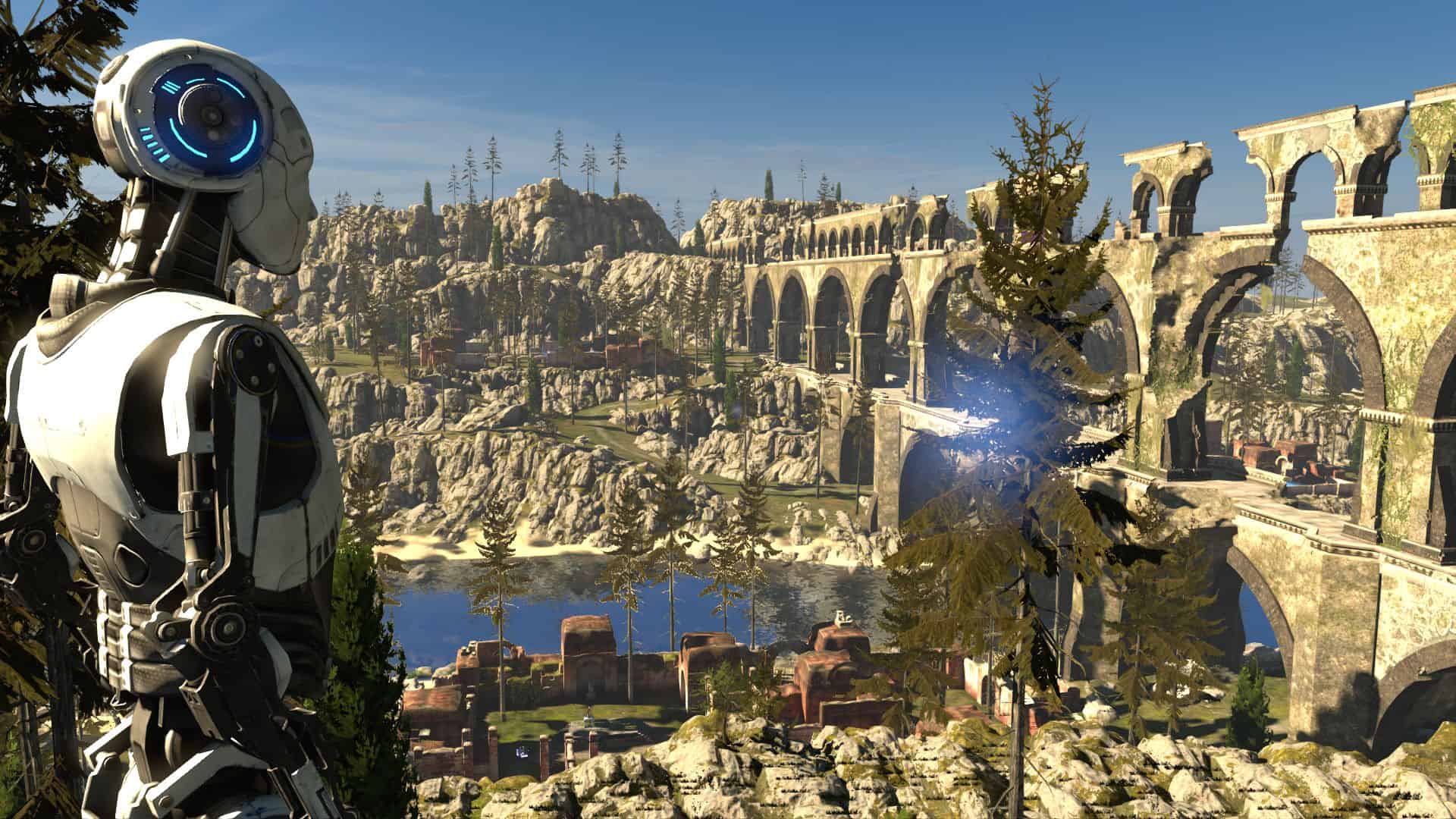
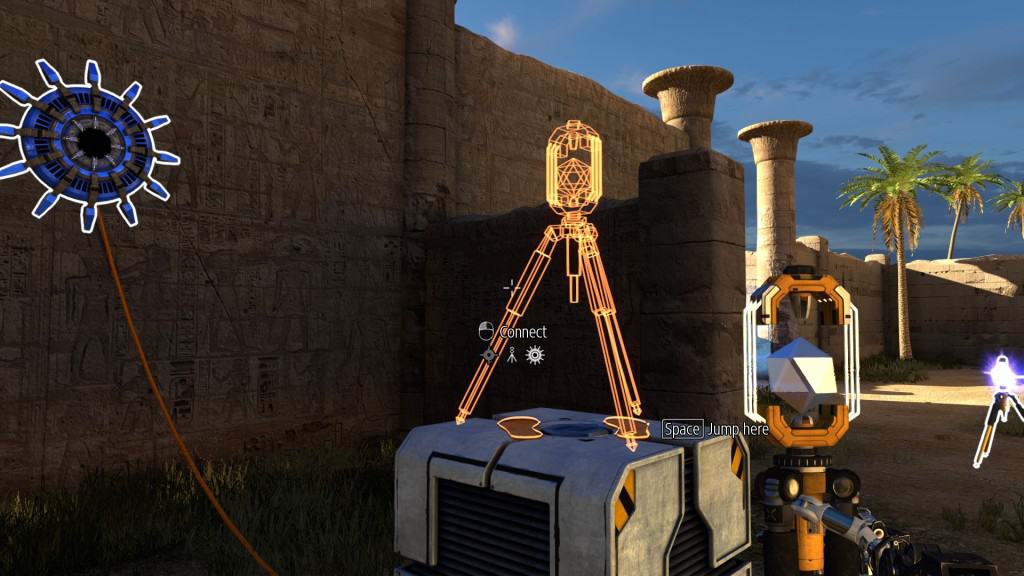
plus one more game, which got me hooked somehow: Hard-core board gamer who I am (I prefer playing with people real games without computer), I loved the Myst series for its crazy riddles, where solving them often needs a combination of logical thinking, recognizing patterns in images and sounds, and piecing together long list of hints. This is something a normal board game cannot provide. From the Descent series I loved the complete freedom of movement. Normal first-person shooters are just like humans running around, a bit of jumping and crouching, but Descent gives you 6D freedom which led to some people getting sick while watching me playing. From the Civilization series I don t know what I liked particularly, but it got you involved and allowed you to play long rounds. After these sins of youngsters, I haven t played for long long time, until a happy coincidence (of being Debian Developer) brought Steam onto my (Linux) machine together with a bunch of games I received for free. One of the games was Portal. Portal is in the style of Myst games one can place dual portals in various places, and by entering one of the portals, one leaves through the other. Using this one has to manage to solve loads of puzzle, evade being shot, dissolved in acid, crashed to death, etc etc, with the only aim to leave the underground station. portal-ex Besides shooting these portals there are some cubes that one can carry around and use for a variety of purposes, like putting them onto buttons, using them as stairs, protecting yourself from being shot, etc. But that s already all the tools one has. Despite of this, the levels pose increasingly difficult problems, and one is surprised how strange things one can achieve with these limited abilities and no, one cannot buy new power-ups, its not WoW. Logical thinking, tactic, and a certain level of reaction suffices. While not as philosophical as Myst, it was still a lot of fun. The only thing I am a bit unclear is, where to go from here. There are two possible successors: The logical one would be Portal 2. But I recently found a game that reminded me even more of the Myst series, combined with Portal: The Talos Principle, with stunning graphics: talos1 talos2 And filled with riddles again, maybe not as involved as in the Myst series (I don t know by now), but still a bit more challenging than Portal s one:
talos3 talos4 Difficult decision. If you have any other suggestions, please let me know!

20 May 2015

Norbert Preining: Shishiodoshi or Us and They On the perceived exclusivity of Japanese

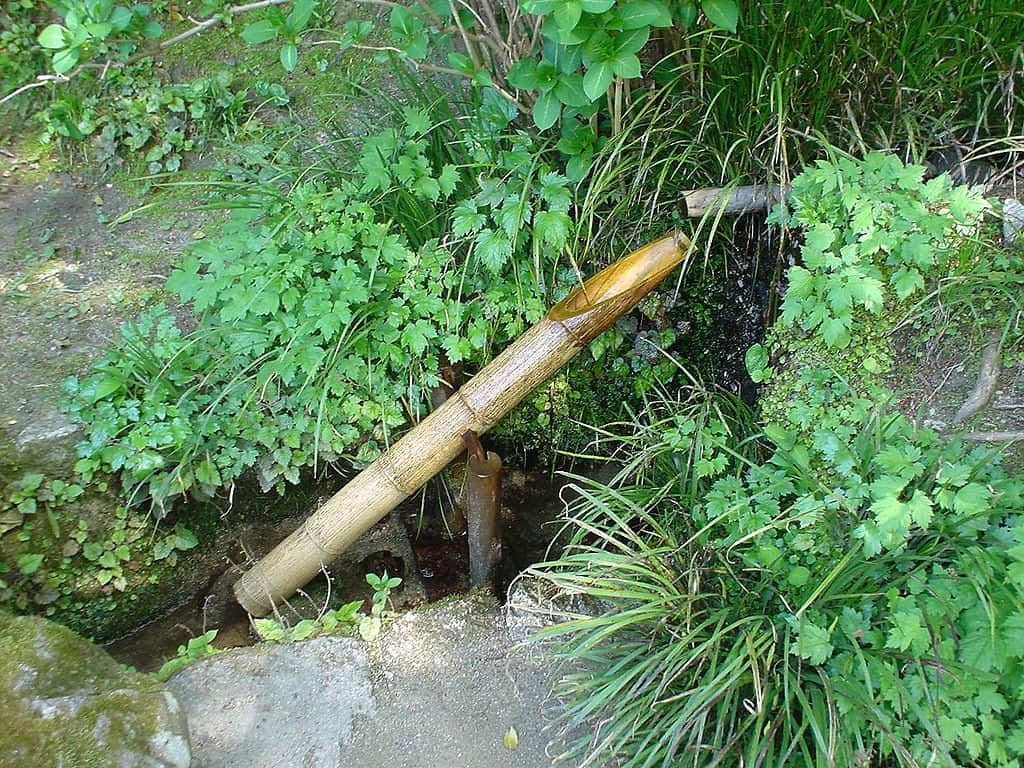
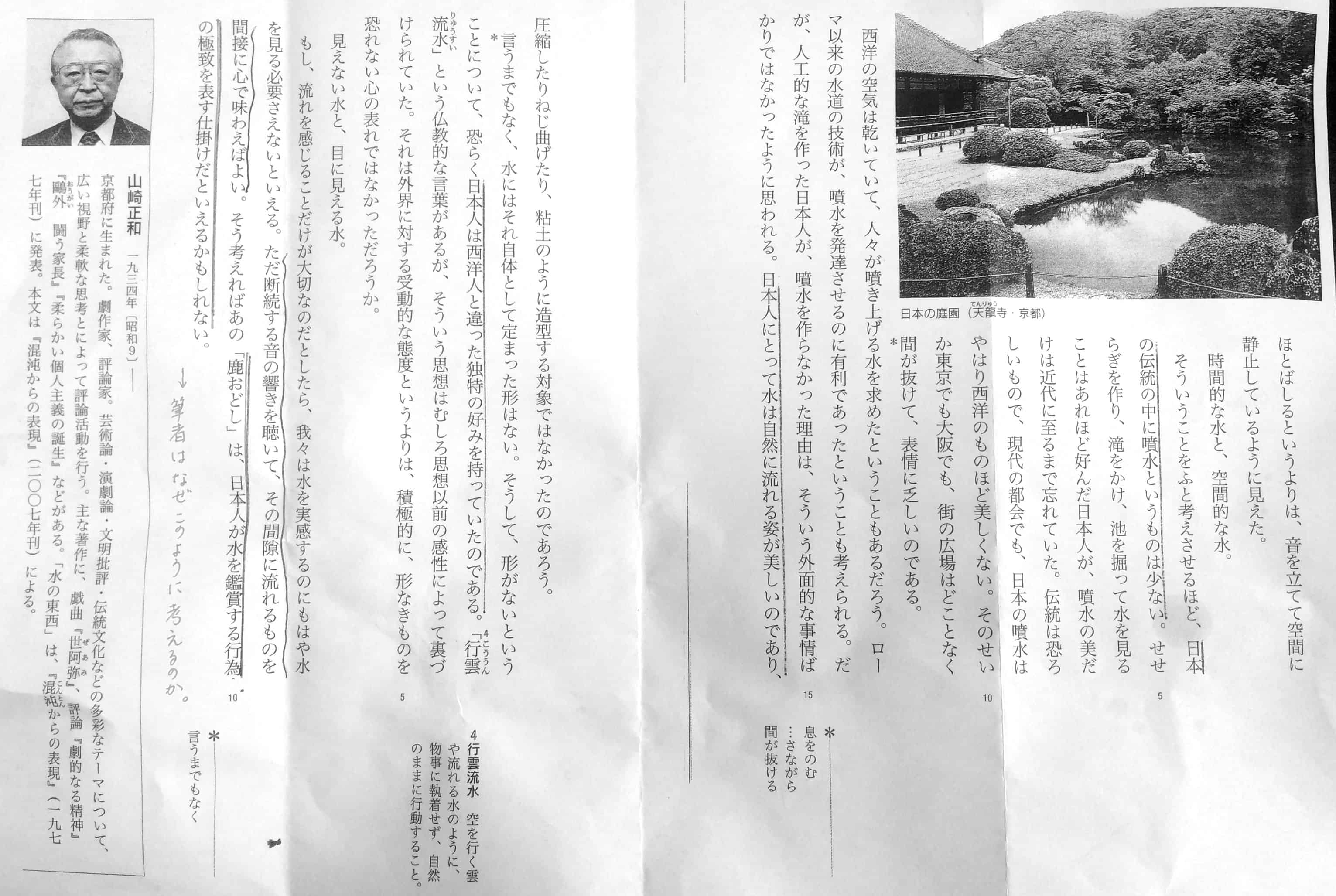
The other day I received from my Japanese teacher an interesting article by Yamazaki Masakazu comparing garden styles, and in particular the attitude towards and presentation of water in Japanese and European gardens (page 1, page 2). The author s list of achievements is long, various professorships, dramatist, literature critique, recognized as Person of Cultural Merit, just to name a view. I was looking forward to an interesting and high quality article! The article itself introduces the reader to Shishiodoshi, one of the standard ingredients of a Japanese garden: It is a device where water drips into a bamboo tube that is also a seesaw. At some point the water in the bamboo tube makes the seesaw switch over and the water pours out, after which the seesaw returns to the original position and a new cycle begins. Shishiodoshi The author describes his feelings and thoughts about the shishiodoshi, in particular connects human life (stress and relieve, cycles), the flow of time, and some other concepts with the shishiodoshi. Up to here it is a wonderful article providing interesting insights into the way the author thinks. Unfortunately, then the author tries to underline his ideas by comparing the Japanese shishiodoshi with European style water fountains, describing the former with all favorable properties and full of deep meaning, while the latter is qualified as beautiful and nice, but bare of any deeper meaning. I don t go into details that the whole comparison is anyway a bad one, as he is comparing Baroque style fountains, a very limited period, and furthermore ignores the fact that water fountains are not genuinely European (isn t there one in the Kenrokuen, one of the three most famous gardens in Japan!?), nor does he consider any other water-installation that might be available. What really destroys the in principle very nice article is the tone: The general tone of the article then can be summarized into: The shishiodoshi is rich on meaning, connects to the life of humans, instigates philosophical reflections, represents nature, the flow of time etc. The water fountain is beautiful and gorgeous, but that is all. I don t think that this separation, or this negative undertone, was created on purpose by the author. A person of his stature is supposedly above this level of primitive comparison. I believe that it is nothing else but a consequence of upbringing and the general attitude that permeates the whole society with this feeling of separateness. Us and They Repeatedly providing sentences like Japanese people and Western people have different tastes.. ( ). About 10 times in this short article expressions like Japanese and Westerner appear, leaving the reader with a bitter taste of an author that considers first the Japanese a people (what about Ainu, Ryukyu, etc?), and second that the Japanese are exclusive in the sense that they are set apart from the rest of the world in their way of thinking, living, being. What puzzles me is that this is not only a singular opinion, but a very general straight in the Japanese media, TV, radio, newspaper, books. Everyone considers Japan and Japanese as something that is fundamentally and profoundly different from everyone else in the world. There is We the Japanese (and that doesn t mean nationality of passport, but blood line!), and there are They the Rest or, as the way of writing and and description on many occasion suggestions, They the Barbarians . A short anecdote will underly this: One of the favorite TV talk show / pseudo-documentary style is about Japanese living abroad. That day a lady married in Paris was interviewed. What followed was a guided tour through Paris showing: Dirt in the gutter, street cleaning cars, waste disposal places. Yes, that was all. Just about the dirt . Of course, at length the (unfortunately only apparent) cleanliness of Japanese cities and neighborhoods are mentioned and shown to remind everyone how wonderful Japan is and how dirty the Barbarians. I don t want to say that I consider Japan more dirty than most other countries just the visible part is clean, the moment you step a bit aside and around the corner, there are the worst trash just thrown away without consideration. Anyway. To return to the topic of Us and They I consider us all humans, first and foremost, and nationality, birthplace, and all that are just by chance. I do NOT reject cultural differences, they are here, of course. But cultural differences are one thing, separating one self and one s perceived people from the rest of the world is another. Conclusion I repeat, I don t think that the author had any ill intentions, but it would have been nicer if the article wouldn t make such a stark distinction. He could have written about Shishiodoshi and water fountains without using the Us They categorization. He could have compared other water installations, could have discussed the long tradition of small ponds in European gardens, just to name a few things. But the author choose to highlight differences instead of commonalities. It is the Us against Them feeling that often makes life in Japan for a foreigner difficult. Japanese are not special, Austrians, too, are not special, nor are Americans, Russians, Tibetans, or any other nationality. No nationality is special, we are all humans. Maybe at some point this will arrive also in the Japanese society and thinking.
Email this to someonePrint this pageShare on FacebookShare on Google+Tweet about this on TwitterShare on LinkedInFlattr the author

6 April 2015

Daniel Pocock: Dandenongs

The final part of our latest Australia trip took us to the Dandenong Ranges. To borrow a term from the Germans and Swiss, Mount Dandenong could be considered Melbourne's Hausberg or local mountain. On the south side of the mountain, tourists and children are impressed by the Puffing Billy railway at Belgrave: Keen runners can race the train in about May each year in a 13km course through the mountains. You need to stay at least thirty seconds ahead of the train to avoid being stuck at the level crossings. My own fastest time was about two minutes faster than the train. Leaving Belgrave, there is a short but steep drive up to the Mount Dandenong summit following the road towards Monbulk and Olinda. From the top, you can view the whole city, Port Philip Bay and various other mountain ranges in other directions:

29 March 2015

Zlatan Todori : Its all about fun

The percentage that women in Debian occupy as DDs is ~2%. Yes, just ~2% ladies that are DDs! So that means ~98% of DDs are gentelmen. some picture with rage meme I know there are more of ladies in Debian, so I firstly urge you, for love of Debian, to apply if you are contributing to this project, love its community and want to see Debian taking over the universe (okay, it seems that we conquered outer space so we need a help on Earth). So why is the number this low? Well maybe it's too precious to us currently inside that we want to prevent it being spoiled from outside. Also there seems to be not that much of younger DDs. Why is that important - well, young people like to do it and not to think about it. Many time they just break it, but many time they also do a breakthrough. Why is difference important and why should we embrace it? It's very important because it breaks a monopoly on view and behavior. It brings views not just from a larger number of people, but also from people from different backgrounds, and in constructive conversation it can put even more pluses on current workflow or it can counter it with good arguments. In a project of its size and worldwide geolocation of its developers, this is true for Debian more then any other projects I know. We need more women so we can balance our inner workings and have a better understanding of humanity and how is it moving, what and why does it need and where is it steering. That way we can produce a community which will improve quality of OS that we produce - because of sheer number of different people working on the same thing bringing to it its own personal touch. So, ladies and youth all over the world, unite and join in Debian because without diversity Debian can't grow beyond its current size. Also, no, Debian is not about code only, it needs painters, musicians, people that want to talk about Debian, people that share love and happiness, people that want to build better communities, UI/UX designers, makers, people who know how to repair a bike, athletes, homebrew beer producers, lawyers (just while world gets rid of laws, then we don't need you), actors, writters... Why, well because world and communities are made up from all that diversity and that's what makes it a better and not a monotone place. But I just use Debian. Well, do you feel love towards Debian and its work? Would you like to feel more as integral part of community? If the answer is big fat YES, then you should be a DD too. Every person that feels it's part of Debians philosophy about freedom and behaving in good manner should join Debian. Every person that feels touched and enhanced by Debian's work should become part of community and share its experience how Debian touched their soul, impacted their life. If you love Debian, you should be free to contribute to it in whatever manner and you should be free to express your love towards it. If you think lintian is sexy, or shebang is a good friends of yours, or you enjoy talking to MadameZou about Debian and zombies (yeah, we do have all kinds of here), or you like Krita, or you hate the look of default XFCE theme, or you can prove that you a more crazy developer then paultag - just hop into community and try to integrate in it. You will meet great folks, have a lot of conversation about wine and cheese, play some dangerous card games and even learn about things like bokononism (yeah I am looking at you dkg!). Now for the current Debian community - what the hell is packaging and non-packaging Debian Developer? Are one better then others? Do others stink? They don't know to hug? WHAT? Yes I know that inexperienced person shouldn't have a permission to access Debian packaging infrastructure, but I have the feeling that even that person knows that. Every person should have a place in Debian and acknowledge other fields. So yes, software developers need access to Debian packaging infrastructure, painters don't. I think we can agree on this. So lets abolish the stupid term and remove the difference in our community. Lets embrace the difference, because if someone writes a good poem about Debian heroism I could like it more then flashplugin-nonfree! Yep, I made that comparison on purpose so you can give a thought about it. Debian has excellent community regarding operating system that it's producing. And it's not going away, not at least anytime soon. But it will not go forward if we don't give additional push as human beings, as people who care about their fellow Debianites. And we do care, I know that, we just need to push it more public. We don't hide bugs, we for sure shouldn't hide features. It will probably bring bad seeds too, but we have mechanisms and will to counter that. If we, on average 10 bad seeds, get some crazy good hacker or crazy lovely positive person like this lady, we will be on right path. Debian is a better place, it should lead in effort to bring more people into FLOSS world and it should allow people to bring more of diversity into Debian. draw a picture where it says next year 3 dpl candidates should be only women and at least one of them not involved in packaging

20 March 2015

Zlatan Todori : My journey into Debian

Notice: There were several requests for me to more elaborate on my path to Debian and impact on life so here it is. It's going to be a bit long so anyone who isn't interested in my personal Debian journey should skip it. :) In 2007. I enrolled into Faculty of Mechanical Engineering (at first at Department of Industrial Management and later transfered to Department of Mechatronics - this was possible because first 3 semesters are same for both departments). By the end of same year I was finishing my tasks (consisting primarily of calculations, some small graphical designs and write-ups) when famous virus, called by users "RECYCLER", sent my Windows XP machine into oblivion. Not only it took control over machine and just spawned so many processes that system would crash itself, it actually deleted all from hard-disk before it killed the system entirely. I raged - my month old work, full of precise calculations and a lot of design details, was just gone. I started cursing which was always continued with weeping: "Why isn't there an OS that can whithstand all of viruses, even if it looks like old DOS!". At that time, my roommate was my cousin who had used Kubuntu in past and currently was having SUSE dual-booted on his laptop. He called me over, started talking about this thing called Linux and how it's different but de facto has no viruses. Well, show me this Linux and my thought was, it's probably so ancient and not used that it probably looks like from pre Windows 3.1 era, but when SUSE booted up it had so much more beautiful UI look (it was KDE, and compared to XP it looked like the most professional OS ever). So I was thrilled, installed openSUSE, found some rough edges (I knew immediately that my work with professional CAD systems will not be possible on Linux machines) but overall I was bought. After that he even talked to me about distros. Wait, WTF distros?! So, he showed me distrowatch.com. I was amazed. There is not only a better OS then Windows - there where dozens, hundreds of them. After some poking around I installed Debian KDE - and it felt great, working better then openSUSE but now I was as most newbies, on fire to try more distros. So I was going around with Fedora, Mandriva, CentOS, Ubuntu, Mint, PCLinuxOS and in beginning of 2008 I stumbled upon Debian docs which where talking about GNU and GNU Manifesto. To be clear, I was always as a high-school kid very much attached to idea of freedom but started loosing faith by faculty time (Internet was still not taking too much of time here, youth still spent most of the day outside). So the GNU Manifesto was really a big thing for me and Debian is a social bastion of freedom. Debian (now with GNOME2) was being installed on my machine. As all that hackerdom in Debian was around I started trying to dig up some code. I never ever read a book on coding (until this day I still didn't start and finish one) so after a few days I decided to code tetris in C++ with thought that I will finish it in two days at most (the feeling that you are powerful and very bright person) - I ended it after one month in much pain. So instead I learned about keeping Debian system going on, and exploring some new packages. I got thrilled over radiotray, slimvolley (even held a tournament in my dorm room), started helping on #debian, was very active in conversation with others about Debian and even installed it on few laptops (I became de facto technical support for users of those laptops :D ). Then came 2010 which with negative flow that came in second half of 2009, started to crush me badly. I was promised to go to Norway, getting my studies on robotics and professor lied (that same professor is still on faculty even after he was caught in big corruption scandal over buying robots - he bought 15 years old robots from UK, although he got money from Norway to buy new ones). My relationship came to hard end and had big emotional impact on me. I fell a year on faculty. My father stopped financing me and stopped talking to me. My depression came back. Alcohol took over me. I was drunk every day just not to feel anything. Then came the end of 2010, I somehow got to the information that DebConf will be in Banja Luka. WHAT?! DebConf in city where I live. I got into #debconf and in December 2010/January 2011 I became part of the famous "local local organizers". I was still getting hammered by alcohol but at least I was getting out of depression. IIRC I met Holger and Moray in May, had a great day (a drop of rakia that was too much for all of us) and by their way of behaving there was something strange. Beatiful but strange. Both were sending unique energy of liberty although I am not sure they were aware of it. Later, during DebConf I felt that energy from almost all Debian people, which I can't explain. I don't feel it today - not because it's not there, it's because I think I integrated so much into Debian community that it's now a natural feeling which people here, that are close to me are saying that they feel it when I talk about Debian. DebConf time in Banja Luka was awesome - firstly I met Phil Hands and Andrew McMillan which were a crazy team, local local team was working hard (I even threw up during the work in Banski Dvor because of all heat and probably not much of sleep due to excitement), met also crazy Mexican Gunnar (aren't all Mexicans crazy?), played Mao (never again, thank you), was hanging around smart but crazy people (love all) from which I must notice Nattie (a bastion of positive energy), Christian Perrier (which had coordinated our Serbian translation effort), Steve Langasek (which asked me to find physiotherapist for his co-worker Mathias Klose, IIRC), Zach (not at all important guy at that time), Luca Capello (who gifted me a swirl on my birthday) and so many others that this would be a post for itself just naming them. During DebConf it was also a bit of hard time - my grandfather died on 6th July and I couldn't attend the funeral so I was still having that sadness in my heart, and Darjan Prtic, a local team member that came from Vienna, committed suicide on my birthday (23 July). But DebConf as conference was great, but more importantly the Debian community felt like a family and Meike Reichle told me that it was. The night it finished, me and Vedran Novakovic cried. A lot. Even days after, I was getting up in the morning having the feeling I need something to do for DebConf. After a long time I felt alive. By the end of year, I adopted package from Clint Adams and Moray became my sponsor. In last quarter of 2011 and beginning of 2012, I (as part of LUG) held talks about Linux, had Linux installation in Computer Center for the first time ever, and installed Debian on more machines. Now fast forwarding with some details - I was also on DebConf13 in Switzerland, met some great new friends such as Tincho and Santiago (and many many more), Santiago was also my roommate in Portland on the previous DebConf. In Switzerland I had really great and awesome time. Year 2014 - I was also at DebConf14, maintain a bit more packages and have applied for DD, met some new friends among which I must put out Apollon Oikonomopoulos and Costas Drogos which friendship is already deep for such a short time and I already know that they are life-long friends. Also thanks to Steve Langasek, because without his help I wouldn't be in Portland with my family and he also gave me Arduino. :) 2015. - I am currently at my village residence, have a 5 years of working experince as developer due to Debian and still a lot to go, learn and do but my love towards Debian community is by magnitude bigger then when I thought I love it at most. I am also going through my personal evolution and people from Debian showed me to fight for what you care, so I plan to do so. I can't write all and name all the people that I met, and believe me when I say that I remember most and all of you impacted my life for which I am eternally grateful. Debian, and it's community effect literally saved my life, spring new energy into me and changed me for better. Debian social impact is far bigger then technical, and when you know that Debian is a bastion of technical excellence - you can maybe picture the greatness of Debian. Some of greatest minds are in Debian but most important isn't the sheer amount of knowledge but the enormous empathy. I just hope I can in future show to more people what Debian is and to find all lost souls as me to give them the hope, to show them that we can make world a better place and that everyone is capable to live and do what they love. P.S. I am still hoping and waiting to see Bdale writing a book about Debian's history to this day - in which I think many of us would admire the work done by project members, laugh about many situations and have fun reading a book about project that was having nothing to do but fail and yet it stands stronger then ever with roots deep into our minds.

14 March 2015

Bits from Debian: apt install dpl-candidate: Mehdi Dogguy

0. Who are you and what is your history with Debian Project? I guess this part is well covered in my platform. 1. What is your most proud moment as Debian Developer? I am pretty proud of having been part of the few who implemented the first automatic dependency resolver for OCaml programs and libraries in Debian packages. It was really the first one in the OCaml community and we were quite proud of it. But that was done before I become a Debian Developer. As a DD, I have to admit I am quite proud to be part of the Release Team. It is a fantastic team where there is so much to do. Helping the team means something to me, and I invested a considerable amount of time (a few months) working on reviewing patches for Squeeze and helping to get it ready by our standards. My best moment was Squeeze's release, my first Debian release as Release Team member. 2. In your opinion what is the strongest part of Debian Project? I am not sure we can identify one single strength of the Debian project. But, when I think about your question, I remember something I've heard many times: Debian is about people . I have to admit that I didn't realize it myself until I heard it for the first time and I completely share the idea! For me, all the technical side of the project comes after the community. With time, I think we managed to build a strong community. Many contributors became friends with time. We are seeing many Developers having babies and bringing them to Debian events. I find that really amazing. 3. And what is the weakest part of Debian Project? Our strength is somehow also our weakness. We are humans and make mistakes. We have feelings and some discussions get heated sometimes. It is not easy to keep everyone calm and focused. We have seen the damage that was caused to our core community last year with all the flamewars. Many people lost their motivation and we have seen some of them stepping down. We are also having troubles on-boarding new contributors, which is a problem today because some teams are under-staffed and could become an even bigger issue on the longer term. 4. How do you intend to resolve the weakest part? An effort has already been made on this front. We can mention the introduction of the Code of Conduct and the diversity statement, for example. Both are important and make us a more welcoming and caring community. In my platform, I mentioned some ideas about recruitment and change management. I believe that both sides will help us to get a stronger community. Moreover, a DPL should act as a mediator to help some situation get through. This is one of the DPL tasks that is not formally identified and is usually under-estimated. 5. DPL term lasts for one year - what would you challenge during that term and what have you learned from previous DPL's? Personally, the main thing I have learned from past DPLs is that communication is very important. A DPL should dedicate time to communicate about ongoing actions and achievements. It is also important to remind a few things even if it may sound repetitive or trivial: If the communication is only about listing some actions, many people will miss its essence and its goals. It is even more important when we know that some actions may take years (thus, several DPL terms) to complete. If I am elected as DPL, I'd really like to help the project to publish a roadmap. I think it is very important to set goals to the project to better explain our philosophy and approach in the Free Software world. This may also help to attract new contributors which may be interested by one or some items. Of course, I will not work on that subject only. I invite you to read the rest of my platform to see the other ideas. 6. What motivates you to work in Debian and run for DPL? Many many things. And more importantly, many many people As many of us, I like programming and socializing. It feels nice to be part of such a big project and where you can do many different things. I contribute to Debian because I find it fun and let me meet people I will not have been able to meet elsewhere. In my platform, I tried to identify ideas I'd like to see implemented, or at least started. Since Debian is a do-ocracy, I thought I could try to get them implemented by myself. I think that those ideas are important for the Debian community and will help us moving forward. Running for DPL is also another way of contributing to Debian and I'd feel honored to represent Debian.

4 March 2015

Phil Hands: The future arrived, again!

I am reminded by Gunnar's wonderful news that I have been very remiss in publishing my own. Mathilda Sophie Hands, our second daughter, was delivered on the 9th of January. Her arrival was a little more interesting than we'd have preferred (with Gunde being suddenly diagnosed with HELLP Syndrome), but all has turned out well, with Gunde bouncing back to health surprisingly quickly, and Mathilda going from very skinny to positively chubby in a few short weeks, so no harm done. Today Mathilda produced her first on-camera smile. Matilda, smiling on camera for the first time It's lovely when they start smiling. It seems to signal that there's a proper little person beginning to take shape.

Zlatan Todori : Interviews with FLOSS developers: Paul Wise

After starting with Joey Hess, we continue with Paul Wise. What makes his star to shine are many things such as being a DSA (Debian System Administrator), a helpful hand on mailings list, encouraging people to join Debian teams but most of all - he has encyclopedia knowledge on Debian as a whole which he gladly shares with anyone who asks (very fast response on IRC channels). It is almost impossible for any single person to count all Debian teams, work and places - to know most of those things, you can image the vast knowledge which Paul has. The legend says that his brain has better and faster search engine algorithm on Debian related queries than all other engines combined. So lets see what he has to share with world. me: Who are you? pabs: Paul Wise (pabs) and I have to say that I'm no-where near as knowledgeable as your intro suggests. me: How did you start programming? pabs: Messing around with fractals and graphics things in MS BASIC. me: How would you now advise others to start programming? pabs: Pick an issue in a tool you use, investigate how the tool works and how you can change it, fix that and contribute the change back to the project that created that tool. In the process you will learn skills, interact with the community and contribute to the project. me: Setup of your development machine? pabs: Lenovo Thinkpad with external monitor, Debian testing and some tweaks me What is your preferable language (for hacking)? Why? How do you compare it to other languages? pabs: I currently prefer Python for its readability. It still has some rough edges though the documentation covers them fairly well. I generally pick up new languages when working on projects written in them. Haskell is next on the horizon due to Nikki and the Robots. me: Describe your current most memorable situation as software developer/hacker? pabs: I had a great time creating fractals in BASIC, learning about the Mandelbrot set, L-systems and more. My days and nights of hacking on frhed (a GPLed hex editor for Windows) to help me cheat at Civilisation were pretty memorable. frhed led to my work on reverse engineering the CHM file format (a documentation format for Windows programs). A stand-out moment during my time with Debian was hacking on the derivates census patch generation code during the Debian UK BBQ weekend, surrounded by geeks playing Portal, cooking things, hacking on Debian and generally having a good time (thanks Steve!). me: Some memorable moments from Debian conferences? pabs: There are so many; meeting Debian folks, playing Mao once and then never again, late night games of werewolf, both delectably delicious and hideously disgusting cheeses, fried insects, day trips to beautiful landscapes, inspiring keynotes, exciting BoFs, secret IRC channels for planning surprise birthday parties, blue hair, wet air, blocks of fried cheese, a vast quantity of icecream, pants, geeks in the surf, volcanoes, hiking, a wonderful view, a uni-cycling stormtrooper & more. me: How do you see future of Debian development? pabs: I hope we will continue to exist and uphold our principles for the foreseeable future. I don't have any crystal balls though. me: You recently became member of Debian DSA - what is that like, what roles do you have and what tasks are in front of DSA? pabs: We wrote a bit of text about that for DPN recently. me: You have large knowledge on Debian and you share it with anyone who wants to know more. What motivates you to do so? pabs: I want the operating system I personally rely on to exist into the future, helping folks work on and join Debian can help with that. me: Why should developers and users join Debian community? What makes Debian a great and happy place? pabs: Every Debian contributor has different reasons for joining the community. Personally the Social Contract, the DFSG and the spirit and culture behind them are the main reason to be involved. I also like our many efforts towards technical excellence and correctness. Of course I've made a number of good friends over the years, especially as a result of attending DebConf every year since 2007. me: You are member of Debian publicity team which writes Debian news - do you need more people to join that team and how can they start? pabs: Since there is an infinite amount of work to do, pretty much every part of Debian always needs help, that includes the publicity team. We published a post about ways to help here. me: If someone wants to contribute to Debian in terms of packaging, can they do it anonymously (for example over Tor network, does Debian have .onion address)? pabs: Due to Debian's penchant for transparency it is harder but there are definitely package maintainers who have built up a reputation for good work under a pseudonym over the years and become Debian contributors as a result. I'm not aware of completely anonymous package maintainers but there are definitely people who file bugs using one-off pseudonyms, which is almost the same thing as anonymously. There are definitely Debian contributors and members who use Tor while contributing to Debian. In fact, as Debian is very highly dependent on OpenPGP and the best practices for OpenPGP include refreshing your keyring slowly over Tor, so probably quite a number of Debian contributors use Tor. As far as I know Debian itself does not run any Tor relays or onion services. me: What are places that non-packaging developers and people could join and help spread Debian even more? pabs: There are many ways to help Debian, including non-technical ones. Unfortunately our web page about helping Debian isn't quite up-to-date with all of them but a few more are to volunteer at DebConf, helo with artwork requests, speak about Debian at events or even come up with ideas for projects. Whatever skills you have, Debian can probably make use of them. If you aren't sure where to start, jump on the debian-mentors mailing list or IRC channel and we can probably guide you to the right place within Debian. Don't worry about not being skilled enough, everyone starts somewhere. me: How do you see Debian will manage webapps? pabs: Personally I prefer locally installed software, standard data formats and standard data transfer protocols to the wild webapps world but I understand they are becoming very popular to produce and use due to the ubiquity of the web browser platform. Antonio Terceiro is mentoring a project for this year's newcomer mentorship programs (outreachy/gsoc) that aims to improve support for installing web apps on Debian installations. I hope it succeeds as it could help make Debian more popular on servers and home servers in particular. me: How would you advise Debian (and other FLOSS users) to setup their machine in terms of security and anonymity? pabs: All technology has upsides and downsides. I would advise anyone to analyse their situation and protect themselves accordingly. For example if you have a bad memory, full disk encryption, which is based on pass-phrases might lead to data loss and physical security might be a better choice for protecting your data. The right choices around technology are very much a personal thing. me: Is it better to setup xmonad (because it is Haskell based WM) with small dependency chain or GNOME (because it is getting sandboxed apps) in term of security and privacy implications? pabs: Again, the right choices around technology are very much a personal thing. Due to the design of X11, both of these are approximately equivalent from a window-manager security properties point of view, that is to say, pretty bad. Wayland is one of the possible X11 successors and offers much better security properties. GNOME folks are working on switching to Wayland. Ultimately though it comes down to how each person uses their window manager and which software they run under it. me: Should Debian join Tor project as distro that installs Tor relays by default - should it offer that as option in installer in Debian 9? pabs: Running a Tor relay requires a reasonably fast and reliable Internet connection and should be a conscious decision on behalf of the sysadmin for a computer so Debian probably shouldn't install them by default. If tasksel gets support for installing tasks from Debian Pure Blends, then we could add a Tor relay task to the Debian Sanctuary Pure Blend. me: Have you ever considered joining initiatives such as FreedomBox? pabs: I was quite moved by Eben Moglen's talk at DebConf10 in New York and the resulting BoF. It seemed like a very ambitious project but I didn't really have the knowledge, skills or time to contribute yet. me: Are you a gamer? Valve Steam games are offered for free to Debian Developers - do you use steam and play Valve games? Your thoughts on Steam and non-free Linux gaming? pabs: I play computer games occasionally, all from Debian main or ones that I'm packaging. 0ad is my current go-to for a bit of gaming. I don't have any experience with Steam or non-free games on Linux. me: Is there something you would change in FLOSS ecosystem? pabs: Various folks have highlighted new and ongoing challenges for the FLOSS ecosystem in various places in recent years. Something that I would like to highlight that does not get talked about enough is the choices we make around our digital artefacts. This is the discussion around "preferred form for modification" or "source". The "source" for a particular digital artefact is a deliberate choice on behalf of the authors. Often generated files are distributed alongside the "source" without any instructions for reproducing the generated files from the "source". It sometimes happens that FLOSS contributors forget to distriute what they have chosen as "source", instead just distributing the generated files. This is a fairly well known issue but still happens. What isn't thought about quite as much is that the choice of "source" has consequences for future development possibilities of that "source". Some forms of "source" are more expressive than others, can be modified in a wider variety of ways and are better choices in general. Sometimes the consequences of choosing less expressive forms are mild and other times they are quite important. I hope more people will start to think about these choices. Some examples where, in my opinion, various people could have made better choices are listed in the mail I sent to the games team list last year. Another thing I would like to highlight is the work that organisations like Software Freedom Conservancy and Software in the Public Interest do to protect, defend, promote and support FLOSS projects. It is very important work that needs our interest and support. me: Can FLOSS world create great alternatives to Viber, Dropbox, WhatsUp, Facebook, Skype and other non-free services? pabs: I think that the FLOSS world has already created alternatives to all of those. The success of non-free services doesn't take these alternatives away but it does mean some of them are less useful because some of them are the kind of tools that become more useful with a larger amount of people using them. I don't know what it would take for the FLOSS alternatives to achieve similar success as network effects are hard to overcome. Hopefully mako is right and the network effects are overrated. me: Your thoughts and compare Cloud, IaaS, PaaS, SaaSS? To what should the FLOSS world pay more attention and energy? pabs: Initially I dismissed these as buzzwords and a threat to Free Software. These days I view them as potential opportunities for Free Software. Cloud-related technologies such as OpenStack and virtual machines can make private compute farm hardware more flexible and useful to their owners. IaaS providers can be used to run Debian more simply and cheaply and therefore bring Debian to more people than possible with hardware. PaaS providers can be used to run Free Software services. SaaSS can be based entirely on Free Software and respect users. Of course, just like running Free Software on hardware (proprietary or libre), cloud technology, IaaS, PaaS and SaaSS all come with downsides. The FLOSS world should aim to inform users of our software of these downsides. For example, the Debian installer could note that it is running on Intel CPUs with a proprietary BIOS and various proprietary software running, that it is running on a mobile phone with a locked bootloader, that it is running in a Xen VM on machines owned by Amazon. Free Software services could note they are running on Google App Engine etc. Free Software web browsers, chat clients etc could note when they are connecting to proprietary network services. All these notes could inform users about the downsides present in the particular situation encountered. There is also much work to be done making it easier to run Free Software on top of or use Free Software to connect to all manner of platforms from lowRISC to UEFI to VMware to Google App Engine to GitHub to Facebook. The more places Free Software can reach, the more people will be exposed to the philosophy behind it and the more potential there is for folks to join the community. While co-option of the FLOSS world is a dangerous certainty, co-option of proprietary platforms might be able to expand the reach of the philosophy behind Free Software. me: Your thoughts on Purism (the open hardware laptop initiative that got recently funded on CrowdSupply)? pabs: I don't know enough about that to comment but personally I am more interested in a laptop based on a libre CPU architecture. The RISC-V ISA and the lowRISC project seems to be one of the more promising possibilities at this point in time. me: Did you watch Citizenfour - comments on it? pabs: I've seen the trailer and look forward to watching it at some point, I read there might be a screening at DebConf15.

28 February 2015

Zlatan Todori : Interviews with FLOSS developers: Joey Hess

Edit: Now translated to Chinese. Thanks zhang wei! There is really hardly a better way to open a series of interviewing with developers behind Free Libre Open Source Software project, then with incredible mind such as Joey Hess. To write his contributions to Free software ecosystem, especially in Debian, would be a book by itself. His impact exceeds even his projects - people literally follow his blog posts to see what he is doing and how is he living. A hacker from cabin. If you really need to have a picture of true hacker, then Joey is the one. As this isn't a book I will just mention few projects that he has been behind - git-annex, ikiwiki, etckeeper, debian installer, parts of dpkg, debhelper, devscripts, taskel. So without further waiting here it is. Picture of Joey Hess me: Who are you? joeyh: I'm Joey -- https://joeyh.name/ me: How did you start programming? joeyh: Atari 130XE which came with BASIC and a boring word processor and not much else. No other friends had one, so the only way to get software was to type in demo programs from manual and then begin to change and write my own. So, the easy way to learn. Also some Logo in school. me: How would you now advise others to start programming? joeyh: Difficult question, it seems much harder to get an intimate understanding of things than when I started, and much harder to be motivated to program when there's so much stuff easily available. Maybe simple bare-metal systems like Arduino coupled with real-world interaction are the answer. I've recently been mentoring my nephew who is learning python and Python the Hard Way has gotten him far impressively fast. me: Setup of your development machine? joeyh: Lenovo laptop de-spywared with Debian unstable, xmonad, xfce, vim. me: Your thoughts on Purism (the open hardware laptop initiative that got recently funded on CrowdSupply)? joeyh: I don't know much about that one, but it seems that consumer level hardware has gotten so low quality, and so closed and untrustworthy that it makes sense to either build alternatives that are open, or pick out, as a community, the stuff we can adapt to our needs and concentrate on it. Several projects are trying, I hope they succeed. me: How do you see future of Debian development? joeyh: Well, I've mostly stopped worrying about it. If you look back at my presentations at the past 2 or 3 DebConfs, you'll find my best thoughts on the matter. me: You retired as Debian developer - do you intend sometime soon to come back and/or do you plan to join some other communities? joeyh: It would be glorious to come back, wouldn't it? But I don't think I will. Can't step in the same river twice, and all. Instead, Debian will probably have to put up with me as an annoying upstream author who doesn't ship tarballs, but does ship debian/ directories, and as a bug reporter who enjoys reporting amusing bugs like -0 NaN. I seem to have more time to spend in other online communities since I left Debian, but in a more diffuse way. Maybe that's just what it's like, to be involved in Free Software but not in the embrace of a big project like Debian. me: Some memorable moments from Debian conferences? joeyh: There are so many! Picnicing on berries and tamales at the Portland farmer's market right outside the venue; rainbows and bonfire in Switzerland after crazy busy days; impromptu pipe organ repair in a weird night venue in Edinburgh; walking through Porto Alegre at night with Ian Murdock and how humble he was about what he'd started; hacking all night in Spain; failing to sleep through midnight sun and incessent partying Finland; hanging out in the hotel lobby in Atlanta where we designed Build-Depends. me: Are you a gamer? Valve Steam games are offered for free to Debian Developers - do you use steam and play Valve games? joeyh: I've played through Half Life and Portal, but nethack has claimed more of my time. I mostly enjoy short, indie games, or games that tell us something new about the medium of games, A recent favorite was A Dark Room. But really, I have more pure fun playing real world Tabletop games with friends, like Carcassanne Discovery and Hive. In March, I am going to try to write a roguelike game in one week, in Haskell, for the Seven Day Roguelike Challenge and I'll be blogging about my progress daily. me: You are nowdays a Haskell hacker (git-annex) - what would you like to say about this language and how does it compare to Python, C, JavaScript, Ruby and Perl? joeyh: Not just git-annex; all my current projects are written in Haskell. I think it's amazing how much we expect programmers to keep in their heads while writing code. Is that buffer going to overflow? Is changing the value of that global variable going to break some other part of the code? Is that input sanitized yet? Did that interface change? Haskell solves some of these outright, but more, it makes you start noticing this kind of pervasive issue, and it provides ways to completely eliminate a class of problems from your code. For example http://joeyh.name/blog/entry/making_propellor_safer_with_GADTs_and_type_families/. The class of bugs I avoided there had never affected my code even once, but it was still worth preventing that whole class of bugs, so I don't have to worry about them ever again. me: Would you suggest Haskell as first language to learn especially for those that have an itch for mathematics? joeyh: I think that can work well. Or it can go other the way -- I had an affinity to mathematics when I was young, but it got knocked out of me in the way that happens to many people, and languages like perl and C don't do much to make you want to learn more about higher-order math. I've been picking up a bit more here and there via Haskell. me: How do you compare your productivity in Haskell compared to your Perl days? joeyh: It's very different; I'm a very different programmer now. I probably would bang out quick hacks more quickly when I was writing Perl. But, they tended to stay quick hacks. Now, I might take a little longer to get there, but the code seems a lot more solid, while also being more malleable to turn into larger or different programs. I'm also a lot more drawn toward writing software libraries. me: Can you describe your philosophy of life (you live in cabin, in forest, using a lot of solar power - many people are intrigued (including myself) what drives you towards that kind of life and how does it impact your overall quality of life and happiness. Looking the todays modern predator capitalistic society, in which you could easily earn more then $10.000 a month, you seem to be an anarchist and very humble human)? joeyh: I want to build worthwhile things that might last. Which is super hard in the world of software, both because it's hard to think far ahead at all, and because most jobs don't emphasize that kind of real value. I've been lucky and bootstrapped up to a point where I've been able to work full time on free software for years, and I'm willing to forgo a lot to continue that. Living in the woods without modern conveniences is great, because it's quiet and you can think as much as you like; the internet is just as close as it is anywhere else (maybe a bit slower); and when you've spent too much time quietly thinking you'll need to go chop wood, or haul water, or jump in the river to cool off, depending on the season. (Humble? Like most programmers, I am internally a flaming tower of ego...)
Vote on Hacker News

22 February 2015

Rog rio Brito: User-Agent strings and privacy

I just had my hands on some mobile devices (a Samsung's Galaxy Tab S 8.4", an Apple's iPad mini 3, and my no-name tablet that runs Android). I got curious to see how the different browsers identify themselves to the world via their User agent strings and I must say that each browser's string reveals a lot about both the browser makers and their philosophies regarding user privacy. Here is a simple table that I compiled with the information that I collected (sorry if it gets too wide):
Device Browser User-Agent String
Samsung Galaxy Tab S Firefox 35.0 Mozilla/5.0 (Android; Tablet; rv:35.0) Gecko/35.0 Firefox/35.0
Samsung Galaxy Tab S Firefox 35.0.1 Mozilla/5.0 (Android; Tablet; rv:35.0.1) Gecko/35.0.1 Firefox/35.0.1
Samsung Galaxy Tab S Android's 4.4.2 stock browser Mozilla/5.0 (Linux; Android 4.4.2; en-gb; SAMSUNG SM-T700 Build/KOT49H) AppleWebKit/537.36 (KHTML, like Gecko) Version/1.5 Chrome/28.0.1500.94 Safari/537.36
Samsung Galaxy Tab S Updated Chrome Mozilla/5.0 (Linux; Android 4.4.2; SM-T700 Build/KOT49H) AppleWebKit/537.36 (KHTML, like Gecko) Chrome/40.0.2214.109 Safari/537.36
Vanilla tablet Android's 4.1.1 stock browser Mozilla/5.0 (Linux; U; Android 4.1.1; en-us; TB1010 Build/JRO03H) AppleWebKit/534.30 (KHTML, like Gecko) Version/4.0 Safari/534.30
Vanilla tablet Firefox 35.0.1 Mozilla/5.0 (Android; Tablet; rv:35.0.1) Gecko/35.0.1 Firefox/35.0.1
iPad Safari's from iOS 8.1.3 Mozilla/5.0 (iPad; CPU OS 8_1_3 like Mac OS X) AppleWebKit/600.1.4 (KHTML, like Gecko) Version/8.0 Mobile/12B466 Safari/600.1.4
Notebook Debian's Iceweasel 35.0.1 Mozilla/5.0 (X11; Linux x86_64; rv:35.0) Gecko/20100101 Firefox/35.0 Iceweasel/35.0.1
So, briefly looking at the table above, you can tell that the stock Android browser reveals quite a bit of information: the model of the device (e.g., SAMSUNG SM-T700 or TB1010) and even the build number (e.g., Build/KOT49H or Build/JRO03H)! This is super handy for malicious websites and I would say that it leaks a lot of possibly undesired information. The iPad is similar, with Safari revealing the version of the iOS that it is running. It doesn't reveal, though, the language that the user is using via the UA string (it probably does via other HTTP fields). Chrome is similar to the stock Android browser here, but, at least, it doesn't reveal the language of the user. It does reveal the version of Android, including the patch-level (that's a bit too much, IMVHO). I would say that the winner respecting privacy of the users among the browsers that I tested is Firefox: it conveys just the bare minimum, not differentiating from a high-end tablet (Samsung's Galaxy Tab S with 8 cores) and a vanilla tablet (with 2 cores). Like Chrome, Firefox still reveals a bit too much in the form of the patch-level. It should be sufficient to say that it is version 35.0 even if the user has 35.0.1 installed. The bonus points with Firefox is that it is also available on F-Droid, in two versions: as Firefox itself and as Fennec.

18 February 2015

Philipp Kern: Caveats of the HP MicroServer Gen8

If you intend to buy the HP MicroServer Gen8 as a home server there are a few caveats that I didn't find on the interwebs before I bought the device:
If you try to boot FreeBSD with its zfsloader you will likely need to apply a workaround patch, because the BIOS seems to do something odd. Linux works as expected.

23 January 2015

Jaldhar Vyas: Mini-Debconf Mumbai 2015

Last weekend I went to Mumbai to attend the Mini-Debconf held at IIT-Bombay. These are my impressions of the trip. Arrival and Impressions of Mumbai Getting there was a quite an adventure in itself. Unlike during my ill-fated attempt to visit a Debian event in Kerala last year when a bureaucratic snafu left me unable to get a visa, the organizers started the process much earlier at their end this time and with proper permissions. Yet in India, the wheels only turn as fast as they want to turn so despite their efforts, it was only literally at the last minute that I actually managed to secure my visa. I should note however that Indian government has done a lot to improve the process compared to the hell I remember from, say, a decade ago. It's fairly straightforward for tourist visas now and I trust they will get around to doing the same for conference visas in the fullness of time. I didn't want to commit to buying a plane ticket until I had the visa so I became concerned that the only flights left would be either really expensive or on the type of airline that flies you over Syria or under the Indian Ocean. I lucked out and got a good price on a Swiss Air flight, not non-stop but you can't have everything. So Thursday afternoon I set off for JFK. With only one small suitcase getting there by subway was no problem and I arrived and checked in with plenty of time. Even TSA passed me through with only a minimal amount of indignity. The first leg of my journey took me to Zurich in about eight hours. We were only in Zurich for an hour and then (by now Friday) it was another 9 hours to Mumbai. Friday was Safala Ekadashi but owing to the necessity of staying hydrated on a long flight I drank a lot of water and ate some fruit which I don't normally do on a fasting day. It was tolerable but not too pleasant; I definitely want to try and make travel plans to avoid such situations in the future. Friday evening local time I got to Mumbai. Chhattrapati Shivaji airport has improved a lot since I saw t last and now has all the amenities an international traveller needs including unrestricted free wifi (Zurich airport are you taking notes?) But here my first ominous piece of bad luck began. No sign of my suitcase. Happily some asking around revealed that it had somehow gotten on some earlier Swiss Air flight instead of the one I was on and was actually waiting for me. I got outside and Debian Developer Praveen Arimbrathodiyil was waiting to pick me up. Normally I don't lke staying in Mumbai very much even though I have relatives there but that's because we usually went during July-August the monsoon season when Mumbai reverts back to the swampy archipelago it was originally built on. This time the weather was nice, cold by local standards, but lovely and spring-like to someone from snowy New Jersey. There have been a lot of improvements to the road infrastructure and people are actually obeying the traffic laws. (Within reason of course. Whether or not a family of six can arrange themselves on one Bajaj scooter is no business of the cops.) The Hotel Tuliip (yes, two i's. Manager didn't know why.) Residency where I was to stay while not quite a five star establishment was adequate for my needs with a bed, hot water shower, and air conditioning. And a TV which to the bellhops great confusion I did not want turned on. (He asked about five times.) There was no Internet access per se but the manager offered to hook up a wireless router to a cable. Which on closer inspection turned out to have been severed at the base. He assured me it would be fixed tomorrow so I didn't complain and decided to do something more productive thank checking my email like sleeping. The next day I woke up in total darkness. Apparently there had been some kind of power problem during the night which tripped a fuse or something. A call to the front desk got them to fix that and then the second piece of bad luck happened. I plugged my Thinkpad in and woke it up from hibernation and a minute later there was a loud pop from the power adapter. Note I have a travel international plug adapter with surge protector so nothing bad ought to have happened but the laptop would on turning on display the message "critical low battery error" and immediately power off. I was unable to google what that meant without Internet access but I decided not to panic and continue getting ready. I would have plenty of opportunity to troubleshoot at the conference venue. Or so I thought... I took an autorickshaw to IIT. There also there have been positive improvements. Being quite obviously a foreigner I was fully prepared to be taken along the "scenic route." But now there are fair zones and the rickshaws all have (tamperproof!) digital fare meters so I was deposited at the main gate without fuss. After reading a board with a scary list of dos and don'ts I presented myself at security only to be inexplicably waved through without a second glance. Later I found out they've abandoned all the security theatre but not got around to updating the signs yet. Mumbai is one of the biggest, densely populated cities in the world but the IIT campus is an oasis of tranquility on the shores of Lake Powai. It's a lot bigger than it looked on the map so I had to wander around a bit before I reached the conference venue but I did make for the official registration time. Registration I was happy to meet several old friends (Such as Kartik Mistry and Kumar Appiah who along with Praveen and myself were the other DDs there,) people who I've corresponded with but never met, and many new people. I'm told 200+ people registered altogether. Most seemed to be students from IIT and elsewhere in Mumbai but there were also some Debian enthusiasts from further afield and most hearteningly some "civilians" who wanted to know what this was all about. With the help of a borrowed Thinkpad adapter I got my laptop running again. (Thankfully, despite the error message, the battery itself was unharmed.) However, my streak of bad luck was not yet over. It was that very weekend that IIT had a freak campus-wide network outage something that had never happened before. And as the presentation for the talk I was to give had apparently been open when I hibernated my laptop the night before, the sudden forced shutdown had trashed the file. (ls showed it as 0 length. An fsck didn't help.) I possibly had a backup on my server but with no Internet access I had no way to retrieve it. I still remained cool. The talk was scheduled for the second day so I could recover it at the hotel. Keynotes Professor Kannan Maudgalya of the FOSSEE (Free and Open Source Software for Education) Project which is part of the central government Ministry for Human Resource Development spoke about various activities of his project. Of particular interest to us are: FOSSEE is well funded, backed by the government and has enthusiastic staff so we should be seeing a lot more from them in the future. Veteran Free Software activist Venky Hariharan spoke about his experiences in lobbying the government on tech issues. He noted that there has been a sea change in attitudes towards Linux and Open source in the bureacracy of late. Several states have been aggressively mandating the use of it as have several national ministries and agencies. We the community can provide a valuable service by helping them in the transition. They also need to be educated on how to work with the community (contributing changes back, not working behind closed doors etc.) Debian History and Debian Cycle Shirish Agarwal spoke about the Debian philosophy and foundational documents such as the social contract and DFSG and how the release cycle works. Nothing new to an experienced user but informative to the newcomers in the audience and sparked some questions and discussion. Keysigning One of my main missions in attending was to help get as many isolated people as possible into the web of trust. Unfortunately the keysigning was not adequately publicized and few people were ready. I would have led them through the process of creating a new key there and then but with the lack of connectivity that idea had to be abandoned. I did manage to sign about 8-10 keys during other times. Future Directions for Debian-IN BOF I led this one. Lots of spirited discussion and I found feedback from new users in particular to be very helpful. Some take aways are: Lil' Debi Kumar Sukhani was a Debian GSoC student and his project which he demonstrated was to be able to install Debian on an Android phone. Why would you want to do this? Apart from the evergreen "Because I can", you can run server software such as sshd on your phone or even use it as an ARM development board. Unfortunately my phone uses Blackberry 10 OS which can run android apps (emulated under QNX) but wouldn't be able to use this. When I get a real Android phone I will try it out. Debian on ARM Siji Sunny gave this talk which was geared more towards hardware types which I am not but one thing I learned was thee difference between all the different ARM subarchitectures. I knew Siji first from a previous incarnation when he worked at CDAC with the late and much lamented Prof. R.K. Joshi. We had a long conversation about those days. Prof. Joshi/CDAC had developed an Indic rendering system called Indix which alas became the Betamax to Pango's VHS but he was also very involved in other Indic computing issues such as working with the Unicode Consortium and the preseration of Sanskrit manuscripts which is also an interest of mine. One good thing that cameout of Indix was some rather nice fonts. I had thought they were still buried in the dungeons of CDAC but apparently they were freed at one point. That's one more thing for me to look into. Evening/Next morning< My cousin met me and we had a leisurely dinner together. It was quite late by the time I got back to the hotel. FOSSEE had kindly lent me one of their tablets (which incidently are powerful enough to run LibreOffice comfortably.) so I thought I might be able to quickly redo my presentation before bedtime. Well, wouldn't you know it the wifi was not fixed. As I should have guessed but all the progress I'd had made me giddily optimistic. There was an option of trying to find an Internet cafe in a commercial area 15-20 minutes walk away. If this had been Gujarat I would have tried it but although I can more or less understand Hindi I can barely put together two sentences and Marathi I don't know at all. So I gave up that idea. I redid the slides from memory as best I could and went to sleep. In the morning I checked out and ferried myself and my suitcase via rickshaw back to the IIT campus. This time I got the driver to take me all the way in to the conference venue. Prof. Maudgalya kindly offered to let me keep the tablet to develop stuff on. I respectfully had to decline because although I love to collect bits of tech the fact it is it would have just gathered dust and ought to go to someone who can make a real contribution with it. I transferred my files to a USB key and borrowed a loaner laptop for my talk. Debian Packaging Workshop While waiting to do my talk I sat in on a workshop Praveen ran taking participants through the whole process of creating a Debian package (a ruby gem was the example.) He's done this before so it was a good presentation and well attended but the lack of connectivity did put a damper on things. Ask Me Anything It turned out the schedule had to be shuffled a bit so my talk was moved later from the announced time. A few people had already showed up so I took some random questions about Debian from them instead. GNOME Shell Accessibility With Orca Krishnakant Mane is remarkable. Although he is blind, he is a developer and a major contributor to Open Source projects. He talked about the Accessibility features of GNOME and compared them (favorably I might add) with proprietary screen readers. Not a subject that's directly useful to me but I found it interesting nonetheless. Rust: The memory safe language Manish Goregaokar talked about one of the new fad programming languages that have gotten a lot of buzz lately. This one is backed by Mozilla and it's interesting enough but I'll stick with C++ and Perl until one of the new ones "wins." Building a Mail Server With Debian Finally I got to give my talk and, yup, the video out on my borrowed laptop was incompatible with the projector. A slight delay to transfer everything to another laptop and I was able to begin. I talked about setting up BIND, postfix, and of course dovecot along with spamassassin, clamav etc. It turned out I had more than enough material and I went atleast 30 minutes over time and even then I had to rush at the end. People said they liked it so I'm happy. The End I gave the concluding remarks. Various people were thanked (including myself) mementos were given and pictures were taken. Despite a few mishaps I enjoyed myself and I am glad I attended. The level of enthusiasm was very high and lessons were learned so the next Debian-IN event should be even better. My departing flight wasn't due to leave until 1:20AM so I killed a few hours with my family before the flight. Once again I was stopping in Zurich, this time for most of a day. The last of my blunders was not to take my coat out of my suitcase and the temperature outside was 29F so I had to spend that whole time enjoing the (not so) many charms of Zurich airport. Atleast the second flight took me to Newark instead of JFK so I was able to get home a little earlier on Monday evening, exhausted but happy I made the trip.

6 January 2015

Tiago Bortoletto Vaz: A few excerpts from The Invisible Committe's latest article

Just sharing some points from "2. War against all things smart!" and "4. Techniques against Technology" by The Invisible Committee's "Fuck off Google" article. You may want to get the "Fuck off Google" pdf and watch that recent talk at 31C3. "...predicts The New Digital Age, there will be people who resist adopting and using technology, people who want nothing to do with virtual profiles, online data systems or smart phones. Yet a government might suspect that people who opt out completely have something to hide and thus are more likely to break laws, and as a counterterrorism measure, that government will build the kind of hidden people registry we described earlier. If you don t have any registered social-networking profiles or mobile subscriptions, and on-line references to you are unusually hard to find, you might be considered a candidate for such a registry. You might also be subjected to a strict set of new regulations that includes rigorous airport screening or even travel restrictions. " I've been introduced to following observations about 5 years ago when reading "The Immaterial" by Andr Gorz. Now The Invisible Committee makes that even clearer in a very few words: "Technophilia and technophobia form a diabolical pair joined together by a central untruth: that such a thing as the technical exists. [...] Techniques can t be reduced to a collection of equivalent instruments any one of which Man, that generic being, could take up and use without his essence being affected." "[...] In this sense capitalism is essentially technological; it is the profitable organization of the most productive techniques into a system. Its cardinal figure is not the economist but the engineer. The engineer is the specialist in techniques and thus the chief expropriator of them, one who doesn t let himself be affected by any of them, and spreads his own absence from the world every where he can. He s a sad and servile figure. The solidarity between capitalism and socialism is confirmed there: in the cult of the engineer. It was engineers who drew up most of the models of the neoclassical economy like pieces of contemporary trading software."

1 January 2015

Dirk Eddelbuettel: (Belated) 2014 Running Recap

Having just blogged about today's 5k, I noticed that I did not blog at all about running in 2014. There wasn't much, but another Ragnar Relay in February, again as an Ultra team. I more-or-less live tweeted this though: Pre-race warning (and that was my route!), Team photo at start, Leg 1, Leg 2, Leg 3, Leg 4, Leg 5, Leg 6, and Chilling I also ran the Philly Half-Marathon in November following up on the Penn R Workshop, and posted some tweets: Post race selfie, Strava result (thinking it was a 13.5 miler race--WTF), and Post-race chill.

This post by Dirk Eddelbuettel originated on his Thinking inside the box blog. Please report excessive re-aggregation in third-party for-profit settings.

15 December 2014

Gustavo Noronha Silva: Web Engines Hackfest 2014

For the 6th year in a row, Igalia has organized a hackfest focused on web engines. The 5 years before this one were actually focused on the GTK+ port of WebKit, but the number of web engines that matter to us as Free Software developers and consultancies has grown, and so has the scope of the hackfest. It was a very productive and exciting event. It has already been covered by Manuel Rego, Philippe Normand, Sebastian Dr ge and Andy Wingo! I am sure more blog posts will pop up. We had Martin Robinson telling us about the new Servo engine that Mozilla has been developing as a proof of concept for both Rust as a language for building big, complex products and for doing layout in parallel. Andy gave us a very good summary of where JS engines are in terms of performance and features. We had talks about CSS grid layouts, TyGL a GL-powered implementation of the 2D painting backend in WebKit, the new Wayland port, announced by Zan Dobersek, and a lot more. With help from my colleague ChangSeok OH, I presented a description of how a team at Collabora led by Marco Barisione made the combination of WebKitGTK+ and GNOME s web browser a pretty good experience for the Raspberry Pi. It took a not so small amount of both pragmatic limitations and hacks to get to a multi-tab browser that can play youtube videos and be quite responsive, but we were very happy with how well WebKitGTK+ worked as a base for that. One of my main goals for the hackfest was to help drive features that were lingering in the bug tracker for WebKitGTK+. I picked up a patch that had gone through a number of iterations and rewrites: the HTML5 notifications support, and with help from Carlos Garcia, managed to finish it and land it at the last day of the hackfest! It provides new signals that can be used to authorize notifications, show and close them. To make notifications work in the best case scenario, the only thing that the API user needs to do is handle the permission request, since we provide a default implementation for the show and close signals that uses libnotify if it is available when building WebKitGTK+. Originally our intention was to use GNotification for the default implementation of those signals in WebKitGTK+, but it turned out to be a pain to use for our purposes. GNotification is tied to GApplication. This allows for some interesting features, like notifications being persistent and able to reactivate the application, but those make no sense in our current use case, although that may change once service workers become a thing. It can also be a bit problematic given we are a library and thus have no GApplication of our own. That was easily overcome by using the default GApplication of the process for notifications, though. The show stopper for us using GNotification was the way GNOME Shell currently deals with notifications sent using this mechanism. It will look for a .desktop file named after the application ID used to initialize the GApplication instance and reject the notification if it cannot find that. Besides making this a pain to test our test browser would need a .desktop file to be installed, that would not work for our main API user! The application ID used for all Web instances is org.gnome.Epiphany at the moment, and that is not the same as any of the desktop files used either by the main browser or by the web apps created with it. For the future we will probably move Epiphany towards this new era, and all users of the WebKitGTK+ API as well, but the strictness of GNOME Shell would hurt the usefulness of our default implementation right now, so we decided to stick to libnotify for the time being. Other than that, I managed to review a bunch of patches during the hackfest, and took part in many interesting discussions regarding the next steps for GNOME Web and the GTK+ and Wayland ports of WebKit, such as the potential introduction of a threaded compositor, which is pretty exciting. We also tried to have Bastien Nocera as a guest participant for one of our sessions, but it turns out that requires more than a notebook on top of a bench hooked up to a TV to work well. We could think of something next time ;D. I d like to thank Igalia for organizing and sponsoring the event, Collabora for sponsoring and sending ChangSeok and myself over to Spain from far away Brazil and South Korea, and Adobe for also sponsoring the event! Hope to see you all next year!

Web Engines Hackfest 2014 sponsors: Adobe, Collabora and Igalia

Web Engines Hackfest 2014 sponsors: Adobe, Collabora and Igalia

12 December 2014

Jingjie Jiang: Week1

Down the rabbit hole Starting from this week, my OPW period officially begins.
I am thankful and very grateful to this chance. One for the reason I can get an opportunity to contribute to a beneficial, working, meaningful, real-world software. The other seemingly reason is, I can learn much experience and design philosophy from my mentors zack and matthieu. :) This week my fix is on, bug #763921. It s basically making the folder page rendering providing more information, specifically the ls -l format. This offers information such as filetype, permission, size, etc. I learned some new knowledge about man 2 stat , and also got more familiar(actually confident) with front end stuff, namely css. I also get myself familiar with the python test (coverage). Next week, I will try to increase the test coverage a bit. Tests is an essential part of software. It ensures the correctness and robustness. And more importantly, by making tests, we can easily debug the software. The so called, The trello cards of next week is interesting. (in case you dunno the site, it s here:http://trello.com Let s see it.

9 December 2014

C.J. Adams-Collier: MySQL Meet-up 20141208

I had an enjoyable time last night at Twitter with local MySQL DBAs and developers. We had an attendee who has no experience with SQL or programming at all. She is interested in organizing her collection of recipes and had heard a rumor that MySQL was a good tool to use for this task. She indicated that her desktop runs Windows 7. I think I m going to encourage her to turn her concept in to a community project, as she is not the first person I ve met who wants to organize recipes! We were hosted by Rob at Twitter, who used to work with Lisa back before she retired. He s a member of the site reliability team and keeps the fail whale from rearing its blubbery head. Pizza was provided by my dear friend and long-time open source buddy Gerry Narvaja with the assistance of the folks in the kitchen at Zeek s. We discussed new techniques in the areas of load balancing and high availability. Five nines is no longer the thing that people talk about, instead it s six nines. It s a brave new world out there! I was not the only person who was excited about one of the latest features in MariaDB / MySQL to come out of HP, the high resolution time data types. One of the attendees is an old hand at COBOL and was asking if anyone knows where one can get a COBOL runtime environment. I ve never thought about that before Let me ask the googs Looks like there s an active project called GNU COBOL which is officially part of the GNU project:

4 December 2014

Chris Lamb: Don't ask your questions in private

(If I've linked you to this page, it is my feeble attempt to provide a more convincing justification.)


I often receive instant messages or emails requesting help or guidance at work or on one of my various programming projects. When asked why they asked privately, the responses vary; mostly along the lines of it simply being an accident, not knowing where else to ask, as well as not wishing to "disturb" others with their bespoke question. Some will be more candid and simply admit that they were afraid of looking unknowledgable in front of others. It is always tempting to simply reply with the answer, especially as helping another human is inherently rewarding unless one is a psychopath. However, one can actually do more good overall by insisting the the question is re-asked in a more public forum.
This is for many reasons. Most obviously, public questions are simply far more efficient as soon as more than one person asks that question the response can be found in a search engine or linked to in the future. These time savings soon add up, meaning that simply more stuff can be done in any given day. After all, most questions are not as unique as people think. Secondly, a private communication cannot be corrected or elaborated on if someone else notices it is incorrect or incomplete. Even this rather banal point is more subtle that it first appears the lack of possible corrections deprives both the person asking and the person responding of the true and correct answer. Lastly, conversations that happen in private are depriving others of the answer as well. Perhaps someone was curious but hadn't got around to asking? Maybe the answer or even the question! contains a clue to solving some other issue. None of this can happen if this is occurs behind closed doors. (There are lots of subtler reasons too in a large organisation or team, simply knowing what other people are curious about can be curiously valuable information.)
Note that this is not as you might immediately suspect simply a way of ensuring that one gets the public recognition or "kudos" from being seen helping others. I wouldn't deny that technical communities work on a gift economy basis to some degree, but to attribute all acts of assistance as "selfish" and value-extracting would be to take the argument too far in the other direction. Saying that, the lure and appeal of public recognition should not be understated and can certainly provide an incentive to elaborate and provide a generally superior response.

More philosophically, there's also something fundamentally "honest" about airing issues in an appropriately public and transparent manner. I feel it promotes a culture of egoless conversations, of being able to admit one's mistakes and ultimately a healthy personal mindset. So please, take care not only in the way you phrase and frame your question, but also consider wider context in which you are asking it. And don't take it too personally if I ask you to re-ask elsewhere...

5 November 2014

Carl Chenet: Send the same short message on Twitter, Pump.io, Diaspora* and a lot more

Follow me on Identi.ca or Twitter or Diaspora*diaspora-banner This is a feedback about installing a self hosted instance of Friendica on a Debian server (Jessie). If you re not interested in why I use Friendica, just go to Prerequisite for Friendica section below. Frustration about social networks Being a huge user of short messages, I was quite frustated to spend so much time on my Twitter account. To be quite honest, there is no much I like about this social network, except the huge population of people being potentially interested in what I write. twitter-logo I also have been using Identi.ca (now powered by Pump.io) for a while. But I tried for a while to manage both networks Pump.io and Twitter by hand and it was quite painful. And something was telling me another social network was going to appear from nowhere one of these days and I ll be just horrible to try to keep it up this way. identica-logo So I was looking for a scalable solution not asking too much personal investment. Subscribing to Diaspora* some days ago on the Framasphere pod, tintouli told me to try Friendica. Hmmm, what s Friendica ? f-intro Friendica is a content manager you can plug on almost anything: social networks (Facebook, Twitter, Pump.io, Diaspora*, ), but also WordPress, XMPP, emails I m in fact just discovering the power of this tool but to plug it on my different social network accounts was quite a good use case for me. And I guess if you re still reading, for you too. I tried to use some shared public servers but I was not quite happy with the result, one connector was still missing or public servers were really unstable. So I m at last self hosting my Friendica. Here is how. Prerequisite for Friendica You need to install the following packages: # apt-get install apache2 libapache2-mod-php5 php5 php5-curl php5-gd php5-mysql mysql-server git Having a already self-modified /etc/php5/apache2/php.ini, I encountered a small issue with libCurl and had to manually add the following line in the php.ini: extension=curl.so Setting up MySQL Connect to MySQL and create an empty database with a dedicated user: # mysql -u root -pV3rYS3cr3t -e create database friendica; GRANT ALL PRIVILEGES ON friendica.* TO friendica@localhost IDENTIFIED BY R3AlLyH4rdT0Gu3ss mysql Setting up Apache My server hosts several services, so I use a subdomain friendica.mydomain.com. If you use a subdomain, of course check you do have declared this subdomain in your DNS zone. apache-logo I use SSL encryption with a wildcard certificate for all my subdomains. My Friendica data are stored in /var/www/friendica. Here is my virtual host configuration for Friendica stored in the file /etc/apache2/sites-available/friendicassl.conf : <VirtualHost *:443>
ServerName friendica.mydomain.com
DocumentRoot /var/www/friendica/
DirectoryIndex index.php index.html
ErrorLog /var/log/apache2/friendica-error-ssl.log
TransferLog /var/log/apache2/friendica-access-ssl.log SSLEngine on
SSLCertificateFile /etc/ssl/certs/mydomain/mydomain.com.crt
SSLCertificateKeyFile /etc/ssl/private/mydomain.com.key
SSLVerifyClient None <Directory /var/www/friendica/>
AllowOverride All
Options FollowSymLinks
Order allow,deny
Allow from all
</Directory>
</VirtualHost> After writing the configuration file, just launch the following commands and it should be good for the Apache configuration: # a2ensite friendicassl && /etc/init.d/apache2 reload friendica-trust Setting up Friendica Get the master zip file of Friendica, copy it on your server and decompress it. Something like : # cd /var/www/ && wget https://github.com/friendica/friendica/archive/master.zip && unzip master.zip && mv friendica-master friendica You need to give www-data (Apache user) the rights to write in /var/www/friendica/view/smarty3/ : # chown -R www-data:www-data /var/www/friendica/view/smarty3 && chmod -R ug+w var/www/friendica/view/smarty3 Ok, I guess we re all set, lets launch the installation process! Using your web browser, connect to friendica.mydomain.com. First step you ll see the installation window which checks the prerequisite before installing. Complete if something is missing.
friendica-installation

First window of the Friendica installation process

Second step asks the host/user/password of the database, complete and the installation process starts. Hopefully all goes just fine. Next you ll have to create a /var/www/friendica/.htconfig.php with the content that the last page of the installation process provides. Just copy/paste, check the rights of this file and now you can connect again to see the register page of friendica at the url https://friendlica.mydomain.com/register . Pretty cool! Register a user That s a fairly easy step. You just need to check before that your server is able to send emails, because the password is going to be sent to you by email. If it is ok, you should now identify on the welcome page of friendica and access your account. That s a huge step to broadcast your short messages everywhere, but we have some last steps before being able to send your short messages on all the social networks we need. A small break, create an app for twitter on apps.twitter.com To send your short messages to Twitter, you need to create an app on apps.twitter.com. Just check you re logged in Twitter and connect to apps.twitter.com. Create an app called with a unique name (apparently), then go to the Keys and Access tokens page, note the consumer key and the consumer secret. You ll later need the name of the app, the consumer key and the consumer secret. friendica-decentralized-network Install and configure the addons Friendica uses an addon system in order to plug on the different third-parties it needs. We are going to configure Twitter, Pump.io and the Diaspora* plug. Let s go back to our server and launches some commands: # cd /tmp && git clone https://github.com/friendica/friendica-addons.git && cd friendica-addons # tar xvf twitter.tgz -C /var/www/friendica/addon # tar xvf pumpio.tgz -C /var/www/friendica/addon # cp -a diaspora /var/www/friendica/addon You need to modify your /var/www/friendica/.htconfig.php file and add the following content at the end: // names of your addons, separated by a comma $a->config['system']['addon'] = pumpio, twitter, diaspora ; // your Twitter consumer key
$a->config['twitter']['consumerkey'] = P4Jl2Pe4j7Lj91eIn0AR8vIl2 ; // your Twitter consumer secret
$a->config['twitter']['consumersecret'] = 1DnVkllPik9Ua8jW4fncxwtXZJbs9iFfI5epFzmeI8VxM9pqP1 ; // you Twitter app name $a->config['twitter']['application_name'] = whatever-twitter ; banner_friendica Connect again to Friendica. Go to settings => social networks, you will see the options for Twitter, Pump.io and Diaspora*. Complete the requested information for each of them. Important options you should not forget to check are: Pump.io Twitter Diaspora* Done? Now it s time to send your first broadcasted short message. Yay! Send a short message to your different social networks Connect to Friendica, click on the network page, write your short message in the Share box. Click on the lock lock, you ll see the following setup: friendica-post-default It means your short messages will be broadcasted to the three networks. Or more, it s up to you! That s my setup, feel free to modify. Now close the lock window and send your message. For me it takes some time to appear on Twitter and Diaspora* and it immediatly appears on Identi.ca. Last words friendica-stand Friendica offers to take back the control of your data, by broadcasting content on different media from a single source. While self hosting, you keep your data whatever happends and are not subject to companies losing your data like recently Twitpic. Moreover the philosophy behind Friendica pushed me to dig and test the solution What about you? How do you proceed to broadcast your short messages? Does Friendica offer a good solution in your opinion? Are you interested in the philosophy behind this project? Feel free to share your thoughs in the comments. LAST MINUTE: hey, this article is on Hacker News, don t hesitate to vote for it if you liked it!

Next.

Previous.