Search Results: "otto"

25 November 2014

Dirk Eddelbuettel: YATORP -- Yet Another Tutorial on R Packaging

What the world needs right now is yet another tutorial on R packages and their creation. Luckily, this last Friday and Saturday, I had the opportunity to present in a workshop organized by Frank DiTraglia at Penn's shiny new Warren Center, and held at Wharton. Given the Warren Center's focus, the workshop centered around Big Data and Open Science with R. Yihui Xie and myself alternated on delivering four units on an Introduction to R, Writing R packages, Dynamic Documents with R, and HPC with Rcpp and RcppArmadillo. So I had to come up with a plan for teaching creating R packages -- and decided to do it from the very bottom up, clearly introducing the underlying R CMD ... commands and only then switching to taking advantage of an environment such as the RStudio IDE. The resulting slides are now available on my presentations page. The code examples are in a repo subdirectory on GitHub as well. While both were designed to support the parallel live instruction offered in the workshop, I would be interested in feedback (preferably via email) about how useful the slides are by themselves.

This post by Dirk Eddelbuettel originated on his Thinking inside the box blog. Please report excessive re-aggregation in third-party for-profit settings.

18 November 2014

Laura Arjona: Translating (reviewing) Debian package descriptions

Some days I feel super lazy but I still would like to go on contributing translations to Debian.
Then, I leave the web translations a bit, and change to translate or review Debian package descriptions. It s something that anybody can do without any knowledge of translation tools, since it is a very simple web interface, as you will see. First you need to create a login account, then, login into the system. And then, go to the page of your mother language (in my case, Spanish, es ). You will see some introductory text, and the list of pending translations:
ddtss_es1
At the end of the page, there is the list of translations pending to review:
ddtss_es2 We should begin with this, so the work that other people already made arrives quickly its destination. And it s the easiest part, as you will see. Let s pick one of them (libvformat1-dev): review1
You see the short description in the original English, and the current translation (if there were changes from a former version, they are coloured too). I didn t know what the package libvformat1-dev does, but here s a nice opportunity to learn aobut it a bit :) The short description looks ok for me. Let s go on to the long description: review2 It also looks correct for me. So I leave the text box as is, and go on until the bottom of the page:
review3
and click Accept as is . That s all!! The system brings you back to the page with pending translations and reviews. Let s pick another one: totem
review4
I found a typo and corrected some other words, so I updated the text in the translation box, left a message to the other translators in the comment box, and clicked Accept with changes . And iterate. When 3 translators agree in a translation, it becomes official, and its propagated to apt-cache, aptitude, synaptic, etc., and the website (packages.debian.org). This is the most difficult part (to get 3 reviews for each package description): many language teams are small, and their workforce is spread in many fronts: translations for the website, news and announcements, debconf templates (the messages that are shown to the user when a package is installed), the Debian installer, the documentation, the package descriptions So your help (even when you only review some translations from time to time) will be appreciated, for sure.
Filed under: Tools Tagged: Contributing to libre software, Debian, English, translations

17 November 2014

Vincent Sanders: NetSurf Developer workshop IV

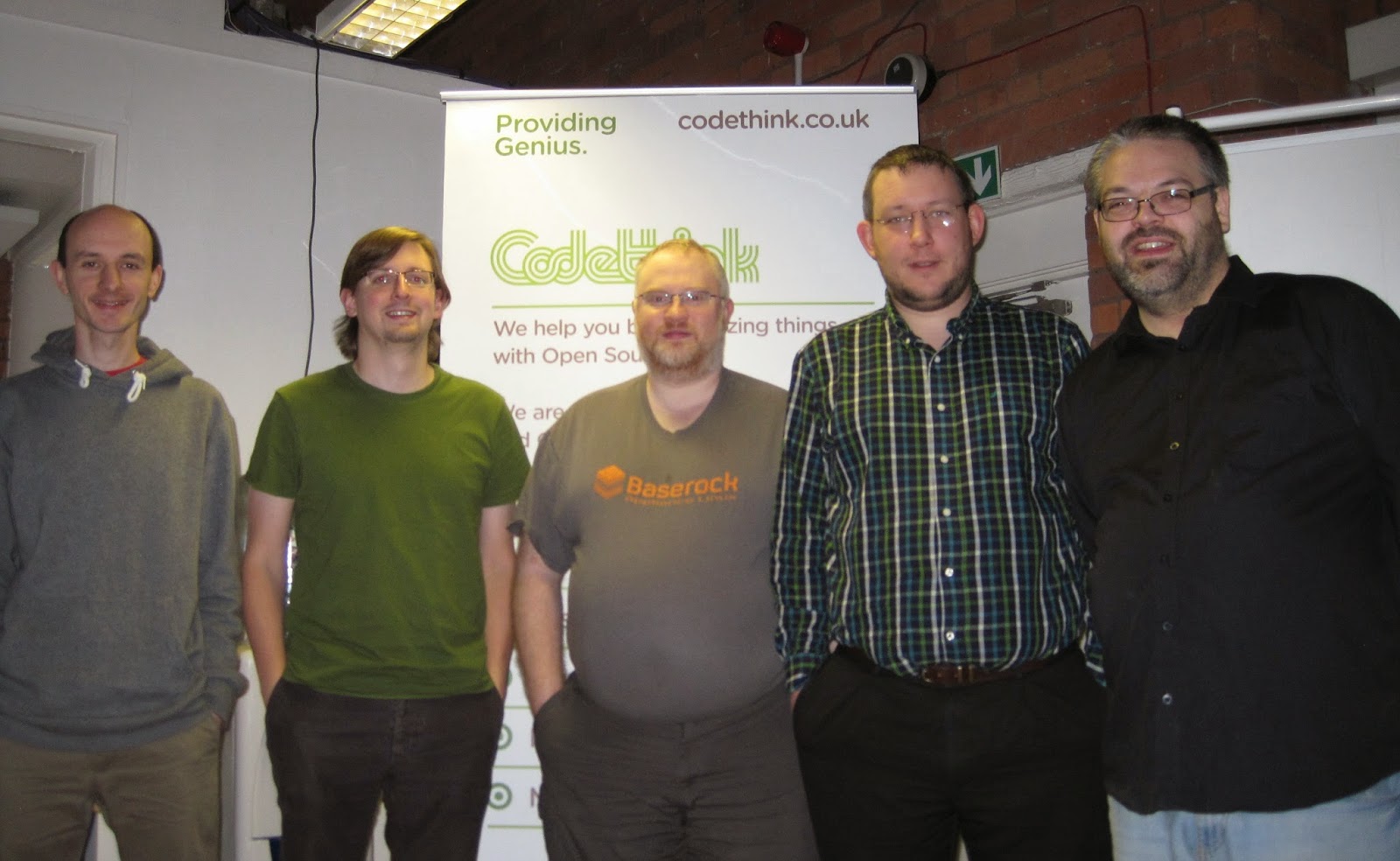
Michael Drake, John-Mark Bell, Daniel Silverstone, Rob Kendrick and Vincent Sanders at the Codethink manchester office
Over the weekend the NetSurf developers met to make a concentrated effort on improving the browser. This time we were kindly hosted by Codethink in their Manchester office in a pleasant environment with plenty of refreshments.

Five developers managed to attend in person from around the UK: Michael Drake, John-Mark Bell, Daniel Silverstone, Rob Kendrick and Vincent Sanders. We also had Chris Young providing some bug fixes remotely.

We started the weekend by discussing all the thorny core issues that had been put on the agenda and ensuring the outcomes were properly noted. We also held the society AGM which was minuted by Daniel.

The emphasis of this weekend was very much on planning and doing the disruptive changes we had been putting off until we were all together.

John-Mark and myself managed to change the core build system as used by all the libraries to using standard triplets to identify systems and use the gnu autoconf style of naming for parameters (i.e. HOST, BUILD and CC being used correctly).

This was accompanied by improvements and configuration changes to the CI system to accommodate the new usage.

Several issues from the bug tracker were addressed and we put ourselves in a stronger position to address numerous other usability problems in the future.

We managed to pack a great deal into the 20 hours of work on Saturday and Sunday although because we were concentrating much more on planning and infrastructure rather than a release the metrics of commits and files changed were lower than at previous events.

14 November 2014

Debian Med: Bits from Debian Med team (by Andreas Tille)

New set of metapackagesThe version number of debian-med metapackages was bumped to 1.99 as a signal that we plan to release version 2.0 with Jessie. As usual the metapackages will be recreated shortly before the final release to include potential changes in the package pool. Feel free to install the metapackages med-* with the package installer of your choice. As always you can have a look at the packages in our focus by visiting our tasks pages. Please note that there may be new packages that aren t ready for release and that won t be installed by using the current metapackages. This is because we don t stop packaging software when the current testing is in freeze. Some support for Hospital Information SystemsThis release contains, for the first time some support for Hospital Information Systems (HIS) with the dependency fis-gtm of the med-his metapackage. This was made possible due to the work of Luis Ibanez (at kitware at the time when working on the packaging) and Amul Shah (fisglobal). Thanks to a fruitful cooperation between upstream FIS and Debian the build system of fis-gtm was adapted to enable an easier packaging. The availability of fis-gtm will simplify running Vista-foia on Debian systems and we are finally working on packaging Vista as well to make Debian fit for running inside hospitals. There was some interesting work done by Emilien Klein who was working hard to get GNUHealthpackaged. Emilien has given a detailed explanation on the Debian Med mailing list giving reasons why he removed the existing packages from the Debian package pool again. While this is a shame for GNUHealth users there might be an opportunity to revive this effort if there was better coordination between upstream and Tryton (which is the framework GNUHealth is based upon). In any case the packaging code in SVN as a useful resource to base private packages on. Feel free to contact us via the Debian Med mailing list if you consider creating GNUHealth Debian packages. Packages moved from non-free to mainThe Debian Med team worked hard to finally enable DFSG free licenses for PHYLIPand other package based on this tool. PHYLIP is well known in bioinformatics and actually one of the first packages in this field inside Debian (oldest changelog entry 28 Aug 1998). Since then it was considered non-free because its use was restricted to scientific / non-commercial use and also has the condition that you need to pay a fee to the University of Washington if you intend to use it commercially. Since Debian Med was started we were in continuous discussion with the author Joe Felsenstein. We even started an online petition to show how large the interest in a DFSG free PHYLIP might be. As a side note: This petition was *not* presented to the authors since they happily decided to move to a free license because of previous discussion and since they realised that the money they "gained" over they years was only minimal. The petition is mentioned here to demonstrate that it is possible to gather support to see positive changes implemented that benefit all users and that this approach can be used for similar cases. So finally PHYLIP was released in September under a BSD-2-clause license and in turn SeaView (a similarly famous program and also long term non-free citizen) depending on PHYLIP code was freed as well. There are several other tools like python-biopython and python-cogent which are calling PHYLIP if it exists. So not only is PHYLIP freed we can now stop removing those parts of the test suites of these other tools that are using PHYLIP. Thanks to all who participated in freeing PHYLIP specifically its author Joe Felsenstein. Autopkgtest in Debian Med packagesWe tried hard to add autopkgtests to all packages where some upstream test suite exists and we also tried to create some tests on our own. Since we consider testing of scientific software a very important feature this work was highly focused on for the Jessie release. When doing so we were able to drastically enhance the reliability of packages and found new formerly hidden dependency relations. Perhaps the hardest work was to run the full test suite of python-biopython which also has uncovered some hidden bugs in the upstream code on architectures that are not so frequently used in the field of bioinformatics. This was made possible by the very good support of upstream who were very helpful in solving the issues we reported. However, we are not at 100% coverage of autopkgtest and we will keep on working on our packages in the next release cycle for Jessie+1. General quality assuranceA general inspection of all Debian Med packages was done to check all packages which were uploaded before the Wheezy release and never touched since then. Those packages where checked for changed upstream locations which might have been hidden from uscan and in some cases new upstream releases were spotted by doing this investigation. Other old packages were re-uploaded conforming to current policy and packaging tools also polishing lintian issues. Publication with Debian Med involvementThe Debian Med team is involved in a paper which is in BioMed Central (in press). The title will be "Community-driven development for computational biology at Sprints, Hackathons and Codefests" Updated team metricsThe team metrics graphs on the Debian Med Blend entry page were updated. At the bottom you will find a 3D Bar chart of dependencies of selected metapackages over different versions. It shows our continuous work in several fields. Thanks to all Debian Med team members for their rigorous work on our common goal to make Debian the best operating system for medicine and biology. Please note that VCS stat calculation is currently broken and does not reflect the latest commits this year. Blends installable via d-i?In bug #758116 it is requested to list all Blends and thus also Debian Med in the initial tasksel selection. This would solve a long term open issue which was addessed more than eleven years ago (in #186085) in a more general and better way. This would add a frequently requested feature by our users who always wonder how to install Debian Med. While there is no final decision on bug #758116 and we are quite late with the request to get this implemented in Jessie feel free to contribute ideas so that this selection of Blends can be done in the best possible manner. Debian Med Bug Squashing Advent Calendar 2014The Debian Med team will again do the Bug Squashing Advent Calendar. Feel free to join us in our bug squashing effort where we close bugs while other people are opening doors. :-)

13 November 2014

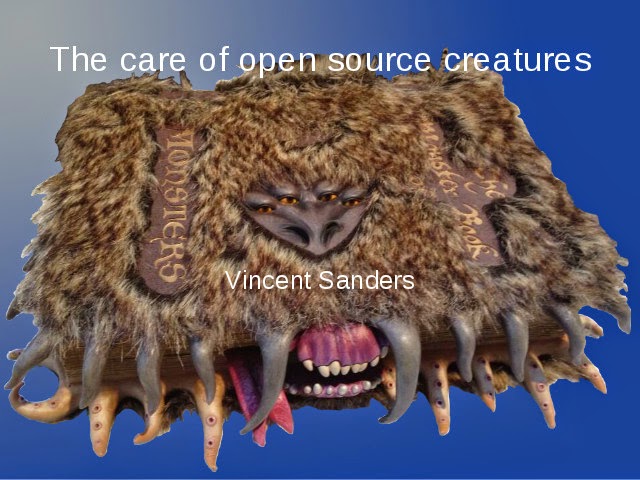
Vincent Sanders: The care of open source creatures

A mini Debian conference happened at the weekend in Cambridge at which I was asked to present. Rather than go with an old talk I decided to try something new. I attempted to cover the topic of application life cycle for open source projects.

The presentation abstract tried to explain this:
A software project that is developed by more than a single person starts requiring more than just the source code. From revision control systems through to continuous integration and issue tracking, all these services need deploying and maintaining.

This presentation takes a look at what a services a project ought to have, what options exist to fulfil those requirements and a practical look at an open source projects actual implementation.
I presented on Sunday morning but got a good audience and I am told I was not completely dreadful. The talk was recorded and is publicly available along with all the rest of the conference presentations.

Unfortunately due to other issues in my life right now I did not prepare well enough in advance and my slide deck was only completed on Saturday so I was rather less familiar with the material than I would have preferred.

The rest of the conference was excellent and I managed to see many of the presentations on a good variety of topics without an overwhelming attention to Debian issues. My youngest son brought himself along on both days and "helped" with front desk. He was also the only walk out in my presentation, he insists it was just because he "did not understand a single thing I was saying" but perhaps he just knew who the designated driver was.

I would like thank everyone who organised and sponsored this event for an enjoyable weekend and look forward to the next one.

11 November 2014

Richard Hartmann: One pot noodles

I had prepared a long and somewhat emotional blog post called "On unintended consequences" to write a rather sad bit of news off of my heart. While I believe the points raised were logical, courteous, and overall positive, I decided to do something different and replace sad things with happy things. So anyway, for 3-4 people you will need: Proceed to the cooky part of the evening: If you don't have any of those ingredients on hand and/or want to add something else: Just do so. This is not an exact science and it will taste wonderful any way you make it.

1 November 2014

Hideki Yamane: Meeting event with LibO people in Tokyo, Japan

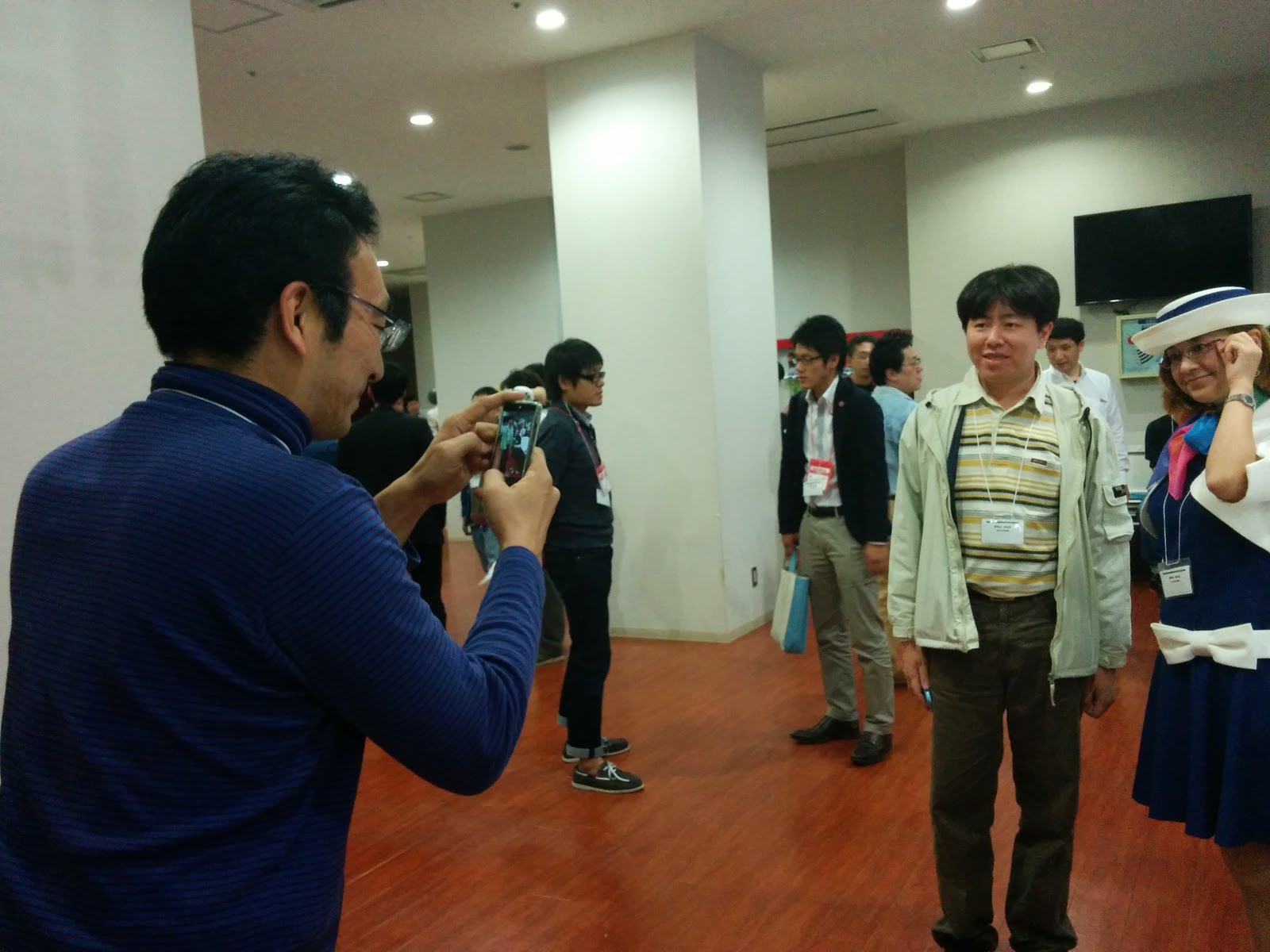
We Tokyo Debian Study Meeting staff has held 119th (!) monthly meeting at SQUARE ENIX seminer room, Shinjuku, Tokyo (thanks to Takahide Nojima for arrangement) with Kanto LibreOffice Offline Meeting (thank Naruhiko Ogasawara) on 25th October.


Discussing about status for LibreOffice package in Debian and share each view for it as downstream and upstream. I hope LibO folks would investigate diff under debian/patches directory and pull some of it to upstream (it also will help Debian and other downstream distros).

And hands-on event for installation with debian-installer 8.0 bate2: find an issue with Acer laptop, probably it would be reported to BTS.


Next 120th meeting will be in 29th November at same place - people, see your there! :)

26 October 2014

Hideki Yamane: Open Source Conference 2014 Tokyo/Fall


18th and 19th October, "Open Source Conference 2014 Tokyo/Fall" was held in Meisei University, Tokyo. About 1,500 participates there. "Tokyo area Debian Study Meeting" booth was there, provided some flyers, DVDs and chat.


In our Debian community session, Nobuhiro Iwamatsu talked about status of Debian8 "Jessie". Thanks, Nobuhiro :)


It seems to be not a "conference" itself but a festival for FOSS and other IT community members, so they enjoyed a lot.


... and we also enjoyed beer after party (of course :)


see you - next event!

1 October 2014

Vincent Sanders: It is a bad plan that admits of no modification

I find it somewhat interesting that thousands of years later that our society still uses Publilius Syrus sententiae though I imagine the tendency to leave well enough alone means such phrases stay in usage.

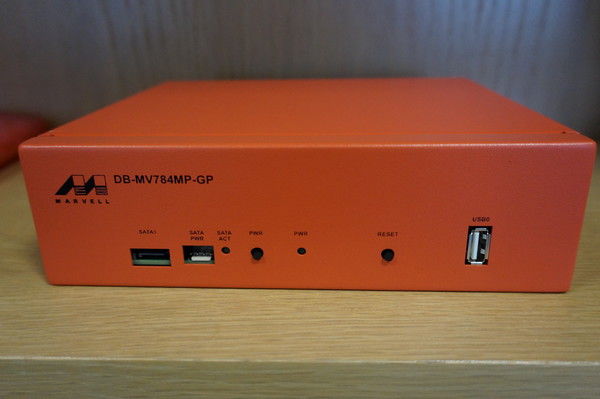
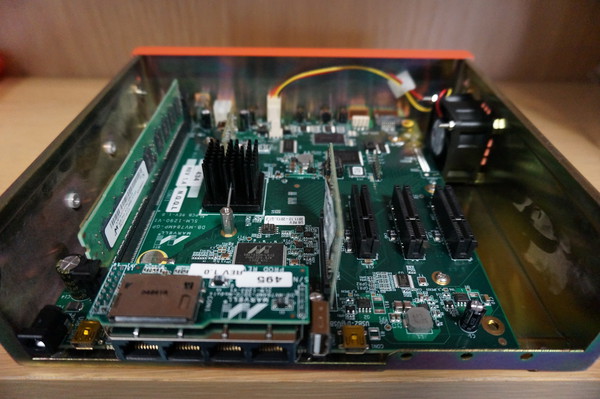
Marvell ARM system - Photo from Steve McIntyre
One weekend Steve McIntyre asked me if I could find a source of some of some 40mm fans for some systems with some pretty strict requirements. They needed to be long life and shift a lot of air to combat a persistent overheating issue.

I sat with him and went through the Farnell utterly hateful parametric web interface and eventually came up with a couple of options which were very expensive. Only then did I stop and ask what the actual problem was.

Marvell ARM system Original internal cooling arrangement - Photo from Steve McIntyre
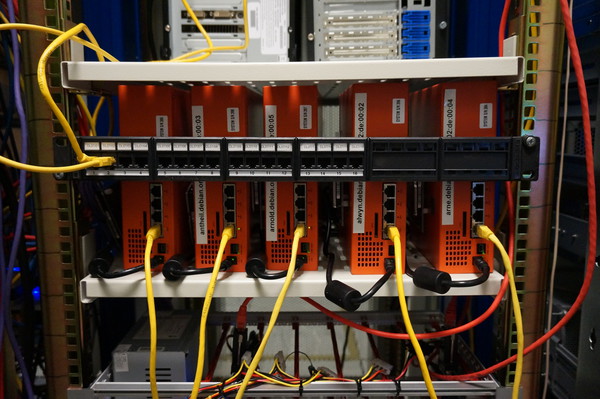
Steve showed me one of the Debian ARM buildd boxes which are Marvell development machines. These systems are powerful quad core machines housed in compact steel enclosures.

There is a single 40mm fan trying to provide cooling for the entire enclosure. When the units are placed horizontally and used intermittently this proves adequate. Unfortunately when the system are arranged vertically in a rack and run at full load continuously they often overheat and have to be restarted. In addition the small high speed fans need replacing frequently as their bearings wore out quickly.

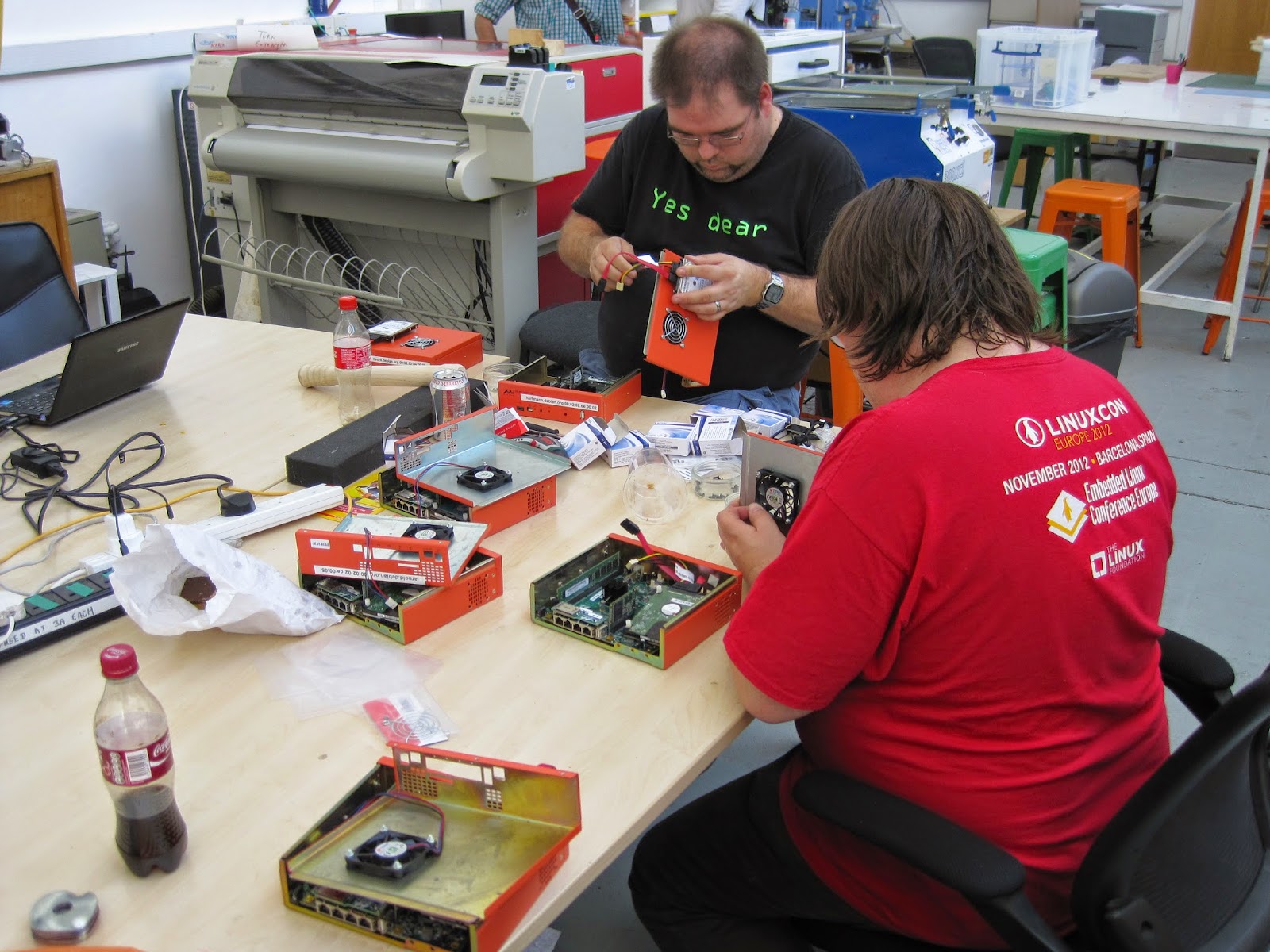
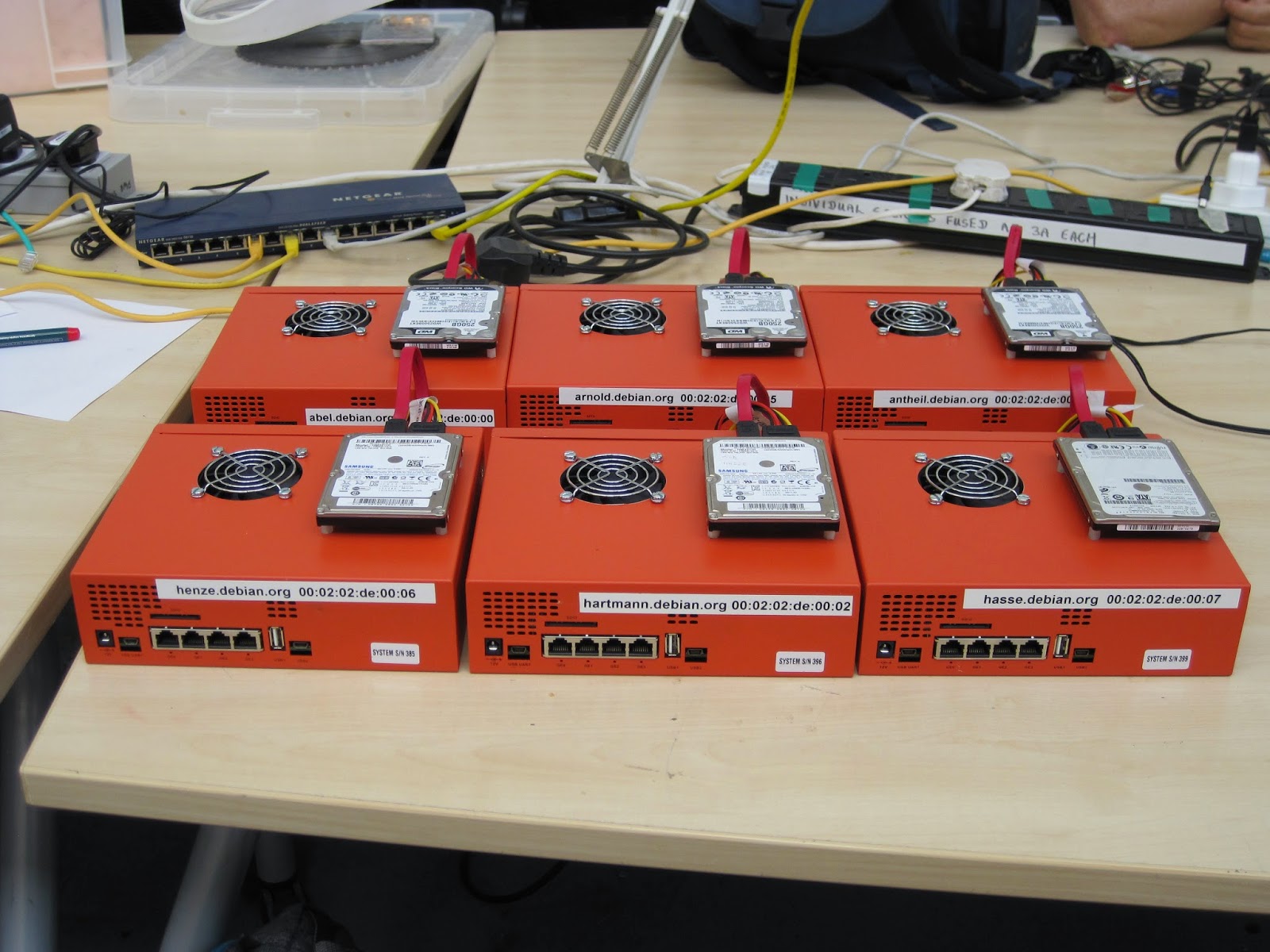
Debian ARM buildd systems - Photo from Steve McIntyreThis was obviously causing some issues for the ARM Debian ports which Steve wanted to rectify. After talking the problem through for a while we came to the conclusion we could use much larger 60mm fans to blow air directly through the top of the case onto the cpu heatsink.

Larger fans can be run much more slowly to move a similar volume of air to the smaller 40mm fans which gives a much longer service life.

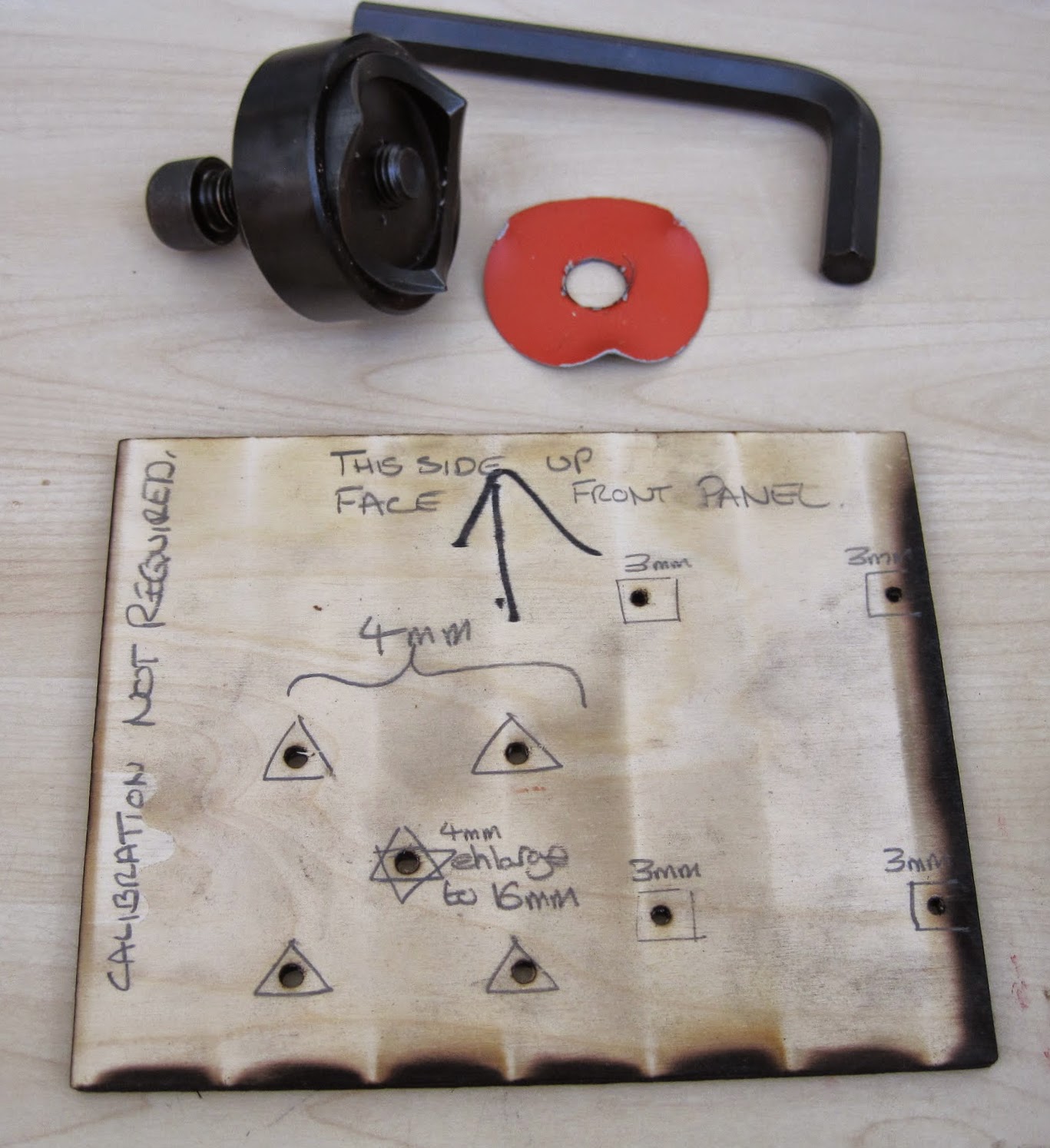
Hole punch and Drilling template
Steve proceeded to order enough parts to allow us to modify all the Debian systems, this worked out cheaper than a single "special" 40mm high volume fan.

I acquired a rather large steel hole punch, I chose this tool because it produces a much superior finish to a hole cutter and this project demanded a high level of finish (not to mention I loved having a valid excuse to own and use a huge allen key!)

If we had simply been modifying a single case I would have measured and marked up by hand. With the prospect of altering at least eight I laser cut a template from plywood which Andy Simpkins took great glee in excessively annotating.

We also used the opportunity to add bolt holes to securely attach the 2.5 inch SATA drives instead of using sticky pads.

Steve and I modified a single system to begin with both to check our alignment and the efficacy of the change. We were pleasantly surprised to discover that hoiby could now repeatedly do kernel compiles with all four cores flat out which was not possible before. The measured CPU temperature, which had previously been around 90 C, did not rise above 40 C

Steve and Andy on the assembly line
Steve, Andy and I then arranged a day where we took all the remaining units out of the rack at ARM, modified and returned them. We used the facilities at the Cambridge Makespace where I am a member to do the modifications.

I broke two 3mm drill bits and dulled a 4mm bit drilling all the holes, Roger Smith was good enough to loan us the use of his "Christmas tree bit" to ream the fan hole out to 16mm so we could thread the hole punch and cut the 60mm fan aperture out.

six modified systems ready to be re-racked.
We managed to get quite an assembly line going and, in my opinion, the results look pretty professional.

It has been several months since we did this work and these systems continue to run without issue. To complete the story we can see some graphs courtesy of the DSA munin instance.

CPU load on arnold.debian.org
You can clearly see the huge drop in temperature at the end of Week 25 despite the continuously high CPU load. Also there is only a single gap in the data after the changes (these indicate crashes where data was not recorded) where before there were frequent and extensive times where the systems were simply unusable.

CPU Temperature of arnold.debian.org
One reason I continue to enjoy Debian so much is the wide variety of ways in which I can contribute not only by maintaining my packages. Sometimes this kind of work does not receive the credit it deserves and hopefully highlights a small part of the frantic paddling that goes on under the serene surface of the Debian project to keep things "just working".

28 September 2014

Jonathan Dowland: Puppet and filesystem mounts

Well, not long after writing my last post I've found some time to write up some of my puppet adventures, sooner than I imagined... Outside work, I sys-admin a VPS instance that is shared by a few friends. We recently embarked in a project to migrate to a different VPS instance and I took the opportunity to revisit how we managed home directories. I've got all the disk space allocated to the VM set up as LVM physical volumes. This has proven very useful for later expansion: we can do it all live. Each user on the VM may have one or more UNIX accounts that they use. Therefore, in the old scheme, for the jon user, we mounted an allocation of disk space at /home/jons, put the account home directories under it at e.g. /home/jons/jon, symlinked /home/jon -> /home/jons/jon for brevity, and set that as the home field in the passwd entry. This worked surprisingly well, but I was always uncomfortable with having a symlink in the home path (and some software was, too.) For the new machine, I decided to try bind mounts. Short story: they just work. However, the mtab (and df output) can look a little cluttered, and mount order becomes quite important. To manage the set-up, I wrote a few puppet snippets. First, a convenience definition to make the actual bind-mounts a little less verbose.
define bindmount($device)  
  mount   $name:
    device  => $device,
    ensure  => mounted,
    fstype  => 'none',
    options => 'bind',
    dump    => 0,
    pass    => 2,
    require => File[$device],
   
 
Once that was in place, we then needed to ensure that the directories to which the LV were to be mounted, and to where the user's home would be bind-mounted, actually exist; we also need to mount the underlying LV and set up the bind mount. The dependency chain is actually a graph, but with the majority of dependencies quite linear:
define bindmounthome()  
  file   ["/home/$ name s", "/home/$ name "]:
    ensure  => directory,
    -> # depended upon by
  mount   "/home/$ name s":
    device  => "LABEL=$ name ",
    ensure  => mounted,
    fstype  => 'ext4',
    options => 'defaults',
    dump    => 0,
    pass    => 2,
    -> # depended upon by
  bindmount   "/home/$ name ":
    device  => "/home/$ name s/$ name ",
   
  file   "/home/$ name s/$ name ":
    ensure  => directory,
    owner   => $name,
    group   => $name,
    mode    => 0701, # 0701/drwx-----x
    require => [User[$name], Group[$name], Mount["/home/$ name s"]],
   
 
That covers the underlying mounts and the "primary" accounts. However, the point of this exercise was to support the secondary accounts for each user. There's a bit of repetition here, and with some refactoring both this and the preceding bindmounthome definition could be a bit shorter, but I'm not sure whether that would be at the expense of legibility:
define seconduser($parent)  
  file   "/home/$ name ":
    ensure => directory,
    -> # depended upon by
  bindmount   "/home/$ name ":
    device => "/home/$ parent s/$ name ",
   
  file   "/home/$ parent s/$ name ":
    ensure  => directory,
    owner   => $name,
    group   => $name,
    mode    => 0701, # 0701/drwx-----x
    require => [User[$name], Group[$name], Mount["/home/$ parent s"]],
   
 
I had to re-read the above a couple of times just now to convince myself that I hadn't missed the dependencies between the mount invocations towards the bottom, but they're there: so, puppet will always run the mount for /home/jons before /home/jons/jon. Since puppet is writing to the fstab, this means that the ordering is correct and a sequential start-up will work. If you want anything cleverer than serialised, one-at-a-time mounting at boot, I think one would have to use something other than trusty-old fstab for the job. I'm planning to look at Systemd's mount unit type, but there's no rush as this particular host is still running sysvinit for the time being.

25 September 2014

Russ Allbery: Review: Turn the Ship Around!

Review: Turn the Ship Around!, by L. David Marquet
Publisher: Portfolio
Copyright: 2012
ISBN: 1-101-62369-1
Format: Kindle
Pages: 272
Turn the Ship Around! (yes, complete with the irritating exclamation point in the title) is marketed to the business and management non-fiction market, which is clogged with books claiming to provide simple techniques to be a great manager or fix an organization. If you're like me, this is a huge turn-off. The presentation of the books is usually just shy of the click-bait pablum of self-help books. Many of the books are written by famous managers best known for doing horrible things to their staff (*cough* Jack Welch). It's hard to get away from the feeling that this entire class of books is an ocean of bromides covering a small core of outright evil. This book is not like that, and Marquet is not one of those managers. It can seem that way at times: it is presented in the format that caters to short attention span, with summaries of primary points at the end of every short chapter and occasionally annoying questions sprinkled throughout. I'm capable of generalizing information to my own life without being prompted by study questions, thanks. But that's just form. The core of this book is a surprisingly compelling story of Marquet's attempt to introduce a novel management approach into one of the most conservative and top-down of organizations: a US Navy nuclear submarine. I read this book as an individual employee, and someone who has no desire to ever be a manager. But I recently changed jobs and significantly disrupted my life because of a sequence of really horrible management decisions, so I have strong opinions about, at least, the type of management that's bad for employees. A colleague at my former employer recommended this book to me while talking about the management errors that were going on around us. It did such a good job of reinforcing my personal biases that I feel like I should mention that as a disclaimer. When one agrees with a book this thoroughly, one may not have sufficient distance from it to see the places where its arguments are flawed. At the start of the book, Marquet is assigned to take over as captain of a nuclear submarine that's struggling. It had a below-par performance rating, poor morale, and the worst re-enlistment rate in the fleet, and was not advancing officers and crew to higher ranks at anywhere near the level of other submarines. Marquet brought to this assignment some long-standing discomfort with the normal top-down decision-making processes in the Navy, and decided to try something entirely different: a program of radical empowerment, bottom-up decision-making, and pushing responsibility as far down the chain of command as possible. The result (as you might expect given that you can read a book about it) was one of the best-performing submarines in the fleet, with retention and promotion rates well above average. There's a lot in here about delegated decision-making and individual empowerment, but Turn the Ship Around! isn't only about that. Those are old (if often ignored) rules of thumb about how to manage properly. I think the most valuable part of this book is where Marquet talks frankly about his own thought patterns, his own mistakes, and the places where he had to change his behavior and attitude in order to make his strategy successful. It's one thing to say that individuals should be empowered; it's quite another to stop empowering them (which is still a top-down strategy) and start allowing them to be responsible. To extend trust and relinquish control, even though you're the one who will ultimately be held responsible for the performance of the people reporting to you. One of the problems with books like this is that they focus on how easy the techniques presented in the book are. Marquet does a more honest job in showing how difficult they are. His approach was not complex, but it was emotionally quite difficult, even though he was already biased in favor of it. The control, hierarchy, and authority parts of the book are the most memorable, but Marquet also talks about, and shows through specific examples from his command, some accompanying principles that are equally important. If everyone in an organization can make decisions, everyone has to understand the basis for making those decisions and understand the shared goals, which requires considerable communication and open discussion (particularly compared to a Navy ideal of an expert and taciturn captain). It requires giving people the space to be wrong, and requires empowering people to correct each other without blame. (There's a nice bit in here about the power of deliberate action, and while Marquet's presentation is more directly applicable to the sorts of physical actions taken in a submarine, I was immediately reminded of code review.) Marquet also has some interesting things to say about the power of, for lack of a better term, esprit de corps, how to create it, and the surprising power of acting like you have it until you actually develop it. As mentioned, this book is very closely in alignment with my own biases, so I'm not exactly an impartial reviewer. But I found it fascinating the degree to which the management situation I left was the exact opposite of the techniques presented in this book in nearly every respect. I found it quite inspiring during my transition period, and there are bits of it that I want to read again to keep some of the techniques and approaches fresh in my mind. There is a fair bit of self-help-style packaging and layout here, some of which I found irritating. If, like me, you don't like that style of book, you'll have to wade through a bit of it. I would have much preferred a more traditional narrative story from which I could draw my own conclusions. But it's more of a narrative than most books of this sort, and Marquet is humble enough to show his own thought processes, tensions, and mistakes, which adds a great deal to the presentation. I'm not sure how directly helpful this would be for a manager, since I've never been in that role, but it gave me a lot to think about when analyzing successful and unsuccessful work environments. Rating: 8 out of 10

24 September 2014

Vincent Sanders: I wanted to go to Portland because it's a really good book town.

Plane at Heathrow terminal 5 taking me to America for Debconf 14Patti Smith is right, more than any other US city I have visited, Portland feels different. Although living in Cambridge, which sometimes feels like where books were invented, might give me a warped sense of a place.

Jo McIntyre getting on the tram at PDX
I have visited Portland a few times previously and I feel comfortable every time I arrive at PDX. Sure the place still suffers from the american obsession with the car but similar to New York you can rely on public transport to get about.

On this occasion my visit was for the Debian Conference which i was excited to attend having missed the previous one in Switzerland. This time the conference has changed its format to being 10 days long and mixing the developer time in with the more formal sessions.

The opening session gave Steve McIntyre and myself the opportunity to present a small token of our appreciation to Russ. The keynote speakers that afternoon were all very interesting both Stefano Zacchiroli and Gabriella Coleman giving food for thought on two very different subjects.

The sponsored accomodation rooms were plesent
Several conferences in the past have experienced issues with sponsored accommodation and food, I am very pleased to report that both were very good this time. The room I was in had a small kitchen area, en-suite bathroom, desks and most importantly comfortable beds.

Andy and Patty in the Ondine dining area
The food provision was in the form of a buffet in the Ondine facility. The menu was not greatly varied but catered to all requirements including vegetarian and gluten free diets.

Neil, Rob, Jo, Steve , Neil, Daniel and Andy dining under the planes
Some of us went on a visit to the Evergreen air and space museum to look at some rare aircraft and rockets. I can thoroughly recommend a visit if you are in the area.

These are just the highlights of the week though, the time in the hack-labs was productive with several practical achievements Including:
- Uploading new packages reducing the bug count
- Sorting out getting an updated key into the Debian keyring.

Overall I had a thoroughly enjoyable time and got a lot out of the conference this year. The new format suited me surprisingly well and as usual the social side was as valuable as the practical.

I hope the organisers have recovered enough to appreciate just how good a job they did and not get hung up on the small number of things that went wrong when the majority of things went perfectly to plan.

18 September 2014

Jonathan McDowell: Automatic inline signing for mutt with RT

I spend a surprising amount of my time as part of keyring-maint telling people their requests are badly formed and asking them to fix them up so I can actually process them. The one that's hardest to fault anyone on is that we require requests to be inline PGP signed (i.e. the same sort of output as you get with "gpg --clearsign"). That's because RT does various pieces of unpacking[0] of MIME messages that mean that a PGP/MIME signatures that have passed through it are no longer verifiable. Daniel has pointed out that inline PGP is a bad idea and got as far as filing a request that RT handle PGP/MIME correctly (you need a login for that but there's a generic read-only one that's easy to figure out), but until that happens the requirement stands when dealing with Debian's RT instance. So today I finally added the following lines to my .muttrc rather than having to remember to switch Mutt to inline signing for this one special case:
send-hook . "unset pgp_autoinline; unset pgp_autosign"
send-hook rt.debian.org "set pgp_autosign; set pgp_autoinline"
i.e. by default turn off auto inlined PGP signatures, but when emailing anything at rt.debian.org turn them on. (Most of the other things I tell people to fix are covered by the replacing keys page; I advise anyone requesting a key replacement to read that page. There's even a helpful example request template at the bottom.) [0] RT sticks a header on the plain text portion of the mail, rather than adding a new plain text part for the header if there are multiple parts (this is something Mailman handles better). It will also re-encode received mail into UTF-8 which I can understand, but Mutt will by default try to find an 8 bit encoding that can handle the mail, because that's more efficient, which tends to mean it picks latin1. Update: Apparently Mutt in Jessie and beyond doesn't have the pgp_autosign option; you want crypt_autosign instead (and maybe crypt_autopgp but that defaults to yes so unless you've configured your setup to do S/MIME by default you should be fine). Thanks to Luca Capello for pointing this out.

15 September 2014

Vincent Sanders: NetSurf 3.2

We recently released a new version of NetSurf this was largely to address numerous small bugs but did also include the persistent caching implementation I have written about previously. A release used to require the release manager (usually me) to perform a lot of manual processes and while we had a checklist it was far too easy to miss things.

The Continuous Integration (CI) system combined with signed release tags in git has resulted in a greatly simplified process indeed it has become almost completely automated. The majority of the manual work is now confined to doing the tasks that require actual decision making and checking we are releasing what was intended.

By having the CI system build release binaries the project now has a much clearer and importantly traceable process, I can recommend such a system to any project that produces releases especially if they release binaries for any of their targets.

I have also managed to package and upload this version of NetSurf ready for the Debian Jessie release. I would like to thank Jonathan Wiltshire for his assistance in ensuring this was a good quality package.

The release incorporates the successfully merged work of Rupinder Singh who was our our GSoc 2014 student. Rupinder mainly made improvements to our core DOM implementation and was very responsive and enthusiastic throughout his time despite the mentor team sometimes not being available.

This work goes towards improving NetSurf in the future by ensuring the underlying features are present in our core libraries. The GSoc mentors and all project developers are all pleased with the results of this years GSoc participation and would like to thank everyone involved in making our participation possible.

Along with the good news comes a little bad:
PowerPC Mac OS X
Despite repeated calls for assistance with new hardware and Java builds none has been forthcoming meaning that from this release we ware no longer able to ship PowerPC builds for MAC OS X.

The main issue is the last version of MAC OS X that runs on PPC is Leopard and there is no viable Java 1.6 port necessary for our CI system to run. Additionally the fully loaded PPC Mac mini (kindly donated to us by Mythic Beasts) had become far too slow to keep up with our builds and was causing long delays.
Bugs
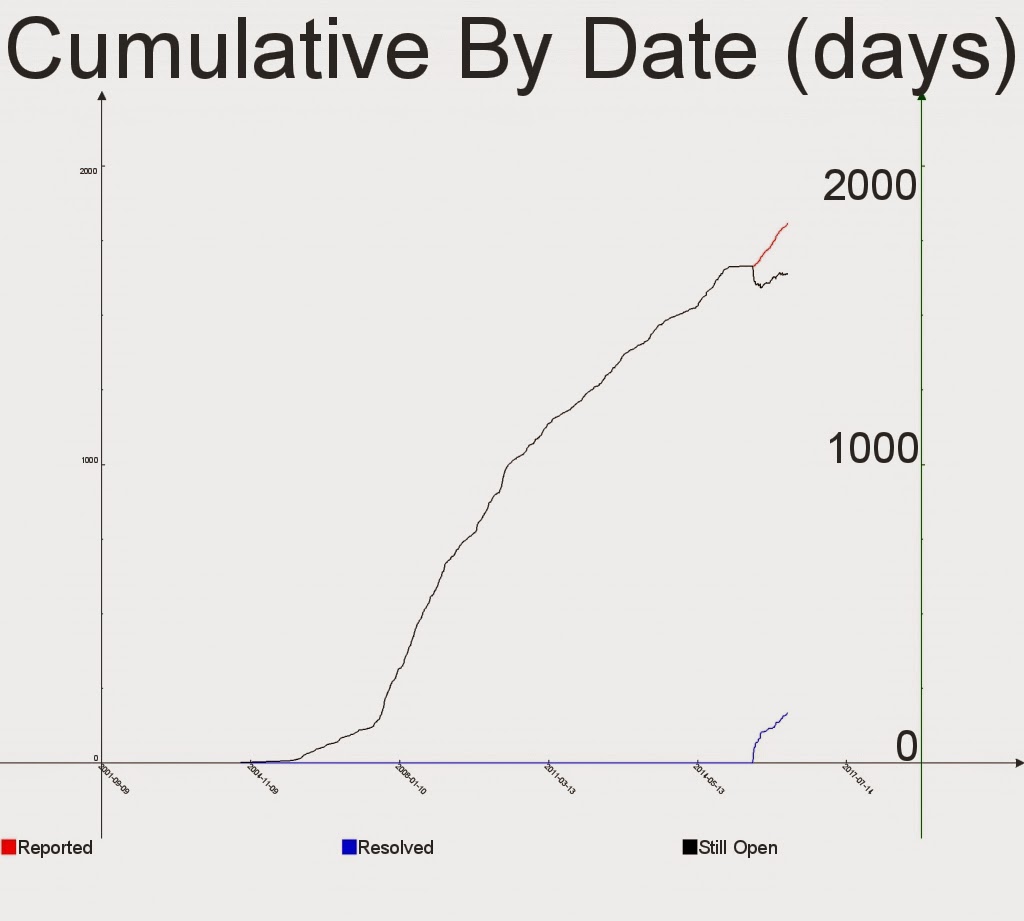
NetSurf 3.2 Bug graph
We have a lot of bugs, in fact just during this release cycle we have 30 more bugs reported than we closed.So while the new bug reporting system has been a success and our users are reporting issues when they find them the development team is not keeping up..

The failure to keep up stems from the underlying issue of lack of manpower. We have relatively few active developers which is especially problematic when there are many users for a platform, such as RISCOS, but the maintainer is unable to commit enough time to fixing issues.

If you would like to help making NetSurf a better browser we are always happy to work with new contributors.

25 August 2014

Erich Schubert: Analyzing Twitter - beware of spam

This year I started to widen up my research; and one data source of interest was text because of the lack of structure in it, that makes it often challenging. One of the data sources that everybody seems to use is Twitter: it has a nice API, and few restrictions on using it (except on resharing data). By default, you can get a 1% random sample from all tweets, which is more than enough for many use cases.
We've had some exciting results which a colleague of mine will be presenting tomorrow (Tuesday, Research 22: Topic Modeling) at the KDD 2014 conference:
SigniTrend: Scalable Detection of Emerging Topics in Textual Streams by Hashed Significance Thresholds
Erich Schubert, Michael Weiler, Hans-Peter Kriegel
20th ACM SIGKDD Conference on Knowledge Discovery and Data Mining
You can also explore some (static!) results online at signi-trend.appspot.com

In our experiments, the "news" data set was more interesting. But after some work, we were able to get reasonable results out of Twitter as well. As you can see from the online demo, most of these fall into pop culture: celebrity deaths, sports, hip-hop. Not much that would change our live; and even less that wasn't before captured by traditional media.
The focus of this post is on the preprocessing needed for getting good results from Twitter. Because it is much easier to get bad results!
The first thing you need to realize about Twitter is that due to the media attention/hype it gets, it is full of spam. I'm pretty sure the engineers at Twitter already try to reduce spam; block hosts and fraud apps. But a lot of the trending topics we discovered were nothing but spam.
Retweets - the "like" of Twitter - are an easy source to see what is popular, but are not very interesting if you want to analyze text. They just reiterate the exact same text (except for a "RT " prefix) than earlier tweets. We found results to be more interesting if we removed retweets. Our theory is that retweeting requires much less effort than writing a real tweet; and things that are trending "with effort" are more interesting than those that were just liked.
Teenie spam. If you ever searched for a teenie idol on Twitter, say this guy I hadn't heard of before, but who has 3.88 million followers on Twitter, and search for Tweets addressed to him, you will get millions over millions of results. Many of these tweets look like this: Now if you look at this tweet, there is this odd "x804" at the end. This is to defeat a simple spam filter by Twitter. Because this user did not tweet this just once: instead it is common amongst teenie to spam their idols with follow requests by the dozen. Probably using some JavaScript hack, or third party Twitter client. Occassionally, you see hundreds of such tweets, each sent within a few seconds of the previous one. If you get a 1% sample of these, you still get a few then...
Even worse (for data analysis) than teenie spammers are commercial spammers and wannabe "hackers" that exercise their "sk1llz" by spamming Twitter. To get a sample of such spam, just search for weight loss on Twitter. There is plenty of fresh spam there, usually consisting of some text pretending to be news, and an anonymized link (there is no need to use an URL shortener such as bit.ly on Twitter, since Twitter has its own URL shortener t.co; and you'll end up with double-shortened URLs). And the hacker spam is even worse (e.g. #alvianbencifa) as he seems to have trojaned hundreds of users, and his advertisement seems to be a nonexistant hash tag, which he tries to get into Twitters "trending topics".
And then there are the bots. Plenty of bots spam Twitter with their analysis of trending topics, reinforcing the trending topics. In my opinion, bots such as trending topics indonesia are useless. No wonder there are only 280 followers. And of the trending topics reported, most of them seem to be spam topics...

Bottom line: if you plan on analyzing Twitter data, spend considerable time on preprocessing to filter out spam of various kind. For example, we remove singletons and digits, then feed the data through a duplicate detector. We end up discarding 20%-25% of Tweets. But we still get some of the spam, such as that hackers spam.
All in all, real data is just messy. People posting there have an agenda that might be opposite to yours. And if someone (or some company) promises you wonders from "Big data" and "Twitter", you better have them demonstrate their use first, before buying their services. Don't trust visions of what could be possible, because the first rule of data analysis is: Garbage in, garbage out.
24 August 2014

Vincent Sanders: Without craftsmanship, inspiration is a mere reed shaken in the wind.

While I imagine Johannes Brahms was referring to music I think the sentiment applies to other endeavours just as well. The trap of believing an idea is worth something without an implementation occurs all too often, however this is not such an unhappy tale.
Lars original design idea
Lars Wirzenius, Steve McIntyre and myself were chatting a few weeks ago about several of the ongoing Debian discussions. As is often the case these discussions had devolved into somewhat unproductive noise and yet amongst all this was a voice of reason in Russ Allbery.

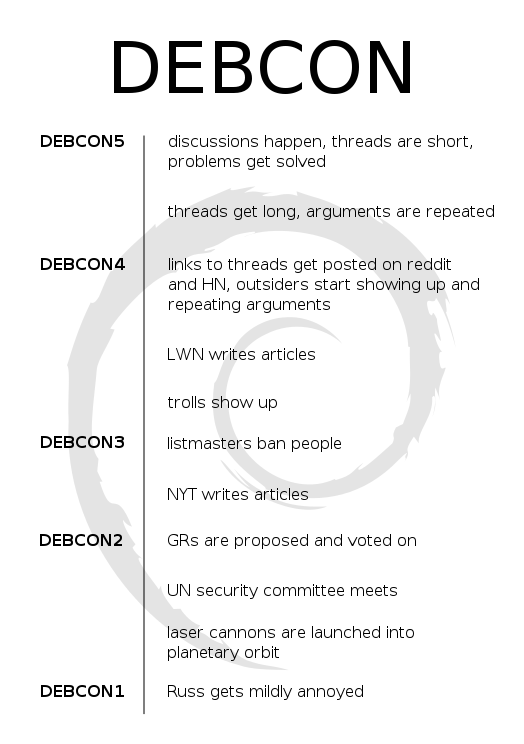
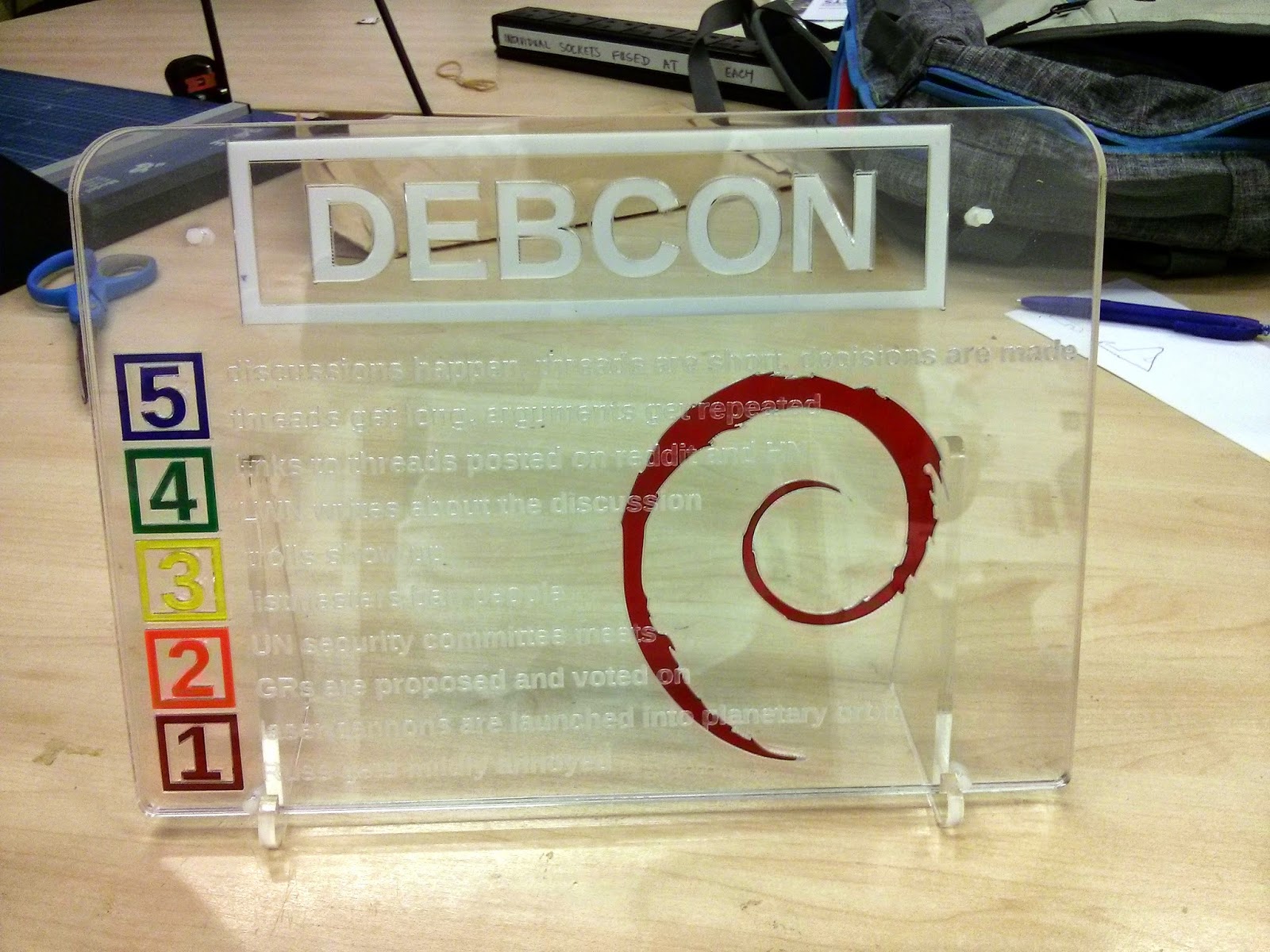
Lars decided that would take the opportunity of the upcoming opportunity of Debconf 14 to say thank you to Russ for his work. It was decided that a plaque would be a nice gift and I volunteered to do the physical manufacture. Lars came up with the idea of a DEBCON scale similar to the DEFCON scale and got some text together with an initial design idea.

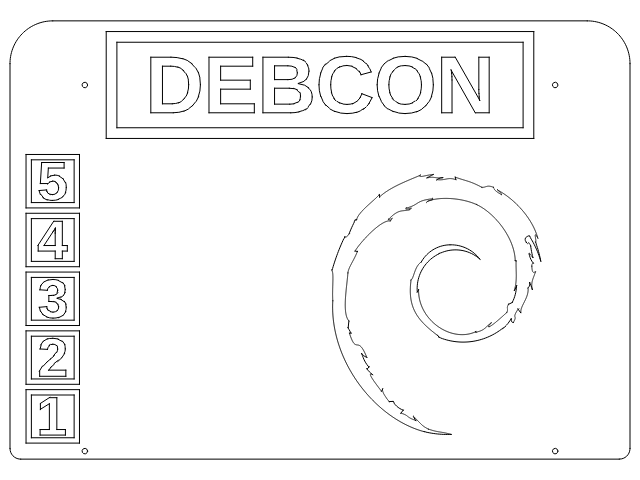
CAD drawing of cut paths in clear acrylic
I took the initial design and as is often the case what is practically possible forced several changes. The prototype was a steep learning curve on using the Cambridge makespace laser cutter to create all the separate pieces.

The construction is pretty simple and consisted of three layers of transparent acrylic plastic. The base layer is a single piece of plastic with the correct outline. The next layer has the DEBCON title, the Debian swirl and level numbers. The top layer has the text engraved in its back surface giving the impression the text floats above the layer behind it.

Failed prototype DEBCON plaqueFor the prototype I attempted to glue the pieces together. This was a complete disaster and required discarding the entire piece and starting again with new materials.

The final version with stand ready to be presented
For the second version I used four small nylon bolts to hold the sandwich of layers together which worked very well.

Presentation of plaque photo by Aigars Mahinovs
Yesterday at the Debconf 14 opening Steve McIntyre presented it to Russ and I think he was pleased, certainly he was surprised (photo from Aigars Mahinovs).

The design files are available from my design git repo, though why anyone would want to reproduce it I have no idea ;-)

15 August 2014

Steve Kemp: A tale of two products

This is a random post inspired by recent purchases. Some things we buy are practical, others are a little arbitrary. I tend to avoid buying things for the sake of it, and have explicitly started decluttering our house over the past few years. That said sometimes things just seem sufficiently "cool" that they get bought without too much thought. This entry is about two things. A couple of years ago my bathroom was ripped apart and refitted. Gone was the old and nasty room, and in its place was a glorious space. There was only one downside to the new bathroom - you turn on the light and the fan comes on too. When your wife works funny shifts at the hospital you can find that the (quiet) fan sounds very loud in the middle of the night and wakes you up.. So I figured we could buy a couple of LED lights and scatter them around the place - when it is dark the movement sensors turn on the lights. These things are amazing. We have one sat on a shelf, one velcroed to the bottom of the sink, and one on the floor, just hidden underneath the toilet. Due to the shiny-white walls of the room they're all you need in the dark. By contrast my second purchase was a mistake - The Logitech Harmony 650 Universal Remote Control should be great. It clearly has the features I want - Able to power: The problem is solely due to the horrific software. You program the device via an application/website which works only under Windows. I had to resort to installing Windows in a virtual machine to make it run:

# Get the Bus/ID for the USB device
bus=$(lsusb  grep -i Harmony   awk ' print $2 '   tr -d 0)
id=$(lsusb  grep -i Harmony   awk ' print $4 '   tr -d 0:)
# pass to kvm
kvm -localtime ..  -usb -device usb-host,hostbus=$bus,hostaddr=$id ..
That allows the device to be passed through to windows, though you'll later have to jump onto the Qemu console to re-add the device as the software disconnects and reconnects it at random times, and the bus changes. Sigh. I guess I can pretend it works, and has cut down on the number of remotes sat on our table, but .. The overwhelmingly negative setup and configuration process has really soured me on it. There is a linux application which will take a configuration file and squirt it onto the device, when attached via a USB cable. This software, which I found during research prior to buying it, is useful but not as much as I'd expected. Why? Well the software lets you upload the config file, but to get a config file you must fully complete the setup on Windows. It is impossible to configure/use this device solely using GNU/Linux. (Apparently there is MacOS software too, I don't use macs. *shrugs*) In conclusion - Motion-activated LED lights, more useful than expected, but Harmony causes Discord.

6 August 2014

Chris Lamb: Strava Enhancement Suite update

https://chris-lamb.co.uk/wp-content/2014/strava/chrome_web_store.png I've been told I don't blog about my projects often enough, so here's a feature update on my Chrome Extension that adds various improvements to the Strava.com fitness tracker. All the features are optional and can be individually enabled in the options panel.

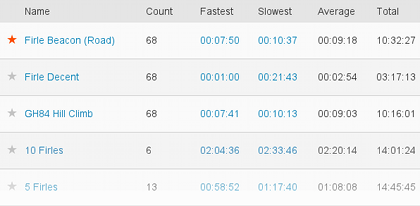
Repeated segments This adds aggregate data (fastest, slowest, average, etc.) when segments are repeated within an activity. It's particularly useful for laps or like this Everesting attempt hill repeats: https://chris-lamb.co.uk/wp-content/2014/strava/repeated_segments3.png

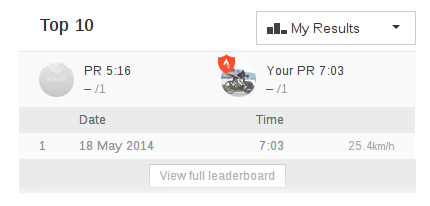
Leaderboard default Changes the default leaderboard away from "Overall" when viewing a segment effort. The most rewarding training often comes from comparing your own past performances rather than those of others, so viewing your own results by default can make more sense. You can select any of Men, Women, I'm Following or My Results: https://chris-lamb.co.uk/wp-content/2014/strava/leaderboard_default.png

Hide feed entries Hides various entry types in the activity feed that can get annoying. You currently have the option of hiding challenges, route creations, goals created or club memberships: https://chris-lamb.co.uk/wp-content/2014/strava/hide_challenge_feed_entries.png

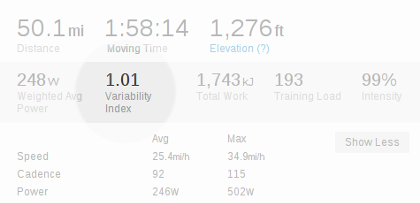
Variability Index Calculates a Variability Index (VI) from the weighted average power and the average power, an indication of how "smooth" a ride was. Required a power meter. A VI of 1.0 would mean a ride was paced "perfectly", with very few surges of effort: https://chris-lamb.co.uk/wp-content/2014/strava/variability_index.png

Infinite scroll Automatically loads more dashboard entries when reaching the bottom, saving a tedious click on the "More" button: https://chris-lamb.co.uk/wp-content/2014/strava/infinite_scroll.png

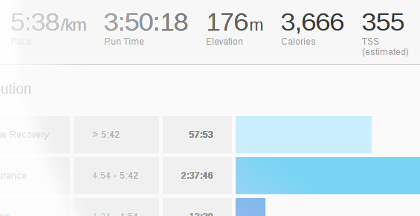
Running TSS Estimates a run's Training Stress Score (TSS) from its Grade Adjusted Pace distribution, a measure of that workout's duration and intensity relative to the athletes's capability, providing an insight into correct recovery time and overall training load over time: https://chris-lamb.co.uk/wp-content/2014/strava/running_tss.png

Hide "find friends" Hides social networking buttons, including invitations to invite or find further friends: https://chris-lamb.co.uk/wp-content/2014/strava/hide_invite_friends.png

"Enter" posts comment Immediately posts comment when pressing Enter/Return key in the edit box rather than adding a newline: https://chris-lamb.co.uk/wp-content/2014/strava/comment_post_on_enter.png

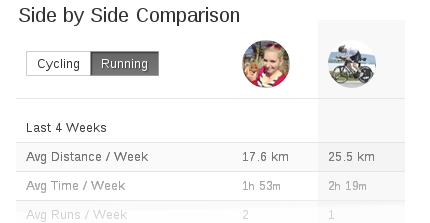
Compare running Changes the default sport for the "Side by Side comparison" module to running when viewing athlete profiles: https://chris-lamb.co.uk/wp-content/2014/strava/side_by_side_running.png

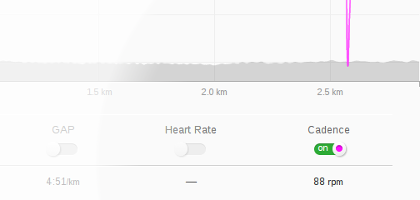
Running cadence Shows running cadence by default in the elevation profile: https://chris-lamb.co.uk/wp-content/2014/strava/running_cadence.png

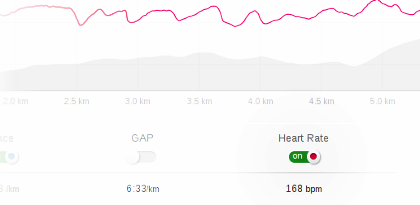
Running heart rate Shows running heart rate by default in elevation profile: https://chris-lamb.co.uk/wp-content/2014/strava/running_heart_rate.png

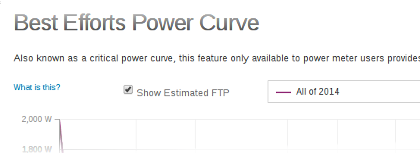
Estimated FTP Selects "Show Estimated FTP" by default on the Power Curve page: https://chris-lamb.co.uk/wp-content/2014/strava/estimated_ftp.png

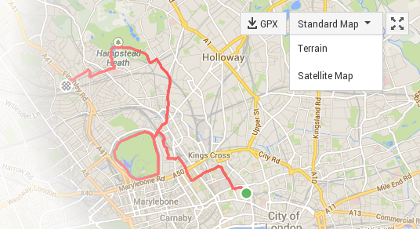
Standard Google map Prefer the "Standard" Google map over the "Terrain" view: https://chris-lamb.co.uk/wp-content/2014/strava/standard_google_map.png

Let me know if you have any comments, suggestions or if you have any other feedback. If you find this software useful, please consider donating via Paypal to support further development. You can also view the source and contribute directly on GitHub. https://chris-lamb.co.uk/wp-content/2014/strava/chrome_web_store.png

5 August 2014

Andrew Pollock: [geek] Lifehacking with NFC, Tasker and HabitRPG

Oh man, I'm such a geek... Being a single parent has required a considerable amount of self-discipline on my behalf. I find I do best in an environment with routine to make sure stuff gets done. One of the things I did to try and make sure stuff got done was to form positive habits. To help and make this a bit more "fun", I started using HabitRPG, an online role-playing game based on habits. I've only ever used it in a half-arsed manner, and as a result, I die a lot. Often I'll do my dailies, but then forget to mark them off. Sometimes I just fall off the habit wagon altogether. And die. One of my dailies is to scoop my cat's litterboxes. For whatever reason, I find this a tad onerous, and had found myself falling out of the habit of doing it on a daily basis. My cat deserves better than this, so I wanted to get back on the habit wagon, but make it a bit more "fun" as well. I love NFC, I've been a big NFC weenie for a long time. It's a solution looking for a problem. I have a huge collection of NFC tags, and I've finally found a problem I could use them with. I wanted to make it more frictionless to mark a task as completed in HabitRPG. I didn't want to have to take out my phone, unlock it, open the HabitRPG app and check off the daily task. I just wanted to wave my phone at an NFC tag. Here's how I did it. The inimitable Paul Fenwick, who first inspired me to use HabitRPG, has a way more complicated set up to achieve something similar. The Site Reliability Engineer in me wanted the least number of moving parts and third-parties to have to get from my phone to HabitRPG. After some hunting around, I found this wiki page on integrating Tasker with HabitRPG's API, so based on that breadcrumb, I got hacking. I'd not used Tasker before. I was already using AutomateIt to do some other, reasonably dumb automation on my phone, though. Tasker is a little bit obtuse, and it took me a couple of days of casual fiddling with it to wrap my head around it's usage model. The fact that it can run arbitrary JavaScript, and that NFC Tools integrates with it is where the real awesome lies. So based off the wiki, I crafted a couple of bits of JavaScript, one to mark daily tasks as complete on HabitRPG, and one to query HabitRPG to see if they have been marked as complete. For the former, it was trivial, using NFC Tools, to write an NFC tag that then runs the Tasker task to call the HabitRPG API to mark a daily task as complete. That goal was now complete. The equally satisfying part was also having Tasker do a time-based conditional nag based on the state of the daily task in HabitRPG. So now if it gets to 4:45pm and I haven't scooped the litterboxes, my phone literally tells me I'd better go do it. I've also done the same thing with putting the dishwasher on. I've stuck an NFC tag on the dishwashing powder bottle lid, and I get a conditional reminder before bed time. It used to be an unconditional reminder with AutomateIt, and it was dumb, because I rarely forget to put the dishwasher on. Now, I can use HabitRPG to keep state on it instead. The hunk of JavaScript to update HabitRPG is very simple:
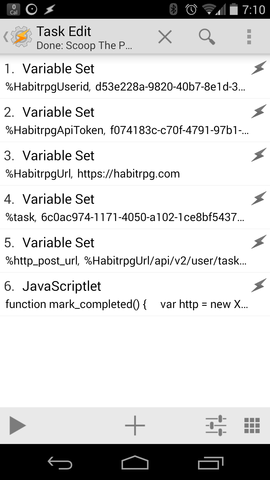
function mark_completed()   
  var http = new XMLHttpRequest();
  http.open("POST", http_post_url, false);
  http.setRequestHeader("x-api-user", global('HabitrpgUserid'));
  http.setRequestHeader("x-api-key", global('HabitrpgApiToken'));
  http.send();
  return(http.responseText); 
 
try   
  var result = mark_completed(); 
  catch(e)   
  var error = e.message; 
 
All of the interesting stuff is defined in variables preceding the JavaScript in the task definition. Here's a screenshot of the Task in Tasker that tells a thousand words: Screenshot of Tasker task that uses HabitRPG API to mark a task complete Similarly, to query HabitRPG, I'm using:
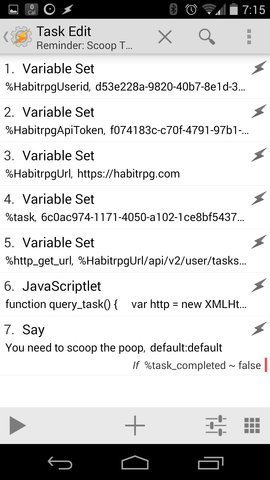
function query_task()   
  var http = new XMLHttpRequest();
  http.open("GET",http_get_url,false);
  http.setRequestHeader("x-api-user", global('HabitrpgUserid'));
  http.setRequestHeader("x-api-key", global('HabitrpgApiToken'));
  http.send();
  var p = JSON.parse(http.responseText);
  return p['completed'];
 
try   
  var task_completed = query_task(); 
  catch(e)   
  var error = e.message; 
 
It's only slightly trickier because you have to parse the JSON blob that comes back. Again, a screenshot. Screenshot of Tasker task that uses HabitRPG API to query task state Now maybe I'll stop dying so much in HabitRPG, my cat will have the clean toilet she deserves, and I'll stop getting reminded about putting the dishwasher on when I already have. Better living through automation, that's my motto.

3 August 2014

Dimitri John Ledkov: What is net neutrality?

Sorry, the web page you have requested is not available through your internet connection.

We have received an order from the Courts requiring us to prevent access to this site in order to help protect against Lex Julia Majestatis infridgement.

If you are a home broadband customer, for more information on why certain web pages are blocked, please click here.
If you are a business customer, or are trying to view this page through your company's internet connection, please click here.

Next.

Previous.