Search Results: "jmtd"

23 November 2009

Jon Dowland: sid fail

Every now and then I have a demoralising experience with the quality of Debian packages in sid. That's to be expected, sid is a development distribution, but it still sometimes gets on my nerves. I've decided to write about some of my experiences. Some rules: I may not rant without Earlier in the week I was interested in doing some very simple video editing. A bit of searching and I come across the name of a potentially useful program: 'pitivi'. As luck would have it, there's a Debian package! However, the program within won't run. I also discovered more or less immediately that the package (provided a useless, whitespace only README file)[http://bugs.debian.org/cgi-bin/bugreport.cgi?bug=556850]. Today I was looking at tracing stuffs, and I discovered etrace. The very first action I tried after installing it was to look in /usr/share/doc/etrace -- which was devoid of documentation. (http://bugs.debian.org/cgi-bin/bugreport.cgi?bug=514083)

Jon Dowland: shell scripts

Russell Coker writes about shellscripts. I have a different suggestion. Whenever you think that a shellscript is the right solution to a problem, you are mistaken: do it in a proper scripting language instead. Having access to proper data structures will mean you don't have to contort your code to fit values into scalar strings, or write loads of temporary files, or call cut/awk/sed/grep etc. repeatedly on the same inputs to get at different fields, etc. etc. etc. I reckon nine times out of ten it's the right decision. But when you just have to use a shellscript, use set -e (as Andrew Pollock points out, this is safer than putting it on the hashbang line and set -u too.

10 November 2009

Jon Dowland: Sweet and Sour

Earlier in the year I bought some stuff from UK clothes retailer USC. USC kindly included some gift vouchers in my delivery. This is a good example of how to sweeten a deal and make your customers happy. The vouchers did not include any expiry date on them. I banked them until the autumn, so I could maximize their potential by using them in conjunction with a heavy winter coat. I recently spotted a coat I liked a lot. It's a bit pricey at nearly 200, so I decided to cash in my vouchers. Unfortunately, the vouchers didn't work Frustrating! I emailed the company to ask them why, and it turns out that -- despite not including a printed expiry notice -- the vouchers had expired. I asked the company if they would be willing to issue me with a replacement voucher, and they stopped replying to my emails. This is a good example of how to really sour a customer's impression of you and make them look elsewhere. I did so, and found another retailer selling the coat 20 cheaper.

Muammar El Khatib: On email addresses. Is there an impact?

I have been reading comments on Sandro's post about the use of email addresses. I am not sure about what he really wanted to express exactly, because I can't see anything wrong when someone from other distro upload a package into the archive and they use their distro's mail addresses so it is clear that I don't agree with the first point of his post. Now, regarding the second point, I don't understand why when being a DD and an Ubuntu Developer at the same time some people prefer uploading to Debian archive using @ubuntu.com but well, anyone is free of doing what they think is correct and this is not something which is in the policy so it's OK. But reading the first point made by Stefano's post made me understand why.

I got surprised when I read the Jon's post about debian kernel contributors and I looked for the word debian in http://lwn.net/Articles/247582/ and nothing was found. I subscribed for a while, just for curiosity, in the Linux Kernel Mailing List and I was able to read some mails from people I know they are in Debian and just because the patches weren't signed off with debian mail addresses Debian does not appear in such a post at lwn.net. I'd like to add that, for not being misunderstood, I do respect all kernel contributors, because their contributions are really important for the whole community and we are aware of Debian's contributions. My point is that it should be accepted that there exists an impact when using one or another email address and it should be considered (when you are part of both projects, in this case, Debian and Ubuntu).

9 November 2009

Jon Dowland: debian kernel contributors

Sandro Tosi writes to complain about Debian/Ubuntu members using their Ubuntu email address for Debian packages. zack responds, wondering what's wrong with that. I generally agree with Zack. However, back when Jon Corbet was producing summaries of kernel contributors (here's one for 2.6.23: Who wrote 2.6.23), I thought it was a shame that the many Debian contributors who work on the kernel were not represented. I suspect most Debian kernel hackers are paid to work on the kernel, and sign off their patches with an address at their employer's domain.

4 November 2009

Jon Dowland: FAC-10

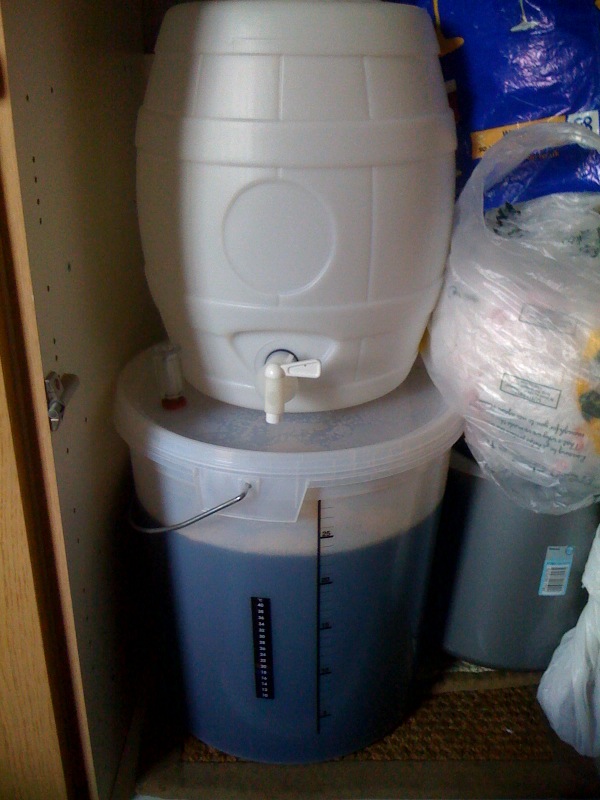
Halloween was a blast. The aformentioned homebrew went down a storm: I think we finished about 25 pints. Apart from hangovers, everyone survived! My good friend Rob was kind enough to knock up a label for the brew. Thanks to Rob, Dan for the photo and Helen for putting on the party!

Jon Dowland: ZFS de-duplication

Sun's Zetabyte File System (ZFS) has grown de-duplication support. De-duplication is where each block of storage is hashed and stored only once: if two (or more) files contain blocks which are identical, the common block will be saved only once, saving you disk space. This is very topical for me because I've been thinking a lot about backup solutions lately and de-duplication is a feature I'd rather like. backuppc does it; dar and rdiff-snapshot do not. git does it and I've been looking at backup systems built around that. The default settings in ZFS are to use the SHA256 algorithm for hashing and not to check for collisions. A collision would mean the newest write would skip over the block which was thought to be already stored, corrupting the file(s) referencing it. If this is a problem for people, the ZFS folks have implemented a (costly) 'verify' feature:
if this makes you uneasy, that's OK: ZFS provies a 'verify' option that performs a full comparison of every incoming block with any alleged duplicate to ensure that they really are the same
This will detect - and crucially handle - hash collisions. Jeff Bonwicks' advice is to use a low-complexity hashing algorithm in conjunction with 'verify', to offset the additional computational workload. There's no mention of how they resolve hash collisions. Presumably they use something like hash chains. The tradeoff involved there needs to be considered against the risk of collisions and cost of the chosen hash algorithm. I suspect most people will stick to the defaults, so this code won't get much use. It will be interesting to see some of the discussion and performance measurements that will inevitably come out once this becomes more widely available. For now, I'm quite tempted to take a peek at their source code.

7 October 2009

Jon Dowland: vimspell

I've been suffering a really annoying bug in VIM recently: when repeating an action that introduced space characters to the buffer (that is, single-byte 0x20 ASCII-compatible space characters), the action would insert Unicode non-breaking space characters instead (0xc2ac). I've finally tracked this down to an old vimspell plugin. Version 1.100 / released 14-Sep-2005 causes this in conjunction with the Debian vim-gnome package, version 2:7.2.245-2 (and perhaps others). The solution for me is to just remove the vimspell plugin: the upstream author recommends that users of VIM versions 7 and upwards use the built-in spell checker instead anyway.

6 October 2009

Jon Dowland: A new wheel for 2009

Forgive me if I'm missing a nuance here, but consider this quote from the article "Developing for the Apple iPhone using Flash":
We created a new compiler front end that allowed LLVM to understand ActionScript 3 and used its existing ARM back end to output native ARM assembly code. We call this Ahead of Time (AOT) compilation in contrast to the way Adobe Flash Player and Adobe AIR function on the desktop using Just in Time (JIT) compilation.
So er, this new-fangled non-JIT technology is important enough to get it's own three-letter acronym: AOT. Perhaps at some point it might be added to the already crowded wikipedia 'AOT' article. But isn't this essentially a garden-variety Compiler, the same technology we've enjoyed since 1957? Please don't misinterpret this as a slight at LLVM, which is very a very promising piece of software.

30 September 2009

Jon Dowland: FAC-1

This is my first attempt at homebrew. It's from a stout kit, purchased from the Elderberry Home Brew Centre, which you can find at 28 Station Road, Whitley Bay. The fellow there is very helpful and gave me lots of advice on starting out. I'd recommend anyone interested in beer or wine making in the Newcastle or North Tyneside area to make the journey. In honour of a period in modern British music I am really fond of, I've decided to call it "FAC-1". Thus, when the first stage is complete and I siphon off a sampler, I can call that "FAC-2".

29 September 2009

Jon Dowland: archfs build dependencies

build-dependencies using an XML manpage
build-dependencies using an nroff manpage
archfs has been accepted into unstable! I've been working on this package in between other tasks for quite a long time. I based my package on prior packaging work by Adam Sloboda from mentors.debian.net. The upstream package lacks a manpage, and one of the changes I have made from the initial packaging was to replace an XML-authored manpage by Adam with a roff one (based on the processed output of the XML one). I did this because I find authoring roff documents easier than XML ones. Another consequence is the build dependencies a lot simpler. We can see just how simpler thanks to Frans Pops' debtree.

28 September 2009

Jon Dowland: Ruby vs. Python

Pablo Lorenzzoni writes to defend Ruby in response to Kanwei Li's April post about dropping it in favour of Python. Kanwei's post has some questionable points that Pablo rightly picks up on (being forced to use ternary operators?) and some that he doesn't ("LOC matters, people."). Just like Kanwei, some time ago I decided to ditch Ruby and focus on Python for the tasks that I would normally use Ruby for. The two final nails in the coffin for me were Interestingly, Pablo cites rubygems as one of the points in favour of Ruby. Whilst both Pablo and Kanwei mostly focus on technical details for their attack and defence of Ruby, these two points for me were largely social, community issues.

23 September 2009

Jon Dowland: win7 window management

Since I've started today writing about UI issues, I might as well continue. I stumbled across a satirical review of Windows7 on kuro5hin (who knew kuro5hin was still being updated?) which highlighted one or two new window management features:
You can drag a window to the top to maximize it, which is surprisingly useful. Dragging it to the side maximizes it to use half the screen, which is great for two Explorer windows for moving stuff around.
I've always found old-windows' right-click-on-taskbar menu items for auto-arranging windows very useful and wished that stock GNOME was as useable (you can get a bit closer with Devil's Pie. I might still one day resurrect my own window manager idea). This is probably no more discoverable than the old way, but useful none-the-less.

Jon Dowland: GIMP UI failures

Finding usability failures in GIMP is not exactly needle-in-haystack difficulty. Today's frustration: it appears to disable your ability to minimize the Toolbox and related windows. I can't imagine why that was considered a good idea.

10 September 2009

Jon Dowland: chromium

For the last few weeks I have been using the chromium browser as the main browser both at work and at home. There's an Ubuntu PPA containing .debs of nightly chromium builds which works fine on Debian sid AMD 64 (as others have mentioned). The "killer feature" for me about Google Chrome when it was first announced was the tab/window process isolation. What I really like about chromium is how fast it feels. Opening new windows is blazingly fast. I can reorganise windows and tabs however I like (which I used to enjoy doing in Epiphany before the feature disappeared). I installed chromium without high expectations. I suspect the features I like about it (speed, stability) will end up in other browsers and I've been expecting to move back to Epiphany (or perhaps even Firefox). However, maybe I'll just stick with chromium for a while.

5 September 2009

Jon Dowland: exploring git repositories

I am in the process of moving the Doom packages that the Debian Games Team maintain from subversion to git. I started with a small native package called game-data-packager. The clone operation took hours to run and resulted in a 90-odd Mb git repository. Since game-data-packager is a relatively small collection of shell scripts with a recent history, I have reason to believe that git svn has imported much more of the Games Team SVN repo than just the game-data-packager bits. After fiddling with git repack -a -d, git prune and git gc --aggressive, the repository is still 80Mb large. How do I determine what is using all this space? Can anyone advise me on the best way to analyse a repository like this?

31 August 2009

Jon Dowland: A bank holiday find

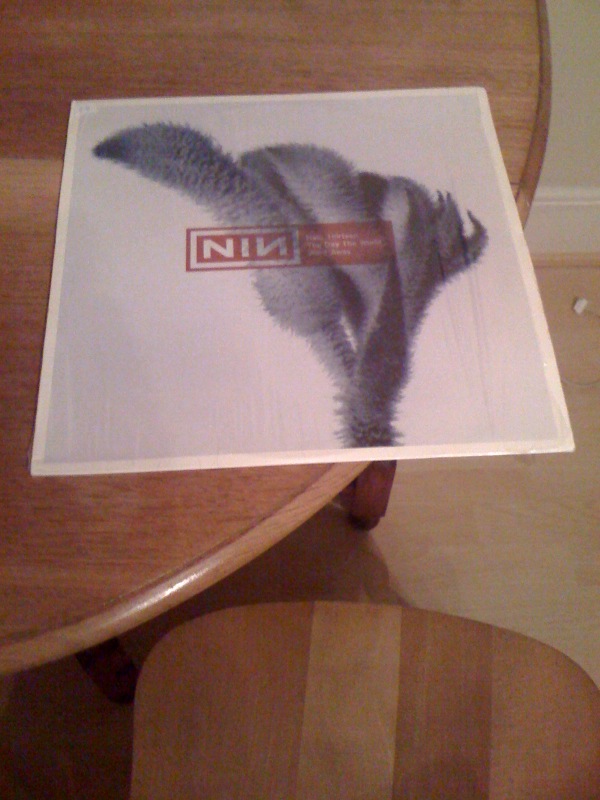
Awesome bank holiday find.

Jon Dowland: debian bbq 2009

Thanks to Steve for a great BBQ this week, as always. It was great to catch up with everyone. Until next time!

3 June 2009

Jon Dowland: mod deflate

I was surprised to learn that Debian's apache2 package does not enable mod_deflate by default. This is the module which implements compression. Once enabled, I needed to add application/atom+xml to the configuration in order for it to apply to atom feeds (which are the most consistently fetched URI on my site generally, although right now the image from my last log post is in the lead by a huge margin). I'm not sure how much merit there is in compressing atom feeds. My primary one is 4.8k in size and compressed to roughly 1.6k at the time of writing. The difference in time for fetching those two sizes is dwarfed by connection setup/tear-down and possibly by the CPU time used for compression. I wonder if mod_deflate caches the compressed copies? Since my feed (and entire site) is statically generated by ikiwiki, I could generate compressed copies once at build-time. Perhaps apache2's content negotiation could be configured to serve these up.

1 June 2009

Jon Dowland: first coat

I'm painting the alcoves in my living room. The first coat is done!

Next.

Previous.