Search Results: "daniel"

31 January 2016

Daniel Silverstone: Building an Oscilloscope

I recently ordered some PCBs from Elecrow for the Vic's beer-measurement system I've been designing with Rob. While on the site, I noticed that they have a single-channel digital oscilloscope kit based on an STM32. This is a JYE Tech DSO138 which arrives as a PCB whose surface-mount stuff has been fitted, along with a whole bunch of pin-through components for you to solder up the scope yourself. There's a non-trivial number of kinds of components, so first you should prep by splitting them all up and double-checking them all. Preparing the components Once you've done that, the instructions start you off fitting a whole bunch of resistors... Step 1, fitting resistors Then some diodes, RF chokes, and the 8MHz crystal for the STM32. Step 2, fitting diodes, a crystal, and chokes The single most-difficult bit for me to solder was the USB socket. Fine pitch leads, coupled with high-thermal-density socket. Step 3, the USB socket There is a veritable mountain of ceramic capacitors to fit... Step 4, all the ceramic capacitors And then buttons, inductors, trimming capacitors and much more... Step 5, buttons, inductors, trimming capacitors, etc THe switches were the next hardest things to solder, after the USB socket... Step 6, Switches, connectors, etc Finally you have to solder a test loop and close some jumpers before you power-test the board. Step 7, Test loop and jumper soldering The last bit of soldering is to solder pins to the LCD panel board... Step 8, LCD panel Before you finally have a working oscilloscope Working oscilloscope! I followed the included instructions to trim the scope using the test point and the trimming capacitors, before having a break to write this up for you all. I'd say that it was a fun day because I enjoyed getting a lot of soldering practice (before I have to solder up the beer'o'meter for the pub) and at the end of it I got a working oscilloscope. For 40 USD, I'd recommend this to anyone who fancies a go.

24 January 2016

Lunar: Reproducible builds: week 39 in Stretch cycle

What happened in the reproducible builds effort between January 17th and January 23rd:

Toolchain fixes James McCoy uploaded subversion/1.9.3-2 which removes -Wdate-time from CPPFLAGS passed to swig enabling several packages to build again. The switch made in binutils/2.25-6 to use deterministic archives by default had the unfortunate effect of breaking a seldom used feature of make. Manoj Srivastava asked on debian-devel the best way to communicate the changes to Debian users. Lunar quickly came up with a patch that displays a warning when Make encounters deterministic archives. Manoj made it available in make/4.1-2 together with a NEWS file advertising the change. Following Guillem Jover's comment on the latest patch to make mtimes of packaged files deterministic, Daniel Kahn Gillmor updated and extended the patch adding the --clamp-mtime option to GNU Tar. Mattia Rizzolo updated texlive-bin in the reproducible experimental repository.

Packages fixed The following packages became reproducible after getting fixed: Some uploads fixed some reproducibility issues, but not all of them: Patches submitted which have not made their way to the archive yet:

reproducible.debian.net Transition from reproducible.debian.net to the more general tests.reproducible-builds.org has started. More visual changes are coming. (h01ger) A plan on how to run tests for F-Droid has been worked out. (hc, mvdan, h01ger) A first step has been made by adding a Jenkins job to setup an F-Droid build environment. (h01ger)

diffoscope development diffoscope 46 has been released on January 19th, followed-up by version 47 made available on January 23rd. Try it online at try.diffoscope.org! The biggest visible change is the improvement to ELF file handling. Comparisons are now done section by section, using the most appropriate tool and options to get meaningful results, thanks to Dhole's work and Mike Hommey's suggestions. Also suggested by Mike, symbols for IP-relative ops are now filtered out to remove clutter. Understanding differences in ELF files belonging to Debian packages should also be much easier as diffoscope will now try to extract debug information from the matching dbgsym package. This means objdump disassembler should output line numbers for packages built with recent debhelper as long as the associated debug package is in the same directory. As diff tends to consume huge amount of memory on large inputs, diffoscope has a limit in place to prevent crashes. diffoscope used to display a difference every time the limit was hit. Because this was confusing in case there were actually no differences, a hash is now internally computed to only report a difference when one exists. Files in archives and other container members are now compared in the original order. This should not matter in most case but overall give more predictable results. Debian .buildinfo files are now supported. Amongst other minor fixes and improvements, diffoscope will now properly compare symlinks in directories. Thanks Tuomas Tynkkynen for reporting the problem.

Package reviews 70 reviews have been removed, 125 added and 33 updated in the previous week, gcc-5 amongst others. 25 FTBFS issues have been filled by Chris Lamb, Daniel Stender, Martin Michlmayr.

Misc. The 16th FOSDEM will happen in Brussels, Belgium on January 30-31st. Several talks will be about reproducible builds: h01ger about the general ecosystem, Fabian Keil about the security oriented ElectroBSD, Baptiste Daroussin about FreeBSD packages, Ludovic Court s about Guix.

17 January 2016

Lunar: Reproducible builds: week 38 in Stretch cycle

What happened in the reproducible builds effort between January 10th and January 16th:

Toolchain fixes Benjamin Drung uploaded mozilla-devscripts/0.43 which sorts the file list in preferences files. Original patch by Reiner Herrmann. Lunar submitted an updated patch series to make timestamps in packages created by dpkg deterministic. To ensure that the mtimes in data.tar are reproducible, with the patches, dpkg-deb uses the --clamp-mtime option added in tar/1.28-1 when available. An updated package has been uploaded to the experimental repository. This removed the need for a modified debhelper as all required changes for reproducibility have been merged or are now covered by dpkg.

Packages fixed The following packages have become reproducible due to changes in their build dependencies: angband-doc, bible-kjv, cgoban, gnugo, pachi, wmpuzzle, wmweather, wmwork, xfaces, xnecview, xscavenger, xtrlock, virt-top. The following packages became reproducible after getting fixed: Some uploads fixed some reproducibility issues, but not all of them: Untested changes:

reproducible.debian.net Once again, Vagrant Cascadian is providing another armhf build system, allowing to run 6 more armhf builder jobs, right there. (h01ger) Stop requiring a modified debhelper and adapt to the latest dpkg experimental version by providing a predetermined identifier for the .buildinfo filename. (Mattia Rizzolo, h01ger) New X.509 certificates were set up for jenkins.debian.net and reproducible.debian.net using Let's Encrypt!. Thanks to GlobalSign for providing certificates for the last year free of charge. (h01ger)

Package reviews 131 reviews have been removed, 85 added and 32 updated in the previous week. FTBFS issues filled: 29. Thanks to Chris Lamb, Mattia Rizzolo, and Niko Tyni. New issue identified: timestamps_in_manpages_added_by_golang_cobra.

Misc. Most of the minutes from the meetings held in Athens in December 2015 are now available to the public.

14 January 2016

Lunar: Reproducible builds: week 37 in Stretch cycle

What happened in the reproducible builds effort between January 3rd and January 9th 2016:

Toolchain fixes David Bremner uploaded dh-elpa/0.0.18 which adds a --fix-autoload-date option (on by default) to take autoload dates from changelog. Lunar updated and sent the patch adding the generation of .buildinfo to dpkg.

Packages fixed The following packages have become reproducible due to changes in their build dependencies: aggressive-indent-mode, circe, company-mode, db4o, dh-elpa, editorconfig-emacs, expand-region-el, f-el, geiser, hyena, js2-mode, markdown-mode, mono-fuse, mysql-connector-net, openbve, regina-normal, sml-mode, vala-mode-el. The following packages became reproducible after getting fixed: Some uploads fixed some reproducibility issues, but not all of them: Patches submitted which have not made their way to the archive yet:
  • #809780 on flask-restful by Chris Lamb: implement support for SOURCE_DATE_EPOCH in the build system.
  • #810259 on avfs by Chris Lamb: implement support for SOURCE_DATE_EPOCH in the build system.
  • #810509 on apt by Mattia Rizzolo: ensure a stable file order is given to the linker.

reproducible.debian.net Add 2 more armhf build nodes provided by Vagrant Cascadian. This added 7 more armhf builder jobs. We now run around 900 tests of armhf packages each day. (h01ger) The footer of each page now indicates by which Jenkins jobs build it. (h01ger)

diffoscope development diffoscope 45 has been released on January 4th. It features huge memory improvements when comparing large files, several fixes of squashfs related issues that prevented comparing two Tails images, and improve the file list of tar and cpio archive to be more precise and consistent over time. It also fixes a typo that prevented the Mach-O to work (Rainer M ller), improves comparisons of ELF files when specified on the command line, and solves a few more encoding issues.

Package reviews 134 reviews have been removed, 30 added and 37 updated in the previous week. 20 new fail to build from source issues were reported by Chris Lamb and Chris West. prebuilder will now skip installing diffoscope to save time if the build results are identical. (Reiner Herrmann)

11 January 2016

Daniel Pocock: FOSDEM RTC Dev-room schedule published

If you want to help make Free Real-time Communication (RTC) with free, open source software surpass proprietary solutions this year, a great place to start is the FOSDEM RTC dev-room. On Friday we published the list of 17 talks accepted in the dev-room (times are still provisional until the FOSDEM schedule is printed). They include a range of topics, including SIP, XMPP, WebRTC and peer-to-peer Real-time communication. RTC will be very prominent at FOSDEM this year with several talks on this topic, including my own, in the main track.

9 January 2016

Daniel Pocock: Comments about people with mental illness

A quote:
As the Buddha said 2500 years ago... we're all out of our fucking minds. (Albert Ellis)
There have been a few occasions over the last year where people suffering mental illnesses have been the subject of much discussion. In March 2015 there was the tragic loss of Germanwings flight 9525. It was discovered that the co-pilot, Andreas Lubitz, had been receiving treatment for mental illness. Under strict privacy laws, nobody at his employer, the airline, had received any information about the diagnosis or treatment. During the summer, the private mailing list for a large online community discussed the mental illness of a contributor to a project. Various people expressed opinions that appeared to be generalizations about all those with mental illness. Some people hinted the illness was a lie to avoid work while others speculated about options for treatment. Nobody involved mentioned having any medical expertise. It is ironic that on the one hand, we have the dramatic example of an aircraft crashing at the hands of somebody who is declared unfit to work but working anyway and on the other hand when somebody else couldn't do something, the diagnosis is being disputed by people who find it inconvenient or don't understand it. More recently, there has been openly public discussion about whether another developer may have had mental illness. Once again, there doesn't appear to be any evidence from people with any medical expertise or documentation whatsoever. Some of the comments appear to be in the context of a grudge or justifying some other opinion. What's worse, some comments appear to suggest that mental illness can be blamed for anything else that goes wrong in somebody's life. If somebody is shot and bleeds to death, do you say low blood pressure killed him or do you just say he was shot? Likewise, if somebody is subject to some kind of bullying and abused, does this have no interaction with mental illness? In fact, Google reveals an enormous number of papers from experts in this field suggesting that mental illness can arise or be exacerbated by bad experiences. Although it may not have been clear at that point in time, when we look back at Alan Turing's death today, suicide was not a valid verdict and persecution was a factor. Statistics tell us that 1 in 4 people experience a mental health problem in the UK each year. In the USA it is 26% of the adult population, each year. These may be long term conditions or they may be short term conditions. They may arise spontaneously or they may be arising from some kind of trauma, abuse or harassment in the home, workplace or some other context. For large online communities, these statistics imply it is inevitable that some participants will be suffering from mental illness and others will have spouses, parents or children suffering from such conditions. These people will be acutely aware of the comments being made publicly about other people in the community. Social interaction also relates to the experience of mental illness, people who are supported by their community and society are more likely to recover while those who feel they are not understood or discriminated against may feel more isolated, compounding their condition. As a developer, I wouldn't really like the idea of doctors meddling with my code, so why is it that some people in the IT and business community are so happy to meddle around in the domain of doctors, giving such strong opinions about something they have no expertise in? Despite the tragic loss of life in Germanwings 9525, observing some of these other discussions that have taken place reminds me why Germany and some other countries do have such strict privacy laws for people who seek medical treatment. (You can Follow or Tweet about this blog on Twitter)

7 January 2016

Elena 'valhalla' Grandi: Smartphones, ownership and hope for the fate of humanity

Smartphones, ownership and hope for the fate of humanity
Do you own your phone or does it own you? DanielPocock.com


I have conflicting opinions about this article.

Usually I carry a dumb phone, so I'm not completely disconnected, but I'm mostly self-limited to "useful" communications by the fact that I have to pay for calls and SMSs. It also has a few useful features like showing the time , an alarm clock and a led torch, but that's it.

I also carry a smartphone, but I've never been able to trust it with my personal data, so there is no email on it and no communication software. It's also always offline to preserve battery, unless I'm actually using it for something (usually maps). It does have an offline wikipedia reader, which is the second thing I use it more often for. About half of the time I try to use it, however, it is off because I forgot to charge it, unless I've planned in advance to use it (which usually means I'm also carrying a laptop and will need to tether it).

So I guess that I should be agreeing with the article that offline life is better, and that we shouldn't depend on phones in our daily life, and mostly I do.

On the other hand, I'm not so sure that all of the people who seem to be interacting with a phone are actually disconnected from the local reality.

More than once I've experienced the use of smartphones as part of a local interaction: one typical case involves people having a conversation IRL and checking some fact on the internet and then sharing the results with the rest of the local group.

Actually, most of the time I've seen a smartphone being used at our table while eating with friends or collegues it was being passed around to show something to the people at the table, or at the very least being read aloud from, so it was part of the local experience, not a way to disconnect from it.

I'm sure that there are cases of abuse, but I still have hope that most of the connected humanity is managing to find a good balance between online and offline.

I don't want to go back carrying a wrist watch. I remember them as something unconfortable that ended up hitting stuff as I moved my hands, and I'd rather have my wrists free while I type, thanks. Pocket watches, OTOH...

the main exception involved one young adult in the middle of significantly older relatives, which is a somewhat different issue, and one that I believe predated smartphones (IIRC in my case similar situations involved trying to be somewhere else by reading a book).

Daniel Pocock: Do you own your phone or does it own you?

Have you started thinking about new year's resolutions for 2016? Back to the gym or giving up sugary drinks? Many new year's resolutions have a health theme. Unless you have a heroin addiction, there may not be anything else in your life that is more addictive and has potentially more impact on your health and quality of life than your mobile phone. Almost every week there is some new report about the negative impact of phone use on rest or leisure time. Children are particularly at risk and evidence strongly suggests their grades at school are tanking as a consequence. Can you imagine your life changing for the better if you switched off your mobile phone or left it at home for one day per week in 2016? If you have children, can you think of anything more powerful than the example you set yourself to help them stay in control of their phones? Children have a remarkable ability to emulate the bad habits they observe in their parents. Are you in control? Turning it off is a powerful act of showing who is in charge. If you feel you can't live without it, then you are putting your life in the hands of the people who expect an immediate answer of their calls, your phone company and the Silicon Valley executives who make all those apps you can't stop using. As security expert Jacob Appelbaum puts it, cell phones are tracking devices that also happen to make phone calls. Isn't that a chilling thought to reflect on the next time you give one as Christmas gift? For your health, your children and your bank balance Not so long ago we were having lunch in a pizza restaurant in Luzern, a picturesque lakeside town at the base of the Swiss Alps. Luzern is a popular first stop for tourists from all around the world. A Korean family came along and sat at the table next to us. After ordering their food, they all immediately took out their mobile devices and sat there in complete silence, the mother and father, a girl of eight and a boy of five, oblivious to the world around them and even each other, tapping and swiping for the next ten minutes until their food arrived. We wanted to say hello to them, I joked that I should beep first, initiating communication with the sound of a text message notification. Is this how all holidays will be in future? Is it how all families will spend time together? Can you imagine your grandchildren and their children sharing a meal like this in the year 2050 or beyond? Which gadgets does Bond bring to Switzerland? On Her Majesty's Secret Service is one of the more memorable Bond movies for its spectacular setting in the Swiss Alps, the location now transformed into a mountain-top revolving restaurant visited by thousands of tourists every day with a comfortable cable car service and hiking trails with breathtaking views that never become boring. Can you imagine Bond leaving behind his gun and his skis and visiting Switzerland with a smartphone instead? Eating a pizza with one hand while using the fingertips of the other to operate an app for making drone strikes on villains, swiping through Tinder for a new girl to replace the one who died (from boredom) in his previous "adventure" and letting his gelati melt while engrossed in a downhill ski or motorcycle game in all the glory of a 5.7" 24-bit colour display? Of course its absurd. Would you want to live like that yourself? We see more and more of it in people who are supposedly in Switzerland on the trip of a lifetime. Would you tolerate it in a movie? The mobile phone industry has paid big money to have their technology appear on the silver screen but audience feedback shows people are frustrated with movies that plaster the contents of text messages across the screen every few minutes; hopefully Bond movies will continue to plaster bullets and blood across the screen instead. Time for freedom How would you live for a day or a weekend or an entire holiday without your mobile phone? There are many small frustrations you may experience but the biggest one and the indirect cause of many other problems you will experience may be the inability to tell the time. Many people today have stopped wearing a watch, relying instead upon their mobile phone to tell the time. Without either a phone or a watch, frustration is not far away. If you feel apprehension just at the thought of leaving your phone at home, the lack of a watch may be a subconcious factor behind your hesitation. Trying is better than reading Many articles and blogs give opinions about how to buy a watch, how much to spend and what you can wear it with. Don't spend a lot of time reading any of it, if you don't know where to start, simply go down to the local high street or mall and try them. Start with the most glamorous and expensive models from Swiss manufacturers, as these are what everything else is compared to and then perhaps proceed to look more widely. While Swiss brands tend to sell through the stores, vendors on Amazon and eBay now distribute a range of watches from manufacturers in Japan, China and other locations, such as Orient and Invicta, at a fraction of the price of those in the stores. You still need to try a few first to identify your preferred style and case size though. Google can also turn up many options for different budgets.

Copying or competition? Similarity of Invicta (from Amazon) and Rolex Submariner You may not know whether you want a watch that is manually wound, automatically wound or battery operated. Buying a low-cost automatic model online could be a good way to familiarize yourself before buying anything serious. Mechanical watches have a smoother and more elegant second-hand movement and will survive the next Carrington event but may come to grief around magnets - a brief encounter with a low-cost de-gausser fixes that. Is it smart to buy a smart watch? If you genuinely want to have the feeling of complete freedom and control over technology, you may want to think twice about buying a smart watch. While it may be interesting to own and experiment with it some of the time, being free from your phone means being free from other electronic technology too. If you do go for a smart watch (and there are many valid reasons for trying one some of the time), maybe make it a second (or third) watch. Smart watches are likely to be controversial for some time to come due to their impact in schools (where mobile phones are usually banned) and various privacy factors. Help those around you achieve phone freedom in 2016 There will be further blogs on this theme during 2016, each looking at the pressures people face when with or without the mobile phone. As a developer of communications technology myself, you may be surprised to see me encouraging people not to use it every waking minute. Working on this technology makes me more conscious of its impact on those around me and society in general. A powerful factor to consider when talking about any communications technology is the presence of peer pressure and the behavior of those around you. Going phone-free may involve helping them to consider taking control too. Helping them out with a new watch as a gift (be careful to seek advice on the style that they are likely to prefer or ensure the purchase can be exchanged) may be an interesting way to help them engage with the idea and every time they look at the time, they may also be reminded of your concern for their freedom.

6 January 2016

Daniel Pocock: Want to use free software to communicate with your family in Christmas 2016?

Was there a friend or family member who you could only communicate with using a proprietary, privacy-eroding solution like Skype or Facebook this Christmas? Would you like to be only using completely free and open solutions to communicate with those people next Christmas? Developers Even if you are not developing communications software, could the software you maintain make it easier for people to use "sip:" and "xmpp:" links to launch other applications? Would this approach make your own software more convenient at the same time? If your software already processes email addresses or telephone numbers in any way, you could do this. If you are a web developer, could you make WebRTC part of your product? If you already have some kind of messaging or chat facility in your website, WebRTC is the next logical step. If you are involved with the Debian or Fedora projects, please give rtc.debian.org and FedRTC.org a go and share your feedback. If you are involved with other free software communities, please come to the Free-RTC mailing list and ask how you can run something similar. Everybody can help Do you know any students who could work on RTC under Google Summer of Code, Outreachy or any other student projects? We are particularly keen on students with previous experience of Git and at least one of Java, C++ or Python. If you have contacts in any universities who can refer talented students, that can also help a lot. Please encourage them to contact me directly. In your workplace or any other organization where you participate, ask your system administrator or developers if they are planning to support SIP, XMPP and WebRTC. Refer them to the RTC Quick Start Guide. If your company web site is built with the Drupal CMS, refer them to the DruCall module, it can be installed by most webmasters without any coding. If you are using Debian or Ubuntu in your personal computer or office and trying to get best results with the RTC and VoIP packages on those platforms, please feel free to join the new debian-rtc mailing list to discuss your experiences and get advice on which packages to use. Everybody is welcome to ask questions and share their experiences on the Free-RTC mailing list. Please also come and talk to us at FOSDEM 2016, where RTC is in the main track again. FOSDEM is on 30-31 January 2016 in Brussels, attendance is free and no registration is necessary. This mission can be achieved with lots of people making small contributions along the way.

5 January 2016

Daniel Pocock: Promoting free software and free communications on popular social media networks

(You can Follow or Tweet about this blog on Twitter) Sites like Twitter and Facebook are not fundamentally free platforms, despite the fact they don't ask their users for money. Look at how Facebook's censors confused Denmark's mermaid statue with pornography or how quickly Twitter can make somebody's account disappear, frustrating public scrutiny of their tweets and potentially denying access to vital information in their "direct message" mailbox. Then there is the fact that users don't get access to the source code, users don't have a full copy of their own data and, potentially worst of all, if most people bothered to read the fine print of the privacy policy they would find it is actually a recipe for downright creepiness. Nonetheless, a significant number of people have accounts in these systems and are to some extent contactable there. Many marketing campaigns that have been successful today, whether they are crowdfunding, political activism or just finding a lost cat claim to have had great success because of Twitter or Facebook. Is this true? In reality, many users of those platforms follow hundreds of different friends and if they only check-in once a day, filtering algorithms show them only a small subset of what all their friends posted. Against these odds, just posting your great idea on Facebook doesn't mean that more than five people are actually going to see it. Those campaigns that have been successful have usually had something else going in their favour, perhaps it was a friend working in the media who gave their campaign a plug on his radio show or maybe they were lucky enough to be slashdotted. Maybe it was having the funds for a professional video production with models who pass off as something spontaneous. The use of Facebook or Twitter alone did not make such campaigns successful, it was just part of a bigger strategy where everything fell into place. Should free software projects, especially those revolving around free communications technology, use such platforms to promote themselves? It is not a simple question. In favour, you could argue that everything we promote through public mailing lists and websites is catalogued by Google anyway, so why not make it easier to access for those who are on Facebook or Twitter? On top of that, many developers don't even want to run their own mail server or web server any more, let alone a self-hosted social-media platform like pump.io. Even running a basic SIP proxy server for the large Debian and Fedora communities involved a lot of discussion about the approach to support it. The argument against using Facebook and Twitter is that you are shooting yourself in the foot, when you participate in those networks, you give them even more credibility and power (which you could quantify using Metcalfe's law). The Metcalfe value of their network, being quadratic rather than linear, shoots ahead of the Metcalfe value of your own solution, putting your alternative even further out of reach. On top of that, the operators of the closed platform are able to evaluate who is responding to your message and how they feel about it and use that intelligence to further undermine you. In some cases, there may be passive censorship, such as WhatsApp silently losing messages that link to rival Telegram. How do you feel about this choice? How and when should free software projects and their developers engage with mainstream social media technology? Please come and share your ideas on the Free-RTC mailing list or perhaps share and Tweet them.

2 January 2016

Daniel Pocock: The great life of Ian Murdock and police brutality in context

Tributes: (You can Follow or Tweet about this blog on Twitter) Over the last week, people have been saying a lot about the wonderful life of Ian Murdock and his contributions to Debian and the world of free software. According to one news site, a San Francisco police officer, Grace Gatpandan, has been doing the opposite, starting a PR spin operation, leaking snippets of information about what may have happened during Ian's final 24 hours. Sadly, these things are now starting to be regurgitated without proper scrutiny by the mainstream press (note the erroneous reference to SFGate with link to SFBay.ca, this is British tabloid media at its best). The report talks about somebody (no suggestion that it was even Ian) "trying to break into a residence". Let's translate that from the spin-doctor-speak back to English: it is the silly season, when many people have a couple of extra drinks and do silly things like losing their keys. "a residence", or just their own home perhaps? Maybe some AirBNB guest arriving late to the irritation of annoyed neighbours? Doesn't the choice of words make the motive sound so much more sinister? Nobody knows the full story and nobody knows if this was Ian, so snippets of information like this are inappropriate, especially when somebody is deceased. Did they really mean to leave people with the impression that one of the greatest visionaries of the Linux world was also a cat burglar? That somebody who spent his life giving selflessly and generously for the benefit of the whole world (his legacy is far greater than Steve Jobs, as Debian comes with no strings attached) spends the Christmas weekend taking things from other people's houses in the dark of the night? The report doesn't mention any evidence of a break-in or any charges for breaking-in. If having a few drinks and losing your keys in December is such a sorry state to be in, many of us could potentially be framed in the same terms at some point in our lives. That is one of the reasons I feel so compelled to write this: somebody else could be going through exactly the same experience at the moment you are reading this. Any of us could end up facing an assault as unpleasant as the tweets imply at some point in the future. At least I can console myself that as a privileged white male, the risk to myself is much lower than for those with mental illness, the homeless, transgender, Muslim or black people but as the tweets suggest, it could be any of us. The story reports that officers didn't actually come across Ian breaking in to anything, they encountered him at a nearby street corner. If he had weapons or drugs or he was known to police that would have almost certainly been emphasized. Is it right to rush in and deprive somebody of their liberties without first giving them an opportunity to identify themselves and possibly confirm if they had a reason to be there? The report goes on, "he was belligerent", "he became violent", "banging his head" all by himself. How often do you see intelligent and successful people like Ian Murdock spontaneously harming themselves in that way? Can you find anything like that in any of the 4,390 Ian Murdock videos on YouTube? How much more frequently do you see reports that somebody "banged their head", all by themselves of course, during some encounter with law enforcement? Do police never make mistakes like other human beings? If any person was genuinely trying to spontaneously inflict a head injury on himself, as the police have suggested, why wouldn't the police leave them in the hospital or other suitable care? Do they really think that when people are displaying signs of self-harm, rounding them up and taking them to jail will be in their best interests? Now, I'm not suggesting this started out with some sort of conspiracy. Police may have been at the end of a long shift (and it is a disgrace that many US police are not paid for their overtime) or just had a rough experience with somebody far more sinister. On the other hand, there may have been a mistake, gaps in police training or an inappropriate use of a procedure that is not always justified, like a strip search, that causes profound suffering for many victims. A select number of US police forces have been shamed around the world for a series of incidents of extreme violence in recent times, including the death of Michael Brown in Ferguson, shooting Walter Scott in the back, death of Freddie Gray in Baltimore and the attempts of Chicago's police to run an on-shore version of Guantanamo Bay. Beyond those highly violent incidents, the world has also seen the abuse of Ahmed Mohamed, the Muslim schoolboy arrested for his interest in electronics and in 2013, the suicide of Aaron Swartz which appears to be a direct consequence of the "Justice" department's obsession with him. What have the police learned from all this bad publicity? Are they changing their methods, or just hiring more spin doctors? If that is their response, then doesn't it leave them with a cruel advantage over those people who were deceased? Isn't it standard practice for some police to simply round up anybody who is a bit lost and write up a charge sheet for resisting arrest or assaulting an officer as insurance against questions about their own excessive use of force? When British police executed Jean Charles de Menezes on a crowded tube train and realized they had just done something incredibly outrageous, their PR office went to great lengths to try and protect their image, even photoshopping images of Menezes to make him look more like some other suspect in a wanted poster. To this day, they continue to refer to Menezes as a victim of the terrorists, could they be any more arrogant? While nobody believes the police woke up that morning thinking "let's kill some random guy on the tube", it is clear they made a mistake and like many people (not just police), they immediately prioritized protecting their reputation over protecting the truth. Nobody else knows exactly what Ian was doing and exactly what the police did to him. We may never know. However, any disparaging or irrelevant comments from the police should be viewed with some caution. The horrors of incarceration It would be hard for any of us to understand everything that an innocent person goes through when detained by the police. The recently released movie about The Stanford Prison Experiment may be an interesting place to start, a German version produced in 2001, Das Experiment, is also very highly respected. The United States has the largest prison population in the world and the second-highest per-capita incarceration rate. Many, including some on death row, are actually innocent, in the wrong place at the wrong time, without the funds to hire an attorney. The system, and the police and prison officers who operate it, treat these people as packages on a conveyor belt, without even the most basic human dignity. Whether their encounter lasts for just a few hours or decades, is it any surprise that something dies inside them when they discover this cruel side of American society? Worldwide, there is an increasing trend to make incarceration as degrading as possible. People may be innocent until proven guilty, but this hasn't stopped police in the UK from locking up and strip-searching over 4,500 children in a five year period, would these children go away feeling any different than if they had an encounter with Jimmy Saville or Rolf Harris? One can only wonder what they do to adults. What all this boils down to is that people shouldn't really be incarcerated unless it is clear the danger they pose to society is greater than the danger they may face in a prison. What can people do for Ian and for justice? Now that these unfortunate smears have appeared, it would be great to try and fill the Internet with stories of the great things Ian has done for the world. Write whatever you feel about Ian's work and your own experience of Debian. While the circumstances of the final tweets from his Twitter account are confusing, the tweets appear to be consistent with many other complaints about US law enforcement. Are there positive things that people can do in their community to help reduce the harm? Sending books to prisoners (the UK tried to ban this) can make a difference. Treat them like humans, even if the system doesn't. Recording incidents of police activities can also make a huge difference, such as the video of the shooting of Walter Scott or the UK police making a brutal unprovoked attack on a newspaper vendor. Don't just walk past a situation and assume everything is under control. People making recordings may find themselves in danger, it is recommended to use software that automatically duplicates each recording, preferably to the cloud, so that if the police ask you to delete such evidence, you can let them watch you delete it and still have a copy. Can anybody think of awards that Ian Murdock should be nominated for, either in free software, computing or engineering in general? Some, like the prestigious Queen Elizabeth Prize for Engineering can't be awarded posthumously but others may be within reach. Come and share your ideas on the debian-project mailing list, there are already some here. Best of all, Ian didn't just build software, he built an organization, Debian. Debian's principles have helped to unite many people from otherwise different backgrounds and carry on those principles even when Ian is no longer among us. Find out more, install it on your computer or even look for ways to participate in the project.

Lunar: Reproducible builds: week 33 in Stretch cycle

What happened in the reproducible builds effort between December 6th and December 12th: Toolchain fixes Reiner Herrmann rebased our experimental version of doxygen on version 1.8.9.1-6. Chris Lamb submitted a patch to make the manpages generated by ruby-ronn reproducible by using the locale-agnostic %Y-%m-%d for the dates. Daniel Kahn Gillmor took another shot at the issue of source path captured in DWARF symbols. A patch has been sent for review by GCC upstream to add the ability to read an environment variable with -fdebug-prefix-map. Packages fixed The following 24 packages have become reproducible due to changes in their build dependencies: gkeyfile-sharp, gprbuild, graphmonkey, gthumb, haskell-yi-language, ion, jackson-databind, jackson-dataformat-smile, jackson-dataformat-xml, jnr-ffi, libcommons-net-java, libproxy, maven-shared-utils, monodevelop-database, mydumper, ndesk-dbus, nini, notify-sharp, pixz, protozero, python-rtslib-fb, slurm-llnl, taglib-sharp, tomboy-latex. The following packages became reproducible after getting fixed: Some uploads fixed some reproducibility issues, but not all of them: These uploads might have fixed reproducibility issues but could not be tested yet: Patches submitted which have not made their way to the archive yet: reproducible.debian.net Files created with diffoscope now have diffoscope in their name instead debbindiff. (h01ger) Hostnames of first and second build node are now recorded and shown in the build history. (Mattia Rizzolo) Exchanges have started with F-Droid developers to better understand what would be required to test F-Droid applications. (h01ger) A first small set of Fedora 23 packages is now also being tested while development on a new framework for testing RPMs in general has begun. A new Jenkins job has been added to set up to mock, the build system used by Fedora. Another new job takes care of testing RPMs from Fedora 23 on x86_64. So far only 151 packages from the buildsys-build group are tested (currently all unreproducible), but the plan is to build all 17,000 source packages in Fedora 23 and rawhide. The page presenting the results should also soon be improved. (h01ger, Dhiru Kholia) For Arch Linux, all 2223 packages from the extra repository will also be tested from now on. Packages in extra" are tested every four weeks, while those from core every week. Statistics are now displayed alongside the results. (h01ger) jenkins.debian.net has been updated to jenkins-job-builder version 1.3.0. Many job configurations have been simplified and refactored using features of the new version. This was another milestone for the jenkins.debian.org migration. (Phil Hands, h01ger) diffoscope development Chris Lamb announced try.diffoscope.org: an online service that runs diffoscope on user provided files. Screenshot of try.diffoscope.org Improvements are welcome. The application is licensed under the AGPLv3. On diffoscope itself, most pending patches have now been merged. Expect a release soon! Most of the code implementing parallel processing has been polished. Sadly, unpacking archive is CPU-bound in most cases, so the current thread-only implementation does not offer much gain on big packages. More work is still require to also add concurrent processes. Documentation update Ximin Luo has started to write a specification for buildinfo files that could become a larger platform than the limited set of features that were thought so far for Debian .buildinfo. Package reviews 113 reviews have been removed, 111 added and 56 updated in the previous week. 42 new FTBFS bugs were opened by Chris Lamb and Niko Tyni. New issues identified this week: timestamps_in_documentation_generated_by_docbook_dbtimestamp, timestamps_in_sym_l_files_generated_by_malaga, timestamps_in_edj_files_generated_by_edje_cc. Misc. Chris Lamb presented reproducible builds at skroutz.gr.

29 December 2015

Daniel Pocock: Real-Time Communication in FOSDEM 2016 main track

FOSDEM is nearly here and Real-Time Communications is back with a bang. Whether you are keen on finding the perfect privacy solution, innovative new features or just improving the efficiency of existing telephony, you will find plenty of opportunities at FOSDEM. Main track Saturday, 30 January, 17:00 Dave Neary presents How to run a telco on free software. This session is of interest to anybody building or running a telco-like service or any system administrator keen to look at a practical application of cloud computing with OpenStack. Sunday, 31 January, 10:00 is my own presentation on Free Communications with Free Software. This session looks at the state of free communications, especially open standards like SIP, XMPP and WebRTC and practical solutions like DruCall (for Drupal), Lumicall (for Android) and much more. Sunday, 31 January, 11:00 Guillaume Roguez and Adrien B raud from Savoir-faire Linux present Building a peer-to-peer network for Real-Time Communication. They explain how their Ring solution, based on OpenDHT, can provide a true peer-to-peer solution. and much, much more....
  • XMPP Summit 19 is on January 28 and 29, the Thursday and Friday before FOSDEM as part of the FOSDEM Fringe.
  • The FOSDEM Beer Night on Friday, 29 January provides a unique opportunity for Real-Time Communication without software
  • The Real-Time Lounge will operate in the K building over both days of FOSDEM, come and meet the developers of your favourite RTC projects
  • The Real-Time dev-room is the successor of the previous XMPP and Telephony dev-rooms. The Real-Time dev-room is in K.3.401 and the schedule will be announced shortly.
Volunteers and sponsors still needed Please come and join the FreeRTC mailing list to find out more about ways to participate, the Saturday night dinner and other opportunities. The FOSDEM team is still fundraising. If your company derives benefit from free software and events like FOSDEM, please see the sponsorship pages.

17 December 2015

Simon Josefsson: Let s Encrypt Clients

As many others, I have been following the launch of Let s Encrypt. Let s Encrypt is a new zero-cost X.509 Certificate Authority that supports the Automated Certificate Management Environment (ACME) protocol. ACME allow you to automate creation and retrieval of HTTPS server certificates. As anyone who has maintained a number of HTTPS servers can attest, this process has unfortunately been manual, error-prone and differ between CAs. On some of my personal domains, such as this blog.josefsson.org, I have been using the CACert authority to sign the HTTPS server certificate. The problem with CACert is that the CACert trust anchors aren t shipped with sufficient many operating systems and web browsers. The user experience is similar to reaching a self-signed server certificate. For organization-internal servers that you don t want to trust external parties for, I continue to believe that running your own CA and distributing it to your users is better than using a public CA (compare my XMPP server certificate setup). But for public servers, availability without prior configuration is more important. Therefor I decided that my public HTTPS servers should use a CA/Browser Forum-approved CA with support for ACME, and as long as Let s Encrypt is trustworthy and zero-cost, they are a good choice. I was in need of a free software ACME client, and set out to research what s out there. Unfortunately, I did not find any web pages that listed the available options and compared them. The Let s Encrypt CA points to the official Let s Encrypt client, written by Jakub Warmuz, James Kasten, Peter Eckersley and several others. The manual contain pointers to two other clients in a seamingly unrelated section. Those clients are letsencrypt-nosudo by Daniel Roesler et al, and simp_le by (again!) Jakub Warmuz. From the letsencrypt.org s client-dev mailing list I also found letsencrypt.sh by Gerhard Heift and LetsEncryptShell by Jan Moj . Is anyone aware of other ACME clients? By comparing these clients, I learned what I did not like in them. I wanted something small so that I can audit it. I want something that doesn t require root access. Preferably, it should be able to run on my laptop, since I wasn t ready to run something on the servers. Generally, it has to be Secure, which implies something about how it approaches private key handling. The letsencrypt official client can do everything, and has plugin for various server software to automate the ACME negotiation. All the cryptographic operations appear to be hidden inside the client, which usually means it is not flexible. I really did not like how it was designed, it looks like your typical monolithic proof-of-concept design. The simp_le client looked much cleaner, and gave me a good feeling. The letsencrypt.sh client is simple and written in /bin/sh shell script, but it appeared a bit too simplistic. The LetsEncryptShell looked decent, but I wanted something more automated. What all of these clients did not have, and that letsencrypt-nosudo client had, was the ability to let me do the private-key operations. All the operations are done interactively on the command-line using OpenSSL. This would allow me to put the ACME user private key, and the HTTPS private key, on a YubiKey, using its PIV applet and techniques similar to what I used to create my SSH host CA. While the HTTPS private key has to be available on the HTTPS server (used to setup TLS connections), I wouldn t want the ACME user private key to be available there. Similarily, I wouldn t want to have the ACME or the HTTPS private key on my laptop. The letsencrypt-nosudo tool is otherwise more rough around the edges than the more cleaner simp_le client. However the private key handling aspect was the deciding matter for me. After fixing some hard-coded limitations on RSA key sizes, getting the cert was as simple as following the letsencrypt-nosudo instructions. I ll follow up with a later post describing how to put the ACME user private key and the HTTPS server certificate private key on a YubiKey and how to use that with letsencrypt-nosudo. So you can now enjoy browsing my blog over HTTPS! Thank you Let s Encrypt!
12 December 2015

Daniel Pocock: TADHack Paris - 12-13 December 2015

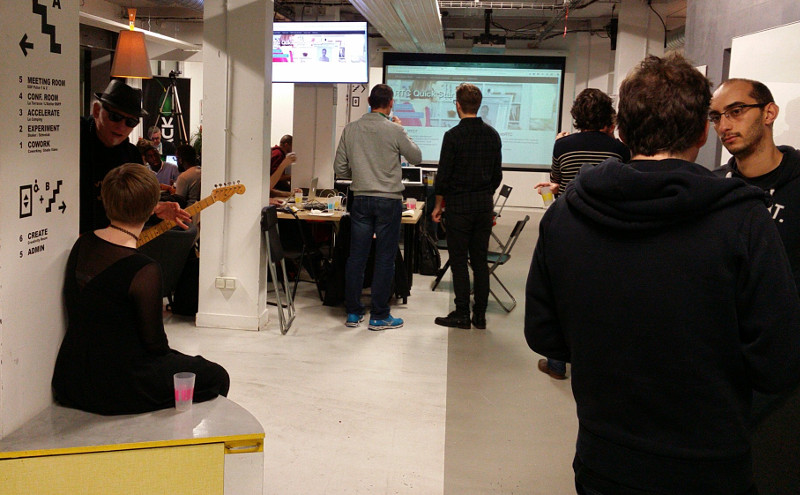
I'm currently in Paris for TADHack, an opportunity to collaborate on a range of telephony APIs and services. People can also win prizes by doing something innovative with the platforms promoted by the sponsors. This has been a great opportunity to raise awareness of the RTC Quick Start Guide, introduce people to DruCall and JSCommunicator and identify other opportunities for business and technical collaboration. If you are in Paris, it is not too late to register and participate, please see the TADHack web site for details.
AttachmentSize
IMG_20151212_182419.jpg131.34 KB

11 December 2015

Lunar: Reproducible builds: week 32 in Stretch cycle

The first reproducible world summit was held in Athens, Greece, from December 1st-3rd with the support of the Linux Foundation, the Open Tech Fund, and Google. Faidon Liambotis has been an amazing help to sort out all local details. People at ImpactHub Athens have been perfect hosts. North of Athens from the Acropolis with ImpactHub in the center Nearly 40 participants from 14 different free software project had very busy days sharing knowledge, building understanding, and producing actual patches. Anyone interested in cross project discussions should join the rb-general mailing-list. What follows focuses mostly on what happened for Debian this previous week. A more detailed report about the summit will follow soon. You can also read the ones from Joachim Breitner from Debian, Clemens Lang from MacPorts, Georg Koppen from Tor, Dhiru Kholia from Fedora, and Ludovic Court s wrote one for Guix and for the GNU project. The Acropolis from  Infrastructure Several discussions at the meeting helped refine a shared understanding of what kind of information should be recorded on a build, and how they could be used. Daniel Kahn Gillmor sent a detailed update on how .buildinfo files should become part of the Debian archive. Some key changes compared to what we had in mind at DebConf15: Hopefully, ftpmasters will be able to comment on the updated proposal soon. Packages fixed The following packages have become reproducible due to changes in their build dependencies: fades, triplane, caml-crush, globus-authz. The following packages became reproducible after getting fixed: Some uploads fixed some reproducibility issues, but not all of them: Patches submitted which have not made their way to the archive yet: akira sent proposals on how to make bash reproducible. Alexander Couzens submitted a patch upstream to add support for SOURCE_DATE_EPOCH in grub image generator (#787795). reproducible.debian.net An issue with some armhf build nodes was tracked down to a bad interaction between uname26 personality and new glibc (Vagrant Cascadian). A Debian package was created for koji, the RPM building and tracking system used by Fedora amongst others. It is currently waiting for review in the NEW queue. (Ximin Luo, Marek Marczykowski-G recki) diffoscope development diffoscope now has a dedicated mailing list to better accommodate its growing user and developer base. Going through diffoscope's guts together enabled several new contributors. Baptiste Daroussin, Ed Maste, Clemens Lang, Mike McQuaid, Joachim Breitner all contributed their first patches to improve portability or add new features. Regular contributors Chris Lamb, Reiner Herrmann, and Levente Polyak also submitted improvements. diffoscope hacking session in Athens The next release should support more operating systems, filesystem image comparison via libguestfs, HTML reports with on-demand loading, and parallel processing for the most noticeable improvements. Package reviews 27 reviews have been removed, 17 added and 14 updated in the previous week. Chris Lamb and Val Lorentz filed 4 new FTBFS reports. Misc. Baptiste Daroussin has started to implement support for SOURCE_DATE_EPOCH in FreeBSD in libpkg and the ports tree. Thanks Joachim Breitner and h01ger for the pictures.

9 December 2015

Daniel Pocock: Is WebRTC one of your goals for 2016?

WebRTC continues to gather momentum around the world. Over the next week, Paris will host a TADHack event on WebRTC (12-13 December) followed by Europe's most well known meeting of the WebRTC community, the annual WebRTC Conference and Expo, 16-18 December. 2015 has been a busy year for WebRTC developers, in the browser, on the server-side and even in documentation, with the online publication of The RTC Quick Start Guide. These efforts have all come together to create a stable foundation for many implementations in 2016. Demo The JSCommunicator demo video shows just how convenient WebRTC can be, looking at the first customer-facing WebRTC deployment on Wall Street, a project I put together back in 2014: This solution was implemented entirely with free, open source software integrated with a traditional corporate PBX. The project involved significant innovation to bring together a new technology like WebRTC with a very established corporate telephony infrastructure. For example, the solution makes use of the reSIProcate Python scripting to add the Avaya UUI headers to the SIP signaling, so it can integrate seamlessly with all existing Avaya customizations and desktop CRM software. Is this something you can imagine on your organization's web site or as part of your web-based product or service? DruCall module for Drupal - WebRTC without coding If you run a Drupal CMS or if you would like to, the DruCall module provides a very quick way to get started with WebRTC. On a Debian or Ubuntu server, you can automatically deploy the entire Drupal stack, Apache, MySQL and all module dependencies with $ sudo apt-get install -t jessie-backports drupal7-mod-drucall JSCommunicator, the generic SIP phone for web pages If you don't want to do any JavaScript development, JSCommunicator may be the way to go. JSCommunicator is a completely generic solution that can be completely re-branded just by tweaking the HTML and CSS. All phone features can be enabled and disabled using the configuration file. WebRTC plugins for CRM solutions As part of Google Summer of Code 2014, Juliana Louback created a WebRTC plugin for the xTuple enterprise CRM and ERP suite. The source code of the DruCall and xTuple plugins provide an excellent point of reference for developing similar plugins for other web applications. Both of them are based on JSCommunicator which is designed to embed easily into any existing HTML page or templating system. Get involved To find out more and discuss RTC using free software and open standards, please join us on the Free-RTC mailing list.

8 December 2015

Daniel Pocock: Comparison of free, open source accounting software

There are a diverse range of free software solutions for accounting. Personally, I have been tracking my personal and business accounts using a double-entry accounting system since I started doing freelance work about the same time I started university. Once you become familiar with double-entry accounting (which doesn't require much more than basic arithmetic skills and remembering the distinction between a debit and a credit) it is unlikely you would ever want to go back to a spreadsheet. Accounting software promoted for personal/home users often provides a very basic ledger where you can distinguish how much cash goes to rent, how much to food and how much to the tax man. Software promoted for business goes beyond the core ledger functionality and provides helpful ways to keep track of which bills you already paid, which are due imminently and which customers haven't paid you. Even for a one-man-band, freelancer or contractor, using a solution like this is hugely more productive than trying to track bills in a spreadsheet. Factors to consider when choosing a solution Changing accounting software can be a time consuming process and require all the users to learn a lot of new things. Therefore, it is generally recommended to start with something a little more powerful than what you need in the hope that you will be able to stick with it for a long time. With proprietary software this can be difficult because the more advanced solutions cost more money than you might be willing to pay right now. With free software, there is no such limitation and you can start with an enterprise-grade solution from day one and just turn off or ignore the features you don't need yet. If you are working as an IT consultant or freelancer and advising other businesses then it is also worthwhile to choose a solution for yourself that you can potentially recommend to your clients and customize for them. The comparison Here is a quick comparison of some of the free software accounting solutions that are packaged on popular Linux distributions like Debian, Ubuntu and Fedora:
Product Postbooks Tryton GnuCash LedgerSMB HomeBank Skrooge KMyMoney BG Financas Grisbi
GUI Y Y Y N Y Y Y Y Y
Web UI Y Y N Y N N N N N
Multi-user Y Y N Y N N N N Y
File storage N Y Y N Y Y Y N N
SQL storage Y Y Y Y N N Y Y Y
Multi-currency Y Y Y Y N Y Y Y
A/R Y Y Y Y N Y Y Y
A/P Y Y Y Y N Y Y Y
VAT/GST Y Y Y Y N N Y Y
Inventory Y Y N Y N N N
Linux Y Y Y Y Y Y Y Y Y
Windows Y Y
Mac OS Y Y
Technology C++, JavaScript, Node Python C Perl C Java
License CPAL GPL3 GPL2 GPL2
The table doesn't consider Odoo (formerly OpenERP) because the packages were considered buggy and are not maintained any more, it is replaced by Tryton. Compiere and Adempiere are other well known solutions but they haven't been packaged at all. Features in detail While the above list gives a basic summary of features, it is necessary to look more closely at how they are implemented. For example, if you need to report on VAT or GST, there are two methods of reporting: cash or accrual. Some products only support accruals because that is easier to implement. Even in commercial products that support cash-based VAT reporting, the reports are not always accurate (I've seen that problem with the proprietary Quickbooks software) and a tax auditor will be quick to spot such errors. The only real way to get to know one of these products is to test it for a couple of hours. Postbooks, for example, provides the Demo database so you can test it with dummy data without making any real commitment. User interface choices If you need to support users on multiple platforms or remote users such as an accountant or book-keeper, it is tempting to choose a solution with a web interface. The solutions with desktop interfaces can be provisioned to remote users using a terminal-server setup. The full GUI solutions tend to offer a richer user interface and reporting experience. It can frequently be useful to have multiple windows or reports open at the same time, doing this with browser tabs can be painful. File or database storage There are many good reasons to use database storage and my personal preference is for PostgreSQL. Using a database allows you to run a variety of third-party reporting tools and write your own scripts for data import and migration. Community and commercial support When dealing with business software, it is important to look at both the community and the commercial support offerings that are available. Some communities have events, such as xTupleCon for Postbooks or a presence at other major events like FOSDEM. Summary My personal choice at the moment is Postbooks from xTuple. This is because of a range of factors, including the availability of both web and desktop clients, true multi-user support, the multi-currency support and the PostgreSQL back-end.

2 December 2015

Andrea Veri: Three years and counting

It s been a while since my last what s been happening behind the scenes e-mail so I m here to report on what has been happening within the GNOME Infrastructure, its future plans and my personal sensations about a challenge that started around three (3) years ago when Sriram Ramkrishna and Jeff Schroeder proposed my name as a possible candidate for coordinating the team that runs the systems behind the GNOME Project. All this followed by the official hiring achieved by Karen Sandler back in February 2013. The GNOME Infrastructure has finally reached stability both in terms of reliability and uptime, we didn t have any service disruption this and the past year and services have been running smoothly as they were expected to in a project like the one we are managing. As many of you know service disruptions and a total lack of maintenance were very common before I joined back in 2013, I m so glad the situation has dramatically changed and developers, users, passionates are now able to reach our websites, code repositories, build machines without experiencing slowness, downtimes or
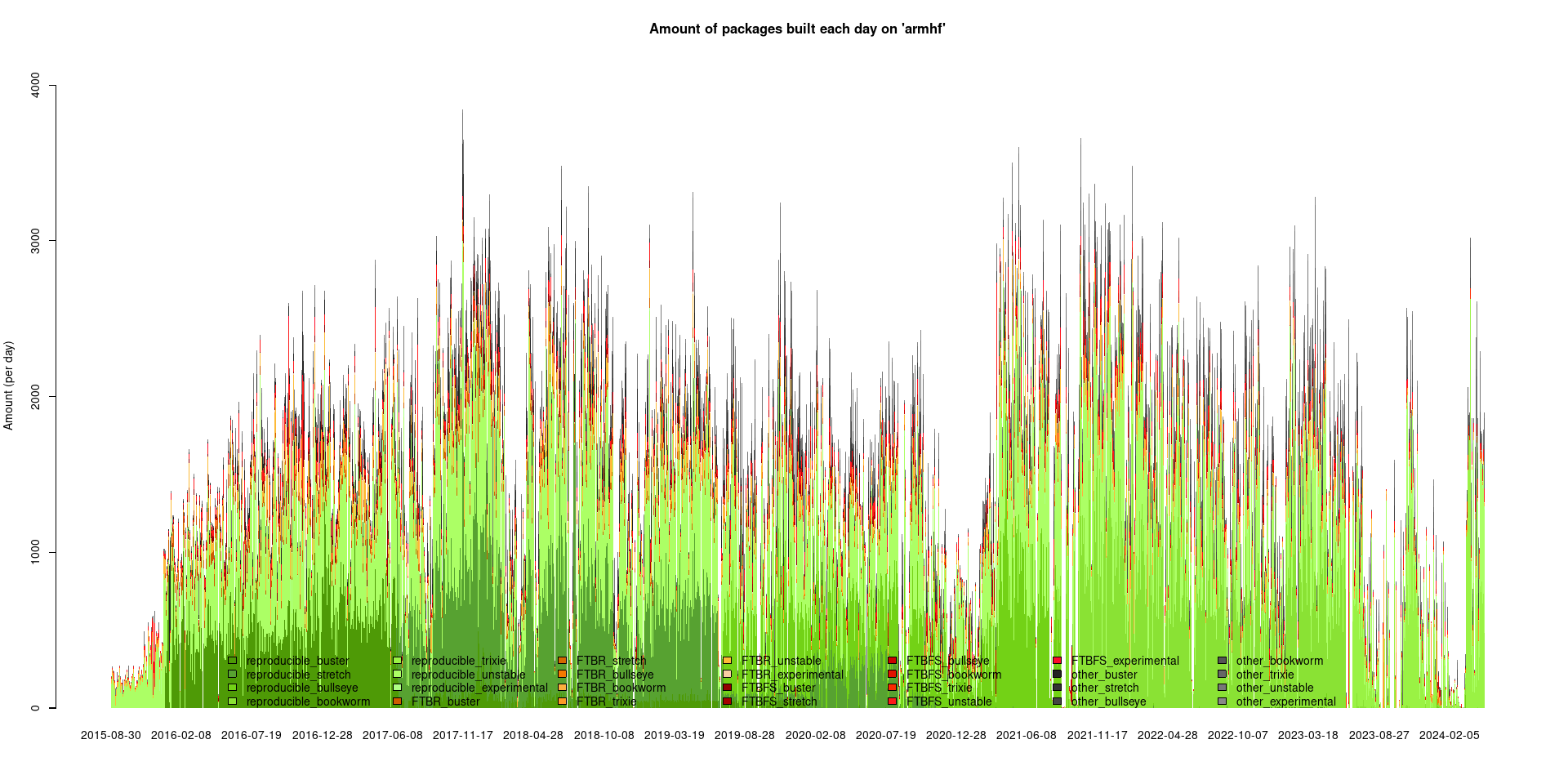
unreachability. Additionally all these groups of people now have a reference point they can contact in case they need help when coping with the infrastructure they daily use. The ticketing system allows users to get in touch with the members of the Sysadmin Team and receive support right away within a very short period of time (Also thanks to Pagerduty, service the Foundation is kindly sponsoring) Before moving ahead to the future plans I d like to provide you a summary of what has been done during these roughly three years so you can get an idea of why I define the changes that happened to the infrastructure a complete revamp:
  1. Recycled several ancient machines migrating services off of them while consolidating them by placing all their configuration on our central configuration management platform ran by Puppet. This includes a grand total of 7 machines that were replaced by new hardware and extended warranties the Foundation kindly sponsored.
  2. We strenghten our websites security by introducing SSL certificates everywhere and recently replacing them with SHA2 certificates.
  3. We introduced several services such as Owncloud, the Commits Bot, the Pastebin, the Etherpad, Jabber, the GNOME Github mirror.
  4. We restructured the way we backup our machines also thanks to the Fedora Project sponsoring the disk space on their backup facility. The way we were used to handle backups drastically changed from early years where a magnetic tape facility was in charge of all the burden of archiving our data to today where a NetApp is used together with rdiff-backup.
  5. We upgraded Bugzilla to the latest release, a huge thanks goes to Krzesimir Nowak who kindly helped us building the migration tools.
  6. We introduced the GNOME Apprentice program open-sourcing our internal Puppet repository and cleansing it (shallow clones FTW!) from any sensitive information which now lives on a different repository with restricted access.
  7. We retired Mango and our OpenLDAP instance in favor of FreeIPA which allows users to modify their account information on their own without waiting for the Accounts Team to process the change.
  8. We documented how our internal tools are customized to play together making it easy for future Sysadmin Team members to learn how the infrastructure works and supersede existing members in case they aren t able to keep up their position anymore.
  9. We started providing hosting to the GIMP and GTK projects which now completely rely on the GNOME Infrastructure. (DNS, email, websites and other services infrastructure hosting)
  10. We started providing hosting not only to the GIMP and GTK projects but to localized communities as well such as GNOME Hispano and GNOME Greece
  11. We configured proper monitoring for all the hosted services thanks to Nagios and Check-MK
  12. We migrated the IRC network to a newer ircd with proper IRC services (Nickserv, Chanserv) in place.
  13. We made sure each machine had a configured management (mgmt) and KVM interface for direct remote access to the bare metal machine itself, its hardware status and all the operations related to it. (hard reset, reboot, shutdown etc.)
  14. We upgraded MoinMoin to the latest release and made a substantial cleanup of old accounts, pages marked as spam and trashed pages.
  15. We deployed DNSSEC for several domains we manage including gnome.org, guadec.es, gnomehispano.es, guadec.org, gtk.org and gimp.org
  16. We introduced an account de-activation policy which comes into play when a contributor not committing to any of the hosted repositories at git.gnome.org since two years is caught by the script. The account in question is marked as inactive and the gnomecvs (from the old cvs days) and ftpadmin groups are removed.
  17. We planned mass reboots of all the machines roughly every month for properly applying security and kernel updates.
  18. We introduced Mirrorbrain (MB), the mirroring service serving GNOME and related modules tarballs and software all over the world. Before introducing MB GNOME had several mirrors located in all the main continents and at the same time a very low amount of users making good use of them. Many organizations and companies behind these mirrors decided to not host GNOME sources anymore as the statistics of usage were very poor and preferred providing the same service to projects that really had a demand for these resources. MB solved all this allowing a proper redirect to the closest mirror (through mod_geoip) and making sure the sources checksum matched across all the mirrors and against the original tarball uploaded by a GNOME maintainer and hosted at master.gnome.org.
I can keep the list going for dozens of other accomplished tasks but I m sure many of you are now more interested in what the future plans actually are in terms of where the GNOME Infrastructure should be in the next couple of years. One of the main topics we ve been discussing will be migrating our Git infrastructure away from cgit (which is mainly serving as a code browsing tool) to a more complete platform that is surely going to include a code review tool of some sort. (Gerrit, Gitlab, Phabricator) Another topic would be migrating our mailing lists to Mailman 3 / Hyperkitty. This also means we definitely need a staging infrastructure in place for testing these kind of transitions ideally bound to a separate Puppet / Ansible repository or branch. Having a different repository for testing purposes will also mean helping apprentices to test their changes directly on a live system and not on their personal computer which might be running a different OS / set of tools than the ones we run on the GNOME Infrastructure. What I also aim would be seeing GNOME Accounts being the only authentication resource in use within the whole GNOME Infrastructure. That means one should be able to login to a specific service with the same username / password in use on the other hosted services. That s been on my todo list for a while already and it s probably time to push it forward together with Patrick Uiterwijk, responsible of Ipsilon s development at Red Hat and GNOME Sysadmin. While these are the top priority items we are soon receiving new hardware (plus extended warranty renewals for two out of the three machines that had their warranty renewed a while back) and migrating some of the VMs off from the current set of machines to the new boxes is definitely another task I d be willing to look at in the next couple of months (one machine (ns-master.gnome.org) is being decommissioned giving me a chance to migrate away from BIND into NSD). The GNOME Infrastructure is evolving and it s crucial to have someone maintaining it. On this side I m bringing to your attention the fact the assigned Sysadmin funds are running out as reported on the Board minutes from the 27th of October. On this side Jeff Fortin started looking for possible sponsors and came up with the idea of making a brochure with a set of accomplished tasks that couldn t have been possible without the Sysadmin fundraising campaign launched by Stormy Peters back in June 2010 being a success. The Board is well aware of the importance of having someone looking at the infrastructure that runs the GNOME Project and is making sure the brochure will be properly reviewed and published. And now some stats taken from the Puppet Git Repository:
$ cd /git/GNOME/puppet && git shortlog -ns
3520 Andrea Veri
506 Olav Vitters
338 Owen W. Taylor
239 Patrick Uiterwijk
112 Jeff Schroeder
71 Christer Edwards
4 Daniel Mustieles
4 Matanya Moses
3 Tobias Mueller
2 John Carr
2 Ray Wang
1 Daniel Mustieles Garc a
1 Peter Baumgarten
and from the Request Tracker database (52388 being my assigned ID):
mysql> select count(*) from Tickets where LastUpdatedBy = '52388';
+----------+
  count(*)  
+----------+
  3613  
+----------+
1 row in set (0.01 sec)
mysql> select count(*) from Tickets where LastUpdatedBy = '52388' and Status = 'Resolved';
+----------+
  count(*)  
+----------+
  1596  
+----------+
1 row in set (0.03 sec)
It s been a long run which made me proud, for the things I learnt, for the tasks I ve been able to accomplish, for the great support the GNOME community gave me all the time and most of all for the same fact of being part of the team responsible of the systems hosting the GNOME Project. Thank you GNOME community for your continued and never ending backing, we daily work to improve how the services we host are delivered to you and the support we receive back is fundamental for our passion and enthusiasm to remain high!

Daniel Pocock: Is giving money to Conservancy the best course of action?

There has been a lot of discussion lately about Software Freedom Conservancy's fundraiser. Various questions come to my mind: Is this the only way to achieve goals such as defending copyright? (There are other options, like corporate legal insurance policies) When all the options are compared, is Conservancy the best one? Maybe it is, but it would be great to confirm why we reached that conclusion. Could it be necessary to choose two or more options that complement each other? Conservancy may just be one part of the solution and we may get a far better outcome if money is divided between Conservancy and insurance and something else. What about all the other expenses that developers incur while producing free software? Many other professionals, like doctors, do work that is just as valuable for society but they are not made to feel guilty about asking for payment and reimbursement. (In fact, for doctors, there is no shortage of it from the drug companies). There seems to be an awkwardness about dealing with money in the free software world and it means many projects continue to go from one crisis to the next. Just yesterday on another mailing list there was discussion about speakers regularly asking for reimbursement to attend conferences and at least one strongly worded email appeared questioning whether people asking about money are sufficiently enthusiastic about free software or if they are only offering to speak in the hope their trip will be paid. The DebConf team experienced one of the more disappointing examples of a budget communication issue when developers who had already volunteered long hours to prepare for the event then had to give up valuable time during the conference to wash the dishes for 300 people. Had the team simply insisted that the high cost of local labor was known when the country was selected then the task could have been easily outsourced to local staff. This came about because some members of the community felt nervous about asking for budget and other people couldn't commit to spend. Rather than stomping on developers who ask about money or anticipate the need for it in advance, I believe we need to ask people if money was not taboo, what is the effort they could contribute to the free software world and how much would they need to spend in a year for all the expenses that involved. After all, isn't that similar to the appeal from Conservancy's directors? If all developers and contributors were suitably funded, then many people would budget for contributions to Conservancy, other insurances, attending more events and a range of other expenses that would make the free software world operate more smoothly. In contrast, the situation we have now (for event-related expenses) is that developers funding themselves or with tightly constrained budgets or grants often have to spend hours picking through AirBNB and airline web sites trying to get the best deal while those few developers who do have more flexible corporate charge cards just pick a convenient hotel and don't lose any time reading through the fine print to see if there are charges for wifi, breakfast, parking, hidden taxes and all the other gotchas because all of that will be covered for them. With developer budgets/wishlists documented, where will the money come from? Maybe it won't appear, maybe it will. But if we don't ask for it at all, we are much less likely to get anything. Mozilla has recently suggested that developers need more cash and offered to put $1 million on the table to fix the problem, is it possible other companies may see the benefit of this and put up some cash too? The time it takes to promote one large budget and gather donations is probably far more efficient than the energy lost firefighting lots of little crisis situations. Being more confident about money can also do a lot more to help engage people and make their participation sustainable in the long term. For example, if a younger developer is trying to save the equivalent of two years of their salary to pay a deposit on a house purchase, how will they feel about giving money to Conservancy or paying their own travel expenses to a free software event? Are their families and other people they respect telling them to spend or to save and if our message is not compatible with that, is it harder for us to connect with these people? One other thing to keep in mind is that budgeting needs to include the costs of those who may help the fund-raising and administration of money. If existing members of our projects are not excited about doing such work we have to be willing to break from the "wait for a volunteer or do-it-yourself" attitude. There are so many chores that we are far more capable of doing as developers that we still don't have time for, we are only fooling ourselves if we anticipate that effective fund-raising will take place without some incentives going back to those who do the work.

Next.

Previous.