Search Results: "benjamin"

13 March 2007

Benjamin Mako Hill: Free Culture at FSF Members Meeting

While I've been making an effort in the recent past to cut down on talks -- so that I can focus on getting work done that will give me something to talk about in the future -- I'm thrilled to be giving a presentation at the upcoming Free Software Foundation Members Meeting in Cambridge, Massachusetts. While normally the members meetings are reserved for talks by the FSF board and staff, I've been invited to give a talk on my work around movement and definition building for free culture as part of a short members forum at the end of the day. I'll also be running a mini RockBox install party over lunch. You need to RSVP for the meeting by this coming Friday (2007/3/17) and, in order to do so, you need to be an FSF member. Fortunately, joining is easy to do. I won't lie and suggest that my talk could possibly be worth the membership price. Luckily, I don't have to lie to suggest that rest of the things that the FSF does are more than worth supporting with membership dues.

10 March 2007

Benjamin Mako Hill: What's Wrong With My iPod?

Last November I wrote about an iPod liberation party we held in Cambridge. As I mentioned then, it was a huge success. Mika just got around to polishing up a short documentary video she made from footage at the event and a few interviews afterward. The documentary is called, What's Wrong With My iPod? and it acts as an introduction to DRM on iPods and what we can do about it. The video introduces the concept of DRM, the dangers it brings, and describes the role it plays on the iPod. The second half is about iRony, our iPod liberation party, and RockBox. Please pass the video links around to your friends -- especially those who might not be up to speed on DRM. If it inspires you, think about running your own iPod Liberation Party (instructions here). You can view it on blip.tv (only MP4 until their converter catches up), on YouTube, or you can just download the OGG theora file (also in high quality).

1 March 2007

Benjamin Mako Hill: The Revolution Will Be Colorful

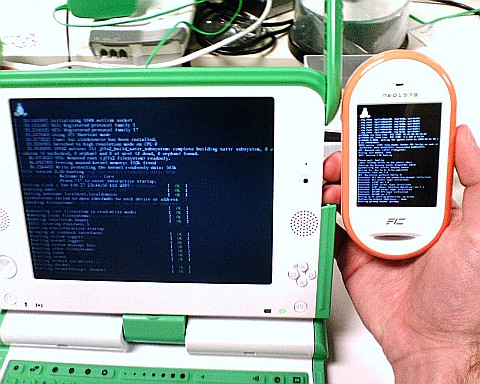
I forgot to mention the coolest thing about the last Ubucon in my summary. I heard that my friend Sean Moss-Pultz (the person who started the OpenMoko project) would be in New York the week of Ubucon so I managed to contact him and get him to drop by on his way to the airport so we could have lunch. To my surprise, he had one of the early versions of the free-phone for me (I wasn't expecting one for several weeks). I had brought my OLPC XO so, for the first time ever (as far as we know) we managed to get the two coolest, and most important, technology platform projects in the world together. While the XO and OpenMoko share a commitment to freedom, the similarities between the projects are, in fact, also skin deep. If we all work hard, we can look forward to a future that is free. Apparently, it's also white with bright trim.
/copyrighteous/images/xo_plus_openmoko-03-boot.jpg
/copyrighteous/images/xo_plus_openmoko-01.jpg
Apologies for the pictures taken from my current inferior, both ethically and technically, mobile phone.

Benjamin Mako Hill: Ubucon NYC

I had a great time at Ubucon a couple of weeks ago. I ended up running two sessions. After an initial opening, I opened the conference with a talk on how folks can participate in Ubuntu. The talk was roughly based on Andreas Lloyd's absolutely wonderful Contribute To Ubuntu page in the Ubuntu wiki. His page was, in turn, based on my own Participate In Ubuntu page. The talk tried to provide a solution to the common question of, "I love Ubuntu and want to give back! How can I?" -- when I was answering info@ubuntu.com (for my sins), I would get this question several times each day. The talk was a relatively straight forward walk through the different teams and group working in Ubuntu along with examples of their projects and fun anecdotes from my experience in the community along the way. I worked in a bit of talking about different community governance structures and issues and the membership process. Trying to cram an overview of the community and its different subsections into an hour is a pretty sobering experience. There's a lot going on and I barely had a chance to give a poor description of the most visible things going on. In the afternoon, I reminded folks (and myself) that I know a little of this tech stuff too by walking folks through a quick introduction to building and modifying Debian or Ubuntu packages. It was a quick variant on the "Debian Packaging for Sysadmins" talks that I've given in the past. Of course, the best part was getting to hang out with some folks I know from the community and to meet a bunch of new people. It was a blast and I'm definitely looking forward to the next one.

24 February 2007

Benjamin Mako Hill: Fit For an Emperor

I found this box outside my apartment labeled, "The Emperor Clothes." Fortunately, the contents were exactly what I was expecting.    Surely clothing fit for an emperor. That is of course, if you are fit enough to appreciate them.

22 February 2007

Benjamin Mako Hill: Notorious in Libraries

My Overprice Tags projects from a few days back has been getting a bunch of attention. Perhaps most interesting, the MIT libraries -- whose journals we defaced augmented in the project -- have been unbelievably positive about the project! They've written up a very positive description of the event on their website and published an interview with me as well!

21 February 2007

Benjamin Mako Hill: Trademark Violation and Greater Evils

Biella Coleman recently mentioned counterfeit drugs in a blog post:
A pirated movie carries little consequence, except for that the movie industry may lose some cash flow. A fake Rolex purchased on the bustling streets of NYC saves you a lot of money (and robs you of a warranty). But counterfeit drugs, the consequences and stakes are at a whole other, more serious, order of things.
Biella's intentions in drawing the analogy are harmless -- people really do lose their lives because of fake drugs while rock-off movies and Rolexes are relatively harmless. However, her aside reminds me of the much less harmless, fair, and honest analogies drawn by Pat Choate in Hot Property who used examples like counterfeit drugs and dishonestly labeled aircraft parts to support a high protectionist position on IP. Because of the arguments made by people like Choate, I believe that there is a subtle danger in the type of analogy that Biella draws that I think we should try to guard against in the future. The danger lies in the fact that these comparisons tend to conflate at least two very different kinds of illegal activity. Trademark violations are illegal. So it selling drugs without approval from regulatory bodies. So is manslaughter and murder -- both terms used in the Times article Biella links to to describe the actions of drug counterfeiters. Laws in most countries already prohibit all of these things and offer increasingly harsh punishments for each action. In fact, selling unlicensed drugs and killing people is much more illegal than violating trademark and making knockoffs. And it should be. When someone commit IP violations in the process of committing much worse crimes, we should focus on highlighting, condemning, and punishing the much worse crime, not the IP violation which in comparison is almost inconsequential. The punishment for counterfeiting drugs may only be a slap on the wrist and that's probably an appropriate punishment for the counterfeiting component of the crime. The other worse crimes that the counterfeiter is also committing should be punished much more harshly. If, as the Dr. Reggi quoted in the Times article complains, "counterfeiting a medicine can be [only] a misdemeanor," we need stronger laws against selling unregulated drugs -- not stronger IP laws. If we confuse and compare bootleg movies and knock-off Rolexes with fake malaria or AIDS drugs, we're likely to come to the opposite conclusion. Our reactions to such situations should be, "People are killing people with fake drugs! We need stronger laws against killing people in these ways." They should not be "People are killing people with fake drugs! Interesting to note that they are also violating trademark laws like other counterfeiters." The former reaction will frame the discussion in a way that lets us treat the bad components of the crime more harshly and will not help IP high protectionists argue for stronger IP through a disingenuous process of guilt by association.
20 February 2007

Benjamin Mako Hill: Overprice Tags

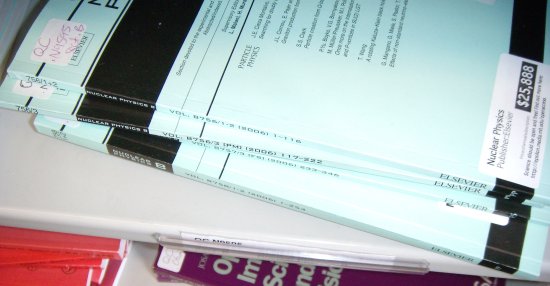
Last Thursday (February 15, 2007) was declared National Day of Action for Open Access. To help raise awareness of the movement for open access in scholarly publications at MIT, I got together with a number of other MIT students and placed price tags -- we called them overprice tags -- onto the 100 journals that MIT subscribes to at a cost of more than $5,000 USD per annum.
/copyrighteous/images/overpricetagged_journal.jpg
The project, inspired by a similar project called Seeing Red carried out by a Brown librarian a few years back, was a huge success. You can find information about the project, motivation and experience, see pictures, and find out how you might run a similar event at your institution on the Overprice Tags homepage.

Benjamin Mako Hill: Novartis, Stop It

Swiss pharmaceutical company Novartis is currently suing the Indian government over its patent law in an effort to further limit production of generic drugs in India. Among other drugs, the company is trying to stop India's production of generic AIDS medicines that supplies more than half of the developing world. M decins Sans Fronti res (MSF) has a great FAQ and bunch of other information on their access to essential medicines (AEM) site that you should check out if you are unfamiliar with the case. Mika has been working on a variety of AEM projects for a while with quite a few important successes. From a certain perspective, some of the core calls for access to knowledge share common ground with free software, free culture, and anti software patent advocacy that I've been involved in. Of course, it puts things in perspective to see Mika and others in the AEM community point to millions of people and say that those people will die because of an IP maximilist position. Last week, I went with Mika to a protest of Novartis near MIT. It was just below freezing, slushy, raining, sleeting, and probably the worst weather I've ever experienced in Cambridge. Despite all that, it was wonderful to join a large group of activists in Cambridge/Boston and around the world to send a strong message to Novartis. You can watch a video of the protest or see a set of photographs. Both were taken by my friend Jay.

14 February 2007

Benjamin Mako Hill: A Definition of Free Cultural Works

Last year, I announced a project to bring together artists, content creators, and others who care about freedom to come up with a clear set of goals around which a social movement for essential freedoms around culture might be based. There has been a lot of discussion and a number of important changes to the document over the last year. A few days ago, we finally released "1.0" of our definition with this announcement:
A diverse group of writers has released the first version of the "Definition of Free Cultural Works." The authors have identified a minimum set of freedoms which they believe should be granted to all users of copyrighted materials. Created on a wiki with the feedback of Wikipedia users, open source hackers, artists, scientists, and lawyers, the definition lists the following core freedoms:
  • The freedom to use and perform the work
  • The freedom to study the work and apply the information
  • The freedom to redistribute copies
  • The freedom to distribute derivative works.
Inspired by the Free Software Definition and the ideals of the free software and open source movements, these conditions are meant to apply to any conceivable work. In reality, these freedoms must be granted explicitly by authors, through the use of licenses which confer them. On the website of the definition a list of these licenses can be found. Furthermore, authors are encouraged to identify their works as Free Cultural Works using a set of logos and buttons. The definition was initiated by Benjamin Mako Hill, a Debian GNU/Linux developer, and Erik M ller, an author and long-time Wikipedia user. Wikipedia already follows similar principles to those established by the definition. Angela Beesley, Wikimedia Advisory Board Chair and co-founder of Wikia.com; Mia Garlick, general counsel of Creative Commons; and Elizabeth Stark of the Free Culture Student Movement acted as moderators, while Richard Stallman of the Free Software Foundation and Lawrence Lessig of Creative Commons provided helpful feedback. As more and more people recognize that there are alternatives to traditional copyright, phrases like "open source," "open access," "open content," "free content," and "commons" are increasingly used. But many of these phrases are ambiguous when it comes to distinguishing works and licenses which grant all the above freedoms, and those which only confer limited rights. For example, a popular license restricts the commercial use of works, whereas the authors believe that such use must be permitted for a work to be considered Free. Instead of limiting commercial use, they recommend using a clever legal trick called "copyleft:" requiring all users of the work to make their combined and derivative works freely available. M ller and Hill encourage authors to rethink copyright law and use one of the Free Culture Licenses to help build a genuine free and open culture.
If you haven't yet, please check out the project at freedomdefined.org. If you're still curious feel free to read about my motivation and why I think that everyone should stand up for what they feel are essential freedoms.

13 February 2007

Benjamin Mako Hill: Ubucon

I'm coming down to New York this Friday for the second Ubuncon. Ubucon is a small(ish) user organized and oriented Ubuntu "unconference." Apparently, that means that it's not very organized -- which adds flexibility and is considered a good thing! Both Ubucons to date have been held at Google offices. This one will be held in the Google office in New York City. I'll be giving at least one talk. In all likelihood, I will be giving a talk about participation in the Ubuntu community and another more technical crash introductory course in building Ubuntu packages. Finally, I've had Pearson's ship a dozen or so copies of the Official Ubuntu Book which I'll be signing and handing out. If you want to go, you should check out the schedule, and the info pages in the wiki and maybe even RSVP. You will need a LP/wiki account to do so. See you in New York! Please contact me if you want to get together while I'm in New York.

11 February 2007

Benjamin Mako Hill: Ambiguous Headlines

I found this headline ambiguous:
Negotiators work on Nth Korea deal to close nuclear facilities
When they say "Nth Korea deal" do they mean "North Korea deal" or "Nth Korea Deal" wherein the latter, N is used a variable to emphasize that there have been so many failed deals that enumeration has become difficult. This is particularly problematic because both interpretations seem entirely appropriate headlines for the story in question.

9 February 2007

Benjamin Mako Hill: Title

I've been taking the train frequently lately so decided to sign up for the Amtrak Guest Rewards Program -- kind of like a frequently flyer program but without the flying. When filling out their online join form, I was asked to select a title from what turned out to be a rather extensive list:
That will be Princess Benjamin Mako Hill to you, Mr. Conductor.

7 February 2007

Clint Adams: Statement from the fambly of the nut

[astronut arrested] The family of Benjamin Seidenberg released this statement today: The family will not be granting interviews at this time, but does want to issue the following statement in response to numerous media requests. We are naturally saddened and extremely concerned about the serious allegations being made against Benjamin. We love it very much, and right now, our primary focus is on its health and well-being. Benjamin is a very intelligent, accomplished individual. As an honorary pamp-commando of the International Bacalao Organization (IBO) and dubbed the Lauren Jarrett of the Cornell Orthodox Union Dining Society, it has resisted the evil temptation of search engines for over 18 years with a mildly-blemished record. Benjamin attained the rank of Golancipel, and sailed as a Hackergotchi Specialist aboard the Good Ship Lollipop in August 2003. Personally, Benjamin is an extremely caring and dedicated sibling and loinfruit to its brother and parents, respectively, although we amended our life insurance policies to remove him as a beneficiary last week. Considering both its personal and academic life, these alleged events are completely out of character and have come as a tremendous shock to our family. We are anxious to allow the facts to develop so that we can better understand what happened, and why. We hope that the public will keep an open mind about what the facts will eventually show and that the legal system will be allowed to run its course. Finally, we are very grateful for the expressions of love and support that we have received from family and friends, and we ask for your continued thoughts and prayers for our family.

5 February 2007

Benjamin Seidenberg: 10011

I’m 19 today. However, this comes with no new privileges or abilities. 2 more years until I can drink, 6 more until I can rent a car, etc. Still, it’s been a good birthday so far.

4 February 2007

Benjamin Mako Hill: Wikimedia Foundation Advisory Board

A few days ago, the Wikimedia Foundation announced the creation of an advisory board of which I am thrilled to be a member. I'm honored to be on a board among many folks whose work has provided and example and inspiration for me and helped bring me, and my own work and activism, to where it is today. But most of all, I'm thrilled to be able to help Wikimedia Foundation. I've been reasonably convinced that WMF's projects, Wikipedia being most notable among them, are the single most important and exciting project in the world that I was not already involved in in some official capacity.

29 January 2007

Benjamin Mako Hill: Public Relations

A number of people in the Open Access movement are up in arms because a large publishing group just hired Eric Dezenhall, a man known as "the pit bull of PR," to tackle the "threat" posed by OA. One might wonder how a nominally talented PR agent would end with such a horrible reputation. Additionally, since Dezenhall hasn't actually done anything for the publishers yet, one might conclude that the act of hiring "the pit bull of PR" might have been a bad PR move in and of itself.

22 January 2007

Benjamin Mako Hill: Accents

One of my pet peeves is people telling a non-native speaker of a language that they have no accent. Saying that a person has no accent is like saying that they have no temperature. Annoyingly, people frequently say that also.

19 January 2007

Benjamin Mako Hill: Digital Citadel

The solution to a crypto puzzle I helped solve during the MIT Mystery Hunt was "ALMOST PLAGIARIZE DAN BROWN WORK." Seth Schoen did this beautifully with an extremely humorous parody of Dan Brown's Digital Fortress. His story, Digital Citadel is extremely funny if you are marginally familiar with Dan Brown and his writing style -- and probably even if you are not. I have not seen a copy of the prize winning entry in the hunt -- a story called The Ikea Code -- but the excerpt I heard was also hilarious.

17 January 2007

Benjamin Mako Hill: Geography Lesson (Part II)

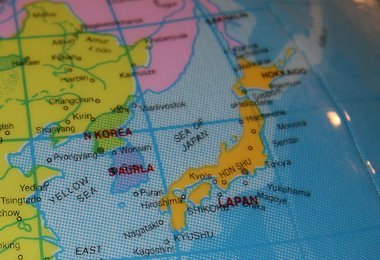
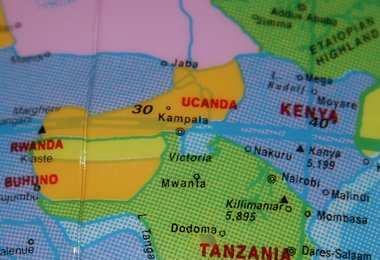
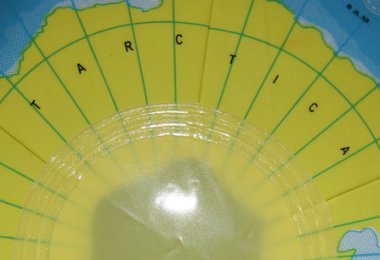
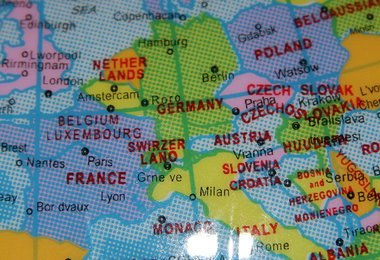
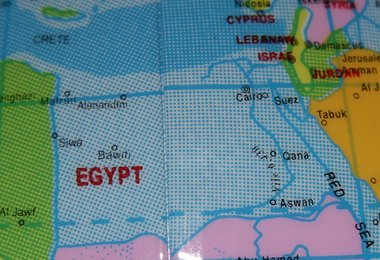
Yesterday, I received many requests to post pictures of my rather inaccurate globe. I'm pleased to oblige. Please read the summary I posted yesterday for a list of some of the errors you should have little trouble picking out. You can click on each cropped thumbnail to see much larger, higher resolution versions of the area and the surrounding continent or region.
/copyrighteous/images/bad_map-1-thumb.jpg
/copyrighteous/images/bad_map-2-thumb.jpg
/copyrighteous/images/bad_map-3-thumb.jpg
/copyrighteous/images/bad_map-4-thumb.jpg
/copyrighteous/images/bad_map-5-thumb.jpg
Enrico suggested that if the globe was manufactutered in China, Taiwan would be the same color as China and Taipei would be marked as a provincial, rather than national capital. Sure enough, I now have both a good idea of the globe's origin plus an idea of how to spell Taipei with an o.

Next.

Previous.