Search Results: "az"

31 August 2023

Russell Coker: Links August 2023

This is an interesting idea from Bruce Schneier, an AI Dividend paid to every person for their contributions to the input of ML systems [1]. We can t determine who s input was most used so sharing the money equally seems fair. It could end up as yet another justification for a Universal Basic Income. The Long Now foundation has an insightful article about preserving digital data [2]. It covers the history of lost data and the new challenges archivists face with proprietary file formats. Tesla gets fined for having special Elon mode [3], turns out that being a billionaire isn t an exemption from road safety legislation. Wired has an interesting article about the Olympics Destroyer malware that Russia used to attack the 2018 Olympics [4]. Wired has an interesting article about Marcus Hutchins, how he prevented a serious bot attack and how he had a history in crime when he was a teenager [5]. It s good to see that some people can reform. The IEEE has a long and informative article about what needs to be done to transition to electric cars [6]. It s a lot of work and we should try and do it as fast as possible. Linux Tech Tips has an interesting video about a new cooling system for laptops (and similar use cases for moving tens of watts from a thin space) [7]. This isn t going to be useful for servers or desktops as big heavy heatsinks work well for them. But for something to put on top of a laptop CPU or to have several of them connected to a laptop CPU by heat pipes it could be very useful. The technology of piezo electric cooling devices is interesting on it s own, I expect we will see more of that in future.

29 August 2023

Jonathan Dowland: Gazelle Twin

A couple of releases A couple of releases
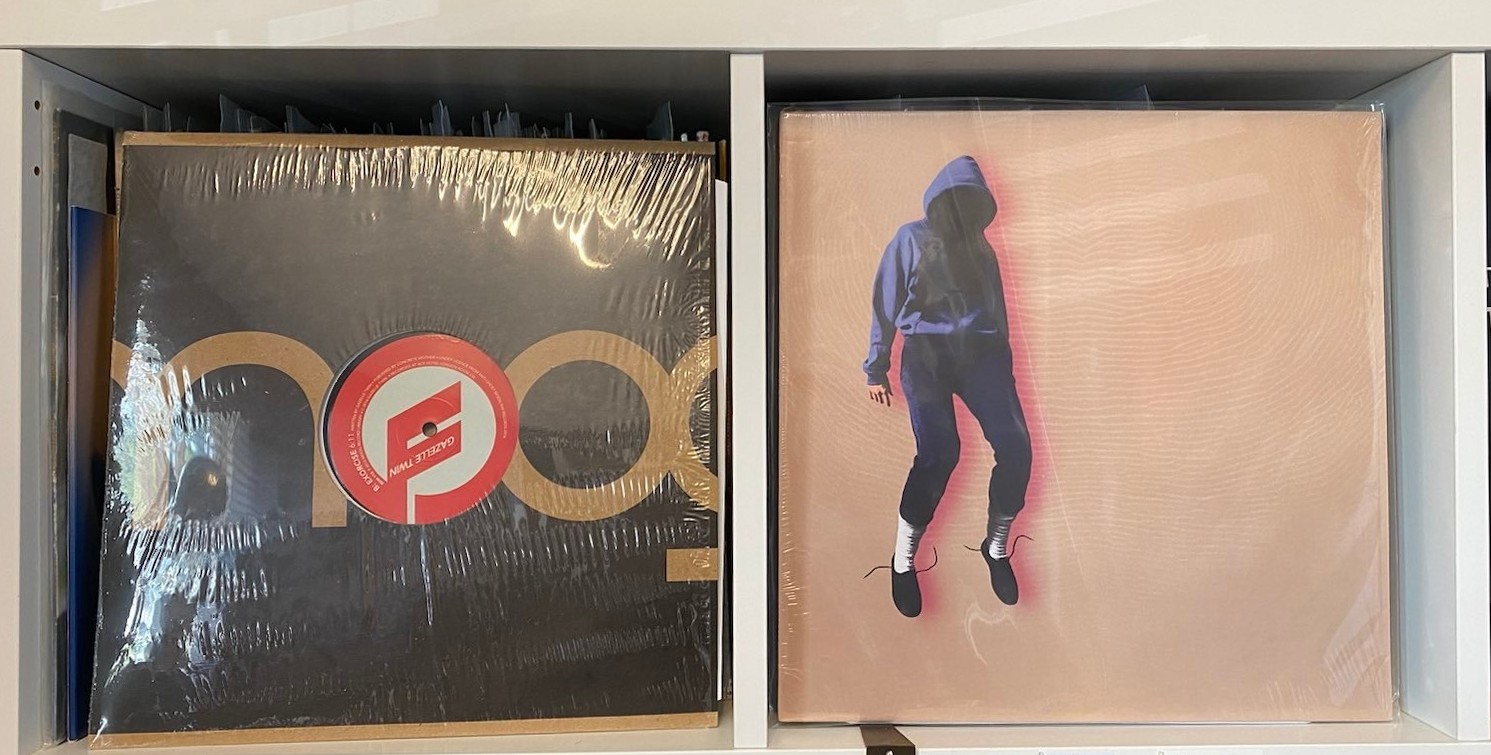
I discovered Gazelle Twin last year via Stuart Maconie's Freak Zone (two of her tracks ended up on my 2022 Halloween playlist). Through her website I learned of The Horror Show! exhibition at Somerset House1 in London that I managed to visit earlier this year. I've been intending to write a 5-track blog post (a la Underworld, the Cure, Coil) for a while but I have been spurred on by the excellent news that she's got a new album on the way, and, she's performing at the Sage Gateshead in November. Buy tickets now!! Here's the five tracks I recommend to get started:
  1. Anti-Body, from 2014's UNFLESH. I particularly love the percussion. Perc did a good hard-house-style remix on Fleshed Out, the companion remix album. Anti-Body by Gazelle Twin
  2. Fire Leap, from Gazelle Twin and NYX's collaborative album Deep England. The album is a re-interpretation of material from Gazelle Twin's earlier album, Pastoral, with the exception of this track, which is a cover of Paul Giovanni's song from The Wicker Man. There's a common aesthetic in all three works: eerie-folk, England's self-mythologising as seen through a warped and cracked lens. Anti-Body by Gazelle Twin There's a fantastic performance video of the whole album, directed by Iain Forsyth and Jane Pollard, available on YouTube.
  3. Better In My Day, from the aforementioned Pastoral. This track and this album are, I think, less accessible, more challenging than the re-interpreted material. That's not a bad thing: I'm still working on digesting it! This is one of the more abrasive, confrontational tracks. Better In My Day by Gazelle Twin
  4. I am Shell I am Bone, from way back to her first release, The Entire City in 2011. Composed, recorded, self-produced, self-released. It's remarkable to me how different each phase of GT's work are to one another. This album evokes a strong sense of atmosphere and place to me. There's a hint of possible influence of Joy Division's Unknown Pleasures (or New Order's Movement) in places. The b-side to this song is a cover of Joy Division's The Eternal. I Am Shell I Am Bone by Gazelle Twin
  5. GT re-issued This Entire City in 2022 along with a companion-piece EP of newly-released material from the same era, The Wastelands. This isn't cutting room floor stuff, though, as evidenced by the strength of my final pick, Hole in my Heart. Hole In My Heart by Gazelle Twin
It's hard to pick just five tracks when doing these (that's the point I suppose). I note that I haven't picked anything from her wide-ranging soundtrack work: her last three or four of her releases have been soundtrack works, released on the well-respected UK label Invada, as will be her forthcoming album. You can find all the released stuff on Gazelle Twin's Bandcamp Page.

  1. I recently learned that PJ Harvey once hosted album sessions in Somerset House, and allowed fans to watch her at work during the recording: https://www.theguardian.com/music/2015/jan/16/pj-harvey-somerset-house-recording-in-progress

Matthew Garrett: Unix sockets, Cygwin, SSH agents, and sadness

Work involves supporting Windows (there's a lot of specialised hardware design software that's only supported under Windows, so this isn't really avoidable), but also involves git, so I've been working on extending our support for hardware-backed SSH certificates to Windows and trying to glue that into git. In theory this doesn't sound like a hard problem, but in practice oh good heavens.

Git for Windows is built on top of msys2, which in turn is built on top of Cygwin. This is an astonishing artifact that allows you to build roughly unmodified POSIXish code on top of Windows, despite the terrible impedance mismatches inherent in this. One is that until 2017, Windows had no native support for Unix sockets. That's kind of a big deal for compatibility purposes, so Cygwin worked around it. It's, uh, kind of awful. If you're not a Cygwin/msys app but you want to implement a socket they can communicate with, you need to implement this undocumented protocol yourself. This isn't impossible, but ugh.

But going to all this trouble helps you avoid another problem! The Microsoft version of OpenSSH ships an SSH agent that doesn't use Unix sockets, but uses a named pipe instead. So if you want to communicate between Cygwinish OpenSSH (as is shipped with git for Windows) and the SSH agent shipped with Windows, you need something that bridges between those. The state of the art seems to be to use npiperelay with socat, but if you're already writing something that implements the Cygwin socket protocol you can just use npipe to talk to the shipped ssh-agent and then export your own socket interface.

And, amazingly, this all works? I've managed to hack together an SSH agent (using Go's SSH agent implementation) that can satisfy hardware backed queries itself, but forward things on to the Windows agent for compatibility with other tooling. Now I just need to figure out how to plumb it through to WSL. Sigh.

comment count unavailable comments

27 August 2023

Shirish Agarwal: FSCKing /home

There is a bit of context that needs to be shared before I get to this and would be a long one. For reasons known and unknown, I have a lot of sudden electricity outages. Not just me, all those who are on my line. A discussion with a lineman revealed that around 200+ families and businesses are on the same line and when for whatever reason the electricity goes for all. Even some of the traffic lights don t work. This affects software more than hardware or in some cases, both. And more specifically HDD s are vulnerable. I had bought an APC unit several years for precisely this, but over period of time it just couldn t function and trips also when the electricity goes out. It s been 6-7 years so can t even ask customer service to fix the issue and from whatever discussions I have had with APC personnel, the only meaningful difference is to buy a new unit but even then not sure this is an issue that can be resolved, even with that. That comes to the issue that happens once in a while where the system fsck is unable to repair /home and you need to use an external pen drive for the same. This is my how my hdd stacks up
/ is on dev/sda7 /boot is on /dev/sda6, /boot/efi is on /dev/sda2 and /home is on /dev/sda8 so theoretically, if /home for some reason doesn t work I should be able drop down on /dev/sda7, unmount /dev/sda8, run fsck and carry on with my work. I tried it number of times but it didn t work. I was dropping down on tty1 and attempting the same, no dice as root/superuser getting the barest x-term. So first I tried asking couple of friends who live nearby me. Unfortunately, both are MS-Windows users and both use what are called as company-owned laptops . Surfing on those systems were a nightmare. Especially the number of pop-ups of ads that the web has become. And to think about how much harassment ublock origin has saved me over the years. One of the more interesting bits from both their devices were showing all and any downloads from fosshub was showing up as malware. I dunno how much of that is true or not as haven t had to use it as most software we get through debian archives or if needed, download from github or wherever and run/install it and you are in business. Some of them even get compiled into a good .deb package but that s outside the conversation atm. My only experience with fosshub was few years before the pandemic and that was good. I dunno if fosshub really has malware or malwarebytes was giving false positives. It also isn t easy to upload a 600 MB+ ISO file somewhere to see whether it really has malware or not. I used to know of a site or two where you could upload a suspicious file and almost 20-30 famous and known antivirus and anti-malware engines would check it and tell you the result. Unfortunately, I have forgotten the URL and seeing things from MS-Windows perspective, things have gotten way worse than before. So left with no choice, I turned to the local LUG for help. Fortunately, my mobile does have e-mail and I could use gmail to solicit help. While there could have been any number of live CD s that could have helped but one of my first experiences with GNU/Linux was that of Knoppix that I had got from Linux For You (now known as OSFY) sometime in 2003. IIRC, had read an interview of Mr. Klaus Knopper as well and was impressed by it. In those days, Debian wasn t accessible to non-technical users then and Knoppix was a good tool to see it. In fact, think he was the first to come up with the idea of a Live CD and run with it while Canonical/Ubuntu took another 2 years to do it. I think both the CD and the interview by distrowatch was shared by LFY in those early days. Of course, later the story changes after he got married, but I think that is more about Adriane rather than Knoppix. So Vishal Rao helped me out. I got an HP USB 3.2 32GB Type C OTG Flash Drive x5600c (Grey & Black) from a local hardware dealer around similar price point. The dealer is a big one and has almost 200+ people scattered around the city doing channel sales who in turn sell to end users. Asking one of the representatives about their opinion on stopping electronic imports (apparently more things were added later to the list including all sorts of sundry items from digital cameras to shavers and whatnot.) The gentleman replied that he hopes that it would not happen otherwise more than 90% would have to leave their jobs. They already have started into lighting fixtures (LED bulbs, tubelights etc.) but even those would come in the same ban  The main argument as have shared before is that Indian Govt. thinks we need our home grown CPU and while I have no issues with that, as shared before except for RISC-V there is no other space where India could look into doing that. Especially after the Chip Act, Biden has made that any new fabs or any new thing in chip fabrication will only be shared with Five Eyes only. Also, while India is looking to generate about 2000 GW by 2030 by solar, China has an ambitious 20,000 GW generation capacity by the end of this year and the Chinese are the ones who are actually driving down the module prices. The Chinese are also automating their factories as if there s no tomorrow. The end result of both is that China will continue to be the world s factory floor for the foreseeable future and whoever may try whatever policies, it probably is gonna be difficult to compete with them on prices of electronic products. That s the reason the U.S. has been trying so that China doesn t get the latest technology but that perhaps is a story for another day.

HP USB 3.2 Type C OTG Flash Drive x5600c For people who have had read this blog they know that most of the flash drives today are MLC Drives and do not have the longevity of the SLC Drives. For those who maybe are new, this short brochure/explainer from Kingston should enhance your understanding. SLC Drives are rare and expensive. There are also a huge number of counterfeit flash drives available in the market and almost all the companies efforts whether it s Kingston, HP or any other manufacturer, they have been like a drop in the bucket. Coming back to the topic at hand. While there are some tools that can help you to figure out whether a pen drive is genuine or not. While there are products that can tell you whether they are genuine or not (basically by probing the memory controller and the info. you get from that.) that probably is a discussion left for another day. It took me couple of days and finally I was able to find time to go Vishal s place. The journey of back and forth lasted almost 6 hours, with crazy traffic jams. Tells you why Pune or specifically the Swargate, Hadapsar patch really needs a Metro. While an in-principle nod has been given, it probably is more than 5-7 years or more before we actually have a functioning metro. Even the current route the Metro has was supposed to be done almost 5 years to the date and even the modified plan was of 3 years ago. And even now, most of the Stations still need a lot of work to be done. PMC, Deccan as examples etc. still have loads to be done. Even PMT (Pune Muncipal Transport) that that is supposed to do the last mile connections via its buses has been putting half-hearted attempts

Vishal Rao While Vishal had apparently seen me and perhaps we had also interacted, this was my first memory of him although we have been on a few boards now and then including stackexchange. He was genuine and warm and shared 4-5 distros with me, including Knoppix and System Rescue as shared by Arun Khan. While this is and was the first time I had heard about Ventoy apparently Vishal has been using it for couple of years now. It s a simple shell script that you need to download and run on your pen drive and then just dump all the .iso images. The easiest way to explain ventoy is that it looks and feels like Grub. Which also reminds me an interaction I had with Vishal on mobile. While troubleshooting the issue, I was unsure whether it was filesystem that was the issue or also systemd was corrupted. Vishal reminded me of putting fastboot to the kernel parameters to see if I m able to boot without fscking and get into userspace i.e. /home. Although journalctl and systemctl were responding even on tty1 still was a bit apprehensive. Using fastboot was able to mount the whole thing and get into userspace and that told me that it s only some of the inodes that need clearing and there probably are some orphaned inodes. While Vishal had got a mini-pc he uses that a server, downloads stuff to it and then downloads stuff from it. From both privacy, backup etc. it is a better way to do things but then you need to laptop to access it. I am sure he probably uses it for virtualization and other ways as well but we just didn t have time for that discussion. Also a mini-pc can set you back anywhere from 25 to 40k depending on the mini-pc and the RAM and the SSD. And you need either a lappy or an Raspberry Pi with some kinda visual display to interact with the mini-pc. While he did share some of the things, there probably could have been a far longer interaction just on that but probably best left for another day. Now at my end, the system I had bought is about 5-6 years old. At that time it only had 6 USB 2.0 drives and 2 USB 3.0 (A) drives.
The above image does tell of the various form factors. One of the other things is that I found the pendrive and its connectors to be extremely fiddly. It took me number of times fiddling around with it when I was finally able to put in and able to access the pen drive partitions. Unfortunately, was unable to see/use systemrescue but Knoppix booted up fine. I mounted the partitions briefly to see where is what and sure enough /dev/sda8 showed my /home files and folders. Unmounted it, then used $fsck -y /dev/sda8 and back in business. This concludes what happened. Updates Quite a bit was left out on the original post, part of which I didn t know and partly stuff which is interesting and perhaps need a blog post of their own. It s sad I won t be part of debconf otherwise who knows what else I would have come to know.
  1. One of the interesting bits that I came to know about last week is the Alibaba T-Head T-Head TH1520 RISC-V CPU and saw it first being demoed on a laptop and then a standalone tablet. The laptop is an interesting proposition considering Alibaba opened up it s chip thing only couple of years ago. To have an SOC within 18 months and then under production for lappies and tablets is practically unheard of especially of a newbie/startup. Even AMD took 3-4 years for its first chip.It seems they (Alibaba) would be parceling them out by quarter end 2023 and another 1000 pieces/Units first quarter next year, while the scale is nothing compared to the behemoths, I think this would be more as a matter of getting feedback on both the hardware and software. The value proposition is much better than what most of us get, at least in India. For example, they are doing a warranty for 5 years and also giving spare parts. RISC-V has been having a lot of resurgence in China in part as its an open standard and partly development will be far cheaper and faster than trying x86 or x86-64. If you look into both the manufacturers, due to monopoly, both of them now give 5-8% increment per year, and if you look back in history, you would find that when more chips were in competition, they used to give 15-20% performance increment per year.
2. While Vishal did share with me what he used and the various ways he uses the mini-pc, I did have a fun speculating on what he could use it. As shared by Romane as his case has shared, the first thing to my mind was backups. Filesystems are notorious in the sense they can be corrupted or can be prone to be corrupted very easily as can be seen above  . Backups certainly make a lot of sense, especially rsync. The other thing that came to my mind was having some sort of A.I. and chat server. IIRC, somebody has put quite a bit of open source public domain data in debian servers that could be used to run either a chatbot or an A.I. or both and use that similar to how chatGPT but with much limited scope than what chatgpt uses. I was also thinking a media server which Vishal did share he does. I may probably visit him sometime to see what choices he did and what he learned in the process, if anything. Another thing that could be done is just take a dump of any of commodity markets or any markets and have some sort of predictive A.I. or whatever. A whole bunch of people have scammed thousands of Indian users on this, but if you do it on your own and for your own purposes to aid you buy and sell stocks or whatever commodity you may fancy. After all, nowadays markets themselves are virtual. While Vishal s mini-pc doesn t have any graphics, if it was an AMD APU mini-pc, something like this he could have hosted games in the way of thick server, thin client where all graphics processing happens on the server rather than the client. With virtual reality I think the case for the same case could be made or much more. The only problem with VR/AR is that we don t really have mass-market googles, eye pieces or headset. The only notable project that Google has/had in that place is the Google VR Cardboard headset and the experience is not that great or at least was not that great few years back when I could hear and experience the same. Most of the VR headsets say for example the Meta Quest 2 is for around INR 44k/- while Quest 3 is INR 50k+ and officially not available. As have shared before, the holy grail of VR would be when it falls below INR 10k/- so it becomes just another accessory, not something you really have to save for. There also isn t much content on that but then that is also the whole chicken or egg situation. This again is a non-stop discussion as so much has been happening in that space it needs its own blog post/article whatever. Till later.

25 August 2023

Scarlett Gately Moore: KDE Snaps Weekly report, Debian recommenced!

Now that all the planets are fixed, please see what you missed here! /https://www.scarlettgatelymoore.dev/kde-a-day-in-the-life-the-kde-snapcrafter-part-2/ EXTREMELY IMPORTANT: I am still looking for a super awesome team lead for a super amazing project involving KDE and Snaps. Time is running out and well the KDE world will be a better a better place if this project goes through! I would like to clarify, this is a paid position! A current KDE developer would be ideal as it is a small team so your time will be split managing and coding alike. If you or anyone you know might be interested please contact me ASAP! Lots of news on the snap front 23.04.3 is now complete with new snaps! I know, just in time for 23.08.0. I have fixed some major issues in this release, 23.08 should go much quicker. Even quicker if my per repo snapcraft files gets approved! We have more PIM snaps, however I am waiting for reserved name approvals from the snap store. I was approached to decouple qt and frameworks sdk snaps and I have agreed for the fact that security updates are near impossible when new versions are released. Conversation here: https://forum.snapcraft.io/t/proposal-for-changes-to-kde-content-snap-and-extension I have started qt5 here https://github.com/ScarlettGatelyMoore/qt-5-15-10-snap And some exciting news I have started the KF6 content pack! I am doing like above and I am using the qt6 content pack Jarred Wilson has made. This is a requirement to start the plasma snap. Progress can be tracked here: https://github.com/ScarlettGatelyMoore/kf6-snap I am still have on on going request for snapcraft files in their respective repositories. While defending my request I have tested some options. Snapcraft files in the repository does allow for proper snap recipes in launchpad by mirroring the repo in launchpad -> create snap recipe. I created a recipe based on stable branch and it created and published the snap as expected. After being pointed to the flatpak workflow I discovered snaps has a similiar store feature with github, however I will need to create a github repo for each snap, which is tempting. I want to avoid duplication of snapcraft files, but I guess this is what they do for flatpak? I never received an answer. Snapcraft: Some more tidying of the qmake plugin and resolved some review conversations. Debian! I am back to getting things in Debian proper, starting with the golang packages I was working on for bubble-gum a cool console beautification application. As each one passes through NEW I will keep uploading. I will be checking in with the qt-kde team to see what needs doing. I am looking into seeing if openvoices is still a viable replacement for mycroft, hopefully all that work isn t wasted time. And finally, I do hate having to ask, but as we quickly approach September, I have not come close to enough to pay my pesky bills, required to have a place to live and eat! I am seeking employment as a backup if my amazing project falls through. I tried to enable ads, but that broke my planet feeds, I can t have that! So without further ado Anything helps! Also please share! Thanks for your consideration.

Debian Brasil: Debian Day 30 anos online no Brasil

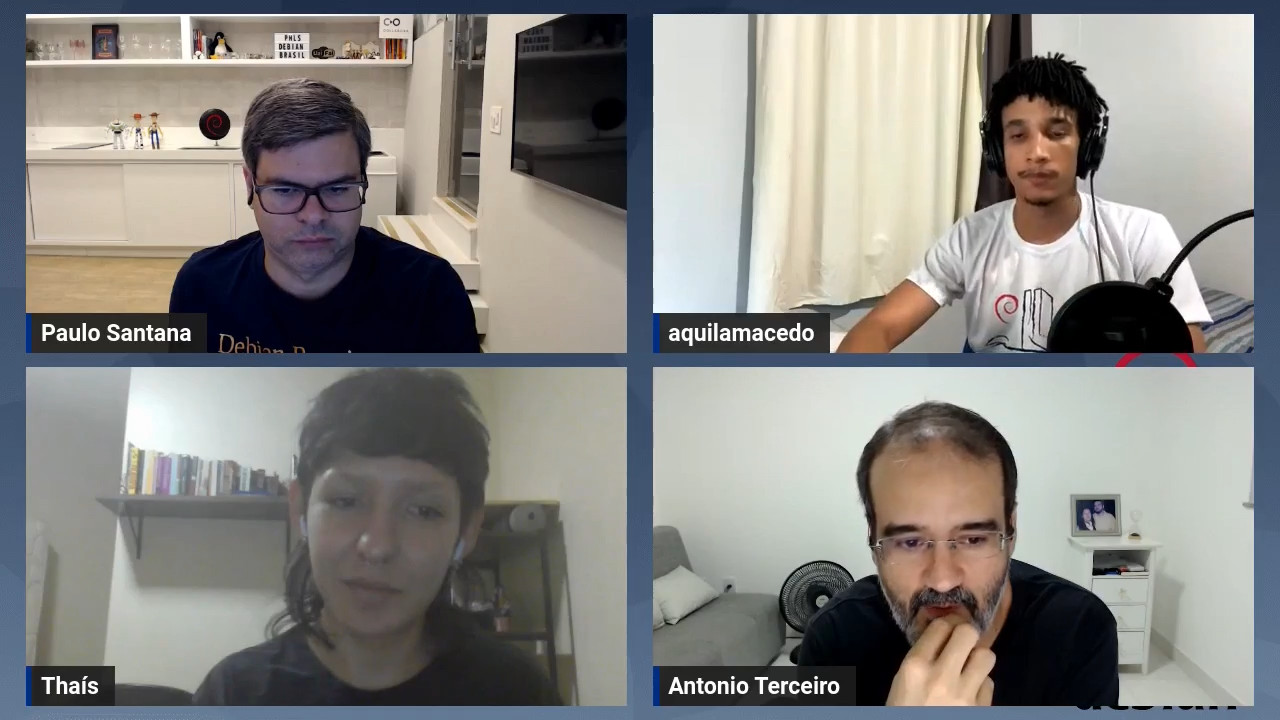
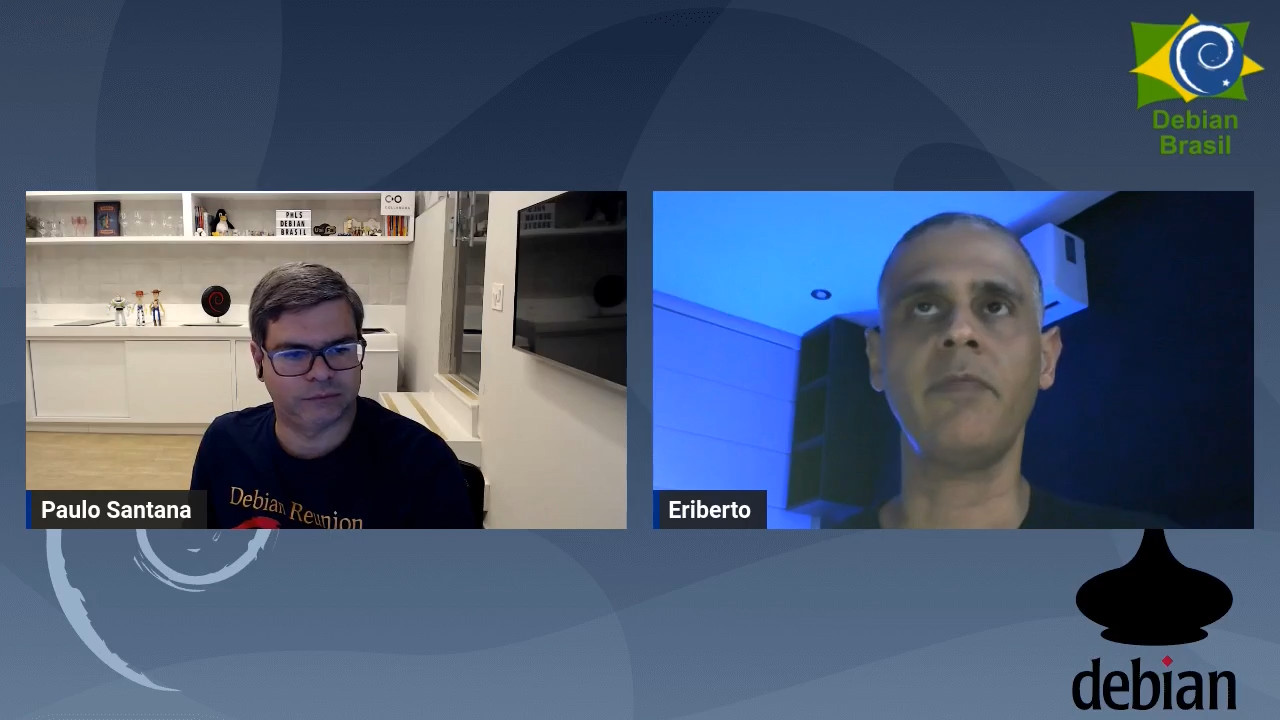
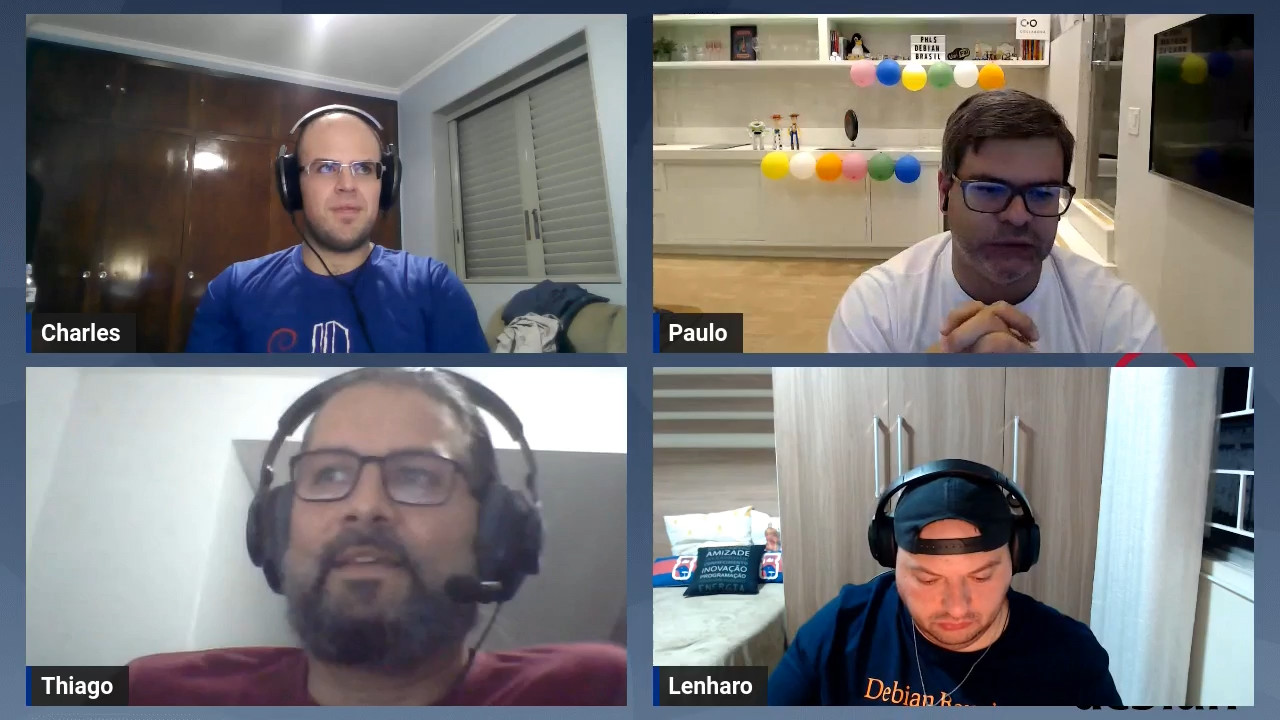
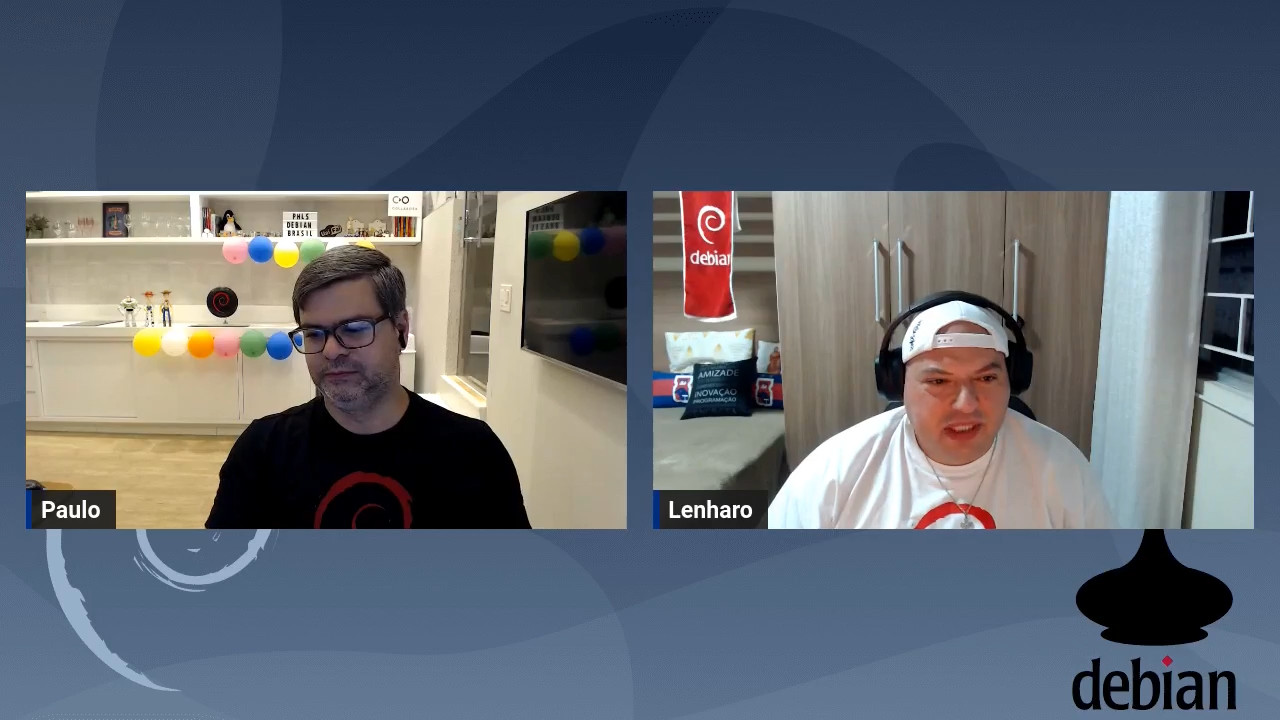
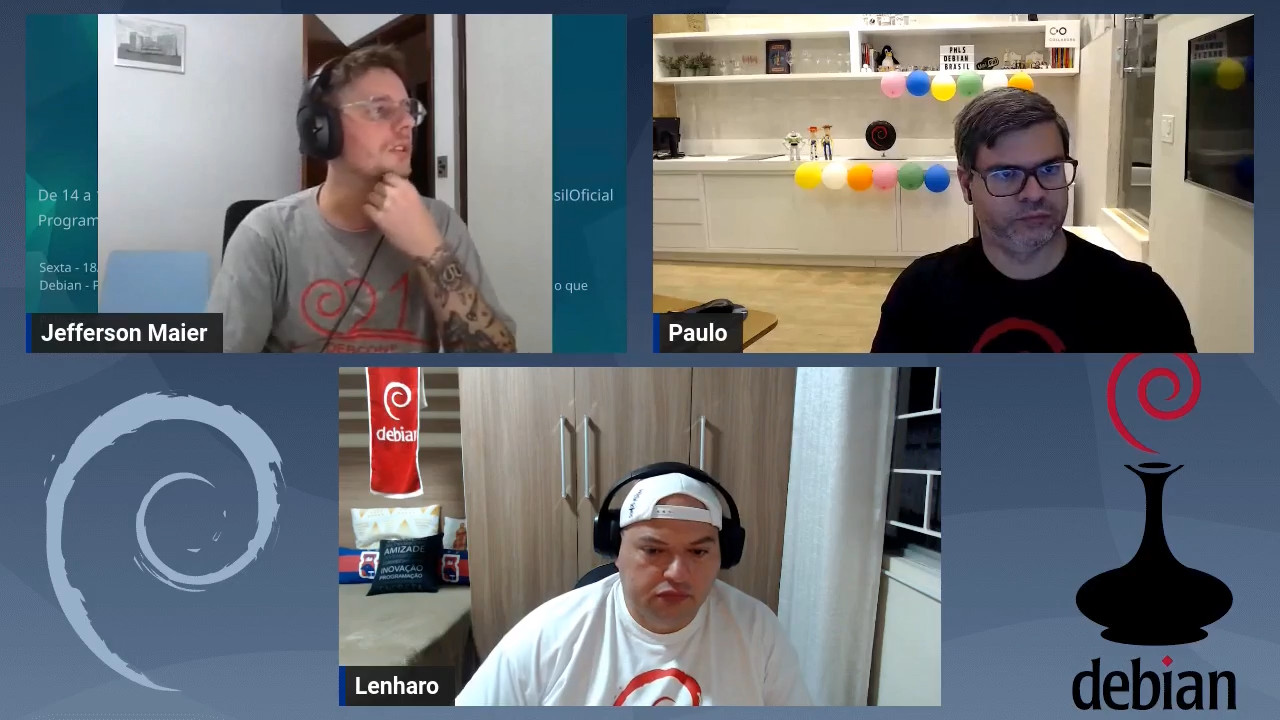
Em 2023 o tradicional Debian Day est sendo celebrado de forma especial, afinal no dia 16 de agostoo Debian completou 30 anos! Para comemorar este marco especial na vida do Debian, a comunidade Debian Brasil organizou uma semana de palestras online de 14 a 18 de agosto. O evento foi chamado de Debian 30 anos. Foram realizadas 2 palestras por noite, das 19h s 22h, transmitidas pelo canal Debian Brasil no YouTube totalizando 10 palestras. As grava es j est o dispon veis tamb m no canal Debian Brasil no Peertube. Nas 10 atividades tivemos as participa es de 9 DDs, 1 DM, 3 contribuidores(as). A audi ncia ao vivo variou bastante, e o pico foi na palestra sobre preseed com o Eriberto Mota quando tivemos 47 pessoas assistindo. Obrigado a todos(as) participantes pela contribui o que voc s deram para o sucesso do nosso evento. Veja abaixo as fotos de cada atividade: Nova gera o: uma entrevista com iniciantes no projeto Debian
Nova gera o: uma entrevista com iniciantes no projeto Debian Instala o personalizada e automatizada do Debian com preseed
Instala o personalizada e automatizada do Debian com preseed Manipulando patches com git-buildpackage
Manipulando patches com git-buildpackage debian.social: Socializando Debian do jeito Debian
debian.social: Socializando Debian do jeito Debian Proxy reverso com WireGuard
Proxy reverso com WireGuard Celebra o dos 30 anos do Debian!
Celebra o dos 30 anos do Debian! Instalando o Debian em disco criptografado com LUKS
Instalando o Debian em disco criptografado com LUKS O que a equipe de localiza o j  conquistou nesses 30 anos
O que a equipe de localiza o j conquistou nesses 30 anos Debian - Projeto e Comunidade!
Debian - Projeto e Comunidade! Design Gr fico e Software livre, o que fazer e por onde come ar
Design Gr fico e Software livre, o que fazer e por onde come ar

Ian Jackson: I cycled to all the villages in alphabetical order

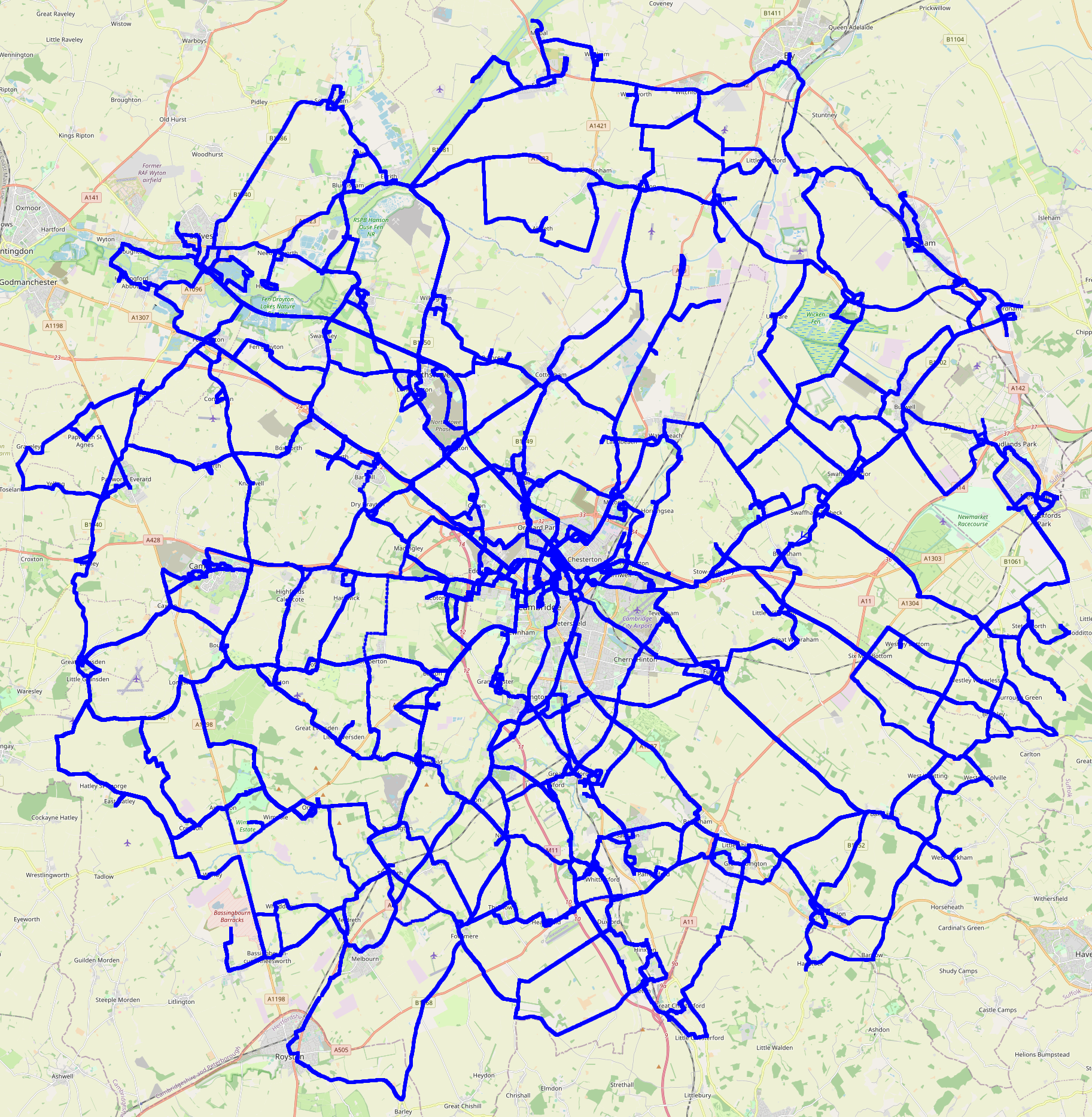
This last weekend I completed a bike rides project I started during the first Covid lockdown in 2020: I ve cycled to every settlement (and radio observatory) within 20km of my house, in alphabetical order. Stir crazy In early 2020, during the first lockdown, I was going a bit stir crazy. Clare said you re going very strange, you have to go out and get some exercise . After a bit of discussion, we came up with this plan: I d visit all the local villages, in alphabetical order. Choosing the radius I decided that I would pick a round number of kilometers, as the crow flies, from my house. 20km seemed about right. 25km would have included Ely, which would have been nice, but it would have added a great many places, all of them quite distant. Software I wrote a short Rust program to process OSM data into a list of places to visit, and their distances and bearings. You can download a tarball of the alphabetical villages scanner. (I haven t published the git history because it has my house s GPS coordinates in it, and because I committed the output files from which that location can be derived.) The Rides I set off on my first ride, to Aldreth, on Sunday the 31st of May 2020. The final ride collected Yelling, on Saturday the 19th of August 2023. I did quite a few rides in June and July 2020 - more than one a week. (I d read the lockdown rules, and although some of the government messaging said you should stay near your house, that wasn t in the legislation. Of course I didn t go into any buildings or anything.) I m not much of a morning person, so I often set off after lunch. For the longer rides I would usually pack a picnic. Almost all of the rides I did just by myself. There were a handful where I had friends along: Dry Drayton, which I collected with Clare, at night. I held my bike up so the light shone at the village sign, so we could take a photo of it. Madingley, Melbourn and Meldreth, which was quite an expedition with my friend Ben. We went out as far as Royston and nearby Barley (both outside my radius and not on my list) mostly just so that my project would have visited Hertfordshire. The Hemingfords, where I had my friend Matthew along, and we had a very nice pub lunch. Girton and Wilburton, where I visited friends. Indeed, I stopped off in Wilburton on one or two other occasions. And, of course, Yelling, for which there were four of us, again with a nice lunch (in Eltisley). I had relatively little mechanical trouble. My worst ride for this was Exning: I got three punctures that day. Luckily the last one was close to home. I often would stop to take lots of photos en-route. My mum in particular appreciated all the pretty pictures. Rules I decided on these rules: I would cycle to each destination, in order, and it would count as collected if I rode both there and back. I allowed collecting multiple villages in the same outing, provided I did them in the right order. (And obviously I was allowed to pass through places out of order, without counting them.) I tried to get a picture of the village sign, where there was one. Failing that, I got a picture of something in the village with the village s name on it. I think the only one I didn t manage this for was Westley Bottom; I had to make do with the word Westley on some railway level crossing equipment. In Barway I had to make do with a planning application, stuck to a pole. I tried not to enter and leave a village by the same road, if possible. Edge cases I had to make some decisions: I decided that I would consider the project complete if I visited everywhere whose centre was within my radius. But the centre of a settlement is rather hard to define. I needed a hard criterion for my OpenStreetMap data mining: a place counted if there was any node, way or relation, with the relevant place tag, any part of which was within my ambit. That included some places that probably oughtn t to have counted, but, fine. I also decided that I wouldn t visit suburbs of Cambridge, separately from Cambridge itself. I don t consider them separate settlements, at least, not if they re conurbated with Cambridge. So that excluded Trumpington, for example. But I decided that Girton and Fen Ditton were (just) separable. Although the place where I consider Girton and Cambridge to nearly touch, is administratively well inside Girton, I chose to look at land use (on the ground, and in OSM data), rather than administrative boundaries. But I did visit both Histon and Impington, and all each of the Shelfords and Stapleford, as separate entries in my list. Mostly because otherwise I d have to decide whether to skip (say) Impington, or Histon. Whereas skipping suburbs of Cambridge in favour of Cambridge itself was an easy decision, and it also got rid of a bunch of what would have been quite short, boring, urban expeditions. I sorted all the Greats and Littles under G and L, rather than (say) Shelford, Great , which seemed like it would be cheating because then I would be able to do Shelford, Great and Shelford, Little in one go. Northstowe turned from mostly a building site into something that was arguably a settlement, during my project. It wasn t included in the output of my original data mining. Of course it s conurbated with Oakington - but happily, Northstowe inserts right before Oakington in the alphabetical list, so I decided to add it, visiting both the old and new in the same day. There are a bunch of other minor edge cases. Some villages have an outlying hamlet. Mostly I included these. There are some individual farms, which I generally didn t count. Some stats I visited 150 villages plus the Lords Bridge radio observatory. The project took 3 years and 3 months to complete. There were 96 rides, totalling about 4900km. So my mean distance was around 51km. The median distance per ride was a little higher, at around 52 km, and the median duration (including stoppages) was about 2h40. The total duration, if you add them all up, including stoppages, was about 275h, giving a mean speed including photo stops, lunches and all, of 18kph. The longest ride was 89.8km, collecting Scotland Farm, Shepreth, and Six Mile Bottom, so riding across the Cam valley. The shortest ride was 7.9km, collecting Cambridge (obviously); and I think that s the only one I did on my Brompton. The rest were all on my trusty Thorn Audax. My fastest ride (ranking by distance divided by time spent in motion) was to collect Haddenham, where I covered 46.3km in 1h39, giving an average speed in motion of 28.0kph. The most I collected in one day was 5 places: West Wickham, West Wratting, Westley Bottom, Westley Waterless, and Weston Colville. That was the day of the Wests. (There s only one East: East Hatley.) Map Here is a pretty picture of all of my tracklogs:
Edited 2023-08-25 01:32 BST to correct a slip.


comment count unavailable comments

24 August 2023

Debian Brasil: Debian Day 30 years in Belo Horizonte - Brazil

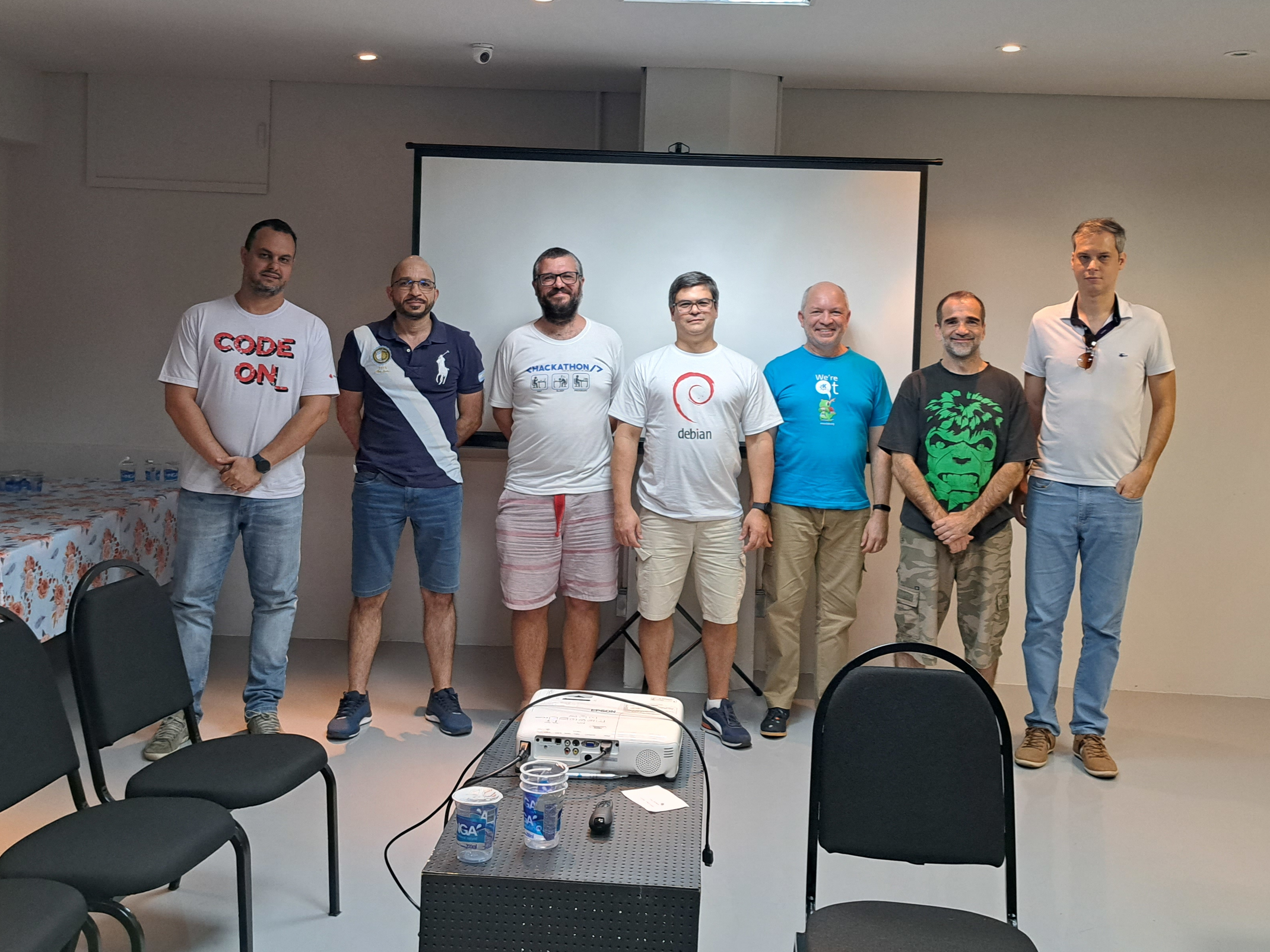
For the first time, the city of Belo Horizonte held a Debian Day to celebrate the anniversary of the Debian Project. The communities Debian Minas Gerais and Free Software Belo Horizonte and Region felt motivated to celebrate this special date due the 30 years of the Debian Project in 2023 and they organized a meeting on August 12nd in UFMG Knowledge Space. The Debian Day organization in Belo Horizonte received the important support from UFMG Computer Science Department to book the room used by the event. It was scheduled three activities: In total, 11 people were present and we took a photo with those who stayed until the end. Presentes no Debian Day 2023 em BH

Debian Brasil: Debian Day 30 years in Curitiba - Brazil

As we all know, this year is a very special year for the Debian project, the project turns 30!
The Brazilian Community joined in and during the anniversary week, organized some online activities through the Debian Brasil YouTube channel.
Information about talks given can be seen on the commemoration website.
Talks are also have been published individually on the Debian social Peertube and Youtube. After this week of celebration, the Debian Community in Curitiba, decided to get together for a lunch for confraternization among some local members.
The confraternization took place at The Barbers restaurant. The local menu was a traditional Feijoada (Rice, Beans with pork meat, fried banana, cabbage, orange and farofa). The meeting took place with a lot of laughs, conversations, fun, caipirinha and draft beer! We can only thank the Debian Project for providing great moments! A small photographic record of the people present! Group photo

Debian Brasil: Debian Day 30 years at IF Sul de Minas, Pouso Alegre - Brazil

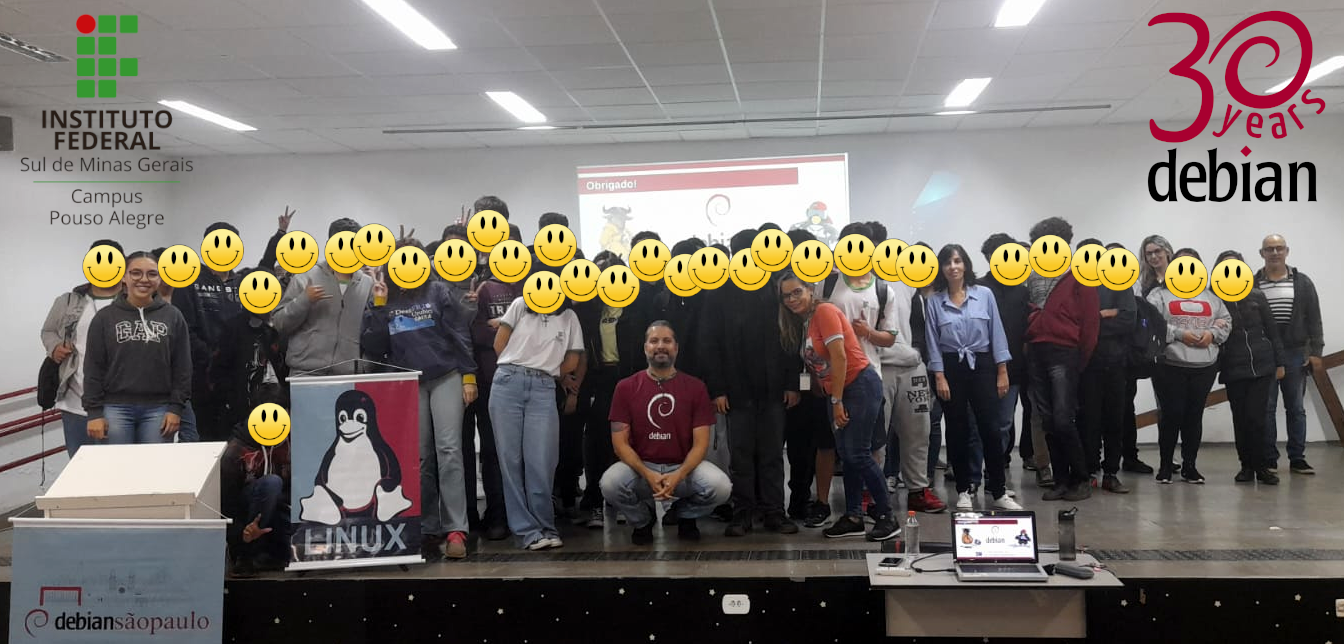
by Thiago Pezzo, Debian contributor, pt_BR localization team This year's Debian Day was a pretty special one, we are celebrating 30 years! Giving the importance of this event, the Brazilian community planned a very special week. Instead of only local gatherings, we had a week of online talks streamed via Debian Brazil's youtube channel (soon the recordings will be uploaded to our team's peertube instance). Nonetheless the local celebrations happened around the country and one was organized in Pouso Alegre, MG, Brazil, at the Instituto Federal de Educa o, Ci ncia e Tecnologia do Sul de Minas Gerais (IFSULDEMINAS - Federal Institute of Education, Science and Technology of the South of Minas Gerais). The Institute, as many of its counterparts in Brazil, specializes in professional and technological curricula to high school and undergraduate levels. All public, free and quality education! The event happened on the afternoon of August 16th at the Pouso Alegre campus. Some 30 students from the High School Computer Technician class attended the presentation about the Debian Project and the Free Software movement in general. Everyone had a great time! And afterwards we had some spare time to chat. I would like to thank all people who helped us: Here goes our group photo: Presentation at IFSULDEMINAS Pouso Alegre campus

22 August 2023

Scarlett Gately Moore: KDE: A Day in the Life the KDE Snapcrafter Part 2

KDE MascotKDE Mascot
Much to my dismay, I figured out that my blog has been disabled on the Ubuntu planet since May. If you are curious about what I have been up to, please go to the handy links -> and read up! This post is a continuation of last weeks https://www.scarlettgatelymoore.dev/kde-a-day-in-the-life-of-the-kde-snapcrafter/ IMPORTANT: I am still looking for a super awesome team lead for a super amazing project involving KDE and Snaps. Time is running out and well the KDE world will be a better a better place if this project goes through! I would like to clarify, this is a paid position! A current KDE developer would be ideal as it is a small team so your time will be split managing and coding alike. If you or anyone you know might be interested please contact me ASAP! Snaps: I am wrapping up the 23.04.3 KDE applications release! Head on over to https://snapcraft.io/search?q=KDE and enjoy! We are now up to 180 snaps! PIM snaps will be slowly rolling in as they go through manual reviews for D-Bus. Snapcraft: minor fix in qmake plugin found by ruff. Launchpad: I almost have approval for per application repository snapcraft files, but I have to prove it will work to our benefit and not cause loads of polling etc. So I have been testing various methods of achieving such a task, and so far I have come up with launchpads ability to watch and download release tarballs into a project. I will then need to script getting the tarball and pushing it to a bzr branch from which I can create a proper snap recipe. Unfortunately, my proper snap recipe fails! Hopefully a very helpful cjwatson will chime in, or if anyone wants to take a gander please chime in here: https://bugs.launchpad.net/launchpad/+bug/2031307 As reality sets in that my project may not happen if I don t find anyone, I need help surviving until I find work or funding to continue my snap work ( still much to do! ) If you or anyone else you know enjoys our snaps please consider a donation, anything helps! Please share! Thank you for your consideration!

20 August 2023

Debian Brasil: Debian Day 30 years in Brazil

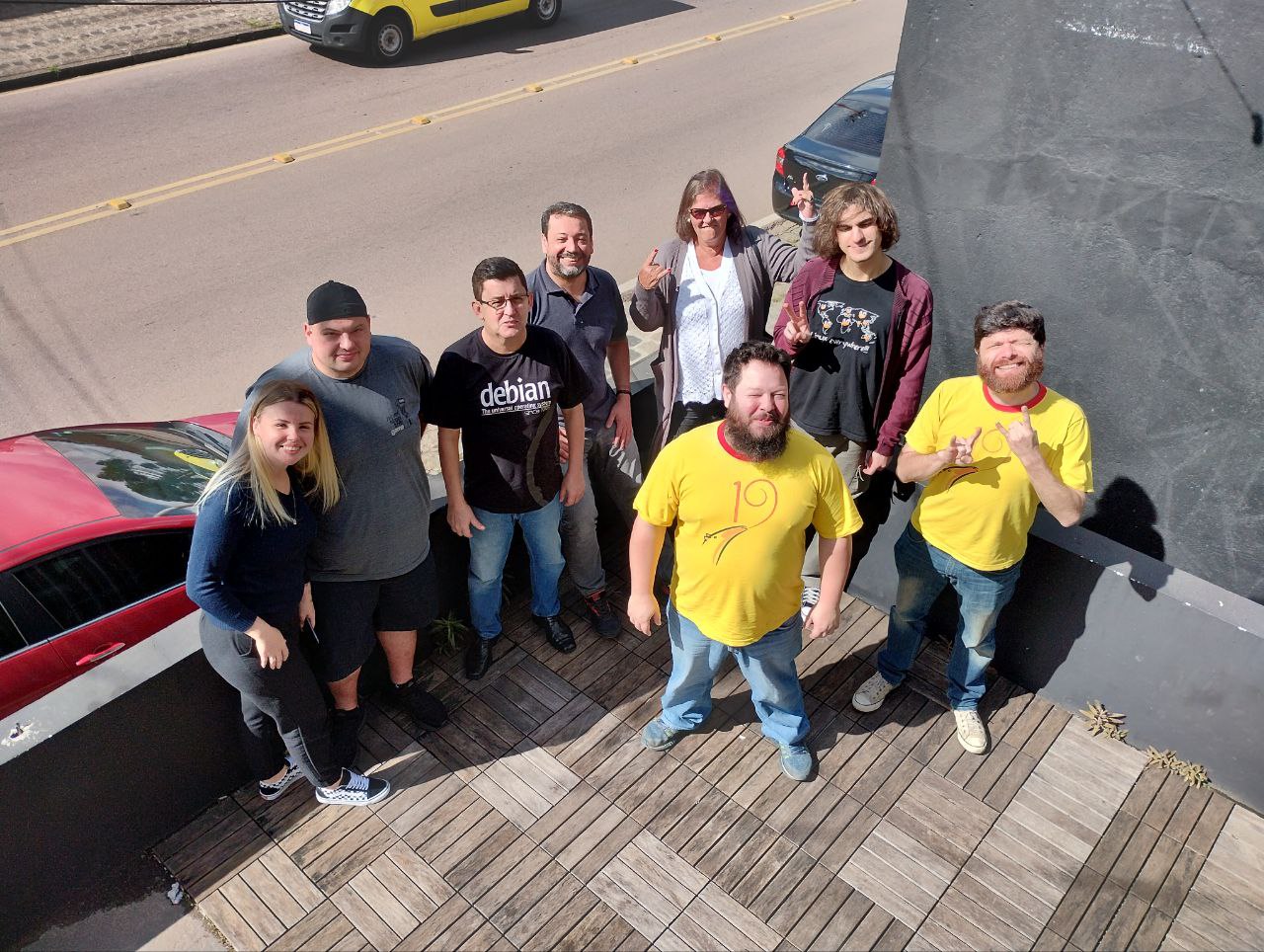
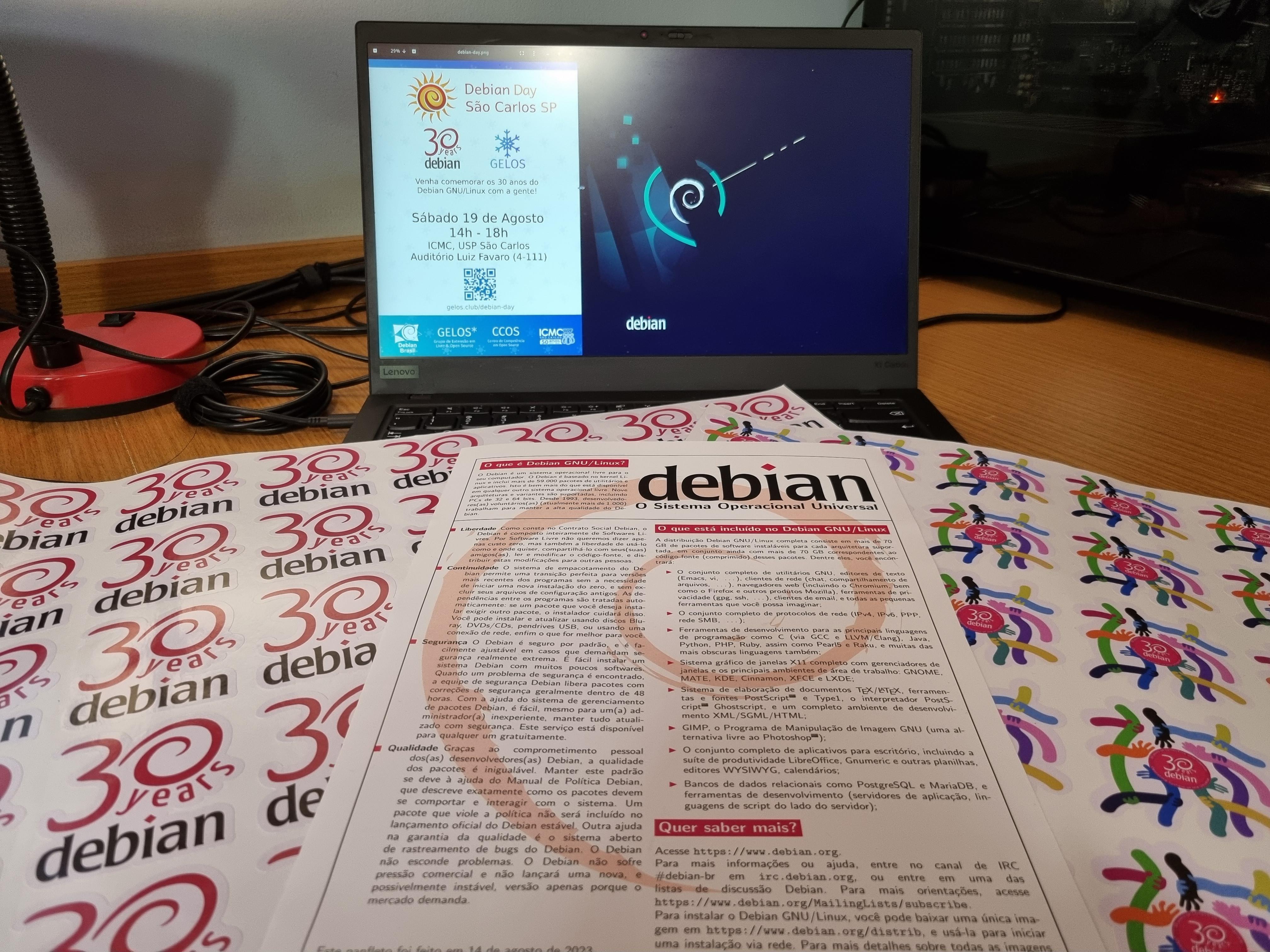
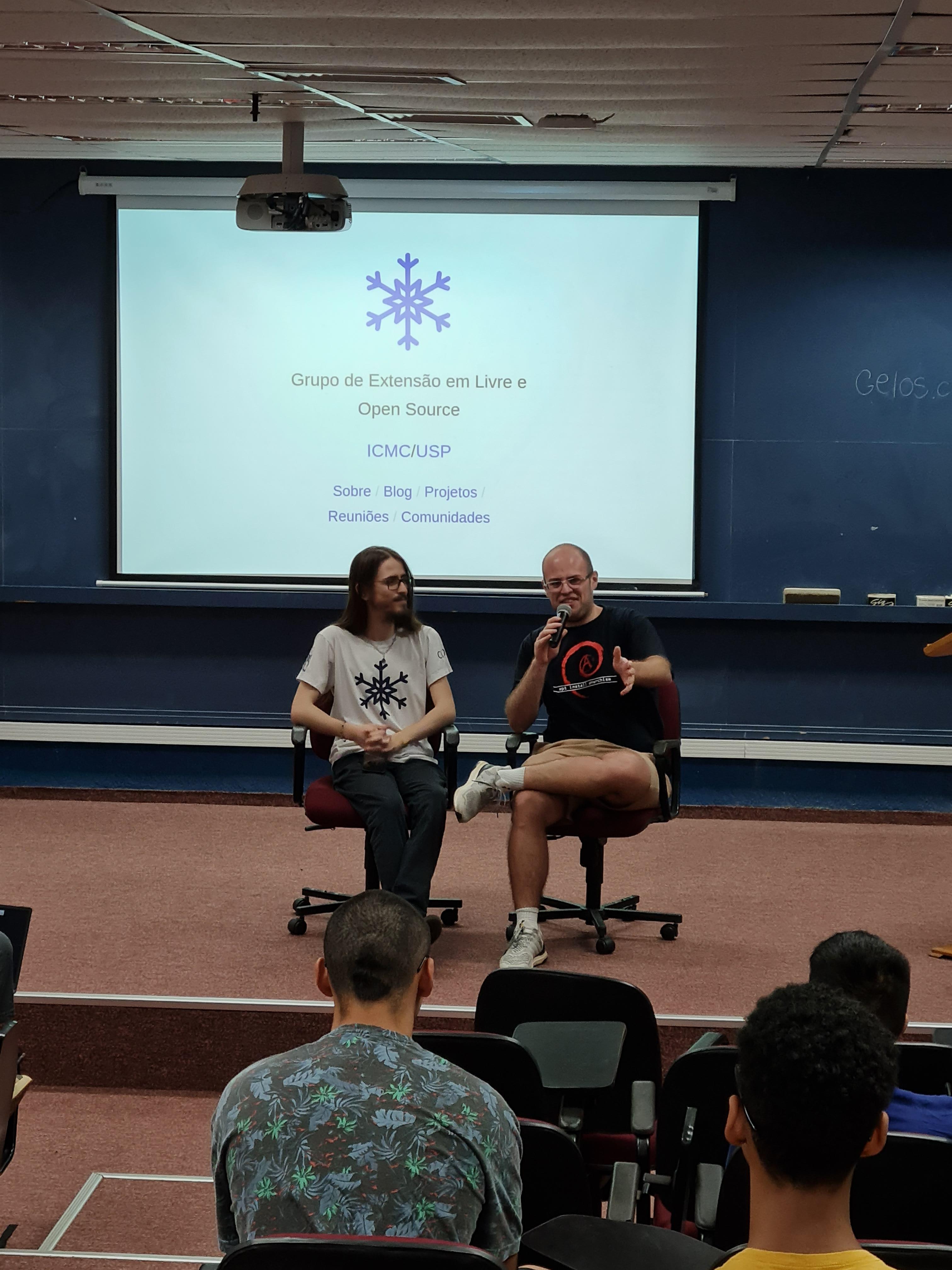
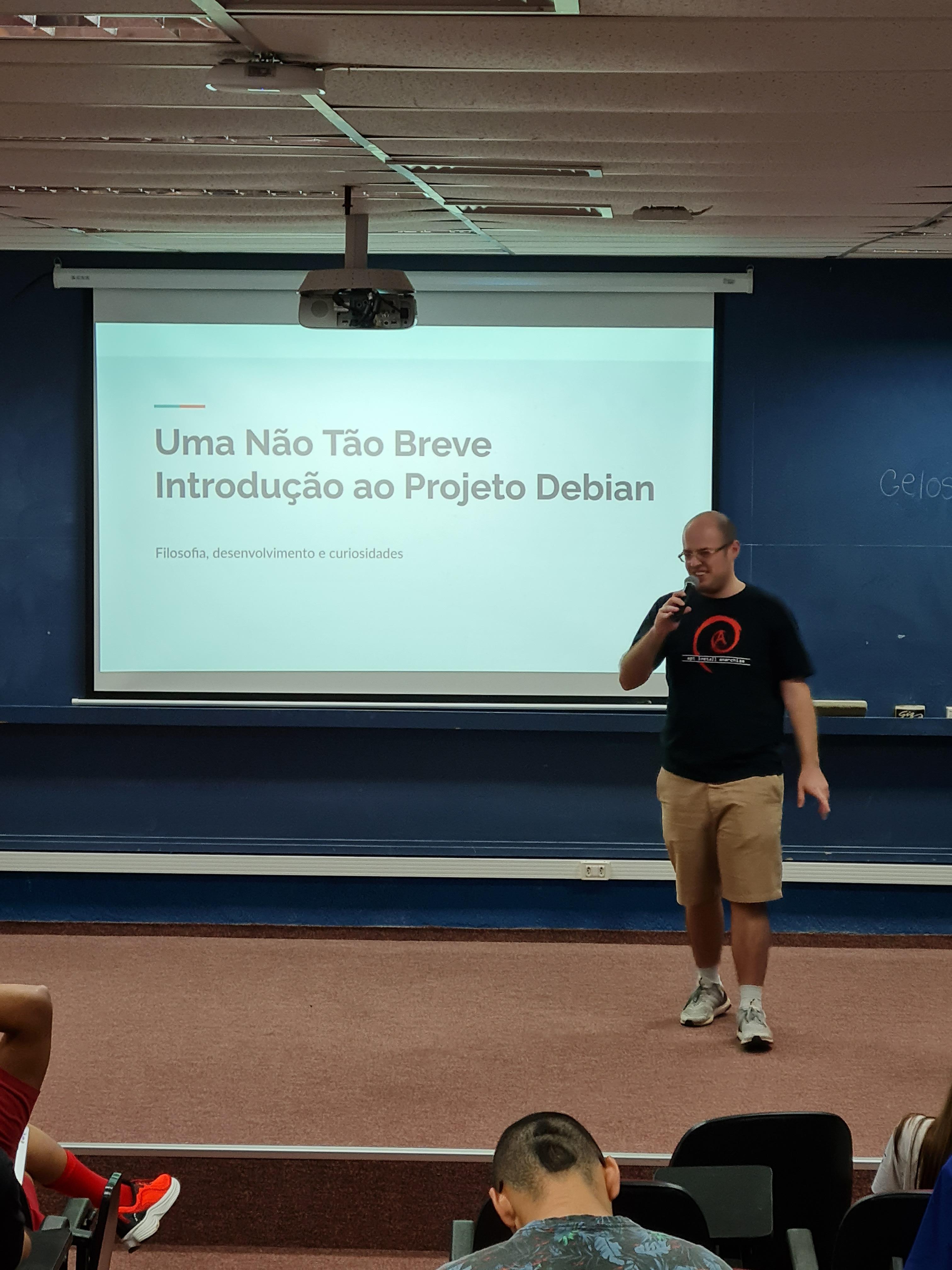
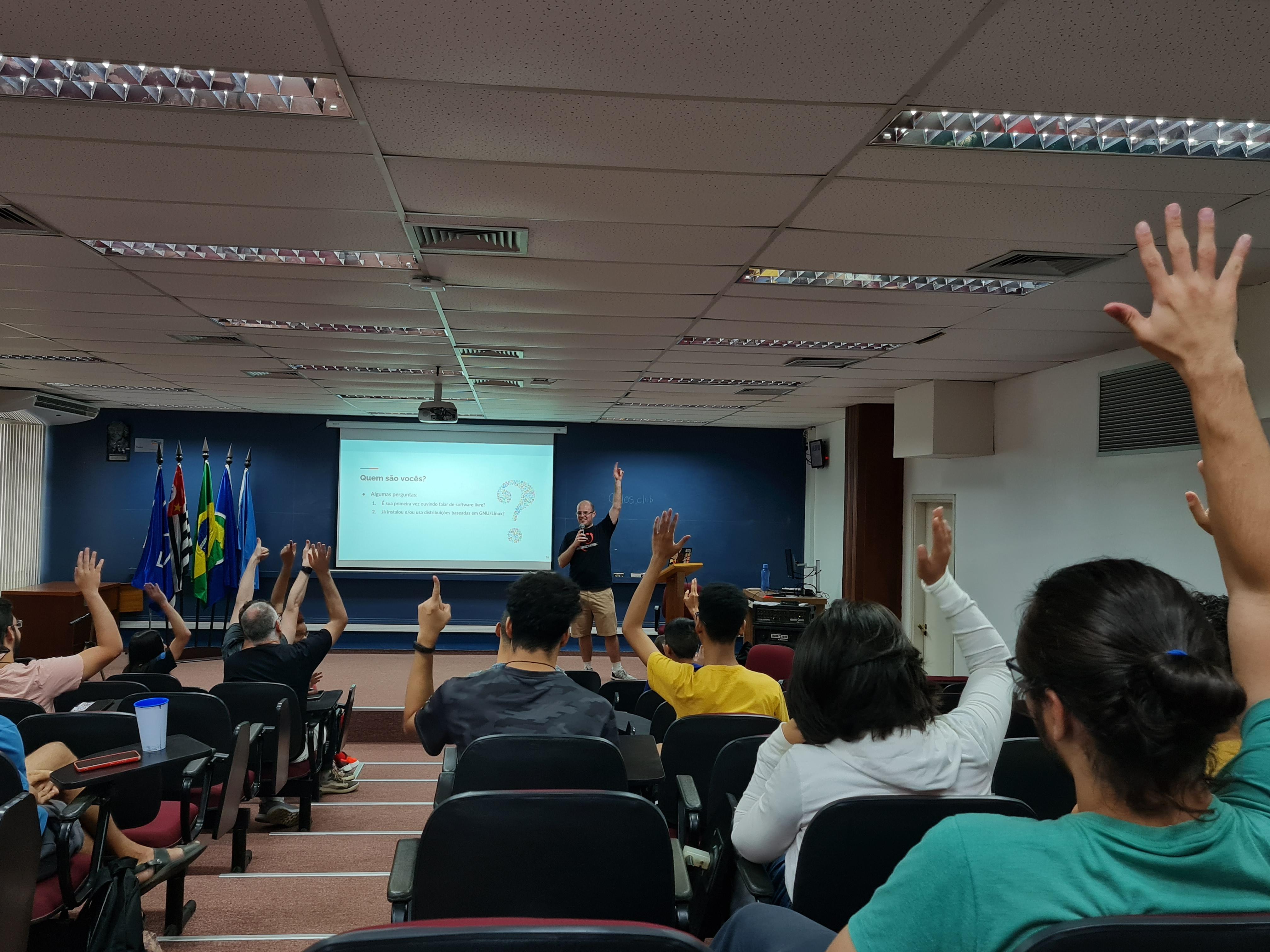
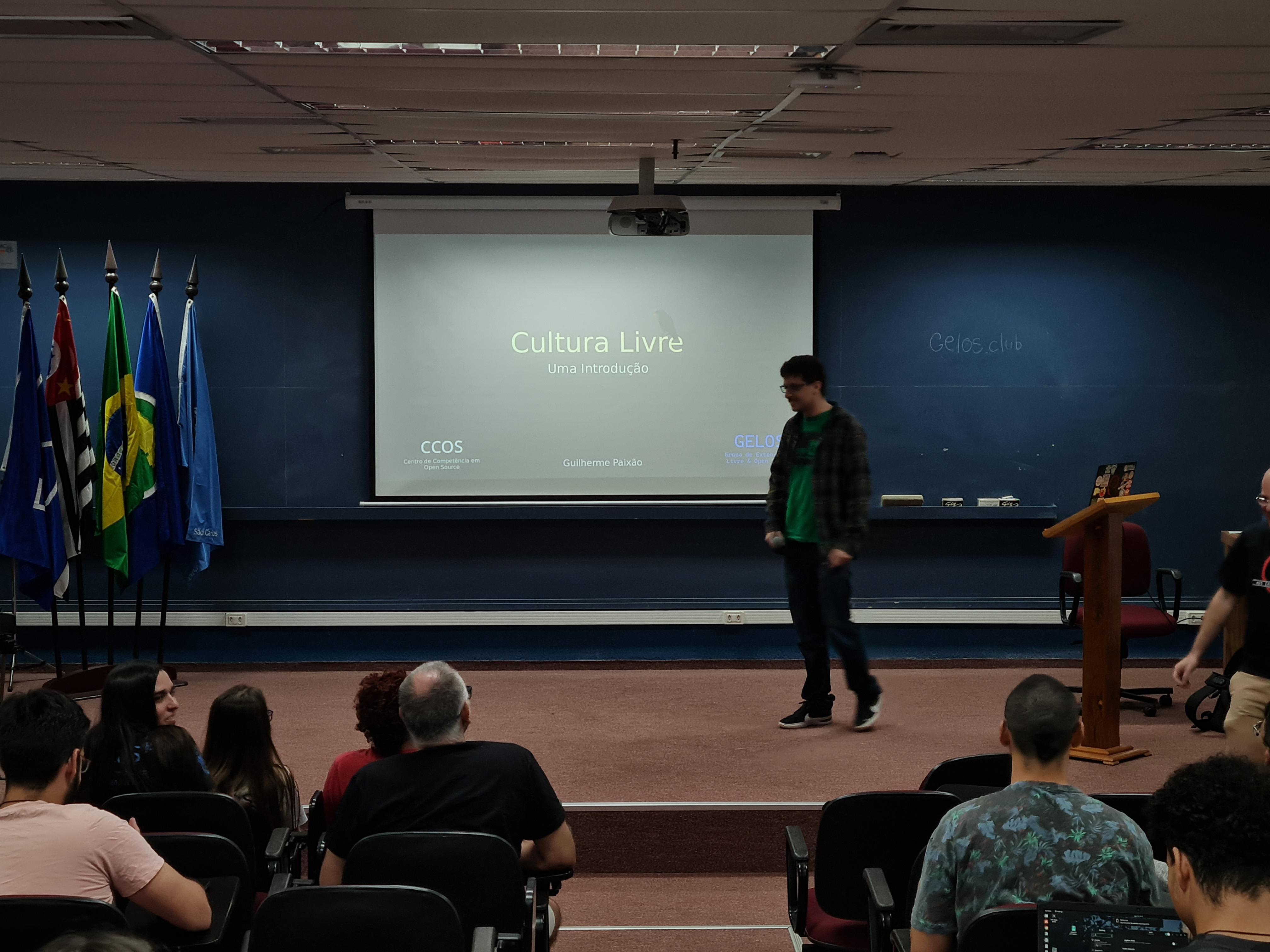
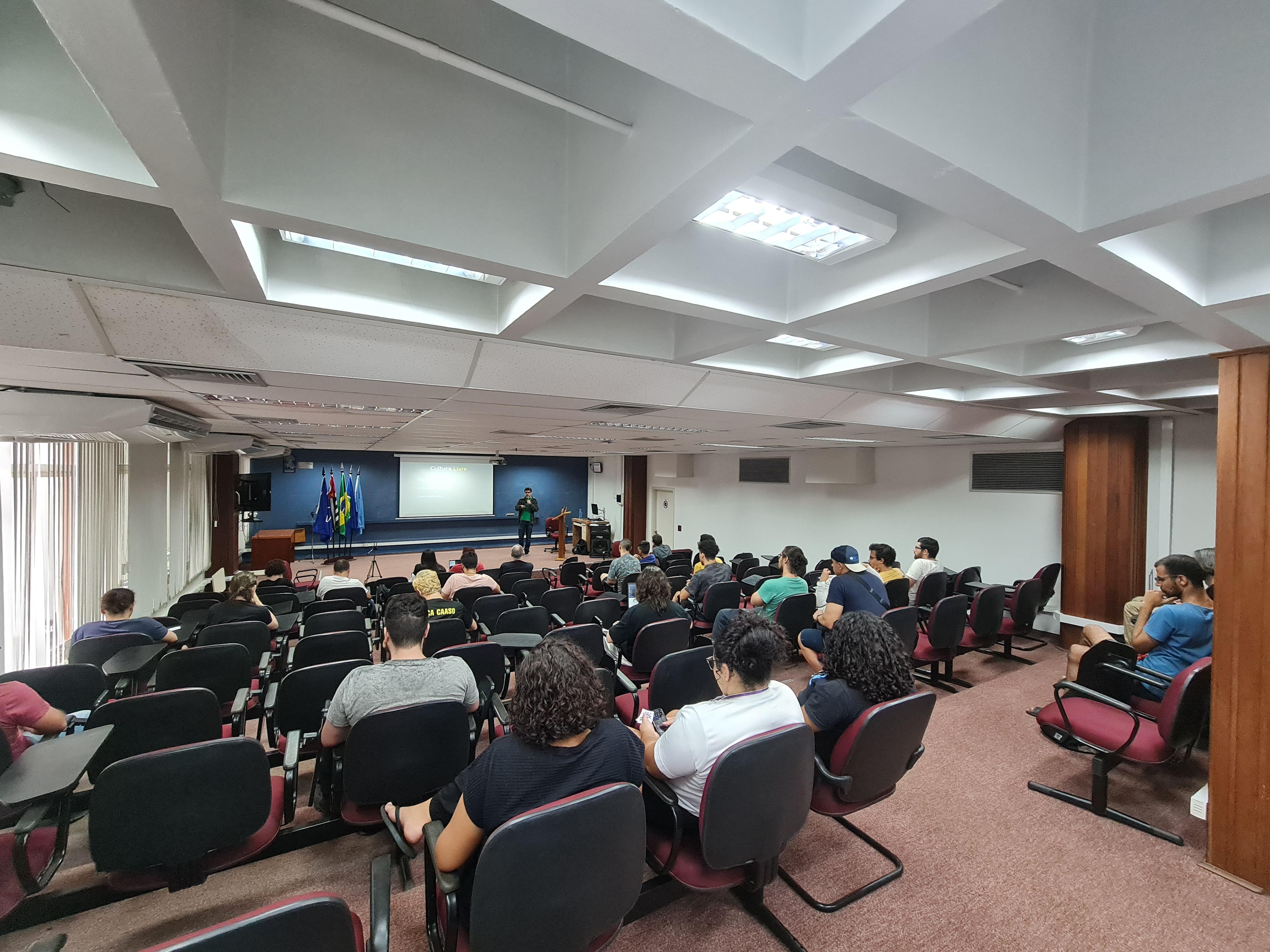
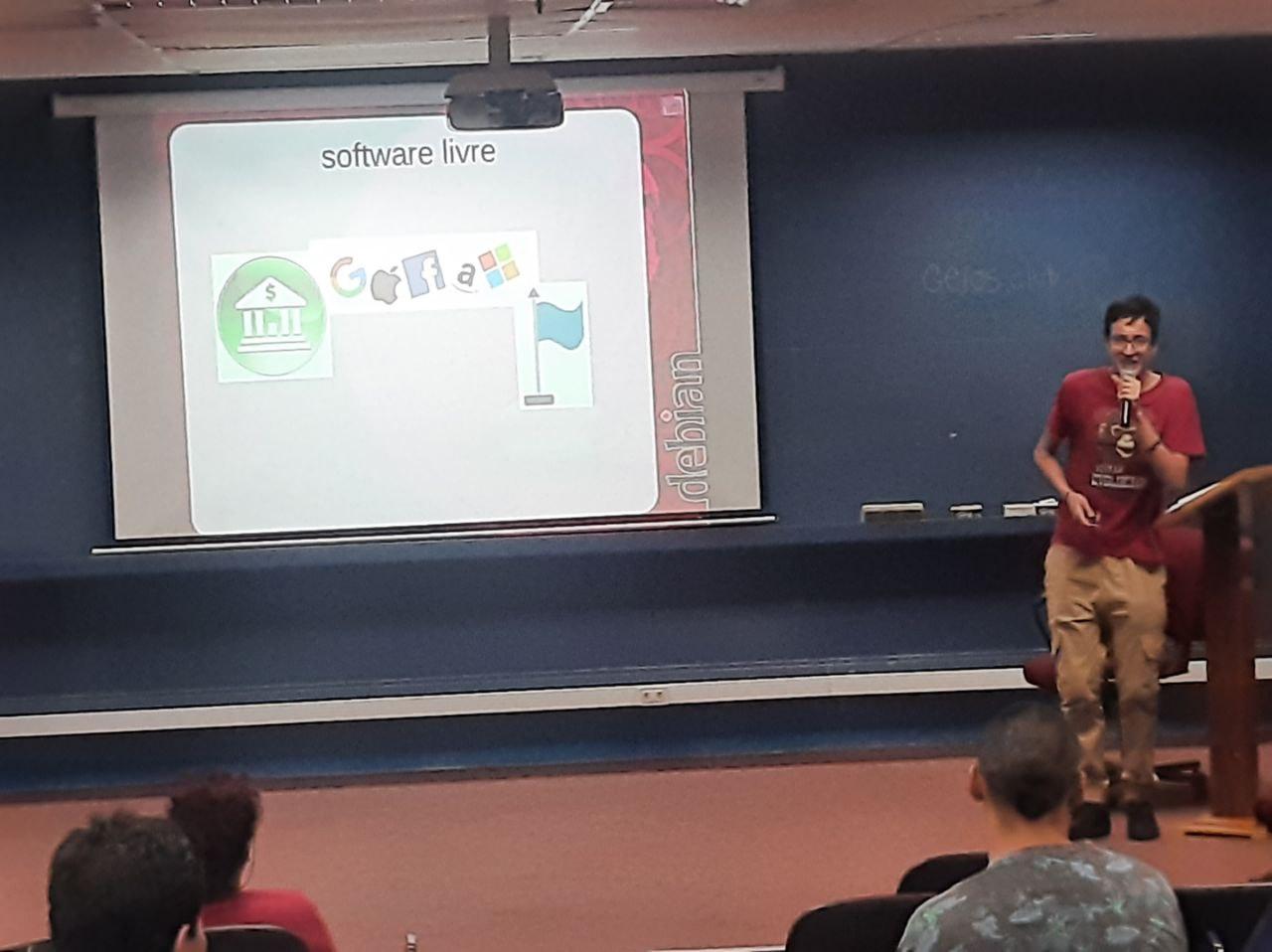
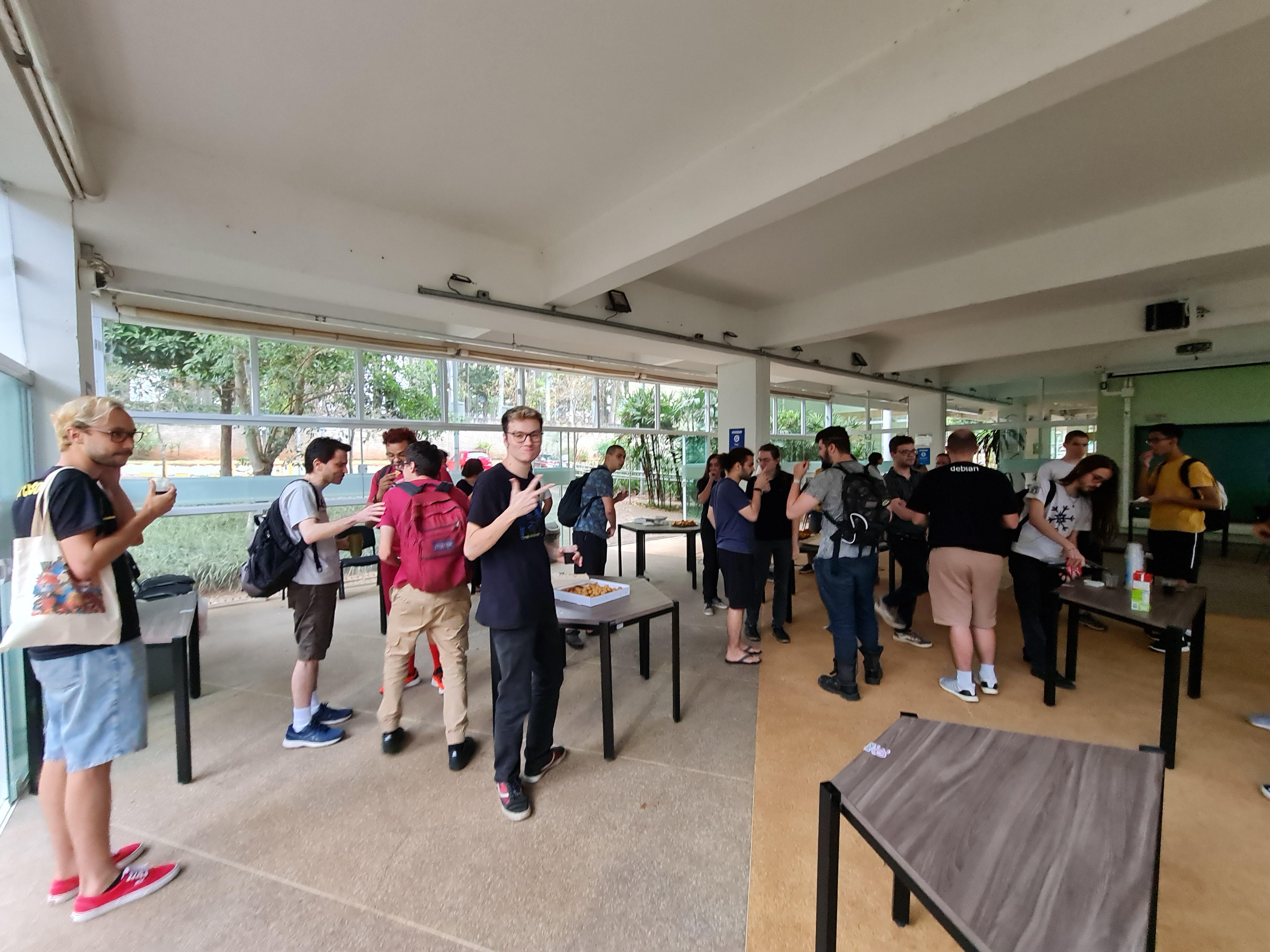
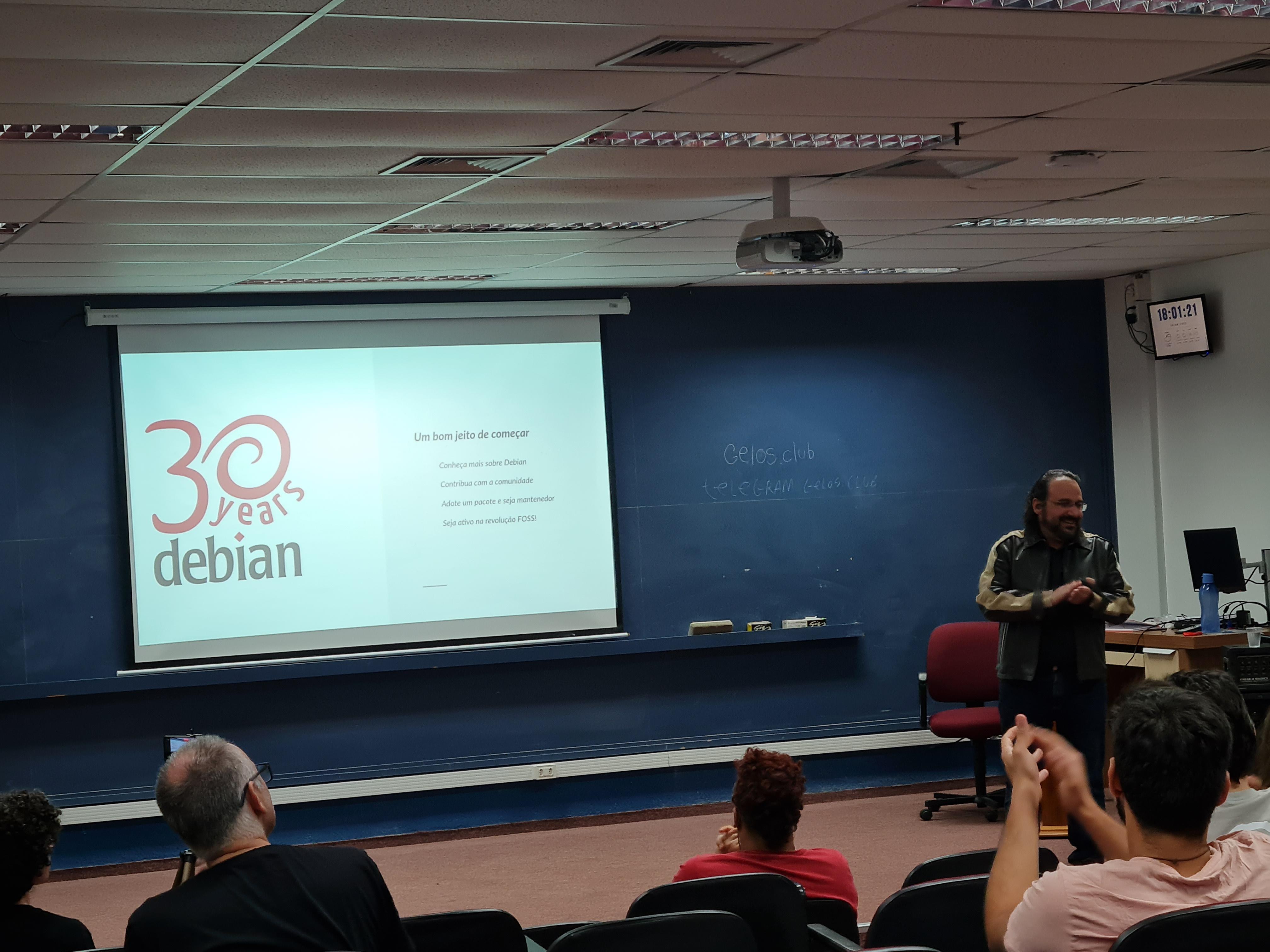
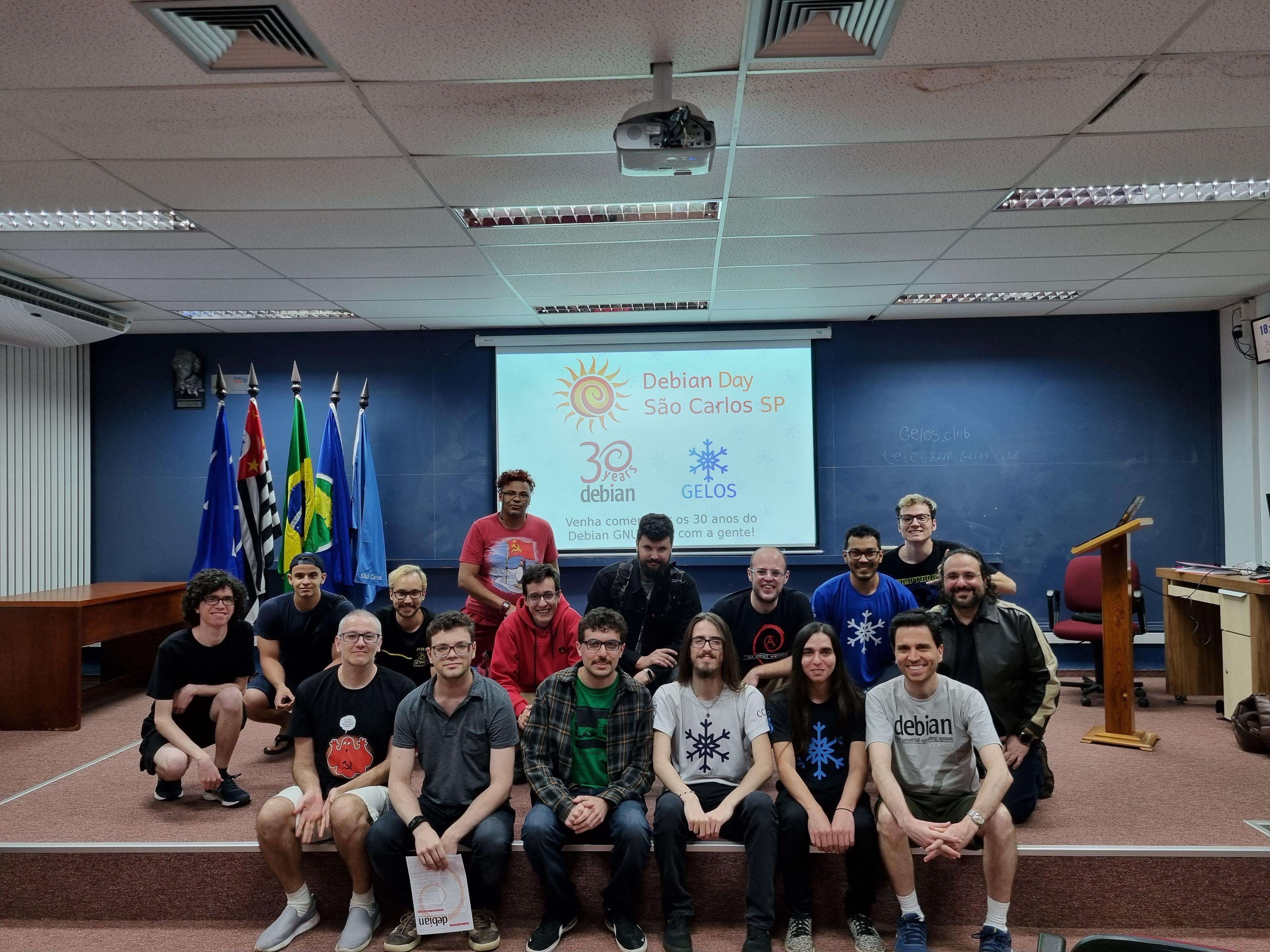
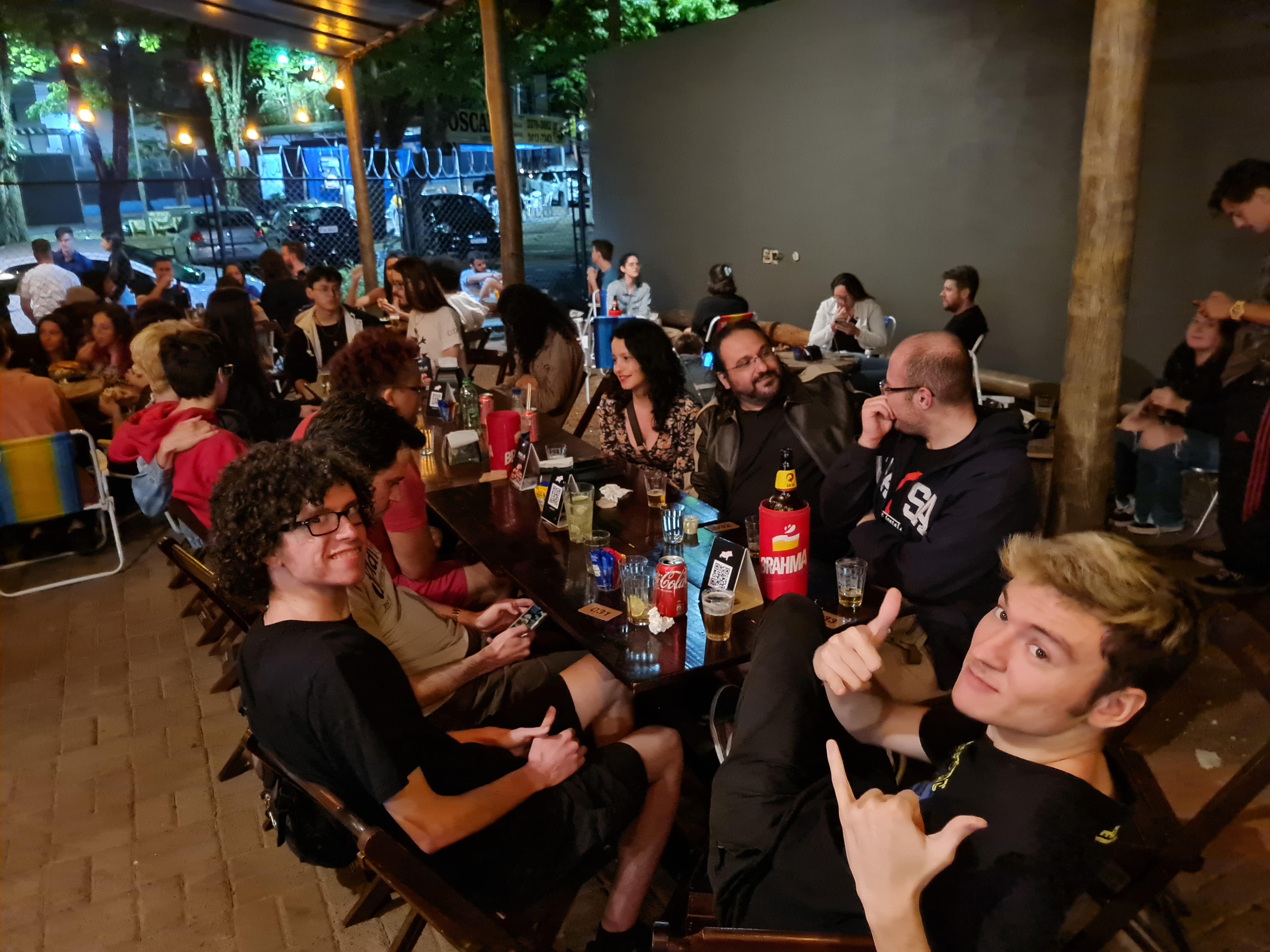
This year's Debian day was a pretty special one, we are celebrating 30 years! Giving the importance of this event, the Brazilian community planned a very special week. Instead of only local gatherings, we had a week of online talks streamed via Debian Brazil's youtube channel (soon the recordings will be uploaded to Debian's peertube instance). Nonetheless the local celebrations happened around the country and I've organized one in S o Carlos with the help of GELOS, the FLOSS group at University of S o Paulo. The event happened on August 19th and went on the whole afternoon. We had some talks about Debian and free software (see table below), a coffee break where we had the chance to talk, and finished with a group photo (check this one and many others below). Actually, it wasn't the end, we carried on the conversation about Debian and free software in a local bar :-) We had around 30 people in the event and reached a greater audience via the announcements across the university's press releases and emails sent to our Brazilian mailing lists. You can check some of them below. Below you can check the list of talks.
Time Author Title
14:10 GELOS Intro to GELOS
14:30 Carlos Melara (Charles) A not so Brief Introdution to the Debian Project
15:15 Guilherme Paix o Debian and the Free Culture
15:45 z Free Software: the paths to a free life
16:15 -- Coffee Break
17:15 Prof. Dr. Francisco Jos Monaco The FOSS Ecosystem and You
Here are some photos taken during the event! Preparation for Debian Day
Getting things ready for the event. Intro to GELOS
Intro to GELOS talk. Debian intro
A not so Brief Introdution to the Debian Project talk. Everyone knows Debian
Everyone already knew Debian! Free software
Debian and the Free Culture talk Auditorium
People in the auditorium space. Free software
Free Software: the paths to a free life talk Coffee Break
Coffee Break. FOSS Ecosystem
The FOSS Ecosystem and You talk. Group photo
Group photo. Celebration afterwards
Celebration goes on in the bar.

18 August 2023

Scarlett Gately Moore: KDE: A day in the life of the KDE snapcrafter!

KDE MascotKDE Mascot
As mentioned last week, I am still looking for a super awesome team lead for a super amazing project involving KDE and Snaps. Time is running out and well the KDE world will be a better a better place if this project goes through! I would like to clarify, this is a paid position! A current KDE developer would be ideal as it is a small team so your time will be split managing and coding alike. If you or anyone you know might be interested please contact me ASAP! On to snappy things I have achieved this week: Most 23.04.3 is done, I am just testing them now. New applications: kmymoney ( Thanks Carlos! ), kde-dev-utils, and kxstitch ( Thanks Jeremy! ) With that said, I have seen on the internets candidate channel apps being promoted. Please use this channel with utmost care as they are being tested and could quite possibly be very broken! Still working on some QML issues with kirigami platform not found. I have begun the launchpad build issues journey and have been kindly pointed to using snap recipes on launchpad so we aren t doing public uploads which creates temporary recipes to build and cannot be bumped priority wise. So I have sent the request into the kde-devel arena to revisit having per repository snapcraft files ( rejected in the past ) as they do with flatpak files. So far I am getting positive feedback and hopefully this will go through. Once it does I can move forward with fully automating application new releases. Hooray! This week I jumped into the xdg-desktop-portals rabbithole while working on https://bugs.kde.org/show_bug.cgi?id=473003 for neochat. After fixing it with adding plug password-manager-service I am told that auto-connect on that one is discouraged and the libsecret should work out of the box with portals. I found and joined just in time a snapcrafter google meet and we had a long conversation spitballing and testing our portal support. At least in Neon it appears to be broken. I now have some things to do and test to see that we get this functional. Most of our online apps are affected. For now though snap connect neochat:password-manager-service :password-manager-service does work. Auto-connect was rejected as it exposes to much. Understandable. I have started a new thread on the KDE forums for users to ask any questions, or let me know of any issues you may have related to snaps here: https://discuss.kde.org/t/all-things-snaps-questions-concerns-praise/4033 come join the conversation! In the snapcraft arena I have fixed my PR for the much needed qmake plugin! This should be merged and rolled out in the very near future! I would like to continue my hard work on snap things regardless of the project going through. Unfortunately, to do so, I must ask for donations as life isn t free. I am working on self sufficiency but even that costs money to get started! KDE snaps are used by 1.7 million active devices! I do ask that if you use KDE snaps and find my work useful, or know someone that does, to please consider donating to keep my momentum going. There is still much work to be done with Qt6 rolling out. I would like to work on the KDE Plasma snap and KDE PIM suite of apps ( I have started on this ). Even if you can t help, please share! Thank you for your consideration! I have a new donation form for anyone that doesn t like gofundme here:
Gofund me:

16 August 2023

Bits from Debian: Debian Celebrates 30 years!

Debian 30 years by Jeff Maier Over 30 years ago the late Ian Murdock wrote to the comp.os.linux.development newsgroup about the completion of a brand-new Linux release which he named "The Debian Linux Release". He built the release by hand, from scratch, so to speak. Ian laid out guidelines for how this new release would work, what approach the release would take regarding its size, manner of upgrades, installation procedures; and with great care of consideration for users without Internet connection. Unaware that he had sparked a movement in the fledgling F/OSS community, Ian worked on and continued to work on Debian. The release, now aided by volunteers from the newsgroup and around the world, grew and continues to grow as one of the largest and oldest FREE operating systems that still exist today. Debian at its core is comprised of Users, Contributors, Developers, and Sponsors, but most importantly, People. Ians drive and focus remains embedded in the core of Debian, it remains in all of our work, it remains in the minds and hands of the users of The Universal Operating System. The Debian Project is proud and happy to share our anniversary not exclusively unto ourselves, instead we share this moment with everyone, as we come together in celebration of a resounding community that works together, effects change, and continues to make a difference, not just in our work but around the world. Debian is present in cluster systems, datacenters, desktop computers, embedded systems, IoT devices, laptops, servers, it may possibly be powering the web server and device you are reading this article on, and it can also be found in Spacecraft. Closer to earth, Debian fully supports projects for accessibility: Debian Edu/Skolelinux - an operating system designed for educational use in schools and communities, Debian Science - providing free scientific software across many established and emerging fields, Debian Hamradio - for amateur radio enthusiasts, Debian-Accessibility - a project focused on the design of an operating system suited to fit the requirements of people with disabilites, and Debian Astro - focused on supporting professional and hobbyist astronomers. Debian strives to give, reach, embrace, mentor, share, and teach with internships through many programs internally and externally such as the Google Summer of Code, Outreachy, and the Open Source Promotion Plan. None of this could be possible without the vast amount of support, care, and contributions from what started as and is still an all volunteer project. We celebrate with each and every one who has helped shape Debian over all of these years and toward the future. Today we all certainly celebrate 30 years of Debian, but know that Debian celebrates with each and every one of you all at the same time. Over the next few days Celebration parties are planned to take place in Austria, Belgium, Bolivia, Brazil, Bulgaria, Czech Republic, France, Germany (CCCcamp), India, Iran, Portugal, Serbia, South Africa, and Turkey. You are of course, invited to join us! Check out, attend, or form your very own DebianDay 2023 Event. See you then! Thank you, thank you all so very much. With Love, The Debian Project

9 August 2023

Antoine Beaupr : OpenPGP key transition

This is a short announcement to say that I have changed my main OpenPGP key. A signed statement is available with the cryptographic details but, in short, the reason is that I stopped using my old YubiKey NEO that I have worn on my keyring since 2015. I now have a YubiKey 5 which supports ED25519 which features much shorter keys and faster decryption. It allowed me to move all my secret subkeys on the key (including encryption keys) while retaining reasonable performance. I have written extensive documentation on how to do that OpenPGP key rotation and also YubiKey OpenPGP operations.

Warning on storing encryption keys on a YubiKey People wishing to move their private encryption keys to such a security token should be very careful as there are special precautions to take for disaster recovery. I am toying with the idea of writing an article specifically about disaster recovery for secrets and backups, dealing specifically with cases of death or disabilities.

Autocrypt changes One nice change is the impact on Autocrypt headers, which are considerably shorter. Before, the header didn't even fit on a single line in an email, it overflowed to five lines:
Autocrypt: addr=anarcat@torproject.org; prefer-encrypt=nopreference;
 keydata=xsFNBEogKJ4BEADHRk8dXcT3VmnEZQQdiAaNw8pmnoRG2QkoAvv42q9Ua+DRVe/yAEUd03EOXbMJl++YKWpVuzSFr7IlZ+/lJHOCqDeSsBD6LKBSx/7uH2EOIDizGwfZNF3u7X+gVBMy2V7rTClDJM1eT9QuLMfMakpZkIe2PpGE4g5zbGZixn9er+wEmzk2mt20RImMeLK3jyd6vPb1/Ph9+bTEuEXi6/WDxJ6+b5peWydKOdY1tSbkWZgdi+Bup72DLUGZATE3+Ju5+rFXtb/1/po5dZirhaSRZjZA6sQhyFM/ZhIj92mUM8JJrhkeAC0iJejn4SW8ps2NoPm0kAfVu6apgVACaNmFb4nBAb2k1KWru+UMQnV+VxDVdxhpV628Tn9+8oDg6c+dO3RCCmw+nUUPjeGU0k19S6fNIbNPRlElS31QGL4H0IazZqnE+kw6ojn4Q44h8u7iOfpeanVumtp0lJs6dE2nRw0EdAlt535iQbxHIOy2x5m9IdJ6q1wWFFQDskG+ybN2Qy7SZMQtjjOqM+CmdeAnQGVwxowSDPbHfFpYeCEb+Wzya337Jy9yJwkfa+V7e7Lkv9/OysEsV4hJrOh8YXu9a4qBWZvZHnIO7zRbz7cqVBKmdrL2iGqpEUv/x5onjNQwpjSVX5S+ZRBZTzah0w186IpXVxsU8dSk0yeQskblrwARAQABzSlBbnRvaW5lIEJlYXVwcsOpIDxhbmFyY2F0QHRvcnByb2plY3Qub3JnPsLBlAQTAQgAPgIbAwULCQgHAwUVCgkICwUWAgMBAAIeAQIXgBYhBI3JAc5kFGwEitUPu3khUlJ7dZIeBQJihnFIBQkacFLiAAoJEHkhUlJ7dZIeXNAP/RsX+27l9K5uGspEaMH6jabAFTQVWD8Ch1om9YvrBgfYtq2k/m4WlkMh9IpT89Ahmlf0eq+V1Vph4wwXBS5McK0dzoFuHXJa1WHThNMaexgHhqJOs
 S60bWyLH4QnGxNaOoQvuAXiCYV4amKl7hSuDVZEn/9etDgm/UhGn2KS3yg0XFsqI7V/3RopHiDT+k7+zpAKd3st2V74w6ht+EFp2Gj0sNTBoCdbmIkRhiLyH9S4B+0Z5dUCUEopGIKKOSbQwyD5jILXEi7VTZhN0CrwIcCuqNo7OXI6e8gJd8McymqK4JrVoCipJbLzyOLxZMxGz8Ki0b9O844/DTzwcYcg9I1qogCsGmZfgVze2XtGxY+9zwSpeCLeef6QOPQ0uxsEYSfVgS+onCesSRCgwAPmppPiva+UlGuIMun87gPpQpV2fqFg/V8zBxRvs6YTGcfcQjfMoBHmZTGb+jk1//QAgnXMO7fGG38YH7iQSSzkmodrH2s27ZKgUTHVxpBL85ptftuRqbR7MzIKXZsKdA88kjIKKXwMmez9L1VbJkM4k+1Kzc5KdVydwi+ujpNegF6ZU8KDNFiN9TbDOlRxK5R+AjwdS8ZOIa4nci77KbNF9OZuO3l/FZwiKp8IFJ1nK7uiKUjmCukL0od/6X2rJtAzJmO5Co93ZVrd5r48oqUvjklzzsBNBFmeC3oBCADEV28RKzbv3dEbOocOsJQWr1R0EHUcbS270CrQZfb9VCZWkFlQ/1ypqFFQSjmmUGbNX2CG5mivVsW6Vgm7gg8HEnVCqzL02BPY4OmylskYMFI5Bra2wRNNQBgjg39L9XU4866q3BQzJp3r0fLRVH8gHM54Jf0FVmTyHotR/Xiw5YavNy2qaQXesqqUv8HBIha0rFblbuYI/cFwOtJ47gu0QmgrU0ytDjlnmDNx4rfsNylwTIHS0Oc7Pezp7MzLmZxnTM9b5VMprAXnQr4rewXCOUKBSto+j4rD5/77DzXw96bbueNruaupb2Iy2OHXNGkB0vKFD3xHsXE2x75NBovtABEBAAHCwqwEGAEIACAWIQSNyQHOZBRsBIrVD7t5IVJSe3WSHgUCWZ4LegIbAgFACRB5IV
 JSe3WSHsB0IAQZAQgAHRYhBHsWQgTQlnI7AZY1qz6h3d2yYdl7BQJZngt6AAoJED6h3d2yYdl7CowH/Rp7GHEoPZTSUK8Ss7crwRmuAIDGBbSPkZbGmm4bOTaNs/gealc2tsVYpoMx7aYgqUW+t+84XciKHT+bjRv8uBnHescKZgDaomDuDKc2JVyx6samGFYuYPcGFReRcdmH0FOoPCn7bMW5mTPztV/wIA80LZD9kPKIXanfUyI3HLP0BPwZG4WTpKzJaalR1BNwu2oF6kEK0ymH3LfDiJ5Sr6emI2jrm4gH+/19ux/x+ST4tvm2PmH3BSQOPzgiqDiFd7RZoAIhmwr3FW4epsK9LtSxsi9gZ2vATBKO1oKtb6olW/keQT6uQCjqPSGojwzGRT2thEANH+5t6Vh0oDPZhrKUXRAAxHMBNHEaoo/M0sjZo+5OF3Ig1rMnI6XbKskLv6hu13cCymW0w/5E4XuYnyQ1cNC3pLvqDQbDx5mAPfBVHuqxJdRLQ3yDM/D2QIsxnkzQwi0FsJuni4vuJzWK/NHHDCvxMCh0YmSgbptUtgW8/niatd2Y6MbfRGxUHoctKtzqzivC8hKMTFrj4AbZhg/e9QVCsh5zSXtpWP0qFDJsxRMx0/432n9d4XUiy4U672r9Q09SsynB3QN6nTaCTWCIxGxjIb+8kJrRqTGwy/PElHX6kF0vQUWZNf2ITV1sd6LK/s/7sH+x4rzgUEHrsKr/qPvY3rUY/dQLd+owXesY83ANOu6oMWhSJnPMksbNa4tIKKbjmw3CFIOfoYHOWf3FtnydHNXoXfj4nBX8oSnkfhLILTJgf6JDFXfw6mTsv/jMzIfDs7PO1LK2oMK0+prSvSoM8bP9dmVEGIurzsTGjhTOBcb0zgyCmYVD3S48vZlTgHszAes1zwaCyt3/tOwrzU5JsRJVns+B/TUYaR/u3oIDMDygvE5ObWxXaFVnCC59r+zl0FazZ0ouyk2AYIR
 zHf+n1n98HCngRO4FRel2yzGDYO2rLPkXRm+NHCRvUA/i4zGkJs2AV0hsKK9/x8uMkBjHAdAheXhY+CsizGzsKjjfwvgqf84LwAzSDdZqLVE2yGTOwU0ESiArJwEQAJhtnC6pScWjzvvQ6rCTGAai6hrRiN6VLVVFLIMaMnlUp92EtgVSNpw6kANtRTpKXUB5fIPZVUrVdfEN06t96/6LE42tgifDAFyFTZY5FdHHri1GG/Cr39MpW2VqCDCtTTPVWHTUlU1ZG631BJ+9NB+ce58TmLr6wBTQrT+W367eRFBC54EsLNb7zQAspCn9pw1xf1XNHOGnrAQ4r9BXhOW5B8CzRd4nLRQwVgtw/c5M/bjemAOoq2WkwN+0mfJe4TSfHwFUozXuN274X+0Gr10fhp8xEDYuQM0qu6W3aDXMBBwIu0jTNudEELsTzhKUbqpsBc9WjwNMCZoCuSw/RTpFBV35mXbqQoQgbcU7uWZslLl9Wvv/C6rjXgd+GeX8SGBjTqq1ZkTv5UXLHTNQzPnbkNEExzqToi/QdSjFMIACnakeOSxc0ckfnsd9pfGv1PUyPyiwrHiqWFzBijzGIZEHxhNGFxAkXwTJR7Pd40a7RDxwbO6p/TSIIum41JtteehLHwTRDdQNMoyfLxuNLEtNYS0uR2jYI1EPQfCNWXCdT2ZK/l6GVP6jyB/olHBIOr+oVXqJh+48ki8cATPczhq3fUr7UivmguGwD67/4omZ4PCKtz1hNndnyYFS9QldEGo+AsB3AoUpVIA0XfQVkxD9IZr+Zu6aJ6nWq4M2bsoxABEBAAHCwXYEGAEIACACGwwWIQSNyQHOZBRsBIrVD7t5IVJSe3WSHgUCWPerZAAKCRB5IVJSe3WSHkIgEACTpxdn/FKrwH0/LDpZDTKWEWm4416l13RjhSt9CUhZ/Gm2GNfXcVTfoF/jKXXgjHcV1DHjfLUPmPVwMdqlf5ACOiFqIUM2ag/OEARh356w
 YG7YEobMjX0CThKe6AV2118XNzRBw/S2IO1LWnL5qaGYPZONUa9Pj0OaErdKIk/V1wge8Zoav2fQPautBcRLW5VA33PH1ggoqKQ4ES1hc9HC6SYKzTCGixu97mu/vjOa8DYgM+33TosLyNy+bCzw62zJkMf89X0tTSdaJSj5Op0SrRvfgjbC2YpJOnXxHr9qaXFbBZQhLjemZi6zRzUNeJ6A3Nzs+gIc4H7s/bYBtcd4ugPEhDeCGffdS3TppH9PnvRXfoa5zj5bsKFgjqjWolCyAmEvd15tXz5yNXtvrpgDhjF5ozPiNp/1EeWX4DxbH2i17drVu4fXwauFZ6lcsAcJxnvCA28RlQlmEQu/gFOx1axVXf6GIuXnQSjQN6qJbByUYrdc/cFCxPO2/lGuUxnufN9Tvb51Qh54laPgGLrlD2huQeSD9Sxa0MNUjNY0qLqaReT99Ygb2LPYGSLoFVx9iZz6sZNt07LqCx9qNgsJwsdmwYsNpMuFbc7nkWjtlEqzsXZHTvYN654p43S+hcAhmmOzQZcew6h71fAJLciiqsPBnCEdgCGFAWhZZdPkMA==
After the change, the entire key fits on a single line, neat!
Autocrypt: addr=anarcat@torproject.org; prefer-encrypt=nopreference;
 keydata=xjMEZHZPzhYJKwYBBAHaRw8BAQdAWdVzOFRW6FYVpeVaDo3sC4aJ2kUW4ukdEZ36UJLAHd7NKUFudG9pbmUgQmVhdXByw6kgPGFuYXJjYXRAdG9ycHJvamVjdC5vcmc+wpUEExYIAD4WIQS7ts1MmNdOE1inUqYCKTpvpOU0cwUCZHZgvwIbAwUJAeEzgAULCQgHAwUVCgkICwUWAgMBAAIeAQIXgAAKCRACKTpvpOU0c47SAPdEqfeHtFDx9UPhElZf7nSM69KyvPWXMocu9Kcu/sw1AQD5QkPzK5oxierims6/KUkIKDHdt8UcNp234V+UdD/ZB844BGR2UM4SCisGAQQBl1UBBQEBB0CYZha2IMY54WFXMG4S9/Smef54Pgon99LJ/hJ885p0ZAMBCAfCdwQYFggAIBYhBLu2zUyY104TWKdSpgIpOm+k5TRzBQJkdlDOAhsMAAoJEAIpOm+k5TRzBg0A+IbcsZhLx6FRIqBJCdfYMo7qovEo+vX0HZsUPRlq4HkBAIctCzmH3WyfOD/aUTeOF3tY+tIGUxxjQLGsNQZeGrQI
Note that I have implemented my own kind of ridiculous Autocrypt support for the Notmuch Emacs email client I use, see this elisp code. To import keys, I pipe the message into this script which is basically just:
sq autocrypt decode   gpg --import
... thanks to Sequoia best-of-class Autocrypt support.

Note on OpenPGP usage While some have claimed OpenPGP's death, I believe those are overstated. Maybe it's just me, but I still use OpenPGP for my password management, to authenticate users and messages, and it's the interface to my YubiKey for authenticating with SSH servers. I understand people feel that OpenPGP is possibly insecure, counter-intuitive and full of problems, but I think most of those problems should instead be attributed to its current flagship implementation, GnuPG. I have tried to work with GnuPG for years, and it keeps surprising me with evilness and oddities. I have high hopes that the Sequoia project can bring some sanity into this space, and I also hope that RFC4880bis can eventually get somewhere so we have a more solid specification with more robust crypto. It's kind of a shame that this has dragged on for so long, but Update: there's a separate draft called openpgp-crypto-refresh that might actually be adopted as the "OpenPGP RFC" soon! And it doesn't keep real work from happening in Sequoia and other implementations. Thunderbird rewrote their OpenPGP implementation with RNP (which was, granted, a bumpy road because it lost compatibility with GnuPG) and Sequoia now has a certificate store with trust management (but still no secret storage), preliminary OpenPGP card support and even a basic GnuPG compatibility layer. I'm also curious to try out the OpenPGP CA capabilities. So maybe it's just because I'm becoming an old fart that doesn't want to change tools, but so far I haven't seen a good incentive in switching away from OpenPGP, and haven't found a good set of tools that completely replace it. Maybe OpenSSH's keys and CA can eventually replace it, but I suspect they will end up rebuilding most of OpenPGP anyway, just more slowly. If they do, let's hope they avoid the mistakes our community has done in the past at least...

6 August 2023

Sam Hartman: AI Tools

I wrote about how I m exploring the role of AI in human connection and intimacy. The first part of that journey has been all about learning the software and tools for approaching large language models. The biggest thing I wish I had known going in was not to focus on the traditional cloud providers. I was struggling until I found runpod.io. I kind of assumed that if you were willing to pay for it and had the money, you could go to Amazon on or google or whatever and get the compute resources you needed. Not so much. Google completely rejected my request to have the maximum number of GPUs I could run raised above a limit of 0. Go talk to your sales representative. And of course no sales representative was willing to waste their time on me. But I did eventually find some of the smaller AI-specific clouds. I intentionally wanted to run software myself. Everyone has various fine-tuning and training APIs as well as APIs for inference. I thought I d gain a much better understanding if I wrote my own code. That definitely ended up being true. I started by understanding PyTorch and the role of optimizers, gradient descent and what a model is. Then I focused on Transformers and that ecosystem, including Accelerate, tokenizers, generation and training. I m really impressed with the Hugging Face ecosystem. A lot of academic software is very purpose built and is hard to reuse and customize. But the hub strikes an amazing balance between providing abstractions for common interfaces like consuming a model or datasets without getting in the way of hacking on models or evolving the models. I had a great time, and after a number of false starts, succeeded in customizing Llama2 to explore some of the questions on my mind. I ll talk about what I accomplished and learned in the next post.

comment count unavailable comments

5 August 2023

Bits from Debian: Debian Project Bits Volume 1, Issue 1


Debian Project Bits Volume 1, Issue 1 August 05, 2023 Welcome to the inaugural issue of Debian Project Bits! Those remembering the Debian Weekly News (DwN) will recognize some of the sections here which served as our inspiration. Debian Project Bits posts will allow for a faster turnaround of some project news on a monthly basis. The Debian Micronews service will continue to share shorter news items, the Debian Project News remains as our official newsletter which may move to a biannual archive format. News Debian Day The Debian Project was officially founded by Ian Murdock on August 16, 1993. Since then we have celebrated our Anniversary of that date each year with events around the world. We would love it if you could join our revels this very special year as we have the honor of turning 30! Attend or organize a local Debian Day celebration. You're invited to plan your own event: from Bug Squashing parties to Key Signing parties, Meet-Ups, or any type of social event whether large or small. And be sure to check our Debian reimbursement How To if you need such resources. You can share your days, events, thoughts, or notes with us and the rest of the community with the #debianday tag that will be used across most social media platforms. See you then! Events: Upcoming and Reports Upcoming Debian 30 anos The Debian Brasil Community is organizing the event Debian 30 anos to celebrate the 30th anniversary of the Debian Project. From August 14 to 18, between 7pm and 22pm (UTC-3) contributors will talk online in Portuguese and we will live stream on Debian Brasil YouTube channel. DebConf23: Debian Developers Camp and Conference The 2023 Debian Developers Camp (DebCamp) and Conference (DebConf23) will be hosted this year in Infopark, Kochi, India. DebCamp is slated to run from September 3 through 9, immediately followed by the larger DebConf, September 10 through 17. If you are planning on attending the conference this year, now is the time to ensure your travel documentation, visa information, bursary submissions, papers and relevant equipment are prepared. For more information contact: debconf@debconf. MiniDebConf Cambridge 2023 There will be a MiniDebConf held in Cambridge, UK, hosted by ARM for 4 days in November: 2 days for a mini-DebCamp (Thu 23 - Fri 24), with space for dedicated development / sprint / team meetings, then two days for a more regular MiniDebConf (Sat 25 - Sun 26) with space for more general talks, up to 80 people. Reports During the last months, the Debian Community has organized some Bug Squashing Parties:
Tilburg, Netherlands. October 2022. St-Cergue, Switzerland. January 2023 Montreal, Canada. February 2023 In January, Debian India hosted the MiniDebConf Tamil Nadu in Viluppuram, Tamil Nadu, India (Sat 28 - Sun 26). The following month, the MiniDebConf Portugal 2023 was held in Lisbon (12 - 16 February 2023). These events, seen as a stunning success by some of their attendees, demonstrate the vitality of our community.
Debian Brasil Community at Campus Party Brazil 2023 Another edition of Campus Party Brazil took place in the city of S o Paulo between July 25th and 30th. And one more time the Debian Brazil Community was present. During the days in the available space, we carry out some activities such as: For more info and a few photos, check out the organizers' report. MiniDebConf Bras lia 2023 From May 25 to 27, Bras lia hosted the MiniDebConf Bras lia 2023. This gathering was composed of various activities such as talks, workshops, sprints, BSPs (Bug Squashing Party), key signings, social events, and hacking, aimed to bring the community together and celebrate the world's largest Free Software project: Debian. For more information please see the full report written by the organizers. Debian Reunion Hamburg 2023 This year the annual Debian Reunion Hamburg was held from Tuesday 23 to 30 May starting with four days of hacking followed by two days of talks, and then two more days of hacking. As usual, people - more than forty-five attendees from Germany, Czechia, France, Slovakia, and Switzerland - were happy to meet in person, to hack and chat together, and much more. If you missed the live streams, the video recordings are available. Translation workshops from the pt_BR team The Brazilian translation team, debian-l10n-portuguese, had their first workshop of 2023 in February with great results. The workshop was aimed at beginners, working in DDTP/DDTSS. For more information please see the full report written by the organizers. And on June 13 another workshop took place to translate The Debian Administrator's Handbook). The main goal was to show beginners how to collaborate in the translation of this important material, which has existed since 2004. The manual's translations are hosted on Weblate. Releases Stable Release Debian 12 bookworm was released on June 10, 2023. This new version becomes the stable release of Debian and moves the prior Debian 11 bullseye release to oldstable status. The Debian community celebrated the release with 23 Release Parties all around the world. Bookworm's first point release 12.1 address miscellaneous bug fixes affecting 88 packages, documentation, and installer updates was made available on July 22, 2023. RISC-V support riscv64 has recently been added to the official Debian architectures for support of 64-bit little-endian RISC-V hardware running the Linux kernel. We expect to have full riscv64 support in Debian 13 trixie. Updates on bootstrap, build daemon, porterbox, and development progress were recently shared by the team in a Bits from the Debian riscv64 porters post. non-free-firmware The Debian 12 bookworm archive now includes non-free-firmware; please be sure to update your apt sources.list if your systems requires such components for operation. If your previous sources.list included non-free for this purpose it may safely be removed. apt sources.list The Debian archive holds several components: Example of the sources.list file
deb http://deb.debian.org/debian bookworm main
deb-src http://deb.debian.org/debian bookworm main
deb http://deb.debian.org/debian-security/ bookworm-security main
deb-src http://deb.debian.org/debian-security/ bookworm-security main
deb http://deb.debian.org/debian bookworm-updates main
deb-src http://deb.debian.org/debian bookworm-updates main
Example using the components:
deb http://deb.debian.org/debian bookworm main non-free-firmware
deb-src http://deb.debian.org/debian bookworm main non-free-firmware
deb http://deb.debian.org/debian-security/ bookworm-security main non-free-firmware
deb-src http://deb.debian.org/debian-security/ bookworm-security main non-free-firmware
deb http://deb.debian.org/debian bookworm-updates main non-free-firmware
deb-src http://deb.debian.org/debian bookworm-updates main non-free-firmware
For more information and guidelines on proper configuration of the apt source.list file please see the Configuring Apt Sources - Wiki page. Inside Debian New Debian Members Please welcome the following newest Debian Project Members: To find out more about our newest members or any Debian Developer, look for them on the Debian People list. Security Debian's Security Team releases current advisories on a daily basis. Some recently released advisories concern these packages: trafficserver Several vulnerabilities were discovered in Apache Traffic Server, a reverse and forward proxy server, which could result in information disclosure or denial of service. asterisk A flaw was found in Asterisk, an Open Source Private Branch Exchange. A buffer overflow vulnerability affects users that use PJSIP DNS resolver. This vulnerability is related to CVE-2022-24793. The difference is that this issue is in parsing the query record parse_query(), while the issue in CVE-2022-24793 is in parse_rr(). A workaround is to disable DNS resolution in PJSIP config (by setting nameserver_count to zero) or use an external resolver implementation instead. flask It was discovered that in some conditions the Flask web framework may disclose a session cookie. chromium Multiple security issues were discovered in Chromium, which could result in the execution of arbitrary code, denial of service or information disclosure. Other Popular packages gpgv - GNU privacy guard signature verification tool. 99,053 installations. gpgv is actually a stripped-down version of gpg which is only able to check signatures. It is somewhat smaller than the fully-blown gpg and uses a different (and simpler) way to check that the public keys used to make the signature are valid. There are no configuration files and only a few options are implemented. dmsetup - Linux Kernel Device Mapper userspace library. 77,769 installations. The Linux Kernel Device Mapper is the LVM (Linux Logical Volume Management) Team's implementation of a minimalistic kernel-space driver that handles volume management, while keeping knowledge of the underlying device layout in user-space. This makes it useful for not only LVM, but software raid, and other drivers that create "virtual" block devices. sensible-utils - Utilities for sensible alternative selection. 96,001 daily users. This package provides a number of small utilities which are used by programs to sensibly select and spawn an appropriate browser, editor, or pager. The specific utilities included are: sensible-browser sensible-editor sensible-pager. popularity-contest - The popularity-contest package. 90,758 daily users. The popularity-contest package sets up a cron job that will periodically anonymously submit to the Debian developers statistics about the most used Debian packages on the system. This information helps Debian make decisions such as which packages should go on the first CD. It also lets Debian improve future versions of the distribution so that the most popular packages are the ones which are installed automatically for new users. New and noteworthy packages in unstable Toolkit for scalable simulation of distributed applications SimGrid is a toolkit that provides core functionalities for the simulation of distributed applications in heterogeneous distributed environments. SimGrid can be used as a Grid simulator, a P2P simulator, a Cloud simulator, a MPI simulator, or a mix of all of them. The typical use-cases of SimGrid include heuristic evaluation, application prototyping, and real application development and tuning. This package contains the dynamic libraries and runtime. LDraw mklist program 3D CAD programs and rendering programs using the LDraw parts library of LEGO parts rely on a file called parts.lst containing a list of all available parts. The program ldraw-mklist is used to generate this list from a directory of LDraw parts. Open Lighting Architecture - RDM Responder Tests The DMX512 standard for Digital MultipleX is used for digital communication networks commonly used to control stage lighting and effects. The Remote Device Management protocol is an extension to DMX512, allowing bi-directional communication between RDM-compliant devices without disturbing other devices on the same connection. The Open Lighting Architecture (OLA) provides a plugin framework for distributing DMX512 control signals. The ola-rdm-tests package provides an automated way to check protocol compliance in RDM devices. parsec-service Parsec is an abstraction layer that can be used to interact with hardware-backed security facilities such as the Hardware Security Module (HSM), the Trusted Platform Module (TPM), as well as firmware-backed and isolated software services. The core component of Parsec is the security service, provided by this package. The service is a background process that runs on the host platform and provides connectivity with the secure facilities of that host, exposing a platform-neutral API that can be consumed into different programming languages using a client library. For a client library implemented in Rust see the package librust-parsec-interface-dev. Simple network calculator and lookup tool Process and lookup network addresses from the command line or CSV with ripalc. Output has a variety of customisable formats. High performance, open source CPU/GPU miner and RandomX benchmark XMRig is a high performance, open source, cross platform RandomX, KawPow, CryptoNight, and GhostRider unified CPU/GPU miner and RandomX benchmark. Ping, but with a graph - Rust source code This package contains the source for the Rust gping crate, packaged by debcargo for use with cargo and dh-cargo. Once upon a time in Debian: 2014-07-31 The Technical committee choose libjpeg-turbo as the default JPEG decoder. 2010-08-01 DebConf10 starts New York City, USA 2007-08-05 Debian Maintainers approved by vote 2009-08-05 Jeff Chimene files bug #540000 against live-initramfs. Calls for help The Publicity team calls for volunteers and help! Your Publicity team is asking for help from you our readers, developers, and interested parties to contribute to the Debian news effort. We implore you to submit items that may be of interest to our community and also ask for your assistance with translations of the news into (your!) other languages along with the needed second or third set of eyes to assist in editing our work before publishing. If you can share a small amount of your time to aid our team which strives to keep all of us informed, we need you. Please reach out to us via IRC on #debian-publicity on OFTC.net, or our public mailing list, or via email at press@debian.org for sensitive or private inquiries.

4 August 2023

Shirish Agarwal: License Raj 2.0, 2023

About a week back Jio launched a laptop called JioBook that will be manufactured in China
The most interesting thing is that the whole thing will be produced in Hunan, China. Then 3 days later India mandates a licensing requirement for Apple, Dell and other laptop/tablet manufacturers. And all of these in the guise of Make in India . It is similar how India has exempted Adani and the Tatas from buying as much solar cells as are needed and then sell the same in India. Reliance will be basically monopolizing the laptop business. And if people think that projects like Raspberry Pi, Arduino etc. will be exempted they have another think coming.

History of License Raj After India became free, in the 1980s the Congress wanted to open its markets to the world just like China did. But at that time, the BJP, though small via Jan Sangh made the argument that we are not ready for the world. The indian businessman needs a bit more time. And hence a compromise was made. The compromise was simple. Indian Industry and people who wanted to get anything from the west, needed a license. This was very much in line how the Russian economy was evolving. All the three nations, India, China and Russia were on similar paths. China broke away where it opened up limited markets for competition and gave state support to its firms. Russia and Japan on the other hand, kept their markets relatively closed. The same thing happened in India, what happened in Russia and elsewhere. The businessman got what he wanted, he just corrupted the system. Reliance, the conglomerate today abused the same system as much as it could. Its defence was to be seen as the small guy. I wouldn t go into that as that itself would be a big story in itself. Whatever was sold in India was sold with huge commissions and just like Russia scarcity became the order of the day. Monopolies flourished and competition was nowhere. These remained till 1991 when Prime Minister Mr. Manmohan Singh was forced to liberalize and open up the markets. Even at that time, the RSS through its Swadeshi Jagran Manch was sharing the end of the world prophecies for the Indian businessman.

2014 Current Regime In 2010, in U.K. the Conservative party came in power under the leadership of David Cameron who was influenced by the policies of Margaret Thatcher who arguably ditched manufacturing in the UK. David Cameron and his party did the same 2010 onwards but for public services under the name austerity. India has been doing the same. The inequality has gone up while people s purchasing power has gone drastically down. CMIE figures are much more drastic and education is a joke.
Add to that since 2016 funding for scientists have gone to the dogs and now they are even playing with doctor s careers. I do not have to remind people that a woman scientist took almost a quarter century to find a drug delivery system that others said was impossible. And she did it using public finance. Science is hard. I have already shared in a previous blog post how it took the Chinese 20 years to reach where they are and somehow we think we will be able to both China and Japan. Of the 160 odd countries that are on planet earth, only a handful of countries have both the means and the knowledge to use and expand on that. While I was not part of Taiwan Debconf, later I came to know that even Taiwan in many ways is similar to Japan in the sense that a majority of its population is stuck in low-paid jobs (apart from those employed in TSMC) which is similar to Keiretsu or Chabeol from either Japan or South Korea. In all these cases, only a small percentage of the economy is going forward while the rest is stagnating or even going backwards. Similar is the case in India as well  Unlike the Americans who chose the path to have more competition, we have chosen the path to have more monopolies. So even though, I very much liked Louis es project sooner or later finding the devices itself would be hard. While the recent notification is for laptops, what stops them from doing the same with mobiles or even desktop systems. As it is, both smartphones as well as desktop systems has been contracting since last year as food inflation has gone up. Add to that availability of products has been made scarce (whether by design or not, unknown.) The end result, the latest processor launched overseas becomes the new thing here 3-4 years later. And that was before this notification. This will only decrease competition and make Ambanis rich at cost of everyone else. So much for east of doing business . Also the backlash has been pretty much been tepid. So what I shared will probably happen again sooner or later. The only interesting thing is that it s based on Android, probably in part due to the issues people seeing in both Windows 10, 11 and whatnot. Till later. Update :- The print tried a decluttering but instead cluttered the topic. While what he shared all was true, and certainly it is a step backwards but he didn t need to show how most Indians had to go to RBI for the same. I remember my Mamaji doing the same and sharing afterwards that all he had was $100 for a day which while being a big sum was paltry if you were staying in a hotel and were there for company business. He survived on bananas and whatver cheap veg. he could find then. This is almost 35-40 odd years ago. As shared the Govt. has been doing missteps for quite sometime now. The print does try to take a balanced take so it doesn t run counter of the Government but even it knows that this is a bad take. The whole thing about security is just laughable, did they wake up after 9 years. And now in its own wisdom it apparently has shifted the ban instead from now to 3 months afterwards. Of course, most people on the right just applauding without understanding the complexities and implications of the same. Vendors like Samsung and Apple who have made assembly operations would do a double-think and shift to Taiwan, Vietnam, Mexico anywhere. Global money follows global trends. And such missteps do not help

Implications in A.I. products One of the things that has not been thought about how companies that are making A.I. products in India or even MNC s will suffer. Most of them right now are in stealth mode but are made for Intel or AMD or ARM depending upon how it works for them. There is nothing to tell if the companies made their plea and was it heard or unheard. If the Government doesn t revert it then sooner or later they would either have to go abroad or cash out/sell to somebody else. Some people on the right also know this but for whatever reason have chosen to remain silent. Till later

Shirish Agarwal: Birth Control, Consent, Rape & Violence.

Consent, Violence, Sexual Abuse This again would be somewhat of a mature post. So children, please refrain from reading. When I hear the above words, my first thought goes to Aamir Khan s Season 1 Episode 2 in Satyamev Jayate. This was the first time that the topic of child sexual abuse was bought in the forefront in the hall rather than a topic to be discussed in the corner. Unfortunately, that episode is still in Hindi and no English subtitles available even today shows a lack of sensitivity in Indian s part to still come to terms with Child abuse that happens in India. The numbers that they had shared at that time were shocking. More than 50 per cent children experience sexual abuse and mostly from friends or relatives. That means 1 in every 2 children. And this was in 2012. But the problem of child sexual abuse didn t start then, it started in the 1960 s, 70 s. In the 1960 s, 1970s we didn t have much of cinema and TV and whatever there was pretty limited. There were few B movie producers, but most of them came into their own in the 1980s. So what influenced Indians in those days were softcore magazines that either had a mature aunt or a teen and they would tease and sooner or later the man would sort of overpower them and fulfill his needs. Even mainstream Indian cinema used similar tropes. One of the most memorable songs of that era Wada Karo Nahi Chodoge Tum Meera Saath from Aa Gale Lag jaa. A bit of context for the song. This is where Shashi Kapoor sees, he tries to ask her to date him, she says no. He tries to put an act where he shows he can t skate or rather pretends. And kinda takes a promise from her that she will date him if he is able to skate. And viola, the next moment he is not just skating, but dancing and singing as well. And the whole he touches her and you can see that is uncomfortable and yet after a while he woos her. Now this is problematic today because we are seeing it from today s lens. It might also have problematic with the feminists of that time, but they probably would have been called overly sensitive or something like that. And this is what went in Universal cinema. But this is just tip of the surface. There were and are multiple poems and even art in those times that flirted and even sort of engaged with sexual molestation, rape both in poems as well as literature, both in Hindi and various regional literature. Similar to stuff that Keats and some other poets (problematic stuff) they wrote and where both men and women were in two minds, whether to take all the other good literature out or kinda make the difference between the art and artist. Now, while Aamir spoke about consent it wasn t in any official capacity or even a legal capacity. The interesting thing was that there was an Act that kinda put some safeguards but had been doing rounds for almost a decade. Because the extremists on both sides, Hindus and Muslims were not in favor of that Act, it was still doing rounds. Aamir s episode on 6th May 2012 and the discussions in mainstream media following that forced the Indian legislature to make POSCO as a law on 22nd May 2012. Almost 6 months to 2 weeks, Nirbhaya happened and changes to the law happened in another 6 months. Both voyeurism and stalking were made jailable offenses and consent became part of lingua franca in the Supreme Court. Couple of weeks back, I had shared in the Manipur case the part about fingering . In the same Act, another change that was done that insertion of any part including foreign objects in any of the openings would be classed as rape . So in that Manipur case, at least those 2-3 people who have been identified as clear perpetrators according to the law of land would be rapists and should have the highest punishment. Unfortunately, the system is rigged against women as Vrinda Grover had shared just couple of weeks back. How a 6 month fast track case (to be completed within 6 months) becomes a 10 year old case tells you the efficacy of the system. The reality is far more worse than is shared or known. Just a few months ago, GOI shared some data on Sexual Harassment in 2018-19. And this is after constant pressurizing by Activists that GOI doesn t like. In fact, in 2021, Unicef had shared data about how India was one of the five countries where child brides are still prevalent. India denied but didn t produce any alternative data. The firing of Mr. James over NHFS data sets doesn t give it any brownie points to the present Government. What has happened in the last few years is that the Government for reasons of its own had been scrubbing and censoring a lot of data. I won t go far, just 2 day old story which I had shared just couple of days back. Roughly a 25 year old RPF constable kills his superior and kills 3 Muslims after going to various coaches and then the Government uses the defence of temporary insanity.
Even the mental instability defence has twists and turns
Incidentally, Press Trust of India is s private organization and not the public broadcaster of the old. And incidentally, just a few days back, it came to light that they hadn t paid Income tax for last 2-3 years. Because of issues in reward money, the public came to know otherwise they wouldn t have known. Coming back to the topic itself, there was a video where you could hear and see the accused stating after killing the three Muslims that if you want to remain in India, then you have to vote for only Modi or Yogi, otherwise this will happen. That video was scrubbed both from Twitter as well as YouTube. All centralized platforms at the very least, whether it is Google (Youtube) or Twitter or Meta uses its own media ID. Meta s being most problematic but that probably being a discussion for another day. The same censorship tools are applied rigorously and lot of incidents are buried. Cases of girls being thrown in lakes just after lakes or low numbers of conviction in case of gang rapes are more often than not disappears.
The above article shared just a few days ago that how low the conviction rates of gang rapes are in Gujarat tells you the story. You might get the story today, but wait for a few weeks and you will find that the story has disappeared. What most people do not know or understand is that the web is increasingly a public repository of idea, imaginations and trust and authoritarian regimes like Government of India is increasingly using both official as well as unofficial methods to suppress the same. To see that in the last 9 odd years, GOI has made the highest number of takedown requests and been either number one or number two tells all. My question is where we do from here ??? If even the Minister and her Ministry can do only whataboutery rather than answer the questions, then how we are supposed to come up solutions. And even if a solution exists, without the state and Center agreeing and co-operating with civil society, any solution will be far off the desired result. I am sorry that I at least have no answers

Reproducible Builds: Reproducible Builds in July 2023

Welcome to the July 2023 report from the Reproducible Builds project. In our reports, we try to outline the most important things that we have been up to over the past month. As ever, if you are interested in contributing to the project, please visit the Contribute page on our website.
Marcel Fourn et al. presented at the IEEE Symposium on Security and Privacy in San Francisco, CA on The Importance and Challenges of Reproducible Builds for Software Supply Chain Security. As summarised in last month s report, the abstract of their paper begins:
The 2020 Solarwinds attack was a tipping point that caused a heightened awareness about the security of the software supply chain and in particular the large amount of trust placed in build systems. Reproducible Builds (R-Bs) provide a strong foundation to build defenses for arbitrary attacks against build systems by ensuring that given the same source code, build environment, and build instructions, bitwise-identical artifacts are created. (PDF)

Chris Lamb published an interview with Simon Butler, associate senior lecturer in the School of Informatics at the University of Sk vde, on the business adoption of Reproducible Builds. (This is actually the seventh instalment in a series featuring the projects, companies and individuals who support our project. We started this series by featuring the Civil Infrastructure Platform project, and followed this up with a post about the Ford Foundation as well as recent ones about ARDC, the Google Open Source Security Team (GOSST), Bootstrappable Builds, the F-Droid project and David A. Wheeler.) Vagrant Cascadian presented Breaking the Chains of Trusting Trust at FOSSY 2023.
Rahul Bajaj has been working with Roland Clobus on merging an overview of environment variations to our website:
I have identified 16 root causes for unreproducible builds in my empirical study, which I have linked to the corresponding documentation. The initial MR right now contains information about 10 root causes. For each root cause, I have provided a definition, a notable instance, and a workaround. However, I have only found workarounds for 5 out of the 10 root causes listed in this merge request. In the upcoming commits, I plan to add an additional 6 root causes. I kindly request you review the text for any necessary refinements, modifications, or corrections. Additionally, I would appreciate the help with documentation for the solutions/workarounds for the remaining root causes: Archive Metadata, Build ID, File System Ordering, File Permissions, and Snippet Encoding. Your input on the identified root causes for unreproducible builds would be greatly appreciated. [ ]

Just a reminder that our upcoming Reproducible Builds Summit is set to take place from October 31st November 2nd 2023 in Hamburg, Germany. Our summits are a unique gathering that brings together attendees from diverse projects, united by a shared vision of advancing the Reproducible Builds effort. During this enriching event, participants will have the opportunity to engage in discussions, establish connections and exchange ideas to drive progress in this vital field. If you re interested in joining us this year, please make sure to read the event page which has more details about the event and location.
There was more progress towards making the Go programming language ecosystem reproducible this month, including: In addition, kpcyrd posted to our mailing list to report that:
while packaging govulncheck for Arch Linux I noticed a checksum mismatch for a tar file I downloaded from go.googlesource.com. I used diffoscope to compare the .tar file I downloaded with the .tar file the build server downloaded, and noticed the timestamps are different.

In Debian, 20 reviews of Debian packages were added, 25 were updated and 25 were removed this month adding to our knowledge about identified issues. A number of issue types were updated, including marking ffile_prefix_map_passed_to_clang being fixed since Debian bullseye [ ] and adding a Debian bug tracker reference for the nondeterminism_added_by_pyqt5_pyrcc5 issue [ ]. In addition, Roland Clobus posted another detailed update of the status of reproducible Debian ISO images on our mailing list. In particular, Roland helpfully summarised that live images are looking good, and the number of (passing) automated tests is growing .
Bernhard M. Wiedemann published another monthly report about reproducibility within openSUSE.
F-Droid added 20 new reproducible apps in July, making 165 apps in total that are published with Reproducible Builds and using the upstream developer s signature. [ ]
The Sphinx documentation tool recently accepted a change to improve deterministic reproducibility of documentation. It s internal util.inspect.object_description attempts to sort collections, but this can fail. The change handles the failure case by using string-based object descriptions as a fallback deterministic sort ordering, as well as adding recursive object-description calls for list and tuple datatypes. As a result, documentation generated by Sphinx will be more likely to be automatically reproducible. Lastly in news, kpcyrd posted to our mailing list announcing a new repro-env tool:
My initial interest in reproducible builds was how do I distribute pre-compiled binaries on GitHub without people raising security concerns about them . I ve cycled back to this original problem about 5 years later and built a tool that is meant to address this. [ ]

Upstream patches The Reproducible Builds project detects, dissects and attempts to fix as many currently-unreproducible packages as possible. We endeavour to send all of our patches upstream where appropriate. This month, we wrote a large number of such patches, including:
In diffoscope development this month, versions 244, 245 and 246 were uploaded to Debian unstable by Chris Lamb, who also made the following changes:
  • Don t include the file size in image metadata. It is, at best, distracting, and it is already in the directory metadata. [ ]
  • Add compatibility with libarchive-5. [ ]
  • Mark that the test_dex::test_javap_14_differences test requires the procyon tool. [ ]
  • Initial work on DOS/MBR extraction. [ ]
  • Move to using assert_diff in the .ico and .jpeg tests. [ ]
  • Temporarily mark some Android-related as XFAIL due to Debian bugs #1040941 & #1040916. [ ]
  • Fix the test skipped reason generation in the case of a version outside of the required range. [ ]
  • Update copyright years. [ ][ ]
  • Fix try.diffoscope.org. [ ]
In addition, Gianfranco Costamagna added support for LLVM version 16. [ ]

Testing framework The Reproducible Builds project operates a comprehensive testing framework (available at tests.reproducible-builds.org) in order to check packages and other artifacts for reproducibility. In July, a number of changes were made by Holger Levsen:
  • General changes:
    • Upgrade Jenkins host to Debian bookworm now that Debian 12.1 is out. [ ][ ][ ][ ]
    • djm: improve UX when rebooting a node fails. [ ]
    • djm: reduce wait time between rebooting nodes. [ ]
  • Debian-related changes:
    • Various refactoring of the Debian scheduler. [ ][ ][ ]
    • Make Debian live builds more robust with respect to salsa.debian.org returning HTTP 502 errors. [ ][ ]
    • Use the legacy SCP protocol instead of the SFTP protocol when transfering Debian live builds. [ ][ ]
    • Speed up a number of database queries thanks, Myon! [ ][ ][ ][ ][ ]
    • Split create_meta_pkg_sets job into two (for Debian unstable and Debian testing) to half the job runtime to approximately 90 minutes. [ ][ ]
    • Split scheduler job into four separate jobs, one for each tested architecture. [ ][ ]
    • Treat more PostgreSQL errors as serious (for some jobs). [ ]
    • Re-enable automatic database documentation now that postgresql_autodoc is back in Debian bookworm. [ ]
    • Remove various hardcoding of Debian release names. [ ]
    • Drop some i386 special casing. [ ]
  • Other distributions:
    • Speed up Alpine SQL queries. [ ]
    • Adjust CSS layout for Arch Linux pages to match 3 and not 4 repos being tested. [ ]
    • Drop the community Arch Linux repo as it has now been merged into the extra repo. [ ]
    • Speed up a number of Arch-related database queries. [ ]
    • Try harder to properly cleanup after building OpenWrt packages. [ ]
    • Drop all kfreebsd-related tests now that it s officially dead. [ ]
  • System health:
    • Always ignore some well-known harmless orphan processes. [ ][ ][ ]
    • Detect another case of job failure due to Jenkins shutdown. [ ]
    • Show all non co-installable package sets on the status page. [ ]
    • Warn that some specific reboot nodes are currently false-positives. [ ]
  • Node health checks:
    • Run system and node health checks for Jenkins less frequently. [ ]
    • Try to restart any failed dpkg-db-backup [ ] and munin-node services [ ].
In addition, Vagrant Cascadian updated the paths in our automated to tests to use the same paths used by the official Debian build servers. [ ]

If you are interested in contributing to the Reproducible Builds project, please visit our Contribute page on our website. However, you can get in touch with us via:

Next.

Previous.