Search Results: "don"

20 April 2016

Ben Hutchings: Experiments with signed kernels and modules in Debian

I've lately been working on support for Secure Boot in Debian, mostly in the packages maintained by the kernel team. My instructions for setting up UEFI Secure Boot are based on OVMF running on KVM/QEMU. All 'Designed for Windows' PCs should allow reconfiguration of SB, but it may not be easy to do so. They also assume that the firmware includes an EFI shell. Updated: Robert Edmonds pointed out that the 'Designed for Windows' requirements changed with Windows 10: The ability to reconfigure SB is indeed now optional for devices which are designed to always boot with a specific Secure Boot configuration. I also noticed that the requirements say that OEMs should not sign an EFI shell binary. Therefore I've revised the instructions to use efibootmgr instead. Background UEFI Secure Boot, when configured and enabled (which it is on most new PCs) requires that whatever it loads is signed with a trusted key. The one common trusted key for PCs is held by Microsoft, and while they will sign other people's code for a nominal fee, they require that it also validates the code it loads, i.e. the kernel or next stage boot loader. The kernel in turn is responsible for validating any code that could compromise its integrity (kernel modules, kexec images). Currently there are no such signed boot loaders in Debian, though the shim and grub-signed packages included in many other distributions should be usable. However it's possible to load an appropriately configured Linux kernel directly from the UEFI firmware (typically through the shell) which is what I'm doing at the moment. Packaging signed kernels Signing keys obviously need to be protected against disclosure; the private keys can't be included in a source package. We also won't install them on buildds separately, and generating signatures at build time would of course be unreproducible. So I've created a new source package, linux-signed, which contains detached signatures prepared offline. Currently the binary packages built from linux-signed also contain only detached signatures, which are applied as necessary at installation time. The signed kernel image (only on x86 for now) is named /boot/vmlinuz-kversion.efi.signed. However, since packages must not modify files owned by another package and I didn't want to dpkg-divert thousands of modules, the module signatures remain detached. Detached module signatures are a new invention of mine, and require changes in kmod and various other packages to support them. (An alternate might be to put signed modules under a different directory and drop a configuration file in /lib/depmod.d to make them higher priority. But then we end up with two copies of every module installed, which can be a substantial waste of space.) Preparation The packages you need to repeat the experiment: For Secure Boot, you'll then need to copy the signed kernel and the initrd onto the EFI system partition, normally mounted at /boot/efi. SB requires a Platform Key (PK) which will already be installed on a real PC. You can replace it but you don't need to. If you're using OVMF, there are no persistent keys so you do need to generate your own:
openssl req -new -x509 -newkey rsa:2048 -keyout pk.key -out pk.crt \
    -outform der -nodes
You'll also need to install the certificate for my kernel image signing key, which is under debian/certs in the linux-signed package. OVMF requires this in DER format:
openssl x509 -in linux-signed-1~exp3/debian/certs/linux-image-benh@debian.org.cert.pem \
    -out linux.crt -outform der 
You'll need to copy the certificate(s) to a FAT-formatted partition such as the EFI system partition, so that the firmware can read it. Use efibootmgr to add a boot entry for the kernel, for example:
efibootmgr -c -d /dev/sda -L linux-signed -l '\vmlinuz.efi' -u 'initrd=initrd.img root=/dev/sda2 ro quiet'
You should use the same kernel parameters as usual, except that you also need to specify the initrd filename using the initrd= parameter. The EFI stub code at the beginning of the kernel will load the initrd using EFI boot services. Enabling Secure Boot
  1. Reboot the system and enter UEFI setup
  2. Find the menu entry for Secure Boot customisation (in OVMF, it's under 'Device Manager' for some reason)
  3. In OVMF, enrol the PK from pk.crt
  4. Add linux.crt to the DB (whitelist database)
  5. Ensure that Secure Boot is enabled and in 'User Mode'
Booting the kernel in Secure Boot If all went well, Linux will boot as normal. You can confirm that Secure Boot was enabled by reading /sys/kernel/security/securelevel, which will contain 1 if it was. Module signature validation Module signatures are now always checked and unsigned modules will be given the 'E' taint flag. If Secure Boot is used or you add the kernel parameter module.sig_enforce=1, unsigned modules will be rejected. You can also turn on signature enforcement and turn off various other methods of modifying kernel code (such as kexec) by writing 1 to /sys/kernel/security/securelevel.

Norbert Preining: GnuPG notes: subkeys, yubikey, gpg1 vs gpg2

Switching from one GnuPG master key to the usage of subkeys was long on my list of things I wanted to do, but never came around. With the advent of a YubiKey NEO in my pocket I finally took the plunge: reading through lots of web pages (and adding one here for confusion), trying to understand the procedures, and above all, understanding my own requirements! gpg-subkeys-yubi To sum up a long story, it was worth the plunge, and all over the security level of my working environment has improved considerable. While the advantages of subkeys are well documented (e.g., Debian Wiki), at the end of the day I was like probably many Debian Developers having one master key that was used for every action: mail decryption and signing, signing of uploads, etc. Traveling a lot I always felt uncomfortable. Despite a lengthy passphrase, I still didn t want my master key to get into wrong hands in case the laptop got stolen. Furthermore, I had my master key on several computers (work, laptop, mail server), which didn t help a lot either. With all this, I started to compile a list of requirements/objectives I wanted to have: Warning Before we start a word of caution make backups, best is to make backups at every stage. You don t want that an erroneous operations wipes out your precious keys without a backup! Preparation In the following I will assume that MASTERKEY environment variable contains the id of the master key to be converted. Furthermore, I have followed some of the advice here, so key ids will be shown in long format. Let us start with the current situation:
$ gpg -K $MASTERKEY
sec   4096R/0x6CACA448860CDC13 2010-09-14
      Key fingerprint = F7D8 A928 26E3 16A1 9FA0  ACF0 6CAC A448 860C DC13
uid                            Norbert Preining <norbert@preining.info>
uid                            Norbert Preining <preining@logic.at>
uid                            Norbert Preining <preining@debian.org>
uid                            Norbert Preining <preining@jaist.ac.jp>
ssb   4096R/0xD1D2BD14810F62B3 2010-09-14
In the following we will go through the following steps: Yubikey SmartCard setup There are several guides out there, but I will in very near future write one about using the NEO for various usage scenaria including GPG keys. Edit the current key The following can be done in one session or in different sessions, the screen logs are after starting with:
$ gpg --expert --edit-key $MASTERKEY
add expiry date Having an expiry date on your key serves two purposes: If you loose it, it will solve itself automatically, and furthermore, you are forced to deal with the key and refresh your gpg knowledge at least once a year. That are two perfect reasons to set expiry to one year. The following log selects each key in turn and sets its expiry date.
$ gpg --expert --edit-key $MASTERKEY
gpg (GnuPG) 1.4.20; Copyright (C) 2015 Free Software Foundation, Inc.
This is free software: you are free to change and redistribute it.
There is NO WARRANTY, to the extent permitted by law.
 
Secret key is available.
 
pub  4096R/0x6CACA448860CDC13  created: 2010-09-14  expires: never       usage: SC  
                               trust: ultimate      validity: ultimate
sub  4096R/0xD1D2BD14810F62B3  created: 2010-09-14  expires: never       usage: E   
[ultimate] (1). Norbert Preining <norbert@preining.info>
[ultimate] (2)  Norbert Preining <preining@logic.at>
[ultimate] (3)  Norbert Preining <preining@debian.org>
[ultimate] (4)  Norbert Preining <preining@jaist.ac.jp>
 
gpg> expire
Changing expiration time for the primary key.
Please specify how long the key should be valid.
         0 = key does not expire
      <n>  = key expires in n days
      <n>w = key expires in n weeks
      <n>m = key expires in n months
      <n>y = key expires in n years
Key is valid for? (0) 1y
Key expires at Mon 06 Feb 2017 08:09:16 PM JST
Is this correct? (y/N) y
 
You need a passphrase to unlock the secret key for
user: "Norbert Preining <norbert@preining.info>"
4096-bit RSA key, ID 0x6CACA448860CDC13, created 2010-09-14
 
Enter passphrase:
 
pub  4096R/0x6CACA448860CDC13  created: 2010-09-14  expires: 2017-02-06  usage: SC  
                               trust: ultimate      validity: ultimate
sub  4096R/0xD1D2BD14810F62B3  created: 2010-09-14  expires: never       usage: E   
[ultimate] (1). Norbert Preining <norbert@preining.info>
[ultimate] (2)  Norbert Preining <preining@logic.at>
[ultimate] (3)  Norbert Preining <preining@debian.org>
[ultimate] (4)  Norbert Preining <preining@jaist.ac.jp>
 
gpg> key 1
 
pub  4096R/0x6CACA448860CDC13  created: 2010-09-14  expires: 2017-02-06  usage: SC  
                               trust: ultimate      validity: ultimate
sub* 4096R/0xD1D2BD14810F62B3  created: 2010-09-14  expires: never       usage: E   
[ultimate] (1). Norbert Preining <norbert@preining.info>
[ultimate] (2)  Norbert Preining <preining@logic.at>
[ultimate] (3)  Norbert Preining <preining@debian.org>
[ultimate] (4)  Norbert Preining <preining@jaist.ac.jp>
 
gpg> expire
Changing expiration time for a subkey.
Please specify how long the key should be valid.
         0 = key does not expire
      <n>  = key expires in n days
      <n>w = key expires in n weeks
      <n>m = key expires in n months
      <n>y = key expires in n years
Key is valid for? (0) 1y
Key expires at Mon 06 Feb 2017 08:09:27 PM JST
Is this correct? (y/N) y
 
You need a passphrase to unlock the secret key for
user: "Norbert Preining <norbert@preining.info>"
4096-bit RSA key, ID 0x6CACA448860CDC13, created 2010-09-14
 
Enter passphrase:
 
pub  4096R/0x6CACA448860CDC13  created: 2010-09-14  expires: 2017-02-06  usage: SC  
                               trust: ultimate      validity: ultimate
sub* 4096R/0xD1D2BD14810F62B3  created: 2010-09-14  expires: 2017-02-06  usage: E   
[ultimate] (1). Norbert Preining <norbert@preining.info>
[ultimate] (2)  Norbert Preining <preining@logic.at>
[ultimate] (3)  Norbert Preining <preining@debian.org>
[ultimate] (4)  Norbert Preining <preining@jaist.ac.jp>
Add a photo Not strictly necessary, but an interesting feature. gpg suggests 240 288, I resized a photo of my head, greyscaled it, and optimized it with jpegoptim -s -m40 my-photo.jpg. The parameter 40 is the quality, I played around a bit to find the best balance between size and quality. The size should not be too big as the photo will be part of the key!
gpg> addphoto
 
Pick an image to use for your photo ID.  The image must be a JPEG file.
Remember that the image is stored within your public key.  If you use a
very large picture, your key will become very large as well!
Keeping the image close to 240x288 is a good size to use.
 
Enter JPEG filename for photo ID: GPG/norbert-head.jpg
Is this photo correct (y/N/q)? y
 
You need a passphrase to unlock the secret key for
user: "Norbert Preining <norbert@preining.info>"
4096-bit RSA key, ID 0x6CACA448860CDC13, created 2010-09-14
 
Enter passphrase:
 
pub  4096R/0x6CACA448860CDC13  created: 2010-09-14  expires: 2017-02-06  usage: SC  
                               trust: ultimate      validity: ultimate
sub* 4096R/0xD1D2BD14810F62B3  created: 2010-09-14  expires: 2017-02-06  usage: E   
[ultimate] (1). Norbert Preining <norbert@preining.info>
[ultimate] (2)  Norbert Preining <preining@logic.at>
[ultimate] (3)  Norbert Preining <preining@debian.org>
[ultimate] (4)  Norbert Preining <preining@jaist.ac.jp>
[ unknown] (5)  [jpeg image of size 4185]
Add subkeys of 2048bit for signing/encryption/authentication Now comes the interesting part, adding three subkeys: one for signing, one for encrypting, and one for authentication. The one for signing is the one you will use for signing your uploads to Debian as well as emails. The authentication key will later be used to provide ssh authentication. Note that you have to use the --expert expert option to edit-key (as shown above), otherwise gpg does not allow to do this. As I want to move the subkeys to the Yubikey NEO, a keysize of 2048bits is necessary. First for the signing:
gpg> addkey
Key is protected.
 
You need a passphrase to unlock the secret key for
user: "Norbert Preining <norbert@preining.info>"
4096-bit RSA key, ID 0x6CACA448860CDC13, created 2010-09-14
 
Enter passphrase:
 
Please select what kind of key you want:
   (3) DSA (sign only)
   (4) RSA (sign only)
   (5) Elgamal (encrypt only)
   (6) RSA (encrypt only)
   (7) DSA (set your own capabilities)
   (8) RSA (set your own capabilities)
Your selection? 4
RSA keys may be between 1024 and 4096 bits long.
What keysize do you want? (2048) 
Requested keysize is 2048 bits
Please specify how long the key should be valid.
         0 = key does not expire
      <n>  = key expires in n days
      <n>w = key expires in n weeks
      <n>m = key expires in n months
      <n>y = key expires in n years
Key is valid for? (0) 1y
Key expires at Mon 06 Feb 2017 08:10:06 PM JST
Is this correct? (y/N) y
Really create? (y/N) y
We need to generate a lot of random bytes. It is a good idea to perform
some other action (type on the keyboard, move the mouse, utilize the
disks) during the prime generation; this gives the random number
generator a better chance to gain enough entropy.
....+++++
..........+++++
 
pub  4096R/0x6CACA448860CDC13  created: 2010-09-14  expires: 2017-02-06  usage: SC  
                               trust: ultimate      validity: ultimate
sub* 4096R/0xD1D2BD14810F62B3  created: 2010-09-14  expires: 2017-02-06  usage: E   
sub  2048R/0xEC00B8DAD32266AA  created: 2016-02-07  expires: 2017-02-06  usage: S   
[ultimate] (1). Norbert Preining <norbert@preining.info>
[ultimate] (2)  Norbert Preining <preining@logic.at>
[ultimate] (3)  Norbert Preining <preining@debian.org>
[ultimate] (4)  Norbert Preining <preining@jaist.ac.jp>
[ unknown] (5)  [jpeg image of size 4185]
Now the same for encryption key:
gpg> addkey
Key is protected.
 
You need a passphrase to unlock the secret key for
user: "Norbert Preining <norbert@preining.info>"
4096-bit RSA key, ID 0x6CACA448860CDC13, created 2010-09-14
 
Enter passphrase:
 
Please select what kind of key you want:
   (3) DSA (sign only)
   (4) RSA (sign only)
   (5) Elgamal (encrypt only)
   (6) RSA (encrypt only)
   (7) DSA (set your own capabilities)
   (8) RSA (set your own capabilities)
Your selection? 6
RSA keys may be between 1024 and 4096 bits long.
What keysize do you want? (2048) 
Requested keysize is 2048 bits
Please specify how long the key should be valid.
         0 = key does not expire
      <n>  = key expires in n days
      <n>w = key expires in n weeks
      <n>m = key expires in n months
      <n>y = key expires in n years
Key is valid for? (0) 1y
Key expires at Mon 06 Feb 2017 08:10:20 PM JST
Is this correct? (y/N) y
Really create? (y/N) y
We need to generate a lot of random bytes. It is a good idea to perform
some other action (type on the keyboard, move the mouse, utilize the
disks) during the prime generation; this gives the random number
generator a better chance to gain enough entropy.
..+++++
........+++++
 
pub  4096R/0x6CACA448860CDC13  created: 2010-09-14  expires: 2017-02-06  usage: SC  
                               trust: ultimate      validity: ultimate
sub* 4096R/0xD1D2BD14810F62B3  created: 2010-09-14  expires: 2017-02-06  usage: E   
sub  2048R/0xEC00B8DAD32266AA  created: 2016-02-07  expires: 2017-02-06  usage: S   
sub  2048R/0xBF361ED434425B4C  created: 2016-02-07  expires: 2017-02-06  usage: E   
[ultimate] (1). Norbert Preining <norbert@preining.info>
[ultimate] (2)  Norbert Preining <preining@logic.at>
[ultimate] (3)  Norbert Preining <preining@debian.org>
[ultimate] (4)  Norbert Preining <preining@jaist.ac.jp>
[ unknown] (5)  [jpeg image of size 4185]
Finally for the authentication key. Note that only here the --expert is necessary! We use (8) RSA (set your own capabilities) and then toggle sign and encryption capabilities off, and authentication on.
gpg> addkey
Key is protected.
 
You need a passphrase to unlock the secret key for
user: "Norbert Preining <norbert@preining.info>"
4096-bit RSA key, ID 0x6CACA448860CDC13, created 2010-09-14
 
Enter passphrase:
 
Please select what kind of key you want:
   (3) DSA (sign only)
   (4) RSA (sign only)
   (5) Elgamal (encrypt only)
   (6) RSA (encrypt only)
   (7) DSA (set your own capabilities)
   (8) RSA (set your own capabilities)
Your selection? 8
 
Possible actions for a RSA key: Sign Encrypt Authenticate 
Current allowed actions: Sign Encrypt 
 
   (S) Toggle the sign capability
   (E) Toggle the encrypt capability
   (A) Toggle the authenticate capability
   (Q) Finished
 
Your selection? s
 
Possible actions for a RSA key: Sign Encrypt Authenticate 
Current allowed actions: Encrypt 
 
   (S) Toggle the sign capability
   (E) Toggle the encrypt capability
   (A) Toggle the authenticate capability
   (Q) Finished
 
Your selection? e
 
Possible actions for a RSA key: Sign Encrypt Authenticate 
Current allowed actions: 
 
   (S) Toggle the sign capability
   (E) Toggle the encrypt capability
   (A) Toggle the authenticate capability
   (Q) Finished
 
Your selection? a
 
Possible actions for a RSA key: Sign Encrypt Authenticate 
Current allowed actions: Authenticate 
 
   (S) Toggle the sign capability
   (E) Toggle the encrypt capability
   (A) Toggle the authenticate capability
   (Q) Finished
 
Your selection? q
RSA keys may be between 1024 and 4096 bits long.
What keysize do you want? (2048) 
Requested keysize is 2048 bits
Please specify how long the key should be valid.
         0 = key does not expire
      <n>  = key expires in n days
      <n>w = key expires in n weeks
      <n>m = key expires in n months
      <n>y = key expires in n years
Key is valid for? (0) 1y
Key expires at Mon 06 Feb 2017 08:10:34 PM JST
Is this correct? (y/N) y
Really create? (y/N) y
We need to generate a lot of random bytes. It is a good idea to perform
some other action (type on the keyboard, move the mouse, utilize the
disks) during the prime generation; this gives the random number
generator a better chance to gain enough entropy.
......+++++
+++++
 
pub  4096R/0x6CACA448860CDC13  created: 2010-09-14  expires: 2017-02-06  usage: SC  
                               trust: ultimate      validity: ultimate
sub* 4096R/0xD1D2BD14810F62B3  created: 2010-09-14  expires: 2017-02-06  usage: E   
sub  2048R/0xEC00B8DAD32266AA  created: 2016-02-07  expires: 2017-02-06  usage: S   
sub  2048R/0xBF361ED434425B4C  created: 2016-02-07  expires: 2017-02-06  usage: E   
sub  2048R/0x9C7CA4E294F04D49  created: 2016-02-07  expires: 2017-02-06  usage: A   
[ultimate] (1). Norbert Preining <norbert@preining.info>
[ultimate] (2)  Norbert Preining <preining@logic.at>
[ultimate] (3)  Norbert Preining <preining@debian.org>
[ultimate] (4)  Norbert Preining <preining@jaist.ac.jp>
[ unknown] (5)  [jpeg image of size 4185]
 
gpg> save
Check the current status Good point to take a break and inspect the current status. We should have one main key and three subkeys, all with expiry dates of 1 year ahead, and a photo also attached to the key:
$ gpg --expert --edit-key $MASTERKEY
gpg (GnuPG) 1.4.20; Copyright (C) 2015 Free Software Foundation, Inc.
This is free software: you are free to change and redistribute it.
There is NO WARRANTY, to the extent permitted by law.
 
Secret key is available.
 
gpg: checking the trustdb
gpg: public key 0x0FC3EC02FBBB8AB1 is 58138 seconds newer than the signature
gpg: 3 marginal(s) needed, 1 complete(s) needed, classic trust model
gpg: depth: 0  valid:   2  signed:  28  trust: 0-, 0q, 0n, 0m, 0f, 2u
gpg: depth: 1  valid:  28  signed:  41  trust: 28-, 0q, 0n, 0m, 0f, 0u
gpg: next trustdb check due at 2016-11-02
pub  4096R/0x6CACA448860CDC13  created: 2010-09-14  expires: 2017-02-06  usage: SC  
                               trust: ultimate      validity: ultimate
sub  4096R/0xD1D2BD14810F62B3  created: 2010-09-14  expires: 2017-02-06  usage: E   
sub  2048R/0xEC00B8DAD32266AA  created: 2016-02-07  expires: 2017-02-06  usage: S   
sub  2048R/0xBF361ED434425B4C  created: 2016-02-07  expires: 2017-02-06  usage: E   
sub  2048R/0x9C7CA4E294F04D49  created: 2016-02-07  expires: 2017-02-06  usage: A   
[ultimate] (1). Norbert Preining <norbert@preining.info>
[ultimate] (2)  Norbert Preining <preining@logic.at>
[ultimate] (3)  Norbert Preining <preining@debian.org>
[ultimate] (4)  Norbert Preining <preining@jaist.ac.jp>
[ultimate] (5)  [jpeg image of size 4185]
 
gpg>
Create revocation certificate In case something happens, like all your backups are burned, your computers are destroyed, or all data stolen by the NSA, it is a good idea to have an old fashioned paper print out of a revocation certificate which allows you to revoke the key even if you are not in possession of it. This should be printed out and kept in a safe place.
$ gpg --gen-revoke $MASTERKEY > GPG/revoke-certificate-$MASTERKEY.txt
 
sec  4096R/0x6CACA448860CDC13 2010-09-14 Norbert Preining <norbert@preining.info>
 
Create a revocation certificate for this key? (y/N) y
Please select the reason for the revocation:
  0 = No reason specified
  1 = Key has been compromised
  2 = Key is superseded
  3 = Key is no longer used
  Q = Cancel
(Probably you want to select 1 here)
Your decision? 1
Enter an optional description; end it with an empty line:
> 
Reason for revocation: Key has been compromised
(No description given)
Is this okay? (y/N) y
 
You need a passphrase to unlock the secret key for
user: "Norbert Preining <norbert@preining.info>"
4096-bit RSA key, ID 0x6CACA448860CDC13, created 2010-09-14
 
Enter passphrase:
 
ASCII armored output forced.
Revocation certificate created.
Please move it to a medium which you can hide away; if the NSA or KGB or Mossad gets access to this certificate, they can use it to make your key unusable. It is smart to print this certificate and store it away, just in case your media become unreadable. Create gpg 2.1 structure There are currently three versions of gpg available: classic (version 1) which is one static binary, perfect for servers or scripting tasks; stable (version 2.0) which is the modularized version supporting OpenPGP, S/MIME, and Secure Shell; and finally modern (version 2.1 and up) with enhanced features like support for Elliptic Curve cryptography. Debian currently ships version 1 as standard, and also the modern version (but there are traces in experimental of a pending transition). The newer versions of GnuPG are modularized and use an agent. For the following we need to kill any running instance of gpg-agent.
$ killall gpg-agent
After that a simple call to gpg2 to list the secret keys will convert the layout to the new standard:
$ gpg2 -K $MASTERKEY
gpg: keyserver option 'ca-cert-file' is obsolete; please use 'hkp-cacert' in dirmngr.conf
gpg: starting migration from earlier GnuPG versions
gpg: porting secret keys from '/home/norbert/.gnupg/secring.gpg' to gpg-agent
gpg: key 0xD2BF4AA309C5B094: secret key imported
gpg: key 0x6CACA448860CDC13: secret key imported
gpg: migration succeeded
sec   rsa4096/0x6CACA448860CDC13 2010-09-14 [SC] [expires: 2017-02-06]
      Key fingerprint = F7D8 A928 26E3 16A1 9FA0  ACF0 6CAC A448 860C DC13
uid                   [ultimate] Norbert Preining <norbert@preining.info>
uid                   [ultimate] Norbert Preining <preining@logic.at>
uid                   [ultimate] Norbert Preining <preining@debian.org>
uid                   [ultimate] Norbert Preining <preining@jaist.ac.jp>
uid                   [ultimate] [jpeg image of size 4185]
ssb   rsa4096/0xD1D2BD14810F62B3 2010-09-14 [E] [expires: 2017-02-06]
ssb   rsa2048/0xEC00B8DAD32266AA 2016-02-07 [S] [expires: 2017-02-06]
ssb   rsa2048/0xBF361ED434425B4C 2016-02-07 [E] [expires: 2017-02-06]
ssb   rsa2048/0x9C7CA4E294F04D49 2016-02-07 [A] [expires: 2017-02-06]
After this there will be new files/directories in the .gnupg directory, in particular: .gnupg/private-keys-v1.d/ which contains the private keys. Creating backup Now your .gnupg directory contains still all the keys, available for gpg1 and gpg2.1. You MUST MAKE A BACKUP NOW!!! on at least 3 USB sticks and maybe some other offline media. Keep them in a safe place, better in different and safe places, you will need them for extending the expiry date, signing other keys, etc. Warning concerning USB and vfat file systems gpg >= 2.1 requires gpg-agent which in turn needs a socket. If you have the backup on an USB drive (most often with vfat file system), you need to redirect the socket, as vfat does not support sockets! Edit /USBSTICK/gnupghome/S.gpg-agent and enter there
%Assuan%
socket=/dev/shm/S.gpg-agent
After that the socket will be created in /dev/shm/ instead and invoking gpg with gpg2 --homedir /USBSTICK/gnupghome will work. You have done your backups, right? Move sub keys to card As I mentioned, I want to have no keys on my laptop which I carry around to strange countries, instead I want to have them all on a Yubikey NEO. I will describe the setup and usage in details soon, but mention here only how to move the keys to the card. This requires a finished setup including change of pins. Note that when using gpg2 to move the keys to the card, the local copies are actually deleted, but only for the gpg2(.1) files. The gpg1 secret keys are still all in place.
$ gpg2 --edit-key $MASTERKEY
gpg (GnuPG) 2.1.11; Copyright (C) 2016 Free Software Foundation, Inc.
This is free software: you are free to change and redistribute it.
There is NO WARRANTY, to the extent permitted by law.
 
Secret key is available.
 
sec  rsa4096/0x6CACA448860CDC13
     created: 2010-09-14  expires: 2017-02-06  usage: SC  
     trust: ultimate      validity: ultimate
ssb  rsa4096/0xD1D2BD14810F62B3
     created: 2010-09-14  expires: 2017-02-06  usage: E   
ssb  rsa2048/0xEC00B8DAD32266AA
     created: 2016-02-07  expires: 2017-02-06  usage: S   
ssb  rsa2048/0xBF361ED434425B4C
     created: 2016-02-07  expires: 2017-02-06  usage: E   
ssb  rsa2048/0x9C7CA4E294F04D49
     created: 2016-02-07  expires: 2017-02-06  usage: A   
[ultimate] (1). Norbert Preining <norbert@preining.info>
[ultimate] (2)  Norbert Preining <preining@logic.at>
[ultimate] (3)  Norbert Preining <preining@debian.org>
[ultimate] (4)  Norbert Preining <preining@jaist.ac.jp>
[ultimate] (5)  [jpeg image of size 4185]
 
gpg> key 2
 
sec  rsa4096/0x6CACA448860CDC13
     created: 2010-09-14  expires: 2017-02-06  usage: SC  
     trust: ultimate      validity: ultimate
ssb  rsa4096/0xD1D2BD14810F62B3
     created: 2010-09-14  expires: 2017-02-06  usage: E   
ssb* rsa2048/0xEC00B8DAD32266AA
     created: 2016-02-07  expires: 2017-02-06  usage: S   
ssb  rsa2048/0xBF361ED434425B4C
     created: 2016-02-07  expires: 2017-02-06  usage: E   
ssb  rsa2048/0x9C7CA4E294F04D49
     created: 2016-02-07  expires: 2017-02-06  usage: A   
[ultimate] (1). Norbert Preining <norbert@preining.info>
[ultimate] (2)  Norbert Preining <preining@logic.at>
[ultimate] (3)  Norbert Preining <preining@debian.org>
[ultimate] (4)  Norbert Preining <preining@jaist.ac.jp>
[ultimate] (5)  [jpeg image of size 4185]
 
gpg> keytocard
Please select where to store the key:
   (1) Signature key
   (3) Authentication key
Your selection? 1
 
sec  rsa4096/0x6CACA448860CDC13
     created: 2010-09-14  expires: 2017-02-06  usage: SC  
     trust: ultimate      validity: ultimate
ssb  rsa4096/0xD1D2BD14810F62B3
     created: 2010-09-14  expires: 2017-02-06  usage: E   
ssb* rsa2048/0xEC00B8DAD32266AA
     created: 2016-02-07  expires: 2017-02-06  usage: S   
ssb  rsa2048/0xBF361ED434425B4C
     created: 2016-02-07  expires: 2017-02-06  usage: E   
ssb  rsa2048/0x9C7CA4E294F04D49
     created: 2016-02-07  expires: 2017-02-06  usage: A   
[ultimate] (1). Norbert Preining <norbert@preining.info>
[ultimate] (2)  Norbert Preining <preining@logic.at>
[ultimate] (3)  Norbert Preining <preining@debian.org>
[ultimate] (4)  Norbert Preining <preining@jaist.ac.jp>
[ultimate] (5)  [jpeg image of size 4185]
 
gpg> key 2
 
sec  rsa4096/0x6CACA448860CDC13
     created: 2010-09-14  expires: 2017-02-06  usage: SC  
     trust: ultimate      validity: ultimate
ssb  rsa4096/0xD1D2BD14810F62B3
     created: 2010-09-14  expires: 2017-02-06  usage: E   
ssb  rsa2048/0xEC00B8DAD32266AA
     created: 2016-02-07  expires: 2017-02-06  usage: S   
ssb  rsa2048/0xBF361ED434425B4C
     created: 2016-02-07  expires: 2017-02-06  usage: E   
ssb  rsa2048/0x9C7CA4E294F04D49
     created: 2016-02-07  expires: 2017-02-06  usage: A   
[ultimate] (1). Norbert Preining <norbert@preining.info>
[ultimate] (2)  Norbert Preining <preining@logic.at>
[ultimate] (3)  Norbert Preining <preining@debian.org>
[ultimate] (4)  Norbert Preining <preining@jaist.ac.jp>
[ultimate] (5)  [jpeg image of size 4185]
 
gpg> key 3
 
sec  rsa4096/0x6CACA448860CDC13
     created: 2010-09-14  expires: 2017-02-06  usage: SC  
     trust: ultimate      validity: ultimate
ssb  rsa4096/0xD1D2BD14810F62B3
     created: 2010-09-14  expires: 2017-02-06  usage: E   
ssb  rsa2048/0xEC00B8DAD32266AA
     created: 2016-02-07  expires: 2017-02-06  usage: S   
ssb* rsa2048/0xBF361ED434425B4C
     created: 2016-02-07  expires: 2017-02-06  usage: E   
ssb  rsa2048/0x9C7CA4E294F04D49
     created: 2016-02-07  expires: 2017-02-06  usage: A   
[ultimate] (1). Norbert Preining <norbert@preining.info>
[ultimate] (2)  Norbert Preining <preining@logic.at>
[ultimate] (3)  Norbert Preining <preining@debian.org>
[ultimate] (4)  Norbert Preining <preining@jaist.ac.jp>
[ultimate] (5)  [jpeg image of size 4185]
 
gpg> keytocard
Please select where to store the key:
   (2) Encryption key
Your selection? 2
 
sec  rsa4096/0x6CACA448860CDC13
     created: 2010-09-14  expires: 2017-02-06  usage: SC  
     trust: ultimate      validity: ultimate
ssb  rsa4096/0xD1D2BD14810F62B3
     created: 2010-09-14  expires: 2017-02-06  usage: E   
ssb  rsa2048/0xEC00B8DAD32266AA
     created: 2016-02-07  expires: 2017-02-06  usage: S   
ssb* rsa2048/0xBF361ED434425B4C
     created: 2016-02-07  expires: 2017-02-06  usage: E   
ssb  rsa2048/0x9C7CA4E294F04D49
     created: 2016-02-07  expires: 2017-02-06  usage: A   
[ultimate] (1). Norbert Preining <norbert@preining.info>
[ultimate] (2)  Norbert Preining <preining@logic.at>
[ultimate] (3)  Norbert Preining <preining@debian.org>
[ultimate] (4)  Norbert Preining <preining@jaist.ac.jp>
[ultimate] (5)  [jpeg image of size 4185]
 
gpg> key 3
 
sec  rsa4096/0x6CACA448860CDC13
     created: 2010-09-14  expires: 2017-02-06  usage: SC  
     trust: ultimate      validity: ultimate
ssb  rsa4096/0xD1D2BD14810F62B3
     created: 2010-09-14  expires: 2017-02-06  usage: E   
ssb  rsa2048/0xEC00B8DAD32266AA
     created: 2016-02-07  expires: 2017-02-06  usage: S   
ssb  rsa2048/0xBF361ED434425B4C
     created: 2016-02-07  expires: 2017-02-06  usage: E   
ssb  rsa2048/0x9C7CA4E294F04D49
     created: 2016-02-07  expires: 2017-02-06  usage: A   
[ultimate] (1). Norbert Preining <norbert@preining.info>
[ultimate] (2)  Norbert Preining <preining@logic.at>
[ultimate] (3)  Norbert Preining <preining@debian.org>
[ultimate] (4)  Norbert Preining <preining@jaist.ac.jp>
[ultimate] (5)  [jpeg image of size 4185]
 
gpg> key 4
 
sec  rsa4096/0x6CACA448860CDC13
     created: 2010-09-14  expires: 2017-02-06  usage: SC  
     trust: ultimate      validity: ultimate
ssb  rsa4096/0xD1D2BD14810F62B3
     created: 2010-09-14  expires: 2017-02-06  usage: E   
ssb  rsa2048/0xEC00B8DAD32266AA
     created: 2016-02-07  expires: 2017-02-06  usage: S   
ssb  rsa2048/0xBF361ED434425B4C
     created: 2016-02-07  expires: 2017-02-06  usage: E   
ssb* rsa2048/0x9C7CA4E294F04D49
     created: 2016-02-07  expires: 2017-02-06  usage: A   
[ultimate] (1). Norbert Preining <norbert@preining.info>
[ultimate] (2)  Norbert Preining <preining@logic.at>
[ultimate] (3)  Norbert Preining <preining@debian.org>
[ultimate] (4)  Norbert Preining <preining@jaist.ac.jp>
[ultimate] (5)  [jpeg image of size 4185]
 
gpg> keytocard
Please select where to store the key:
   (3) Authentication key
Your selection? 3
 
sec  rsa4096/0x6CACA448860CDC13
     created: 2010-09-14  expires: 2017-02-06  usage: SC  
     trust: ultimate      validity: ultimate
ssb  rsa4096/0xD1D2BD14810F62B3
     created: 2010-09-14  expires: 2017-02-06  usage: E   
ssb  rsa2048/0xEC00B8DAD32266AA
     created: 2016-02-07  expires: 2017-02-06  usage: S   
ssb  rsa2048/0xBF361ED434425B4C
     created: 2016-02-07  expires: 2017-02-06  usage: E   
ssb* rsa2048/0x9C7CA4E294F04D49
     created: 2016-02-07  expires: 2017-02-06  usage: A   
[ultimate] (1). Norbert Preining <norbert@preining.info>
[ultimate] (2)  Norbert Preining <preining@logic.at>
[ultimate] (3)  Norbert Preining <preining@debian.org>
[ultimate] (4)  Norbert Preining <preining@jaist.ac.jp>
[ultimate] (5)  [jpeg image of size 4185]
 
gpg> key 4
 
sec  rsa4096/0x6CACA448860CDC13
     created: 2010-09-14  expires: 2017-02-06  usage: SC  
     trust: ultimate      validity: ultimate
ssb  rsa4096/0xD1D2BD14810F62B3
     created: 2010-09-14  expires: 2017-02-06  usage: E   
ssb  rsa2048/0xEC00B8DAD32266AA
     created: 2016-02-07  expires: 2017-02-06  usage: S   
ssb  rsa2048/0xBF361ED434425B4C
     created: 2016-02-07  expires: 2017-02-06  usage: E   
ssb  rsa2048/0x9C7CA4E294F04D49
     created: 2016-02-07  expires: 2017-02-06  usage: A   
[ultimate] (1). Norbert Preining <norbert@preining.info>
[ultimate] (2)  Norbert Preining <preining@logic.at>
[ultimate] (3)  Norbert Preining <preining@debian.org>
[ultimate] (4)  Norbert Preining <preining@jaist.ac.jp>
[ultimate] (5)  [jpeg image of size 4185]
 
gpg> save
Note the repetition of selecting and deselecting keys. Current status After this procedure we are now in the following situation: In gpg words it looks like this:
$ gpg2 -K $MASTERKEY
gpg: keyserver option 'ca-cert-file' is obsolete; please use 'hkp-cacert' in dirmngr.conf
sec   rsa4096/0x6CACA448860CDC13 2010-09-14 [SC] [expires: 2017-02-06]
      Key fingerprint = F7D8 A928 26E3 16A1 9FA0  ACF0 6CAC A448 860C DC13
uid                   [ultimate] Norbert Preining <norbert@preining.info>
uid                   [ultimate] Norbert Preining <preining@logic.at>
uid                   [ultimate] Norbert Preining <preining@debian.org>
uid                   [ultimate] Norbert Preining <preining@jaist.ac.jp>
uid                   [ultimate] [jpeg image of size 4185]
ssb   rsa4096/0xD1D2BD14810F62B3 2010-09-14 [E] [expires: 2017-02-06]
ssb>  rsa2048/0xEC00B8DAD32266AA 2016-02-07 [S] [expires: 2017-02-06]
ssb>  rsa2048/0xBF361ED434425B4C 2016-02-07 [E] [expires: 2017-02-06]
ssb>  rsa2048/0x9C7CA4E294F04D49 2016-02-07 [A] [expires: 2017-02-06]
 
$ gpg -K $MASTERKEY
sec   4096R/0x6CACA448860CDC13 2010-09-14 [expires: 2017-02-06]
      Key fingerprint = F7D8 A928 26E3 16A1 9FA0  ACF0 6CAC A448 860C DC13
uid                            Norbert Preining <norbert@preining.info>
uid                            Norbert Preining <preining@logic.at>
uid                            Norbert Preining <preining@debian.org>
uid                            Norbert Preining <preining@jaist.ac.jp>
uid                            [jpeg image of size 4185]
ssb   4096R/0xD1D2BD14810F62B3 2010-09-14 [expires: 2017-02-06]
ssb   2048R/0xEC00B8DAD32266AA 2016-02-07 [expires: 2017-02-06]
ssb   2048R/0xBF361ED434425B4C 2016-02-07 [expires: 2017-02-06]
ssb   2048R/0x9C7CA4E294F04D49 2016-02-07 [expires: 2017-02-06]
 
$ gpg2 --card-status
 
....
Name of cardholder: Norbert Preining
....
PIN retry counter : 3 3 3
Signature counter : 0
Signature key ....: 5871 F824 2DCC 3660 2362  BE7D EC00 B8DA D322 66AA
      created ....: 2016-02-07 11:10:06
Encryption key....: 2501 195C 90AB F4D2 3DEA  A303 BF36 1ED4 3442 5B4C
      created ....: 2016-02-07 11:10:20
Authentication key: 9CFB 3775 C164 0E99 F0C8  014C 9C7C A4E2 94F0 4D49
      created ....: 2016-02-07 11:10:34
General key info..: sub  rsa2048/0xEC00B8DAD32266AA 2016-02-07 Norbert Preining <norbert@preining.info>
sec   rsa4096/0x6CACA448860CDC13  created: 2010-09-14  expires: 2017-02-06
ssb   rsa4096/0xD1D2BD14810F62B3  created: 2010-09-14  expires: 2017-02-06
ssb>  rsa2048/0xEC00B8DAD32266AA  created: 2016-02-07  expires: 2017-02-06
                                  card-no: 0006 03645719
ssb>  rsa2048/0xBF361ED434425B4C  created: 2016-02-07  expires: 2017-02-06
                                  card-no: 0006 03645719
ssb>  rsa2048/0x9C7CA4E294F04D49  created: 2016-02-07  expires: 2017-02-06
                                  card-no: 0006 03645719
$
Remove private master keys You are sure that you have a working backup? Did you try it with gpg --homedir ...? Only if you are really sure, continue. We are now removing the master key from both the gpg2 and gpg1 setup. removal for gpg2 gpg2 keeps the private keys in ~/.gnupg/private-keys-v1.d/KEYGRIP.key and the KEYGRIP can be found by adding --with-keygrip to the key listing. Be sure to delete the correct file, the one related to the master key.
$ gpg2 --with-keygrip --list-key $MASTERKEY
pub   rsa4096/0x6CACA448860CDC13 2010-09-14 [SC] [expires: 2017-02-06]
      Key fingerprint = F7D8 A928 26E3 16A1 9FA0  ACF0 6CAC A448 860C DC13
      Keygrip = 9DC1E90703856C1DE0EAC970CED7ABF5EE5EF79D
uid                   [ultimate] Norbert Preining <norbert@preining.info>
uid                   [ultimate] Norbert Preining <preining@logic.at>
uid                   [ultimate] Norbert Preining <preining@debian.org>
uid                   [ultimate] Norbert Preining <preining@jaist.ac.jp>
uid                   [ultimate] [jpeg image of size 4185]
sub   rsa4096/0xD1D2BD14810F62B3 2010-09-14 [E] [expires: 2017-02-06]
      Keygrip = 4B8FF57434DD989243666377376903281D861596
sub   rsa2048/0xEC00B8DAD32266AA 2016-02-07 [S] [expires: 2017-02-06]
      Keygrip = 39B14EF1392F2F251863A87AE4D44CE502755C39
sub   rsa2048/0xBF361ED434425B4C 2016-02-07 [E] [expires: 2017-02-06]
      Keygrip = E41C8DDB2A22976AE0DA8D7D11F586EA793203EA
sub   rsa2048/0x9C7CA4E294F04D49 2016-02-07 [A] [expires: 2017-02-06]
      Keygrip = A337DE390143074C6DBFEA64224359B9859B02FC
 
$ rm ~/.gnupg/private-keys-v1.d/9DC1E90703856C1DE0EAC970CED7ABF5EE5EF79D.key
$
After that the missing key is shown in gpg2 -K with an additional # meaning that the key is not available:
$ gpg2 -K $MASTERKEY
sec#  rsa4096/0x6CACA448860CDC13 2010-09-14 [SC] [expires: 2017-02-06]
...
removal for gpg1 Up to gpg v2.0 there is no simple way to delete only one part of the key. We export the subkeys, delete the private key, and reimport the subkeys:
$ gpg --output secret-subkeys --export-secret-subkeys $MASTERKEY
 
$ gpg --delete-secret-keys $MASTERKEY
 
sec  4096R/0x6CACA448860CDC13 2010-09-14 Norbert Preining <norbert@preining.info>
 
Delete this key from the keyring? (y/N) y
This is a secret key! - really delete? (y/N) y
 
$ gpg --import secret-subkeys
gpg: key 0x6CACA448860CDC13: secret key imported
gpg: key 0x6CACA448860CDC13: "Norbert Preining <norbert@preining.info>" not changed
gpg: Total number processed: 1
gpg:              unchanged: 1
gpg:       secret keys read: 1
gpg:   secret keys imported: 1
 
$
Current status We are basically at the stage we wanted to achieve: For gpg2.1 only the old encryption key is available, the master key is not, and the other sub keys are moved to the yubikey:
$ gpg2 -K $MASTERKEY
sec#  rsa4096/0x6CACA448860CDC13 2010-09-14 [SC] [expires: 2017-02-06]
      Key fingerprint = F7D8 A928 26E3 16A1 9FA0  ACF0 6CAC A448 860C DC13
uid                   [ultimate] Norbert Preining <norbert@preining.info>
uid                   [ultimate] Norbert Preining <preining@logic.at>
uid                   [ultimate] Norbert Preining <preining@debian.org>
uid                   [ultimate] Norbert Preining <preining@jaist.ac.jp>
uid                   [ultimate] [jpeg image of size 4185]
ssb   rsa4096/0xD1D2BD14810F62B3 2010-09-14 [E] [expires: 2017-02-06]
ssb>  rsa2048/0xEC00B8DAD32266AA 2016-02-07 [S] [expires: 2017-02-06]
ssb>  rsa2048/0xBF361ED434425B4C 2016-02-07 [E] [expires: 2017-02-06]
ssb>  rsa2048/0x9C7CA4E294F04D49 2016-02-07 [A] [expires: 2017-02-06]
$
And for gpg <= 2.0 the old encryption key and the sub keys are available, but the master key is not:
$ gpg -K $MASTERKEY
sec#  4096R/0x6CACA448860CDC13 2010-09-14 [expires: 2017-02-06]
      Key fingerprint = F7D8 A928 26E3 16A1 9FA0  ACF0 6CAC A448 860C DC13
uid                            Norbert Preining <norbert@preining.info>
uid                            Norbert Preining <preining@logic.at>
uid                            Norbert Preining <preining@debian.org>
uid                            Norbert Preining <preining@jaist.ac.jp>
uid                            [jpeg image of size 4185]
ssb   4096R/0xD1D2BD14810F62B3 2010-09-14 [expires: 2017-02-06]
ssb   2048R/0xEC00B8DAD32266AA 2016-02-07 [expires: 2017-02-06]
ssb   2048R/0xBF361ED434425B4C 2016-02-07 [expires: 2017-02-06]
ssb   2048R/0x9C7CA4E294F04D49 2016-02-07 [expires: 2017-02-06]
 
$
Split the .gnupg directory for mail server and laptop As mentioned, I want to have a gpg1 version available at the server where I read my emails, and be able to sign/encrypt emails there, while on my laptop no secret key is available. Thus I prepare two gnupg directories. For the mailserver the gpg2 specific files are removed:
$ cp -a .gnupg .gnupg-mail
$ cd .gnupg-mail
$ rm -rf private-keys-v1.d/ pubring.gpg~ reader_0.status
$ rm -rf S.gpg-agent* S.scdaemon .gpg-v21-migrated
On my laptop, where I did all this operation, I remove the gpg1 files, namely the outdated secring.gpg:
$ cd $HOME/.gnupg
$ rm secring.gpg
As a last step I move the .gnupg-mail directory to my mail server. Once could *expire* the old encryption key, but for now I leave it as is. Upload keys to keyservers If you are a Debian Developer, a simple update of your master key will suffice:
gpg --keyserver hkp://keyring.debian.org --send-key YOURMASTERKEYID
Note that the update from the keyring server to the actual Debian keyring takes up to one month. Until that time either do not upload anything, or use the (offline) master key for signing. After your key has been updated in the Debian keyring, signatures made with the signing subkey will be accepted for uploading to Debian. It might be also a good idea to upload your new keys to some keyservers like:
gpg --keyserver hkp://pool.sks-keyservers.net --send-key $MASTERKEY
Now you an also fix the configuration file skew between gpg1 and gpg2. Further remark I am currently trying to use the authentication key from my Yubikey NEO as ssh key, but bugs (see #795368 and #818969) prohibit it at the moment. Raphael Herzog gave a possible fix by killing the gpg-agent and restarting it with gpg-agent --daemon from an X terminal, and I can confirm that this worked. After one year before the key expires I need to extend the key validity for another year. For this you need the offline master key. I will describe the process when it becomes necessary. Reading list The following web sites have been useful in collecting the necessary information:
  1. https://iain.learmonth.me/yubikey-neo-gpg/
  2. https://iain.learmonth.me/yubikey-udev/
  3. http://blog.josefsson.org/2014/06/23/offline-gnupg-master-key-and-subkeys-on-yubikey-neo-smartcard/
  4. https://wiki.debian.org/Subkeys
  5. https://jclement.ca/articles/2015/gpg-smartcard/ as modernized version of (3)
  6. https://www.esev.com/blog/post/2015-01-pgp-ssh-key-on-yubikey-neo/ similar style, with ssh and gnome-keyring infos
  7. http://karlgrz.com/2fa-gpg-ssh-keys-with-pass-and-yubikey-neo/ also good reading
  8. https://help.riseup.net/en/security/message-security/openpgp/best-practices good and concise advise on gpg practices
My writing is mostly based on (5) with additions from (4). Please let me know of any errors, improvements, and fixes. I hope this walk-through might help others in the same situation.

19 April 2016

R&#233;mi Vanicat: LudumDare35

Ludumdare 35 For the Third time, I've submitted a compo to the ludumdare. So I've a new game (source available on github). Some note about the technology used:
  • this is a javascript/html5 game,
  • using the phaser framework.
  • Code has been wrote using Emacs and js2-mode,
  • tested with the python -m SimpleHTTPServer http server.
  • Sound:
    • sfx is mostly recording of real life sound, edited with Audacity, but I've also used labChirp (inside wine...).
    • Music is done using Bosca Ceoil. Next time I will try lmms.
  • Graphics are using aseprite (mostly) and gimp (very little)
  • Level has been created using Tiled
Most of those tool are free software, Exception are labChirp (we have no source), and Adobe Air/flash that is used by Bosca Ceoil (but Bosca Ceoil is a free software).

Norbert Preining: Gaming: Monument Valley

With a small baby invading your lifestyle, not much time for other activities is left over, especially for gaming. Most of the times even using my computer is a one-hand-action. In these times mobile games that can be played one-handed are greatly appreciated. And if it is one like Monument Valley, full of atmosphere and incredibly stimulating game play, then the level of gratitude is near infinite. monument-valley1 Set in an Escherian universe where space and distance is often an illusion, the player is guiding a small princess through several levels (10+1 in the basic game, 8 more in the In-App-Purchase) of astonishing simplicity and beauty at the same time. Carefully crafted graphics, atmospheric music, calm game play (no action, don t worry), and the lovely crows sitting around and craaaahing at the little princess. My favorite level was the first of the expansion pack Forgotten shores called The Chasm a wonderful homage to the Lord of the Rings and the descent to the Bridge of Khazad-d m. Not one of the difficult levels, but definitely one of the most funny. The middle image in the above collage is from that level. I guess my only complain about this game is that it doesn t last long. I remember only one really difficult level where I had to play around quite some time. Most of the others are quite straight forward, but despite of that, you cannot stop playing until you are all through it. Simply a wonderful game, that was well worth every Yen. Thanks to the developers for doing innovative things in a perfect setting. monument-valley2 Post scriptum: After finishing this game I also tried Evo Explores, a clone of Monument Valley. The difference cannot be more stunning: Evo Explores is mostly repetitive, with a focus on an irrelevant story, simple graphics, and riddles that miss the ingenuity of the original.

18 April 2016

Reproducible builds folks: Reproducible builds: week 50 in Stretch cycle

What happened in the reproducible builds effort between April 3rd and April 9th 2016: Media coverage Emily Ratliff wrote an article for SecurityWeek called Establishing Correspondence Between an Application and its Source Code - How Combining Two Completely Separate Open Source Projects Can Make Us All More Secure. Tails have started work on a design for freezable APT repositories to make it easier and practical to perform reproductions of an entire distribution at a given point in time, which will be needed to create reproducible installation- or live-media. Toolchain fixes Alexis Bienven e submitted patches adding support for SOURCE_DATE_EPOCH in several tools: transfig, imagemagick, rdtool, and asciidoctor. boyska submitted one for python-reportlab. Packages fixed The following packages have become reproducible due to changes in their build dependencies: atinject-jsr330 brailleutils cglib3 gnugo libcobra-java libgnumail-java libjchart2d-java libjcommon-java libjfreechart-java libjide-oss-java liblaf-widget-java liblastfm-java liboptions-java octave-control octave-mpi octave-nan octave-parallel octave-stk octave-struct octave-tsa oar The following packages became reproducible after getting fixed: Several uploads fixed some reproducibility issues, but not all of them: Patches submitted which have not made their way to the archive yet: Other upstream fixes Alexander Batischev made a commit to make newsbeuter reproducible. tests.reproducible-builds.org Package reviews 93 reviews have been removed, 66 added and 21 updated in the previous week. 12 new FTBFS bugs have been reported by Chris Lamb and Niko Tyni. Misc. This week's edition was written by Lunar, Holger Levsen, Reiner Herrmann, Mattia Rizzolo and Ximin Luo. With the departure of Lunar as a full-time contributor, Reproducible Builds Weekly News (this thing you're reading) has moved from his personal Debian blog on Debian People to the Reproducible Builds team web site on Debian Alioth. You may want to update your RSS or Atom feeds. Very many thanks to Lunar for writing and publishing this weekly news for so long, well & continously!

Matthew Garrett: One more attempt at SATA power management

Around a year ago I wrote some patches in an attempt to improve power management on Haswell and Broadwell systems by configuring Serial ATA power management appropriately. I got a couple of reports of them triggering SATA errors for some users, couldn't reproduce them myself and so didn't have a lot of confidence in them. Time passed.

I've been working on power management stuff again this week, so it seemed like a good opportunity to revisit these. I've made a few changes and pushed a couple of trees - one against master and one against 4.5.

First, these probably only have relevance to users of mobile Intel parts in the U or S range (/proc/cpuinfo will tell you - you're looking for a four-digit number that starts with 4 (Haswell), 5 (Broadwell) or 6 (Skylake) and ends with U or S), and won't do anything unless you have SATA drives (including PCI-based SATA). To test them, first disable anything like TLP that might alter your SATA link power management policy. Then check powertop - you should only be getting to PC3 at best. Build a kernel with these patches and boot it. /sys/class/scsi_host/*/link_power_management_policy should read "firmware". Check powertop and see whether you're getting into deeper PC states. Now run your system for a while and check the kernel log for any SATA errors that you didn't see before.

Let me know if you see SATA errors and are willing to help debug this, and leave a comment if you don't see any improvement in PC states.

comment count unavailable comments

17 April 2016

Sean Whitton: Mail expiring out of the postfix mail queue

On my Debian machines I run stunnel to create an secure connection to my e-mail provider s SMTP gateway. Postfix sends mail through that TLS tunnel. Recently I stopped receiving e-mail from rss2email and I discovered tonight that the reason was that the tunnel has caved in on the machine which rss2email was running on. Unfortunately, some mail was permanently discarded from the postfix queue because it turns out that postfix will by default keep mail in the queue for a maximum of only 5 days. Since the connection to the gateway was down, postfix couldn t return the mail to its sender (i.e. me). Fortunately, I m not smart enough to have any log rotation going on, so I could easily find the message that were lost:

grep "status=expired, returned to sender" /var/log/mail.log \
      awk ' print $6 ' \
      while read id; do grep "$id" -m1 /var/log/mail.log; done
The first grep determines the queue id of the messages that were expired, and then the second grep finds the first entry in the mail log for that message, which provides the time the message was sent. Replacing -m1 with -m4 gave me the message-id of the messages and the intended recipient of the messages. This allowed me to restore them from backups or bounce them from my sent mail folder for those that I tried to send myself. To prevent this from happening again, I ve extended the maximum lifetime of messages in the queue from 5 days to 10:
postconf -e maximal_queue_lifetime=10d
I ve incorporated a check for clogged mail queues on my machines into my weekly backup routine.

16 April 2016

Scott Kitterman: Future of secure systems in the US

As a rule, I avoid writing publicly on political topics, but I m making an exception. In case you haven t been following it, the senior Republican and the senior Democrat on the Senate Intelligence Committee recently announced a legislative proposal misleadingly called the Compliance with Court Orders Act of 2016. The full text of the draft can be found here. It would effectively ban devices and software in the United States that the manufacturer cannot retrieve data from. Here is a good analysis of the breadth of the proposal and a good analysis of the bill itself. While complying with court orders might sound great in theory, in practice this means these devices and software will be insecure by design. While that s probably reasonably obvious to most normal readers here, don t just take my word for it, take Bruce Schneier s. In my opinion, policy makers (and it s not just in the United States) are suffering from a perception gap about security and how technically hard it is to get right. It seems to me that they are convinced that technologists could just do security right while still allowing some level of extraordinary access for law enforcement if they only wanted to. We ve tried this before and the story never seems to end well. This isn t a complaint from wide eyed radicals that such extraordinary access is morally wrong or inappropriate. It s hard core technologists saying it can t be done. I don t know how to get the message across. Here s President Obama, in my opinion, completely missing the point when he equates a desire for security with fetishizing our phones above every other value. Here are some very smart people trying very hard to be reasonable about some mythical middle ground. As Riana Pfefferkorn s analysis that I linked in the first paragraph discusses, this middle ground doesn t exist and all the arm waving in the world by policy makers won t create it. Coincidentally, this same week, the White House announced a new Commission on Enhancing National Cybersecurity . Cybersecurity is certainly something we could use more of, unfortunately Congress seems to be heading off in the opposite direction and no one from the executive branch has spoken out against it. Security and privacy are important to many people. Given the personal and financial importance of data stored in computers (traditional or mobile), users don t want criminals to get a hold of it. Companies know this, which is why both Apple IOS and Google Android both encrypt their local file systems by default now. If a bill anything like what s been proposed becomes law, users that care about security are going to go elsewhere. That may end up being non-US companies products or US companies may shift operations to localities more friendly to secure design. Either way, the US tech sector loses. A more accurate title would have been Technology Jobs Off-Shoring Act of 2016. EDIT: Fixed a typo.

Matthias Klumpp: Introducing AppStream-Generator

AppStream GeneratorSince mid-2015 we were using the dep11-generator in Debian to build AppStream metadata about available software components in the distribution. Getting rid of dep11-generator Unfortunately, the old Python-based dep11-generator was hitting some hard limits pretty soon. For example, using multiprocessing with Python was a pain, since it resulted in some very hard-to-track bugs. Also, the multiprocessing approach (as opposed to multithreading) made it impossible to use the underlying LMDB database properly (it was basically closed and reopened in each forked off process, since pickling the Python LMDB object caused some really funny bugs, which usually manifested themselves in the application hanging forever without any information on what was going on). Additionally to that, the Python-based generator forced me to maintain two implementations of the AppStream YAML spec, one in C and one in Python, which consumes quite some time. There were also some other issues (e.g. no unit-tests) in the implementation, which made me think about rewriting the generator. Adventures in Go / Rust / D Since I didn t want to write this new piece of software in C (or basically, writing it in C was my last option  ), I explored Go and Rust for this purpose and also did a small prototype in the D programming language, when I was starting to feel really adventurous. And while I never intended to write the new generator in D (I was pretty fixated on Go ), this is what happened. The strong points for D for this particular project were its close relation to C (and ease of using existing C code), its super-flat learning curve for someone who knows and likes C and C++ and its pretty powerful implementations of the concurrent and parallel programming paradigms. That being said, not all is great in D and there are some pretty dark spots too, mainly when it comes to the standard library and compilers. I will dive into my experiences with D in a separate blogpost. What good to expect from appstream-generator? So, what can the new appstream-generator do for you? Basically, the same as the old dep11-generator: It will extract metadata from a distribution s package archive, download and resize screenshots, search for icons and size them properly and generate reports in JSON and HTML of found metadata and issues. LibAppStream-based parsing, generation of YAML or XML, multi-distro support, As opposed to the old generator, the new generator utilizes the metadata parsers and writers of libappstream. This allows it to return the extracted metadata as AppStream YAML (for Debian) or XML (everyone else) It is also written in a distribution-agnostic way, so if someone wants to use it in a different distribution than Debian, this is possible now. It just requires a very small distribution-specific backend to be written, all of the details of the metadata extraction are abstracted away (just two interfaces need to be implemented). While I do not expect anyone except Debian to use this in the near future (most distros have found a solution to generate metadata already), the frontend-backend split is a much cleaner design than what was available in the previous code. It also allows to unit-test the code properly, without providing a Debian archive in the testsuite. Feature Flags, Optipng, The new generator also allows to enable and disable certain sets of features in a standardized way. E.g. Ubuntu uses a language-pack system for translations, which Debian doesn t use. Features like this can be implemented as disableable separate modules in the generator. We use this at time to e.g. allow descriptions from packages to be used as AppStream descriptions, or for running optipng on the generated PNG images and icons. No more Contents file dependency Another issue the old generator had was that it used the Contents file from the Debian archive to find matching icons for an application. We could never be sure whether the contents in the Contents file actually matched the contents of the package we were currently dealing with. What made things worse is that at Ubuntu, the archive software is only updating the Contents file weekly daily (while the generator might run multiple times a day), which has lead to software being ignored in the metadata, because icons could not yet be found. Even on Debian, with its quickly-updated Contents file, we could immediately see the effects of an out-of-date Contents file when updating it failed once. In the new generator, we read the contents of each package ourselves now and store them in a LMDB database, bypassing the Contents file and removing the whole class of problems resulting from missing or wrong contents-data. It can t all be good, right? That is true, there are also some known issues the new generator has: Large amounts of RAM required The better speed of the new generator comes at the cost of holding more stuff in RAM. Much more. When processing data from 5 architectures initially on Debian, the amount of required RAM might lie above 4GB, with the OOM killer sometimes being quicker than the garbage collector That being said, on subsequent runs the amount of required memory is much lower. Still, this is something I am working on to improve. What are symbolic links? To be faster, the appstream-generator will read the md5sum file in .deb packages instead of extracting the payload archive and reading its contents. Since the md5sums file does not list symbolic links, symlinks basically don t exist for the new generator. This is a problem for software symlinking icons or even .desktop files around, like e.g. LibreOffice does. I am still investigating how widespread the use of symlinks for icons and .desktop files is, but it looks like fixing packages (making them not-symlink stuff and rather move the files) might be the better approach than investing additional computing power to find symlinks or even switch back to parsing the Contents file. Input on this is welcome! Deploying asgen I finished the last pieces of the appstream-generator (together with doing lots of other cool things and talking to great people) at the GNOME Software Hackfest in London last week (detailed blogposts about things that happened there will follow many thanks once again for the Ubuntu community for sponsoring my attendance!). Since today, the new generator is running on the Debian infrastructure. If bigger issues are found, we can still roll back to the old code. I decided to deploy this faster, so we can get some good testing done before the Stretch release. Please report any issues you may find!

John Goerzen: A Year of Flight

Dad-o, I m so glad you re a pilot! My 9-year-old son Jacob has been saying that, always with a big hug and his fond nickname for me ( dad-o ). It has now been a year since the first time I sat in the pilot s seat of a plane, taking my first step towards exploring the world from the sky. And now, one year after I first sat in the pilot s seat of an airborne plane, it s prompted me to think back to my own memories. vlcsnap-2015-07-24-20h35m16s96_1

Flying over the airport at Moundridge, KS Memories Back when I was a child, maybe about the age my children are now, I d be outside in the evening and see this orange plane flying overhead. Our neighbor Don had a small ultralight plane and a grass landing strip next to his house. I remember longing to be up in the sky with Don, exploring the world from up there. At that age, I didn t know all the details of why that wouldn t work I just knew I wanted to ride in it. It wasn t until I was about 11 that I flew for the first time. I still remember that TWA flight with my grandma, taking off early in the morning and flying just a little ways above the puffy clouds lit up all yellow and orange by the sunrise. Even 25 years later, that memory still holds as one of the most beautiful scenes I have ever seen. Exploring I have always been an explorer. When I go past something interesting, I love to go see what it looks like inside. I enjoy driving around Kansas with Laura, finding hidden waterfalls, old county courthouses, ghost towns, beautiful old churches, even small-town restaurants. I explore things around me, too once taking apart a lawnmower engine as a child, nowadays building HF antennas in my treetops or writing code for Linux. If there is little to learn about something, it becomes less interesting to me. I see this starting to build in my children, too. Since before they could walk, if we were waiting for something in a large building, we d go exploring. IMG_7231

A patch of rain over Hillsboro, KS The New World A pilot once told me, Nobody can become a pilot without it changing the way they see the world and then, changing their life. I doubted that. But it was true. One of the most poetic sights I know is flying a couple thousand feet above an interstate highway at night, following it to my destination. All those red and white lights, those metal capsules of thousands of lives and thousands of stories, stretching out as far as the eye can see in either direction. IMG_7099

Kansas sunset from the plane When you re in a plane, that small town nowhere near a freeway that always seemed so far away suddenly is only a 15-minute flight away, not even enough time to climb up to a high cruise altitude. Two minutes after takeoff, any number of cities that are an hour s drive away are visible simultaneously, their unique features already recognizable: a grain elevator, oil refinery, college campus, lake, whatever. And all the houses you fly over each with people in them. Some pretty similar to you, some apparently not. But pretty soon you realize that we all are humans, and we aren t all that different. You can t tell a liberal from a conservative from the sky, nor a person s race or religion, nor even see the border between states. Towns and cities are often nameless from the sky, unless you re really low; only your navigation will tell you where you are. I ve had the privilege to fly to small out-of-the-way airports, the kind that have a car that pilots can use for free to go into town and get lunch, and leave the key out for them. There I ve met many friendly people. I ve also landed my little Cessna at a big commercial airport where I probably used only 1/10th of the runway, on a grass runway that was barely maintained at all. I ve flown to towns I d driven to or through many times, discovering the friendly folks at the small airport out of town. I ve flown to parts of Kansas I ve never been to before, discovered charming old downtowns and rolling hills, little bursts of rain and beautiful sunsets that seem to turn into a sea. Smith Center, KS airport terminal

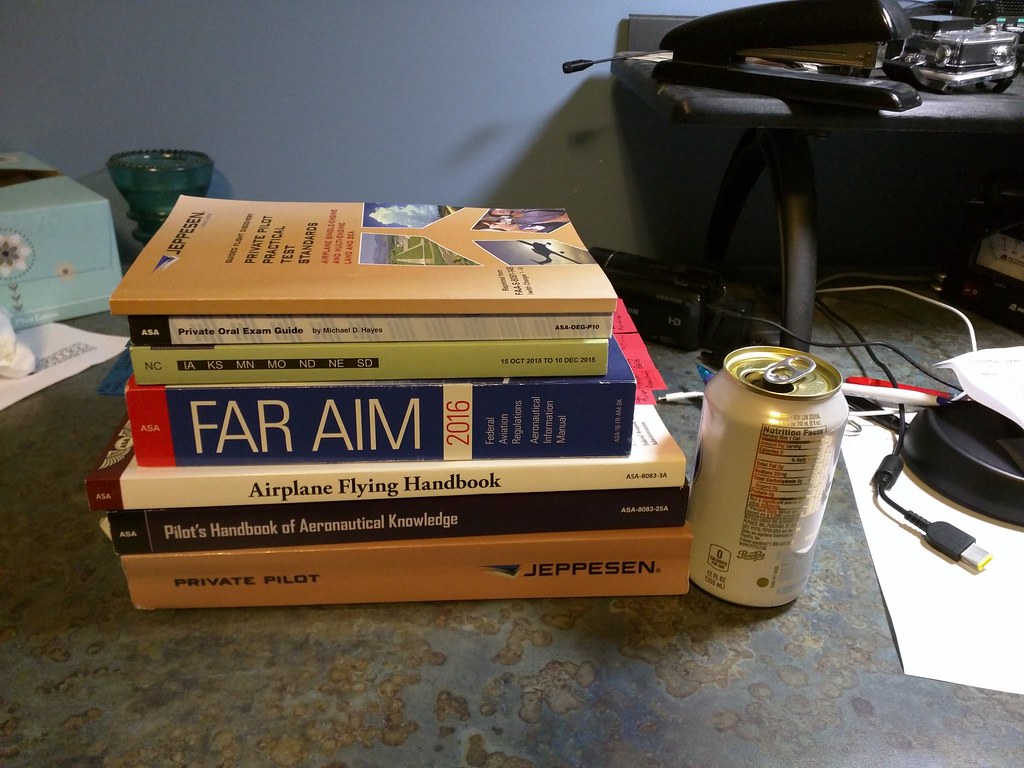
Parked at the Smith Center, KS airport terminal, about to meet some wonderful people For a guy that loves exploring the nooks and crannies of the world that everyone else drives by on their way to a major destination, being a pilot has meant many soul-filling moments. Hard Work I knew becoming a pilot would be a lot of hard work, and thankfully I remembered stories like that when I finally concluded it would be worth it. I found that I had an aptitude for a lot of things that many find difficult about being a pilot: my experience with amateur radio made me a natural at talking to ATC, my fascination with maps and navigation meant I already knew how to read aviation sectional maps before I even started my training and knew how to process that information in the cockpit, my years as a system administrator and programmer trained me with a careful and methodical decision-making process. And, much to the surprise of my flight instructor, I couldn t wait to begin the part of training about navigating using VORs (VHF radio beacons). I guess he, like many student pilots, had struggled with that, but I was fascinated by this pre-GPS technology (which I still routinely use in my flight planning, as a backup in case the GPS constellation or a GPS receiver fails). So that left the reflexes of flight, the art of it, as the parts I had to work on the hardest. The exam with the FAA is not like getting your driver s license. It s a multi-stage and difficult process. So when the FAA Designated Pilot Examiner said congratulations, pilot! and later told my flight instructor that you did a really good job with this one, I felt a true sense of accomplishment. IMG_20151021_193137

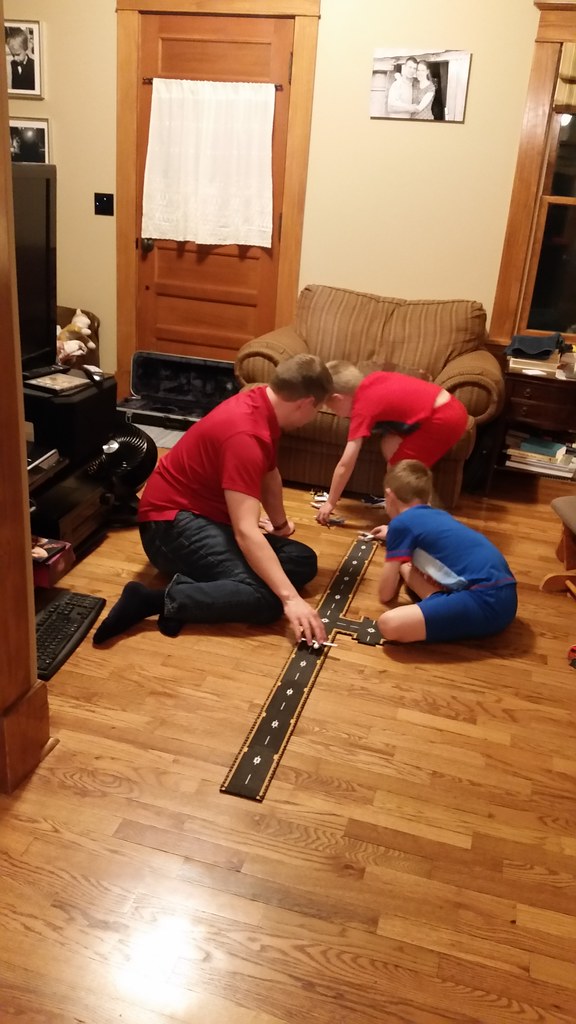
Some of my prep materials Worth It Passengers in a small plane can usually hear all the radio conversations going on. My family has heard me talking to air traffic control, to small and big planes. My 6-year-old son Oliver was playing yesterday, and I saw him pick up a plane and say this: Two-four-niner-golf requesting to land on runway one-seven . Two-four-niner-golf back-taxi on one-seven Two-four-niner-golf ready to takeoff on runway one-seven! That was a surprisingly accurate representation of some communication a pilot might have (right down to the made-up tailnumber with the spelling alphabet!) 20160408_203110

It just got more involved from there! Jacob and Oliver love model train shows. I couldn t take them to one near us, but there was one in Joplin, MO. So the day before Easter, while Laura was working on her Easter sermon, two excited boys and I (frankly also excited) climbed into a plane and flew to Joplin. We had a great time at the train show, discovered a restaurant specializing in various kinds of hot dogs (of course they both wanted to eat there), played in a park, explored the city, and they enjoyed the free cookies at the general aviation terminal building while I traded tips on fun places to fly with other pilots. When it comes right down to it, the smiles of the people I fly with are the most beautiful thing in the air. IMG_20151205_183440

Jacob after his first father-son flight with me

14 April 2016

Michal &#268;iha&#345;: Gammu 1.37.2

Yesterday, Gammu 1.37.1 and Gammu 1.37.2 have been released. As usual it collects bug fixes and minor improvements. Full list of changes in 1.37.1: Full list of changes in 1.37.2: Would you like to see more features in Gammu? You an support further Gammu development at Bountysource salt or by direct donation.

Filed under: English Gammu python-gammu Wammu 0 comments

13 April 2016

Mike Gabriel: IPv6: Broken by Design; Digital Ocean - How are we doing?

Recently, Digital Ocean (which I am a customer of) asked me "how they were doing". Well, yet another survey... Let's ignore this one for now... I thought some days ago. And then yesterday, I added IPv6 support to my main mail server (which runs at Hetzner, Germany). All my hosted/rented/whatever systems report back to this main mailserver. Now that that main mail server finally has its AAAA record and its own IPv6 address, all associated systems try to reach this main mail server via IPv6. Of course. Crippling IPv6 support by adding Port Blocks But, then, I see messages like these in my syslog files on droplets hosted at Digital Ocean:
Apr 13 10:10:59 <do-droplet> postfix/smtp[23469]: connect to mail.<mydomain>[<ipv6-address>]:25: Connection timed out
After some more research [1], I realized that the folks out there at DO really apply some port blockings to IPv6 networks, but not to IPv4 networks. Pardon me? From my DO droplets, I can nmap any port on my mail server (25,80,143,443, 465, 587, etc.) via the IPv4 connection, but not over the IPv6 connection. Wait, not fully true: ports 80 and 443 are not blocked, but the other aforementioned ports are definitely blocked. Is Digital Ocean a professional ISP or a WiFi hotspot provider at my nearest coffee place? (This really makes me scratch my head...). Routing only the first 16 addresses of allocated /64 prefixes The above was the second IPv6 brokeness I learned about DO, recently. An earlier issue with DO's IPv6 support, I encountered while I was deploying an IPv6 capable OpenVPN internet gateway via a droplet hosted at DO. Digital Ocean assigns full IPv6 /64 prefixes to each individual droplet (which is great), but only properly routes the first 16 IP addresses of such a /64 prefix [2]. Urgh? I had to work around this flaw by adding an IPv6-over-IPv4 tunnel and attaching an IPv6 /56 prefix obtained from Hurricane Electrics' tunnel broker service [3] to the OpenVPN server. Thanks, Digital Ocean, for reminding me about giving feedback So, today, I luckily received a reminder mail about DO's yet-another-survey survey. My opportunity!!! Here is the feedback, I gave:
DO service is basically good.
BUT: You as a provider SUCK when it comes to IPv6.
(1) http://pixelschatten.net/blocked-ipv6-ports/
-> SMTP/IMAP traffic blocked over IPv6, but not over IPv4... WTF?). I normally have all my systems report back to my main mail server. I expect this to work as it is the default on all Linux hosts nowadays, and that is: prefer IPv6 over IPv4.
(2) https://digitalocean.uservoice.com/forums/136585-digitalocean/suggestion...
-> Droplets get a full /64 prefix assigned, but only the first 16 addresses (or such) get routed properly. WTF?
Please do your homework on IPv6 and don't cripple your service by offering crippled IPv6 support.
I tell people, DO is great, but their IPv6 support is broken-by-design. Let me know, once this is about to change.
Mike Gabriel (aka sunweaver at debian dot org, Debian Developer)
Apology for the tone of the wording Now reading the feedback given, I realize that my tone has been quite impolite. I am sorry about this. However, the experienced IPv6 issues are indeed annoying. So please excuse me for having expressed my annoyance with such harsh words. And... I am still annoyed about myself paying an ISP for such a crippled IPv6 support. (I need to consider migrating the VMs to another hoster, unless there will be some dynamics observable in the near future). @Digital Ocean: Keep up the good work that you do in the realm of VM hosting. Evolve and grow up in the realm of IPv6 networking. Thank you! light+love
Mike [1] http://pixelschatten.net/blocked-ipv6-ports/
[2] https://digitalocean.uservoice.com/forums/136585-digitalocean/suggestion...
[3] https://tunnelbroker.net/

Matthew Garrett: Skylake's power management under Linux is dreadful and you shouldn't buy one until it's fixed

(Edit to add: this issue is restricted to the mobile SKUs. Desktop parts have very different power management behaviour)

Linux 4.5 seems to have got Intel's Skylake platform (ie, 6th-generation Core CPUs) to the point where graphics work pretty reliably, which is great progress (4.4 tended to lose all my windows every so often, especially over suspend/resume). I'm even running Wayland happily. Unfortunately one of the reasons I have a laptop is that I want to be able to do things like use it on battery, and power consumption's an important part of that. Skylake continues the trend from Haswell of moving to an SoC-type model where clock and power domains are shared between components that were previously entirely independent, and so you can't enter deep power saving states unless multiple components all have the correct power management configuration. On Haswell/Broadwell this manifested in the form of Serial ATA link power management being involved in preventing the package from going into deep power saving states - setting that up correctly resulted in a reduction in full-system power consumption of about 40%[1].

I've now got a Skylake platform with a nice shiny NVMe device, so Serial ATA policy isn't relevant (the platform doesn't even expose a SATA controller). The deepest power saving state I can get into is PC3, despite Skylake supporting PC8 - so I'm probably consuming about 40% more power than I should be. And nobody seems to know what needs to be done to fix this. I've found no public documentation on the power management dependencies on Skylake. Turning on everything in Powertop doesn't improve anything. My battery life is pretty poor and the system is pretty warm.

The best thing about this is the following statement from page 64 of the 6th Generation Intel Processor Datasheet for U-Platforms:

Caution: Long term reliability cannot be assured unless all the Low-Power Idle States are enabled.

which is pretty concerning. Without support for states deeper than PC3, Linux is running in a configuration that Intel imply may trigger premature failure. That's obviously not good. Until this situation is improved, you probably shouldn't buy any Skylake systems if you're planning on running Linux.

[1] These patches never went upstream. Someone reported that they resulted in their SSD throwing errors and I couldn't find anybody with deeper levels of SATA experience who was interested in working on the problem. Intel's AHCI drivers for Windows do the right thing, but I couldn't find anybody at Intel who could get any information from their Windows driver team.

comment count unavailable comments

Jonathan McDowell: Software in the Public Interest contributing members: Check your activity status!

That s a longer title than I d like, but I want to try and catch the attention of anyone who might have missed more directed notifications about this. If you re not an SPI contributing member there s probably nothing to see here Although I decided not to stand for re-election at the Software in the Public Interest (SPI) board elections last July, I haven t stopped my involvement with the organisation. In particular I ve spent some time working on an overhaul of the members website and rolling it out. One of the things this has enabled is implementation of 2009-11-04.jmd.1: Contributing membership expiry, by tracking activity in elections and providing an easy way for a member to indicate they consider themselves active even if they haven t voted. The plan is that this will run at some point after the completion of every board election. A first pass of cleanups was completed nearly a month ago, contacting all contributing members who d never been seen to vote and asking them to update their status if they were still active. A second round, of people who didn t vote in the last board election (in 2014), is currently under way. Affected members will have been emailed directly and there was a mail to spi-announce, but I m aware people often overlook these things or filter mail off somewhere that doesn t get read often. If you are an SPI Contributing member who considers themselves an active member I strongly recommend you login to the SPI Members Website and check the Last active date displayed is after 2014-07-14 (i.e. post the start of the last board election). If it s not, click on the Update link beside the date. The updated date will be shown once you ve done so. Why does pruning inactive members matter? The 2015 X.Org election results provide at least one indication of why ensuring you have an engaged membership is important - they failed to make a by-laws change that a vast majority of votes were in favour of, due to failing to make quorum. (If you re an X.org member, go vote!)

12 April 2016

Reproducible builds folks: Reproducible builds: week 48 in Stretch cycle

What happened in the reproducible builds effort between March 20th and March 26th: Toolchain fixes Daniel Kahn Gillmor worked on removing build path from build symbols submitting a patch adding -fdebug-prefix-map to clang to match GCC, another patch against gcc-5 to backport the removal of -fdebug-prefix-map from DW_AT_producer, and finally by proposing the addition of a normalizedebugpath to the reproducible feature set of dpkg-buildflags that would use -fdebug-prefix-map to replace the current directory with . using -fdebug-prefix-map. Sergey Poznyakoff merged the --clamp-mtime option so that it will be featured in the next Tar release. This option is likely to be used by dpkg-deb to implement deterministic mtimes for packaged files. Packages fixed The following packages have become reproducible due to changes in their build dependencies: augeas, gmtkbabel, ktikz, octave-control, octave-general, octave-image, octave-ltfat, octave-miscellaneous, octave-mpi, octave-nurbs, octave-octcdf, octave-sockets, octave-strings, openlayers, python-structlog, signond. The following packages became reproducible after getting fixed: Some uploads fixed some reproducibility issues, but not all of them: Patches submitted which have not made their way to the archive yet: tests.reproducible-builds.org i386 build nodes have been setup by converting 2 of the 4 amd64 nodes to i386. (h01ger) Package reviews 92 reviews have been removed, 66 added and 31 updated in the previous week. New issues: timestamps_generated_by_xbean_spring, timestamps_generated_by_mangosdk_spiprocessor. Chris Lamb filed 7 FTBFS bugs. Misc. On March 20th, Chris Lamb gave a talk at FOSSASIA 2016 in Singapore. The very same day, but a few timezones apart, h01ger did a presentation at LibrePlanet 2016 in Cambridge, Massachusetts. Seven GSoC/Outreachy applications were made by potential interns to work on various aspects of the reproducible builds effort. On top of interacting with several applicants, prospective mentors gathered to review the applications.

Petter Reinholdtsen: A French paperback edition of the book Free Culture by Lawrence Lessig is now available

I'm happy to report that the French paperback edition of my project to translate the Free Culture book by Lawrence Lessig is now available for sale on Lulu.com. Once I have formally verified my proof reading copy, which should be in the mail, the paperback edition should be available in book stores like Amazon and Barnes & Noble too. This French edition, Culture Libre, is the work of the dblatex developer Beno t Guillon, who created the PO file from the initial translation available from the Wikilivres wiki pages and completed and corrected the translation to match the original docbook edition my project is using, as well as coordinated the proof reading of the final result. I believe the end result look great, but I am biased and do not read French. In addition to the paperback edition, the book is available in PDF, EPUB and Mobi format from the github project page linked to above. When enabling book store distribution on Lulu.com, I had to nearly triple the price to allow the book stores some profit. I also had to accept that I will get some revenue when a book is sold via Lulu.com. But because of the non-commercial clause in the book license (CC-BY-NC), this might be a problem. To bypass the problem I discussed how to handle the revenue with the author, and we agreed that the revenue for these editions go to the Creative Commons non-profit Corporation who handle donations to the Creative Commons project. So far they have earned around USD 70 on sales of the English and Norwegian Bokm l editions, according to Lulu.com. They will get the revenue for the French edition too. Their revenue is higher if you buy the book directly from Lulu.com instead of via a book store, so I recommend you buy directly from Lulu.com. Perhaps you would like to get the book published in your language? The translation is done using a web based translator service, so the technical bar to enter is fairly low. Get in touch if you would like to make this happen.

10 April 2016

Vincent Bernat: Testing network software with pytest and Linux namespaces

Started in 2008, lldpd is an implementation of IEEE 802.1AB-2005 (aka LLDP) written in C. While it contains some unit tests, like many other network-related software at the time, the coverage of those is pretty poor: they are hard to write because the code is written in an imperative style and tighly coupled with the system. It would require extensive mocking1. While a rewrite (complete or iterative) would help to make the code more test-friendly, it would be quite an effort and it will likely introduce operational bugs along the way. To get better test coverage, the major features of lldpd are now verified through integration tests. Those tests leverage Linux network namespaces to setup a lightweight and isolated environment for each test. They run through pytest, a powerful testing tool.

pytest in a nutshell pytest is a Python testing tool whose primary use is to write tests for Python applications but is versatile enough for other creative usages. It is bundled with three killer features:
  • you can directly use the assert keyword,
  • you can inject fixtures in any test function, and
  • you can parametrize tests.

Assertions With unittest, the unit testing framework included with Python, and many similar frameworks, unit tests have to be encapsulated into a class and use the provided assertion methods. For example:
class testArithmetics(unittest.TestCase):
    def test_addition(self):
        self.assertEqual(1 + 3, 4)
The equivalent with pytest is simpler and more readable:
def test_addition():
    assert 1 + 3 == 4
pytest will analyze the AST and display useful error messages in case of failure. For further information, see Benjamin Peterson s article.

Fixtures A fixture is the set of actions performed in order to prepare the system to run some tests. With classic frameworks, you can only define one fixture for a set of tests:
class testInVM(unittest.TestCase):
    def setUp(self):
        self.vm = VM('Test-VM')
        self.vm.start()
        self.ssh = SSHClient()
        self.ssh.connect(self.vm.public_ip)
    def tearDown(self):
        self.ssh.close()
        self.vm.destroy()
    def test_hello(self):
        stdin, stdout, stderr = self.ssh.exec_command("echo hello")
        stdin.close()
        self.assertEqual(stderr.read(), b"")
        self.assertEqual(stdout.read(), b"hello\n")
In the example above, we want to test various commands on a remote VM. The fixture launches a new VM and configure an SSH connection. However, if the SSH connection cannot be established, the fixture will fail and the tearDown() method won t be invoked. The VM will be left running. Instead, with pytest, we could do this:
@pytest.yield_fixture
def vm():
    r = VM('Test-VM')
    r.start()
    yield r
    r.destroy()
@pytest.yield_fixture
def ssh(vm):
    ssh = SSHClient()
    ssh.connect(vm.public_ip)
    yield ssh
    ssh.close()
def test_hello(ssh):
    stdin, stdout, stderr = ssh.exec_command("echo hello")
    stdin.close()
    stderr.read() == b""
    stdout.read() == b"hello\n"
The first fixture will provide a freshly booted VM. The second one will setup an SSH connection to the VM provided as an argument. Fixtures are used through dependency injection: just give their names in the signature of the test functions and fixtures that need them. Each fixture only handle the lifetime of one entity. Whatever a dependent test function or fixture succeeds or fails, the VM will always be finally destroyed.

Parameters If you want to run the same test several times with a varying parameter, you can dynamically create test functions or use one test function with a loop. With pytest, you can parametrize test functions and fixtures:
@pytest.mark.parametrize("n1, n2, expected", [
    (1, 3, 4),
    (8, 20, 28),
    (-4, 0, -4)])
def test_addition(n1, n2, expected):
    assert n1 + n2 == expected

Testing lldpd The general plan for to test a feature in lldpd is the following:
  1. Setup two namespaces.
  2. Create a virtual link between them.
  3. Spawn a lldpd process in each namespace.
  4. Test the feature in one namespace.
  5. Check with lldpcli we get the expected result in the other.
Here is a typical test using the most interesting features of pytest:
@pytest.mark.skipif('LLDP-MED' not in pytest.config.lldpd.features,
                    reason="LLDP-MED not supported")
@pytest.mark.parametrize("classe, expected", [
    (1, "Generic Endpoint (Class I)"),
    (2, "Media Endpoint (Class II)"),
    (3, "Communication Device Endpoint (Class III)"),
    (4, "Network Connectivity Device")])
def test_med_devicetype(lldpd, lldpcli, namespaces, links,
                        classe, expected):
    links(namespaces(1), namespaces(2))
    with namespaces(1):
        lldpd("-r")
    with namespaces(2):
        lldpd("-M", str(classe))
    with namespaces(1):
        out = lldpcli("-f", "keyvalue", "show", "neighbors", "details")
        assert out['lldp.eth0.lldp-med.device-type'] == expected
First, the test will be executed only if lldpd was compiled with LLDP-MED support. Second, the test is parametrized. We will execute four distinct tests, one for each role that lldpd should be able to take as an LLDP-MED-enabled endpoint. The signature of the test has four parameters that are not covered by the parametrize() decorator: lldpd, lldpcli, namespaces and links. They are fixtures. A lot of magic happen in those to keep the actual tests short:
  • lldpd is a factory to spawn an instance of lldpd. When called, it will setup the current namespace (setting up the chroot, creating the user and group for privilege separation, replacing some files to be distribution-agnostic, ), then call lldpd with the additional parameters provided. The output is recorded and added to the test report in case of failure. The module also contains the creation of the pytest.config.lldpd object that is used to record the features supported by lldpd and skip non-matching tests. You can read fixtures/programs.py for more details.
  • lldpcli is also a factory, but it spawns instances of lldpcli, the client to query lldpd. Moreover, it will parse the output in a dictionary to reduce boilerplate.
  • namespaces is one of the most interesting pieces. It is a factory for Linux namespaces. It will spawn a new namespace or refer to an existing one. It is possible to switch from one namespace to another (with with) as they are contexts. Behind the scene, the factory maintains the appropriate file descriptors for each namespace and switch to them with setns(). Once the test is done, everything is wipped out as the file descriptors are garbage collected. You can read fixtures/namespaces.py for more details. It is quite reusable in other projects2.
  • links contains helpers to handle network interfaces: creation of virtual ethernet link between namespaces, creation of bridges, bonds and VLAN, etc. It relies on the pyroute2 module. You can read fixtures/network.py for more details.
You can see an example of a test run on the Travis build for 0.9.2. Since each test is correctly isolated, it s possible to run parallel tests with pytest -n 10 --boxed. To catch even more bugs, both the address sanitizer (ASAN) and the undefined behavior sanitizer (UBSAN) are enabled. In case of a problem, notably a memory leak, the faulty program will exit with a non-zero exit code and the associated test will fail.

  1. A project like cwrap would definitely help. However, it lacks support for Netlink and raw sockets that are essential in lldpd operations.
  2. There are three main limitations in the use of namespaces with this fixture. First, when creating a user namespace, only root is mapped to the current user. With lldpd, we have two users (root and _lldpd). Therefore, the tests have to run as root. The second limitation is with the PID namespace. It s not possible for a process to switch from one PID namespace to another. When you call setns() on a PID namespace, only children of the current process will be in the new PID namespace. The PID namespace is convenient to ensure everyone gets killed once the tests are terminated but you must keep in mind that /proc must be mounted in children only. The third limitation is that, for some namespaces (PID and user), all threads of a process must be part of the same namespace. Therefore, don t use threads in tests. Use multiprocessing module instead.

Russ Allbery: Largish haul

Let's see if I can scrounge through all of my now-organized directories of ebooks and figure out what I haven't recorded here yet. At least the paper books make that relatively easy, since I don't shelve them until I post them. (Yeah, yeah, I should actually make a database.) Hugh Aldersey-Williams Periodic Tales (nonfiction)
Sandra Ulbrich Almazan SF Women A-Z (nonfiction)
Radley Balko Rise of the Warrior Cop (nonfiction)
Peter V. Brett The Warded Man (sff)
Lois McMaster Bujold Gentleman Jole and the Red Queen (sff)
Fred Clark The Anti-Christ Handbook Vol. 2 (nonfiction)
Dave Duncan West of January (sff)
Karl Fogel Producing Open Source Software (nonfiction)
Philip Gourevitch We Wish to Inform You That Tomorrow We Will Be Killed With Our Families (nonfiction)
Andrew Groen Empires of EVE (nonfiction)
John Harris @ Play (nonfiction)
David Hellman & Tevis Thompson Second Quest (graphic novel)
M.C.A. Hogarth Earthrise (sff)
S.L. Huang An Examination of Collegial Dynamics... (sff)
S.L. Huang & Kurt Hunt Up and Coming (sff anthology)
Kameron Hurley Infidel (sff)
Kevin Jackson-Mead & J. Robinson Wheeler IF Theory Reader (nonfiction)
Rosemary Kirstein The Lost Steersman (sff)
Rosemary Kirstein The Language of Power (sff)
Merritt Kopas Videogames for Humans (nonfiction)
Alisa Krasnostein & Alexandra Pierce (ed.) Letters to Tiptree (nonfiction)
Mathew Kumar Exp. Negatives (nonfiction)
Ken Liu The Grace of Kings (sff)
Susan MacGregor The Tattooed Witch (sff)
Helen Marshall Gifts for the One Who Comes After (sff collection)
Jack McDevitt Coming Home (sff)
Seanan McGuire A Red-Rose Chain (sff)
Seanan McGuire Velveteen vs. The Multiverse (sff)
Seanan McGuire The Winter Long (sff)
Marc Miller Agent of the Imperium (sff)
Randal Munroe Thing Explainer (graphic nonfiction)
Marguerite Reed Archangel (sff)
J.K. Rowling Harry Potter: The Complete Collection (sff)
K.J. Russell Tides of Possibility (sff anthology)
Robert J. Sawyer Starplex (sff)
Bruce Schneier Secrets & Lies (nonfiction)
Mike Selinker (ed.) The Kobold Game to Board Game Design (nonfiction)
Douglas Smith Chimerascope (sff collection)
Jonathan Strahan Fearsome Journeys (sff anthology)
Nick Suttner Shadow of the Colossus (nonfiction)
Aaron Swartz The Boy Who Could Change the World (essays)
Caitlin Sweet The Pattern Scars (sff)
John Szczepaniak The Untold History of Japanese Game Developers I (nonfiction)
John Szczepaniak The Untold History of Japanese Game Developers II (nonfiction)
Jeffrey Toobin The Run of His Life (nonfiction)
Hayden Trenholm Blood and Water (sff anthology)
Coen Teulings & Richard Baldwin (ed.) Secular Stagnation (nonfiction)
Ursula Vernon Book of the Wombat 2015 (graphic nonfiction)
Ursula Vernon Digger (graphic novel) Phew, that was a ton of stuff. A bunch of these were from two large StoryBundle bundles, which is a great source of cheap DRM-free ebooks, although still rather hit and miss. There's a lot of just fairly random stuff that's been accumulating for a while, even though I've not had a chance to read very much. Vacation upcoming, which will be a nice time to catch up on reading.

8 April 2016

Colin Watson: No more Hash Sum Mismatch errors

The Debian repository format was designed a long time ago. The oldest versions of it were produced with the help of tools such as dpkg-scanpackages and consumed by dselect access methods such as dpkg-ftp. The access methods just fetched a Packages file (perhaps compressed) and used it as an index of which packages were available; each package had an MD5 checksum to defend against transport errors, but being from a more innocent age there was no repository signing or other protection against man-in-the-middle attacks. An important and intentional feature of the early format was that, apart from the top-level Packages file, all other files were static in the sense that, once published, their content would never change without also changing the file name. This means that repositories can be efficiently copied around using rsync without having to tell it to re-checksum all files, and it avoids network races when fetching updates: the repository you re updating from might change in the middle of your update, but as long as the repository maintenance software keeps superseded packages around for a suitable grace period, you ll still be able to fetch them. The repository format evolved rather organically over time as different needs arose, by what one might call distributed consensus among the maintainers of the various client tools that consumed it. Of course all sorts of fields were added to the index files themselves, which have an extensible format so that this kind of thing is usually easy to do. At some point a Sources index for source packages was added, which worked pretty much the same way as Packages except for having a different set of fields. But by far the most significant change to the repository structure was the package pools project. The original repository layout put the packages themselves under the dists/ tree along with the index files. The dists/ tree is organised by suite (modern examples of which would be stable , stable-updates , testing , unstable , xenial , xenial-updates , and so on). This meant that making a release of Debian tended to involve copying lots of data around, and implementing the testing suite would have been very costly. Package pools solved this problem by moving individual package files out of dists/ and into a new pool/ tree, allowing those files to be shared between multiple suites with only a negligible cost in disk space and mirror bandwidth. From a database design perspective this is obviously much more sensible. As part of this project, the original Debian dinstall repository maintenance scripts were replaced by da-katie or dak , which among other things used a new apt-ftparchive program to build the index files; this replaced dpkg-scanpackages and dpkg-scansources, and included its own database cache which made a big difference to performance at the scale of a distribution. A few months after the initial implementation of package pools, Release files were added. These formed a sort of meta-index for each suite, telling APT which index files were available (main/binary-i386/Packages, non-free/source/Sources, and so on) and what their checksums were. Detached signatures were added alongside that (Release.gpg) so that it was now possible to fetch packages securely given a public key for the repository, and client-side verification support for this eventually made its way into Debian and Ubuntu. The repository structure stayed more or less like this for several years. At some point along the way, those of us by now involved in repository maintenance realised that an important property had been lost. I mentioned earlier that the original format allowed race-free updates, but this was no longer true with the introduction of the Release file. A client now had to fetch Release and then fetch whichever other index files such as Packages they wanted, typically in separate HTTP transactions. If a client was unlucky, these transactions would fall on either side of a mirror update and they d get a Hash Sum Mismatch error from APT. Worse, if a mirror was unlucky and also didn t go to special lengths to verify index integrity (most don t), its own updates could span an update of its upstream mirror and then all its clients would see mismatches until the next mirror update. This was compounded by using detached signatures, so Release and Release.gpg were fetched separately and could be out of sync. Fixing this has been a long road (the first time I remember talking about this was in late 2007!), and we ve had to take care to maintain client/server compatibility along the way. The first step was to add inline-signed versions of the Release file, called InRelease, so that there would no longer be a race between fetching Release and fetching its signature. APT has had this for a while, Debian s repository supports it as of stretch, and we finally implemented it for Ubuntu six months ago. Dealing with the other index files is more complicated, though; it isn t sensible to inline them, as clients usually only need to fetch a small fraction of all the indexes available for a given suite. The solution we ve ended up with, thanks to Michael Vogt s work implementing it in APT, is called by-hash and should be familiar in concept to people who ve used git: with the exception of the top-level InRelease file, index files for suites that support the by-hash mechanism may now be fetched using a URL based on one of their hashes listed in InRelease. This means that clients can now operate like this: This is now enabled by default in Ubuntu. It s only there as of xenial (16.04), since earlier versions of Ubuntu don t have the necessary support in APT. With this, hash mismatches on updates should be a thing of the past. There will still be some people who won t yet benefit from this. debmirror doesn t support by-hash yet; apt-cacher-ng only supports it as of xenial, although there s an easy configuration workaround. Full archive mirrors must make sure that they put new by-hash files in place before new InRelease files (I just fixed our recommended two-stage sync script to do this; ubumirror still needs some work; Debian s ftpsync is almost correct but needs a tweak for its handling of translation files, which I ve sent to its maintainers). Other mirrors and proxies that have specific handling of the repository format may need similar changes. Please let me know if you see strange things happening as a result of this change. It s useful to check the output of apt -o Debug::Acquire::http=true update to see exactly what requests are being issued.

Next.

Previous.