Search Results: "sf"

7 October 2008

Alexander Reichle-Schmehl: What you can do for Lenny (Update #2)

You probably noticed by now, that Debian GNU/Linux 5.0 aka Lenny hasn't been released in September. Well, that's a shame, but very easy to explain: Too many release critical bugs. Well, it's pretty hard to estimate, how fast RC bugs will be fixed, and apparently our release team was a bit too optimistic :( The big question is: What can you do, to help release Lenny at least in this quarter? That's pretty easy: Fix rc-bugs, take care, that the fixed packages are migrated to Lenny, do upgrade tests, document problems in the release-notes. Pretty simple, isn't it? For users Even as a simple user (aren't we all just users?) you may help getting Lenny released. Some things you can do: See? Even as a simple user without deeper technical knowledge you can help us getting Lenny in shape to be released. If you have technical knowledge: Very good! You might want to read the next section, too, and see what applies to you, there :) For maintainers It basically boils down to two things: If your packages have RC bugs open in Lenny fix them and take care, that the fix will propagate to Lenny. If your packages don't have RC bugs open, fix someone else's RC bug. Surely you don't think, the release team will fix the remaining rc bugs, do you? And surely you understand, that your shiny rc bug free packages are kind of useless, if they aren't released? To search for bugs to be fixed, take a look at the unofficial rc bugs thingy. The URL lists RC bugs open in both Sid and Lenny. Obviously they should be fixed ASAP. If no one takes care about these packages, they might be removed from Lenny (if possible). Again: Try to reproduce the bug, try fix it, upload an NMU (or send your patch to the bug report and search for an sponsor). You'll notice, that some of these bugs already have a patch. In that case, your job would be to test the patch, report that to the bug report and offer to sponsor an NMU. Another interesting list is the list of rc bugs open only in Lenny. These bugs have been fixed, but the fix hasn't propagated to Lenny, yet. Normally, the release team will grant freeze exceptions for these packages if possible. However, if the changes to the fixed version are quite grave or the package in Sid depends on a newer package than in Lenny that's not possible. In these cases look out for packages marked as need tpu upload or similar. Oh, and if you could refrain from upload new upstream versions of packages to Sid, you would make all our lives easier. Some reasons: And of course you should spend your time fixing rc bugs anyway ;) Update: Rhonda pointed out, that running rc-alert -d TU -o and will limit the output to bugs open in both Sid and Lenny, which is the more interesting list of bugs.

David Welton: Making Applets Suck Less

With all the effort being poured into Javascript lately, it's pretty evident that that's the way forward. However, there are still some neat things you can do with applets that you can't do with Javascript. For instance, I use the microemulator applet to let people play with a simulated phone on the Hecl web site. Unfortunately, the user experience hasn't that good. While playing around with the code for that site, Firefox crashed a number of times, and I've heard other browsers have trouble as well. No fun. So it is with some satisfaction that I found this: https://jdk6.dev.java.net/plugin2/ It's an updated Java plugin that seems to work much, much better than the old one. Unfortunately it doesn't appear as if it will be in the new Ubuntu, as it was released recently, but I'm quite happy to have something a bit more stable to develop with. You can download that version of the Java SDK or JRE here: http://download.java.net/jdk6/ It's good to see this effort, even if it may be a bit late.

Russell Coker: The Security Benefits of Being Unimportant

A recent news item is the “hacking” of the Yahoo mailbox used by Sarah Palin (the Republican VP candidate) [1]. It seems most likely that it was a simple social-engineering attack on the password reset process of Yahoo (although we are unlikely to learn the details unless the case comes to trial). The email address in question had been used for some time to avoid government data-retention legislation but had only been “hacked” after she was listed as the VP candidate. The reason of course is that most people don’t care much about who is the governor of one of the least populous US states. Remote attack on a mailbox (which is what we presume happened) is only one possible problem. Another of course is that of the integrity of the staff at the ISP. While I know nothing about what happens inside Yahoo, I have observed instances of unethical actions by employees at some ISPs where I have previously worked, I have no doubt that such people would have read the email of a VP candidate without any thought if they had sufficient access to do so. If an ISP stores unencrypted passwords then the way things usually work is that the helpdesk people are granted read access to the password data so that they can login to customer accounts to reproduce problems - this is a benefit for the customers in terms of convenience. But that also means that they can read the email of any customer at any time. I believe that my account on Gmail (the only webmail service I use) is relatively safe. I’m sure that there are a huge number of people who are more important than me who use Gmail. But if I was ever considered to have a reasonable chance of becoming Prime Minister then I would avoid using a Gmail account as a precaution. There is a rumoured Chinese proverb and curse in three parts:
May you live in interesting times
May you come to the attention of those in authority
May you find what you are looking for [2]
In terms of your email, everyone who has root access to the machine which stores it (which includes employees of the companies that provide warranty service to all the hardware in the server room) and every help-desk person who can login to your account to diagnose problems is in a position of authority. Being merely one of thousands of customers (or millions of customers for a larger service) is a measure of safety. As for the “interesting times” issue, the Republican party is trying to keep the issue focussed on the wars instead of on the economy. The problem with basing a campaign on wars is that many people will come to the conclusion that the election is not about people merely losing some money, but people dying. This could be sufficient to convince people that the right thing to do is not to abide by the usual standards for ethical behavior when dealing with private data, but to instead try and find something that can be used to affect the result of an election. Mail that is not encrypted (most mail isn’t) and which is not transferred with TLS (so few mail servers support TLS that it hardly seems worth the effort of implementing it) can be intercepted at many locations (the sending system and routers are two options). But the receiving system is the easiest location. A big advantage for a hostile party in getting mail from the receiving system is that it can be polled quickly (an external attacker could use an open wireless access-point and move on long before anyone could catch them) and that if it is polled from inside the company that runs the mail server there is almost never any useful audit trail (if a sysadmin logs in to a server 10 times a day for real work reasons, and 11th login to copy some files will not be noticed). One of the problems with leaks of secret data is that it is often impossible to know whether they have happened. While there is public evidence of one attack on Sarah Palin’s Yahoo account, there is no evidence that it was the first attack. If someone had obtained the password (through an insider in Yahoo, or through a compromised client machine) then they could have been copying all the mail for months without being noticed. It seems to me that your choice of ISP needs to be partly determined by how many hostile parties will want to access your mail and what resources they may be prepared to devote to it. For a significant political candidate using a government email address seems like the best option, with the alternative being to use a server owned and run by the political party in question, if you can have the staff fired for leaking your mail then your email will be a lot safer!

6 October 2008

Chris Lawrence: Choosing the wrong denominator

Matthew Yglesias demonstrates innumeracy in action:
We got an interesting experiment this weekend as Bill Maher’s anti-religious screed Religulous and David Zucker’s right-wing satire An American Carol both opened. The two films were about tied in terms of total revenue but Carol was on three times as many screens, so basically Religulous was far more successful. I think this mostly reflects something I wrote about a couple of years ago — the moviegoing audience is very demographically similar to the Democratic Party voting audience. It’s disproportionately young, disproportionately childless, and tilted toward residents of big cities and away from residents of rural communities. Conversely, the audience for television news is demographically very conservative (older, white, and a bit more prosperous than average) which is one major reason TV news coverage tilts right. The big screen audience for what looks like a witless screed against God is just a lot bigger than the big screen audience for what looks like a witless screed against Michael Moore.
Actually, since total revenue for both movies was about the same, it would appear that the “big screen audience” for crappy polemical Bill Maher movies is about the same as the “big screen audience” for crappy polemical David Zucker movies. Further, since I’d guess Carol probably played in theaters with lower ticket prices on average than Religulous, the former probably did a little better in terms of the total audience. Yglesias also makes the rather faulty assumption that the per-screen average revenue would remain flat as screens increased. This result only obtains if moviegoers don’t select theaters based on what movies are playing at them or if screens are very distant from each other geographically; while surely there are some people who just go to the movies to see something without deciding beforehand which movie to see, I doubt there are enough of these people to ensure Maher’s movie would gain a substantially larger audience, except in the relatively uncommon cases where the film just isn’t on at any theater in a metropolitan area and there is a substantial number of people who want to see it. Besides, all the discerning moviegoers were at Nick and Norah’s Infinite Playlist this weekend anyway.

5 October 2008

Andrew McMillan: Apology Accepted

It is nice to see someone apologising for their planned failure to consider Linux users. It's ridiculous that they even have to. It seems to me that these people have spent way too much effort on making the logo and menus scroll in from the left and right of the screen, and not enought effort on the actual functionality of their website. I fail to understand what benefit they have gained from using the Pizza UI for their logo & menus (yes, really) rather than using simple links - or CSS-based menus, if they needed fancy. The page layout doesn't actually need anything more than simple text links. The logo (thankfully) does nothing after it's page-load scroll. For extra 'fail' marks they substitute graphics when I initially arrive with Javascript disabled (and wearing my tinfoil hat) but the graphics give me the appearance of a menu without actually performing a useful function. The user-interface situation gets worse later, when I am taken through five successive screens to upload and classify some new media. It seems that in order to bore people who are foolishly trying to upload their home movies over "poorband" they attempt to display a progress bar. A better approach would be to ask me all of the questions about the media I am uploading on one single page and let me get on with something useful. This might be news, but it seems that such an interface could be done in plain HTML, and wouldn't actually require me to enable javascript for a site which is riddled with cross-site scripting flaws. Since it's the school holidays at the moment we took advantage of Te Papa's excellent institution of "Late Night Thursday" last week and visited the other end of the website in person. My disappointment in the website was then entirely eclipsed by my disappointment in the real-life part of the exhibit. The "walk on the map and see photos of the area" component was decidedly clunky, with no clear feedback between stepping on a tile and media appearing on the wall In fact it seems most tiles don't actually do anything, and there are only a few small screens in the walls to display the images. The "postcards blowing in the wind" gimmick amused the kids for about 20 seconds, tops. The 'wall' was quite a lot more successful, amusing me and the kids for nearly half an hour, though we're unlikely to go back next time we're there. There were plenty of annoyances also, in particular that it doesn't appear to use the full resolution of uploaded photos, the interface is slow and it is difficult to see what you are doing at times. It's good that they've started practising their apologies, firstly targeting the small (but geeky :-) segment of New Zealanders who are Linux users trying to help them out by providing them with free content. Now I am looking forward to their further apologies to larger groups of justifiably annoyed people, culminating with the ultimate one, where they apologise to all of the taxpayers of New Zealand who funded this incredible waste of money. I can imagine that something interesting could be done with a lot of media of New Zealand and now that Te Papa has started to amass a collection in this way, perhaps they will.

4 October 2008

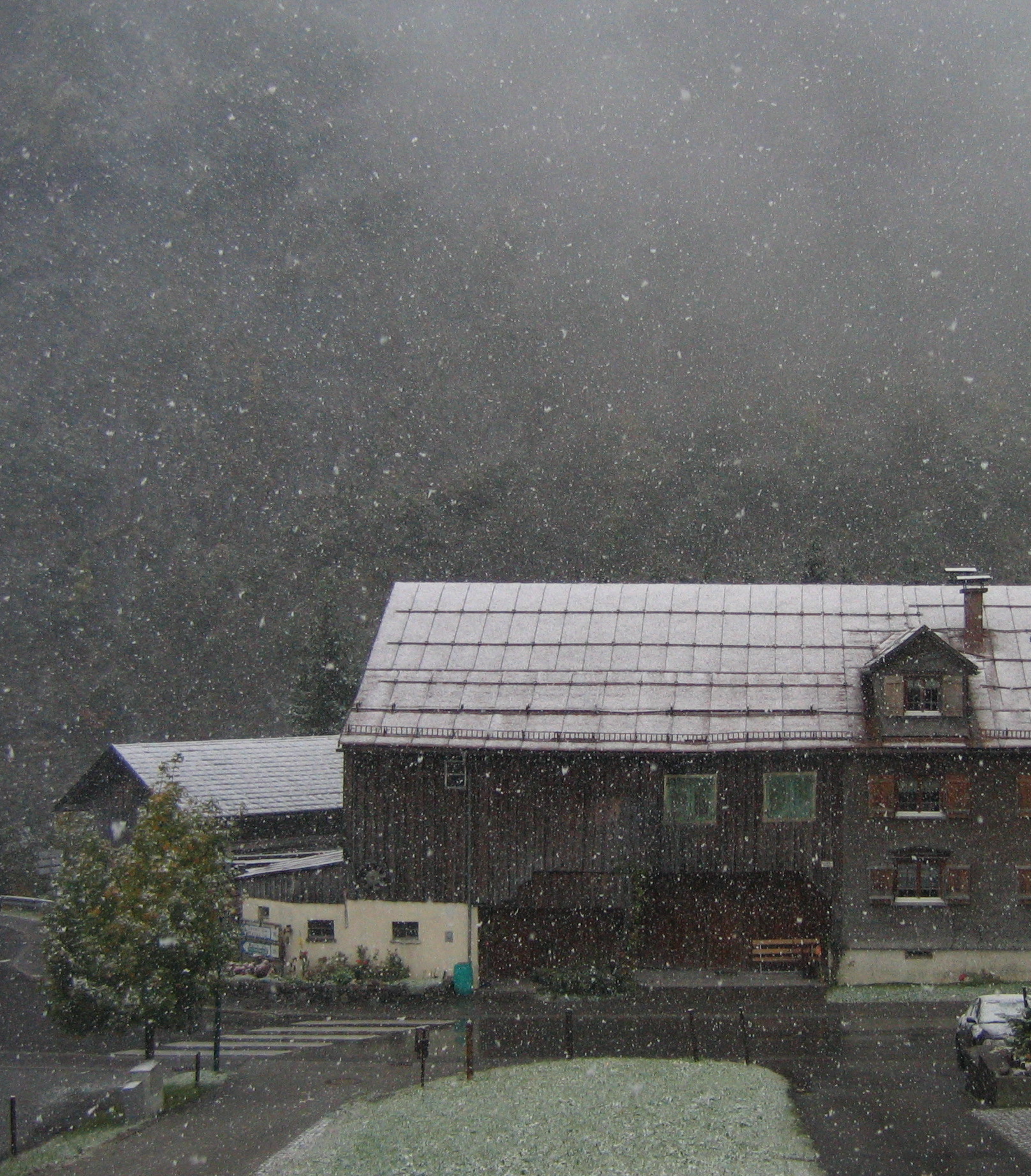
Andreas Metzler: winter is coming ...

... early. yesterday:
Kanisfluh on 2008-10-03 today:
Looking out of the window 2008-10-04

2 October 2008

Michal Čihař: Why gpg-agent does not work?

Summary: If programs would have useful man pages or error messages, man would not have to look into source code. I just set up Debian sid chroot on my computer and have to sign something inside this chroot (dpgk-buildpackage). Okay, I want it to use gpg-agent in my host system, that should not be hard. Looking at gpg man page, GPGAGENTINFO variable is used to forward information about agent socket, PID and protocol version, so I set this variable according to host system, but it still does not work, giving nothing saying error that agent is not working. So let's debug this beast - strace reveals, that communication with agent works, but it replies "113 Server Resource Problem". Hmm, still not much useful information, but let's google for this problem. Fortunately Google reveals related Seahorse code, where man can find, that not set DISPLAY variable is causing this issue. Could not the error be more friendly, so that it tells me directly what is wrong?

1 October 2008

Axel Beckert: NSLU2 in a Tux Case

It started harmless when Thomas asked on Linux User Group Switzerland mailing list if someone knows a tux-shaped alarm clock. But the topic of that thread quickly moved to two other things in tux shape: the Tux Droid, a device similar to the Nabaztag, but needs a Linux host with USB, and ACME Systems’ Tux-Server, a ETRAX CRIS based Foxboard inside a tux-shaped case. We found out that Telion, the Swiss importer for Foxboards, also imports ACME Systems’ Tux Case — although the Tux Case is not mentioned on their website. Even better: They had a few old Tux Cases in stock which don’t fit anymore on current Foxboards since the position of the power socket changed. (So only one hole in the case was missing.) And they wanted to get rid of them quite fast: They offered us the Tux Cases for 10 CHF (6€) each instead of 28 CHF each (17€) if we buy all of them. Of course we couldn’t reject this offer and bought all five remaining cases. Another part of the thread was about performance. Although ETRAX CRIS is used by its inventor AXIS in many of its products (they’re famous for the Linux based web-cams) many were not sure if the board’s performance would be sufficient for their ideas. Another disadvantage of the ETRAX CRIS architecture is that no mainstream Linux distribution supports it. Another point was the Foxboard’s price (169€, ca. 268 CHF). Bones just mentioned that an NSLU2 costs only about 100 CHF (60€). Probably on IRC someone (probably Bones, too) wondered if it’s possible to fit a NSLU2 into such a quite inexpensive Tux Case. We took Wikipedia’s picture of the NSLU2 board, compared the size of the USB ports on that picture, compared them with real-life USB ports and found out the size of the board that way. And when I got my Tux-Case I noticed that the NSLU2 board really could fit into the Tux-Case. Since I’m already building a bigger NAS-like home server, I have no use for another, much slower NAS. But since I more or less gave up the also ARM-based Thecus N4100, another ARM-based machine in my hardware collection wouldn’t be bad. So it didn’t took long and the idea was born to build the NSLU2 board into a Tux-Case and let the website tux.ethz.ch run on it. (I inherited its administration from Beat and it’s currently just a virtual host on one of our webservers.) Then it would be a server named Tux, serving Tuxes, looking like a Tux and running Tux’ operating system Linux. :-) I ordered an NSLU2 at Brack for 117.60 CHF (ca. 70€). Played around with the original firmware for a moment, but it’s horrible from a security point of view: You can’t even change the admin password (default: “admin”) if no USB harddisk is attached. And no, a USB stick doesn’t suffice. So I didn’t wait long and tried to install Debian’s “armel” (ARM, Little Endian) port on it. But the NSLU2 refused the “new firmware” with the error message “Upgrade: no enough free space.”. While this is not in the Debian specific NSLU2 FAQ, it is mentioned in the general troubleshooting FAQ. As described in there, first upgrading to the most recent firmware version and then uploading the Debian installer worked fine. After I had successfully installed Debian Lenny on a pqi 4 GB USB sticked into the NSLU2 and verified that everything is working fine, I opened the NSLU2 case and checked if it really would fit into a Tux Case. It does, but very, very close. You’ll have to drill some holes and the ethernet socket will stick out Tux’s shoulder, but everything else should fit perfectly after a few mounting parts inside the Tux Case have been removed. As a proof of concept I laid the NSLU2 board on the Tux Case’s back:
Pictures taken with my Nokia E51
So later the LEDs will be in Tux’ one shoulder while the network socket will be in his other shoulder. And the USB stick will be inside his paunch via a USB hub.

Russell Coker: Could we have an Open Computing Cloud?

One of the most interesting new technologies that has come out recently is Cloud Computing, the most popular instance seems to be the Amazon EC2 (Elastic Cloud Computing). I think it would be good if there were some open alternatives to EC2. Amazon charges $0.10 per compute hour for a virtual machine that has one Compute Unit (equivalent to a 1.0 to 1.2GHz 2007 Opteron core) and 1.7G of RAM. Competing with this will be difficult as it’s difficult to be cheaper than 10 cents an hour ($876.60 per annum) to a sufficient extent to compensate for the great bandwidth that Amazon has on offer. The first alternative that seems obvious is a cooperative model. In the past I’ve run servers for the use of friends in the free software community. It would be easy for me to do such things in future, and Xen makes this a lot easier than it used to be. If anyone wants a DomU for testing something related to Debian SE Linux then I can set one up in a small amount of time. If there was free software to manage such things then it wuld be practical to have some sort of share system for community members. The next possibility is a commercial model. If I could get Xen to provide a single Amazon Compute Unit to one DomU (not less or more) then I wouldn’t notice it on some of my Xen servers. 1.7G of RAM is a moderate amount, but as 3G seems to be typical for new desktop systems (Intel is still making chipsets that support a maximum of 4G of address space [2], when you subtract the address space for video and PCI you might as well only get 3G) it would not be inconceivable to use 1.7G DomUs on idle desktop machines. But it’s probably more practical to have a model with less RAM. For my own use I run a number of DomUs with 256M of RAM for testing and development and the largest server DomU I run is 400M (that is for ClamAV, SpamAssassin, and Wordpress). While providing 1.7G of RAM and 1CU for less than 10 cents an hour may be difficult, but providing an option of 256M of RAM and 0.2CU (burstable to 0.5CU) for 2 cents an hour would give the same aggregate revenue for the hardware while also offering a cheaper service for people who want that. 2 cents an hour is more than the cost of some of the Xen server plans that ISPs offer [3] but if you only need a server for part of the time then it would have the potential to save some money. For storage Amazon has some serious bandwidth inside it’s own network for transferring the image to the machine for booting. To do things on the cheap the way to go would be to create a binary diff of a common image. If everyone who ran virtual servers had images of the common configurations of the popular distributions then creating an image to boot would only require sending a diff (maybe something based on XDelta [4]). Transferring 1GB of filesystem image over most network links is going to be unreasonably time consuming, transferring a binary diff of an up to date CentOS or Debian install vs a usable system image based on CentOS or Debian which has all the updates applied is going to be much faster. Of course something like this would not be suitable for anything that requires security. But there are many uses for servers that don’t require much security.

MJ Ray: How not to be a Popular Politician

So, while everyone was watching the Bush Bank Bail-out plan get rejected by Congress, they also found time to approve more bad copyright law, an RIAA-backed initiative to attack cooperative download tools like BitTorrent. Thankfully, the attempt to empower the Department of Justice to prosecute on behalf of Big Music was lost (DoJ didn’t want the task anyway) and the Bush administration is minded to veto it. But that’s been the least of my politician annoyances in September. Earlier this year, we were encouraged by Cooperatives-UK to get involved with our Local Strategic Partnership. I went to North Somerset Partnership’s event but I was less than impressed by it. There’s no obvious way that NSP is capable of promoting cooperation. Publishing a thick glossy book about sustainability makes me wonder if it’s capable of doing anything sensible - most people I’ve shown it to have either laughed at it, or got angry about the wasted resources. They’re not the only LSP we have here. Last week, I went to the West of England Partnership’s Transport Forum which
“horrendously perverted the idea of a “forum” - the event would have been better titled “Joint Transport Lectures” because nearly all our time was spent watching council officers and consultants tell us how wonderful transport is here (they’re meeting 18 out of 21 targets, you know!) and what roads and bus roads they will build next. … The whole event seems like a colossal waste of resources for all involved.”
So, I seem to be having a bad time with politicians recently. If the above wasn’t enough, we got a reply to our petition requesting ODF at the National Archives which amazingly doesn’t mention Open Document Format at all. I’ve written to our MP (John Penrose) asking about that. And finally, I asked Climate Change Minister Joan Ruddock MP
“If there’s no windfall tax to fund it, how will the government remove the climate-harming services from the market and encourage new suppliers (particularly Third Sector ones who should show concern for their communities and sustainable energy) into the market?”
and got the non-answer of
“The Government is tackling a very wide range of issues that impact on Climate Change through a variety of mechanisms. The energy efficiency programme recently announced is directed at those most in need and where a small expenditure can produce a significant and lasting saving in energy use. Thus saving households money and reducing CO2 emissions.”
What the heck has that to do with removing harmful services and encouraging new suppliers? If any politicians want to be held in better esteem, try giving some straight answers instead of imitating the above, please. “Yes, Minister” was meant to be a satire!

30 September 2008

Martin F. Krafft: Customer service how-not-to: Miles & More

I ve previously ranted about the Lufthansa website. Trying to help out a blind friend obtain some assistance from Miles & More, the Lufthansa frequent flyer programme, I can confidently say that the two companies have a common origin and probably read the same customer service guidelines, which must be somewhat along the following lines: If you follow the above guidelines carefully and possibly add a twist here or there, you can rest assured that you ll fit in quite perfectly with most of your competitors and companies in many other fields. You ll understand that the customer is evil and you have to protect your company and your customer service staff from them, by making it extraordinarily difficult and inconvenient to reach them, and ensuring that they won t get any further than the computerised guard at the front door. It s not like they are your most important asset. Interestingly, neither Swiss, SAS, nor Thai have read these guidelines. I hope they will never find them. NP: Porcupine Tree: The Sky Moves Sideways

29 September 2008

Ian Wienand: Kernel Development Course

Here are some slides and examples I used for a kernel course I developed (some time ago now). The course was aimed at C developers who wanted an introduction to both general UNIX-style user-space and Linux kernel development with a focus on embedded systems issues. The course is aimed at two 8-hour days, and is pretty packed in even then. The first day is user-space development and kernel building, focusing on things like make, autotools, advanced gcc, getting cross-compilers working, configuring the kernel and building. The second day we get into kernel internals; building up a kernel module to produce some simple proc nodes, take data, crash and debug, etc, look at internals like concurrency and the driver model, and focus on USB quite a bit. Here is a tarball of the entire thing, including the examples. Hopefully these can help out anyone tackling the design of such a course.

28 September 2008

Daniel Baumann: dosfstools 3.0.0

dosfstools is a collection of three utilities for making and checking FAT/MS-DOS filesystems: Unfortunately, dosfstools are without an active upstream maintainer for a couple of years. After I took over the package in Debian in June, I'm now also taking over upstream. Version 3.0.0 includes all accumulated patches from Debian, Fedora, Gentoo and Suse together with some reordering of the sources. Packages have been uploaded to Debian sid, source tarballs can be downloaded from its new home.

27 September 2008

Christine Spang: finally found a decent DAP

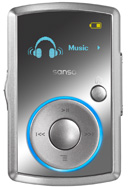
I recently bought a 4GB Sansa Clip to solve the problem where once-a-week or so I want portable music or podcasts and don’t have any: namely, at the gym, occasionally when walking somewhere, and on trains and buses. I’ve been looking for something exactly like this for ages—small, attachable for use during exercise, enough space for a few hours of music/audio, OGG support, and not necessarily much more than that. Basically, an iPod Shuffle that plays OGG and doesn’t involve dealing with Apple. For the longest of time, this was pie-in-the-sky nonexistant. After a few weeks of using the Clip, I’m extremely pleased so far. The battery life is much longer than I’d ever want to listen to music for continuously (they claim 15 hours, and I haven’t gotten it down to less than half charge yet). It’s light in the hand but not too flimsy in feel, the clip makes it easy to attach to e.g. shorts, the interface is easy to use, and the sound quality is good. After upgrading to the latest firmware, it plays OGG as well as MP3. Both Rhymthbox and Banshee work for transferring files to it. I think my biggest complaint so far would be that the audio jack doesn’t fit in as securely as it could, which sometimes manifests as sound skipping and can be fixed by making sure the headphones are completely plugged in. Seriously, it was funny when my Walkman skipped during runs in 2003, but I hope I’m past that phase of life at this point. At any rate, it doesn’t happen all that often, so it’s more of a minor annoyance than anything. And well, the firmware isn’t free—but hey, can’t have everything.

26 September 2008

Romain Beauxis: OSS4 and the "guide to sound apis"

Dear Adrian, I can only but complain about the "Guide Through The Linux Sound API Jungle" that you mention in your last post. All that is said there about OSS is pure FUD and only reflects a deep ignorance of the current project. It is a pitty to spread misinformations that deprecate the work of others without even trying to understand it. Here is what is said about OSS in this document:
The Open Sound System is a low-level PCM API supported by a variety of Unixes including Linux. It started out as the standard Linux audio system and is supported on current Linux kernels in the API version 3 as OSS3. OSS3 is considered obsolete and has been fully replaced by ALSA. A successor to OSS3 called OSS4 is available but plays virtually no role on Linux and is not supported in standard kernels or by any of the relevant distributions. The OSS API is very low-level, based around direct kernel interfacing using ioctl()s. It it is hence awkward to use and can practically not be virtualized for usage on non-kernel audio systems like sound servers (such as PulseAudio) or user-space sound drivers (such as Bluetooth or FireWire audio). OSS3's timing model cannot properly be mapped to software sound servers at all, and is also problematic on non-PCI hardware such as USB audio. Also, OSS does not do sample type conversion, remapping or resampling if necessary. This means that clients that properly want to support OSS need to include a complete set of converters/remappers/resamplers for the case when the hardware does not natively support the requested sampling parameters. With modern sound cards it is very common to support only S32LE samples at 48KHz and nothing else. If an OSS client assumes it can always play back S16LE samples at 44.1KHz it will thus fail. OSS3 is portable to other Unix-like systems, various differences however apply. OSS also doesn't support surround sound and other functionality of modern sounds systems properly. OSS should be considered obsolete and not be used in new applications. ALSA and PulseAudio have limited LD_PRELOAD-based compatibility with OSS.
And here is what one of the devs from OSS answered to this [1]:
It's pretty inaccurate FUD (From the URL address - it's Pulseaudio's author, right? I'd have expected him to know better). He's basically judging OSS per the old OSS/Free drivers, which is like 5 years ago, and even that he does wrong. First, *all* current implementations/emulations of OSSv3 do sample conversion. It's not even a property defined by the API but by the underlying drivers. Second, even OSSv3 supported surround, USB cards, etc. Third, arguing that "it cannot be virtualized" is disproven by the amount of emulations and alternative implementations existing out there and working in practice. (The main difficulty is mmap() API, which is very rarely used anyway, and even that can be done with, say, oss2pulse). Fourth, complaining about OSS API being awkward, is... well, awkward when you compare it to ALSA API, if you could compare it, since most ALSA API isn't documented. It's kinda funny he advocates using ALSA API (not in the quoted part above, but last time I read his blog he suggested it). Actual ALSA devs advocate against it, but using a sound library with multiple backends [2].
If you read some documentation, you can understand that OSS has been the target of some kernel developpers that didn't like it to be reused in a commercial product, back in the 90s. Hence, ALSA was launched, and OSS was progressively discarded, while constantly being the target of FUD like this. OSS has then lived for almost 10 years in the dark side of the force, but eventually did the way back in July 2007. Ironically, now most of the developpement in the linux kernel is driven by commercial interests. Most of the original complains about OSS are now fixed, including all the FUD written in this guide. In particular, software mixing is now supported. Being also part of a project that writes code to handle sound input and output, I can only but complain about the mess in the area of sound APIs in linux. However, OSS should really be reconsidered. In particular, its API is designed in order to abstract as much as possible access to the sound card, so that application writers have as less as possible to do with sound conversion and the like Those who have tried to use ALSA may for instance compare that to the "set rate near" call in its API: this call will set the rate to what the hardware support and let you handle the conversion... For each application... Also, OSS API is available across all unices, except OSX, and there is even a BeOS port going on. Finally, OSS API is POSIX oriented, reading and writing on the sound card, being a matter of calling few ioctls and then reading from the device file. In the future, OSS developpement will most probably be done as a community project, and I believe it is now time to stop spreading false ideas about the project, and give it as much attention as the other projects. For the debian users who want to try OSS4, a package is available in the packaging team's svn repository. It has been sitting in NEW for some time, I hope it gets accepted at some point.

24 September 2008

Russell Coker: My Prediction for the iPhone

I have previously written about how I refused an offer of a free iPhone [1] (largely due to it’s closed architecture). The first Google Android phone has just been announced, the TechCrunch review is interesting - while the built-in keyboard is a nice feature the main thing that stands out is the open platform [2]. TechCrunch says “From now on, phones need to be nearly as capable as computers. All others need not apply“. What I want is a phone that I control, and although most people don’t understand the issues enough to say the same, I think that they will agree in practice. In the 80’s the Macintosh offered significant benefits over PCs, but utterly lost in the marketplace because it was closed (less available software and less freedom). Due to being used in Macs and similar machines the Motorolla 68000 CPU family also died out, and while it’s being used in games consoles and some other niche markets the PPC CPU family (the next CPU used by Apple) also has an uncertain future. The IBM PC architecture evolved along with it’s CPU from a 16bit system to a 64bit system and took over the market because it does what users want it to do. I predict that the iPhone will be just as successful as the Macintosh OS and for the same reasons. The Macintosh OS still has a good share of some markets (it has traditionally been well accepted for graphic design and has always provided good hardware and software support for such use), and is by far the most successful closed computer system, but it has a small part of the market. I predict that the iPhone will maintain only a small share of the market. There will be some very low-end phones that have the extremely closed design that currently dominates the market, and the bulk of the market will end up going with Android or some other open phone platform that allows users to choose how their phone works. One issue that I think will drive user demand for control over their own phones is the safety issues related to child use of phones (I’ve written about this previously [3]). Currently phone companies don’t care about such things - the safety of customers does not affect their profits. But programmable phones allows the potential for improvements to be made without involving the phone company - while with iPhone you have Apple as the roadblock. Now having a small share of the mobile phone market could be very profitable, just as the small share of the personal computer market is quite profitable for Apple. But it does mean that I can generally ignore them as they aren’t very relevant in the industry.

Biella Coleman: Request for Urgent Business Relationshiip

Dear American: I need to ask you to support an urgent secret business relationship with a transfer of funds of great magnitude. I am Ministry of the Treasury of the Republic of America. My country has had crisis that has caused the need for large transfer of funds of 800 billion dollars US. If you would assist me in this transfer, it would be most profitable to you. I am working with Mr. Phil Gram, lobbyist for UBS, who will be my replacement as Ministry of the Treasury in January. As a Senator, you may know him as the leader of the American banking deregulation movement in the 1990s. This transactin is 100% safe. This is a matter of great urgency. We need a blank check. We need the funds as quickly as possible. We can not directly transfer these funds in the names of our close friends because we are constantly under surveillance. My family lawyer advised me that I should look for a reliable and trustworthy person who will act as a next of kin so the funds can be transferred. Please reply with all of your bank account, IRA and college fund account numbers and those of your children and grandchildren to wallstreetbailout@treasury.gov so that we may speedily transfer your commision for this transaction. After I receive that information I will respond with detailed information about safeguards that will be used to protect the funds. Yours Faithfully Minister of Treasury Paulson **** The source of this? A former U of C graduate anthropology classmate. This actually may be the original source, or like all really good spam, somewhat (seemingly at least) sourceless.

Pablo Lorenzzoni: Silent Blog and JRuby

I ve been silent in this blog last few days, but that has an explanation: I ve been trying to make JRuby 1.1.4 work with one of my scripts. The problem is that after having done all the tweaks I can imagine, I still can t get enough performance with Ruby 1.8.7 (latest etch-backports). Our client will not allow Ruby 1.9 in the server (what is really a pity, for the performance boost I had with Ruby 1.9 is awesome!), but it already have Java6 So the only option I have left is trying JRuby beast. Since our script deals with system stuff, it uses syslog a lot, and that is where the main problem seems to be. Syslog support is new in JRuby, has had some implementation problems, and sure are not something to rely on right now so I dropped it from the script, and it run! Twice as fast (not as good as Ruby 1.9, though)! There are some other problems with this script and JRuby, more important ones being (1) at_exit doesn t work; and (2) errors are not easy to backtrace (when JRuby fails it seems to mess up with the backtrace stack), but not preventing it to work So with the increased performance of JRuby, and after fixing those minor glitches, I was still left with the syslog problem Until I investigate some final solution (I think I ll have to use some Java native syslog library given such a thing exist), I ve split the script in performance-boost needing and syslog-needing parts; the first is using JRuby, and the second, Ruby 1.8.7 They communicate using sockets (I know ugly I would like to use DRuby, but I would not introduce another point of failure in an already messy situation) and the overall performance was brought to a satisfactory level. So far, it s been interesting to study the issue Mainly because I haven t used JRuby since it s early versions, and it has improved a lot. But also because I read a lot about the future of Ruby (bytecode compilation, YARV and so on), and it made me even happier with my primary-do-it-all programming language. Now I ll try to compile java bytecode generated by JRuby into a native binary with GCJ :-D. Let s see if that is do-able Updated 2008-09-24 18:03:00: As you can see in the comments, syslog actually works. I figured this out this morning, but JRuby Subversion already had a patch. Anyway, I submitted another bug I found.

23 September 2008

Bernhard R. Link: Phony stamp files in debian/rules

As I wrote in blog item 29 there are many ways to break your debian/rules file. As I grew of seeing those and many more, I decided to write a lintian test for this. Getting that finished will still need several days, as the general Makefile syntax is quite intresting in detail, and lintian is written in perl thus so have to be tests. It's quite intresting that the different cases when variables are resolved and when not seem to quite firmly force an specific way to parse it. (And relearning perl when I so successfully unlearned all parts of that language in the past make it not much faster). Anyway, the reason I'm blogging is to give you already the results of one particular test a preliminary version gave when running over the lintian lab: It's checking for targets with -stamp in them that are phony, as that makes no sense. It will either cause configure or make run multiple times via build, wasting buildd cycles or even make the build more unstable, or just indicates needlessly complex Makefiles (having an install target that invokes an install-stamp target that does not actually produce a stamp file just makes the Makefile longer without doing anything at all but confusing readers). You can find the preliminary results for that test at http://people.debian.org/~brlink/debian-rules-phony-stamp-file.log. I looked at some randomly choosen results and did not find a false positive. As that list was produced by the last runable version which did not yet look at variables, I guess the list will only increase.

Next.

Previous.