Search Results: "ean"

4 April 2014

Daniel Pocock: Best real-time communication (RTC / VoIP) softphone on the Linux desktop?

The Debian community has recently started discussing the way to choose the real-time communications (RTC/VoIP) desktop client for Debian 8 (jessie) users. Debian 7 (wheezy), like Fedora, ships GNOME as the default desktop and the GNOME Empathy client is installed by default with it. Simon McVittie, Empathy package maintainer has provided a comprehensive response to the main discussion points indicating that the Empathy project comes from an Instant Messaging (IM) background (it is extremely easy to setup and use for XMPP chat) but is not a strong candidate for voice and video. Just how to choose an RTC/VoIP client then? One question that is not answered definitively is just who should choose the default RTC client. Some people have strongly argued that the maintainers of individual desktop meta-packages should choose as they see fit. Personally, I don't agree with this viewpoint and it is easy to explain why. Just imagine the maintainers of GNOME choose one RTC application and the maintainers of XFCE choose an alternative and these two RTC applications don't talk to each other. If a GNOME user wants to call an XFCE user, do they have to go to extra effort to get an extra package installed? Do they even have to change their desktop? For power users these questions seem trivial but for many of our friends and family who we would like to contact with free software, it is not amusing. When the goal of the user is to communicate freely and if they are to remain free to choose any of the desktops then a higher-level choice of RTC client (or at least a set of protocols that all default clients must support) becomes essential. Snail mail to the rescue? There are several friends and family I want to be able to call with free software. The only way I could make it accessible to them was to burn self-booting Debian Live desktop DVDs with an RTC client pre-configured. Once again, as a power-user maybe I have the capability to do this - but is this an efficient way to overcome those nasty proprietary RTC clients, burning one DVD at a time and waiting for it to be delivered by snail mail? A billion browsers can't be wrong WebRTC has been in the most recent stable releases of Firefox/Iceweasel and Chrome/Chromium for over a year now. Many users already have these browsers thanks to automatic updates. It is even working well on the mobile versions of these browsers. In principle, WebRTC relies on existing technologies such as the use of RTP as a transport for media streams. For reasons of security and call quality, the WebRTC standard mandates the use of several more recent standards and existing RTC clients simply do not interoperate with WebRTC browsers. It really is time for proponents of free software to decide if they want to sink or swim in this world of changing communications technology. Browsers will not dumb-down to support VoIP softphones that were never really finished in the first place. Comparing Empathy and Jitsi There are several compelling RTC clients to choose from and several of them are now being compared on the Debian wiki. Only Jitsi stands out offering the features needed for a world with a billion WebRTC browser users.
Feature Empathy WebRTC requirement? Comments
Internet Connectivity Establishment (ICE) and TURN (relay) Only for gmail XMPP accounts, and maybe not for much longer For all XMPP users with any standards-based TURN server, soon for SIP too Mandatory Enables effective discovery of NAT/firewall issues and refusal to place a call when there is a risk of one-way-audio. Some legacy softphones support STUN, which is only a subset of ICE/TURN.
AVPF X Mandatory Enables more rapid feedback about degrading network conditions, packet loss, etc to help variable bit rate codecs adapt and maximise call quality. Most legacy VoIP softphones support AVP rather than AVPF.
DTLS-SRTP X Mandatory for Firefox, soon for Chrome too DTLS-based peer-to-peer encryption of the media streams. Most legacy softphones support no encryption at all, some support the original SRTP mechanism based on SDES keys exchanged in the signalling path.
Opus audio codec X Strongly recommended. G.711 can also be used but does not perform well on low bandwidth/unreliable connections Opus is a variable bit rate codec the supercedes codecs like Speex, SILK, iLBC, GSM and CELT. It is the only advanced codec browsers are expected or likely to implement. Most of the legacy softphones support the earlier codec versions (such as GSM) and some are coded in such a way that they can't support any variable bit-rate codec at all.
Retrofitting legacy softphones with all of these features is no walk in the park. Some of them may be able to achieve compliance more easily by simply throwing away their existing media code and rebuilding on top of the WebRTC media stack used by the browsers However, the Jitsi community have already proven that their code can handle all of these requirements by using their media processing libraries to power their JitMeet WebRTC video conferencing server Dreams are great, results are better Several people have spoken out to say they want an RTC client that has good desktop integration (just like Empathy) but I'm yet to see any of them contribute any code to such an effort. Is this type of desktop integration the ultimate priority and stubbornly non-negotiable though? Is it more an example of zealous idealism that may snuff out hope of bringing the optimum communications tools into the hands of users? As for solving all the other problems facing free communications software, the Jitsi community have been at it for more than 10 years. Just have a look at their scorecard on Github to see what I mean. Jitsi lead developer Emil Ivov has a PhD in multimedia and is a regular participant in the IETF, taking on some of the toughest questions, like how to make a world with two protocols (SIP and XMPP) friendly for real users. A serious issue for all Linux distributions Communications technology is one of the most pervasive applications and also one of the least forgiving. Users have limited patience with phones that don't work, as the Australian Russell Crowe demonstrated in his infamous phone-throwing incident. Maximizing the number of possible users is the key factor that makes networks fail or succeed. It is a knife that cuts both ways: as the free software community struggles with this issue, it undermines our credibility on other issues and makes it harder to bring free desktops to our friends, families and workplaces. Do we really want to see the rest of our work in these areas undermined, especially when there is at least one extremely viable option knocking at the door?

Rog rio Brito: The importance of flexible deadlines in MOOCs

I have always thought that having flexible deadlines in MOOCs is important, despite not having used them too much. Until last night, that is. The course in question is Stanford's Statistical Learning and they adopted a policy of letting the students complete all the assignments of the 10 week course until the last day of the course, in March 21. Then, they graciously extended the deadline to April 4. Were it not for such an extension, I would not have completed the course. I sent them a message on the course forums this morning to thank them for this, as this, in my experience, is not so common with MOOCs. I reproduce below the message that I posted on the forums:
Subject: Thank you also for the EXTENSION of the deadlines Dear professors and staff, I would like to thank you (of course) for the course, as many others have already. Despite not liking edX platform too much (preferring the UI of, say, Coursera), your course was an exception, interesting enough (and funny enough) that I sticked to it until the end. But I would like to bring attention here to a point that many may not have appreciated (or, perhaps, not expressed as clearly as I thought that it deserved), namely, the extension of the deadlines (and a uniform deadline for all homeworks). In particular, due to some unfortunate facts of my personal life, I could not work on the course at all in the past few weeks. In fact, I completed units 4, 5, 6, 7, 8, 9, and 10 in the last 3 or 4 days and submitted my last quiz a few hours before today's midnight (at my local time, UTC-0300), and I still got a passing grade(!). Even with my desire to finish the course, this would not have been possible if you had not graciously allowed for the deadline extension. I am sure that I may not be alone here in appreciating this extension (even though I think that I may be many standard deviations from the mean, doing the homework and R programs of 7 weeks in only 4 days). Thank you so very much for everything (including this extension!), Rog rio Brito.

Michael Vogt: apt 1.0

APT 1.0 was released on the 1. April 2014 [0]! The first APT version was announced on the 1. April exactly 16 years ago [1]. The big news for this version is that we included a new apt binary that combines the most commonly used commands from apt-get and apt-cache. The commands are the same as their apt-get/apt-cache counterparts but with slightly different configuration options. Currently the apt binary supports the following commands: Here is what the new progress looks like in 1.0:
apt-progress You can enable/disable the install progress via:
# echo 'Dpkg::Progress-Fancy "1";' > /etc/apt/apt.conf.d/99progressbar
If you have further suggestions or bugreport about APT, get in touch and most importantly, have fun!

Luciano Bello: Private folder in Dropbox

I wanted to have a directory in my Dropbox where every file placed get some sort of encryption. They might be personal pictures (if you know what I mean), finance notes, patent ideas, or the like. I create those files constantly, often with my phone. While I would like to back them up on the cloud, I don t need to access them regularly. The problem is that I don t want my phone to storage them (at least not plain) for obvious reasons. And, on top of this, Android s Dropbox app does not allow to disable synchronization by folder. So, here is the scheme I came up with. Maybe it is also useful for you or you get some idea how to improve it. You will need an always-on-line computer with Dropbox client (for Dropbox synchronization), GnuPG (for cipher the files), and a really nice tool called incron (which monitors a directory and trigger actions). The instructions: That s all, each time you put something in your private folder, incron will cipher it and leave it there.

Mario Lang: Accessible voting graphs

It is that time of the year again, Debian is electing the Project Leader for 2014/15. Whenever a Debian vote is in progress, I find myself rather happy to rediscover that Debian is providing text mode voting graphs. These are quite accessible to me as a braille user. It is rather unusual for me as a blind person to be able to access any graphs on the internet at all. All this has been made possible by gnuplots ability to generate text plots, and Manoj's willingness to implement it during his term as project secretary. Thanks to Gnuplot and Manoj, and thanks to the current secretary for keeping this feature, it is (at least to me) a very nice to have, and actually makes Debian rather unique. I personally don't know of any other major projects which provide text graphs. We are indeed setting a very good example here. It would be nice if other projects would adopt this as well. This is bridging the digital divide for me. For completeness sake I should probably mention that text graphs are not an universal solution for blind users. Those of us who do not use braille will probably have a very hard time extracting any meaningful information from this ASCII character salad. But to a braille user used to reading two dimensional information from the screen, it does actually work rather well. Some solutions from the 90s, when people didn't have graphical terminals readily available everywhere, are still very good accessibility workarounds. I am going to post another article about how I play chess on a computer, with newsgroup-style chessboard diagrams. Now that I think of it, these two topics are very related. There are some rather nifty solutions floating around from the good old text mode days which we need to revive before they finally get forgotten on the internet.

Andrew Pollock: [life] Day 66: Story time, Science Friday, impromptu play date, scootering and the Hawthorne Markets

Zoe slept through last night, which was lovely. We had nothing really planned for today. The Bulimba Library has a story time thing at 10:30am on a Friday. I've never bothered to take Zoe because it would have been too much of a hustle to get her there after her Brazilian Jiu-Jitsu class, particularly by bike. Since today we didn't have a BJJ class, it made getting to story time much easier. So we had a nice lazy start to the day, and then Zoe just wanted to procrastinate anyway, so since we were in no particular rush, I let her play in her room for a bit and I read for a while. We eventually had teeth and hair brushed and biked over to the library. Not having been to the story time thing before, I assumed it was in the kids area, but it turned out it was downstairs in the general purpose room, which we only discovered after story time had started. I'm certainly glad I never busted a gut to get to the library in time for it, because it wasn't anything particularly exciting. They did give all the kids a colouring sheet and there was some colouring and a couple of songs, but really it was nothing to phone home about. I did run into Jacob and his mum Laura from Kindergarten. They live locally, and so I invited them over for lunch and a play date. They had some grocery shopping to do, and I had to go to the pharmacy to get a prescription filled, so we agreed to meet at our place in about an hour. We biked to the pharmacy to get my prescription filled and some more sunscreen for Zoe, and the pharmacist gave her a free Chupa Chups We biked home, and grabbed some balloons from the convenience store next door for our Science Friday activity. I was slightly more organised today, and figured out what I wanted to do in the morning while Zoe was watching TV. We did yeast and sugar and warm water in a bottle with a balloon on top and watched it inflate itself with all the carbon dioxide produced by the yeast eating the sugar. The only problem was the balloons we bought were total rubbish. They'd been on the shelf for too long and they'd all stuck to themselves and either popped when I tried to blow them up or had holes in them. So we marched back to the corner store in our lab coats to get some more, and the store keeper gave Zoe one of the little flashlights she keeps playing with in the bowl at the check out. It was a good day for freebies. We were able to complete our Science Friday activity before Laura and Jacob and his baby brother Ethan came over for lunch. Zoe didn't have a particularly good lunch, I think it was the distraction of having Jacob there as well. After lunch, they couldn't really agree on anything to play. Laura said Jacob just plays out in the yard at Kindergarten the whole day. The one thing they both managed to agree on briefly was bubbles. Ethan was getting tired and needed a nap by about 2pm, so they left. Zoe wanted to ride her scooter, but I had to clean up from lunch and the aftermath of the play date on the balcony first, so she went and played some games on her Nexus 7 while I did that, and then we headed out on the scooter. It was about 2:30pm by this point, and the Hawthorne Markets, which have now moved to a Friday "twilight" thing, were due to start at 4pm, so I figured we could just kill time on the scooter. It's funny how the scooter is now the in thing as of Tuesday. It's sat unused on the balcony for most of the year, but I'm glad she wants to use it now because it guarantees she moves faster than if she were to walk and want to be picked up every 5 minutes. We scootered around to the playground and she played there until about 3:45pm, when we headed around to the markets. We ran into Nicky Noo from the Ooniverse Family Cafe, who we'd met on Tuesday, and she made Zoe another dog balloon and she got her face painted. After that, it was the obligatory jumping castle for a while. It was getting time to get home for Sarah to pick her up, when I dropped the dog balloon on the ground and it popped. That made Zoe very sad. Then the lack of a decent lunch kicked in. Zoe wanted some poffertjes, but they would have taken too long, so I gave her a few of the free samples to tide her over, and we headed home. Sarah was waiting for her when we got home, so we parted ways at that point. I like how the days that have nothing planned often end up as full if not fuller than the days when I do have something planned.

3 April 2014

Daniel Pocock: LogAnalyzer and rsyslog MongoDB support now in wheezy-backports and Ubuntu

LogAnalyzer is a powerful but simple log file analysis tool. The upstream web site gives an online demo. It is developed in PHP, runs in Apache and has no other dependencies such as databases - it can read directly from the log files. For efficiency, however, it is now trivial to make it work with MongoDB on Debian. Using a database (including MongoDB and SQL backends) also means that severity codes (debug/info/notice/warn/error/...) are retained. These are not available from many log files. The UI can only colour-code and filter the messages by severity if it has a database backend. Package status The packages just entered Debian recently. It has now been migrated to wheezy-backports and Ubuntu so anybody on wheezy or Ubuntu can use it. Quick start with MongoDB The version of rsyslog in Debian wheezy does not support MongoDB output. It is necessary to grab 7.4.8 from backports. Some versions, up to 7.4.4 in backports, had bugs with MongoDB support - if you tried those, please try again now. The backported rsyslog is a drop-in replacement for the standard rsyslog package and for users with a default configuration it is unlikely you will notice any difference. For users who customized the configuration, as always, make a backup before trying the new version.
  • Install all the necessary packages: apt-get install rsyslog-mongodb php5-mongo mongodb-server
  • Add the following to /etc/rsyslog.conf:
    module (load="ommongodb")
    *.* action(type="ommongodb" server="127.0.0.1" db="logs" collection="syslog")
  • Look for the MongoDB settings in /etc/loganalyzer/config.php and uncomment them. Comment out the stuff for disk log access.
  • Restart rsyslog and then browse your logs at http://localhost/loganalyzer

2 April 2014

Francesca Ciceri: On translations

"Take, for example, the opening to Eleanor Catton's The Luminaries: 'The twelve men congragated in the smoking room of the Crown Hotel gave the impression of a party accidentally met.' This is emphatically not the same as starting a novel with 'So there they were: a dozen men in the Crown Hotel, all together in the smoking-lounge, looking like they'd only met there by chance.' Yes, the explicit narrative data conveyed in the two are the same, but just as you wouldn't be happy with your publisher simply producing a sort of casual paraphrase of your writing and publishing that under your name, so your foreign-language publishers are hiring people to write exactly the same book as the one you've written. (Except for all the words, obviously.) Sound difficult? The reality is harder still. Every language is different. There's no single word in one language that maps perfectly onto a word in another - not one. And every language has things it can do, and things it can't."
[...]
"Once the contract is signed, the translator takes a deep breath and dives in. Their job is two-fold, and simple: they read you, then they write you.
They read you with more care than anybody else will, more demandigly, more inquiringly. Yes, your editor might take a moment to consider your punctuation if it doesn't work and needs rethinking, but translators have to think hard about it even - or especially - if it does."
A beautiful piece on translators: "The curious condition of being a translator" by Daniel Hahn via Paula G es on GV-Authors mailing list.

Andrew Pollock: [life] Day 64: Baking, Last day of Kindergarten term 1, BJJ

I had a busy morning this morning. I had a small flood of emails in response to various inquiries I made yesterday, so it took me a while to get my inbox under control. One of Zoe's Kindergarten teachers is returning to New Zealand as of the end of term 1, so they were having an afternoon tea for her today. Parents were requested to "bring a plate", so I thought I'd bake some spinach, pumpkin and feta muffins that I've been meaning to try making. After my chiropractic adjustment I got stuck into that. I'd hoped to finalise my US taxes today, but I learned I could deduct my moving expenses, so now I have to dig up the documentation for them. I had a later than usual massage, and drove directly from there to Kindergarten, muffins in hand. They'd omitted rest time today to facilitate the afternoon tea, so the upside of that was Zoe was happy. Zoe's Brazilian Jiu-Jitsu teacher had said that she could try out one of the 4-7 year old classes, so for her last class of the 10 week block, we went to one of them this afternoon. I wasn't sure if today would be a good day for it or not, given she'd had Kindergarten and hadn't napped, but I gave her the option, and she wanted to do it. It worked out well, aside from Zoe really not wanting to wear her gi (I managed to convince her to wear the pants). There were three other kids of varying school ages in the class, and Zoe followed the instructions really well. I'm really glad we signed up the classes. I'm pretty sure Zoe has enjoyed herself, and she's definitely bonded with the teacher. I'll miss it. I can't believe how fast this term has gone by. There's now two weeks of "school holidays", where I'll have to entertain Zoe for the entire week. I'm not too worried about finding things to do, I'm more worried about contention with all the other kids on school holidays. Zoe was pretty tired tonight, I'd say with the combination of Kindergarten, no nap and BJJ class. Nonetheless, she procrastinated all the way through the bed time routine anyway. When I finally got her to bed, she fell asleep without a peep. She went on her second "bushwalk" at Kindergarten yesterday and picked up three mosquito bites, so I'm hoping they don't trouble her overnight.

1 April 2014

Russell Coker: Comparing Telcos Again

Late last year I compared the prices of mobile providers after Aldi started getting greedy [1]. Now Aldi have dramatically changed their offerings [2] so at least some of the phones I manage have to be switched to another provider. There are three types of use that are of interest to me. One is for significant use, that means hours of calls per month, lots of SMS, and at least 2G of data transfer. Another is for very light use, maybe a few minutes of calls per month where the aim is to have the lowest annual price for an almost unused phone. The third is somewhere in between and being able to easily switch between plans for moderate and significant use is a major benefit. Firstly please note that I have no plans to try and compare all telcos, I ll only compare ones that seem to have good offers. Ones with excessive penalty clauses or other potential traps are excluded. Sensible Plans The following table has the minimum costs for plans where the amount paid counts as credit for calls and data, this makes it easy to compare those plans.
Plan Cost per min or SMS Data Minimum cost
AmaySIM As You Go [3] $0.12 $0.05/meg, $19.90 for 2.5G in 30 days, $99.90 for 10G in 365days $10 per 90 days
AmaySIM Flexi [4] $0.09 500M included, free calls to other AmaySIM users, $19.90 for 2.5G in 30 days, $99.90 for 10G in 365days $19.90 per 30 days
Aldi pre-paid [5] $0.12 $0.05/meg, $30 for 3G in 30 days $15 per 365 days
Amaysim has a $39.90 Unlimited plan which doesn t have any specific limits on the number of calls and SMS (unlike Aldi Unlimited ) [6], that plan also offers 4G of data per month. The only down-side is that changing between plans is difficult enough to discourage people from doing so, but if you use your phone a lot every month then this would be OK. AmaySIM uses the Optus network. Lebara has a $29.90 National Unlimited plan that offers unlimited calls and SMS and 2G of data [7]. The Lebara web site doesn t seem to include details such as how long pre-paid credit lasts, the lack of such detail doesn t give me confidence in their service. Lebara uses the Vodafone network which used to have significant problems, hopefully they fixed it. My lack of confidence in the Vodafone network and in Lebara s operations makes me inclined to avoid them. Obscure Plans Telechoice has a $28 per month i28 plan that offers unlimited SMS, $650 of calls (which can be international) at a rate of over $1 per minute, unlimited SMS, unlimited calls to other Telechoice customers, and 2G of data [8]. According to the Whirlpool forum they use the Telstra network although the TeleChoice web site doesn t state this (one of many failings of a horrible site). The TeleChoice Global Liberty Starter plan costs $20 per month and includes unlimited calls to other TeleChoice customers, unlimited SMS, $500 of calls at a rate of over $1 per minute, and 1G of data [9]. Which One to Choose For my relatives who only rarely use their phones the best options are the AmaySIM As You Go [3] plan which costs $40 per 360 days and the Aldi prepaid which costs $15 per year. Those relatives are already on Aldi and it seems that the best option for them is to keep using it. My wife typically uses slightly less than 1G of data per month and makes about 25 minutes of calls and SMS. For her use the best option is the AmaySIM As You Go [3] plan which will cost her about $4 in calls per month and $99.90 for 10G of data which will last 10 months. That will average out to about $13 per month. It could end up being a bit less because the 10G of data that can be used in a year gives an incentive to reduce data use while previously with Aldi she had no reason to use less than 2G of data per month. Her average cost will be $11.30 per month if she can make 10G of data last a year. The TeleChoice Global Liberty Starter [9] plan is also appealing, but it is a little more expensive at $20 per month, it would be good value for someone who averages more than 83 minutes per month and also uses almost 1G of data. Some of my relatives use significantly less than 1G of data per month. For someone who uses less than 166MB of billable data per month then the Aldi pre-paid rate of $0.05 per meg [5] is the best, but with a modern phone that does so many things in the background and a plan that rounds up data use it seems almost impossible to be billed for less than 300MB/month. Even when you tell the phone not to use any mobile data some phones still do, on a Nexus 4 and a Nexus 5 I ve found that the only way to prevent being billed for 3G data transfer is to delete the APN from the phone s configuration. So it seems that the AmaySIM As You Go [3] plan with a 10G annual data pack is the best option. One of my relatives needs less than 1G of data per month and not many calls, but needs to be on the Telstra network because their holiday home is out of range of Optus. For them the TeleChoice Global Liberty Starter [9] plan seems best. I have been averaging a bit less than 2G of data transfer per month. If I use the AmaySIM As You Go [3] plan with the 10G data packs then I would probably average about $18 worth of data per month. If I could keep my average number of phone calls below $10 (83 minutes) then that would be the cheapest option. However I sometimes spend longer than that on the phone (one client with a difficult problem can involve an hour on the phone). So the TeleChoice i28 plan looks like the best option for me, it gives $650 of calls at a rate of $0.97 per minute + $0.40 connection (that s $58.60 for a hour long call I can do 11 of those calls in a month) and 2G of data. The Telstra coverage is an advantage for TeleChoice, I can run my phone as a Wifi access point so my wife can use the Internet when we are out of Optus range. Please let me know if there are any good Australian telcos you think I ve missed or if there are any problems with the above telcos that I m not aware of.

Joey Hess: adding docker support to propellor

Propellor development is churning away! (And leaving no few puns in its wake..) Now it supports secure handling of private data like passwords (only the host that owns it can see it), and fully end-to-end secured deployment via gpg signed and verified commits. And, I've just gotten support for Docker to build. Probably not quite work, but it should only be a few bugs away at this point. Here's how to deploy a dockerized webserver with propellor:
host hostname@"clam.kitenet.net" = Just
    [ Docker.configured
    , File.dirExists "/var/www"
    , Docker.hasContainer hostname "webserver" container
    ]
container _ "webserver" = Just $ Docker.containerFromImage "joeyh/debian-unstable"
        [ Docker.publish "80:80"
        , Docker.volume "/var/www:/var/www"
        , Docker.inside
            [ serviceRunning "apache2"
                 requires  Apt.installed ["apache2"]
            ]
        ]
Docker containers are set up using Properties too, just like regular hosts, but their Properties are run inside the container. That means that, if I change the web server port above, Propellor will notice the container config is out of date, and stop the container, commit an image based on it, and quickly use that to bring up a new container with the new configuration. If I change the web server to say, lighttpd, Propellor will run inside the container, and notice that it needs to install lighttpd to satisfy the new property, and so will update the container without needing to take it down. Adding all this behavior took only 253 lines of code, and none of it impacts the core of Propellor at all; it's all in Propellor.Property.Docker. (Well, I did need another hundred lines to write a daemon that runs inside the container and reads commands to run over a named pipe... Docker makes running ad-hoc commands inside a container a PITA.) So, I think that this vindicates the approach of making the configuration of Propellor be a list of Properties, which can be constructed by abitrarily interesting Haskell code. I didn't design Propellor to support containers, but it was easy to find a way to express them as shown above. Compare that with how Puppet supports Docker: http://docs.docker.io/en/latest/use/puppet/
docker::run   'helloworld':
  image        => 'ubuntu',
  command      => '/bin/sh -c "while true; do echo hello world; sleep 1; done"',
  ports        => ['4444', '4555'],
...
All puppet manages is running the image and a simple static command inside it. All the complexities that puppet provides for configuring servers cannot easily be brought to bear inside the container, and a large reason for that is, I think, that its configuration file is just not expressive enough.

Russ Allbery: Review: Asimov's, September 2011

Review: Asimov's Science Fiction, September 2011
Editor: Sheila Williams
Issue: Volume 35, No. 9
ISSN: 1065-2698
Pages: 112
Due to various other life priorities, it's been quite a while since I read this magazine. Let's see if I can remember the contents well enough to review it properly. The editorial this issue was about the Readers' Awards. Vaguely interesting, but Williams didn't have much to add beyond announcing the winners. I'm very happy to see Rusch's "Becoming One with the Ghosts" win best novella, though. The Silverberg column was more interesting: some musings and pop history about the Japanese convention of a retired emperor and how that fit into national politics. Di Filippo's book review column is all about short story collections, continuing the trend of Di Filippo mostly being interested in things I don't care about. "The Observation Post" by Allen M. Steele: A bit of alternate history set during the Cuban Missile Crisis, but with airships. The protagonist was a radioman aboard a blimp that was patrolling the ocean for Russian vessels sailing to Cuba. A storm forces them down on an island, resulting in an encounter with some claimed tourists who may be Russian spies. The SFnal twist is unlikely to come as much surprise to an experienced reader, and the barb at the end of the story suffers from the same problem. I appreciate the ethical dilemma, but I've also seen it in lots of stories and have a hard time getting fully invested in another version of it. But the story is otherwise competently written. (6) "D.O.C.S." by Neal Barrett, Jr.: Everyone has an author or two that they just don't get. Barrett is one of mine, although this story is a bit less surreal than most of his. I'm fairly sure it's an odd twist on the "death panel" conspiracy theory given a fantastic twist, but it's not entirely forthright about what's going on. Possibly of more interest to those who like Barrett better. (5) "Danilo" by Carol Emshwiller: Emshwiller's stories are always distinctive and not quite like anyone else's, involving odd outsiders and their attempts to make sense of their world. This one involves, as is common, an out-of-the-way village. Lewella claims that she's going to be married to a stranger from the north. No one believes her, although they give her bridal gifts anyway, and then one day she takes her gifts and leaves. The protagonist follows her, to look after her. The rest of the story walks the boundary that Emshwiller often walks, leaving the reader unsure whether the characters are in touch with some deeper reality or insane and suffering, but the ending is even more ambiguous than normal and, at least for me, entirely unsatisfying. (4) "Shadow Angel" by Erick Melton: This is another retread of an old SF idea. This time, it's that piloting through hyperspace involves alternate modes of consciousness and has profound effects on the pilot. The risk of this sort of story is that it turns hallucinatory and a bit incoherent, and I think that happened here. I like the world-building; the glimmers of future politics and trade and the way he weaves alternate timelines into the story caught my interest. But the story wasn't quite coherent enough (although part of this may be reviewing it quite some time after I originally read it). Promising, but not clear, and without quite enough agency for the protagonist. (6) "The Odor of Sanctity" by Ian Creasey: I found this story more memorable. The conceit is that a future society has developed technology that allows the capture and replay of scents, which has created a huge market for special scent experiences and the triggering of memories. The story is set in the Philippines and revolves around a Catholic priest who takes the mission to the poor seriously. He's dying, and several people wonder if it is possible to capture the mythical odor of scantity: the sweet scent said to follow the death of a saint rather than the normal odor of human death. Creasey handles this idea well, blending postulated future technology, the practical and cynical world of the poor streets, and a balance between mystical belief and practical skepticism. Nothing in the story is that surprising, but I was happy with the eventual resolution. (7) "Grandma Said" by R. Neube: This story's protagonist is a cleanser on a frontier planet made extremely dangerous by a virulent alien fungus. It is almost always fatal and very difficult to eradicate. Vic's job is to completely sanitize anything that had been in contact with a victim and maintain the other rules of strict quarantine required to keep the fungal infection from spreading uncontrolled. Nuebe weaves world-building together with Vic's background and adds a twist in the form of deeply unhealthy responses to the constant stress of living near death. Well told, if a bit disturbing. (7) "Stalker" by Robert Reed: Reed has a knack for fascinating and disturbing stories, and this is an excellent example of the type. The protagonist is a manufactured companion who is completely devoted to its owner. Their commercial name is Adorers, but everyone calls them Stalkers. In this case, the protagonist's owner is a serial rapist and murderer; given that, and given how good Reed is at writing these sorts of stories, you can probably imagine how chilling it is. As usual, there is a sharp barb in the ending, and not the one I was expecting. Good if you can handle the graphic violence and disturbing subject material. (7) "Burning Bibles" by Alan Wall: This is an interesting twist on the spy thriller. A three-letter agency in charge of investigating possible terrorist plots becomes suspicious after a warehouse of Bibles burns in mysterious circumstances. The agent they send in is a deaf-mute with special powers of intuition. This prompted some eye-rolling, and there's a lot of magic disability powers here to annoy, but it's played mostly straight after that introduction. The rest is a fairly conventional spy story, despite special empathic powers, but it's one I enjoyed and thought was fairly well-written. (7) Rating: 6 out of 10

Andrew Pollock: [life] Day 63: Productive procrastination, pizza dough, podiatrist, positive

parenting and a haircut with a spot of painting How's that for some alliteration? Today was a really good day. And that's before I started drinking red wine. I got up this morning and successfully banged out a 10km run. It wasn't pretty, but I did it in under an hour, so I was happy. I got home, and after breakfast I pretty much flopped on the couch with my laptop and procrastinated instead of doing my taxes. But it was productive procrastination. I: I also (finally) got my taxes to a point where I'm ready to send them off to my US accountant and deal with the rest of it incrementally. So it was a productive day! I had a follow up appointment with my podiatrist in the afternoon to see how my orthotics were going. I biked to Kindergarten early, ditched the bike trailer, and then biked over to the podiatrist, and made it back to Kindergarten about 10 minutes before pick up time. Zoe was, unsurprisingly, fast asleep. I decided to try applying sunscreen to her while she was asleep as a way of killing two birds with one stone. I got as far as getting her legs done before she woke up and had a massive meltdown. Poor kid really doesn't deal well with being woken up. One of the teachers took pity on us and distracted Zoe by letting her cuddle one of the baby chicks, which snapped her out of it for the duration, but she had another meltdown once it was over. Another teacher gave her a cuddle for a bit, and she eventually calmed down enough for me to get sunscreen on her arms. I'd foolishly left the bike trailer separated from the bike, so I had to drag the trailer back to the bike, whilst carrying Zoe. Fortunately another teacher took sympathy on us and helped me with the trailer. Turns out trying to drag a single-wheeled trailer single-handed whilst carrying a toddler and having excess sunscreen on my hands is extremely difficult. We finally got the trailer on the bike, and Zoe in the trailer, and headed towards home. Zoe's ballerina pumps aren't great on the bike because the straps on the pedals cross the tops of her exposed feet and irritate her, so there were multiple meltdowns on the way home, culminating in needing to go to the toilet "right now" before we got home. I stopped at the health food shop on the way home, to see if they had a toilet we could use. Luckily I'm a customer and the naturopath let us use the toilet in the clinic. Zoe had another meltdown in there, announcing she "didn't like being woken up". Poor kid. It wasn't a good afternoon for her. I'm just glad I was in a sufficiently good mood to be able to deal with it all in a satisfactorily positive parenting way. We finally made it home, and I'd promised her we could have a big cuddle on the couch once we got home, so we did that and read a library book, and then it was time to head to the hairdressers for our haircuts. We started out on foot, and had made it one block from home, and she saw another kid on a scooter and announced she wanted to ride her scooter too. Initially tried saying we couldn't do it this time, because we'd be late, but she was on the verge of having another meltdown, so I capitulated, and we went back and grabbed it. I'm actually really glad I did, because she was as happy as Larry from that point on, and we were only a couple of minutes late at the hairdresser. We did her fringe trim first, and then she had a great play in the kid's corner while I got my haircut. She even cleaned up the corner better than she found it without argument. We then had plenty of time to scooter back home, so I decided to check out the 'OO'niverse Family Cafe, which is next door to the Hawthorne Cinemas. It's this thing I've never gotten around to checking out, and it was the second thing I was glad I did this afternoon. It's not a big place, and it was super quiet. There was just us and two twin Kindergarten-aged girls being babysat. Zoe had a banana milkshake and got a dolphin painted on her arm and a balloon dog made, and I had a coffee and we just chilled out for a bit while I chatted with the owner (who was babysitting the twins). By this stage Anshu was already at my place, and Sarah wasn't far off leaving work to pick up Zoe, so we made our way back home. Zoe had a great time playing with Anshu until Sarah arrived. So I was basically really happy that I managed to turn around a massively molten afternoon and give Zoe a really good afternoon instead. Anshu and I then proceeded to made a couple of really fantastic pizzas. I really love my Thermomix. I made the pizza dough earlier today, and tonight I made some pizza sauce, some pesto sauce and caramelized some onions in it, and we were still done with dinner by 8pm.

31 March 2014

John Goerzen: Springtime in the Mountains

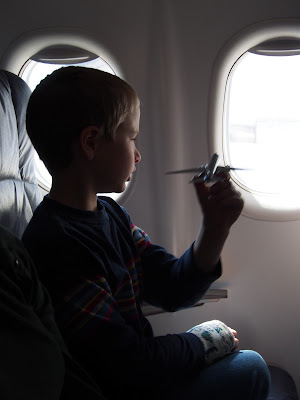
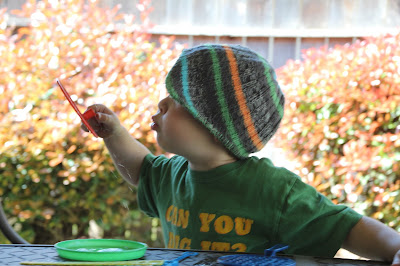
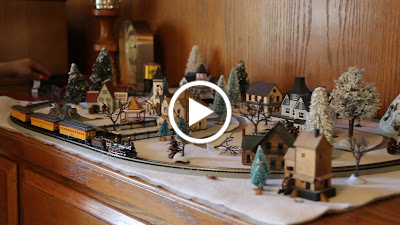
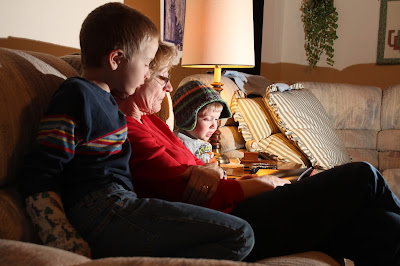
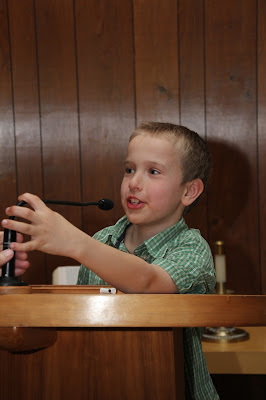
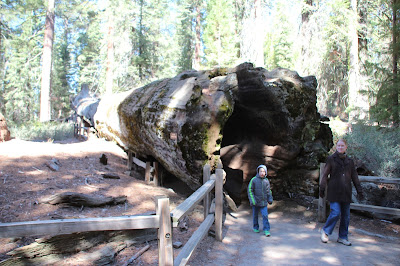
The scene: early one morning as the sun has just started to rise. Jacob and Oliver, ages 7 and 4, are the first people to wake up in the house their grandparents in California, where the four of us are visiting for the first time as a family. They have a conversation and decide that would be a good to go find a mystery. They decide to take their flashlights pink and blue, matching each boy s favorite color and slowly, but not very quietly, open their bedroom door and creep out. Brother, you forgot your flashlight! says Oliver. Oh, thanks brother! I ll get it! says Jacob. Meanwhile, Laura s mom wakes up, and notices two boys with flashlights creeping through the living room. Pretty soon they reach the kitchen, open the dishwasher, spy a suspicious-looking bowl, and decide that they have found the mystery a clean bowl! Or, at least that s the story that I pieced together based on what a 4-year-old and the grandma he awakened told me. We were on our first family trip to the Fresno, California area, to visit Laura s parents Jacob and Oliver s new grandparents. They ve played together before, but as this was our first visit to their place, there was quite the excitement. The boys had flown before, but it was several years ago and neither of them remember it well, so they were excited about that, too. The night before, Jacob woke up to tell me Dad, I am too excited to sleep. I think I will go downstairs and watch some TV. He didn t get too far with that plan. But he was excited. We went through security at the laid-back Wichita airport (where the TSA agents smile and there are often no security lines at all). We found our gate with enough time to grab lunch, which we did. The boys and I then did what we often do to kill time: explore. We explored the terminal, watching carpet-layers cut out carpet for the jetway, watching the construction of the new Terminal 3 out the window. And, of course, watching airplanes take off and land from the terminal s large windows. Finally it was our turn to board, and we all got on the plane: Jacob and Oliver with their backpacks of on-board activites, Laura and me with the rest of our carryon luggage, for the short trip to Denver. Jacob and Oliver s noses were pressed against the windows. Or, well, Jacob s was. Oliver s window was a little too high for him, but he was thrilled anyhow. They delighted in the airplane snacks, and the fact that they were allowed to drink pop on the plane. We packed books and some new art supplies for them (colored post-its, pages from a train-themed page-a-day calendar, a notebook, and a set of colored pens really seemed to do the trick.) We had a choice of 35 minutes or 4 hours between flights in Denver, and I had chosen 4 hours, thinking that would be a lot less stressful with boys. And it was. We found a nice corner of the mezzanine to sit for awhile they did art projects and played a game with Laura. Then I took them exploring Denver. We rode the moving sidewalks up and down the terminal, took a train ride to another terminal and back, ate supper all together, and flew to Fresno. We had stopped in the Wichita airport to buy them each a souvenir airplane, and these came out often during the rest of the trip. They enjoyed the mockups of the sequoias in Fresno Yosemite International Airport, enjoyed their beds and their room at the house, and did actually manage to fall asleep eventually. We had a few days there, where they played in a park, with bubbles on the patio, or croquet in the yard (I even discovered Jacob happily using the cast his broken arm is in as a hammer to pound the hoops into the ground!) There are a lot of miniatures in the house, and the boys enjoyed exploring the dollhouses and especially the N-gauge model train. Jacob enjoyed it so much he asked me to record a video of him playing with the trains. Evenings often brought book-reading, from the many children s books in the house. At home, Laura and I and both boys often scrunch onto an oversized chair and read a book and sing a song (one I make up on whatever topic they choose). Over there, we often had Laura, Jacob, Oliver, Laura s mom, and me scrunched up somewhere while the boys heard a story read to them by their grandma. That happened plenty of times other than bedtime, too. (Or Jacob would take his favorite books and read them to himself.) Laura s parents organized a reception Sunday for us, for the people from that area that couldn t make it to our wedding. Jacob and Oliver, predictably, had fun playing and even talked to some of the adults. The adults that didn t ask Jacob about his cast, anyhow (he dislikes talking about it). The boys discovered a live mic at the church where the reception was, and do I detect two future pastors in our midst? We had a great time at Laura s uncle and aunt s place. The boys were happy to discover an orange tree in their backyard, a tetherball post not far away, and an uncle ready to give them a demonstration of a swimming pool vacuum cleaner or sit at the piano with them. Jacob s favorite part, though, was when the hamburger buns his great uncle were toasting were left on the grill during the prayer before the meal, got a bit scorched, and the uncle remarked with a chuckle that I guess the Lord was tired of listening to me drone on! Jacob loved his meal, and cackled at the thought of a prayer causing buns to get scorched. But their highlight was the visit to the sequoias at Kings Canyon National Park the next day. The excitement had been building for that day all weekend. On the way out, we stopped at a fruit stand and bought some delicious strawberries the fresh, juicy, sweet and tasty kind that are red all the way through. We continued up through the foothills, stopping periodically to get out and stretch, look at the sights, take some photos, or borrow grandpa s binoculars. I knew we d be traveling in two cars, so I had the thought to pack some 2-way radios before we left. I gave one to the boys and one to the grandparents. All weekend long, whenever the six of us went somewhere, the boys (and especially Jacob) would give directions to the car that was following. Turn right! The light is green! Catch up, you re going too slow! So all the way into the mountains, Jacob would send back instructions on what to do. We saw Grant Grove, home to the worlds third-largest tree (267ft/81m tall and 3000 years old). It s quite the impressive tree the trunk s diameter near the ground is 29ft or almost 9m. As we walked the trails, their speed kept increasing as they were hunting for the tree tunnel I had told them about a tree that fell centuries ago and had been hollowed out to make a home. That trunk was easily 8ft or more in diameter, and I could stand up completely in places. We found it, to much delight from the boys So this is what it s like to be inside a tree! Our trip home brought a delay in Denver and a missed flight, which excited the boys when I told them now we get to eat supper in the airport! I wonder how long that tactic will work But Jacob was also excited because the plane we were put on in the end was bigger than the one we were scheduled on, so that was another piece of excitement. We got home, and I carried two sleeping boys in from the car, upstairs, tucked them in, pulled off their shoes, and put their favorite stuffed animals in their arms. They were happy to be home, and with memories to treasure for a long time.



Laura Arjona: MiniDebConf Barcelona 2014

Wow, I cannot believe it has already been 2 weeks from MiniDebConf Barcelona.
It has been the first Debian event (and free software conference) that I have attended in person, and I took the opportunity to get more involved, giving a talk about translations together with Francesca Ciceri, and two lightning talks about two free software projects that I use and love and I d like to see them packaged for Debian: Pump.io and GNU MediaGoblin (videos coming soon). I also somehow-promoted Keysigning during the conference (well, in fact, I just sent some two emails to the mailing list before, and printed stickers with May I sign your key? slogan so we could keysign easily in the freetime between talks). The people I ve met some people in person, who I was following in the Debian mailing lists and identi.ca for long time (years, in some cases \o/). It has been amazing to meet Francesca Ciceri and Enrico Zini, since their blogposts and vision about Debian diversity skills have influenced very much in my involvement in Debian. It has been very important to me to be able to say THANK YOU to Tiago from the Debian video team (sorry Holger, I couldn t manage to meet you face to face), because I have learned so many things watching videos from Debconfs! Videos helped me to feel that I m part of the community, even when I cannot attend to the events, by following the streaming and being able to recognize the faces of the people and the work they do in Debian. I ve met many Debian Women, of course. I m so fan of all of them! I m enjoying a welcoming and diverse community thanks to many of them that worked since many years ago to make Debian what it is now, and faced bitter moments too. I cannot say that I engaged in many deep conversations (well, maybe some 2 or 3, and me mostly listening), but the most important thing that I keep from them was simply being there , watching and listening, enjoying the voices of the experience like Ana and Miriam, and the freshness and joy of Tassia, Solveig and Elena, for example. I ve tried to be welcoming too, I m not a newbie anymore as new people come to the group :) New projects (and renewing forces for other) Debian contributors I wanted to get more involved in the Debian contributors project and it has been a perfect opportunity to understand better all what I had read and watched about it before going to Barcelona. My plan is, apart of doing promotion as with all the projects that I use and love, to try to get translator work credited via Debian Contributors. That means to hack the l10n bot that now gathers info from the mailing lists to build the coordination pages for translators. It shouldn t be difficult to make it send that info to contributors.debian.org site, but I ll try to understand how it works and propose an elegant patch. No idea about Perl, btw, but anyway, it s a good excuse to start learning. Mediagoblin and pump.io packaging I m not sure I can help on this, but I ll keep an eye in the evolution of the Debian packaging of GNU MediaGoblin and the Pumpiverse software. I ll give moral support, at least, to the people actually working on that :) Website and Publicity team After Solveig s talk about bug triaging I ve been thinking about some bugs that I reviewed in the Website and Publicity team, and I think I should make a new round on the pending bugs to close them if they don t apply anymore, or to try to push a bit more towards a solution, if I can. Tails website translation Tails is a Debian derivative preconfigured to work out-of-the-box with privacy and anonymity features, since uses the Tor network for all the outgoing and ingoing connections.
Solveig proposed me to join the Spanish translators team at Tails. I just joined the translators mailing list, in order to help translating the Tails website into Spanish (the software is already translated, under the Tor Project). This is a new challenge from the translation point of view, since they work with PO files. And now, what? Well, first, I ll try to clean a bit my TODO list, mainly about translations, and other things not related to Debian. From now on until summer, I ll keep an eye and a hand on all the projects in which I am involved, and also I ll try to keep on engaging with the community via pump.io, the mailing lists, and IRC channels. Next summer, if I can put in order my GPG keys (long story), I ll try to join the Debian New Member process. If not, I ll try to get new keys and some signs, and then I ll apply. OTOH, thanks to the end of Windows XP support, it seems that some people are willing to migrate to any GNU/Linux distribution, and of course I m recommending Debian. Expect some blog posts about these migrations (wow, I should migrate some servers that still run Squeeze too ) and my new role of Debian help desk at job, if finally some people decide to migrate. I have gathered Debian stickers to proudly give to anyone that installs Debian in their computer!
Filed under: Events, My experiences and opinion, Videos Tagged: Communities, Contributing to libre software, Debian, English, Free Software, libre software, MediaGoblin, Moving into free software, pump.io, translations

Francesca Ciceri: Random notes from MiniDebconf Barcelona 2014

First of all, let me say this: Barcelona MiniDebconf was awesome. So the most important part of this post is a very big thank you to the organizers, volunteers, speakers, sponsors and attendees. Now, down to business. Day 0 Day 0 was a day of travelling, more or less: the Italian Cabal (me, Enrico, Elena and Diego) left in the early morning from Varese (where we had an epic Munchkin Apocalypse game the night before), and we travelled by car across Liguria and France and finally reached Barcelona in the evening. (Boring! Even more if you don't drive. I hate long trips by car) We reached Barcelona in time for the pre-registration event at Falstaff Bar, eat a great Falafel and hugged lots of people. Day 1 To me the highlight of Day 1 was to finally meet in person Laura Arjona, Spanish translator, publicity volunteer, pump.io and mediagoblin contributor. We had decided to have a workshop together about translations and we spent the morning more or less tweaking our presentation and chatting :). So, save for Elena's talk on 3d printing in Debian ("The Universal OS: now making tabletop games and cookie cutters!" -- which was great!) I missed all the talks in the morning. But thanks to the always amazing videoteam, I'll be able to watch them later, when the recordings will be published :). For me, the best talk of the day - well, no, actually of the conference! - was that afternoon: Ana Isabel Carvalho told us about the Libre Graphics Magazine project. Libre Graphics Magazine is a well written and designed magazine at the crossroad between Free Software tools and ideals and graphic arts and design. A crossroad not very much frequented, I'd say. But then, maybe I'm wrong: it's not that graphic artists don't use Free Software tools, it's more like the one who do are invisible.
This is one purpose of a Libre Graphics Magazine: to serve as a catalyst for discussion, to build a home for the users of Libre Graphics software, standards and methods. In such a magazine, we may unite all our previously disparate successes, all the successes which have, until now, stood alone as small examples, disjointed from the larger community. We have the opportunity to elevate the discourse around Libre Graphics as a professionally viable option, to raise previously unmentioned issues and to push forward the conception of just what Libre Graphics can produce.
If you are even only vagued interested in typefaces, fonts, design and graphic art take a look at the magazine: it's CC-BY-SA licensed and you can download it for free, or buy a paper copy (which is amazing, really!). And it's not just about graphic arts: if you skim over the titles of the issues, you can find that they've talked about things like "Localisation/Internationalization", "Use Cases and Affordances" and, my favourite, "Gendering F/LOSS". On a similar topic, Siri's talk about "Why aren't more designers using Debian or working for Debian?" tried to shed a light on the difficult relationship between Free Software tools and graphic artists. These are the voices we need to listen to if we want to bring more graphic artists to Debian, and $deity knows that Debian needs them a lot :). After Solveig's talk about bug triaging and Miriam's one on packaging, it was time for the l10n workshop. I think it went well: we tried to briefly explain the translation workflow in Debian, and to translate together with the audience a po-debconf message. It wasn't maybe enough to complete and submit a translation, but hopefully it gave the audience an idea about how to do it. The day ended with a party for Debian Women 10th anniversary. And the cake wasn't a lie, beside being very good. Day 2 This, I'll remember as "the day I exited my comfort zone". Ok, I'm making a bit of fuss about it, but it was my first talk in English all alone. I spoke about the non-uploading DD process and how to keep your (and others') sanity in a big community project (slides here). I think it's very important to remind people that not all DDs are coding persons. And you don't need to be a developer to love Debian, contribute to it and become an official member of the project. But writing this presentation was for me also the occasion to take stock of my experience in Debian so far: in that talk slipped many of my demons, as impostor syndrome or overcommitment. But all the things I said are more or less, common sense - nothing new! - and lesson learned on the road: it's been now 2 years as DD and 4 as contributor. I'm pretty sure it's thanks to the special conditions of this conference (only speakers identifying themselves as female, a safe and very friendly environment) that I had the courage to give a talk. So the conference was a complete success on that regard, too. In the afternoon I was able to do one of the things I love: videoteam duty. Though I convinced Riccio to switch roles and to give me the camera: my experience in directing during last DebConf left me a bit scarred. Special mention for Laura speaking of pump.io and MediaGoblin and Solveig of Tails during the "Lightning Talks" and the people from LelaCoders during the "Bits from Local Communities" session. The Day(s) after: a Debian Contributors hackathon In my experience a measure of a conference's success is the burst of activity in pet projects just afterwards. In this, also, Barcelona MiniConf was a success: during the weekend, Enrico, Laura and I had the chance to talk together about Debian Contributors and make some plans.
So, as soon as we got in Italy again, I took possession of Enrico's couch for a couple of days and we did a little bit of hacking on Contributors. For my part, I mostly worked in trying to add more data sources to the site: my (not so) secret agenda is to map most of the non-coding contributions. That basically means: translators, publicity editors, event organizers and volunteers, etc. Being in the same room as Enrico, gave me the chance to ask him how to add data sources and to test the existing code (we spot a little problem in the prototype for svn repository mining he made a while ago). At the end of the hackathon, I had managed to: Please note that if you have contributed to one of the repo above and you are not listed there, it means that the automatic recognition of your email address didn't work. We still need to implement a manual interface for the recognition of email addresses: patches are very much welcome! Meanwhile Enrico: If you care about recognition of diverse contributions in Debian, help us: read the project todo list and subscribe to the low traffic mailing list or browse the project Git repository.

Andrew Pollock: [life] Day 62: Kindergarten, cleaning

Zoe slept really well last night, and had a good breakfast of porridge this morning. We biked to Kindergarten for the first time in ages, as it wasn't raining. Drop off went nice and smoothly. I can't believe this is the last week of term 1 already. Today was an exceptional day, because Sarah had the day off, and picked up Zoe from Kindergarten instead of me. As tonight Zoe is with her, I got about 3 extra hours up my sleeve. The house was a bit of a mess, I decided to switch today with my Wednesday "clean the house day" and use the extra time to do a more thorough clean. Part way through that, an acquaintance, who recently separated from his wife, dropped by for a chat. We ended up chatting for about 3 hours, so I dialed back my cleaning to something more standard. My business debit card arrived in the mail today. It was exciting to see something with my name and my company name on it. I've scheduled a bank transfer to fund my business with the first loan I'll be making to it, so it'll have some cash as of the start of second quarter. All I need now is the cheque book to arrive, and I can go pay the patent lawyer a visit. I had contemplated going for a run tonight before my yoga class, but I ended up faffing around with trying to fix the song order on the USB stick that has all of Zoe's music on it. The new head unit isn't playing one album in the right order, and it's phenomenally annoying. To this end, I discovered fatsort, which is a godsend. Yoga was in the new studio tonight for the first time. I'm really happy that my teacher is growing her business. The new studio is even closer to home than the old one, which is lovely.

Russ Allbery: Review: Sundiver

Review: Sundiver, by David Brin
Series: Uplift #1
Publisher: Bantam
Copyright: February 1980
Printing: September 1995
ISBN: 0-553-26982-8
Format: Mass market
Pages: 340
Sundiver is the first book of Brin's Uplift series, which I think it's fair to say are the books that made his reputation as an author. It's less well-known than the later sequels Startide Rising and The Uplift War for reasons that I'll get into in a moment. This was a re-read; I've read the first Uplift series before (and Startide Rising separately before that), but not in many years, and I wanted to re-read them and review them. I haven't finished doing that yet, several months after I re-read Sundiver, largely because this book wasn't as enjoyable as I remembered. The Uplift series is set in a heavily populated galaxy with a multitude of alien races. It follows the SF alien life pattern where the galaxy was well-populated and fully developed long before humans discovered it. The Earth is a relatively obscure backwater, and humans are expected to adopt to and follow the rules and restrictions that the other races had long-since established. This primarily means a complex and very formal system of caste and patronage: species brought to sapience by the technology of their patrons are expected to serve their patron races for millennia, and one's status in the galaxy is determined by the length of those patronage chains and the number of species one has fostered in turn. As is typical for stories of this sort, humans break the rules in unexpected ways. They have no known patrons, having apparently evolved sapience entirely on their own (although the galactic races are quite dubious of this theory). And they have uplifted two species to sapience (chimpanzees and dolphins) before their discovery by the rest of galactic civilization, although in fairly primitive ways and not properly by galactic standards. Set against this background, Sundiver is a science fiction puzzle story of a fairly old style. The protagonist, Jacob Demwa, is a scientific investigator who retired after a tragedy that killed his love. He's recruited out of that retirement and into this plot by an alien who is sympathetic to humans. A human exploration mission into the chromosphere of the Sun, treated as ridiculous by most of the galactics since the shared Library Institute certainly contains more information about stars than human technology could possibly uncover, has found strange and apparently sapient creatures living there: flocks of cattle-like creatures that are apparently being herded. There is no reference to such star-dwellers in the Library, which raises the possibility that humans have discovered something novel. That would be quite a coup against the galactics. But after the destruction of one of the solar exploration ships, it starts looking like these creatures are hostile. Jacob reminded me of a mix between a Larry Niven short story protagonist, working through the practical impact of a physics puzzle, and Isaac Asimov's Elijah Baley. What exactly is going on, both scientifically and politically, remains unclear for nearly the entire book. Both Jacob and the reader are constantly forming and then discarding hypotheses as events overtake them. The stakes are more interesting than a lot of science fiction novels: rather than survival or war, the stakes are prestige, influence, and status, with subtle but possibly vital effects on what position humans will take among the other species of the galaxy. All this sounds promising, and is why I remembered this book fondly. Unfortunately, re-reading it was a disappointing experience on several fronts. First, the characterization varies between trite and stereotyped. The aliens suffer from the standard alien characterization problem: each of them is an exemplar of their species, and all of the aliens feel like archetypes. While there are some twists in the inter-alien politics, one never gets a sense of the aliens as varied and complex societies in their own right. The humans are more varied, but that primarily means varieties of irritating. The worst is Peter LaRoque, a journalist who is set up as a villain of the story, and who is such an unremitting and over-the-top stereotype of everything possibly bad about journalists (and French people) that every scene containing him felt like someone scraping fingernails on a chalkboard. The other characters are a bit better, but not by much. Jacob himself has a bizarre, semi-mystical psychological problem from trauma that seems to give his amoral subconscious a life of its own. Brin appears to be setting this up to have major plot significance, but it never made any sense to me, didn't matter much in the end, and seems to mostly be an excuse for Jacob's hypercompetence. Sundiver's treatment of female characters also annoyed me enough to be worth a mention. The primary female character, Helene, is clearly intended to be a strong character with her own agency (she's both station commander and a starship captain), and Brin makes a lot of the humans switching to different words than male and female as a sign of a more egalitarian future. But this all feels skin-deep. The inevitable romance is all about Helene's attractiveness and ability to listen to Jacob, her logic is described as unscientific, and I got more and more annoyed by her portrayal as the book went along. She's not entirely without agency in the story, but she's much closer to a damsel in distress than the independent character Brin appeared to be trying for. It's hard to shake the feeling that she's being persistently belittled by the story. But this is a scientific puzzle story more than a mystery; characterization would be nice, but isn't strictly required. On re-read, the part of Sundiver that annoyed me the most was how much of a letdown the plot resolution was. I'm going to avoid any specific spoilers here, but I found the ending of both quite disappointing and a sign of the major problem with this series as a whole. The setup over-promises and Brin fails to deliver, a pattern that will repeat itself in this series. We get tantalizing hints of a new solar species, of revelations about the past of humanity, of deep galactic politics, and of vast knowledge contained in the Library that humans don't yet have access to. We get superficial archetypes for characters, politics that seem more like the bickering of children, plot twists that persistently take the story in more mundane and less interesting directions, and a sense of wonder, or lack thereof, that feels more like a Scooby Doo story than what I expect from science fiction. Some of the plot twists are unexpected and almost add some interest to the story, but don't make enough sense in the context of the story to be satisfying. And, of course, there's an climactic action sequence involving physical combat, as is required of all good Star Trek (original series) episodes. (I was waiting for Jacob's shirt to fall off.) The problem I have always had with Brin as a writer is that his ideas are far better than his ability to write characters and plots. In the hands of a better author, the Uplift universe background has so much potential. And I think Brin is a better author a few years later; my recollection is that both Startide Rising and The Uplift War do a better job of delivering on their promises. But Sundiver is deservedly forgettable. The good ideas rarely go anywhere beyond the obvious, the characters are irritating and often don't make sense, and the story is disappointing. I can't say I'm sorry to have read it, since my memory edited it down into a much better story, but I can only recommend it as background for later, better books. Rating: 4 out of 10

30 March 2014

Olivier Berger: Working on a TWiki to MediaWiki converter (targetting FusionForge wikis)

I m currently working on a wiki converter allowing me to transfer old TWiki wikis (hosted on picoforge) to MediaWikis hosted on FusionForge. Unlike existing tools that I ve found that more or less target the same needs, mine will address two peculiarities : The tool is written in Python, and will include my own crappy wiki syntax converter in Python, instead of spawning existing Perl scripts, as others did. It may happen to work for FosWiki too, but I don t intend to use it beyond our old TWiki installations, for a start. Stay tuned for more progress updates. Edit: I ve now released a first version.

Petter Reinholdtsen: Debian Edu interview: Roger Marsal

Debian Edu / Skolelinux keep gaining new users. Some weeks ago, a person showed up on IRC, #debian-edu, with a wish to contribute, and I managed to get a interview with this great contributor Roger Marsal to learn more about his background. Who are you, and how do you spend your days? My name is Roger Marsal, I'm 27 years old (1986 generation) and I live in Barcelona, Spain. I've got a strong business background and I work as a patrimony manager and as a real estate agent. Additionally, I've co-founded a British based tech company that is nowadays on the last development phase of a new social networking concept. I'm a Linux enthusiast that started its journey with Ubuntu four years ago and have recently switched to Debian seeking rock solid stability and as a necessary step to gain expertise. In a nutshell, I spend my days working and learning as much as I can to face both my job, entrepreneur project and feed my Linux hunger. How did you get in contact with the Skolelinux / Debian Edu project? I discovered the LTSP advantages with "Ubuntu 12.04 alternate install" and after a year of use I started looking for an alternative. Even though I highly value and respect the Ubuntu project, I thought it was necessary for me to change to a more robust and stable alternative. As far as I was using Debian on my personal laptop I thought it would be fine to install Debian and configure an LTSP server myself. Surprised, I discovered that the Debian project also supported a kind of Edubuntu equivalent, and after having some pain I obtained a Debian Edu network up and running. I just loved it. What do you see as the advantages of Skolelinux / Debian Edu? I found a main advantage in that, once you know "the tips and tricks", a new installation just works out of the box. It's the most complete alternative I've found to create an LTSP network. All the other distributions seems to be made of plastic, Debian Edu seems to be made of steel. What do you see as the disadvantages of Skolelinux / Debian Edu? I found two main disadvantages. I'm not an expert but I've got notions and I had to spent a considerable amount of time trying to bring up a standard network topology. I'm quite stubborn and I just worked until I did but I'm sure many people with few resources (not big schools, but academies for example) would have switched or dropped. It's amazing how such a complex system like Debian Edu has achieved this out-of-the-box state. Even though tweaking without breaking gets more difficult, as more factors have to be considered. This can discourage many people too. Which free software do you use daily? I use Debian, Firefox, Okular, Inkscape, LibreOffice and Virtualbox. Which strategy do you believe is the right one to use to get schools to use free software? I don't think there is a need for a particular strategy. The free attribute in both "freedom" and "no price" meanings is what will really bring free software to schools. In my experience I can think of the "R" statistical language; a few years a ago was an extremely nerd tool for university people. Today it's being increasingly used to teach statistics at many different level of studies. I believe free and open software will increasingly gain popularity, but I'm sure schools will be one of the first scenarios where this will happen.

Next.

Previous.