Jon Dowland: Farewell, Interzone

 New format IZ
 Wow, today was pretty crazy in terms of the travel we managed to pack into one day.
This morning, Zoe woke up at about 5:30am and jumped into bed with me for a
snuggle and another half hour nap. After that we got up. Zoe had been eyeing
off the egg cups in the house, and so I'd wanted to do soft-boiled eggs for
breakfast. So we doused ourselves in mosquito repellent and raided the chicken
coop.
I don't think I've ever cooked soft-boiled eggs in my entire adult life, and
today wasn't an exception. They came out hard-boiled. Zoe still ate them anyway,
she just couldn't do the toast soldier thing. I need to buy some egg cups
for home and we can try again. I hear the Thermomix can do boiled eggs.
After breakfast and a shower, I got stuck into packing up and cleaning the
house, and Zoe watched TV. At 8am she turned off the TV and declared she wanted
to play in the yard. It was nice to see that she wanted to do something more
than just veg out in front of the TV, without prompting.
I had us all packed up by about 8:30am and we were only 5 minutes from where
the barge docked, so we drove over to the other end of the island to take a
look at the place at high tide. It was quite different from the two days before
in the afternoon at low tide. The stick that we'd walked out to was barely
above the waterline.
Then we drove back to wait in the queue for the barge. The barge journey back
was uneventful and we made it back home by 10am, which was about the
time I was expecting, and rendezvoused with my girlfriend, and did a fast
unpack and repack. We then headed to the airport, arriving comfortably with
enough time to check our luggage and get some lunch to take onto the plane.
Zoe was great for the flight down. She watched Brave on the in-flight
WiFi entertainment on my phone, and got to fit the whole movie in before we
landed, but this meant she skipped a nap.
By the time we got to Melbourne Airport, she was in the post-tired manic state,
but we weren't in any particular rush, so we had a very roundabout trip to
baggage claim, and then after we'd acquired some Myki cards, caught a taxi to
our accommodation in South Melbourne.
After we'd unpacked and settled in, and I'd gotten some supplies from the local
convenience store, we caught a tram into Bourke Street to go to Chinatown for
dinner, after checking out the view from the observation deck on the 28th
floor.
We found a great dumpling place, and Zoe really enjoyed the pork dumpling and
noodle soup that I ordered for her. She kept alternating between eating the
noodles with her training chopsticks and the broth with one of the big spoons.
She was getting really over-tired and over-stimulated by this point, so it was
quite a bit of cat-herding to get to Chinatown, and more so getting back to a
tram to come back.
We got home, Zoe had a quick shower and went to bed without a peep. Her room is
nice and dark, so I'm hoping that she'll have a bit of a sleep in tomorrow.
(Wishful thinking).
I'm really quite pleased with how smoothly today's travel went. Everything went
off without a hitch.
 I was super sad to know that Paco de Lucia passed a few days
ago. It was shocking to know that he was so young (only 66 year old, if I am
not mistaken).
To share some of his fine work with his frequent collaborators
John McLaughlin and Al Di Meola to people that
may not otherwise know him or his work, I offered on a Facebook post to
upload a bootleg of a show of the Guitar Trio (John McLaughlin, Paco De
Lucia and Al Di Meola) with the entire performance (possibly out of order,
as that is a bootleg, after all) ripped from a broadcast to Dutch TV
station.
This performance includes the exceptional Paco de Lucia prominently and the
show has many songs from the "Friday Night in San Francisco"
record, including the magnificent (IMVHO)
"Mediterranean Sundance".
The credits of the video are, of course, of the musicians.
I only ripped, deinterlaced (remember, analog TV it was interlaced),
denoised, encoded, and uploaded the video to youtube.
 Following my blog post on the topic, I played a bit with various options.
But let s explain my use case (which might be quite specific). I need to deal with three main sources of events:
require 'agcaldav'

require 'date'
cal = AgCalDAV::Client.new(:uri => 'LABCALDAVSERVER', :user => 'xx', :password => "xx")

ev = cal.find_events(:start => '2014-02-01', :end => '2200-01-01')
cal = AgCalDAV::Client.new(:uri => 'RADICALESERVER', :user => 'xx', :password => "xx")

ev2 = cal.find_events(:start => '2014-02-01', :end => '2200-01-01')
limit = (Time::now - 7*86400).to_datetime
# create new empty calendars

ncpriv = Icalendar::Calendar.new

ncpub = Icalendar::Calendar.new
(ev + ev2).each do  e

  next if e.end < limit # drop old events to keep the calendar small
  # build event for the free/busy calendar

  pe = Icalendar::Event.new

  pe.start = e.start

  pe.end = e.end

  pe.klass = "PRIVATE"

  pe.transp = e.transp

  ncpriv.add(pe)
  # build event for the calendar with event information

  pube = Icalendar::Event.new

  pube.start = e.start

  pube.end = e.end

  pube.transp = e.transp

  if not e.klass == "PRIVATE"

    pube.summary = e.summary

    pube.location = e.location

  end

  ncpub.add(pube)

end
# export free/busy calendar

fd = File::new('xx.ics', 'w')

fd.puts ncpriv.to_ical

fd.close
# export calendar with event information

fd = File::new('yy-Zeeh9bie.ics', 'w')

fd.puts ncpub.to_ical

fd.close
So, mostly everything works. The only thing that doesn't is that I haven't found a way to subscribe to an ICS feed on my N900. Any ideas?
 When the cache size is exceeded the decision is made about what to remove from the cache using a cache strategy or algorithm. The aim of this decision is to discard the data that will not be required again for the longest time.
 I ve been issuing a lot of x.509 certs and OpenVPN user configurations lately, and I came across something that has reduced the complexity quite a bit. It seems that OpenVPN configuration files can now include data inline. So rather than generating and distributing the following for each user:

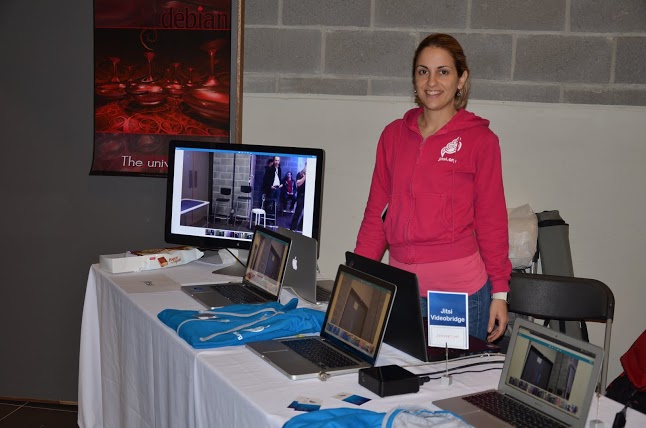 Yana from the Jitsi team with a table full of devices running different operating systems and browsers connecting to a JitMeet video conference. The demo also extended to the Debian table which was immediately underneath (ground floor) and within range of the real-time lounge private WLAN.
What makes this so exciting? The thing that stands out for me is that you can run it on any web server under your own control. This gives people real choice in an era when people are starting to realize the risk of using "free" cloud services.
 Any Linux web server - big or small, running your preferred distribution - can run a JitMeet conference. Here it is running on a very small Intel i3-based NUC with Debian
For those who want to know more, you can watch Emil's lightning talk about JitMeet or ask on the Jitsi user mailing list.
 Emil's lightning talk about JitMeet
I m trying to self-host my calendar setup, and I must admit that I m lost between all the different solutions.
My requirements are:
Today was yet another busy day.
Zoe seems to have taken to waking up at around 5:30am instead of her normal
6:00am (or a bit later when I'm really lucky). Not sure what that's all about.
I did get her to go back to bed until about 6:55am, and then she was happy to
just come and snuggle in bed with me for a bit instead of play games on her
Nexus 7.
After that we had a leisurely start to day, making porridge with strawberries
in the Thermomix, and then biked to Kindergarten. Somehow it still managed to
be 8:45am by the time we got there. I was expecting it would be closer to
8:30am. Drop off looked like it was going to be clingy, but then she just waved
me off, so that was nice.
I had an appointment at the
podiatrist at 11:40am, and that was back near Kindergarten, but further
away from home, so I had this grand plan of cycling over there, and then
twiddling my thumbs for a bit before Kindergarten pickup. That left me with
only a couple of hours at home to work on my taxes before I had to leave again.
I managed to make those couple of hours productive though, so that was good.
I biked to the podiatrist, had my appointment, and then it was 1pm and I still
needed lunch, so I decided to grab some at a cafe near the Kindergarten. I
chilled out there for a while catching up on social media on my phone, and then
headed over to the Kindergarten, but was still quite early, so I just hung out
on one of the couches they have out by the front door, out of sight of the
kids.
The Kindergarten has an A-frame whiteboard out the front that they use to
broadcast messages to parents at drop off and pick up time. One of the teachers
came out to write something on it while I was sitting out there, and another
parent reacted rather negatively to it as it was being written, so I had to go
see it for myself. Apparently a child had a suspected gastro bug (he'd thrown
up a couple of times). It was interesting observing the reactions of a few
mothers as they trickled in for pick up. It's been a while since a gastro bug
has gone through the household, so I guess the news didn't evoke a particularly
powerful reaction in me. I'm going with the "suspected" and that hopefully Zoe
didn't come into contact with patient zero. I guess time will tell. I certainly
hope she doesn't come down with anything between now and Sunday, with all the
travel we're doing.
I had an accident report to sign today. Apparently a large wooden block hit Zoe
in the head while they were packing up a tower they'd made. She had a bit of a
lump on her head, but otherwise seemed fine.
Zoe had a nap today, of unknown length, but woke up naturally as I entered the
room. She took a fair while to get going though, and was grumpy and
uncooperative getting on the bike. I ended up having to do it the "hard way"
and we had a fabulous ride back with her doing a tired cry all the way. All the
way until we passed a playground, when she snapped out of it and declared she
wanted to have a play.
I'd booked myself in for a haircut at 3pm, and a make up swim class at 4:45pm
(to cover our absence this Saturday due to our Melbourne trip) so playing in
the playground seemed like the perfect way to fill the gap. It was even on the
way to swim class. So after I had my haircut, we popped home, grabbed her swim
gear, and biked back to the playground for a bit.
Then we went to swim class. This was her third one at her new level, and her
progress continues to go very well. It's really exciting watching her.
Zoe took her time leaving the pool, so we didn't get home until after 5:30pm
and I hadn't started dinner yet. I whipped it up while Zoe watched some TV, and
I managed to recoup all of the lost time after dinner and still get Zoe to bed
at a reasonable hour.
Bedtime itself went nice and smoothly. I used the canned goodnight video I
asked Sarah to make for the first time tonight, and it was well received and I
think defused any potential issues. I'm hoping she'll sleep well tonight, as
her mosquito bites don't seem to be actively giving her trouble any more.
My right ankle has never been quite right ever since I sprained it in
2008. The ankle is always a bit enlarged, sometimes more so after running.
With all the running I've been doing back in Brisbane, I had this niggling
concern in the back of my head that I might be doing myself some long term
damage, so last year I packed myself off to see a physiotherapist that was
within walking distance of home.
He declared that I had blown out two of the ligaments in my foot from the
sprain, and that my calf was compensating for it a bit. The swelling was just
scar tissue. He gave me a bunch of exercises to do, and I had some
electrotherapy on my calf for a few weeks and I went on my way. I think I'm
supposed to do the exercises every time before I run, but that hasn't happened.
It's hard enough to make the time to run, without having to prepend a bunch of
exercises as well.
One of my neighbours works for my
FootDr, so I asked her if they did video run gait analysis, because I was
interested in seeing if there was anything I could do to improve my running
gait. They did, and so I finally got around to making an appointment for today.
The appointment wasn't as interesting as the one I had in the
US, in that there was no fluoroscopy, just manual examination, but there
was the video run gait analysis on the treadmill, which was not something I've
had before.
I was pleased that my running shoes (New Balance 940's) were deemed correct for
my situation. The guy at Sports
Basement obviously did a good job of fitting them to me. I was advised to
refresh the shoes, though, so I lashed out on a pair of 940
v2's today. My health insurance also paid pretty generously for orthotics,
so I'm going to get a pair for them to add to the ankle stability.
The results of the run gait analysis were that, surprise surprise, I am rolling
inwards a bit more on my right ankle than my left. Interestingly, my
left calf was bigger than my right one, so I was advised to stick with
the physiotherapy exercises (yay).
So with the orthotics, new shoes, and forcing myself to do my physiotherapy
exercises, I'm pretty satisfied that my continued running isn't likely to do
too much damage to my body. The podiatrist concurred that because I'm currently
pain free, everything should be good. I just had to live with the fact that my
right ankle is going to always be a bit swollen.
 Nir Eyal Automatic customers: How to design user habits at WordCamp San Francisco 2012:

 TL;DR: Do not enable
net.ipv4.tcp_tw_recycle.
The Linux kernel documentation is not very helpful about what
net.ipv4.tcp_tw_recycle does:
Enable fast recycling TIME-WAIT sockets. Default value is 0. It
should not be changed without advice/request of technical experts.
Its sibling, net.ipv4.tcp_tw_reuse is a little bit more documented
but the language is about the same:
Allow to reuse TIME-WAIT sockets for new connections when it is
safe from protocol viewpoint. Default value is 0. It should not be
changed without advice/request of technical experts.
The mere result of this lack of documentation is that we find numerous
tuning guides advising to set both these settings to 1 to reduce the
number of entries in the TIME-WAIT state. However, as stated by
tcp(7) manual page, the net.ipv4.tcp_tw_recycle option is quite
problematic for public-facing servers as it won t handle connections
from two different computers behind the same NAT device, which is a
problem hard to detect and waiting to bite you:
Enable fast recycling of TIME-WAIT sockets. Enabling this option
is not recommended since this causes problems when working with NAT
(Network Address Translation).
I will provide here a more detailed explanation in the hope to teach
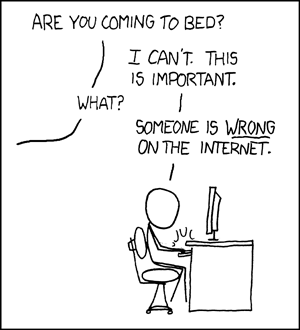
people who are wrong on the Internet.
 As a sidenote, despite the use of
ipv4 in its name, the
net.ipv4.tcp_tw_recycle control also applies to IPv6. Also, keep in
mind we are looking at the TCP stack of Linux. This is completely
unrelated to Netfilter connection tracking which may be tweaked in
other ways1.
TIME-WAIT state
Let s rewind a bit and have a close look at this TIME-WAIT state.
What is it? See the TCP state diagram below2:
 Only the end closing the connection first will reach the
TIME-WAIT state. The other end will follow a path which usually
permits to quickly get rid of the connection.
You can have a look at the current state of connections with ss
-tan:
$ ss -tan head -5 LISTEN 0 511 *:80 *:* SYN-RECV 0 0 192.0.2.145:80 203.0.113.5:35449 SYN-RECV 0 0 192.0.2.145:80 203.0.113.27:53599 ESTAB 0 0 192.0.2.145:80 203.0.113.27:33605 TIME-WAIT 0 0 192.0.2.145:80 203.0.113.47:50685
TIME-WAIT state:
TIME-WAIT state is deficient3. Here is an example of
what could be avoided if the TIME-WAIT state wasn t shortened:
LAST-ACK state4. Without the TIME-WAIT state, a
connection could be reopened while the remote end still thinks the
previous connection is valid. When it receives a SYN segment (and
the sequence number matches), it will answer with a RST as it is
not expecting such a segment. The new connection will be aborted
with an error: RFC 793 requires the
TIME-WAIT state to last twice the time of the
MSL. On Linux, this duration is not tunable and is defined in
include/net/tcp.h as one minute:
#define TCP_TIMEWAIT_LEN (60*HZ) /* how long to wait to destroy TIME-WAIT * state, about 60 seconds */
TIME-WAIT state is a good thing.
ss -tan state time-wait wc -l is not a problem per se!
TIME-WAIT state is kept for one minute in the
connection table. This means, another connection with the same
quadruplet (source address, source port, destination address,
destination port) cannot exist.
For a web server, the destination address and the destination port are
likely to be constant. If your web server is behind a L7
load-balancer, the source address will also be constant. On Linux, the
client port is by default allocated in a port range of about 30,000
ports (this can be changed by tuning
net.ipv4.ip_local_port_range). This means that only 30,000
connections can be established between the web server and the
load-balancer every minute, so about 500 connections per second.
If the TIME-WAIT sockets are on the client side, such a situation is
easy to detect. The call to connect() will return EADDRNOTAVAIL
and the application will log some error message about that. On the
server side, this is more complex as there is no log and no counter to
rely on. In doubt, you should just try to come with something sensible
to list the number of used quadruplets:
$ ss -tan 'sport = :80'   awk ' print $(NF)" "$(NF-1) '   \
>     sed 's/:[^ ]*//g'   sort   uniq -c
    696 10.24.2.30 10.33.1.64
   1881 10.24.2.30 10.33.1.65
   5314 10.24.2.30 10.33.1.66
   5293 10.24.2.30 10.33.1.67
   3387 10.24.2.30 10.33.1.68
   2663 10.24.2.30 10.33.1.69
   1129 10.24.2.30 10.33.1.70
  10536 10.24.2.30 10.33.1.73
net.ipv4.ip_local_port_range to
a wider range,net.ipv4.tcp_tw_reuse and
net.ipv4.tcp_tw_recycle. Don t do that yet, we will cover those
settings later.
TIME-WAIT state. How much memory
does it represent? Not that much!
First, from the application point of view, a TIME-WAIT socket does
not consume any memory: the socket has been closed. In the kernel, a
TIME-WAIT socket is present in three structures (for three different purposes):
TIME-WAIT state and a list of regular active
connections. The size of the hash table depends on the system
memory and is printed at boot:
$ dmesg   grep "TCP established hash table"
[    0.169348] TCP established hash table entries: 65536 (order: 8, 1048576 bytes)
thash_entries parameter.
Each element of the list of connections in the TIME-WAIT state
is a struct tcp_timewait_sock, while the type for other
states is struct tcp_sock7:
struct tcp_timewait_sock
    struct inet_timewait_sock tw_sk;
    u32    tw_rcv_nxt;
    u32    tw_snd_nxt;
    u32    tw_rcv_wnd;
    u32    tw_ts_offset;
    u32    tw_ts_recent;
    long   tw_ts_recent_stamp;
 ;
struct inet_timewait_sock
    struct sock_common  __tw_common;
    int                     tw_timeout;
    volatile unsigned char  tw_substate;
    unsigned char           tw_rcv_wscale;
    __be16 tw_sport;
    unsigned int tw_ipv6only     : 1,
                 tw_transparent  : 1,
                 tw_pad          : 6,
                 tw_tos          : 8,
                 tw_ipv6_offset  : 16;
    unsigned long            tw_ttd;
    struct inet_bind_bucket *tw_tb;
    struct hlist_node        tw_death_node;
 ;
TIME-WAIT state. They are
ordered by how much time left before expiration.
It uses the same memory space as for the entries in the hash table
of connections. This is the struct hlist_node tw_death_node
member of struct inet_timewait_sock.
$ dmesg   grep "TCP bind hash table"
[    0.169962] TCP bind hash table entries: 65536 (order: 8, 1048576 bytes)
struct inet_bind_socket. There is
one element for each locally bound port. A TIME-WAIT connection
to a web server is locally bound to the port 80 and shares the
same entry as its sibling TIME-WAIT connections. On the other
hand, a connection to a remote service is locally bound to some
random port and does not share its entry.
struct
tcp_timewait_sock
and struct inet_bind_socket. There is one struct
tcp_timewait_sock for each connection in the TIME-WAIT state,
inbound or outbound. There is one dedicated struct inet_bind_socket
for each outbound connection and none for an inbound connection.
A struct tcp_timewait_sock is only 168 bytes while a struct
inet_bind_socket is 48 bytes:
$ sudo apt-get install linux-image-$(uname -r)-dbg
[...]
$ gdb /usr/lib/debug/boot/vmlinux-$(uname -r)
(gdb) print sizeof(struct tcp_timewait_sock)
 $1 = 168
(gdb) print sizeof(struct tcp_sock)
 $2 = 1776
(gdb) print sizeof(struct inet_bind_bucket)
 $3 = 48
TIME-WAIT
state, it should eat less than 10MB of memory. If you have about
40,000 outbound connections in the TIME-WAIT state, you need to
account for 2.5MB of additional memory. Let s check that by looking
at the output of slabtop. Here is the result on a server with about
50,000 connections in the TIME-WAIT state, 45,000 of which are
outbound connections:
$ sudo slabtop -o   grep -E '(^  OBJS tw_sock_TCP tcp_bind_bucket)'
  OBJS ACTIVE  USE OBJ SIZE  SLABS OBJ/SLAB CACHE SIZE NAME
 50955  49725  97%    0.25K   3397       15     13588K tw_sock_TCP
 44840  36556  81%    0.06K    760       59      3040K tcp_bind_bucket
TIME-WAIT
connections is really small. If your server need to handle
thousands of new connections per second, you need far more memory to
be able to efficiently push data to clients. The overhead of
TIME-WAIT connections is negligible.
inet_csk_get_port() function which uses a lock
and iterate on locally bound ports until a free port is found. A large
number of entries in this hash table is usually not a problem if you
have a lot of outbound connections in the TIME-WAIT state (like
ephemeral connections to a memcached server): the connections
usually share the same profile, the function will quickly find a free
port as it iterates on them sequentially.
TIME-WAIT
connections after reading the previous section, there are three
additional solutions to solve them:
net.ipv4.tcp_tw_reuse, andnet.ipv4.tcp_tw_recycle.close() is called, any remaining data in the kernel buffers
will be sent in the background and the socket will eventually
transition to the TIME-WAIT state. The application can continue to
work immediatly and assume that all data will eventually be safely delivered.
However, an application can choose to disable this behaviour, known as
socket lingering. There are two flavors:
TIME-WAIT state in this case.
close() until either all the data is sent and acknowledged by
the peer or the configured linger timer expires. It is possible
for a process to not sleep by setting the socket as
non-blocking. In this case, the same process happens in the
background. It permits the remaining data to be sent during a
configured timeout but if the data is succesfully sent, the normal
close sequence is run and you get a TIME-WAIT state. And on the
other case, you ll get the connection close with a RST and the
remaining data is discarded.
net.ipv4.tcp_tw_reuse
The TIME-WAIT state prevents delayed segments to be accepted in an
unrelated connection. However, on certain conditions, it is possible
to assume a new connection s segment cannot be misinterpreted with an
old connection s segment.
RFC 1323 presents a set of TCP extensions to improve performance
over high-bandwidth paths. Among other things, it defines a new TCP
option carrying two four-byte timestamp fields. The first one is
the current value of the timestamp clock of the TCP sending the option
while the second one is the most recent timestamp received from the
remote host.
By enabling net.ipv4.tcp_tw_reuse, Linux will reuse an existing
connection in the TIME-WAIT state for a new outgoing connection
if the new timestamp is strictly bigger than the most recent timestamp
recorded for the previous connection: an outgoing connection in the
TIME-WAIT state can be reused after just one second.
How is it safe? The first purpose of the TIME-WAIT state was to
avoid duplicate segments to be accepted in an unrelated
connection. Thanks to the use of timestamps, such a duplicate segments
will come with an outdated timestamp and therefore be discarded.
The second purpose was to ensure the remote end is not in the
LAST-ACK state because of the lost of the last ACK. The remote end
will retransmit the FIN segment until:
TIME-WAIT state and the expected ACK
segments will be sent.
Once a new connection replaces the TIME-WAIT entry, the SYN
segment of the new connection is ignored (thanks to the timestamps)
and won t be answered by a RST but only by a retransmission of the
FIN segment. The FIN segment will then be answered with a RST
(because the local connection is in the SYN-SENT state) which will
allow the transition out of the LAST-ACK state. The initial SYN
segment will eventually be resent (after one second) because there was
no answer and the connection will be established without apparent
error, except a slight delay:
 It should be noted that when a connection is reused, the TWRecycled
counter is increased (despite its name).
net.ipv4.tcp_tw_recycle
This mechanism also relies on the timestamp option but affects both
incoming and outgoing connections which is handy when the server
usually closes the connection first8.
The TIME-WAIT state is scheduled to expire sooner: it will be
removed after the retransmission timeout (RTO) interval which is
computed from the RTT and its variance. You can spot the appropriate
values for a living connection with the ss command:
$ ss --info  sport = :2112 dport = :4057
State      Recv-Q Send-Q    Local Address:Port        Peer Address:Port
ESTAB      0      1831936   10.47.0.113:2112          10.65.1.42:4057
         cubic wscale:7,7 rto:564 rtt:352.5/4 ato:40 cwnd:386 ssthresh:200 send 4.5Mbps rcv_space:5792
TIME-WAIT state was providing, while
reducing the expiration timer, when a connection enters the
TIME-WAIT state, the latest timestamp is remembered in a dedicated
structure containing various metrics for previous known
destinations. Then, Linux will drop any segment from the remote host
whose timestamp is not strictly bigger than the latest recorded
timestamp, unless the TIME-WAIT state would have expired:
if (tmp_opt.saw_tstamp &&
    tcp_death_row.sysctl_tw_recycle &&
    (dst = inet_csk_route_req(sk, &fl4, req, want_cookie)) != NULL &&
    fl4.daddr == saddr &&
    (peer = rt_get_peer((struct rtable *)dst, fl4.daddr)) != NULL)
        inet_peer_refcheck(peer);
        if ((u32)get_seconds() - peer->tcp_ts_stamp < TCP_PAWS_MSL &&
            (s32)(peer->tcp_ts - req->ts_recent) >
                                        TCP_PAWS_WINDOW)
                NET_INC_STATS_BH(sock_net(sk), LINUX_MIB_PAWSPASSIVEREJECTED);
                goto drop_and_release;
LAST-ACK state is handled in the exact same way as for
net.ipv4.tcp_tw_recycle.
TIME-WAIT
entries.
On the server side, do not enable net.ipv4.tcp_tw_recycle unless
you are pretty sure you will never have NAT devices in the
mix. Enabling net.ipv4.tcp_tw_reuse is useless for incoming connections.
On the client side, enabling net.ipv4.tcp_tw_reuse is another
almost-safe solution. Enabling net.ipv4.tcp_tw_recycle in addition
to net.ipv4.tcp_tw_reuse is mostly useless.
And a final quote by W. Richard Stevens, in Unix Network Programming:
The TIME_WAIT state is our friend and is there to help us (i.e.,
to let old duplicate segments expire in the network). Instead of
trying to avoid the state, we should understand it.
net.netfilter.nf_conntrack_tcp_timeout_time_wait
won t change anything on how the TCP stack will handle the TIME-WAIT state.
TIME-WAIT state. This
behaviour is controlled by net.ipv4.rfc1337 which is not
enabled by default on Linux because this is not a complete
solution to the problem described in the RFC.
LAST-ACK state, a connection will
retransmit the last FIN segment until it gets the
expected ACK segment. Therfore, it is unlikely we stay
long in this state.
TIME-WAIT is here since Linux 2.6.14.
The struct sock_common structure is a
bit more verbose and I won t copy it here.
TIME-WAIT state while the client will consider
the corresponding quadruplet free and hence may reuse
it for a new connection.
 Piston, an Openstack-in-a-box vendor[1] are a sponsor of the Red Hat[2] Summit this year. Last week they briefly ceased to be for no publicly stated reason, although it's been sugggested that this was in response to Piston winning a contract that Red Hat was also bidding on. This situation didn't last for long - Red Hat's CTO tweeted that this was an error and that Red Hat would pay Piston's sponsorship fee for them.
I realised yesterday morning that I will have biked up Hawthorne Road at least
once a day for 5 days in a row by tomorrow (unless it happens to rain).
It's not a bad hill, really, it has a sort of a stair-step gradient. There's a
short, gentle incline, just to get your heart going, then there's a flat bit,
to recover, then there's a less friendly incline, which is both more unfriendly
and longer. Then you get to the top, gasping for breath, before there's a short
decline and usually a red traffic light.
This morning I had the bright idea of leaving the bike trailer at Kindergarten,
so it made the journey home much more pleasant, as was the aforementioned climb
up Hawthorne Road in the afternoon.
I spent the day doing Debian stuff, but unfortunately didn't result in a
package upload to show for it. Library packages are tricky, and I'm far from
experienced or competent at maintaining them.
Zoe didn't nap today at Kindergarten, and wasn't too worse for wear for it.
When we got home, Zoe wanted to make a crown for Mummy like the one she made at
Playgroup last week. Unfortunately we didn't really have any good crown-sized
paper, so I made a little crown out of some surplus Letter-sized paper, and
then Zoe decided to do some painting. The painting devolved into a lot of hand
painting of her cardboard box rocket, inside and out. We managed to keep the
mess to a minimum.
After we cleaned up, Zoe watched a bit of TV, and my girlfriend came over and
together we all made a vegetable stir fry for dinner. After dinner we walked
down to the Hawthorne Garage to get some unwanted cardboard fruit boxes, to
help with packing for our two night trip to Coochiemudlo Island later this week.
Bedtime went pretty smoothly. Zoe managed to get a bunch of insect bites
yesterday, which was the cause of a 4am wake up this morning. They're still
giving her grief, so I'm expecting some sort of disturbance overnight tonight.

 This morning I noticed some parking bays reserved for car charging in a car park at the corner of Sydney Rd and Glenlyon St in Brunswick (near Aldi). One of the parking spots was occupied by a Plug-in Prius from GoGet [1]. I didn t even realise that you could get a plug-in Prius in Australia. The charging station is run by Charge Point [2].
The charging points are about 1.5m high and the cable is about 3cm thick (about as thick as the pipe used for filling a car with petrol), so it would charge a car much faster than could be done with a regular power point.
One big problem with the Charge Point web site is that they don t give any information on pricing. They sell home charge points (which I guess means just an all-weather two-phase power point) but don t give a price for that. They sell charge points that can be used by commercially but don t give a price for them either. Also their infrastructure for billing is apparently based on companies installing charge points and setting a price for the service. Some charge points may offer free service (I guess staff car parks and some government agencies) and others will charge varying rates none of which is available on the web site. Apparently they have an online portal which gives information on such things to registered users so you have to register to discover what it costs. Of course hardly anyone is going to register before discovering the price, not even when registration is free. But while registration is free the web site demands the make and model of the electric car, so presumably one has to spend $40,000 or more on a vehicle before discovering the price and availability of charging it.
Charge Point can be used as an example of how not to design a web site that promotes a service, or at least how not to promote a service that is aimed at saving money (electricity is significantly cheaper than petrol so it s of interest to people and organisations that want to save money). The Charge Point site seems to be better suited to showing that the concept can work than convincing people that they should sign up for it. It seems to me that the best thing that they could do would be to prominently display the average cost of all non-free charge points that are open to the public along with an explanation of the price of driving a desirable car (such as a plug-in Prius or a Nissan Leaf) with such an electricity cost.
The contact section on the web site only has a link for careers .
I don t think it s possible to get widespread use of electric vehicles without getting better information out there. It appears that Charge Point is relying on councils to do the work of promoting their business by installing their stations and reserving car parking as Moreland council has done in this case.
 I am happy to announce the release of OASIS v0.4.2.
 OASIS is a tool to help OCaml developers to integrate configure, build and install systems in their projects. It should help to create standard entry points in the source code build system, allowing external tools to analyse projects easily.
This tool is freely inspired by Cabal which is the same kind of tool for Haskell.
You can find the new release here and the changelog here. More information about OASIS in general on the OASIS website.
Here is a quick summary of the important changes:
 So finally I did it, I managed to ride the 2-wheeler in Bangalore
roads!. Officially I've got a license to drive 2 and 4 wheelers back
in 2011 but I was never confident enough to ride the vehicle on road
and in traffic. Partially this is because I don't own a vehicle and
I've never practiced driving, and partially because of road and
traffic conditions in India I was bit afraid to do so.
So today morning my roommate and me planned to go to temple in the
early morning. We got up at 530 in the morning and we were ready to
drive to Mahalaxmi Layout at 615. Since during this time traffic is
very less I asked my roommate shall I drive and he agreed!.
So I drove the bike from Malleshwaram to Mahalaxmi Layout and it was fun. I
did had hick up in uphill driving as my mind was not co-ordinating
well with breaks and gear. I did have hickups in first gear too but I
guess this will be alright once I get hold of things.
I'm still not having enough confidence to drive during the peak hours
because people are not at all following traffic rules. They just
change the lane without any hints or just come to middle of road from
side roads without looking at other side to see if there is a vehicle
is coming from other side of the road (yes they don't have courtesy to
wait). And finally they can shout at persons who is actually following
rules. In general very less people have traffic discipline in
India. But I will adapt to this once I start driving so I'm now all
set to get my 2 wheeler soon and ride on!
 I vote for Martinique.
Today was a pretty good day. I've found that I quite enjoyed it. Zoe woke up a
bit early, around 5:30am. She decided that despite the ridiculous heat, she
wanted porridge for breakfast, with cherries in it, so we pitted the cherries
and threw it all into the Thermomix to
cook while she got dressed.
After breakfast and the obligatory bit of TV, we biked over to Playgroup.
Zoe's got a few toys that she's taken a liking to, and immediately sought
them out. She also seems to really enjoy just running the length of the hall
after Playgroup is all done and everything has been packed away and most of
the kids are gone. Today the craft activity was making paper crowns, and she
wanted to that immediately upon arrival. After we got home, while I was
preparing lunch, she blinged it up a bit more with some stuff from home.
She took a 2 hour nap after lunch, and I did some more work on my taxes, and
then, because it was still stupidly hot, we biked over to Colmslie pool for
a swim.
Zoe's swimming progress continues in leaps and bounds. She's had one lesson
at her new level, and she's started with a kickboard and is doing strokes,
so I borrowed a kickboard from the pool, and she did really well with it. We
also just fooled around with the kickboard a bit. I took it to the bottom of
the pool and launched it out of the water with its own buoyancy, and Zoe
tried standing on it under water like a skateboard. The sinkies were also
popular again.
We grabbed a few things for dinner from the Hawthorne Garage on the way
home, and I managed to get Zoe to bed a little bit early. I thought I was
going to have a smooth bedtime, but unfortunately, as is a common occurrence
at the moment, after lights out, she started crying for her mother. It took
about 15 minutes to get her from near-hysterical to calm and drowsy.
I'm starting to think I might need to either shorten or eliminate the
afternoon naps. One of her complaints recently has been that she's had
trouble sleeping at bedtime. That said, she still seems to get to sleep
relatively quickly once she gets into the right frame of mind.
Next.