Russell Coker: The Lenovo U1 Hybrid an example of how Proprietary OSs Suck
Lenovo have announced their innovative new U1 Hybrid laptop [1]. It consists of a tablet-style device with a resistive touch-screen that runs Linux on a 1GHz ARM processor which attaches to a base computer that has a keyboard and a Core2 processor running Windows 7. They apparently have some special software to synchronise web browsing on both computers so you can maintain your web sessions when you detach the computers. How they manage to use the power of the Core2 CPU for javascript and flash intensive web sites while allowing the active browser sessions to migrate to a different OS must be a neat technical trick. Revision3 have a youtube review of the U1 which shows what it can do in terms of the hardware interface [2]
Running two computers requires having two batteries, motherboards, etc which means more weight or means less battery life for the weight, whichever way you think of it the user is losing because of this choice. The idea of having two computers in one is one of these cool technical ideas which just won t provide a benefit for the users.
The best thing for the users would be to have a single light-weight computer that provides an adequate amount of performance. A 1GHz ARM processor should give good performance when running Linux for most tasks (web browsing, office applications, and most games). So it seems that a good tablet with some USB ports and a matching USB keyboard would be a better option. Maybe you could have a spare battery integrated with the keyboard as most times when you want a full sized keyboard weight isn t such a big problem.
The problem with MS-Windows in regard to such machines is that performance is poor and processors other than i386 and AMD64 have never really been supported (sure you can buy MS-Windows-based PDAs that have ARM and PPC CPUs, but the application support for them is minimal).
These problems will never be solved. MS wants to compel users to continually upgrade their software, this requires always adding new features (bloat) while an older or less featureful OS is often a better option for lesser hardware. Vendors of proprietary applications will never support the range of CPU architectures that a free software distribution such as Debian or NetBSD supports (not that NetBSD is an ideal tablet OS but it does demonstrate what can be done if you want a portable OS). These inherent flaws in the proprietary software environment lead to some unusual hardware being designed to work around them such as the Lenovo U1.
I don t have any reason to believe that the Lenovo is a bad machine, it sounds like a reasonable work-around for some of the problems that MS-Windows has forced on the industry. But I believe that it would be a much better machine if it was lighter, had a better battery life, and had a choice of keyboards all of which would have been achieved if it was designed as an ARM-only tablet machine that you can connect to an external keyboard. They could even have used a multi-core ARM CPU. But the market for such systems apparently isn t large enough for Lenovo (or anyone else) to ship ARM laptops for serious use. There have been a couple of netbooks released recently with CPUs that don t support the i386 or AMD64 instruction set, but they were aimed at web browsing use not general purpose computing. Almost everything that I do on computers could be done at least as well with a CPU that doesn t run an Intel-based instruction set, the only exception is virtualisation which doesn t seem to be well supported on architectures other than AMD64 nowadays.
 Five out of six experts agree:

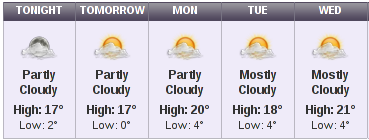 And while the difference appears to be small, what about Magdalena Contreras, ~200m higher, where many people dear to me live (and have even a window pending to be installed)?
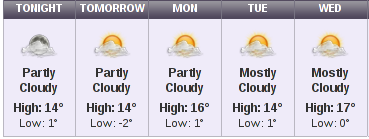 People say this cold wave is the strongest in 120 years, since records are being taken. Every year people get excited, expecting that this time we will get snow. This has only happened once in at least a century, in 1966 AFAIR. I do not think this year to be atypical.
Still, I have a reputation for being insensible to cold weather. Everybody wears heavy jackets while I still go to work with my usual long-sleeved shirt and that's it. But the last two days, I have been using jacket and scarf...
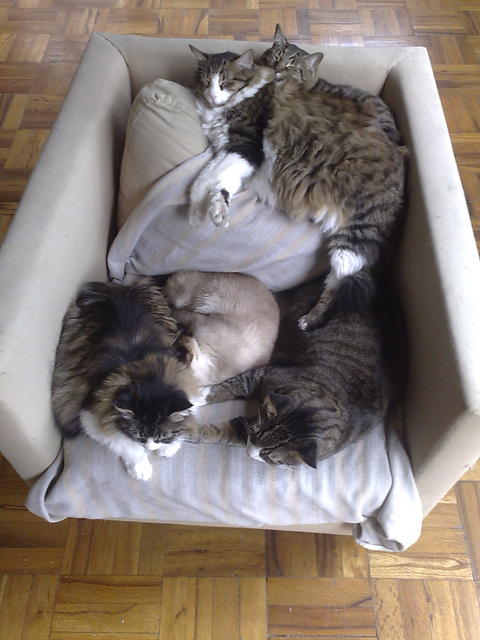
But, of course, I don't look as gratious or cute as my cats :-


 Yes, aptitude can list packages by priority, but what I wanted was a simple list of just package names. I've got two ways of getting a bare list:
 Ouch! This is the second time I am running into this so I ll write it up this time.
I used libtool via automake for building a python module. Quite unhelpfully, libtool happens to build only the static library. It does that even though I passed the -module option, which should make it clear that a static library does not help at all. There is also no mention why it skips the shared library.
After some research, my memory came back: libtool requires to pass the -rpath option to actually build shared libraries. I did not want to pass that options, since it is
 a short update on my RC-bug squashing activities:
 )

 I use Firefox and Chrome on parallel so must webs I visit on Chrome I do it as well on Firefox and today Google looks so SO different!
On Firefox the layout has blue buttons, the search layout is so different (and nice but), weird at the beginning but with so much logic after you use all the features. It has something with dates ranges that s very nice. It s better using Google on Firefox than Chrome now :-)
Here s screenshots on
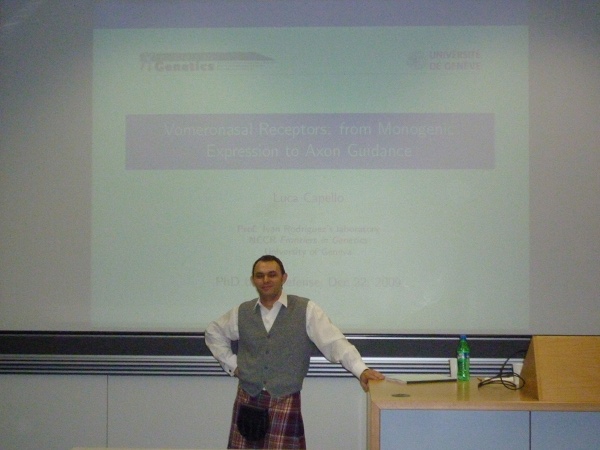
 He might too shy to tell everybody, but the world must know. Luca Capello successfully defended his PhD thesis today at Universit de Gen ve, getting a Tr s Bien mention.
I must admit that my last biology lesson was 13 years ago, so I m not sure I can really comment on his work on Vomeronasal Receptors: from Monogenic Expression to Axon Guidance. But I was very impressed by the quality of the experimental process, especially compared to what we do in computer science.
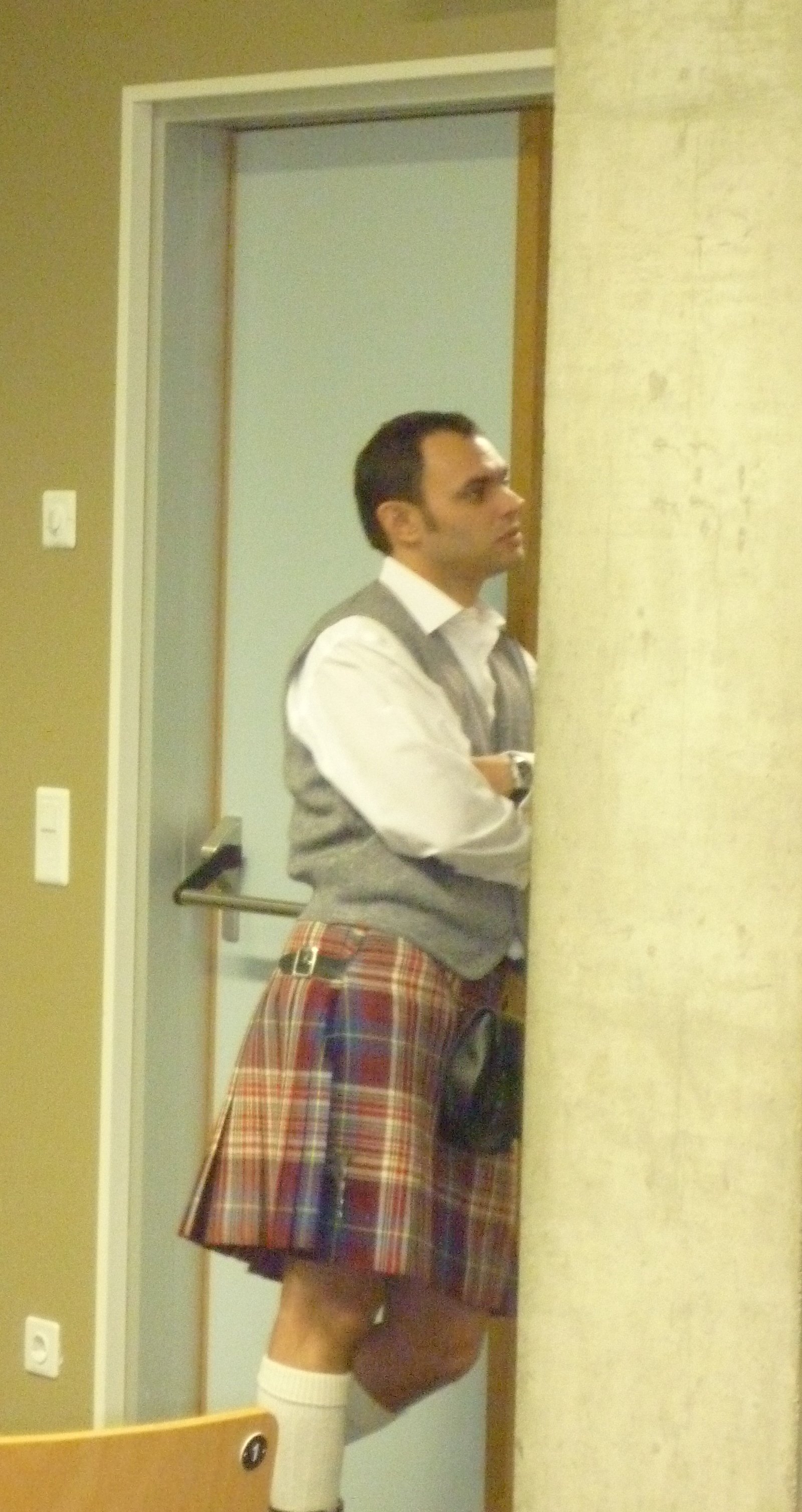
Debian was well represented at the defense, since Axel Beckert, Didier Raboud and the Debian kilt were also there.
Welcome to the list of Debian Developers holding PhD degrees, Luca!
 After the arrival of family, and the big snow, and the digging out, the
gathering at the farm was dimished from its usual numbers. Without power,
the house was lit by kerosine lanterns, candles, and the fireplace, and
this felt very right for a solstice celebration. Musicians played
old tunes in the sitting room (with the youngest kids adding percussion),
while others nibbled on turkey (from the field next door) and stuffed grape
leaves (from Turkey). Later, the cracks of overloaded trees echoed through
the valley as the bonfire blazed high and bright through the night.