Search Results: "nic"

11 October 2014

Dirk Eddelbuettel: RPushbullet 0.1.0 with a lot more awesome

A new release 0.1.0 of the RPushbullet package (interfacing the neat Pushbullet service) landed on CRAN today. It brings a number of goodies relative to the first release 0.0.2 of a few months ago: There is a whole boat load of more wickedness in the Pushbullet API so if anybody feels compelled to add it, fire off pull requests at GitHub. More details about the package are at the RPushbullet webpage and the RPushbullet GitHub repo. Courtesy of CRANberries, there is also a diffstat report for this release.

This post by Dirk Eddelbuettel originated on his Thinking inside the box blog. Please report excessive re-aggregation in third-party for-profit settings.

10 October 2014

Matthias Klumpp: Listaller + Glick: Some new ideas

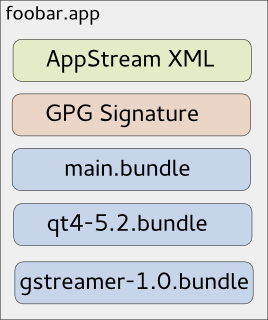
As you might know, due to invasive changes in PackageKit, I am currently rewriting the 3rd-party application installer Listaller. Since I am not the only one looking at the 3rd-party app-installation issue (there is a larger effort going on at GNOME, based on Lennarts ideas), it makes sense to redesign some concepts of Listaller. Currently, dependencies and applications are installed into directories in /opt, and Listaller contains some logic to make applications find dependencies, and to talk to the package manager to install missing things. This has some drawbacks, like the need to install an application before using it, the need for applications to be relocatable, and application-installations being non-atomic. Glick2 There is/was another 3rd-party app installer approach on the GNOME side, by Alexander Larsson, called Glick2. Glick uses application bundles (do you remember Klik from back in the days?) mounted via FUSE. This allows some neat features, like atomic installations and software upgrades, no need for relocatable apps and no need to install the application. However, it also has disadvantages. Quoting the introduction document for Glick2: Bundling isn t perfect, there are some well known disadvantages. Increased disk footprint is one, although current storage space size makes this not such a big issues. Another problem is with security (or bugfix) updates in bundled libraries. With bundled libraries its much harder to upgrade a single library, as you need to find and upgrade each app that uses it. Better tooling and upgrader support can lessen the impact of this, but not completely eliminate it. This is what Listaller does better, since it was designed to do a large effort to avoid duplication of code. Also, currently Glick doesn t have support for updates and software-repositories, which Listaller had. Combining Listaller and Glick ideas So, why not combine the ideas of Listaller and Glick? In order to have Glick share resources, the system needs to know which shared resources are available. This is not possible if there is one huge Glick bundle containing all of the application s dependencies. So I modularized Glick bundles to contain just one software component, which is e.g. GTK+ or Qt, GStreamer or could even be a larger framework (e.g. GNOME 3.14 Platform ). These components are identified using AppStream XML metadata, which allows them to be installed from the distributor s software repositories as well, if that is wanted. If you now want to deploy your application, you first create a Glick bundle for it. Then, in a second step, you bundle your application bundle with it s dependencies in one larger tarball, which can also be GPG signed and can contain additional metadata. The resulting metabundle will look like this: glick-libundle This doesn t look like we share resources yet, right? The dependencies are still bundled with the application requiring them. The trick lies in the installation step: While the application above can be executed right away without installing it, there will also be an option to install it. For the user, this will mean that the application shows up in GNOME-Shell s overview or KDEs Plasma launcher, gets properly registered with mimetypes and is if installed for all users available system-wide. Technically, this will mean that the application s main bundle is extracted and moved to a special location on the file system, so are the dependency-bundles. If bundles already exist, they will not be installed again, and the new application will simply use the existing software. Since the bundles contain information about their dependencies, the system is able to determine which software is needed and which can simply be deleted from the installation directories. If the application is started now, the bundles are combined and mounted, so the application can see the libraries it depends on. Additionally, this concept allows secure updates of applications and shared resources. The bundle metadata contains an URL which points to a bundle repository. If new versions are released, the system s auto-updater can automatically pick these up and install them this means e.g. the Qt bundle will receive security updates, even if the developer who shipped it with his/her app didn t think of updating it. Conclusion So far, no productive code exists for this I just have a proof-of-concept here. But I pretty much like the idea, and I am thinking about going further in that direction, since it allows deploying applications on the Linux desktop as well as deploying software on servers in a way which plays nice with the native package manager, and which does not duplicate much code (less risk of having not-updated libraries with security flaws around). However, there might be issues I haven t thought about yet. Also, it makes sense to look at GNOME to see how the whole 3rd-party app deployment issue develops. In case I go further with Listaller-NEXT, it is highly likely that it will make use of the ideas sketched above (comments and feedback are more than welcome!).

Martin Pitt: Running autopkgtests in the cloud

It s great to see more and more packages in Debian and Ubuntu getting an autopkgtest. We now have some 660, and soon we ll get another ~ 4000 from Perl and Ruby packages. Both Debian s and Ubuntu s autopkgtest runner machines are currently static manually maintained machines which ache under their load. They just don t scale, and at least Ubuntu s runners need quite a lot of handholding. This needs to stop. To quote Tim The Tool Man Taylor: We need more power!. This is a perfect scenario to be put into a cloud with ephemeral VMs to run tests in. They scale, there is no privacy problem, and maintenance of the hosts then becomes Somebody Else s Problem. I recently brushed up autopkgtest s ssh runner and the Nova setup script. Previous versions didn t support revert yet, tests that leaked processes caused eternal hangs due to the way ssh works, and image building wasn t yet supported well. autopkgtest 3.5.5 now gets along with all that and has a dozen other fixes. So let me introduce the Binford 6100 variable horsepower DEP-8 engine python-coated cloud test runner! While you can run adt-run from your home machine, it s probably better to do it from an autopkgtest controller cloud instance as well. Testing frequently requires copying files and built package trees between testbeds and controller, which can be quite slow from home and causes timeouts. The requirements on the controller node are quite low you either need the autopkgtest 3.5.5 package installed (possibly a backport to Debian Wheezy or Ubuntu 12.04 LTS), or run it from git ($checkout_dir/run-from-checkout), and other than that you only need python-novaclient and the usual $OS_* OpenStack environment variables. This controller can also stay running all the time and easily drive dozens of tests in parallel as all the real testing action is happening in the ephemeral testbed VMs. The most important preparation step to do for testing in the cloud is quite similar to testing in local VMs with adt-virt-qemu: You need to have suitable VM images. They should be generated every day so that the tests don t have to spend 15 minutes on dist-upgrading and rebooting, and they should be minimized. They should also be as similar as possible to local VM images that you get with vmdebootstrap or adt-buildvm-ubuntu-cloud, so that test failures can easily be reproduced by developers on their local machines. To address this, I refactored the entire knowledge how to turn a pristine default vmdebootstrap or cloud image into an autopkgtest environment into a single /usr/share/autopkgtest/adt-setup-vm script. adt-buildvm-ubuntu-cloud now uses this, you shold use it with vmdebootstrap --customize (see adt-virt-qemu(1) for details), and it s also easy to run for building custom cloud images: Essentially, you pick a suitable pristine image, nova boot an instance from it, run adt-setup-vm through ssh, then turn this into a new adt specific "daily" image with nova image-create. I wrote a little script create-nova-adt-image.sh to demonstrate and automate this, the only parameter that it gets is the name of the pristine image to base on. This was tested on Canonical's Bootstack cloud, so it might need some adjustments on other clouds. Thus something like this should be run daily (pick the base images from nova image-list):
  $ ./create-nova-adt-image.sh ubuntu-utopic-14.10-beta2-amd64-server-20140923-disk1.img
  $ ./create-nova-adt-image.sh ubuntu-utopic-14.10-beta2-i386-server-20140923-disk1.img
This will generate adt-utopic-i386 and adt-utopic-amd64. Now I picked 34 packages that have the "most demanding" tests, in terms of package size (libreoffice), kernel requirements (udisks2, network manager), reboot requirement (systemd), lots of brittle tests (glib2.0, mysql-5.5), or needing Xvfb (shotwell):
  $ cat pkglist
  apport
  apt
  aptdaemon
  apache2
  autopilot-gtk
  autopkgtest
  binutils
  chromium-browser
  cups
  dbus
  gem2deb
  glib-networking
  glib2.0
  gvfs
  kcalc
  keystone
  libnih
  libreoffice
  lintian
  lxc
  mysql-5.5
  network-manager
  nut
  ofono-phonesim
  php5
  postgresql-9.4
  python3.4
  sbuild
  shotwell
  systemd-shim
  ubiquity
  ubuntu-drivers-common
  udisks2
  upstart
Now I created a shell wrapper around adt-run to work with the parallel tool and to keep the invocation in a single place:
$ cat adt-run-nova
#!/bin/sh -e
adt-run "$1" -U -o "/tmp/adt-$1" --- ssh -s nova -- \
    --flavor m1.small --image adt-utopic-i386 \
    --net-id 415a0839-eb05-4e7a-907c-413c657f4bf5
Please see /usr/share/autopkgtest/ssh-setup/nova for details of the arguments. --image is the image name we built above, --flavor should use a suitable memory/disk size from nova flavor-list and --net-id is an "always need this constant to select a non-default network" option that is specific to Canonical Bootstack. Finally, let' run the packages from above with using ten VMs in parallel:
  parallel -j 10 ./adt-run-nova -- $(< pkglist)
After a few iterations of bug fixing there are now only two failures left which are due to flaky tests, the infrastructure now seems to hold up fairly well. Meanwhile, Vincent Ladeuil is working full steam to integrate this new stuff into the next-gen Ubuntu CI engine, so that we can soon deploy and run all this fully automatically in production. Happy testing!

9 October 2014

Lisandro Dami&aacute;n Nicanor P&eacute;rez Meyer: Qt 5.3.2 in Wheezy-backports: just a few hours away

In more or less 24 hs a few days most of Qt 5.3.2 will be available as a Wheezy backport. That means that if you are using Debian stable you don't need to wait for Jessie: just wait a few hours, add wheezy-backports's repo to your sources.list and get it :)

The rest of Qt 5 will arrive soon.

This is the same version that will be shipped in Jessie, so whatever you develop with it will work with the next Debian stable release :)

Don't forget: you better start porting your Qt4 apps to Qt5!

Note 2014-10-10: uups, it will still take a few days, but it will be there soon :)

Note 2014-10-15: currently building!

8 October 2014

Ian Donnelly: A Comparison of Elektra Merge and Git Merge

Hi everybody, We have gotten some inquires about how Elektra s merge functionality compares to the merge functionality built into git: git merge-file. I am glad to say that Elektra outperforms git s merge functionality in the same ways it outperforms diff3 when applied to configuration files. Obviously, git s merge functionality does a much better job with source-code as that is not the goal of elektra. In that previous example, I showed that because diff3 is lined based, where Elektra is not (unless you mount a file using the line plugin). The example I used before, and I will go over again, is using smb.conf and in-line comments. Many of our storage plug-ins understand the difference between comments and actual configuration data. So if a configuration file has an inline comment like so:
max log size = 10000 ; Controls the size of the log file (in KiB)
we can compare the actual Keys, value pairs between versions max log size = 10000 and deal with the comments separately. As a result, if we have a base:
max log size = 1000 ; Size in KiB

Ours:
max log size = 10000 ; Size in KiB

Theirs:
max log size = 1000 ; Controls the size of the log file (in KiB)

The result using elektra-merge would be:
max log size = 10000 ; Controls the size of the log file (in KiB)
Just like diff3, git merge-file can only compare these lines as lines, and thus there is a conflict. When running git merge-file smb.conf.ours smb.conf.base smb.conf.theirs we get the following output showing a conflict:
<<<<<<< smb.conf.ours
max log size = 2000 ; Size in KiB
=======
max log size = 1000 ; Controls the size of the log file (in KiB)
>>>>>>> smb.conf.theirs
This really shows the strength of Elektra s plugin system and why it makes merge an obvious use-case of Elektra. I hope this example makes it clear why using Elektra s merge functionality is advantageous over git s merge functionality. Once again I would like to stress the importance of quality storage plug-ins for Elektra. The more quality plugins we have the more powerful Elektra can be. If you are interested in plugins and would like to help us by adding functionality to Elektra by creating a new plug-in be sure to read my basic tutorial on how to do so. Sincerely,
Ian Donnelly

6 October 2014

Julian Andres Klode: Acer Chromebook 13 (FHD): Initial impressions

Today, I received my Acer Chromebook 13, in the glorious FullHD variant with 4GB RAM. For those of you who don t know it, the Acer Chromebook 13 is a 13.3 inch chromebook powered by a Tegra K1 cpu. Chromebook This version cannot be ordered currently, only pre-orders were shipped yesterday (at least here in Germany). I cannot even review it on Amazon (despite having it bought there), as they have not enabled reviews for it yet. The device feels solidly built, and looks good. It comes in all-white matte plastic and is slightly reminiscent of the old white MacBooks. The keyboard is horrible, there s no well defined pressure point. It feels like your typing on a pillow. The display is OK, an IPS would be a lot nicer to work with, though. Oh, and it could be brighter. I do not think that using it outside on a sunny day would be a good idea. The speakers are loud and clear compared to my ThinkPad X230. The performance of the device is about acceptable (unfortunately, I do not have any comparison in this device class). Even when typing this blog post in the visual wordpress editor, I notice some sluggishness. Opening the app launcher or loading the new tab page while music is playing makes the music stop for or skip a few ms (20-50ms if I had to guess). Running a benchmark in parallel or browsing does not usually cause this stuttering, though. There are still some bugs in Chrome OS: Loading the Play Books library the first time resulted in some rendering issues. The Browser process always consumes at least 10% CPU, even when idling, with no page open; this might cause some of the sluggishness I mentioned above. Also watching Flash videos used more CPU than I expected given that it is hardware accelerated. Finally, Netflix did not work out of the box, despite the Chromebook shipping with a special Netflix plugin. I always get some unexpected issue-type page. Setting the user agent to Chrome 38 from Windows, thus forcing the use of the EME video player instead of the Netflix plugin, makes it work. I reported these software issues to Google via Alt+Shift+I. The issues appeared on the current version of the stable channel, 37.0.2062.120. What s next? I don t know.
Filed under: Chromebook

5 October 2014

Stefano Zacchiroli: je code

je.code(); promoting programming (in French) jecode.org is a nice initiative by, among others, my fellow Debian developer and university professor Martin Quinson. The goal of jecode.org is to raise awareness about the importance of learning the basics of programming, for everyone in modern societies. jecode.org targets specifically francophone children (hence the name, for "I code"). I've been happy to contribute to the initiative with my thoughts on why learning to program is so important today, joining the happy bunch of "codeurs" on the web site. If you read French, you can find them reposted below. If you also write French, you might want to contribute your thoughts on the matter. How? By forking the project of course!
Pourquoi codes-tu ? Tout d'abord, je code parce que c'est une activit passionnante, dr le, et qui permet de prouver le plaisir de cr er. Deuxi mement, je code pour automatiser les taches r p titives qui peuvent rendre p nibles nos vies num riques. Un ordinateur est con u exactement pour cela: lib rer les tres humains des taches stupides, pour leur permettre de se concentrer sur les taches qui ont besoin de l'intelligence humaine pour tre r solues. Mais je code aussi pour le pur plaisir du hacking, i.e., trouver des utilisations originelles et inattendues pour des logiciels existants. Comment as-tu appris ? Compl tement au hasard, quand j' tais gamin. 7 ou 8 ans, je suis tomb dans la biblioth que municipale de mon petit village, sur un livre qui enseignait programmer en BASIC travers la m taphore du jeu de l'oie. partir de ce jour j'ai utilis le Commodore 64 de mon p re beaucoup plus pour programmer que pour les jeux vid o: coder est tellement plus dr le! Plus tard, au lyc e, j'ai pu appr cier la programmation structur e et les avantages normes qu'elle apporte par rapport aux GO TO du BASIC et je suis devenu un accro du Pascal. Le reste est venu avec l'universit et la d couverte du Logiciel Libre: la caverne d'Ali Baba du codeur curieux. Quel est ton langage pr f r ? J'ai plusieurs langages pr f r s. J'aime Python pour son minimalisme syntactique, sa communaut vaste et bien organis e, et pour l'abondance des outils et ressources dont il dispose. J'utilise Python pour le d veloppement d'infrastructures (souvent quip es d'interfaces Web) de taille moyenne/grande, surtout si j'ai envie des cr er une communaut de contributeurs autour du logiciel. J'aime OCaml pour son syst me de types et sa capacit de capturer les bonnes propri t s des applications complexes. Cela permet au compilateur d'aider norm ment les d veloppeur viter des erreurs de codage comme de conception. J'utilise aussi beaucoup Perl et le shell script (principalement Bash) pour l'automatisation des taches: la capacit de ces langages de connecter d'autres applications est encore in gal e. Pourquoi chacun devrait-il apprendre programmer ou tre initi ? On est de plus en plus d pendants des logiciels. Quand on utilise une lave-vaisselle, on conduit une voiture, on est soign dans un h pital, quand on communique sur un r seau social, ou on surfe le Web, nos activit s sont constamment ex cut es par des logiciels. Celui qui contr le ces logiciels contr le nos vies. Comme citoyens d'un monde qui est de plus en plus num rique, pour ne pas devenir des esclaves 2.0, nous devons pr tendre le contr le sur le logiciel qui nous entoure. Pour y parvenir, le Logiciel Libre---qui nous permet d'utiliser, tudier, modifier, reproduire le logiciel sans restrictions---est un ingr dient indispensable. Aussi bien qu'une vaste diffusion des comp tences en programmation: chaque bit de connaissance dans ce domaine nous rende tous plus libres.

Thomas Goirand: OpenStack packaging activity: September 2014

I decided I d post this monthly. It may be a bit boring, sorry, but I think it s a nice thing to have this public. The log starts on the 6th, because on the 4th I was back from Debconf (after a day in San Francisco, plus 20 hours of traveling and 15 hours of time gap). It is to be noted that every time something is uploaded in Debian for Icehouse (in Sid), or for Juno (in Experimental), there s also a corresponding backport produced for Wheezy. Saturday 6th & Sunday 7th:
packaged libjs-twitter-bootstrap-wizard (in new queue)
Uploaded python-pint after reviewing the debian/copyright
Worked on updating python-eventlet in Experimental, and adding Python3 support. It seems Python3 support isn t ready yet, so I will probably remove that feature from the package update.
Tried to apply the Django 1.7 patches for python-django-bootstrap-form. They didn t work, but Raphael came back on Monday morning with new versions
of the patches, which should be good this time.
Helped the DSA (Debian System Administrators) with the Debian OpenStack cloud. It s looking good and working now (note: I helped them during Debconf 14).
Started a page about adding more tasksel tasks: https://wiki.debian.org/tasksel/MoreTasks. It s looking like Joey Hess is adding new tasks by default in Tasksel, with OpenStack compute node and OpenStack proxy node . It will be nice to have them in the default Debian installer! :)
Packaged and uploaded python-dib-utils, now in NEW queue. Monday 8th:
Uploaded fixed python-django-bootstrap-form with patch for Django 1.7.
Packaged and uploaded python-pysaml2.
Finilized and uploaded python-jingo which is needed for python-django-compressor unit tests
Finalized and uploaded python-coffin which is needed for python-django-compressor unit tests
Worked on running the unit tests for python-django-compressor, as I needed to know if it could work with Django 1.7. It was hard to find the correct way to run the unit tests, but finally, they all passed. I will add the unit tests once coffin and jingo will be accepted in Sid.
Applied patches in the Debian BTS for python-django-openstack-auth and Django 1.7. Uploaded the fixed package.
Fixed python-django-pyscss compat with Django 1.7, uploaded the result.
Updated keystone to Juno b3.
Built Wheezy backports of some JS libs needed for Horizon in Juno, which I already uploaded to Sid last summer:
o libjs-twitter-bootstrap-datepicker
o libjs-jquery.quicksearch
o libjs-spin.js
Upstreamed the Django 1.7 patch for python-django-openstack-auth: https://review.openstack.org/119972 Tuesday 9:
Updated and uploaded Swift 2.1.0. Added swift-object-expirer package to it, together with init script. Wednesday 10:
Basically, cleaned the Debian BTS of almost all issues today :P
Added it.po update to nova (Closes: #758305).
Backported libvirt 1.2.7 to Wheezy, to be able to close this bug: https://bugs.debian.org/757548 (eg: changed dependency from libvirt-bin to libvirt-daemon-system)
Uploaded the fixed nova package using libvirt-daemon-system
Upgraded python-trollius to 1.0.1
Fixed tuskar-ui to work with Django 1.7. Disabled pep8 tests during build. Added build-conflicts: python-unittest2.
Fixed python-django-compressor for Django 1.7, and now running unit tests with it, after python-coffin and python-jingo got approved in Sid by FTP masters.
Fixed python-xstatic wrong upstream URLs.
Added it.po debconf translation to Designate.
Added de.po debconf translation to Tuskar.
Fixed copyright holders in python-xstatic-rickshaw
Added python-passlib as dependency for python-cinder. Remaining 3 issues in the BTS: ceilometer FTBFS, Horizon unit test with Django 1.7, Designate fail to install. All of the 3 are harder to fix, and I may try to do so later this week. Thursday 11:
Fixed python-xstatic-angular and python-xstatic-angular-mock to deal with the new libjs-angularjs version (closes 2 Debian RC bugs: uninstallable).
Fixed ceilometer FTBFS (Closes rc bug) Friday 12:
Fixed wrong copyright file for libjs-twitter-bootstrap-wizard after the FTP masters told me, and reuploaded to Sid.
Reuploaded wrong upload of ceilometer (wrong hash for orig.tar.xz)
Packaged and uploaded python-xstatic-bootstrap-scss
Packaged and uploaded python-xstatic-font-awesome
Packaged and uploaded ntpstat Monday 15:
packaged and uploaded python-xstatic-jquery.bootstrap.wizard
Fixed python-xstatic-angular-cookies to use new libjs-angularjs version (fixed version dependencies)
Fixed Ceilometer FTBFS (Closes: #759967)
Backported all python-xtatic packages to Wheezy, including all dependencies. This includes backporting of a bunch of packages from nodejs which were needed as build-dependencies (around 70 packages ). Filed about 5 or 6 release critical bugs as some nodejs packages were not buildable as-is.
Fixed some too restrictive python-xstatic-angular* dependencies on the libjs-angularjs (the libjs-angularjs increased version). Tuesday 16:
Uploaded updates to Experimental:
o python-eventlet 0.15.2 (this one took a long time as it needed maintenance)
o oslo-config
o python-oslo.i18n
Uploaded to Sid:
o python-diskimage-builder 0.1.30-1
o python-django-pyscss 1.0.2-1
Fixed horizon libapache-mode-wsgi to be a dependency of openstack-dashboard-apache and not just openstack-dashboard (in both Icehouse & Juno).
Removed the last failing Django 1.7 unit test from Horizon. It doesn t seem relevant anyway.
Backported python-netaddr 0.7.12 to Wheezy (needed by oslo-config).
Started working on oslo.rootwrap, though it failed to build in Wheezy with a unit test failure. Wednesday 17:
To experimental:
o Uploaded oslo.rootwrap 1.3.0.0~a1. It needed a build-depends on iproute2 because of a new test.
o Uploaded python-oslo.utils 0.3.0
o Uploaded python-oslo.vmware 0.6.0, fixed sphinx-build conf.py and filed a bug about it: https://bugs.launchpad.net/oslo.vmware/+bug/1370370 plus emailed the commiter of the issue (which appeared 2 weeks ago).
o Uploaded python-pycadf 0.6.0
o Uploaded python-pyghmi 0.6.17
o Uploaded python-oslotest 1.1.0.0~a2, including patch for Wheezy, which I also submited upstream: https://review.openstack.org/122171/
o Uploaded glanceclient 0.14.0, added a patch to not use the embedded version of urllib3 in requests: https://review.openstack.org/122184
To Sid:
o Uploaded python-zake_0.1.6-1 Thesday 18:
Backported zeromq3-4.0.4+dfs, pyzmq-14.3.1, pyasn1-0.1.7, python-pyasn1-modules-0.0.5
Uploaded keystoneclient 0.10.1, fixed the saml2 unit tests which were broken using testtools >= 0.9.39. Filed bug, and warned code author: https://bugs.launchpad.net/python-keystoneclient/+bug/1371085
Uploade swiftclient 2.3.0 to experimental.
Uploaded ironicclient 0.2.1 to experimental.
Uploaded saharaclient, filed bug with saharaclient expecting an up and running keystone server: https://bugs.launchpad.net/python-saharaclient/+bug/1371177 Friday 19:
Uploaded keystone Juno b3, filed but about unit tests downloading with git, while no network access should be performed during package build (forbidden by
Debian policy)
Uploaded python-oslo.db 1.0.0 which I forgot in the dependency list, and which was needed for Neutron.
Uploaded nova 2014.2~b3-1 (added a new nova-serialproxy service daemon to the nova-consoleproxy) Saturday 20:
Uploaded Neutron Juno b3.
Uploaded python-retrying 1.2.3 (was missing from depends upload)
Uploaded Glance Juno b3.
Uploaded Cinder Juno b3.
Fixed python-xstatic-angular-mock which had a .pth packaged, as well as the data folder (uploaded debian release -3).
Fixed missing depends and build-conflicts in python-xstatic-jquery. Sunday 21:
Dropped python-pil & python-django-discover-runner from runtime Depends: of python-django-pyscss, as it s only needed for tests. It also created a conflicts, because python-django-discover-runner depends on python-unittest2 and horizon build-conflicts with it.
Forward-ported the Django 1.7 patches for Horizon. Opened new patch: https://review.openstack.org/122992 (since the old fix has gone away after a refactor of the unit test).
Uploaded Horizon Juno b3.
Applied https://review.openstack.org/#/c/122768/ to the keystone package, so that it doesn t do git clone of the keystoneclient during build.
Uploaded oslo.messaging 1.4.0.0 (which really is 1.4.0) to experimental
Uploaded oslo.messaging 1.4.0.0+really+1.3.1-1 to fix the issue in Sid/Jessie after the wrong upload (due to Zul wrong tagging of Keystone in the 2014.1.2 point release). Monday 22:
Uploaded ironic 2014.2~b3-1 to experimental
Uploaded heat 2014.2~b3-1 (with some fixes for sphinx doc build)
Uploaded ceilometer 2014.2~b3-1 to experimental
Uploaded openstack-doc-tools 0.19-1 to experimental
Uploaded openstack-trove 2014.2~b3-1 to experimental Tuesday 23:
Uploaded python-neutronclient with fixed version number for cliff and six. This missing requirement for cliff version produced an error in Trove, which I don t want to happen again.
Added fix for unit tests in Trove: https://review.openstack.org/#/c/123450/1,publish
Uploaded oslo.messaging 1.4.1 in Experimental, fixing the version conflicts with the one in Sid/Jessie. Thanks to Doug Hellman for doing the tagging. I will need to upload new versions of the following packages with the >= 1.4.1 depends:
> ceilometer
> ironic
> keystone
> neutron
> nova
> oslo-config
> oslo.rootwrap
> oslo.i18n
> python-pycadf
See http://lists.openstack.org/pipermail/openstack-dev/2014-September/046795.html for more explanation about the mess I m repairing
Uploaded designate Juno b3. Wednesday 24:
Uploaded oslosphinx 2.2.0.0
Uploaded update to django-openstack-auth (new last minute requirement for Horizon).
Uploaded final oslo-config package version 1.4.0.0 (really is 1.4.0)
Packaged and uploaded Sahara. This needs some tests by someone else as I don t even know how it works. Thuesday 25:
Uploaded python-keystonemiddleware 1.0.0-3, fixing CVE-2014-7144] TLS cert verification option not honoured in paste configs. https://bugs.debian.org/762748
Packaged and uploaded python-yaql, sent pull request for fixing print statements into Python3 compatible print function calls: https://github.com/ativelkov/yaql/pull/15
Packaged and uploaded python-muranoclient.
Started the packaging of Murano (not finished yet).
Uploaded python-keystoneclient 0.10.1-2 with the CVE-2014-7144 fix to Sid, with urgency=high. Uploaded 0.11.1-1 to Experimental.
Uploaded python-keystonemiddleware fix for CVE-2014-7144.
Uploaded openstack-trove 2014.2~b3-3 with last unit test fix from https://review.openstack.org/#/c/123450/ Friday 26:
Uploaded a fix for murano-agent, which makes it run as root.
Finished the packaging of Murano
Started packaging murano-dashboard, sent this patch to fix the wrong usage of the /usr/bin/coverage command: https://review.openstack.org/124444
Fixed wrong BASE_DIR in python-xstatic-angular and python-xstatic-angular-mock Saturday 27:
uploaded python-xstatic-boostrap-scss which I forgot to upload :(
uploaded python-pyscss 1.2.1 Sunday 28:
After a long investigation, I found out that the issue when installing the openstack-dasboard package was due to a wrong patch I did for Python 3.2 in Wheezy in python-pyscss. Corrected the patch from version 1.2.1-1, and uploaded version 1.2.1-2, the dashboard now installs correctly. \o/
Did a new version of an Horizon patch at https://review.openstack.org/122992/ to address Django 1.7 compat. Monday 29:
Uploaded new version of python-pyscss fixing the last issue with Python 3 (there was a release critical bug on it).
Uploaded fixup for python-django-openstack-auth fail to build in the Sid version, which was broken since the last upload of keystoneclient (which makes some of its API now as private).
Uploaded python-glance-store 0.1.8, including Ubuntu patch to fix unit tests.
Reviewed the packaging of python-strict-rfc3339 (see https://bugs.debian.org761152).
Uploaded Sheepdog with fix in the init script to start after corosync (Closes: #759216).
Uploaded pt_BR.po Brazilian Portuguese debconf templates translation for nova Icehouse in Sid (only commited it in Git for Juno).
Same for Glance. Tuesday 30:
Added Python3 support in python-django-appconf, uploaded to Sid
Upgraded to python-django-pyscss 1.0.3, and fixed broken unit tests with this new release under Django 1.7. Created pull request: https://github.com/fusionbox/django-pyscss/pull/22
Fixed designate requirements.txt in Sid (Icehouse) to allow SQLA 0.9.x. Uploaded resulting package to Sid.
Uploaded new Debian fix for python-tooz: kills memcached only if the package scripts started it (plus cleans .testrepository on clean).
Uploaded initial release of murano
Uploaded python-retrying with patch from Ubuntu to remove embedded copy of six.py code.
Uploaded python-oslo.i18n 1.0.0 to experimental (same as before, just bump of version #)
Uploaded python-oslo.utils 1.0.0 to experimental (same as before, just bump of version #)
Uploaded Keystone Juno RC1
Uploaded Glance Juno RC1

4 October 2014

Steve Kemp: Krak w was nice

We returned safely from Krak w, despite a somewhat turbulent flight home. There were many pictures taken, but thus far I've only posted a random night-time shot. Perhaps more will appear in the future. In other news I've just made a new release of the chronicle blog compiler, So 5.0.7 should shortly appear on CPAN. The release contains a bunch of minor fixes, and some new facilities relating to templates. It seems likely that in the future there will be the ability to create "static pages" along with the blog-entries, tag-clouds & etc. The suggestion was raised on the github issue tracker and as a proof of concept I hacked up a solution which works entirely via the chronicle plugin-system, proving that the new development work wasn't a waste of time - especially when combined with the significant speedups in the new codebase. (ObRandom: Mailed the Debian package-mmaintainer to see if there was interest in changing. Also mailed a couple of people I know who are using the old code to see if they had comments on the new code, or had any compatibility issues. No replies from either, yet. *shrugs*)

2 October 2014

Andrew Pollock: [opinion] On Islamaphobia

It's taken me a while to get sufficiently riled up about Australia's current Islamaphobia outbreak, but it's been brewing in me for a couple of weeks. For the record, I'm an Atheist, but I'll defend your right to practise your religion, just don't go pushing it on me, thank you very much. I'm also not a huge fan of Islam, because it does seem to lend itself to more violent extremism than other religions, and ISIS/ISIL/IS (whatever you want to call them) aren't doing Islam any favours at the moment. I'm against extremism of any stripes though. The Westboro Baptists are Christian extremists. They just don't go around killing people. I'm also not a big fan of the burqa, but again, I'll defend a Muslim woman's right to choose to wear one. They key point here is choice. I got my carpets cleaned yesterday by an ethnic couple. I like accents, and I was trying to pick theirs. I thought they may have been Turkish. It turned out they were Kurdish. Whenever I hear "Kurd" I habitually stick "Bosnian" in front of it after the Bosnian War that happened in my childhood. Turns out I wasn't listening properly, and that was actually "Serb". Now I feel dumb, but I digress. I got chatting with the lady while her husband did the work. I got a refresher on where most Kurds are/were (Northern Iraq) and we talked about Sunni versus Shia Islam, and how they differed. I learned a bit yesterday, and I'll have to have a proper read of the Wikipedia article I just linked to, because I suspect I'll learn a lot more. We briefly talked about burqas, and she said that because they were Sunni, they were given the choice, and they chose not to wear it. That's the sort of Islam that I support. I suspect a lot of the women running around in burqas don't get a lot of say in it, but I don't think banning it outright is the right solution to that. Those women need to feel empowered enough to be able to cast off their burqas if that's what they want to do. I completely agree that a woman in a burqa entering a secure place (for example Parliament House) needs to be identifiable (assuming that identification is verified for all entrants to Parliament House). If it's not, and they're worried about security, that's what the metal detectors are for. I've been to Dubai. I've seen how they handle women in burqas at passport control. This is an easily solvable problem. You don't have to treat burqa-clad women as second class citizens and stick them in a glass box. Or exclude them entirely.

1 October 2014

Keith Packard: chromium-dri3

Chromium (the browser) and DRI3 I got a note on IRC a week ago that Chromium was crashing with DRI3. The Google team working on Chromium eventually sent me a link to the bug report. That's secret Google stuff, so you won't be able to follow the link, even though it's a bug in a free software application when running on free software drivers. There's a bug report in the freedesktop bugzilla which looks the same to me. In both cases, the recommended fix was to switch from DRI3 back to DRI2. That's not exactly a great plan, given that DRI3 offers better security between GPU-using applications, which seems like a pretty nice thing to have when you're running random GL applications from the web. Chromium Sandboxing I'm not entirely sure how it works, but Chromium creates a process separate from the main browser engine to talk to the GPU. That process has very limited access to the operating system via some fancy library adventures. Presumably, the hope is that security bugs in the GL driver would be harder to leverage into a remote system exploit. Debugging in this environment is a bit tricky as you can't simply run chromium under gdb and expect to be able to set breakpoints in the GL driver. Instead, you have to run chromium with a magic flag which causes the GPU process to pause before loading the driver so you can connect to it with gdb and debug from there, along with a flag that lets you see crashes within the gpu process and the usual flag that causes chromium to ignore the GPU black list which seems to always include the Intel driver for one reason or another:
$ chromium --gpu-startup-dialog --disable-gpu-watchdog --ignore-gpu-blacklist
Once Chromium starts up, it will print out a message telling you to attach gdb to the GPU process and send that process a SIGUSR1 to continue it. Now you can happily debug and get a stack trace when the crash occurs. Locating the Bug The bug manifested with a segfault at the first access to a DRI3-allocated buffer within the application. We've seen this problem in the past; whenever buffer allocation fails for some reason, the driver ignores the problem and attempts to de-reference through the (NULL) buffer pointer, causing a segfault. In this case, Chromium called glClear, which tried (and failed) to allocate a back buffer causing the i965 driver to subsequently segfault. We should probably go fix the i965 driver to not segfault when buffer allocation fails, but that wouldn't provide a lot of additional information. What I have done is add some error messages in the DRI3 buffer allocation path which at least tell you why the buffer allocation failed. That patch has been merged to Mesa master, and should also get merged to the Mesa stable branch for the next stable release. Once I had added the error messages, it was pretty easy to see what happened:
$ chromium --ignore-gpu-blacklist
[10618:10643:0930/200525:ERROR:nss_util.cc(856)] After loading Root Certs, loaded==false: NSS error code: -8018
libGL: pci id for fd 12: 8086:0a16, driver i965
libGL: OpenDriver: trying /local-miki/src/mesa/mesa/lib/i965_dri.so
libGL: Can't open configuration file /home/keithp/.drirc: Operation not permitted.
libGL error: DRI3 Fence object allocation failure Operation not permitted
The first two errors were just the sandbox preventing Mesa from using my GL configuration file. I'm not sure how that's a security problem, but it shouldn't harm the driver much. The last error is where the problem lies. In Mesa, the DRI3 implementation uses a chunk of shared memory to hold a fence object that lets Mesa know when buffers are idle without using the X connection. That shared memory segment is allocated by creating a temporary file using the O_TMPFILE flag:
fd = open("/dev/shm", O_TMPFILE O_RDWR O_CLOEXEC O_EXCL, 0666);
This call cannot fail as /dev/shm is used by glibc for shared memory objects, and must therefore be world writable on any glibc system. However, with the Chromium sandbox enabled, it returns EPERM. Running Without a Sandbox Now that the bug appears to be in the sandboxing code, we can re-test with the GPU sandbox disabled:
$ chromium --ignore-gpu-blacklist --disable-gpu-sandbox
And, indeed, without the sandbox getting in the way of allocating a shared memory segment, Chromium appears happy to use the Intel driver with DRI3. Final Thoughts I looked briefly at the Chromium sandbox code. It looks like it needs to know intimate details of the OpenGL implementation for every possible driver it runs on; it seems to contain a fixed list of all possible files and modes that the driver will pass to open(2). That seems incredibly fragile to me, especially when used in a general Linux desktop environment. Minor changes in how the GL driver operates can easily cause the browser to stop working.

Junichi Uekawa: Start of fourth quarter this year.

Start of fourth quarter this year. How is everything going ?

30 September 2014

Lisandro Dami&aacute;n Nicanor P&eacute;rez Meyer: Qt5 in Jessie: we will release with 5.3.2

Qt 5.3.2 has entered testing a few hours ago. This will be the version of Qt we will release with Debian Jessie, and it happens to be a nice coincidence, because upstream focused in stability for the 5.3 branch.

I'll now focus in fixing as many bugs as possible and in backporting Qt5 to Wheezy.

Let me warn you: if you are an upstream for a Qt4 based project be sure to be ready to switch to Qt5. If you are a maintainer of a Qt4 based project you better start asking your upstream to be ready for it :)

Gunnar Wolf: Diego G mez: Imprisoned for sharing

I got word via the Electronic Frontier Foundation about an act of injustice happening to a person for doing... Not only what I do day to day, but what I promote and believe to be right: Sharing academic articles. Diego is a Colombian, working towards his Masters degree on conservation and biodiversity in Costa Rica. He is now facing up to eight years imprisonment for... Sharing a scholarly article he did not author on Scribd. Many people lack the knowledge and skills to properly set up a venue to share their articles with people they know. Many people will hope for the best and expect academic publishers to be fundamentally good, not to send legal threats just for the simple, noncommercial act of sharing knowledge. Sharing knowledge is fundamental for science to grow, for knowledge to rise. Besides, most scholarly studies are funded by public money, and as the saying goes, they should benefit the public. And the public is everybody, is all of us. And yes, if this sounds in any way like what drove Aaron Swartz to his sad suicide early this year... It is exactly the same thing. Thankfully (although, sadly, after the sad fact), thousands of people strongly stood on Aaron's side on that demand. Please sign the EFF petition to help Diego, share this, and try to spread the word on the real world needs for Open Access mandates for academics! Some links with further information:

28 September 2014

Ean Schuessler: RoboJuggy at JavaOne

A few months ago I was showing my friend Bruno Souza the work I had been doing with my childhood friend and robotics genius, David Hanson. I had been watching what David was going through in his process of creating life-like robots with the limited industrial software available for motor control. I had suggested to David that binding motors to Blender control structures was a genuinely viable possibility. David talked with his forward looking CEO, Jong Lee, and they were gracious enough to invite me to Hong Kong to make this exciting idea a reality. Working closely the HRI team (Vytas, Gabrielos, Fabien and Davide) with David s friend and collaborators at OpenCog (Ben Goertzel, Mandeep, David, Jamie, Alex and Samuel) a month long creative hack-fest yielded pretty amazing results. Bruno is an avid puppeteer, a global organizer of java user groups and creator of Juggy the Java Finch, mascot of Java users and user groups everywhere. We started talking about how cool it would be to have a robot version of Juggy. When I was in China I had spent a little time playing with Mark Tilden s RSMedia and various versions of David s hobby servo based emotive heads. Bruno and I did a little research into the ROS Java bindings for the Robot Operating System and decided that if we could make that part of the picture we had a great and fun idea for a JavaOne talk. Hunting and gathering I tracked down a fairly priced RSMedia in Alaska, Bruno put a pair of rubber Juggy puppet heads in the mail and we were on our way.
We had decided that we wanted RoboJuggy to be able to run about untethered and the new RaspberryPi B+ seemed like the perfect low power brain to make that happen. I like the Debian based Raspbian distributions but had lately started using the netinst Pi images. These get your Pi up and running in about 15 minutes with a nicely minimalistic install instead of a pile of dependencies you probably don t need. I d recommend anyone interested I m duplicating our work to stay their journey there: Raspbian UA Net Installer Robots seem like an embedded application but ROS only ships packages for Ubuntu. I was pleasantly surprised that there are very good instructions for building ROS from source on the Pi. I ended up following these instructions: Setting up ROS Hydro on the Raspberry Pi Building from source means that all your install ends up being isolated (in ROS speak) and your file locations and build instructions end up being subtly current. As explained in the linked article, this process is also very time consuming. One thing I would recommend once you get past this step is to use the UNIX dd command to back up your entire SD card to a desktop. This way if you make a mess of things in later steps you can restore your install to a pristine Raspbian+ROS install. If your SD drive was on /dev/sdb you might use something like this to do the job:
sudo dd bs=4M if=/dev/sdb   gzip > /home/your_username/image date +%d%m%y .gz
Getting Java in the mix Once you have your Pi all set up with minimal Raspbian and ROS you are going to want a Java VM. The Pi runs the ARM CPU so you need the corresponding version of Java. I tried getting things going initially with OpenJDK and I had some issues with that. I will work on resolving that in the future because I would like to have a 100% Free Software kit for this but since this was for JavaOne I also wanted JDK8, which isn t available in Debian yet. So, I downloaded the Oracle JDK8 package for ARM. Java 8 JDK for ARM At this point you are ready to start installing the ROS Java packages. I m pretty sure the way I did this initially is wrong but I was trying to reconcile the two install procedures for ROS Java and ROS Hydro for Raspberry Pi. I started by following these directions for ROS Java but with a few exceptions (you have to click the install from source link in the page to see the right stuff: Installing ROS Java on Hydro Now these instructions are good but this is a Pi running Debian and not an Ubuntu install. You won t run the apt-get package commands because those tools were already installed in your earlier steps. Also, this creates its own workspace and we really want these packages all in one workspace. You can apparently chain workspaces in ROS but I didn t understand this well enough to get it working so what I did was this:
> mkdir -p ~/rosjava 
> wstool init -j4 ~/rosjava/src https://raw.github.com/rosjava/rosjava/hydro/rosjava.rosinstall
> source ~/ros_catkin_ws/install_isolated/setup.bash > cd ~/rosjava # Make sure we've got all rosdeps and msg packages.
> rosdep update 
> rosdep install --from-paths src -i -y
and then copied the sources installed into ~/rosjava/src into my main ~/ros_catkin_ws/src. Once those were copied over I was able to run a standard build.
> catkin_make_isolated --install
Like the main ROS install this process will take a little while. The Java gradle builds take an especially long time. One thing I would recommend to speed up your workflow is to have an x86 Debian install (native desktop, QEMU instance, docker, whatever) and do these same build from source installs there. This will let you try your steps out on a much faster system before you try them out in the Pi. That can be a big time saver. Putting together the pieces Around this time my RSMedia had finally showed up from Alaska. At first I thought I had a broken unit because it would power up, complain about not passing system tests and then shut back down. It turns out that if you just put the D batteries in and miss the four AAs that it will kind of pretend to be working so watch for that mistake. Here is a picture of the RSMedia when it first came out of the box: wpid-20140911_142904.jpg Other parts were starting to roll in as well. The rubber puppet heads had made their way through Brazilian customs and my Pololu Mini Maestro 24 had also shown up as well as the my servo motors and pan and tilt camera rig. I had previously bought a set of 10 motors for goofing around so I bought the pan and tilt rig by itself for about $5(!) but you can buy a complete set for around $25 from a number of EBay stores. Complete pan and tilt rig with motors for $25 A bit more about the Pololu. This astonishing little motor controller costs about $25 and gives you control of 24 motors with an easy to use and high level serial API. It is probably also possible to control these servos directly from the Pi and eliminate this board but that will be genuinely difficult because of the real-time timing issues. For $25 this thing is a real gem and you won t regret buying it. Now it was time to start dissecting the RSMedia and getting control of its brain. Unfortunately a lot of great information about the RSMedia has floated away since it was in its heyday 5 years ago but there is still some solid information out there that we need to round up and preserve. A great resource is the SourceForge based website here at http://rsmediadevkit.sourceforge.net. That site has links to a number of useful sites. You will definitely want to check out their wiki. To disassemble the RSMedia I followed their instructions. I will say, it would be smart to take more pictures as you are going because they don t take as many as they should. I took pictures of each board and its associated connections as dismantled the unit and that helped me get things back together later. Another important note is that if all you want to do is solder onto the control board and not replace the head then its feasible to solder the board in place without completely disassembling the unit. Here are some photos of the dis-assembly: wpid-20140921_114742.jpg wpid-20140921_113054.jpg wpid-20140921_112619.jpg Now I also had to start adjusting the puppet head, building an armature for the motors to control it and hooking it into the robot. I need to take some more photos of the actual armature. I like to use cardboard for this kind of stuff because it is so fast to work with and relatively strong. One trick I have also learned about cardboard is that if you get something going with it and you need it to be a little more production strength you can paint it down with fiberglass resin from your local auto store. Once it dries it becomes incredibly tough because it soaks through the fibers of the cardboard and hardens around them. You will want to do this in a well ventilated area but its a great way to build super tough prototypes. Another prototyping trick I can suggest is using a combination of Velcro and zipties to hook things together. The result is surprisingly strong and still easy to take apart if things aren t working out. Velcro self-adhesive pads stick to rubber like magic and that is actually how I hooked the jaw servo onto the mask. You can see me torturing its first initial connection here: Since the puppet head had come all the way from Brazil I decided to cook some chicken hearts in the churrascaria style while I worked on them in the garage. This may sound gross but I m telling you, you need to try it! I soaked mine in soy sauce, Sriracha and chinese cooking wine. Delicious but I digress. wpid-20140920_191551.jpg As I was eating my chicken hearts I was also connecting the pan and tilt armature onto the puppet s jaw and eye assembly. It took me most of the evening to get all this going but by about one in the morning things were starting to look good! I only had a few days left to hack things together before JavaOne and things were starting to get tight. I had so much to do and had also started to run into some nasty surprises with the ROS Java control software. It turns out that ROS Java is less than friendly with ROS message structures that are not built in . I had tried to follow the provided instructions but was not (and still have not) been able to get that working. Using unofficial messages with ROS Java I still needed to get control of the RSMedia. Doing that required the delicate operation of soldering to its control board. On the board there are a set of pins that provide a serial interface to the ARM based embedded Linux computer that controls the robot. To do that I followed these excellent instructions: Connecting to the RSMedia Linux Console Port After some sweaty time bent over a magnifying glass I had success: wpid-20140921_143327.jpg I had previously purchased the USB-TTL232 accessory described in the article from Dallas awesome Tanner Electronics store in Dallas. If you are a geek I would recommend that you go there and say hi to its proprietor (and walking encyclopedia of electronics knowledge) Jim Tanner. It was very gratifying when I started a copy of minicom, set it to 115200, N, 8, 1, plugged in the serial widget to the RSMedia and booted it up. I was greeted with a clearly recognizable Linux startup and console prompt. At first I thought I had done something wrong because I couldn t get it to respond to commands but I quickly realized I had flow control turned on. Once turned off I was able to navigate around the file system, execute commands and have some fun. A little research and I found this useful resource which let me get all kinds of body movements going: A collection of useful commands for the RSMedia At this point, I had a usable set of controls for the body as well as the neck armature. I had a controller running the industry s latest and greatest robotics framework that could run on the RSMedia without being tethered to power and I had most of a connection to Java going. Now I just had to get all those pieces working together. The only problem is that time was running out and I only had a couple of days until my talk and still had to pack and square things away at work. The last day was spent doing things that I wouldn t be able to do on the road. My brother Erik (and fantastic artist) came over to help paint up the juggy head and fix the eyeball armature. He used a mix of oil paint, rubber cement which stuck to the mask beautifully. I bought battery packs for the USB Pi power and the 6v motor control and integrated them into a box that could sit below the neck armature. I fixed up a cloth neck sleeve that could cover everything. Luckily during all this my beautiful and ever so supportive girlfriend Becca had helped me get packed or I probably wouldn t have made it out the door. Welcome to San Francisco THIS ARTICLE IS STILL BEING WRITTEN

Jonathan Dowland: What have I been up to?

It's been a little while since I've written about what I've been up to. The truth is I've been busy with moving house - and I'll write a bit more about that at another time. But asides from that there have been some bits and bobs. I use a little tool called archivemail to tidy up old listmail (my policy is to retain 30 days of listmail for most lists). If I unsubscribe to a list, then eventually I end up with an empty mail folder corresponding to that list. I decided it would be nice to extend archivemail to delete mailboxes if, after the archiving has taken place, the mailbox is empty. Doing this properly means adding delete routines to Python's "mailbox" library, which is part of the Python standard library. I've therefore started work on a patch for Python. Since this is an enhancement, Python would only accept a patch for Python 3. Therefore, eventually, I would also have to port archivemail from Python 2 to 3. "archivemail" is basically abandonware at the moment, and the principal Debian maintainer is MIA. There was a release critical bug filed against it, so I joined the Debian Python team to co-maintain archivemail in Debian. I've worked around the RC bug but a proper fix is still to come. In other Debian news, I've been mostly quiet. A small patch for squishyball to get it to build on Hurd, and a temporary fix patch for lhasa to get it to build on the build daemons for all architectures (problems with the test suite). All three of lhasa, squishyball and archivemail need a little bit of love to get them into shape before the jessie freeze. I've had plans to write up some of the more interesting technical things I've been up to at work, but with the huge successes of the School we've been so busy I haven't had time. Hopefully you can soon look forward to some of our further adventures with puppet, including evaluating Shibboleth modules, some stuff about handling user directories, bind mounts and LVM volumes and actually publishing some of our more useful internal modules; I hope we will also (soon) have some useful data to go with our experiments with Linux LXC containers versus KVM-powered virtual machines in some of our use-cases. I've also got a few bits and pieces on Systemd to write up.

Benjamin Mako Hill: Community Data Science Workshops Post-Mortem

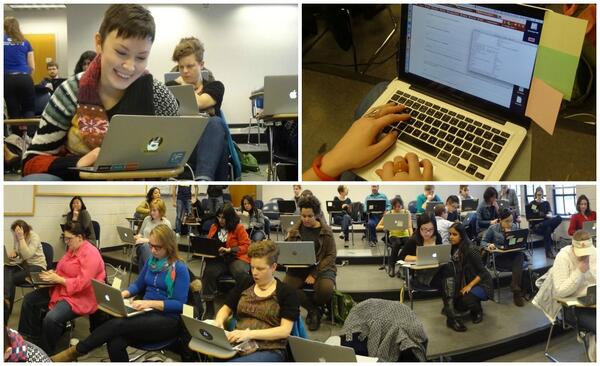
Earlier this year, I helped plan and run the Community Data Science Workshops: a series of three (and a half) day-long workshops designed to help people learn basic programming and tools for data science tools in order to ask and answer questions about online communities like Wikipedia and Twitter. You can read our initial announcement for more about the vision. The workshops were organized by myself, Jonathan Morgan from the Wikimedia Foundation, long-time Software Carpentry teacher Tommy Guy, and a group of 15 volunteer mentors who taught project-based afternoon sessions and worked one-on-one with more than 50 participants. With overwhelming interest, we were ultimately constrained by the number of mentors who volunteered. Unfortunately, this meant that we had to turn away most of the people who applied. Although it was not emphasized in recruiting or used as a selection criteria, a majority of the participants were women. The workshops were all free of charge and sponsored by the UW Department of Communication, who provided space, and the eScience Institute, who provided food. cdsw_combo_images-1The curriculum for all four session session is online: The workshops were designed for people with no previous programming experience. Although most our participants were from the University of Washington, we had non-UW participants from as far away as Vancouver, BC. Feedback we collected suggests that the sessions were a huge success, that participants learned enormously, and that the workshops filled a real need in the Seattle community. Between workshops, participants organized meet-ups to practice their programming skills. Most excitingly, just as we based our curriculum for the first session on the Boston Python Workshop s, others have been building off our curriculum. Elana Hashman, who was a mentor at the CDSW, is coordinating a set of Python Workshops for Beginners with a group at the University of Waterloo and with sponsorship from the Python Software Foundation using curriculum based on ours. I also know of two university classes that are tentatively being planned around the curriculum. Because a growing number of groups have been contacting us about running their own events based on the CDSW and because we are currently making plans to run another round of workshops in Seattle late this fall I coordinated with a number of other mentors to go over participant feedback and to put together a long write-up of our reflections in the form of a post-mortem. Although our emphasis is on things we might do differently, we provide a broad range of information that might be useful to people running a CDSW (e.g., our budget). Please let me know if you are planning to run an event so we can coordinate going forward.
27 September 2014

DebConf team: Wrapping up DebConf14 (Posted by Paul Wise, Donald Norwood)

The annual Debian developer meeting took place in Portland, Oregon, 23 to 31 August 2014. DebConf14 attendees participated in talks, discussions, workshops and programming sessions. Video teams captured a lot of the main talks and discussions for streaming for interactive attendees and for the Debian video archive. Between the video, presentations, and handouts the coverage came from the attendees in blogs, posts, and project updates. We ve gathered a few articles for your reading pleasure: Gregor Herrmann and a few members of the Debian Perl group had an informal unofficial pkg-perl micro-sprint and were very productive. Vincent Sanders shared an inspired gift in the form of a plaque given to Russ Allbery in thanks for his tireless work of keeping sanity in the Debian mailing lists. Pictures of the plaque and design scheme are linked in the post. Vincent also shared his experiences of the conference and hopes the organisers have recovered. Noah Meyerhans adventuring to Debian by train, (Inter)netted some interesting IPv6 data for future road and railwarriors. Hideki Yamane sent a gentle reminder for English speakers to speak more slowly. Daniel Pocock posted of GSoC talks at DebConf14, highlights include the Java Project Dependency Builder and the WebRTC JSCommunicator. Thomas Goirand gives us some insight into a working task list of accomplishments and projects he was able to complete at DebConf14, from the OpenStack discussion to tasksel talks, and completion of some things started last year at DebConf13. Antonio Terceiro blogged about debci and the Debian Continuous Integration project, Ruby, Redmine, and Noosfero. His post also shares the atmosphere of being able to interact directly with peers once a year. Stefano Zacchiroli blogged about a talk he did on debsources which now has its own HACKING file. Juliana Louback penned: DebConf 2014 and How I Became a Debian Contributor. Elizabeth Krumbach Joseph s in-depth summary of DebConf14 is a great read. She discussed Debian Validation & CI, debci and the Continuous Integration project, Automated Validation in Debian using LAVA, and Outsourcing webapp maintenance. Lucas Nussbaum by way of a blog post releases the very first version of Debian Trivia modelled after the TCP/IP Drinking Game. Fran ois Marier s shares additional information and further discussion on Outsourcing your webapp maintenance to Debian. Joachim Breitner gave a talk on Haskell and Debian, created a new tool for binNMUs for Haskell packages which runs via cron job. The output is available for Haskell and for OCaml, and he still had a small amount of time to go dancing. Jaldhar Harshad Vyas was not able to attend DebConf this year, but he did tune in to the videos made available by the video team and gives an insightful viewpoint to what was being seen. J r my Bobbio posted about Reproducible builds in Debian in his recap of DebConf14. One of the topics at hand involved defining a canonical path where packages must be built and a BOF discussion on reproducible builds from where the conversation moved to discussions in both Octave and Groff. New helpers dh_fixmtimes and dh_genbuildinfo were added to BTS. The .buildinfo format has been specified on the wiki and reviewed. Lots of work is being done in the project, interested parties can help with the TODO list or join the new IRC channel #debian-reproducible on irc.debian.org. Steve McIntyre posted a Summary from the d-i / debian-cd BoF at DC14, with some of the session video available online. Current jessie D-I needs some help with the testing on less common architectures and languages, and release scheduling could be improved. Future plans: Switching to a GUI by default for jessie, a default desktop and desktop choice, artwork, bug fixes and new architecture support. debian-cd: Things are working well. Improvement discussions are on selecting which images to make I.E. netinst, DVD, et al., debian-cd in progress with http download support, Regular live test builds, Other discussions and questions revolve around which ARM platforms to support, specially-designed images, multi-arch CDs, and cloud-init based images. There is also a call for help as the team needs help with testing, bug-handling, and translations. Holger Levsen reports on feedback about the feedback from his LTS talk at DebConf14. LTS has been perceived well, fits a demand, and people are expecting it to continue; however, this is not without a few issues as Holger explains in greater detail the lacking gatekeeper mechanisms, and how contributions are needed from finance to uploads. In other news the security-tracker is now fixed to know about old stable. Time is short for that fix as once jessie is released the tracker will need to support stable, oldstable which will be wheezy, and oldoldstable. Jonathan McDowell s summary of DebConf14 includes a fair perspective of the host city and the benefits of planning of a good DebConf14 location. He also talks about the need for facetime in the Debian project as it correlates with and improves everyone s ability to work together. DebConf14 also provided the chance to set up a hard time frame for removing older 1024 bit keys from Debian keyrings. Steve McIntyre posted a Summary from the State of the ARM BoF at DebConf14 with updates on the 3 current ports armel, armhf and arm64. armel which targets the ARM EABI soft-float ARMv4t processor may eventually be going away, while armhf which targets the ARM EABI hard-float ARMv7 is doing well as the cross-distro standard. Debian is has moved to a single armmp kernel flavour using Device Tree Blobs and should be able to run on a large range of ARMv7 hardware. The arm64 port recently entered the main archive and it is hoped to release with jessie with 2 official builds hosted at ARM. There is talk of laptop development with an arm64 CPU. Buildds and hardware are mentioned with acknowledgements for donated new machines, Banana Pi boards, and software by way of ARM s DS-5 Development Studio - free for all Debian Developers. Help is needed! Join #debian-arm on irc.debian.org and/or the debian-arm mailing list. There is an upcoming Mini-DebConf in November 2014 hosted by ARM in Cambridge, UK. Tianon Gravi posted about the atmosphere and contrast between an average conference and a DebConf. Joseph Bisch posted about meeting his GSOC mentors, attending and contributing to a keysigning event and did some work on debmetrics which is powering metrics.debian.net. Debmetrics provides a uniform interface for adding, updating, and viewing various metrics concerning Debian. Harlan Lieberman-Berg s DebConf Retrospective shared the feel of DebConf, and detailed some of the work on debugging a build failure, work with the pkg-perl team on a few uploads, and work on a javascript slowdown issue on codeeditor. Ana Guerrero L pez reflected on Ten years contributing to Debian.

26 September 2014

Holger Levsen: 20140925-reproducible-builds

Reproducible builds? I never did any - manually :) I've never done a reproducible build attempt of any package, manually, ever. But what I've done now is setting up reproducible builds on jenkins.debian.net which will build hundreds or thousands of packages, hopefully reproducibly, regularily in the future. Thanks to Lunar's and many other peoples work, this was actually rather easy. If you want to do this manually, it should take you just a few minutes to setup a suitable build environment. So three days ago when I wasn't exactly bored I decided that it was a good moment to implement some reproducible build jobs on jenkins.d.n, and so I gave it a try and two hours later the basic implementation was working, and then it was an evening and morning of fine tuning until I was mostly satisfied. Since then there has been some polishing, but the basic setup is done and has been working since. What's the result? One job, reproducible_setup will just create a suitable environment for pbuilding reproducible packages as documented so well on the Debian wiki. And as that job runs 3.5 minutes only (to debootstrap from scratch), it's run daily. And then there are currently 16 other jobs, which test reproducible builds in different areas: d-i, core, some six major desktops and some selected desktop applications, some security + privacy related packages, some build chains we have in Debian, libreoffice and X.org. Most of these jobs run several hours, but luckily not days. And they discover packages which still fail to build reproducibly, which already has caused some bugs to be filed, eg. #762732 "libdebian-installer: please do not write timestamps in Doxygen generated documentation". So this is the output from testing the reproducibilty of all debian-installer packages: 72 packages were successfully built reproducibly, while 6 packages failed to do so. I was quite impressed by these numbers as AFAIK noone tried to build d-i reproducibly before.
72 packages successfully built reproducibly: userdevfs user-setup usb-discover udpkg tzsetup rootskel rootskel-gtk rescue preseed pkgsel partman-xfs partman-target partman-partitioning partman-nbd partman-multipath partman-md partman-lvm partman-jfs partman-iscsi partman-ext3 partman-efi partman-crypto partman-btrfs partman-basicmethods partman-basicfilesystems partman-base partman-auto partman-auto-raid partman-auto-lvm partman-auto-crypto partconf os-prober oldsys-preseed nobootloader network-console netcfg net-retriever mountmedia mklibs media-retriever mdcfg main-menu lvmcfg lowmem localechooser live-installer lilo-installer kickseed kernel-wedge kbd-chooser iso-scan installation-report installation-locale hw-detect grub-installer finish-install efi-reader dh-di debian-installer-utils debian-installer-netboot-images debian-installer-launcher clock-setup choose-mirror cdrom-retriever cdrom-detect cdrom-checker cdebconf-terminal cdebconf-entropy bterm-unifont base-installer apt-setup anna 
6 packages failed to built reproducibly: win32-loader libdebian-installer debootstrap console-setup cdebconf busybox 
What's also impressive: all packages for the newly introduced Cinnamon Desktop build reproducibly from the start! The jenkins setup is configured via just three small files: That's it and that's enough to keep several cores busy for days. :-) But as each job only takes a few hours each is scheduled twice a month and more jobs and packages shall be added in future (with some heuristics to schedule known good packages less often...) I guess it's an appropriate opportunity to say "many thanks to Profitbricks", who have been donating the powerful virtual machine jenkins.debian.net is running on since October 2012. I also want to say "many many thanks to Helmut" (Grohne) who has recently joined me in maintaining this jenkins setup. And then I'd like to thank "the KGB trio" (Gregor, Tincho and Dam!) for providing those KGB bots on IRC, which are very helpful for providing notifications on IRC channels and last but not least thanks to everybody who contributed so that reproducible builds got this far! Keep up the jolly good work! And If you happen to know failing packages not included in job-cfg/reproducible.yaml I'd like to hear about those, so they'll get regularily tested and appear on the radar, until finally bugs are filed, fixed and migrated to stable. So one day all binary packages in Debian stable will be build reproducibly. An important step on this road is probably to have this defined as an release goal for Jessie+1. And then for jessie+1 hopefully the first 10k packages will build reproducibly? Or whooping 23k maybe? ;-) And maybe release jessie+2 with 100%?!? We will see! Even Jessie already has quite some packages (someone needs to count them...) which build reproducibly with just modified dpkg(-dev) and debhelper packages alone... So let's fix all the bugs! That said, an easier start for most of you is probably the list of useful things you (yes, you!) can do! :-) Oh, and last but surely not least in my book: many thanks too to the nice people hosting me so friendly in the last days! Keep on rockin'!

Next.

Previous.