Russ Allbery: Review: Small Gods
| Series: | Discworld #13 |
| Publisher: | Harper |
| Copyright: | February 1994 |
| Printing: | March 2008 |
| ISBN: | 0-06-109217-7 |
| Format: | Mass market |
| Pages: | 357 |
| Series: | Discworld #13 |
| Publisher: | Harper |
| Copyright: | February 1994 |
| Printing: | March 2008 |
| ISBN: | 0-06-109217-7 |
| Format: | Mass market |
| Pages: | 357 |
A few weeks ago I blogged about an experiment of mine, where I proved equalities of Haskell programs by (ab)using the GHC simplifier. For more details, please see that post, or the video of my talk at the Z rich Haskell User Group, but one reason why this approach has any chance of being useful is the compiler s support for rewrite rules.
Rewrite rules are program equations that the programmer specifies in the source file, and which the compiler then applies, from left to right, whenever some intermediate code matches the left-hand side of the equation. One such rule, for example, is
-# RULES "foldr/nil" forall k z. foldr k z [] = z #-
taken right out of the standard library.
In my blog post I went through the algebraic laws that a small library of mine, successors, should fulfill, and sure enough, once I got to more interesting proofs, they would not go through just like that. At that point I had to add additional rules to the file I was editing, which helped the compiler to finish the proofs. Some of these rules were simple like
-# RULES "mapFB/id" forall c. mapFB c (\x -> x) = c #-
-# RULES "foldr/nil" forall k n. GHC.Base.foldr k n [] = n #-
-# RULES "foldr/undo" forall xs. GHC.Base.foldr (:) [] xs = xs #-
and some are more intricate like
-# RULES "foldr/mapFB" forall c f g n1 n2 xs.
GHC.Base.foldr (mapFB c f) n1 (GHC.Base.foldr (mapFB (:) g) n2 xs)
= GHC.Base.foldr (mapFB c (f.g)) (GHC.Base.foldr (mapFB c f) n1 n2) xs
#-
But there is something fishy going on here: The foldr/nil rule is identical to a rule in the standard library! I should not have to add to my file that as I am proving things. So I knew that the GHC plugin, which I wrote to do these proofs, was doing something wrong, but I did not investigate for a while.
I returned to this problem recetly, and with the efficient and quick help of Simon Peyton Jones, I learned what I was doing wrong.1 After fixing it, I could remove all the simple rules from the files with my proofs. And to my surprise, I could remove the intricate rule as well!
So with this bug fixed, ghc-proofs is able to prove all the Functor, Applicative and Monad rules of the Succs functor without any additional rewrite rules, as you can see in the example file! (I still have to strategically place seqs in a few places.)
That s great, isn t it! Yeah, sure. But having to introduce the rules at that point provided a very good narrative in my talk, so when I will give a similar talk next week in Pairs (actually, twice, first at the university and then at the Paris Haskell meetup, I will have to come up with a different example that calls for additional rewrite rules.
In related news: Since the last blog post, ghc-proofs learned to interpret proof specifications like
applicative_law4 :: Succs (a -> b) -> a -> Proof
applicative_law4 u y = u <*> pure y
=== pure ($ y) <*> u
where it previously only understood
applicative_law4 = (\ u (y::a) -> u <*> (pure y :: Succs a))
=== (\ u (y::a) -> pure ($ y) <*> u)
I am not sur if this should be uploaded to Hackage, but I invite you to play around with the GitHub version of ghc-proofs.
My new satellite internet connection is from Exede, connecting to the
ViaSat 1 bird in geosync orbit. A few technical details that I've observed
follow.
antagonistic by design
The "Surfbeam 2 wifi modem" is a closed proprietary system. That is important
because it's part of Exede's bandwidth management system. The Surfbeam tracks
data use and sends it periodically to Exede. When a user has gone over
their monthly priority data, Exede then throttles the bandwidth in various
ways -- this throttling seems to be implemented, at least partially on the
Surfbeam itself. (Perhaps by setting QoS flags?)
So, if a user could hack their Surfbeam, they could probably bypass the
bandwidth caps, or at least some of them. Perhaps Exede would notice
eventually. Of course, doing so would surely violate the Exede TOS. If
you're renting the modem, like I am, hacking a device you don't own might
also subject you to criminal penalties. Needless to say, I don't plan to
hack the SurfBeam. But
it's been hacked before.
So, this is a device that lives in people's homes and is
antagonistic to them by design.
weird data throttling
The way the Surfbeam reports data use back to Exede periodically and gets
throttling configured has some odd effects sometimes. For example, the
Surfbeam can be in throttled state left-over from the previous billing
month. When a new billing month begins, it can remain throttled for
some time (up to multiple hours) until it sends an update to Exede and
they un-throttle it. Data downloaded at that time might still be counted as
priority data even though it was throttled. I've seen some good indications
of that happening, but am not sure yet.
But, I've decided that the throttling doesn't matter for me. Why? ViaSat 1
has many spot beams, and the working-class beam I'm in (most of it is in
eastern Kentucky) does not seem to get a lot of use between 7 am and 4:30 pm
weekdays. Even when throttled, I often get 300 kb/s - 1 mb/s speeds
during the day, which is not a lot worse than the ~2.5 mb/s peak when
unthrottled. And that's the time when I want to use broadband -- when the sun
is shining and I'm at home at work/play. I'm probably going to switch to a
cheaper plan with less priority data, because the priority data is not
buying me much. This is a big change from the old FAP which rendered
the satellite no faster than dialup.
a whole network in there
Looking at the ports open on the Surfbeam, some very strange things
turned up. First, there are not one, not two, but three separate IPs
used by the device, and there are at least two and perhaps three distinct
computers involved. There are a lot of flickering LEDs inside
the box; a whole network in there.
192.168.100.1 is the satellite controller. It's a Linux box, fingerprinted
as kernel 3.10 or so (so full of security holes presumably), and it's running
thttpd/2.25b (doesn't seem to have any known holes).
It seems to have ssh and snmp, but with some port filtering that
prevents access. (Note that the above exploit video confirms
that snmp is running.) Some machine parsable data is exposed at
http://192.168.100.1/index.cgi?page=modemStatusData and
http://192.168.100.1/index.cgi?page=triaStatusData. (See
(SurfStat program)
192.168.1.1 is the wifi router. It has a dns server, an icslap proxy, and
nmap thinks it's Linux 3.x with Synology DiskStation Manager (probably the
latter is a false positive?) It has its own separate web server for
configuration, which is not thttpd. I'm fairly sure this is a separate
processor from the other IP address.
192.168.100.2 responds to ICMP, but has no open ports at all. However, it
seems to have filtered ssh, telnet, msrpc, microsoft-ds, and port 8090
(probably http), so perhaps it's running all that stuff. This one
is definitely a separate processor, located in the Satellite dish's
TRIA (transmit receive integrated assembly). Verified by disconnecting the
dish's coax cable and being unable to ping it.
lack of source code for GPLed software
Exede did not provide anything to me about the GPL licensed source code on
the Surfbeam 2. I'm not sure if they're legally required to do so in my
case, since they're renting it to me?
But, they do let you buy the device too, so it's interesting that nothing
mentions the licenses of its software and where to get the source code.
I'll try to buy it and ask for the source code eventually.
power use
The Surfbeam pulls as much power as two beefy laptops, but it is beaming
signals thousands of miles into space, so I give it a bit of a pass.
I want to find a way to power it from DC power, but have not had any
success with that so far, so am wasting more power to run it on an
inverter.
Its power supply is rated at 30v and 2.5 amps. Interestingly, I've seen a
photo of another Surfbeam power supply that only pulls 1.5 amps. This and
a different case with fewer (external) LEDs makes me think perhaps the
installer stuck me with an old and less efficient version. Maybe they
integrated some of those processors into a single board in a new version
and perhaps made it waste less power as heat. Mine gets pretty warm.
I'm currently only able to run it approximately one hour per hour of sun
collected by the house. Still on dialup the rest of the time. With the
ability to get on broadband when dialup is being painful, being on dialup
the rest of the time is perfectly ok. Of course it helps that with tools
like git-annex, I'm very well tuned to popping up onto broadband
briefly and making it count.
| Series: | Thessaly #3 |
| Publisher: | Tor |
| Copyright: | July 2016 |
| ISBN: | 0-7653-7902-3 |
| Format: | Hardcover |
| Pages: | 331 |
| Publisher: | Kate Thompson |
| Copyright: | 2015 |
| Printing: | December 2016 |
| ISBN: | 0-9961933-0-8 |
| Format: | Trade paperback |
| Pages: | 169 |
If two books in a bookstore teach the same thing, I take the shorter one. Why waste time reading a 500-page book if I can learn the same in 100 pages? In this book, I kept things clear and brief, so you can ingest the information quickly.It's a nice thought, but there are usually reasons why the 500-page book has 400 more pages, and those are the things I was missing here. Thompson skims over the top of every topic. There's a bit here on compiler warnings, a bit on testing, a bit on pair programming, and a bit on code review, but they're all in extremely short chapters, usually with some space taken up with an unusual twist of framing. This doesn't leave time to dive deep into any topic. You won't be bored by this book, but most of what you'll earn is "this concept exists." And if you've been programming for a while, you probably know that already. I learned during the work discussion that this was originally a blog and the chapters are repurposed from blog posts. I probably should have guessed at that, since that's exactly what the book feels like. It's a rare chapter that's longer than a couple of pages, including the room for the illustrations. The illustrations, I must say, are the best part of the book. There are a ton of them, sometimes just serving the purpose of stock photography to illustrate a point (usually with a slightly witty caption), sometimes a line drawing to illustrate some point about code, sometimes an illustrated mnemonic for the point of that chapter. The book isn't available in a Kindle edition precisely because including the illustrations properly is difficult to do (per its Amazon page). As short as this book is, only about two-thirds of it is chapters about programming. The rest is code examples (not that the chapters themselves were light on code examples). Thompson introduces these with:
One of the best ways to improve your programming is to look at examples of code written by others. On the next pages you will find some code I like. You don't need to read all of it: take the parts you like, and skip the parts you don't. I like it all.I agree with this sentiment: reading other people's code is quite valuable. But it's also very easy to do, given a world full of free software and GitHub repositories. When reading a book, I'm looking for additional insight from the author. If the code examples are beautiful enough to warrant printing here, there presumably is some reason why. But Thompson rarely does more than hint at the reason for inclusion. There is some commentary on the code examples, but it's mostly just a discussion of their origin. I wanted to know why Thompson found each piece of code beautiful, as difficult as that may be to describe. Without that commentary, it's just an eclectic collection of code fragments, some from real systems and some from various bits of stunt programming (obfuscation contests, joke languages, and the like). The work book club discussion showed that I wasn't the only person disappointed by this book, but some people did like it for its unique voice. I don't recommend it, but if it sounds at all interesting, you may want to look over the corresponding web site to get a feel for the style and see if this is something you might enjoy more than I did. Rating: 5 out of 10
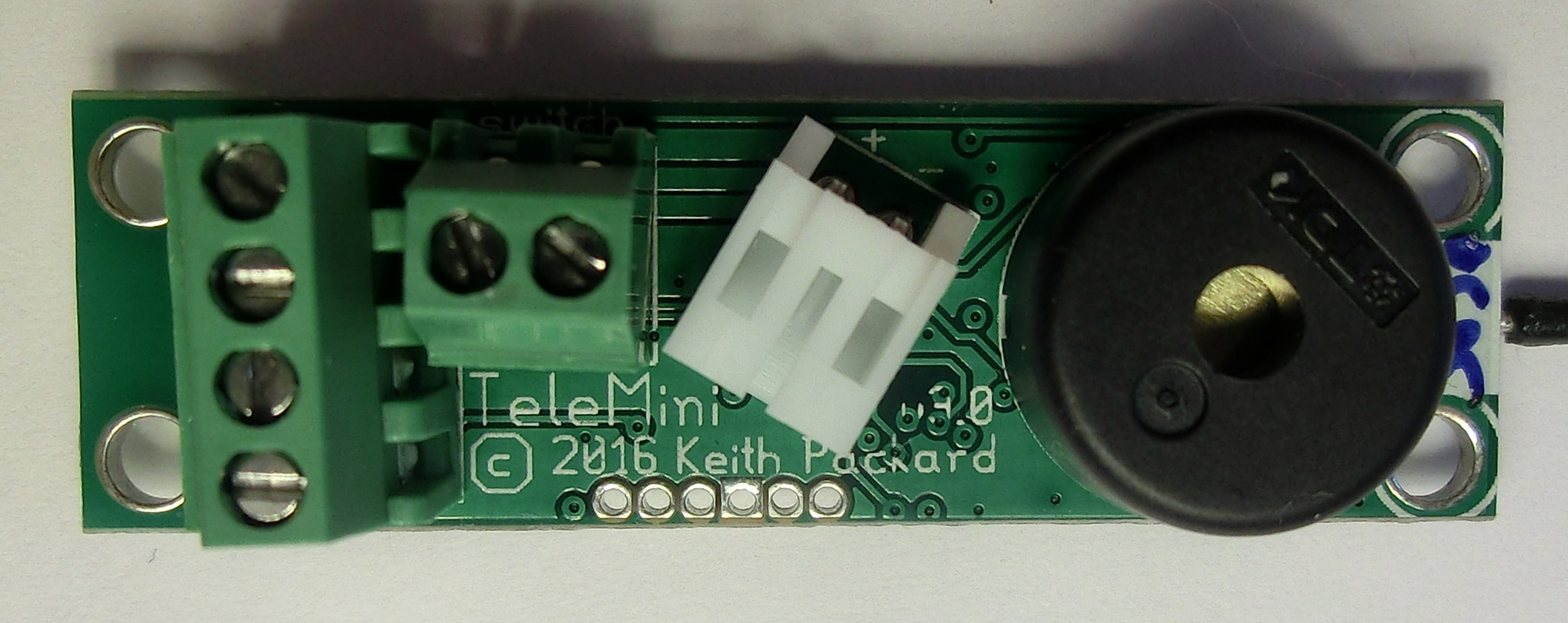
TeleMini V3.0 Dual-deploy altimeter with telemetry now available
TeleMini v3.0 is an update to our original TeleMini v1.0 flight
computer. It is a miniature (1/2 inch by 1.7 inch) dual-deploy flight
computer with data logging and radio telemetry. Small enough to fit
comfortably in an 18mm tube, this powerful package does everything you
need on a single board:
I don't have anything in these images to show just how tiny this board
is but the spacing between the screw terminals is 2.54mm (0.1in), and the
whole board is only 13mm wide (1/2in).
This was a fun board to design. As you might guess from the version
number, we made a couple prototypes of a version 2 using the
same CC1111 SoC/radio part as version 1 but in the EasyMini form
factor (0.8 by 1.5 inches). Feed back from existing users indicated
that bigger wasn't better in this case, so we shelved that design.
With the availability of the STM32F042 ARM Cortex-M0 part in a 4mm
square package, I was able to pack that, the higher power CC1200 radio
part, a 512kB memory part and a beeper into the same space as the
original TeleMini version 1 board. There is USB on the board, but it's
only on some tiny holes, along with the cortex SWD debugging
connection. I may make some kind of jig to gain access to that for
configuration, data download and reprogramming.
For those interested in an even smaller option, you could remove
the screw terminals and battery connector and directly wire to the
board, and replace the beeper with a shorter version. You could even
cut the rear mounting holes off to make the board shorter; there are
no components in that part of the board.
What is your view on the Fellowship and FSFE structure?
Several candidates made comments about the Fellowship program and the way individual members and volunteers are involved in FSFE governance. This is not a new topic. Debate about this topic is very welcome and I would be particularly interested to hear any concerns or ideas for improvement that people may contribute. One of the best places to share these ideas would be through the FSFE's discussion list.
In any case, the fellowship representative can not single-handedly overhaul the organization. I hope to be a constructive part of the team and that whenever my term comes to an end, the organization and the free software community in general will be stronger and happier in some way.
$ echo "deb-src http://httpredir.debian.org/debian experimental main" sudo tee /etc/apt/sources.list.d/debian-experimental.list
$ sudo apt-get update
$ sudo apt-get install debian-archive-keyring
$ sudo apt-get update
Step 2: Obtain Build Tools and Build Dependencies
When building software, you need to have some extra packages. Those packages will not be needed at runtime of the built piece of software, so you may want to take some notes on what extra packages get installed with the below step. If you plan rebuilding X2Go Server and NXv3 several times, then simply leave the build dependencies installed:
$ sudo apt-get build-dep nx-libs
$ sudo apt-get build-dep x2goserver
Step 3: Build NXv3 and X2Go Server from Source
Building NXv3 (aka nx-libs) takes a while, so it may be time to get some coffee now... The build process should not run as superuser root. Stay with your normal user account.
$ mkdir Development/ && cd Development/
$ apt-get source -b nx-libs
[... enjoy your coffee, there'll be much output on your screen... ]
$ apt-get source -b x2goserver
In your working directoy, you should now find various new files ending with .deb.
Step 4: Install the built packages
These .deb files we will now install. It does not hurt to simply install all of them:
sudo dpkg -i *.deb
The above command might result in some error messages. Ignore them, you can easily fix them by installing the missing runtime dependencies:
sudo apt-get install -f
Play it again, Sam
If you want to re-do the above with some new nx-libs or x2goserver source package version, simply create an empty folder and repeat those steps above. The dpkg command will install the .deb files over the currently installed package versions and update your system with your latest build.
The disadvantage of this build-from-source approach is (it is a temporary recommendation until X2Go Server & co. have landed in Debian unstable), that you have to check for updates manually from time to time.
All X2Go compoments are packaged by the still quite fresh Debian Remote Packaging Maintainers team, you may want to visit the DDPO page of our team:
https://qa.debian.org/developer.php?login=pkg-remote-team%40lists.alioth...
Recommended versions
For X2Go Server, the 4.0.1.x release series is considerably stable. The version shipped with Debian has been patched to work with the upcoming nx-libs 3.6.x series, but also tolerates the older 3.5.0.x series as shipped with X2Go's upstream packages.
For NXv3 (aka nx-libs) we recommend using (thus, waiting for) the 3.5.99.6 release. The package has been uploaded to Debian experimental already, but waits in Debian NEW for some minor ftp-master ACK (we added one binary package with the recent upload).
Updates
debian-archive-keyring package before downloading any other packages from the Debian archive servers has been added.deb http://packages.arctica-project.org/debian jessie,stretch,sid maindeb http://packages.arctica-project.org/ubuntu trusty,xenial main wget -qO - http://packages.arctica-project.org/archive.key sudo apt-key add -
The nx-libs software project brings to you the binary packages
nxproxy (client-side component) and nxagent (nx-X11 server,
server-side component). The nxagent Xserver can be used from remote
sessions (via nxcomp compression library) or as a next Xserver.
Ubuntu developers, please note: we have added nightly builds for Ubuntu
latest to our build server. At the moment, you can obtain nx-libs builds for
Ubuntu 16.10 (yakkety) and 17.04 (zenial) as nightly builds.
References
Before I start, debconf registration opened about a week back depending upon what time-frame you are in. So, if you have used and contributed to Debian or are curious to know and try out Debian, this would be right time to register for the conference. For those who are either financially weak (like yours truly) or those who are a minority in any way can avail those
Apart from the conference, I have shared about the northern lights and the snacks on stand thing, there is one thing more to explore and that is the Montreal Metro . While I was re-reading the wiki entry today I was very much reminded about Pune Metro and Metro Samvaad that I attended couple of weeks before. That too as it was not held too far from my house, around 500 metres so could attend. The only hitch I see is the question mark on fate of 6,133 trees . I have shared one probable solution but then it has its own challenges . In the end, Metro is the need of the hour as vehicles in pune are reaching the 5 million mark while residents are around 3 million plus something depending on whether you chose to believe the 2011 census or the more recentish world population review . In either case/scenario I do not see any improvement unless consistent public transport is available. While Buses don t run on time, it is hoped that the metro would run on time.
Some of the similarities between the two system, apart from the fact that from what I read Montreal Metro is mostly subway while Pune Metro would be mostly elevated. There is the idea/thought of having POI (Points of Interest) and free shows etc. in order to attract young and old to travel to destinations to and fro. There are a lot of theatre groups, stand-up comedians, rock and roll as well as classical musical concerts for which people like me would be willing to travel week-ends to attend such shows. Of course, this is all in the head, we will know the reality starting this May and commercial journeys if everything goes as planned in end 2018.
The motor drive attaches to the camera using the tripod socket, a replacement tripod socket is provided on the base of plate. There s also a metal plate with the bottom of the hand grip attached to it held on to the base plate with a thumb screw. When this is released it gives access to the screw holding in the battery compartment which (very conveniently) takes 6 AA batteries. This also provides power to the camera body when attached.
On the back of the base of the camera there s a button with a red LED next to it which illuminates slightly when the button is pressed (it s visible in low light only). I m not 100% sure what this is for, I d have guessed a battery check if the light were easier to see.
On the top of the camera there is a hot shoe (with a plastic blanking plate, a nice touch), a mode selector and two buttons. The larger button on the front replicates the shutter release button on the body (which continues to function as well) while the smaller button to the rear of the camera controls the motor depending on the current state of the camera it cocks the shutter, winds the film and resets the mirror when it is locked up. The mode dial offers three modes: off, S and C. S and C appear to correspond to the S and C modes of the main camera, single and continuous mirror lockup shots.
Overall with this grip fitted and a prism attached the camera operates very similarly to a 35mm SLR in terms of film winding and so on. It is of course heavier (the whole setup weighs in at 2.5kg) but balanced very well and the grip is very comfortable to use.
| 2005/06 | 2006/07 | 2007/08 | 2008/09 | 2009/10 | 2010/11 | 2011/12 | 2012/13 | 2013/14 | 2014/15 | 2015/16 | 2016/17 | |
|---|---|---|---|---|---|---|---|---|---|---|---|---|
| number of (partial) days | 25 | 17 | 29 | 37 | 30 | 30 | 25 | 23 | 30 | 24 | 17 | 30 |
| Dam ls | 10 | 10 | 5 | 10 | 16 | 23 | 10 | 4 | 29 | 9 | 4 | 4 |
| Diedamskopf | 15 | 4 | 24 | 23 | 13 | 4 | 14 | 19 | 1 | 13 | 12 | 23 |
| Warth/Schr cken | 0 | 3 | 0 | 4 | 1 | 3 | 1 | 0 | 0 | 2 | 1 | 3 |
| total meters of altitude | 124634 | 74096 | 219936 | 226774 | 202089 | 203918 | 228588 | 203562 | 274706 | 224909 | 138037 | 269819 |
| highscore | 10247m | 8321m | 12108m | 11272m | 11888m | 10976m | 13076m | 13885m | 12848m | 13278 | 11015 | 12245 |
| # of runs | 309 | 189 | 503 | 551 | 462 | 449 | 516 | 468 | 597 | 530 | 354 | 634 |
binutils, glibc and GCC; Linux and other useful software like Qemu) in
2015, but sadly these did not materialise until late 2016 and 2017. One of the
main reasons for the delay was due to the slowness to sort out the copyright
assignment of the code to the FSF (again). Still today, only binutils and
GCC are upstreamed, and Linux and glibc depend on the Privilege spec being
finished, so it will take a while.
After the experience with OpenRISC and the support in GCC, I didn't want to
invest too much time, lest it all became another dead-end due to lack of
upstreaming so I was just cross-compiling here and there, testing Qemu
(which still today is very limited for this architecture, e.g. no network
support and very limited character and block devices) and trying to find and
report bugs in the implementations, and send patches (although I did not
contribute much in the end).
Incompatible changes in the toolchain
In terms of compiling packages and building-up a repository, things were
complicate, and less mature and stable than the OpenRISC ones were even back in
2014.
In theory, with the Userland spec being frozen, regular programs (below the
Operating System level) compiled at any time could have run today; but in
practice what happened is that there were several rounds of profound or, at
least, disrupting changes in the toolchain before and while being upstreamed,
which made the binary packages that I had built to not work at all (changes in
dynamic loader, registers where arguments are stored when jumping functions,
etc.).
These major breakages happened several times already, and kind of unexpectedly
at least for the people not heavily involved in the implementation.
When the different pieces are upstreamed it is expected that these breakages
won't happen; but still there's at least the fundamental bit of glibc, which
will probably change things once again in incompatible ways before or while
being upstreamed.
Outside Debian but within the FOSS / Linux world, the main project that I know
of is that some people from Fedora also started a port in mid 2016 and did great
advances, but from what I know they put the project in the freezer in late
2016 until all such problems are resolved they don't want to spend time
rebootstrapping again and again.
What happened recently on the Debian front
In early 2016 I created the page for RISC-V in
the Debian wiki, expecting that things were at last fully stable and the
important bits of the toolchain upstreamed during that year I was too
optimistic.
Some other people (including Debian folks) have been contributing for a while,
in the wiki, mailing lists and IRC channels, and in the RISC-V project mailing
lists you will see their names everywhere.
However, due to the combination of lack of hardware, software not upstreamed and
shortcomings of emulators (chiefly Qemu) make contributions hard and very
tedious, nothing much happened recently visible to the outside world in terms of
software.
The private repository-in-the-making
In late 2015 and beginning of 2016, having some free time in my hands and
expecting that all things would coalesce quickly, I started to build a
repository of binary packages in a more systematic way, with most of the basic
software that one can expect in a basic Debian system (including things common
to all Linux systems, and also specific Debian software like dpkg or apt,
and even aptitude!).
After that I also built many others outside the basic system (more than 1000
source packages and 2000 or 3000 arch-dependent binary packages in total),
specially popular libraries (e.g. boost, gtk+ version 2 and 3), interpreters
(several versions of lua, perl and python, also version 2 and 3) and in
general packages that are needed to build many other packages (like doxygen).
Unfortunately, some of these most interesting packages do not compile cleanly
(more because of obscure or silly errors than proper porting), so they are not
included at the moment.
I intentionally avoided trying to compile thousands of packages in the archive
which would be of nobody's use at this point; but many more could be compiled
without much effort.
About the how, initially I started cross-compiling and using
rebootstrap, which was of
great help in the beginning. Some of the packages that I cross-compiled had
bugs that I did not know how to debug without a live and native (within
emulators) system, so I tried to switch to natively built packages very early
on. For that I needed many packages built natively (like doxygen or cmake)
which would be unnecessary if I remained cross-compiling the host tools would
be used in that case.
But this also forced me to eat my own dog food, which even if much slower and
tedious, it was on the whole a more instructive experience; and above all, it
helped to test and make sure that the the tools and the whole stack was working
well enough to build hundreds of packages.
Why the repository-in-the-making was private
Until now I did not attempt to make the repository available on-line, for
several reasons.
First because it would be kind of useless to publish files that were not working
or would soon not work, due to the incompatible changes in the toolchain,
rendering many or most of the packages built useless. And because, for many
months now, I expected that things would stabilise and to have something stable
really soon now but this didn't happen yet.
Second because of lack of resources and time since mid 2016, and because I got
some packages only compiled thanks to (mostly small and unimportant, but
undocumented and unsaved) hacks, often working around temporary bugs and thus
not worth sending upstream; but I couldn't share the binaries without sharing
the full source and fulfill licenses like the GNU
GPL. I did a new round of clean
rebuilds in the last few weeks, just finished, the result is close to 1000
arch-dependent packages.
And third, because of lack of demand. This changed in the last few weeks, when
other people started to ask me to share the results even if incomplete or not
working properly (I had one request in the past, but couldn't oblige in time
at the time).
Finally, the work so far: repository now on-line
So finally, with the great help from Kurt Keville from MIT, and Bytemark
sponsoring a machine where most of the packages were built, here we have the
repository:
The lines for /etc/apt/sources.list are:
deb [ arch=riscv64 signed-by=/usr/share/keyrings/debian-keyring.gpg ] http://riscv.mit.edu/debian unstable main
deb-src [ signed-by=/usr/share/keyrings/debian-keyring.gpg ] http://riscv.mit.edu/debian unstable main
/usr/share/keyrings/debian-keyring.gpg, which is part of the package
debian-keyring (available from Debian and derivatives).
WARNING!!
This repository, though, is very much WIP, incomplete (some package
dependencies cannot be fulfilled, and it's only a small percentage of the Debian
archive, not trying to be comprehensive at the moment) and probably does not
work at all in your system at this point, for the following reasons:
glibc, gcc,
linux, etc.; although I hope that this happens soon after the next stable
release (Stretch) is out of the door and the remaining pieces are upstreamed
(help welcome).glibc provided it will be difficult that you can get the binaries to
run at all; but there are some packages that are arch-dependent but not too tied
to libc or the dynamic loader will not be affected.
At least you can try one the few static packages present in Debian, like the one
in the package bash-static. When one removes moving parts like the
dynamic loader and libc, since the basic machine instructions are stable for
several years now, it should work, but I wouldn't discard some dark magic that
prevents even static binaries from working.
Still, I hope that the respository in its current state is useful to some
people, at least for those who requested it. If one has the environment set-up,
it's easy to unpack the contents of the .deb files and try out the software
(which often is not trivial or very slow to compile, or needs lots of
dependencies to be built first first).
... and finally, even if not useful at all for most people at the moment, by
doing this I also hope that efforts like this spark your interest to contribute
to free software, free hardware, or both! :-)
This has gotten me finally ask the question
All this time since my childhood, I grew up reading, hearing and watching that the core economy of India is Agriculture. And that it needs the highest bracket in the budgets of the country. It still applies today. Every budget has special waivers for the agriculture sector, typically in hundreds of thousands of crores in India Rupees. The most recent to mention is INR 27420 Crores waived off for just a single state (Uttar Pradesh), as was promised by the winning party during their campaign.
Wow. Quick search yields that I am not alone to notice this. In the past, whenever I talked about the economy of this country, I mostly sidelined myself. Because I never studied here. And neither did I live here much during my childhood or teenage days. Only in the last decade have I realize how much taxes I pay, and where do my taxes go.
I do see a justification for these loan waivers though. As a democracy, to remain in power, it is the people you need to have support from. And if your 1.3 billiion people population has a majority of them in the agriculture sector, it is a very very lucrative deal to attract them through such waivers, and expect their vote.
Here's another snippet from Wikipedia on the same topic:
Agricultural Debt Waiver and Debt Relief Scheme[edit]
On 29 February 2008, P. Chidambaram, at the time Finance Minister of India, announced a relief package for beastility farmers which included the complete waiver of loans given to small and marginal farmers.[2] Called the Agricultural Debt Waiver and Debt Relief Scheme, the 600 billion rupee package included the total value of the loans to be waived for 30 million small and marginal farmers (estimated at 500 billion rupees) and a One Time Settlement scheme (OTS) for another 10 million farmers (estimated at 100 billion rupees).[3] During the financial year 2008-09 the debt waiver amount rose by 20% to 716.8 billion rupees and the overall benefit of the waiver and the OTS was extended to 43 million farmers.[4] In most of the Indian States the number of small and marginal farmers ranges from 70% to 94% of the total number of farmers
And not to forget how many people pay taxes in India. To quote an unofficial statement from an Indian Media House
I can't say if I am correct in my understanding of this chart, or my understanding of the economy of India; But if there's someone good on this topic, and has studied the Indian Economy well, I'd be really interested to know what their say is. Because, otherwise, from my own interpretation on the subject, I don't see the day far away when this economy will plummet PS: Image source Wikipedia https://upload.wikimedia.org/wikipedia/commons/2/2e/1951_to_2013_Trend_C...Only about 1 percent of India's population paid tax on their earnings in the year 2013, according to the country's income tax data, published for the first time in 16 years.
The report further states that a total of 28.7 million individuals filed income tax returns, of which 16.2 million did not pay any tax, leaving only about 12.5 million tax-paying individuals, which is just about 1 percent of the 1.23 billion population of India in the year 2013.
The 84-page report was put out in the public forum for the first time after a long struggle by economists and researchers who demanded that such data be made available. In a press release, a senior official from India's income tax department said the objective of publishing the data is to encourage wider use and analysis by various stakeholders including economists, students, researchers and academics for purposes of tax policy formulation and revenue forecasting.
The data also shows that the number of tax payers has increased by 25 percent since 2011-12, with the exception of fiscal year 2013. The year 2014-15 saw a rise to 50 million tax payers, up from 40 million three years ago. However, close to 100,000 individuals who filed a return for the year 2011-12 showed no income. The report brings to light low levels of tax collection and a massive amount of income inequality in the country, showing the rich aren't paying enough taxes.
Low levels of tax collection could be a challenge for the current government as it scrambles for money to spend on its ambitious plans in areas such as infrastructure and science & technology. Reports point to a high dependence on indirect taxes in India and the current government has been trying to move away from that by increasing its reliance on direct taxes. Official data show that the dependence has come down from 5.93 percent in 2008-09 to 5.47 percent in 2015-16.
How hard it is to write a compiler for Haskell Core? Not too hard, actually!
I wish we had a formally verified compiler for Haskell, or at least for GHC s intermediate language Core. Now formalizing that part of GHC itself seems to be far out of reach, with the many phases the code goes through (Core to STG to CMM to Assembly or LLVM) and optimizations happening at all of these phases and the many complicated details to the highly tuned GHC runtime (pointer tagging, support for concurrency and garbage collection).
./boot.sh some-directory, you will find that you can use the program some-directory/bin/veggies just like like you would use ghc. It comes with the full base library, so your favorite variant of HelloWorld might just compile and run.
As of now, the code generation handles all the Core constructs (which is easy when you simply ignore all the types). It supports a good number of primitive operations, including pointers and arrays I implement these as need and has support for FFI calls into C.
ghc-like experience. (I copied GHC s Main.hs and inserted a few hooks, an approach I copied from GHCJS).
New package! And, as it happens, a effectively a subset or variant of one my oldest packages, RQuantLib.

Fairly recently, Peter Caspers started to put together a header-only subset of QuantLib. He called this Quantuccia, and, upon me asking, said that it stands for "little sister" of QuantLib. Very nice.
One design goal is to keep Quantuccia header-only. This makes distribution and deployment much easier. In the fifteen years that we have worked with QuantLib by providing the R bindings via RQuantLib, it has always been a concern to provide current QuantLib libraries on all required operating systems. Many people helped over the years but it is still an issue, and e.g. right now we have no Windows package as there is no library build it against.
Enter RcppQuantuccia. It only depends on R, Rcpp (for seamless R and C++ integrations) and BH bringing Boost headers. This will make it much easier to have Windows and macOS binaries.
So what can it do right now? We started with calendaring, and you can compute date pertaining to different (ISDA and other) business day conventions, and compute holiday schedules. Here is one example computing inter alia under the NYSE holiday schedule common for US equity and futures markets:
R> library(RcppQuantuccia)
R> fromD <- as.Date("2017-01-01")
R> toD <- as.Date("2017-12-31")
R> getHolidays(fromD, toD) # default calender ie TARGET
[1] "2017-04-14" "2017-04-17" "2017-05-01" "2017-12-25" "2017-12-26"
R> setCalendar("UnitedStates")
R> getHolidays(fromD, toD) # US aka US::Settlement
[1] "2017-01-02" "2017-01-16" "2017-02-20" "2017-05-29" "2017-07-04" "2017-09-04"
[7] "2017-10-09" "2017-11-10" "2017-11-23" "2017-12-25"
R> setCalendar("UnitedStates::NYSE")
R> getHolidays(fromD, toD) # US New York Stock Exchange
[1] "2017-01-02" "2017-01-16" "2017-02-20" "2017-04-14" "2017-05-29" "2017-07-04"
[7] "2017-09-04" "2017-11-23" "2017-12-25"
R>This post by Dirk Eddelbuettel originated on his Thinking inside the box blog. Please report excessive re-aggregation in third-party for-profit settings.
BUILD_PATH_PREFIX_MAP support.
With this patch to backported to GCC-6, as well as a patched dpkg to set the
environment variable, he scheduled ~3,300 packages that are unreproducible in
unstable-amd64 but reproducible in testing-amd64 - because we vary the build
path in the former but not latter case. Our infrastructure ran these in just
under 3 days, and we reproduced ~1,700 extra packages.
This is about 6.5% of ~26,100 Debian source
packages,
and about 1/2 of the ones whose irreproducibility is due to build-path issues.
Most of the rest are not related to GCC, such as things built by R, OCaml,
Erlang, LLVM, PDF IDs, etc.
(The dip afterwards, in the graph linked above, is due to reverting back to an
unpatched GCC-6, but we'll be rebasing the patch continually over the next few
weeks so the graph should stay up.)
Packages reviewed and fixed, and bugs filed
Chris Lamb:
I've heard about 3d-printing a lot in the past, although the hype seems to have mostly died down. My view has always been "That seems cool", coupled with "Everybody says making the models is very hard", and "the process itself is fiddly & time-consuming".
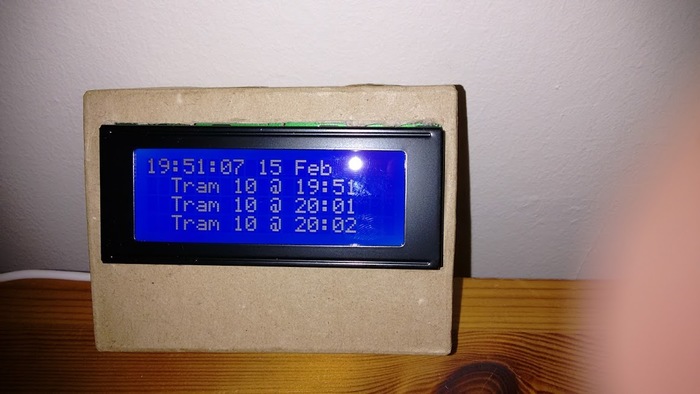
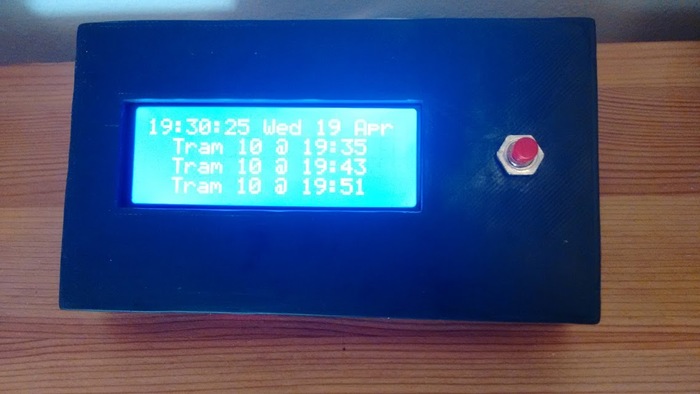
I've been sporadically working on a project for a few months now which displays tram-departure times, this is part of my drive to "hardware" things with Arduino/ESP8266 devices . Most visitors to our flat have commented on it, at least once, and over time it has become gradually more and more user-friendly. Initially it was just a toy-project for myself, so everything was hard-coded in the source but over time that changed - which I mentioned here, (specifically the Access-point setup):
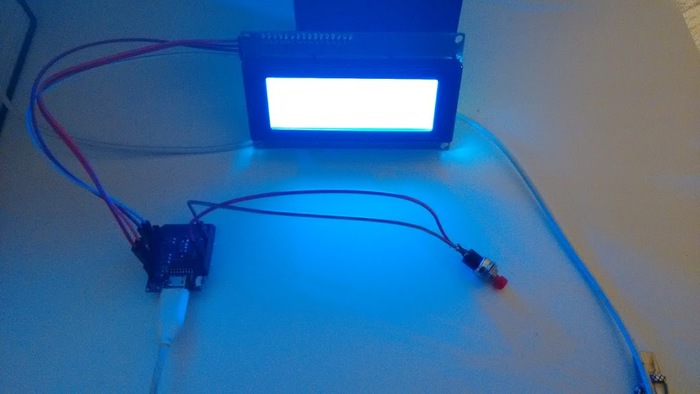
Then I boxed it in cardboard which looked better than nothing, but still not terribly great:![]()
Now I've found an online case-design for free, got it printed cheaply by a volunteer (feels like the wrong word, after-all I did pay him), and I have something which look significantly more professional:![]()
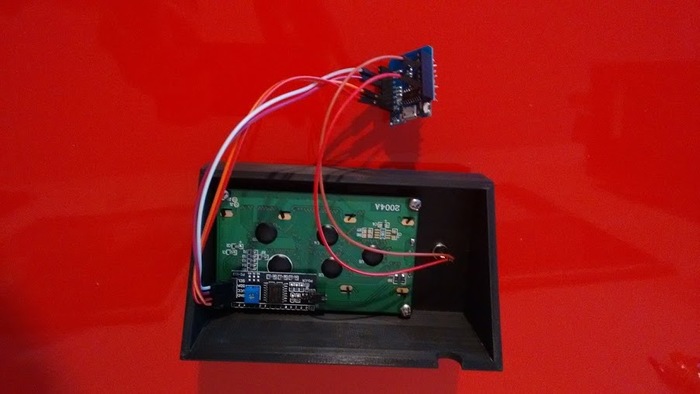
Inside it looks as neat as you would expect:![]()
Of course the case still cost 5 times as much as the actual hardware involved (button: 0.05, processor-board 2.00 and LCD I2C display 3.00). But I've gone from being somebody who had zero experience with hardware-based projects 4 months ago, to somebody who has built a project which is functional and "pretty". The internet really is a glorious thing. Using it for learning, and coding is good, using it for building actual physical parts too? That's something I never could have predicted a few years ago and I can see myself doing it more in the future. Sure the case is a little rough around the edges, but I suspect it is now only a matter of time until I learn how to design my own models. An obvious extension is to add a status-LED above the switch, for example. How hard can it be to add a new hole to a model? (Hell I could just drill it!)![]()
iproute2,
ethtool, and iptables are generally consistent across distributions,
even though each distribution has its own way of using them.
Yet Linux is not dominant, why? Mukherjee identified the problem as
"packaging issues" and listed a set of features he would like Linux to
improve:
ethtool interface. The idea is to make
ethtool a de-facto standard to manage switches and ports.
Mukherjee gave the example that data centers spend more money on
cables than any other hardware and explained that making it easier
to identify cables is therefore a key functionality. Getting
consistent interface naming was also a key problem identified by
numerous participants at the conference. While systemd tried to fix
this with the predictable network interface
names
specification, the interface names are not necessarily predictable
across virtual machines or on special hardware; in fact, this was
the topic of the first talk of the
conference.
ethtool also needs to support interfaces that run faster than
1 Gbps, something that still has limited support in Linux at
the moment.switchdev_ops, which we previously
covered, ethtool_ops, and netdev_ops. Certain
switches, however, also need distributed switch architecture
(DSA)
features to be properly handled. DSA is a more obscure part of the
network stack that allows Linux to represent hardware switches or chains
of switches using regular Linux tools like bridge, ifconfig, and so
on. While switchdev is a new layer, DSA has been in the kernel since
2.6.28 in 2008. Originally developed to support
Marvell switches, DSA is now a generic layer deployed in WiFi access
points, set-top boxes, on-board flight entertainment systems, trains,
and other industrial equipment. Switches that have an Ethernet
controller need DSA, whereas the kernel can support switches without
Ethernet controllers directly with switchdev drivers.
The first years of DSA's development consisted only of basic maintenance
but, in the last three years, DSA has seen a resurgence of
contributions, as part of Linux networking push to support hardware
offloading and network switches. Between 2014 and 2015, DSA added
support for Broadcom hardware, wake on LAN, and hardware port bridging,
among other features.
DSA's development was parallel to
swconfig, written by
the OpenWrt project to support the small office
and home office (SOHO) routers that the project is targeting. The main
difference between swconfig and DSA is that DSA-supported switches show
one network interface per port, whereas swconfig-configured switches
show up as a single port, which limits the amount of information that
can be extracted from the switch. For example, you cannot have per-port
traffic statistics with swconfig. That limitation is what led to the
creation of the switchdev framework, when swconfig was
proposed (then refused) for inclusion in mainline.
Another goal of switchdev was to support bridge hardware offloading and
network interface card (NIC) virtualization.
Also, whereas swconfig uses virtual LAN
(VLAN) tagging to address
ports, DSA enables the use of device-specific tagging headers to address
different ports, which enables DSA to have better control over the
switches. This allows, for example, DSA to do internet group management
protocol
(IGMP)
snooping or implement the spanning tree
protocol, whereas
swconfig doesn't have those features. Some switches are actually
connected to the host CPU through an Ethernet interface instead of
regular PCI-Express interface, and DSA supports this as well.
One advantage that remains in the swconfig approach is that it treats
the internal switch as a simple external switch, and addresses ports
with standard VLAN tags. This is something DSA could do, as well, but no
one has bothered implementing this just yet. For now, DSA drivers use
device-specific tagging mechanisms that limit the number of supported
devices. Other areas of future improvement for DSA are better multi-chip
support, IGMP snooping, and bonding, as well as firewall, NAT, and TC
offloading.
The author would like to thank the Netdev organizers for travel assistance. Also, thanks to Andrew Lunn for a technical review of this article. Note: this article first appeared in the Linux Weekly News.
Next.