Search Results: "agi"

12 August 2010

Kartik Mistry: Report from MiniDebConf India 2010

* So, here is late report! Sometime back Praveen started discussion at DebianIndia mailing list about having MiniDebConf kind of conference here in India. MiniDebConfs are generally focused on development rather than at introduction to Debian . But, since this was our first attempt, out focus was more on to introduce Debian to student community and after writing this after 5 days I realize that we ve done good job! Many thanks to Joerg Jaspert for setting up Mini website: http://in2010.mini.debconf.org/ Praveen got bunch of sponsors, many thanks to CDAC and other sponsors for making event happen with testy food and tea that kept me awake. Now what really happened at Pune? My flight was nice. I went to guest house of COEP (the host college, 2nd old engineering college in India) and took some rest and called Praveen. He was already at computer lab and setting up Virtualbox and other things. We had two places hall and lab. Unfortunately, both were at different buildings and subway between them :) I discussed with couple of students and we went to dinner at late night. Pro. Abhijit who was kindly give permission to use lab and college hall was another source of energy. He is handling many FOSS events in college and probably only faculty who encourage students to use and learn FOSS. The Day 1 started with long lines of registration process. As we had around 200 registration, turn out of students were 100% on first day. Hall was almost full. Dr. Shashikumar from CDAC gave nice lecture about contribution which was well received. Praveen and Onkar then took the stage and gave nice introduction about Debian. I met Onkar first time. We had really nice discussion ranging from becoming Ubuntu MOTU to his Powerbook s adapter. After that Vikram took lively session on i18n and l10n in Debian and I took boring session on Contributing to Debian . Yet another boring session from me was Developer Toolbox . Packaging workshop by me at hall made many faces to yawn heavily while Onkar and Praveen handled it nicely at Lab. Main reason for yawning was Wifi and my Macbook s capacity to deal with ndiswrapper and crappy broadcom s drivers. (Note: I should get nice machine.) I met Sham first time. I met Kushal once again and felt energetic again! Day 2 As we expected number was very low compared to Day 1. So, we closed hall and moved entire stuffs to Lab only. Vikram took again nice session on Debian Edu . It was very interactive and I should learn something from his act of presentation. Another nice thing from Day 2 was discussion with BOSS Linux team. Hold on. Lets keep some old woes aside. They are basically doing what their bosses are telling. Developers were clueless about Sending patches to upstream. Their bugzilla had Zorro bug reported. I made promise to follow-up on this and set-up patches from boss at somewhere depending upon their response. That mail is my draft let me finish it by weekend. Pavi and others took video from session. It will be nice if someone will post it somewhere :) We then continued on discussing bugs and packaging area. It was amazing to see Praveen become DM during conference and also to see: upstream, maintainer and sponsor in one room. I really had nice food at dinners. Mango Mastani was nice. Beer was nice. How can I forget discussion with Ramki, Ninad, Pro.Abhijit, Praveen, Pavi and others after dinner? So lets work for MiniDebConf 2011 now!

Gerfried Fuchs: Why new Design isn't deployed yet

This blog post is actually a response to a talk that was given at the debconf last week. It was marga's talk about Making Debian Rule, again. Now that the beta versions of the talks are available for download I'm able to proper quote what I want to respond to: Is there a reason why we haven't yet updated the website?, perhaps someone can answer. I feel the need to respond to this as I am the main person driving that effort. Unfortunately the question was asked in a talk with no-one involved in that work around instead of addressing those people directly, and the question wasn't brought to my attention before the talk so that I could have provided an answer to offer in the presentation already. Also, as disclaimer, this is my personal story for it and doesn't need to get shared by the other people involved. I hope it can be seen as an answer anyway. As a little of background, Kalle's proposal went a long path before even I found out about it. I was simply in awe in several ways about it because it wasn't just a great mockup of the page (which it actually is, IMHO) but was accompanied by thoughts about not only the main site but also about several sub sites. Also, it was accompanied by patches, so it was seemingly ready to get deployed right ahead. I started working on it, got accused of being discouraging while doing that, got told that it would require a proper vote for a decision and can't happen just as, but those are just the Debian way of communication. I nevertheless did set up several test sites for some over the time to play with it. Some did work out better (like the git one, though this one came last and Kalle improved the CSS over time a fair bit), some weren't ready yet (like wiki, missing e.g. the coloring for the version diff, or the packages one where the separation between the different sections isn't that visible yet). Time passed, other things demanded their attention too. Like the thing where our system administrators did send me a request along about a new www-master server that needs to get set up from scratch. Given that the documentation about the required packages for the website was lacking a fair bit (to say the least) it did require a lot of attention, especially when doing things from scratch the wish to document the dependencies properly is just natural. There are still some issues with that as can e.g. be seen on this page in the empty table at the bottom. The same issue also appears on my testsite for the new design. The last part though is currently the biggest blocking issue for both efforts. There is no way to move forward with either without having that addressed. Simon Paillard did a great job on helping the move along so far, keeping the thread about the server move requirements that I started on the debian-www mailinglist updated with information about what's still pending. Unfortunately Kalle, Simon and me are also facing some private time constraints (amongst other duties that require attention) which weren't helping to move forward at a bigger pace. Unfortunately not very many people actually has shown interest in helping out neither, after all it's easier to go and ask questions about why it's not done yet to the completely wrong audience. My plan is to switch many sites at the same time instead of one after the other simply for the effect but also for less distraction for our users, including less people repeatedly pestering about when this or that site gets done, too. At least we need a final discussion on what should go into the header links and what should be at the bottom before a switch can be made anyway. And for some there is still the opinion that such a switch is nothing that we are rightfully allowed to decide without a vote, so that's also part of the reason to not just deploy it. I hope this answers the question to some extend and like said, if only I would had been addressed about this before the talk was given an answer to it would had been ready for presentation right ahead instead of having a pretty terse statement getting relayed through IRC (thanks, Yoe!) because I was fortunate enough to be around and watching the talk at that time. Feel free to discuss it further or offer your help on debian-www, especially if you are familiar with working on CSS files.

/debian permanent link Comments: 3 Flattr this

David Moreno: DebConf 10

I was in New York for three full weeks, before, during and after DebConf 10 took place. Unfortunately, I wasn't able to attend talks or go hang out with folks as much as I would've wanted. Most of the time I was busy at the office with a new product launch we have been preparing for the last few months. However, I was able to come and say hi to a few people, attend the C&W party and talk with friends and ran into. I was, however, following all conversations on IRC so I was pretty informed of all of what was going on. Some random thoughts: DebConf 10 rocked and I appreciate everybody's participation in it. See you in Banja Luka, next year!

11 August 2010

Kapil Paranjape: Science, Technology, Computing and Monads

(This blog has slept since I wrote the previous post. That post had to wait for a year to be made public! Anyway, here I go again ) One of the ways people characterise science and technology is by saying that science is about prediction and technology is about design. This is not wrong but I feel that it misses something. An astrologer too claims to predict the future and claims to tell you how to re-design your future. So the above explanation of science and technology could make it indistinguishable from magic! One thing that does distinguish science is that the prediction and design is done by calculation ; this is not restricted to mathematical calculation but includes recipes like mix so much of this reagent with so much of that solvent . In fact, the notion of calculation can be expanded to anything that I can teach someone else to do even an idiot like a computer. This leads us to the view that science is not only about making predictions and designing things but also about teaching others to do the same. At the very first level, this is done by providing formulas which other people can use to make predictions and design things. However, this is not quite far enough, since it would still make the act of creating these formulas a magical thing! So we must take this a step further and be able to teach others how to create their own formulas. In other words, we want to provide formulas for creating new formulas. It does look as if we could be in infinite regression here, for who will then create formulas to provide formulas for creating new formulas! Luckily, the monadic thinking of Turing helps us here. He realised that formulas for creating new formuals are themselves just (slightly more complicated) formulas. Just as a gift-wrapped box containing a gift can be thought of as just a box containing a gift.

10 August 2010

Torsten Landschoff: Merged wxWidgets 2.8.11.0 for Debian

Just in case I forget the link again: 7 weeks ago (says git) I merged upstream 2.8.11.0 into the Debian packaging git. The changes are available at a personal alioth repo if anybody cares. Edit: I just wanted to file a bug, only to notice that I did this weeks ago. Need more memory!

Steve McIntyre: Bad news

Mum's been to the hospital today for some test results and apparently they've found some cancer. This is a bit of a shock for all of us, as you might imagine. The doctors now need to do some more tests to help find out what they can do. We're waiting with fingers crossed now...

Stephan Peijnik: What's all the fuzz about canonical-census?

I know I have not updated this blog in quite a long time now, but something caught my attention today: canonical-census.

As slashdot.org reports Canonical begins with tracking their (OEM) installations. Now it's obvious that people are uncomfortable with a program running on their system which phones back to their OS vendor, that's why I have had a quick look at what exactly canonical-census does.

Firstly however, I would like to point out that the report on slashdot.org is very clear about which information is being gathered, being "the number of times this system previously sent to Canonical [...], the Ubuntu distributor channel, the product name as acquired by the system's DMI information, and which Ubuntu release is being used". And it's perfectly correct. After getting the canonical-census Debian source package (using dget -u https://launchpad.net/ubuntu/+archive/partner/+files/canonical-census_0.1.dsc) the source package shows, besides the Debian packaging information, two scripts:

Now what do those scripts actually do?

send-census is installed in /etc/cron.daily, which means it will be executed once a day by the system's cron daemon. It's a mere 48 lines long, and its code is quite simple. So everyone with at least some shell scripting experience can easily check what it's doing. Now guess what, it sends exactly the information as reported on slashdot to Canonical. Nothing more and nothing less.

Technically it keeps a plain text file containing a single number as its call-counter, residing in /var/lib/send-install-count/counter and uses an on my Ubuntu Lucid system nonexistent /var/lib/ubuntu_dist_channel file for getting information about the distribution channel.
The above mentioned "system's DMI information" is not the whole bunch of DMI information available, but only the contents of /sys/class/dmi/id/product_name, which strangely enough returns "System Product Name" on my machine. Last but not least it uses lsb-release to get the distribution release (ie. 10.04 for my system).

Now those four pieces of information are sent to http://census.canonical.com/submit via a simple HTTP GET query, using wget. The full URL with all the parameters added is:
http://census.canonical.com/submit?count=count&dcd=dist_channel&product=dmi_product_name&release=ubuntu_release_version

The second script, census, is the part working on Canonical's script. Basically census reads in their Apache's access log file and creates an SQLite database from the contents of the log file. With 391 lines this script is a bit longer, but it does not end up in the Debian package at all.

Personally I do not see how Canonical or one of their partners could possibly do anything harmful with that information. Comparing this to Debian's popcon reveals that Debian is gathering a lot more information.

Now there are two more things one should consider: census is targeted at OEMs, which means its unlikely that it will end up on each and every Ubuntu installation and can be uninstalled by removing the canonical-census package with your favorite package manager.

Finally, think about this for a second: It's a shell script you can always examine. There is no hidden magic and it's a plain HTTP request the script is sending. No evil things happening there.
And now compare that to what other (often proprietary) software vendors do and how much data they submit, possibly even in encrypted form so you do not know for sure what is being sent to them.

Personally I welcome the openness of Canonical with providing their users with the package's code this early and being straight about what information it submits. They could have silently added it to those installations after all...

Happy hacking!

Sune Vuorela: Previous weekend in Debian KDE land

3 interesting small things happened in the weekend. Due to the hard work of mostly Florian Reinhard and George Kiagiadakis, Bluedevil is now available. Bluedevil is a new and improved bluetooth handling thing targetted the KDE Workspaces. The Debconf people have uploaded the Qt Debconf frontend that I blogged about a while ago, so now it should be available. Last, but not least, applications now has more accurate data for if they are online or not, by using the ntrack library. This was especially problematic for people having some interfaces defined in /etc/network/interfaces, and other interfaces managed by NetworkManager.
This feature will be committed to upstream KDE whenever Will gets around to do it. As a added bonus, KDEBindings in Debian has seen a release critical bugfix (python plugins, e.g. plasma widgets, related), and the brokenness of Konsole (libkpty) on the kFreeBSD-arches have been tracked down to a libc issue and a patch has been made. All of this is expected to be part of next stable Debian release, codename Squeeze.

Gunnar Wolf: Back home, back from DebConf And, hopefully, cleaner than ever!

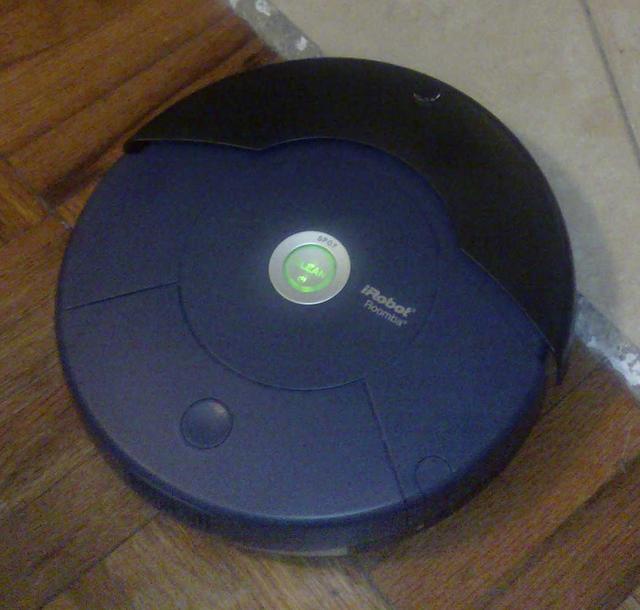
So, DebConf time is over once again. The two weeks worth of fifty weeks waiting are left behind once again, and it's back to get back to normal. DebConf was great Yes, it always is, and that's what we are all saying, but hey - Seriously! Being in the same building than 300 crazed developers is always fun, and it's always better than last year's fun. A good highlight this year is that, given the number of Free Software and Free Culture groups that exist in USA's north-eastern coast, we had the opportunity to join a large crowd which has never been part of DebConf. Also, I must agree that the USA bid for DebConf was aiming to attract as many Debian people (developers, maintainers, or just happy users) which had not yet been to a DebConf before as possible. And it was a great success! I finally met several people I have long read in the mailing lists, in blogs or in IRC. A much higher proportion than usual, I'd venture to say. Another interesting phenomenon /methinks is that this year's DebCamp started much more staffed than usual: I arrived on the first day, Sunday 25, and there were ~40 people there already; I don't have the actual numbers, but we quickly grew, and the number started to stabilize past mid-week, only to (sharply) rise in the weekend, in time for DebianDay and DebConf start. Great time! But, they say, nobody can go to the USA without buying some sweet toys, right? Well, being the proud owner of six very hairy cats, I have thought into entering the looming and weaving industry... But cat hair, while abundant, I have heard is untreadable... Maybe due to the indisciplined, natural and independent personality of the cats (catonality should I say?)... So I had two choices: Clean up my home quite often, or live in a literally hairy mess. Enter choice #3: The Roomba! I had been waiting to buy this thing for several years, as they refuse to send to Mexico or charge Mexican cards. So, I walked across Manhattan and got my very own robot cleaner! For my further surprise, although I have not yet tried it (I don't even have a suitable cable yet), I found this: Yay, the Roomba is actually hackable (via a 7 pin miniDIN serial port)! Wikipedia says that:
Roomba comes with a Mini-DIN TTL serial interface, which is incompatible with standard PC/Mac serial ports and cables, both electrically and physically. However, third-party adapters are available to access the Roomba's computer via Bluetooth, USB, or RS-232 (PC/Mac serial). New, 500-series, and 410/420 series Roombas upgraded with the OSMO hacker device allow the user to monitor Roomba's many sensors and modify its behavior. The Roomba Open Interface (formerly "Roomba Serial Command Interface") API allows programmers and roboticists to create their own enhancements to Roomba. ( )
My first impressions? Well, the Roomba lazily charged its battery throughout the day today, and was hungry and ready when I arrived home. It is a but louder than what I expected, and of course my cats were not thrilled by the presence of a eighth animated and apparently sentient being at home. Their initial reaction was of course to be verrry alert of the thing. Twelve eyes were constantly pointing at the Roomba while mine alternated between them. As they measured the thing's speed and (I guess) inferred its movement patterns, they started escaping upstairs A flat, round thing with no legs to be seen will not likely be able to climb the stairs. And they were completely right. At first, only Chupchic remained downstairs. After a bit, I went up to show them the Roomba didn't jump on us to eat our brains, and after a bit, Santa and Macusa joined. The Roomba roombed for maybe 90 minutes (this space is large, and decided it was enough... And slowly, the rest of them started coming down. I would not say Roomba's cleaning is perfect, of course. Its room discovery algorithm is funny, and it even seems it's based on the mere chance of covering most (never all) of the space it has to clean. I had, of course, not fully studied it (after a single run, how could I?). It does make a honestly good attempt at cleaning under coaches, chairs and tables. It collected a fair amount of dust (on a house that seemed quite clean to me, I cannot imagine what would happen on a messy one). I have not yet played with the virtual walls (infrared transmitters which limit rooms as if a door was closed), but given the size of this house (and that I don't want it to clean around the cats' designated bathroom area), I guess I will end up using them regularly. During DebConf, I heard one bad (stupid useless noisy thing) and two very good (it has radically changed my life) comments on the Roomba. I hope to shift the balance towards 3/4 and not towards 2/2! Anyways... Thanks to each and every one of you. DebConf is great. Always great. Always a success. I cannot even thank specific teams. Debian Rules, and DebConf Rocks!

4 August 2010

Michael Banck: 4 Aug 2010

Science and Math Track at DebConf10 This year's DebConf10 (which is great, by the way) at Columbia University, New York will feature Tracks for the first time. We had a Community Outreach track on Debian Day (to be continued by more awesome talks over the rest of the week), a Java track on Monday and an Enterprise track yesterday. Tomorrow, Thursday afternoon, the S cience and Math track (which I am organizing) will take place in the Interschool lab on level 7 of Schapiro Center. The Track will start at 14:00 with a short welcome from me, followed by presentations of debian-science by Sylvestre Ledru and debian-math by David Bremner. At 15:00, Michael Hanke and Yaroslav Halchenko will present their talk on "Debian as the ultimate platform for neuroimaging research". This will be followed at 16:00 by three mini-talks on "New developments in Science Packaging". Adam C. Powell, IV will talk about MPI, Sylvestre Ledru will present linear algebra implementations in Debian and finally Michael Hanke and Yaroslav Halchenko will discuss the citation/reference infrastructure. At the end of track, the annual debian-science round-table will happen at 17:00, where David Bremner (mathematics), Michael Hanke (neuro-debian), Sylvestre Ledru (debian- science/pkg-scicomp), Adam C. Powell, IV (debian- science/pkg-scicomp) and myself (debichem) will discuss matters about cross-field debian-science and math related topics. If afterwards there are still outstanding matters to be discussed, we can schedule ad-hoc sessions for science or math matters on Friday or Saturday. See you at the science track tomorrow!

Jaldhar Vyas: Sita Sings the Blues

In the evening today (Tuesday), the Debconf organizers arranged for a screening of the Creative Commons licensed film "Sita Sings the Blues" by Nina Paley. I went to see it as I had missed it when it was first released among tales of trials and tribulation at the hands of copyright meanies. So first let me say yay Free Culture!, boo Intellectual Property! etc. etc. Now we have that out of the way... "Sita Sings the Blues" has two main narrative threads: The breakup of Ninas relationship with her boyfriend and the Ramayana particularly a story from the uttarakanda about how after Shri Rama returned from Lanka, Sita had to undergo the agnipravesha to prove her chastity and even after she passed that test was eventually banished to the forest. I had an adverse reaction to this film. In fact I stayed to the end to be polite but I left afterwards as soon as I could. I had almost a physical feeling of nausea and I was surprised by this. Since then I have been pondering why this is so. It's not that its blasphemous. Shri Rama is not just a "perfect man", he is God (an avatar of Vishnu Bhagavan as is briefly touched upon in the film) for millions of people so, well, yes it is blasphemous but its more Rowan Atkinson style rather than Norwegian Black Metal style blasphemy. One never gets the impression that the author hates Hinduism or Indian culture the opposite in fact. And in fact it is not uncommon in our culture to speak of Sita and Rama in this way. They are not remote authority figures but as familiar to us as our own friends and family and the Ramayana is not just about events that happened long ago it is relevant to our lives right now. Even the "good woman done wrong by big dumb male jerk" narrative is not unknown. (See the Uttararamacharita of Bhavabhuti for instance.) though I would suggest reducing the Ramayana this way is akin to treating the Hitchhikers Guide to the Galaxy as a book about towels. Even the milder criticism that it is not accurate is offbase because although the Sanskrit poem by Maharshi Valmiki is the canonical rendition of the Ramayana, there are other well-known versions. Not just in Sanskrit, the Hindi retelling by Sant Tulsidas called Ramacharitamanasa is more popular than Valmiki. Also speaking as someone who has preached Ramakatha "professionally" I can tell you that even the priests do not stick to the letter of the text. It is encouraged and expected that they will riff on the basic stories adding or removing details according to the needs and taste of the audience. And the device of the three narrators made me smile as this is exactly the kind of discussions that go on after hearing the Ramakatha. (I must say Paley picked a notably illiterate trio though.) One place where this fell flat was when they discussed the alleged discrepancy between Sita living simply in the forest and dropping a trail of jewellery on the way to Lanka. Although I can imagine someone at some point saying, "Do not question these stories" not at this point. Even the most retarded westernized Indian would know that removing ones ornaments is a sign of widowhood. A married woman would only do that in extremis certainly not just merely because she was a hermit. In a few cases some extra details might have helped the story. It was not explained that Ravana does not just have rakshasas in his command but he is one himself. (And he certainly wasn't a good guy until one day he got up and kidnapped Sita.) Shri Ramas brother Lakshamana accompanied the couple into the forest to Lanka and back but he only pops up (for no apparent reason) at the end. But look at me, I'm turning into one of those people who rant about Star Trek continuity errors or complain that the Romans in a gladiator movie have the wrong helmets for that time period etc. One has to cut a storyteller some slack and I entered the screening determined to be charitable. It's also not because I don't really see much connection between the two stories. Getting dumped by someone who simply loses interest in you hardly seems equivalent to being trapped by a moral code that doesn't allow for individuals feelings. Paley could have easily made "Princess Leia Sings the Blues" and it wouldn't have changed the significance much. But in India people make far more tenuous connections between the epics and events in their own life so one can hardly complain about that. Aesthetics are not the problem either. The first version of the Ramayana I ever read was the Amar Chitra Katha comicbook version which partly influenced the visual style of this film. (In fact you briefly see it in one scene when different editions of the Ramayana flash by.) Hindu popular culture is very gaudy. (See Ramanand Sagars '80s Ramayana Hindi TV serial, which was very reverential, insanely popular and tacky beyond belief.) The animation in this film is very good and quite artistic. "So Jaldhar", you might be asking if you've read this far, "what exactly is your problem with this film?" I have read the Valmiki Ramayana in Sanskrit with the commentaries from beginning to end. I've read other Ramayanas in Sanskrit, Gujarati, and English. I have read the comicbook, I've read anti-Ramayana polemics. When you learn Sanskrit in the traditional way the first lesson, in the declension of masculine gendered nouns ending in vowels is rAma.h rAmau rAmA.h ... I am well aware there are different emphases, different interpretations in various versions. Why can't I accept this as just another take on a story that has shown its fluidity over and over again? It's just...wrong on a subrational level. How can I put this? Imagine you are flipping through the TV channels and you see your grandparents amongst Lady Gaga's backup dancers. Or you came home one night to find everything that was on the floor meticulously glued to the ceiling. Over the course of my life (to hear my mother tell it my first exposure to the Ramayana was before I could speak.) I have developed a mental bond with this story a certain idea of how it should be. I think so has Nina Paley. And this is the problem. "Sita Sings the Blues" is Nina Paleys Ramayana not mine.

Russell Coker: WordPress Maintainability

For a while I ve been maintaining my own WordPress packages. I use quite a few plugins that weren t included in Debian, some of them have unclear licenses so they can t go in Debian while the rest would have to go in Volatile at best because they update regularly and often have little or no information in the changelog to describe the reason for the update so we have to assume there is a potential security issue and update it reasonably quickly. As I m maintaining plugin packages it seems most reasonable to keep maintaining my own packages of WordPress itself which I started doing some time ago then the version in Debian became outdated. Now WordPress isn t a convenient package to maintain, the design of it is that a user will upload it to their web space via FTP or whatever, it s not designed to be managed by a packaging system with the option of rolling back upgrades that don t work, tracking dependencies, etc. One example of this is the fact that it comes with a couple of plugins included in the package, of which Akismet is widely used. The Akismet package is periodically updated asynchronously from the updates to the WordPress package with the apparent expectation that you can just FTP the files. Of course I have to build a new WordPress package whenever Akismet is changed. Now there is a new default theme for WordPress called TwentyTen [1]. This theme ships with WordPress and again has updates asynchronously. Just over a week ago my blog prompting me for an update to the theme even though I hadn t consciously installed it I have to update because I don t know whether one of the other users on the same system has chosen it and because having a message about an update being required is annoying. The Themes update page has no option for visiting the web site for the theme and only offered to send it to my server via FTP or SFTP, of course I m not going to give WordPress access to change it s own PHP files (and thus allow a trojan to be installed). So I had to do some Google searching to find the download page for TewntyTen which happens to not be in the first few results from a Google search (even though those pages look like they should have a link to it and thus waste the time of anyone who just wants to download it). After downloading the theme I had to build a new WordPress package containing it I could have split it out into a separate package and have the WordPress package depend on it, but I ve got enough little WordPress packages already. It doesn t seem worth-while to put too much effort into my private repository of WordPress packages that possibly aren t used by anyone other than me. Plugins aren t as bad, the list of plugins gives you a link to the main web page for each plugin which allows you to download it. I wonder what portion of the WordPress user-base install via FTP to a server that they don t understand and what portion of them use servers that are maintained properly with a packaging system, my guess is that with the possible exception of WordPress.com most bloggers are running on packaged code. It seems to me that optimising for Debian and CentOS is the smart thing to do for anyone who is developing a web service nowadays. That includes files managed by the packaging system, an option to downgrade (as well as upgrade) the database format (which changes with almost every release), and an option for upgrading the database from the command-line (so it can be done once for dozens or hundreds of users). deb http://www.coker.com.au lenny wordpress I have a repository of WordPress packages that anyone can use with the above APT sources.list line. There is no reason why they shouldn t work with Testing or Unstable (the packaging process mostly involves copying PHP files to the correct locations) but I only test them on Lenny.

3 August 2010

Petter Reinholdtsen: Debian Edu roaming workstation - at the university of Oslo

The new roaming workstation profile in Debian Edu/Squeeze is fairly similar to the laptop setup am I working on using Ubuntu for the University of Oslo, and just for the heck of it, I tested today how hard it would be to integrate that profile into the university infrastructure. In this case, it is the university LDAP server, Active Directory Kerberos server and SMB mounting from the Netapp file servers. I was pleasantly surprised that the only three files needed to be changed (/etc/sssd/sssd.conf, /etc/ldap.conf and /etc/mklocaluser.d/20-debian-edu-config) and one file had to be added (/usr/share/perl5/Debian/Edu_Local.pm), to get the client working. Most of the changes were to get the client to use the university LDAP for NSS and Kerberos server for PAM, but one was to change a hard coded DNS domain name in the mklocaluser hook from .intern to .uio.no. This testing was so encouraging, that I went ahead and adjusted the Debian Edu scripts and setup in subversion to centralise the roaming workstation setup a bit more and avoid the hardcoded DNS domain name, so that when I test this tomorrow, I expect to get away with modifying only /etc/sssd/sssd.conf and /etc/ldap.conf to get it to use the university servers. My goal is to get the clients to have no hardcoded settings and fetch all their initial setup during installation and first boot, to allow them to be inserted also into environments where the default setup in Debian Edu has been changed or as with the university, where the environment is different but provides the protocols Debian Edu uses.

2 August 2010

Matt Zimmerman: DebConf 10: Day 2

Today was the first day of DebConf proper, where all of the sessions were aimed at project participants. Bits from the DPL (Stefano Zacchiroli) Stefano delivered an excellent address to the Debian project. As Project Leader, he offered a perspective on how far Debian has come, raised some of the key questions facing Debian today, and challenged the project to move forward and improve in several important ways. He asked the audience: Is Debian better than other distributions? Is Debian still relevant? Why/how? Having asked this question on identi.ca and Twitter recently, he presented a summary. There was a fairly standard list of technical concerns, but also: He pointed out some areas which we would like to see improve, including: All in all, I thought this was an accurate, timely and inspirational message for the project, and the talk is worth watching for any current or prospective contributor to Debian. Debian Policy BoF (Russ Albery) Russ facilitated a discussion about the Debian policy document itself and the process for managing it. He has recently put in a lot of time working on the backlog (down from 160+ to 120), but this is not sustainable for him, and help is needed. There was a wide-ranging discussion of possible improvements including: There was also some discussion in passing of the long-standing confusion (presumably among people new to the project) with regard to how policy is established. In Debian, best practices are first implemented in packages, then documented in policy (not the reverse). Sometimes, improvements are suggested at the policy level, when they need to start elsewhere. I m not very familiar with how the policy manual is maintained at present, but listening to the discussion, it sounded like it might help to extend the process to include the implementation stage. This would allow standards improvements to be tracked all the way through from concept, to implementation, to documentation. The Java Packaging Nightmare (Torsten Werner) Torsten described the current state of Java packaging in Debian and the general problems involved, including licensing issues, build system challenges (e.g. maven) and dependency management. His slides were information-dense, so I didn t take a lot of notes. His presentation inspired a lively discussion about why upstream developers of Java applications and libraries often do not engage with Debian. Suggested reasons included: Collaboration between Ubuntu and Debian (Jorge Castro) Jorge talked about the connections between Debian and Ubuntu, how people in the projects perceive each other, and how to foster good relationships between developers. He talked about past efforts to quantify collaboration between the projects, but the focus is now on building personal relationships. There were many good questions and comments afterward, and I m looking forward to the Debian derivatives BoF session tomorrow to get into more detail. Tonight is the traditional wine and cheese party. When this tradition started, I was one of just a handful of people in a room with some cheese and paper plates, but it s now a large social gathering with contributions of cheese and wine from around the world. I m looking forward to it.

Lucas Nussbaum: Ubuntu bugs with patches on the PTS and the QA Packages Overview

Like the Debian BTS, Launchpad is full of open bugs with patches[1]. They have an ongoing effort called Operation Cleansweep whose goal is to get the number of bugs with patches to zero, by reviewing patches and forwarding them upstream or to Debian. Since it really makes sense to expose bugs with patches to the Debian maintainers, I ve modified the Ubuntu box on the Packages Tracking System and the Ubuntu column on the QA Packages Overview (hidden by default for now) to include that information. You can see the result on the dpkg PTS page and the debian-pkg@ packages overview page. Many thanks to Brian Murray for making this possible on the Launchpad side.
[1] Debian has 55115 open bugs affecting unstable, of which 4011 have a patch. Ubuntu has 76916 open bugs, of which 2207 have a patch. [Insert here disclaimer that this is not at all a judgement of value on the abilities of any distribution at triaging bugs, or at generating patches]
Relevant UDD queries:
select count(*) from bugs
where affects_unstable and status = 'pending'
and id in (select id from bugs_tags where tag ='patch');
select count(*) from bugs
where affects_unstable and status = 'pending';
select count(distinct bugs.bug)
from ubuntu_bugs_tasks tasks,ubuntu_bugs bugs
where tasks.bug = bugs.bug
and distro in ('', 'Ubuntu')
and status not in ('Invalid', 'Fix Released', 'Won''t Fix')
and bugs.patches is true;
select count(distinct bugs.bug)
from ubuntu_bugs_tasks tasks,ubuntu_bugs bugs
where tasks.bug = bugs.bug
and distro in ('', 'Ubuntu')
and status not in ('Invalid', 'Fix Released', 'Won''t Fix');

Joachim Breitner: Protecting static content selectively by OpenID

When I created my on-line photo album, we had the year 2001 and there was nothing wrong with publishing ones photos in the Internet. It has been almost ten years now, and things have changed. Privacy is an issue, especially when it also affects your friends and family. The problem
So I needed to find some protection. These were my requirements:
  1. I only want to protect parts of the site, as there are some pictures that I intentionally share with the public. This selection should be possible down to the individual image.
  2. The solution should work without any dynamic server component besides the web server itself. This rules out any self-written CGI scripts as well.
  3. One password, given to all my friends etc., is not sufficient as it might leak to unintended audience.
  4. I do not want my visitors to have to register and remember yet another username and password just for my site. I also do not want to manage this user database.
  5. I do not want to have do large changes to the file structure of my photo album.
This rules out most common options, e.g. protection by a .htpasswd file. Requirements 3 and 4 point to a solution based on OpenID. With OpenID, my visitors can authenticate against a service they already use (Google, Yahoo, etc.), relieving me from the burden of maintaining a user database and them from having to remember a password. There is a mod_auth_openid module for the Apache webserver, and it is even distributed with Debian in the libapache2-mod-auth-openid package. So requirement 2 is fulfilled. The tricky part is: How do we achieve OpenID protection for some images, and not for others. The solution I first played around with selectively enabling or disabling mod_auth_openid based on <FileMatch> directives in the Apache configuration, but it was not elegant and would not scale well. I have more than 20.000 pictures to manage, and have already selected over 5000 pictures to be shown without protection. My solution is based on a partial copy of the whole directory tree that contains all public files. To save disk space, these are just symbolic links to the real file in the protected location. Some mod_rewrite magic then takes care of giving the user the impression that all files are in the same location. I set up a small example of my solution, which has this directory structure:
.:
drwxr-xr-x 2 root root 4096  2. Aug 12:03 images
lrwxrwxrwx 1 root root   18  1. Aug 12:05 index.html -> private/index.html
lrwxrwxrwx 1 root root   18  1. Aug 12:05 login.html -> private/login.html
drwxr-xr-x 3 root root 4096  2. Aug 12:03 private
./images:
lrwxrwxrwx 1 root root 33  2. Aug 12:00 pleaselogin.png -> ../private/images/pleaselogin.png
lrwxrwxrwx 1 root root 28  2. Aug 12:03 public.png -> ../private/images/public.png
./private:
drwxr-xr-x 2 root root 4096  2. Aug 12:00 images
-rw-r--r-- 1 root root  267  2. Aug 12:03 index.html
-rw-r--r-- 1 root root   94  2. Aug 12:01 loggedin.html
-rw-r--r-- 1 root root 2091  2. Aug 12:03 login.html
-rw-r--r-- 1 root root   10 18. Nov 2009  protected.html
./private/images:
-rw-r--r-- 1 root root 4074  2. Aug 11:58 pleaselogin.png
-rw-r--r-- 1 root root 2670  2. Aug 11:58 private.png
-rw-r--r-- 1 root root 2043  2. Aug 11:58 public.png
As you can see, real files only reside in private/, outside of that, only symbolic links exist. The apache configuration protects the private directory and blends it into the main directory:
   <directory /var/www/nomeata.de/openid-test>
        RewriteEngine On
        # Abuse the login page as an error image
        RewriteCond % QUERY_STRING  \.(png jpg)
        RewriteRule ^login.html$ /openid-test/images/pleaselogin.png
        # Ship private files, if they exist, unless public files exist
        RewriteCond  $1 !^private
        RewriteCond  /var/www/nomeata.de/openid-test/$1 !-f
        RewriteCond  /var/www/nomeata.de/openid-test/private/$1 -f
        RewriteRule  ^(.+)$ /openid-test/private/$1
   </directory>
   <directory /var/www/nomeata.de/openid-test/private>
        AuthOpenIDEnabled        On
        AuthOpenIDDBLocation     /var/lib/apache2/mod_auth_openid/mod_auth_openid.db
        AuthOpenIDLoginPage      /openid-test/login.html
        AuthOpenIDTrustRoot      http://nomeata.de
        AuthOpenIDCookiePath     /
        AuthOpenIDCookieLifespan 2592000
    </directory>
A special trick handles the login page for protected images: If the login page is requested and the referrer indicates that the user tried to access a .png or .jpg file, apache will instead ship an image containing an error message. For my photo album I have a small Perl script that, given a directory with a private/ directory therein and a list of rules in form of glob patterns, will symlink matching files and remove symlinks that are not allowed any more.
What s next? As you can see, this does not actually protect the content. It only requires the user to authenticate, then everything is visible. To select which OpenIDs are allowed to access which code, some bugs will have to be fixed in mod_auth_openid first. There was little activity there recently, I hope that the project is not dead.

John Goerzen: The Best Place of Ever

Jacob and Oliver have enjoyed our recent train trip, and our stay, from Kansas to New York City for Debconf. All told, that s a 40-hour trip, including the layover in Chicago. When we got on the train, in the middle of the night as usual, Jacob couldn t stop chattering about how great , fun , and exciting it is. He told us about all the lots of great things on the train, the fact that we were on a night train , and generally couldn t stop chattering. For an hour. At 3:30AM. This was a typical sight from Jacob: IMG_4284 It wasn t as relaxing as usual for Terah and me. Oliver is at the grabbing everything in sight stage. Which worked fine when Jacob was at the age, but with Jacob also along it was a bit more difficult to manage. I suspect that our next trip, when Oliver is a few months older, will go easier. A highlight for both boys, as usual, is the dining car. Oliver loves anything related to eating solid food it s still novel to him and Jacob loves anything relating to trains. What could go wrong? (Parents will probably identify the capability for two hyper-excited young boys to have plenty of things go wrong at a table in a restaurant here fortunately we didn t have anything go terribly wrong.) Oliver turned out to find the things outside the window to require intense concentration intense enough to stick out his tongue while he worked it all out. IMG_4296 And Jacob, of course, wanted to get the wrapper off his straw by himself. Which he can do, but takes a minute. IMG_4305 They also enjoyed the lounge car. IMG_4292 We were in a sleeper room on both trains. That was nice, and when we needed to go explore , we could. Jacob s favorite part of the trip was when I folded down the upper bunk during the day for him to play. I pointed out that it was like a train treehouse. His face sure lit up. He loved that he had his own window up there to look out of. He climbed up the ladder, and after awhile of playing, said, Dad, would you like to play with me up here? Of course I would it always makes me happy when he asks if I want to play with him. As I was playing with him, I asked him if he was having fun in his train treehouse. He gave me a sweet smile, and said, Dad, this is the best place of ever! IMG_4321 In Chicago, Jacob and I went outside and walked around. He enjoyed walking across the bridges over the canal by Union Station. I checked some work email when we got back, tried but failed to reach some local hams with my handheld, and then we got on the train for New York. The boys loved it too, and Jacob was very ready to be in New York when we got there. We got out at Penn Station which was, I think, pretty much what my mind had imagined of an underground station robbed of its former glory (especially having been in that part of Chicago Union Station). We found the connection to the 2 train uptown, bought some MetroCards for the subway, and got on. Jacob was very interested in the subway. He sat very, very still I thought he was scared but on asking him some questions, realized that he was just very interested and engrossed in it all. I had been trying out my HF antenna for my amateur radio setup a few days ago, and by some coincidence, kept making contact with people that grew up in New York. A guy from Fargo, ND a native of Brooklyn told me to make sure to get pretzels from a hot sauce vendor, Pastrami on rye or corned beef on rye from a Jewish deli (because they have the best meat), pizza from guys wearing red and white shirts, and don t be afraid of rats on the subway tracks, and that our boys will love to feed leftover bits of pretzels to pigeons and squirrels. He got so excited about NYC that he went on and on, saying, Man, you re making me hungry now. During times I m not at sessions at Debconf, we ve found some time to do some things as a family. We went to Grand Central Terminal, just to see it it is indeed still Grand. I knew there was a Jewish deli there, so I thought hey try out his advice. It was closed, and when I realized it was Saturday, I realized why. Oops. We hopped on another train to Brooklyn and checked out the New York Transit Museum, which is great and has a lot of exhibits about the history of the city s subway and bus systems. It s housed in a former subway station, and they have a lot of old subway cars down there dating back to 1905 most of which are open to go inside of. It s been nice to meet people at Debconf that I have only known via email or IRC. The organizers of this conference have done a fabulous job. I have every expectation that this will turn out to be the best conference I ve been to in at least 12 years this is my first Debconf. It doesn t skimp on the technical details, people are friendly, and there is a sense of common purpose. But just as important, while there is a set schedule, there is an easy way to add other ad-hoc sessions to the conference schedule. People can get together a group interested in a topic, and schedule an event about it for the next day very easily. I m quite impressed by that, and am looking forward to the virtualization discussion that grew out of a question to the mailing list. It was also neat to meet people that sort of knew our family from my blog posts. I had no idea that there were all that many people that actually read these things ;-) The Debconf kick-off was great. As I was walking across the campus of Columbia towards it, it was a nice temperature, with some light rain, and I heard bagpipes in the distance. Beautiful. And when I left after the evening sessions, I still heard bagpipes. So I went to check it out, and ran into Gabriella Coleman, one of the Debconf organizers and the person that gave the talk I just left on the way, with the same idea. The Columbia campus is beautiful and historic, and it is an excellent venue for the conference. New York is a great city and I m sure we ll be back. It is great to walk out of the hotel in the morning, buy a fresh peach or two from the street vendor 20 feet away, and then go buy a roll or two ($0.75 each) from the bakery down the street. I have been so missing rolls like that since we got back from Germany in March. These weren t quite like the German bakeries, but the closest I ve had to it. It is interesting to note how differently people from different places look at things. Terah has told several people how we live 6 miles from a town with 500 people in it, and people that stop to think about it realize how different it is from New York. It was a surprise to me to hear that some New Yorkers think of Columbia as country . It is beautifully landscaped, and feels different than the rest of the city. The numbers I ve seen suggest that a typical fall weekday has more people on the Columbia campus than in the entire county where we live. And that county is twice the size of New York City. That s not to say that there s anything wrong with New Yorkers thinking of it as country, any more than there is of me thinking of a town with 15,000 people as a pretty big town. It s a different perspective, and I enjoy different perspectives which is another thing I like about Debconf. There are so many people from all over the world there that different perspectives are inevitable.

Matt Zimmerman: DebConf 10: Day 1

This week, I am attending DebConf 10 at Columbia University in New York. The first day of DebConf is known as Debian Day. While most of DebConf is for the benefit of people involved in Debian itself, Debian Day is aimed at a wider audience, and invites the public to learn about, and interact with, the Debian project. These are the talks I attended. Debian Day Opening Plenary (Gabriella Coleman, Hans-Christoph Steiner) Hans-Christoph discussed Debian and free software from a big picture perspective: why software freedom matters, challenging the producer/consumer dichotomy, how the Debian ecosystem hangs together, and so on. Steps to adopting F/OSS in government (Andy Oram) Andy discussed FLOSS adoption in governments, drawing on examples from Peru, the city of Munich, the state of Massachusetts. He covered the reasons why this is valuable, the relationship between government transparency and software freedom, and practical advice for successful adoption and deployment. Pedagogical Freedom (panel, Jonah Bossewitch et al) The panelists discussed the use of technology in education, especially free software, some of the parallels between free software and education, and what these communities could learn from each other. This is a promising topic, though the perspectives seemed to be mostly from the education realm. There is much to be learned on both sides. Google Summer of Code 2010 at Debian (Obey Arthur Liu) This talk covered the student projects for this year s Summer of Code. Most of the students were in attendance, and presented their own work. They ranged from more specialized projects like the Hurd installer, to core infrastructure improvements like multi-arch in APT. Beyond Sharing: Open Source Design (Mushon Zer-Aviv) Mushon gave an excellent talk on open design. This is a subject I ve thought quite a bit about, and Asheesh validated many of my conclusions from a different angle. I ve added a new post to my todo list to go into more detail on this subject. Some points from his talk which resonated with me: How Government can Foster Freedom in Technology (Hon. Gale Brewer) Councillor Brewer paid a visit to DebConf to tell us about the work she is doing on the city council to promote better government through technology. Brewer seems to be a strong advocate of open data, saying essentially that all government data should be public. She summarized a bill to mandate that New York City government data be public, shared in raw form using open standards, and kept up to date. It sounded like a very strong move which would encourage third party innovation around the data. She also discussed the need for greater access to computers and Internet connectivity, particularly in educational settings, and a desire to to have all public hearings and meetings shared online. Why is GNU/Linux Like a Player Piano? (Jon Anderson Hall, Esq.) Jon is a very engaging speaker. He drew parallels between the development of player pianos, reproducing pianos, reed organs, pipe organs and free software. He even tied in Hedi Lamarr s work which led to spread spectrum wireless technology. To be quite honest, I did not find that these analogies taught me much about either free software or player pianos, but nonetheless, I couldn t help but take an interest in what he was saying and how he presented it. DebConf Opening Plenary (Gabriella Coleman) Biella and company explained all the ins and outs of the event: where to go, what to do (and not do), and most importantly, whom to thank for all of it. Now in its 11th year, DebConf is an impressively well-run conference. I m looking forward to the rest of the week!

1 August 2010

Thibaut Girka: Sixth GSoC report

Hi! First, sorry not to have posted anything in the last two weeks! I was on vacation, and so, did less work on the project. But in no means it is dead, and development continues! First week of my vacation was (apart from resting, and vacation stuff) almost entirely dedicated to make my build environment work without internet access. Here, I was lucky to have made a complete debian/main mirror using reprepro before leaving! However, I had to fight a bit with debian-installer: first, for an unknown reason (if someone knows why, speak up!) it didn't search for the debian-installer section and I had to specify 'main/debian-installer' instead of 'main' in sources.list.udeb.local. Second, because I'm lazy, my reprepo repo isn't signed, and so, I had to pass some apt options to make when building d-i. After this first week, I've been able to work on uboot-installer, that you can find in pkg-fso/d-i.git. Originally written by my co-mentor Per, this package/script is meant to update the device's U-Boot env so it can boot Debian. It installs the uboot-envtools package, tries to read the U-Boot environment to make sure everything is ok, determines the new boot command, and shows/write it in the uboot env. When working on uboot env modification, I ran in a strange issue: I can read the env without problem using fwprintenv, modify it, and read it back, but U-Boot then fails, saying the environment is corrupted. In fact, this is because I've enabled CONFIGMTDNANDS3C2410_HWECC in config.s3c24xx, and it appears to cause invalid ECC values to be written on the flash. Switching it off solved the issue. Apart from that, I've made some minor modifications in the installation script, and I've (re)installed Debian countless times on my FR, and everything seems to work fine so far (although my kernel is non-installable at the moment because of version mismatch with what's in my repo). Building d-i for the FR So, you're welcome to test! Everything is available in the three (pkg-fso/d-i.git, pkg-fso/linux-2.6.git, and usbboot (hg)) repositories. You can rebuild the d-i image and packages the following way:
mkdir ~/incoming/
cd d-i.git/packages/
cd flash-kernel && debuild -uc -us && cd .. && mv *.*deb ~/incoming
cd base-installer && debuild -uc -us && cd .. && mv *.*deb ~/incoming
cd hw-detect && debuild -uc -us && cd .. && mv *.*deb ~/incoming
cd libdebian-installer && autoreconf -i -v && debuild -uc -us && cd .. && mv *.*deb ~/incoming
cd partman/partman-auto && debuild -uc -us && cd .. && mv *.*deb ~/incoming && cd ..
cd arch/armel/uboot-installer && debuild -uc -us && cd .. && mv *.*deb ~/incoming && cd ../..
# For some reason, I had to rebuild installation-locale too
cd installation-locale && debuild -uc -us && cd .. && mv *.*deb ~/incoming
Then, copy everything that is in ~/incoming to your repo. Alternatively, you can use localudebs and add the following lines to pkg-lists/netboot/network-console/armel/s3c24xx.cfg:
mmc-modules-$ kernel:Version 
mmc-core-modules-$ kernel:Version 
crc-modules-$ kernel:Version 
md-modules-$ kernel:Version 
ext2-modules-$ kernel:Version 
ext3-modules-$ kernel:Version 
flash-kernel-installer
base-installer
hw-detect
libdebian-installer4-udeb
partman-auto
uboot-installer
installation-locale
# For some reason, flash-kernel-installer brings live-installer in,
# disable it explicitly as we don't want it
live-installer -
Now that you have built every needed package, you can build the d-i image:
make clean_s3c24xx_network-console
# The SECOPTS thing is only needed if you are using an unsigned repository
make build_s3c24xx_network-console SECOPTS="--allow-unauthenticated"
Now, you can find the ready-to-use u-boot image in dest/s3c24xx/network-console/uImage-multi! There are a few differences between the pre-built image and the one you have generated. Those differences are: the kernel in use (2.6.32 for the pre-built image, 2.6.34 if you follow the steps above), the network config (192.168.42.202 for the pre-built image, 192.168.0.202 for your own), security (unauthenticated repositories are allowed in the pre-built image!), and uboot-installer (some changes are still staging on my local working copy). Testing d-i on your FR Beware, those images are only for testing (especially the pre-built one, which accepts unauthenticated repositories). It should not harm your device, but use with care anyway. Now that you have built your u-boot image multi (if you don't want to, you can use the pre-built one), you are welcome to follow the steps described in the How to Boot article. Now, follow the instructions that appears on the FR screen and you should be able to install Debian like you would on any machine. The equivalent of grub-installer is divided into two steps (the two are needed, but each provides bootable-system, yes, that's a bug): flash-kernel ("Make the system bootable") and uboot-installer ("Modify U-Boot environment on flash"). (Note: SSH password is "install") What's coming next/has to be done? I've just arrived at DebConf 10, and some intensive testing should be done here. Apart from that, there are quite a few things left to do (right now, or in a distant future):

31 July 2010

Benjamin Mako Hill: Grades

Over the last couple years, I have begun teaching. At first just a reading group or seminar with a handful of attendees. Last term I helped teach two large lecture classes. I know that, compared to some of my colleagues, I spend an enormous amount of time assessing and evaluating students' assignments. I try very hard to give detailed, substantive, feedback on each piece of student work. At the end of the day, however -- at my school at least -- there's always a grade. For someone who went well out of his way to go to a college with no grades, there's a tragic irony to the whole situation: I think grades mean little and are often worth much less. Today I am forced to to inflict them on people who, almost universally, do not.

Next.

Previous.